US deploys drones in South Korea capable of striking North Korean targets


Trump is not Obama!

“The Biggest Show Of Force Since World War II”: Japan To Send Its Largest Warship To South China Sea


Tyler Durden's picture

The tension over the disputed territory in the South China Sea is about to escalate to another level: according to a Reuters report, Japan is preparing to to dispatch its largest warship on a three-month tour through the South China Sea beginning in May, in “its biggest show of naval force in the region since World War Two.”

Japan Maritime Self Defense Force’s helicopter carrier Izumo

The 249 meter-long (816.93 ft) Izumo is as large as Japan’s World War Two-era carriers and can operate up to nine helicopters. It resembles the amphibious assault carriers used by U.S. Marines, but lacks their well deck for launching landing craft and other vessels.

While China claims almost all the disputed waters despite the regular complaints of other nations in the region, and its growing military presence has fueled concern in Japan and the West, with the United States holding regular air and naval patrols to ensure freedom of navigation, so far Japan’s territorial claims have involved the Senkaku island chain in the East China Sea; that however appears to be changing as Japan seeks to stake a military presence in the contested region.

The Izumo helicopter carrier, commissioned only two years ago, will make stops in Singapore, Indonesia, the Philippines and Sri Lanka before joining the Malabar joint naval exercise with Indian and U.S. naval vessels in the Indian Ocean in July, before returning to Japan in August.

Why create another point of Chinese antagonism over the region? “The aim is to test the capability of the Izumo by sending it out on an extended mission,” said one of the sources who have knowledge of the plan. “It will train with the U.S. Navy in the South China Sea,” he added, asking not to be identified because he is not authorized to talk to the media. A spokesman for Japan’s Maritime Self Defense Force declined to comment.

  Taiwan, Malaysia, Vietnam, the Philippines and Brunei also claim parts of the sea which has rich fishing grounds, oil and gas deposits and through which around $5 trillion of global sea-borne trade passes each year. Japan does not have any claim to the waters, but has a separate maritime dispute with China in the East China Sea.

 Japan wants to invite Philippine President Rodrigo Duterte, who has pushed ties with China in recent months as he has criticized the old alliance with the United States, to visit the Izumo when it visits Subic Bay, about 100 km (62 miles) west of Manila, another of the sources said. Asked during a news conference about his view on the warship visit, Duterte said, without elaborating, “I have invited all of them.”

He added: “It is international passage, the South China Sea is not our territory, but it is part of our entitlement.” On whether he would visit the warship at Subic Bay, Duterte said: “If I have time.”

Japan’s unexpected flag-flying operation comes as the United States is conflicted between taking a tougher line with China and making concessions ahead of Xi’s visit to Trump next month. Washington has criticized China’s construction of man-made islands and a build-up of military facilities that it worries could be used to restrict free movement. Beijing responded in January said it had “irrefutable” sovereignty over the disputed islands after the White House vowed to defend “international territories”.

As Reuters notes, Japan in recent years, particularly under Prime Minister Shinzo Abe, has been stretching the limits of its post-war, pacifist constitution and has been making aggressive pushes for a return to militarism. It has designated the Izumo as a destroyer because the constitution forbids the acquisition of offensive weapons. The vessel, nonetheless, allows Japan to project military power well beyond its territory. Based in Yokosuka, near to Tokyo, which is also home to the U.S. Seventh Fleet’s carrier, the Ronald Reagan, the Izumo’s primary mission is anti-submarine warfare.

“Hanging In The Balance” – A Look Inside The War To Repeal Obamacare


Tyler Durden's picture

A few weeks ago we noted that none other than John Boehner, the former Republican Speaker of the House, scoffed at the idea of repealing and replacing Obamacare as he essentially predicted that Republicans would become their own worst enemy (see “Boehner: Full Repeal And Replace Of Obamacare ‘Is Not Going To Happen’“):

 “[Congressional Republicans are] going to fix Obamacare – I shouldn’t call it repeal-and-replace, because it’s not going to happen,” he said.

 “I started laughing,” he said. “Republicans never ever agree on health care.”

 “So this is not all that hard to figure out.  Except this, in the 25 years I served in the United States Congress, Republicans never, ever, not one time agreed on what a healthcare proposal should look like.  Not once.”

 “And all this happy talk that went on in November and December and January about repeal, repeal, repeal…if you pass repeal without replace, you’ll never pass replace because they will never agree on what the bill should be.  The perfect always becomes the enemy of the good.”

Now, it’s looking increasingly like Boehner may have been right as the so-called “TrumpCare” attempt to repeal and replace Obamacare will face a number of challenges, starting this week, in its journey to Trump’s desk.  The first challenge comes from the Congressional Budget Office (CBO) which is expected this week to release its score of the legislation.  The CBO is widely expected, even among Republicans, to estimate that millions of people would no longer have health insurance under the plan.  Per The Hill:

 With that in mind, Republicans are already looking to discredit the office and downplay the importance of the score.

 “If you’re looking at the CBO for accuracy, you’re looking in the wrong place,” White House press secretary Sean Spicer said earlier this week.

 Ryan, meanwhile, compared CBO scores to a “beauty contest.”

 “Our goal is not to show a pretty piece of paper that says we’re mandating great things for Americans. Our goal is to get a vibrant health care system that’s patient-centered, that brings down costs, that increases choices, that has a marketplace so that we lower the costs and increase, and therefore increase the access to affordable care,” he said.

Paul Ryan


Then there are the Republican governors from states that took ObamaCare’s Medicaid expansion who are also wary of the healthcare legislation.

 “Phasing out Medicaid coverage without a viable alternative is counterproductive and unnecessarily puts at risk our ability to treat the drug addicted, mentally ill, and working poor who now have access to a stable source of care,” Ohio Gov. John Kasich (R) said in a statement Wednesday.

 The governors met with the White House and GOP leadership about ObamaCare and Medicaid during their annual conference earlier this month, but Nevada Gov. Brian Sandoval said this week the resulting plan “doesn’t include anything that the governors have talked about.”

 “We’ve said all along, ‘work with the governors,’ that it should be a governor-led effort and for the Congress to rely on their governors,” Sandoval said.

 And then there are the conservative elements of the splintered Republican party that would prefer to simply repeal Obamacare altogether, without a replacement plan, and start from ground zero.  While Paul Ryan has guaranteed that his bill can pass the House, assuming all Democrats vote no, it would only take 21 House GOP defections to kill the bill.  That said, Republican control of the Senate is much more narrow and several Senators, including Tom Cotton (Ark) and Rand Paul (KY), don’t seem all that eager to support the current iteration of the bill.
  Sen. Tom Cotton (R-Ark.) said the House GOP should “start over” on its replacement plan.

 “House health-care bill can’t pass Senate without major changes,” Cotton Tweeted Thursday.

 “To my friends in House: pause, start over. Get it right, don’t get it fast.”

 The legislation has been criticized by at least 11 senators, including some from Medicaid expansion states who don’t want to see the expansion rolled back.

 Conservatives like Sen. Rand Paul (R-Ky.), meanwhile, are backing the Freedom Caucus’s push for repealing more of ObamaCare. Paul has introduced his own legislation to repeal ObamaCare.

All political rhetoric or is Trump about to get bogged down in the swamp?  He seems optimistic…

Sturgeon To Give May An “Ultimatum” As UK Preapres For Critical Vote Ahead Of Article 50


Tyler Durden's picture

Britain’s minister for leaving the European Union, David Davis, urged lawmakers not to hold back PM Theresa May’s ability to negotiate a Brexit deal in talks she could trigger as early as this week. Davis on Sunday called on lawmakers to vote to drop two amendments that were added to a bill authorizing the talks with the bloc’s other member states, saying May should be able to enter with no strings attached the WSJ reported.

On Monday the Brexit bill returns to the House of Commons, the U.K.’s lower house, for debate after the House of Lords said it wanted guarantees that EU citizens living in the U.K. could stay after Brexit and that Parliament could vote on the final terms. The final bill must be approved by both houses. Should the bill pass Monday, the government could invoke Article 50 as early as Tuesday according to weekend press reports, but negotiations in Parliament could last several days. The Brexit spokesman for the main opposition Labour Party, Keir Starmer, told Sky News he expects the government to trigger it on Wednesday or Thursday.

Even if the House of Commons votes in favor of the amendments, May is expected to keep her timetable of triggering by the end of the month. But it would underline how small her majority is in the lower house. Complicating matters is a tweet moments ago by BBG political editor Laura Kuenssberg, who reported that Scotland’s Nicola Sturgeon will give May an ultimatum: give Scotland a different Brexit deal or she’ll call for section 30, the indyref process.

On the topic of Brexit, Reuters reported on Sunday that David Davis is also drawing up “contingency plans” for Britain in the unlikely event it has to walk away from divorce talks with the European Union without a deal. Ahead of the start of Article 50 negotiations, which could be triggered as early as Tuesday, a committee of lawmakers warned it would be a serious dereliction of duty if the government failed to plan for the possibility of not reaching an exit deal. “I don’t think, firstly, that is remotely likely,” Davis told the BBC’s Andrew Marr Show, responding to the report. “It’s in absolutely everybody’s interest that we get a good outcome.”

Parliament’s Foreign Affairs committee warned that a breakdown in negotiations would be a “very destructive outcome,” causing economic harm to both sides as well as creating uncertainty and legal confusion for individuals and businesses.

 “The simple truth is we have been planning for the contingency – all the various outcomes, all the possible outcomes of the negotiations,” Davis said. “One of the reasons we don’t talk about the contingency plan too much is that we don’t want people to think ‘Oh, this is what we’re trying to do.'”

Asked when May would trigger talks, Davis declined to name a specific date. “Each date has different implications in terms of when it could be responded to by the (European) council … I’m not going to get into the details why, but there’s politics in terms of achieving success.”

Finally, for a frank, “on the ground” take on the current state of Brexit, here is an excerpt from Bill Blain’s latest Morning Porridge edition:

Saturday Night Live’s Attack on Trump/Alex Backfires!


Published on Mar 12, 2017

Saturday Night Live opened their show with an absurd Trump/Alex Alien skit. What they didn’t know was that their subconscious inversion of truth would be laid bare for all to see. Alex breaks down how they are struggling to flip the narrative and create their own absurd reality based on the

Shots Fired At Ferguson Market After CNN Broadcasts Fake News and Edited CCTV Footage…


Source: Shots Fired At Ferguson Market After CNN Broadcasts Fake News and Edited CCTV Footage…

WikiLeaks Vault 7 Maybe Bigger than Snowden


Wikileaks


CIA FrankfurtThe Wikileaks Vault 7 of the CIA espionage has exposed the fact that they are spying on every individual in Germany from Frankfurt. Here is yet another blow to undermining public confidence in government. The CIA is allowed to spy on the entire German economy, every individual citizen, every politician, every lawyer, every businessman and all European partners from Frankfurt. There is nothing anyone can do about protecting European citizens anymore or their businesses. It came out before that Merkel was fully aware of the CIA operations in Frankfurt spying on everything, which emerged as a scandal creating the biggest crisis yet for the country’s foreign intelligence agency and that was back in 2015. The German government appears to have been aware of widespread US spying, possibly including economic espionage, against European targets and yet it did nothing to stop it.

On March 8, 2017, WikiLeaks launched the first tranche of secret CIA documents to provide an overview of CIA cybercrime practices for Europe, Africa and the Middle East. These documents have by far surpassed the damage that the Snowden publications have made a few years ago. The published papers are from the years 2013 to 2016 and revealing the common operational practice of the CIA. The period coincides with the discoveries in the NSA affair in Germany from mid-2013. What is noticeable here is the fact that the CIA has been expanding Frankfurt as a center of American espionage activities in Europe – even during the Snowden affair. We have previously reported that even the UK has been tapping everything.

claper-james-testified-11-17-2016However, those who think this is not a real concern because they are not terrorists, remain clueless that this is also about gathering every piece of information on everyone for tax purposes. Monitoring absolutely everything is by no means practical for preventing terrorist attacks. The Boston terrorist attack with two culprits using cell phones proved that when you monitor everything, there is no possible way to sort through all that info to prevent anything. People like Clapper have no regard for the people or any right to privacy whatsoever. They cannot sleep at night worrying that someone might be doing something they didn’t know about.

ConquestThe world has changed. Neither Russia nor China has any desire to invade and occupy the United States. This is not World War I or II strategies any more. Occupying forces no longer are practical and inevitably they cannot control a country forever. Intelligence has become a state of paranoia in La-La-Land. They have funded groups to overthrow another group and then the first turns back upon the hand that fed them. All they have done is deprived everyone of privacy and failed to make the world safer in the least.

These people act as if this is a child’s game of world domination. It’s time to grow up and stop trying to rule the world only to make everything worse. The two enemy states are only North Korea and Iran. As for Terrorists, we created them with all these strategies of placing one group against another. This is all part of the crisis we have in our confidence within government.have in

NY Prosecutor Preet Bharara Who Protected Bankers is Fired


Bharara Preet

The Trump administration moved on Friday to sweep away virtually all of the remaining vestiges of the Obama administration prosecutors at the Justice Department. They ordered 46 holdover U.S. attorneys to tender their resignations immediately. Demanding resignations from US attorneys is actually standard operating procedure in the DOJ whenever a new administration assumes power. Traditionally this is just standard and the fact that Preet Bharara refused demonstrated he was trying to make a political statement clearly illustrating he could not be trusted.

Historically, Presidents clear out almost all the US attorneys from the prior administration. Bill Clinton appointed 80 new US attorneys in his first year of office, out of 93 posts. Preet Bharara, the rather notorious Indian-born New York Prosecutor of the SDNY appointed by Obama who has protected the bankers since taking office August 13, 2009, refused to resign. He Tweeted that he was then fired definitely showing he could not be trusted.

Bharara Preet Tweet

It was Bharara’s decision not to prosecute any of the bankers when he came to office in 2009. All other prosecutors tendered their resignations and left and most did so before even being asked because this is always a political post. That is simply the way things work. The fact that there were 46 holdovers begs the question why did they try to stay? Then why did Bharara refuse to resign? This seems very strange and he desired to turn this into a political issue against Trump. That really calls into question his motives. The fact that he then Tweets: “I did not resign. Moments ago I was fired” seems like he is obviously trying to play politics here. Prosecutors can do anything to anybody for the system is just too corrupt.

Chief Judge Sol Wachtler of New York state, coined the term in a January 1985 interview with the New York Daily News‘  that a prosecutor has so much power that is one-sided since a defendant cannot present any evidence to refute their claims he delivered the famous saying that prosecutors can “indict a ham sandwich.” Wachtler believed grand juries “operate more often as the prosecutor’s pawn than the citizen’s shield.” Indeed, Peet Bharara illustrated that he is politically motivated, not moved by the Constitution or the rule of law. In retaliation for Wachtler’s views that prosecutors had way too much power, they indicted him in 1992.

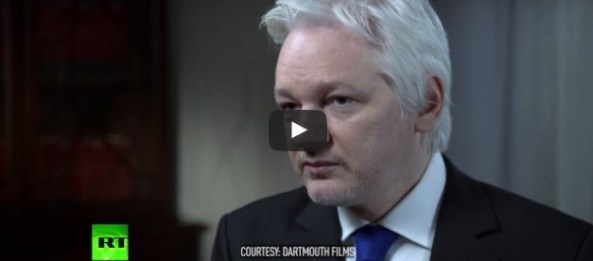
‘Clinton And ISIS funded by same money’ – Assange interview w/John Pilger (Courtesy Darthmouth Films)


There is little doubt than any of this in not 100% true.

When Spies Are Out Of Control


Tyler Durden's picture

Authored by Gregory Clark via The Strategic Culture Foundation,

The U.S. spy community – those nice people who told us they were certain the Iraq of President Saddam Hussein was holding weapons of mass destruction – have now made it known they are certain the Russian ambassador to the United States is Moscow’s top spy. But these people, even if they do not know much about WMD, must know what a top spy does. They do it themselves.

First, there is the messy and time-consuming job of finding information-loaded officials. Then there is the problem of maintaining contacts with those officials at secret rendezvous. So a senior ambassador, and former deputy Russian foreign minister, is able to do all this while going to cocktail parties, hobnobbing with the national elite, running a large embassy and studying the politics of the nation to which he is accredited?

I suggest U.S. top spies go back to doing their real work instead of inventing fairy tales.

I have seen the spies at work, on both sides of the Iron Curtain.

On the Soviet side they were not a very attractive breed. Their idea of a hard day’s work was constant snooping on the few Russian-speaking foreigners in their midst and relentless interrogation of any Soviet citizen who spoke to a foreigner, together with the occasional attempt at blackmail or compromise.

In the process they created a generation of Western policymakers deeply prejudiced against their people and their nation. Not a bad result for their decades of hard work, especially since the Western hostility they helped generate guaranteed their continued employment till well into the future.

Almost all their successes were “walk-ins”— people who for money or ideology wanted to provide information. Those volunteers would probably have provided more if they were not disgusted by the crudity of the people they had to deal with.

Spies sent to work abroad were usually of better quality. But they always had cover, as private citizens or mid-rank embassy officials at best.

Much the same in reverse was going in the West. To some extent it is still going on. In Japan the spies are almost out of control. Even though Russia has granted Japanese diplomats there the freedoms now enjoyed by Western diplomats in Russia, the Japanese spies continue to behave as in Soviet days. Like dogs chasing a bone (according to one victim), they are so crudely persistent and obtrusive that even ordinary diplomatic work becomes impossible. And these “dogs”think this will help them get their Northern Territories back?

I once played host to a prominent Western critic of U.S. Vietnam War policies. Thuggish Japanese spies camped outside my apartment for days.

These people are not the suave, romantic James Bonds of film fantasy. For the most part they are what we used to call “second elevens”— a cricket analogy for people rejected for the top team. Failing to enter the diplomatic service they make do by joining a spy network. One result is a burning desire to get ahead by undercutting the “first eleven”diplomats and by using largely bogus information to get close to the people in power. Hence the WMD information failure and the Iraq disaster, opposed by most Western diplomats with Middle East experience.

When U.S. President Donald Trump visited the CIA headquarters in Washington he was upbraided for failing to respect a “sacred” memorial wall devoted to the 90-odd CIA officers who have died while on duty. Maybe he was looking for the wall devoted to the 900,000 or so Iraqis who died as a result of CIA failures. Even Trump had the sense to turn against that dreadful war.

I once worked for two years as a diplomat in the Soviet Union. On return to Australia I went through the usual spy-agency debriefing, partly because I had reported some KGB stunts against our embassy there. Suddenly the debriefer jumped to his feet waving a report which I had written saying that the Odessa hotel where I was staying was close to the local KGB headquarters. Leaning ominously over the table he demanded to know how I knew the KGB location. I had to educate this stalwart and grossly overpaid defender of Australian security that in Soviet Union the KGB was a public organization with a large brass plate on its buildings reading Komitet Gosudarstvennoy Bezopasnosti, or Committee for Government Security.

Later, because I also spoke Chinese and had also opposed the Vietnam War, I was subjected to one of their stunts (our usual term for spy operations) to persuade me that a Soviet Embassy official wanted to meet me urgently. They made a bad mistake; the telephone operative they had employed spoke pre-revolutionary Russian (Australia has many White Russians, mostly people fleeing to China following the Russian Revolution). There was no way he could have been working for the Soviet Embassy. It seems that little detail passed completely over the heads of our Australian security interest defenders — the people who decide whether we can be trusted with secrets. Nor were they very happy when I was able publicly to expose the stunt.

The current anti-Russian hysteria in the U.S. media is fueled by similar ignorance. Various Trump officials and appointees are being persecuted relentlessly by leaks accusing them of talking to the Russian ambassador. But anyone who knows anything about diplomacy knows that such informal talks can be crucial to policymaking.

I admit to having joined secret talks with the premier and foreign minister of the Soviet Union in a fat-headed 1964 Australian attempt to have the Soviet Union join with the West in Vietnam to stop Chinese “aggression.” Because there were laws against revealing state secrets I sat on that important story for more than 20 years.

Today when the West is bent on equally fat-headed efforts to stop alleged Russian “aggression”(read the 2015 Minsk Two agreement if you want to know who really is the aggressor), talks with Moscow’s ambassador really are needed. And the spies who want to leak that information to embarrass their own government really should go to jail.

*  *  *