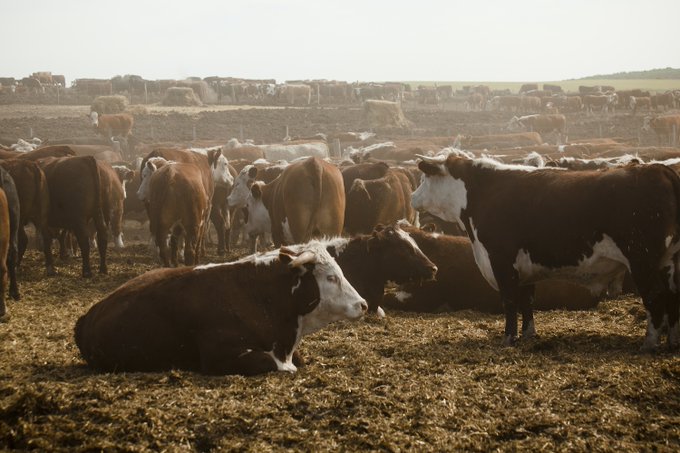
Announcement from Secretary of Agriculture, Brooke Rollins: “I have ordered an immediate shutdown of live cattle, bison, and horse trade through the southern U.S.–Mexico border. This decisive action comes after Mexico confirmed another case of New World Screwworm in Veracruz.”
(Washington, D.C., July 9, 2025)– Yesterday, Mexico’s National Service of Agro-Alimentary Health, Safety, and Quality (SENASICA) reported a new case of New World Screwworm (NWS) in Ixhuatlan de Madero, Veracruz in Mexico, which is approximately 160 miles northward of the current sterile fly dispersal grid, on the eastern side of the country and 370 miles south of the U.S./Mexico border.
This new northward detection comes approximately two months after northern detections were reported in Oaxaca and Veracruz, less than 700 miles away from the U.S. border, which triggered the closure of our ports to Mexican cattle, bison, and horses on May 11, 2025.
[…] Therefore, in order to protect American livestock and our nation’s food supply, Secretary Rollins has ordered the closure of livestock trade through southern ports of entry effective immediately. (read more)
Posted originally on Jun 30, 2025 by Martin Armstrong
The Polynesian island of Tuvalu is composed of nine coral islands across a 420-mile distance in the west-central Pacific Ocean. The ocean has come to reclaim the islands as the natural cycle of climate change has led the surrounding sea level to rise at about 3.9 mm annually, yet the island is only 2 meters above sea level. Australia is now offering the island’s 11,000 inhabitants the opportunity to apply for the world’s first climate visa.
NASA believes that the majority of the islands will be submerged by 2050. Tuvalu has begun the process of digital preservation to maintain records of its culture and landscapes before the islands are reclaimed.
Numerous studies have pointed to dynamic coral processes as the primary reason for rising sea levels. Dynamic coral processes reference the natural order of oceanographic forces that reshape coral reef structures. Certain marine life and reef-building corals produce calcium carbonate and accrue as gravel and sand. The ocean waves and currents naturally break down these structures over time and cause reefs to shift, contract or expand. The reef masses themselves are living landforms that are susceptible to accretion and erosion. Overall, these are not structurally sound for long-term inhabitation.
Australia is currently opening 280 visas for Tuvalu citizens annually for a small registration fee of $16. Visa applicants will be selected at random. Over 3,000 Tuvaluans have applied for a visa thus far. “This is the first agreement of its kind anywhere in the world, providing a pathway for mobility with dignity as climate impacts worsen,” a spokesperson for Australia’s foreign affairs department said. “At the same time, it will provide Tuvaluans the choice to live, study and work in Australia,” Australia’s foreign affairs department said.
“For the first time, there is a country that has committed legally to come to the aid of Tuvalu, upon request, when Tuvalu encounters a major natural disaster, a health pandemic or military aggression,” Tuvalu Prime Minister Feleti Teo said at the time. “Again, for the first time, there is a country that has committed legally to recognize the future statehood and sovereignty of Tuvalu despite the detrimental impact of climate changed-induced sea level rise.”
Australia is not doing this as a humanitarian act. Australia is offering visas with the stipulation that Tuvalu permits Australia to have a final say in defense pacts. As it may be, Tuvalu is one of the twelve states that maintains relations with Taipei over Beijing.
Tuvalu will be uninhabitable prior to 2050 as skilled workers flee to Australia. Australia, in turn, has control over the small island chain. Tuvaluan is seen as a stark warning to those who fear climate change, and yet, this is a naturally occurring phenomenon that humans cannot create or prevent.
Posted originally on CTH on June 17, 2025 | Sundance
First reported on CNN, several outlets are now confirming that Dept of Homeland Security Director, Kristi Noem, was rushed to the hospital in Washington DC for an apparent allergic reaction. She is recovering without issue.
WASHINGTON DC – Homeland Security Secretary Kristi Noem was taken to a hospital due to an allergic reaction on Tuesday, DHS spokesperson Tricia McLaughlin told POLITICO.
“She was transported to the hospital out of an abundance of caution,” McLaughlin said in a statement. “She is alert and recovering.”( LINK )
Posted originally on Jun 11, 2025 by Martin Armstrong
The world’s bread basket is facing significant food inflation. Prices on groceries in Ukraine rose 22.1% in May compared to the same time period last year. Overall, CPI rose 15.9% on an annual basis as well. Fruit prices alone have soared by 17.6%, with authorities claiming it is primarily due to poor weather conditions that reduced harvests.
Ukraine and Russia are both relying on imports to offset the uptick in food prices. Ukraine exported around 10.6% of the nation’s food supply last year. The European aggregate came in at an estimated $5 billion in food exports for the year, with Poland, Germany, and France becoming top suppliers. In fact, 51.3% of all food imported to Ukraine came from the EU.
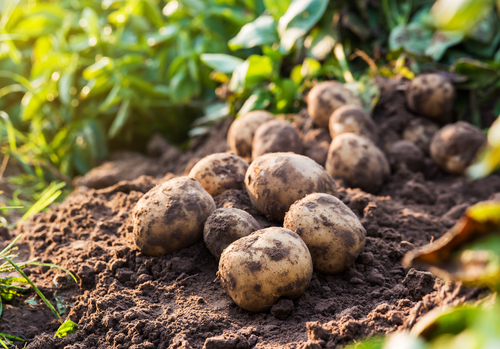
Food inflation for Russia, as of April, hit 12.66%, with general inflation resting at 10.2%. This does not account for the soaring prices of staple food products like potatoes, which have tripled in price over the past year. “On a daily basis, people are not buying smartphones and television sets,” Central bank governor Elvira Nabiullina said. “They are buying food. If prices there are growing faster, it forms high inflationary expectations.” This is precisely why I note that issues like the Japanese rice crisis are causing overall confidence to erode.
The average Russian household spent around 35% of its income on food this past April, a five-year high, as reported by the Romir think-tank. Russia is seeking exports from its remaining trade partners. Egypt exported 274,000 tonnes of potatoes to Russia this May, a 4.5X increase from the same period one year prior. Egypt also provided Russia with 13,000 tons of onions and has become a major supplier of nuts, fruits, and vegetables. Other meal staples such as carrots, beets, and cabbage have seen a surge in prices.
China has also been working to solve the potato shortage by sending Russia 65,000 tons throughout the first six months of the year. Georgia, Pakistan, Kazakhstan, and Armenia have also begun to ramp up food exports to Russia.
Both China and Egypt have profited heavily from this war from an agricultural standpoint, as each is providing both sides with much-needed food imports.
Russia’s agriculture minister believes prices will begin stabilizing in July. As RCB Governor Elvira Nabiullina explained, the average person will first notice surging prices at the grocery store. It becomes a daily reminder that there are breaks in the system. The Russians and Ukrainians lost confidence long ago, but the situation is not improving for them. We see it everywhere with food prices leading to unrest. The reasons contributing to rising prices do not matter as the people will immediately blame the government. We saw it in the US, for example, with people outraged over the price of eggs. The Japanese are livid that the price of rice has multiplied.
The French Revolution began when bread prices surged beyond what the people could afford. The Arab Spring ignited not because of political ideology, but because food became unaffordable. Socrates picked up a shift in food inflation in 2019 before the COVID lockdowns and I have warned that it would be wise to stockpile food as that inflationary cycle did not end with COVID. While we are not at a point of revolution just yet, food prices have a major impact on overall confidence and high prices correlate with high unrest. The people will not obey when they are hungry.
Posted originally on Jun 11, 2025 by Martin Armstrong
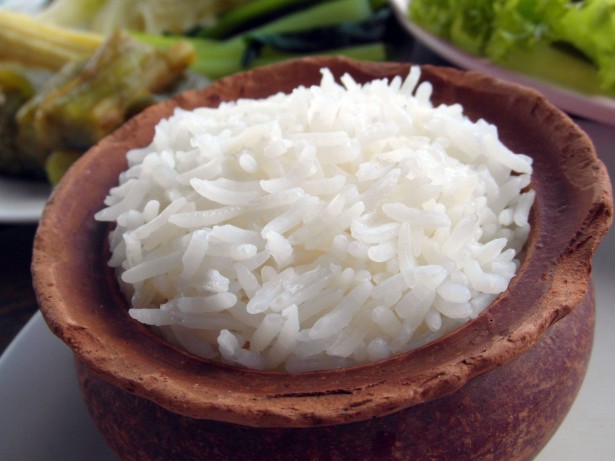
The Japanese government announced that it has been forced to release 200,000 metric tons of reserves from its rice stockpile once again, as the nation has been unable to reverse shortages. The government last released over 300,000 metric tons of rice from its emergency reserves, that was intended to last through July, in addition to the 310,000 tons released since March, but this is not sufficient to meet demand, and consumers are highly dissatisfied with the government’s response.
Retailers and local rice sellers with milling capacity will receive the first 100,000 tons of rice from the 2021 harvest. “We want to continue responding without slowing down so that the stockpiled rice can reach consumers quickly and at a low cost,” Agriculture Minister Shinjiro Koizumi said during a press conference. “We must never allow the virtuous cycle of prices and wages in the Japanese economy as a whole to break down. If the cause lies with rice, then I believe we must address such issues promptly.”
Poor weather conditions in 2023 led to a significant decline in crop yields. The Japanese government placed high tariffs on imported rice, and Japanese consumers strongly prefer domestic varieties. Japan reluctantly began importing rice to meet demand. In February alone, Japan imported roughly 40% of what it imported in FY2023. Japan was self-sufficient in rice production, but was forced to purchase rice from South Korea for the first time in 25 years. Japan has also turned to the United States to fill the gap. Panic buying remains prevalent despite the high cost of rice, as it is a staple in the Japanese diet. A mass uptick in tourism following the end of COVID has also been blamed for increased demand, with foreigners increasing by a record 342,000 in 2024.
The Ministry of Internal Affairs and Communications noted that rice prices rose 92.1% year-on-year in March, and despite releasing reserves, prices continued to rise. In mid-April, a 5kg bag of rice reached ¥4,220 (about $29–$30), over an 80% YoY increase. Rice prices hit a record high of ¥4,285 yen ($29.97) for 5kg of rice during the week ending on May 18, with some premium brands like Koshihikari exceeding ¥5,000 yen ($35). As of June 1, the average 5k bag of rice cost about ¥4,223 yen, a 50% annual increase.
This is an extremely serious issue in Japan. The rice crisis controversy is causing the public to lose confidence in the government at large. Prime Minister Shigeru Ishiba’s Administration approval rating sunk to an all-time low of 27.4%. Japanese Minister Taku Etō was forced to resign after stating that he personally has no concern for the rising price of rice. The Upper House election takes place in July, which is certainly unfavorable for the Liberal Democratic Party (LPD) who has been in power since 1955.
The next major rice harvest will be in August. The situation is pessimistic as only 1.458 million hectares were harvested, the lowest on record since at least 1900.
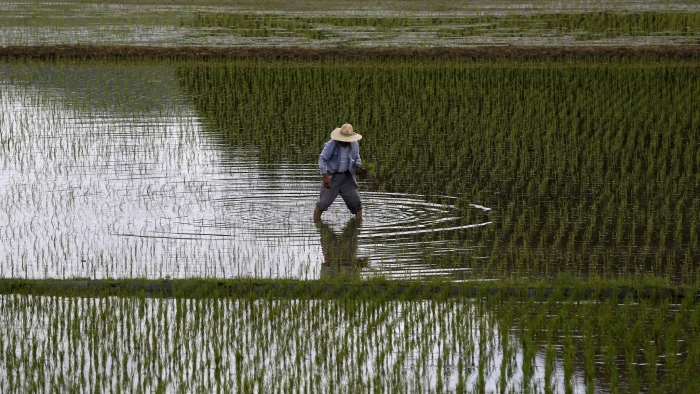
Farmers have been protesting against the government’s policy of rationing harvests. The EU and US allow farmers to produce as much as possible, and the government subsidizes any losses, while Japan has taken an opposite approach. The Japanese government believes it would lose $2.65 billion per year if it were to subsidize harvests, but it is already paying farmers $2.32 billion to ration production. Rice paddies are increasingly abandoned as the next generation has no desire to enter a low-paying industry that they believe has been stifled by government regulation. The Mi/OP: Ministry of Agriculture, Forestry and Fisheries (MAFF) has asked many farmers to focus on rice instead of other crops, but it will take years to replenish the reserves.
Japan has a much more serious issue on its hands as the nation is at risk of an outright default on its outstanding debt. For now, the rice crisis has caused the average person to become disgruntled with the leadership. They say the public is quiet and content when everyone is fat and happy, but now, every meal is a reminder of government mismanagement.
Posted originally on Jun 3, 2025 by Martin Armstrong
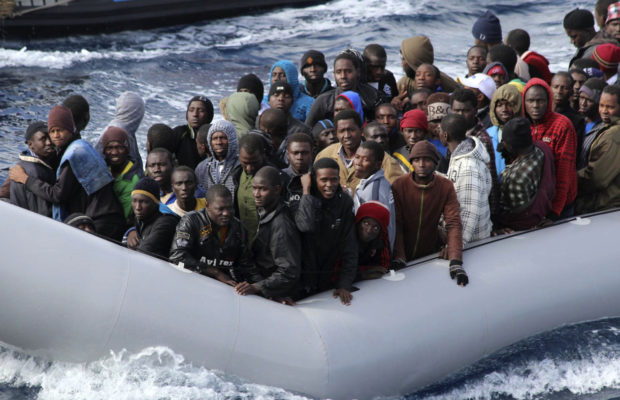
The United Kingdom admitted it “lost control” over its own national security and permitted the invasion of thousands of illegal migrants. Once the naval powerhouse of the world, the former British Empire has “lost” the ability to protect its own shores from the onslaught of migrants that have been pouring in since its leaders adopted open border policies. Men with little to no resources in canoes are suddenly overpowering the long-admired British fleet. In truth, the government has not “lost control,” as this is a calculated effort to reshape the UK.
Others are blaming France for not preventing migrants from launching from their shores. French police stopped 38% of migrants (8,347 people) attempting to reach the UK by boat this year. French authorities prevented 45% of new arrivals in 2024, and 47% in 2023. France is receiving €541 million over a three-year period from the UK government to prevent illegal crossings in the English Channel. France has hired hundreds of new law enforcement officers to patrol the waters, but the number of asylum seekers continues to rise.
Upon taking office, Sir Keir Starmer announced that the Rwanda plan was “dead” as he would not deport migrants to third nations. Labour has stated they are seeking a “calm and patient rebuilding” of migration policies and refuse to accept any large-scale deportation efforts. If you can make it to shore, you can likely stay. Starmer has said the UK is becoming an “island of strangers” but refuses to adopt any policies to curb the inflow.
The United Kingdom is experiencing a mass repopulation event. The former population is being replaced with both legal and illegal immigrants. Birth rates are plummeting, public debt is rising, and the government is openly permitting migrants to enter to maintain its public welfare state. Rather than fixing the issues that are causing the population to contract, the government is importing a new population. The British political elite, both Tory and Labour, have failed to grasp the historical implications of these shifts. It is not racist or xenophobic to observe patterns and hard truths. The core identity of the UK and other Build Back Better nations has been abandoned and replaced. They are not bringing in migrants for humanitarian purposes, and it would be a lie to think that the UK was completely unable to secure its border. If they can’t prevent a few thousand men on cheap boats from entering, how could they protect themselves in time of war? The government is allowing this to happen because it needs new taxpayers to replace the workers it failed to produce.
This is why conservative leaders are attempting to rebuild domestic manufacturing and providing incentives for women to have children. The global mainstream media is controlled by the left, and therefore, these nationalist values are painted as a form of hatred or superiority. Quite the contrary, as conservative leaders are attempting to save their nation’s culture and traditions by encouraging the success of their own population.
Globalism is directly tied to repopulation theory. “In the future, countries with aging populations may need migration to sustain their economies,” Bill Gates said, as he strongly believes that the world is overcrowded. “The world today has 6.8 billion people… that’s headed up to about 9 billion. If we do a really great job on new vaccines, health care, reproductive health services, we could lower that by perhaps 10 or 15 percent.”
Repopulation theory is more of a tactic than a theory. Hence, leaders like Starmer are ignoring warnings and standing idle as a demographic shift permanently alters their nation. As it stands, first-generation migrants will compose 25% of the UK’s population by 2035, according to the Centre for Migration Control, and the UK’s overall population will surge to 73 million. It may seem far off, but that is only a decade from now. All Build Back Better nations will be utterly unrecognizable thanks to repopulation tactics.
Posted originally on May 22, 2025 by Martin Armstrong
Japanese Minister Taku Etō has been forced to resign amid the ongoing rice crisis. For those unaware, Japan has been facing a severe rice shortage since 2024, which makes the US egg crisis look minuscule in comparison. Etō delivered a fatal blow to his career by saying that he does not need to worry about the price of rice since he receives it freely through donations.
His comments were taken as a modern-day “Let them eat cake.” “I asked myself whether it is appropriate for me to stay at the helm [of the agriculture ministry] at a critical time for rice prices, and I concluded that it is not,” Etō added, according to the Kyodo news agency. “Once again, I apologise to people for making extremely inappropriate comments as minister when they are struggling with surging rice prices.” He later added that his wife was upset with him for his comments, as they do purchase rice once the donations run dry.
Poor weather conditions in 2023 led to a significant decline in crop yields. The Japanese government has placed high tariffs on imported rice, and Japanese consumers strongly prefer domestic varieties. The government is releasing over 300,000 metric tons of rice from its emergency reserves through July, in addition to the 310,000 tons released since March, but this is not sufficient to meet demand.
Japan reluctantly began importing rice to meet demand. In February alone, Japan imported roughly 40% of what it imported in FY2023. Last week, rice prices hit a record ¥4,268 yen ($29) for 5kg of rice, up from ¥4,214 the previous week. The Ministry of Internal Affairs and Communications alerted the public that rice prices rose 92.1% year-on-year in March, but prices continued to rise. Last month in mid-April, a 5kg bag of rice reached ¥4,220 (about $29–$30), marking the highest price on record and over an 80% YoY increase.
Japan was previously nearly entirely self-sufficient in rice production, but recently bought rice from South Korea for the first time in 25 years, and has also turned to the United States to fill the gap. Panic buying remains prevalent despite the high cost of rice, as it is a staple in the Japanese diet.
The rice crisis controversy is causing the public to lose confidence in the government at large. Prime Minister Shigeru Ishiba’s Administration approval rating sunk to an all-time low of 27.4%. This scandal is occurring weeks ahead of the July Upper House election. This is yet another blow to the Liberal Democratic Party (LDP), which previously derived mass support from farmers. Over 4,000 farmers took to the streets of Tokyo to demand that the government lift regulations, as the government has been paying farmers to limit their harvest for over 50 years.
The New York Times reported that the average farmer earned $23,000 annually as of 2022, making the industry unattractive to the youth as the number of farmers begins to shrink with an aging population. One farmer told the NYT that a third of rice paddies in his town have been abandoned, and farmers worry that misguided agriculture policies are spurring the decline. The EU and US allow farmers to produce as much as possible, and the government subsidizes any losses, while Japan has taken an opposite approach. The Japanese government believes it would lose $2.65 billion per year if it were to subsidize harvests, but it is already paying farmers $2.32 billion to ration production.
The Liberal Democratic Party has primarily been in power since 1955. The rice crisis is causing a serious decline in confidence as the party is polling at a historic low. Prime Minister Ishiba issued a public apology for his minister’s remarks that led to public outrage, but the damage has been done. The economy is always the driving factor behind political support. The people no longer have trust in the Liberal Democratic Party as they have refused to change policy and seem disconnected from the current cost-of-living crisis.
Posted originally on May 5, 2025 by Martin Armstrong
A month before exiting the office, Joe Biden inserted a measure permitting California to ban gas-powered vehicles by 2035. Thankfully, the measure was overturned with bipartisan support in a 246 to 164 vote, with 35 Democrats breaking with party lines to overrule the ban.
House Majority Whip Tom Emmer, R-Minn., said, “There is no reason the radical climate policies of California should regulate the entire American population and rob every American of consumer choice.”
California’s Gavin Newsom fully supported the ban. The Advanced Clean Cars II rule would prohibit ALL gas car sales by 2035, at a time when the average American cannot afford an electric car or maintenance on an electric vehicle. Beginning in 2026, 35% of new autos sold in California would have been required to produce zero emissions. By 2027, 51% of all new cars would have been electric, and that amount would have risen to 68% in 2028, followed by an all-out ban on gas-powered cars in 2035.
California does not have the infrastructure to support such a measure. The California Independent System Operator has repeatedly called for for a “voluntary energy conservation” during holiday weekends as they are concerned the power grid cannot handle the volume. California may be in the spotlight, but countless Democrat-run states were on board with the ban. Washing state, for example, had a target to ban gas car sales by 2030. Delaware, New York, New Jersey, Oregon, Pennsylvania, Vermont, Maine, Massachusetts, Maryland, and Rhode Island were also considering restrictions on fossil fuel car sales by 2035.
This is part of a broader globalist trend to restrict the freedom of movement, citing fossil fuels as the reason for enhanced government control. The World Economic Forum (WEF) blatantly said that private car ownership should follow the fossil fuel ban.
“Goodbye car ownership, hello clean air: welcome to the future of transport,” the WEF published on its website back in December 2016. The first step is to transition cars to electric under the guise of climate change. This will cause all vehicles to be dependent on the electrical grid, which the government controls. Yet, they never planned to stop at electric vehicles. They want full control over you and where you go. It was announced at the 2023 Summer Davos that the ultimate goal is to end 75% of ALL car ownership, including electric vehicles, by the year 2050.
Schwab claimed that eliminating private car ownership could slash CO2 emissions by 3.9 billion tons per year. As a reminder, everyone flew on private jets and was chauffeured in limousines to Davos – they do not care about the environment in the slightest. There is a much darker motive at play that the public needs to realize. Free transportation will be provided in these 15-minute citieswhere most of the population will reside. Everyone will have a digital ID and social credit score. This is NOT about climate change — the goal is to eliminate the freedom of movement.
Thankfully, politicians in the US are beginning to wake up to the realization that the climate change agenda will not benefit their constituents. America avoided being swept into the globalist vortex the moment Kamala Harris lost the presidential election. The Trump Administration has taken numerous measures to overturn Biden-era globalist measures, such as leaving the WHO, but make no mistake that the unelected elites who control governments are eager for the world’s leading superpower to join their ranks again, and the battle against them will be ongoing.
I have created this site to help people have fun in the kitchen. I write about enjoying life both in and out of my kitchen. Life is short! Make the most of it and enjoy!
This is a library of News Events not reported by the Main Stream Media documenting & connecting the dots on How the Obama Marxist Liberal agenda is destroying America









 Centinel2012