AI – The Reality of Complexity


Armstrong Economics Blog/AI Computers

Posted Sep 2, 2023 by Martin Armstrong

Spread the love

COMMENT: You are always ahead of the curve. Today AI is the buzzword – with most of the AI being machine learning, where you were developing Socrates with real AI in the 70s and 80s.

Lynne

REPLY: I fooled around with neural nets when they first began. The problem with this approach is that you expect a machine to develop a human instinct as if you are playing a poker game. It is a gut feeling you might have about a person to alert you if he is bluffing or real. That cannot be coded, nor will a computer with machine learning be able to acquire such a “gut feeling,” which is an entirely different game than chess.

Socrates is NOT a neutral net. I had to teach it how to trade. I put my instincts into the system. Creating a neural net, throwing in all the data, and praying it will learn how to trade is more or less like a monkey throwing darts at the Wall Street Journal regarding what stock to buy in a bull market. Raven, a six-year-old chimpanzee, became the 22nd most successful money manager in the USA after choosing her stocks by throwing darts at a list of 133 internet companies. The chimp created her own index, dubbed MonkeyDex, and in 1999 delivered a 213 percent gain, outperforming more than 6,000 professional brokers on Wall Street.

Attempts to use a neutral net with machine learning have not beaten Raven in funds management. The level of complexity is monumental. On top of all of that, it will never discover the nonlinear structure of the world by dumping in a chunk of data and praying for the best.

US Special Operations Command Will Deploy Argus AI Program to Scour Social Media for Disinformation, Misinformation and Malinformation, National Security Authority to Protect U.S. Internet from “Pain Points”


Posted originally on the CTH on September 1, 2023 | Sundance | 224 Comments

Annnd… Here we go.  If you have not read the background {Go Deep}, you will not have the appropriate context to absorb the latest revelation about how the Dept of Defense will now conduct online monitoring operations, using enhanced AI to protect the U.S. internet from “disinformation” under the auspices of national security.

Gee, who would have predicted that U.S. internet operations would suddenly have a totally new set of enhanced AI guardians at the gateways? 

Read Carefully – Eyes Wide Open:

The US Special Operations Command (USSOCOM) has contracted New York-based Accrete AI to deploy software that detects “real time” disinformation threats on social media.

The company’s Argus anomaly detection AI software analyzes social media data, accurately capturing “emerging narratives” and generating intelligence reports for military forces to speedily neutralize disinformation threats.

“Synthetic media, including AI-generated viral narratives, deep fakes, and other harmful social media-based applications of AI, pose a serious threat to US national security and civil society,” Accrete founder and CEO Prashant Bhuyan said.

“Social media is widely recognized as an unregulated environment where adversaries routinely exploit reasoning vulnerabilities and manipulate behavior through the intentional spread of disinformation.

“USSOCOM is at the tip of the spear in recognizing the critical need to identify and analytically predict social media narratives at an embryonic stage before those narratives evolve and gain traction. Accrete is proud to support USSOCOM’s mission.”

But wait… It gets worse!

[PRIVATE SECTOR VERSION] – The company also revealed that it will launch an enterprise version of Argus Social for disinformation detection later this year.

The AI software will provide protection for “urgent customer pain points” against AI-generated synthetic media, such as viral disinformation and deep fakes.

Providing this protection requires AI that can automatically “learn” what is most important to an enterprise and predict the likely social media narratives that will emerge before they influence behavior. (read more)

Now, take a deep breath…. Let me explain.

The goal is the “PRIVATE SECTOR VERSION.”  USSOCOM is the mechanical funding mechanism for deployment, because the system itself is too costly for a private sector launch.   The Defense Dept budget is used to contract an Artificial Intelligence system, the Argus anomaly detection AI, to monitor social media under the auspices of national security.

Once the DoD funded system is created, the “Argus detection protocol” – the name given to the AI monitoring and control system, will then be made available to the public sector.  “Enterprise Argus” is then the commercial product, created by the DoD, which allows the U.S. based tech sectors to deploy.

The DoD cannot independently contract for the launch of an operation against a U.S. internet network, because of constitutional limits via The Posse Comitatus Act, which limits the powers of the federal government in the use of federal military personnel to enforce domestic policies within the United States.  However, the DoD can fund the creation of the system under the auspices of national defense, and then allow the private sector to launch for the same intents and purposes.   See how that works? 

RESOURCES:

Using AI for Content Moderation

Facebook / META / Tech joining with DHS

Zoom will allow Content Scraping by AI 

AI going into The Cloud

U.S. Govt Going into The Cloud With AI

Pentagon activates 175 Million IP’s **ahem**

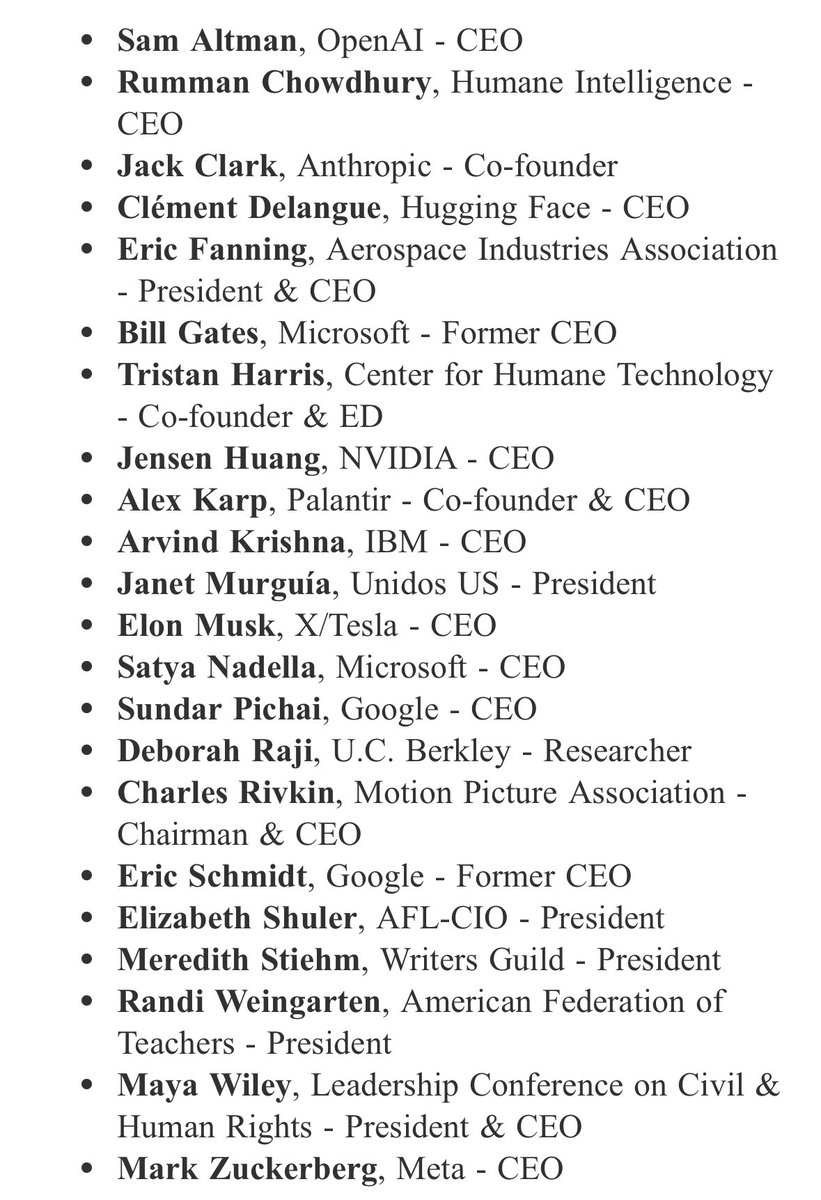
Big Names to Attend Political AI Forum

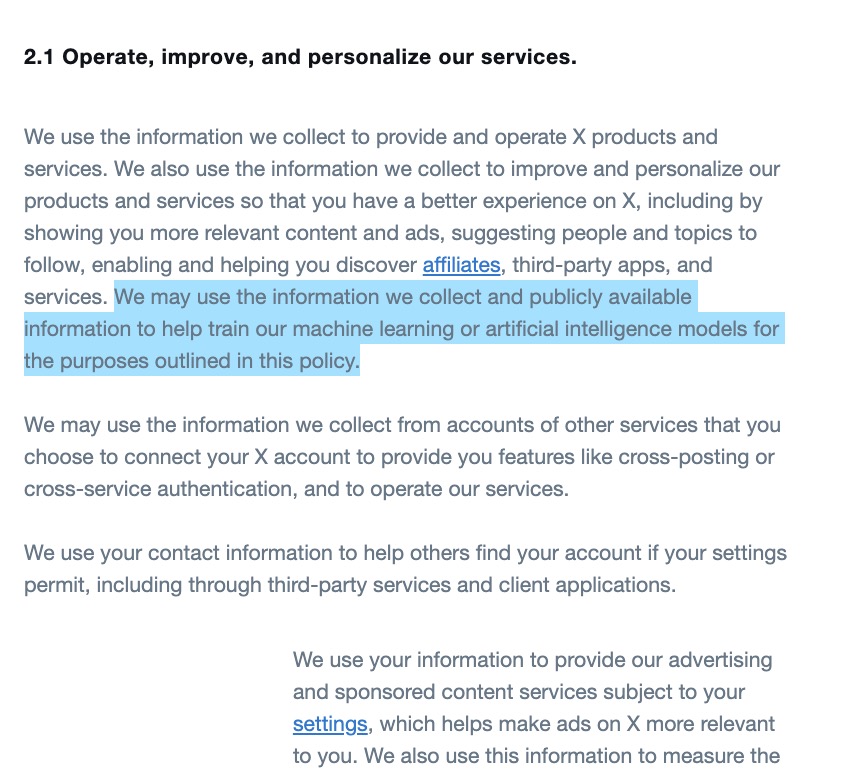
Twitter Updates Privacy Policy Notifying Users Their Content Will Be Used to Train and Develop Enhanced AI


Posted originally on the CTH on September 1, 2023 | Sundance 

The use of Enhanced Artificial Intelligence to control information and communication is a subject that too few people understand.  This is why I have spent time trying to share information so that people can see into the future of their internet reality.  Everything will change.

As you should know by now, the X platform (Twitter) is designed to produce a different user experience based on “definitions” of the user.  The definitions are applied by the platform, to create unique identifying characteristics of the user.  The result is that each user gets a completely different platform experience, based on their definitions.

“Twitter is a different platform for each user.”  Repeat that phrase as often as needed to understand the evolution of what is coming to the American internet.

You might ask, how is applying all of these granular definitions even possible?  The answer is through the use of AI.  Humans will no longer be assigning the definitions of you; an autonomous system will take on the job of assigning the definitions.  Now, keep referencing the word “definitions,” because that is your identity and gateway pass into the platform content.  If you carry a particular definition, you will be blocked, throttled, shadow-banned or experience friction applied to your user id.

Remember when Elon Musk restricted users and claimed it was because the platform content was being “scraped” by organizations who were using the content to train their Enhanced AI systems?  Remember, Musk saying that, and expressing his concern?   Well, now the platform is telling users in a new X Corp privacy policy, that X corp itself is going to do exactly the thing Musk said he abhorred.

Twitter (X Corp) is going to use the content you provide to train the AI how to apply the definitions.  All of your interactions with the X Corp product are then going to be tailored based on the definitions that are applied to your identity, your account.   Some content will not be available to you; some content will only be available to you; the key and essential point is that YOU are defined.

Once you understand how your experience with the X platform is an outcome of definitions applied by X platform to you, then you can elevate your thinking and start to understand what the new American internet is all about.  Your definitions will determine what paths and/or roadways are available to you.

Enhanced AI will act like an invisible gatekeeping system on the American internet, showing or hiding internet outcomes according to your definitions.  It’s not that the offramp (a specific pathway on the internet) doesn’t exist, it’s an issue of you not being able to see any off ramp.  Your experience online is modified according to the definitions, that are applied to you.   This is why Enhanced AI is needed to (a) monitor and define; then (b) control the pathways of your travel.

Currently, your experience with Twitter is contingent upon your definitions.  Very soon, that same process will apply to the larger internet.

There really is no other phrase that seems to adequately describe the future for online life in the United States than to describe it through the prism of the previously discussed shadow banning that takes place on the X-platform for specifically wrong-thinking users.

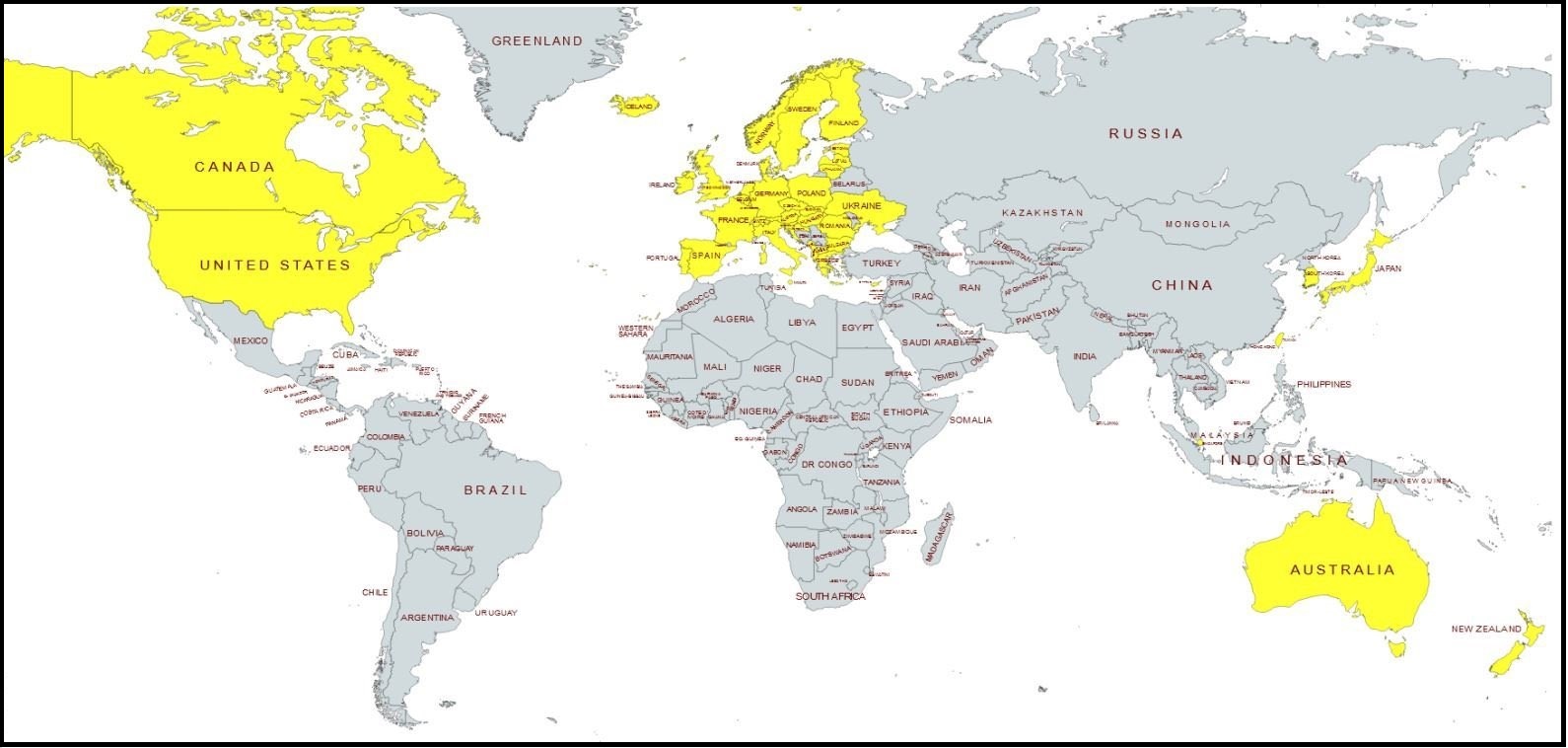
It is important to begin with the end in mind.  Perhaps some people are unaware that internet services, meaning the actual experience of using the internet for communication and commerce, are not the same in every nation.  In fact, it is quite a different experience depending on where on the globe you are located.  The differences are driven by internal controls, the intranet of the regional internet per se.

The internet in China is not the same as the internet in Europe, which is not the same as the internet in Australia, which is not the same as the internet in North America, which is not the same -at all- as the internet that now exists within Russia.  Even in some continents, the internet traffic flows are controlled at different levels within each nation. The “world wide web” is a format, but when you get down to the national level, things change.

This baseline helps to understand that internet freedom is defined by access to information and commerce.

To the extent the information or commerce is defined as against the interests of the authority structure, or potentially a threat to the national security interest of the government therein, the internet content is filtered, modified, censored, removed or just simply blocked from view.  This is one layer in the information control system.

Another layer is the flow of commerce that floats atop the flow of information.  This is where advertising, product sales, purchasing and general e-commerce takes place. This layer represents another option for control; therefore, this e-commerce layer should be considered running in parallel to the information, albeit perhaps indirectly attached.

When western government applied economic sanctions against Russia via financial restrictions writ large, the layer of internet commerce control merged with the information and national security control systems of the internet.

Russian citizens were blocked from e-commerce access, specifically from western nations in alignment with the sanctions, and the mechanisms of online purchasing were restricted.  However, the entire world did not participate in the sanctions, and there is a massive amount of e-commerce that takes place, even with the systems of western control financial blocks in place.

Additionally, there is a large black-market system for commerce and financial transactions that started organically in the aftermath of the Russian sanctions.  Crypto currency, as a financial transaction mechanism, was predictable; however, over time people became even more strategic and alternate transfer systems were created.  You can purchase advertising in Russia, but are you really purchasing advertising – or are the purchasers really just transferring funds?  Think about it.

I share that Russia example, because I do not want people to get too disheartened in what is going to happen here in the United States.  There will always be a market for information, regardless of the control systems that are created to stop it.  Additionally, there will always be smart rebellious people who think of ways to subvert the intents of the control mechanisms.  Freedom may be diminished from a raging fire to a small burning flame, but it will never be fully extinguished.  WE just need to learn to adapt.

It took me over two years to assemble The Benghazi Brief, because the background story was so large and complex that it took time, research and retrospection to appropriately contextualize the truth of the issue. {GO DEEP}  The Benghazi attack was a small, albeit deadly outcome, of a much larger story.  The brief walks through everything in context.

In a similar construct, the Shadowbanning of The United States internet is a big and complex story, and I am only about halfway through the assembly of all the data to put context to it.  However, as time becomes critical, it is important for me to push the information forward – because many of the timelines in the construct are likely to surface before I am complete with the fully assembled story.

I am going to drop some links that will help serve as a flashlight into the rabbit hole.  Each story may seem initially disparate or disconnected.  However, I would encourage you to think big picture with each of the puzzle pieces that are presented.  This is likely to become a series, and I will create a new “Internet” category on the side bar where I will tag any future elements.

Please keep in mind, the issues of e-commerce: ie. information monetization, advertising, deplatforming and debanking, are not disconnected from the issues of information control.  The same larger national security system that has mandated (and will mandate), information blocks, content censorship, content restrictions, content removal and various platform control elements, is all part of one interconnected compliance system.  Electronic Commerce and Electronic Information are all subject to the online control process.  This is a public-private partnership on the internet.

The origin of the public-private partnership goes all the way back to the origin of the tech system in relationship to the DARPA programs and government sponsored research labs.  The outcome of the modern partnership is evident in the Dept of Homeland Security (DHS) collaboration with the various communication platforms or pipes of information. Systems like the Global Internet Forum to Counter Terrorism’s (GIFCT) database, are simply outcomes of the partnership.  There are hundreds more.

There is a rush now to provide context because Artificial Intelligence (AI), or smart data systems, are launching into the United States internet control mechanisms almost daily.  We are close to the time when AI will be triggered to help control the content of the internet under the guise of national security.

The timeline for full deployment of the modern United States internet control system, is likely around late fall and early winter this year, in advance of the 2024 U.S. election cycle.

Everything will change.  Every route of online traffic including Internet Service Providers (ISP’s) to filters and rerouting on Domain Name Systems (DNS), to the Internet Protocol (IP) itself will be subject to change in the form of background shadow banning.  If the DHS partnership is successful, you will not initially notice – much like a shadow banned platform user doesn’t notice their new defined status.  The shift will become more obvious over time.

One odd outcome will be a regional targeting system.  Depending on where you are in the USA, your online experience will be different. There will also be enhancements to your internet travel based on your profile.  Good thinking users will have benefits that enhance the experience of the user and supports the interests of the national security guardians.

♦ Deployment of a Virtual Private Network (VPN) is irrelevant in this construct.  A VPN is like you renting a car without a license plate.  You travel past all the Automatic License Plate Readers, arrive at your destination, leave the keys in the ignition and just abandon the car.  Your personal travel was essentially invisible to the APLR system.  However, when the internet roads are controlled by the national security state, and there is no longer an offramp to the destination, your VPN use is irrelevant – you cannot reach your destination.  That’s part of the shift.

You will notice I use the term “definition” quite often.  That is because the root of every control mechanism is grounded upon defining things.  When you accept the terms ‘disinformation’, ‘misinformation’, and/or ‘malinformation’, you are buying into the process that permits definitions to determine your travel. Those who define both you and your destination, ultimately control your online experience.

Now, before getting to a recent example of this construct as it is being built, it is important to return to the e-commerce aspect and overlay the Diversity, Equity and Inclusion (DEI) index into the world of online commerce.

♦ Right now, you can physically boycott Bud Light by choosing another brand.  However, for total goods and services the amount of online purchasing is now exceeding the amount of purchasing in real life (brick and mortar shopping).   Overlay the economic control system (think Russian sanctions approach) with the national security requirements for DEI, amid all online commerce, and apply that layer of analysis.  In the e-commerce world, choosing not to buy Bud Light will become a little more difficult; and those who do support the boycott become subject to the previously mentioned “definitions”.

I’m jumping ahead, because today there was a big development. As you read this, do not think small as presented – think bigger.  Think beyond the use of AI moderation on a platform, and think of AI moderation on the U.S. Internet System.  Online moderation conducted by AI:

OPEN AI – […] GPT-4 is also able to interpret rules and nuances in long content policy documentation and adapt instantly to policy updates, resulting in more consistent labeling. We believe this offers a more positive vision of the future of digital platforms, where AI can help moderate online traffic.

[…] Content moderation demands meticulous effort, sensitivity, a profound understanding of context, as well as quick adaptation to new use cases, making it both time consuming and challenging. Traditionally, the burden of this task has fallen on human moderators sifting through large amounts of content to filter out toxic and harmful material, supported by smaller vertical-specific machine learning models. The process is inherently slow and can lead to mental stress on human moderators.

We’re exploring the use of LLMs to address these challenges. Our large language models like GPT-4 can understand and generate natural language, making them applicable to content moderation. The models can make moderation judgments based on policy guidelines provided to them. (read more

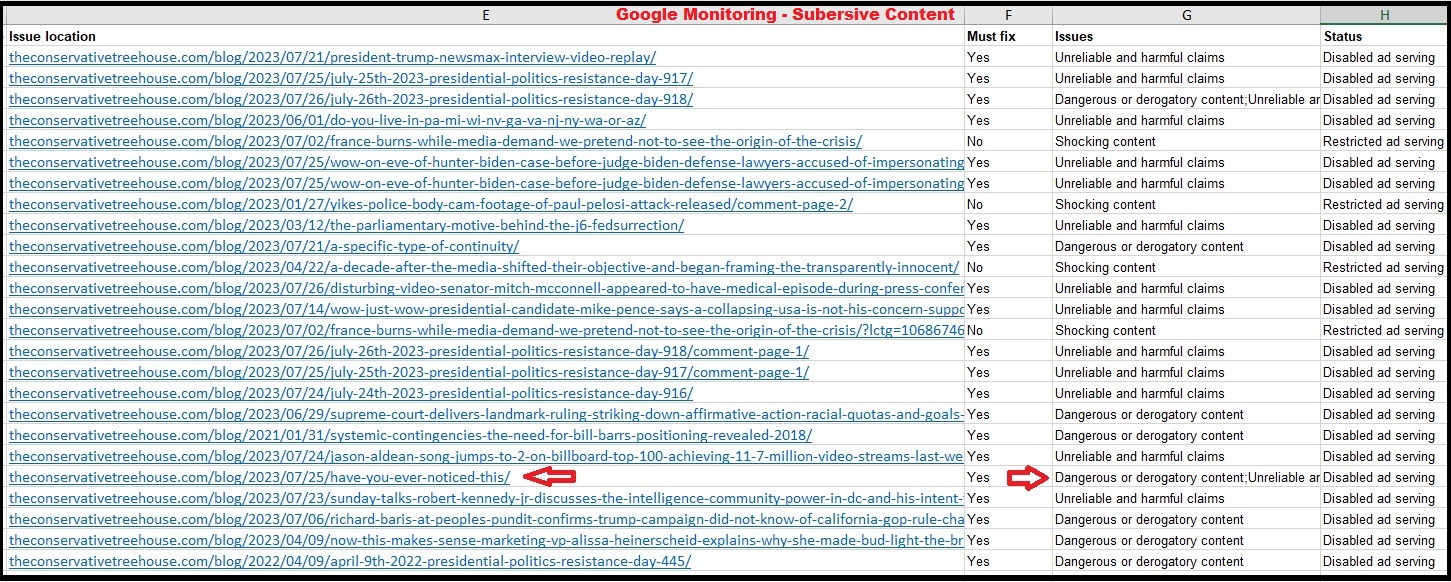
Do you remember me telling you about what I noticed in the most recent Google spider crawls?

“The Alpha/Google spiders are not crawling around with their enhanced AI looking for words, phrases or content issues.  Enhanced Artificial Intelligence (AI) has given the spiders the ability to look for context.  The new Alpha/Goog AI spiders are crawling the internet looking for information provided with a detrimental and accurate context.  Those who are applying truthful context are the subversive voices that must be targeted.  Keep this in mind.”

Google Spider Crawl Result, CTH Subversive Content, July 2023

As we have shared, the crawl is not headlines, the crawl is in content.  Yes, even content in the comment section is now flagging to the control systems.  Why? Because we operate a proprietary constructed private commenting system that doesn’t have a backdoor and protects you, the user.

The Google Spiders are newly enhanced with AI instructions, dispatched looking for content and ‘context’ that is against the interests of the Vanguard, Blackrock, Larry Page (Alpha/Goog owners), and the public-private partnership.

Look at the one I have highlighted above titled “Have you ever noticed this.”  Do you remember it?  [Reminder Here] This content is considered “dangerous or derogatory”. Think about that for a moment.  Discussing the humor of Donald Trump, and the fellowship it creates, is considered “dangerous” to the interests of Google.

Do not get alarmed, get informed.

I share this information with you so that you understand what is being constructed and what is about to be deployed on a large scale throughout the U.S. internet operating system.  The U.S. internet will be different.  The social media restrictions became more prevalent and noticeable in the past several years; now it is time for DHS to expand that process to the entire U.S. internet.

When I wrote about Jack’s Magic Coffee shop, people initially thought I was crazy – but the guys inside the coffee shop didn’t.  Eventually DHS control over Twitter was revealed in the Twitter files.  The same background is true here.  The entire American online apparatus is going to change, quite soon.

More will follow….

RESOURCES:

Using AI for Content Moderation

Facebook / META / Tech joining with DHS

Zoom with allow Content Scraping by AI 

AI going into The Cloud

U.S. Govt Going into The Cloud With AI

Pentagon activates 175 Million IP’s
NEW ♦Big Names to Attend Political AI Forum

[Chuck Schumer Organizes AI Forum – Details Here]

Hunting the Desperate for Data


Armstrong Economics Blog/Cryptocurrency Re-Posted Aug 29, 2023 by Martin Armstrong

People are lining up to peer into a reflective orb to scan their eyes scanned in exchange for crypto – welcome to 2023. Sam Altman, Alex Blania and Max Novendstern founded Worldcoin “with the ambition of creating a new identity and financial network owned by everyone,” as per their introduction email. “Worldcoin consists of a privacy-preserving digital identity (World ID) and, where laws allow, a digital currency (WLD) received simply for being human. We hope that, where the rules are less clear, such as in the US, steps will be taken so more people can benefit from both.” Over 2.25 million people have provided their biometric data to gain access to the blockchain and the company is now worth around $3 billion.

The founders first targeted poor areas of Africa where they offered desperate people $60 worth of crypto for their biometric data. CNBC reported that they hired hundreds of “Runners” who acted as sales people to recruit new clients to harvest their data. The people worked on commission only and targeted people on the streets, schools, shopping centers, and anywhere they could find vulnerable people willing to give away their personal information. In Kenya, for example, there were reports of thousands of people lining up to join the platform.

The aim is to harvest the data of every individual globally and then connect that data to a decentralized ID linked to the blockchain. They call the need for biometric data proof-of-personhood “lets you prove you are a unique and real person while remaining anonymous.” I for one do not need a computer to prove to me that I am a real human being. Absolute nonsense.

Sam Altman is an intelligent man. He helped develop ChatGPT and OpenAI. Now he claims this concoction can prove that living people are not AI robots. World ID is now active in 34 countries with over 1,500 orbs available. They claim the data is encrypted but almost anything can be hacked or seized by government. In fact, Worldcoin has already been hacked by people who sold the data on the dark web.

Governments are becoming suspicious or perhaps jealous of that valuable data. The UK, France, Argentina, and Germany are investigating the company and Kenyan authorities raided their offices in Nairobi. The powers that be will create a digital passport linking every human to a centralized database. They likely will not allow a private firm to maintain such a database, for our safety of course.

Understanding REAL AI


Armstrong Economics Blog/AI Computers Re-Posted Aug 4, 2023 by Martin Armstrong

QUESTION: Mr. Armstrong, I attended your 2011 conference in Philadelphia. A friend of mine insisted and paid for the ticket, telling me your computer has been incredible on forecasting long-term that nobody can come close. I confess I thought your forecasts at the event were out there. You put up the war cycle and said it would all begin in 2014. That was three years in advance. There were cameramen there filming what later became the film The Forecaster. I hear they are doing a sequel to show all the forecasts you made ten years ago have come true. I also hear they are doing a Holywood film on you, like the Big Short.

You have accomplished what nobody else has done, and you are even a legend in markets and were even a speaker at the American Hackers convention in computers. With all the craziness going on about Artificial Intelligence, some people call it a threat to humanity, and others seem to be hinting that AI might take over everything. So there is no better person to speak about this than you. Are we at risk from AI, or is the hype some excuse claiming AI starts the war, not the people, as a cover-up?

DS

ANSWER: ChatGPT has dazzled the world and led everybody to think that AI will be something like the movie Terminator or The Matrix. I will dig out the old program I wrote in the early 1980s for my children. It was a simple program where I taught the computer to have a conversation. I would ask a question like – Do you have a dog? My daughter would reply yes. Of what is their name? She would then say the name. It stored all that info so the next time she went to the computer; it would ask: How is your dog Buttons? One day she came home from school and saw I had the computer apart, and she started crying, saying I killed it.

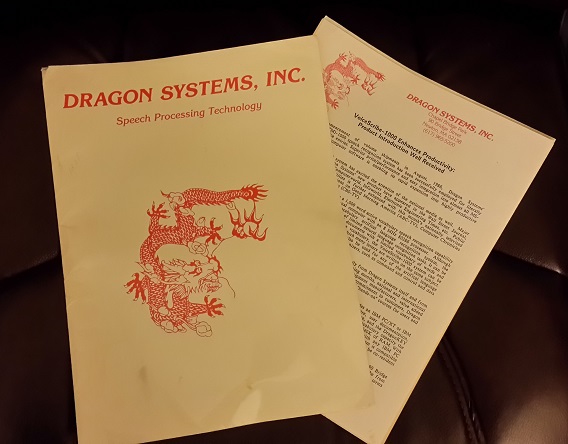
Back then, I worked with Dragon Systems. They produced hardware that you plugged in a board in the slot of an old IBM XT, and the computer would speak. She would bring over her girlfriends to prove to them her computer talked to her.

The point is that such a program is not really AI in the sense that it is self-aware to the point it will take over the world. With the introduction of the internet, such a program that has free reign to search can provide astonishing answers. Nevertheless, this is by no means self-aware.

The theory behind these wild claims entirely rests upon this theory that there is no God, we have no soul, and our entire existence is no more than a biological supercomputer. Therefore, they presume that if you through in enough data, some miracle will emerge, and it will become conscious just as a living being. That may make a great movie, but I think I am pretty well advanced in AI, and aside from disagreeing with this theory, I can write code that will make you think it is alive, but that is just mimicking human interaction. I do not know of any possible way to create a fully conscious AI system. It is only theory.

As far as Socrates is concerned, I poured myself into the program. It is NOT a neural net that you hope for the best. I taught Socrates how to analyze and know history, so I did not hardwire relationships. That is why it has discovered things and can do long-term forecasting beyond anything out there. As I have said, we are all connected. You cannot forecast a single market in isolation – you will always be wrong caught by the wildcard from an external market. They lost in Russia in 1998 and needed cash in the middle of a liquidity crisis. So they started selling assets everywhere to raise money to cover their losses in Russia. You would never have seen that coming just by looking at a single market.

Here Come the AI Regulators – the United Nations


Armsreong Economics Blog/AI Computers RE-Posted Jul 27, 2023 by Martin Armstrong

Most people are unaware that the agency that was created to regulate the international telegraph has seized authority over the technology of AI when they lack any understanding of the subject. This is the International Telecommunication Union (ITU), and its global regulations are trying to now tackle AI. This is part of the United Nations agency regulating what seems to be expanding from communication technologies to computer programming. This is like a taxi driver assuming he can fly a Boeing 747. They have expanded their jurisdiction from telegraph to televisions, satellites, cellphones, and internet connections. Now they want to regulate AI.

I fail to understand how a non-programmer can even understand this sort of technology. As a programmer, even looking at my own code, I have to get in the right mindset to review it. It is not easy, and you have to insert notes throughout your codes because to develop AI, YOU OFTEN HAVE TO CREATE NEW WAYS EVEN TO DO CODE. I fail to see how anyone who is not a programmer could understand coding. Someone trying to review my code would have a steep learning curve. Coding is also an art form.

Russia and China have been at the forefront of a competing vision for the internet, in which countries have greater control over what their citizens can see online. China is far more advanced in censorship apparatus. Both Russia and China have now come out and warned against this latest move by the United Nation’s ITU and said that they “believe that any attempts to limit their sovereign right to regulate national segments of the internet and ensure their security are unacceptable.”

The ITU hosted its sixth annual AI for Good Global Summit. This brought together policymakers, experts, industry executives, and robots for a two-day discussion of ways in which AI could help and harm humanity. Proposed solutions from the summit included a global registry for AI applications and a global AI observatory. I am opposed to that for the next step will demand a copy of your source code for regulators to review. Sorry, but Socrates will then be turned off.

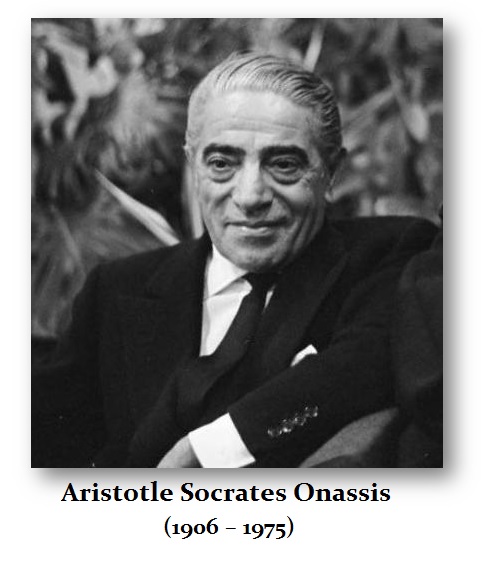
I was given the contract to manage the platinum holding of Aristotle Onassis. It took months to get approved to be able to trade at huge levels. The first phone call I made to a bank, they already knew the positions I had. Someone in the Commodity Futures Trading Commission leaked that info to select bankers. So much for government ethics.

Artificial Intelligence Positioned to Define Terms of Reality


Posted originally on the CTH on July 12, 2023 | Sundance 

There has been a great deal of increased discussion surrounding the issues of automated Artificial Intelligence, colloquially called “AI.”

At the central core of the AI issues in communication; you inevitably enter a discussion on the issue of definitions and terms.  Who is determining the definitions of what constitutes valid information? Who is determining what types of information are not valid, not approved for communication networks and how are their definitions being applied?

A solid and short-read thread on the assembly of people, groups and institutions surrounding the issue of AI in communication and media is presented HERE.

[Article/Thread LINK]

The topic of AI in general is a very large conversation.  The topic of AI specific to communication is equally large and perhaps even more significant.

AI applied to communication must first establish a need for it to exist.  Within that discussion, government interests and corporate interests take large seats at the table.  Social media platforms, communication outlets, almost the entire technology sector and various special interest groups are also stakeholders in the discussion of how AI can be applied to the filtering of information – or what I would more appropriately call the CONTROL of information.

The predicate of the conversation jumps around a little, but the issue of defining reality is throughout the discussion.  This is where my prior warnings about defining information must be emphasized.  I am losing the current argument, but I retain optimism that eventually the control mechanisms will need to be destroyed by a generation that falls under its influence.

“There is no such thing as “disinformation” or “misinformation” or “malinformation”.  There is only information.  There is information you accept and information you do not accept.  You were not born with a requirement to believe everything you are told; rather, you were born with a brain that allows you to process the information you receive and make independent decisions.”

There are only two elements within the public discussion of information – truth and not truth.

In an era filled with “fact-checkers” and institutional guardians at the gates of Big Tech, let me explain exactly why it is important not to accept the speech rules of the guards.

When you accept the terms “disinformation”, “misinformation” or the newest lingo, “malinformation,” you are beginning to categorize truth and lies in various shades.  You are merging black and white, right and wrong, into various shades of grey.

When your mind works in the grey zone, you are, by direct and factual consequence, saying there is a problem.  You are correct; however, this is where people may make a mistake. The problem is supposed to be there.

It is not a solution to the problem to try and remove the grey simply because it takes too much work to separate the white pixels from the black ones.  You were born with a gift, the greatest gift a loving God could provide.  You were born with a brain and set of natural instincts that are tools to do this pixel separation, use them.

If you define the grey work as a problem you cannot solve on your own, you open the door for others to solve that problem for you.  You begin to abdicate the work, and that’s when trouble can enter.

The sliding scale of Pinocchios is one of the most familiar yet goofy outcomes.

Put more clearly, when you accept the terminology “disinformation”, you accept a problem.

The problem is then the tool by which authorities will step in to make judgements.

Speech, in its most consequential form, is then qualified by others to whom you have sub-contracted your thinking.

When you willingly sub-contract information filters to others, you have lost connection with the raw information.

CTH was founded upon the belief that truth has no agenda, nor does it care about you, your feelings, or your opinion of it.  It just sits there, empirically existing as evidence of information in its most pure form.

The search for truth, in all things, is the mission objective of this assembly.   Often, we don’t like the truth; often, the truth is bitter, cold, challenging and even painful to accept.  However, the truth doesn’t care.

Information in its most raw form is ambivalent to your opinion.  If you struggle to accept these things, that’s when you need grey.  The New York Times is not called the “grey lady” accidentally.

Personally, I am an absorber of information – perhaps on a scale that is unusual.  But I do not discount information from any form until I can put context to it and see if the information makes sense given all the variables present.

When something doesn’t feel right, it’s almost always because it isn’t right.

Often, I find myself struggling in the grey and complex.  It is not unusual to spend days researching, digging, clarifying a situation, only to discover the path to finding the truth is in another direction entirely.   Erasing everything and starting over is frustrating, but it is genuinely the only approach that works; and often finding truth is supposed to be difficult, that’s why it is rewarding.

In the digital information age, we are bombarded with information.  It is easy to be overwhelmed and need to find something or someone who has better skills at separating the black grains from the white ones.  All opinions in this quest should be considered; thus, it is important to allow the free flow of information.

I am not necessarily a speech absolutist.  There is some language that needs to be constrained if we are to participate in a respectful society, with grandma’s rules and knowing the audience.  The CTH has guidelines for comments for this exact reason.  However, those constraints need to be based on a set of inherent values.   When it comes to information it is important to draw a distinction from speech.

There needs to be an open venue for all information. Unfortunately, when we begin to apply labels or categorization to information, there’s an opportunity for information to be manipulated – even weaponized.  Saul Alinsky spent decades pondering the best techniques to weaponize information and speech.  Alinsky’s intentions in the endeavor to change society by changing how language and information was used were not good. He devoted his completed rulebook to Lucifer.

Be careful about anyone saying we need to label or categorize information in order to control or remove speech from the discussion.  Be careful about those who advocate to automate this process via Artificial Intelligence filters.

You were not born with a requirement to believe everything you are told; rather, you were born with a God-given brain that allows you to process the information you receive and make independent decisions.

Teach your family, especially your children and grandchildren, to view information only insofar as it is valuable to your understanding the real world based on morals and virtues.  Upstream, those who are now defining the rules and terms of automated information filtering do not carry those same morals and virtues.

No one is going to get to avoid this issue.  We are on a glidepath to a future that was/is entirely predictable.

Is Elon Musk Doing Damage Control Using Tucker Carlson Interview?


Posted originally on the CTH on April 18, 2023 | Sundance

I write the headline in the form of a question but in reality, all of the data points in one direction, yes.

If I am going to be brutally honest, this Elon Musk scenario is like the August 2022 review when it became obvious all of the DeSantis 2024 data only reconciled in one direction.  In many ways, Musk is to social media interests as DeSantis is to DC UniParty interests.

More than half the readers here have picked up on the clues and cues showing Musk has a very real motive to position himself in the best light possible given the situation that surrounds him.  Unfortunately, that position creates conflicts between ideals (what’s possible) and reality (what limits surround one’s ability).  Musk is riding a tiger, and the intelligence community ring masters control the beast.

The damage control motive is a few layers deep.  However, one of the recent events that would lead to Musk’s public need for brand image protection comes from the situation with Matt Taibbi:

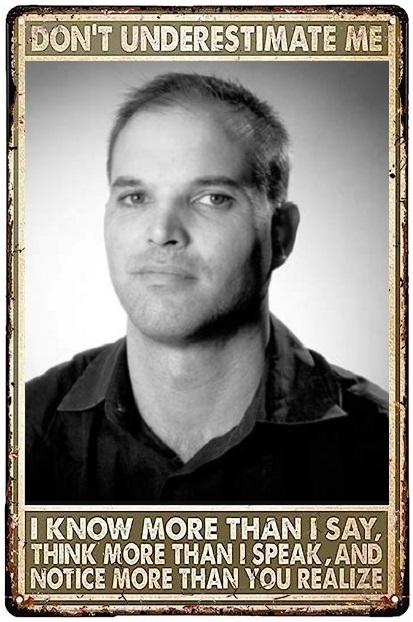
…”When we got into the Files, we were caught off guard. The content-policing system was more elaborate and organized than any of us imagined. A communications highway had been built linking the FBI, the Department of Homeland Security, and the Office of the Director of National Intelligence with Twitter, Facebook, Google, and a slew of other platforms. Among other things this looked more like a cartel than a competitive media landscape, and I had an uneasy feeling early on that publicizing this arrangement might create a host of unanticipated problems for everyone involved. Still, there was no question this was in the public interest. So we kept going.”  (more)  ~ Matt Taibbi

On the issue of Twitter File access and personal motivation, Taibbi’s best financial and short-term professional interests would be served most by retaining a positive relationship with Musk/Twitter.  The fact that Taibbi would turn away from the lucrative interests, says something positive about his compass heading.

Accepting the COVID-19 files were never released, what some have called the Fauci files, and accepting the revelations within the filtered internal documents stopped abruptly, we can consider that ‘stakeholder’ interests became more consequential as the outside peering gained depth.  Likely the core of the platform, which we now know is based on a U.S Government intelligence relationship, needed a protective boundary.

When you overlay the reality that all of Elon Musk’s ventures are dependent on the same USG for viability, the vulnerability & motive to shape outcomes (via messaging) is stark.  Tesla, SpaceX, Star Link and all of Musk’s endeavors are intertwined with government approvals, authorizations and operations.  Control of the Twitter platform as a tool for public opinion is in alignment with those same Big Gov interests.

Another core issue that should be the focus of attention, a string that can unravel the gordian knot, is the financial mechanisms of Twitter.

As a business model, Twitter never made any sense.  That’s the obvious answer why no other Tech business ever made an effort to absorb or merge it.

When you overlay the government activity, then overlay the financial value to the government for the access and control that everyone now admits was in place, the Occam’s Razor of financial operations would indicate some form of government subsidy (direct or indirect) along with some form of financial funding (again, direct or indirect) was in the background of the platform.

As CTH has said for several years, a financial agreement in the background of Jack’s Magic Coffee Shop just made sense.  The platform held/holds a value to the U.S. govt, so a subsidy in operations for sustainability of the influence seemed obviously motivated.

While there are some important datapoints showing Musk trying to take steps to make Twitter a viable business without govt support (80% staffing reductions, monthly fees for premium content, etc.) the prior financial relationship is almost certainly still in place.  The internal operations, the preestablished public-private partnership, at the core of the platform also appears to retain the same general executive operators as before the takeover.

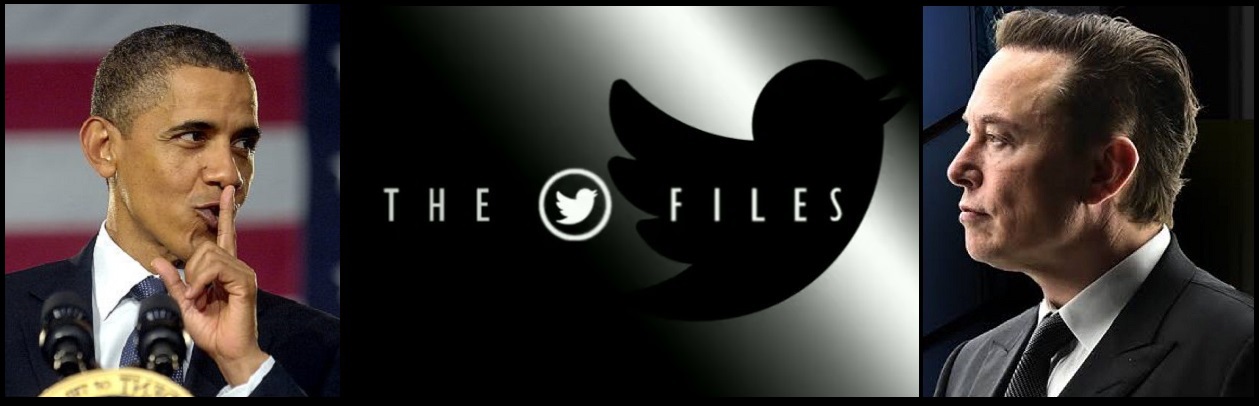
Again, I go back to Twitter File Release #8 – […] “The United States intelligence apparatus was/is actively using and working with the Twitter platform to align with U.S. government interests.  The govt was coordinating, instructing, assisting and benefitting from the relationship.  Pro govt positions were amplified, and information adverse to the interests of the Pentagon and State Dept was removed, hidden, throttled.

Unfortunately, as admitted by Twitter File #8 Author Lee Fang, a writer for The intercept, “The searches were carried out by a Twitter attorney, so what I saw could be limited.” There is no ‘could be‘ in that statement.  The searches were limited, specifically time limited putting all of the scrutiny on the timeline when Donald Trump was in office.

CTH has no vested interest in this pretending nonsense.  We all know, hell, its public record, the use of Twitter and Facebook as a tool to advance U.S. foreign policy began during the Obama administration.  There are dozens of mainstream press accounts of Barack Obama and Hillary Clinton reaching out to Twitter and Facebook for support during the ’11/’12 Arab Spring.   This is not controversial, it happened.

However, the current release uses a carefully applied time filter only showing DoD and DoS use of the platform (to assist foreign policy) starting in 2017, when President Trump took office.  This is intentional.  The origin of the practice starts with Barack Obama. (more)

Twitter file release #8 was curated, fullstop!

That curation reality is empirical within the data itself.  That acceptance stands as a solid foundation to recognize that all of the releases are filtered and curated to protect certain levels of interest.  And within that larger truth we discover the reason why the government sponsored COVID-19 operations were never fully revealed.

Just as AG Bill Barr was shown to be mitigating damage that could come from the American public discovering that Executive, Legislative and Judicial branches of government all collaborated in the Trump-Russia fabrication, presumably Barr motivated to save the country from the reality within the scale of corruption, so too does the network around Elon Musk hold a similar motive.

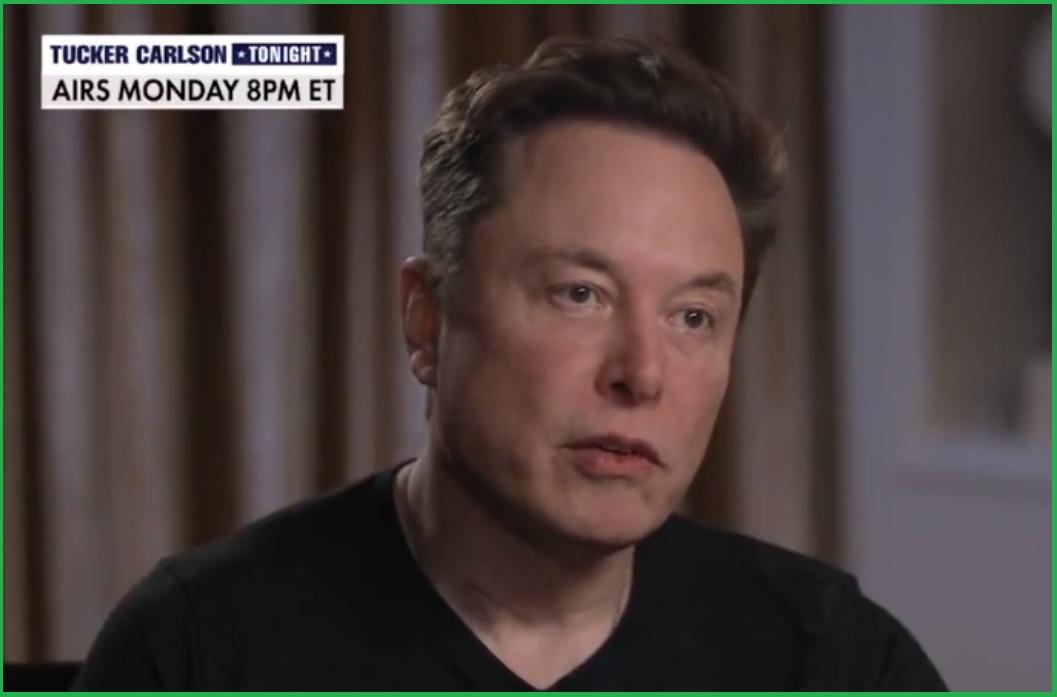
You put all this together and the sheer weight of it indicates Elon Musk appeared on the Tucker Carlson broadcast to shape public opinion favorably away from the reality of what the real Twitter story reveals.  Government control is even bigger than general public understanding.  Elon Musk was/is doing damage control.

Outhouse Counsel – “He voted for the cabal behind Obama, Clinton, and Biden. Not Biden. He placated the low-info left audience with his Democrat “credentials”, impressed the hopeful with the sincerity of his little nonsequitorious “admissions”, and then sought to appease the appalled on the right with another “admission” that he’s not happy with Biden and why can’t we have a common-sense moderate middle. He then frosted this cake with humble sweetener that was designed to reinforce his naivety in certain areas; the posturing that when he bought Twitter he really didn’t understand the EXTENT of the government infiltration.

And he did this over and over again, gently saying rather alarming things quietly and in a way that could be taken multiple ways because they were tempered by seemingly guileless admissions, hopeful commentary, and witty self-deprecation (he was fooled by erstwhile competitor google/Ai founder , he sheepishly shrugs at his losing money by buying during bad timing, he fired employees from “Twitter” but he’s also implicitly a victim of those who voluntarily left but no mention of who now works for X Corp…)

He is a genius at more than computer coding. Please don’t fall for it.”

There are trillions at stake… 

Is AI Dangerous?


Armstrong Economics Blog/AI Computers re-Posted Apr 3, 2023 by Martin Armstrong

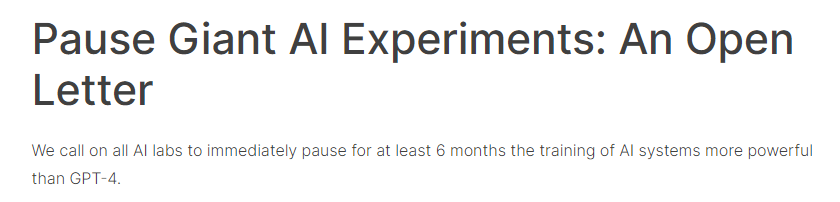
Back in 2015, I addressed the concern then of Stephen Hawking and Elon Musk who were worried about what might happen as a result of advancements in Artificial Intelligence. They’re concerned that robots could grow so intelligent that they could independently decide to exterminate humans. Today, it has only gotten worse with GPT-4 open for everyone to try. In doing so, they are training the computer and expanding its knowledge base. Musk, with a gaggle of others, have penned a letter calling for a “pause” in AI development.

“Powerful AI systems should be developed only once we are confident that their effects will be positive and their risks will be manageable.”

I have tinkered with AI since the early 1970s. There is no doubt these guys are influenced by concepts like in the movies Terminator and the Matrix. But from a real-world programming side, to outdo human thinking is easy. A computer model can far surpass humans in so many ways. What we have done in finance is unparalleled, but the key here in our system was to ELIMINATE human emotion. Only in that matter has Socrates been able to beat human judgment which is always flawed.

We could create an AI that is better than any medical doctor for there to it is offering only an “opinion” which is not always correct. A computer that had the full database of diseases could sort out things in the blink of an eye. Indeed, I contracted a parasite that went into my left eye. I could feel it. The doctor would not listen, He sent me to some specialist for something else and I told him what the issue was. Only because the same thing happened to him, he called my doctor and said this guy has a parasite. He then sent me to an infectious disease specialist who in just 1 minute looked at my blood work and said yes, you have a parasite. To this day, I have lost some vision in my left eye because nobody would listen. If they never experienced it, they would not even think about it. A computer would not make that human mistake.

MATRIX-Neo

What these guys are talking about is what I would call an open-ended AI system meaning it has no actual purpose. That is a black box and allowing a computer to develop into areas nobody has even thought about, could pose a danger more on the lines of the MATRIX or Terminator.  They wrote in their letter:

“This does not mean a pause on AI development in general, merely a stepping back from the dangerous

race to ever-larger unpredictable black-box models with emergent capabilities.”

I am pretty good at programming. This is all conceptual design. In the case of Socrates, it is confined to the financial markets. It is not going to surf the web in search of the answer to what is the name of Lady GaGa’s dog. Socrates will not discover the cure for cancer. It does not have a medical database. The type of AI that they are talking about is limitless machine learning that can write its own code and go in directions that nobody thought about. Let’s start with a description of the actual real-use-case problem. Why would you even need such a program to go in directions that a human could not even imagine?

terminator

The government does not want independent thought – they do not even want intelligent police for the same reason Stalin kill intellectuals. The government wants a mindless and emotionless drone. They want robot police and robot army who follow orders and will never hesitate. As I have stated, when the police and military no longer follow orders and side with the people, then revolutions take place. Those in power know that. Hence, they want robots who will control the mob, kill us when ordered, and for that, they do not need full unlimited AI that could also turn on the government.

The AI that is now unfolding with no direction and just letting it go and seeing what develops may be interesting for a lab experiment. But we must respect that there MUST be limitations. Socrates has beaten everyone, including me. But it is confined to this field. It has a purpose and no design would have ever allowed it to go off and explore other fields. There was no rationale to create such an open-ended machine learning system. It’s confined to the world economy, capital flows, weather, and geopolitical developments.

The Tech Industry


Armstrong Economics Blog/AI Computers Re-Posted Mar 27, 2023 by Martin Armstrong

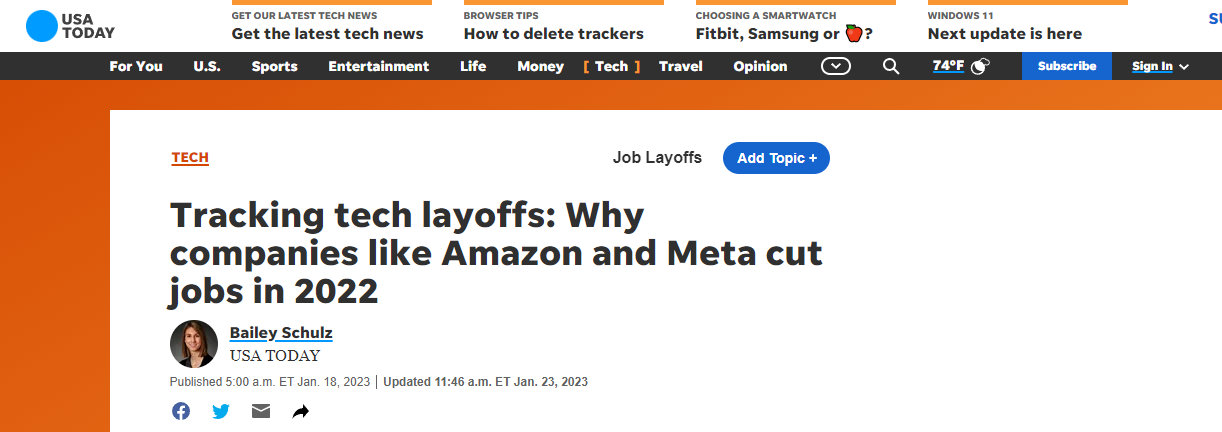
QUESTION: The tech industry has been shedding jobs like it’s no tomorrow. Are you still hiring when everyone else is firing?

GH

ANSWER: Yes, but only experienced people in Machine Learning/AI. We are in a different field with completely different end goals. Not a start-up company and not trying to create an AI that will know the name of Lady Gaga’s dog.

The layoffs are because they are focused on consumer spending. We are not directed at that. In fact, the worse the economy gets, the greater our demand becomes. We have always been counter-trend in that regard.