
Armstrong Economics Blog/Economics
Posted Jul 27, 2019 by Martin Armstrong
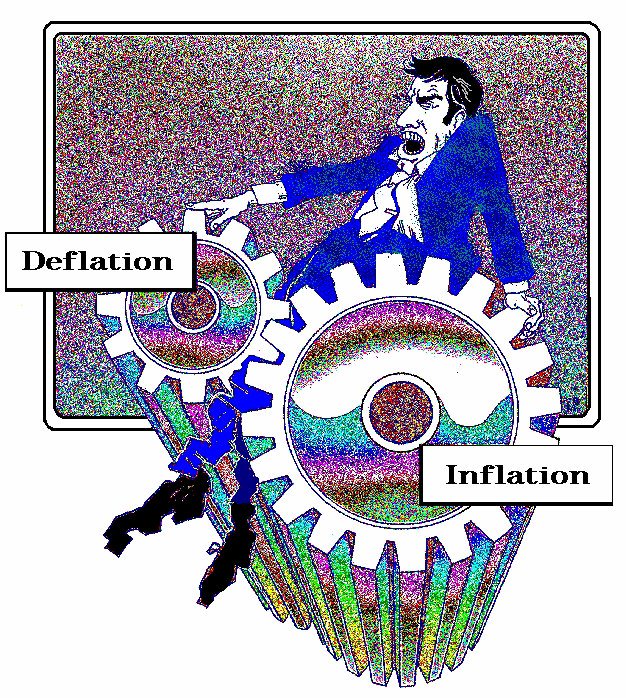
QUESTION: Mr. Armstrong is there any way we can not have inflation. If so how? If not what would you say 5% or more?
S
ANSWER: It all depends on your definition. The type of inflation coming is more STAGFLATIONwhere prices rise due to cost-push (shortages) but there is a declining economic growth. The more familiar inflation is a DEMAND lead event because the economy is booming. Because governments are desperate for money, they keep raising taxes and are increasing enforcement. This trend is DELATIONARY for it reduces disposable income. The INFLATIONARY pressure comes from the rising costs which are set in motion by raising taxes.
Then we add the impact of the climate chaos creating shortages in food and that furthers cost-push inflation. The end result will be the shift from PUBLIC to PRIVATE where people will run away from government debt on all levels and move to tangible assets to survive.
Are Some Property Funds Being Suspended in London?
Armstrong Economics Blog/Real Estate
Re-Posted Jul 25, 2019 by Martin Armstrong
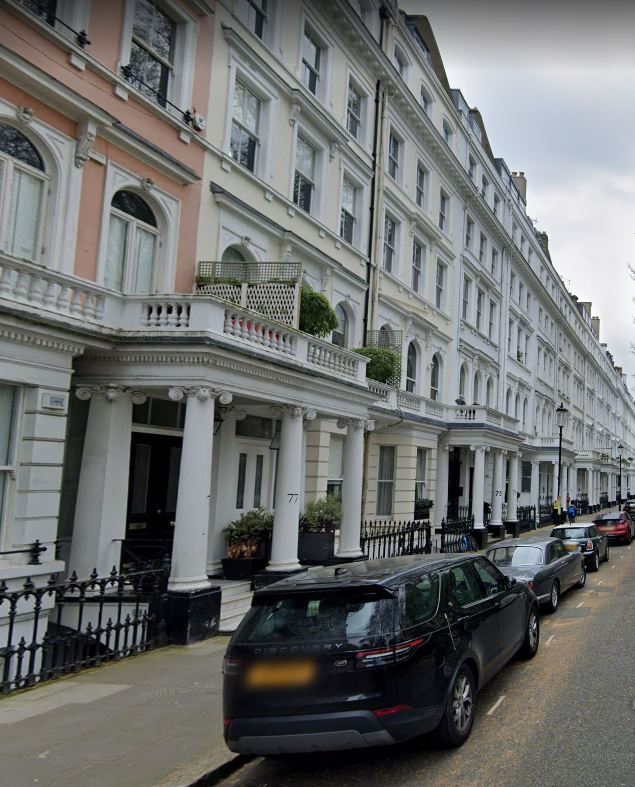
The collapse in property values in London has created a crisis in property funds. M&G Investments blocked withdrawals from its UK property fund as it seeks to distance itself from the troubled manager. Back on June 3, 2019, the asset manager wrote to clients of the M&G UK Property fund to inform them it had placed a temporary restriction on customers from taking out their money for up to six months. Restrictions were also placed on certain withdrawals from the Prudential UK Property fund, which feeds into the M&G fund affected about 65% of customers in the fund. Both funds were only available for long-term institutional investors such as pension funds and the total under management was around £636m in assets while the Prudential Fund had about £50m.
The real estate funds are going to be the worst since they tend to be illiquid.
Europe’s Debt: America’s Crisis – Full Video
The Real Adam Smith: Ideas That Changed The World – Full Video

Published on Mar 28, 2016
Milton Friedman Speaks – Myths That Conceal Reality
Published on Jul 31, 2012
France & the New Digital Tax
Armstrong Economics Blog/The Hunt for Taxes
Re-Posted Jul 22, 2019 by Martin Armstrong
The French GAFA tax in an acronym for Google, Apple, Facebook and Amazon which the French government has just passed. They are imposing a 3% tax on all business in France. The US has promised retaliation. This is part of the entire problem the world faces with trade. A lot of people talk about trade wars, but they live in the past. There is something far more serious at stake and that is the digital world and how governments are hungry for taxes to the point that they are threatening the viability of the world economy going forward.
The Sum of All our Economic Fears
Armstrong Economics Blog/Monetary Reform
Re-Posted Jul 18, 2019 by Martin Armstrong

 A lot of people have written in about my comments concerning how the world is completely in a state of global chaos which is why this year I will be providing a continued video update for the 2019 WEC attendees. Those looking at the arrays of many markets are also starting to notice how global markets are correlating on a worldwide basis. Never before have I witnessed such mass correlation around the world which is demonstrating that this is by no means about local issues or the rise and fall of GDP, interest rates, or inflation. We are facing a VERY serious crisis and this is part of the Monetary Crisis Cycle
Attendees of Orlando will receive a special report on the Monetary Crisis Cycle outlining the timing and what we should expect as the years unfold. It is clear that our computer is picking upo this great convergence never before witnessed in financial history. This year’s WEC we will be covering the world to reveal just how we are all connected and how to keep track of this insanity that we are going to embark upon.
This is clearly the sum of all our economic fears.
Agricultural Loans Declining Right on Target
Armstrong Economics Blog/Agriculture
Re-Posted Jul 18, 2019 by Martin Armstrong

One of the most fascinating observations I have made over my career has been that the banks always lend at the top and contract lending at the bottom in every market. Going into 1980, banks were calling me to ask if I wanted to borrow money. Recently, I got a phone call from my bank asking, once again, if I would be interested in a loan. This to me is merely a confirmation that we are approaching a major turning point.
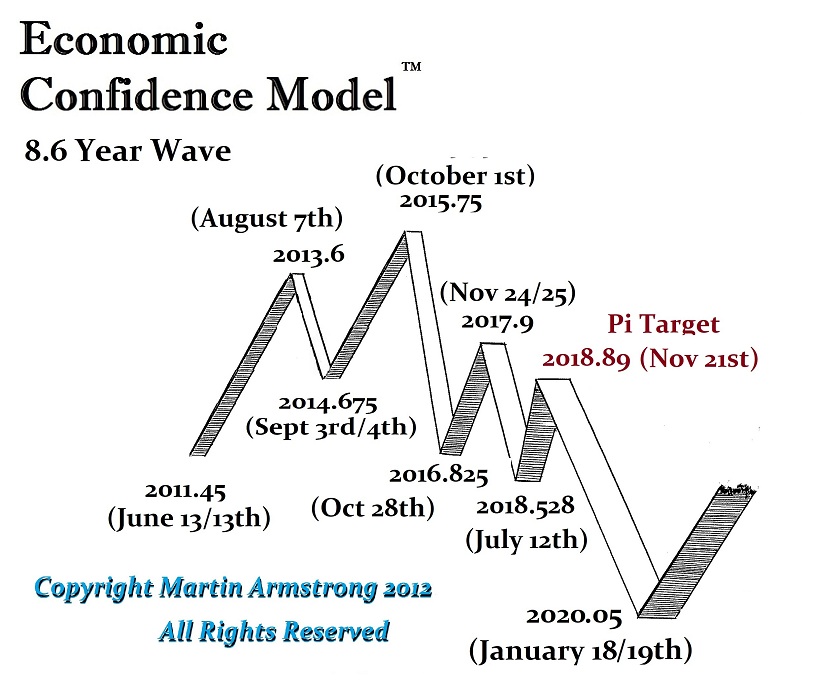
When I look at lending into the agricultural sector, the big Wall Street banks are once again perfectly in line with the cycle. They peaked in loans to farmers back in 2015, and have been declining ever since going into 2020. Bank lending to the agricultural sector peaked with the ECM and we will see it bottom in 2020. Our model will be correct in forecasting the next wave, which will be a cost-push inflationary wave. As the agricultural sectors come back to life, thanks to shortages, then the bankers will be willing to lend once again. The banks are the PERFECT indicator of how not to run a business. They make decisions emotionally and always get the economy dead wrong (i.e mortgage-backed securities peaked in 2007)
Giddy Up – IMF Outlines “Global” Danger From Trade War With President Trump…
July 17, 2019
An article from Reuters discussing the position of the International Monetary Fund (IMF) is interesting. Essentially the IMF is warning that “global economies” will contract by $455 billion next year due to the ongoing trade conflict between the U.S., China, the EU and to a lesser extent, Japan. Yes Alice, there are hundreds of billions at stake.
There’s really no reason to doubt the amount estimated, though I think it’s on the short side, but the yearly value seems in line. I have no doubt President Trump will cost the “Global Economy” $455 billion…. because that money will be transferring back to the America First economy. That’s what happens as MAGAnomics reverses the IMF trade (wealth distribution) model.

The IMF is correct in part (the effect), incorrect in part (the cause), and mostly hypocritical. The Euro-minded IMF rails against the high value of the U.S. dollar, but simultaneously ignores the motives behind the intentional devaluation of currencies that are pegged against the dollar.
WASHINGTON (Reuters) – The International Monetary Fund said on Wednesday the U.S. dollar was overvalued by 6% to 12%, based on near-term economic fundamentals, while the euro, the Japanese yen and China’s yuan were seen as broadly in line with fundamentals.
The IMF has been at odds with U.S. President Donald Trump over his use of tariffs to resolve trade imbalances, but its assessment that the dollar is overvalued is likely to give Trump more fodder for his frequent complaints that dollar strength is hampering U.S. exports.
Trump has railed against European and Chinese policies that lead to what he calls a devaluation of the euro and other currencies against the dollar.
[…] The Fund – which has warned that the U.S.-China trade war could cost the global economy about $455 billion next year – said recent trade policy actions were weighing on global trade flows, eroding confidence, and disrupting investment. But they had done nothing to reverse external imbalances thus far. (read more)
China and the EU have devalued their currency in an effort to block the impacts from President Trump and the ‘America First’ trade policy. Because those currencies are pegged against the dollar, the resulting effect is a rising dollar value. In essence, the globalist IMF is now blaming President Trump for having a strong economy that forces international competition to devalue their currency.
That’s the stupid hypocrisy of global banking outlooks. They make a decision to devalue their currency, which causes the dollar value to rise, and then turn around and blame the U.S. dollar for being overvalued.
The root cause of the devaluation is unaddressed in their argument. The EU and China are trying to retain their global manufacturing position and offset the impact of President Trump’s tariffs by lowering the end value of their exports.
In the bigger picture this is why President Trump is the most transformative economic President in the last 75 years. The post-WWII Marshall Plan was set up to allow Europe and Asia to place tariffs on exported American industrial products. Those tariffs were used by the EU and Japan to rebuild their infrastructure after a devastating war. However, there was never a built in mechanism to end the tariffs…. until President Trump came along and said: “it’s over”!
After about 20 years (+/-), say 1970 to be fair, the EU and Japan received enough money to rebuild. But instead of ending the one-way payment system, Asia and the EU sought to keep going and build their economies larger than the U.S. Additionally, the U.S. was carrying the cost of protecting the EU (via NATO) and Japan with our military. The EU and Japan didn’t need to spend a dime on defense because the U.S. essentially took over that role. But that military role, just like the tariffs, never ended. Again, until Trump.
The U.S. economy was the host for around 50 years of parasitic wealth exfiltration, or as most would say “distribution”. [Note I use the term *exfiltration* because it better highlights that American citizens paid higher prices for stuff, and paid higher taxes within the overall economic scheme, than was needed.]
President Trump is the first and only president who said: “enough”, and prior politicians who didn’t stop the process were “stupid” etc. etc. Obviously, he is 100% correct.
For the past 30 years the U.S. was a sucker to keep letting the process remain in place while we lost our manufacturing base to overseas incentives. The investment process from Wall Street (removal of Glass-Stegal) only made the process much more severe and faster. Wall Street was now investing in companies whose best bet (higher profit return) was to pour money overseas. This process created the “Rust Belt”, and damn near destroyed the aggregate manufacturing industry.
Fast forward to 2017 through today, and President Trump is now engaged in a massive and multidimensional effort to re-balance the entire global wealth dynamic. By putting tariffs on foreign imports he has counterbalanced the never-ending Marshal Plan trade program and demanded renegotiation(s). Trump’s goal is reciprocity; however, the EU and Asia, specifically China, don’t want to give up a decades-long multi-generational advantage. This is part of the fight.
One could argue that China’s rise happened inside this period, and as a consequence they have no comprehension of an economic history without the institutional advantages. They’ve never competed with the U.S. under any terms of equivelence or fairness; they’ve only ever known the advantages. Combine that with the Chinese communist mindset and you get the extreme severity of their position.
So yeah, there’s going to be pain – for them; massive economic pain – as the process of reestablishing a fair trading system is rebuilt. This dynamic is the essence of reciprocity that benefits Main Street USA. Unfortunately, putting ‘America First’ is now also against the interests of the multinationals on Wall Street; so President Trump has to fight adverse economic opponents on multiple fronts…. and their purchased mercenary army we know as DC politicians.
No-one, ever, could take on all these interests. Think about it… The EU, Asia, World Bank, International Monetary Fund, China, Russia, U.S. Chamber of Commerce, Iran, U.S. Congress, Democrats, U.S. Senate, Wall Street, the Big Club, Lobbyists, Hollywood, Corporate Media (foreign and domestic), and the ankle-biters in Never Trump…. All of these financial interests are aligned against Main Street USA and against President Trump.
Name one individual who could take them on simultaneously and still be winning, bigly.
They say he’s one man. They say they have him outnumbered. Yet somehow, as unreal as it seems, he’s the one who appears to have them surrounded.
Incredible.
Lord knows we can’t spare this man.
He fights!


 Centinel2012