QUESTION: Mr. Armstrong; Who is being irrational? The markets or the analysts?
KE
ANSWER: That’s simple. It is the analysts. The markets are ALWAYS correct. When you have bank failures unfolding, people will withdraw money out of caution. It is the very same reason there are ancient hoards of coins. You find coins in times of economic stress and uncertainty. This is a purely RATIONAL human response to uncertainty. It consistent for thousands of years. For any analyst to claim the markets are acting “irrationally” only proves they should look for another profession.
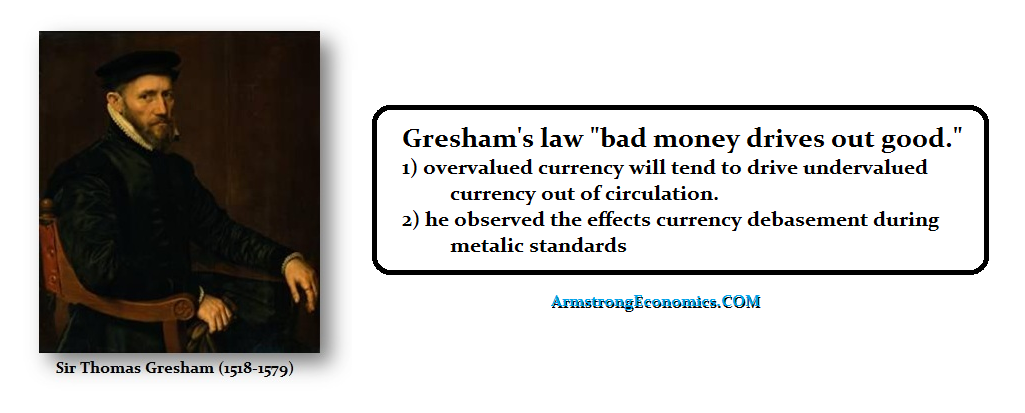
Sir Thomas Gresham began his career in 1543 working at Mercers’ Company at the age of 24 years old. He left England for Antwerp/Amsterdam which was the financial center of the day much like Wall Street. That was where he became a merchant businessman which was where banking existed in those days. He became an agent for King Henry VIII in the Antwerp/Amsterdam market. He became a trader and in so doing, he began to observe how capital moved.
The interesting aspect was that he was called in as a sort of crisis manager as I have been during financial upheavals. In 1551, Sir William Dansell, who was King’s Merchant there in the markets, ended up putting the English Government into a financial crisis thanks to his mismanagement. The English turned to Gresham for advice since he became quite astute at trading. They adopted his proposals. It was then that Gresham proposed a very ingenious tact. He advocated a FOREX intervention to push the pound higher on the Antwerp change. His intervention proved so successful that in just a few years King Edward VI had discharged almost all of his debts. By pushing the pound higher, he was able to repay the previous debts by devaluing them.
Therefore, the English Crown sought Gresham’s advice in all their finances until Mary came to the throne in 1553. Gresham was instantly pushed aside for Alderman William Dauntsey, who lacked trading experience and quickly sent the Crown into financial stress. Gresham was called back to deal with the mess once again.
Under Queen Elizabeth’s reign (1558–1603), he continued as a financial agent of the Crown and also became the Ambassador Plenipotentiary to the Governor of the Netherlands. This was the period of civil unrest in Antwerp which compelled him to return to England in 1567. This is also when the English had the founding of the Royal Exchange to compete with the Netherlands. It was Gresham who made the proposal to build, at his own expense, a bourse or exchange. This demonstrated that Gresham was a trader and understood how capital flowed. Apart from some small sums to various charities, Gresham bequeathed the bulk of his property (consisting of estates in London and around England giving an income of more than 2,300 pounds a year) to his widow and her heirs, with the stipulation that after her death his own house in Bishopsgate Street and the rents from the Royal Exchange should be vested in the Corporation of London and the Mercers Company, for the purpose of instituting a college in which seven professors should read lectures, one each day of the week, in astronomy, geometry, physic, law, divinity, rhetoric and music.[1] Thus, Gresham College, the first institution of higher learning in London, came to be established in 1597.
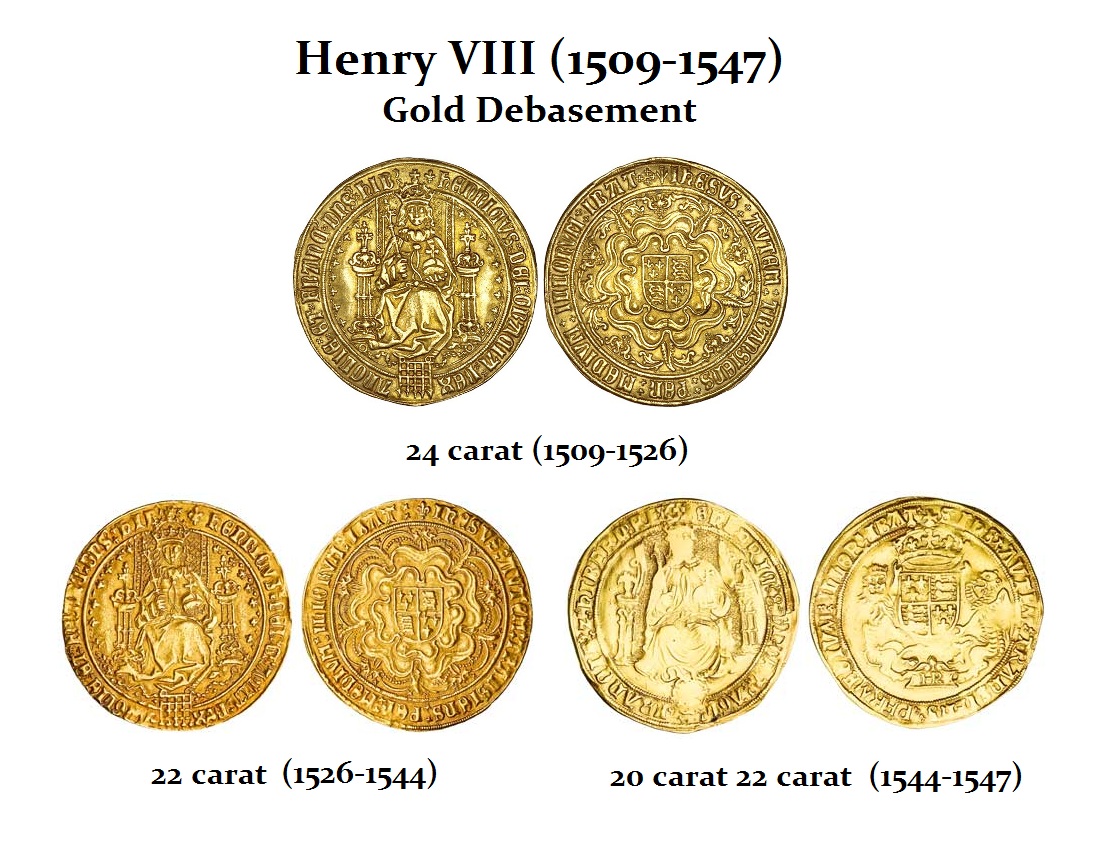
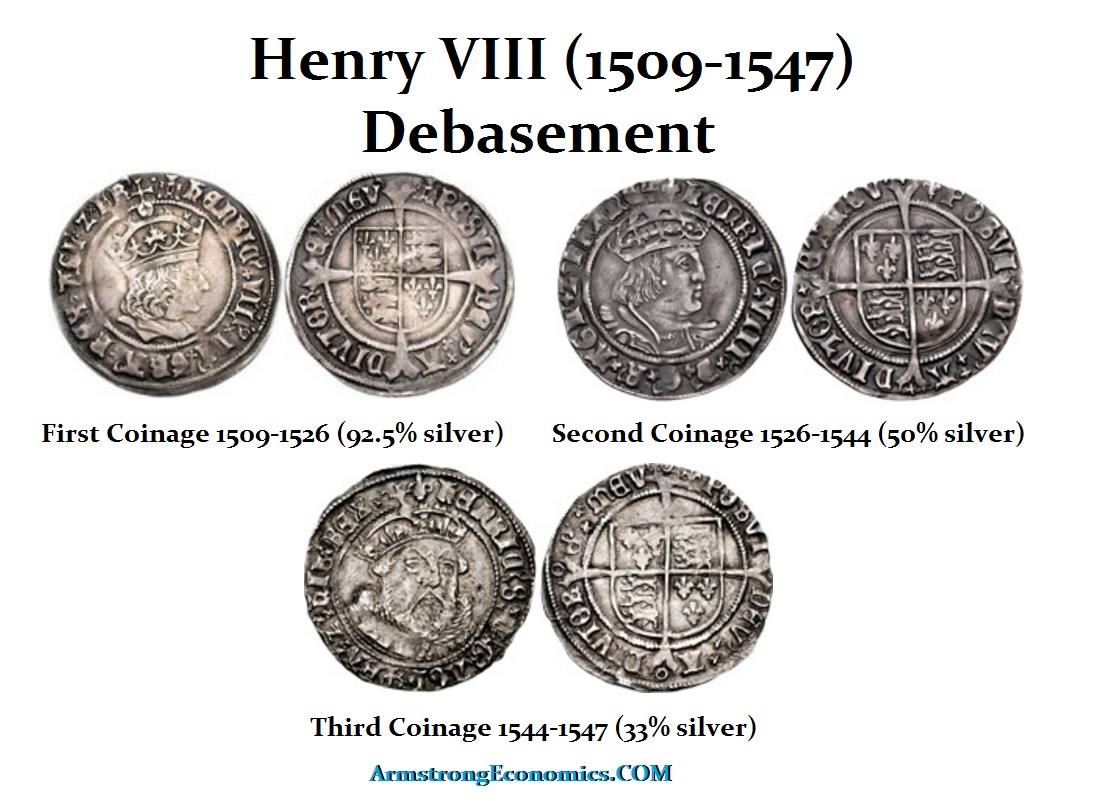
Gresham’s Law (stated simply as: “Bad money drives out good“). He concluded this from his observations that foreign exchange back then was based on the metal content and weight of the coinage. Therefore, as debasement took place, people would hoard the old coinage of higher quality and spend the debased. Thus, the bad money drove out the good and actually shrunk the money supply in circulation.
He urged Queen Elizabeth to restore the debased currency of England. In so doing, you got to repay old debts with debased currency. Governments to this day practice that same trick. Repaying a 30-year bond today the bondholder cannot buy what the money was once worth 30 years ago. The interest does not really compensate for the loss of purchasing power over long periods of time.
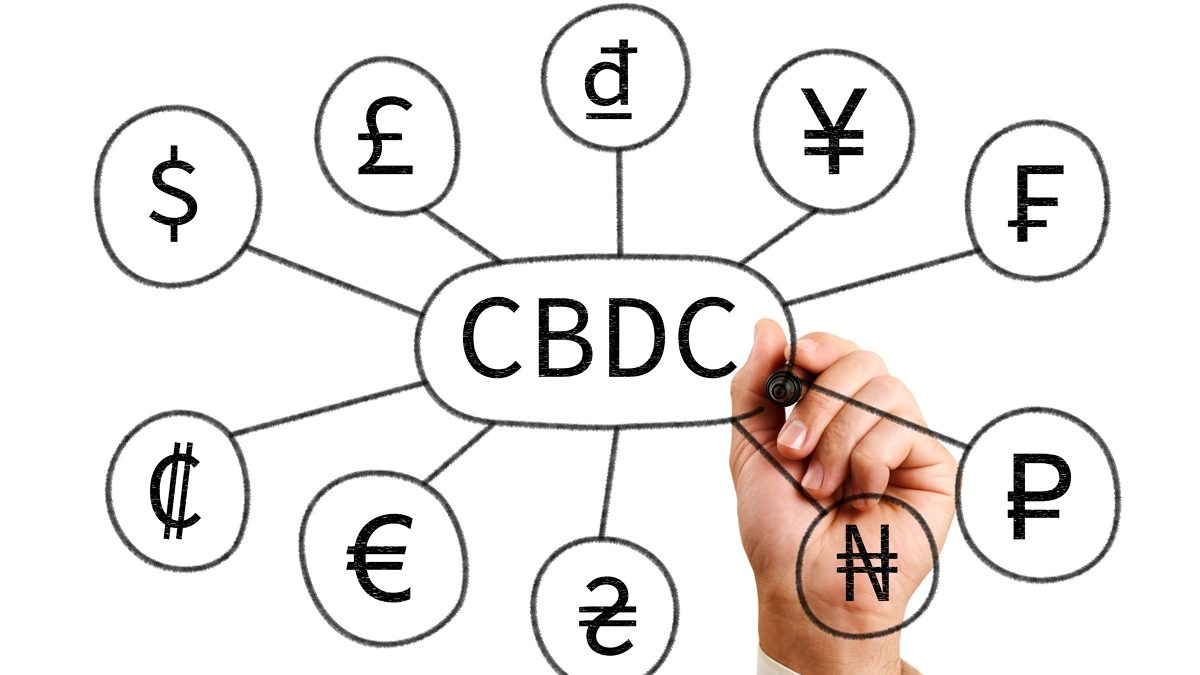
The Federal Reserve is highly considering this option, and Powell has mentioned it numerous times in his speeches. This is part of the move toward a cashless society as the government continually hunts down its citizens for taxes. The Founding Fathers fought to prevent direct taxation. Yet, the failing current government is drowning in debt, so they are after every possible penny they can find. A CBDC would effectively provide the government with a glimpse of all your purchases. They could easily de-bank an individual or institution without a middleman or prevent someone from making specific purchases.
Ron DeSantis (R-FL) also put forward legislation to prevent Floridians from a CBDC. The governor accused the Biden Administration of trying to inject “woke ideology into the financial sector” and said that the current administration is promoting “a central control state.” “Our money says In God We Trust. The central bank digital currency changes that to In Government We Trust. That’s wrong and I am grateful for the Governor’s continued pushback of an out-of-control DC bureaucracy,” said Foundation for Government Accountability CEO Tarren Bragdon.
Governments across the globe are searching for the Philosopher’s Stone. By changing the banking system to instantaneous transfer, they can eliminate physical money and track everything we do in real-time. They want us to surrender all liberty and terminate our civil liberties. This is precisely how empires collapse.
The banking crisis continues and it is impacting funds that have been buying bonds. Allianz, a subsidiary of Pimco, is writing off countless millions with Credit Suisse bonds. The banking crisis has been the result of artificially low-interest rates for far too long and banks were used to free money and buy long-term bonds all because they were making their money on the spread. Now that rates are rising, their risk management was effectively nonexistent, and thus the losses and widespread.
The Allianz subsidiary Pimco is one of the largest asset managers in the world. They have to now write off a loss in Credit Suisse bonds and it’s ain’t over yet as we head into April 10th.
The Biden Administration is responding to the panic phone calls that their Marxist philosophy will bring down the entire financial system. My ear is red as can be. I have had enough of the phone calls today to last the balance of the month. Trying just to do the right thing! Three banks have effectively gone down in the week of March 6th, which our computer was targeting. There have been Silicon Vally Bank, Signature Bank, and Silvergat Bank.
The Regulators perhaps saw the handwriting on the wall. This NO BAILOUT claiming that no taxpayer money will be used for a bailout of their hated rich, how about just using the taxpayer’s money you are throwing down the train in Ukraine? Depositors in Signature and SVB they are now saying would be made whole. If they do not cover ALL deposits, the monumental banking failure will be catastrophic.
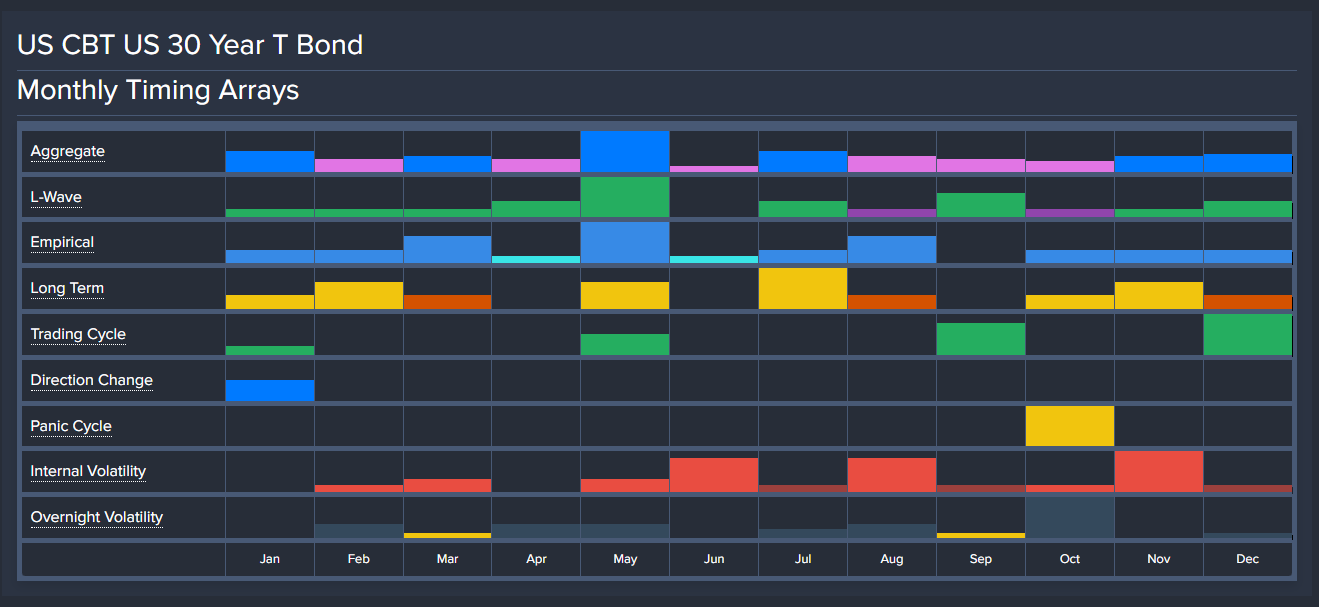
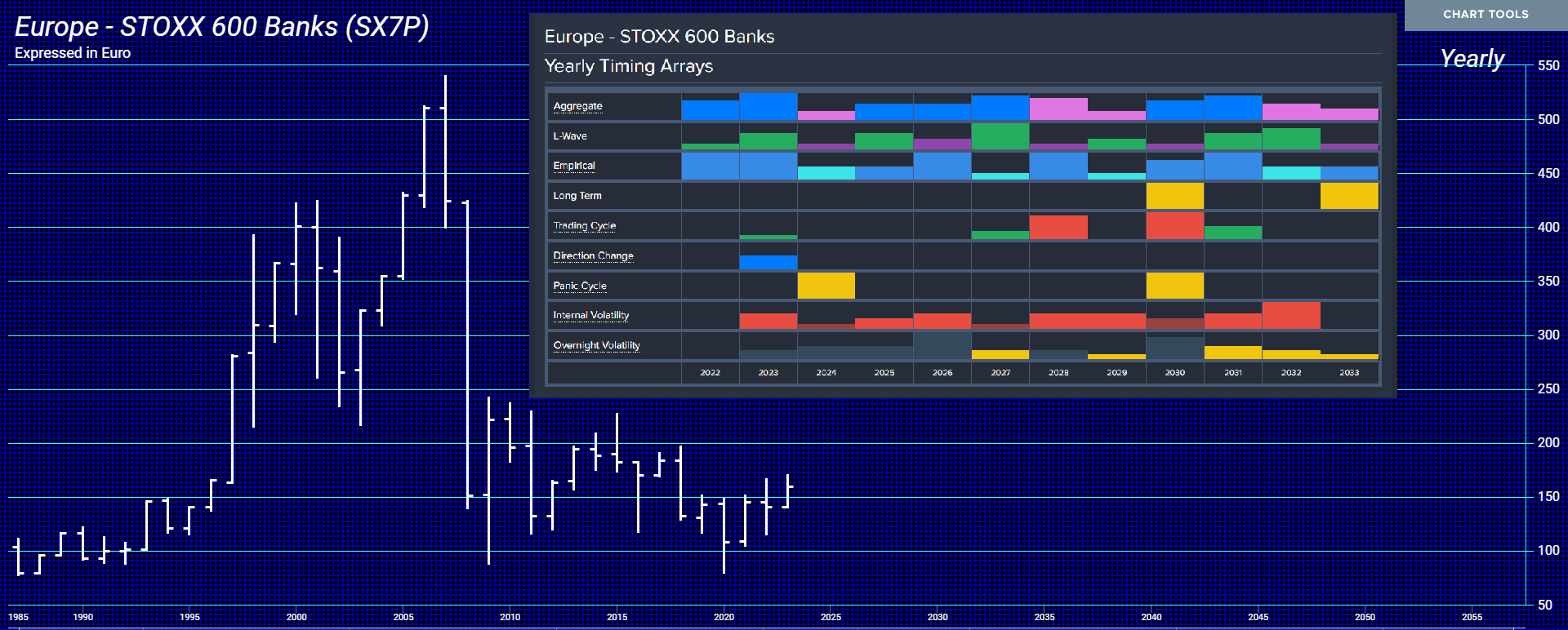
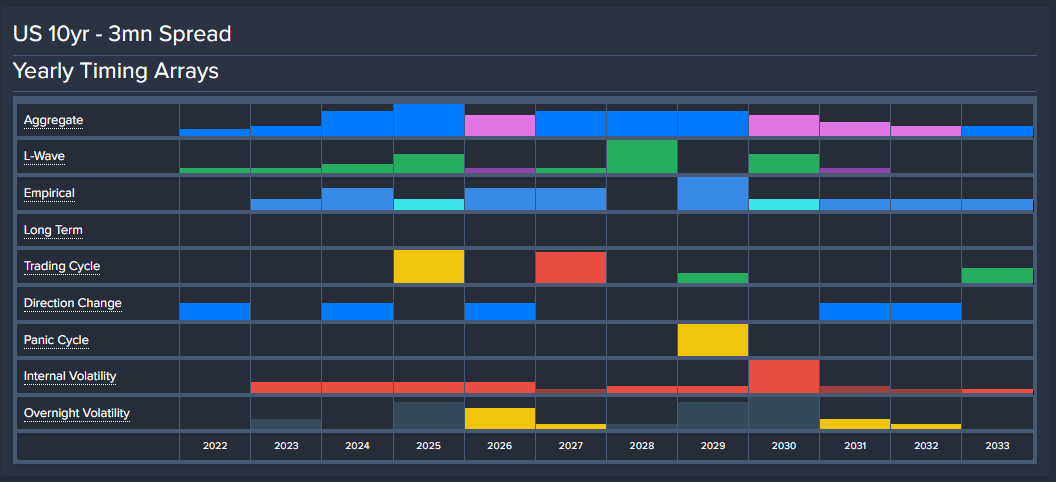
Our forecast for a Banking Crisis is by NO MEANS confined to the United States. It will be far worse in Europe. We can see our computer not only targeted 2023 for a key turning point with a Directional Change but a Panic Cycle next year in bank stocks, but interest rates will be rising higher as also the risk of banks and governments escalated especially when they insist on waging war against Russia.
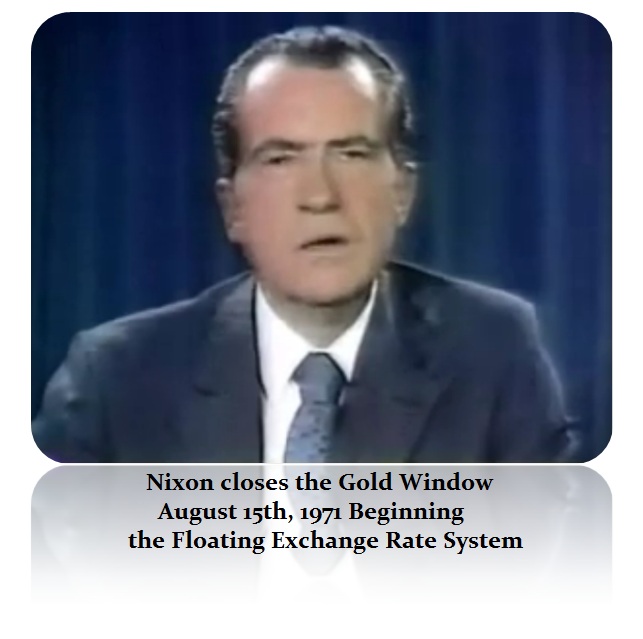
The yield curve is critical and we must understand that this insane war against Russia, even economically, will be a major financial disaster not much different from Vietnam which brought down Bretton Woods and forced Nixon to close the gold window on August 15th, 1971. It was that unrestrained spending directed by the Neocons. Then too, it was all about Russia they assumed was behind Vietnam.
Once more, the reckless spending on war promoted by the Neocons is undermining the entire economy. They have lost every war they have promoted – Vietnam, Afghanistan, Iraq, proposed Syria, Libya regime change, and now Ukraine. These people are never held accountable for all the devastation and the lives lost.
War is the primary driver of inflation and the central banks will not even address it for they do not want to “criticize” the Neocons. They might wake up with their dog’s head in the bed as in the Godfather. The central banks will NOT be able to contain this inflation or ever reach their 2% target regardless if the economy turns down just as what happened during Vietnam.
This is a warning to all small banks. Understand the REAL trend or you will NOT survive. Major capital is fleeing the long-term and rising into the short-term because they see rates are rising and any long-term bond investment during a period of war is going to be a major losing trade. Do not get trapped by the yield curve and understand that this trend is in play into 2025.
This Banking Crisis has been caused by Governments who artificially kept interest rates too low since 2008 and in the process, this banking crisis is unfolding because too many banks are UNSOPHISTICATED in forecasting and have been listening to the talking heads on TV and the desperate hope that inflation will decline while ignoring Ukraine entirely. Get that wrong – and you will NOT survive.
I strongly urge small banks to take our business services for access to real forecasting that is not biased or tarnished by human opinion with the two most dangerous words in forecasting:
QUESTION: Do you think that this entire scam with cryptocurrencies that the government will be able to track, do they realize that in war you take down the power grid and all digital currency fails? If the backup system is destroyed, all your digital currency will vanish. Are they this stupid? Is this why they have shills saying you are wrong?
HK
ANSWER: Yes. I have spoken to people involved in creating this insanity. First, they do not think there will ever be a nuclear war. Second, they really do think that they will create regime change in Russia at the expense of probably every Ukrainian alive today who are fools being led to the slaughter. When I have brought up the subject – WHAT IF YOU ARE WRONG! They dismiss it and do not even entertain plan B. The whole digital currency is all about tracking every dime. I have said many times, this is all about the new world order which is Schwab’s Great Rest and he knows that is our 2032 forecast. They all believe that forecast and are preparing to redesign the world this time to achieve their totalitarian dreams.
When I asked – Did you authorize Bitcoin? They just do not reply. Silence is golden. The launch of Bitcoin was just too damn convenient. That was standard operational political tactics – you float a balloon and see how the people accept it.
If you have ever been to Nuremberg, Germany, they have a bronze statue there – the Ship of Fools. The sculpture named Ship of Fools by Jurgen Weber is based on the satirical allegory by Sebastian Brant. This is now a reality.
COMMENT: Marty, I attended your coming out WEC in Philadelphia in 2011. Just about everyone I spoke with said the same thing. They all showed up to make sure it was really you and not some government stooge pretending to be you.
I must say, when you put up the war cycle, I thought it was interesting and everyone respected your work so we listened. At the time it was perhaps a curiosity and would be something we would watch on TV instead of the Oscars. Here we are. In the middle of this mess. I can now see how they used that tactic to demonize Trump to get Biden elected if he was really elected.
Now every person who voted for Biden has voted for World War III. They bought the hatred of Trump to remove him when he was like JFK and would never have agreed to war as you said when you went to dinner at Mara Largo. The recent tapes show that Nixon confronted the CIA for killing JFK. The very people who did the Watergate break-in were operatives for the CIA to make sure Nixon would be removed.
Our leaders really want war. I would never have thought your war model would predict that we would be the aggressor. Our government lies about everything. Why? Do they hate humanity that much?
GP
REPLY: I appreciate what you are saying. The Deep State has always had its agenda and it was always just about them. Never in my wildest dreams looking at these forecasts a decade ago did I ever contemplate that we would be the aggressor. The Neocons just want to annihilate every Russian. That is all they think about. That is why John McCain handed Hillary’s fake dossier to James Comey at the FBI. They were two Neocons and always wanted war with Russia. It was Hillary that conditioned the Democrats to think that Russia was the enemy and they rigged the election for Trump.
You see both Democrats and Republicans cheering war now. There is no stopping the warmongering. All we can do is prepare, and understand how the capital will shift as the arrays will give us the timing. This will enable us to position ourselves to make it to the other side of 2032. Fortunately, Socrates was constructed using the raw data to provide a picture of global capital flows.
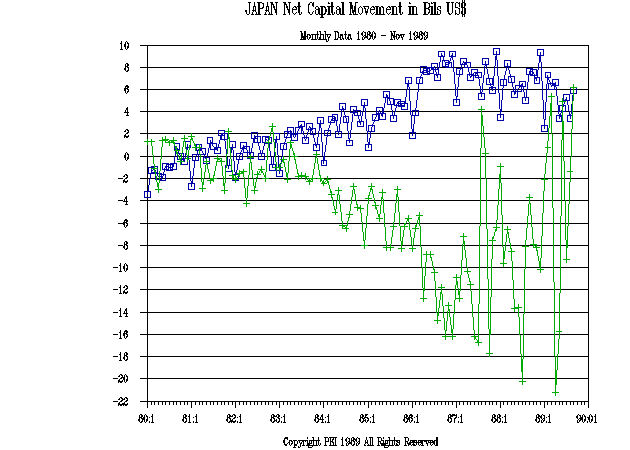
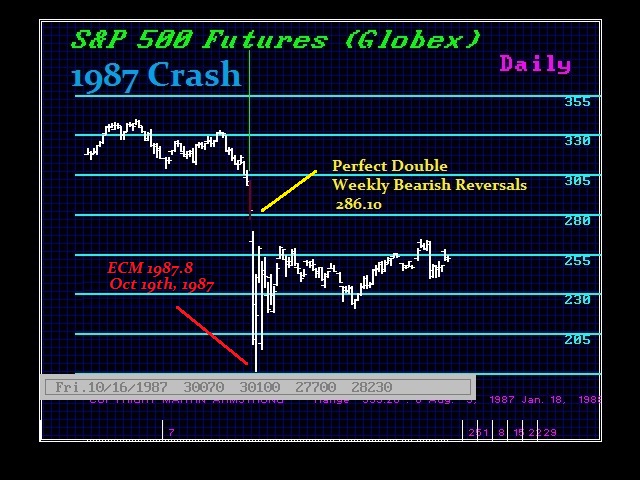
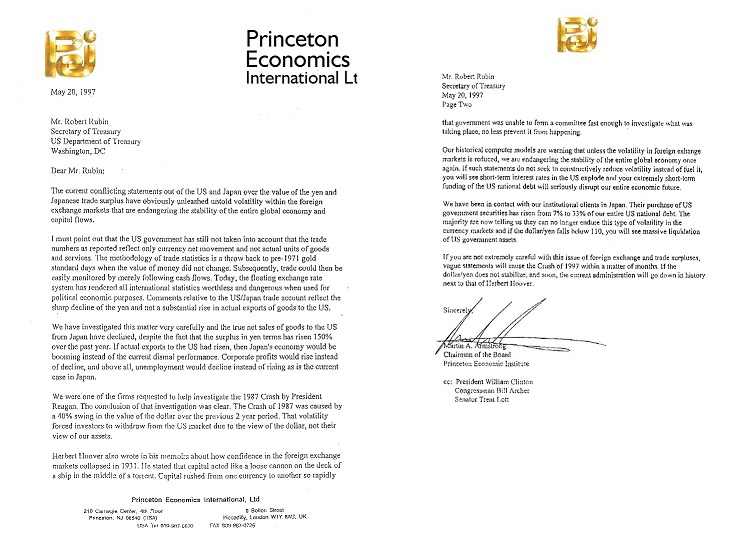
That was why I was called in by the Brady Commission back in 1987 for as you can see, the G5 was taking the dollar down for trade by 40% and then foreign investors sell US assets for they will lose on the FX exchange. Those morons every understood capital flows or currency.
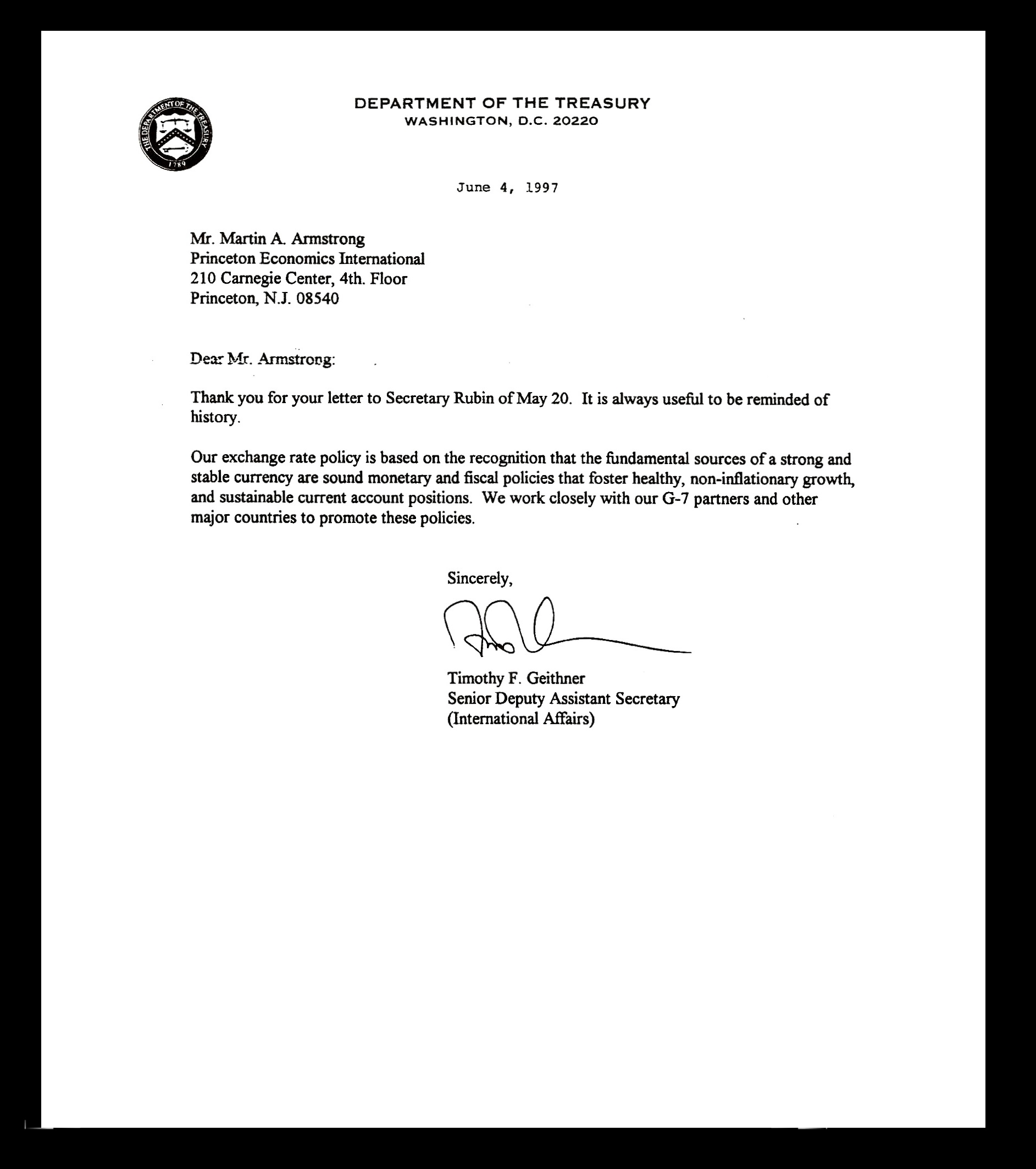
When again they were trying to talk the dollar down in 1997 for trade purposes, I warned them they would unleash another crash making the same mistake as before. They at least listened and backed off.
Posted originally on the CTH on January 1, 2023 | Sundance
This is an interesting interview in that International Monetary Fund Globalist Director Kristalina Georgieva seems to be laying the landscape for some truthful economic news to surface on the geopolitical level; albeit keeping up the globalist pretenses around western collective energy policy.
One of the more important points Mrs. Georgieva hits on is the reopening of China, from district level COVID bubbles as a containment feature, and the likely impact it will have on global supply chains. Mrs. Georgieva is correct on this issue.
China continued operating their industrial manufacturing base (despite COVID) because they built strict covid isolation bubbles around their industrial sectors geographically. However, with China lifting those isolation bubbles, there is a great potential for the manufacturing sectors to be hit hard by short to medium term virus outbreaks. This could/will have the potential ripple effect of global supply disruptions.
In an ironic twist, ‘deglobalization’ is now a 2023 catchphrase as various nations realize having their supply chains both dependent and interconnected is not good when there are interruptions. A new discussion centering around being dependent on China is the specific issue now being raised. However, the globalists are isolating their viewpoints only to raw material resourcing and development. WATCH:
[Transcript] -MARGARET BRENNAN: I want you to take us around the world and kind of us give us that global view. Let’s start in China. China has been this hub of cheap manufacturing for the world, we are all so dependent on it but right now it looks like COVID cases are exploding as they start pulling back those zero COVID restrictions. What will that mean for the global economy Longterm and short-term?
GEORGIEVA: In the short term, bad news. China has slowed down dramatically in 2022 because of this tight zero COVID policy. For the first time in 40 years China’s growth in 2022 is likely to be at or below global growth. That has never happened before. And looking into next year for three, four, five, six months the relaxation of COVID restrictions will mean bush fire COVID cases throughout China. I was in China last week, in a bubble in the city where there is zero COVID. But that is not going to last once the Chinese people start traveling.
MARGARET BRENNAN: Because they also- they don’t have an effective vaccine right now.
GEORGIEVA: The- the vaccinations fall behind. They have not worked on anti-viral treatments and how that can be offered to people, and so they will go through this tough time. If they stay the course, and this is our advice, stay the course, over time they would be able to catch up with the rest of the world, both in terms of focusing their vaccinations, bringing mRNA vaccines into China, expanding antiviral treatment, and the economy would function. But for the next couple of months, it would be tough for China, and the impact on Chinese growth would be negative. The impact on the region would- would be negative. The impact on global growth would be negative.
MARGARET BRENNAN: Because this is the second-largest economy in the world, and we’ve learned how dependent the world is on the Chinese supply chain. So do you expect then, a domino effect? Will inflation get worse, because all of a sudden there aren’t workers healthy enough to go to factories in China?
GEORGIEVA: We expect that there would be counterweight from the sheer opening of the economy, because up to now, the biggest impact on global value chains came from restrictions due to COVID. When you close down a big city or a big port, the repercussions for the economy is- are significant. Now, we would have the impact of people getting sick, not going to work, but the economy would be open. So the expectations we have for China is to gradually move to a higher level of economic performance, and finish the year better off than it is going to start the year. But you’re absolutely right, the world has relied on China’s growth for a long, long, long time. Before COVID, China would deliver 34, 35, 40% of global growth. It is not doing it anymore. It is actually quite a stressful for the- for the Asian economies. When I talk to Asian leaders, all of them start with this question, what is going to happen with China? Is China going to return to a higher level of growth?
MARGARET BRENNAN: You’ve said that you fear that we are sleepwalking into a world that is poorer and less secure because of a split in the global economy between the US and China. What do you mean by that? Do you see efforts here in Washington to stop it?
GEORGIEVA: It is very easy to reflect on the benefits of the world being more integrated. When we look back over the last three decades, the world economy tripled because of this reliance on an integrated world economy. Who benefited the most? Emerging markets and developing economies, they quadrupled. But rich countries also benefited, they doubled in size of the economy. So we have to be careful not to throw the baby out with the bath water. Yes, the way we have operated created excessive dependency in global chains. We were too focused on costs, how can we make products cheaper. And COVID and then the senseless war Russia started against Ukraine has shown that this is not enough. We cannot just concentrate on what is cheaper. We have to think of the security of supplies and that means diversify the sources of products that make the economy function well, lifting up the level of cost. That economic logic is not only appropriate, it is a must to follow. But we shouldn’t go beyond. We shouldn’t say, okay, we break the world into blocks, one works here, the other one works there because the costs are very, very high. We calculated that just trade, limiting trade into two blocks, would chop $1.5 trillion from the global GDP year after year after year.
MARGARET BRENNAN: If you tried to separate the US and China?
GEORGIEVA: You separate- you separate them, there is an excessive cost. So the logic should be where for security reasons there has to be careful recalibration of supply chains, do it, but don’t go beyond- don’t go into benign areas of products that have no strategic significance but they benefit the US consumer, they benefit the world economy. And this is what we are arguing for, don’t go in a direction in which this separation would make everybody poorer and the world less secure.
MARGARET BRENNAN: So you’re telling Beijing and Washington, figure it out. You can’t be in conflict.
GEORGIEVA: What we have seen in Bali is an indication that this rationale–
MARGARET BRENNAN: You’re talking about the G20 meeting–
GEORGIEVA: The G20 meeting in Bali, when the two presidents, President Biden and President Xi Jinping, met, they spent three and a half hours discussing exactly that. Where is the point of contact that makes both countries better off? And where is that- that there are differences that cannot be bridged and therefore we have to keep them–
MARGARET BRENNAN: The US is trying to block some Chinese technology companies from doing business here. They’re taking measures that are drawing some pretty bright lines between the US and China. Is that tolerable?
GEORGIEVA: We always prefer countries to seek their common interest in economic integration. And when you start breaking the interactions that are based on fair trade, you harm your own people, you not only harm the- the Chinese and therefore it has to be thought through very carefully. Again, I want to be very clear, some diversification of supplies for the security of supply chains is necessary. COVID taught us this lesson, the war taught us this lesson. So the U.S. is right to look into some areas where strategically they need to guarantee the functioning of the U.S. economy without interruptions. But do that keeping in mind the interests of the American people that would like to still have prices moderating, and actually, when we think about prices, one good news we have for 2023 is that towards the end of the year, we do expect inflation to trim down. So don’t take actions that may be contrary to that trend.
MARGARET BRENNAN: But you are predicting inflation to slow to six and a half percent from about 7%. Is that right?
GEORGIEVA: Well, towards the end of the year, we- we project it would go even further down towards the end of 2023, provided central banks stayed the course. Our big worry is that with the economy slowing down globally, we are projecting global growth to go down to 2.7%, maybe even lower next year. Remember, 2021, it was 6%. It dropped to 3.2 this year, 2022. And it will continue to drop down if central banks get the cold foot and say, ‘oh, my god, growth is slowing down, let’s slow down the fight against inflation.’ We risk then inflation to be more persistent. So our message is to central banks, you have to see credible decline in inflation and only then you can think about re-calibrating rate policy.
MARGARET BRENNAN: One of your IMF researchers gave a pretty dire prediction. Overall this year, shocks will reopen economic wounds that were only partially healed post-pandemic. In short, the worst is yet to come and for many people, 2023 will feel like a recession. What do you need to brace for?
GEORGIEVA: The- this is- this is what we see in 2023. For most of the world economy, this is going to be a tough year, tougher than the year we leave behind. Why? Because the three big economies, U.S., E.U., China, are all slowing down simultaneously. The US is most resilient. The U.S. may avoid recession. We see the labor market remaining quite strong. This is, however, mixed blessing because if the labor market is very strong, the Fed may have to keep interest rates tighter for- for longer to bring inflation down. The E.U. very severely hit by the war in Ukraine. Half of the European Union will be in recession next year. China is going to slow down this year further. Next year will be a tough year for China. And that translates into negative trends globally. When we look at the emerging markets in developing economies, there, the picture is even direr. Why? Because on top of everything else, they get hit by high interest rates and by the appreciation of the dollar. For those economies that have high level of that, this is a devastation.
MARGARET BRENNAN: And I want to- I want to come back to you on that. And just to explain that for some of our listeners, a stronger dollar, it’s good for Americans when they go shopping abroad. It’s not good for poor countries who have taken out loans, for example, and borrowed money in dollars. And according to the IMF, 60% of low income countries are in distress because of this- this debt. So what does that look like? Do you- do you see governments collapsing with defaults? Does that bleed into the global financial system? I mean, how much of a contagion does this become?
GEORGIEVA: So far the countries that are in that distress are not systemically significant to trigger a debt crisis. Let’s just look at the map, which are these countries? Chad, Ethiopia, Zambia, Ghana, Lebanon, Surinam, Sri Lanka, very important for their people that we find the resolution to the debt problem, but the risk of contagion is not as high. However, if that list continues to grow, and let’s remember, 25% of emerging markets are trading in distressed territory, then the world economy may be for a bad surprise. And this is why at the IMF, we are working very hard to press for debt resolution for these countries and we have engaged the traditional creditors, the Paris Club, the non-traditional creditors, China, India, Saudi Arabia. I would call this very simple: urgency, we have to act. When I look at the- the debt of the world. Yes, we have to be concerned. During COVID, what did we do? Everywhere governments borrowed, rightly so, to help their people.
MARGARET BRENNAN: Money was cheap.
GEORGIEVA: Money was cheap, and we prevented a collapse of the world economy. That was the right thing to do. But once Russia invaded Ukraine and that added impetus to inflation, money is not- not cheap anymore. So what is the advice we give to governments? Focus on your budgets, make sure that you have sufficient revenues to collect and that you spend very wisely.
MARGARET BRENNAN: That’s good advice, but it’s not always easy politics to follow that advice, as you know–
GEORGIEVA: Of course it is not.
MARGARET BRENNAN: And so that’s why I want to- if- if you can explain for our viewers. You know, we spoke to the CEO of JPMorgan Chase, Jamie Dimon, recently, and he said he sees the global risk as explosive right now. He was saying things like migration, energy, national security, liquidity in the banking system, war, these are all the knock on effects of a government not being able to pay its bills and not being able to deliver for its people. Is that what you are seeing too?
GEORGIEVA: Well, what we’re seeing is the world has changed dramatically. It is a more shock prone world. The lessons we learned from the last couple of years are that no more we operate with relative predictability of what the future would bring. And these shocks COVID, the war, costs of living crisis, they compound their impact. What does that mean for governments? First and foremost, it means that we need to change our mindset towards more resilience, more precautionary actions. And at the IMF, this is what we tell our members. Act early, don’t wait until the problems deepen. And for those who need help, this is why we exist for the developing countries. The fund is a source of resilience and I am- I am very pleased that many of our members are coming to us. Just since the war started we got 16 countries coming for programs to the IMF, $90 billion in support for these countries. And right now we have 36 requests. So that acting early, when you see trouble, look for ways to strengthen your fundamentals, to have buffers to protect you and your people. This is the advice we give to governments. For those who don’t know the IMF, we were created from the ashes of the Second World War to stabilize the world economy. And at a moment like this, we come strong to help our members. My message, don’t think that we are going to go back to pre-COVID predictability. More uncertainty, more overlap of crises wait for us. Rather than crying for the time we had, we have to buckle up and act in that more agile, precautionary manner I described.
MARGARET BRENNAN: I want to make sure I get to Ukraine because I know we’re running out of time. You’ve said- excuse me- you’ve said the single most negative factor in the global economy is the war in Ukraine. And Vladimir Putin says this is going to go on for some time. President Zelensky said they need $55 billion in foreign support next year. He expects $20 billion from the IMF, is he going to get it?
GEORGIEVA: We are working on providing support for Ukraine. So far, out to the international financial institutions, we have provided the largest amount of financing for Ukraine, $2.7 billion in emergency financing, and we are working for 2023 to be a significant part of the support for Ukraine. I expect that sometime early in the year we will go to our board with the request. We have assessed the needs of Ukraine to range somewhere between three and five billion dollars a month. What Putin did with destroying critical infrastructure in Ukraine, this is horrific, and it means that in the next months the country would be more on the high end of this range because it is put in an awful position to have to restore access to electricity, to heat, to water. I have relatives in Ukraine. What I- what I know from them is it is cold, it is dark, and it is scary. Bombardments of civilian areas continue. What I also want to say is that Ukraine has proven to be remarkably resilient. Ukrainian economy is functioning. Pensions are being paid. When there is bombardment, restoration of energy, water, heat is done very quickly and we see revenues collected in Ukraine in a very disciplined manner to support the functioning of the country.
MARGARET BRENNAN: So the government’s not going to collapse?
GEORGIEVA: The government is very well functioning under incredibly difficult circumstances. No, they’re not going to collapse. And then the other thing that is so remarkable is actually the world has proven to be more resilient than we feared, a year in the beginning of the year. We look at the response to the energy shock in Europe, and Europe is moving towards independence from Russia decisively. Yes, there will be a tough winter, maybe the next one would be even tougher, but freedom from dependence on Russia is coming. It is going to be there.
MARGARET BRENNAN: I want to ask you two questions before we go. How do you describe the state of U.S. economics and politics?
GEORGIEVA: The US economy is remarkably resilient. Decision making in the US because of the way the political set is at the moment, it is more difficult. But nonetheless the US has taken some very important steps that are helping to the US economy. Like the child tax-
MARGARET BRENNAN: The tax credit. It expired.
GEORGIEVA: The credit that is it. It is contributing so significantly to reducing poverty in the US, like the infrastructure bill, like the Inflation Reduction Act. These are things that are bringing more dynamism in the US. Good for the US, good for the world. And of course staying on that course is going to be more challenging. But I do hope that the US is not going to slip into recession despite all these risks. We expect one third of the world economy to be in recession. And yes, as you said, even countries that are not in recession, it would feel like recession for hundreds of millions of people. But if that resilience of the labor market in the US holds, the US would help the world to get through a very difficult year.
MARGARET BRENNAN: And as I let you go, my final question is what leaves you hopeful in 2023?
GEORGIEVA: What leaves me hopeful is that I know when we work together, we can overcome the most dramatic challenges. In 2020, the world came together in the face of tremendous threat and was able to overcome this threat. In 2023 we have to do the same. And in this world of ours, of more frequent and devastating shocks, we have to hold hands, we have to work together. And my institution is there to bring together economic policymakers so we can be wise and persistent in the face of truly dramatic challenges we face.
MARGARET BRENNAN: Madam managing Director, thank you for your time this morning.
Posted originally on the CTH on January 1, 2023 | Sundance
The New Year brings a look of forward-looking economic perspectives from major financial institutions. Unfortunately, if the perspective of Bank of America Chief Economist Michael Gapen is reflective of the larger institutional analysis, the financial pretending is anticipated to continue.
[Side Note: Notice how they will all start talking about ‘deglobalization’ in 2023. There’s a reason for that that I will touch on in the IMF interview to follow]
Appearing on Face the Nation Gapen accurately indicates the U.S. housing market is already in a steep economic recession, housing prices falling rapidly with a considerable amount of distance to go (-30% range), and the overall housing market will likely be in this situation for around two years. On a macro level the Bank of America indicators line up with the general housing trajectory. From a lending standpoint, Gapen would have specific insight.
Beyond the housing sector, Mr. Gapen starts to get sketchy. He anticipates inflation taking 24 to 36 months to lower to the norm 2% range. That is generally in line with CTH expectations; however, nowhere in the analysis does Gapen even mention energy costs and the overall impact to the economy from energy policy. You will note this absence will be present in almost all financial punditries. Mentioning “energy policy’ as a cause of economic pain is a third rail amid his peer group; it is simply not permitted.
Astute readers will note the great financial and economic pretending that surrounds the Build Back Better and Green New Deal climate change agenda will not be discussed by anyone, ever. The massive price impacts, the supply side inflation pressures, are baked into the western global economic outlooks. It is strictly verboten to talk about climate change policy being stopped, modified, reversed or even, well, gasp, removed. WATCH:
[TRANSCRIPT] – […] BANK OF AMERICA CHIEF ECONOMIST MICHAEL GAPEN: Happy New Year as well. Thank you for having me on.
MARGARET BRENNAN: You know, a majority of voters polled by The Wall Street Journal say that the economy is going to look and feel worse in 2023. What is your forecast?
GAPEN: So I think that’s probably true. I think we’re in a situation where the risk of recession is high, may not be a deep and prolonged one. But we’re in a situation where the economy has recovered very rapidly from- from COVID, and it’s come with a lot of inflation. And the Federal Reserve is trying to slow down the economy, to bring inflation down. And in the past, more often than not, that’s coincided with some sort of recession in the US economy and the U.S. labor market. It’s not baked in. It’s not for certain. We may be able to avoid it, but I would agree that the outlook by most people who sit in the position that I do think 2023 could be a difficult year for the U.S..
MARGARET BRENNAN: So we may be able to avoid recession?
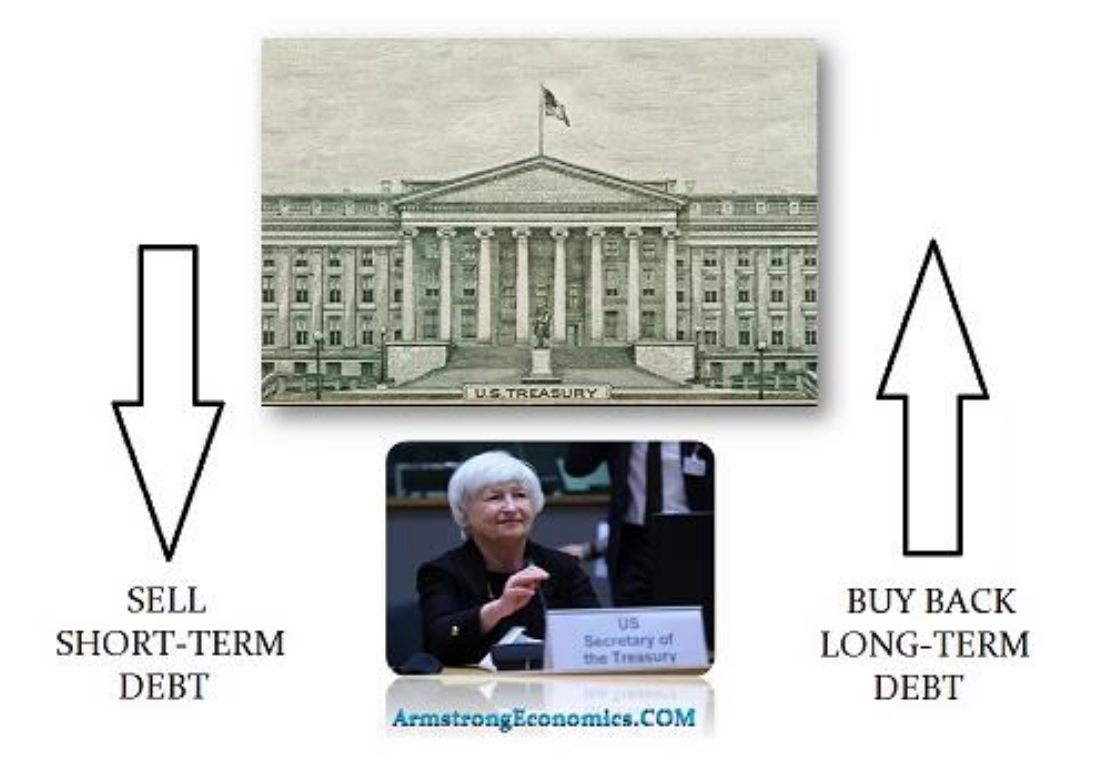
There is an onslaught of misinformation about the Federal Reserve from everything that it can go bankrupt, and the Treasury will become a second central bank, and of course, the Fed is really the cause of inflation and its balance sheet. The proposal by Janey Yellen to buy in long-term debt and swap it with short-term is not “creating” money for the Treasury has no such power. It was a proposal for a debt swap to shorten the yield curve. The first proposition that the Fed can go bankrupt only suggests that people do not comprehend that the Fed is different entirely from the European Central Bank.
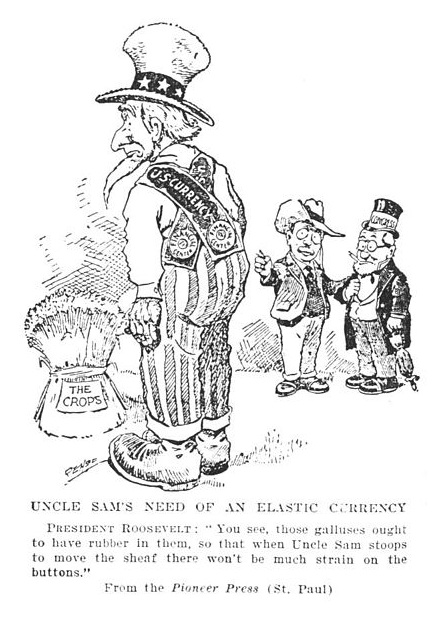
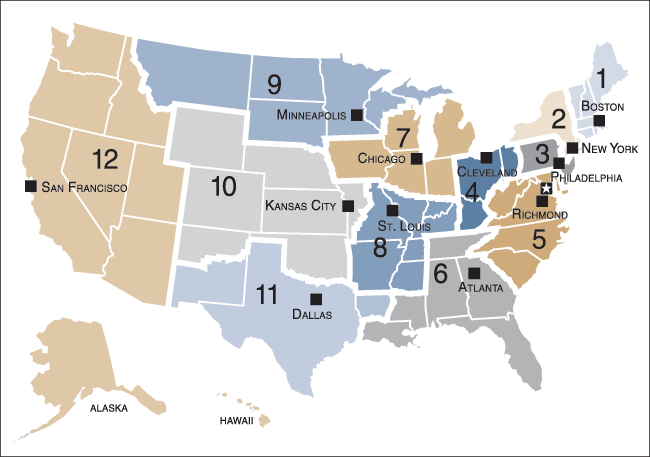
The Fed has the authority to create elastic money for it followed the very idea of J.P. Morgan and how he saved the economy during the Panic of 1907. The Fed can create money when there is a shortage due to economic contractions, and it can then reduce its balance sheet reducing the money supply. When the Fed was created, it was established with branches around the country because the Panic of 1907 exposed that there were regional capital flow problems. The 1906 San Francisco Earthquake drained the cash from the East where all the insurance companies were.
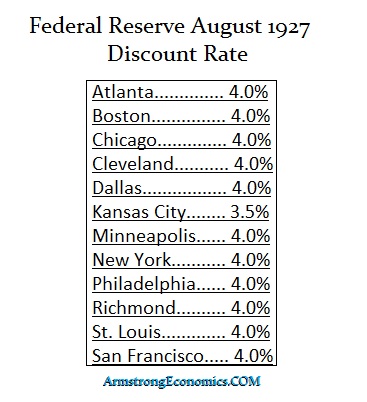
As we can see from this clip of rates in 1927, each branch was independent. There was an excess case in Kansas City so they lowered the interest rates there in hopes that capital would migrate to the other districts to earn more interest. All of that was eliminated by Franklin D. Roosevelt who wanted (1) to stack the Supreme Court to approve his Marxist agenda, which failed, and then he usurped all the power of the Federal Reserve and created the Washington headquarters and the President then was to appoint the head of the Federal Reserve and to illegally lobby him to ensure that his presidential agenda was to be the policy at the Federal Reserve. There was no more independence of the branches.
When Biden was running in 2020, he actually proposed requiring the Federal Reserve to regularly report on what they are doing to close economic gaps that exist along racial lines in the United States. Biden has viewed the Fed as a social tool and he has been making efforts to manipulate the Federal Reserve which will be extremely dangerous if they are carried out. Now, the Biden Administration is talking about closing branches of the Federal Reserve and replacing those board members with his hand-picked political cronies. In January 2022, he was pushing for black economists to be appointed to the Federal Reserve Board. My concern is that academics have ZERO experience and do not really understand the global economy trapped by domestic Keynesian Economics.
It was Paul Volcker who Chaired the Fed into the high in the interest rates back in 1981 who concluded in his Rediscovery of the Business Cycle that “it was not until the events of 1974 and 1975, when a recession sprung on an unsuspecting world with an intensity unmatched in the post-World War II period, that the lessons of the ‘New Economics’ were seriously challenged.” However, former Fed Chair Ben Bernanke has suggested that the Fed’s failure to contain inflation during the 1970s traced back to the political forces that shaped the Fed chairs in charge that he expressed in his book “21st Century Monetary Policy.” He wrote that the inflation of the ’70s puzzled economists relying on the 1958-ventage Phillips Curve, which would have predicted high inflation only in combination with extremely low unemployment rates. Bernanke admitted that the Phillips curve had “broken down” during the 1970s.
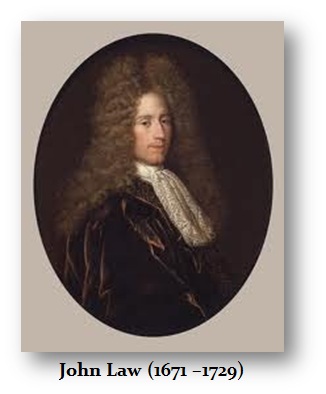
The critical problem with the entire way we view inflation rests on the QTM (Quantity Theory of Money) and the assumption that a mere increase in supply must produce inflation. There is absolutely nothing in the economic data that supports these old theories that were based upon (1) fixed exchange rates, and (2) the supply & demand theory dates back to the days of coinage. It was John Law who came up with the supply/demand theory that everyone else plagiarized, including Adam Smith. John Law’s writings influenced many, although they would never admit it. He was clearly the FIRST to use the term DEMAND and he was certainly the FIRST to join it with the word SUPPLY, for only a trader could have seen this connection in the price movements of anything.
The greatest fallacy of Keynesian Economics, Supply v Demand, and the Phillips Curve is that they have ALL failed because the US dollar is the reserve currency of the world and by default, the Federal Reserve has become the central bank of the world. With Biden desperate to get his hands around the neck of the Federal Reserve and force it to yield to his political agenda, threatens more than merely the US economy – but the entire world. Bernanke acknowledges in his book:
“Martin, my boys are dying in Vietnam, and you won’t print the money I need,” President Lyndon B. Johnson reportedly told then-Fed Chair William McChesney Martin Jr. at his Texas ranch after the central bank announced a half-point increase to its key discount rate over inflation fears, Bernanke writes. White House tapes, meanwhile, reveal President Richard Nixon frequently appealing to Fed Chair Arthur Burns’ Republican-party ties to clear the runway for more easy-money policies, with one call going as far as urging the Fed chair not to make any policy decisions that could “hurt us” in the November 1972 election.
I warned the Fed back then that buying in 30-year bonds during the 2007-2009 Financial Crisis, would NOT stimulate the domestic economy for one simple reason and this is why both the goldbugs and central bankers have been wrong. The domestic money supply DID NOT increase to stimulate when China was saying thank you very much and swapping their 30-year holdings for 10-year or less. The assumption that any central bank can control the domestic economy is absurd. The holdings of debt are global. Therefore, buying in 30-year bonds to reduce the supply in hopes of reducing the mortgage rates failed because the money did not stay in the USA. That is why the Fed then began to buy the mortgaged-backed securities because that was a more direct impact domestically.
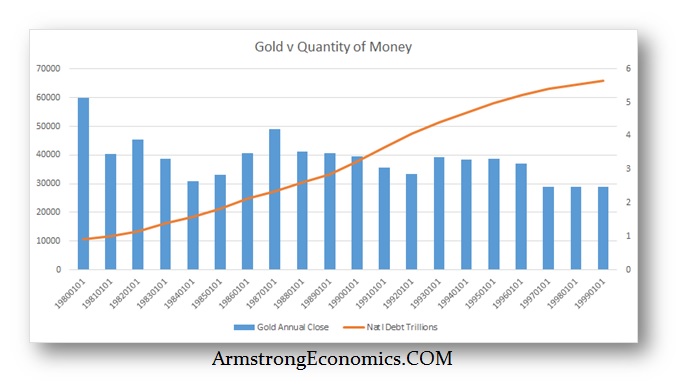
As the money supply increased and the national debt rose consistently, gold declined from 1980 into 1999 for 19 years. All the theories of inflation driving gold higher were simply wrong just as the central bankers relied on the very same theories.
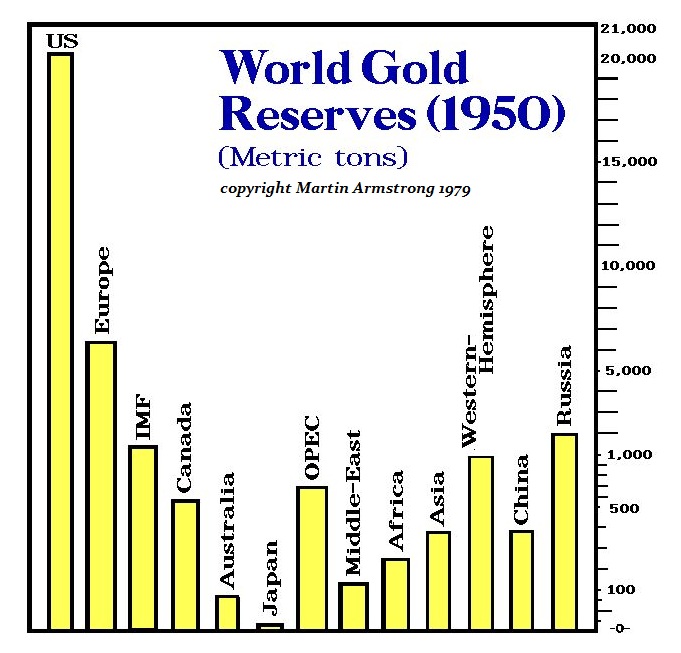
It was World War I and II that drove the gold to flee to the United States so by 1950, there was no choice but to make the dollar the reserve currency. Yet more significant was the realization that the factor which produced that result was ENTIRELY external to the domestic economy. Therefore, all the economic theories were bogus because they were all focused on domestic policy thanks to Karl Marx whose central theory was the government possessed the power to eliminate the business cycle by confiscating all private assets. That altered human nature and created economic stagnation. Nevertheless, Keynes and everyone else have sought to accomplish the very same authority that Marx maintained existed.
This focus on GDP (Gross Domestic Product) has reversed the GNP (Gross National Product), which was more global in its scope. If we attributed world trade to the flag the company flies rather than where it sets up a plant, then you would see that the United States has a trade surplus and not a trade deficit. This is also a backdrop to the reserve status of the dollar. Perhaps the greatest of all the wild proposals is that somehow Bitcoin will rise from the ashes and become the new Reserve Currency of the world. So all governments will issue debt in Bitcoin? Politicians will never be able to run for office and Socialism must collapse.
Rather than betting on the power grid to survive if governments collapse, I think we will see the pre-1965 silver coins return for a medium of exchange and gold for larger transactions. I have said plenty of times, GOLD will NOT rise as a hedge against inflation, it is a hedge against the collapse in confidence of the government.
As I have written before, when the Japanese government lost the confidence of the people, they lost the ability to produce any money for 600 years. The people used the coins of China and bags of rice – no Japanese coins were ever acceptable for 600 years which was the same time interval it took to reestablish gold in Europe following the fall of the Roman Empire.
Armstrong Economics Blog/Interest Rates Re-Posted Dec 14, 2022 by Martin Armstrongpread the love
The Central Bank Dilemma has become a major crisis in and of itself. I have been warning these past years that the ONLY tool a central bank has is manipulating the interest rates. Quantitative Easing was primarily to influence long-term rates indirectly since the Fed can only set short-term rates. During the past nine months, Fed Chairman Jerome Powell has raised interest rates at the fastest pace of any Federal Reserve chair since the 1980s. While some complain that this has triggered a stock market rout, and caused the housing market to come to a standstill, others argue that he has increased the fears of an imminent recession.
That was the domestic part. The Fed’s raising of interest rates has impacted the emerging markets including contributing to the chaos in the financial markets in China since many banks and provinces borrowed in dollars to save interest rates – or so they thought. It has forced the European Central Bank to raise interest rates and the net result was to unleash a crisis in long-term debt where life companies and pension funds cannot continue to buy the long-term with rates rising and bonds declining the day after you just bought a traunch.
Janet Yellen, who wants to hunt down everyone who sold a used bike on eBay for $600, understands the crisis we have erupting in debt because of rising interest rates and investors are afraid of the long end. Her proposal to buy in the long-term and swap it for the short-term recognizes the fact that we have a major debt crisis unfolding and she has come up with another scheme to keep kicking the can down the road.
Consequently, with inflation hitting 40-year highs, the warning signs are there that the central banks cannot do anything to address the economic crisis. Hence, initially, Fed officials were unanimous that rates needed to rise aggressively. Now, however, there are cracks in that view. These cracks will become fissures over how this type of inflation is NOT speculative but shortages set in motion by COVID and then accelerated by this drive for war with Russia and the insane sanctions they imposed on even private citizens.
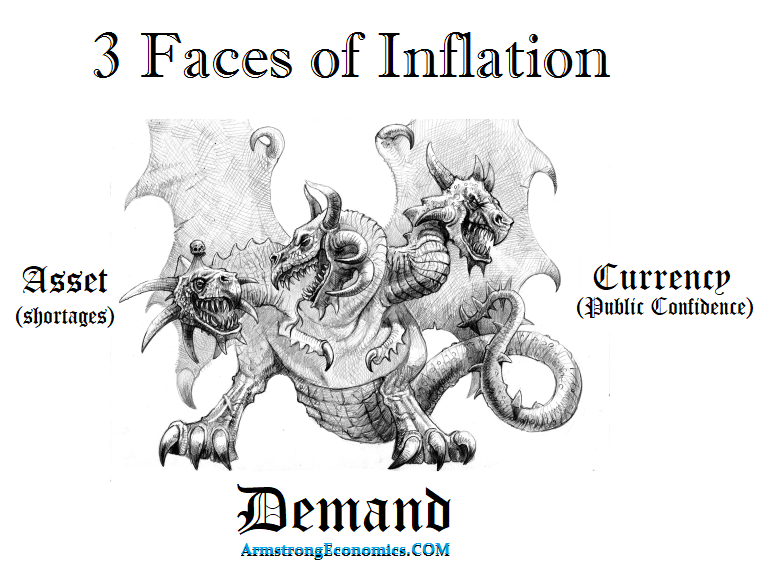
While some expect inflation to cool steadily next year and want to stop raising rates soon, the problem is that inflation driven by shortages will not subside with a reduction in demand. Even real estate replacement costs have risen despite the fact that the market has started to pause. The cost to build a home in many areas is already higher than existing homes, which tends to create a floor before prices. Others worry inflation won’t ease enough next year in the face of a war that is escalating, and they defer to the old standard of raising interest rates to temper inflation.
That leaves Chairman Powell struggling in the eternal seas of politics lost in the middle as the arguments get louder on both sides. Powell will be challenged trying to chart a course through war, stagflations, and complete fiscal mismanagement by our politicians. The next stage of interest-rate policy presents very difficult questions concerning how high to raise rates from here, and how long to hold them at that level in this Pyhric War against Inflation.
I have created this site to help people have fun in the kitchen. I write about enjoying life both in and out of my kitchen. Life is short! Make the most of it and enjoy!
This is a library of News Events not reported by the Main Stream Media documenting & connecting the dots on How the Obama Marxist Liberal agenda is destroying America











 Centinel2012