Second Quarter Productivity Drops Again, Companies Paying Workers More to Produce Less


Posted originally on the conservative tree house on August 9, 2022 | Sundance 

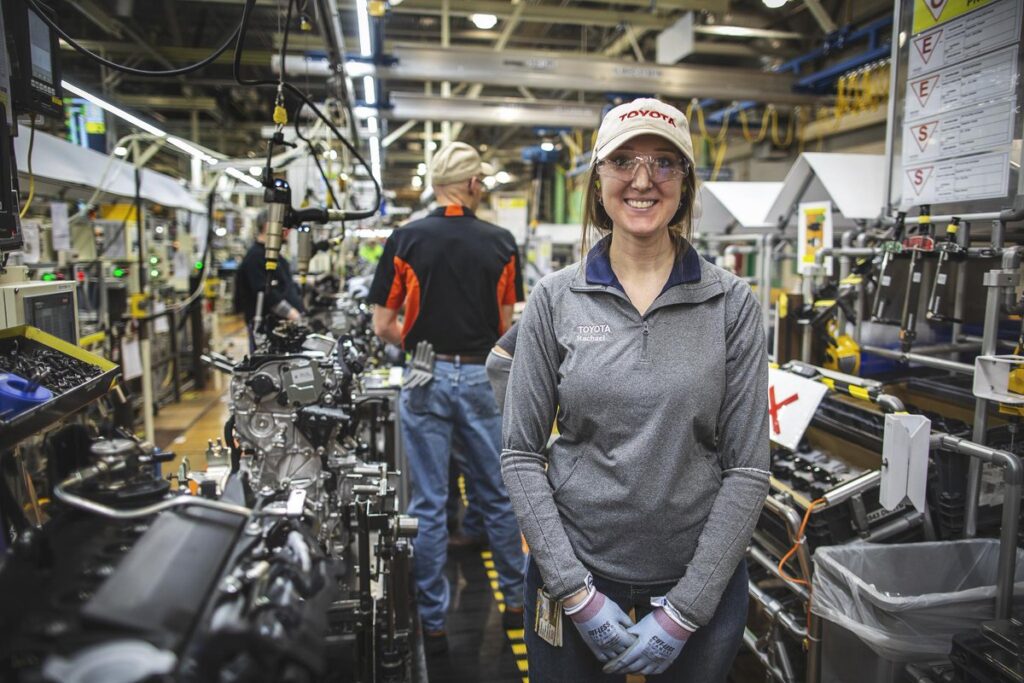
The previous first quarter productivity drop of 7.4% was the largest quarterly drop in 74 years.  Today the Bureau of Labor Statistics (BLS) reports the second quarter productivity dropped another 4.6% [Data Here].

For July, companies are paying 5.7% higher wages and getting a 4.6% drop in output, resulting in a total unit labor cost increase of 10.8%.  That increase in final output cost will either result in higher prices or lower profits.

With weak consumer purchasing (low demand) already creating an inventory surplus, hence lower outputs, lower profit leads to cutbacks.  The largest company expenses are generally labor and energy costs. The more variable and controllable of those two expenses is labor.  You know what comes next.

(WSJ) – […] Rising productivity is the key to improving living standards; it allows companies to raise wages without raising prices and fueling inflation. Instead, businesses appear to be paying workers more to produce less. The higher unit labor costs suggest companies will either endure lower profits or pass on higher costs to consumers.

“The trend in productivity growth has worsened compared to prior to the pandemic, and the surge in unit labor costs makes the Fed’s challenge of getting inflation back down to its 2% target all the more challenging,” Wells Fargo economist Sarah House said in a research note.

The central bank has increased rates four times this year from near zero in March in an effort to raise borrowing costs, slow economic growth and bring inflation down.

The consecutive negative productivity readings are a reversal from earlier in the pandemic, when the economy was expanding rapidly and businesses appeared to be adopting new technology to cope with worker shortages and limits to face-to-face contact. (read more)

Meanwhile, “U.S. manufacturing output in June was down by 0.4% compared with March though it was still up by 3.6% compared with the same month a year earlier, estimates prepared by the Federal Reserve Board found. Three-month output growth was the weakest since early 2021, and confirms slackening momentum evident in other data on output, orders and jobs.” (Reuters)

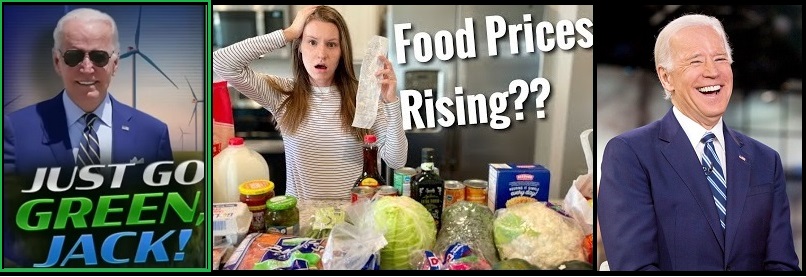
This month’s inflation report (reflecting changes in July) will show a large decline in overall inflation. This will provide the White House with a false narrative of confidence that inflation has peaked.  However, food inflation (farm prices not yet realized) will combine with wage inflation (as noted above) sometime around October, and then we enter another round of rising prices.

The prices for durable goods have likely peaked.  If you are in the market for an expense item (appliance, furniture, etc) look for significant incentives to trigger in Sept/October; right around the same time when the layoffs start.  So, sit tight for a few more weeks.

However, the prices for highly consumable products will present a false plateau (Aug/Sept) until they go bananas again just before the Thanksgiving holiday season.

Prepare and time your affairs accordingly.

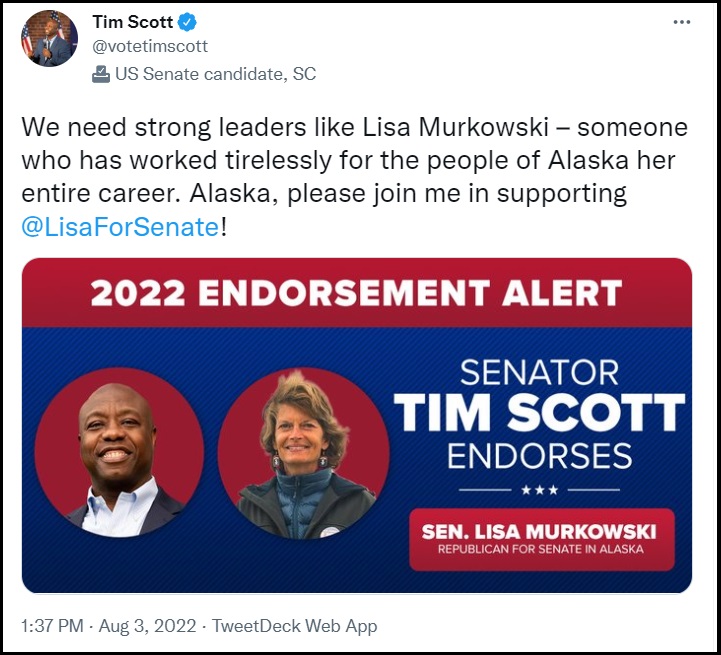
Senator Tim Scott on FBI Raid of Trump Home, ‘We Need to Let This Play Out’


Posted originally on the conservative tree house on August 9, 2022 | Sundance 

It’s not very often that you get to watch a DeceptiCon evolve in real time.  Usually, with history as a guide, DeceptiCon extremists hibernate in the evolutionary process for years, only leaving a minuscule trail from which to find them until they detonate like stealth terror cells.   However, Tim Scott has prematurely detonated himself.

Appearing on CBS news to kickstart his 2024 presidential ambitions, and react/respond to the FBI raid on President Trump’s home in Mar-a-Lago, Senator Tim Scott advances the DeceptiCon narrative, “we need to let this play out” etc.  WATCH, prompted:

.

Tim Scott will eat the bugs while funding support for the pensions and benefits in Ukraine.

We are in a time of great consequence, the greatest in several generations.  This is a political street fight to save the nation.  Those who demand we “wait for referees” while team USA gets beaten senseless are, quite frankly, worse than useless.  They are on the other side.

Civil Unrest in Panama Continues


Armstrong Economics Blog/Central America Re-Posted Aug 8, 2022 by Martin Armstrong

The people of Panama have been protesting the obscene cost of living for weeks. President Laurentino Cortizo has promised to lower the cost of basic necessities such as food and energy, but the people are not satisfied. Teachers began protesting in July and went on an initial three-day strike. This act of defiance inspired other groups who also took to the streets to call for price reductions.

Inflation in Panama sits at 4.2% as of May, while the unemployment rate hovered around 10%. Fuel costs have soared nearly 50% since January of this year. The issue here is that despite the country’s economy growing, the benefits have not been passed on to the people in any way. Many highly-skilled professionals, such as doctors, left the country long ago for countries where they’re paid competitively and access to medical care has become increasingly difficult.

Protestors blocked the Pan-American highway, which is the main route for most of Panama’s food. Even the Catholic Church stepped in during June to mediate the battle between the people and government. The first round of discussions mediated by the Catholic Church resulted in the government freezing the cost of 72 products. Additionally, the government will now allocate 6% of GDP to education by 2024. The Inter-American Highway, connecting Panama to the rest of Central America, was cleared but the supply constraints and resulted in significant losses.

Panama’s economy grew 17.8% in 2021, and 13.6% in Q1 of 2022. There is no reason for Panamanians’ quality of life to decrease when their economy is in a surplus. The protests will continue as the people have realized that their corrupt government does in fact work for them

Sunday Talks, SF Fed Chair Sees Half of Inflation Driven by Excess Demand of Some Unknown Something


Posted originally on the conservative tree house on August 7, 2022 | sundance

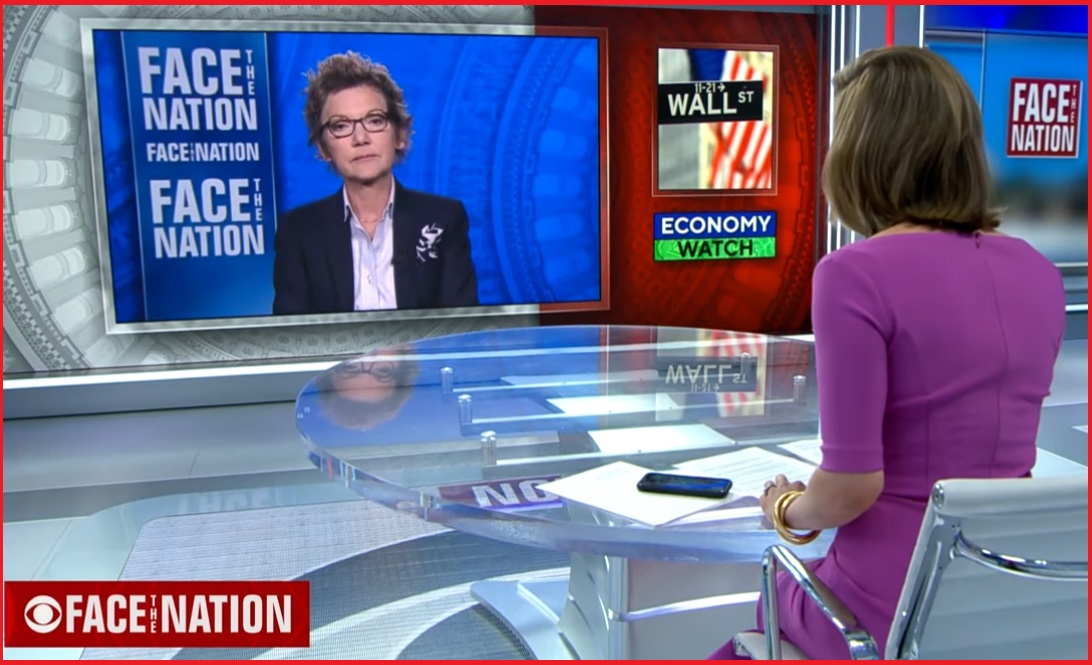
The great pretending continues.  During a Sunday talk show appearance, San Francisco Fed Chair Mary Daley states, “what I see is supply and demand are just unbalanced. About 50% by my own staff’s estimates of the excess inflation we see is related to demand. The other 50% to supply.”  Note, she is not talking about energy.

Margaret Brennan, maintaining her position as the professional CBS narrative engineer, never thinks to ask: (a) where is this demand you speak of, and what exactly are they demanding? and/or (b) What is this 50% inflation on the supply side connected to?  Obviously, an actual probing of inflation wasn’t in the script. The great pretending continues.  [Transcript Here]

CTH has stated without reservation that August’s inflation report will show a significant –albeit temporary– drop in inflation as measured by the govt.  The drop in gasoline prices throughout July (created by a drop in demand) will allow the fiscal and monetary policy makers to falsely claim overall inflation peaked. However, after a brief respite the inflation now growing in the ground (massive increases in farm costs), will then launch into the food supply chain.  This delayed food inflation will overtake the energy inflation in the latter part of this year.  WATCH:

[Transcript] – MARGARET BRENNAN: We turn now to the state of the economy and the president of the San Francisco Federal Reserve Bank, Mary Daly. Good morning to you.

FEDERAL RESERVE BANK OF SAN FRANCISCO PRESIDENT MARY DALY: Good morning.

MARGARET BRENNAN: The San Francisco Fed said fiscal spending during the entirety of the pandemic, all the congressional funding contributed 3%- a 3% hike in inflation. Do you expect the congressional bill that’s about to pass to add to inflation as well?

DALY: Well, let’s remember that during the time that there was this fiscal relief during the pandemic, there was also monetary policy relief. And those were things necessary to get us through the pandemic. So that’s why that was such an important component in history, will be the judge, whether it was too much or too little. But right now, that’s where that was. And my staff have evaluated that. When I look forward, there are so many things going on in the economy right now, both domestically and globally. And we are struggling with high inflation. But the Fed is committed to bringing that down. And we’re looking at not only things that Congress passes, but also what happens across the entire world.

MARGARET BRENNAN: So do you think this bill will- will add to inflation? Has inflation peaked? Can you say that?

DALY: You know, I really can’t comment on pending legislation, and it’s really hard to tell because all the details haven’t been worked out yet and or the time frame in which those things will take place. So right now, I think the most important thing, Margaret, is that inflation is too high and the labor market is strong. The global economy is struggling with ongoing high inflation, and that’s what I’m focused on.

MARGARET BRENNAN: You are a labor economist. We had this surprisingly strong jobs number on Friday. Why was it so surprising? What was it that economists missed here? What was your takeaway?

DALY: You know, it’s super interesting. You know, it did surprise everyone who tries to figure out exactly what the number will be. And we were you know, a number of projections were well off. But, you know, frankly, if you’re out in the communities, if you’re you’re traveling anywhere, you’re you’re just going in your own community. I don’t think consumers are workers or businesses were that surprised. There’s help wanted signs all over the place. People are can find multiple jobs if they want them. Search times for jobs aren’t that long. So I think the labor market is continuing to deliver. It just tells me that people want to work and that people want to hire. But the universal truth is that inflation’s too high.

MARGARET BRENNAN: But does it still or does it indicate that recession is not where we are or where we’re going?

DALY: If you’re out in the economy, you don’t feel like you’re in a recession. That’s the bottom line. The most important risk out there is inflation. And I think the job market just confirms that.

MARGARET BRENNAN: Okay. We’re going to take a break and come right back with you. Mary Daly, stay with us. We have more questions.

*COMMERCIAL BREAK*

MARGARET BRENNAN: Welcome back to Face the Nation. We continue our conversation now with the head of the San Francisco Federal Reserve Bank, Mary Daly. In that jobs number on Friday, we also saw that wages rose, but they’re not rising as quickly as inflation is. How concerned are you that that shows inflation is really becoming embedded in the economy in a way that is really going to force sure your colleagues at the Fed to continue to have to hike rates.

DALY: You know, I don’t see inflation is embedded in the economy, the kinds of things that we would worry about just not being able to correct easily. What I see is supply and demand are just unbalanced. About 50% by my own staff’s estimates of the excess inflation we see is related to demand. The other 50% to supply. The Fed is really well positioned to bring demand down, and we already see the cooling forming in the housing market and investment. So I do see signs that the economy is cooling. It just is going to take some time for the interest rate adjustments we’ve made to work their way through. And we are far from done yet. That’s the the promise to the American people. We are far from done. We’re committed to bringing inflation down and we’ll continue to work until that job is fully done.

MARGARET BRENNAN: So it would still be appropriate to raise rates in September by half a percent?

DALY: Absolutely. And we need to be data dependent. It could. We need to leave our minds open. We have two more inflation reports coming out, another jobs report. We continue to collect all the information from the context we talk to you to see how this is working its way through the economy. But you mentioned, you know, wage growth a little bit above 5% inflation. Last print at 9.1%. Americans are losing ground every day. So the focus has to be on bringing inflation down.

MARGARET BRENNAN: One of the things the Fed can’t control is geopolitical risk. How concerned are you about what is happening in the Taiwan Strait right now?

DALY: Well, there’s so much going on globally, and I think that’s really something that we need to think about. It’s just getting through COVID, making sure the new variants don’t derail economic activity. We have central banks across the globe raising interest rates to try to bridle their own inflation. And we have ongoing developments that take place geopolitically or just more generally among countries and all of those things. The war in Ukraine, all of those things create headwinds, if you will, for the US economy and we’re going to have to lean against those headwinds for growth while we bridle inflation.

MARGARET BRENNAN: The Fed has its work cut out and I know we’ll be talking again. Thank you very much, Mary Daly. (LINK)

A Curious Case of Transferred Battery Technology


Posted originally on the conservative tree house on August 6, 2022 | sundance

Every once in a while, you come across an article that seems like one thing but is actually another thing entirely.  The NPR story of how “The U.S. made a breakthrough battery discovery — then gave the technology to China“, is one such article.

Several people sent this to us for opinion and review; however, the background of the article reveals something quite different. Then again, perhaps that’s exactly why NPR wrote it.

[READ THE STORY HERE]

It is important to read the story as presented by NPR, because it is oddly written as if someone is trying to use the outlet to get out ahead of something else.

The issue surrounds a new product technology called a vanadium redox flow battery.  Essentially the U.S. government funded scientists to develop an advanced battery that could store energy without degrading.  After success, the technology was then sent to China for manufacturing.  China then invested heavily in the product and used the technology to mass manufacture the battery for the global market. The United States is now behind in the product development and manufacture.

As the story is told in NPR, “the Chinese company didn’t steal this technology. It was given to them — by the U.S. Department of Energy. First in 2017, as part of a sublicense, and later, in 2021, as part of a license transfer.”  Except that’s not what happened at all.  There is some major ‘ass-covering’ in that false narrative.

The lead scientist working on the vanadium redox flow battery project was a man named Gary Yang.  Mr. Yang was born in China and emigrated to the U.S. becoming a U.S. citizen.  Yang worked with U.S. scientists to develop the technology and was funded by a multi-million research grant from the Dept of Energy.

After their initial success, according to NPR, “in 2012, Yang applied to the Department of Energy for a license to manufacture and sell the batteries.”  The Dept of Energy license was granted, and Yang launched UniEnergy Technologies as the parent company to develop the commercial application of the product.

It’s 2012 and Gary Yang was now looking for investors and manufacturing in the commercial sector to produce the battery.

Here’s where it gets interesting…. According to Yang, “he couldn’t persuade any U.S. investors to come aboard. “I talked to almost all major investment banks; none of them (wanted to) invest in batteries,” Yang said in an interview, adding that the banks wanted a return on their investments faster than the batteries would turn a profit.” This is Yang’s justification for what he did next.

After he couldn’t find U.S. investors (which I will say up front seems like an excuse), Yang then took the technology to China to have them manufacture the product.

The Chinese embraced the technology, created entire manufacturing eco-systems around it and now corner the market on the technology behind vanadium batteries.  However, giving the technology to China for manufacturing and development is a violation of the license Chang was given.

Yang even admits he knew it was not allowed. “Yang’s original license requires him to sell a certain number of batteries in the U.S., and it says those batteries must be “substantially manufactured” here. In an interview, Yang acknowledged that he did not do that.” Now we start to look a little more skeptically at the claims by Gary Yang, because a whole bunch of stuff just doesn’t add up.

As noted by NPR, five years after getting the license from the Dept of Energy, “in 2017, Yang formalized the relationship and granted Dalian Rongke Power Co. Ltd. an official sublicense, allowing the company to make the batteries in China.”

After China had fully developed the technology, they obviously no longer needed Gary Yang to go global with the product.  As a result of what can only be considered as ‘getting cut out’, Yang -still holding the original DoE license- then turned to Europe.

Gary Yang not only sublicensed Chinese manufacturing, supposedly without DoE notification, in 2021 he sold the license to the Netherlands.

“In 2021, Yang transferred the battery license to a European company based in the Netherlands. The company, Vanadis Power, told NPR it initially planned to continue making the batteries in China and then would set up a factory in Germany, eventually hoping to manufacture in the U.S., said Roelof Platenkamp, the company’s founding partner.

Vanadis Power needed to manufacture batteries in Europe because the European Union has strict rules about where companies manufacture products, Platenkamp said.  “I have to be a European company, certainly a non-Chinese company, in Europe,” Platenkamp said in an interview with NPR.”

Before moving on, let me recap because things are going to start making sense about why this story has some major ramifications.  Also, don’t overlook the timing of events and keep in the back of your mind what you know about Hunter Biden (remember, ‘energy sector’ with no experience) and Biden’s deals with China being made in/around this same timeframe.

♦ 2006 – Pacific Northwest National Laboratory original grant. “It took six years and more than 15 million taxpayer dollars for the scientists to uncover what they believed was the perfect vanadium battery recipe.

♦ 2012 – The lead scientist, Gary Yang, asks the Dept of Energy for a license.  He then creates UniEnergy Tech.

♦ 2013/2014 – Unable to find investors in the U.S., Gary Yang enters a manufacturing and development agreement with China.

♦ 2017 – Gary Yang officially grants a sublicense to Dalian Rongke Power Co. Ltd in China.

♦ 2021 – Gary Yang then sells his license to Vanadis Power in the Netherlands.

Tell me again how this NPR sentence makes sense: “the Chinese company didn’t steal this technology. It was given to them — by the U.S. Department of Energy. First in 2017, as part of a sublicense, and later, in 2021, as part of a license transfer.

Do you see anywhere in this reformatted outline where the U.S. Dept of Energy gave the technology to anyone, except Gary Yang?

The only entity responsible for transferring the technology to China was Gary Yang.

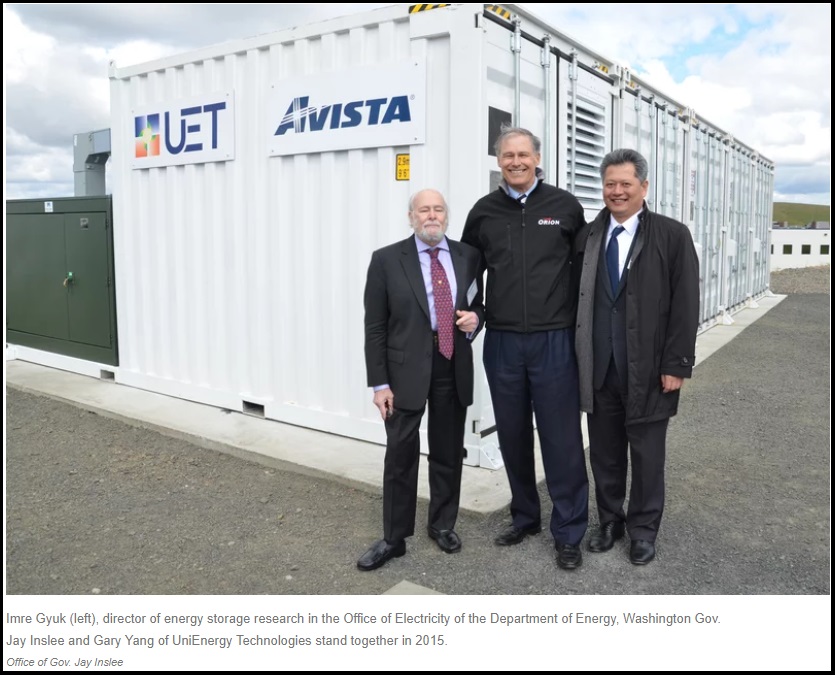
Now, with all that in mind, check out the date on the picture that NPR uses in their article:

2015

Keep the guy on the left, Imre Gyuk, in mind as we move forward.  Note the date of “2015” with Imre Gyuk and Gary Yang. They are standing together.

Remember in the NPR article, the baseline for why Yang took the technology to China was that he couldn’t find investors to manufacture in the United States.

The vanadium battery license in question would have come from Imre Gyuk’s office.  Now, in addition to being the Director of Energy Storage Research in the Office of Electricity, of the Dept of Energy, Gyuk also held another role:  “As part of the program he also supervises the $185M ARRA stimulus funding for Grid Scale Energy Storage
Demonstrations” {Citation}

The ARRA funds referenced were the Obama-era stimulus funds; the American Recovery and Reinvestment Act funds; the shovel ready jobs funds.  Yet, Gary Yang cannot find investors?

Citation from 2014: “It’s not a given that lithium-ion batteries are the best batteries for electric cars, or for electrical grid storage. Other types of batteries today show promise, most of which you’ve never heard of: vanadium redox flow, zinc-based, sodium-aqueous and liquid-metal. Businesses looking to invest in batteries are deciding between these technologies and more. Market players will weigh the different technologies’ cost of manufacture, durability, usefulness.” {Citation} But Gary Yang couldn’t find U.S. investors? 

Citation from 2014: “The forever battery.” A Silicon Valley startup run by old-school technologists has invented an energy storage device that could take an entire neighborhood off the grid. This magic box is called a Vanadium redox flow battery. {CitationBut Gary Yang couldn’t find U.S. investors.

Citation from 2016: “Cost-effective, reliable, and longer-lived energy storage is necessary to truly modernize the grid,” said Dr. Imre Gyuk, energy storage program manager for DOE’s Office of Electricity Delivery and Energy Reliability, of UET’s system. “As third-generation vanadium flow batteries gain market share, it is essential to increase our understanding of storage value and optimization to accelerate adoption of integrated storage and renewable energy solutions among utilities.” {CitationBut Gary Yang couldn’t find U.S. investors.  {Here’s another Citation}

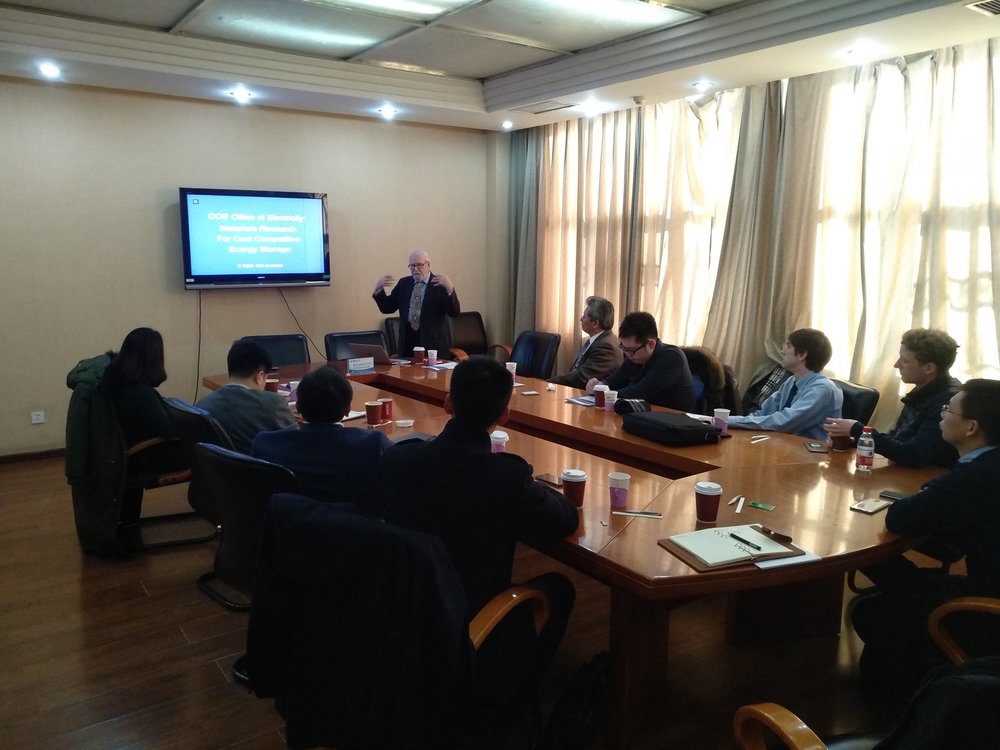
Citation from 2018: “On January 23, 2018, the Chinese Academy of Sciences hosted a meeting on energy storage with distinguished guests Dr. Imre Gyuk, director of energy storage research at the United States Department of Energy, and Dr. Gary Yang, CEO of UniEnergy Technologies.  Dr. Gyuk and Dr. Yang were met by China Energy Storage Alliance Chairman and the Chinese Academy of Sciences Institute of Engineering Thermophysics Deputy Director Chen Haisheng, China Energy Storage Alliance Deputy Chairman and Beijing Puneng General Manager Huang Mianyan, and CNESA Standing Council Representative and general manager of State Grid Electric Vehicle Service Company Wang Mingcai.” (image below)

[SOURCE]

This meeting is important because Imre Gyuk and Gary Yang are together, in China in 2018.  The year after the Dept of Energy license given to Gary Yang was unlawfully sublicensed to the Chinese.

NPR is correct in that U.S. taxpayers funded six years of research and development for vanadium redox flow batteries (2006-2012), and once the product was successful the technology was transferred to China (2014-2017) as part of the commercial manufacture.  However, it was Gary Yang who gave it to them, and by all appearances he did so unlawfully.

There is going to be much more to this story…. Much more.  We have only just begun to dig.

[Support CTH Here]

.

Steve Bannon CPAC Speech, Confronting Marxism and Deconstructing the Administrative State


Posted originally on the conservative tree house on August 6, 2022 | sundance

Steve Bannon gives a keynote address to the audience at the CPAC convention in Dallas, Texas.  During the beginning of his remarks, Bannon and the audience salute Arizona Republican gubernatorial candidate Kari Lake for her ferocity standing fearlessly in front of the firestorm and winning the primary contest.

Later in his unscripted remarks, around the 09:00 mark, Bannon begins discussing the Fourth Branch of Government.  WATCH:

.

A Solution to The conservative communication problem


Originally posted on Bill Whittle in early July 2022

Bill Whittle’s idea has a lot of merit and we need to promote this as much as possible!

Watch the animation here: https://youtu.be/PnLo3Quw2mA Our Members make our world go round. Join us as a Citizen Producer by clicking here: https://BillWhittle.com/register/

And 10% for the Big Guy


Armstrong Economics Blog/War Re-Posted Aug 6, 2022 by Martin Armstrong

Candidate Joe Kent Pulls to Within 257 Votes in Washington State, With 30,000 Ballots Remaining to Be Counted


Posted originally on the conservative tree house on August 5, 2022 | Sundance

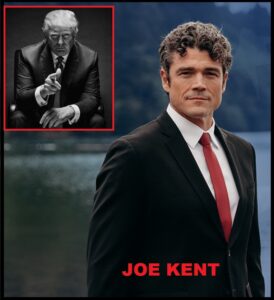
As each batch of ballots is counted in Washington State’s 3rd congressional district, MAGA candidate Joe Kent has gained significant ground.

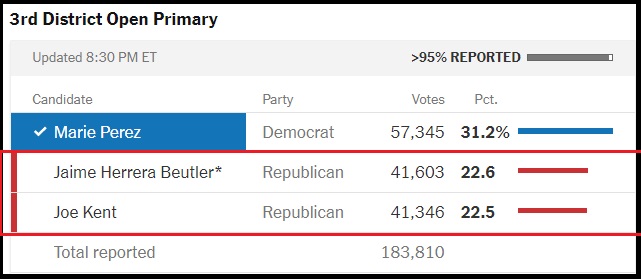
Republican Joe Kent is now within striking distance of primarying Jaime Herrera Beutler, with approximately 30,000 ballots remaining to be counted.

[New York Times Link]

Jamie Herrera Beutler, who voted to impeach President Trump and is one of the MAGA targets for 2022, now has 41,603 votes.  Trump-endorsed Joe Kent has moved from a several thousand vote deficit, into the latest result of 41,346 votes.  The difference is now down to 257 votes.

Washington State has that jungle primary voting system where the top two candidate’s face-off in the general election. According to Kent on Twitter, there are 30,000 ballots left to be counted.  Prayers up!!  Joe Kent might just pull off this victory.

If the next batch of 30,000 ballots, carries the same ratio as today’s batch of 22,000 ballots, Joe Kent will take the lead.

McDonalds Dumps Trial of Plant Meat Because Customers Would Not Purchase – Next up, Bug Meat


Posted originally on the conservative tree house on August 5, 2022 | Sundance

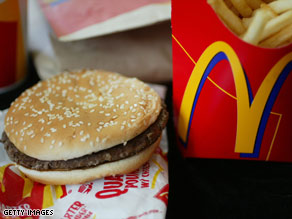
McDonalds has announced they are dropping their program testing plant-based meats because people didn’t like it.

As noted by the Washington Times, “other trials at Panda Express and Yum! Brands (KFC, Taco Bell, and Pizza Hut) have also ended without a subsequent product launch. Beyond Meat products at Dunkin’, Hardee’s, and A&W have been discontinued after launching.”

Apparently, American consumers do not want to eat fake meat; at least not fake meat made from plants.

Next up….  Bug meat.

…”The menus will feature items such as cricket tacos or a Thai larb salad and recipes that use an innovative cricket meat-alternative which packs about 30 per cent protein – and requires around 1800x less Greenhouse gas to produce than beef.”  (LINK)