People are simply not prepared for a sharp economic downturn. The Money and Pensions Serviceconducted a poll in the UK in which it found around 25% of adults have under £100 in savings. The 3,000-person survey found that 17% reported having absolutely nothing set aside. Around 5% reportedly had under £50, while 4% had between £50 and £100.
The drastically increased cost of living has many living paycheck to paycheck. The Building Societies Association (BSA), as reported by the BBC, conducted a separate survey that found that 35% of people in the UK simply stopped saving due to inflation. Around 36% said they are already dipping into their savings accounts to pay the bills.
The Bank of England is anticipating a long recession ahead. The central bank sees economic conditions contracting through the first half of 2024. The central bank’s prediction of five consecutive quarters of contraction would mark the longest recession in UK history. The people have not experienced the full effects of this recession, and most are simply not prepared for what lies ahead.
Posted originally on the conservative tree house on November 10, 2022 | Sundance
The Bureau of Labor and Statistics (BLS) provides the latest data on consumer prices (inflation) [DATA HERE]. We explained in 2021 how inflation would grow on a month-over-month and year-over-year basis until the calendar became more friendly and the government officials could claim “diminished inflation growth.” Well, we are now entering that phase of economic parseltongue.
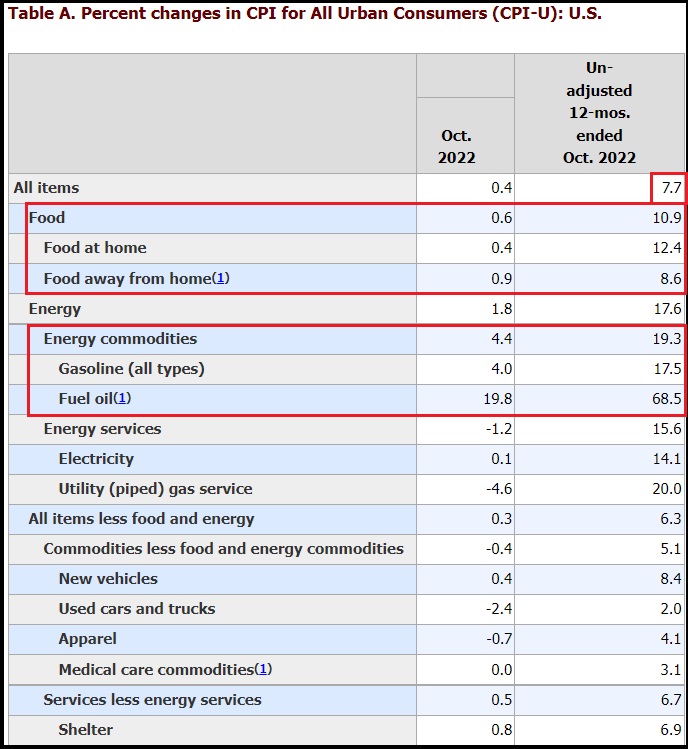
October consumer prices increased 0.4% over September. However, we are now comparing year-over-year (Y0Y) inflation to the period where last year’s prices had already skyrocketed, so YoY inflation seems to be moderating at 7.7%, it’s a false premise. {Go Deep}
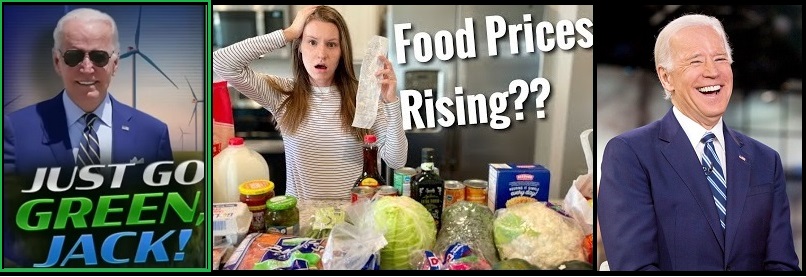
As expected, the energy-driven consumer inflation in the food sector has arrived. The proverbial field inflation is arriving at the fork, and the October CPI now shows the third wave of food price increases we had previously discussed.
Table 2 Details: Egg prices increased +10.1% last month and now 43% higher than last year. Butter +1.9% last month, 26.7% for year. Margarine +1.3% for month, 47.1% for year. Coffee +1.3% for the month, 15.6% for the year.
Heading into baking season we find flour +0.2% for the month, +24.6% for year. Essentially, as expected, all of the holiday foodstuffs are now rising in price as the increased field and commodity prices hit the store shelves.
Some row crops are starting to moderate in price growth, while dairy products continue rising throughout the fall season. It is going to be painful on the checkbook grocery shopping this holiday season.
On the energy front, home heating oil increased 19.8% in October and is now a whopping 68.5% higher than last October. Unleaded gasoline increased another 3.5% and now is now 20.9% higher than last year (Oct ’21), which was already 40% higher than January 2021.
Food, fuel, electricity, home heating and housing costs continue growing monthly, but give the illusion of moderating when compared to last year.
Food away from home (restaurants etc.) are starting to show the cumulative price impacts for restaurants, hotels and cafeterias. Additionally, as the kids returned to school the lunchroom prices have skyrocketed a jaw-dropping +3.8% for October and +95% compared to last year [Table 2]. Packing lunches for kids is going to become an even more important aspect for the family food budget.
The stock market is happy with the news because the lowered 7.7% (YoY) inflation number, a product of the calendar and nothing else, gives optimism the Fed may moderate the increased federal reserve rate hikes. However, don’t count on it because inflation is easily identified as embedded now. Lemons at the grocery store are now $0.99/each.
Think about that. $1 for a single lemon and roughly 50¢ per egg at the supermarket. A full shopping cart of groceries now easily exceeding $200. This is devastating for those on fixed incomes and blue-collar workers.
Wages are nowhere near keeping up with this level of price increase.
(CNBC) The consumer price index rose less than expected in October, an indication that while inflation is still a threat to the U.S. economy, pressures could be starting to cool.
The index, a broad-based measure of goods and services costs, increased 0.4% for the month and 7.7% from a year ago, according to a Bureau of Labor Statistics release Thursday. Respective estimates from Dow Jones were for rises of 0.6% and 7.9%.
Excluding volatile food and energy costs, so-called core CPI increased 0.3% for the month and 6.3% on an annual basis, compared with respective estimates of 0.5% and 6.5%.
A 2.4% decline in used vehicle prices helped bring down the inflation figures. Apparel prices fell 0.7% and medical care services were lower by 0.6%.
“The report overstates the case that inflation is coming in, but it makes a case inflation is coming in,” said Mark Zandi, chief economist at Moody’s Analytics. “It’s pretty clear that inflation has definitely peaked and is rolling over. All the trend lines suggest that it will continue to moderate going forward, assuming that nothing goes off the rails.” (read more)
The Biden energy policy is the root of the consumer inflation. Nothing will happen to moderate overall consumer inflation on Main Street until energy policy changes.
Additionally, with the 2022 election in the rear-view mirror, we should start to see layoffs and unemployment increasing now. The bureaucrats will now let the recession become evident.
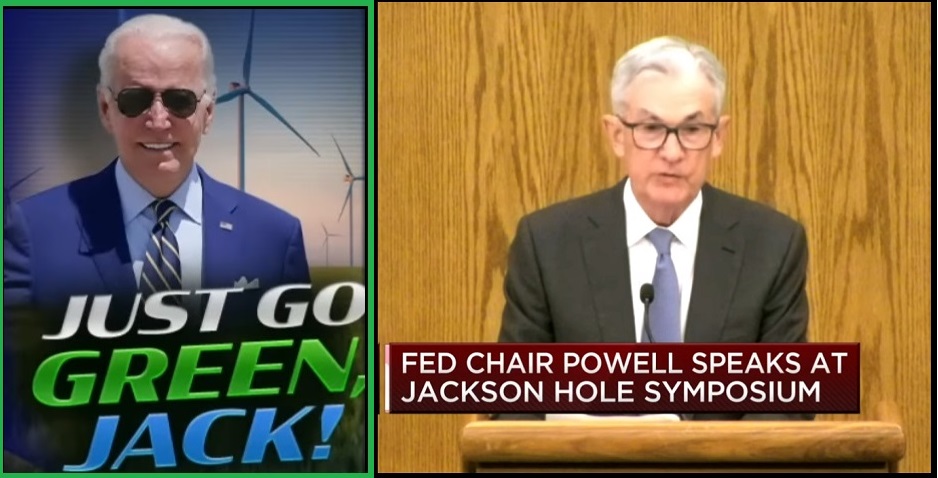
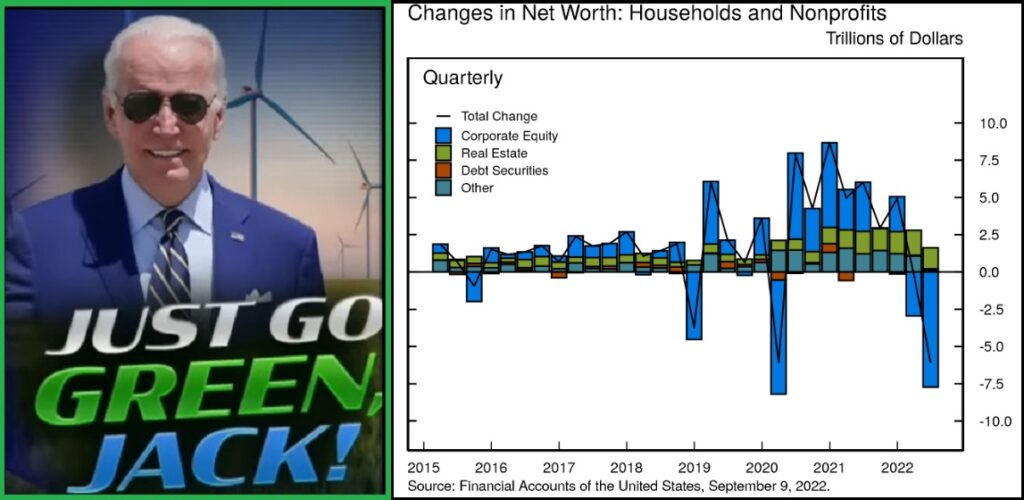
Thank you to the reader who sent in this hilarious image. Despite all the incoming data and price instability, some expected the Fed to pivot on its stance. Even BlackRock reportedly told advisers to expect “pivot language” at the last Federal Open Market Committee meeting. They were hoping that the Fed would announce a looser stance for the December meeting despite conditions failing to improve.
The markets correctly anticipated a 75 bps hike for November. Jerome Powell said that incoming data from the last meeting has led the central bank to believe that rates will edge HIGHER than originally anticipated. PCE rose 6.2% over the past 12 months, with core PCE rising by 5.1%. Long ago after Powell changed his “transitory” stance, he reiterated that the Fed’s main goal is to bring levels back to the 2% target. Price stability is the top priority – period.
“As I’ve said in the last two press conferences, it will become appropriate to slow the pace of increases, as we approach the level of interest rates that will be sufficiently restrictive to bring inflation down to our two percent goal. There is significant uncertainty around that level of interest rates. Even so, we still have some ways to go, and incoming data since our last meeting suggest that the ultimate level of interest rates will be higher than previously expected,” the chairman reiterated.
The central bank realizes that the situation will only worsen. “Restoring price stability is essential to set the stage for achieving maximum employment and stable prices in the longer run. The historical record cautions strongly against prematurely loosening policy. We will stay the course, until the job is done,” Powell commented. His Q&A after the announcement only reiterated his extremely hawkish stance (see video above).
Powell said the Federal Reserve is honing in on three main factors: 1) how fast to tighten policy, 2) how high to raise rates, 3) how long to remain on the current course. Powell said they would move “expeditiously” to move rates, especially given the low starting point. He believes that incoming data justifies ongoing rate hikes, and his estimate is higher than what was announced in September. Finally, he said they might have a discussion on when to loosen policy, but there was an emphasis on the word discussion.
Posted originally on the conservative tree house on November 3, 2022 | Sundance
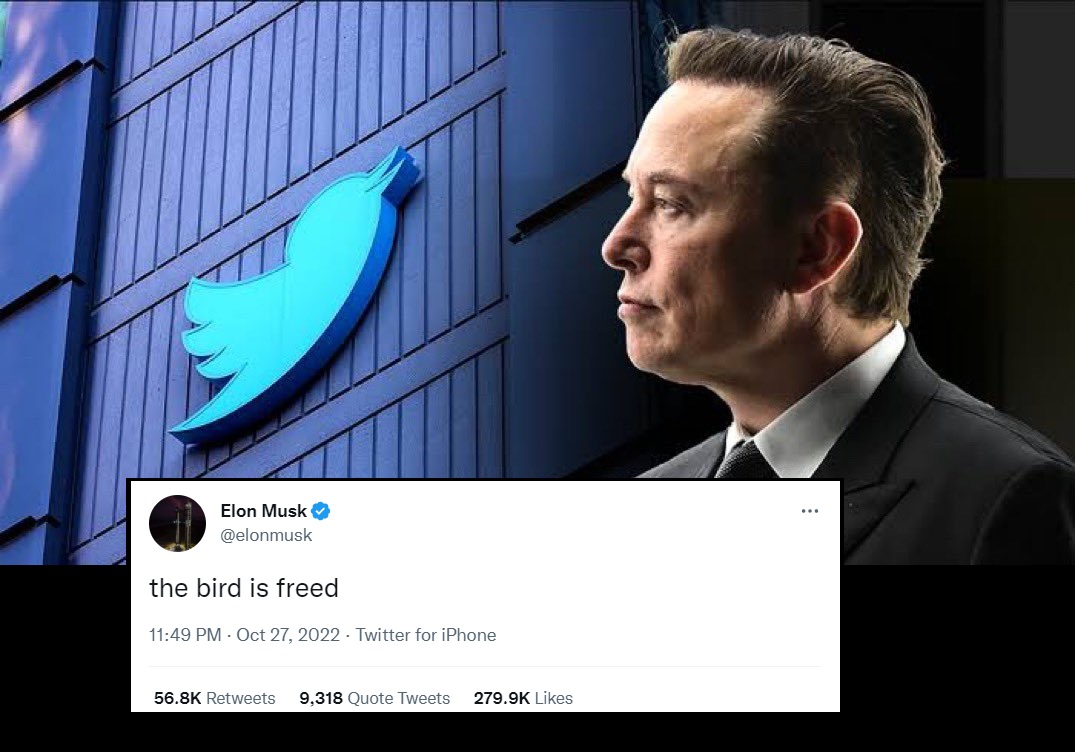
In the prediction section of the recent Twitter discussion {Go Deep} CTH mentioned the reason and unspoken motive behind a prediction that multinational corporations would start to pull their advertising money from Elon Musk.
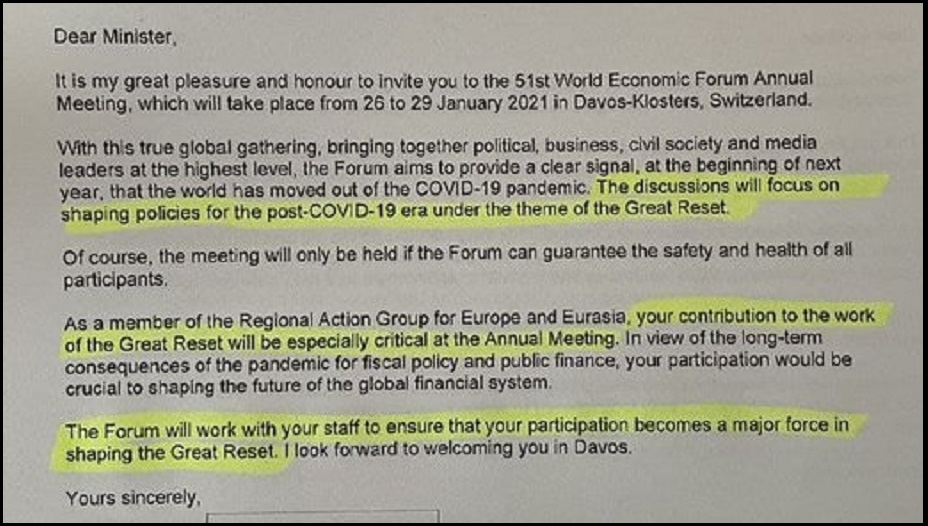
We are simply in an era where there is no distinction between the WEF guidance for multinational corporations and the instructions toward governments’ they support. Free speech and freedom of expression are against both their interests.
Multinational corporations are political entities. The former distinctions between the private and public sector have been purposefully erased. Evidence can be found in the vaccination mandate and within corporate responses to voter outcomes during elections. {Go Deep}
As predicted, it begins….
(Via Wall Street Journal) – Food company General Mills Inc., Oreo maker Mondelez International Inc., Pfizer Inc. and Volkswagen/Audi are among a growing list of brands that have temporarily paused their Twitter advertising in the wake of the takeover of the company by Elon Musk, according to people familiar with the matter.
Some advertisers are concerned that Mr. Musk could scale back content moderation, which they worry would lead to an increase in objectionable content on the platform. Others are temporarily halting their ads because of the uncertainty at the company as top executives exit and Mr. Musk considers a raft of changes, some of the people said.
Kelsey Roemhildt, a spokeswoman for General Mills, whose brands include Cheerios, Bisquick and Häagen-Dazs, confirmed the company has paused Twitter ads. “As always, we will continue to monitor this new direction and evaluate our marketing spend,” she said.
A Twitter representative didn’t immediately respond to a request for comment.
General Motors Co. paused its spending on the social-media platform last week.
Several ad buyers say they expect the number of brands pausing Twitter ads to rise. They say that the platform isn’t considered a must-buy for many advertisers, with far larger budgets going to tech giants such as Alphabet Inc.’s Google and Meta Platforms Inc., and that pausing makes sense during the bumpy transition under Mr. Musk.
Many executives on Madison Avenue are uneasy with the rash of sudden executive departures from Twitter’s advertising sales and marketing units. Among those who have exited are Chief Customer Officer Sarah Personette, Chief Marketing Officer Leslie Berland, and Jean-Philippe Maheu, Twitter’s vice president of global client solutions. Those executives helped reassure advertisers that their ad dollars were being spent wisely and appropriately on Twitter. (read more)
Fascism was traditionally defined as an authoritarian government working hand-in-glove with corporations to achieve objectives. A centralized autocratic government headed by a dictatorial leader, using severe economic and social regimentation, and forcible suppression of opposition.
That system of government didn’t work in the long-term, because the underlying principles of free people reject government authoritarianism. Fascist governments collapsed, and the corporate beneficiaries were nulled and scorned for participating. Then, along came a new approach to achieve the same objective.
The World Economic Forum (WEF) was created to use the same fundamental associations of government and corporations. Only this time, it was the multinational corporations who organized to tell the government(s) what to do.
The WEF was organized for multinational corporations to assemble and tell the various governments how to cooperate with them, in order to be rewarded by them. Corporatism was/is the outcome. The government is now doing what the multinationals tell them to do, and in return the multinationals install the compliant politicians.
Fascism, the cooperation between government and corporations, is still the underlying premise; the World Economic Forum simply flipped the internal dynamic putting the corporations in charge of handing out the instructions.
What results is a slightly modified definition of fascism:
…A massive multinational corporate conglomerate; telling a centralized autocratic government leader what to do; and using severe economic and social regimentation as a control mechanism; combined with forcible suppression of opposition by both the corporations and government.
Doesn’t that define our current reality, especially visible in the era of COVID?
The instructions from the multinational corporations to government would be called the “Great Reset“, or as commonly transposed by the government officials receiving the instructions, “Build Back Better”.
Posted originally on the conservative tree house on October 14, 2022 | Sundance
You often hear me talk about how financial pundits and economic analysts are disconnected from Main Street. Today we get a prime example of that from the Wall Street Journal.
The topline of the WSJ article is essentially that people are not spending money on anything except essential goods (housing, energy, fuel, food, etc), which is somewhat of a ‘duh tell us something we don’t know‘ type article. However, the analytical part of the article is where you find the insufferable disconnect. Here’s one example:
[Data Point 1] “Gasoline prices dropped in September for the third month in a row, falling 4.9% from August.” [Data Point 2] Sales at gasoline stations, a proxy for spending by car owners, declined 1.4% last month.”
If gasoline dropped 4.9% in price, but sales only declined 1.4% that would indicate more physical gasoline was purchased at a lower price than the month before. It’s not a hard concept to understand.
This is a retail sales reality even identified in the article itself, “Unlike many government reports, retail sales aren’t adjusted for inflation, so some swings reflect price changes rather than shifts in the amounts purchased.”
However, now look at this: “Spending at restaurants and bars grew 0.5% in September from the prior month. But prices at restaurants grew 0.9% in the same month, according to a separate Labor Department report released Thursday, meaning that consumers are getting less for their spending.”
No, that’s not what this means.
If restaurant prices increase 0.9%, but restaurant sales only increase 0.5% it means you are selling/serving fewer customers. It doesn’t mean consumers getting less food, it means fewer consumers are eating at restaurants…. Which is caused by consumers having to prioritize their spending.
(WSJ) – […] Spending declined in categories linked to big purchases like cars, televisions, beds and golf clubs. Purchases at electronics and appliance stores declined 0.8% in September while spending at furniture stores fell 0.7%.
[…] Scott Brave, the head of economic analytics for Morning Consult, said consumers have started to pull back on optional purchases while still spending on the essentials. “They are having to make tough decisions,” he said. (more)
Posted originally on the conservative tree house on October 13, 2022 | Sundance
In this brief segment on fall harvest inflation, NBC notes consumer prices for food stuffs continue increasing regardless of the economic action by the Biden administration. The reason is very simple and is outlined within the segment by Jacob Goebbert, the Goebbert’s farm general manager. WATCH:
.
The current inflation is embedded in the cost of products, because it’s a supply side issue.
Financial “experts” can shout all day long about the fiscal policy (spending) being the origin of inflation (ie. demand side), they’re wrong. Our current inflation cycle, most notably evident within massive increases in food prices, is a supply side issue created by the increased energy costs. Full stop. It’s a Biden policy outcome.
Posted originally on the conservative tree house on October 13, 2022 | Sundance
Joe Biden’s economic and energy policies have resulted in another record matching former President Jimmy Carter. The Social Security Administration (SSA) has announced an inflation driven increase in SAA benefits of 8.7% beginning in January 2023. This is the largest cost of living adjustment in 40 years.
(Social Security Administration) – Approximately 70 million Americans will see a 8.7% increase in their Social Security benefits and Supplemental Security Income (SSI) payments in 2023. On average, Social Security benefits will increase by more than $140 per month starting in January.
Federal benefit rates increase when the cost-of-living rises, as measured by the Department of Labor’s Consumer Price Index (CPI-W). The CPI-W rises when inflation increases, leading to a higher cost-of-living. This change means prices for goods and services, on average, are higher. The cost-of-living adjustment (COLA) helps to offset these costs.
We will mail COLA notices throughout the month of December to retirement, survivors, and disability beneficiaries, SSI recipients, and representative payees. But if you want to know your new benefit amount sooner, you can securely obtain your Social Security COLA notice online using the Message Center in your personal my Social Security account. You can access this information in early December, prior to receiving the mailed notice. Benefit amounts will not be available before December. Since you will receive the COLA notice online or in the mail, you don’t need to contact us to get your new benefit amount.
If you prefer to access your COLA notice online and not receive the mailed notice, you can log in to your personal my Social Security account to opt out by changing your Preferences in the Message Center. You can update your preferences to opt out of the mailed COLA notice, and any other notices that are available online. Did you know you can receive a text or email alert when there is a new message waiting for you? That way, you always know when we have something important for you – like your COLA notice. If you don’t have an account yet, you must create one by November 15, 2022 to receive the 2023 COLA notice online. (more)
A 25% increase in the rate for those who qualify for federal food stamp assistance….
An 8.7% increase in the rate for those who qualify for Social Security benefits….
Meanwhile real wages decreased 3.8% in September and the borders are wide open for cheap labor to pour in.
Posted originally on the conservative tree house on October 13, 2022 | Sundance
The Bureau of Labor and Statistics released the September Consumer Price Index (CPI) today [DATA HERE]. The financial and business media call the continued rise of consumer inflation “unexpected,” however, the results are not a surprise to those who are not pretending.
This CNBC headline highlights the economic pretense still entrenched: “Inflation increased 0.4% in September, more than expected despite rate hikes.” Those who are not pretending fully understand the economic dynamic, but you will not find reality expressed by the mainstream media.
FED rate hikes can only impact the demand side of the inflation issue. U.S (and global) inflation is NOT the result of excess demand. It has not been driven by demand for over a year. The root cause of inflation is on the supply side. That root is grounded in the energy policy making everything entering the marketplace more expensive.
The historic rise in energy prices; the result of Joe Biden’s specific energy policy to limit oil, gas and coal as energy resources; are what have driven inflation throughout the economy. The monetary policy (Fed policy) continues to pretend this dynamic does not exist. The FED is trying to support the political policy, but the bloom is off the ruse.
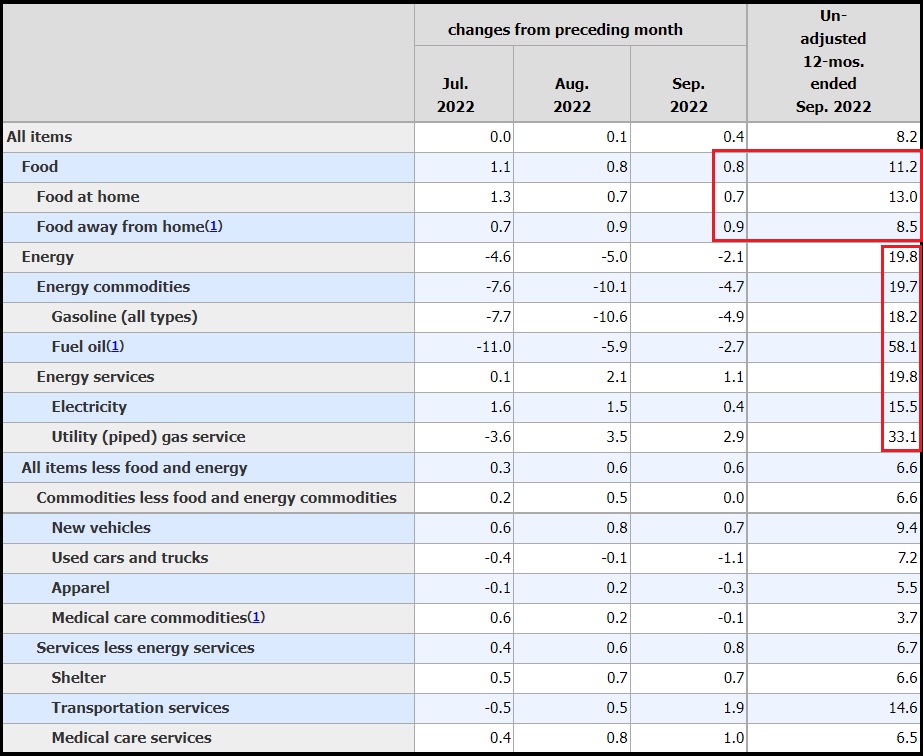
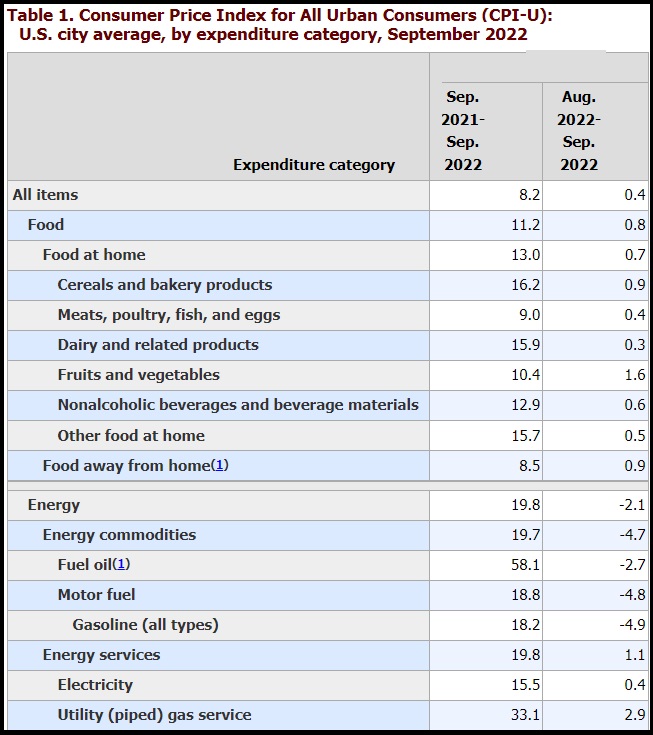
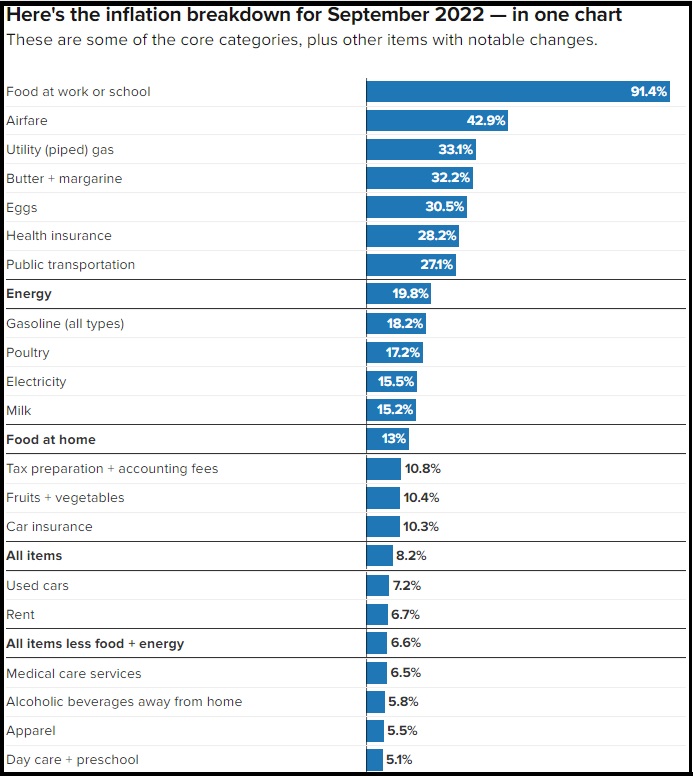
Overall inflation increased 0.4% in September, leading to a result of 8.2% year over year. Food and energy prices continue driving inflation, additionally core inflation (everything except food and energy) continues to be driven by the originating issue of extreme energy costs.
Everything costs more because energy costs more. That is the reality of this inflation issue.
(CNBC) […] “The Federal Reserve has made it very clear they’re committed to price stability, they’re committed to reducing the inflationary pressures,” said Michelle Meyer, chief U.S. economist at the Mastercard Economics Institute. “The more inflation comes in above expectations, the more they’re going to have to prove that commitment, which means higher interest rates and cooling in the underlying economy.”
Another large jump in food prices boosted the headline number. The food index rose 0.8% for the month, the same as August, and was up 11.2% from a year ago.
That increase helped offset a 2.1% decline in energy prices that included a 4.9% drop in gasoline. Energy prices have moved higher in October, with the price of regular gasoline at the pump nearly 20 cents higher than a month ago, according to AAA.
Closely watched shelter costs, which make up about one-third of CPI, rose 0.7% and are up 6.6% from a year ago. Transportation services also showed a big bump, increasing 1.9% on the month and 14.6% on an annual basis. Medical care services costs rose 1% in September.
The rising costs meant more bad news for workers, whose average hourly earnings declined 0.1% for the month on an inflation-adjusted basis and are off 3% from a year ago, according to a separate BLS release. Inflation is rising despite aggressive Federal Reserve efforts to get price increases under control. (more)
I feel like we are living in a parallel universe, where this grand game of pretense continues.
Every financial pundit knows the root cause of inflation is Joe Biden’s energy policy, yet they maintain the lies in order to protect the regime.
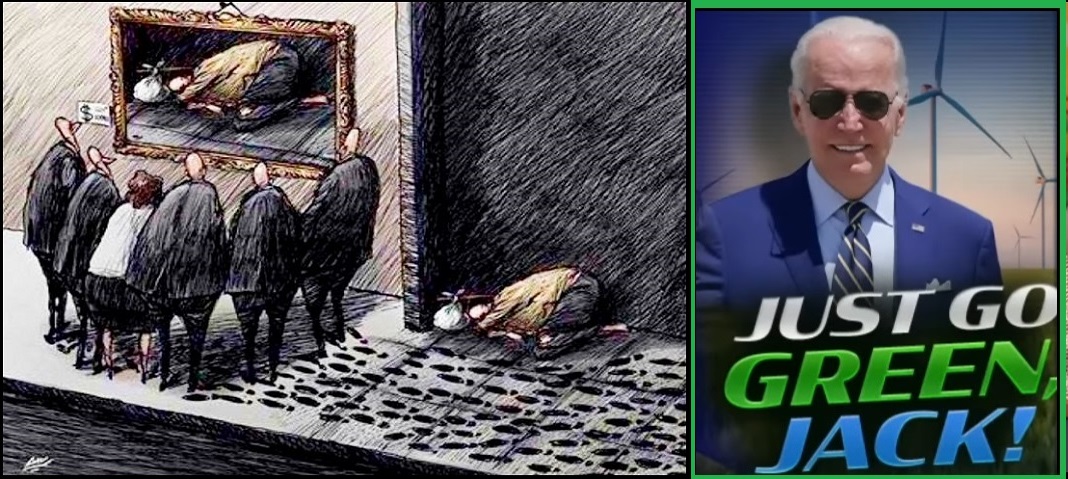
Raising interest rates in a supply side inflation economy only does one thing, it makes the economy contract faster. The only reason to intentionally shrink the economy is to try and reduce the demand for energy resources as part of the “transition to a green economy.” Together, the Biden administration and Federal Reserve are trying to lower economic output to meet a lowered amount of energy being produced. That is the reality of our situation.
They are destroying the working and middle class in order to chase their climate change agenda. These people must be removed from power.
Posted originally on the conservative tree house on October 13, 2022 | Sundance
The Bureau of Labor and Statistics (BLS) released the September wage report [DATA HERE] delivering worse economic news for workers.
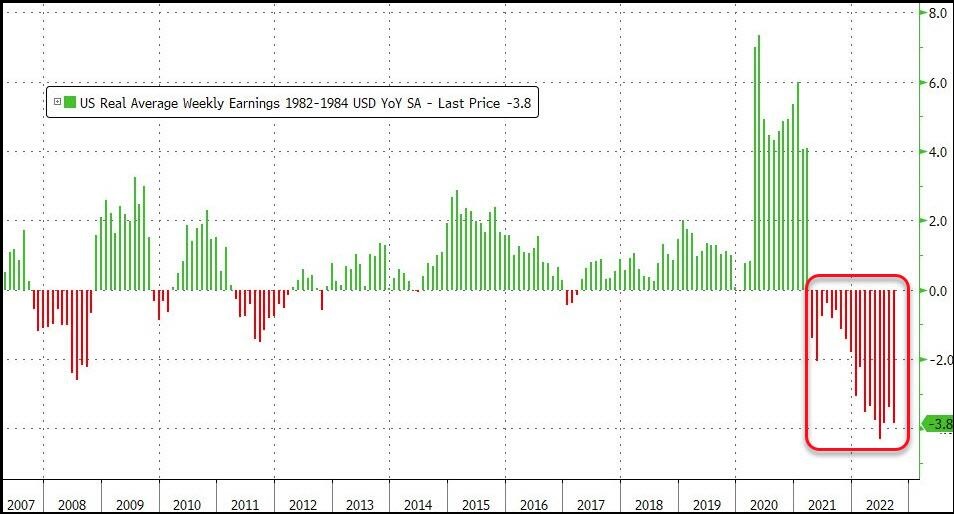
Real wages are dropping at a historic rate as inflation continues to rise and as a result wages buy less.
[BLS] “Real average hourly earnings decreased 3.0 percent, seasonally adjusted, from September 2021 to September 2022. The change in real average hourly earnings combined with a decrease of 0.9 percent in the average workweek resulted in a 3.8-percent decrease in real average weekly earnings over this period.” (link)
REAL WAGE CHART:
As the Biden economic/energy policy and Federal Reserve monetary policy merge together, the economy shrinks. As the economy shrinks, fewer goods and services are purchased. As less consumer goods are purchased, employment hours drop. As employment hours drop, wages decline.
Declining wages combined with increased inflation forms the perfect storm against middle-class and working-class families. This dynamic means lowered income and higher prices for essential goods and services like food, fuel, energy and housing. It’s not difficult to see why this is happening.
The declining wage rates, and the more substantive drop in real wage rates due to massive inflation, are specifically hitting the lower tier of the working class harder. Yet despite this, Biden is intent on importing even more economic migrants to put even more downward pressure on wages for the working class.
These are very real outcomes of policy. Working class Blacks and Latinos will feel this even more, yet this is the special interest group that Democrats claim to support. The reality is exactly opposite from the narrative sold by the Biden administration.
The Democrats know this. These outcomes are not accidental; they are a feature not a flaw in their policy. This is why they need to keep spending to retain the ruse.
There’s no way around this. Despite the pundit and financial class selling a counter-narrative, home prices will crash, and unemployment will go up. I know this is directly against the current talking points, but the statistical reality is clear.
CTH was the first place who said a year ago that home sales will plummet, that is starting to happen right now. There’s no way for it not to happen, the big picture tells us why.
Posted originally on the conservative tree house on October 12, 2022 | Sundance
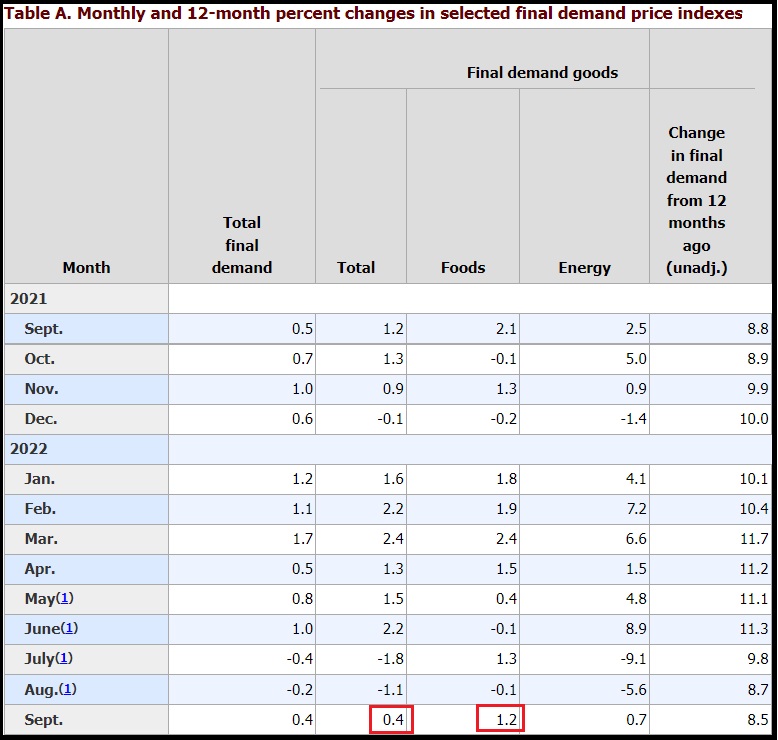
The “Producer Price Index” (PPI) is essentially the tracking of wholesale prices at three stages: Origination (commodity), Intermediate (processing), and then Final (to wholesale). Today, the Bureau of Labor and Statistics (BLS) released September price data [Available Here] showing another 8.5% increase year-over-year in Final Demand products at the wholesale level. However, that’s not the bad news in this data.
While the overall September PPI was higher than expected at 0.4%, the Final Demand Producer Price for food products in September was a whopping 1.2% (14.4% annualized).
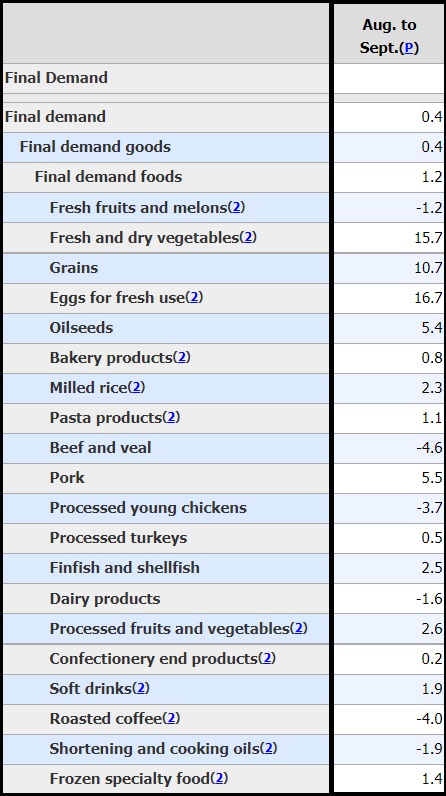
The BLS notes the driver by saying, “a major factor in the September increase in prices for final demand goods was a 15.7-percent advance in the index for fresh and dry vegetables. Prices for diesel fuel, residential natural gas, chicken eggs, home heating oil, and pork also moved higher.”
That’s a 15.7% increase in price, in one month, for fresh and dry vegetables. Annualized that’s a rate of price increase of 188.4% for vegetables. Remember the warning about farm costs (energy, fertilizer, fuel) driving field to fork inflation at harvest? This is the leading edge of that third wave of food price increases.
I have modified BLS Table-2 to focus specifically on food costs. The data is on left.
You will note that ‘row crops’ are the big drivers along with grain and seed products. This is exactly as we predicted it would be because those specific farming costs are the ones with greatest increase from energy, fuel, fertilizer, weed and insect control, and diesel costs.
All of those higher costs have been growing in the fields and will now surface at harvest. The higher farm costs transfer from the field to the fork via the food supply chain. This is only the leading edge of the price increase.
In October 2021 we first warned of the food price increases coming in distinct waves. The first was Jan, Feb and March 2022. The second wave was May through July 2022. This third wave will be bigger than the first two and starts arriving this month, October 2022.
People laughed at me when I said in late 2022 eggs were going to reach .50¢ EACH ($6/doz).
Well, in September the price of fresh eggs jumped 16.7% in a single month. That’s an annualized rate of price increase for eggs over 200%.
With hindsight you can clearly see the three waves of food price increases (BLS Table A):
Get ready and shop smart.
The October, November and December price increases in the grocery store are going to make the prior fresh food increases look small, as the full increased costs of farming operations starts to arrive at the supermarket. Unfortunately, this will coincide with a wave of gasoline price increases, and the prices of natural gas are already skyrocketing.
I have created this site to help people have fun in the kitchen. I write about enjoying life both in and out of my kitchen. Life is short! Make the most of it and enjoy!
This is a library of News Events not reported by the Main Stream Media documenting & connecting the dots on How the Obama Marxist Liberal agenda is destroying America









 Centinel2012