Trouble Ahead, Inflation Jumps More than Expected – Gasoline Prices Increase 9.1% in One Month, Year Over Year Inflation 2.6%


Posted originally on the conservative tree house April 13, 2021 | Sundance | 333 Comments

The Bureau of Labor Statistics highlights some alarming inflation numbers today [Link Here] that are unfortunately, not unexpected…. unless you are a liberally trained economist (most of them) and so the results are surprisingly “unexpected”.    But the actual JoeBama-nomic policy is even worse because wages increased less than inflation increased, so real wages (actual purchasing power) decreased.  That spells trouble, Trouble.
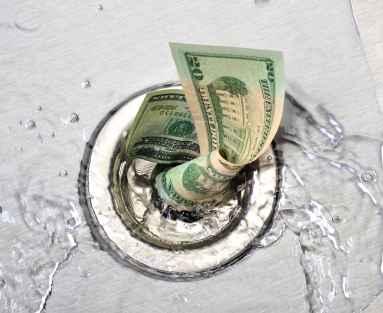
Middle-class wage earners already know this problem; you are seeing it at the gas pumps and at the grocery store.  Fuel prices are rapidly increasing and the amount of inflation in the ‘at home’ food industry (grocery store) is even more concerning.

Let me first walk through the data and then provide some forward analysis with tips to help you offset what is about to hit.

First, it is important to know that BLS price survey data lags actual prices as felt today.  The prices you are seeing today/tommorrow at the store and gas pump will not show up in the rolled-up data for over a month….  So the data released today is unfortunately far behind what you are witnessing in real time.

Gas prices rose last month by 9.1%.  The year-over-year inflation number is an alarming 2.6 percent last month.  Keep in mind that retail grocery prices are not in the inflation number, and they generally follow the same price index as fuel; so it is safe to say monthly grocery store price increases are in the 8 to 10 percent range.

Part of the reason gas and food track together is fuel and energy prices are the #2 cost within the food sector.  With packaging prices increasing; with fuel prices and distribution costs increasing; with energy prices increasing; all costs associated with food production, processing, delivery, warehousing and distribution, all end up in the final price at the grocery store.

This problem with inflation is only going to get worse as the FED gets more involved (that’s coming), because interest rates are already disconnected from the economic costs associated with business investment. [Note: the Fed said last year that it would hold its benchmark interest rate near zero, for some time, even if inflation were to rise above its preferred rate.]  JoeBama is returning us to a “service driven economy”, and that is a problem for inflation.

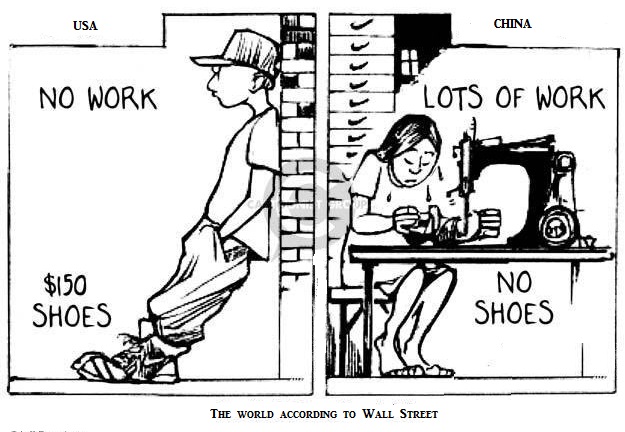
President Trump’s MAGAnomic (USA First) increased wages and lowered prices (deflation) {Go Deep} but hurt Wall Street.  JoeBama’s globalist policies lower U.S. wages and increase prices (inflation) but increase Wall Street (via multinationals).

Gas prices are going to keep rising because JoeBama is shutting down U.S. energy sources, blocking pipelines and using regulation to stall energy development (including refineries).  We will be back to energy dependence soon.  This process will continue driving up food prices which is really bad for the middle-class.

In the longer term, the impact of wages purchasing less means middle-class housing prices will drop as people struggle to afford mortgages.  However, the Wall Street gains will keep the upper tier real estate market less impacted.  You can see how the wealth gap is directly attributed to policy.

Trump decreased the wealth gap with policies that disproportionately (in a good way) helped the middle-class and blue-collar worker by increasing wages.  JoeBama expands the wealth gap with policies that disproportionately (in a bad way) hurt the middle-class and blue-collar worker by decreasing real wages and increasing prices.  Under JoeBama-nomics the rich get richer and the poor get more poor.

If you know that fuel and food prices are going to increase, you can take action now to plan out your home budget in an effort to offset or cope with the inflation.  Example: buy bulk items that can last longer as ingredients.  You can also save money by making your own laundry detergent, shop sales, cut coupons and be proactive in preparation for a period of large price increases at the supermarket.  Use your freezer and eat out less.

Employment is going to be an issue again.  While the current employment picture is good, it will not last into 2022.  Make a safety net now (somehow) and start thinking about your longer term expenses and how you can take action now in preparation.

I am not a doomsayer… but I can see when supply chains start to fill up because overall demand begins to stall.  We are exactly at that point.
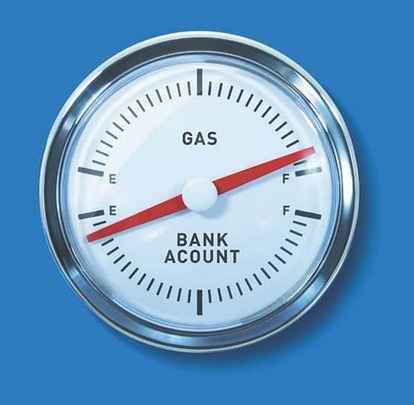
BIDENomics – Weekly Jobless Claims “Unexpectedly” Higher With 744,000 New Claims


Posted originally on the conservative tree house April 8, 2021 | Sundance | 151 Comments

All of JoeBama’s economic policies mirror the Obama-Biden economic issues. Underline it; emphasize it; note the pattern.  The policies that intentionally held down the U.S. economy during the Obama administration are once again being duplicated.  It’s Déjà vu all over again.

JoeBama’s energy policy is crushing jobs in key regions where energy jobs are being lost in dramatic fashion.  Simultaneously the costs of energy, including gas, are skyrocketing.

The longer-term costs have not yet hit the consumer, but they will soon as inflation will jump dramatically while employment will continue to struggle because consumer demand will drop… The issues create a cascading cycle.

The Biden administration is hiding their actual policy impact by blaming COVID, but that’s not the issue that will hurt blue-collar workers in the longest term.  We are going back into the intentional disconnect I have talked about where the stock market (multinationals) will gain, but the U.S. worker economy will suffer lost jobs and lower wages. This dichotomy is by design and the corporate media economists never discuss it.

This reality is a big part of the reason why Pelosi and JoeBama needed to quickly pump money into the working class in order to avoid the pitchforks.  However, that $2,000 injection will not last and will be eaten up quickly by the larger and longer term Biden economic policy.

The U.S. economy, which is 70% dependent on consumer spending, is going to contract.  This contraction will be “unexpected” by the professional pundit class who check their stock holdings and smile.  However, this contraction will not be unexpected by the blue-collar workers who watch their paychecks shrink and their costs to live (electricity, fuel, food prices) increase beyond their earnings.

If you are a blue-collar or white-collar worker in a BLUE region or state, you will feel the impact first.  It is going to get very ugly, as noted by the disparity in the unemployment claims this week.  Weekly unemployment claims [Dept of Labor pdf here] tell the story.

(CNBC) – […] First-time claims for unemployment insurance rose more than expected last week despite other signs of healing in the jobs market, the Labor Department reported Thursday.

First-time claims for the week ended April 3 totaled 744,000, well above the expectation for 694,000 from economists surveyed by Dow Jones. The total represented an increase of 16,000 from the previous week’s upwardly revised 728,000. The four-week moving average edged higher to 723,750. (link)

The negative results are continuing on a ‘Red State’ -vs- ‘Blue State’ dynamic as noted in the Bureau of Labor Statistics (BLS) reporting: “In February, the highest unemployment rates among the divisions were in Los Angeles-Long Beach-Glendale, CA, 10.9 percent, and New York-Jersey City-White Plains, NY-NJ, 10.8 percent.”

For the weekly jobless claims, here’s the breakdown by state:

(Source pdf)

Do not dismiss these results as just bad policy.  There is also a strong ideological component as the Chicago Crew is driving the granular issues on a day-to-day basis.  The Obama team intentionally work to diminish the economy of the United States because their “fundamental change” requires it.   Joe Biden is an idiot and has no clue about what is structurally behind all the moves…. That’s why Obama installed Kamala Harris.

The professional republican class are corporatists; do not expect them to oppose any of these policies that undermine the U.S. economy and expand globalism.  The GOP is paid by the corporations to act stupid and go along.

The road to serfdom is paved with fraudulent intentions….

Archegos Capital Management Crisis


Armstrong Economics Blog/Corruption Re-Posted Apr 7, 2021 by Martin Armstrong

The Archegos Capital was founded by the former Tiger Management equity analyst, Bill Hwang. Archegos Capital, the “home office” hedge fund owned by Bill Hwang, lost an unbelievable $110 billion in just five days. The strategy was the classic leverage using SWAPS. They never purchased shares of stocks in companies like ViacomCBS. Archegos Capital was entering into equity swaps with numerous different banks and investment banks in a similar manner to what would be called money laundering where we borrow from one bank to pay off another.

By engaging SWAPS, Archegos Capital never actually owned shares of the underlying stock. What they did was effectively leveraged themselves by as much as 500%, which would prove to be their undoing. The problem with such hedge funds is that they really take a personal view of the performance of the market going forward. This is ALWAYS the undoing of these hedge funds going back to Long-Term Capital Management which took a fundamental view that they would make a guaranteed fortune on the high interest of Russian debt and that bribes were being paid in the IMF that they thought would keep the loans going to Russia without end.

I cannot stress enough that ANY fund which is dominated by fundamental expectations that override quantitative models, should be AVOIDED like the plague. We are into a whole new world of finance which is moving in a counter-reaction to the Great Reset. There is NO QUESTION that the March 2020 crash was not only UNIQUE in history, it was clearly an assault that attempted to create another 2007-2009 economic contraction which would have made facilitated the Great Reset by the intentional destruction of the economy. They have had to rely upon the virus scare to accomplished what they had hoped would have be a far easier road.

What Gives Value to a Currency?


Armstrong Economics Blog/Economics Re-Posted Apr 7, 2021 by Martin Armstrong

QUESTION: Hello Martin, can you explain to me how a currency would sustain value for international trade if a country, like Canada (where I live), did what you suggested and stopped issuing debt and just printed money to level that was 5% – 10% of national GDP? would it depend on the attractiveness of what a country exports eg: Canada exports oil, lumber, crops like wheat/soy/canola, minerals – both precious and functional? What would happen to a country that didn’t have exports as a significant portion of it’s GDP? I am curious about how currencies would react to your restructuring plan that eliminated the need for a country to issue debt. Thanks for all your insights and theories. Very helpful.

Trapped in Canada with an egoistic misguided Prime Minister who doesn’t appear to like Canada (he keeps telling us how awful we are) or Canadians, he prefers spending time with global elites and is following their plan even though it damages Canada pretty significantly.
MB

ANSWER: Right now, every country spends more than it takes in. The deficits are funded by selling debt, which then competes against the private sector. The interest rates rise and fall on sovereign debt based upon the confidence from one week to the next. If they stopped borrowing, then the capital investment would turn to the private sector, creating more economic growth. If income taxes were eliminated, the economy would grow based upon innovation which is what it should be driven by.

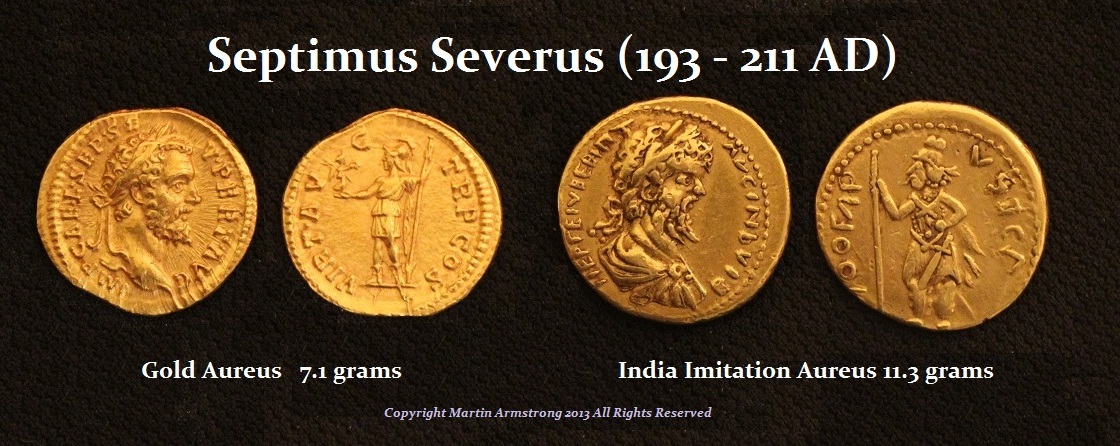
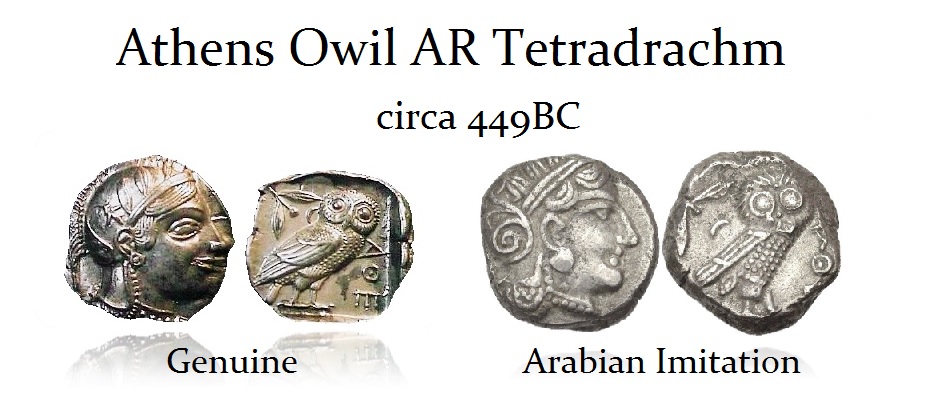
The confidence in the currency would simply depend upon the strength of the economy, as was the case for Athens and Rome in ancient times. Their coinage was imitated because they were the dominant economies of their time. The value of a currency is the strength of its economy. It has NEVER been about its backing, which is purely a theory that arrived with paper money. Rome had no national debt. The value of the currency was more than its metal content. Here we have a gold aureus of Septimus Severus (193-211 AD) and the imitation in gold made in India. The imitation weighed more than the original. Imitations were made in the same quality of metal, so it proves that it was not a counterfeit but that a coin from the core economy possessed a greater value than the raw metal.

Just compare Russia, which has tremendous resources, against China, Japan, and Germany that had really no gold reserves. Russia did not expand its economy while the others boomed because of its people. The value of a currency is the TOTAL productive capacity of its economy — the work ethic of its people. Russia has not been able to rise substantially because it never fully embraced the idea of capitalism. They moved from communism to an oligarchy.

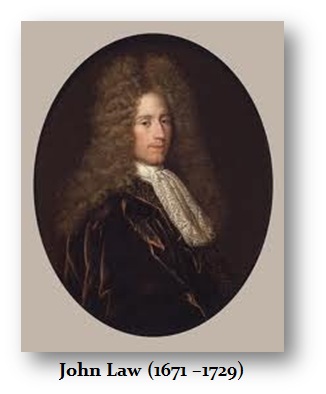
Understanding the Persecution of John Law


Armstrong Economics Blog/Corruption Re-Posted Apr 7, 2021 by Martin Armstrong

COMMENT: Hi Mr. Armstrong…..this is a surprising (to me) summary, on John Law. Every piece I ever read about him, cast him as a complete scoundrel, yet you obviously write with admiration. Just another example of history depending on someone’s perspective. You never cease to surprise. And that’s good.

HS

REPLY: John Law was actually a brilliant man. His legacy is not so different from John Maynard Keynes. He advocated deficit spending ONLY in times of recession, but governments have spent relentlessly with deficits that never end. We call this “Keynesian economics” when in fact he never advocated such a system. Likewise, John Law never advocated what the French government did in creating the Mississippi Bubble.

It is true that John Law fled to Amsterdam, but this is when he studied real banking operations and saw that money was actually virtual. Because coins were counterfeited or their edges shaved, bank money was more valuable than coins. Once the coins were deposited, each had to be inspected. So the bank became a sort of guarantor of the validity of the coins. Here is an ancient coin from Lydia with numerous banking marks applied, verifying that the coin had been inspected by them before for the same reasons.

It was this first-hand observation that led John Law to see that money was actually virtual, whereby people preferred bank money to actual coins. John then returned to Scotland, where he published in 1705 his Money and Trade Considered, with a Proposal for Supplying the Nation with Money. Law would later publish a second edition in 1720. He attempted to use his writing to convince the Scottish Parliament to adopt his ideas about money, but they declined, giving rise to the adage that a genius is never acknowledged in his native land (i.e. Columbus, Einstein to just mention two). Law had captured a glimpse of the virtual money supply as he was fascinated with the development of “bank money” that was displacing bullion in circulation.

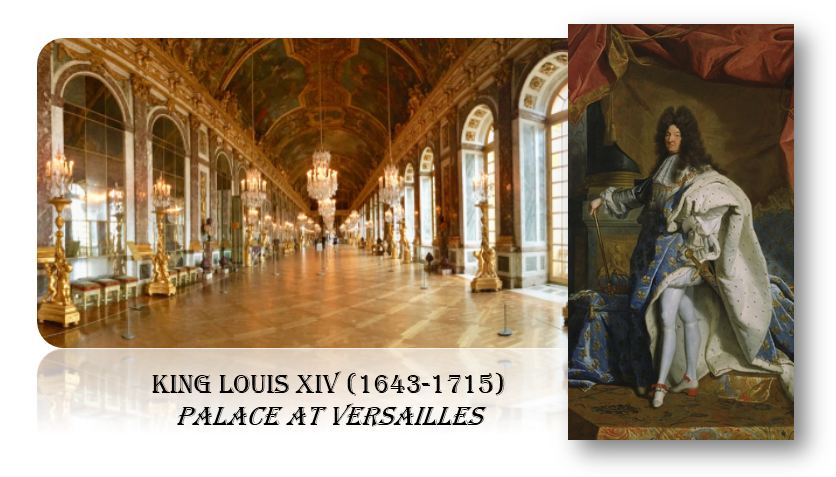
Therefore, John Law has been hated by hard money people because they fail to understand that coins became second-best to actual paper money, for it relieved the problem of having to test every coin in a large transaction. Where Scotland refused to listen to John Law, France took him up on his observations. In 1716, John Law was invited by France to give it a shot. King Louis XIV (1643-1715) had squandered France’s resources on numerous wars and the construction of the Palace at Versailles. The idea of borrowing to fund wars and expansion had ruined the governments of men. Louis XIV had also adopted the theory that it was a divine right of kings to act as a dictator. This idea has persisted behind the curtain for centuries and dominates even American politics where you cannot sue the government without its permission.

For 54 years, Louis XIV worked daily for 8 hours, where he concerned himself with the very smallest of all details of state. He controlled everything from troop movements, infrastructure construction, court etiquette, and even theological disputes. He subordinated the nobles who had often instigated civil wars. Over the previous 40 years, there had been about 11 such civil wars.

The cost of this construction of his Palace at Versailles was far beyond the imagination. He effectively ran the country from Versailles and distanced himself from the people and Paris. Yet for all his extravagance, through the assistance of Jean-Baptiste Colbert (1619-1683), he was responsible more than anyone else for forging France into a more modern country.

John Law has been blamed for the Mississippi Bubble when, in fact, France was on the brink of its third bankruptcy when it contacted him. The government entered a partial default by consolidating its debt and changing its terms. Its new issue of billets d’etat was still required for more funding. The shortage of gold and silver coinage was plunging the economy into a depression. Law’s first proposal for a national bank issuing bank money was rejected. The second proposal to create a private bank was accepted and thus Banque Generale was established in May 1716.

The bank began to lend on its own shares, and the government intervened to support the price of its share by decree. Like the US government ordering the Federal Reserve to provide a floor to US bonds during World War II, likewise, the French government tried to maintain the value of the shares at 9,000 liver. Law begged the government to reduce the floor to 5,000, but they refused. They ended up blaming Law and arresting him no so unlike how the Democrats charged owners of S&Ls which failed when it was Congress who was changing the laws and creating a one-way market where everyone tried to sell.

Revealing History


Armstrong Economics Blog/Ancient History Re-Posted Mar 31, 2021 by Martin Armstrong

COMMENT: I find it interesting how two people the general consensus has said were scoundrels, John Law and Julius Caesar, you have shown were actually people against the establishment. I read your Anatomy of a Debt Crisis and you have put together the contemporary historians where everyone else just seems to rely on the fake news of the day.

Thank you for digging up the facts.

HY

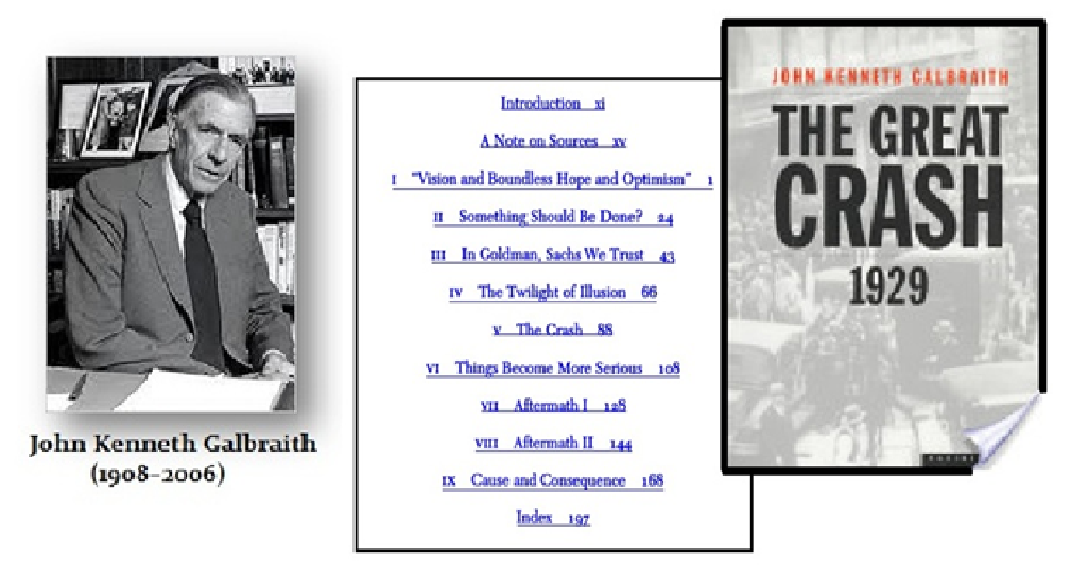
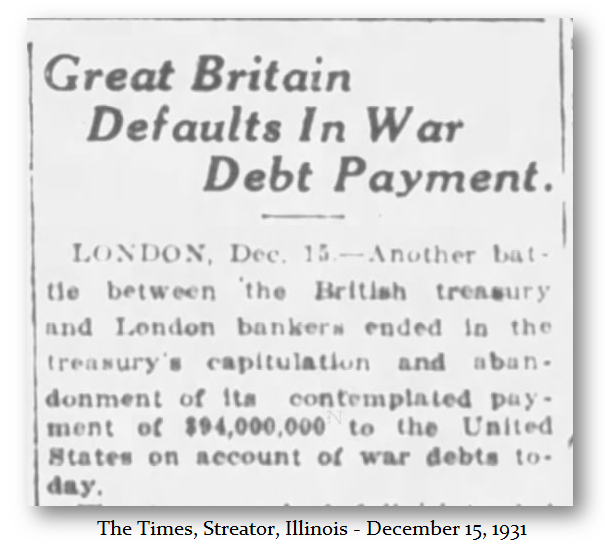
REPLY: When I was in high school, I had to read Galbraith’s “Great Crash.” Nowhere in his book did he ever mention defaults on national debts by any country. When I came across Herbert Hoover’s memoirs in an old book store in London, this was probably the second thing that changed my life, with the first being the movie  “The Toast of New York” about the Panic of 1869 when gold hit $162.50, which I had to watch in history class. I learned not to trust the history books, and the best way to find out the truth was always to return to the contemporary reports of history and/or the newspapers of the time.

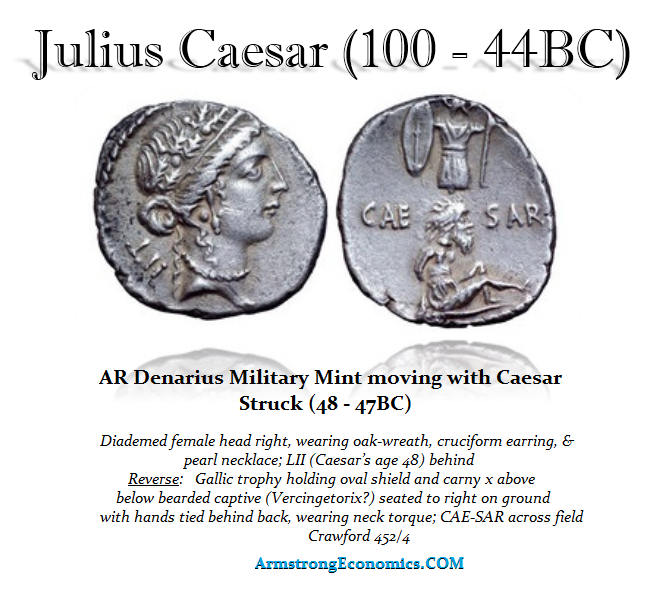
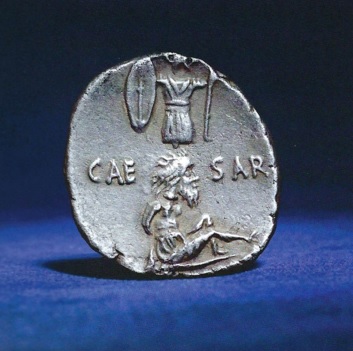
The coinage has been a major factor in identifying the history and accurately dating events. Here is an extremely rare coin of Julius Caesar. Note that there is no portrait of him. He is announcing his victory in Gaul. His Gallic campaign was initially a piecemeal affair, but within six years, he had expanded Roman rule over the whole of Gaul. Following years of relative success, mainly thanks to the disconnected nature of the tribes allowing him to take them on separately (divide and conquer), Caesar was faced with the chief of the Arverni tribe, Vercingetorix, who too late had built a confederation to stand against Caesar. In 52 BC, despite formidable resistance, Caesar finally defeated Vercingetorix at the Battle (or Siege) of Alesia. This illegal war which by Caesar’s own account had left a million dead, was instrumental in elevating him to a position of supreme power among the statesmen of the late Republic, making him incredibly wealthy through war booty and also making him dangerously popular with the plebs — the common people.

This coin was struck in the course of Caesar’s war against the Senatorial faction led by Pompey and later Metellus Scipio. Caesar’s triumphant coinage trumpets his military achievements and conquest in Gaul while reminding the bearer also of his claimed descent from Venus through Aeneas. Interestingly, behind the bust is how old he is IIL or 48 years old. The reverse figure tied below the trophy of arms is popularly believed to depict the defeated Vercingetorix. The figure is carefully rendered in detail of how the Gauls appeared unshaven often with tattoos in blue to frighten their opponents.

In order to consolidate his power when he returned, Caesar produced triumphant coinage to spread the news of his military capability. The reverse of this coin is popularly believed to depict Vercingetorix himself. In 48-47 BC, the defeated Gallic chieftain still languished in the Tullianum, the underground prison beneath the Comitium. He would be hauled out for Caesar’s triumph in 46 BC, then returned to his cell and strangled.

This example of Julius Caesar AR Denarius was struck by a military mint moving with Caesar to pay the troops on a regular basis between 48-47 BC.

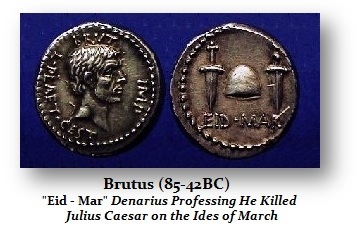
This is a Roman silver denarius struck by Brutus announcing he killed Caesar on the Ides of March 15, 44 BC (EID MAR). As you can see, the coinage can actually be used to confirm history to the year and sometimes to even the very day.

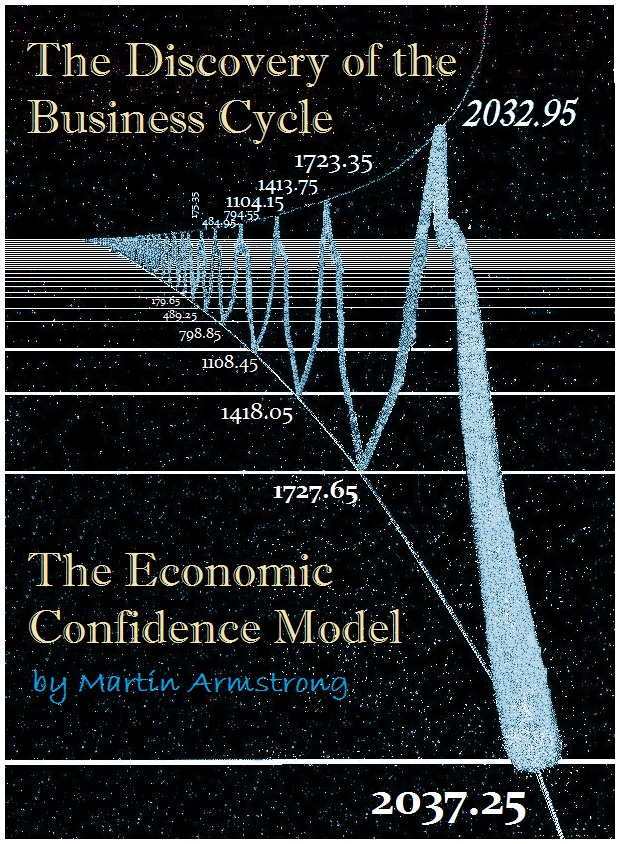
What is 2032?


Armstrong Economics Blog/ECM Re-Posted Mar 30, 2021 by Martin Armstrong

Many people have asked, “Why is 2032 going to be such a major change in the world’s political economy and society as a whole?”

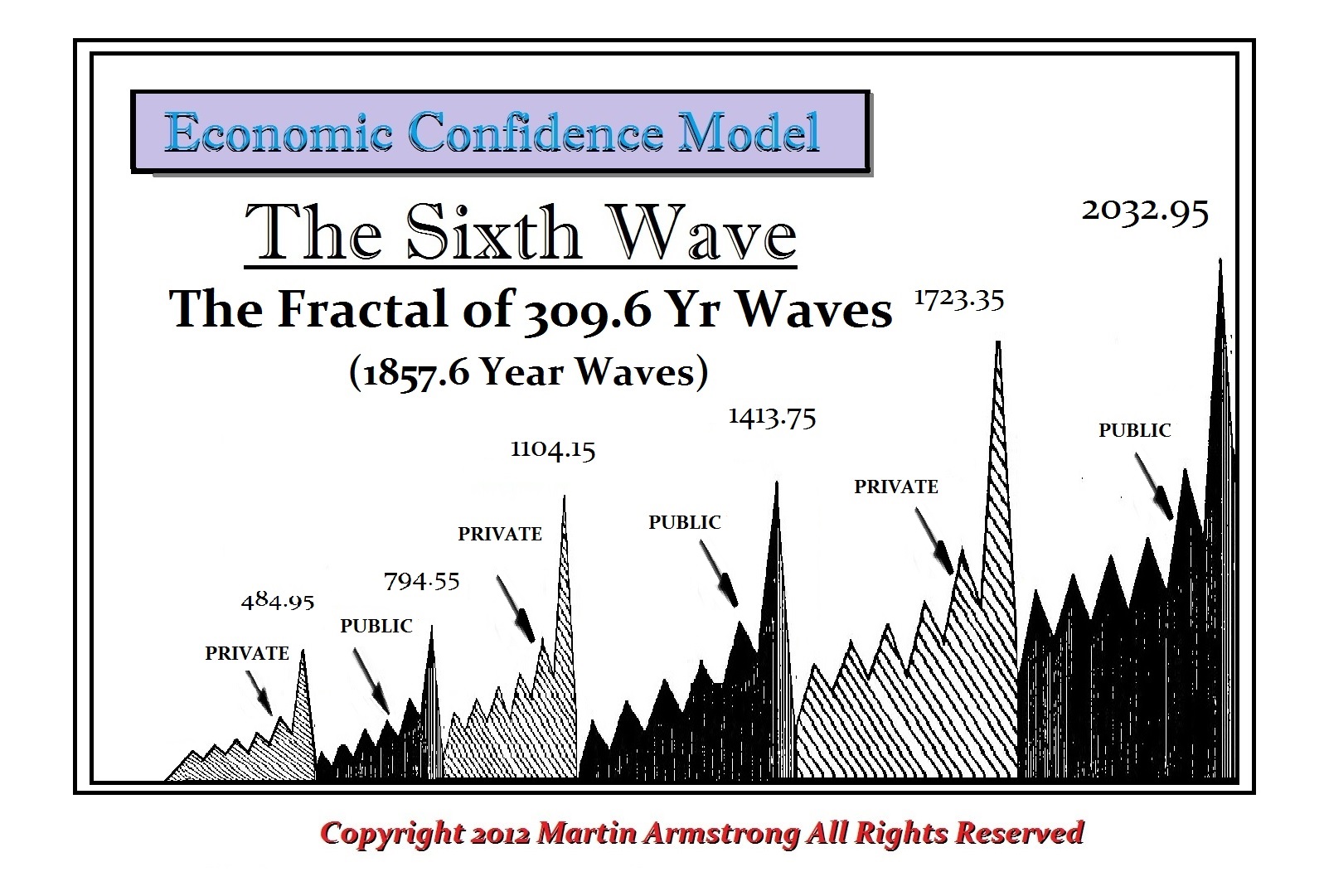
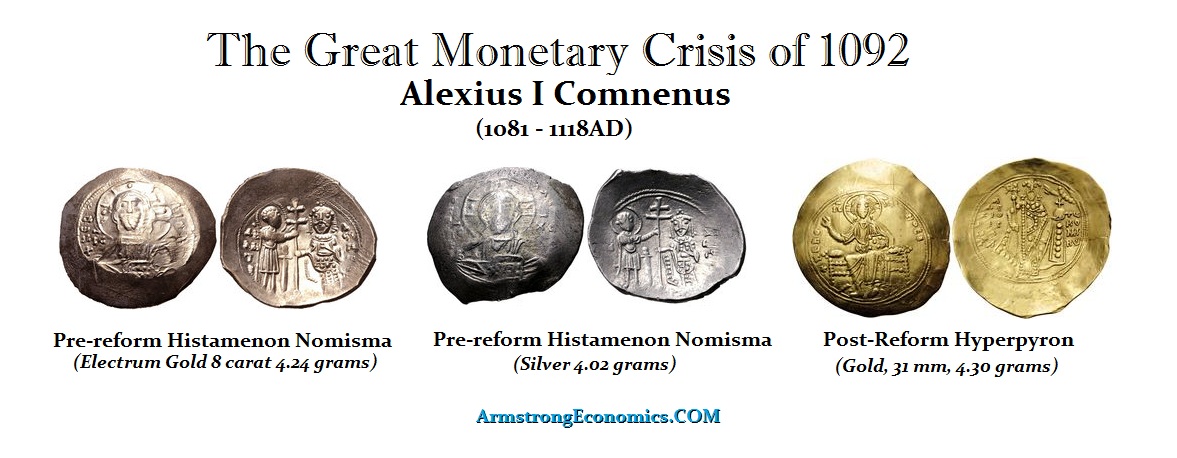
We are confronted by the end of the Sixth Wave come 2032, which will be a profound economic and political change. It appears these world leaders are pushing us toward fulfilling the vision of Kalus Schwab and his distorted view of how society functions. While the first wave marked the collapse of Rome, 794 marked the collapse of the Nara period in Japan as the capital then moved to Kyoto. That would last until 1185 AD when government was overthrown, marking the birth of the Shogun Period (military general authority). The Great Seljuk Turkish Empire had its origins, with its first capital in 1037. By 1092, the Seljuk Empire was at its greatest upon Malik Shah I’s death and had captured most of the Byzantine Empire, creating the Great Monetary Crisis of 1092 in Constantinople. Alexius I (1081-1118AD) of Byzantium saw his empire carved up.

It was 1075 when the Investiture Dispute began, where the Pope opposed kings appointing bishops to control. He had to threaten the ex-communication of kings, which only concluded in 1103. This was the start of the separation of church and state. In 1084, Emperor Henry IV deposed Pope Gregory VII and installed the first Anti-Pope Clement III who then crowned Henry Holy Roman Emperor. A revolution in 1094 resulted in Pope Urban II overthrowing the Anti-Pope and Henry lost power over Italy. But by 1111, Henry V captured the Pope, forced his settlement, and then crowned Henry V as Holy Roman Emperor. By 1112, the Church splits between Papal and Imperial supporters.

The Balkans had been overrun by the Patzinaks who were a nomadic people of the Turkic family. Their original home is unknown, but during the 8th and 9th centuries, they inhabited the region between the lower Volga and the Urals. They then laid siege to Constantinople itself in 1090 AD. They led Alexius to ask for help from Venice, which began the First Crusade (1096–1099) where they took Jerusalem. But the Venetians were more interested in plundering Constantinople. Thus, 1104 marked the peak in the Byzantine Empire and by the Latin rulers who seized Byzantium taking control 1204-1261 AD. It wasn’t until 1298 when the reign of Osman I, founder of the Ottoman Empire, began.

The financial crisis in France led to the default on loans to Italian bankers and the seizure of the Papacy itself moving it to Avignon in France known as the Avignon Papacy, also known as the Babylonian Captivity, which was period from 1309 to 1376. The French Anti-Pope seized the Knights Templars on Friday, October 13, 1307, to confiscate all their wealth and that of their clients. The Knights Templars had become the first real international banking system as they evolved following their founding around 1117/1118 AD, lasting for 22 waves of 8.6 years. This next wave also saw the Black Plague (1347-1351) wipe out 50% of the population, which then changed the economy by shifting it from serfdom in Europe to capitalism as wages began to take place because of the shortage of labor.

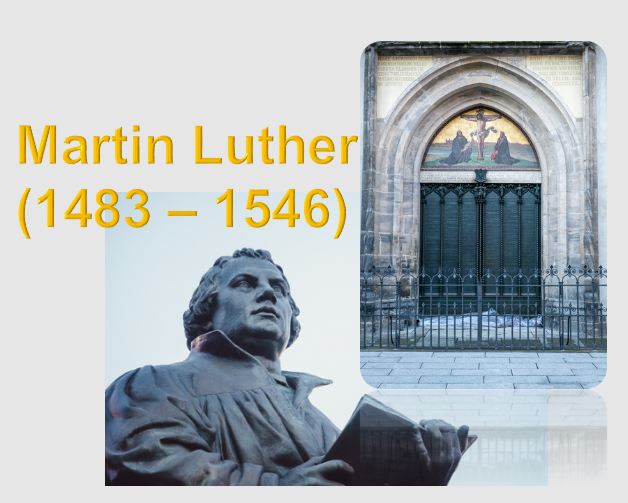
The next peak in the cycle 1413.75 marked the start of the religious revolution. In England, the Oldcastle Revolt was a Lollard uprising against both the Catholic Church and the English King Henry V. Oldcastle was influenced by Lollard cleric William Swynderby, who preached in Almeley during his youth. Lollardy was a politico-religious movement initiated by prominent theologian John Wycliffe during the 1370s. The Lollard beliefs dealt with their opposition to capital punishment, rejection of religious celibacy, and belief that members of the Clergy should be held accountable to civil laws. In addition, it was the rise of the iconoclasty, which took place in the Byzantine Empire, where they rejected ornamentation of churches, religious images, and pilgrimages. They objected to war, violence, and abortion. John Oldcastle led the revolt, and it took place on the night of 9/10 January 1414. The rebellion was absolutely crushed at the battle on St. Giles’s Fields. There was rising discontent in religion that manifested on October 31, 1517, when Martin Luther nailed his 95 Theses to the door of the Wittenberg Castle church in Germany.

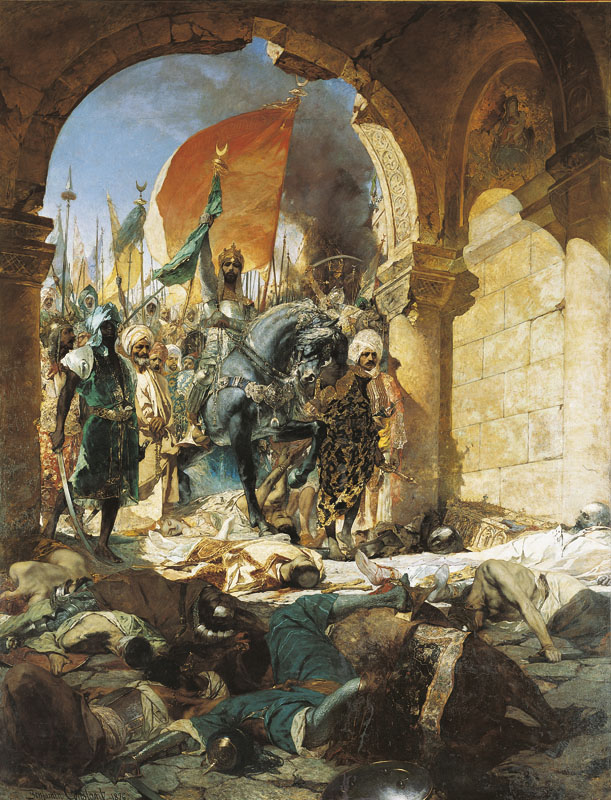
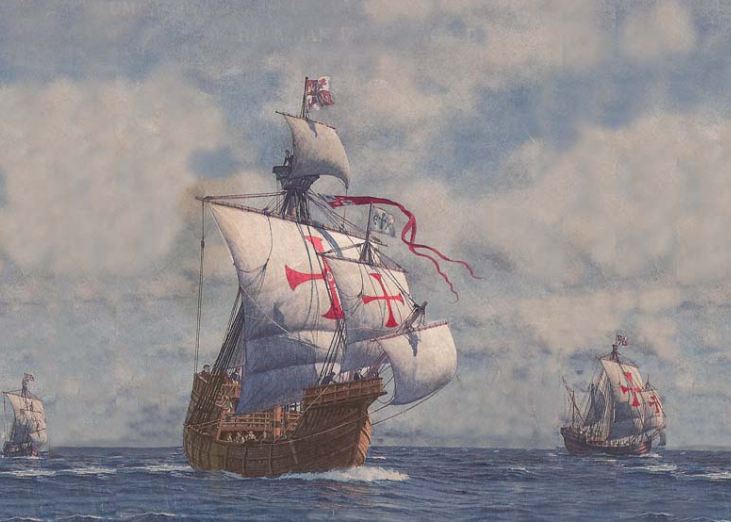
This next wave peaked in 1723.35, not merely saw the Protestant Reformation impact region, but with the fall of Constantinople in 1453, scholars fled to Europe and Russia, taking the wealth of knowledge with them. By 1492, Christopher Columbus convinced others that the world was round and not flat based upon maps that came from Constantinople. While it would slowly expand the knowledge in Europe, the Age of Enlightenment is formally classified as being between 1715-1789, which really became the foundation for the next wave into 2032.

But this wave was the beginning of the crisis with a monarchy. Columbus was backed by Spain, which then became the new financial capital of Europe. But the mismanagement by the monarchy led to Spain becoming a serial defaulter beginning in 1557, followed by 1570, 1575, 1596, 1607, and 1647, ending in a third world status by the end of this wave. King Philip V of Spain abdicated the throne in 1724 to go to a monastery.

In England, on October 17, 1722, the Habeas Corpus Act was suspended because of a Jacobite plot to take the thrown by a Catholic James III they called the Old Pretender, and Parliament prohibited journalists from reporting on political debates. From here on out, the tone for the next wave was set in motion. The rise against the monarchy. This was the wave of human rights and it moves into its culmination come 2032 with the rise against human rights and the attempt once more to suppress the people with the rise of authoritarianism. This is once more a major turning point, and we will face a dramatic change both economically and politically on a global scale.

The forthcoming “The Discovery of the Business Cycle” goes into the details of these waves throughout history with not merely political facts but also the rise and fall of the world’s monetary system.

The Greatest Female Trader of All Time?


Armstrong Economics Blog/Traders Re-Posted Mar 25, 2021 by Martin Armstrong

QUESTION: First I want to thank you for your guidance. You have helped me understand markets where I can see I was clueless before. You seem to be a contrarian. I take it that is why you say the majority must always be wrong. Have you learned this to be the best way to look at the world?

Thank you for shining a light in these dark times.

GR

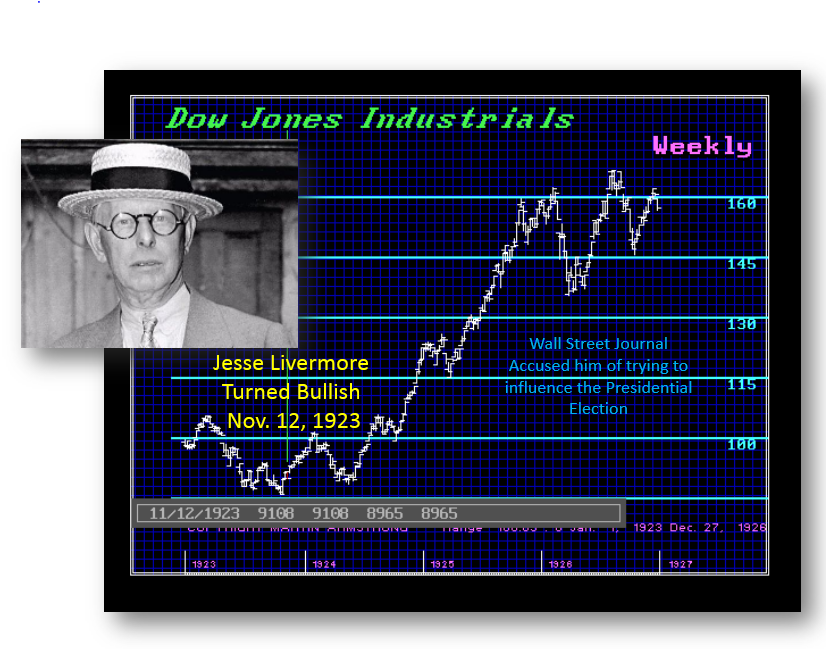
ANSWER: The greatest traders of all time have always been contrarians. They can see the patterns within patterns and how history repeats right before their eyes. Jesse Livermore (1877 – 1940) turned bullish in 1923. He could see the bull market coming. The Wall Street Journal accused him of turning bullish to influence the presidential elections. When they were proven wrong, they simply refused ever to quote Jesse ever again. Many have pointed out that Barrons had reported that our model was calling for new highs back in 2010 more as a joke. They have never reported ever again how it was correct. It appears that the media does not like it when they are wrong and will retaliate.

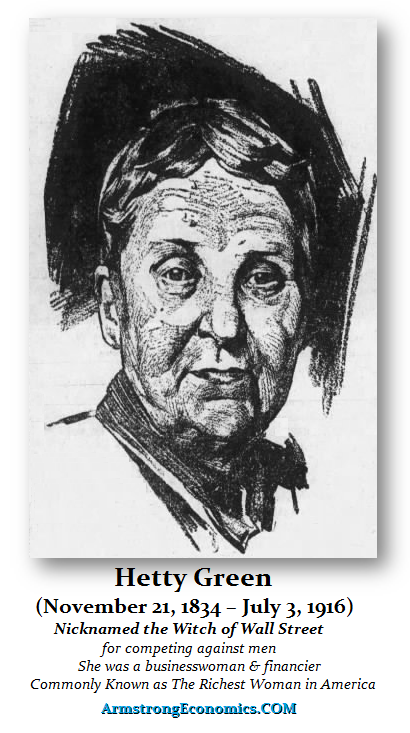
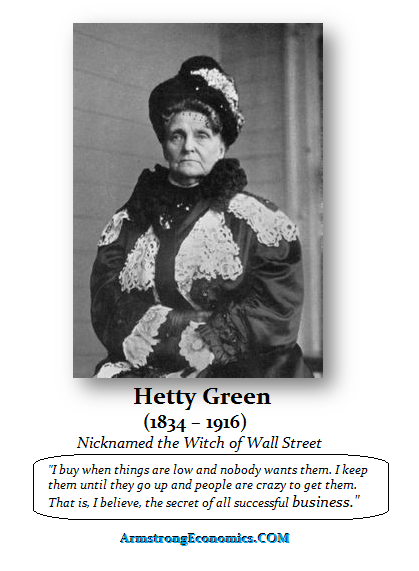
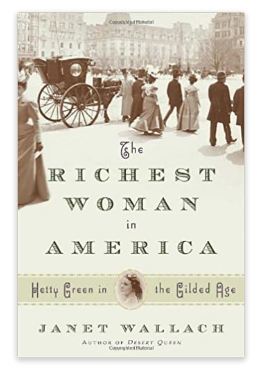
Hetty Green (1834-1916) was a woman in a man’s world. She became not just one of the wealthiest and most astute investors in American history, but she became the richest woman perhaps in the world. Hetty’ was known for her extreme frugality, which was exploited by her adversaries and made for good copy in the press. They dubbed her the “Witch of Wall Street” because she was such a good trader her wealth could outdo even the top ten Wall Street bankers in her day. She was in reality a woman in a man’s world, during the era of robber barons when deals were done in dark oak wooden rooms filled with cigar smoke clouds that you would think it was going to rain.

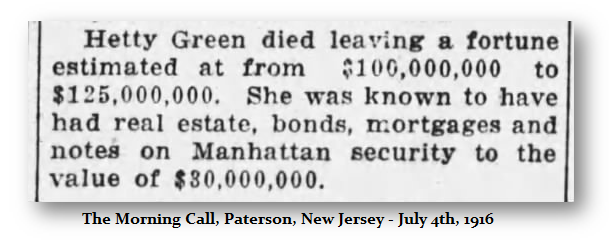
Her reputation as the “Witch of Wall Street” was undeserved and today they would call it sexist. Hetty was the first female billionaire in modern terms who would be worth $10 billion+ in 2021. When she died in 1916, she was worth between $100-$125 million when a dollar was really worth something. She actually despised many of the titans of industry and finance of the day for their predatory ways and profligate spending. She actually sympathized more with the average hardworking citizen, yet she followed in her father’s Quaker footsteps.

Hetty Green was the woman of the Gilded Age. Few men could compete with her mentally. Hetty was abandoned at birth by her mother and she was viewed as a female by her father. Against this backdrop, Hetty set out as a child to prove she was of substance and had value. She followed the simple rules of her wealthy Quaker father, and always was extremely frugal. She would accompany him to the counting houses, storehouses, commodity, and stockbrokers. She observed trading from an early age and clearly saw the patterns within patterns.

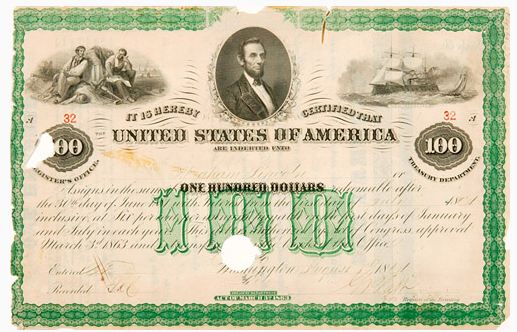
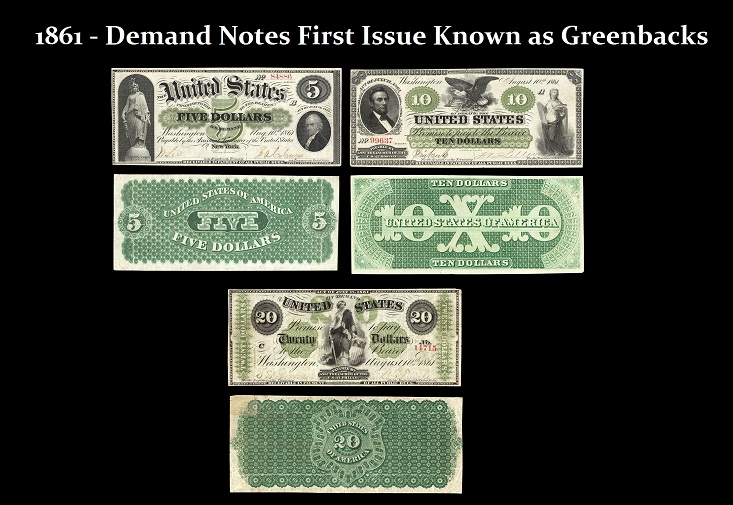
While she inherited money, she understood trading. Perhaps her greatest trade was buying greenback bonds during the Civil War and into the panic of 1869. Some painted it as she never lost faith in America’s potential, but from a practical standpoint, she could see that the North was the industrial hub against the South which was agricultural. Others claim she just ignored the herd mentality and took advantage of financial panics and crises.

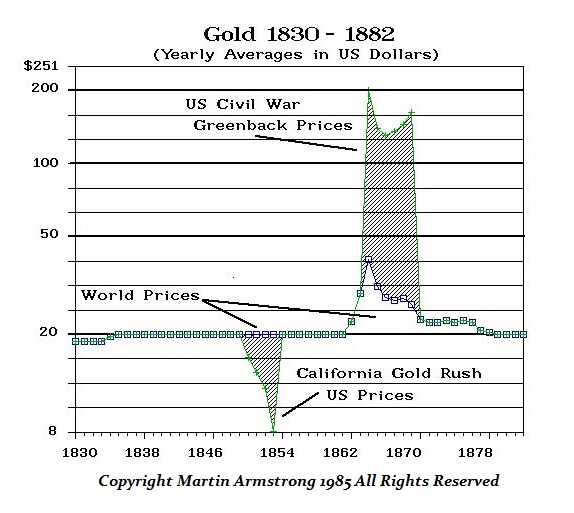
Indeed, during the civil war, Hatty bought federal bonds when the greenback would collapse against gold. In 1862, the greenback declined against gold until the end of the year when gold was trading at a 29% premium to the paper greenbacks. The following year, by spring of 1863, the greenback collapsed to $152 against $100 in gold. After the Gettysburg victory, the greenback bounced back to $131 to $100 in gold. Then came 1864 when General Grant was making very little headway against General Lee. When it looked bleak in 1864, that is when the Greenback collapsed to its lowest point reaching during July 1864 briefly to $258 greenbacks to $100 in gold.

The Greenback began to recover, dropping back to the $1509 level. Congress limited the total issue of greenbacks to $450 million, which helped to support their value. Then the Panic of 1869 hit, and Greenbacks fell again to $162.50. Hetty made a fortune buying the Greenbacks at the lows. Then in December 1878, Congress made the Greenbacks on par with gold. What bonds in Greenbacks she was buying, she gained not just the interest but also about doubled her money on this trade alone.

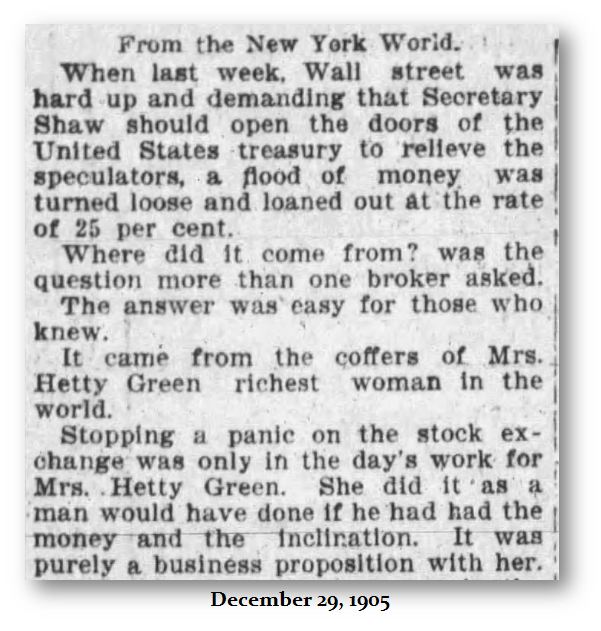
Therefore, Hetty bought railroads, real estate, and bonds. She could smell blood in the streets, as they say in financial markets, and she was there to buy it up. Men mocked her, and women scoffed at her frugal ways. Nevertheless, she had thick skin, and because she would buy in the panics and win, they called her the “Witch of Wall Street.” Yet, she even supplied the loans that kept the city of New York itself from going bankrupt. Even when the markets panicked, Hetty looked at the trend and had a nose for seeing the market. She would be there lending money at 25%.

Hetty is said to have relished a challenge. When her aunt died and did not leave Hetty the fortune she expected, she filed a groundbreaking lawsuit that still resonates in law schools and courts. When her husband defied her and sank her money on his own risky interests, she threw him out and, marching down to Wall Street, quickly making up the loss. Her independence, outspokenness, and disdain for the upper crust earned her a reputation for harshness that endured for decades.  Yet, those who knew her admired her warmth, her wisdom, and her wit.

When Hetty died, she did leave a fortune.

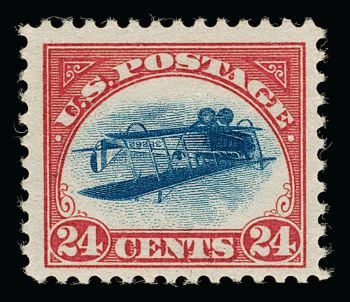
Her son, Edward Howland Robinson Green (1868-1936), was not so frugal. He was an avid collector and bought the famous sheet of 100 inverted air mail stamps in 1918, paying $20,000. The last example sold after a few years and brought in $1.3 million. He also had bought all five of the known 1913 Liberty Head nickels and as many as seven of the rare 1838-O half dollars. He also held dozens of high-grade 1796 quarters.

GameStop Update


Armstrong Economics Blog/Stock Indicies Re-Posted Mar 15, 2021 by Martin Armstrong

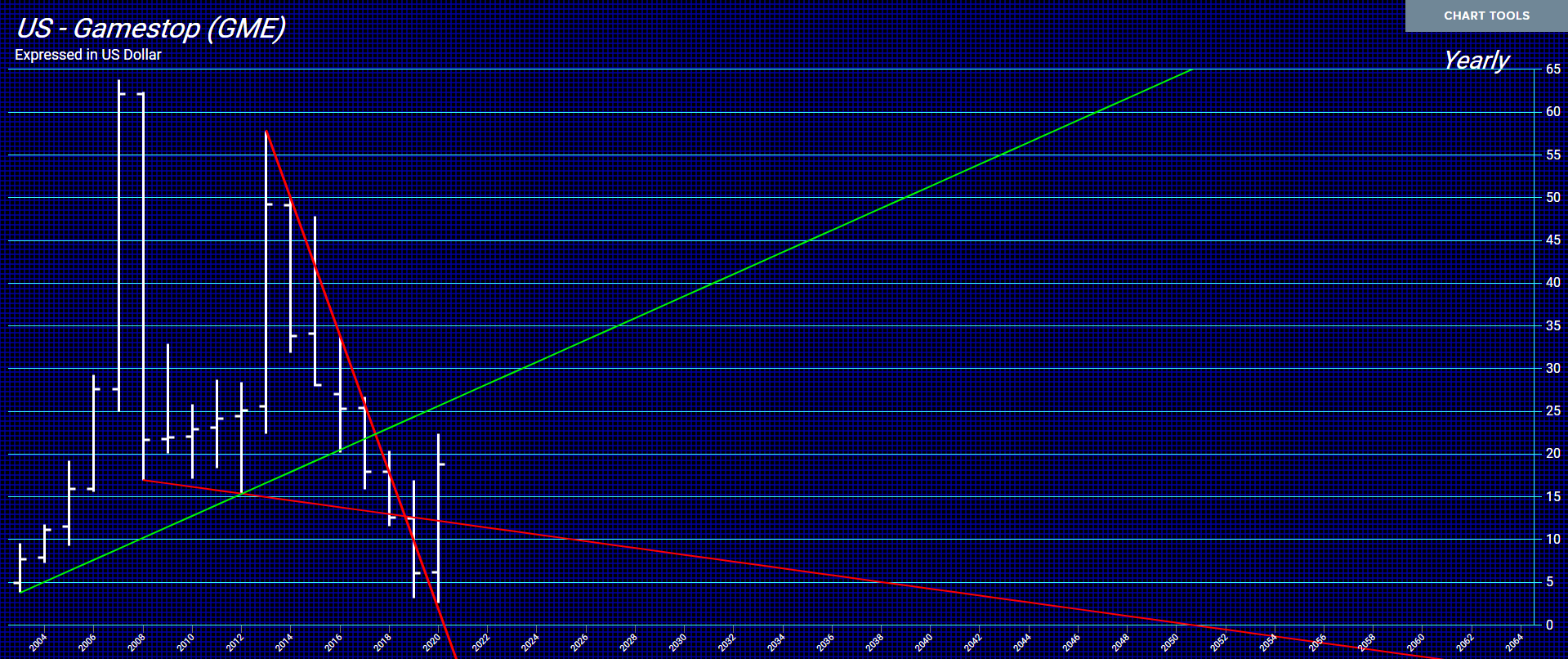
Gamestop has rallied back during the week of March 8th after all the hoopla. Cyclically, it was 13 years down and it was due for a bounce. Even our pattern recognition models picked up the rally starting in August 2020. Quite frankly, this has all the hallmarks of manipulation, but not what you may think. The classic manipulation is to pump up a market touting some player but the pros have already been in the market. This is how the Buffet manipulation of silver was done in 1998 and even the entire Hunt Brothers silver rally back in 1980.

I knew the Hunt Brothers were buying silver from the early 1970s. At the end, their name was attached to silver and the claim was they were taking it to $100. At that time, the exchange pulled the same maneuver and made it a fraction in margin to go short but 10x that to go long. The Hunts were trapped and could not sell anything without everyone jumping in front of them,

Melvin Capital, which was a small hedge fund lost 53% of its capital in January on GameStop. Not sure how that was possible unless the bet was purely a gut-trade rather than quantitative. The four largest asset managers in the world together own 39 percent of GameStop shares, according to regulatory filings. Those stakes, which are mostly held for years in passive index funds, have collectively gained roughly $1 billion in value since the beginning of this year. The hype of a huge short-squeeze seems to be exaggerated. One hedge fund, Senvest Management, recently boasted to clients that it made more than $700 million from a bet on GameStop in September, the Wall Street Journal reported. Certainly, our model was long, not short and I cannot see even a trend-following-model that would have been short. Melvin Capital to lose 53% does not seem to be very professional to lost that much on a single stock. The long-term is not over in this stock.

Pi Day is Here


Armstrong Economics Blog/ECM Re-Posted Mar 14, 2021 by Martin Armstrong

COMMENT: Marty, Happy Pi Day. This was your destiny since you grew up in a house numbered 314.

Cheers

HB

REPLY: Perhaps you are right. I never thought about Pi until I was trying to figure out how the model would work precisely at times to the very day as it did in 1987. I was dumbfounded. I had thought the 8.6 was just an average. I had no idea that it was a derivative of Pi – 8.615384615. But that is the way research should be conducted. I never began with a theory I was trying to prove and thus only looked for supporting data. I think all the great discoveries in human history are by accident.

I am working right now on The Geometry of Time. I am covering all the various people who have pondered even what is TIME from Aristotle to Richard Feynman and his proposition that antimatter is matter moving backward in TIME. I am trying to cover all the various methods over the centuries that many have looked at exploring TIME. I believe that cyclical analysis is the best way to ascertain a glimpse of TIME and the state of the future.

I am working hard to get this next book The Geometry of Time out and its companion the Discovery of the Business Cycle – The Economic Confidence Model.