“From Under the Rubble” – The Battle Against the Left for Humanity


from-under-the-ruble

Anyone who questions that this is a battle to the death should read “From Under the Rubble.” Alexander Solzhenitsyn and six dissident colleagues, Mikhail Agursky, Evgeny Barabanov, Vadim Borisov, F. Korsakov, A.B., and Igor Shafarevich, risked their lives to write this book while they were still living in the USSR. These brave men joined in the mid-seventies to write this book, which remains an extraordinary accomplishment in exposing the dangers that always arise from the left.

“From Under the Rubble” exposed the Soviet regime that was set in motion by Stalin. Even Lenin himself warned the members of the Communist Party not to allow Stalin to seize power. This book is really a monument to the battle we face with the left to retain our freedom and that for our posterity. This is especially true in light of their hatred that rose to the surface with the 2016 presidential election.

This book is truly a moral indictment of the liberal West that masks over the same seeds of revolution that destroyed Russia and China. The Ten Commandments interestingly warns us not to engage in this leftist mentality. Coveting what someone else has leads to a total loss of security and freedom. We certainly know that the epic battle between left and right took place in the defeat of Athens back in 404 BC by the then communist state of Sparta where personal wealth was outlawed.

checkpoint-charlie

I personally went through Checkpoint Charlie during the late 1970s. I went with a friend who wanted to visit his family and was concerned that they might find out he was born there and not let him leave even though he had become an American. I went because I wanted to see what this was all about first hand. What I saw shocked me beyond belief. His cousin would talk freely, but only when nobody was around us. They too had the policy we have today — See something, say something.

“From Under the Rubble” is Solzhenitsyn’s call to action. This book displayed, not merely their remarkable courage, but this battle against the left for humanity to survive. They explain, “One puts oneself in danger for the sake of the nation!”

U.S. Prepares To Sell Off Its Oil Reserves


Tyler Durden's picture

Submitted by Nick Cunningham via OilPrice.com,

The U.S. is beginning to wind down one of the core energy security policies of the past half century as the boom in domestic drilling eases concerns about supply.

The U.S. Department of Energy could begin to sell off some of its strategic petroleum reserve (SPR) as soon as January, the beginning of a multi-year process to shrink the nation’s stockpile of oil. Congress has authorized DOE to sell off $375.4 million worth of oil in its recent budget resolution. The DOE said that such a sale could be held in January 2017.To be sure, part of the motivation to sell crude is to finance upkeep for the SPR itself. The reserves are held in salt caverns in Louisiana and Texas, setup decades ago in the aftermath of the Arab Oil Embargo in 1973. The SPR system can hold more than 700 million barrels of oil, the largest strategic stockpile in the world. The idea is that the SPR holds 90 days’ worth of oil supplies, which could be released in the event of a global outage. A release has only occurred a handful of times, such as the Persian Gulf War, Hurricane Katrina and the Arab Spring.

Some of the storage systems are rusting and corroding after decades of use. In September, the DOE issued a report to Congress, which came to a dire conclusion about the condition of the reserve. “This equipment today is near, at, or beyond the end of its design life,” the report said. The sale “will allow the Department to take necessary steps to increase the integrity and extend the life” of the reserve, a DOE spokesperson said in December after the budget resolution was passed.

It is hard to overstate the significance of the SPR to U.S. energy policy. In fact, some analysts would argue the U.S. does not really have a comprehensive energy security policy. There is no coherent theory, policy or philosophy driving U.S. energy security concerns, other than the U.S. military policing the world to ensure the security of supply, a mission that has governed American actions abroad since the Carter administration at least.

The one cornerstone of energy security policy has been the SPR. As long as the U.S. had 3 months’ worth of supply, it could weather unexpected disruptions. The International Energy Agency was setup in the 1970s as well, and participating members – in addition to the U.S., the group includes Europe, Japan, Korea, Australia and New Zealand – also have pledged to hold a 90-day supply.

But U.S. policymakers no longer view the SPR is all that important. Even the more hawkish members of Congress have been lulled into a sense of security from the surge in U.S. oil production and the resulting crash in oil prices. The world is awash in oil, so why does the U.S. need to stockpile such a massive volume of oil at great expense? The ostensible reason of selling off oil from the SPR is to finance its maintenance to ensure its existence over the long-term, but if the Congress still truly believed in the importance of the SPR, they would have found funding elsewhere instead of reducing the stockpile.

Indeed, some of the proceeds from the sale of oil will go towards other uses beyond paying for repairs, namely, the U.S. treasury, which belies the notion that the sales are simply for upkeep. The sales are only occurring because U.S. policymakers are no longer concerned about the security of oil supply for the U.S. economy.

Various pieces of legislation have put the U.S. on a path to sell off 190 million barrels of oil from the stockpile gradually over the next decade. The sales are slated to take in $2 billion by 2020 to finance maintenance.

Beyond the question about the SPR’s relevance to U.S. energy security, a few other issues come to mind. First, the sale of oil from the SPR will occur at a moment of unusually low oil prices. The government could have taken twice as much revenue if it had sold the oil a few years ago instead of today when WTI trades for $50 per barrel. In the event that the U.S. decides to replenish the stockpile at some future moment, it will probably do so in a higher price environment. Selling low and buying high, any investor will tell you, is not a wise strategy.

A more immediate question is how the SPR sales will affect global supplies today. The release of oil will occur in already oversupplied market, and while the volumes are not huge, they will add pressure to prices. “Given stretched bullish positioning and the toppy state of inventories at Cushing, the sales of SPR oil could temporarily curb incentives for barrels in Cushing to flow to the U.S. Gulf Coast,” Barclays analysts recently said. The oil could reach the market in March or April, just “as refineries exit their turnabouts, but that could still steepen the WTI contango,” the Barclays analysts added.

“The DOE could not have picked a worse time to test the market,” said Bob van der Valk, senior editor at The Bakken Oil Business Journal, according to MarketWatch.com

Putin Mocks Democrats, Exchanges Holiday Greetings and Hopes for Successful Negotiations in 2017 with President-elect Trump


Source: Rogue Money Vladimir Putin said today about Hillary and Dems: “In my opinion, it is humiliating. One must be able to lose with dignity.” So true! — Donald J. Trump (@realDonaldT…

Source: Putin Mocks Democrats, Exchanges Holiday Greetings and Hopes for Successful Negotiations in 2017 with President-elect Trump

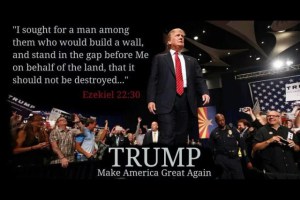
trump-standing-in-gap411221112112111111121111111111111211111121111112111111111111111

Indian government now confiscating private jewelry, gold during home raids


)Source: Natural News, by J.D. HeyesIf you’re an Indian citizen, it is best not to try to hoard gold, jewelry and other valuables, as the government will swoop in and seize it.As noted by Mish Talk, global financial repression is beginning to accelerate, and it is being led by the Asian giant, India. The government recently declared large denomination bills to be illegal to hold, and now it is targeting privately-held gold.But the government is not simply targeting gold bars and/or bullion; authorities are raiding homes and are even taking possession of jewelry, with no questions asked or answered.Here’s some background on what’s taking place:The global elite has determined that the surest way to control the masses is through control over their personal finances. If the masses can horde cash and valuables, then they can’t be bullied or controlled by the globalist elite. So in order to accomplish this, physical currently will have to be made illegal to possess or otherwise taken away from the masses and out of circulation completely. Natural News founder/editor Mike Adams, the Health Ranger, has a great piece explaining all of this.The next step forward by the globalists to control personal assetsMish Talk shares another piece of important background information. It essentially notes that there is “cash chaos” in India, where 86 percent of the money in circulation has been withdrawn. On Nov. 8, Indian Prime Minister Narendra Modi stunned the nation when he announced that 500-rupee ($7.30) and 1,000-rupee notes, which are about 85 percent of the money supply, would no longer be legal tender, effective immediately. “As one might imagine, chaos ensued,” the site noted. “And it continues.”Modi’s decision sparked outrage and angst, especially among the pundit class. Writing in Bloomberg View, columnist Mihir Sharma lamented the currency-pulling, noting that while the country’s gross domestic product grew at a mighty 7.3 percent, that wouldn’t translate into improved economic conditions for most Indians.What’s more, he noted that Modi could not backtrack on his decision to demonetize nearly all privately-held cash, because it remains politically popular.The government sold the demonetization policy as the best way to essentially attack the rich (sound familiar?), and to use it as a “’surgical strike on black money’—the illicit piles of cash many rich Indians have accumulated out of sight of the taxman,” Sharma wrote.But it has become clear since then the policy is anything but surgical. Rather, it appears to be just another step forward by the globalists to control personal assets, which can, of course, be instantly taken via electronic theft by government agencies if/when it becomes necessary.

Source: Indian government now confiscating private jewelry, gold during home raids

gargoille

The Radical Jesus: How Would The Baby In A Manger Fare In The American Police State?


Tyler Durden's picture

Submitted by John Whitehead via The Rutherford Institute,

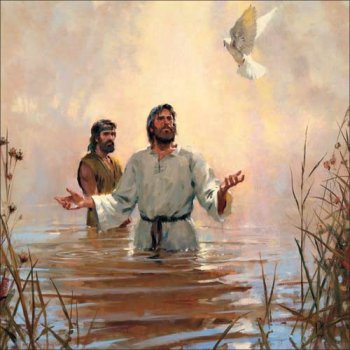
 baptism_of_christ_jekel

“Jesus is too much for us. The church’s later treatment of the gospels is one long effort to rescue Jesus from ‘extremism.’”—author Gary Wills, What Jesus Meant

Jesus was good. He was caring. He had powerful, profound things to say – things that would change how we view people, alter government policies and change the world. He went around helping the poor. And when confronted by those in authority, he did not shy away from speaking truth to power.

Jesus was born into a police state not unlike the growing menace of the American police state.

But what if Jesus, the revered preacher, teacher, radical and prophet, had been born 2,000 years later? How would Jesus’ life have been different had he be born and raised in the American police state?

Consider the following if you will.

The Christmas narrative of a baby born in a manger is a familiar one.

The Roman Empire, a police state in its own right, had ordered that a census be conducted. Joseph and his pregnant wife Mary traveled to the little town of Bethlehem so that they could be counted. There being no room for the couple at any of the inns, they stayed in a stable, where Mary gave birth to a baby boy. That boy, Jesus, would grow up to undermine the political and religious establishment of his day and was eventually crucified as a warning to others not to challenge the powers-that-be.

However, had Jesus been born in the year 2016…

Rather than traveling to Bethlehem for a census, Jesus’ parents would have been mailed a 28-page American Community Survey, a mandatory government questionnaire documenting their habits, household inhabitants, work schedule, how many toilets are in your home, etc. The penalty for not responding to this invasive survey can go as high as $5,000.

Instead of being born in a manger, Jesus might have been born at home. Rather than wise men and shepherds bringing gifts, however, the baby’s parents might have been forced to ward off visits from state social workers intent on prosecuting them for the home birth. One couple in Washington had all three of their children removed after social services objected to the two youngest being birthed in an unassisted home delivery.

Had Jesus been born in a hospital, his blood and DNA would have been taken without his parents’ knowledge or consent and entered into a government biobank. While most states require newborn screening, a growing number are holding onto that genetic material long-term for research, analysis and purposes yet to be disclosed.

Then again, had his parents been undocumented immigrants, they and the newborn baby might have been shuffled to a profit-driven, private prison for illegals where they would have been turned into cheap, forced laborers for corporations such as Starbucks, Microsoft, Walmart, and Victoria’s Secret. There’s quite a lot of money to be made from imprisoning immigrants, especially when taxpayers are footing the bill.

From the time he was old enough to attend school, Jesus would have been drilled in lessons of compliance and obedience to government authorities, while learning little about his own rights. Had he been daring enough to speak out against injustice while still in school, he might have found himself tasered or beaten by a school resource officer, or at the very least suspended under a school zero tolerance policy that punishes minor infractions as harshly as more serious offenses.

Had Jesus disappeared for a few hours let alone days as a 12-year-old, his parents would have been handcuffed, arrested and jailed for parental negligence. Parents across the country have been arrested for far less “offenses” such as allowing their children to walk to the park unaccompanied and play in their front yard alone.

Rather than disappearing from the history books from his early teenaged years to adulthood, Jesus’ movements and personal data—including his biometrics—would have been documented, tracked, monitored and filed by governmental agencies and corporations such as Google and Microsoft. Incredibly, 95 percent of school districts share their student records with outside companies that are contracted to manage data, which they then use to market products to us.

From the moment Jesus made contact with an “extremist” such as John the Baptist, he would have been flagged for surveillance because of his association with a prominent activist, peaceful or otherwise. Since 9/11, the FBI has actively carried out surveillance and intelligence-gathering operations on a broad range of activist groups, from animal rights groups to poverty relief, anti-war groups and other such “extremist” organizations.

Jesus’ anti-government views would certainly have resulted in him being labeled a domestic extremist. Law enforcement agencies are being trained to recognize signs of anti-government extremism during interactions with potential extremists who share a “belief in the approaching collapse of government and the economy.”

While traveling from community to community, Jesus might have been reported to government officials as “suspicious” under the Department of Homeland Security’s “See Something, Say Something” programs. Many states, including New York, are providing individuals with phone apps that allow them to take photos of suspicious activity and report them to their state Intelligence Center, where they are reviewed and forwarded to law-enforcement agencies.

Rather than being permitted to live as an itinerant preacher, Jesus might have found himself threatened with arrest for daring to live off the grid or sleeping outside. In fact, the number of cities that have resorted to criminalizing homelessness by enacting bans on camping, sleeping in vehicles, loitering and begging in public has doubled.

Viewed by the government as a dissident and potential threat to its power, Jesus might have had government spies planted among his followers to monitor his activities, report on his movements, and entrap him into breaking the law. Such Judases today—called informants—often receive hefty paychecks from the government for their treachery.

Had Jesus used the internet to spread his radical message of peace and love, he might have found his blog posts infiltrated by government spies attempting to undermine his integrity, discredit him or plant incriminating information online about him. At the very least, he would have had his website hacked and his email monitored.

Had Jesus attempted to feed large crowds of people, he would have been threatened with arrest for violating various ordinances prohibiting the distribution of food without a permit. Florida officials arrested a 90-year-old man for feeding the homeless on a public beach.

Had Jesus spoken publicly about his 40 days in the desert and his conversations with the devil, he might have been labeled mentally ill and detained in a psych ward against his will for a mandatory involuntary psychiatric hold with no access to family or friends. One Virginia man was arrested, strip searched, handcuffed to a table, diagnosed as having “mental health issues,” and locked up for five days in a mental health facility against his will apparently because of his slurred speech and unsteady gait.

Without a doubt, had Jesus attempted to overturn tables in a Jewish temple and rage against the materialism of religious institutions, he would have been charged with a hate crime. Currently, 45 states and the federal government have hate crime laws on the books.

Rather than having armed guards capture Jesus in a public place, government officials would have ordered that a SWAT team carry out a raid on Jesus and his followers, complete with flash-bang grenades and military equipment. There are upwards of 80,000 such SWAT team raids carried out every year, many on unsuspecting Americans who have no defense against such government invaders, even when such raids are done in error.

Instead of being detained by Roman guards, Jesus might have been made to “disappear” into a secret government detention center where he would have been interrogated, tortured and subjected to all manner of abuses. Chicago police “disappeared” more than 7,000 people into a secret, off-the-books interrogation warehouse at Homan Square.

Charged with treason and labeled a domestic terrorist, Jesus might have been sentenced to a life-term in a private prison where he would have been forced to provide slave labor for corporations or put to death by way of the electric chair or a lethal mixture of drugs.

Either way, whether Jesus had been born in our modern age or his own, he still would have died at the hands of a police state. Indeed, as I show in my book Battlefield America: The War on the American People, what Jesus and other activists suffered in their day is happening to those who choose to speak truth to power today.

Thus, we are faced with a choice: remain silent in the face of evil or speak out against it. As Nobel Prize-winning author Albert Camus proclaimed:

Perhaps we cannot prevent this world from being a world in which children are tortured. But we can reduce the number of tortured children. And if you don’t help us, who else in the world can help us do this?

Donald Trump Signals Willingness to Engage Arab Israeli Peace Effort…


This tweet from President-elect Donald Trump directly implies his willingness to lean into the problem: And President-Elect Donald Trump is not alone carrying optimism:

Source: Donald Trump Signals Willingness to Engage Arab Israeli Peace Effort…

trump-lions

Shifting Power: Visualizing The World’s Largest Cities For The Last 6000 Years


Tyler Durden's picture

In 300 B.C., Carthage was one of the world’s largest cities with up to 700,000 people living within its walls. The Carthaginian republic was a force to be reckoned with, controlling inconceivable amounts of wealth and land all around the Mediterranean.

However, just over a century later in 146 B.C., Carthage was burnt to the ground by the Romans. The destruction of Carthage was so thorough that many things are still not known about their civilization today. Carthage went from being a major power to literally being wiped off of the map.

A few decades after the annihilation of Carthage, it was Rome’s turn to become the world’s largest city for close to 500 years. Of course, Rome itself would fall by 476 A.D. for a variety of reasons.

And so the title of the world’s largest city would transfer again, this time to Constantinople across the Mediterranean.

The World’s Largest Cities Throughout History

In the grand scheme of history, things change quite fast. As Visual Capitalist’s Jeff Desjardins explains, one cataclysmic choice or event can turn even the greatest empire into a heap of rubble. Sometimes the decline of a world-class city is more gradual – and it is over time that it loses its title to another place in a far and distant land.

The following animated map from KPMG Demographics tracks the world’s largest cities from 4,000 BC to today, and it shows how temporary a city’s rise to prominence can be.

World's Largest Cities Throughout History
(Keep in mind that there is some disagreement by historians over which cities were the biggest in certain time periods.)

The power of industrialization and technology can be seen here. Up until the 1800s, it was almost unfathomable to have a city of more than a million inhabitants.

Sanitation was a major limiting factor, but other issues like transportation and a lack of density also made it a challenge. The Industrial Revolution changed that, and starting in the 1800s you see cities like London, New York, and Tokyo taking the title in an exponential fashion. It caps off with Delhi in 2050, expected to have a whopping 40 million inhabitants by that time.

The U.S. Interfered in Foreign Presidential Elections 81 Times from 1946-2000


Source: Liberty Blitzkrieg blog, by Mike Krieger Something we should all be aware of. From the LA Times: The CIA has accused Russia of interfering in the 2016 presidential election by hacking into …

Source: The U.S. Interfered in Foreign Presidential Elections 81 Times from 1946-2000

trump-drain-the-swamp12111111111111211111111111111111111111211111111111111111111111111211112111111

Governments and Corporate Media Conspire With Facebook to Censor Anti-Establishment Speech


This is the end of Free Speech in Western Civilization.

Can Rates Rise with Deflation?


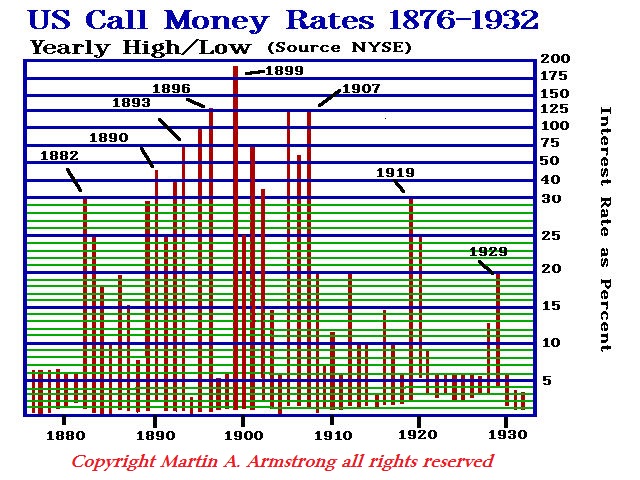
CALLMONY-MA

QUESTION: Hi Marty, How does the model’s call for deflation (earlier blog posts) fit in with the likely major cycle low in interest rates (per your recent posts)? Can there be general price deflation and yet interest rates increase significantly?

dow-1870-1940-int

ANSWER: Yes. Rates can soar to outrageous levels during the collapse of a system, which reflects a collapse in confidence that causes a simultaneous deflation in assets. Look at the highest levels of interest rates that reached nearly 200% in 1899. That was not a reflection of speculation in the markets. This was when J.P. Morgan had to arrange a gold loan to bail out the government.

Normally, interest rates are the price of inflation in a normal growth environment where confidence exists within the system as a whole. You can get hyperinflation if confidence in government collapses, but when you are on a gold standard, you end up with hoarding and the velocity of money collapses and causes the interest rate to soar like with a loan shark.

You can see we had the biggest asset rally into 1929, but this was the lowest spike in interest rates because the confidence was with the dollar as Europe, Asia, and South America defaulted. The key is where the confidence resides. That’s why I called it the Economic Confidence Model.