Globalist-Minded Media Fraught Over “Deliberate” and “Well Prepared” Acumen of Secretary T-Rex…


We are so fortunate Rex Tillerson was willing to take on the role of Secretary of State.  T-Rex’s approach is giving the pearl-clutching leftists fits, as outlined in this article by ABC whic…

Source: Globalist-Minded Media Fraught Over “Deliberate” and “Well Prepared” Acumen of Secretary T-Rex…

trump-0351

Retired Green Beret Warns: Deep State’s Utopia Of Oligarchs Is “Enslavement And Complete Control Of All Of Mankind”


I am also a retired Green Beret and all I can say is that we had unique training in the subject of bring down governments and so we are very qualified to understand the process and recognize it when it is in play.

Greece – Cyprus – EU & Rise of the Neo-Ottoman Empire


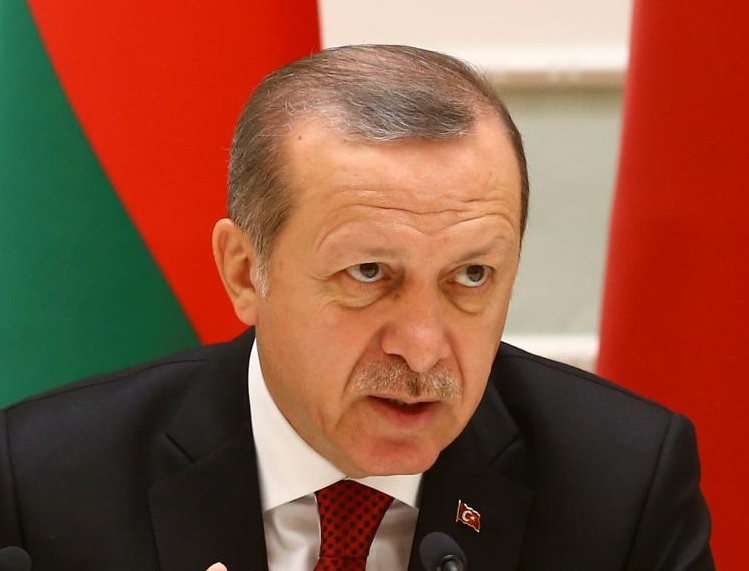
Erdogan Flags

COMMENT: Your article on “All Eyes on Greece” is very interesting.  A very similar story applies to Cyprus (the Greek side). My parents were from there and my cousins who live there frequently tell me stories of how bad things are becoming, not just from the EU stranglehold they are under but also the fear of the uprising tensions with the neo-Ottoman Empire that appears to be on the rise.  I feel I am so fortunate to be away from all the fuss yet I yearn to go and live there knowing we have our own problems bubbling away and the ensuing crises that are about to hit us here in Australia and the rest of the Western world. It’s sort of being between a rock and a hard place. For the time being of course it’s better to stay where I am but for how long? I suspect we have several more years to go before the real SHTF.

Regards,

J

world bombREPLY: Yes. People do not read about the neo-Ottoman Empire that Erdoğan has been attempting to create. He has shut down freedom of speech and is moving in every possible direction toward a dictatorship. The crisis in Greece is just unimaginable and it is impacting Cyprus as well. I was called in by members of the government during the EU crisis. But the Prime Minister sold his country down the river in an effort to retain the euro. The coup in Turkey I believe was a staged event to create the excuse to purge the military before they could overthrow Erdoğan. Then we take the EU collapse and we have a meltdown on political stability throughout that region.

We just seem to have the most incompetent politicians running everything around the globe. The fuse has been lit and the question becomes – why can we hide?

“Seriously Delinquent” Auto Loans Surge


We never learn do we … so sad!

Trade v Banking – The Real Issue


world-globe
While CNN and ABC news have turned really vicious against Trump, they are failing to report the real impact of world events that can undo everything. As we head into April/May, we are looking at a real crisis emerging that is beyond contemplation. The prospect of the breakup of the European Union because Brussels refuses to consider that their dream of ruling all of Europe is coming to an end. Yes, Juncker has said he will stand down while Draghi tries to threaten member states, saying they have to pay up in order to leave.

Last September, the International Monetary Fund (IMF) has warned at the G20 summit in Hangzhou, China, that in the face of crises, the refusal to reform how things are functioning will lead to economic weakness in the global economy. “The latest data shows subdued activity, less growth in trade, and a very low inflation, suggesting an even weaker global economic growth this year,” the IMF told G20 leaders.

The real crisis behind the curtain remains not TRADE, but BANKING. The EU hired over 20,000 people to regulate the European banking system. They have been installing bail-ins after that worked in Cyprus. They have been moving toward instant banking transfers by September 2017 with the design of eliminating cash. All of this becomes a major risk and the European Central Bank holds 40% of all government debt in the Eurozone. The cracks in the foundation of the EU are tremendous and the ramifications will ripple through the entire global economy. The seriousness of this crisis is being ignored by mainstream media because they are too busy trying to undermine Trump because their own ratings have collapsed. Newspapers are for the 50+ generation. The youth go to the internet and really do not watch the news of mainstream media. They are rapidly becoming sidelined and they hate Trump’s tweets because he is going directly to the people much as FDR did with his fireside chats.

Norway Central Banker Warns Of Massive 50% Drop In Wealth Fund Assets To Cover Budget Deficits


Tyler Durden's picture

Back in August, we noted that, for the first time since it’s creation in 1996, the Norwegian government had started raiding its sovereign wealth fund in 2016 to cover government deficits.  Then in October the Nordic country revealed plans to massively increase withdrawals by over 25% in 2017, to $15 billion, to cover a budget hole that was expected to be roughly 8% of GDP.

That said, Norway’s ultimate GDP potential, and therefore budget deficits, are heavily dependent on oil prices so any further weakening of crude could result in even more withdrawals.  Moreover, given the substantial YoY increase, it’s important to recall that there are fiscal limits imposed on fund withdrawals equal to 4% of assets, or roughly $36 billion, which could come into play at some point in the future if oil prices remain “lower for longer.”

Norway

Of course the withdrawals accelerated just as the heavily oil-dependent economy of Norway started to absorb the impact of lower oil prices.

Norway


And what do you do when you depend on portfolio returns to fund everyday living expenses but are faced with extremely low returns courtesy of artificially depressed international bond yields?  Well, you just buy more equities, of course.  Which, as we noted back in December, was exactly the motivation behind a decision to increase the fund’s equity allocation from 60%, to a staggering 75%, all while funneling another $130 billion to the global equity bubble.

The central bank’s board, which oversees the fund, on Thursday recommended an increase in the equity share to 75 percent from 60 percent. That will raise the expected average annual real return to 2.5 percent over 10 years and to 3.5 percent over 30 years, compared with 2.1 percent and 2.6 percent, respectively, under the current setup

The world’s largest sovereign wealth fund said that it expects an annual return of only 0.25 percent on bonds over the next decade and that the expected “equity risk premium,” or return on stocks over government bonds, will be just 3 percentage points in a cautious estimate.

“In our analyses, this is clearly evident in global data: internationally, growth in firms’ cash flows and equity returns are correlated with growth in the global economy,” Deputy Governor Egil Matsen said in a speech Thursday in Oslo. “Global economic growth in the coming years is expected to be below its historical level. This ‘pessimism’ is partly related to the driving forces behind the low level of the real interest rate.”

But despite their best efforts to protect the principle balance of Norway’s sovereign wealth fund through statutory spending caps and buying more and more equities, Norway’s central bank governor Oystein Olsen warned earlier today that increasing reliance on the fund to cover budget deficits could result in a “sharp reduction” in the fund’s capital over the next 10 years.  Per Bloomberg:

Governor Oystein Olsen said that the continued rise in oil cash spending, which now accounts for about 20 percent of the budget and 8 percent of gross domestic product, must now be halted to protect the $900 billion fund, the world’s largest sovereign pool of cash.

“With a high level of oil revenue spending, there’s a risk of a sharp reduction in the fund’s capital,” Olsen said in the traditional Annual Address in Oslo Thursday. “This could, for example, happen if a global recession triggers both a decline in oil revenue and low or negative returns on the fund’s capital.”

In fact, in some of the more dire scenarios, Olsen warned that 50% of the fund’s $900 billion in assets could be wiped out over the next 10 years in the event of a global recession that kept oil prices low while also driving equity valuations down.

While the fund, which is overseen by the central bank, so far has said it’s more than able to handle outflows without selling assets, Olsen’s speech did lift the lid to reveal some of the worst case scenarios being calculated by the investor.

For example, it sees a 1 percent chance of a 50 percent decline over 10 years if spending is kept at the current level of about 3 percent of the fund. If spending is raised to 4 percent that probability rises to about 5 percent. If the fund’s allocation to stocks is boosted to 75 percent from 60 percent, which is currently being discussed, the probabilities rise even further to about 2 percent and 6 percent, respectively.

“This shows what you may risk if you increase oil spending from today’s level,” Olsen said in a separate interview. “This helps us to strengthen the message.”

“It must be recognized, however, that the longer-term challenges facing the the Norwegian economy can’t be resolved by spending more oil revenue and keeping interest rates low,” he said in the speech, arguing the Norwegian economy needs more legs to stand on.

That said, we wouldn’t be too worried because equity prices never go down, right?  Silly Central Banker…

The Truth About Immigration and Crime in the Netherlands


Kucinich Warns of “Deep State”, Defends Trump, Tells America to “Wake Up”


This is surprising coming from Dennis but it is good advise.

Dear Virtue Signalling Celebrities


Some Good News For Active Managers: First Weekly Mutual Fund Inflow In 12 Months


Tyler Durden's picture

Finally some good news for active managers. After one year of consecutive outflows, last week saw the first inflows into long-only equity mutual funds going back to last February, as according to BofA there finally was a $0.5 billion cash inflow, “a sign of rising investor confidence & broadening participation in equity rally.” However, to put this number in context, at the same time inflows to ETFs amounted to $17.2 billion, some 35 time more.

BofA’s Michael Hartnett summarizes the latest fund flows in two words: “Risk-on.”

The details: largest equity inflows in 9 weeks ($17.7bn), 8th consecutive week of bond inflows ($6.7bn), precious metals inflows in 4 of past 5 weeks ($1.2bn), largest EM equity fund inflows in 6 months ($2.7bn); largest financials inflows in 3 months ($2.3bn); 14 straight weeks of inflows to bank loan funds; inflows in 11 of past 12 weeks to HY bond funds. However, European equity fund flows remain lackluster.

Looking at credit, BofA notes “IG dissonance” with chunky $37bn IG bond fund inflows past 4 months even though US IG bonds are down 3% over that period. Harnett warns that further IG underperformance
could lead to bout of IG bond redemptions

According to BofA’s proprietary fund flow indicator, private clients are also in reflation mode with the past 4 weeks have seen big buyers of credit (HY, bank loans, IG, EM debt) and inflation-plays (financials, materials, precious metals) at the expense of defensives (low-vol, staples, utilities) and yield-plays (dividend-income, REITs, munis)

Going back to Hartnett’s favorite topic, the so-called “Icarus Trade” profiled previously, he says “we remain long risk until Positioning turns dangerously bullish. Our Bull & Bear Indicator of investor sentiment now up to 6.8 (most bullish since Jul’14)…”sell” when indicator reaches euphoric territory of >8.0. Sustained inflows to EM equity, EM debt & HY bond funds and FMS cash falling toward 4.0% over next 6-8 weeks would trigger contrarian “sell” signal.”

Finally, some more fund flow details broken down by asset class:

Asset Class Flows

  • Equities: 7 straight weeks of inflows (big $17.7bn) ($17.2bn ETF inflows and $0.5bn mutual fund inflows) (first weekly mutual fund inflows in 12 months!)
  • Bonds: 8 straight weeks of inflows ($6.7bn)
  • Precious metals: $1.2bn inflows (inflows in 4 of past 5 weeks)
  • Money-markets: $11.2 outflows

Fixed Income Flows

  • Inflows to HY bond funds in 11 of past 12 weeks ($1.0bn)
  • Inflows to EM debt funds in 6 of past 7 weeks ($1.3bn)
  • 8 straight weeks of IG bond inflows ($4.1bn)
  • 14 straight weeks of inflows to bank loan funds ($1.0bn)
  • 10 straight weeks of inflows to TIPS funds ($0.5bn)
  • $1.2bn outflows from govt/tsy funds (largest in 8 weeks)

Equity Flows

  • EM: largest EM equity fund inflows in 6 months ($2.7bn) (mostly via Global EM funds)
  • Japan: 6 straight weeks of inflows ($0.9bn)
  • Europe: tiny $73mn inflows (4 straight weeks)
  • US: $8.6bn inflows (largest in 9 weeks)
  • By sector: strong $2.3bn inflows to financial funds (largest in 13 weeks); largest inflows to consumer funds in 2 years ($1.1bn); inflows to materials in 14 of past 15 weeks ($0.8bn); inflows to energy in 10 of past 11 weeks ($0.5bn)

Source: BofA