The Media’s Top Fairy Tales of 2021


Armstrong Economics Blog/Humor Re-Posted Dec 31, 2021 by Martin Armstrong

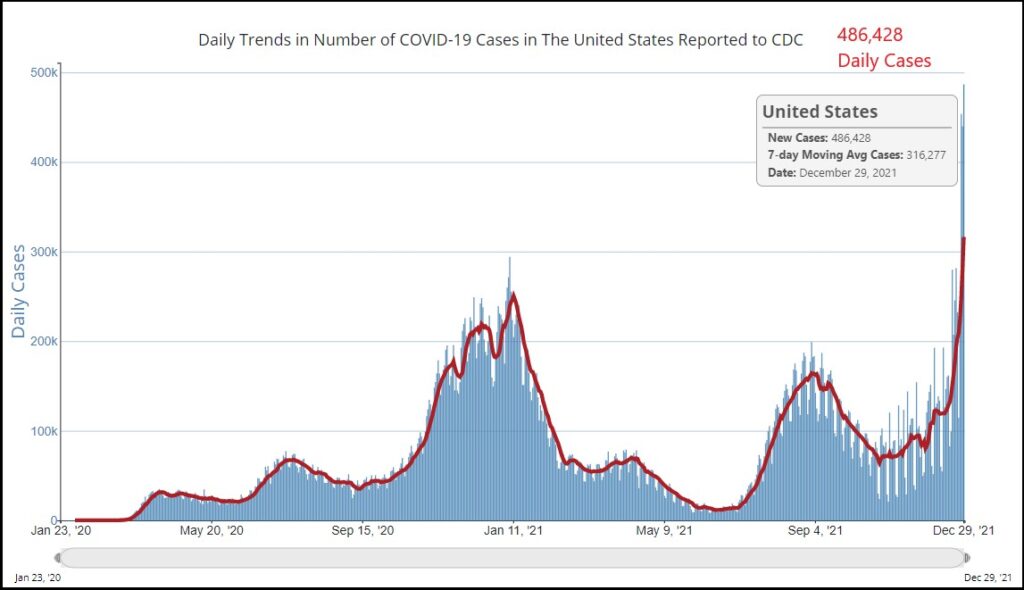
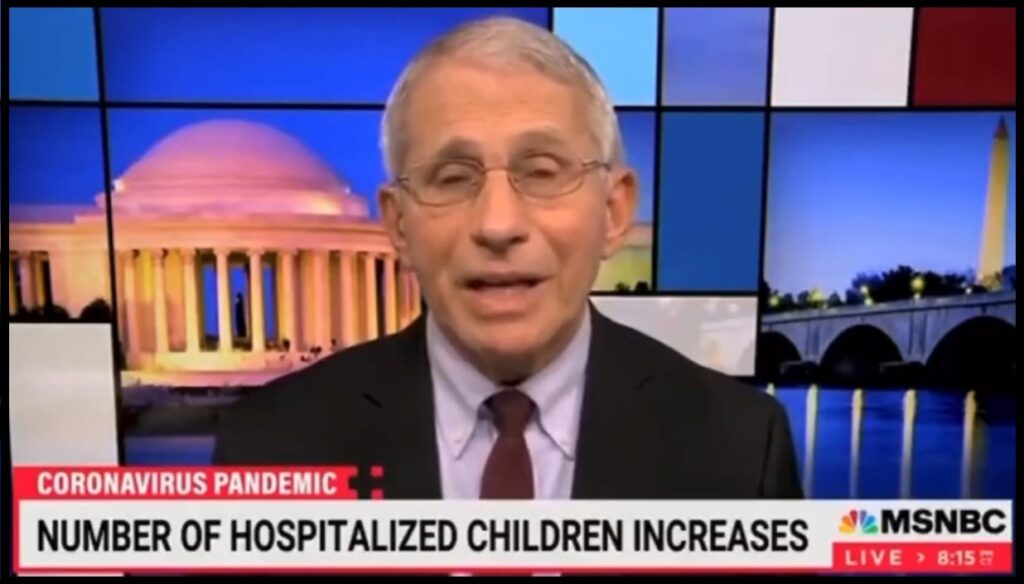
Fauci Takes Professional Gaslighting to New Levels, Now Admitting Children Hospitalized COVID Cases is Wrong


Posted originally on the conservative tree house on December 30, 2021 | Sundance | 228 Comments

This admission is exactly what people have been arguing for two years.  This exact point, and the “with COVID -vs- from COVID” argument within the false narrative, is what justified Big Tech to ban COVID critics from their speech platforms.

I’m not going to comment further; at a certain point these reversals just get silly.  WATCH: 

Suddenly, as the magic politics of COVID infection rates turns into a liability, the accuracy of hospitalized COVID tests is something to clarify.

These officials are just throwing magic beans into the audience at this point.  In the past ten days, the CDC, NIH and FDA have jumped so far over the justification shark, the light from where justification shark jumping starts could not catch them for years.

An Example of Field to Fork Inflation


Posted originally on the conservative tree house on December 30, 2021 | Sundance | 299 Comments

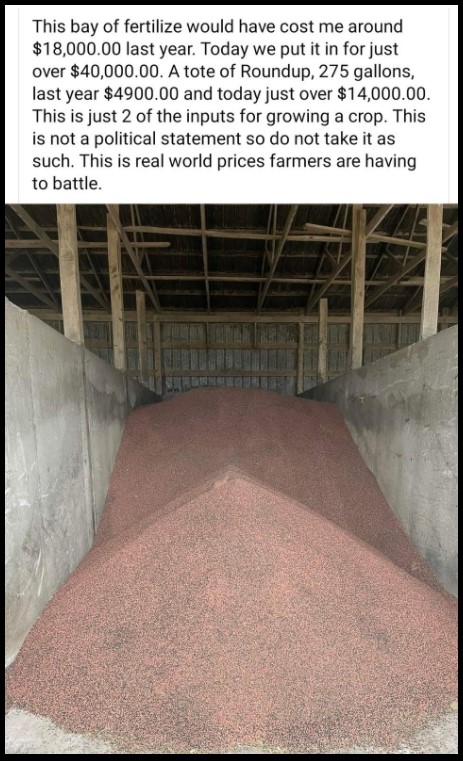
Here’s a solid example of what “field to fork” inflation is all about.   Two images shared today point out how the farmland inflation originates, and how the farmland inflation surfaces in your life.

The first image (pictured right) is a current price reference point for crop fertilizer [Source] from the perspective of the farmer preparing.

To go into the deep weeds behind what is causing this massive jump in price, you can review THIS ARTICLE.

[…] “Compared to September 2020 prices, ammonia has increased over 210%, liquid nitrogen has increased over 159%, urea is up 155%, and MAP has increased 125%, while DAP is up over 100% and potash has risen above 134%.”

Those fertilizer component products are used for corn, wheat and soybeans crops.

[…] “Corn represents about 49% of the share of U.S. nutrient use, while wheat accounts for about 11% and soybeans account for 10%. Cumulatively, those three crops account for about 70% of U.S. fertilizer consumption.” {link}

Now, you might say those crops do not seem like they are that important.  However, keep in mind that Corn, Wheat and Soybeans represent the baseline for not only grain production in the U.S, but they are also the primary feed products for proteins: chicken, pork and beef.

Worse yet, both grain and protein are the primary ingredients in pet foods; so pet food producers end up collecting even more price increases in their manufacturing. Have you noticed a shortage of pet food on your shopping trips?

When fertilizer goes up that high in price, the end cost of that harvest goes up in price, along with the end price of everything the harvest is used for.

So now we get to the point in the supply chain where these protein price increases show up to the average consumer.

This restaurant menu was shared with CTH today and reflects how the owners of this specific dining establishment are having to cope with the price of chicken from their wholesale supplier.  This example shows just how rapidly -and unpredictably- the price increases are hitting the restaurant industry.

Yes, chicken wings are now CURRENTLY falling under “market price.”

This is the fork side of “field to fork” inflation, and the chicken wing price represents the outcome of a total supply chain under extreme inflationary pressure.

Keep in mind, what the farmer was sharing on Facebook, about the price of fertilizer and weed killer, are prices for the ‘next’ harvest, not the one he/she has already completed.   The origin of the next harvest starts with components at prices 100 to 150 percent higher than the previous harvest.

Grain silos already loaded are carrying higher prices for the next several months, as the product flows through the supply chain and is used in the food production and feed of current ancillary users (manufacturers and protein providers).  However, those prices are on the previous cost of production.  When those grain silos need to be refilled, the next inbound harvest will have even higher costs.

When the current field inflation cumulates through the supply chain, the outcome will carry a price increase even higher than current.

I’ll bet there are a lot of restaurants visiting print shops to order new menus right now.  By the time we get to Superbowl Sunday, the price of ¹chicken wings is going to bring sticker shock to those who have not prepared.

Last point….  If you’ve been wondering why there’s such a massive push from the communists toward “plant-based proteins“, and even meat grown in laboratories, this outcome is part of the reason.  The climate change agenda -writ large- makes the traditional food supply skyrocket in price to unsustainable levels.  The professional leftists have been using the Overton window to nudge people into accepting an entirely new diet.

[Same group pushing ‘tiny houses‘]

#Let’s Go Brandon.

.

[NOTE: ¹More chicken wings are purchased in the days leading up to the Superbowl than any other time of year.]

India into 2022


Armstrong Economics Blog/India Re-Posted Dec 30, 2021 by Martin Armstrong

India’s Home Minister Amit Shah believes that his nation is on track to become the fastest-growing economy in 2022. India just experienced an 8.4% rise in GDP during Q3 compared with the year prior. Asia’s third-largest economy seems to be growing faster than many other nations; however, inflation and labor woes are hurting growth.

Inflation soared 14.3% in November after months of double-digit increases. Urban unemployment is around 9%, according to the Centre for Monitoring Indian Economy, which noted that the poor are experiencing the effects of inflation most significantly.

Private consumption in India in Q2 was 7.7% less than the same timeframe in 2019 and 2020. Demand has waned from the lowest earners as they are simply struggling to survive. Aljazeera noted that India’s micro, small, and medium enterprises (MSMEs) compose 30% of GDP, represent 50% of exports, and 95% of manufacturing. Due to COVID, 9% of MSMEs have shut down. That number is likely to rise as thousands reported earlier in the year that they would need to scale down or shut down before 2022.

The government supported a rural job program as highly desired employment in the larger cities is scarce. The program developed was designed to guarantee workers 100 days of paid work, but the annual budget ran out of funds only seven months into India’s fiscal year. Sabyasachi Kar, RBI Chair at the Institute of Economic Growth, has stated that this problem is not novel as India has failed to create enough manufacturing jobs. Instead, MSMEs remain the staple of India’s workforce, employing nearly 110 million people.

Other countries are keen to trade with India, and they certainly have promise for advancement. India successfully moved away from its agriculture-based economy over the last two decades and earned its place as the sixth-largest economy in the world.

Economic Confidence on the Decline


Armstron Economics Blog/Economics Re-Posted Dec 30, 2021 by Martin Armstrong

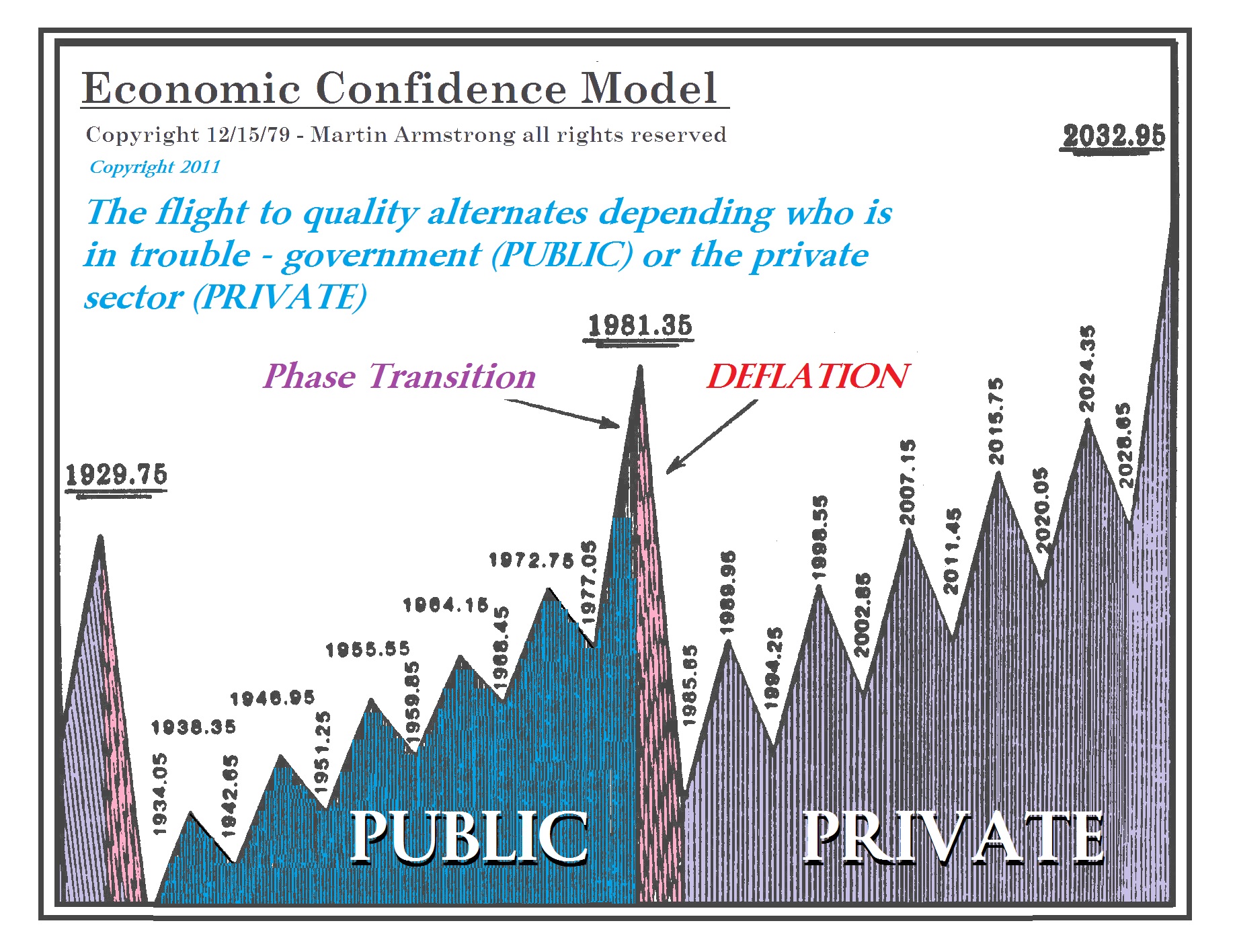
Americans have lost faith in the economy after a year of runaway inflation and incompetent leadership. The Economic Confidence Index (ECI) fell to -33 last week, similar to levels seen during April 2020 when the world economy went on a hiatus. With inflation running at its highest level since 1982, it is no wonder that the public has lost confidence in the government’s ability to handle the economy. Even President Biden recently told the public that there is no solution at a federal level to combat the effects of covid.

About 67% of respondents said that the economy is worsening. Around 29% said that the economy was their greatest concern, and among them, 11% cited general concerns, 6% cited employment constraints, and 2% cited class differences. Around 21% said poor government leadership was of utmost concern and 13% noted the ongoing coronavirus. Gallup stated that 40% of Americans would rate the economy as “fair,” while 42% feel it is “poor.”

“As 2021 comes to a close, morale is low in the U.S. COVID-19 continues to rage on, perceptions of the U.S. economy have worsened, Biden’s job approval rating is slumping, and Americans’ overall satisfaction with the direction of the country is low,” the report concluded. “Six months ago, the public was much more optimistic, but the delta and omicron variants of COVID-19, supply chain problems and rising inflation have dampened spirits.”

This is how the pendulum swings from public to private waves.

Beverly Hills Residents Clamor to Purchase Guns, Ammo and Personal Security Guards


Posted Originally on the conservative tree house on December 29, 2021 | Sundance | 133 Comments

This is an interesting angle to elections having consequences.   Apparently, the ultra-wealthy and affluent in Beverly Hills are rushing to purchase firearms at a jaw-dropping rate as they no longer feel safe.   It’s worth reading the whole article.

[Beverly Hills] – In Beverly Hills, even the purchase of a firearm comes with certain…expectations. The city’s only gun store, Beverly Hills Guns, is a “concierge service” by appointment only, for a largely affluent clientele. And business is booming.

Since opening in July 2020, the store has seen upscale residents from Santa Monica to the Hollywood Hills increasingly in a panic following several high-profile smash-and-grab and violent home invasion robberies. The apparent siege has brought in a daily stream of anxious business owners and prominent actors, real estate moguls and film execs, says owner Russell Stuart. Most are arming themselves for the first time.

“This morning I sold six shotguns in about an hour to people that say, ‘I want a home defense shotgun,’” says Stuart, whose store is discreetly located in a Beverly Hills office building, with no sign on the doors, down the hall from a diamond dealer. “Everyone has a general sense of constant fear, which is very sad. We’re used to this being like Mayberry.”  (read more)

Funny how that happens…

Keep in mind, this is the epicenter of the West Coast donor base for the DNC.

On Economic Consequences, No One Really Knows What Is About to Happen…


Posted originally on the conservative tree house on December 29, 2021 | Sundance | 219 Comments

On economic matters, no one really knows what is about to happen, with one possible exception.  It is demonstrably certain inflation into 2022 will continue increasing.  Beyond that, after pumping $9+ trillion into the U.S. economic system under the guise of COVID relief, we are entering some very uncharted waters.

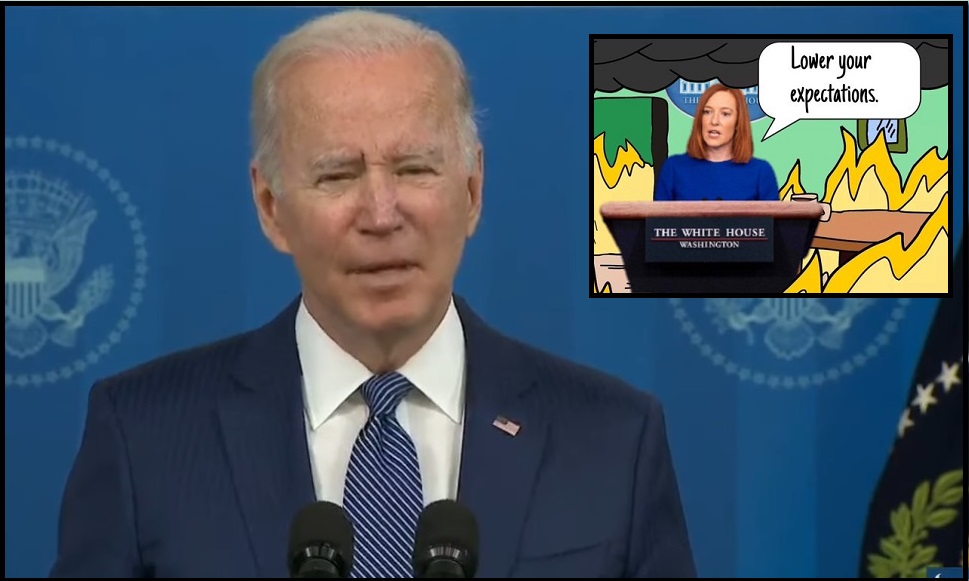
On a macro level, CTH has an idea what is likely to take place in the next three years; however, before getting to that, allow me to present evidence for the underlying supposition.   As you can see from this Biden message, shaped entirely by politics, on an economic basis the people around him have no idea what the downstream consequences of 2020 and 2021 will present in 2022:

The team behind Joe Biden brag about the U.S. economy being the only economy to continue growing during the COVID-19 pandemic period.  Their top line reference point is the Gross Domestic Product, or GDP.  Their brag is the U.S. GDP did not shrink during 2021 and the COVID pandemic.

However, what they omit (for political reasons) is that massive U.S. spending and bailouts covered the GDP hole.  More than $9 trillion was injected for stimulus payments, blue state bailouts, payroll protection programs, rent moratoriums, school subsidies, medical payments to hospitals, student loan payment pauses, vaccination purchases, covid sick pay and years of continually extended and enhanced unemployment benefits.

They also omit that none of this domestic spending would be possible if the global trade currency did not take place in dollars.  Our value is propped up by the fact that almost all trade takes place in U.S. currency.   If that system was not in place, congress could not spend this much money without collapsing the U.S. into a devaluation position resembling what happened previously in Greece.

The only way for Biden to avoid the direct economic consequence of this massive injection of $9+ trillion, which has created the illusion of a strong GDP by subsidizing consumer spending, is to keep injecting more money to keep the artificial GDP inflated.

Biden really needs congress to keep spending.  However, it now looks like congress does not have an appetite to do this….. so, the consequences are coming.

The prior spending covered a hole created by a drop in total economic activity.  Outputs dropped, payrolls dropped, consumer spending would have dropped, etc.  In essence, the void in economic activity was subsidized on a massive scale by government.

The U.S. economy was essentially a $20 trillion GDP going into the pandemic period.   Think of the GDP as total value.  We do not know what the total contraction on the economy was due to the first subsidy; but we do know the aggregate response over the past two years has been to subsidize -or cover- the contraction with a $9 trillion blanket.

That $9 trillion in artificial GDP value is the most direct cause of inflation.  There are other aspects related to energy policy making products more expensive (energy, gas, fuel, transportation, heating, cooling, etc), but the $9 trillion artificial spend is the largest factor of current inflation.

These two figures will become important moving forward.  A $20 trillion natural economy, and $9 trillion in unnatural spending to maintain it.

In our economic studies, CTH has assembled a reference library from which we can draw guidance.  The 2008 and 2009 bailout phase [TARP, auto-bailouts, American Recovery and Reinvestment Act (ARRA), QE1 and QE2 as well as the porkulous bill] provide some reference points for long term outlooks.

There is a general investing guideline consisting of a factor of seven.  Seven years to double money, seven years to recover investment, seven years of depreciation etc.  The number seven shows up in multiple macro-economic reference points.  Seven is also represented by an approximate of 13%.

Spending at the level of 25% of our GDP (over two years) creates an inflationary pressure point of a similar size.  Two years at 13% is 26% inflation.  In real terms, that’s roughly where we are right now – we are somewhere in the 25% range in higher prices on goods overall.  That aligns with the spending subsidy inside the U.S. economy.

If my review of the ’08/’09 spending impact is accurate as an overlay, it means our natural economic cycle will take roughly four years to make parity between real wage incomes and the inflation rate.  It will take us four years to grow wages enough to cover for all this spending. Meaning, in four years the level of overall wages will be enough to finally catch the inflation currently recorded in the price of goods.

However, the problem arises in the near future.  Without that $9 trillion spent, our GDP would have contracted.  We now need to work through the value of that contraction in the economy.  We need wages to rise to compensate for inflation; but unfortunately, we are about to enter a phase where employment is likely to contract.

Two-thirds of the U.S. GDP is created by consumer spending.  Inflation, created by prior spending, is chewing up current wages and incomes.  As a consequence, disposable income is wiped out.  Consumer spending on non-essential products and services (luxury stuff) is essentially gone.  That reality is going to lead to a natural drop in employment as non-essential goods and services are no longer in demand.

We covered the prior point where the drop in demand for less essential products would have happened with government spending.  That subsidy is now drying up, and the hole we avoided is now in front of us.  All of the people who work in the economic process of providing ‘less-essential‘ goods and services will now likely see lay-offs.

This could potentially set us on a collision course.  If the employment condition worsens, there will be no need for upward pressure on wages.  At the same time, wage pressure decreases the inflation pressure remains high.  This dynamic means it takes even longer than four years to cover the hole of the previous spending.

We have talked about the predictable consequences of this dynamic for approximately eight months.  Some of the data is now beginning to surface to support exactly what we were discussing last year.   All of the artificial spending is drying up, and now the inflationary bills (chickens) are coming home to roost.

Each spike on the WolfStreet graphic below is government COVID spending.  Massive influxes of artificial payments into the economy.  The first spike is the Paycheck Protection Plan and initial economic bailout.  The second spike was the second covid relief bill, and the third spike (the tallest) was the soon followed even larger covid relief bill.

The WolfStreet analysis shows how inflation is much higher than wage growth {DATA HERE}.   Those spikes represent approximately $4.5 trillion in spending – subsidy infusions into the U.S. employer and employee workforce.

Inflation will continue chewing up wages through next year.  However, it can readily be expected that total employment will start getting a lot more tenuous as consumers/workers hunker down and prioritize spending on higher priced housing, food, energy and fuel.


Ghislaine Maxwell Found Guilty on Five of Six Counts Related to Facilitating and Contributing to Predator Jeffrey Epstein’s Sexual Assaults


Posted originally on the conservative tree house on December 29, 2021 | Sundance | 320 Comments

Jeffrey Epstein’s predatory enabler, Ghislaine Maxwell, has been found guilty on five of six counts related to her participation in sexual assaults of minors.  Four women testified that Maxwell was the facilitator of their abuse, essentially grooming them to be raped by Epstein.

Maxwell was found guilty of conspiracy to entice minors to travel to engage in illegal sex acts; conspiracy to transport minors with intent to engage in criminal sexual activity; transportation of a minor with intent to engage in criminal sexual activity; sex trafficking conspiracy; sex trafficking of a minor.  The lone count on which Maxwell was acquitted, enticing a minor to travel to engage in illegal sex acts, applied only to one Jane Doe victim.

NEW YORK (AP) — The British socialite Ghislaine Maxwell was convicted Wednesday of luring teenage girls to be sexually abused by the American millionaire Jeffrey Epstein.

The verdict capped a monthlong trial featuring sordid accounts of the sexual exploitation of girls as young as 14, told by four women who described being abused as teens in the 1990s and early 2000s at Epstein’s palatial homes in Florida, New York and New Mexico.

Jurors deliberated for five full days before finding Maxwell guilty of five of six counts. As the verdict was read, Maxwell appeared to show little reaction behind a black mask. She stood with her hands folded as the jury filed out, and glanced at her siblings as she herself was led from the courtroom, but was otherwise stoic.

She faces the likelihood of years in prison — an outcome long sought by women who spent years fighting in civil courts to hold Maxwell accountable for her role in recruiting and grooming Epstein’s teenage victims and sometimes joining in the sexual abuse.

The defense had insisted Maxwell was a victim of a vindictive prosecution devised to deliver justice to women deprived of their main villain when Epstein killed himself while awaiting trial in 2019.

During the trial, prosecutors called 24 witnesses to give jurors a picture of life inside Epstein’s homes — a subject of public fascination and speculation ever since his 2006 arrest in Florida in a child sex case. (read more)

Outgoing NYC Mayor Bill de Blasio Leaves but His Mandates May Stay


Posted originally on TrialSite News by Staff onDecember 28, 20214 Comments

Outgoing NYC Mayor Bill de Blasio Leaves but His Mandates May Stay

https://www.facebook.com/v2.0/plugins/like.php?action=like&app_id=&channel=https%3A%2F%2Fstaticxx.facebook.com%2Fx%2Fconnect%2Fxd_arbiter%2F%3Fversion%3D46%23cb%3Df2cf7934e20498c%26domain%3Dtrialsitenews.com%26is_canvas%3Dfalse%26origin%3Dhttps%253A%252F%252Ftrialsitenews.com%252Ff1ea943372c0ba4%26relation%3Dparent.parent&color_scheme=light&container_width=300&href=https%3A%2F%2Ftrialsitenews.com%2Foutgoing-nyc-mayor-bill-de-blasio-leaves-but-his-mandates-may-stay%2F&layout=button_count&locale=en_US&sdk=joey&share=true&show_faces=true&size=small&width=300

In what looks to be a calculated legal maneuver by the outgoing New York City mayor, a hearing is set for December 29th over a lawsuit by a New York Police Detective’s effort to stop Bill de Blasio’s vaccine mandate for municipal workers. The initial filing of the lawsuit was in the New York County Supreme Court, but lawyers for the de Blasio administration had the case moved to federal court. What’s unusual here is that it is standard practice to change court venues before a ruling. However, after NY County Supreme Court Judge Frank Nervo issued a restraining order against de Blasio’s vaccine mandate, lawyers for NY City immediately requested the case be moved to federal court.

As reported in the NY Post, the case involves Detective Anthony Marciano’s claim that New York City officials don’t have the “legal authority” to enact a vaccine mandate since the mayoral decree wasn’t approved by the State. Marciano claims he has natural immunity to covid. The article in the Post says a NY City lawyer claimed the restraining order was “misinterpreted” by Marciano’s attorney and, in fact, is not valid. But the city then moved to have the case heard in federal court. 

TrialSite News reported the detective’s lawsuit could be the beginning of several against New York City regarding the mayor’s mandates. However, the city’s legal maneuvering could be a sign New York is looking for federal backup. The federal judge slated to hear the case is Jed Rakoff who, as reported in The New York Times, has a history of ordering vaccinations. In a ruling, Rakoff wrote the unvaccinated pose a danger “given their enhanced risk of infecting other people.” Regarding the Marciano lawsuit, Rakoff could invoke the Public Readiness and Emergency Preparedness Act (PREP), which is an emergency declaration utilizing “countermeasures to diseases, threats, and conditions.” The PREP Act cannot be challenged in court.

Marciano’s attorney, Patricia Finn, claims New York City’s legal move to get the case to federal court “looks like blatant forum-shopping intended to get around Judge Nervo’s TRO (temporary restraining order).” Given this is Bill de Blasio’s last week in office it’s likely the soon-to-be-former mayor’s mandates will be taken up by the incoming Adams administration. Eric Adams is a former New York City police officer.

Brought to You By Pfizer


Armstrong Economics Blog/Corruption Re-Posted Dec 29, 2021 by Martin Armstrong

Big Pharma’s reach is more extensive than most understand. The video above shows some of Pfizer’s many sponsorships, a subtle nod to the billions of dollars the pharmaceutical companies spend every year to convince you to buy their products. The government has made Big Pharma’s job easier than ever by forcing citizens to take vaccines that are only offered through a handful of approved companies. Pfizer was able to gain traction on the marketing curve as its vaccine was the first to receive FDA approval, which means they have free reign to advertise.

People visiting from other countries are often shocked that American commercials are flooded with advertisements for prescription pills ending in “talk to your doctor about this medicine” before a voice reads out the side effects at a mile a minute. Drug representatives deliver free samples and other items to doctors’ offices and there are often incentives for prescribing whatever drug they are pushing at the time. One can only wonder how much these companies spend to lobby politicians. Pfizer lists some of their trade associate membership dues on their website, but it is safe to assume it spans much further.

Americans spent around $535.3 billion on prescription drugs last year. To put into perspective how much Pfizer alone has profited off of the COVID-19 vaccine, Pfizer earned $41.9 billion in 2020 and is estimated to earn another $36 billion by the end of the year. There is a lot of money at play for these vaccines; a lot of money that powerful people do not intend to lose.