July 4, 2020
Here’s a video of the full event, and of the spectacular fireworks at Mount Rushmore; with some excellent pictures of the day’s events. Happy Birthday America.ENJOY:
.
Speech and Transcript Will Follow


Here’s the fireworks:

Here’s a video of the full event, and of the spectacular fireworks at Mount Rushmore; with some excellent pictures of the day’s events. Happy Birthday America.ENJOY:
.
Speech and Transcript Will Follow
Here’s the fireworks:
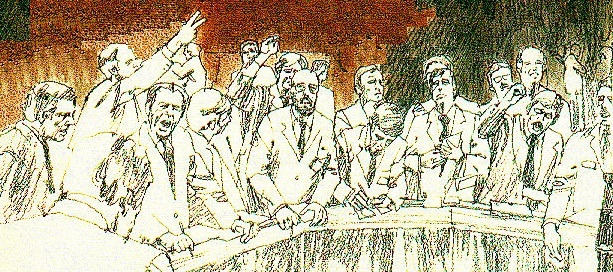
QUESTION: I noticed that all the economists who are not academics are the people who actually discovered something. The academics always advocate for manipulating society like Keynes and Marx. Why is that?
PD
ANSWER: If you look at the first analyst to establish supply and demand, it was John Law. Even Adam Smith used his examples in “Wealth of Nations.” Adam Smith actually investigated his work to come up with his invisible hand. There was David Ricardo, who also made a fortune as a trader. Those are the three greats and NONE of them has a formal economics degree, which was first taught as a separate course in 1902 at Cambridge.
Those of us who come from the real world of trading, do not have the luxury to come up with Utopian theories that sound nice. Unless you have traded, you will never understand that the market is always right. If you do not listen to the market, you will lose everything.
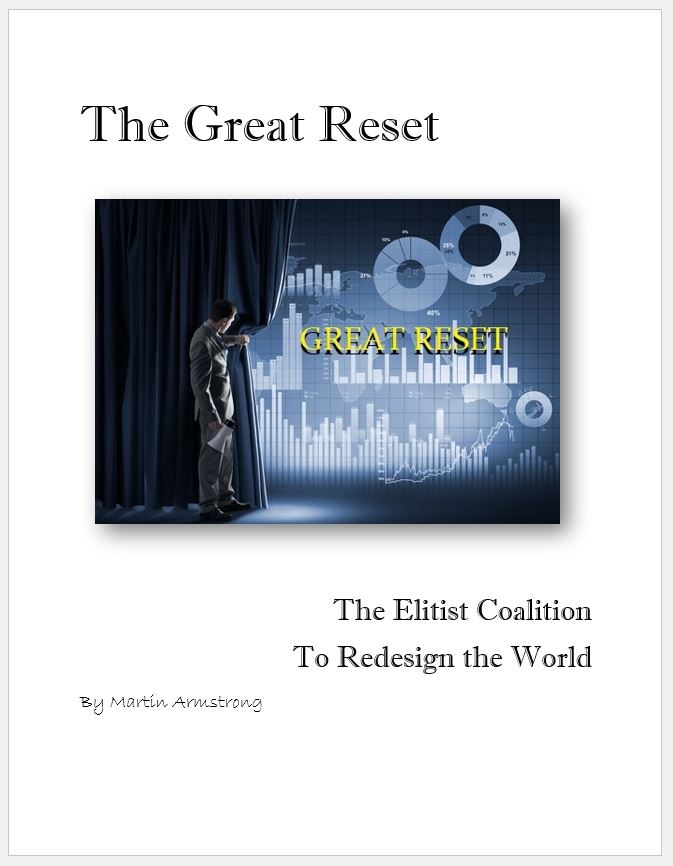
We will be releasing this report this week which includes, as part of the Great Reset, the push to eliminate currency to move toward a digital currency world where they can track everything we do and allow for drastic increases in taxation. They have been suddenly justifying this by claiming that viruses can live on surfaces. So after using money in coins or paper since 700 BC, we have suddenly determined that money is too dirty and we need only digital money to be safe in the future.
The Bank of Canada is the latest to move towards this Gates coalition to control the world population in every way possible. They state on their website:
The Bank of Canada is embarking on a program of major social significance to design a contingent system for a central bank digital currency (CBDC), which can be thought of as a banknote, but in digital form. This project will require us to break new ground. It will take into consideration a wide variety of factors, including policy considerations, diverse stakeholder needs, difficult technical challenges and the development of a technical architecture to realize a CBDC pilot system.
The future will never be the same. We are staring in the face of a totally new fascist type of authoritarian state. Anyone who disagrees is immediately called a “conspiracy nut” or a “right-wing zealot” because they will never debate the issues — they simply prefer to attack the messenger.

Silver and gold continue to be suppressed by means of high frequency trading and ‘spoofing,’ which involves large short positions to scare away longs. Then the big bank traders quickly withdraw their massive orders. This is against the law, but we’ve already seen how the bankers are above the law. What about regulatory agencies such as the CFTC and the SEC? They tend to be populated by insiders, just as our government is populated by Goldman Sachs men and other big bankers who lobby for their masters. Hillary and Obama are examples—they did the bidding of the bankers and get rewarded handsomely by making speeches for those banks.
Silver and gold are Constitutional money. For this, the Federal Reserve makes sure their competition remains in a dungeon, where they are routinely beaten up and tarnished by corrupt traders. It’s time for Trump and Barr to go after them, but more importantly, it’s time to put a stop to Federal Reserve and it’s vile, immoral system of debt money that impoverishes all but a small percentage at the very top.
END THE FED!

328K subscribers
Chris McGlade recites his 2018 poem “The Right To Hate”, from his hometown in the north of England. A working man’s view of left-wing intolerance.

Chicago has been under Democrat political control for two generations. The murder rate amid black communities is horrific. No-one has done anything to stop the crime and violence and it continues to escalate.
Yesterday President Trump wrote a letter to Illinois Governor J.B. Pritzker and Chicago Mayor Lori Lightfoot offering assistance from his administration:

continued..

It is likely the offer will be rebuked; and predictably both the governor and mayor will instead ask President Trump to send them more money.
Money will not solve the problem. Hundreds of people are being killed in/around the majority black communities in Chicago because the city and state officials allow hundreds of people to be killed in the community.
If the crimes and killing in the Chicago area were actually unacceptable to the leaders in the Chicago area, they would stop it. Yes, it really is that simple.
That is the unfortunate reality.

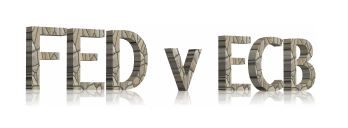
QUESTION: Martin,
You mentioned in a recent blog post that the ECB, unlike the FED, can go bankrupt.
Can you explain further?
Not sure where you get the time, energy and resources to research and write all that you do buy it is truly amazing.
Regards,
M
ANSWER: The Federal Reserve does not need permission to create elastic money. It has the authority to expand or contract its balance sheet. However, it cannot simply print money out of thin air. The ECB is the only institution that can authorize the printing of euro banknotes. The Federal Reserve must back the banknotes by purchasing US government bonds. The Fed buys and sells US government bonds to influence the money supply whereas the ECB influences the supply of euros in the market by directly controlling the number of euros available to eligible member banks. This structure was created because of Germany’s obsession with its own hyperinflation of the 1920s.
Each member state retained its central bank and those central banks issue the banknotes — not the ECB. Therefore, the ECB works with the central banks in each EU state to formulate monetary policy to help maintain stable prices and strengthen the euro. The ECB was created by the national central banks of the EU member states transferring their monetary policy function to the ECB, which in effect operates on a supervisory role.
There are four decision-making bodies of the ECB that are mandated to undertake the objectives of the institution. These bodies include the Governing Council, Executive Board, the General Council, and the Supervisory Board.
The Governing Council comprises six members of the Executive Board and Governors of the national central banks of the euro area member states. The Council members meet twice a month at the institution’s offices in Germany. Its primary function is the formulation of monetary policy for the Eurozone area. That means it makes the decisions on monetary objectives, interest rates, and the supply of reserves in the Eurosystem.
The Executive Board comprises the President, Vice-President, and four other executive members appointed by the European Council. The executive members serve for an 8-year non-renewable term. The role of the Executive Board is to implement the monetary policy as defined by the Governing Council and manage the day-to-day operations of the ECB, alongside the Chief Services Officer. Also, the board prepares the Governing Council meetings and exercises power delegated to it by the Governing Council. It holds meetings every Tuesday.
The General Council is a transitional body that carries out responsibilities taken over from the European Monetary Institute (EMI). It comprises the President, Vice-President, and Governors of the national central banks of the EU member states. The body will continue to exist until all EU member states have adopted the euro. As of 2017, only 19 out of the 28 EU member states have taken up the euro as their single currency. This body is charged with fixing the exchange rates of currencies for countries preparing to join the Eurozone.
The Supervisory Board comprises the chair, vice-chair, four ECB representatives, and representatives of national supervisors. The board plans and executes the supervisory function of the ECB. It also proposes draft decisions for the Governing Council through the non-objection procedure.
The ECB was granted a monopoly status on the issuing of banknotes in the Eurozone area. The ECB makes weekly announcements on the amount of money it wishes to supply and the minimum acceptable interest rate. Eligible banks that have provided collateral then place their bids for the ECB funds through an auction mechanism. Once the banks have obtained funds, they use them to advance loans to individuals and businesses all in theory.
The European Central Bank is also responsible for banking supervision in all the EU member states. The ECB carries out this function through the Single Supervisory Mechanism (SSM) that comprises the ECB and competent national authorities in the member countries. Therefore, the ECB has the power to grant and withdraw banking licenses, conduct supervisory reviews, and set higher capital requirements to counter financial risks. The ECB directly supervises 124 significant banks that hold 82% of the banking assets in the Euro area.
The tensions within Europe have never abated between members. The first President of the Bank was Wim Duisenberg, who was the former president of the Dutch central bank. The French objected and demanded that the ECB should be headed by a Frenchman, Jean-Claude Trichet, because the ECB was to be located in Germany. A gentleman’s agreement was finally reached whereby Duisenberg would step down before the end of his mandate and Trichet would become the head of the ECB in November 2003. He was replaced by an Italian, Mario Draghi, who became the head of the ECB between 2011-2019. Now we have Christine Lagarde, who is French, taking over the ECB from Draghi.

The primary objective of the European Central Bank was laid out in Article 127(1) of the Treaty on the Functioning of the European Union. That stated its authority was to maintain price stability within the Eurozone which is rather vague. The Governing Council in October 1998 took it upon themselves to define “price stability” as meaning inflation of under 2% on “a year-on-year increase in the Harmonised Index of Consumer Prices (HICP) for the euro area of below 2%.” Therefore, the ECB was created differently from that of the Federal Reserve System which was intended to be simply an independent system where the banks were shareholders because that was a contribution to create the Fed outside of taxpayer money. Hence, the ECB has only one primary objective and it was envisioned as a division of the government. The “price stability” has never been defined in statutory law which leaves a very wide view of interpretation.
The Governing Council sought to confirm this definition of “price stability” in May 2003. They clarified that “in the pursuit of price stability, it aims to maintain inflation rates below, but close to, 2% over the medium term.” Hence, all such lending to credit institutions had to be collateralized as required by Article 18 of the Statute of the ESCB. This so-called “clarification” is by no means a defined law. Therefore, this vague directive of maintaining “price stability” is further complicated because, under the Treaty, it also directs that “the ESCB shall support the general economic policies in the Union with a view to contributing to the achievement of the objectives of the Union.” This leaves the door wide open for the ECB under Legarde to suddenly declare that climate change must be a policy of the ECB. This clearly makes the ECB an arm of the EU Commission and not independent as is the case with the Federal Reserve.
Since November 4, 2014, the ECB has been responsible for specific tasks concerning policies relating to the prudential supervision of credit institutions within the framework of the Single Supervisory Mechanism. As a banking supervisor, the ECB also has an advisory role in assessing the resolution plans of credit institutions.
The ECB President reports to the European Parliament on monetary issues in a quarterly Monetary Dialogue. The ECB also prepares an annual report on monetary policy which is presented before Parliament. Parliament adopts a resolution on this annual report. The new supervisory responsibilities of the ECB are matched with additional accountability requirements as laid down in the SSM Regulation. The practical modalities are governed by an Interinstitutional Agreement (IIA) between Parliament and the ECB. The accountability arrangements include the appearance of the Chair of the Supervisory Board before the competent committee; answering questions asked by Parliament, and confidential oral discussions with the Chair and Vice-Chair of the competent committee upon request. In addition, the ECB prepares an annual supervisory report, which is presented to Parliament by the Chair of the Supervisory Board.
Interinstitutional Agreement (IIA) between Parliament and the ECB
The ECB is trapped. It cannot raise rates to raise money and it has destroyed its bond market. The only way out is to default on all debt and they will do that by declaring it to be now a perpetual debt that only pays interest like an annuity. This will allow them to escape the formal default which is inevitable.
President Trump and President Andrzej Duda of the Republic of Poland are scheduled to hold a joint press conference today following their bilateral meetings. Both leaders have a warm personal friendship. Anticipated start time 3:30pm ET.
UPDATE: Video Added
WH Livestream Link – Fox News Livestream Link – Alternate Livestream Link
.
.
.

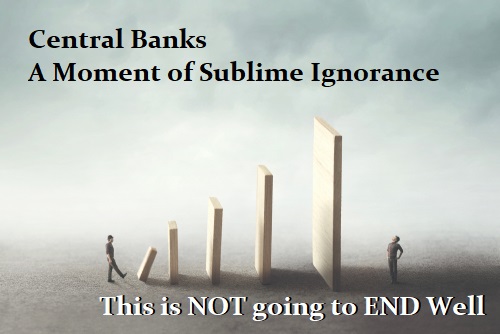
QUESTION: Hi Marty.
You mentioned in the blog that all European sovereign debt may end up being converted into perpetual bonds. Will it be through debt mutualization or will each country have each own Consol? Could you please elaborate on how this conversion would affect pension funds, banks, social security and individual investors? Knowing that the ECB already owns 33% of all government bonds in the Euro Zone, can it (ECB) be the buyer of last resort to avoid liquidity issues for all these investors (pension funds, banks, social security and individual investors)? What would make the ECB fail?
Regards
AMD
ANSWER: They will most likely provide no warning and they will simply announce what they have done to prevent anyone from trying to liquidate. The ECB will have it as reserves so that will not change. They were rolling the debt anyway because they cannot sell it without causing interest rates to rise.
The Federal Reserve is buying up corporate bonds to the point that there is now a shortage. They are doing this in a desperate measure to try to prevent interest rates from rising, which will in turn put pressure on the ECB and Emerging Markets. This is demonstrating that the central banks are fearful of the market pushing rates higher because of CREDIT RISK.
I have created this site to help people have fun in the kitchen. I write about enjoying life both in and out of my kitchen. Life is short! Make the most of it and enjoy!
De Oppresso Liber
A group of Americans united by our commitment to Freedom, Constitutional Governance, and Civic Duty.
Share the truth at whatever cost.
De Oppresso Liber
Uncensored updates on world events, economics, the environment and medicine
De Oppresso Liber
This is a library of News Events not reported by the Main Stream Media documenting & connecting the dots on How the Obama Marxist Liberal agenda is destroying America
Australia's Front Line | Since 2011
See what War is like and how it affects our Warriors
Nwo News, End Time, Deep State, World News, No Fake News
De Oppresso Liber
Politics | Talk | Opinion - Contact Info: stellasplace@wowway.com
Exposition and Encouragement
The Physician Wellness Movement and Illegitimate Authority: The Need for Revolt and Reconstruction
Real Estate Lending
 Centinel2012