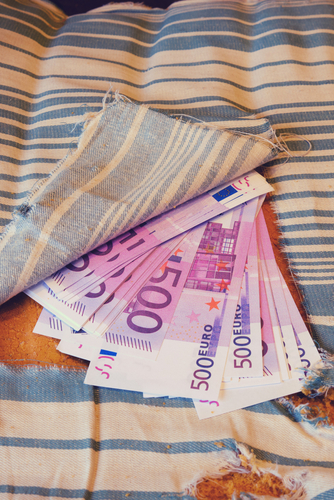
The reason there is a shortage of cash developing around the world is rather straight-forward. The trust in the government is collapsing. Italy has just lowered the legal amount someone can pay for anything in cash from €3000 to €2000. Australia made it a criminal act to pay for anything with A$10,000 or more (US$7,000). In Switzerland, the limit on cash you can withdraw from an ATM is CHF5,000. In Germany, the limitation is typically €1000. Greeks abroad will be able to withdraw up to 5,000 euros ($5,800) a month.
In the United States, the US Treasury says the pandemic has significantly disrupted the supply chain and circulation patterns of US coins. Additionally, the US Mint has been printing fewer coins to protect its employees from COVID-19. The World Health Organization (WHO) has not advised banning paper money, but it has stressed the need for handwashing after touching cash, which is a subtle caution that money should be limited. Some central banks are deploying measures to sterilize paper money with heat or UV light. Even the Fed began a seven to 10-day quarantine for United States dollars returning to the country from Europe and Asia.
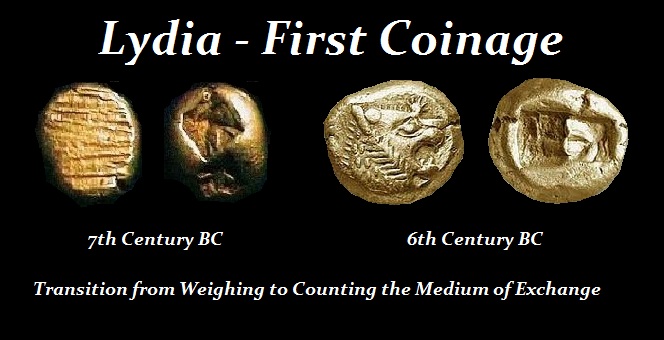
It is very clear that governments are trying to paint money as dirty, and the solution is to eliminate physical money, despite the fact that it has been in use since about the 7th century BC. All of a sudden, it is a danger after 28 centuries. This plays nicely into the Socialist’s dream to control everything!
Good morning. Repo rates have been creeping up ever so slightly and quietly. Points wise not much, but percentage-wise, numbers are getting bigger. Has everybody been lulled to sleep and looking the wrong way again?
Best,
E
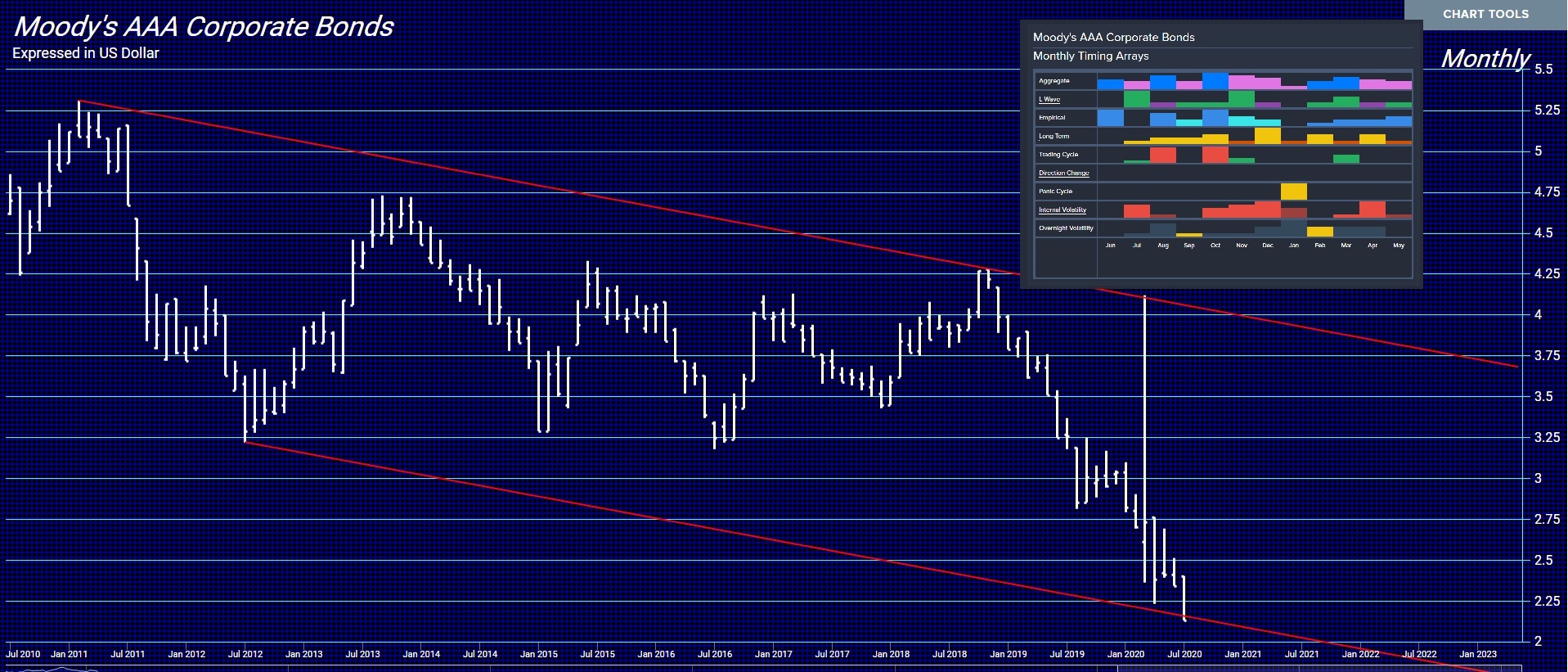
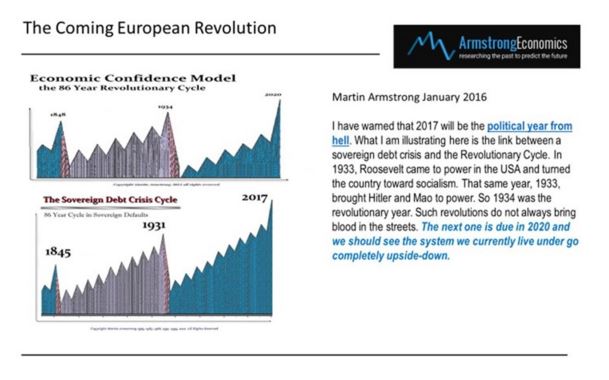
REPLY: The shift from a Public to a Private wave is in full motion. We can see this in Moody’s AAA Corporate Bond Index. Note that the while chaotic swing in March ran right up to the top of the Downtrend Channel and then we have swung down and just closed below the bottom of the channel. We have an important turning point arriving in October. We show the next major turning point in the US 30-year bonds being September.
These governments imposing lockdowns again are acting political rather than in the best interest of the people. Locking people down results in a collapse of tax revenue. Many in the USA have been promised by the Democrats they will be bailed out if they win the White House right down to their pension funds. This is what is going on behind the curtain – cutting deals.
Clearly, these governments are not stupid. They have to realize how much revenue has collapsed and how much damage they have caused to the people and the economy. Our models are projecting HIGHER interest rates ahead and this reflects their high-risk gamble on trying to overthrow Trump. What they fail to grasp is that the private sector has lost all confidence in governments and as such, they have destroyed the old financial system of perpetual borrowing.
As fiscal mismanagement abounds, interest rates will rise to reflect credit risk. The central banks are powerless to prevent this rise. The Fed cannot buy all state debt any more than the ECB will be authorized to buy all sovereign debt in the Eurozone. We have reached the point of no return.
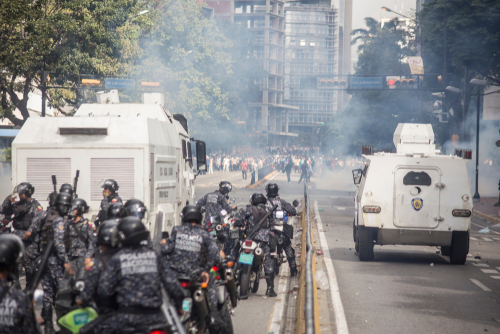
Politicians are about to be confronted with the harsh reality of their insane lockdowns in Europe. Germany now realizes there is building massive civil unrest and there is no doubt that this New Green World Order is out to end the car industry which is a major industry the will leave the workers without a future. The government is preparing for major civil unrest and out computer has been warning Europe is being pushed into civil war as tourism has been crushed.
Meanwhile, yesterday night demonstrators in Belgrade attacked the Serbian Parliamentthrowing stones and bottles at the windows of the parliament building. We are looking at serious civil unrest which can lead to revolution insofar as breaking up the EU as they push for this New Green World Order which will destroy the future of so many in Europe. Only elitists view that such a transition is no problem. They underestimate the economic damage and this is the END of perpetually borrowing with no intension of ever repaying any debt.
Thank you for your commitment to helping others through this unsettling time.
Long before I found you, I was fascinated with the capital markets and historical financial crashes, in particular. I spent many years on Wall Street (and LaSalle ST) building and marketing trading systems for the listed options industry.
Through the numerous currency failures, be they inflationary or deflationary, running to private assets has been a lifesaver for some clever enough to figure it out or those lucky to be serendipitously well positioned. Yet, it is always about timing. That is the subject of this question.
If the value of a currency is based on the productive power of the people behind the currency, it makes sense that Socrates is pointing to private assets going forward. It seems to me that the very best private assets would be businesses that enjoy productive power (not so easy to predict/choose in this environment). Whether we are denominating in dollars, rice, or seashells, it seems that a solid business will crank out currency units in whatever form and be a good hedge.
Hugo Stinnes emerged after WWI as an industrialist. Controlling coal, steel, electricity, and other fundamental businesses, he was able to profit as the currency collapsed. Stinnes continued this work straight through the introduction of the Rentenmark and Reichsmark seemingly not skipping a beat. He possessed productive power but was also very politically connected, which is key to this question. Later, The Third Reich was notorious for shutting down or nationalizing businesses. We look to be headed in that direction.
For those accumulating profits in, for example, mining stocks during the commodity boom, or wheat contracts, or equities, the question is, how do we get out of those trades? What is the risk that we sell/trade at the right time only to have our assets seized? For example, do you foresee a day, here in the U.S., whereby the government liquidates a portion of an account’s common shares for a bail-in or wealth tax? If so, then illiquid private placements (productive real estate or businesses with durable Free Cash Flow) that are very hard to value (and liquidate) might be the only real safe haven.
The risk seems to be everywhere. The risk most concerning and most difficult to predict or quantify is Government Risk – even here in the U.S. I can understand why the very wealthy buy paintings and rare items. Such items represent a real possibility to function as a “time machine” to bridge this insanity.
I would love to hear your thoughts. Above all, Socrates is a lifesaver and I am humbled to have access.
With respect,
JC
Texas
ANSWER: Yes, I knew a client who bought up all the old coins for scrap metal. Then it turned out there was a shortage of metal so the old coins were deemed valid at a new exchange rate. He made a fortune. There are definitely commodities that will preserve wealth in times like this. We must be careful about the Socialists, for they will do the same as the Nazis and nationalize just confiscating assets.
I believe the best shot we have is Socrates — let it monitor the subtle shifts. The one thing you can count on is the greed of those in power. Just as I began to see the subtle shifts with the Repo Crisis last August 2019, thereafter the markets were showing something was not right. I stood up at the WEC in Orlando and warned that something was seriously wrong and that the market would undergo a serious correction with the turn in the ECM.
Historically, Socrates seems to pick up things we humans do not see because they are subtle. It is like playing chess. You have to come up with a strategy and play in your mind the next several moves. You will lose if you simply react on a one move at a time basis. This is what Socrates is doing. It is playing out strategies. It looks for the possible paths and then monitors the movements across the entire globe to determine the eventual path. This is why NOBODY can forecast the future with 100% accuracy. We cannot as humans see all the possibilities. Socrates is mapping out the future and it reveals the most likely path and course of action.
Things can change and we get cycle inversions. But it is always playing one region against another. This is why all of these pundits fail because they focus typically just domestically and never see the trends coming from external factors. Things are so bad in Europe and the politicians are deliberately blocking travel from the USA to Europe in an effort to overthrow Trump to further their New Green World Order. In the process, before year-end, they will bankrupt at least 20% of all small businesses and wipe out the tourist trade for Southern Europe. These morons think they can placate the public with minimal subsistence from Guaranteed Basic Income they are beginning in Spain.
They will NOT be able to defeat the Monetary Crisis Cycle no matter what schemes they come up with. This is totally insane. Nevertheless, we will be monitoring what markets we need to exit in advance to try to preserve assets. This is a game of survival of the fittest. We do not have to run around naked on some island eating bugs. But we may have to take precautions and move to safe havens outside of urban cities for sure.
U.S. President Trump and Mexican President Andrés Manuel López Obrador will be holding a joint press conference prior to signing a joint declaration celebrating the initiation of USMCA in the Rose Garden. Anticipated start time 3:30pm ET
UPDATE: Video and Transcript Added
.
[Transcript] – PRESIDENT TRUMP: Well, thank you very much, everyone. It’s a nice hot day, to put it mildly — (laughter) — so we’ll make this quick. But it’s all very positive — that, I can say.
And it’s my tremendous pleasure to welcome everyone to the White House with my good friend, President López Obrador of Mexico. We’ve had a very outstanding relationship.
Mr. President, we’re truly moved that you chose to make your first foreign visit since taking office — very successfully taking office, I might add — to be with us at the White House.
The relationship between the United States and Mexico has never been closer than it is right now. And as the President said a little while ago, people were betting against that. They were actually betting against that. But it’s never been stronger, never been closer. We’re doing a tremendous job together.
We’re cherished friends, partners, and neighbors. Our cooperation is founded on mutual trust and mutual respect between the two of us and between our two countries. And we honor the great dignity of both nations.
With this visit, President López Obrador and I have the opportunity to strengthen the bond we afford since his impressive election victory more than two years ago — a victory the Vice President and Ivanka joined in celebrating at the swearing-in. That was a very exciting day for them.
Each of us was elected on the pledge to fight corruption, return power to the people, and put the interests of our countries first. And I do that and you do that, Mr. President.
The tradition of great respect between Mexican and American Presidents goes back to the early days of both of our nations. And, in particular, it includes President Abraham Lincoln and President Benito Juárez, who each held one another in very, very high esteem. They were great friends and they did great things together. And we are grateful that, this morning, President López Obrador laid a wreath at the memorials that stand to each of these leaders, right here in our nation’s capital. That was a very beautiful, beautiful ceremony.
Our countries are linked by trade and travel, by history and culture, by faith and family. The United States is home to 36 million incredible Mexican American citizens. Mexican Americans uplift our communities, and they strengthen our churches and enrich every feature of national life. They are hardworking, incredible people. They are also great business men and women, and make up a big percentage of our small-business owners — and very successful. They’re very, very successful. They’re like you: They’re tough negotiators and great business people, Mr. President.
Working alongside President López Obrador, we’re taking this relationship to new heights and building a powerful economic and security partnership. Together, we have addressed many of the most complex issues facing our two countries that really went unresolved for many years — and, frankly, far too long. It should have been resolved long before I got here. But we’re achieving great strides and remarkable breakthroughs in strengthening our relationship for decades to come.
With everything that we have accomplished, the potential for the future of the United States and Mexico is unlimited. Far, far greater situation, really, for both countries than anyone thought possible.
Today we celebrate the historic victory we achieved together just days ago when NAFTA was officially terminated — one of the worst trade deals in history — and replaced with a brand-new, beautiful USMCA.
We want to thank Canada, also. I spoke with and will be speaking to the Prime Minister in a little while.
While NAFTA slashed wages and eliminated jobs, the USMCA includes groundbreaking labor protections for workers in both nations. This landmark agreement will bring countless jobs from overseas, back to North America, and our countries will be very big beneficiaries. We are already seeing the fruits because it started. It’s the largest, fairest, and most advanced trade deal ever reached by any country, and it will bring enormous prosperity to both American and Mexican workers and Canada. We want to thank everybody. We’ll have a separate day with Canada. They’re coming down at the appropriate time. But we want to congratulate Canada and the people of Canada, the Prime Minister.
But this has been a tremendous achievement. It’s actually the largest trade deal ever made. And we made a big one with China too, but this is the largest trade deal ever made.
Our two governments are also in close cooperation to stop the illicit cross-border flow of drugs and guns, cash, and contraband, and very importantly, stopping human trafficking.
We’re forging critical partnerships across the Western Hemisphere to combat the cartels and the smugglers and to ensure safe, humane, and lawful migration. And we’ve been helped greatly by Mexico on creating record numbers, in a positive sense, on our southern border. It’s been really, very, very tight and done a great job.
And I want to thank the Secretary, who’s here. We have a — Chad, you’re here someplace. Where is Chad? What a good job you’re doing, Chad. Great job. We’re proud of you. And you’ve worked very closely with Mexico. I know you were just telling me what a great help they’ve been, right? Thank you very much, Chad.
We’ve also worked closely in the battle against the coronavirus, together saving countless — thousands of lives. It’s been my honor to help Mexico procure 600 ventilators, and it’s going to be a higher number than that. They needed them very badly, and we were able to make them. We’re making thousands a week, and we’re helping a lot of countries. But one of the first, and maybe the first that I spoke to, was Mexico. We have a lot of them in Mexico saving a lot of lives. And, Mr. President, we’re in this fight together, and we’re doing very well.
Just a couple of things on that: I’m proud to further announce that the U.S. is, by far, number one in testing — number one in the world in testing — and that the mortality rate is the lowest, or just about the lowest of any nation anywhere in the world.
And we’re safely reopening our country, and very importantly, we’re safely reopening our schools. We want the schools to be open and going in the fall. And most of them, I think, are looking at it that way. It’s very important. We’re finding out that learning by computer is not as good as learning in the classroom or learning on the campus. And I think you’re finding that too. We want to learn in the classroom. So, our schools — we want them open in the fall.
Following President López Obrador’s remarks, we’ll sign a joint declaration committing ourselves to a shared future of prosperity, security, and harmony. This is truly a proud moment in history for both of our nations, Mexico and the United States.
With this signing, we pledge the close and continued friendship between the United States and Mexico, and we accelerate our progress toward an even greater tomorrow — and that’s what’s happening: a greater, maybe even a far greater tomorrow — with a prospering region, a flourishing hemisphere, and two sovereign nations thriving, growing, and excelling side by side, working together — and that’s what we’ve been doing.
Mr. President, we look forward to hosting you for a beautiful dinner later on this evening with some of your friends from Mexico and some of our great friends from the U.S. And it’s an honor to have you with us.
And, please, we’d love to have you say a few words. Thank you. Thank you very much.
PRESIDENT LÓPEZ OBRADOR: (As interpreted.) Friends, ladies and gentlemen, I truly celebrate this meeting with you, President Trump.
My visit, to a great extent, has to do with the importance right now, in these times of world economic crisis, the importance of the entry into effect of the Mexico-U.S.-Canada Agreement, to make by Spanish acronym, “USMCA.” Having been able to close this deal constitutes a great accomplishment benefitting all three nations and our peoples.
As it is well known, North America is one of the most important economic regions of the planet. However, our region is inexplicably a region of trade deficits. We export to the rest of the world about $3.6 trillion, but we import about $4.2 trillion. That is, we have a deficit of $611 billion, which is translated into capital flight, less opportunities for companies and businesses, and job source losses.
This new agreement seeks to reverse this imbalance through greater integration of our economies and improvements in the functioning of productive chains to recover the economic presence that North America has lost in the last five decades. Suffice it to say that, in 1970, the region constituted 40.4 percent of the world GDP. And now, this share in the global economy has gone down to 27.8 percent.
That’s why this agreement is a great option to produce, create jobs, and foster trade without having to go so far away from our homes, cities, states, and nations. In other words, import volumes of our country’s imports to the rest of the world may be produced in North America at a lower transportation cost with reliable suppliers — reliable vis-à-vis the companies, of course — and the utilization of regional labor force…
Of course, it’s not a matter of closing our countries to the world. It’s a matter of taking advantage of all the advantages that we have because we’re neighbors, as well as the enforcement of a good policy of cooperation for development.
This agreement allows us to attract investments from other places of the hemisphere, bringing those investments to our countries, provided we comply, we honor the principles of reducing merchandises with high regional content, and also trying to have salary and labor conditions that are fair conditions for our workers of the exporting or importing countries of consumption goods.
It’s also important to point out that this agreement signifies the integration of all three countries, because we’re all contributing with productive capacity, markets, technology, experience, expertise, highly skilled labor force, and we end up complementing each other. For instance, Mexico has something which is extremely valuable to make this economic integration effective and to boost this integration — economic and commercial integration — in the region. I’m talking about this very young, creative, and responsible labor force.
Let us not forget that the participation of workers in productive processes is just as important as the role of businesses and companies. It really would be not good for us to have capital and technology if we don’t have good workers that are outstanding workers because of their imagination, their talent, and their mystique when they do their work.
On the other hand, with this type of agreement — and respecting our sovereign states — instead of distancing ourselves, we are deciding, we’re opting to walk together towards the future. We want to privilege understanding. That’s why we’re united. And we’re setting aside differences, or we are solving those differences through a dialogue and mutual respect.
Certainly, in the history of our relations, we’ve had perhaps moments in which our minds have not been together. And there are — there have been problems that are not yet forgotten. However, we’ve been able to establish explicit agreements of cooperation and coexistence. For instance, in the ‘40s of last century, during the Second World War, Mexico helped meet the needs of the United States in terms of the raw materials needed by the United States, and it gave its support with the labor of migrant workers that were known as the braceros.
Since then, and until now, we’ve been consolidating our economic-commercial trade relationship, as well as our very — very peculiar coexistence, cohabitation, sometimes as distant neighbors and other times as very affectionate and close friends.
And it is also a well-known history of geopolitics, this neighborhood we have and economic circumstances of both of our nations have promoted, in a very natural manner, a process of migration of Mexican men and women coming here to the United States. And here we’ve been able to create a community of about 38 million people, including the children of Mexican parents. It is a community of good, working people — good people, working people who have come here to make a living in a very honest fashion. And they have so much contributed to the development of this great nation.
Furthermore, in Mexico, more than in any other country of the world, we have in our society a million and a half of U.S. citizens. They live there, and they’re part of our society. So we’re not just united by geographic proximity; we have economic commercial, social, cultural, and ties of friendship, President Trump.
As in the best times of our political relationship, during my mandate as President of Mexico, is that of remembering this insults and things like that from — against me. We have received from you, President Trump, understanding and respect. People — some people thought that our ideological differences would inevitably lead to confrontations. Fortunately, this has not been the case. And I believe that, towards the future, there will be no motive or need to break our very good political relationship or the friendship between our two administrations.
The best president Mexico has ever had, Benito Juárez García, as you have mentioned, had a good understanding with the great Republican President, Abraham Lincoln. Let us remember that this great, historic leader of the United States, who was the promoter of the abolition of slavery, never recognized Emperor Maximilian imposed in Mexico through the intervention of the powerful French army.
It is no coincidence that Juárez lamented Lincoln’s murder in the United States, saying, I quote, “I have deeply felt this disgrace because Lincoln, who was constantly working in such a determined manner for the complete freedom of its fellow men, was worthy of a better fortune or luck.” End of quote.
The same thing happened with the splendid relationship that Democrat President Franklin Delano Roosevelt had with our patriot president, General Lázaro Cárdenas. The same situation took place. And after the oil expropriation, in a letter, General Cárdenas recognized the good understanding — the good bilateral understanding as follows: He said, “My administration believes that the attitude of the United States of America, in the case of the oil company expropriation, reasserts once more the sovereignty of the peoples of this continent that with so much efforts have been maintaining the situation and the position of his Excellency, Mr. President Roosevelt.” End of quote.
So with all proportions and all the circumstances, with different circumstances, history tells us that it is possible to understand each other without arrogance or extremisms.
Now that I have decided to come to this meeting with you, President Trump, we had a good debate in my country on the convenience of this trip. I decided to come because, as I have already expressed, it is very important for us to be launching this new agreement.
But I also wanted to be here to thank people of the United States, its government, and thank you, President Trump for being increasingly respectful with our Mexican fellow men.
And to you, President Trump, I want to thank you for your understanding and the help you’ve given us in issues related to trade, commerce, oil, as well as your personal support for the acquisition of medical equipment that we needed urgently to treat our patients of COVID-19.
But what I mainly appreciate is that you have never sought to impose anything on us violating our sovereignty. Instead of the Monroe Doctrine, you have followed, in our case, the wise advice of the lustrous and prudent President George Washington who said, quote, “Nations should not take advantage of the unfortunate condition of other peoples.” End of quote.
You have not tried to treat us as a colony; on the contrary, you have honored our condition as an independent nation. That’s why I’m here to express to the people of the United States that their President has behaved with us with kindness and respect. You have treated us just as what we are: a country and a dignified people; a free, democratic, and sovereign people.
Long live the friendship of our two nations. Long live the United States of America. Long live Canada. Long live our America. Long live Mexico. Long live Mexico. Viva México. (Applause.)
QUESTION: Marty, a friend attended one of your conferences back in 1987 and you compared the Soviet and Roosevelt monetary systems. I searched your site to see if I could find that without success. Can you detail that subject again?
Thank you
PN
ANSWER: Those in power right now are ACTUALLY looking at Soviet Russia’s economic model. I have been asked why there was no massive inflation when the local money was just created. This is an important subject but most never want to discuss it outside of closed doors.
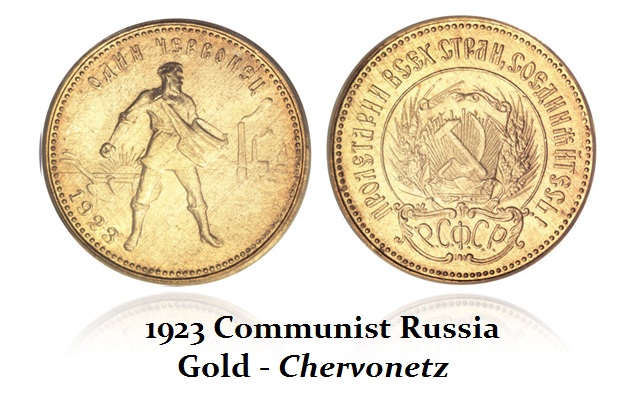
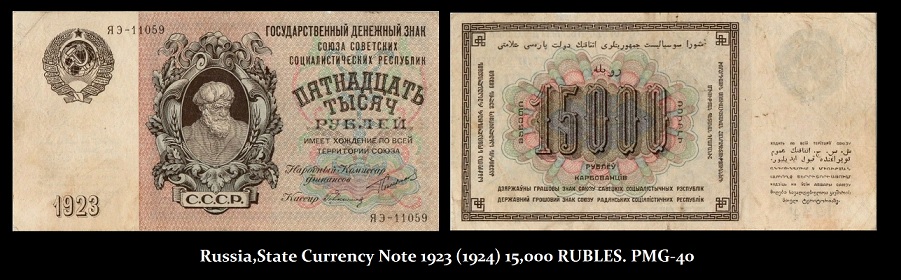
The answer to that question is simple. The Soviets used a two-tier monetary system with gold coins for external commerce and paper domestically. Most people do not know, but even Roosevelt looked to Russia to copy that system with gold only for external use and paper dollars for domestic use. The difference between the Soviet and Roosevelt systems was that the Soviets used price & wage controls where Roosevelt allowed a free domestic market. Nevertheless, the idea was the Soviet model, believe it or not.
This current incarnation of the Soviet model they are calling MMT may lead to price & wage controls more like the Soviet model because inflation will unfold at this time given the fact that we are NOT looking at a revolution, but a clever reform they are calling the Great Reset. Therefore, we lack that panacea of fresh confidence that existed at the start of the Russian Revolution which rapidly turned into oppression following the death of Lenin (1870– January 21, 1924) who at least believed in what he was doing rather than Joseph Stalin.
Here is a softball question for the holiday weekend.
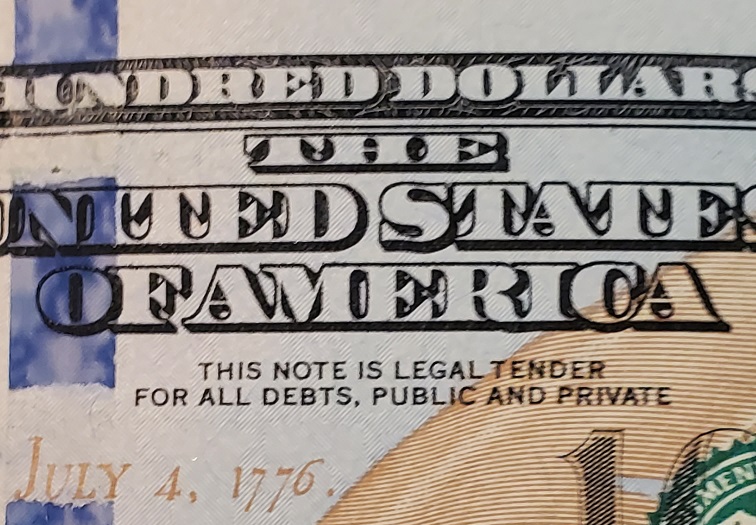
If US currency is legal tender, aren’t retail stores obligated to accept it?
This would seem to restrict the ability of retail stores to 1) demand electronic payment and 2) reject payment using $100 bills.
Happy 4th to you.
MB
ANSWER: You are correct. Stores MUST accept cash – that is what LEGAL TENDER means! Congress would have to pass an Act and the President MUST sign it to eliminate paper money.
How do you confront the lunacy of the anti-American leftists intent on removing American monuments? Well, if you are President Donald John Trump, you build more of them. Hence, an executive order establishing A National Garden of American Heroes:
[Executive Order] – By the authority vested in me as President by the Constitution and the laws of the United States of America, it is hereby ordered as follows:
Section 1. Purpose. America owes its present greatness to its past sacrifices. Because the past is always at risk of being forgotten, monuments will always be needed to honor those who came before. Since the time of our founding, Americans have raised monuments to our greatest citizens. In 1784, the legislature of Virginia commissioned the earliest statue of George Washington, a “monument of affection and gratitude” to a man who “unit[ed] to the endowment[s] of the Hero the virtues of the Patriot” and gave to the world “an Immortal Example of true Glory.” I Res. H. Del. (June 24, 1784). In our public parks and plazas, we have erected statues of great Americans who, through acts of wisdom and daring, built and preserved for us a republic of ordered liberty.
These statues are silent teachers in solid form of stone and metal. They preserve the memory of our American story and stir in us a spirit of responsibility for the chapters yet unwritten. These works of art call forth gratitude for the accomplishments and sacrifices of our exceptional fellow citizens who, despite their flaws, placed their virtues, their talents, and their lives in the service of our Nation. These monuments express our noblest ideals: respect for our ancestors, love of freedom, and striving for a more perfect union. They are works of beauty, created as enduring tributes. In preserving them, we show reverence for our past, we dignify our present, and we inspire those who are to come. To build a monument is to ratify our shared national project.
To destroy a monument is to desecrate our common inheritance. In recent weeks, in the midst of protests across America, many monuments have been vandalized or destroyed. Some local governments have responded by taking their monuments down. Among others, monuments to Christopher Columbus, George Washington, Thomas Jefferson, Benjamin Franklin, Francis Scott Key, Ulysses S. Grant, leaders of the abolitionist movement, the first all-volunteer African-American regiment of the Union Army in the Civil War, and American soldiers killed in the First and Second World Wars have been vandalized, destroyed, or removed.
These statues are not ours alone, to be discarded at the whim of those inflamed by fashionable political passions; they belong to generations that have come before us and to generations yet unborn. My Administration will not abide an assault on our collective national memory. In the face of such acts of destruction, it is our responsibility as Americans to stand strong against this violence, and to peacefully transmit our great national story to future generations through newly commissioned monuments to American heroes.
Sec. 2. Task Force for Building and Rebuilding Monuments to American Heroes. (a) There is hereby established the Interagency Task Force for Building and Rebuilding Monuments to American Heroes (Task Force). The Task Force shall be chaired by the Secretary of the Interior (Secretary), and shall include the following additional members:
(i) the Administrator of General Services (Administrator);
(ii) the Chairperson of the National Endowment for the Arts (NEA);
(iii) the Chairperson of the National Endowment for the Humanities (NEH);
(iv) the Chairman of the Advisory Council on Historic Preservation (ACHP); and
(v) any officers or employees of any executive department or agency (agency) designated by the President or the Secretary.
(b) The Department of the Interior shall provide funding and administrative support as may be necessary for the performance and functions of the Task Force. The Secretary shall designate an official of the Department of the Interior to serve as the Executive Director of the Task Force, responsible for coordinating its day-to-day activities.
(c) The Chairpersons of the NEA and NEH and the Chairman of the ACHP shall establish cross-department initiatives within the NEA, NEH, and ACHP, respectively, to advance the purposes of the Task Force and this order and to coordinate relevant agency operations with the Task Force.
Sec. 3. National Garden of American Heroes. (a) It shall be the policy of the United States to establish a statuary park named the National Garden of American Heroes (National Garden).
(b) Within 60 days of the date of this order, the Task Force shall submit a report to the President through the Assistant to the President for Domestic Policy that proposes options for the creation of the National Garden, including potential locations for the site. In identifying options, the Task Force shall:
(i) strive to open the National Garden expeditiously;
(ii) evaluate the feasibility of creating the National Garden through a variety of potential avenues, including existing agency authorities and appropriations; and
(iii) consider the availability of authority to encourage and accept the donation or loan of statues by States, localities, civic organizations, businesses, religious organizations, and individuals, for display at the National Garden.
(c) In addition to the requirements of subsection 3(b) of this order, the proposed options for the National Garden should adhere to the criteria described in subsections (c)(i) through (c)(vi) of this section.
(i) The National Garden should be composed of statues, including statues of John Adams, Susan B. Anthony, Clara Barton, Daniel Boone, Joshua Lawrence Chamberlain, Henry Clay, Davy Crockett, Frederick Douglass, Amelia Earhart, Benjamin Franklin, Billy Graham, Alexander Hamilton, Thomas Jefferson, Martin Luther King, Jr., Abraham Lincoln, Douglas MacArthur, Dolley Madison, James Madison, Christa McAuliffe, Audie Murphy, George S. Patton, Jr., Ronald Reagan, Jackie Robinson, Betsy Ross, Antonin Scalia, Harriet Beecher Stowe, Harriet Tubman, Booker T. Washington, George Washington, and Orville and Wilbur Wright.
(ii) The National Garden should be opened for public access prior to the 250th anniversary of the proclamation of the Declaration of Independence on July 4, 2026.
(iii) Statues should depict historically significant Americans, as that term is defined in section 7 of this order, who have contributed positively to America throughout our history. Examples include: the Founding Fathers, those who fought for the abolition of slavery or participated in the underground railroad, heroes of the United States Armed Forces, recipients of the Congressional Medal of Honor or Presidential Medal of Freedom, scientists and inventors, entrepreneurs, civil rights leaders, missionaries and religious leaders, pioneers and explorers, police officers and firefighters killed or injured in the line of duty, labor leaders, advocates for the poor and disadvantaged, opponents of national socialism or international socialism, former Presidents of the United States and other elected officials, judges and justices, astronauts, authors, intellectuals, artists, and teachers. None will have lived perfect lives, but all will be worth honoring, remembering, and studying.
(iv) All statues in the National Garden should be lifelike or realistic representations of the persons they depict, not abstract or modernist representations.
(v) The National Garden should be located on a site of natural beauty that enables visitors to enjoy nature, walk among the statues, and be inspired to learn about great figures of America’s history. The site should be proximate to at least one major population center, and the site should not cause significant disruption to the local community.
(vi) As part of its civic education mission, the National Garden should also separately maintain a collection of statues for temporary display at appropriate sites around the United States that are accessible to the general public.
Sec. 4. Commissioning of New Statues and Works of Art. (a) The Task Force shall examine the appropriations authority of the agencies represented on it in light of the purpose and policy of this order. Based on its examination of relevant authorities, the Task Force shall make recommendations for the use of these agencies’ appropriations.
(b) To the extent appropriate and consistent with applicable law and the other provisions of this order, Task Force agencies that are authorized to provide for the commissioning of statues or monuments shall, in expending funds, give priority to projects involving the commissioning of publicly accessible statues of persons meeting the criteria described in section 3(b)(iii) of this order, with particular preference for statues of the Founding Fathers, former Presidents of the United States, leading abolitionists, and individuals involved in the discovery of America.
(c) To the extent appropriate and consistent with applicable law, these agencies shall prioritize projects that will result in the installation of a statue as described in subsection (b) of this section in a community where a statue depicting a historically significant American was removed or destroyed in conjunction with the events described in section 1 of this order.
(d) After consulting with the Task Force, the Administrator of General Services shall promptly revise and thereafter operate the General Service Administration’s (GSA’s) Art in Architecture (AIA) Policies and Procedures, GSA Acquisition Letter V-10-01, and Part 102-77 of title 41, Code of Federal Regulations, to prioritize the commission of works of art that portray historically significant Americans or events of American historical significance or illustrate the ideals upon which our Nation was founded. Priority should be given to public-facing monuments to former Presidents of the United States and to individuals and events relating to the discovery of America, the founding of the United States, and the abolition of slavery. Such works of art should be designed to be appreciated by the general public and by those who use and interact with Federal buildings. Priority should be given to this policy above other policies contained in part 102-77 of title 41, Code of Federal Regulations, and revisions made pursuant to this subsection shall be made to supersede any regulatory provisions of AIA that may conflict with or otherwise impede advancing the purposes of this subsection.
(e) When a statue or work of art commissioned pursuant to this section is meant to depict a historically significant American, the statue or work of art shall be a lifelike or realistic representation of that person, not an abstract or modernist representation.
Sec. 5. Educational Programming. The Chairperson of the NEH shall prioritize the allocation of funding to programs and projects that educate Americans about the founding documents and founding ideals of the United States, as appropriate and to the extent consistent with applicable law, including section 956 of title 20, United States Code. The founding documents include the Declaration of Independence, the Constitution, and the Federalist Papers. The founding ideals include equality under the law, respect for inalienable individual rights, and representative self-government. Within 90 days of the conclusion of each Fiscal Year from 2021 through 2026, the Chairperson shall submit a report to the President through the Assistant to the President for Domestic Policy that identifies funding allocated to programs and projects pursuant to this section.
Sec. 6. Protection of National Garden and Statues Commissioned Pursuant to this Order. The Attorney General shall apply section 3 of Executive Order 13933 of June 26, 2020 (Protecting American Monuments, Memorials, and Statues and Combating Recent Criminal Violence), with respect to violations of Federal law regarding the National Garden and all statues commissioned pursuant to this order.
Sec. 7. Definition. The term “historically significant American” means an individual who was, or became, an American citizen and was a public figure who made substantive contributions to America’s public life or otherwise had a substantive effect on America’s history. The phrase also includes public figures such as Christopher Columbus, Junipero Serra, and the Marquis de La Fayette, who lived prior to or during the American Revolution and were not American citizens, but who made substantive historical contributions to the discovery, development, or independence of the future United States.
Sec. 8. General Provisions. (a) Nothing in this order shall be construed to impair or otherwise affect:
(i) the authority granted by law to an executive department or agency, or the head thereof; or
(ii) the functions of the Director of the Office of Management and Budget relating to budgetary, administrative, or legislative proposals.
(b) This order shall be implemented consistent with applicable law and subject to the availability of appropriations.
(c) This order is not intended to, and does not, create any right or benefit, substantive or procedural, enforceable at law or in equity by any party against the United States, its departments, agencies, or entities, its officers, employees, or agents, or any other person.
I have created this site to help people have fun in the kitchen. I write about enjoying life both in and out of my kitchen. Life is short! Make the most of it and enjoy!
This is a library of News Events not reported by the Main Stream Media documenting & connecting the dots on How the Obama Marxist Liberal agenda is destroying America









 Centinel2012