German Govt Release Inflation Data, Hyper Production Inflation Surpasses 30 Percent, Highest Rate Since 1949


Posted originally on the conservative tree house on April 20, 2022 | Sundance

The German government released their version of the producer price index for inflation, and they are reporting 30.9% inflation for products leaving German factories.  [DETAILS HERE] That’s the highest rate of inflation since shortly after the second world war.
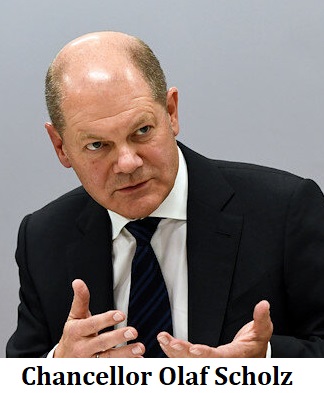
The inflation rate is being driven mostly by energy costs which are more than 80% higher than last year.   However, each nation’s overall inflation rate is also driven by the amount of central bank spending they used during the COVID economic lockdowns.  The more any govt spent on subsidies, the more money they printed, the more they devalued their money and subsequently, the higher their current rate of inflation.

Germany is the largest economy in the European Union.  This level of inflation within Germany has major ramifications.

First, with this level of energy inflation Germany cannot afford to stop purchasing Russian energy products.  There’s no way for Germany to join or increase western sanctions against oil and gas they need to stay sufficient.  Germany is dependent on Russian energy.

Second, with Germany’s economy this vulnerable; and with Germany being so dependent on Russian energy; Germany will have to distance itself further from any Ukraine assistance.   In the background of western voices already being upset with Germany for not providing more support for Ukraine, their economic vulnerability explains their unwillingness.   The U.S. proxy war against Russia does not benefit Germany, at all.

Third, as a result of the first two points, Volodymyr Zelenskyy will be even more mad than he was yesterday.  Additionally, the German position makes Biden more vulnerable because it forces the U.S. to take a bigger public footprint on the entire operation.  This explains why the people in the background of the White House are saying Ron Klain needs to quickly extricate Biden from his unilateral focus on Ukraine.

If the White House doesn’t cut Zelenskyy loose soon, the anchor of fail Ukraine represents will further sink Biden.  Sooner or later the White House, Administrative Deep State, Dept of State and Intelligence apparatus along with the total foreign policy establishment and all the politicians who benefit financially from their use of Ukraine, are going to have to give up.

With countries like Germany needing to back away, it becomes harder for the Biden administration to retain the false front around NATO as a justification for their intervention and money laundering operations.

Additionally, if the French election goes to Le Pen on Sunday, well, katybar the door – because it’s complete and total game over…. Ukraine will be cut loose and someone from the CIA will assassinate Zelenskyy on the way out, leaving a note on the nightstand that says, “Putin did it.”

GERMANY – German annual producer price inflation topped 30% in March, the country’s Federal Statistics Office said on Wednesday. That’s its highest level since the agency began collecting data 73 years ago.

The biggest culprit? Energy prices, which rose nearly 84% from the same month last year. “Mainly responsible for the high rise of energy prices were the strong price increases of natural gas… which was [up] 144.8% on March 2021,” the statistics office said in a statement.

It is one of first signs of the huge impact Russia’s invasion of Ukraine is having on the German economy, Europe’s biggest. Producer prices rose by nearly 5% between February and March alone.

Consumers should brace themselves. Factory gate inflation feeds into retail prices, and shoppers can expect to spend more on everything from furniture to meat, according to Wednesday’s figures.

German consumer price inflation is already at a 41-year high, hitting 7.3% last month. Energy prices were the main contributor, up almost 40% from the previous month.  (read more)
March Retail Sales Report Shows Contraction in Non-Essential Consumer Spending


Posted originally on the conservative tree house on April 14, 2022 | sundance 

The U.S. Census Bureau {LINK} reports the March retail sales data {pdf LINK} showing a contraction in sales overall (excluding gasoline) and a massive contraction in on-line sales.  As we expected, we are seeing the continued demand side contraction for non-essential purchases.

First, when you review the data, keep in mind all of the statistics are based on dollars.  Currently the BLS calculates the rate of inflation at 8.5 percent year over year. So, when we look at retail sales figures, we must remember the items being sold cost more.  Any reported sales figures in a sector that do not exceed the inflation in that sector, indicates decline in units sold.

The top-line for March retail sales is 0.5% growth; however, the rate of inflation is 8.5%, so the amount of goods sold is substantially less than the 0.5% dollar increase would indicate.  Subtract the sales of gasoline (w/ massive price increases), and retail sales are negative (-0.3%) in March.  SEE TABLE-2

A good category to note the contraction in non-essential purchases is electronics and appliances.  Again, CORE inflation in that segment is around 6%, and yet total sales were only 3.3% higher, meaning less actual units sold.  Compared to 2021, electronics and appliance sales dropped 9.7%.

Showing how much people are pinched, gasoline prices are around 60% higher than this time last year, yet gas station sales only increased by 8.9%.  This means people are buying a lot less fuel at much higher prices.  People have shifted their transportation habits because gas costs so much.

Two more very interesting notes:

Food and beverage stores only reflected a 1.0% increase in sales, amid massive inflation in that sector.  People are buying less food at higher prices.  The year-over-year rate of retail sales increase for supermarkets is 8.4%, however, prices in the grocery store are well beyond 20%.  Again, food prices are changing shopping habits.   You can see the same trend in Health and Beauty Care products.  Consumers are being thrifty and prioritizing their expenses away from non-essentials.

Secondly, perhaps the most obvious shift in consumer spending is noted in on-line (nonstore) retailers.  March retail sales dropped 6.4 percent for on-line shoppers, again as a consequence of much higher on-line prices and some product unavailability.

The bottom line of the Retail Sales report is not unfamiliar to us.  What we are seeing is a lessening in overall consumer spending, as the costs for food, fuel, energy and housing have skyrocketed.   The demand for non-essential purchases is what we would naturally expect to see amid a nation having to make tough purchasing decisions based on inflation.

The economic policy of the people behind Joe Biden is catastrophic, and it appears to be a feature not a flaw.

That said, wise people -including people here- know how to extend their budgets and make use of raw ingredients for multiple purposed meals.  Keep doing that as much as possible to offset the dramatic increases in price.  Look for sales, use coupons, multipurpose products and be smart with purchase decisions.

We can and will get through this together.

If you have tips for people to assist with lowering costs of everyday items, please feel free to share them in the comments section below.  We always find excellent ideas around us for small ways to save.

Coming from a family whose Tupperware® was a matching set of Cool Whip containers, I can tell you there are times when being frugal is a valued skillset.  I welcome all the great advice we share as a community, and I will not let these horrible government officials remove joy.

I’ve been broke more than most, but I ain’t never been poor.

I appreciate you.

Inflation Rate Jumps to 8.5 Percent as Energy, Food and Gasoline Prices Skyrocket


Posted originally on the conservative tree house on April 12, 2022 | Sundance 

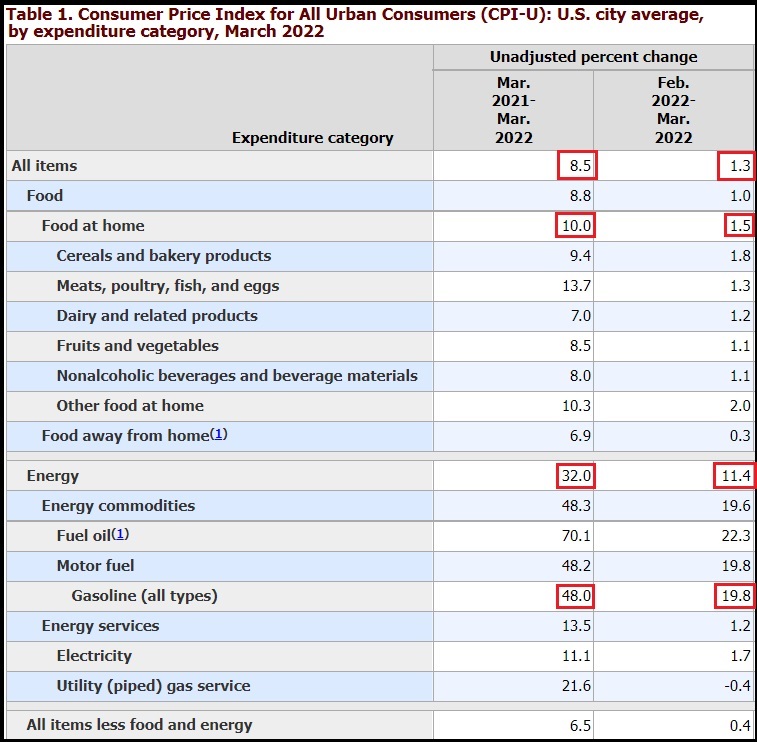
This is not going to be news to CTH readers and intellectually honest analysts.  The Bureau of Labor and Statistics has released the March consumer pricing data [DATA HERE] showing the recent surge in energy, gasoline and food costs that we have all felt.

The monthly increase of 1.3% brings the annual rate of inflation to 8.5 percent year-over-year.  However, the details tell the exact story we have been outlining for well over six months.   This is the second wave of inflation being recorded.  Grocery store prices (food at home), energy prices, and gasoline prices are all driving the inflation rate. [BLS Table 1]

Again, I modified Table-1 to take out the noise.  The data shows what we have felt for the past two months.  Working class families are feeling the pinch as their wages cannot keep pace with the increase in prices on products that are a priority.  Food, housing, gasoline, energy.

If we were using the old CPI method for analysis, current inflation would be well above 20%.

That said, there are issues also inherent and visible in the data for the non-food and energy segments, what I would call the durable goods side.  First, we are seeing the beginning of the durable good contraction getting quantified as we have previously discussed.   The prices for used vehicles, electronics, appliances and other non-critical durable goods are now flatlining, or even dropping in price.

Every indication within the economy indicates this is being caused by a demand contraction.  People are not purchasing durable goods because their disposable income is gone.  This lack of demand also shows up in wage rate suppression.  Despite high employment, wages are not rising – in part because there is excess productivity in the durable good economy.

You will note from Table-2 [available here] that food away from home, restaurant food, is not climbing as high as food at the grocery store (0.3% -vs- 1.5%).   Restaurants are trying to keep prices down and their profit margins are being eroded.  They are in a tough place, because if restaurants raise prices, they may lose customers who are already feeling pain in their checkbooks.  However, they cannot hold out much longer before raising prices, because the price increases are permanent.

The good news is the March data appears to quantify the apex of the second wave rate of inflation.  The rate of increase in food, fuel and energy will now start to moderate and slow down.  The prices may, likely will, keep going up, but they will go up less dramatically than they have in the past six months.  This price plateau will hopefully remain in place until late summer, that’s when the next harvest food costs will hit in Wave-3.

On the durable goods, what we will see now is a typical demand side issue.  Price increases for durable goods will quickly, if they are not already, be less connected to material costs and more connected to demand.   Obviously, the cost to manufacture, create, produce, transport and deliver durable goods is still experiencing upward pressure due to raw materials.  However, the demand variable will now enter more dominantly.

With wage growth meek and prices still rising on essentials like food, housing, energy and gasoline, demand for non-essential durable goods will drop. The demand decline should naturally put downward price pressure on appliances, electronics, used vehicles, etc.  Unfortunately, this also contracts the overall economy, creates unemployment, and indicates “stagflation.”

(MSM) – […] The consumer price index leaped 8.5% annually, the fastest pace since December 1981, the Labor Department said on Tuesday, likely cementing Federal Reserve plans for an unusually large half-point interest rate hike early next month. That increase is up from 7.9% in February and inflation now has notched new 40-year highs for five straight months. (more)

We will need to watch the service side closely now to see if consumers start to lessen travel, entertainment, and other service side expenses.

Protect your family.  Be frugal, wise and smart with expenses.  However, do not trouble yourself with dark imaginings.

If you are like most here, you have prepared yourself with commonsense actions and you are a doer who fixes problems, not a naysayer who sits around mulling over them.  Your family, kids and/or grandkids as well as your community can benefit from wise, albeit sometimes stern, counsel.  Stand strong, stand firm and stand resolute.

All of these challenges are simply that, challenges.  Work any problem as it arises, including for the kids.  And also remember, God is in charge, not you. So, listen to his instructions.  Listen to that instinct he buried within you.  Draw upon the strength that a loving God constantly provides.

Be a vessel for those who need hope.  Be a guiding light for those who feel distressed. Be cheerfully strong among everyone around you, and thankful for all the kindness you experience.  If you get stuck, start giving….

Ultimately, everything is a choice.  So, be the lighthouse, not the rocks.

P

An Easier Solution for Rupee-Ruble Payments


Armstrong Economics Blog/World Trade Re-Posted Mar 30, 2022 by Martin Armstrong

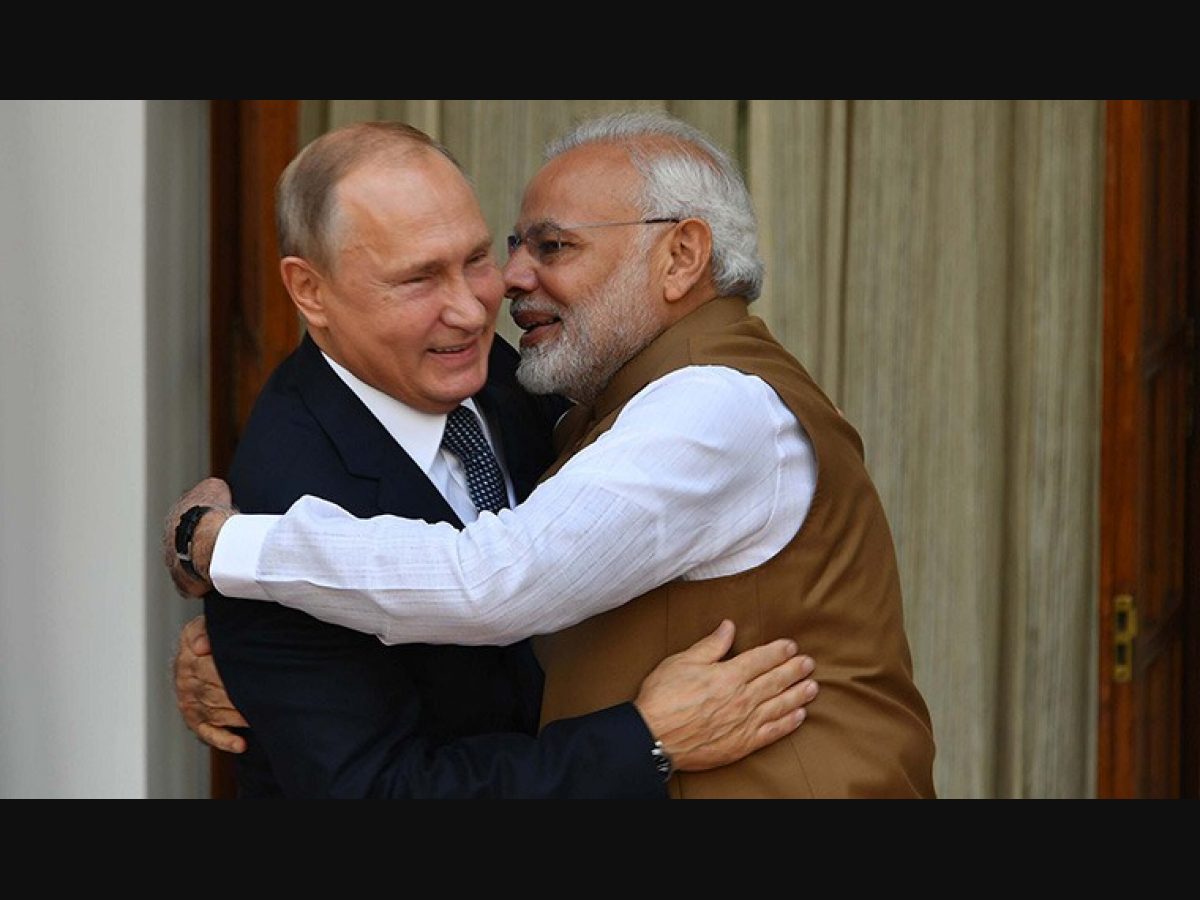
India imported $3.3 billion in goods to Russia in 2021, and the finance ministry has no plans to slow that source of revenue. India has not placed sanctions on Russia. The Federation of Indian Export Organizations (FIEO) announced that India will now switch to a SWIFT alternative that permits rupee-ruble payments between the two nations. This renders removing Russia from the SWIFT system a moot point for India as exporters may continue business as usual with their Russian partners. Furthermore, this will permit India to continue purchasing Russian energy at a time when other countries are shunning the resources they need the most.

In fact, India is hoping to profit off of the West’s ban on Russian exports. “Export to Russia is not much, only in agriculture and pharmacy products. Now that the whole of the West is banning Russia, there will be a lot of opportunities for Indian firms to enter Russia,” a member of the FIEO stated. Indian Oil Corp has begun purchasing more oil from Russia and there are talks of purchasing highly sought-after fertilizer from both Russia and Belarus.

India, the largest oil importer in the world, was only purchasing around 2% to 5% of their crude from Russia in recent years, but with the prospect of seeing a heavy discount, they are likely to turn to Russia instead of the Middle East. “Countries with oil self-sufficiency or those importing themselves from Russia cannot credibly advocate restrictive trading,” an Indian government official cited weeks ago.

So if there is an easy solution for rupee-ruble payments, we should expect to see an easy solution for yuan-ruble payments. These nations are looking at finances rather than politics and will profit as a result.

Blackrock CEO Advances Proposal for Global Digital Payment System and Digital Currency


Posted originally on the conservative tree house on March 24, 2022

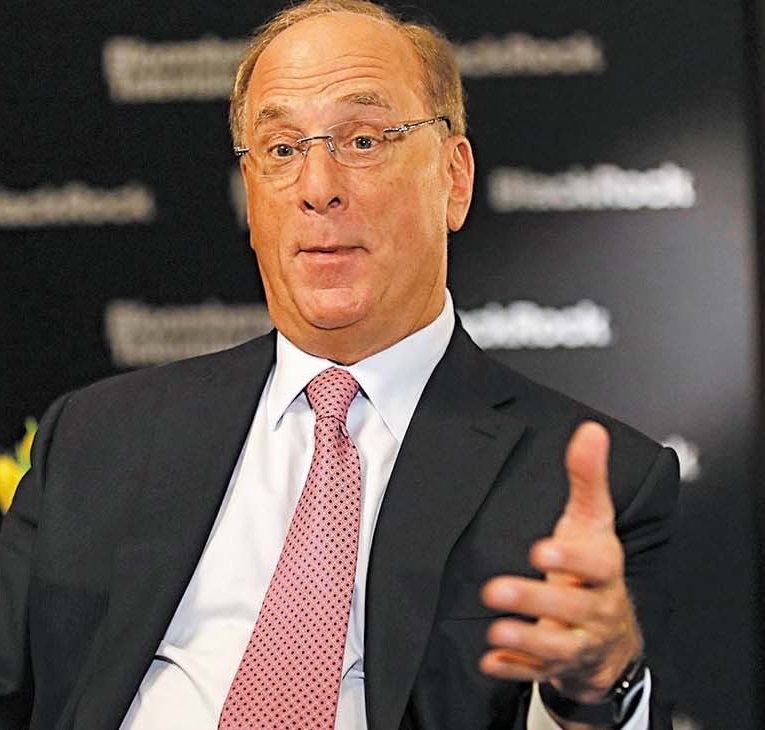
When CTH outlined the ‘Destination Handbasket’ framework {Go Deep}, we had no idea Blackrock CEO Larry Fink was essentially going to confirm the premise of our prediction.  Keep in mind, any digital currency can only work if there is a digital identity attributed to it – what some have called a digital passport which then creates a crypto wallet.

I have based the framework, of what appears to be over the horizon, on a set of inevitable geopolitical outcomes if the current path is continued.  The letter by Blackrock CEO Larry Fink [LINK] seems to affirm the strongest likelihood of a western-inspired digital currency eventually replacing the dollar.

NEW YORK, March 24 (Reuters) – BlackRock Inc’s (BLK.N) chief executive, Larry Fink, said on Thursday that the Russia-Ukraine war could end up accelerating digital currencies as a tool to settle international transactions, as the conflict upends the globalization drive of the last three decades.

In a letter to the shareholders of the world’s largest asset manager, Fink said the war will push countries to reassess currency dependencies, and that BlackRock was studying digital currencies and stablecoins due to increased client interest.

“A global digital payment system, thoughtfully designed, can enhance the settlement of international transactions while reducing the risk of money laundering and corruption”, he said.

[…] In the letter on Thursday, the chairman and CEO of the $10 trillion asset manager said the Russia-Ukraine crisis had put an end to the globalization forces at work over the past 30 years.

[…] “While companies’ and consumers’ balance sheets are strong today, giving them more of a cushion to weather these difficulties, a large-scale reorientation of supply chains will inherently be inflationary,” said Fink.

He said central banks were dealing with a dilemma they had not faced in decades, having to choose between living with high inflation or slowing economic activity to contain price pressures.  (read more)

You see that problem, that “dilemma” Fink mentions in the last paragraph above.  That is what we have been talking about on these pages for more than two years.   It is a dilemma western government created when they all joined together and followed the exact same financial path during the pandemic.

When western governments used the justification of the global pandemic to shut down their economies, enforce lockdowns and all of the subsequent rules, restrictions and economic pains as a direct result of those decisions, they put us on a crisis path that was always going to bring us to this “dilemma.”  Quite frankly, I do not see that unity of action as accidental, nor do I see it as organic.

All of the western leaders followed the same monetary and financial policy that was being advanced by the World Economic Forum.  They all spent like crazy, and provided tens-of-trillions in bailouts, subsidies and cash payments to cover the economic losses created by their COVID lockdowns.  They all did exactly the same thing, and that collective action is why we have ‘global inflation.’

Perversely, while inflation crushes the working class, global inflation works to their benefit by lowering the cost of the debt the politicians created, which the central bands and federal reserve facilitated.  We the citizens are suffering under inflation, but the governments that created the inflation actually benefit from it.

I will say with great deliberateness, these western governments want inflation.  Sure, it provides a political challenge for those who need to get reelected by voters, but in the bigger of big pictures, they need inflation.  Think about it in very simple terms.  If they did not want inflation, those same central banks and federal reserve policy makers would have raised interest rates six to eight months ago.

None of what is happening in supply chains and inflation is a surprise to them; they might pretend not to know, but these are not stupid people.  This is by design.  Media covers for them because, well, I’ll accept the PR firms for the regimes are idiots. However, the people who constructed these policies to take advantage of COVID-19 are not dummies.  They knew what all that intervention, manipulation and govt spending would lead to.

Where we are going now is a self-fulfilling prophecy, a destination that is a result of specific action the guided policymakers have taken.

Yes, in hindsight, all of it does seem planned to a long-term eventual conclusion.  However, I’m not going to make that specific affirmation just yet; there are still strong elements of ‘not letting a crisis go to waste’ as the leading driver.  Did these governing bodies create the underlying crisis?  We can debate that, but the point is essentially moot.  We are where we are.

The vaccination protocol created the Vax-Passport.  That has opened the door to the digital identity, “digital id.”   Any government created digital currency is going to need a digital id from the outset.

There are a lot of people asking where this is going, and what can be done to stop it.  I’m pretty certain we have accurately identified “Where This is Going,” and I’m a lot more confident now about that aspect than I was even just 24 hours ago.  However, knowing that, now we need to look closer at what they would do to stop us from disrupting it.

Canadian Liberal Triggered By The Flag Hatred Inspired By Trudeau


Posted originally bt HodgeTwins  on Rumble on February 19, 2022 27,899 Views

Canadian Parliament Protest Schwab, Trudeau, & WEF


Armstrong Economics Blog/Tyranny Re-Posted Feb 20, 2022 by Martin Armstrong

The Canadian Parliament shuts down probably the most important question concerning treason against the Canadian people. Stating that Schwab has bragged about infiltrating the Canadian government and naming those involved with Schwab after he has openly bragged about this accomplishment, Parliament shut down the question to make sure nobody would answer.

Then the notorious corrupt Liberal MP had the open audacity to claim this is misinformation when it is openly published even at Harvard University, one must wonder what are his connections and how much has he received in gifts, political donations, and favored status from bankers to block any such questions.

These people have betrayed their own country. Schwab’s agenda to eliminate even paper currency was to take place by 2024. But COVID is backfiring which has resulted in bringing this forward to 2023 just after the US elections.

This is the image of Canada merging from the outside. Even Archbishop Carlo Maria Viganò has come out in support of the Truckers.

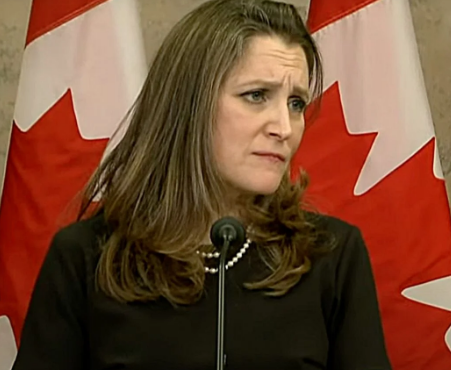
Schwab was not kidding and it was not the misinformation. The Emergency Act will become permanent in Canada. Deputy Prime Minister Chrystia Freeland intends to make permanent the invasive financial surveillance system introduced as part of the “Emergencies Act” to absolutely destroy and crush the civil liberties protests and to be able to defund all opposition. Freeland is also a Young Global Leader graduate who is also loyal to Schwab. They have been indoctrinated with an authoritarian view of powers and Canada is to have its sovereignty surrendered to Schwab’s global vision. She declared:

“As of today, all crowdfunding platforms, and the payment service providers they use, must register with FINTRAC and must report large and suspicious transactions to FINTRAC (Financial Transactions and Reports Analysis Centre of Canada).” Freeland added: “This will help mitigate the risk that these platforms receive illicit funds; increase the quality and quantity of intelligence received by FINTRAC; and make more information available to support investigations by law enforcement into these illegal blockades.”

“This is about following the money. This is about stopping the financing of these illegal blockades. We are today serving notice, if your truck is being used in these illegal blockades your corporate accounts will be frozen.”

Trudeau has called in the police and they are to attack the protesters with brutal force. Leaks of communications have shown that the RCMP currently in Ottawa is to assist in the crackdown on peaceful protesters allegedly brag about using brutal force in a leaked group chat according to Rebel News. He has also called in police from Quebec who will defend him against the English-speaking truckers. This was Schwab’s and Canada’s Tiananmen Square. Canada may now have only until the 1st week of April.

This is a battle to the death for Schwab’s Great Reset. Canada MUST be driven into submission and this is critical to the ideas of Schwab and his vision for the world.

Schwab has promised these politicians dictatorial powers with the end of all democratic processes. Schwab is pushing the design of Europe upon the rest of the world whereby the head of state NEVER stands for election, neither does the European Commission which makes all laws and to fool the people that they are still relevant, they get to vote for an MP who has no power to make or overrule laws crafted by the Commission. This is the system they intend to impose of the world and politicians will NEVER again need to worry about being voted out of office. This is why governments are now protecting Schwab. He has promised them a world void of any power of the people to vote them out of power. What Schwab has not considered is that he is boxing in people to the point the only solution will be a revolution.

New Interview: Down the Rabbit Hole to Dow 65,000


Armstrong Economics Blog/Armstrong in the Media Re-Posted Feb 4, 2022 by Martin Armstrong

Click to watch Martin Armstrong’s latest interview with the Financial Survival Network.

Armstrong Interview on Highwire Today


Armstrong Economics Blog/Armstrong in the Media Re-Posted Feb 3, 2022 by Martin Armstrong

WE ARE WINNING

UAE to Introduce Corporate Taxes


Armstrong Economics Blog/The Hunt for Taxes Re-Posted Feb 1, 2022 by Martin Armstrong

Tax havens are in short supply. The United Arab Emirates (UAE) recently announced that it will implement a new federal corporate tax on business profits. Part of what attracted business to the UAE was its tax-free status and the move could hurt new money from migrating to the UAE. The new tax will go into effect on June 1, 2023.

“The UAE corporate tax regime will be amongst the most competitive in the world,” the Finance Ministry stated on Monday. The tax rate will stand at 9% for profits exceeding 375,000 United Arab Emirates dirhams ($102,000), while businesses earning under that amount will not be taxed “to support small businesses and startups.” A 9% rate is still certainly competitive compared to other nations.

The UAE will not implement a tax on personal income or capital gains from real estate and equities. Free zone businesses will be permitted to exist in the country, so long as they meet all the necessary requirements. Some say the move will help the UAE move away from its reliance on oil exportation as it diversifies into trade, business, and tourism. Countries that solely rely on their natural resources have trouble maintaining long-term economic growth. However, reliance on taxation is never sustainable as governments continue to spend and whatever tax is in place will eventually rise.