Hurricane Ian Recovery Update, Day 3


Posted originally in the conservative tree house on October 2, 2022 | Sundance

First things first.  We are blessed by a loving God who continues to provide the greatest nourishment we need, food for the soul.  You’ll find it all around, including in the gift of a temperature irrelevant shower, the first in five days, and a belly full of beef stew, Dinty Moore of course. 🙂  Finest gourmet dining in years. Perfect.

Airborne search and rescue efforts continue with particular emphasis on the barrier islands and back bay region.  If you haven’t watched the video of U.S. Coast Guard MH-65 Dolphin aircrew from Airstation Miami, you should [See Here].  It’s a great example of the hundreds of rescue flights taking place all day, and the kid who used the mirror to signal the flight crew and protect his grandma is, well, sharp.

Again, if you evacuated the coastal region of Southwest Florida (SWFL), stay put where you are.  There is no power and no water system; literally nothing to sustain you that you do not bring yourself.  If you do enter this region to check on your property, do so with the intent to leave again because there’s no current timeline for any restoration. A strict sundown curfew remains in effect throughout.

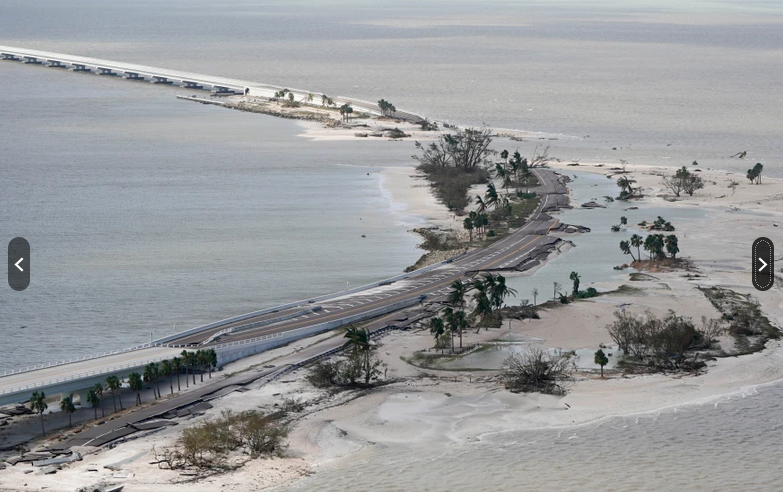
Rescue ferry service from Sanibel Island continues for those who can make it to the Western side of the destroyed causeway.  The entire island is being evacuated leaving only the national guard in place to provide security.  No reasonable estimate for any recovery.  Officials need everyone off the island.  Earliest estimates for repair of the major damaged infrastructure are being made in terms of years.

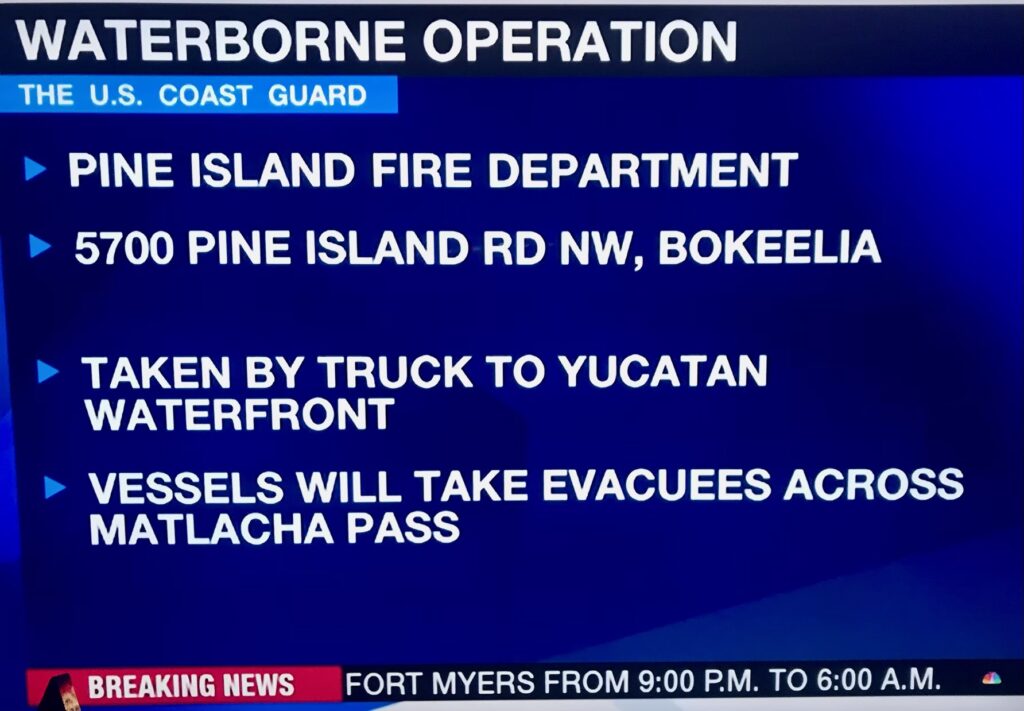
Air and boat rescue from Matlacha and Pine Island continues.  Like Sanibel Island the bridges are gone.  State and county law enforcement resources are too stressed to operate in a location now inaccessible by road.  Mandatory evacuations have been ordered.  See Graphic for how to leave Pine Island today (Sunday):

Residents are asked to make their way to the location above and national guard trucks will take you to Coast Guard boats.  Evacuees will leave their vehicles at the pick-up point.  This is a mandatory island evacuation until interim recovery efforts can take place to make returning the island possible.  My heart goes out to the people forced to leave their homes, some, likely many, with no place to go after the shelter stay.

It’s a mess.  Pine Island is mostly salty good people with working callouses and a mix of retirees who just wanted to live quietly in an old Florida location.  Now this assembly of people need to figure out where to live with no available housing for 50+ miles.   According to local media every hotel and motel within 50 miles of the western impact zone are full of evacuees.   Long term, I don’t think anyone knows what this is going to look like.

I’m not going to repeat the prior post, but Florida Governor Ron DeSantis is rightly calling out the Lee County Electrical Cooperative (LCEC) for not seeking more help to deal with the catastrophic situation surrounding full infrastructure collapse of the power grid.  There is almost no energy recovery effort taking place in the western impact zone and thousands of homes have fallen powerlines atop them, around them, or blocking the roads in front of them.

More people are starting to notice the absence of LCEC recovery efforts. It’s good that Governor DeSantis called them to task personally and publicly.

Recovery operations continue with a street-by-street debris removal process.  Once most debris are dealt with, the residents who remain can start to organize life in semi-livable structures albeit without electricity or potable running water.

Thankfully many people evacuated the coastal region including Cape Coral.  The remaining population needing resources is less than normal. Those who remain are traveling up to 30+ miles for gasoline for generators.  Utility restoration is being discussed in terms of multiple weeks.  Most businesses are closed.  Reality is starting to settle in, and tough decisions are being made.

If you lift your head up from the chainsaw buzz and listen, just about every conversation is about the void of longer-term information that would help people make decisions about their next move.  It’s like tens of thousands of people in a holding pattern trying to figure out what comes next.  The current status is short-term sustainable for most, day-by-day, after all inherently people are resilient.  However, two weeks out or six weeks out, no one can see that far.

Naples is in full restoration mode.  Bonita Springs and Fort Myers are not far behind.  The inland areas are doing similar yeoman’s work getting some semblance of life back to a sustainable place, including their ability to earn a living.  But travel west into Cape Coral, a town of approximately 230,000 residents, and it’s an entirely different situation.

The barrier islands are being forcibly evacuated.  The western or coastal areas of southwest Florida are hammered in every imaginable way.  Everything, including the ability to restore, rebuild, operate a business or work in the region, is contingent upon the return of utilities like power and water.   Right now, those are questions without answers.  Hence, the holding pattern for tens of thousands.

Amid all of the uncertainty the resiliency of the ordinary person or family is on full display.  Neighbors helping neighbors, generators being shared in four-to-six-hour increments to allow multiple homes to maintain a fridge, that sort of thing.  Fellowship and connections deepening.  Good stuff.

Gus is a 55-year-old air conditioning repair man.  But Gus cannot work without power, and Gus’s bosses will not put the 50+ employee workforce on the road.  Jesse is a 25-year-old barber, with no electricity at his shop, ergo no income.   Mac is a single 25-year-old auto mechanic living in a town without power to operate a business where he could work, and there’s no electricity or water at his house.  Juan is 35 with a lawncare service, a wife, kids and a trailer with a broken roof.

Gus’s kids and their spouses and kids are now under Gus’s roof sharing resources.  Jesse’s mom, sister and cousin have assembled at his home to do the same.  Mac couldn’t see a future, so he left for Georgia.  Juan is busy making money with his chainsaw and new fuel delivery service in lieu of lawncare customers, which is good because Juan is now covering the missing paycheck for his sister-in-law and her husband who just lost their work.   This is the reality for people putting one foot in front of the other.

For a few moments today the elephant looked bigger, but immediately I noticed more people are biting it now.

I hope that civic and community leaders, elected or installed, will pause – look around- and cherish what they are seeing in We The People.

Those officials need to commit to be better stewards and work to deserve their role in whatever capacity they hold.  The working middle-class are the backbone of every community – and this nation is full of grit and determination.

Love to all.  Steadfast,

Sundance

Profits Over People, Florida Governor DeSantis Calls Out Lee County Electric Cooperative for Intentionally Delaying Power Restoration, Here is the Backstory


Posted originally on the conservative tree house on October 1, 2022 | Sundance

October 1, 2022 | Sundance | 64 Comments

The Lee County Electric Cooperative (LCEC) provides power utility coverage to approximately 200,000 homes in Sanibel, Cape Coral and Pine Island: three of the hardest hit western zone regions in the Hurricane Ian disaster.  Hundreds of people have asked me in my extensive travels why there are zero power trucks visible in Cape Coral working on the power grid, downed power lines and broken infrastructure.  Now, it looks like we have the answer.

What LCEC is intentionally doing is jaw-dropping.  In all my years of hurricane recovery, there has never –NEVER– been a more crystal-clear example of a decision to put profits over people.  LCEC is literally taking advantage of tens of thousands of vulnerable residents. Tonight, Florida Governor Ron DeSantis is calling them out [LINK].  I will explain what is happening, but first check out the DeSantis message:

TALLAHASSEE, Fla. — Today, after receiving a briefing at the State Emergency Operations Center on current efforts to restore power in Southwest Florida, Governor DeSantis called on the Lee County Electric Cooperative (LCEC) to accept additional mutual aid to expedite power restoration to the residents of Cape Coral, North Fort Myers, Sanibel and Pine Island.

At this time, Florida Power and Light (FPL) has restored power to more than 45% of their accounts in Lee County, while LCEC has only restored power to 9% of their accounts (18,000 out of 183,000 customers). To assist in restoration efforts, the Florida Electrical Cooperatives Association has readied resources from its members around the state that are available to deploy on mutual aid.

Mutual aid would allow the LCEC to expedite power restoration, especially to Cape Coral and North Fort Myers as residents return to their homes and begin the road to recovery. Power restoration in these areas is also essential to resume the full use of essential services such as health care facilities, operation of schools and ensure access to running water. (link)

Please share this part far and wide.  You know me to call the baby ugly when warranted; this is one such time. People in the impact zone need to know what is happening.

The Lee County Electric Cooperative (LCEC) purchases energy from Florida Power and Light (FP&L).  LCEC then passes along the energy cost to the Sanibel, Cape Coral and Pine Island residents in the form of traditional electricity billing.

Most of the energy provided by FP&L to southwest Florida comes from natural gas used to generate electricity.  Natural gas prices have skyrocketed.  Because natural gas has spiked in price so quickly; and because there is a natural lag in billing customers before payment is due; LCEC was temporarily billing people less than the current cost of the energy they were purchasing from FP&L.

The price billed to LCEC customers was short-term lower than the price LCEC was paying for the energy.  This resulted in a tens of million-dollar losses for LCEC. [NOTE: this is what is happening in Europe and why the EU central bank is subsidizing free short-term bridge loans to smaller electricity providers]

Rather than add another surcharge to the LCEC customers to make up the difference, LCEC is now using Hurricane Ian as an opportunity to true-up their costs and balance the deficit.

As long as zero electricity is being purchased from FP&L; and as long as customers pay their electricity bills by October 9th (due date), LCEC will have a substantive period of time where their receipts (from customers) exceed their purchases (from FP&L).   With inbound income and no outbound expenses, the previous financial deficit is removed.

How does LCEC stop purchasing energy?….  Simple, they just don’t rebuild the power grind, thereby delaying the need for payments to FP&L.

This is why there is almost ZERO effort to restore power in Cape Coral, Pine Island and North Fort Myers and mutual aid providers asking why?

LCEC leadership will likely try to hide behind plausible deniability due to the severity of the damage combined with their “non-profit” status.  But make no mistake, we are five days post event and LCEC is not even removing downed power poles and power lines.  The mutual aid utility companies are standing there wondering why LCEC is not asking for help.  The slow pace is akin to doing almost nothing.

This is a top-level decision by LCEC leadership to put operational profit over the urgent power restoration need of their customers.  I guarantee you Florida Governor Ron DeSantis knows exactly what LCEC is doing, and why LCEC is doing it.  Unfortunately, DeSantis is being politically diplomatic in sending a shot across their bow rather than directly explain to people what the true motive is behind LCEC’s decision.

Those of you I have met in recent recovery efforts, there’s the answer to your question.  LCEC is not making any effort to restore power because LCEC doesn’t want to restore power; at least not yet.  A few opportunistic weeks without having to purchase energy covers the prior financial deficit.  Yes, Hurricane Ian has provided them an opportunity to recover previous financial losses.

Angry?  You bet I’m angry.  Now imagine if 200,000 people found out what is really going on.

This is the single most egregious example of putting profits over people in all my years of Hurricane recovery and relief.   LCEC is literally blocking recovery efforts because there is a financial reason not to recover.  Meanwhile, thousands of people are suffering, businesses are closed and losing money. Worse still food, fuel, healthcare services and water recovery (so much more) are being blocked by this LCEC decision.

Ron DeSantis was far too kind in his approach…. screw the donations and politics of Big Energy.  Put Attorney General Ashley Moody on it now or use the power of the Florida Governor’s Office to take control over the utility provider.

Do not give Charlie Crist this opening.  Go full wolverine, now.

That said, let’s watch and see how LCEC responds to the forceful nudge.

Hurricane Ian Recovery Update Day 2


Posted originally on the conservative tree house on September 30, 2022 | Sundance

Hopefully this hotspot holds up.  First things first, we are surrounded by the grace of a loving God, and we are thankful.

To begin updating day #2 on the ground in Southwest Florida (SWFL) allow me to please remind everyone to take these storms seriously and take all the advanced preparations needed to protect yourself and your family.  You can never overprepare.   Additionally, if you did evacuate from the area, stay where you are.  There’s no need to come back into the recovery zone and there are virtually no utilities (electricity, water) operating in most areas.

Working today with a search and recovery team from Fort Walton Beach, Florida, there are multiple agencies from around the Southeast sending resources.  We are incredibly grateful, and every resource is a blessing.

Day 2, while efforts continue, there are parts of the barrier islands (Sanibel, Pine Island, Matlacha and Fort Myers Beach) that are still inaccessible by anything other than air.  There is an evacuation ferry operation running every 90 minutes from Sanibel (West side of where causeway used to be) to pull people from the island. 10am – 5pm

Matlacha (North end of Pine Island) is also a boat rescue operation after the bridge failed.

Incredibly, the historic Sanibel Lighthouse did survive the storm albeit with damage.  The lightkeepers house is gone as are all the buildings around the Southern tip of the Island, but the Lighthouse is standing.  There’s a metaphor and a message in that outcome.

Unfortunately, there are many people missing, and frantic out of state families looking for their loved ones.  Hopefully, those missing were just last-minute evacuees that don’t know people are looking for them, and/or people with no way to communicate their status.  Local radio stations are broadcasting names and addresses of missing persons in the hope that people can call in with information.  This is why a communication plan is so critical for anyone in an extreme weather impact zone.

Search and rescue units are still working throughout Southwest Florida by air, boat and house-to-house searches.  Some power and some water services have returned to the Eastern side of the impact zone, but as you go west (toward the coast) the power and water services are in much worse shape.  [Tip: This is why garbage cans full of water are a part of the proactive planning.  You can hydrate with bottled water, but you cannot clean without a stored potable water supply.]

The origination and transfer stations for electricity have been hit hard.  There is no reason for linemen and pole diggers to be in the western zones because there is no infrastructure to trigger the origination of electricity.  That’s why power will return in a systematic way from East (inland) to West (coastal).  The thousands of power company employees are working on eastern impact areas where their efforts can restore power, while the longer engineering work of rebuilding transfer stations is happening in the west.  Power will likely be out for several weeks in multiple areas.

Debris removal is about 50% throughout the zone.  By ‘removal‘ I mean temporarily moved, shoved, pulled, cut or sawed out of the way.  Again, the further West the more debris remains.  Main roads are cleared, but local roads are blocked throughout.  Stay close to home if you don’t need to travel or secure critical supplies.

Some food retailers have begun limited operation to open for the community.  This will continue improving each day.  Publix Supermarkets have generators running primary store functions.

There are nighttime curfews in affect throughout the Southwest Florida impact zone.

Fuel is a major problem, in part driven by the absence of power.  A gas station without power is just a big underground gas tank.  Most recovery teams are traveling with their own fuel supply.

Unfortunately, the heavy rains from north Florida are still flowing downstream into rivers and the flooding inland continues.  The Peace River is expected to rise to a historic 24 ft above flood level; the previous record was just over 20 ft.  Additionally, the current Myakka River flood has caused I-75 to close from North Port to Englewood.

Evacuations along the increasingly flooded inland waterways continue.  Ian will be known as a storm carrying the deadly combination of wind and water as a storm event.  Wind damage extreme, storm surge extreme, and river flooding (rain) extreme.

Janet, a 40-year-old single mom in a wheelchair, who just moved to SWFL a week ago, stranded on the second floor of her apartment building without power and without a community of friends to call for assistance.  Her story is typical.  Delivering food and supplies to people like Janet is a relief service anyone can handle.  Radio networks are doing a great job using their format to organize local person to person assistance.  Listeners are responding to each request; it is inspiring to see/hear the community pulling together.   Fellowship lives here.

Alice, a 75-year-old woman without cash, and the only gas station she can find will only accept cash.  Within seconds she is in line at the station with cash in her hand.  This is what people do.  Define living and you will find the light left by these comfortably invisible community stars.  These are ordinary angels that defeat the looters by orders of magnitude.

There are many Janet’s and Alice’s right now, and fortunately there are overwhelming numbers of people responding to each call.

Yes, this is the fellowship part.  Sweaty, perhaps a little scruffy, often accompanied by the smell of fuel-oil mix in the hug, but when you remove all class distinctions the remarkable human spirit that surfaces makes the back pain and callouses insignificant.

Electricity is nice, potable water even better, but perhaps fellowship is the most important part of the restoration process.  At least, I think it is.

The desperation and worry on that unknown face tell me that you need my spot in line; here, take it.

I am not alone.

Every person reading this knows exactly what I am talking about without me even writing another word.

Life.

The best part.

Many people ponder the great universal questions of “why” these disaster events happen.  I don’t have any idea.

Perhaps it’s just the way I’m wired, but I can only look at the immediate task at hand.  Usually, I’m too busy focused on making the next the two feet of my immediate surroundings better, because looking at the hundreds of miles scares me.  If I can make these next two feet in front of me better, then I will have accomplished something; and then – another two – and another two.  Perhaps that’s my goofy way to deal with it.

However, when I think about fellowship and my community – perhaps we shouldn’t wait for hurricanes.

Love to all,

Sundance

Hurricane Ian Hits South Carolina


Posted originally on the conservative tree house on September 30, 2022 | Menagerie

For all our South Carolina Treepers, our prayers are with you. We hope all in the path of Ian are able to weather the storm well and safely. As you are able, check in and let us all know you guys are okay.

According to ABC news, Ian made landfall just after 2 p.m. today as a Cat 1 hurricane with winds at 85 mph.

Hello from Florida & Fake News


Armstrong Economics Blog/Opinion Re-Posted Sep 29, 2022 by Martin Armstrong

Thank you for all the emails of concern. I am fine. My dog is fine. Never lost power and nothing damaged. All of the newscasters go to the worst possible spots they can find and just stay there showing the very same backdrop all the time. The problem with such sensational broadcasting is that the vast majority of people no longer trust the media so when they play up a storm, so many people no longer trust the forecasting and do not evacuate.

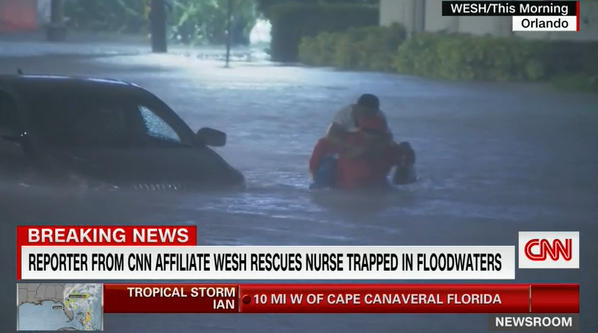
This was Anderson Cooper standing in waist deep water while the camera crew was on high ground from 10 years ago. This is standard. I see the same reporter standing in the same spot on FOX with boats piled up. They never move from the most dramatic spots so you never see the whole region. It is no longer about reporting news. It is also about drama.

The people in South-West Florida were hard hit. By Tampa, the wind blew the water out of the bay, when it came back, it was just normal. No 10 ft wall of rushing water.

I really wish all the news channels returned to reporting the news instead of you will die in 3 hours so tune in so we can tell you the minute you will die so you can make your last phone call.

It has gotten to the point that you just do not know what to believe any more. That is causing people to lose their lives because they perhaps really should have evacuated, but did not because the last time the news dramatized the event then nothing happened.

I suffered no flooding, no power outage. From about Tampa northward on the West Coast, we were generally untouched. My cousin moved down here from New York, and he too was perfectly fine and never lost power.

Where Ian made landfall, that is the place people were hard hit. Inland, low lying levels were flooded because of the heavy rain. It would be nice if ALL the news channels realize that they have a responsibility to report a balanced view, not fixed on one spot that is the worst possible place to dramatize the news to get viewers. That is what is costing lives – crying wolf as they say. Just report the truth. They are costing lives with this dramatization. The last one CNN reported there would be a huge 10 to 15 wave, that amounted to 1.5 feet. So you stop listening after a while.

Hurricane Ian Recovery Update


Posted originally on the conservative tree house on September 29, 2022 | Sundance 

I don’t even know where to begin.  Hopefully this hotspot holds up long enough to transmit.  Thanks Ad Rem for earlier.

First things first, myself and family are okay.  We are blessed and fortunate.  Thank you for all your thoughts, prayers and well wishes.

For those who are familiar with Hurricanes, Ian was unique; painfully slow and painfully unique.  However, it had similarities to three previous storms, Frances (location), Michael (intensity) and Andrew (aftermath).   What made Ian very unique was the duration.

Normally there is 1 hour scary, 1 hour hell, 1 hour scary.  Soup to nuts three to four hours.   For Ian, that was just the first half.  With a start time around 1:30pm and a finish time around 9:30pm this one was brutal.  That’s why so much infrastructure failure.

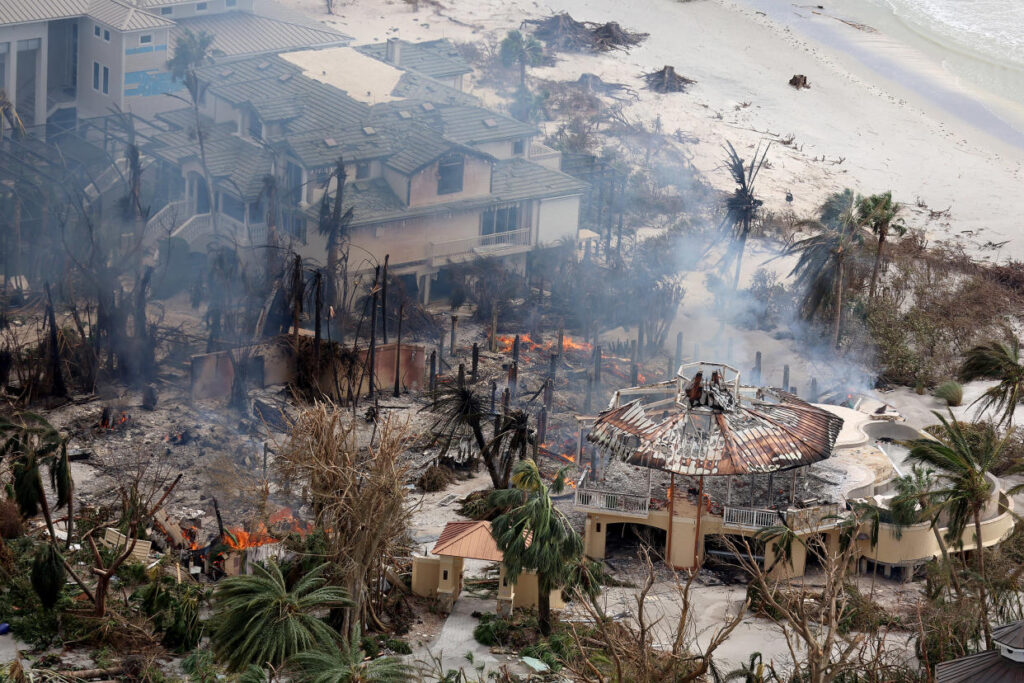
When I saw the search and rescue flight path overhead at daybreak this morning, I knew the barrier Islands were catastrophic.  Indeed, Fort Myers beach, Sanibel Island, Upper Captiva and Pine Island all suffered topography changing events.   People will reevaluate living on barrier islands.

The Sanibel Causeway is destroyed.  The three spans still exist, but the spoil islands which held the road are totally wrecked.  No way on/off the island by vehicle.  The Pine Island bridge also failed.  The only way to Sanibel or Pine Island is by boat.  The dozens of air national guard flights today were all heading to those locations.  Regional Southwest Airport (RSW) remains closed except for rescue flights.

Several major piers are also gone.  Fort Myers Beach, Cape Coral, Pine Island.  At this moment 98% of Lee County, Florida is without power and there are major utility infrastructure failures.  Electric sub stations completely wiped out.  Utility water pumping stations also ruptured and failed.  Cell phone towers also wiped out.

The entire shrimp boat fleet docked at FM Beach was destroyed.  Boats now sit on houses with trailers on top of the boats and mobile homes from somewhere on top of the houses, boats and trailers.

Most people are shell-shocked at the scale of the damage from this storm.  Indeed, I doubt there is a community in Southwest Florida that not massively effected.  Marco Island, Naples, Bonita Springs, Fort Myers, Cape Coral, Punta Gorda, Port Charlotte and all of the inland communities all feel the impact from a major hurricane evdident.

Locally, it’s even more stunning.  We haven’t even left the neighborhood today and couldn’t even if we wanted to.  Roads are blocked by trees and debris.  When you think of debris, normally we think about small bits of stuff the size of a shopping cart or smaller.  Ian moved debris weighing tons.  Chunks of concrete from who-knows-where can be found randomly all over.  Concrete slabs from collapsed seawalls are blocks away from the water.

Every direction of wind was just as intense as the direction before it and we felt every direction.  As the front of Ian made debris, the backside then had ammunition for wind weapons of jaw-dropping scale.  The sounds of that “stuff” slamming into homes was just incredible.  Casa del Sundance has serious steel shutters with double drilled anchor bolts and several of my shutters were hit by something turning them into crash test discards.  Just, well and unreal amount of wind power.

Like many others, we had our roof compromise in the second half of the storm. Massive trees that withstood Charley and Irma were no match for Ian’s rage.   Thankfully, many people evacuated.  If you are one of those people, stay put.  Wait until after the weekend before making a decision to return home.  Heck, there ain’t no power or water anyway – and word on the street is no gas for miles.

Like hurricane Michael, this was a storm of total utility failure.  It could take weeks, depending on the neighborhood because the transfer and sub stations were hit hard.

Today was all about debris removal and that work will obviously continue.  It’s easy to be overwhelmed, but industrious people doing the next step, then the next, is the way to get it done.  How do you eat an elephant…..  One bite at a time.   Lots of bites to go.

As noted, the coastal areas took it worst. My gut tells me there are still places we have yet to hear about.

Another odd thing about this specific storm, an alarmingly fewer number of generators running.  Easily 75% fewer generators running in the aftermath around me.  Perhaps because the outcome was just too bad to try and inhabit while recovering; perhaps more evacuated this time; perhaps with the economy means fewer financial resources to try and cope.  Regardless of reason, the drop in the number of people running generators is odd.

Tomorrow, we continue to put a few more layers on those callouses.  After mostly securing the immediate homestead, we can now look to help others.   This is going to be one long recovery effort.

Thanks again for all the well wishes.  Love to all,

Sundance

For A Friend (and all who now suffer from Ian)


Posted originally on the conservative tree house on September 29, 2022 | Menagerie

For Sundance, who never fails to give thanks, in all circumstances. He has posted versions of this many times.

Posted in Uncategorized

Managing Expectations, Hurricane Ian 11pm Update – Now it is Time to Hunker Down


Posted originally on the conservative tree house on September 28, 2022 | Sundance

As many long-time readers will know, we do have a little bit more than average experience dealing with the aftermath of hurricanes. I am not an expert in the before part; you need to heed the local, very local, professionals who will guide you through any preparation, and neighborhood specific guidelines, for your immediate area.

But when it comes to the ‘after part’, well, as a long-time CERT recovery member perhaps I can guide you through the expectation and you might find some value.

Consider this little word salad a buffet. If you are new to Florida hurricanes, absorb what might be of value pass over anything else.

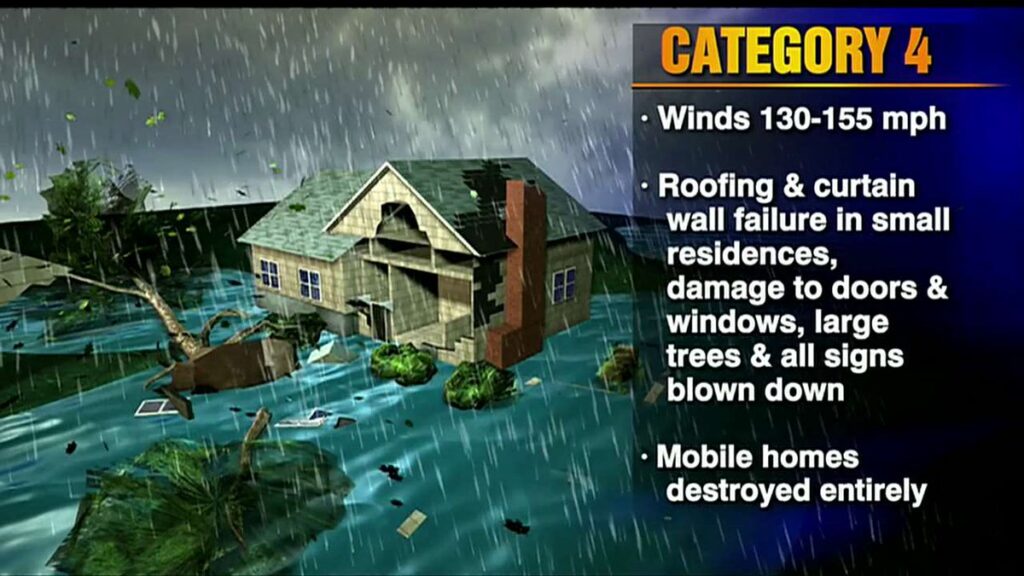
A category-4 storm can and will erase structures, buildings and landscape.

Hurricane Ian is similar to Hurricane Charley which impacted the SW coast of Florida in 2004, only a longer duration and therefore worse.  The coastal topography and barrier islands will likely change in the 40-mile-wide area of immediate impact.

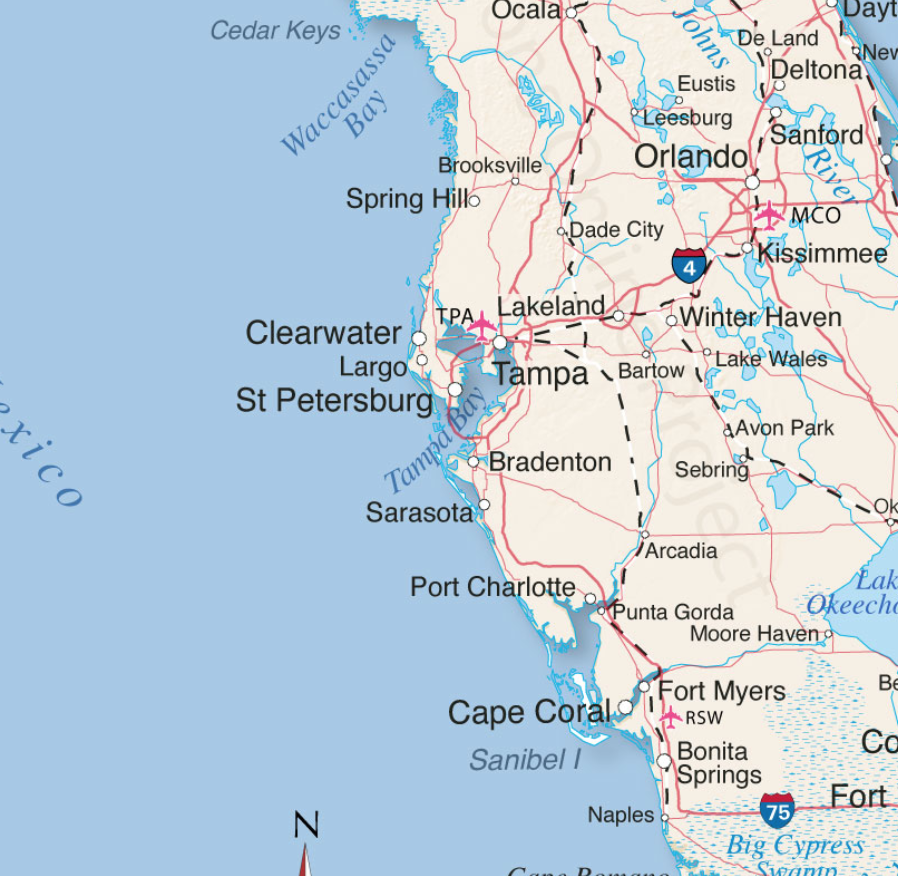
Sanibel Island, Bonita Beach, Fort Myers Beach, Captiva, Upper Captiva, Boca Grande, Pine Island, Cape Coral, Siesta Key, Longboat Key, Charlotte Harbor and Pine Island Sound could all be impacted.

There is the potential for 18+ hours of hurricane force winds and two tides with storm surges.  Total infrastructure failure should be anticipated, and it will take weeks for restoration. The coastal communities are the most vulnerable; however, the inland impact of the storm will continue unimpeded until the eyewall crosses onto land.

That means communities inland for roughly 50 miles could likely see consistent hurricane force winds for several hours. That scale of sustained wind energy will snap power poles and weaken reinforced concrete.

As the backside of the storm then reverses the energy direction, any already compromised structures will not withstand the additional pressure. In many cases the backside of the storm is worse than the front.  If you are inland, you too should prepare yourself for long duration of extensive wind damage followed by an extended power outage.

For those who are in the path of the storm, there comes a time when all options are removed, and you enter the “Hunkering Down” phase.  You’re there now.

Ian is forecast to approach the west coast of Florida as an extremely dangerous major hurricane. Hurricane-force winds extend outward up to 40 miles (65 km) from the center and tropical-storm-force winds extend outward up to 140 miles (220 km). (link)

Unfortunately, unlike Charley, this particular hurricane Ian will stick around for more than the 2+ hours of the 2004 storm event.  That brings a serious problem with coastal storm surge (two tidal cycles).  In its totality from initial impact through recovery this is going to be a long-duration event.

When the sustained winds reach around 45mph only the more dire of emergencies get an immediate response.   It is almost a guarantee that around the time emergency responders stop responding, too dangerous, you will lose power from the storm.  Do not expect the power to be turned back on until it is safe, in this example recovery will be delayed by the slow forward progress of the storm.

Hurricanes can be frightening; downright scary.  There’s nothing quite like going through a few to reset your outlook on just how Mother Nature can deliver a cleansing cycle to an entire geographic region.   The sounds are scary. Try to stay calm despite the nervousness.  Telephone and power poles, yes, even the concrete ones, can, and likely will, snap like toothpicks.

The ground in Southwest Florida is also completely saturated with heavy rains even before the storm began dumping water earlier on Monday.  Trees that previously withstood Irma and even Charley, could likely bend, uproot and break; the sounds are dramatic.

There’s a specific sound when you are inside a hurricane that you can never forget.  It isn’t a howl, it’s a roar.  It is very unique sound in depth and weight.  Yes, within a hurricane wind has weight.  Stay clear of windows and doors, and within an interior room of the house or apartment if possible.

That scary roar will sound like it will never quit, especially for this specific slow-moving hurricane.  It will stop, eventually; but at the time you are hunkering down, it doesn’t seem like it will ever end.  This is the part that makes people say they will never go through that again.  It is intensely unnerving.  Imagine being impacted by a tornado for a full day.

A hurricane wind is a constant and pure rage of wind that doesn’t ebb and flow like normal wind and storms.

Hurricane wind is heavy, it starts, builds and stays, sometimes for hours. This one is forecast to be the longest in my memory.  The wind is relentless, it just seems like it won’t let up.  And then, depending on Ian’s irrelevant opinion toward your insignificant presence, it will stop.

Judging by the forward speed being stated by professionals at the National Hurricane Center, the hurricane force wind will likely last around 18 hours before it stops.  Prepare your nerves as best you can for this.

Then silence.  No birds. No frogs. No crickets. No sound.

Nature goes mute.  It’s weird.

We have no idea how much ambient noise is around us, until it stops.

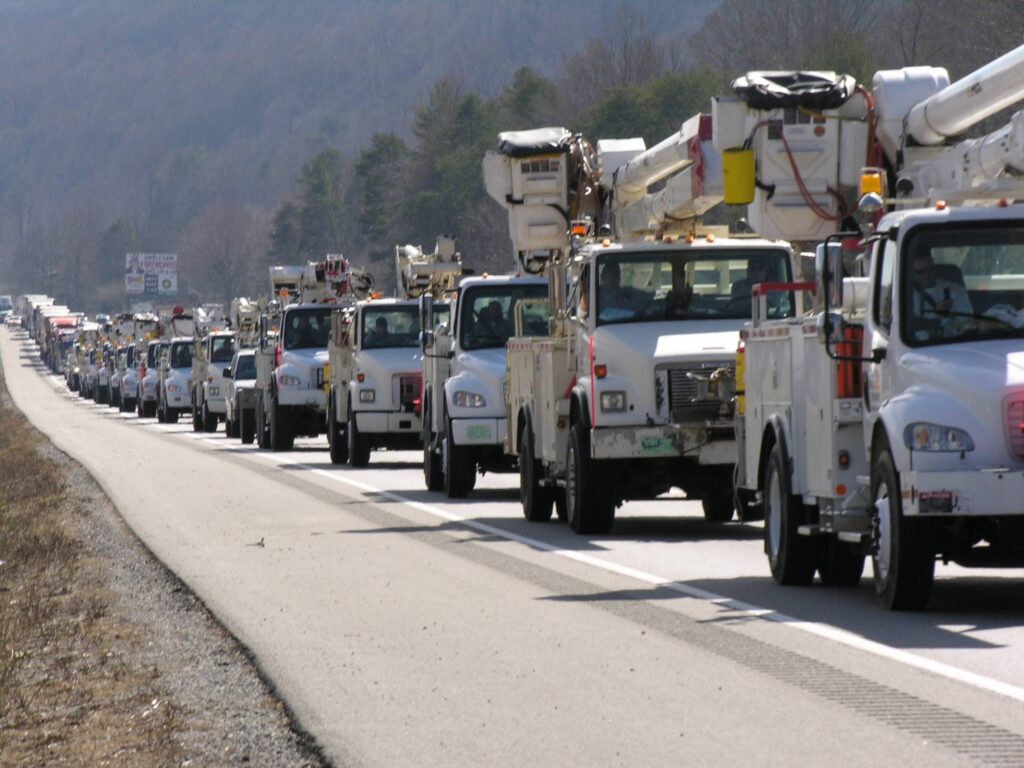
Due to the speed of this storm, there will be convoys coming to construct a pre-planned electricity grid recovery process around nightfall Thursday. Convoys from every city, town and state from the east-coast to the mid-west.  A glorious melding of dirty fingernails all arriving for the meet-up.   Depending on your proximity to the bigger picture objectives at hand, you will cherish their arrival.

But first, there will be an assessment.  The convoys will stage at pre-determined locations using radios for communication. Most cell phone services will likely be knocked out.  Recovery teams will begin a street-by-street review; everything needs to be evaluated prior to thinking about beginning to rebuild a grid.  Your patience within this process is needed; heck, it isn’t like you’ve got a choice in the matter…. so just stay positive.

Meanwhile, you might walk outside and find yourself a stranger in your neighborhood.

It will all be cattywampus.

Trees gone, signs gone, crap everywhere, if you don’t need to travel, DON’T.

I mean CRAP e.v.e.r.y.w.h.e.r.e.

Stay away from powerlines.

Try to stay within your immediate neighborhood for the first 36-48 hours after the storm passes.  Keep the roadways and main arteries clear for recovery workers, power companies and fuel trucks.

However, be entirely prepared to be lost in your own neighborhood and town for days, weeks, and even months.  Unknown to you – your subconscious mind is like a human GPS mapping system.  When that raging Ian takes away the subconscious landmarks I guarantee you – you are going to get lost, make wrong turns, miss the exit etc.

It’s kind of funny and weird at the same time.

Your brain is wired to turn left at the big oak next to the Church, and the road to your house is likely two streets past the 7-11 or Circle-k. You don’t even notice that’s how you travel around town; that’s just your brain working – it is what it is.

Well, now the big oak is gone; so too is the Circle-K and 7-11 signs.  Like I said, everything is cattywampus.  Your brain-memory will need to reboot and rewire.  In the interim, you’re going to get lost… don’t get frustrated.

No street signs. Likely no stop signs.  No traffic lights.

Remember, when it is safe to drive, every single intersection must be treated like a four-way stop…. and YOU ARE GOING TO HAVE TO PAY ATTENTION.  Even the major intersections.

You’ll need to override your brain tendency to use memory in transit.  You’ll need to pay close attention and watch for those who aren’t paying close attention.

Travel sparingly, it’s just safer.

Check on your-self first, then your neighbors. It doesn’t matter if you’ve never said a word to the guy in the blue house before.  It ain’t normalville now.

Break out of your box and check on the blue house down the street too.  In the aftermath, there’s no class structure.  Without power, the big fancy house on the corner with a pool is just a bigger mess.  Everyone is equally a mess.

The first responders in your neighborhood are YOU.

You, the wife, your family, Mrs. Wilson next door; Joe down the street; Bob’s twin boys and the gal with the red car are all in this together.  If you don’t ordinarily cotton to toxic masculinity, you will worship its appearance in the aftermath of a hurricane.  Git-r-done lives there.

Don’t stand around griping with a 40′ tree blocking the main road to your neighborhood.  Figure out who’s got chainsaws, who knows how to correctly use them, and set about safely clearing the road.  If every neighborhood starts clearing their own roadways, the recovery crews can then move in for the details.

Stage one focuses on major arteries… then secondary… then neighborhood etc.  It’s a process.

Oh, and don’t get mad if your fancy mailbox is ploughed over by a focused front-end loader who is on a priority mission to clear a path.  Just deal with it.  Those same front-end loaders will also be removing feet of sand from coastal roads.  Don’t go sightseeing… stay in your neighborhood.

For the first 36-48 hours, please try to stay close to home, in your neighborhood.  Another reason to stay close to home is the sketchy people who can sometimes surface, looters etc. Staying close to home and having contact with your neighbors is just reasonable and safer.

Phase-1 recovery is necessarily, well, scruffy…. we’re just moving and managing the mess; not trying to clean it up yet.  It’ll be ok.  There are going to be roofing nails everywhere, and you will likely get multiple flat tires in the weeks after the hurricane.

After this storm half of the people living near Cape Coral, Punta Gorda and Port Charlotte are going to fit into two categories, two types of people: (1) those with a new roof; or (2) those with a blue roof (tarp).

Keep a joyous heart filled with thankfulness; and if you can’t muster it, then just pretend. Don’t be a jerk.  You will be surrounded by jerks….  elevate yourself.  If you need to do a few minutes of cussing, take a walk.  Keep your wits about you and stay calm.

Now, when the recovery teams arrive…. If you are on the road and there’s a convoy of utility trucks on the road, pull over.  Treat power trucks and tanker trucks like ambulances and emergency vehicles.  Pull over, give them a clear road and let them pass.

When everyone gets to work, if you see a lineman, pole-digger or crew say thanks.  Just simple “thanks”.  Wave at them and give them a thumbs-up. No need to get unnecessarily familiar, a simple: “thank you for your help” will suffice.  You know, ordinary people skills.

Many of these smaller crews will be sleeping in cots, or in their trucks while they are working never-ending shifts.  Some will be staging at evacuation shelters, likely schools and such.  The need to shelter people and recovery crews might also delay the re-opening of schools.

Once you eventually start getting power back, if you see a crew in a restaurant, same thing applies… “thanks guys”.

Same goes for the tanker truckers. The convenience stores with gas pumps are part of the priority network.  Those will get power before other locales without power.  Fuel outlets are a priority.  Fuel is the lifeblood of recovery. Hospitals, first responders, emergency facilities, fuel outlets, then comes commercial and residential.

Remember, this is important – YOU are the first responder for your neighborhood.  Don’t quit.  Recovery is a process.  Depending on the scale of the impact zone, the process can take days, weeks and even months.

Take care of your family first; then friends and neighborhood, and generally make a conscious decision to be a part of any needed solution.

Pray together and be strong together.  Do not be bashful about being openly thankful in prayer.

It will be ok.

It might be a massive pain in the a**, but in the end, it’ll be ok.

√Andrew
√Jeanne
√Frances
√Ivan
√Charley
√Irma
√Michael
Ian

Keep a good thought.  Who knows, we might even end up shaking hands.

It will be OK.  Promise.

Hurricane Ian Projected Path Narrows, Local SWFL Radar Now Tracking – All Preparations Need to be Rushed to Completion


Posted originally on the conservative tree house on September 27, 2022 | Sundance

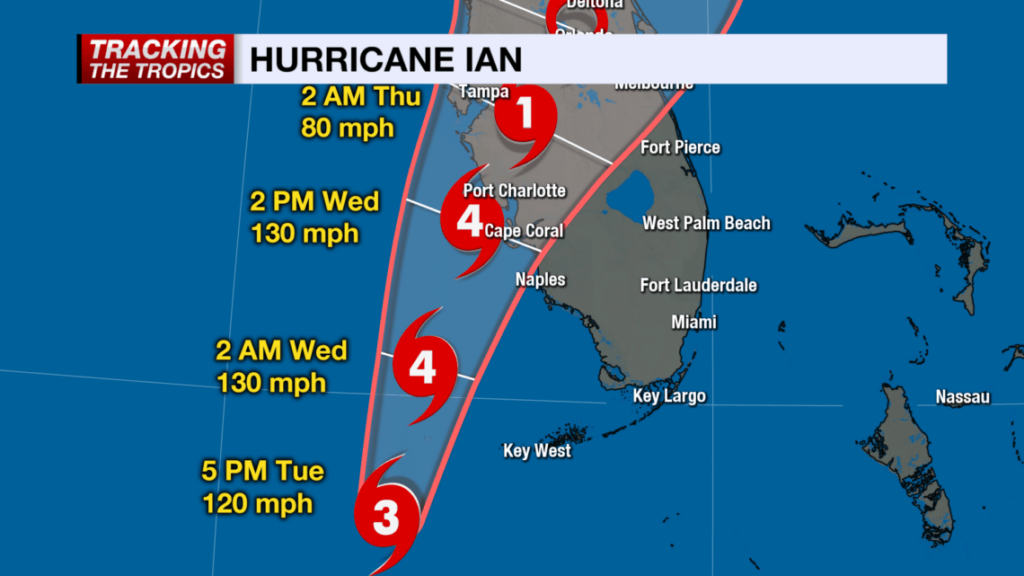
The projected path of Hurricane Ian, a category 4 storm, has now been narrowed.  Landfall is anticipated just North of Cape Coral in the Punta Gorda, Port Charlotte area.  Lee and Charlotte counties will likely feel greatest impact from Ian starting overnight through all day Wednesday, with eyewall entering Southwest Florida (SWFL) overnight Wednesday.

All preparations must be rushed to completion.  Power outages will likely start sporadically happening early to midday tomorrow (Wed).  Evacuation zones have been expanded due to increased storm surge prediction.  Pay close attention to your local officials and local media.  If you are staying in the Lee or Charlotte coastal area, now is the time to finish inside preparations.  Local SWFL radar is now tracking storm [Local Media Link].

Boca Grande Pass, famous for exceptional Tarpon fishing, looks to be the immediate coastal area where the greatest wind driven storm surge will impact.   Gulf water will be pushed up the Caloosahatchee and Peace rivers creating expanded flooding further inland.  The flooding and storm are anticipated to be the largest in SWFL history and are the greatest risk.

(NHC) – Maximum sustained winds remain near 120 mph (195 km/h) with higher gusts. Ian is a category 3 hurricane on the Saffir-Simpson Hurricane Wind Scale. Re-strengthening is expected later today through Wednesday. Ian is forecast to approach the west coast of Florida as an extremely dangerous major hurricane. Hurricane-force winds extend outward up to 40 miles (65 km) from the center. (more)

(NBC2 News) – Because of the location and movement of this hurricane, Lee and Charlotte and coastal Collier Counties are under hurricane warnings.  It is important to stress: DO NOT FOCUS ON THE CENTER OF THE FORECAST CONE. IMPACTS FROM THIS HURRICANE WILL EXTEND FAR BEYOND WHERE THE CENTER OF THE STORM IS. 

As of 5 p.m. Tuesday, the forecast cone has shifted east of where it was earlier today, meaning the potential of a Category 4 hurricane landfall is higher in Southwest Florida than it was 24 hours ago. (more)

Stage your battery powered lights and weather radios.

Turn down your refrigerator to its lowest setting anticipating power outage.

Freeze bottles of water to fill empty space in freezer.

Secure all important papers in waterproof bags and stage in central location.

Take a refreshing hot shower.

Fill cleaned and sanitized garbage cans with water in shower and/or bathtub.

Bring in outdoor furniture or throw it in the pool.

Put all your most critical items in an interior room without windows.

Put your most critical needed emergency items in easy reference place.

Elevate anything you might fear getting damaged from flooding.

Fully charge your portable electronics including cell phone.

Eat a good meal

Get rest tonight.  Do not allow yourself to be overcome with dark imaginings.