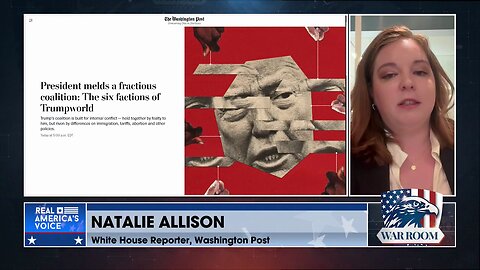
WREN: Trump’s Coalition Is Diverse, But Big Tech Is The Unifying Threat. Millions Of Jobs Destroyed, Free Speech Throttled, Power Handed To Palantir & Silicon Valley


Posted originally on Rumble By Bannon’s War Room on: August 27, 2025

NATALIE ALLISON: Trump’s Movement Isn’t A Mystery Anymore. He Brought In Voters Republicans Haven’t Reached In Decades


Posted originally on Rumble By Bannon’s War Room on: August 27, 2025

What Happens When Governments Cannot Sell Their Debt?


Posted originally on Aug 28, 2025 by Martin Armstrong |  

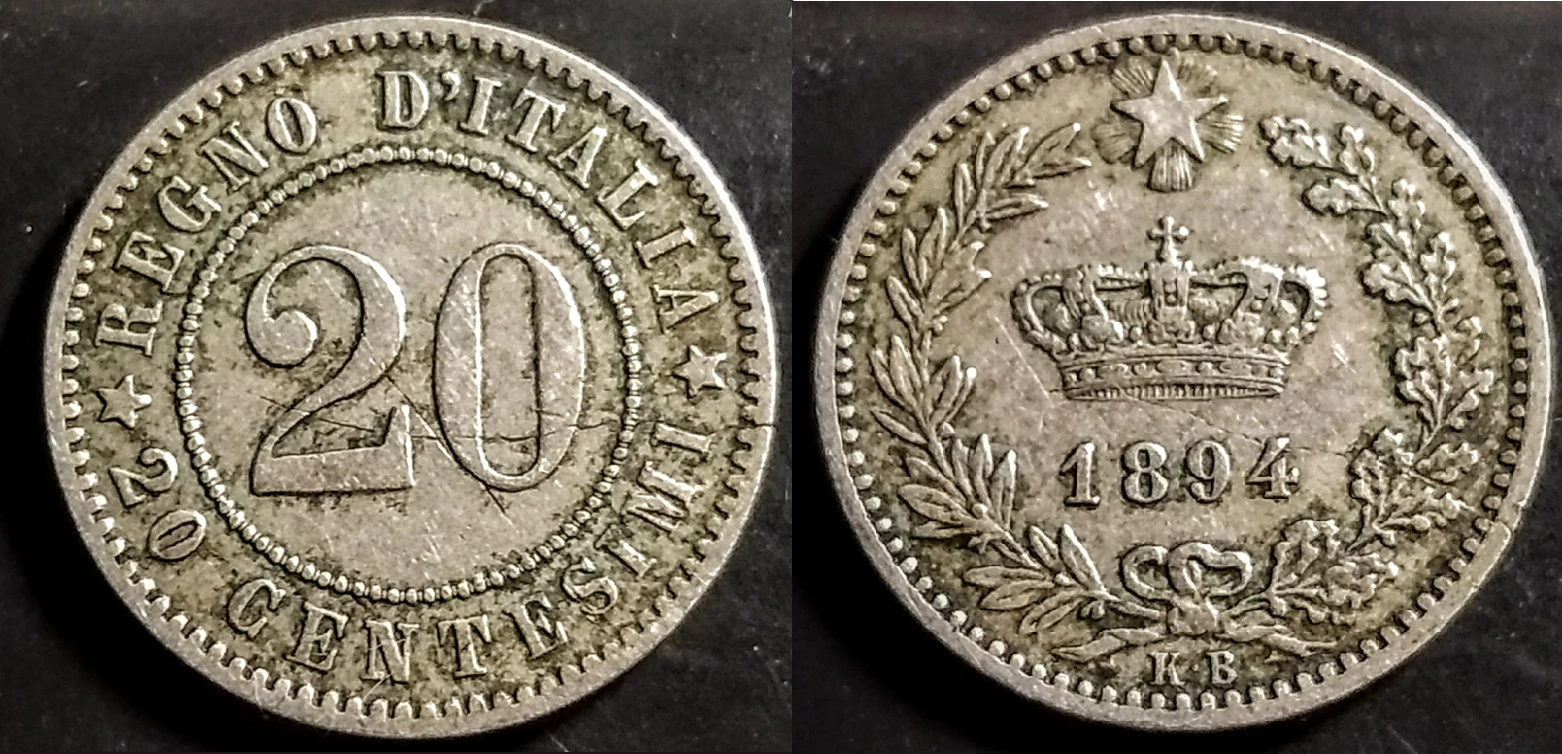
1894 20 c Italy

QUESTION: Marty, you have mentioned that at some point in history, when Italy could not pay off its 30-day short-term paper because it could not sell the new debt to pay off the old, as they do today, they converted 30-day paper to long-term. I cannot find the details on that. Could you please explain this, as it is a risk here in Europe today?

Bret

ANSWER: Yes, that was during the Panic of 1893 that became a Global Contagion. Italy, when faced with similar circumstances to what we see today, did not officially default in the classic sense of failing to pay. Still, it executed a coercive debt restructuring that is widely considered a selective default or soft default in 1893-1894. This is what we refer to as a forced loan.

Italy was facing a run on its short-term debt and unable to roll over the maturing paper because there were no buyers, the Italian government, led by Prime Minister Francesco Crispi, did not formally declare a default. Instead, it passed a law (Legge 11 luglio 1894, n. 386) that forcibly converted the short-term Buoni del Tesoro into a new long-term bond.

The law mandated that holders of the short-term Treasury notes could not be repaid in cash upon maturity. Instead, they were forced to exchange their maturing short-term paper for a new long-term government bond, called the “Rendita Italiana 5%” (5% Italian Annuity).

This new bond had a 5% coupon but was issued at a price below par (effectively giving a higher yield to compensate, somewhat, for the forced nature of the deal). Crucially, it was a perpetual bond, meaning it had no final maturity date.

The Italian government unilaterally changed the terms of its debt. Investors lent money for 30 days, expecting to be repaid in cash at the end of that term. The government broke that promise.

Investors had no choice. They could not get their cash back; their only option was to accept the new long-term instrument. While they received a new security, it was illiquid (perpetual) and its value was uncertain. This action caused significant financial losses for many Italian banks and citizens who held the paper.

I would expect that Europe will pull this one off when it can no longer issue new debt to pay off its old debt. We are living in a perpetual Ponzi scheme. There is ONLY one way this ends, and that is a default or a forced loan.

Leaders of France, Germany and Poland Converge on Moldova to Support EU Against Russia


Posted originally on CTH on August 28, 2025 | Sundance

Moldova was always important for the goals of the EU elites against the influence of Russia. However, after Georgia rejected the EU manipulation, Moldova became even more important; very, very important.

Moldova is now the frontline battle of the EU Central Bank against pesky Russian ideological intransigence.  All your democracies are belong to us, comrade.  In the background the EU economies are beginning to quiver, led by Germany.

Meanwhile, Volodymyr Zelenskyy is worried that if Moldova gains EU membership before Ukraine, his battleground position could be compromised. ‘Hey, wait a minute, we’re no more corrupt than they are.’ Ukraine wants simultaneous attention, priority and ascension.

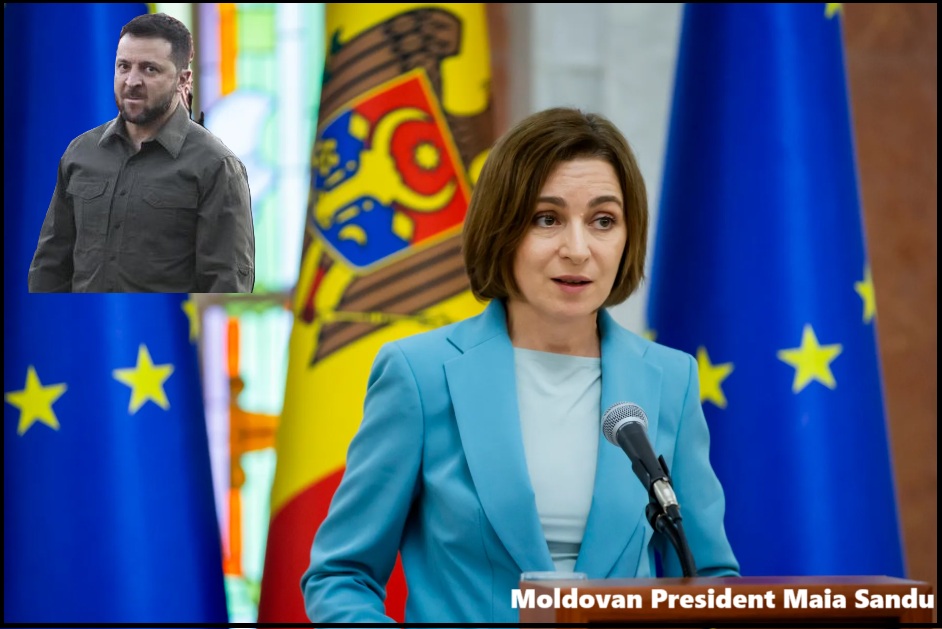
Moldovan President Saia Sandu squeaked a win in her election with the use of overseas ballots. The highly divided Moldovans living in Moldova didn’t support Sandu, but the mysterious Moldovans who do not live in Moldova supported her. The EU leadership doesn’t want too many people to notice that.

BRUSSELS ― The leaders of France, Germany and Poland are converging Wednesday on tiny Moldova to urge voters to keep turning away from Russia and support their country’s pro-EU government.

The Moldovan president, Maia Sandu, and her governing Party of Action and Solidarity (PAS) face a critical Sept. 28 parliamentary election amid warnings that the Kremlin is working to influence the result and derail the country’s efforts to join the EU.

“There are those who will try to lead us astray. They have tried before … But the Moldovan people know what is best for them,” Sandu is expected to say Wednesday at a rally marking the country’s Independence Day.

A country of 2.4 million people sandwiched between Romania and Ukraine, Moldova has become a target for Russian President Vladimir Putin. While Moscow fights a physical war to subjugate Ukraine, it is using using hybrid tactics to try to control Moldova, including large-scale election manipulation of voters.

This week’s visit by French President Emmanuel Macron, German Chancellor Friedrich Merz and Polish Prime Minister Donald Tusk is designed to help keep Moldova on a path toward EU membership, and to remind voters there’s an alternative to Russia.

[…] Last year, Sandu secured a second term in office in a nail-biting election marred by vote-rigging, including a scheme that saw voters paid to back her Kremlin-friendly opponents. A simultaneous referendum on EU membership passed by a margin of 50.4 percent to 49.6 percent.

In both cases, the votes of the 250,000 Moldovans who live abroad, many in EU countries, formed a key pillar of the liberal government’s support. Earlier this month, Moldova’s National Security Adviser Stanislav Secrieru warned fears were growing over disinformation aimed at the diaspora and even of possible disruptions at polling stations abroad. (read more)

USAID (Samantha Power) under the Joe Biden regime was a key player in the organization of the mail-in ballots for Moldova. Imagine that.  Now there’s a little problem….

…. USAID and Samantha Power are no longer around to assist with the mid-term parliamentarian elections.  I mean, what would it look like if the President was elected, albeit barely, as the Moldovan citizens looked with suspicious cat glances, and then suddenly, the next election didn’t highlight the same result for Parliament?   Almost as if something was afoot before.

Hence, Emmanuel Macron, Fredrich Merz and Donald Tusk, three of the consequential USAID beneficiaries, are heading to Moldova to support Saia Sandu.   We’ll keep watching.

India Rejects President Trump Tariff Pressure, Pledges to Continue Purchasing Russian Oil


Posted originally on CTH on August 27, 2025 | Sundance

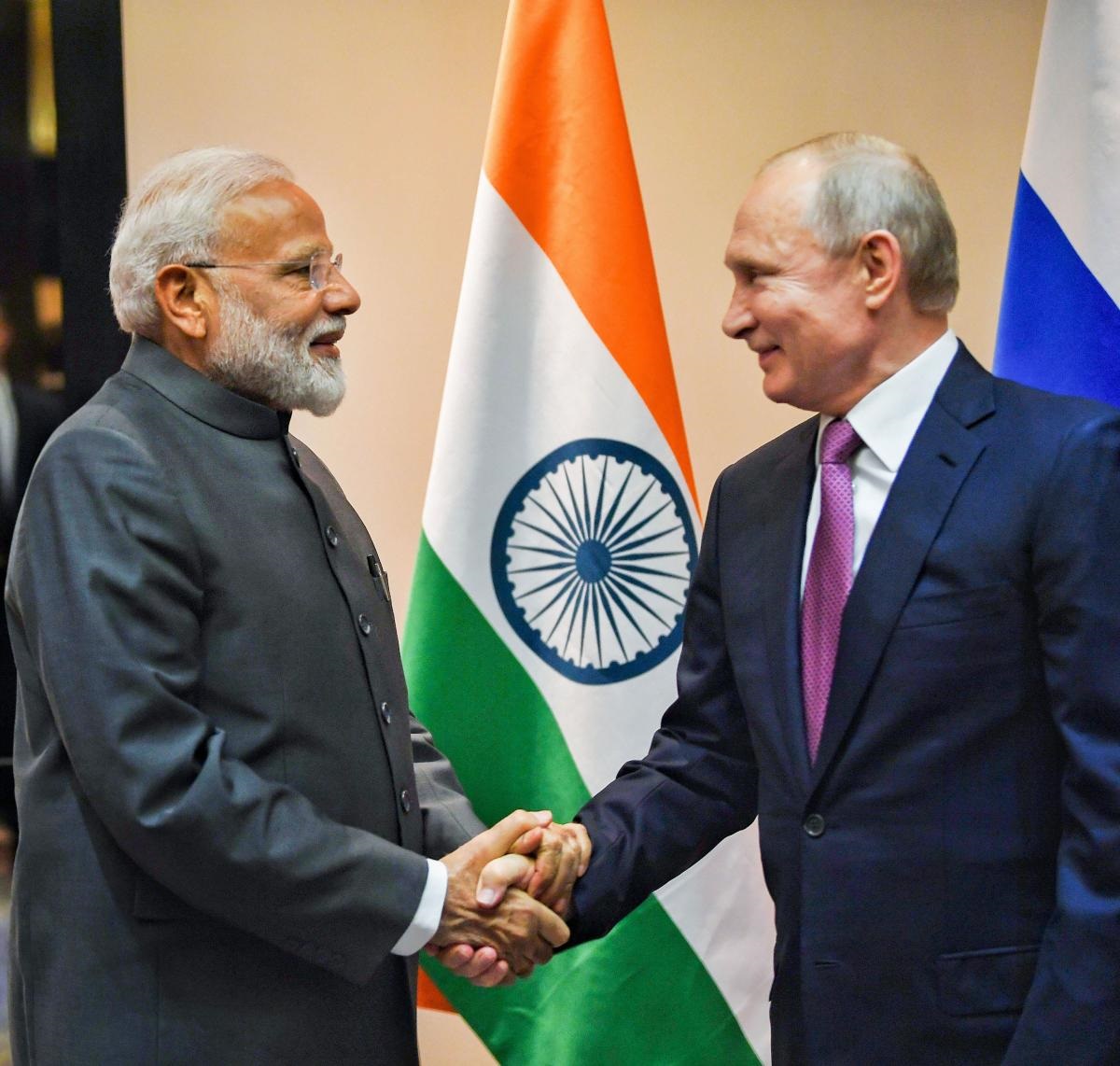
India is now facing a 50% import tariff against the majority of their goods (electronics and pharmaceuticals exempted). However, Indian Prime Minister Narendra Modi has vowed not to yield to the pressure. Modi said the world was witnessing a “politics of economic selfishness.”

For approximately a decade many western countries including the U.S. have heaped effusive praise on India as corporations viewed the massive Indian population, the world’s largest democracy, as both workers and consumers.  However, after the western sanctions against Russia were delivered, India -a BRICS nation- began pulling back from western alignment and influence.

Western sanctions map against Russia (yellow = agree with USA).

What we are witnessing now is one of the ramifications of the U.S. forcefully putting an “us or them” aspect into the strategic economic relationship, where “them” is Russia.  Currently, India is not flinching.

One could make the argument that undeveloped regions in Brazil, Russia, India, China and South Africa (BRICS) contain the majority of the valuable rare earth minerals and magnets the ‘western’ nations need for manufacturing.  BRICS has a pressure point to apply leverage, but no global trade currency, if the trade conflict escalates.

INDIA – Steep U.S. tariffs on a range of Indian products took effect Wednesday, threatening a serious blow to India’s overseas trade in its largest export market.

President Donald Trump had initially announced a 25% tariff on Indian goods. But earlier this month he signed an executive order imposing an additional 25% tariff due to India’s purchases of Russian oil, bringing the combined tariffs imposed by the U.S. on its ally to 50%.

The Indian government estimates the tariffs will impact $48.2 billion worth of exports. Officials have warned the new duties could make shipments to the U.S. commercially unviable, triggering job losses and slower economic growth.

India–U.S. trade relations have expanded in recent years but remain vulnerable to disputes over market access and domestic political pressures. India is one of the fastest-growing major global economies and it may face a slowdown as a result.

Estimates by New Delhi-based think tank Global Trade Research Initiative suggest labor-intensive sectors such as textiles, gems and jewelry, leather goods, food and automobiles will be hit hardest.

“The new tariff regime is a strategic shock that threatens to wipe out India’s long-established presence in the U.S., causing unemployment in export-driven hubs and weakening its role in the industrial value chain,” said Ajay Srivastava, the think tank’s founder and a former Indian trade official. (read more)

Keep in mind, India is a very poor albeit populated country with the average person living substantially below the poverty line.  That sounds like bad news for India until you realize if they lose export trade to the USA, the majority of Indians will not notice the difference in their life.

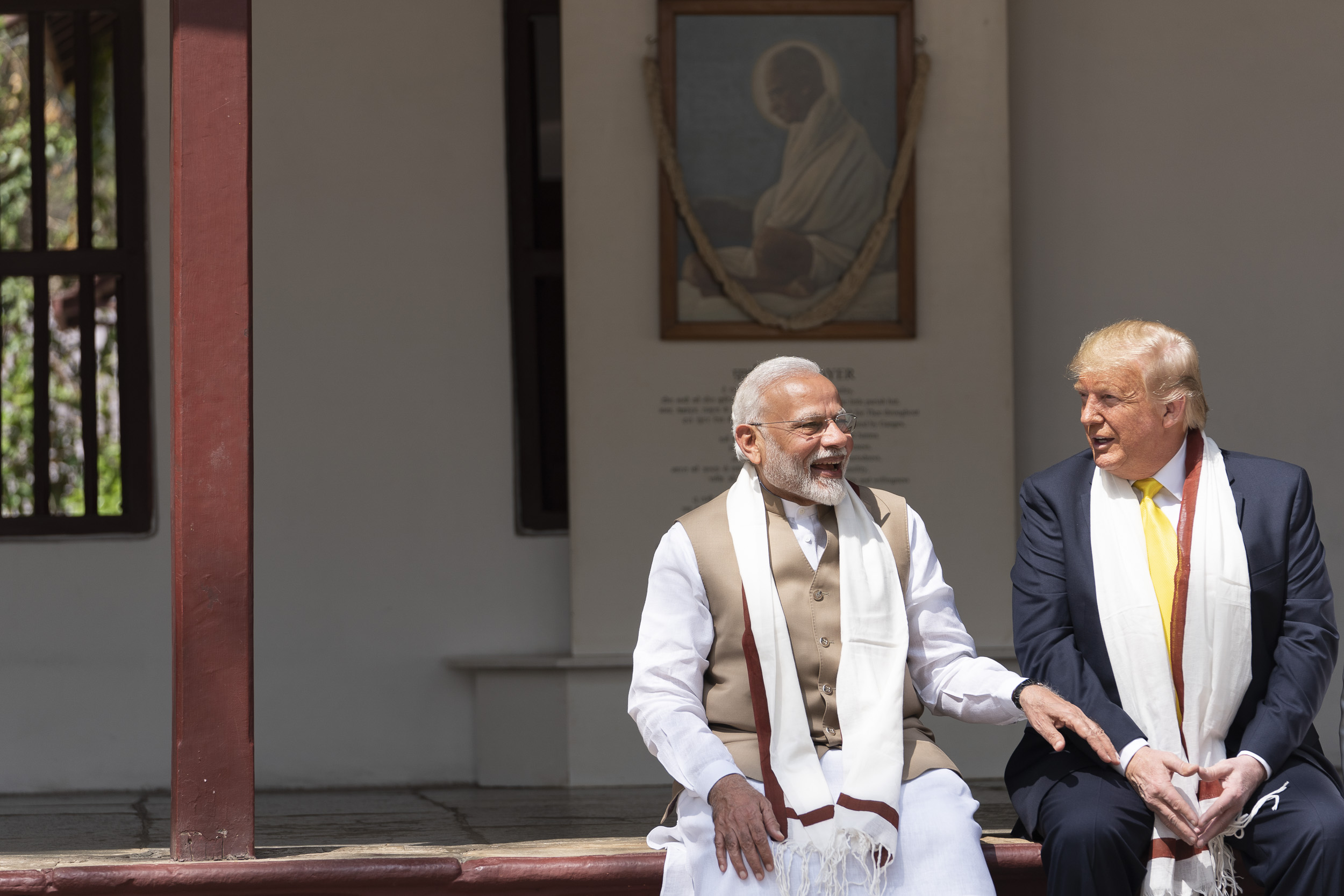
Politically President Trump and Prime Minister Narendra Modi always appeared to have a very good relationship.  However, on the issue of sanctions against Russia, President Trump is stepping into the middle of the BRICS relationship.

Modi feels strong due to a decade of effusive praise from all countries. Trump feels strong due to current effusive praise from all countries.  Two hippos are facing each other.

There are multiple dynamics at play including President Trump’s Indo-Pacific strategy, a counterbalance to the influence of China, which is dependent on India.  Prime Minister Modi appears to be calling President Trump’s bluff.

Important Information from Treasury Secretary Scott Bessent


Posted originally on CTH on August 27, 2025 | Sundance

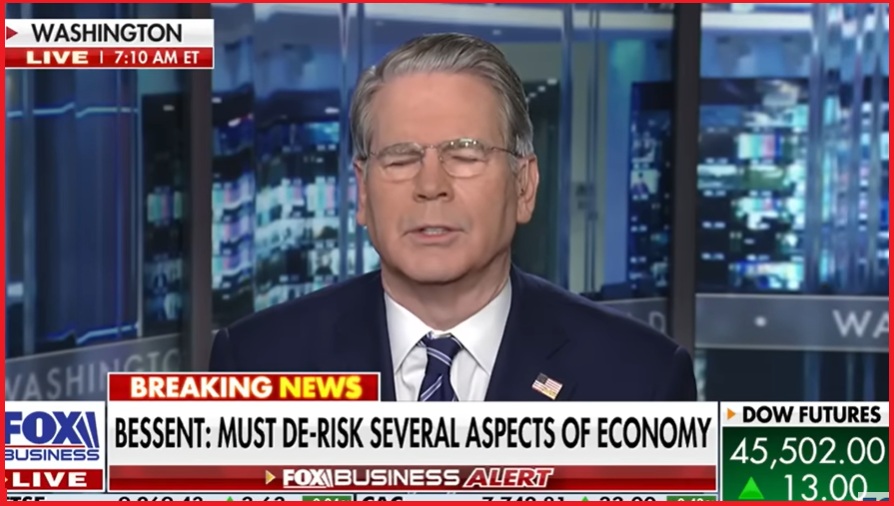
Treasury Secretary Scott Bessent appears on Fox Business to discuss some very important current issues in the world of finance, banking and trade.

Bessent begins by answering questions about the U.S. government taking equity interests in companies that come to the U.S. for support.  Bessent then notes the potential for the Trump administration to construct a taxpayer stake in Fannie and Freddie, before the Treasury Secretary moves on to talk about the trade issues with India.  WATCH:

.

Sea Island Hits President Trump and Tech Bros on H1B Vulnerability


Posted originally on CTH on August 27, 2025 | Sundance 

The Sea Island banking and finance community are strategic.  They know how to hit the nerve of their opposition in tune with popular sentiment.  However, the key to seeing the strings is to notice the pattern.

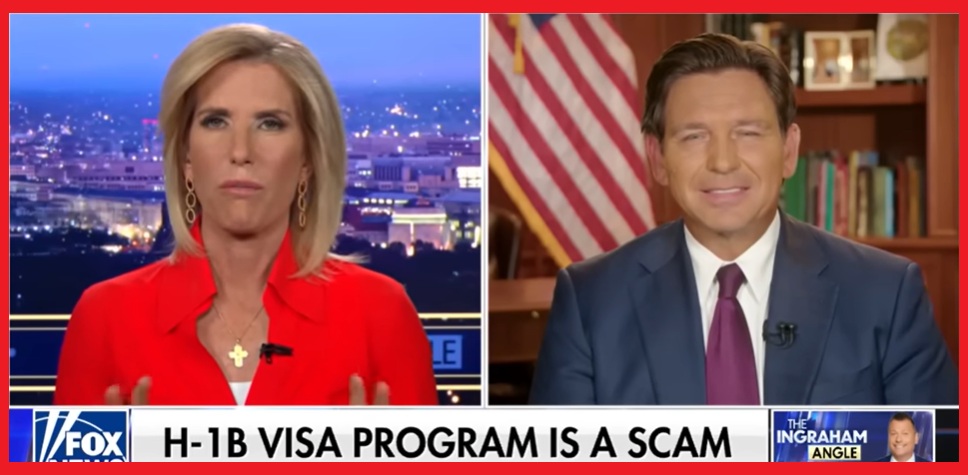
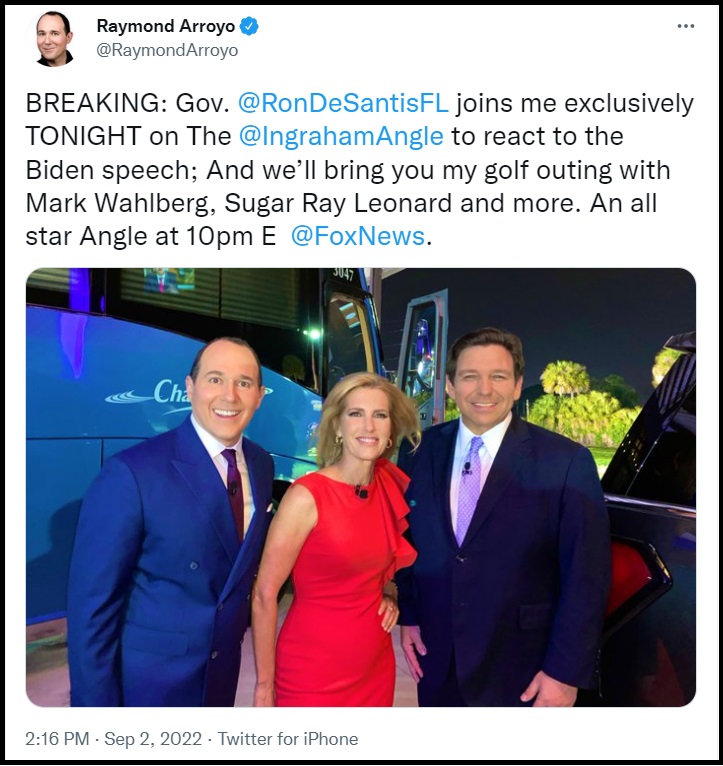
When the Sea Island group are out of power or diminished influence, they wait for opportunities; then they dispatch their purchased voices to hum the sirens song.  DeSantis only has another year of high-visibility influence before he ends up in the dead space leading up to 2028.  He and his allies need to stay relevant after ’26.

Trump-Vance is currently aligned with the Silicon Valley tech team and Crypto community, the alternative to the traditional Sea Island confab.  However, Silicon Valley has a disconnect from populism on the issue of H1B visas.  Sea Island exploits the moment.  WATCH:

Beyond independent Trump, once you stop looking at the presented puppets and start focusing on the puppet masters, you start to clear the fog of the theatrics, and you can see the patterns.  The ‘out of power’ group promotes the issues that are popular as they seek to cleave the audience (classic splitter strategy).

Silicon Valley corporations and investors, emboldened by President Trump’s embrace of the technology and crypto industries, have pledged up to $200 million to two new super PACs that are aimed at forcing out politicians whom they see as insufficiently supportive of the push into artificial intelligence.

One of the new PACs, Meta California, is funded by tens of millions of dollars from Meta, which owns Facebook and Instagram and has been investing heavily in A.I. The second super PAC, Leading the Future, is backed initially with $50 million from the A.I. investor Andreessen Horowitz and $50 million from Greg Brockman, a co-founder of OpenAI, and his wife, Anna.

[…] The up to $200 million that is being committed is likely to immediately make the new groups, and the issue of A.I., somewhat central to the 2026 midterm elections. The groups promise to support both Democrats and Republicans.  (more)

Europe’s New War Economy: From Green Collapse To Military Keynesianism, Bradley Thayer Reacts


Posted originally on Rumble By Bannon’s War Room on: August 26, 2025

Thayer: Tariffs Will Only Be A ‘Hiccup’ In US-India Relations


Posted originally on Rumble By Bannon’s War Room on: August 26, 2025

Rich Stern On The Firing Of Fed Governor Lisa Cook, And Who Will Replace Her


Posted originally on Rumble By Bannon’s War Room on: August 26, 2025