President Trump Infrastructure Speech Richfield Ohio – 2:00pm Livestream


Today President Trump is traveling to Richfield, Ohio, to visit a union technical training facility for welding and heavy equipment. While there the President will deliver a speech about rebuilding infrastructure in America.  Anticipated start time 2:00pm EST.

UPDATE: Video Added

WH Livestream LinkRSBN Livestream LinkCNBC Livestream Link

Final U.S.T.R. 301 Report On China Trade Policies and Intellectual Theft…


United States Trade Representative Robert Lighthizer releases the final report into Chinese trade practices including intellectual theft:

https://www.scribd.com/embeds/375056913/content?start_page=1&view_mode=&access_key=key-ikcrKkfRNxfhughFkXe9

.

Ambassador Lighthizer also appeared on CNBC for a discussion of content:

Final Fourth Quarter GDP Increase 2.9% (exceeds expectations), Third Quarter Revised Upward to 3.2%…


The final quantification of the Bureau of Economic Analysis fourth quarter GDP growth rate was released today, reflecting an anticipated increase from the prior two estimations. The last revised estimation of GDP growth (February) was +2.5%, the final revised estimate is +2.9% growth.

A massive increase in consumer spending (+4%) around the October through December 31st time-frame (Q4) was offset by those dollars purchasing a large portion of imported products.  The GDP growth deduction from import purchases was 1.99%. [See table #2, line 50 pdf here]

In short, American consumers spent significantly more than usual in the holiday season; however, many of those purchases were foreign goods.

From the BEA Report – Real gross domestic product (GDP) increased at an annual rate of 2.9 percent in the fourth quarter of 2017 (table 1), according to the “third” estimate released by the Bureau of Economic Analysis. In the third quarter, real GDP increased 3.2 percent.

The GDP estimate released today is based on more complete source data than were available for the “second” estimate issued last month. In the second estimate, the increase in real GDP was 2.5 percent. With this third estimate for the fourth quarter, the general picture of economic growth remains thesame; personal consumption expenditures (PCE) and private inventory investment were revised up. (more)

We anticipated this adjusted increase back when the first BEA result was posted, for two reasons: #1) The original estimations were contingent upon almost no domestic inventory remaining at the end of Q4 (highly unlikely); #2) The import deduction was the largest deduction in the past decade (possible, but again too early to quantify). The resulting adjustments announced today reflected exactly these two items.

(Via CNBC) While robust consumer spending curbed the accumulation of inventories, the slowdown in inventory investment was not as steep as previously reported.

Inventory investment rose at a rate of $15.6 billion in the fourth quarter instead of the previously reported $8.0 billion pace. (link)

Look closely at the last part from CNBC above.  The BEA underestimated inventory investment by 50%?  Think about that….  you don’t miss figures by that amount unintentionally.  It’s called ‘sandbagging’.  I digress.

The bottom line – in Q4 we exported more than the past 4 years (+.83%), but we imported more than any time in the past ten years (-1.99%). The net impact was a deduction from GDP growth by -1.16%.

[*note* a reasonable correction in the trade imbalance of 25% (through smart trade deals) means the Q4 GDP could have been actually 3.5% instead of 2.9%]

The cumulative net result was an end of year (measured from the fourth quarter of 2016 to the fourth quarter of 2017), real GDP increase of 2.6 percent, compared with an increase of 1.8 percent during 2016.

MAGAnomics works.  We just need to support Trump and keep on keeping-on.

Now think about this….

President Trump appointed Gary Cohn to keep Wall Street invested; and throughout 2017 the Trump administration kept their trade cards close to the chest – it worked.  The Stock Market bought into the ploy that POTUS Trump would not disrupt the dynamics of Wall Street’s multinational global trade ideology.

However, they were not paying attention to the granular details under the radar, as evidenced by the action of Treasury Secretary Stephen Munchin, Commerce Secretary Wilbur Ross and U.S. Trade Representative Robert Lighthizer.  Throughout 2017 there was a ton of pre-positioning of assets taking place.

As soon as Team Trump gained massive increases in Wall Street (stock market) evaluations, we now enter year two where President Trump dispatches Gary Cohn and enlists Peter Navarro to carry out the MAGAnomic America-First agenda which includes rapid-fire renegotiated trade deals.

Brilliant strategery.

Bigly.

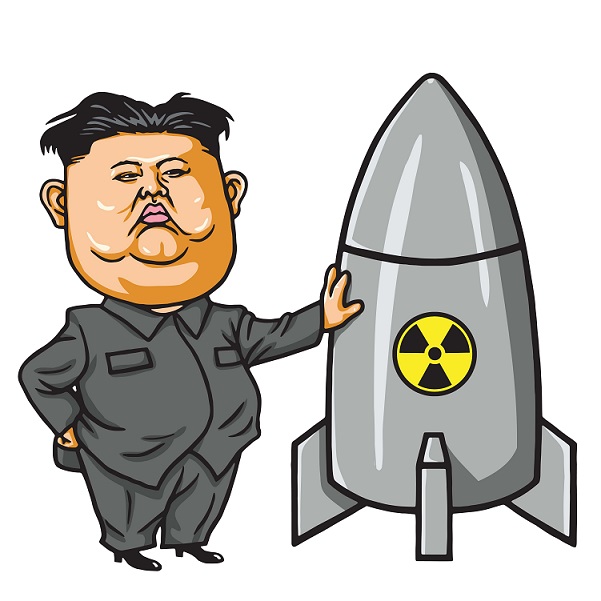
…in addition to MAGAnomic winning, you might just stop a nuclear war with North Korea.

Stay small, think BIGLY.

MAGAstrong

When will North Korea Rise to Overthrow Kim Jung Un?


QUESTION: You said that Kim Jung Un was at risk of being overthrown and therefore he would have to shift direction or go to war. When do you see North Korea falling?

PP

ANSWER: When Korea was split in 1945 into communist North against the South, the terrain has always dictated the situation. About 65% of Korea’s heavy industry was located in the north, but, due to the harshness of the terrain, only 37% of its agriculture existed in the North. This is why the North often has bouts of famine.


ECM-Dynamic


I have warned that the Economic Confidence Model has three distinct components. There is the main wave frequency based upon Pi of 8.6 years which builds into 6 waves forming the major wave of 51.6 years which seems to be the generational shifting wave that manifests in political changes between public and private trends.

Then there is the Volatility Wave component. This is what causes one 8.6 year wave to be more pronounced than another. The volatility component has a frequency of 6 years which is a slower moving wave taking 12 unit waves to build into the ultimate volatility peaks of 72-year intervals.

The Schema Frequency I do not reveal. To put this in context, it is the DNA wave of a coded pattern throughout time. This will be the last thing I ever reveal if I decide to do so. The jury is still out. This is what everyone has tried to get from me for so long. It is the key to the interaction of waves.

On August 8th, 1945 (1945.602), the Soviet Union declared war on Japan. Soviet troops advanced and the US government feared Russia would occupy the whole of Korea. On August 10th, the US government proposed the 38th parallel division.

Therefore, the 72-year of volatility began during the summer of last year – 2017.602 (August 7th). Communism fell on its 72-year cycle (1917-1989). The Soviet Union broke up 2 years into that cyclical event. This places the same timing risk cor North Korea going into 2019-2020.

The 51.6-year cycle from 1945 (1997.202) marked the start of the 1997 Asian Currency Crisis. Kim Jung Un was conducting missile tests that began on February 12, 2017, last year, which was just a KN-15 Pukguksone type. Thereafter tests took place on March 6th, March 22nd, April 5th, April 16th, April 29th, May 14th, May 21st, May 29th, and June 8th. The intercontinental ballistic missile tests began with the Hwasong 14 on July 4th, probably because of the American Independence holiday. That is when the attention began to really turn to North Korea and that began almost to the day of the 72-year turning point.

The entire world is going to go nuts 2031/2032. There will not be a country that is spared from political and economic events. The risk a serious famine in North Korea which could result in the people rising up will arrive in 2023. That pressure will begin here this year 2018.70 – which will be September 13th, 2018. This appears to the turning point that is not just concerning North Korea. It is appearing around the world in many markets. The risk for political change in North Korea comes into play as soon as 2019/2020.

KORUS Agreement Announced – Details of Historic Trade Deal and Repositioning Between U.S. and South Korea…


JOINT STATEMENT – Today, Ambassador Lighthizer and Minister Kim are pleased to announce that the United States and the Republic of Korea have reached an agreement in principle on the general terms of amendments and modifications to the United States-Republic of Korea Free Trade Agreement (KORUS FTA). The nations have also agreed on terms for a country exemption for the Republic of Korea from tariffs imposed on steel imports under Section 232 of the Trade Expansion Act of 1962 pursuant to Presidential Proclamation 9705, as amended.  The arrangement with respect to steel imports is expected to take effect on May 1, 2018.  (link)

Ever since the original 2012 US-Korea free trade agreement (KORUS) went into effect, the U.S. trade deficit in goods with Korea increased by over 73 percent from $13.2 billion to $22.9 billion (2017), while the overall deficit increased by 70 percent from $6.3 billion to $10.7 billion (2017).  President Trump committed his administration to changing this immediately and renegotiating a deal that benefited the United States.

“The improved KORUS agreement reflects the President’s leadership in delivering more reciprocal trade outcomes benefiting U.S. workers, exporters, and businesses. The United States and Korea have strengthened an important economic relationship by agreeing to substantial improvements to KORUS that will help rebalance our trade, reduce our trade deficit, and expand U.S. export opportunities.”  ~ U.S. Trade Representative Robert Lighthizer

Here’s the historic details:

♦ 1. PROCESS FOR KORUS AMENDMENTS AND MODIFICATIONS

As directed by the President and with authority provided under the terms of KORUS, the U.S. Trade Representative has worked to resolve issues through the Joint Committee process under the Agreement.

In July 2017, Ambassador Lighthizer initiated trade discussions with Korea, leading to special sessions of the KORUS Joint Committee in 2017 and further negotiations for KORUS amendments and modifications in 2018.

Once completed, the amendments and modifications to KORUS will undergo the United States’ and Korea’s respective domestic review procedures. For the United States, modifications to the U.S. tariff schedule will undergo consultation and layover procedures provided under the implementing act for the KORUS Agreement, which include a 60-day consultation period with Congress.

♦ 2. KEY NEW KORUS FTA OUTCOMES

In these discussions, the United States achieved steps to improve the large trade deficit in industrial goods and to address KORUS implementation concerns that have hindered U.S. export growth.

◊ U.S. Truck Tariffs: Korea will extend the phase out of the 25% U.S. tariff on trucks until 2041, or a total of 30 years following the implementation of the KORUS FTA in 2012. (currently scheduled to phase out by 2021).

◊ Growing U.S. Auto Exports: Exports of U.S. motor vehicles to Korea will be improved through the following steps:

  • Greater Access for U.S. Exports: Korea will double the number of U.S. automobile exports, to 50,000 cars per manufacturer per year, that can meet U.S. safety standards (in lieu of Korean standards) and enter the Korean market without further modification.
  • Harmonization of Testing Requirements: U.S. gasoline engine vehicle exports will be able to show compliance with Korea’s emission standards using the same tests they conduct to show compliance with U.S. regulations, without additional or duplicative testing for the Korean market.
  • Recognition of U.S. Standards for Auto Parts: Korea will recognize U.S. standards for auto parts necessary to service U.S. vehicles, and reduce labeling burdens for parts.
  • Improvements to CAFE Standards: Korea will expand the amount of “eco-credits” available to help meet fuel economy and greenhouse gas requirements under the regulations currently in force, while also ensuring that fuel economy targets in future regulations will be set taking U.S. regulations into account and will continue to include more lenient targets for small volume manufacturers.

◊ Customs Improvement: Korea will address long-standing concerns with onerous and costly verification procedures through agreement on principles for conducting verification of origin of exports under KORUS and establish a working group to monitor and address future issues that arise.

◊ Pharmaceutical Reimbursements: Within 2018, Korea will amend its Premium Pricing Policy for Global Innovative Drugs to make it consistent with Korea’s commitments under KORUS to ensure non-discriminatory and fair treatment for U.S. pharmaceutical exports.

3. CURRENCY AGREEMENT

◊ The U.S. Department of the Treasury is leading discussions on currency with Korea’s Ministry of Strategy and Finance.

◊ An agreement is being finalized on robust provisions to prohibit competitive devaluation and exchange rate manipulation in order to promote a level playing field for trade and investment. Strong commitments on transparency and accountability are included in the provisions.

4. OUTCOMES FOR SECTION 232 EXEMPTION FOR KOREA

  • The President’s action under Section 232 of the Trade Expansion Act of 1962, as amended, is designed to protect U.S. national security given the massive and persistent global excess capacity for steel and aluminum and the threatened impairment of U.S. national security from imports of such products.
  • As the President’s proclamations state, the United States is willing to work with any country with which we have a security relationship to find alternative ways to address the threatened impairment of the national security caused by imports of steel and aluminum.
  • The United States has a strong and enduring security relationship with Korea.
  • U.S. negotiations with Korea have resulted in a satisfactory alternative for addressing U.S. national security concerns with respect to steel imports.
  • Korean imports of steel products into the United States will be subject to a product-specific quota equivalent to 70% of the average annual import volume of such products during the period of 2015-17. This will result in a significant reduction in Korean steel shipments to the United States.

(Link to USTR News Release)

White House Trade Policy Advisor Peter Navarro Discusses KORUS and Ongoing Trade Initiatives…


White House Director of Trade and Manufacturing policy Peter Navarro discusses the revamp of the KORUS trade deal with South Korea.  In addition Navarro discusses the ongoing Trump administration’s tariffs on steel and aluminum, as well as plans to impose tariffs on Chinese products surrounding violations of intellectual-property rights.

[NOTE: Final USTR 301 Report on China was released last night]

What a Difference Six Months Makes – International Media Discuss Kim Jong-Un Meeting With Xi Jinping…


It was only six months ago when the international media and U.S. left-wing pundits were proclaiming how we were on the cusp of thermonuclear war with North Korea.  As outlined HERE there was almost no-one paying attention to the approach taken by President Donald Trump to creating the “Magnanimous Panda” outcome.

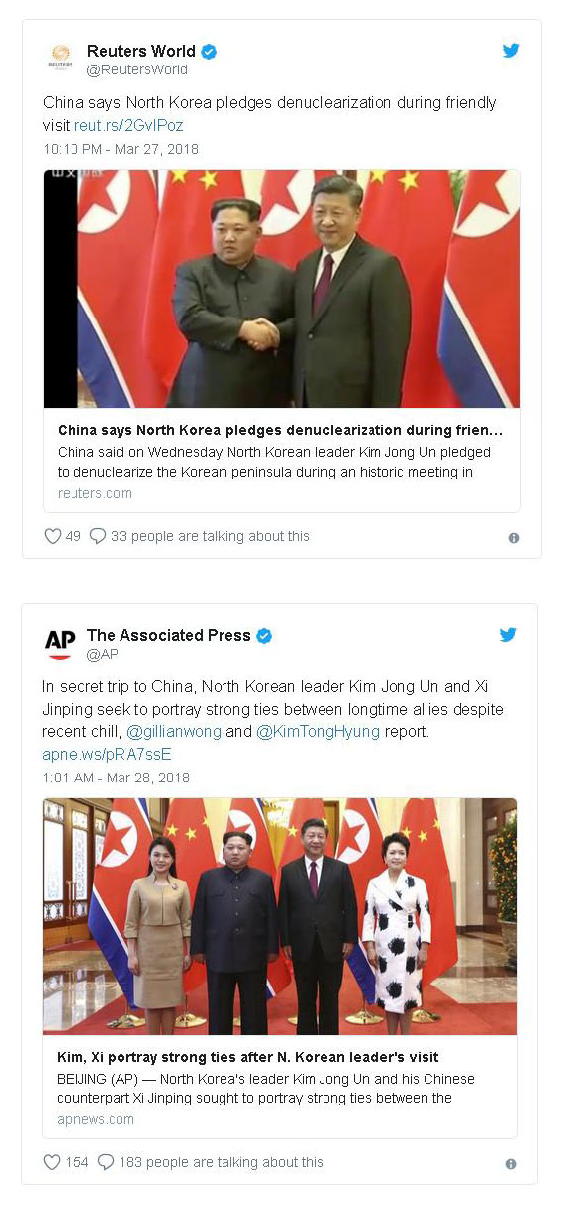
Well, today those same media are reporting on North Korean leader Kim Jong-Un meeting with Chinese President Xi Jinping and committing to a denuclearized Korean peninsular:

SEOUL, March 28 (Yonhap) — North Korean leader Kim Jong-un has visited China at the invitation of President Xi Jinping and reaffirmed his commitment to denuclearization during their first summit, the two countries’ media said Wednesday.

The North’s leader made an “unofficial” visit to China from Sunday to Wednesday, accompanied by his wife Ri Sol-ju and key officials, including de facto No. 2 figure Choe Ryong-hae, according to the North’s state-run radio.

It was Kim’s first foreign trip since he took office in late 2011.  The summit came as Kim plans to meet the leaders of South Korea and the United States in the coming months. (read more)

Well, well, well,…. doesn’t this look like the “Magnanimous Panda” outcome previously discussed?

August 2017 […] The end result will be Kim Jong-un giving up his nuclear ambitions for good; a group of nations promising economic assistance (size TBD), and some official enterprise of ASEAN partners enters as an agency to oversee nuclear compliance under carefully negotiated terms. Big Panda (Xi Jinping) promises the world to be the magnanimous insurance policy therein. Everything between now and that outcome is optically chaff and countermeasures.  SEE HERE and HERE

Funny how that works?...

“complicated business folks,…. complicated business”..

…. And likely no-one in media will ever recognize exactly how it all came together.

August 29th, 2017

August 30th, 2017

China’s objective is conquest.  China’s tool for conquest is economics.  President Trump’s entire geopolitical strategy, using economics in a similar way, is an existential threat to China’s endeavor.  Communist Beijing calls the proverbial DPRK shots.

President Trump is putting on a MASSIVE economic squeeze.

♦Squeeze #1. Trump and Mnuchin just sanctioned Venezuela and cut off their access to expanded state owned oil revenue.  Venezuela now needs more money.  China and Russia are already leveraged to the gills in Venezuela and hold 49% of Citgo as collateral for loans outstanding.  Now China and Russia will need to loan more, directly.

♦Squeeze #2.  China’s geopolitical ally, Russia, is already squeezed with losses in energy revenue because of President Trump’s approach toward oil, LNG and coal.  Trump, through allies including Saudi Arabia, EU, France (North Africa energy), and domestic production has driven down energy prices. Meanwhile Russia is bleeding out financially in Syria.  Iran is the financial reserve, but they too are energy price dependent.

♦Squeeze #3. Trump and Tillerson just put Pakistan on notice they need to get involved in bringing their enabled tribal “extremists” (Taliban) to the table in Afghanistan.  Pakistan’s primary investor and economic partner is China.  If U.S. pulls or reduces financial support to pressure Pakistan toward a political solution in Afghanistan, China has to fill void.

♦Squeeze #4. China’s primary economic threat (competition) is next door in India.  President Trump has just embraced India as leverage over China in trade and pledged ongoing favorable trade deals.  The play is MFN (Most Favored Nation) trade status might flip from China to India.  That’s a big play.

♦Squeeze #5.  President Trump has launched a USTR Section 301 Trade Investigation into China’s theft of intellectual property.  This encompasses every U.S. entity that does manufacturing business with China, particularly aeronautics and technology, and also reaches into the financial services sector.

♦Squeeze #6.  President Trump, Secretary Ross, Secretary Mnuchin and USTR Robert Lighthizer are renegotiating NAFTA.  One of the primary objectives of team U.S.A. is to close the 3rd party loopholes, including dumping and origination, that China uses to gain backdoor access to the U.S. market and avoid trade/tariff restrictions. [China sends parts to Mexico and Canada for assembly and then back-door entry into the U.S. via NAFTA.]

♦Squeeze #7. President Trump has been open, visible and vocal about his intention to shift to bilateral trade renegotiation with China and Southeast Asia immediately after Team U.S.A. conclude with NAFTA renegotiation.

♦Squeeze #8.  President Trump has positioned ASEAN (Association of Southeast Asian Nations) as trade benefactors for assistance with North Korea. The relationship between ASEAN nations and the Trump administration is very strong, and getting stronger. Which leads to…

♦Squeeze #9.  President Trump has formed an economic and national security alliance with Shinzo Abe of Japan.   It is not accidental that North Korea’s Kim Jong-un fired his missile over the Northern part of Japan.  Quite simply, Beijing told him to.

Add all of this up and you can see the cumulative impact of President Trump’s geopolitical economic strategy toward China.  The best part of all of it – is the likelihood China never saw it, meaning the sum totality of “all of it”, coming.

Six Months Later – This week:  •India announces $500 billion investment in U.S. steelworks.  •USTR finalizes section 301 report on Chinese trade practices.  •The U.S. and South Korea sign historic renegotiated “KORUS” trade deal.  •President Trump handing out Steel and Aluminum tariff exemption cards…..  And, oh yeah, North Korea tells China it agrees to a full reversal of nuclear ambitions.

Funny that.


KORUS Details Emerging – South Korea Agrees to 30% Reduction in Steel, Accepts Doubling of U.S. Autos, Accepts 20 Year Extension on Truck Tariff…


The actual announcement of KORUS (“KOR”+”U.S.”), the renegotiated U.S. and South Korea trade deal, has yet to be made by U.S. Trade Representative Robert Lighthizer, Commerce Secretary Wilbur Ross and U.S. President Donald Trump.  However, more details are surfacing inside KORUS media leaks.  Fantastic job by Lighthizer!

TOP LINES:

  • U.S. Gains twice as many exported vehicles into S-Korea (50k per manufacturer, per year).  [No word on possible Kia / Hyundai tariff or quota – RE: “unlikely”]
  • South Korea drops ridiculous customs inspection barriers. [Trade trickery ploy]
  • U.S. retains 25% Tariff on S-Korea pickup trucks with extension for 20 years.
  • South Korea gets two year exemption from a 25% U.S. steel tariff, but must drop steel export level to 70% of prior two years shipments. (A controlled reduction of 30%).

(Via AP) The new deal doubles — to 50,000 — the cars each U.S. automaker can export annually to South Korea, reduces bureaucratic barriers to American products and extends a 25 percent U.S. tariff on South Korean pickup trucks by 20 years, through 2041.

South Korea escapes America’s new 25 percent tariff on imported steel — but must accept quotas on steel exports equal to 70 percent of its average annual shipments to the United States between 2015 and 2017.

The officials spoke on condition of anonymity in order to discuss the policy ahead of an official announcement.

The United States this month began imposing the steel tariffs, saying imports jeopardized U.S. national security. But it has been suspending the duties on allies like the European Union, Canada and Mexico.

The U.S. Treasury Department is also in talks on a deal to prevent Seoul from deliberately pushing its currency lower to give South Korean exporters a competitive advantage. A formal agreement on currency would be unprecedented — but it wouldn’t have teeth, because it would include no enforcement mechanism.

The U.S. trade deficit in goods with South Korea — nearly $23 billion last year — widened after the original pact took effect in 2012, one reason Trump has denounced it. Trade in autos has been especially lopsided: South Korea last year exported to the United States 929,000 passenger vehicles worth $15.7 billion. By contrast, the U.S. shipped to South Korea fewer than 53,000 autos, worth just $1.5 billion, according to the U.S. Commerce Department.

The United States says South Korea has used non-tariff barriers, such as rigorous customs inspections, to block U.S. products.

Trump’s complaints about South Korean trade practices have caused friction between the two allies at a crucial time, as he prepares for a meeting with North Korea’s reclusive leader, Kim Jong Un.

Unions at South Korea’s two-largest automakers, Hyundai Motor Co. and Kia Motors Corp., have already blasted the new agreement for blocking access to the fast-growing U.S. pickup truck market. “It is a humiliating deal that accepts Trump’s strategy to preemptively block South Korean pickup trucks,” Hyundai Motor Company’s labor union said in a statement.  (read more)

Why Syria has ALWAYS been Strategic


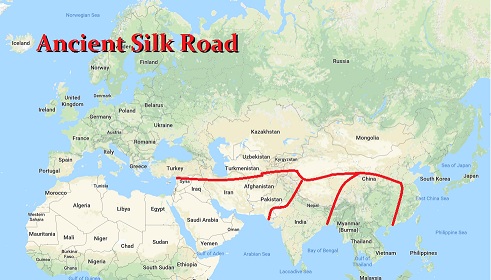
Syria has always been strategic throughout recorded history. You had to pass through it between Babylon and Egypt. However, as world trade began to emerge, the connections between China and the ancient Roman Empire were fully developed through the Silk Road. Spices were always worth their weight in gold and even during the Middle Ages, bankers were called “pepper-men” because pepper was more valuable than gold by weight.

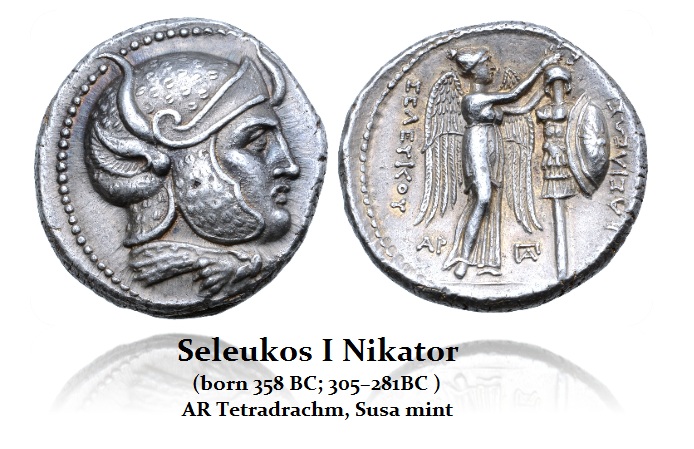
Following the death of  Alexander the Great in 323 BC, his generals divided up the territory he had conquered. After the Battle of Ipsus in 301 BC, Seleucus I Nicator (458-281BC) won the territory of Syria. Seleucus founded four cities in northwestern Syria, one of which was Antioch. He named this city in honor of his father Antiochus or perhaps his son who was named after his grandfather. It was founded on a site chosen through ritual means. Reportedly, an eagle, the bird of Zeus, had been given a piece of sacrificial meat and the city was founded on the site to which the eagle carried the offering. Seleucus did this on the 22nd day of the month of Artemisios in the twelfth year of his reign, which in modern terms was May 300 BC.

Antioch quickly rose to become the Syrian capital. Antioch flourished due to trade. Caravan merchants began to bring goods from China to the marketplace in Antioch. This was the beginning of the Silk Road in ancient times. Antioch benefited from Roman rule. The Historia Augusta mentions a great fire in Antioch, implying that the emperor Antoninus Pius (138-161AD) offered help to restore the city because it had become the gateway to a fabled great empire in the East. This legend of a great Empire in China had even inspired Alexander the Great to attempt to reach it giving up in India.

Antioch became an extremely important port of trade in the ancient world. It flourished and any major natural disaster would send financial panic down the banking street in Rome – Via Sacra. When the city sometimes suffered earthquakes as recorded during the reigns of Tiberius (14-37AD), Caligula (37-41AD), Hadrian (117-138AD), and Diocletian (284-305AD). Its governor Pescennius Niger (193-194AD) proclaimed himself emperor, he lost the war against his rival Septimius Severus, (193-211AD) who temporarily took away its independence of Antioch, giving it to Laodicea to control as punishment.

During the 3rd century, Antioch was the city of innovation. Street lighting appears also in this city during the 3rd Century AD as Saint Jerome (345-420AD) commented in his writings that the capital of ancient Syria was lit up at night by oil lamps hung over ropes that were strung over the streets. By 371AD, this invention spread to Caesarea in Turkey. China, on the other hand, was reported to be lighting up its streets using natural gas supplied through bamboo pipes by Medieval times.

China throughout history became rich by trade with the Roman Empire. Yet the history of Rome that claimed to rule the world (orbis terrarum) stood at the opposite end of the world from the strikingly similar Han Dynasty (206BC-220AD) in China, which also claimed to have ruled the world (tianxia). There is the History Book for Tang-Dynasty in China covering the period 618-907AD. Yet the text mentions 17 times what appears to be the Roman Empire . It also describes an envoy that was sent by the Roman Emperor to China. The Roman Emperor was recorded to have been “Anton.

The account of such an envoy who visited the older Han Dynasty predates the Venetian traveler Marco Polo (1254-1325) by more than 1,000 years. This envoy has been attributed to 166AD during the reign of Marcus Aurelius Antoninus (121-180AD). It is the death of Marcus Aurelius, that has marked the peak in the Roman Empire and the turning point that begins the Decline and Fall of the Roman Empire where its monetary system collapses just 72 years thereafter. This envoy established diplomatic contact at the peak of the Roman Empire from which a disastrous decline begins. Any political-economic aspirations to further such a relationship would then die with Marcus Aurelius. Yet also, both empires would suffer the same fate of barbarian invasions. The Han Dynasty falls in 220AD from which emerges the chaotic period known as the Three Kingdoms (220-280AD) – the division of the once unified Chinese Empire.

There is hard evidence that demonstrates that there was direct contact between Rome and China going back to the period of 180AD. The connection point has ALWAYS been Syria. China is also backing Syria with money. The Chinese are looking to build on the old world power position of the historic Silk Road (One belt, one road). China has never actively participated in the war militarily but has ensured financing their goals. Syria maintains close economic relations with Russia and China because of the stupidity of the West, which began with stopping a pipeline to compete with Russia. Likewise, despite being a member of NATO, Turkey is flirting with the expansion of Turkish-Chinese relations in addition to it historical ties with Russia.

As strange as it might sound, China has more skin-in-the-game with Syria than Russia. The Russians had to intervene after it became apparent that the international and Islamist mercenaries were heading for the Russian military base in Latakia. Russia and China clearly complement each other on the worldwide stage of politics. Both suffered Communist revolutions and they are the most important security players in that part of the world. China has provided the economic security while Russia provides the military security.

Syria is the focal point in the Middle East. It is where all the power meets for economic reasons. This seems to be the way for thousands of years.

Commerce Secretary Wilbur Ross Talks KORUS, Tariffs, China, EU, NAFTA and Census With Maria Bartiromo…


Commerce Secretary Wilbur Ross appears on Fox Business News for an extensive interview with Maria Bartiromo.  The interview covers a wide spectrum of important topics attached to the U.S. economy and ongoing trade deals.  Two great video segments for the interview will get you up to speed on ongoing initiatives:

♦Segment #1 outlines the upcoming announcement of KORUS, the South Korea and U.S. trade deal.  Additionally, Secretary Ross discusses the steel and aluminum tariffs and how they enmesh in the larger objective of the ongoing trade negotiations with China:

.

♦Segment #2 outlines more on the aluminum and steel tariffs; ongoing trade talks with Europe; efforts to renegotiate NAFTA, and the possibility of a deal being reached; Saudi Arabian investment in the U.S. and the Commerce Department plans to bring back a citizenship question in the 2020 Census.

.

Worth noting the reaction to Maria Bartiromo at 02:45 of the video centered around the question of the “lefty winning in Mexico“, etc. It would appear, based on hidden grinning, the trade team is anticipating a socialist victory in the Mexican election which would likely end up with Mexico wanting to cancel NAFTA due to loggerheads with the U.S.

It is additionally likely Canada’s Chrystina Freeland would lose her NAFTA cohort Mexican Foreign Minister Ildefonso Guajardo. Through seven rounds of NAFTA talks Freeland and Guarjardo have tag-teamed against Ambassador Robert Lighthizer (U.S.).