Phase-2 MAGAnomic Policy – NEC Director Gary Cohn Departs Administration…


There will obviously be another media cycle decrying crisis at the White House with the announcement that National Economic Council Director Gary Cohn is departing.

However, for those who follow the administration closely, this was a foregone conclusion; the MAGAnomic “America First” policy has a specifically timed exit ramp for just this purpose.

We have previously outlined the relationship between President Trump and Gary Cohn HERE – Along with what each of them brings to the perspectives of the other.  In addition, the larger Trump economic policy always held two distinct aspects:

  1. The financial aspects – taxes and monetary policy stability; or perhaps more succinctly the Wall Street aspect.
  2. The trade, jobs and manufacturing aspects – trade policy; or perhaps more succinctly the Main Street aspect.

The implementation of Trump’s economic policy involves those two elements: Taxes and Trade. Inside the Trump administration there are economic policy advocates who agree on the tax element, but disagree on the trade element. Economic adviser Gary Cohn is an example.

The Wall Street crowd align with Trump on taxes, but fundamentally split from him on trade. The combined Trump policy is part of the larger America-First initiative, but some within the economic team only agree with half of the aggregate policy. This is why there is a split.

As previously noted, with the tax reform proposals in place (the basis for domestic economic investment), the focus of Trump’s economic platform turns specifically to Main Street. This policy split is what makes President Trump so stunningly unique amid politicians. POTUS Trump splits from the traditional republican economic outlook on matters surrounding Main Street’s best interests.

Inside this dynamic, and the goal to restore a ‘balanced’ U.S. economy, is where the importance of Gary Cohn diminishes and the role of Commerce Secretary Wilbur Ross elevates. Secretary Ross is the person creating the fulcrum in the balanced economy reset.

POTUS Trump and Secretary Ross always knew they would need to jettison part of the administrations’ economic team once they accomplished, and moved past, tax reform.

Their focus now is laser targeted policy toward Main Street. Consider this ‘Phase-2’

We are now inside phase-2 of the total policy execution. Secretary Ross outlined how the ‘America First’ economic policy and phase-2 platform engages with the global community during a panel discussion at the World Economic Forum in Davos, Switzerland in January.

The corporate media, even the financial media, never highlighted the severity expressed by Wilbur Ross at Davos – because the Main Street policy he was explaining is directly against their interests. During the Davos World Economic Forum, Ross conveyed to the larger multinational interests an explanation of the high-level shift in U.S. trade policy, and reinforced the Trump Doctrine of economic nationalism.

Secretary Ross told the panel: “The Chinese for quite a little while have been superb at free-trade rhetoric and even more superb at highly protectionist behavior. Every time the U.S. does anything to deal with a problem, we are called protectionist.”

“Protectionists” the opposition was predicted to shout by Ross in January. Well, cue the audio visual demonstrations over the past few days surrounding Steel and Aluminum tariffs.

Also at Davos in January, after three decades of President Trump outlining his trade views, secretary Ross accurately said President Donald Trump has a forceful leadership style that some people don’t like. “We don’t intend to abrogate leadership, but leadership is different from being a sucker and being a patsy. We would like to be the leader in making the world trade system more fair and more equitable to all participants” Ross said.

Secretary Ross also challenged the panelists, including World Trade Organization Director-General Roberto Azevedo and Cargill Inc. CEO David MacLennan, to name a nation that’s less protectionist than the U.S. – – – He got no responses.

Not taking any guff, Secretary Ross then cited a study of more than 20 products that showed China had higher tariffs on all but two items on the list, and Europe all but four. The panel sat jaw-agape at Ross’s delivery of irrefutable facts to the audience. “Before we get into sticks and stones about free trade we ought to first talk about, is there really free trade or is it a unicorn in the garden,” said Ross. Again, no response from the panel.

Despite the tariffs Trump imposed in January on solar panels and washing machines; and despite the proposition of Steel and Aluminum tariffs, China is planning for a “bumper year” for new trade deals, according to China’s own Commerce Ministry.

For the past 30+ years, DC politicians have been selling out the U.S. economy to corporate interests, Wall Street and multinationals. President Trump is simply saying “no more”, and finally putting a stop to it. They hate him. He doesn’t care.

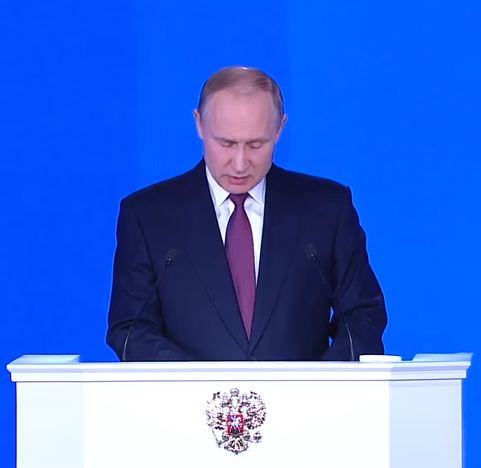
Putin’s Address to the Nation & the World


Putin’s address on March 1st to the Federal Assembly seems to have sparked a lot of crazy emails with people talking nonsense about things they do not even come close to understanding. Yes, the headline grabber was Putin’s statement about a new invincible cruise missile. I will address that in a moment. Overlooked, however, was Putin addressing the real issues of economic concerns that seem to have gone over everyone’s head. The problem with the Oligarchs where he is implying that things need to change for the good of Russia. China moved to Capitalism directly from Communism and we see the difference with China poised to surpass the US economy by 2032 and is already the second largest economy in the world. Russia, on the other hand, simply moved from state-controlled economic system to one where political friends became Oligarchs and prevented a free market economy. Russia economically ranks 12th in the world behind the USA, China, Japan, Germany, France, United Kingdom, India, Brazil, Italy, Canada, and South Korea. This is what Putin was addressing, the need to truly open up the economy to competition. If you try to compete against an Oligarch by opening a restaurant in Moscow, you will be lucky to survive beyond 24 hours. Russia is economically a third world country with a lot of weapons. Putin realizes that for all its military power, it collapsed BECAUSE it did not have the economy to support its military ambitions.

Putin also addressed trying to keep people from leaving Russia. Despite the Global Warming movement that is really trying to reduce the population, in fact, the population is declining among the industrialized nations and Russia is no exception. The population of Russia peaked at 148,689,000 back in 1991, just before the breakup of the Soviet Union. Ever since the collapse of Communism, people realize that the State will not simply take care of them. As a direct result, the birth rates have been steadily dropping and there have been abnormally high death rates in Russia as well among the elderly. Russia’s population has been declining at an annual rate of 0.5%, or about 750,000 to 800,000 people per year since 1991. Add to this figure, the migration of Russian women looking for Western men, and you have a crisis brewing in the decline of population in Russia that threatens its long-term viability.

Nevertheless, the area of Putin’s speech that has sparked the wildest claims were those comments which mentioned the invincible strategic nuclear systems in various stages of development. The boast of a missile that can penetrate the US defense system has been known behind the curtain as the RS-28 “Sarmat” system which is a new land-based heavy intercontinental ballistic missile (ICBM). This is what is being fitted with advanced technology to assure penetration of any missile defense.

Putin definitely made global headlines with these comments. However, I really did not think it warranted comment since Russia’s ability to defeat U.S. missile defenses is nothing new. I suppose I have known that fact but it seems many did not. Let me explain something that may not be common knowledge. U.S. policy has been not to deploy a defensive system that could neutralize a Russian retaliatory response to a U.S. nuclear attack. The reason this is the basic policy is the concern that such a system which was called Star Wars, would destabilize the world and result in a new arms race where Russia would be driven to re-establish a retaliatory capability. Putin’s response was directed at Trump and his administration’s idea of reversing that policy creating a new Ballistic Missile Defense Review. This was part of the February 2018 U.S. Nuclear Posture Review which states that any improvements in U.S. defensive capabilities will be deployed in such a way as to “preclude an arms race” with China or Russia. Therefore, Putin was addressing this very issue and to make it clear that there MUST remain a balance between powers for all the nukes keep everyone in check.

Putin also addressed a maneuverable hypersonic glide the “Avangard” which is a new missile system with a vehicle of this type. Putin also mentioned a long-range nuclear-powered unmanned underwater vehicle that can be fitted with a nuclear warhead, known commonly as “Status-6.” Both of these systems are designed to evade any U.S. defensive measures — Avangard by presenting an unpredictable flight trajectory, while Status-6 is an entirely new sea-based way to deliver a nuclear weapon. Both are designed to maintain the power balance.

The invincible new cruise missile was really a statement to Trump not to start a new arms race. You simply have to understand what is going on behind the curtain right now.

NAFTA Round Seven Ends in Mexico City With Negligible Progress – USTR Lighthizer Remarks (Transcript)…


Dear Ambassador Lighthizer, love ya’ but enough already.  After eight months, and seven rounds of negotiations, only six trade chapter agreements -out of 30- have been closed.  It’s an election year in Mexico (July), Canada and the U.S. (November).

Time to cut bait; call the baby ugly; end the nonsense; stop the backslapping; put everyone out of their diplomatic misery, and finally make a formal NAFTA exit announcement in Washington DC.

Today, round #7 ends in Mexico City with no progress. Surprise fail.   Here’s the trilateral presser (sorry, poor audio):

Other than the progressive Canadian ‘princess rainbow-sparkles’ stomping her feet and promising targeted political trade retaliation for U.S. Steel and Aluminum tariffs, there’s nothing newsworthy within the entire public conference.   Below is a transcript of Ambassador Lighthizer’s full remarks as delivered.

Ambassador Lighthizer: Good Afternoon.

Let me begin by commending Secretary Guajardo for a terrific job hosting this seventh round of negotiations here in Mexico City. It is a privilege to return to this great city.  Not long after I was last here, Mexico was struck by devastating earthquakes.  Your nation’s rapid recovery from that tragedy shows the great strength of the Mexican people.  You deserve our praise for that and our continued prayers and support.

I would like to thank both of you — Secretary Guajardo and Minister Freeland — for your hard work and for the hard work of your able staffs.  We have to keep in mind that there were several hundred people working very long hours for several days during the course of this process.  We are dealing with a large number of difficult issues, very technical issues, and I appreciate the efforts made by all negotiators.

In spite of this hard work, we have not made the progress that many had hoped in this round.  We have closed out only three additional chapters: Good Regulatory Practices, Administration and Publication, and Sanitary and Phyto-sanitary Measures.  We have also completed work on sectoral annexes related to chemicals and proprietary food formulas.  And we are making substantial progress on Telecommunications and Technical Barriers to Trade.  We have also agreed to include a chapter on energy.

These chapters are important and provide further evidence that all three countries want to upgrade and modernize NAFTA.  But to complete NAFTA 2.0, we will need agreement on roughly 30 chapters.  So far, after seven months we have completed just six.  Now granted, these things tend to converge more towards the end of a negotiation.

As I have said since August, we have two major goals in these negotiations.  First, we want to update NAFTA to address modern trade issues.  All three countries agree that NAFTA is outdated, and I believe we should be able to reach agreement on new issues like digital trade, labor, and environment, intellectual property, and much more.  We urge all parties to move more quickly on these issues.

Second, we believe that NAFTA should be rebalanced.  This has been a longstanding U.S. concern about the treatment of our workers and businesses.  From our point of view, among other things, changing the agreement so that it no longer encourages outsourcing, developing rules of origin that will fairly treat our manufacturing sector and workers, and reshaping the rules of government procurement are very important.  We also need to make more progress on these points to conclude a new NAFTA.  We continue to stress the need to act quickly.

Now our time is running very short.  On July 1, as everyone here knows, Mexico will choose a new president.  That campaign as I understand it begins in earnest just next month.  But Mexico is not the only NAFTA country in the midst of elections.  Both Ontario and Quebec have elections scheduled later this year.  Finally, the United States has mid-term elections coming up in November.  All of this complicates our work.  I fear that the longer we proceed, the more political headwinds we will feel.

I also note that in all three countries, reaching an agreement at the negotiating table is only part of the process.  In the United States, after an agreement in principle is concluded, our laws require public disclosure of text, further consultations, and numerous reports before it can be considered by Congress.  Thus, in the U.S., we must resolve our outstanding issues soon to maintain the possibility of having this measure be considered by the current Congress.

As President Trump has said, we hope for a successful completion of these talks, and we would prefer a three-way, tripartite agreement.  If that proves impossible, we are prepared to move on a bilateral basis, if agreement can be made.

We have tried to be clear and very specific about what we hope to see in a new NAFTA.  We are prepared to work continuously to achieve a breakthrough.  I understand that these talks are not easy for anyone.  Each of us has our own political concerns.  But we are at the point where we have very important decisions to be made.  If the political will is there, I am certain that we have a path to a rapid and successful conclusion.

Thank you.

NAFTA Watch – Peter Navarro Interview and POTUS Trump Tweets…


We are nearing the timeline apex for release of the decision/announcement on a U.S. NAFTA exit. Trade adviser Peter Navarro appears on Fox Business to discuss the pending Steel and Aluminum tariff while President Trump tweets concerns about NAFTA renegotiation; which enters Round #7 this week.

The steel tariffs are targeted toward national economic security; the Wall Street financial class are apoplectic because a firm administration stance on Steel and Aluminum tariffs indicates the larger trade perspective on all bilateral trade deals.

New Twitter Thread on the NAFTA Fatal Flaw – HERE

A Trade War? No, a Coordinated Phase-Two Trade Policy Shift by the Trump Administration…


Ya know, it’s increasingly funny to watch the Wall Street crowd going bananas simply because POTUS Trump does exactly what POTUS Trump said he was going to do.  I mean it’s not like the administration has been hiding the trade policy plans and objectives for the past year; yet, the financial class acts shocked, SHOCKED, when it actually happens.

Cue the audio visual demonstration….. Was anyone paying attention in January at the Davos World Economic Forum when Commerce Secretary Ross said exactly what the administration was going to do in the coming months?  ….Apparently not.

Against the backdrop of current financial and corporate media running around like blindfolded zombies with forks in their eyes – hysterically bumping into walls, it might be worthwhile to revisit Commerce Secretary Wilbur Ross’s purposeful remarks at Davos:

.

Twitter Thread HERE to Expand Full Dynamic

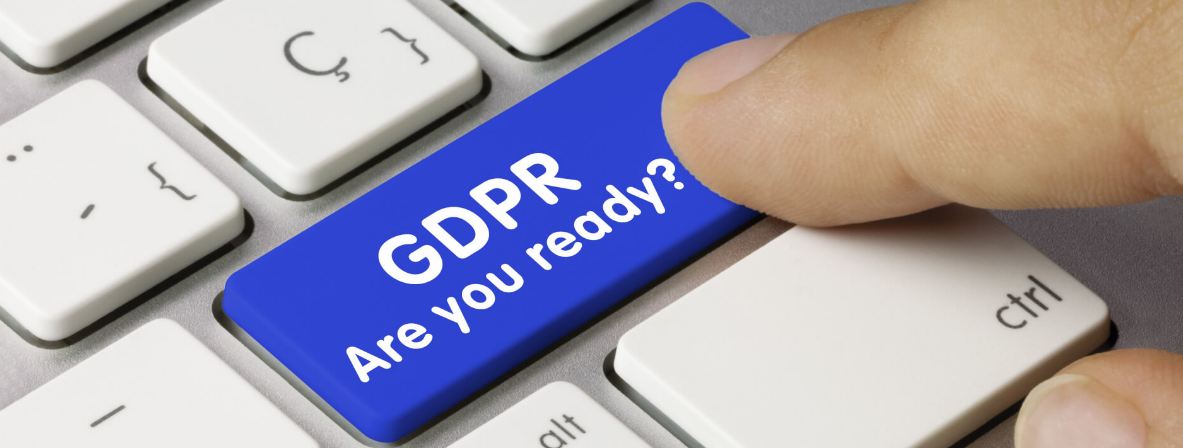
GDPR – Are You Ready?


The new so-called “General Data Protection Regulation” (GDPR) of the EU goes into full force on May 25, 2018. GDPR is a serious measure which is really designed to stem any criticism of the EU Commission. The claimed purpose is to stop propaganda pretending this will boost consumer confidence, revive the economy and generate billions of dollars in savings. What this is all about is the plain fact that this regulation will lay the foundation establishing a new layer of bureaucracy pretending to protect citizens but will burden the private sector since there are no specific injuries that are defined in advance leaving the enforcement arbitrary in the hands of bureaucrats at their discretion.

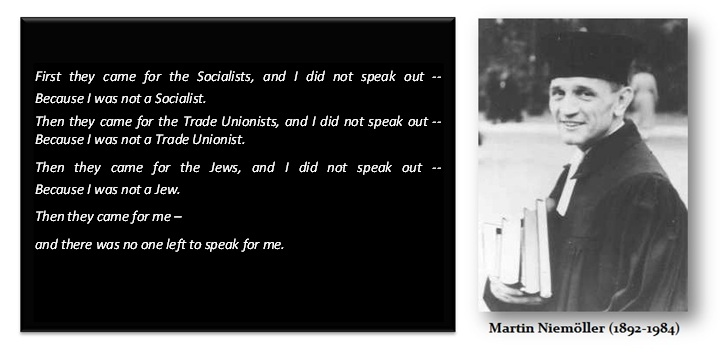
Across all of Europe, nobody understands exactly what is allowed and what is forbidden, who has to take what action, but the penalties of up to €20 million or 4% of your annual turnover are shocking. If you violate these uncertain rules when using personal data who can find yourself charged for simply doing normal business. This new EU regulation provides for a major threat to all companies in every field without exception. It appears to be clandestinely intended to be a revenue-raising tool that is just undefined. This regulation could be the straw that breaks the back of public patience and economic development in Europe. So far, such actions were always directed against individual industries such as the banks, which everyone else ignored since it was not their pocket being hit. This submissiveness unfolded more like the famous saying of Martin Niemoller (1892-1984) how the Nazi came for each group one at a time and nobody said anything until it was their turn and there was nobody left to ask for help.

Nobody knows if it is even okay to congratulate a customer on a birthday. If you can only send one e-mail to people who have expressly agreed in advance, can you send any sort of greeting even for Christmas? You are not allowed to send these persons any suitable e-mail or ask them for authorization by phone. A letter with a request for permission to send an e-mail is permitted. Lawyers cannot interpret exceptions in the vague formulations for even that will be just opinions that vary from one lawyer to the next. Everyone wants, everyone needs clarity but it does not exist!

This legislation is akin to the Writs of Assistance entered by King George III, which sparked the American Revolution. The defending lawyer against the King’s Writs of Assistance was James Otis (1725-1783) who pronounced these writs were “the worst instrument of arbitrary power, the most destructive of English liberty, and the fundamental principles of law, that ever was found in an English law book.” Otis warned that the king placed discretion in the hands of every agent to act as he desired. Nothing has changed for the government can do whatever it desires today and it is always the burden of the citizen to prove he has any rights whatsoever.
The EU has created the very same type of act. Allowing penalties to be imposed at the discretion of government agents without any clearly defined law is extremely arbitrary. The only thing truly defined are the penalties which can be up to €20 million Euros or 4% of the gross turnover of any business. Government agencies such as the judiciary, the police, the financial and intelligence services enjoy a special status, naturally.

Lawyers cannot even agree on whether the sending of an email by a company to a person is allowed or not for a birthday or holiday. Does there have to be prior consent to receiving an email? Some lawyers have warned that you may not be able to even send an email to ask for permission to send one. A company who sends unwanted emails commits a punishable violation of the regulation. Simply requiring to have an “unsubscribe” feature fails to comply with the law.

There are the countless emails we all get from Nigeria promising you are now a multi-millionaire just send your personal details so they can clean out your account. Just how is an EU regulation going to be applied overseas? Can a company that bombards people with emails constantly every day just because they look at their site but did not buy anything could be charged in Europe even if they are sending them from the USA. There is such a thing as territorial jurisdiction, but then again there is also extradition agreements. It appears that legitimate businesses will be hunted and fined for just doing commerce. The pretend emails that are criminally intended to grab your money or hold your computer for ransom will never be caught in the process.

The entire basis of Microsoft Windows is to push advertising and to take your surfing the net without any warning they are doing it. The latest Windows version was interesting. We turned off auto-update and two separate computers crashed at the same time and forced a reboot and then took 30 minutes to install updates. This seems that you cannot even opt-out even if you pay for the Pro Version. The vagueness of this law could actually call into question Windows when it is up to the discretion of an agent.

BTW – we do not sell anyone’s names, we do not send endless solicitations every day, anything we send as to notices of posts you must subscribe to for free.

Germany Gets a Grand Coalition


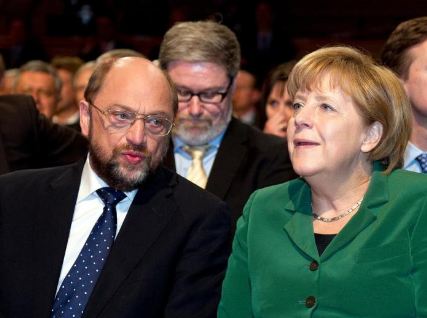
The SPD members voted by a two-thirds majority for their party’s entry into a renewed grand coalition. The acting Social Democrats (SPD) party leader Olaf Scholz came out and said: “We now have clarity: The SPD will enter the next federal government.” The SPD had no choice. The polls showed if they returned and put it to an election, they would lose to the rising right-wing. Germany will move into a grand coalition but it truly lacks the majority support of the German people. This means that political unrest in Germany will continue to rise.

Chancellor Angela Merkel finally reached a deal this past Wednesday to form a new German grand coalition government by handing the powerful finance ministry to the country’s main center-left party SPD in an agreement aimed at ending months of political gridlock. Both the CDU and SPD realized that if they failed, both would lose seats to the rising AfD. Merkel’s conservative Christian Democratic Union (CDU), its Bavaria-only sister, the Christian Social Union, and the center-left SPD agreed to a 177-page deal that leads off with the promise of “a new awakening for Europe.”

Germany has already broken its post-World War II record for the longest time in its latest election on Sept. 24 to the swearing-in of a new government. That is still at least several weeks away. Merkel has been leading a caretaker government, which has not been in any position to play any significant role in the debate on the fate of the EU going forward. That spotlight has been taken by France’s President Emmanuel Macron who seems to enjoy his newfound power.

Schulz’s has taken a course in recent months that simply undermined his authority. On election night, Schulz vowed to take the party into opposition against the CDU. He reversed course in November after Merkel’s efforts to build a coalition with two smaller parties collapsed. Merkel needed only the approval of a party congress of her CDU which seems to do whatever she tells them to do. The Social Democrats are set to get the foreign, labor and finance ministries to run. The finance ministry is the major prize, for it was held by Merkel’s CDU for the past eight years. This has been a major influential position given Germany’s status as the eurozone’s biggest economy. The interior ministry, also held by the CDU, would go to Bavaria’s CSU, which has pushed hard to curb the number of migrants entering Germany.

Sunday Talks: Secretary Wilbur Ross vs George Stephanopoulos…


I always find it amusing that ABC News never publishes the excerpts of interviews (on their YouTube channel) that run counter to their political ideology.   I digress…

Commerce Secretary Wilbur Ross appears on ABC to talk trade with George Stephanopoulos.  Secretary Ross highlights a key point in the discussion about how post-World-War-II trade tariff policies were intentionally constructed to lift Germany, Japan and economically devastated nations after the war.  This was the origin of the progressive trade association that became the WTO.

[Ross’s segment begins at 40:58 of the video below – prompted, just hit play]

UK Prime Minister Theresa May Has “Deep Concern” Over POTUS Trump’s Steel Tariffs, While Forgetting Her Own Steel Tariffs in 2016…


Oh, how the European hypocrisy is in overdrive on the tariff issue.  According to BBC U.K. Prime Minister Theresa May and President Trump had a phone call where the British leader expressed “deep concern” over the Trump administration’s pending tariff’s on Steel and Aluminum.

Theresa May has told Donald Trump of her “deep concern” at his plan to impose tariffs on steel and aluminium imports into the US.

Amid an escalating war of words between Washington and the European Union, the Prime Minister told the US President that “multilateral action was the only way to resolve the problem of global overcapacity in all parties’ interests”, a Downing Street spokeswoman said.  (read more)

Mrs. May must think Americans are unambiguously stupid because it was less than two years ago when the U.K. urgently applied tariffs against Chinese steel in an effort to stave off the losses within their own steel industry:

APRIL 2017,  – BRUSSELS (AP) — The European Commission has imposed anti-dumping duties on steel products from China to stop them flooding Europe’s struggling steel market.

The Commission said Thursday that an investigation has confirmed that Chinese hot-rolled flat steel has been sold in Europe at dumping prices. The Chinese exports will now be taxed with duties ranging from 18.1 percent to 35.9 percent.  (read more)

Hypocrisy much?

President Trump is entirely correct in his prior tweet:

The $20 trillion U.S. economy is the market, the customer, that all European countries want/need access to.  We are the customers in the equation.  We can crush them in any trade conflict.  Apply a 20% tariff to imported Audi’s, or simply apply a reciprocal trade tariff toward their auto’s identical to those they apply on ours…. wait and see just how long Germany chooses to play stupid.

Pro-tip, they wouldn’t last a day without our business.

President Trump has the highest approval rating compared to the leaders of largest economic countries in Europe.  However, this shouldn’t come as a surprise because it was evident in Germany’s recent election that Merkel -in victory- had less support in Germany than President Trump holds in the U.S.  Go figure

Senator Joe Manchin Praises Trump Trade Initiatives and Policies…


Senator Joe Manchin appears on Face the Nation and highlights his support for the Trump trade initiatives.  The cross-party MAGAnomic support highlights an aspect to President Trump policy that is unique to this administration. [ DEEP DIVE HERE ]

Within the aggregate MAGAnomic policy of President Trump there are two central components: taxes and trade.  With the ‘tax element’ completed, the administration will likely jettison some of the Wall Street crowd as they focus on the trade issues that specifically benefit Main Street.

.

The application of “economic nationalism” as a policy is adverse to the interests of multinational corporations. The multinationals have been purchasing U.S. policy through DC politicians for decades. However, the last 30+ years have seen exceptionally high increases. (read more)