European Commission President Ursula von der Leyen Blames Russia for EU Immigration Crisis


Posted originally on CTH on August 29, 2025 | Sundance

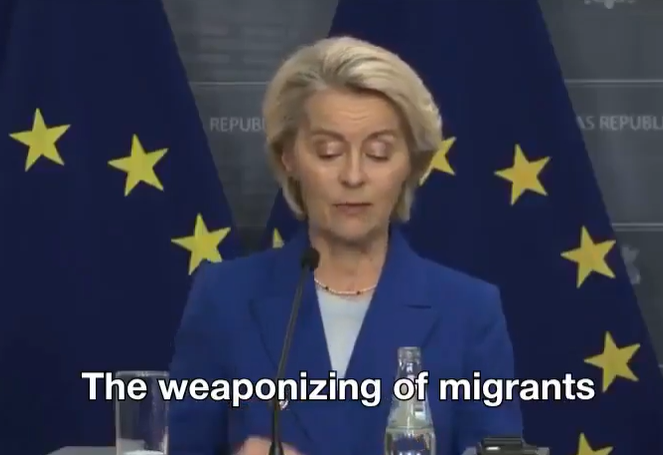
During a meeting in Latvia to organize EU defenses, European Commision President Ursula von der Leyen outlines how Russian President Vladimir Putin is to blame for the EU importing millions of Mideast and African immigrants.

It’s not the fault of the European nations their states are riddled with criminal conduct at the hands of migrants. No, it is Vladimir Putin who is to blame.  This is the mindset of the European leadership.  WATCH:

.

Liz Yore On Archbishop Joining Anti-Trump Tycoon In Crusade Against Deportations


Posted originally on Rumble By Bannon’s War Room on: August 27, 2025

Misleading Q2 US GDP Figure


Posted originally on Aug 29, 2025 by Martin Armstrong |  

GDP 3

The U.S. economy did post a headline-grabbing 3.3% gain in Q2, but that figure is misleading. It’s driven largely by the collapse in imports—not by true domestic growth. Remember the GDP formula: GDP = C + I + G + (X – M). A sharp drop in imports boosts that (X – M) term artificially, making GDP look better even while the underlying fundamentals stagnate.

Consumer spending rose only modestly at 1.6% and private domestic final sales rose 1.9%. They relay a lower estimate and then state the true figure, acting as if the figure should be celebrated. Meanwhile, business spending remained weak.

We’ve also noted that household debt surged by $185 billion in Q2, with rising mortgage, credit-card, auto-loan, and student-loan balances. Delinquency rates are up, and real incomes are under pressure. Consumers are treading in deep waters.

Imports tanked by 29.8% after nations began to panic buy last quarter ahead of tariffs. Exports declined 1.3%. The import volatility has inflated figures and does not mark sustainable economic growth. Investment into the US has also improved as capital has nowhere else to go, but again, the expansion is not enough for the long-term.

The economy contracted 0.5% in Q1, and the Commerce Department is reporting that the economy rose 3.3% in Q2, with growth averaging 2.1% or a bit above 1% per quarter. Stagflation is not simply high inflation with low growth. It is the direct result of government mismanagement. When politicians and central banks try to manipulate the economy, they destroy confidence. That is the fuel behind stagflation.

What Happens When Governments Cannot Sell Their Debt?


Posted originally on Aug 28, 2025 by Martin Armstrong |  

1894 20 c Italy

QUESTION: Marty, you have mentioned that at some point in history, when Italy could not pay off its 30-day short-term paper because it could not sell the new debt to pay off the old, as they do today, they converted 30-day paper to long-term. I cannot find the details on that. Could you please explain this, as it is a risk here in Europe today?

Bret

ANSWER: Yes, that was during the Panic of 1893 that became a Global Contagion. Italy, when faced with similar circumstances to what we see today, did not officially default in the classic sense of failing to pay. Still, it executed a coercive debt restructuring that is widely considered a selective default or soft default in 1893-1894. This is what we refer to as a forced loan.

Italy was facing a run on its short-term debt and unable to roll over the maturing paper because there were no buyers, the Italian government, led by Prime Minister Francesco Crispi, did not formally declare a default. Instead, it passed a law (Legge 11 luglio 1894, n. 386) that forcibly converted the short-term Buoni del Tesoro into a new long-term bond.

The law mandated that holders of the short-term Treasury notes could not be repaid in cash upon maturity. Instead, they were forced to exchange their maturing short-term paper for a new long-term government bond, called the “Rendita Italiana 5%” (5% Italian Annuity).

This new bond had a 5% coupon but was issued at a price below par (effectively giving a higher yield to compensate, somewhat, for the forced nature of the deal). Crucially, it was a perpetual bond, meaning it had no final maturity date.

The Italian government unilaterally changed the terms of its debt. Investors lent money for 30 days, expecting to be repaid in cash at the end of that term. The government broke that promise.

Investors had no choice. They could not get their cash back; their only option was to accept the new long-term instrument. While they received a new security, it was illiquid (perpetual) and its value was uncertain. This action caused significant financial losses for many Italian banks and citizens who held the paper.

I would expect that Europe will pull this one off when it can no longer issue new debt to pay off its old debt. We are living in a perpetual Ponzi scheme. There is ONLY one way this ends, and that is a default or a forced loan.

Leaders of France, Germany and Poland Converge on Moldova to Support EU Against Russia


Posted originally on CTH on August 28, 2025 | Sundance

Moldova was always important for the goals of the EU elites against the influence of Russia. However, after Georgia rejected the EU manipulation, Moldova became even more important; very, very important.

Moldova is now the frontline battle of the EU Central Bank against pesky Russian ideological intransigence.  All your democracies are belong to us, comrade.  In the background the EU economies are beginning to quiver, led by Germany.

Meanwhile, Volodymyr Zelenskyy is worried that if Moldova gains EU membership before Ukraine, his battleground position could be compromised. ‘Hey, wait a minute, we’re no more corrupt than they are.’ Ukraine wants simultaneous attention, priority and ascension.

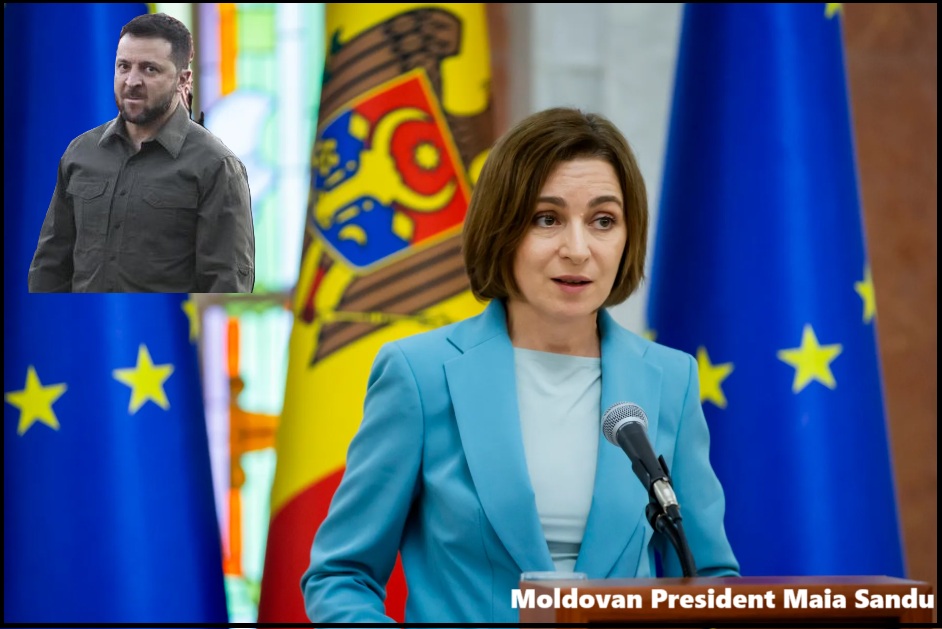
Moldovan President Saia Sandu squeaked a win in her election with the use of overseas ballots. The highly divided Moldovans living in Moldova didn’t support Sandu, but the mysterious Moldovans who do not live in Moldova supported her. The EU leadership doesn’t want too many people to notice that.

BRUSSELS ― The leaders of France, Germany and Poland are converging Wednesday on tiny Moldova to urge voters to keep turning away from Russia and support their country’s pro-EU government.

The Moldovan president, Maia Sandu, and her governing Party of Action and Solidarity (PAS) face a critical Sept. 28 parliamentary election amid warnings that the Kremlin is working to influence the result and derail the country’s efforts to join the EU.

“There are those who will try to lead us astray. They have tried before … But the Moldovan people know what is best for them,” Sandu is expected to say Wednesday at a rally marking the country’s Independence Day.

A country of 2.4 million people sandwiched between Romania and Ukraine, Moldova has become a target for Russian President Vladimir Putin. While Moscow fights a physical war to subjugate Ukraine, it is using using hybrid tactics to try to control Moldova, including large-scale election manipulation of voters.

This week’s visit by French President Emmanuel Macron, German Chancellor Friedrich Merz and Polish Prime Minister Donald Tusk is designed to help keep Moldova on a path toward EU membership, and to remind voters there’s an alternative to Russia.

[…] Last year, Sandu secured a second term in office in a nail-biting election marred by vote-rigging, including a scheme that saw voters paid to back her Kremlin-friendly opponents. A simultaneous referendum on EU membership passed by a margin of 50.4 percent to 49.6 percent.

In both cases, the votes of the 250,000 Moldovans who live abroad, many in EU countries, formed a key pillar of the liberal government’s support. Earlier this month, Moldova’s National Security Adviser Stanislav Secrieru warned fears were growing over disinformation aimed at the diaspora and even of possible disruptions at polling stations abroad. (read more)

USAID (Samantha Power) under the Joe Biden regime was a key player in the organization of the mail-in ballots for Moldova. Imagine that.  Now there’s a little problem….

…. USAID and Samantha Power are no longer around to assist with the mid-term parliamentarian elections.  I mean, what would it look like if the President was elected, albeit barely, as the Moldovan citizens looked with suspicious cat glances, and then suddenly, the next election didn’t highlight the same result for Parliament?   Almost as if something was afoot before.

Hence, Emmanuel Macron, Fredrich Merz and Donald Tusk, three of the consequential USAID beneficiaries, are heading to Moldova to support Saia Sandu.   We’ll keep watching.

Important Information from Treasury Secretary Scott Bessent


Posted originally on CTH on August 27, 2025 | Sundance

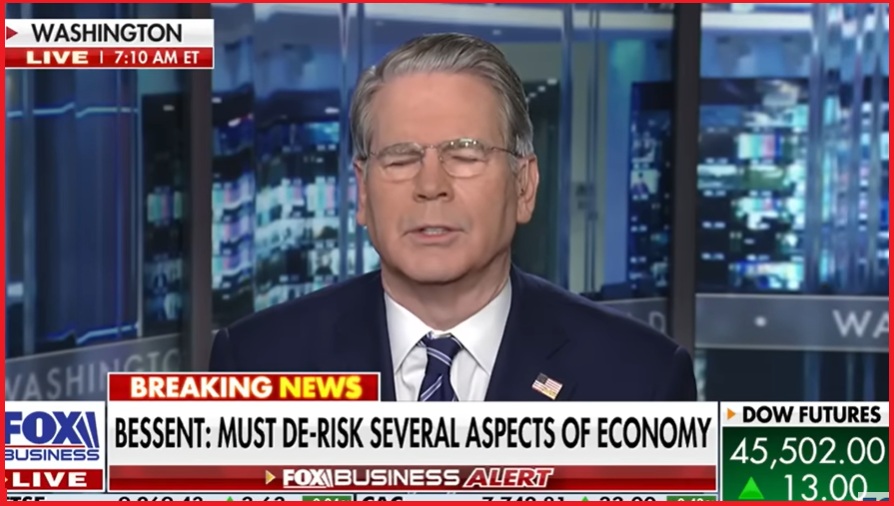
Treasury Secretary Scott Bessent appears on Fox Business to discuss some very important current issues in the world of finance, banking and trade.

Bessent begins by answering questions about the U.S. government taking equity interests in companies that come to the U.S. for support.  Bessent then notes the potential for the Trump administration to construct a taxpayer stake in Fannie and Freddie, before the Treasury Secretary moves on to talk about the trade issues with India.  WATCH:

.

William Thibeau On The NDAA And It’s Proposed $500 Million Annually To Ukraine


Posted originally on Rumble By Bannon’s War Room on: August 25, 2025

Polish President Vetoes Extended Ukrainian Refugee Aid Package


Posted originally on Aug 26, 2025 by Martin Armstrong |  

Nawrocki.Poland

Poland’s president has vetoed a bill that would extend aid to Ukrainian refugees. Karol Nawrocki, a nationalist conservative, commented that Ukrainians “make the effort to work in Poland” and pay taxes in the country in order to be eligible for support. Nawrocki, whose own party approved of the initial aid to Ukrainians, stated that the current financial package “places us in a situation where citizens of Poland are treated worse in their own country than our guests.”

Over 1.5 million Ukrainians have fled to Poland since the beginning of the Russia-Ukraine war. Poland has offered every single refugee a taxpayer-subsidized life. Ukrainians living in Poland are eligible for free housing, food benefits, health care, education, child allowances, and more.  Ukrainian refugees were often favored for subsidized housing over nationals who may have been waiting years for council housing. Nawrocki stated he was concerned with the 800+ program that provided families with children an 800 zloty monthly payment per child, regardless of income. The president felt that only those working should receive this benefit, but why should the public be paying out this fund at all?

The head of the president’s chancellery, Zbigniew Bogucki, commented that “for Ukrainians who legally work in Poland, reside, run their own business, and pay taxes, there is nothing to worry about.” Despite the similarities in culture, there is a growing discontent for Ukrainian refugees in Poland due to the government prioritizing newcomers. That is how xenophobia traditionally comes about—the last one “off the boat” is seen as the outsider.

Poland created an Aid Fund operated by Bank Gospodarstwa Krajowego (BGK) funded partially by the European Investment Bank and the EU, which finances local governments and organizations to support Ukrainian refugees. A  €2 billion loan was approved for 2025 through the Aid Fund, including €600 million disbursed by the European Investment Bank (EIB). Assistance for Ukrainian refugees in Poland is estimated to have reached around 15.9 billion zlotys (roughly €3.5 billion) this year.

Perhaps Polish leaders underestimated the duration of the war. The Polish government spent 1% of GDP on Ukraine during the first three months of the war in 2022. Poland has continued to raise military spending and direct aid for Ukraine year after year. Yet, the president has been condemned for taking a “Poles first” stance and tightening its social program. The true nationalists do not believe he is doing enough for his nation, while the others see him as cruel. In the EU, anything aside from unconditional blind support from Ukraine is seen as a selfish act. There is no room for nationalism in Brussels.

Categories:Europe

Polish President Vetoes Extended Ukrainian Refugee Aid Package


Posted originally on Aug 26, 2025 by Martin Armstrong |  

Nawrocki.Poland

Poland’s president has vetoed a bill that would extend aid to Ukrainian refugees. Karol Nawrocki, a nationalist conservative, commented that Ukrainians “make the effort to work in Poland” and pay taxes in the country in order to be eligible for support. Nawrocki, whose own party approved of the initial aid to Ukrainians, stated that the current financial package “places us in a situation where citizens of Poland are treated worse in their own country than our guests.”

Over 1.5 million Ukrainians have fled to Poland since the beginning of the Russia-Ukraine war. Poland has offered every single refugee a taxpayer-subsidized life. Ukrainians living in Poland are eligible for free housing, food benefits, health care, education, child allowances, and more.  Ukrainian refugees were often favored for subsidized housing over nationals who may have been waiting years for council housing. Nawrocki stated he was concerned with the 800+ program that provided families with children an 800 zloty monthly payment per child, regardless of income. The president felt that only those working should receive this benefit, but why should the public be paying out this fund at all?

The head of the president’s chancellery, Zbigniew Bogucki, commented that “for Ukrainians who legally work in Poland, reside, run their own business, and pay taxes, there is nothing to worry about.” Despite the similarities in culture, there is a growing discontent for Ukrainian refugees in Poland due to the government prioritizing newcomers. That is how xenophobia traditionally comes about—the last one “off the boat” is seen as the outsider.

Poland created an Aid Fund operated by Bank Gospodarstwa Krajowego (BGK) funded partially by the European Investment Bank and the EU, which finances local governments and organizations to support Ukrainian refugees. A  €2 billion loan was approved for 2025 through the Aid Fund, including €600 million disbursed by the European Investment Bank (EIB). Assistance for Ukrainian refugees in Poland is estimated to have reached around 15.9 billion zlotys (roughly €3.5 billion) this year.

Perhaps Polish leaders underestimated the duration of the war. The Polish government spent 1% of GDP on Ukraine during the first three months of the war in 2022. Poland has continued to raise military spending and direct aid for Ukraine year after year. Yet, the president has been condemned for taking a “Poles first” stance and tightening its social program. The true nationalists do not believe he is doing enough for his nation, while the others see him as cruel. In the EU, anything aside from unconditional blind support from Ukraine is seen as a selfish act. There is no room for nationalism in Brussels.

Germany Reconsiders Welfare State to Fund Ukraine


Posted originally on Aug 26, 2025 by Martin Armstrong |  

Germany_to_fund_long_range_weapons_in_Ukraine_says_Merz 5 31 25

German Chancellor Friedrich Merz does not have the ability to manage Europe’s top economy. “The welfare state that we have today can no longer be financed with what we produce in the economy,” Merz said in a recent meeting. At the same time, Merz agreed to begin sending Ukraine 9 billion euros annually in addition to all other aid.

Merz tried to claim there would “not be any increase in income tax on medium-sized companies in Germany with this federal government under my leadership.” SPD Vice Chancellor Lars Klingbeil disagrees, and said that middle and high-income citizens could race an increased tax burden. “I’m not satisfied with what we have achieved thus far,” the chancellor said. “It has to be more.”

Merz campaigned on a platform of fiscal responsibility. Then he left Germany’s borders open and worked to find a loophole in the Constitution to fund Ukraine endlessly without any caps. The German welfare state cost taxpayers €20.2 billion ($23.6 billion) in 2024. Public spending accounted for 49.5% of all economic output in 2024.

Lars Klingbeil stated that Germany’s federal budget will face a €30 billion shortfall by 2027. His solution is clearly to increase taxes. “Especially people with high income and high net worth have to ask themselves: What am I contributing to make this country fairer?” He added: “Most of the time, I see people with very high incomes and very large fortunes making a strong appeal to the whole country that everyone should work harder and longer. But I don’t think that does justice to the pension debate that we really need to be having in Germany.”

Diplomacy Merz_on_Ukraine_No_hope_left_for_a_diplomatic_solution_t

Germans have one of the highest tax burdens in Europe. Yet, by 2029, Germany is expecting to take on €851 billion worth of new debt. The war on the energy sector, perpetual spending on Ukraine, and open borders are crippling the German economy. German lawmakers would like to cut back on payments for citizens who spend a lifetime paying into the system. Germany spent 14.8% more in 2024 on an annualized basis on basic income support and nursing health care to the tune of €20.2 billion. Around €11.4 billion of those funds were spent on pensioners and those unwilling to work. In 2025, the nation will spend €43 billion on the citizens’ stipend or Bürgergeld scheme that provides basic income for the unemployed (not including pensioners or those with disabilities).

Merz plans to cut spending for the Bürgergeld scheme. He plans to increase taxation on pensions, although over half of German pensioners currently receive payouts below the poverty line. Merz will place a cap on the amount welfare recipients can use toward housing. While some of these cuts are necessary, Merz fails to acknowledge the elephant in the room—YOU’RE SENDING BILLIONS PER YEAR TO A FOREIGN GOVERNMENT!

Why should the German people be forced to send 9 billion euros to a foreign government annually? The people have been forced to send public funds and soon the people will be forced to send their sons and daughters to fight a unwinnable war. Germany’s leaders have put domestic policies last in favor of globalist neocon ambitions. The nation is already in a recession and the government continues to implement policies that are pushing the nation further into ruin.