Biden White House Counsel and DOJ RAIDED Trump’s Presidential Cell Phone, Julie Kelly Reports


Posted originally on Rumble By Bannon’s War Room on: Mar 15 2025, at 2:00 pm EST

MASSIVE RALLY in Belgrade Demanding Leadership Step Down – 100,000 Estimate


The Power of Influence


Posted originally on Mar 16, 2025 by Martin Armstrong 

plagiarizism

COMMENT: You say you do not advise Trump. But whatever you seem to project, he does. Others seem to be copying your forecasts, even debt ad ___ suddenly says the default comes when you can’t sell the debt. Interestingly, they do not have the historical examples or the database that you do. So, how does this work? Are you the source for everyone?

PD

REPLY: I do not advise Trump. Yes, many near him take our reports. I know many take our research and pretend it is their own. Impressive, they do not have the staff to back up even collecting such a database. That is life. Even President Biden was said to have plagiarized people to climb the ladder of success. Just ask them for the historical facts to back up what they pretend is theirs.  People can search for things fast these days to see the author of anything.

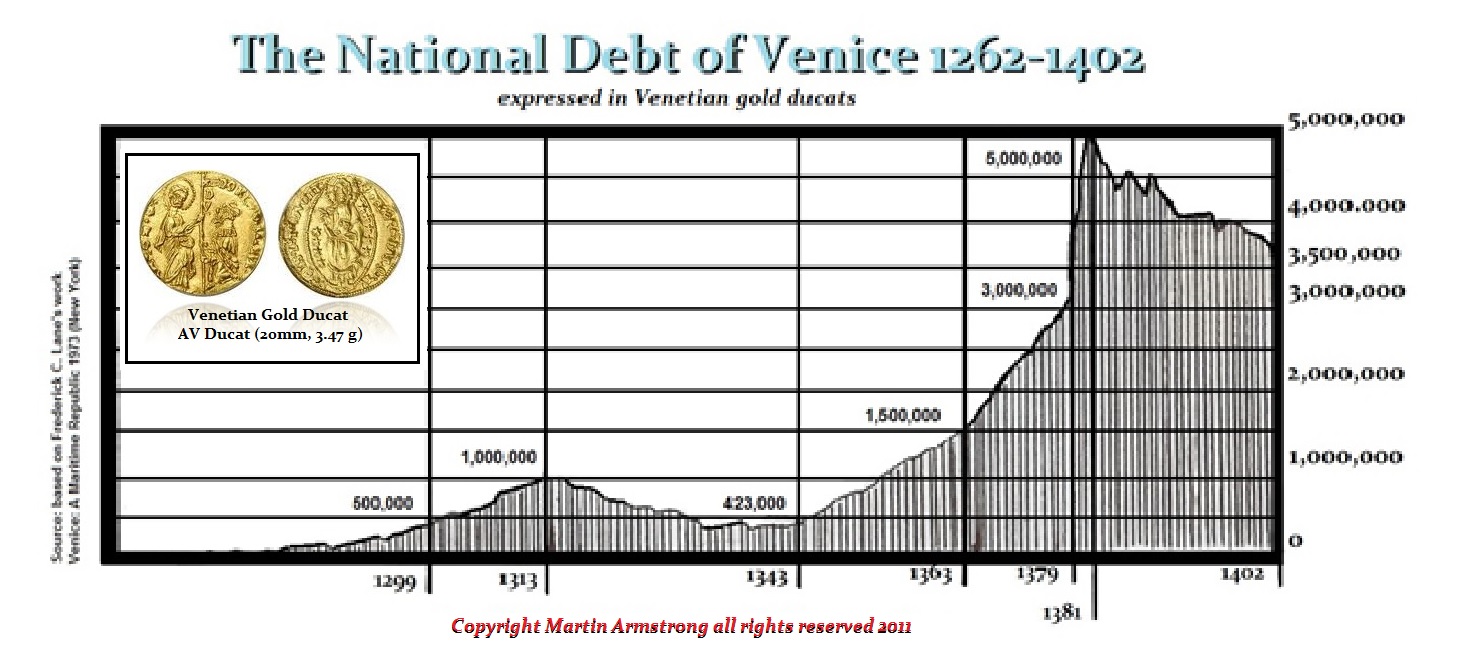
Venetian Debt
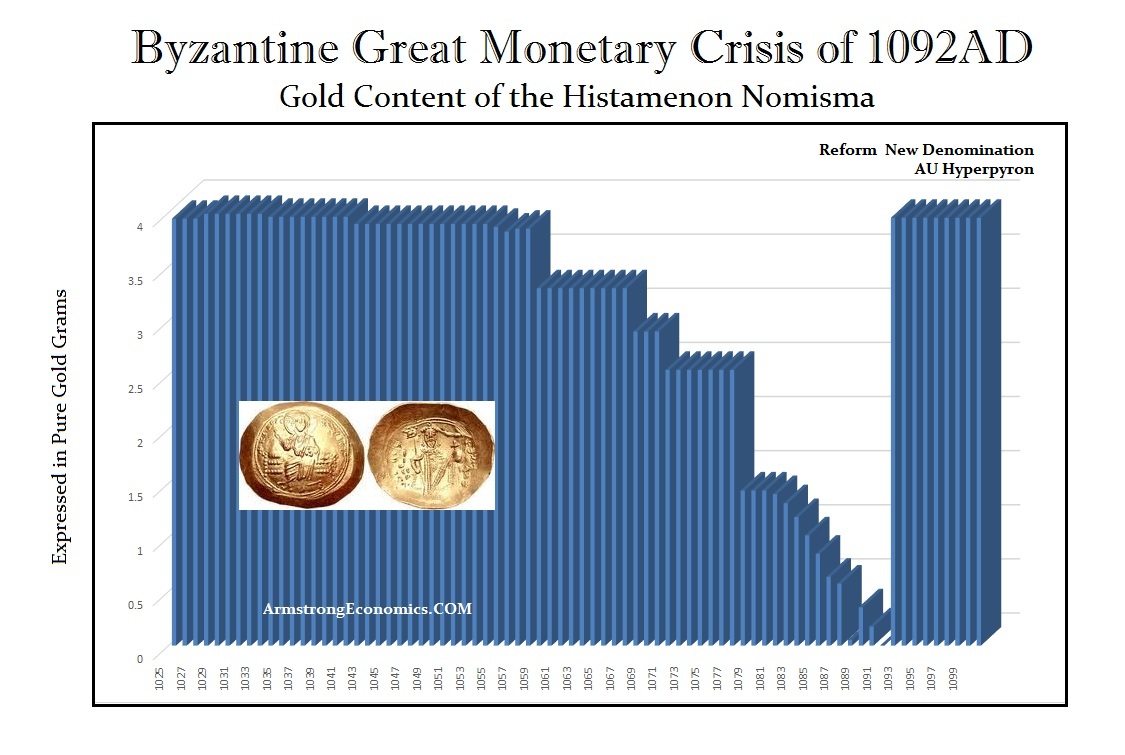
1092 Byzantine Monetary Reform
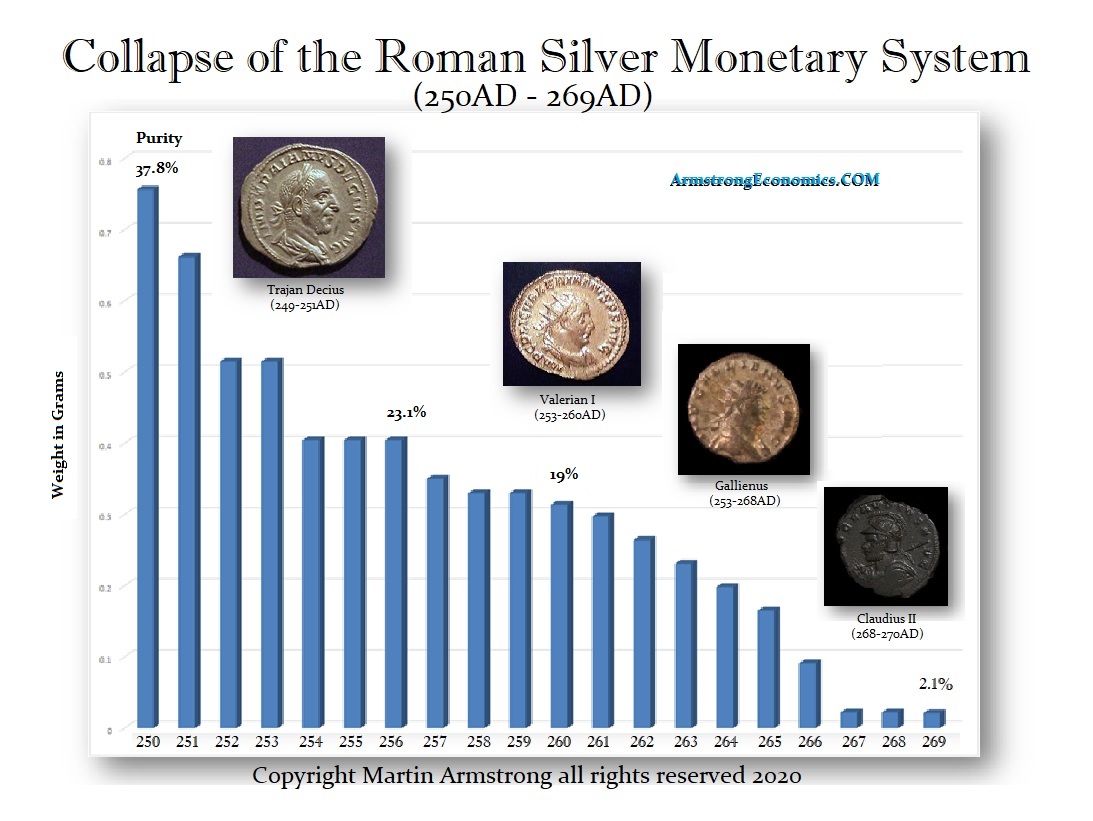
Rome DECLSILV 250 269AD Gallienus

Only with a database was it possible to see capital flows. Even the CIA admitted to me that I invited that. Sovereign Debt defaults, who, when, how, and why, all came from analysis of ancient to medieval economies. It cost me tens of millions of dollars to assemble the coinage to see what was NOT recorded by historians definitively.

Denarii Hoard

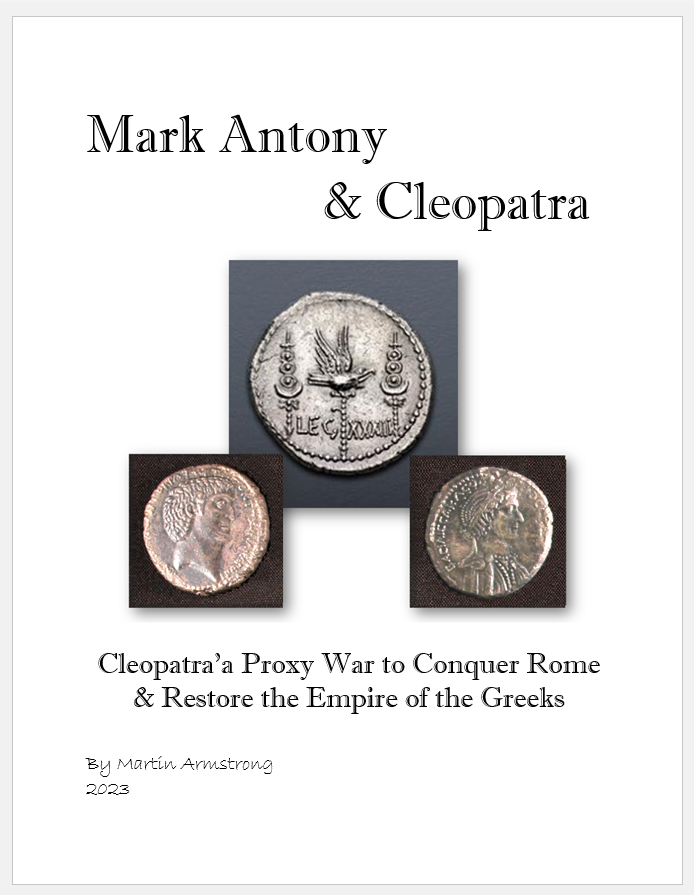
Over the years, I have bought hoards of ancient coins just to see snapshots of what was in circulation and when. I have even helped to rewrite history with coinage that is not opinion. Even the extent of Mark Antony’s coinage funded by Cleopatra was still the most common coinage discovered in a hoard buried 100 years later in Pampei. It is a joke that someone can stand up pretending something is their research without the database or even the staff.

Antony Cleopatra

Interview: War: US and China, Ukr, Rus, Gold Flows, Market Impacts


Posted Mar 15, 2025 by Martin Armstrong 

Joe Pags: “They Want The Police To Shoot You.”


Posted originally on Rumble By Bannon’s War Room on: Mar 14 2025, at 5:00 am EST

END THE SINS OF WATERGATE REFORMS: John Yoo Explains How Executive Branch Power Is Under Attack


Posted originally on Rumble By Bannon’s War Room on: Mar 15 2025, at 5:00 am EST

THOUGHTCRIME Ep. 76 — Cannibal Democrats? Undead Democrats? VR Prisons?


Posted originally on Rumble By Charlie Kirk show on: Mar 13, 2025 at 3:00 pm EST

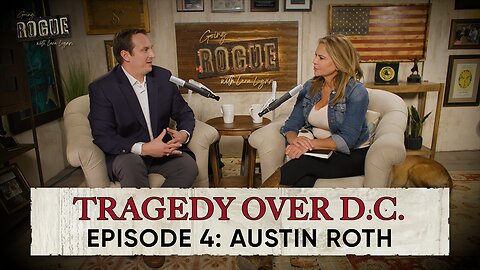
Going Rogue with Lara Logan – Episode 4 | Tragedy Over D.C. with Austin Roth


Posted originally on Rumble By Lara Logan on: Mar 13, 2025 at 2:00 pm EST

US Deficit Surpassed $1 Trillion in February


Posted originally on Mar 14, 2025 by Martin Armstrong 

US Treasury Bldg

According to the Treasury Department, America’s deficit surpassed the $1 trillion mark this February. The deficit reached $307 billion for the month, marking a 2.5X increase on a monthly basis and 3.7% higher on an annual basis.

The deficit for the first five months of FY25 hit $1.15 trillion, a $318 billion increase (+38%) from the same period last year. America is paying $74 billion simply to finance this debt, with interest payments over the FY rising to $396 billion.

The deficit under the last three years of Biden-Harris grew from $1.38 trillion to $1.83 trillion as the public sector and government spending multiplied. Trump is attempting to make a dent in government spending through DOGE, but he is hitting America’s revenue with these tariffs. Both measures have only just begun and have not made a major impact on the economy yet.

Deficits no longer create economic growth; instead, they now consume it. Each additional dollar of debt generates diminishing returns, meaning the cost of servicing this debt will soon exceed the nation’s ability to function without radical restructuring.

Investors and global capital are beginning to take notice. Foreign demand for US debt has waned, with China and Japan significantly reducing their Treasury holdings. Meanwhile, the Federal Reserve is trapped. If it raises rates to combat inflation, it exacerbates the debt crisis. If it lowers rates, it risks unleashing another speculative bubble, but central banks tend to lower rates when they see a recession looming. There is no way out without structural reform.

Monetary History ofCanada


Posted originally by Martin Armstrong on March 12


Early 1600s: Beaver pelts are the one universally accepted medium of exchange, though wheat and moose skins are also legal tender

Mid 1600s: Wampum, or strings and belts made from shell beads, becomes legal tender in colonial New England. Eight white beads or four purple beads buy one penny.

Canada Playcard Money - 3

June 8, 1685: The first issue of card money occurs, which is printed on playing cards. The practice is criticized because it’s easy to counterfeit.

1722: Copper coins are introduced, though merchants didn’t like them; they continued to let people buy goods based on their own credit standing.

Eighteenth century: The lack of a standard currency and the differences in ratings given to the many coins in circulation in the colonies, “undoubtedly hindered trade and was a major source of economic inefficiency.”

Canada 1819 First Bank Note

1817: The Montreal Bank (subsequently the Bank of Montreal) issued the first bank notes in Canada after its establishment in 1817. Other banks soon followed suit. The notes were well received and became the main means of payment in British North America.

Canada 1911 $500

1854 – 1914: The Dominion of Canada is under the gold standard. The value of the Canadian dollar was fixed in terms of gold and valued at par with the U.S. currency. Both U.S. and British gold coins are legal tender in Canada.

July 11, 1864: The greenback sinks to less than 36 cents (Canadian), an all-time peak for the Canadian dollar, from close to parity in early 1862. It subsequently recovers through the decade and the currencies trade around par until the outbreak of the First World War.

Canada 1954 $1000

Mid-1950: Canadian dollar depreciates. The federal government cancels fixed parity, putting it at odds with the International Monetary Fund, and the Canadian currency appreciates.

Aug. 20, 1957: The Canadian dollar hits a peak of $1.06 (U.S.).

May 2, 1962: The government establishes a new par for the Canadian dollar, fixing it at 92.50 cents (U.S.) with a fluctuation band of 1 per cent.

May 31, 1970: The government floats the Canadian dollar amid a growing budget surplus and rising inflation.

April 25, 1974: The dollar hits a high of $1.04 (U.S.) against the greenback as global demand boosts the price of raw materials. The strength sparked fear about Canada’s export industries at a time when the unemployment rate was already high.

Nov. 15, 1976: The Parti Québécois is elected, causing markets to “make a major reassessment of the Canadian dollar’s prospects.” At the same time, commodity prices start to soften, inflation picks up. By 1979, the currency slides to 84 cents (U.S.).

August, 1981: The Bank of Canada’s key rate hits 21.2 per cent. By 1982, the dollar traded below 77 cents (U.S.).

Feb. 4, 1986: The Canadian dollar hits a record low of 69.13 cents (U.S.) as falling commodity prices hurt the economy.

1988-1989: The currency rebounds somewhat to close the decade at 86 cents (U.S.).

1990s: The currency weakens again, closing the decade at 69.29 cents (U.S.). Inflation and interest rates fall and commodity prices soften.

1998: The international crisis in emerging markets such as Russia and Latin America causes the dollar to slide as low as 63.11 cents (U.S.).

2002: The currency hits a record low of 61.98 cents (U.S.) on Jan. 18, 2002.

2006: The loonie tops 90 cents (U.S.), prompting calls for parity. It then weakens for much of the balance of the year.

2007: The loonie takes flight again. On May 31, it topped 94 cents (U.S.) – the highest level in 30 years. Later that year it hit parity in September. That fall the loonie hit its modern-day intra-day high of $1.10 (U.S.), and hit its highest closing price of $1.08 (U.S.) on Nov. 6, 2007.

2008: The loonie continued to trade near parity until it dipped below that level on July 21, 2008.

2009: The Canadian dollar closed at a recent low of 76 cents U.S. on March 9, 2009, before restarting a rapid ascent higher against a basket of international currencies.

2010: The loonie touches parity for the first time in 20 months on April 6, 2010.