China Announces $3b Tariffs on U.S. Imports – Pork, Scrap Aluminum, Wine and Fruits…


In retaliation for $50 billion in U.S. trade tariffs against Chinese imports, China laughably hits back with $3 their own billion tariffs against the U.S.  According to most reporting Beijing has selected U.S. pork and scrap aluminum as targets for a 25% tariff, along with wine and fruit tariffs around 15%.

It should be emphasized the approach by China is rather ridiculous considering the Chinese government purchased the largest U.S. pork manufacturer Smithfield in 2013 for $5 billion; at the time the purchase price was 30% more than the company was worth.  Smithfield, now a Chinese company, represents 25% of all U.S. pork products.

Do you really think China is going to not import it’s own pork products… or subject them to a domestic tax?  Think about it.  It’s ridiculous.  China knows they have ZERO leverage in a trade-dispute with the U.S., they cannot afford to lose access to the U.S. market.

The example of Smithfield foods is exactly what we have outlined in how China cannot sustain itself and needs to control the assets of foreign countries.  Hence, their one-road/one-belt program for securing products and raw materials.  China is a dependent economy, they need to exploit global trade to survive.  China cannot feed itself. This is the inherent flaw within their short-sighted authoritarian government-controlled economic model.

Again, for emphasis, the Chinese government underwrote the purchase of Smithfield foods in 2013.  They paid 30% more than the company was worth because they were securing access to food just like they would any other raw material (uranium, minerals, etc).  China also purchases U.S. politicians to retain their ability in this regard.

Now look at the cartoon from the unofficial Chinese state-run media today:

Remember THIS is the position of the Chinese Government:

[…]  China’s latest countermeasures target fruit, pork and other US goods totaling some $3 billion, the equivalent of China’s losses caused by US tariffs. The list indicates China will never compromise and will always retaliate against unreasonable tariffs.

For every single move against Chinese interests, the US can expect retaliation. It is time for Washington to bid farewell to the delusional, make-believe world whereby it imagines China an unresponsive, over-tolerant nation.

China does not want a trade war, but it will not retreat should one emerge. Monday’s announcement is hardly a subtle hint. China will show its strength through action.

Recent White House statements have revealed a tough stance on Sino-US trade disparities while some have even shown a level of optimism at resolving trade conflicts through negotiation. But it is not hard to realize that such self-contradictory behavior reveals that the US knows its actions are unjustifiable. China’s attitude toward a trade conflict has been consistent and Beijing will carefully handle all challenges from the US.

There are always a few Western politicians who think China might step back and concede. But they are wrong. The Chinese government only cares about what is in the best interest of its people rather than elections.

Washington must be reasonable dealing with China. Threats will fail as China is not afraid of the US, plus the Chinese have zero tolerance for political weakness.  (read more)

Nuance and subtlety is everything in China. Culturally harsh tones are seen as a sign of weakness and considered intensely impolite in public displays between officials; especially within approved and released statements by officials representing the government.

There is no doubt in my mind that President Trump has a very well thought out long-term strategy regarding China. President Trump takes strategic messaging toward the people of china very importantly. President Trump has, very publicly, complimented the friendship he feels toward President Xi Jinping; and praises Chairman Xi for his character, strength and purposeful leadership.

To build upon that projected and strategic message – President Trump seeded the background by appointing Ambassador Terry Branstad, a 30-year personal friend of President Xi Jinping.

To enhance and amplify the message – and broadcast cultural respect – U.S. President Trump used Mar-a-Lago as the venue for their visit, not the White House. And President Trump’s beautiful granddaughter, Arabella, sweetly serenaded the Chinese First Family twice in Mandarin Chinese song showing the utmost respect for the guests and later for the hosts.

Why the constant warm messaging?

What is the purpose?

What does all this have to do with a trade confrontation?

Historic Chinese geopolitical policy, vis-a-vis their totalitarian control over political sentiment (action) and diplomacy through silence, is evident in the strategic use of the space between carefully chosen words, not just the words themselves.

Each time China takes aggressive action (red dragon) China projects a panda face through silence and non-response to opinion of that action;…. and the action continues. The red dragon has a tendency to say one necessary thing publicly, while manipulating another necessary thing privately. The Art of War.

President Trump is the first U.S. President to understand how the red dragon hides behind the panda mask.

It is specifically because he understands that Panda is a mask that President Trump messages warmth toward the Chinese people, and pours vociferous praise upon Xi Jinping, while simultaneously confronting the geopolitical doctrine of the Xi regime.

In essence Trump is mirroring the behavior of China while confronting their economic duplicity.

China has no cultural or political space between peace and war; they are a historic nation based on two points of polarity. They see peace and war as coexisting with each other.

China accepts and believes opposite or contrary forces may actually be complementary, interconnected, and interdependent in the natural world, and they may give rise to each other as they interrelate to one another. Flowing between these polar states is a natural dynamic to be used -with serious contemplation- in advancing objectives as needed.

Peace or war. Win or lose. Yin and Yang. Culturally there is no middle position in dealings with China; they are not constitutionally capable of understanding or valuing the western philosophy of mutual benefit where concession of terms gains a larger outcome. If it does not benefit China, it is not done. The outlook is simply, a polarity of peace or war. In politics or economics the same perspective is true. It is a zero-sum outlook.

Therefore, when you see China publicly use strong language – it indicates a level of internal disposition beyond the defined western angst. Big Panda becomes Red Dragon; there is no mid-status or evolutionary phase. Every American associated with investment, economics and China would be well advised to put their business affairs in order accordingly.

President Trump will not back down from his position; the U.S. holds all of the leverage and the issue must be addressed. President Trump has waiting three decades for this moment. This President and his team are entirely prepared for this.

We are finally confronting the geopolitical Red Dragon, China!

The Olive branch and arrows denote the power of peace and war. The symbol in any figure’s right hand has more significance than one in its left hand. Also important is the direction faced by the symbols central figure. The emphasis on the eagles stare signifies the preferred disposition. An eagle holding an arrow also symbolizes the war for freedom, and its use is commonly referred to the liberation fight of righteous people from abusive influence. The eagle on the original seal created for the Office of the President showed the gaze upon the arrows.

The Eagle and the Arrow – An Aesop’s Fable

An Eagle was soaring through the air. Suddenly it heard the whizz of an Arrow, and felt the dart pierce its breast. Slowly it fluttered down to earth. Its lifeblood pouring out. Looking at the Arrow with which it had been shot, the Eagle realized that the deadly shaft had been feathered with one of its own plumes.

Moral: We often give our enemies the means for our own destruction.

RELATED:

Leverage… We have it, China doesn’t.

China is no longer hiding their alignment with their proxy province of North Korea.  Meanwhile President Trump has cultivated a very close relationship with Shinzo Abe of Japan, and to a lesser extent Prime Minister Modi of India.

Two teams preparing for the economic conflict:

China/North-Korea/Russia and Pakistan.

-VS-

U.S./South-Korea/Japan and India.

.

That’s the big picture.  The rest is chaff and countermeasures.
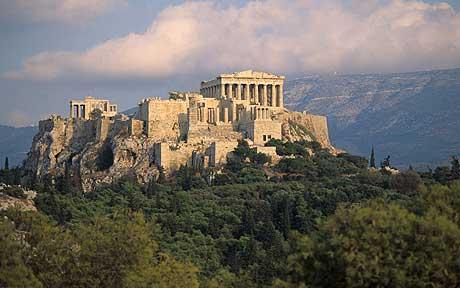
Greco-Turkish War – Is it Inevitable?


QUESTION: Message: Hi, huge respect for your eye-opening work. You mention that war is more likely to erupt in the middle east than Korea. Since middle east seems to be in a state of perpetual combat in different areas, do you think war could expand as Turkey is more & more openly hostile to Greece? The average Greek is no longer considering if it happens, more like when it will happen. Does Socrates provide a forecast on this?

Regards,

S, Athens.

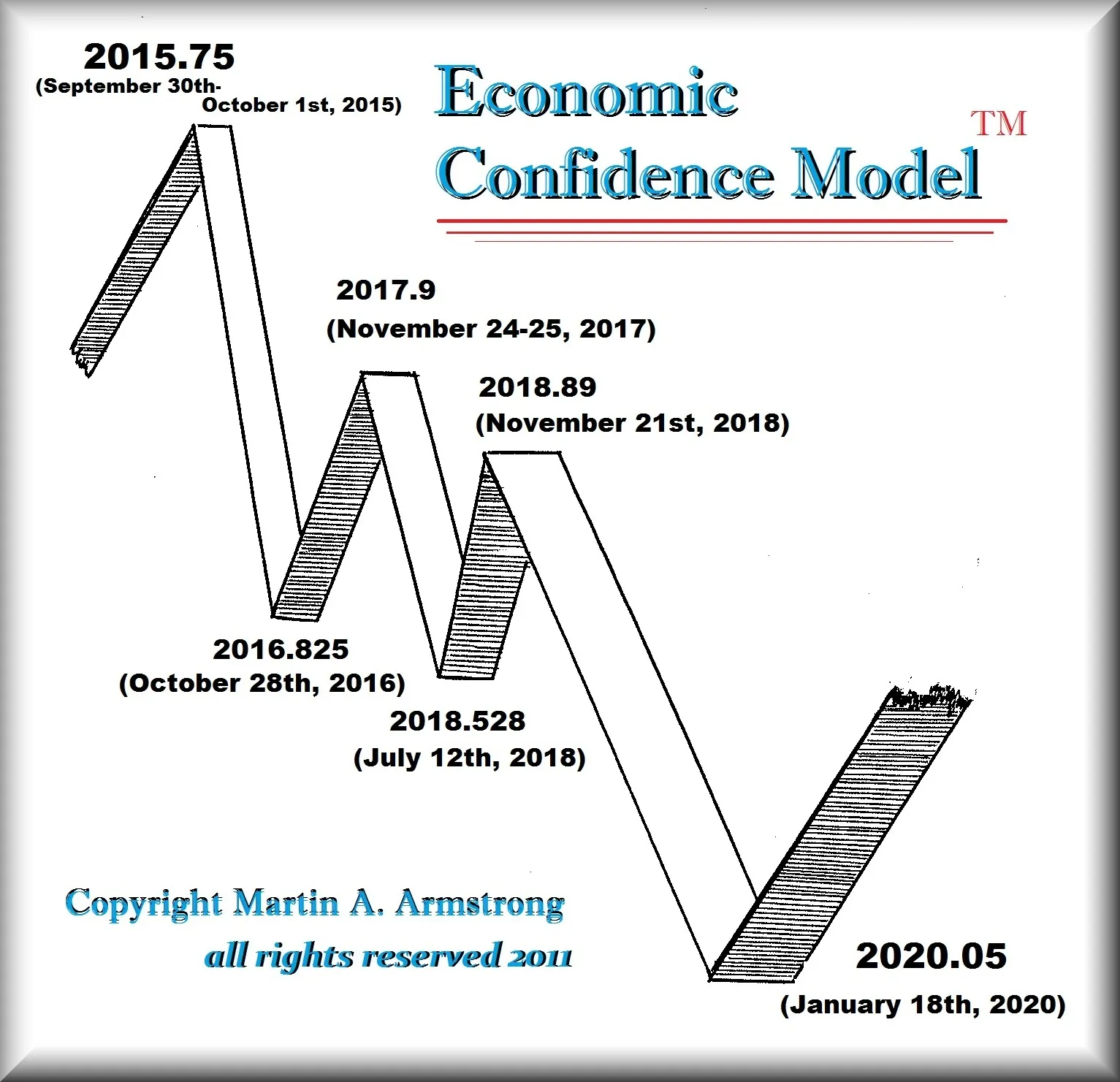
ANSWER: Actually, the primary target for a peak in any Greco-Turkish war will arrive in 2022. What we must understand is we have a major convergence between the Cycle of War and the Economic Confidence Model (ECM). What this means is the increased risk of geopolitical tensions are enhanced by economic downturns. This is what I have been warning about with the collapse of Socialism. As the endless promises of governments crumble to dust, politicians are faced with (1) the overthrow of their governments, or (2) create an external enemy to shift the blame from themselves. Therefore, as the economy turns down, interest rates will invert and rise when people no longer trust a government, and the fabric of the political-economy will be torn apart at the seams. This is historically the most dangerous point for at that moment, the government will turn to create external enemies.

When communism fell in 1989, the military establishment was no longer really needed. They needed to create external enemies to justify maintaining their position, status, and funding. Therefore, Russia continued to be the enemy of the USA simply because they needed one. When I would ask WHY was Russia our enemy if they were no longer Communist, the reply was dumbfounding: “Well they are Russian!” Even Ukraine was a power-play. The Eastern part of the country was ethnically Russian. The country should have simply been split north to south down the language border. Crimea was always a strategic port of Russia. If Japan told America to get out of Okinawa, the US response would be no different than Russia’s – America would occupy Okinawa. So why put sanctions on Russia for doing what the Americans or British have always done throughout history? The answer was just the military establishment needs an enemy – not peace. World peace means they are out of a job. They like those gold stars on their shoulders.

Therefore, as we head down into the economic abyss, the political necessity for war will be on the rise. Ergodan needs an external enemy. He is desperate for war and it will take two fronts – Kurds and the Greeks. He can easily stir the old pot of hate to retain power. This is what any politician does. Even Hillary during the election, as well as all the Democrats, stir the economic pot of class warfare to divide the nation just to get power. They also need that hatred of people who have more to win power. The people cheer and will one day storm the houses of the rich and will set them ablaze or drag them out and hang them. This is traditional and it is one primary reason class warfare is highly dangerous and undermines the foundation of any state. So this is what we face. Look at everything in that context and you will begin to see the conflicts deliberately created by the political class to retain power in ALL societies.

The first modern Greco-Turkish War following the fall of the Ottoman Empire is called the Thirty Days’ War, which took place against a rising Greek concern over conditions in Crete. This centered on the Turkish domination and where relations between the Christians and their Muslim rulers had been deteriorating rapidly. 1896 saw a rebellion on Crete instigated to a large extent by the secret Greek nationalistic society called Ethniki Etairia. They sought to fuel the historic resentment between the Christians and Muslims and they sought to create an opportunity to annex the island for the Greeks. Therefore, by the beginning of 1897, Greece sent arms to Crete to support a rebellion and revolution. On January 21, 1897, the Greek fleet was mobilized and in February Greek troops actually landed on the island proclaiming the annexation of Crete to Greece. The following month, the European powers imposed a blockade upon Greece to stop the arms shipments. The European powers feared that the whole of the Balkans would see vengeance upon the Turks.

The Greeks sent a force to launch an attack on the Turks in Thessaly (April). By the end of April, Greeks were overwhelmed by the Turkish army. The Greeks yielded to pressure from the European powers and withdrew their troops from Crete accepting an armistice on the mainland on May 20th, 1897. On December 4, 1897, a treaty was signed compelling Greece to pay the Turks an indemnity, to accept an international financial commission that would control Greek finances, and to yield some territory in Thessaly back to Turkey. Subsequently, the Turkish troops also left Crete, which had been made an international protectorate in 1898. Crete was finally ceded to Greece by the Treaty of London (1913), which ended the First Balkan War.

The second Greco-Turkish War occurred after World War I, when the Greeks attempted to extend their territory beyond eastern Thrace and the district of Smyrna. These territories had been given to Greece by the Treaty of Sèvres, August 10th, 1920. In January 1921 the Greek army launched an offensive in Anatolia against the nationalist Turks, who had defied the Ottoman government and would not recognize its treaty. In Greece, the war was followed by a successful military coup against the monarchy.

The Treaty of Lausanne concluded on July 24th, 1923, obliged Greece to return eastern Thrace and the islands of Imbros and Tenedos to Turkey, as well as to give up its claim to Smyrna. The two belligerents also agreed to exchange their Greek and Turkish minority populations. To this day, Turkey retains designs on regions it yielded to Greece.

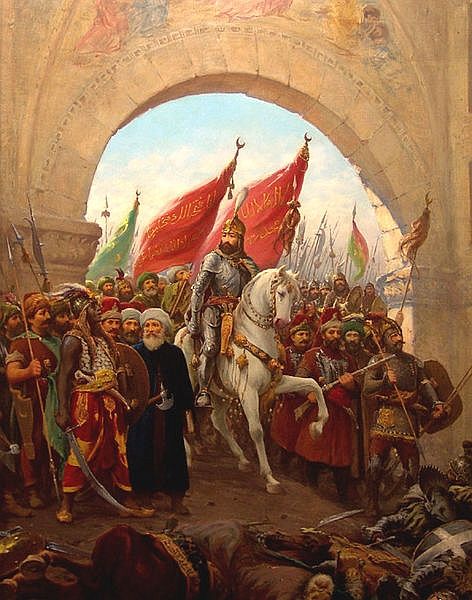
As the economy and hyperinflation continue in Turkey, the government desperately needs an external enemy. So yes. The tensions will continue to rise and this is seen as inevitable in Athens and the resentment goes back to the Persian invasion of Greece in ancient times. Even the culture of the Minoans were the origins of the Greeks. Anatolia was all Greek cities that filled modern Turkey. The fall of Constantinople in 1453 was the invasion of the Turks who were Muslim. So the traditional ethnic origin was Greek and the language of the Eastern Roman Empire ruled from Constantinople was Greek – not Latin.

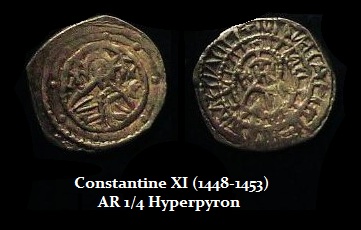
The last Emperor, Constantine XI (1448-1453), died in battle fighting the Turkish invasion. Beware November 2018. Things seem to begin picking up about then.

President Trump Makes Brief Remarks Prior to Attending Easter Service…


Earlier today President Trump tweeted concern about the politicization of border security and the unwillingness of Mexico to confront their side of the equation.  [the three tweets from POTUS Trump follow the video snippet]

Before attending Easter Mass today, President Donald Trump briefly paused and responded to a question about his calling out Mexico for not helping the U.S. secure the border. WATCH:

It is against Mexico’s interests to stop the outflow of illegal aliens into the United States.  Much of the Mexican economy is dependent on the exfiltration of U.S. wealth through Mexican nationals sending money back to Mexico from the U.S.

The amount of money services (Western Union) used by Mexican Nationals to transfer dollars to their friends and family in Mexico exceeds the entire energy sector of the Mexican economy.  Hopefully President Trump will follow through on plans to exit NAFTA.

President Trump Infrastructure Speech Richfield Ohio – 2:00pm Livestream


Today President Trump is traveling to Richfield, Ohio, to visit a union technical training facility for welding and heavy equipment. While there the President will deliver a speech about rebuilding infrastructure in America.  Anticipated start time 2:00pm EST.

UPDATE: Video Added

WH Livestream LinkRSBN Livestream LinkCNBC Livestream Link

Final U.S.T.R. 301 Report On China Trade Policies and Intellectual Theft…


United States Trade Representative Robert Lighthizer releases the final report into Chinese trade practices including intellectual theft:

https://www.scribd.com/embeds/375056913/content?start_page=1&view_mode=&access_key=key-ikcrKkfRNxfhughFkXe9

.

Ambassador Lighthizer also appeared on CNBC for a discussion of content:

Final Fourth Quarter GDP Increase 2.9% (exceeds expectations), Third Quarter Revised Upward to 3.2%…


The final quantification of the Bureau of Economic Analysis fourth quarter GDP growth rate was released today, reflecting an anticipated increase from the prior two estimations. The last revised estimation of GDP growth (February) was +2.5%, the final revised estimate is +2.9% growth.

A massive increase in consumer spending (+4%) around the October through December 31st time-frame (Q4) was offset by those dollars purchasing a large portion of imported products.  The GDP growth deduction from import purchases was 1.99%. [See table #2, line 50 pdf here]

In short, American consumers spent significantly more than usual in the holiday season; however, many of those purchases were foreign goods.

From the BEA Report – Real gross domestic product (GDP) increased at an annual rate of 2.9 percent in the fourth quarter of 2017 (table 1), according to the “third” estimate released by the Bureau of Economic Analysis. In the third quarter, real GDP increased 3.2 percent.

The GDP estimate released today is based on more complete source data than were available for the “second” estimate issued last month. In the second estimate, the increase in real GDP was 2.5 percent. With this third estimate for the fourth quarter, the general picture of economic growth remains thesame; personal consumption expenditures (PCE) and private inventory investment were revised up. (more)

We anticipated this adjusted increase back when the first BEA result was posted, for two reasons: #1) The original estimations were contingent upon almost no domestic inventory remaining at the end of Q4 (highly unlikely); #2) The import deduction was the largest deduction in the past decade (possible, but again too early to quantify). The resulting adjustments announced today reflected exactly these two items.

(Via CNBC) While robust consumer spending curbed the accumulation of inventories, the slowdown in inventory investment was not as steep as previously reported.

Inventory investment rose at a rate of $15.6 billion in the fourth quarter instead of the previously reported $8.0 billion pace. (link)

Look closely at the last part from CNBC above.  The BEA underestimated inventory investment by 50%?  Think about that….  you don’t miss figures by that amount unintentionally.  It’s called ‘sandbagging’.  I digress.

The bottom line – in Q4 we exported more than the past 4 years (+.83%), but we imported more than any time in the past ten years (-1.99%). The net impact was a deduction from GDP growth by -1.16%.

[*note* a reasonable correction in the trade imbalance of 25% (through smart trade deals) means the Q4 GDP could have been actually 3.5% instead of 2.9%]

The cumulative net result was an end of year (measured from the fourth quarter of 2016 to the fourth quarter of 2017), real GDP increase of 2.6 percent, compared with an increase of 1.8 percent during 2016.

MAGAnomics works.  We just need to support Trump and keep on keeping-on.

Now think about this….

President Trump appointed Gary Cohn to keep Wall Street invested; and throughout 2017 the Trump administration kept their trade cards close to the chest – it worked.  The Stock Market bought into the ploy that POTUS Trump would not disrupt the dynamics of Wall Street’s multinational global trade ideology.

However, they were not paying attention to the granular details under the radar, as evidenced by the action of Treasury Secretary Stephen Munchin, Commerce Secretary Wilbur Ross and U.S. Trade Representative Robert Lighthizer.  Throughout 2017 there was a ton of pre-positioning of assets taking place.

As soon as Team Trump gained massive increases in Wall Street (stock market) evaluations, we now enter year two where President Trump dispatches Gary Cohn and enlists Peter Navarro to carry out the MAGAnomic America-First agenda which includes rapid-fire renegotiated trade deals.

Brilliant strategery.

Bigly.

…in addition to MAGAnomic winning, you might just stop a nuclear war with North Korea.

Stay small, think BIGLY.

MAGAstrong

When will North Korea Rise to Overthrow Kim Jung Un?


QUESTION: You said that Kim Jung Un was at risk of being overthrown and therefore he would have to shift direction or go to war. When do you see North Korea falling?

PP

ANSWER: When Korea was split in 1945 into communist North against the South, the terrain has always dictated the situation. About 65% of Korea’s heavy industry was located in the north, but, due to the harshness of the terrain, only 37% of its agriculture existed in the North. This is why the North often has bouts of famine.


ECM-Dynamic


I have warned that the Economic Confidence Model has three distinct components. There is the main wave frequency based upon Pi of 8.6 years which builds into 6 waves forming the major wave of 51.6 years which seems to be the generational shifting wave that manifests in political changes between public and private trends.

Then there is the Volatility Wave component. This is what causes one 8.6 year wave to be more pronounced than another. The volatility component has a frequency of 6 years which is a slower moving wave taking 12 unit waves to build into the ultimate volatility peaks of 72-year intervals.

The Schema Frequency I do not reveal. To put this in context, it is the DNA wave of a coded pattern throughout time. This will be the last thing I ever reveal if I decide to do so. The jury is still out. This is what everyone has tried to get from me for so long. It is the key to the interaction of waves.

On August 8th, 1945 (1945.602), the Soviet Union declared war on Japan. Soviet troops advanced and the US government feared Russia would occupy the whole of Korea. On August 10th, the US government proposed the 38th parallel division.

Therefore, the 72-year of volatility began during the summer of last year – 2017.602 (August 7th). Communism fell on its 72-year cycle (1917-1989). The Soviet Union broke up 2 years into that cyclical event. This places the same timing risk cor North Korea going into 2019-2020.

The 51.6-year cycle from 1945 (1997.202) marked the start of the 1997 Asian Currency Crisis. Kim Jung Un was conducting missile tests that began on February 12, 2017, last year, which was just a KN-15 Pukguksone type. Thereafter tests took place on March 6th, March 22nd, April 5th, April 16th, April 29th, May 14th, May 21st, May 29th, and June 8th. The intercontinental ballistic missile tests began with the Hwasong 14 on July 4th, probably because of the American Independence holiday. That is when the attention began to really turn to North Korea and that began almost to the day of the 72-year turning point.

The entire world is going to go nuts 2031/2032. There will not be a country that is spared from political and economic events. The risk a serious famine in North Korea which could result in the people rising up will arrive in 2023. That pressure will begin here this year 2018.70 – which will be September 13th, 2018. This appears to the turning point that is not just concerning North Korea. It is appearing around the world in many markets. The risk for political change in North Korea comes into play as soon as 2019/2020.

KORUS Agreement Announced – Details of Historic Trade Deal and Repositioning Between U.S. and South Korea…


JOINT STATEMENT – Today, Ambassador Lighthizer and Minister Kim are pleased to announce that the United States and the Republic of Korea have reached an agreement in principle on the general terms of amendments and modifications to the United States-Republic of Korea Free Trade Agreement (KORUS FTA). The nations have also agreed on terms for a country exemption for the Republic of Korea from tariffs imposed on steel imports under Section 232 of the Trade Expansion Act of 1962 pursuant to Presidential Proclamation 9705, as amended.  The arrangement with respect to steel imports is expected to take effect on May 1, 2018.  (link)

Ever since the original 2012 US-Korea free trade agreement (KORUS) went into effect, the U.S. trade deficit in goods with Korea increased by over 73 percent from $13.2 billion to $22.9 billion (2017), while the overall deficit increased by 70 percent from $6.3 billion to $10.7 billion (2017).  President Trump committed his administration to changing this immediately and renegotiating a deal that benefited the United States.

“The improved KORUS agreement reflects the President’s leadership in delivering more reciprocal trade outcomes benefiting U.S. workers, exporters, and businesses. The United States and Korea have strengthened an important economic relationship by agreeing to substantial improvements to KORUS that will help rebalance our trade, reduce our trade deficit, and expand U.S. export opportunities.”  ~ U.S. Trade Representative Robert Lighthizer

Here’s the historic details:

♦ 1. PROCESS FOR KORUS AMENDMENTS AND MODIFICATIONS

As directed by the President and with authority provided under the terms of KORUS, the U.S. Trade Representative has worked to resolve issues through the Joint Committee process under the Agreement.

In July 2017, Ambassador Lighthizer initiated trade discussions with Korea, leading to special sessions of the KORUS Joint Committee in 2017 and further negotiations for KORUS amendments and modifications in 2018.

Once completed, the amendments and modifications to KORUS will undergo the United States’ and Korea’s respective domestic review procedures. For the United States, modifications to the U.S. tariff schedule will undergo consultation and layover procedures provided under the implementing act for the KORUS Agreement, which include a 60-day consultation period with Congress.

♦ 2. KEY NEW KORUS FTA OUTCOMES

In these discussions, the United States achieved steps to improve the large trade deficit in industrial goods and to address KORUS implementation concerns that have hindered U.S. export growth.

◊ U.S. Truck Tariffs: Korea will extend the phase out of the 25% U.S. tariff on trucks until 2041, or a total of 30 years following the implementation of the KORUS FTA in 2012. (currently scheduled to phase out by 2021).

◊ Growing U.S. Auto Exports: Exports of U.S. motor vehicles to Korea will be improved through the following steps:

  • Greater Access for U.S. Exports: Korea will double the number of U.S. automobile exports, to 50,000 cars per manufacturer per year, that can meet U.S. safety standards (in lieu of Korean standards) and enter the Korean market without further modification.
  • Harmonization of Testing Requirements: U.S. gasoline engine vehicle exports will be able to show compliance with Korea’s emission standards using the same tests they conduct to show compliance with U.S. regulations, without additional or duplicative testing for the Korean market.
  • Recognition of U.S. Standards for Auto Parts: Korea will recognize U.S. standards for auto parts necessary to service U.S. vehicles, and reduce labeling burdens for parts.
  • Improvements to CAFE Standards: Korea will expand the amount of “eco-credits” available to help meet fuel economy and greenhouse gas requirements under the regulations currently in force, while also ensuring that fuel economy targets in future regulations will be set taking U.S. regulations into account and will continue to include more lenient targets for small volume manufacturers.

◊ Customs Improvement: Korea will address long-standing concerns with onerous and costly verification procedures through agreement on principles for conducting verification of origin of exports under KORUS and establish a working group to monitor and address future issues that arise.

◊ Pharmaceutical Reimbursements: Within 2018, Korea will amend its Premium Pricing Policy for Global Innovative Drugs to make it consistent with Korea’s commitments under KORUS to ensure non-discriminatory and fair treatment for U.S. pharmaceutical exports.

3. CURRENCY AGREEMENT

◊ The U.S. Department of the Treasury is leading discussions on currency with Korea’s Ministry of Strategy and Finance.

◊ An agreement is being finalized on robust provisions to prohibit competitive devaluation and exchange rate manipulation in order to promote a level playing field for trade and investment. Strong commitments on transparency and accountability are included in the provisions.

4. OUTCOMES FOR SECTION 232 EXEMPTION FOR KOREA

  • The President’s action under Section 232 of the Trade Expansion Act of 1962, as amended, is designed to protect U.S. national security given the massive and persistent global excess capacity for steel and aluminum and the threatened impairment of U.S. national security from imports of such products.
  • As the President’s proclamations state, the United States is willing to work with any country with which we have a security relationship to find alternative ways to address the threatened impairment of the national security caused by imports of steel and aluminum.
  • The United States has a strong and enduring security relationship with Korea.
  • U.S. negotiations with Korea have resulted in a satisfactory alternative for addressing U.S. national security concerns with respect to steel imports.
  • Korean imports of steel products into the United States will be subject to a product-specific quota equivalent to 70% of the average annual import volume of such products during the period of 2015-17. This will result in a significant reduction in Korean steel shipments to the United States.

(Link to USTR News Release)

White House Trade Policy Advisor Peter Navarro Discusses KORUS and Ongoing Trade Initiatives…


White House Director of Trade and Manufacturing policy Peter Navarro discusses the revamp of the KORUS trade deal with South Korea.  In addition Navarro discusses the ongoing Trump administration’s tariffs on steel and aluminum, as well as plans to impose tariffs on Chinese products surrounding violations of intellectual-property rights.

[NOTE: Final USTR 301 Report on China was released last night]

What a Difference Six Months Makes – International Media Discuss Kim Jong-Un Meeting With Xi Jinping…


It was only six months ago when the international media and U.S. left-wing pundits were proclaiming how we were on the cusp of thermonuclear war with North Korea.  As outlined HERE there was almost no-one paying attention to the approach taken by President Donald Trump to creating the “Magnanimous Panda” outcome.

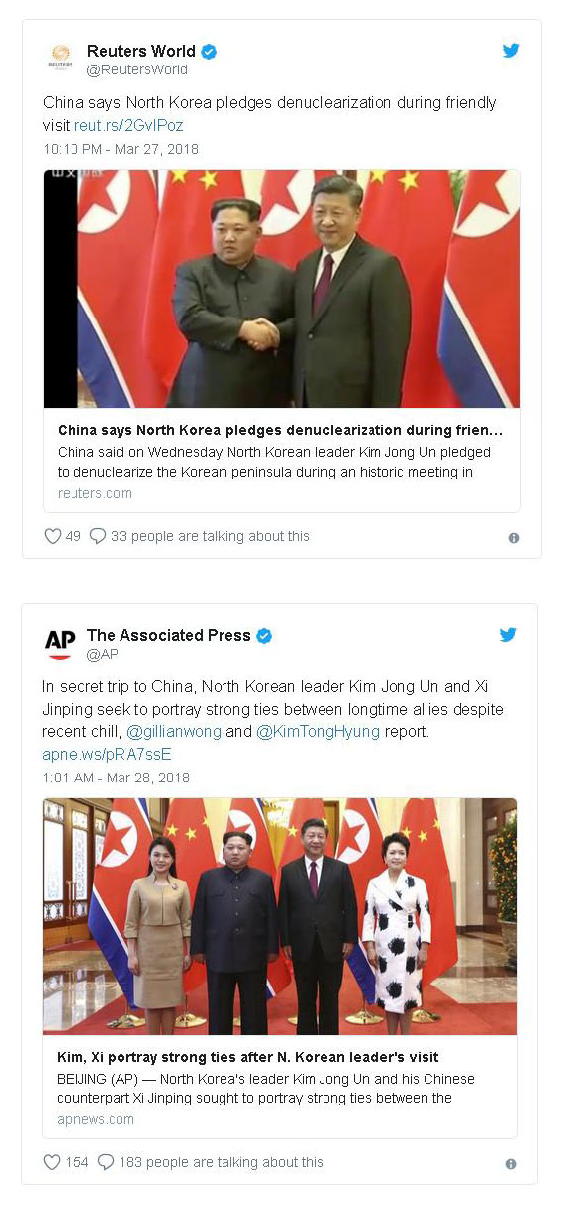
Well, today those same media are reporting on North Korean leader Kim Jong-Un meeting with Chinese President Xi Jinping and committing to a denuclearized Korean peninsular:

SEOUL, March 28 (Yonhap) — North Korean leader Kim Jong-un has visited China at the invitation of President Xi Jinping and reaffirmed his commitment to denuclearization during their first summit, the two countries’ media said Wednesday.

The North’s leader made an “unofficial” visit to China from Sunday to Wednesday, accompanied by his wife Ri Sol-ju and key officials, including de facto No. 2 figure Choe Ryong-hae, according to the North’s state-run radio.

It was Kim’s first foreign trip since he took office in late 2011.  The summit came as Kim plans to meet the leaders of South Korea and the United States in the coming months. (read more)

Well, well, well,…. doesn’t this look like the “Magnanimous Panda” outcome previously discussed?

August 2017 […] The end result will be Kim Jong-un giving up his nuclear ambitions for good; a group of nations promising economic assistance (size TBD), and some official enterprise of ASEAN partners enters as an agency to oversee nuclear compliance under carefully negotiated terms. Big Panda (Xi Jinping) promises the world to be the magnanimous insurance policy therein. Everything between now and that outcome is optically chaff and countermeasures.  SEE HERE and HERE
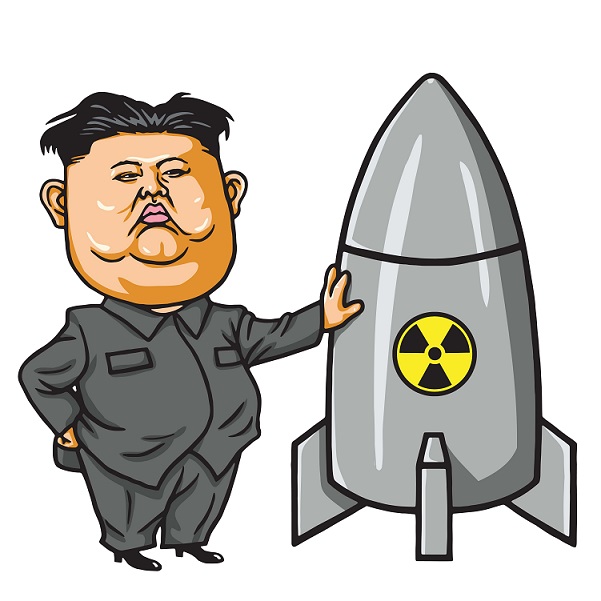
Funny how that works?...

“complicated business folks,…. complicated business”..

…. And likely no-one in media will ever recognize exactly how it all came together.

August 29th, 2017

August 30th, 2017

China’s objective is conquest.  China’s tool for conquest is economics.  President Trump’s entire geopolitical strategy, using economics in a similar way, is an existential threat to China’s endeavor.  Communist Beijing calls the proverbial DPRK shots.

President Trump is putting on a MASSIVE economic squeeze.

♦Squeeze #1. Trump and Mnuchin just sanctioned Venezuela and cut off their access to expanded state owned oil revenue.  Venezuela now needs more money.  China and Russia are already leveraged to the gills in Venezuela and hold 49% of Citgo as collateral for loans outstanding.  Now China and Russia will need to loan more, directly.

♦Squeeze #2.  China’s geopolitical ally, Russia, is already squeezed with losses in energy revenue because of President Trump’s approach toward oil, LNG and coal.  Trump, through allies including Saudi Arabia, EU, France (North Africa energy), and domestic production has driven down energy prices. Meanwhile Russia is bleeding out financially in Syria.  Iran is the financial reserve, but they too are energy price dependent.

♦Squeeze #3. Trump and Tillerson just put Pakistan on notice they need to get involved in bringing their enabled tribal “extremists” (Taliban) to the table in Afghanistan.  Pakistan’s primary investor and economic partner is China.  If U.S. pulls or reduces financial support to pressure Pakistan toward a political solution in Afghanistan, China has to fill void.

♦Squeeze #4. China’s primary economic threat (competition) is next door in India.  President Trump has just embraced India as leverage over China in trade and pledged ongoing favorable trade deals.  The play is MFN (Most Favored Nation) trade status might flip from China to India.  That’s a big play.

♦Squeeze #5.  President Trump has launched a USTR Section 301 Trade Investigation into China’s theft of intellectual property.  This encompasses every U.S. entity that does manufacturing business with China, particularly aeronautics and technology, and also reaches into the financial services sector.

♦Squeeze #6.  President Trump, Secretary Ross, Secretary Mnuchin and USTR Robert Lighthizer are renegotiating NAFTA.  One of the primary objectives of team U.S.A. is to close the 3rd party loopholes, including dumping and origination, that China uses to gain backdoor access to the U.S. market and avoid trade/tariff restrictions. [China sends parts to Mexico and Canada for assembly and then back-door entry into the U.S. via NAFTA.]

♦Squeeze #7. President Trump has been open, visible and vocal about his intention to shift to bilateral trade renegotiation with China and Southeast Asia immediately after Team U.S.A. conclude with NAFTA renegotiation.

♦Squeeze #8.  President Trump has positioned ASEAN (Association of Southeast Asian Nations) as trade benefactors for assistance with North Korea. The relationship between ASEAN nations and the Trump administration is very strong, and getting stronger. Which leads to…

♦Squeeze #9.  President Trump has formed an economic and national security alliance with Shinzo Abe of Japan.   It is not accidental that North Korea’s Kim Jong-un fired his missile over the Northern part of Japan.  Quite simply, Beijing told him to.

Add all of this up and you can see the cumulative impact of President Trump’s geopolitical economic strategy toward China.  The best part of all of it – is the likelihood China never saw it, meaning the sum totality of “all of it”, coming.

Six Months Later – This week:  •India announces $500 billion investment in U.S. steelworks.  •USTR finalizes section 301 report on Chinese trade practices.  •The U.S. and South Korea sign historic renegotiated “KORUS” trade deal.  •President Trump handing out Steel and Aluminum tariff exemption cards…..  And, oh yeah, North Korea tells China it agrees to a full reversal of nuclear ambitions.

Funny that.