Banks – Interest Rates – Mortgages


COMMENT: Martin, as an avid follower, I took your advice to heart to try to fix our interest rate for the loan we have on our house. This was the answer I got from our direct advisor: “Have looked at your file, you can still enjoy your low-interest rate until 01/12/2020, in other words refinancing is only recommended at the earliest in November 2020. Your capital will then fall to 37,000 euros outstanding, the interest may already rise to 3 % (then you still benefit in November compared to refinance now!) ? Repocrisis is in the USA, Europe is supported by the ECB, which keeps interest rates low? Or am i wrong?” Isn’t this the perfect example of how well people are informed, even those working at the banks? Or do we already see some intended lingering of banks, trying not to get caught on the wrong side of the risk? Thanks for answering or using this in your private blog as a perfect example…

BL

ANSWER: They may have been instructed from above to keep loans floating because the Repo Crisis is demonstrating that rates are under pressure to rise, not fall!

If you have a mortgage that is floating, lock it in with a fixed rate.

Those looking to buy have a dilemma. On the one hand, real estate prices are high in many regions and you can wait for prices to come down before buying. On the other hand, when prices start to tumble it will be the result of an inability to get long-term fixed loans so prices will fall to where people will be able to get loans or pay cash. The solution may be to buy when you can get a long-term fixed mortgage and then hedge it with eventually shorting rates where there will be a liquid marke

Pension Crisis – Congress is Unable to Act Because of Gridlock


Trump has called the Democrats the do-nothings. All they have been focused on is impeaching Trump for the polls they are looking at behind the curtain all show Trump will beat whoever they put up as their candidate. the motto has been – if you can’t beat him, impeach him. There is no other area where the Democrats have just failed to act with a major crisis looming in 2021 than the spreading of the Pension Crisis.

There are pensions that are multi-employer funds which are perhaps the first to fall in the private sector. The Republicans did slip a rescue package into the massive $1.4 trillion spending bill passed last month. That was all because the United Mine Workers of America pensions would have failed completely and the push from environmentalists against mining and energy only puts pensions in those areas at serious risk after 2020.

The Republicans, interestingly enough, have no problem with the bailout but want to raise premiums that employers must contribute. Conversely, the Democrats who have been backed by such unions have argued for low-interest loans and not to force higher premiums on employees or employers.

The Republicans and Democrats are so deeply divided on how to solve the broader pension crisis problem, that this immediate impasse illustrates what I have been warning about that government is just collapsing incapable of bipartisan solutions. The Democrats simply refuse to act for they fear that Trump would get the credit for solving the pension crisis among unions that traditionally have backed the Democrats.

This entire issue has become not about solving any crisis but who gets credit and thus we have a government incapable of acting for the benefit of the people. As I have said, this is how governments eventually collapse. They become so corrupt and divided, they are incapable of managing the state.


FOREX & the Wild West Days of the ’80s


QUESTION: Mr. Armstrong; I was told that you were indeed the largest forecaster in foreign exchange. The story in London is you advised nearly all the Middle East and were the most important adviser on currency to BCCI, the bank the governments took down back in 1991 along with Salomon Brothers. They made a movie about BCCI. Is it true that you were an adviser to BCCI?

HS

ANSWER: The ’80s were the wild west in finance. I have told the story of how many banks operated back then. I would be called in and told someone wanted to give me $1 billion to manage back then when $1 billion was a lot of money (now it’s trillions). I would go to various banks and there would be a curtain between me and the potential client. I was not allowed to know who they were. I was turning down that business because it was just too wild for me.

Yes, we were advising BCCI on foreign exchange. They were passing it on to specific clients who at the time I did not know. I became concerned when I accepted an account for who I believed was a Saudi individual. The account was opened at Rudolf Wolf in London and after a few months of tracing all the various layers of corporations, it turned out I was managing money for none other than Muammar Mohammed Abu Minyar al-Gaddafi. I closed the account and within a matter of weeks, he was back through a completely different channel.

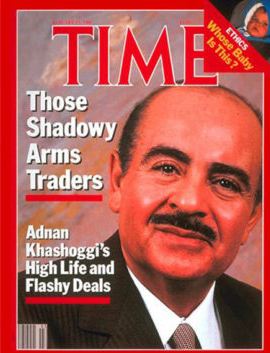
Perhaps one day I will write a book about those days. I ended up managing money for even Mr. Khashoggi once owned one of the world’s largest yachts, the 86-meter Nabila, which appeared in the James Bond film “Never Say Never Again,” which was later bought by Donald Trump. On top of that, what I thought was a company turned out to be a secret partnership between Gaddafi, Khashoggi, and Ferdinand Marcus of the Philippines.

The Floating Foreign Exchange Rate system had just begun in 1971. This was not a subject you could go get a degree in. This was a field built from scratch and it took a trader’s understanding of the world economy to cope with the events of the 70s and 80s. I was the leading adviser in FX because there really were no others with any track record. When I say I was called into just about every crisis from 1973 onward, it is not an exaggeration.

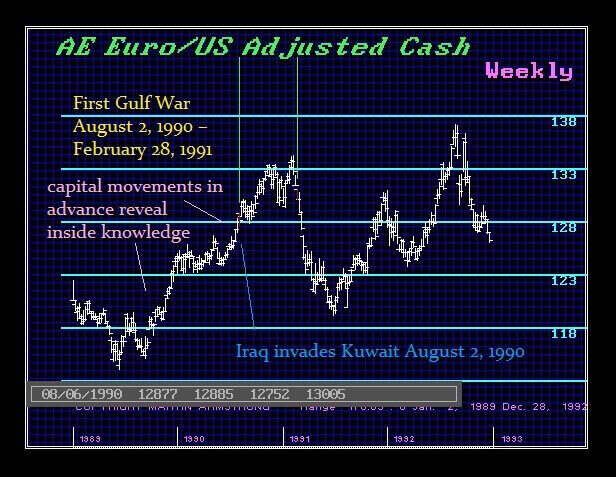
I was advising BCCI on currency globally. I was advising a company called GRANEDEX which turned out to be a front for Russia. I could never tell who was who. I had even the counter-revolutionary army in Iran coming to me for they were trading to make money to overthrow the religious government in Iran. I would be on a phone call with a client from Saudi Arabia who asked about gold and I said it depended on what OPEC would say that day. He put me on hold and dialed into the OPEC meeting and they put me on speakerphone. Those days taught me about war and how capital flows could be used to forecast war and geopolitical events. It cut my teeth of those wild west days.

I have handled some of the biggest projects ever and advised globally. To this day, we have people attending the World Economic Conference from 137 different countries. Because the world was such a crazy wild west sort of atmosphere, I turned to be just an institutional adviser of public corporations because I gave up on trying to figure out who the clients really were at times.


Can Central Banks Ever Control Long-Term Rates?


QUESTION: Marty, you said that central banks can only control short-term rates not long-term. Do you see a scenario where they could control the long-term rates?

Thank you for your insight

DH

ANSWER: If you ASSUME that there is a free market, then the answer is no possible way. Under a hybrid market, a central bank can split between public and private debt as is taking place in Japan. The Bank of Japan has announced it will buy unlimited amounts of government bonds to prevent interest rates from rising.

Under this hybrid market, a central bank can simply buy all government debt but this results in the total destruction of any free market in government debt. The government should at that point just print money and not even bother to issue any debt.

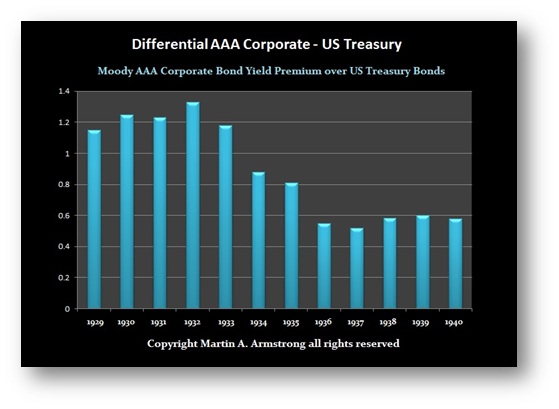
This results in a divergence between the fake government bond rates and the free market private interest rates. The spread will widen dramatically. Even during the Great Depression the spread between AAA corporate debt and government debt fluctuated according to where the confidence resided. As the sovereign debt crisis took place in 1931 with governments defaulting on their debts, the spread diminished as people began to trust corporate debt more so than government debt.

The third possibility is a closed market which means that the government can fix long-term rates that were done with usury laws. Even in Roman times,  Cicero tells us how the cap on interest rates existed only in Italy. This led to excessive interest rates being charged by Brutus in Cappadocia of 40% compared to 10% in Rome.

Paul Volcker had to have the usury rates raised in order to raise interest rates to 14% to fight inflation back in 1981. It was also illegal for a Catholic to charge interest in loans so the Jews were the first bankers coming out of the Dark Ages. The Catholics got around that by stacking the interest costs into the price.

The final type of system that would control long-term rates would be Communism where everything is just outlawed and the economy is entirely closed.

Under a free market, the central bank sets the wholesale short-term rates which is why it has been focused in the repo market. If it attempts to just buy in all government debt, then private rates will rise and that is what is taking place right now. The Fed can peg long-term rates as they did during World War II, but that applied only to government debt. To prevent prices from rising the political legislature imposed wage and price controls.

So there are ways to fix the long-term, but at the cost of a free market.

Understanding the Global Economy from the Dollar to the Euro


Many people continually talk about the dollar crashing. They say the dollar is supposed to crumble to dust and be dispersed into the wind. The bias against the dollar has been turned into a religion primarily propagated by the gold promoters. Unfortunately, they fail to understand the relationship of the dollar to the world economy. Additionally, they only look at the United States and ignore the economic trends outside the USA.


This report deals with the next monetary reform that many will call Bretton Woods II. What is the future for the dollar? Contrary to what many have been preaching since 1971, the dollar has survived. Right now there remains a dollar shortage, which is one reason the dollar has been rising since 2008 when the euro once stood at $1.60. The report also discusses the transition to digital currencies.

Hoarding Dollars ….. $295

The Pursuit of Knowledge


QUESTION: Hello Marty,
I am fascinated by Socrates as it has opened my mind to patterns in my own nature and the flow in life.
In fact, your economic models have open my awareness of the cycles in my life. As I have experienced support, resistance, reversals, phase transition and slingshots out of expanded consciousness. It really is amazing to see this in myself, others, societies and cultures.

Which leads to my question, have you ever been asked to apply and integrate your research with the research of Clare W Grave, specifically his Spiral Dynamics models of human and societal consciousness?

Your economic models are far superiority anything I have ever seen. Same goes for Spiral Dynamics for understanding why and how humans behavior manifests and emerges.
Like you I’m interested in advancing the world to a more sustainable future less driven by self interest and more driven by system’s thinking grounded in unbiased research that lets the data tell the story, rather than setting out to to confirm own perspectives and bias.

I believe your work will be recognized on a much more grand scale by future generations. You definitely are someone who exhibits the characteristics of Stage Yellow & Stage Turquoise thinker. You are rare and are ahead of your time.

Thank you for your work.
MLK

ANSWER: Clare W. Grave’s work in psychology concluded that the mature human being transitions from a current level of cultural existence based on current life conditions to a more complex level in response to (or to cope with) changes in existential reality. Graves’s model demonstrates the dual nature of human social emergence with state changes between communal/collective value systems (sacrifice self) and individualistic (express self) value systems.

I have not sought to integrate my work into his. You must understand that there are a few of us who have learned how humans behave through trading markets. I never considered that what I was writing or doing had any validity or significance in psychology or economics for that matter. It was during the early 1980s when many people began to take notice of what I was doing because I emerged as the leading analyst in foreign exchange in a new world of floating exchange rates.

I was contacted by the Military University known as the Citadel. I was asked for permission to teach the Economic Confidence Model as the key to understanding the economy and war. They told me I was the modern Hegel, which was perhaps the first time I was being compared to any philosopher. Hegelianism is the main philosophy of G. W. F. Hegel (1770–1831) who was also a major influence of Karl Marx and revolutionary movements during the 19th century. Hegel’s philosophy has been summed up by the dictum that “the rational alone is real,” which means that all reality is capable of being expressed in rational categories. His goal was to reduce reality to a more synthetic unity within the system of absolute idealism.
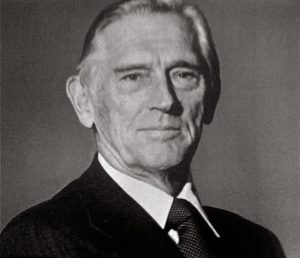
I was then rather shocked when a rather famous central banker called and wanted to meet with me back in the early 1980s. John Exter (1910–2006) was an American economist, member of the Board of Governors of the United States Federal Reserve System, and founder of the Central Bank of Sri Lanka. I still have the tape from our meeting which we recorded. He was the first central banker who actually came to my office (Part I of three).


Audio Player
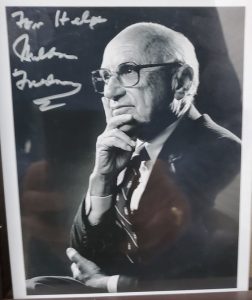
 

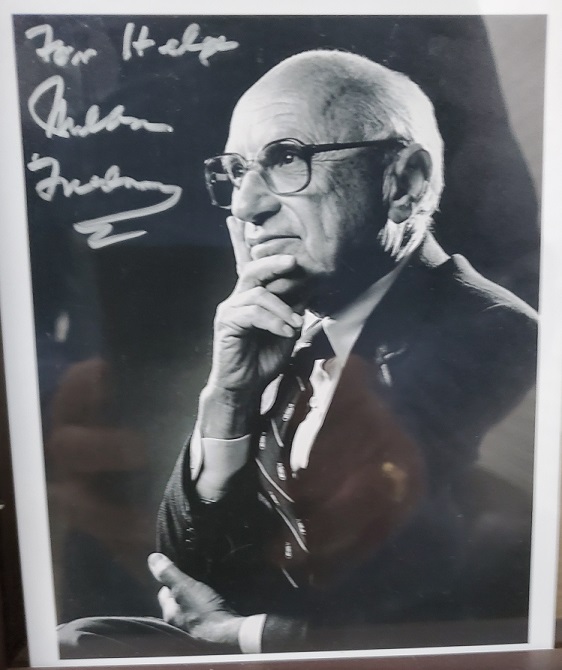
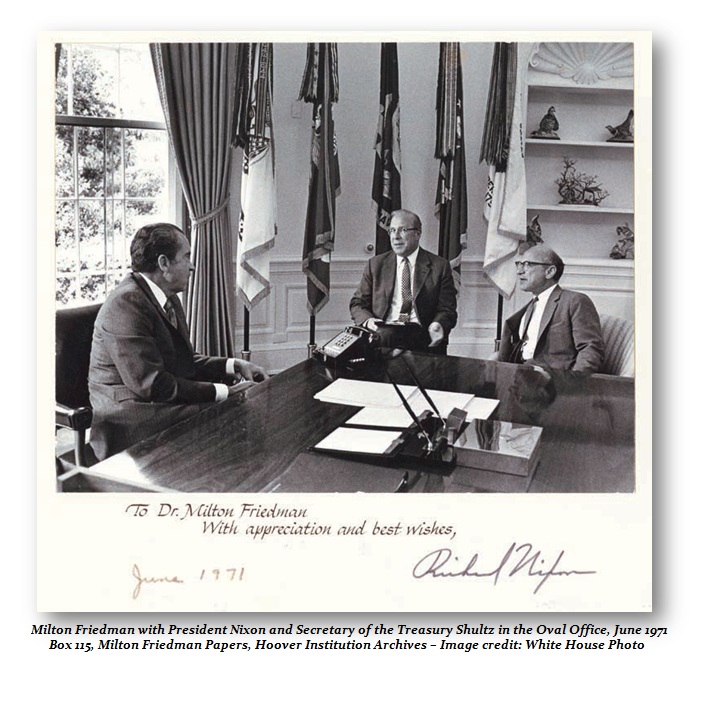
Then I was giving a lecture in Chicago at COMPUTRAC or Market Technicians. Milton Friedman came there to listen to me. When I was finished, he came up and introduced himself and said I was doing what he had only dreamed about when he first wrote about creating a floating exchange rate system in 1953. We became friends after that meeting.
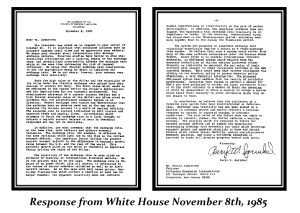
When it came time to create the G5 in 1985, I was asked for my opinion. I was opposed to the manipulation of the dollar by announcing it would be lowered by 40% under the pretense that would reduce the trade deficit and create jobs. I expressed my objection to President Reagan and the White House was compelled to respond.
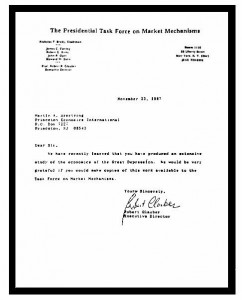
 

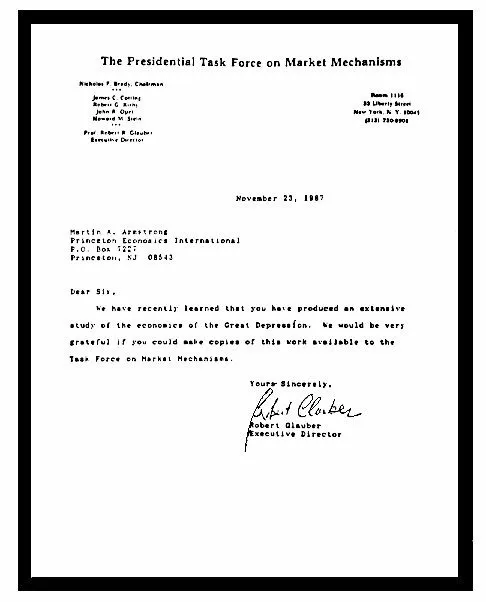
By the 1987 Crash, then the Presidential Task Force, known as the Brady Commission, was compelled to call me in because we ended up with a few clients on the Commission who insisted I be brought in because we had not only forecast the event due to foreign exchange, but that the day of the low we also said that was the low and new highs would be seen by 1989. When the 1989 Japanese Crash took place, I had two central banks on the phone simultaneously asking if they needed to intervene into the foreign exchange markets to stem it from spreading into a global contagion. I advised it was contained to Japan and they did not need to intervene.
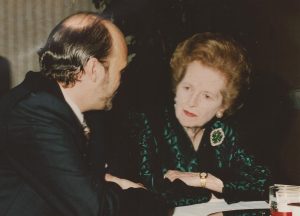
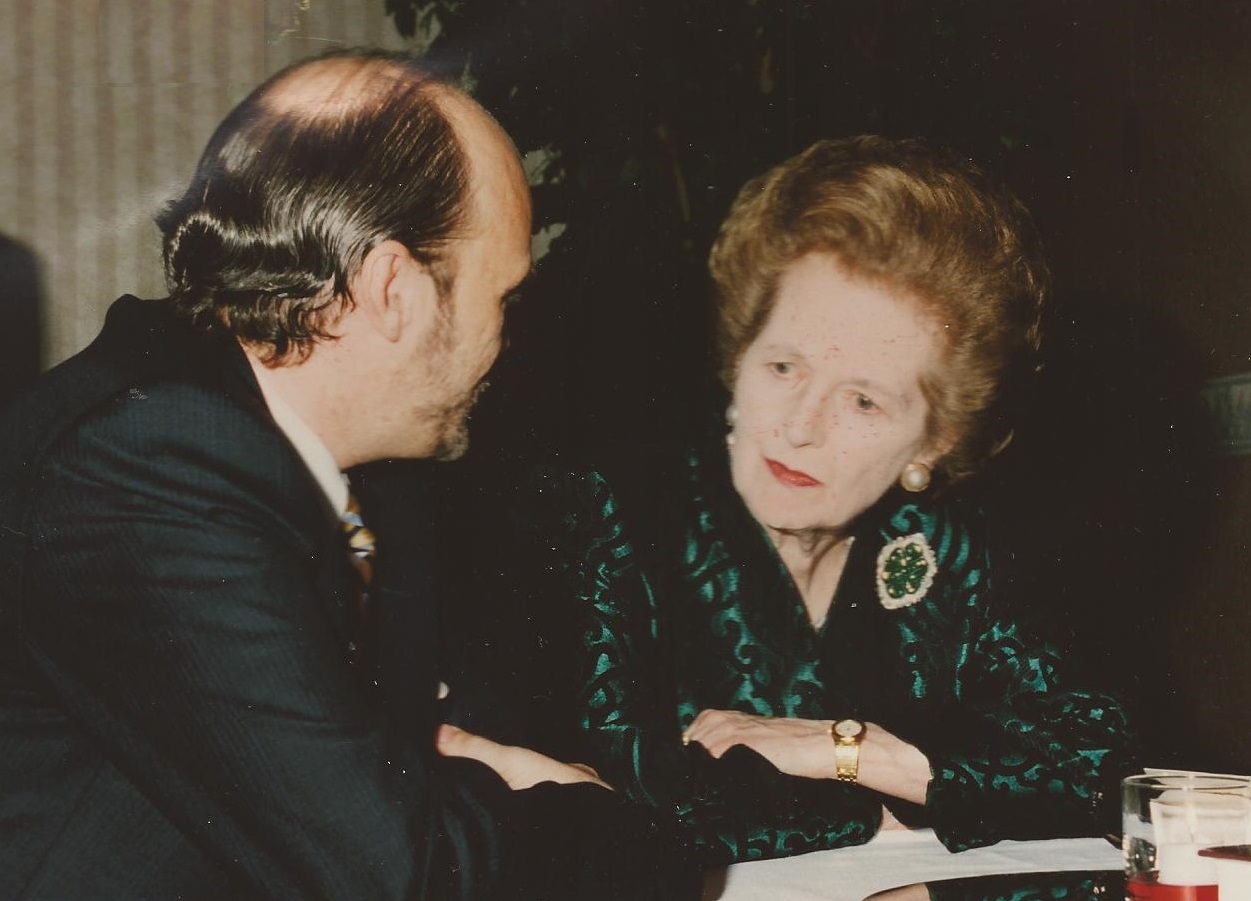
Because I became a forecaster of foreign exchange and helped companies do takeovers and reorganized them as to what countries to set up in, former Prime Minister Margaret Thatcher wanted to meet the guy who was restructuring companies and placing so much foreign business into Britain. We too became friends and she even spoke at our World Economic Conference.
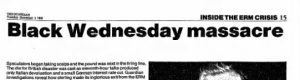
 

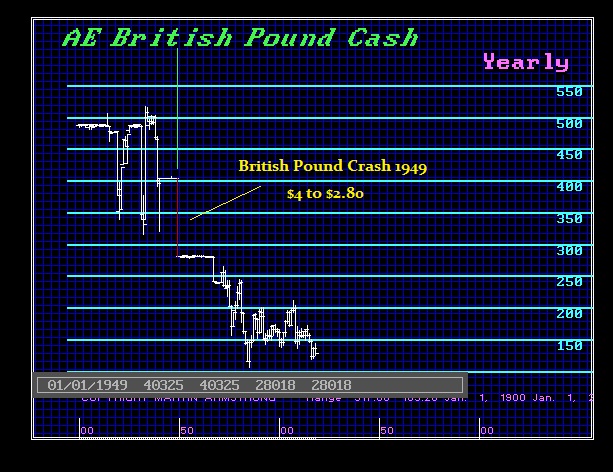
When the British pound was being attacked by Soros, the administration of John Major called and asked how long was the attack of the pound going to last? I advised that they had to devalue the pound. I was told they could not because Prime Minister John Major said he would not devalue the pound and the goal was to join the euro. This became the ERM Crisis. My advice was to exit the ERM and allow the pound to seek its own level.
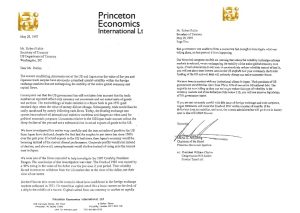
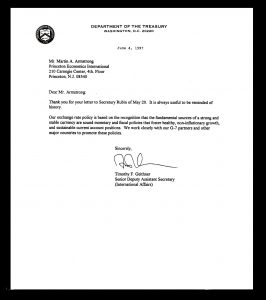
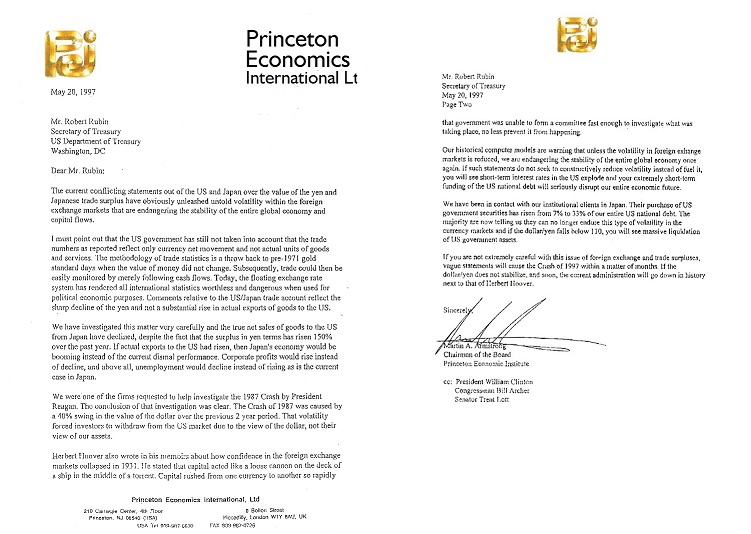
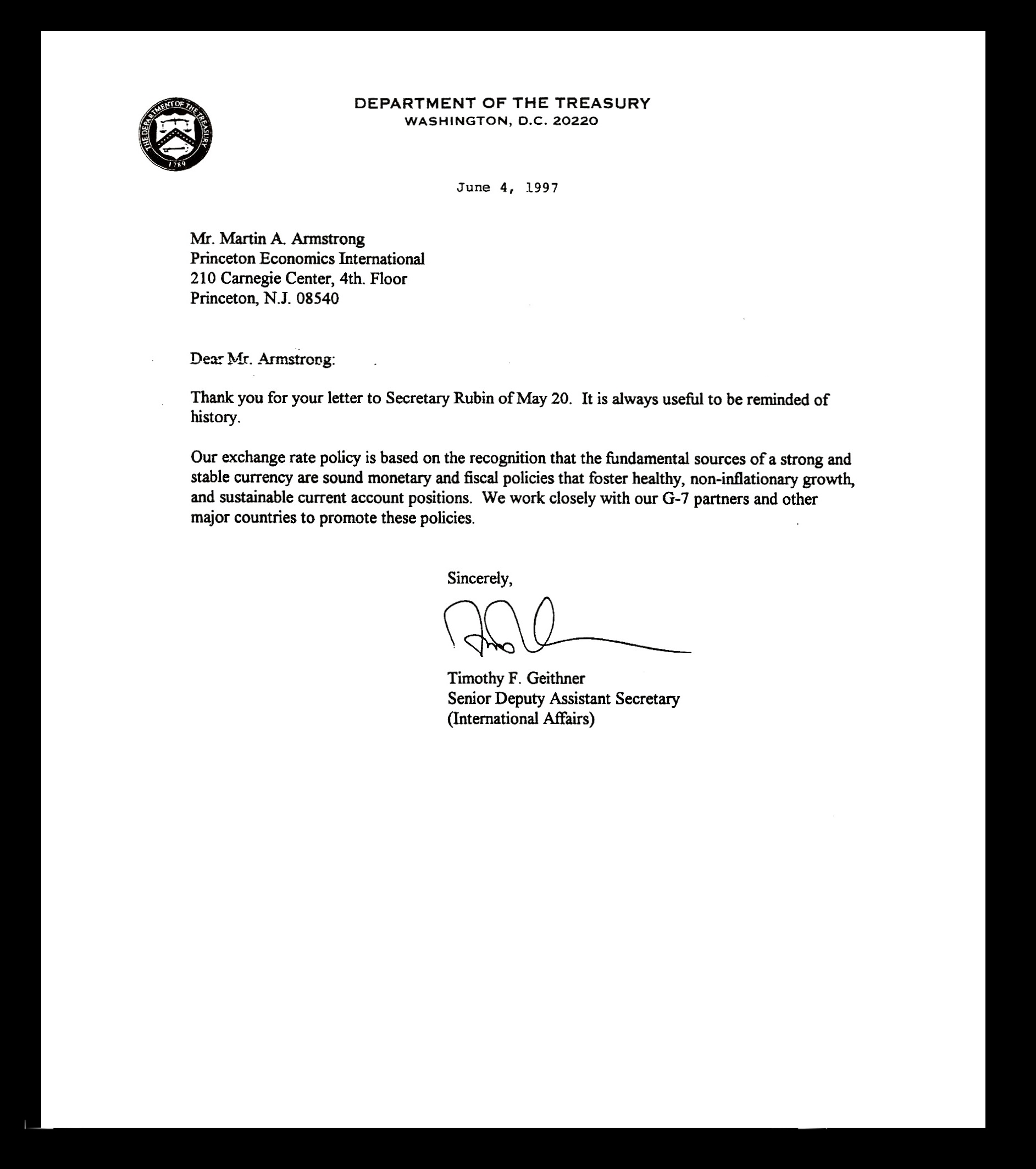
In 1997, I warned Treasurer Robert Rubin against trying to talk down the dollar for trade as they attempted back in 1987. Again, while I managed to to get them to stop that nonsense, the capital flows had nonetheless shifted from Asia back to Europe to get on board for the coming euro. This resulted in me being called in by the central bank of China as a result of the 1997 Asian Currency Crisis.
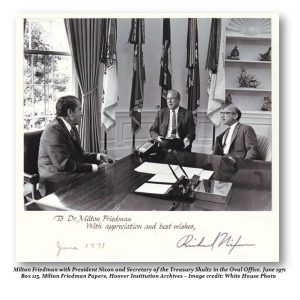
I have never sought to correlate my work with any others. I have been a trader, not an academic. I have been called the modern Hegel and compared to many others in philosophy as well as psychology. Because the floating exchange rate system was born out of necessity in 1971 as the Bretton Woods system was collapsing, I was often the only voice to be heard who actually had hands-on experience worldwide. When I was asked to testify before Congress in 1996, I was the largest adviser in the world with just over $3 trillion under contract which at that time was about 50% of the entire US national debt. No one had ever had such a role in world foreign exchange markets. I was fortunate to have a front row seat during the entire evolution of the floating exchange rate system. That was never a subject that could be taught in university since the last such floating exchange rate period predated the first course in economics which began at Cambridge University in 1902.
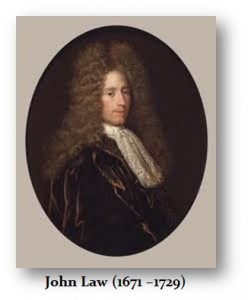
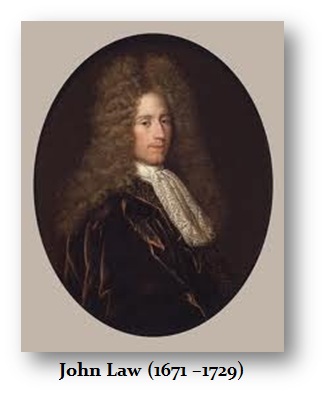
I have been trained, not by some university which could never teach anything to do with the Floating Exchange Rate System, but by the markets and my clients. The person who came up with the very concept of supply and demand was also a trader who had been in the trading room of Amsterdam — the first trading center post Dark Age. His name was John Law (1671-1729), who was also plagiarized by just about everyone else.
Some things can only be discovered by actually observing them from the trading floor. They do not appear out of thin air from a dream. What I learned about the world economy involving foreign exchange and observing capital flows between nations and currencies could only be accomplished by life experience. Likewise, John Law observed the basic human reactions and formed his idea of supply and demand with its impact upon price.

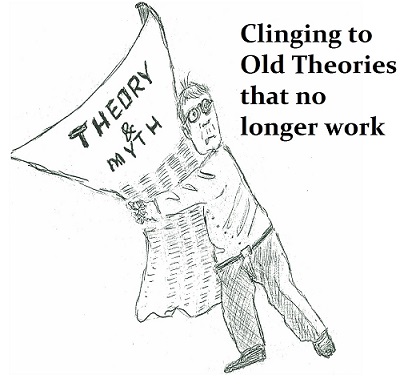
A trader does not have the luxury of clinging to old theories. If you are wrong, you must respond quickly. Knowledge is gained ONLY from making mistakes and surviving our own decisions.


How Will Europe Respond to Being the Source of the Crisis?


QUESTION: Dear Martin,
You have discussed the structural design flaw in the euro being due to the lack of consolidation of EU countries’ debt, as well as, EU policies that prohibit bank bailouts. Why could EU policies regarding the prohibition of bank bailouts just not be changed to allow for bailouts? If I understand correctly, wasn’t it also the case that the ECB was not legally allowed to buy EU country sovereign debt? That law was either changed or ignored (I’m not sure which) during the European sovereign debt crisis earlier this decade to allow for the ECB to buy sovereign bonds, which then brought down sovereign debt yields.

Correct?
Thank you for helping us all to grow in our understanding of what confronts us.
Sincerely,
WJ

ANSWER: Everything would function so much better if we had rational leadership. The problem is simply that government will NEVER avert a crisis. They must first experience the crisis before they will ever consider changing the policy. Yes, it seems easy to just fix the problem now. However, I can talk face-to-face until my face turns blue. They will NEVER prevent a crisis. Politicians know that they ONLY look authoritative when they respond to a crisis. Nobody will listen if they say they just prevent a crisis. People assume it is just BS.

Add to this reality the problem between domestic and international policy objectives. Politicians run for election, promising to do this or that, which all seems nice for it is presented to be within their power. That is what is under siege. The Federal Reserve has suddenly realized that it has become the central bank of the world. They were intending to lower rates to help emerging markets, Europe, and Japan. Then the Repo Crisis hit and the Fed was compelled to address the liquidity crisis. This was not about “stimulating” the economy, it was about preventing short-term interest rates from rising. In other words, the QE of 2008-2009 was about buying in long-term debt to try to lower long-term interest rates. Here the short-term rates were rising. Traditionally, the only thing a central bank can control is the short-term. The Repo Crisis exposed the fact that central banks are losing control of even the short-term.


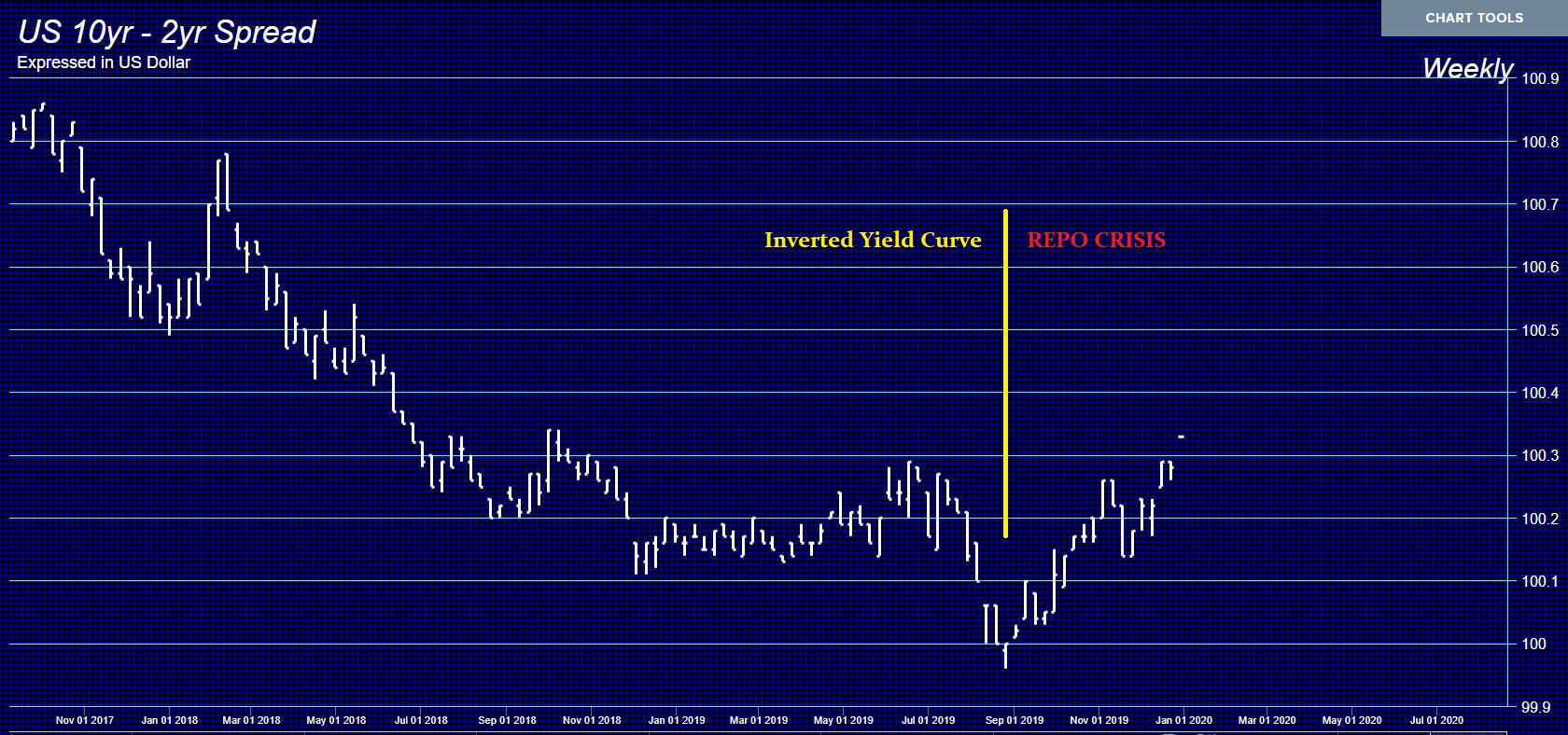
Remember the inverted yield curve in the summer of 2019 that everyone said was a precursor to a recession? Ever since the Repo Crisis, the yield curve has steepened dramatically. This is confirming what I have been saying. This was never about stimulation, it was an attempt to prevent short-term rates from rising.

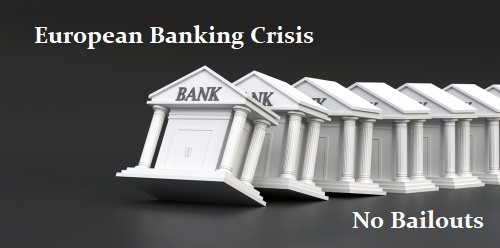
Therefore, the questions become: (1) Will Europe respond and realize that their no-bailout policy will create a worldwide banking contagion and crisis? (2) If they do recognize that they are the source of a worldwide crisis, how long will it take them to respond and reverse their policy? (3) Will they accept responsibility or blame the rest of the world?

Rational people respond completely differently than politicians who cannot publicly admit they were wrong.

Gold, War, & the ECM


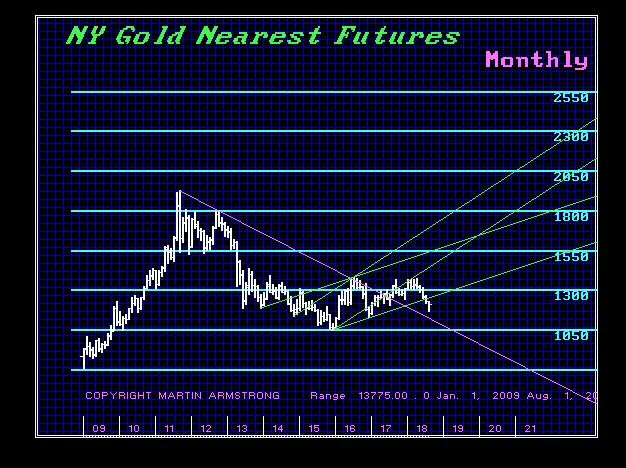
QUESTION: Marty, Do you think it will be time to short the bonds with the ECM? Gold had bounced off the Downtrend line instead of electing the bearish reversals and it rallied after the Pi turning point. You said if gold peaked with the bottom of the ECM it could then fall back to retest support. It looks as if that happens, the Fed will lose the battle and interest rates will rise after the ECM. Is this all a set up like the gold rally back in 1979 following the Afghan invasion? It looks too familiar.

HB

ANSWER: Ah, you have a good memory. It would have been much better had gold made a new low, held the 1980 high, and then rallied with the ECM turn in 2020. That would have clearly been a long-term sustainable trend. Bouncing off of the Bear Reversals & Downtrend Line and then rallying with the Pi turning point 2018.89, pointed to a rally into the next ECM (2020.05). I warned that given that pattern we would rally to test the Yearly Bullish at 1432 and at the WEC I warned that a close above that pointed to a rally into the January 18th turning point with the next resistance at the 1585 level.

The spike up in gold is clearly reminiscent of the Russian invasion of Afghanistan on December 24, 1979. That was under the pretext of upholding the Soviet-Afghan Friendship Treaty of 1978. As midnight approached, the Soviets organized a massive military airlift into Kabul, involving an estimated 280 transport aircraft and three divisions of almost 8,500 men each.

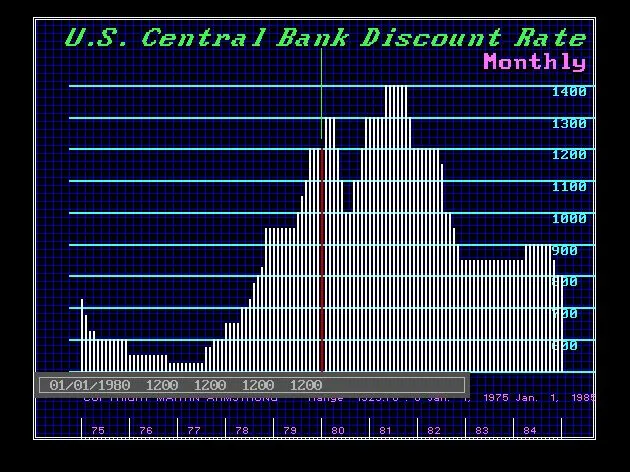
Currently, our system resistance has stood at 1585 followed by 1620 with technical resistance in the 1575-1595 level. We most certainly have to be concerned if gold peaks with the ECM. This will not be a good omen and I agree it is reminiscent of the pattern of 1980. The interest rates the exploded and peaked in May 1981 with the top of the ECM back then.

With the Repo Crisis and the Fed desperately trying to prevent interest rates from rising, which was opposite back in 1979-1981, we still have to be very cautious about how all the markets line up on our model for this turning point. Back then, gold peaked on its own cycle on January 21, 1980, while the interest rates rallied further peaking with the top of the ECM precisely – 1981.35.

We will do the gold report after the ECM turn.

Understand What is the Repo Market


QUESTION: Mr. Armstrong and thank you for what you are doing for us regular people. For my first ever question for you, would you please explain as simply as possible exactly what the REPO market is and how it works and how it affects our multi-faceted financial world.
I am truly grateful for your work and communication.
GLH

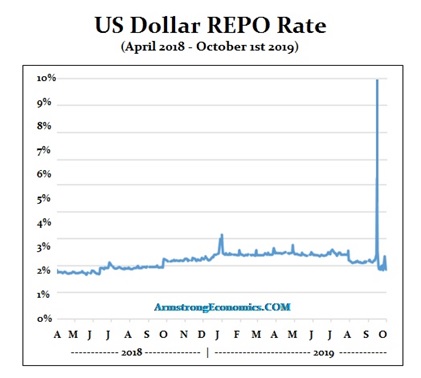
ANSWER: The REPo Market is where banks will post AAA securities and borrow against them for the night. Normally, the big banks like J.P. Morgan provide over $300 billion in liquidity daily which allows banks, hedge funds, and institutions to raise cash for the night. When the banks withdrew from lending into the Repo Market, the Fed was compelled to inject cash and thereby lending into the Repo market to prevent the short-term interest rate from rising as it did to 10% on September 17th, 2019.

A Reverse Repo (RRP) injects the purchase of securities with the agreement to sell them at a higher price at a specific future date. The party selling the security to raise cash in the market agrees to repurchase the securities (repo) from the lender at a future point in time which is known as a Repurchase Agreement (RP). Repos are classified as a money-market instrument, and they are usually used to raise short-term capital.

This is not a market that is open to the public. However, it is the basic market where everything else is factored on top of this rate. If the Fed did not intervene, then short-term rates would rise and instead of the consumer paying even 20% on a credit card, it would have jumped as must as 10%.

QE was where the Fed was trying to lower long-term rates after the mortgage-backed crisis hit in 2007 so they were buying 30-year bonds. This is the short-term which has nothing to do with QE. Here the Fed is trying to prevent short-term rates from rising rather than lowering long-term rates which they can only “influence” since the Fed posts only short-term rates like the discount rate (wholesale rate) which banks can borrow at.

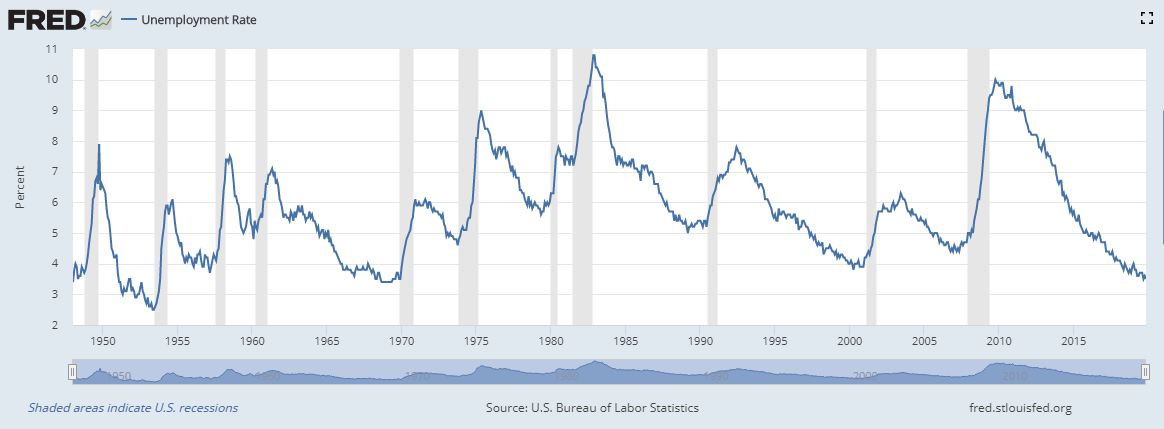
Here the economy is not declining and unemployment is back to the 1960s. All the talk about QE makes zero sense for these people do not understand what is taking place and it takes professionals in the field to grasp this issue and they cannot speak since they are under confidentiality agreements.