
Armstrong Economics Blog/Real Estate R-Posted Sep 2, 2023 by Martin Armstrong

QUESTION: Mr. Armstrong, You were the only one who forecasted that real estate would continue to rise in conjunction with the rate increases by the Fed. I have been following you only since 2020 and COVID-19. I am impressed with your computer and your analysis, which does not change with every passing headline. Can you elaborate on the real estate market a bit?
Thank you very much for the education.
FH
ANSWER: The traditional forecast on real estate is always one-dimensional. Homeownership has historically been in the top 5 of surveys about what Americans most want in life. Property values have been rising despite rising high prices combined with higher mortgage rates. There is little sign on the horizon before the ECM peaks in May 2024. Analysts have been confused and caught up in this economic conundrum of the continued economic growth that has defied all their recession predictions.
Normally, housing has been one of the sectors that has been the most sensitive to interest rates. Over the past two years, mortgage rates have risen from less than 3% to more than 7%. That means that the median family today faces mortgage payments that have doubled from roughly 14% of monthly household income in 2020 to nearly 29% by mid-2023. This is the strongest rise since the economic turm on our ECM when it bottomed in 1985.65.
Nevertheless, the conundrum that has baffled traditional analysts has not led to a decline in house prices as they expected. They paused during the COVID-19 lockdowns and fell in the Blue States, which had the most draconian COVID-19 measures. Currently, housing prices during the second quarter of this year rose at an annualized pace of 15% according to the S&P Case-Shiller index.
There is a tight supply in the South, where much of the migration has taken place. I get, on average three calls a week asking if I want to sell my house here in Florida. The annual sales of property nationally have been around $2 trillion. Smart institutional investors have been shifting from public unsecured debt to private mortgages. The average person does not look at CPI numbers or GDP numbers. They look at the cost of this rising, and the confidence in the Biden Administration has been collapsing. When people no longer trust the government, they shift to the private sector. So add to that the great migration from Democratic states to the southern red states, and you will see collapsing real estate values in places like San Francisco and Chicago in comparison to even Wall Street, have been quietly moving to the Miami region. There are still buyers in the market and a shortage of supply in the Red States like Florida. Thus, sales have declined, but this appears to be more the result of the decline in supply.
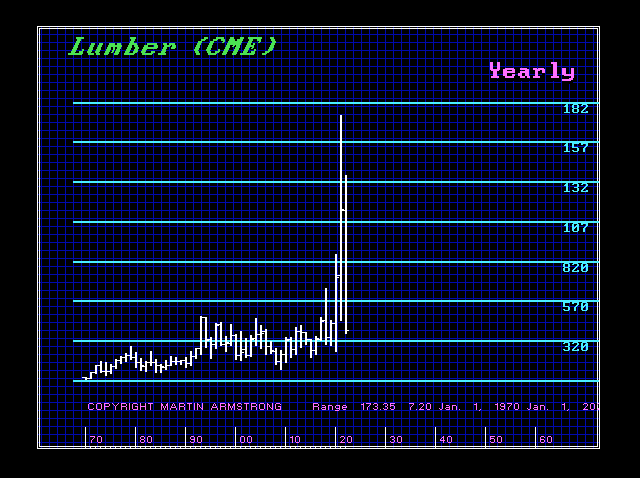
Additionally, the rising inflation in materials means that the replacement cost of homes is often higher than the prices being paid, not to mention the waiting time for construction. The sheer replacement costs of housing have skyrocketed. Even pain was in short supply thanks to the COVID-19 lockdowns. This has impacted the market, and traditional analysis simply never considered that the replacement costs on preexisting houses, in many cases, are 40% to 100% higher. Add to that the shortage in labor. It was very hard to find a contractor in Florida who even was available. Most contractors I talked to were booked beyond 2024.
Newly built homes account for about one-third of active listings in 2023. This was up from an average of 13% over the two decades before pre-COVID-19. Add to all of this is the influx of foreign money looking at US property as a hedge against future wars and destabilization of the monetary system. Then we have had funds like Blackrock buying property and renting them out.


 Centinel2012