Argentina’s Economy Collapses


Armstrong Economics Blog/Corruption Re-Posted Jul 30, 2022 by Martin Armstrong

Argentina’s economy has collapsed. Around 57% of adults in the nation are currently unemployed. The Socialist nation has programs in place to compensate, costing the country around $6 million daily. However, socialism no longer works when you run out of other people’s money. July’s inflation report showed an uptick over 60%.

Harry Lorenzo, chief finance officer of Income Based Research, told The Epoch Times, that the government’s constant spending has exacerbated the problem ten-fold. “The Argentine government has been grappling with a collapsing economy for some time now. The main reason for this is the government’s unsustainable spending, which has been funded in part by generous welfare programs,” Lorenzo stated. This is the same issue we see in the US, Canada, Europe, and elsewhere when governments spend without the intention of ever paying off their debt.

Argentina has defaulted on seven separate occasions since gaining independence in 1816. Speaking more recently, Argentina’s economy was already in ruin in the 1980s when they faced a serious debt crisis, and the currency became worthless. Inflation reached 2,600% in 1989, and the nation experienced hyperinflation into 1990. They decided to peg the Argentine peso against the USD in the late 1990s, which proved disastrous. Never in the history of economics has a peg survived because the economy is not a flat line.

By 2001, the peso was completely devalued. US Treasury bonds and Argentine government bonds rose 5,000 bps – bank runs ensued. There was an immediate freeze on bank deposits that December and the people were left with nothing. The International Monetary Fund simultaneously announced it would no longer support Argentina and cut them off from funding. This is when the nation lost its last tie to any foreign capital. The nation had no choice but to default once again at the end of December.

Various leaders, whoever could stick with the job, promised that the government would provide the people with basic needs. Nearly 60% of the nation was below the poverty line by 2002. By 2010, Argentina restructured 92% of its debt. The nation tried to remove trade restrictions and attract investors – but who would want their debt? The IMF granted Argentina one of the largest bailout packages in history in 2018, which totaled $57 billion. The IMF again agreed to restructure $44 billion for the nation in January of this year.

The problem with social programs is that there is never enough money. Rising inflation has increased the poverty level, and the average person can no longer afford an abundance of basic necessities such as food. The people of Argentina have been on strike for months, many refusing to work. The government promised them social programs in exchange for a cut of their pay. Argentina’s economy minister, Martin Guzmán, resigned at the beginning of the month. The Argentine peso continues to decline against the dollar, pushed down further by recent Fed rate hikes. This is what happens when governments spend recklessly, peg their failing currency, and promise the people security that they cannot provide.

Fed Preferred Inflation Index Jumps 6.8% in June, Largest Increase in Four Decades


Posted originally on the conservative tree house on July 29, 2022 | Sundance 

The federal reserve looks carefully at the Personal Consumption Expenditures (PCE) price index when weighting inflation data.  The Bureau of Economic Analysis just released the PCE index for June [DATA HERE] and the results show a 6.8% increase in June from a year ago, the largest jump in four decades.

Wage growth in the second quarter (April, May, June) was generally strong, rising 1.6%.  However, it now looks like the consumption index and the wage indexes are creating their own inflationary spiral.  In addition to supply-side inflation, driven by Joe Biden’s energy costs, the labor costs are now increasing substantially which adds costs on the production side of the economy.

As wages go up to keep pace with supply side inflation, the prices of goods and services produced/handled by those workers also increases.  This is the inflation spiral that can get out of hand quickly.  The major concern (not necessarily expressed by pundits) is the inability of any institutional economic response to offset the originating inflation caused by the energy policy.  The economic team is pretending supply-side inflation created by energy policy doesn’t exist. They are only directing attention to demand side inflation.

As long as energy policy keeps driving the price of electricity, gasoline and petroleum products higher, workers need higher wages.  Those wage increases, while significant in scale, still lag the rising originating prices of the goods; and the wage growth adds to the final costs. Inflation then becomes structurally embedded, hyper-inflation begins.  This looks like the current situation.

The monetary policy makers (fed reserve) can only impact the demand side of the inflationary cycle.  Raising interest rates does reduce demand; however, it also reduces labor at the same time.   Monetary policy cannot impact the originating source of inflation that starts this spiral.  The core issue is Joe Biden’s Green New Deal energy agenda.

WASHINGTON – […] An inflation gauge closely tracked by the Fed jumped 6.8% in June from a year ago, the government said Friday, the biggest such jump in four decades. Much of the increase was driven by energy and food.

On a month-to-month basis, too, prices surged 1% in June, the biggest such rise since 2005. Even excluding the volatile food and energy categories, prices climbed 0.6% from May to June.

Employees’ wages, excluding government workers, jumped 1.6% in the April-June quarter, matching a record high reached last fall. Higher wages tend to fuel inflation if companies pass their higher labor costs on to their customers, as they often do.

Friday’s figures underscored the persistence of the inflation that is eroding Americans’ purchasing power, dimming their confidence in the economy and threatening Democrats in Congress in the run-up to the November midterm elections.

But more persistent drivers of inflation show little, if any, evidence of slowing. The wage data released Friday — a measure known as the employment cost index — indicated that paychecks were still growing at a robust pace. That’s good for workers, but it could raise concerns at the Fed about its effect on prices. Chair Jerome Powell specifically cited this measure during a news conference Wednesday as a source of concern for the the central bank’s policymakers.

“This is a (report) that’s going to keep Fed officials up at night,” said Omair Sharif, president of Inflation Insights. (read more)

The Biggest Problem


Posted originally on the conservative tree house on July 29, 2022 | Sundance

People often wonder why few solutions are presented for the significant challenges we face.  Perhaps it is worth reminding everyone what the biggest challenge really is, and it has nothing to do with Joe Biden or our political system abusers.

The biggest problem we face as a nation is our unwillingness to admit our current condition is the result of purposeful action.

Cue example # [you_fill_in_the_ blank], a visual demonstration:

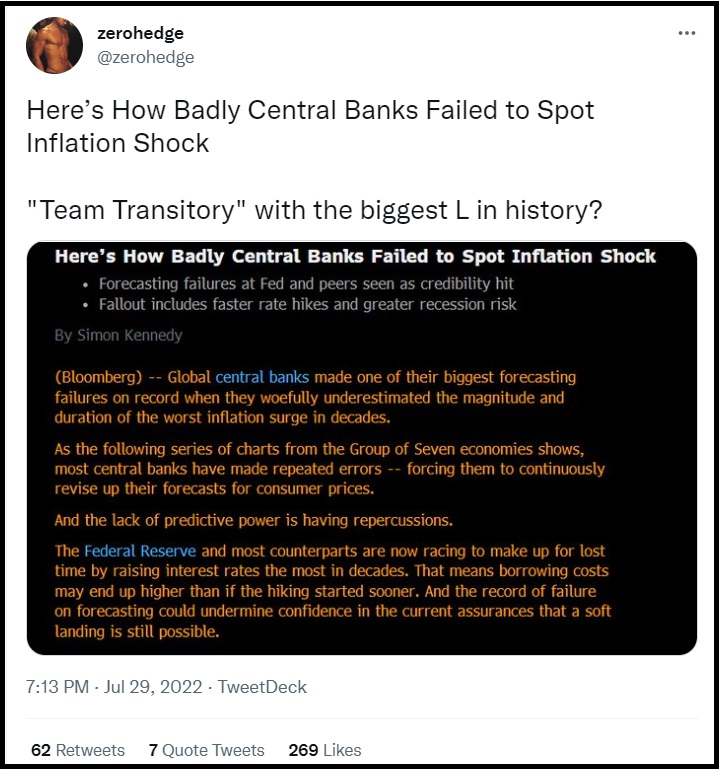
The central banks did not “fail to spot” the source of inflation.  The monetary policy makers did not make mistakes. The hands that guide the economic system did not screw it up, make mistakes or fail to recognize the consequences of the policy they put into place.

When they meet together at Davos for collective discussions around opportunities presented by the pandemic, the guidebook known as Build Back Better did not just organically materialize.  Nor did all the western governing central bankers all make a mistake when they followed the agreed consensus.  They knew from the outset the climate change agenda would be a radical transformation of the global energy system, and as a result, the global economy.

The central banks did not collectively “fail to spot” the inflation they were creating by lowering energy production, disincentivizing energy investment, limiting energy development, shifting policy away from new production, and generally breaking the traditional energy system finances.  They knew precisely what they were doing, and they did it -and continue to do it- with forethought and purpose.

This is where people mistakenly view ‘prior justifications‘ as ‘mistakes.’  When they said inflation was transitory, they were not lying about what they created. They were, however, obfuscating the length of the term “transitory.”   Inflation is transitory, from where and when it started in 2021, all the way to where and when windmills, solar panels and clean energy will take over on (fill_in_date_).  That is the “transition.”

These bankers, bureaucrats and political leaders are not stupid, and factually their intelligence has absolutely nothing to do with the situation.

These governing officials are ideologues, the worst kind of abuser you could ever encounter because they believe they are doing everything for your own good.  Their collective truth is all that matters.

You the citizens within the nations they govern, are not smart enough to know what is best for you.

You, the people who take their magnanimous policies for granted, are not thoughtful enough to understand how to save the planet.

You, the person using resources without caring about the planet, are not bright enough to see how your long-term interests are made better by their short-term actions.

These psychological outlooks are inherent traits of ideologues and abusers.

Once you realize your opinion in their plan means nothing, then you can understand why actions contrast against your opinion of that action are difficult to reconcile.

The actions of the ideologues seem hypocritical only because you are projecting a motive toward them, they do not carry.  You think they are making mistakes; they are not.  You think they made the wrong assumptions in their policies, they did not.  You think they are screwing up the economy, they are not; at least not according to the plan they have.

They met, discussed, planned, organized and collectively came to the decision that they would all act in synergy.  Each individual taking the actions within his/her sphere of influence that would assist the larger agenda.  Each government leader steering his/her internal policy in a direction that befits the larger collective need, regardless of domestic opinion.  None of this was done by mistake.

The western central bankers all show up to the same conferences, symposiums and discussions; and they all follow the exact same approach.  Yet somehow, we reconcile their collective and intentional outcomes as if they are making mistakes that they will soon correct.  Then we sit puzzling over our puzzlers wondering why the correction is not happening.

The biggest problem we face is our inability to accept what is done, and instead we project justifications that are nonexistent.  We are suffering from battered citizen syndrome.

We reconcile our economic collapse by saying they are getting the policies wrong.  No.

Just stop.

They are executing the policies exactly as they were planned from the outset. Your financial abuse is a feature, not a flaw, of your abusers’ behavior.  The policies are working exactly as intended.

The Central Banks did not “fail to spot” anything. They knew what was causing inflation (energy policy) and they needed to ignore it (still do). They pretend higher costs are now some weird demand-side construct, despite no one buying much, in order to support the global Build Back Better climate change policy objective that will save future generations of mankind.  The operational timeline is decades, not weeks or months.

The word “transitory” was used purposefully, in order to hide and obfuscate their prior knowledge. The bankers knew when they said it, that a transition was exactly what the BBB program called for, which was to delay any monetary rate increase as long as possible allowing energy policy inflation to structurally embed.

Once the bankers, ideologues, globalist WEF guides and bureaucrats, got the fully supported climate change energy program (BBB) to take hold globally as an economic control mechanism (no new production), then -and only then- did they modify their policy to support the second phase.

Phase-2 is to reduce global economic activity to match the 2021 deficit in energy production. That phase began in March 2022:

We are in phase 2 now.  The U.S. Federal Reserve and the various central banks now raising interest rates to lower all western economic activity.

The goal in phase-2 is to lower energy demand to offset the massive increases in price, due to *nonproduction* of the energy in phase-1.

Put simply, bring energy use down by raising rates and lowering the economic activity.

This “managing the transition” is being done purposefully and collectively. This is exactly what the Build Back Better agenda called for. They did not get anything wrong. They did not make mistakes. Our current economic state, and/or the pain you feel, is the exact outcome of the plan they followed.

Now, I fully understand why the Wall Street financial pundits and global news corporations do not outline this reality.  After all, this type of elitist behavior is exactly what revolutions are born from. However, it is very frustrating that smart people on the pragmatic and practical side cannot see or accept the political roadmap for what it is.

This is being done on purpose. They are not making mistakes.

I don’t care what you want to call it: Build Back Better, Green New Deal, The Great Reset, whatever.  I simply don’t care about the labels. But the truth of a coordinated approach to manage the western economies into useful decline must be admitted *BEFORE* we can expect to change things.

As long as our codependency facilitates our abuse…. As long as denial of intent is a comforting mechanism, allowing us to avoid confronting the abuse we are suffering…. No corrective action is possible.

It starts by changing our thinking.

Brazil, Mexico, and more recently Japan, have started pushing back against the climate change ideologues.  We must do the same.

Act, or be acted upon.

Interview: The World According to Martin Armstrong


Armstrong economics Blog/Armstrong in the Media Re-Posted Jul 30, 2022 by Martin Armstrong

Click here to listen to Martin Armstrong’s latest interview. 

By Kerry Lutz:

“We’re seeing oil price shocks, commodity booms and busts, and various factors that are threatening to de-throne the US dollar. Why is this happening, and what does this mean for the global economy? I have Martin Armstrong on the show to discuss this, and he explains the various changes that have occurred—such as sanctions in Russia and countries opting to not borrow in dollars—that put the dollar at risk. Not only is the dollar in danger in these conditions—this shift in currency use greatly affects the world economy. Tune in for more information.”

First Major German City Turns Off Hot Water and Public Building Electricity to Save Gas


Posted originally on the conservative tree house on July 28, 2022 | Sundance 

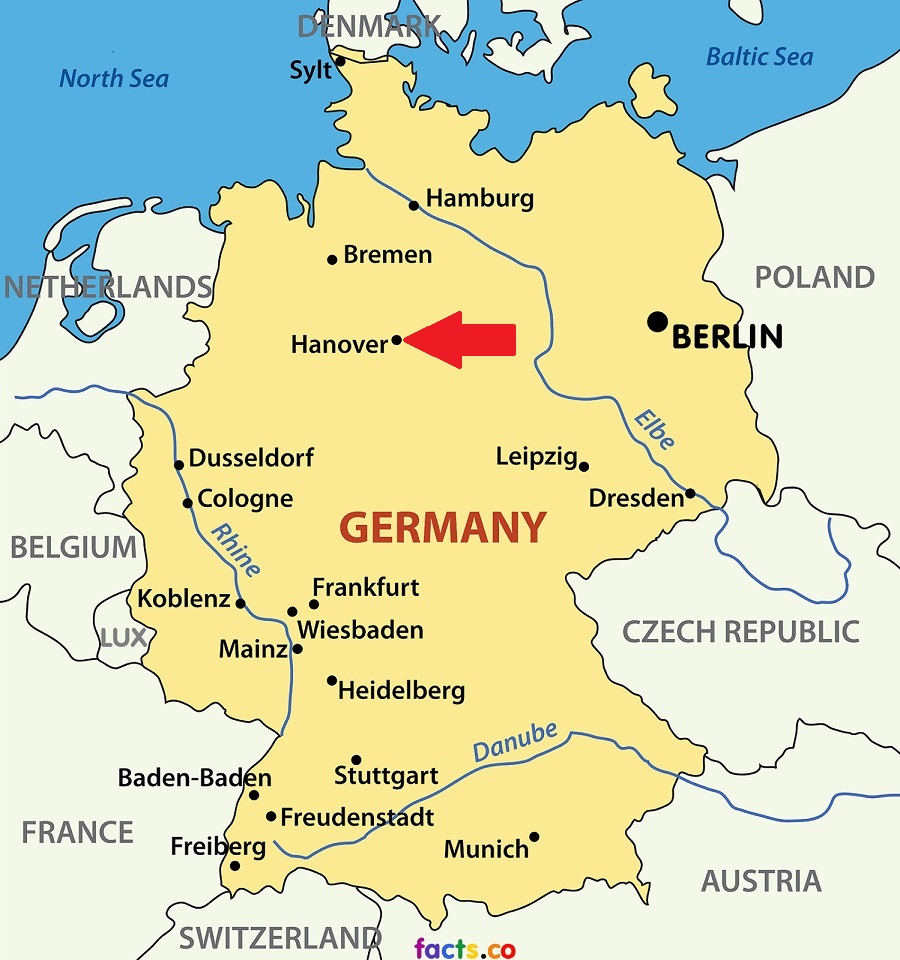
Hanover, a city in the northwest of Germany, has become the first major metropolitan area to try and reduce the use of natural gas by removing hot water from public buildings.  The move comes as natural gas supplies from Russia are reduced to 20% of capacity.  Germany is attempting to fill up storage facilities of natural gas in order to survive the winter.

Germany, together with several European countries, are telling their citizens to expect large increases in their electricity bills as energy costs continue to skyrocket.

Germany does not have any LNG terminals to receive shipments of natural gas into ports, they are dependent on pipelines from Russia.  They are urgently trying to reduce the current amount of natural gas being consumed.

(Via Daily Mail) – […] Other desperate gas-saving measures include switching off public fountains and blacking out night-time lights on major buildings such as the town hall and museums. The city’s mayor, Belit Onay, spoke of an ‘imminent gas shortage’ that meant they had to reduce the city’s energy consumption by 15 per cent.

[…] There will also be a ban on portable air conditioners, heaters and radiators among the general populace as the average German begins to pay a price for standing up to the Russian dictator.

[…] Germany, like most of Europe, has been enjoying a hot summer which should soften the blow of the cold showers, but public officials are introducing the measures now in fear of what awaits them when the season turns.

Gazprom, the Russian state energy giant, has been giving European leaders sleepless nights by disrupting the flow of gas via its Nord Stream 1 pipe line.

They cut the flow to 40 per cent in June, citing maintenance issues, and this week they reduced the gas supply through the pipe to just 20 per cent.

These reductions, which EU energy chief Kadri Simson dismissed as ‘politically motivated’, have seen energy bills soar, governments struggle to fill gas storage facilities and energy-intensive heavy industries wondering if they can keep the factories running.

Russia denies that it is deliberately throttling supply to cause pain and instability in Europe, but few doubt that it is a deliberate ploy to punish what it calls ‘unfriendly countries.’

In response, European Union countries agreed to a controversial, bloc-wide 15 per cent reduction in gas usage on Tuesday that is hoped will reduce the pressure on European countries most vulnerable to Russian energy blackmail. (read more)

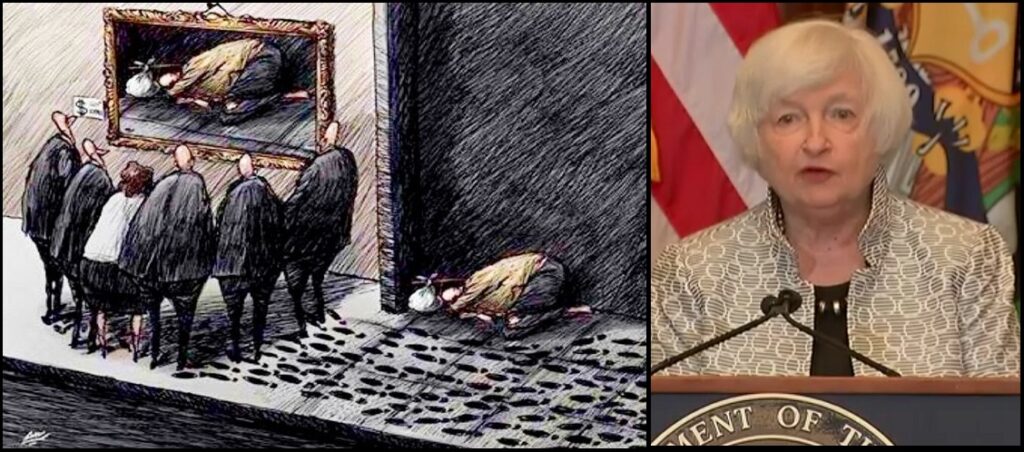
Secretary Yellen Reminds Good Citizens Their “Household Finances are Strong”, We are Experiencing Abundance and Not Being Happy is Disinformation


Posted originally on the conservative tree house on July 28, 2022 | Sundance

July 28, 2022 | Sundance | 134 Comments

Comrades, Secretary Janet Yellen reminds everyone how important it is to smile and support the policies of Dear Leader as they manage our overwhelming happiness through this period of exceptionally wonderful abundance.

The secretary reminds us that our “household finances are strong” and we have good employment to keep ourselves industrious and valuable on behalf of the state.  WATCH:

The beet and potato harvest will provide soup for everyone, but only if we continue to do our best.  All of the best comrade citizens are cheerful and happy.

.

“I’m told that’s what it looks like… but we just don’t see it”…

Straight Economic Data from Bartiromo


Posted originally on the conservative tree house on July 28, 2022 | Sundance

There is less pretending in this segment, but the core of intent is still missing.   As soon as Ms. Bartiromo can admit the monetary policy is specifically designed to create lower economic activity, she will be able to reconcile the policy conflicts which she still views as hypocrisies.

While not outlining the motive, in the segment beginning at 1:07 Ms Bartiromo does a good job outlining the current state of the economy. WATCH:

Comrades, prior to the Joe Biden economy the average American worker was earning 29 onions per hour.  After, the Biden economic policies were put into place, the average American worker is now earning 11 onions per hour.

Domestic Exodus from US Cities


Armstrong Economics Blog/Real Estate Re-Posted Jul 28, 2022 by Martin Armstrong

The US Census Bureau reported that 8.4% of Americans moved in 2021, beneath the 9.3% who moved at the height of the pandemic panic in 2020. Numbers for 2022 may show an uptick in migration to the suburbs or rural areas. Our models indicate that overheating in the housing market will be less prevalent in less populated areas as we are not merely dealing with housing inflation but also mass domestic migration.

Housing may be cheaper in rural areas, but there are additional costs associated with living in the country. There is no public transportation, and people must travel longer distances for work, groceries, shopping, health care, and more. Energy prices are sky-high, and simple trips cost significantly more. Iowa State University professor Dave Peters, as reported by the AP, has been studying the impact inflation has had on rural America. Peters estimates that rural households pay $2,500 more per year for gas alone compared to those living in cities.

Still, prices for housing in the country v the city more than makeup for increased energy costs. Remote work has made rural living a prospect for many Americans. The National Association of Realtors found that rural areas saw a 54.6% uptick in inbound moves in 2021, followed by micropolitan areas (i.e., small towns) at 53.8%.

In January, the Association of Equipment Manufacturers (AEM) said that certain remote workers were enticed by rural life after pandemic burnout. They found that people were seeking to abandon the hustle and bustle of city living, citing lower living costs, safer environments, fewer people, no traffic, lower housing prices, different cultures, and politics.

Gone are the days of people flocking to the cities for opportunities. As long as there is an internet connection, the modern American can work from anywhere. As the average potential buyer is priced out from their hometown, the prospect of rural or small town life is increasingly enticing.

Tucker Carlson Outlines Dueling Insurrections and Two Tiers of Justice


Posted originally on the conservative tree house on July 27, 2022 | Sundance 

Tucker Carlson used his opening monologue to compare and contrast the different responses from the DOJ to Donald Trump vs Joe Biden.  Carlson outlined the different response from the DOJ/FBI toward the pro-violence statements by various democrat politicians to the DOJ/FBI response currently underway to target Donald Trump.

Essentially, what this boils down to is a system of two-tiered banana republic style justice.  All efforts are exhausted to avoid targeting democrat politicians, and all DOJ/FBI efforts are exhausted to manipulate the targeting of republicans.  The same selective targeting and investigating holds true based on the geographic venue for criminal conduct. WATCH: 

.

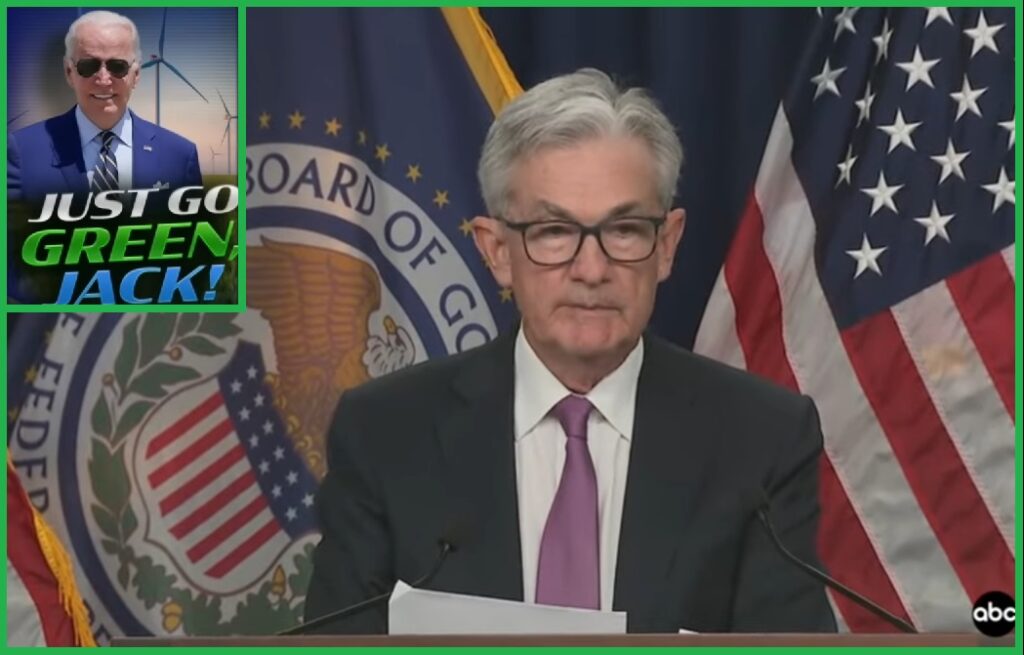
Fed Chair Announces Addition 0.75% Increase in Interest Rates and There will be More, After They Assess How Much Damage This Creates


Posted originally on the conservative tree house on July 27, 2022 | Sundance

While admitting that consumer spending had dropped; and while admitting that production of goods and services had “slowed significantly”; and while admitting that consumers have “lower real disposable incomes and tighter financial conditions; and while stating that “activity in the housing sector had weakened”, housing purchases have fallen; and while accepting that “business fixed investment seems to have declined in the second quarter,” Fed Chairman Powell announces his intention to continue targeting excessive demand.

If we accept that monetary policy can only impact the demand side of the economy (regulatory policy impacting the supply side); and if we accept all off the currently existing realities of a declining demand side, as outlined by Powell; then you might wonder what excessive demand is it that he’s targeting?   The answer to that question is the secret sauce.  They want less energy demand.   WATCH (2 mins):

The federal reserve, just like all the central banks around the collective western alliance, is trying to reduce the economy in order to reduce energy use.   This is the monetary policy side supporting the Build Back Better, Climate Change, regulatory policy side. {Go Deep}

They cannot admit openly what they are doing, but the bankers are trying to help the globalist politicians by shrinking their economy.  Raising interest rates into preexisting economic contraction is against their legislative mandate, because it only leads to unemployment and a smaller economy.

Powell is using the pretense of demand side inflation as a justification to raise interest rates.  It’s not demand driving inflation, it’s the energy policy.

Powell is managing the monetary side of the transition to a New Green Deal economy.

Powell is managing the economy into a recession to support the “energy transition”.

This is all being done on purpose.

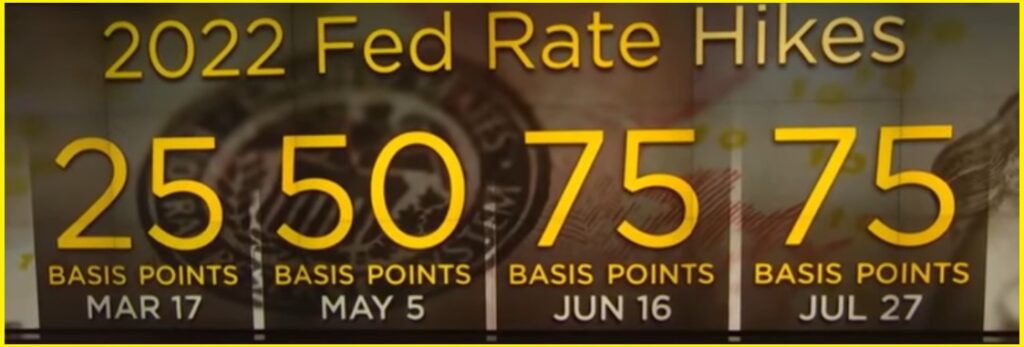
[…] Mr. Powell said in his news conference following the Fed’s decision to raise rates by by 75 basis points that future rate decisions will be made on a meeting-by-meeting basis now that the federal funds rate target range is between 2.25% and 2.5%, which he deemed roughly neutral in terms of its impact on economic activity.

Mr. Powell said the 75-basis-point moves in June and July were unusually large and something similar at the September FOMC “could be appropriate.” But he said that the Fed can no longer provide “clear guidance” and will let the data determine what happens next. He said he still believes monetary policy will need to move to a restrictive stance and will likely be between 3% and 3.5% by year end. (LINK)