Interview: Collapsing Global Finance with Martin Armstrong


Armstrong Economics Blog/Armstrong in the Media Re-Posted Oct 23, 2022 by Martin Armstrong

Check out my latest interview with Laura-Lynn Tyler Thompson.

The Albertsons and Kroger Merger Faces Legislative Scrutiny as European Company Ahold Assembles Competitive Bid


Posted originally on the conservative tree house on October 22, 2022 | Sundance 

Last week we discussed the announcement of a $24.6 billion merger deal between Kroger and Albertsons supermarkets {Go Deep}.  The majority stockholders in both companies are institutional investment groups, Blackrock, Vanguard and Cerberus.

The merger would consolidate the second and third largest food retailers in the U.S. and would certainly dilute the competitive dynamic amid the supermarket industry.  Concern over price controls and decreased competition has now arrived on the desks of DC legislators who are reviewing the deal.

(Reuters) – […] U.S. Democratic Senator Amy Klobuchar and Republican Senator Mike Lee were quick to say that they would hold a hearing to discuss the merger. A European interloper could make deal plans even harder.

Frans Muller, Chief Executive of Stop & Shop owner Ahold Delhaize (AD.AS), has made no secret of his desire to consolidate U.S. grocers. The Netherlands-based firm is already the fourth largest grocery chain. If it managed to cobble together a better offer than Kroger’s bid for Albertsons, it would become the second largest supermarket. Plane spotters tracked two Albertsons jets next to Ahold Delhaize’s U.S. base in Massachusetts in early August. Ahold declined to comment.

Ahold can also afford a chunky deal. The Dutch grocer has debt of just 2 times its $6.7 billion of EBITDA estimated for this year, according to Refinitiv. That’s 50% less than the average. If investors reckoned there was merit in a deal, Muller could also use equity to beef up the offer. At more than 12 times, Ahold’s price-to-earnings ratio is a fifth higher than Albertsons’, giving it currency.

Aspects of the deal might make it easier for antitrust authorities to get comfortable, too. Kroger and Albertsons would have a combined market share of 13%, whereas a deal with its Dutch rival gives much less of the pie. Ahold focuses on the East Coast of America whereas Albertsons has a big presence on the West Coast. So regulators wouldn’t have to worry about a larger Kroger shutting down competing Albertsons stores.

[…] U.S. senators who scrutinise antitrust issues expressed “serious concerns” about grocery company Kroger’s plan to buy rival Albertsons, and said they would hold a hearing in November on the $25 billion deal.

The announcement by Democratic Senator Amy Klobuchar, chair of the Senate Judiciary Committee antitrust panel, and Republican Senator Mike Lee confirmed a previous report by Reuters.

A Kroger spokesperson said the company looked forward to the hearing. “We welcome the opportunity to outline how this transaction will benefit America’s consumers by expanding access to fresh, affordable food,” the company said in a statement.

The Federal Trade Commission is expected to review the deal to ensure it complies with antitrust law. (read more)

This might be one of those rare times when a legislative and regulatory review may actually be beneficial to the outcome for the consumer.

December 16, 2020, Dozen Large Eggs $1.79

October 11, 2022, Dozen Large Eggs $7.29

(Source)

(DCBusinessDaily) – […] Scott Rasmussen Number of the Day shows 76% of voters have seen their grocery prices go up in the last month. The poll also found 60% of voters believe prices will continue to rise. Additionally, 54% of voters say gas prices have gone up in the last month and 59% believe gas prices will continue to go up. Ballotpedia’s poll methodology surveyed 1,200 registered voters from Oct. 6-8. According to the Ballotpedia website, the poll was lightly weighted by geography, gender, age, race, education, internet usage and political party to reflect a fair balance of voters across the country. The margin of sampling error is +/- 2.8 percentage points.

The U.S. Bureau of Labor Statistics issued its latest Consumer Price Index (CPI) summary for the nation on Oct. 13, which found that the rate of inflation over the last 12 months stands at 8.2%. It rose 0.4% in September. In the last year, food costs have risen by 11.2%, energy costs have increased by 19.8%, gas prices have risen by 18.2% and the cost to purchase a new vehicle has increased by 9.4%. (more)

Florida Agriculture Losses from Ian


Armstrong Economics Blog/Agriculture Re-Posted Oct 21, 2022 by Martin Armstrong

The damages from the hurricane are still being evaluated, but preliminary estimates state that Ian caused Florida’s agriculture industry to lose up to $1.56 billion. Around five million acres of farmland were destroyed by the hurricane, 60% of which was grazing land for cattle. An additional 500,000 acres were affected but not destroyed. Florida produces around $8 billion in agricultural goods per year, so this is a significant blow to the industry.

The Sunshine State was already experiencing hardships prior to Hurricane Ian, with some estimates saying the industry would decline by a third this year due to temperatures and disease.

“The impact on Florida’s affected commodities cannot be understated, especially the heartbreaking damage to Florida citrus, an industry already facing significant challenges,” state Agriculture Commissioner Nikki Fried declared. Orange juice alone is expected to cause a $304 million loss. The US Department of Agriculture said that orange production was already 32% down YoY, marking the smallest harvest in eight decades.

Up to $393 million may be lost from destroyed vegetable crops, while horticultural crops may experience a $297 million decline. Cattle is expected to decline by over $220 million.

The true damage cannot be assessed until the fields dry up. None of these figures account for inflation. Natural disasters will only contribute to rising food prices and shortages.

Iranian Drones


Armstrong Economics Blog/War Re-Posted Oct 21, 2022 by Martin Armstrong

The western alliance is not the only one providing military training. Iran has sent military members to Crimea to train Russian troops. Specifically, they are training them to use Iranian drones. There were reports of Russian troops visiting Iran in August to learn how to operate unmanned aerial vehicles (UAVs). Since then, there have been numerous reports of UAVs failing, but the successfully deployed UAVs are capable of causing serious damage.

Shaheds, also known as kamikaze or suicide drones, explode on impact and are capable of also carrying missiles. This drone is less expensive to develop, but it can travel up to 1,000 miles and leave a range of destruction in its path. Mohajer-6 UAVs can be used for spying purposes and can, of course, also hold a missile. Ukraine claims that they have shot down at least 200 drones and have the capability to jam radars.

Both Russia and Iran have denied trading weapons, but what do they have to lose now that all the cards are on the table? Russia has violated the UN Security Council Resolution 2231 by transferring arms from Iran. The West has already sanctioned Russia in every way possible. Numerous nations are placing sanctions on Iran now, but again, they are not too concerned. Tehran and Moscow, two nuclear powers, are strengthening their relationship and seem prepared to face any Western consequences while resuming trade.

The Next Winter of Death


Armstrong Economics Blog/Corruption Re-Posted Oct 18, 2022 by Martin Armstrong

Remember when Biden publicly chastised the unvaccinated population last year? Do the “right thing,” and you will “get through this.” Those selfish enough to choose medical autonomy, the president stated, were “looking at a winter of severe illness and death for yourselves, your families, and the hospitals you may soon overwhelm.”

We have definitive proof that Pfizer did not test the vaccine against transmission. Governments globally pushed a false narrative, a blatant lie, to force people to take these vaccines. Biden’s memorable speech demonized a portion of the population. You will get sick because of them.

Now that the lie has finally been revealed, the White House is still pushing Americans to receive yet another booster. Headlines are appearing across the liberal news about the “temperatures dropping,” as if that is a factor. Look into it yourself, and you will notice the “temperatures dropping” fear-mongering in the media as if COVID and not the depletion of energy resources should be the catalyst for fear.

The White House expected between 13 and 15 million Americans over the age of 12 to receive another dangerous booster. That means only 5% of the eligible population is willing to play along with the COVID games. Washington and the CDC will unleash a marketing campaign to sell the toxins one way or another, but fewer will comply. Politico reported that they expect less than 30% of the population to receive the next shot.

The next winter will be one of death and destruction, but not because of COVID. The energy crisis will cause death and destruction, as will the war in Ukraine and every nation it “may soon overwhelm.”

The Great Economic Pretending Has Become Absurd, WSJ Economists Ignore Current Reality and Ponder Possibility of Recession in 2023


Posted originally on the conservative tree house on October 18, 2022 | Sundance 

I do not know how to describe this with the Through The Looking Glass absurdity it deserves.

The ability of financial media and national economists to suspend accepting current reality, while making claims about the possibilities for next year, is ridiculous. Ask me why this era of great economic pretending is underway, and I have no answer. The intellectual dishonesty is beyond my comprehension.

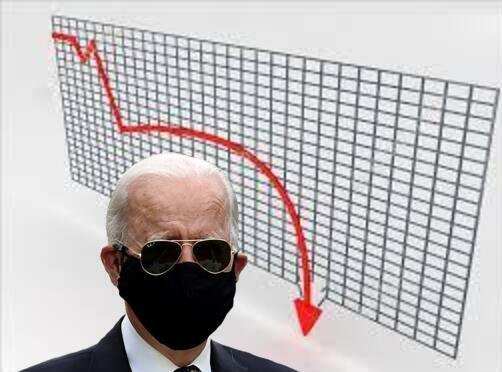
The first and second quarters of the U.S. economy showed negative Gross Domestic Product valuations (GDP). We just finished the third quarter (July, Aug, Sept) and the likelihood of another negative GDP is high. Production is down, demand is down, consumer spending is down, inventories are climbing, and the economy is contracting. We are in a literal, technical and structural recession. Considering the Q1 and Q2 outcomes, we have been in a recession all year.

The Wall Street Journal publishes an article citing several notable economists who are putting the likelihood of a 2023 recession at 63%.

(WSJ) – […] On average, economists put the probability of a recession in the next 12 months at 63%, up from 49% in July’s survey. It is the first time the survey pegged the probability above 50% since July 2020, in the wake of the last short but sharp recession.

Their forecasts for 2023 are increasingly gloomy. Economists now expect gross domestic product to contract in the first two quarters of the year, a downgrade from the last quarterly survey, whereby they penciled in mild growth.

[…] Forecasters have ratcheted up their expectations for a recession because they increasingly doubt the Fed can keep raising rates to cool inflation without inducing higher unemployment and an economic downturn. Some 58.9% of economists said they think the Fed will raise interest rates too much and cause unnecessary economic weakness, up from 45.6% in July. (read more)

They are analyzing a pending recession in 2023 without even admitting we are in a recession right now. AT THIS VERY MOMENT.  We have two consecutive negative quarters of economic growth behind us (another Q3 result pending), and these economists are discussing a recession “next year“?

I feel like I’m behind a mirror in a parallel universe looking at financial pundits and economists pretending our reality is something completely different from what it is.   This is madness.

♦ “Managing the transition,” is a phrase we have heard often – but what does it mean?

This is the only explanation I can fathom for this era of great pretending.

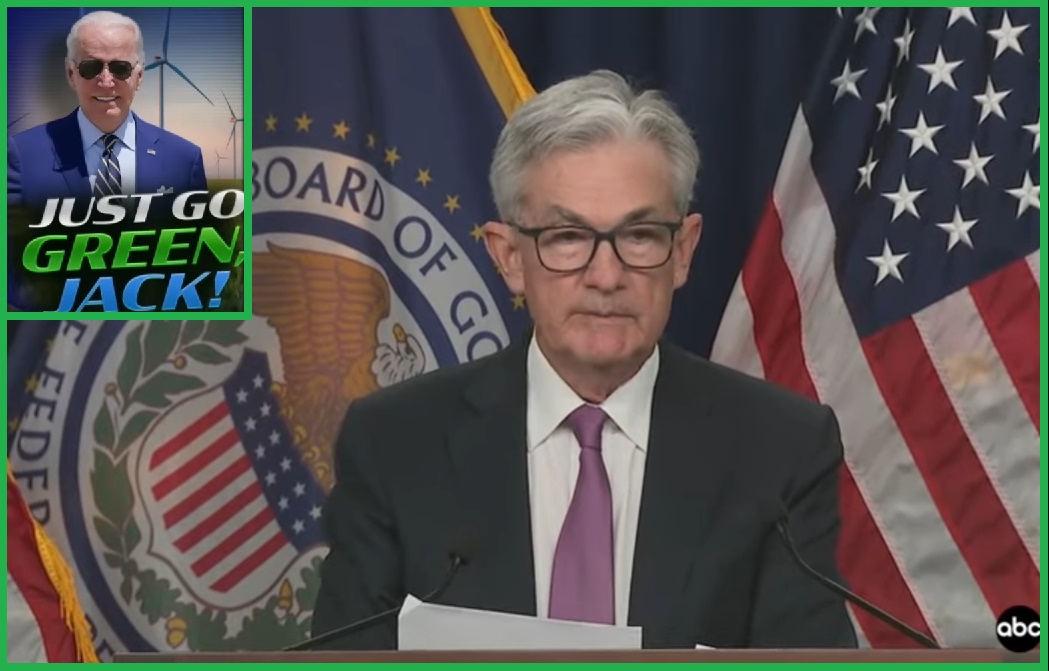
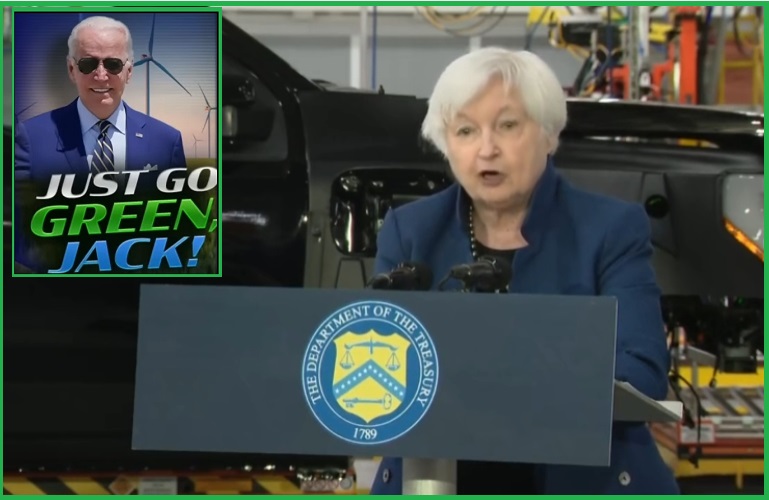
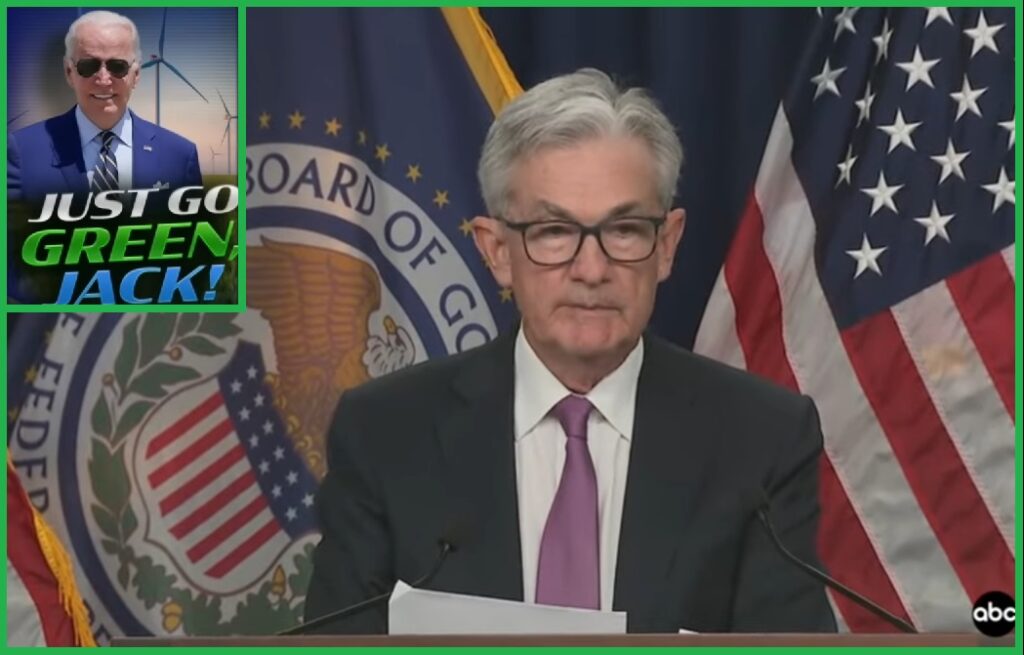
As you are well aware the various western nation central banks including the U.S. Federal Reserve, have raised interest rates into a global economic contraction, a drop in demand.  Raising interest rates into a contracting economy is counterintuitive, it runs against the expressed interest of government to grow economic conditions.  However, there is a purposeful design to the contradiction.  [A TLDR Version Here]

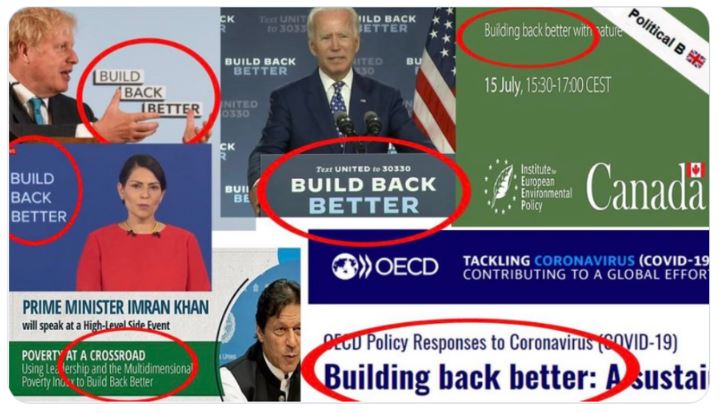
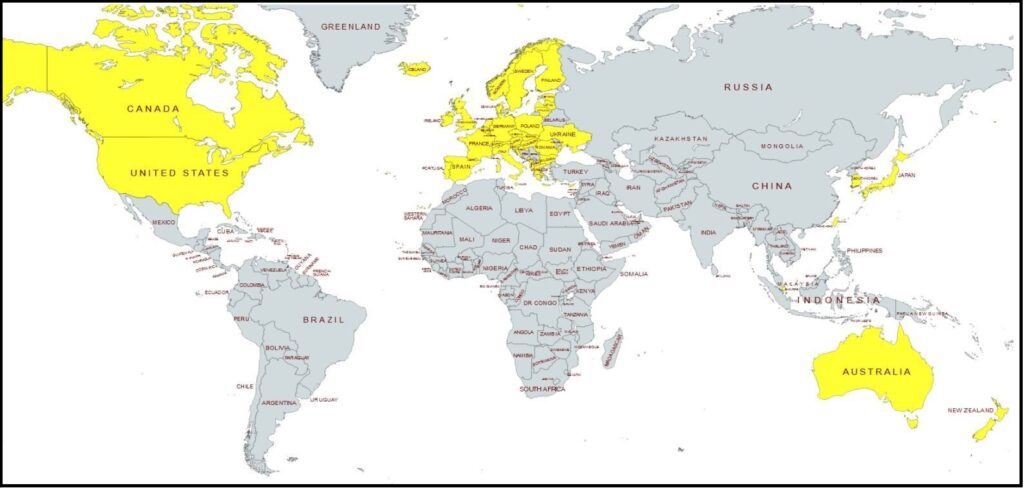
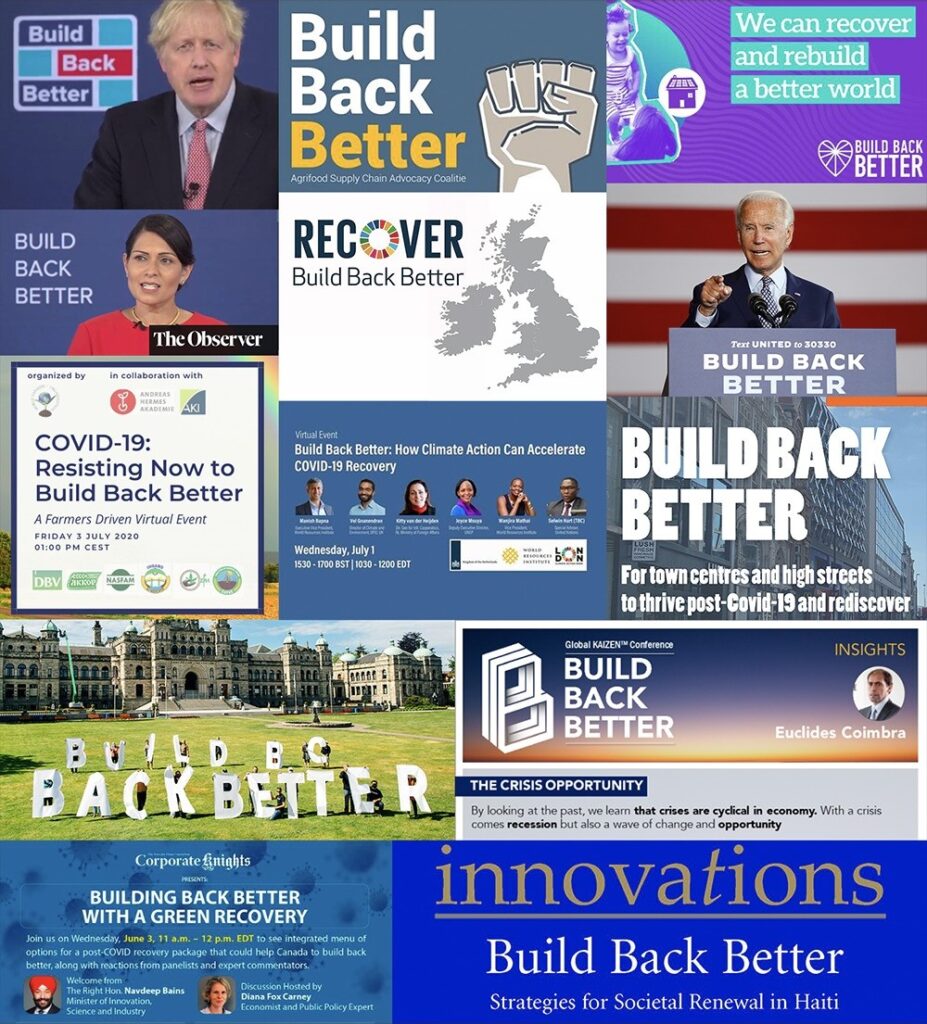
The central bankers are trying to support western government policy.  Unfortunately, the government policy they are under obligation to support is the fundamental shift in energy development, or what the World Economic Forum (Davos Group) has called the “Build Back Better” climate change agenda.

Monetary policy can only impact one side of the inflation challenge.  The western bankers (EU central bank, U.S. federal reserve bank, and various banking groups) are raising interest rates in order to “tame inflation” by “taming demand.”  However, as you know the global economic demand has been declining for several quarters.  There is no excess demand, and there hasn’t been demand side pressure all year.

Raising interest rates into an already contracting economy does one thing, it speeds up the rate of economic contraction.

Economic contraction is the lowering of economic activity.  Raise interest rates -in a general sense- and businesses invest less, borrowers borrow less, consumers purchase less, employers expand less, and the economy overall slows down. When the economy turns negative, meaning less products and services are produced, we enter a recession. Some businesses and employers do not survive a recession and subsequently unemployment rises.

During recessionary periods people buy less stuff, people have less income stability, and economic activity drops.  When the banks raise interest rates into an economy that is already stalled or contracting, unemployment and general pain on Main Street increases.  Workers are laid-off, incomes shrink, consumer spending drops and that leads to less employment.  Recessions are bad for middle-class and working-class people.   This is what the Wall Street Journal is describing for 2023.

“Employers are expected to respond to lower growth and weaker profits by cutting jobs in the second and third quarters. Economists believe that nonfarm payrolls will decline by 34,000 a month on average in the second quarter and 38,000 in the third quarter. According to the last survey, they expected employers to add about 65,000 jobs a month in those two quarters.” (link)

From the perspective of the western politicians and central banks, there is one benefit from a recession…. Energy use drops.

People travel less; businesses operate shorter work schedules; manufacturing stops; overall fewer goods are produced because less consumer spending is taking place.  From the perspective of the groups who want to see overall energy consumption drop, a recession is a good thing.

A recession also brings along a natural drop in energy prices as less overall energy is used inside an economy that is slowing, stalled or contracting.

Oil prices drop as less oil is needed for the manufacturing of goods.  Energy use in transportation also drops and generally gasoline prices drop because less transportation fuel is needed, because fewer goods are being transported.  When the economy goes into a recession, energy use and prices always drop.

Put these factors together and you start to see how the transition to a new western energy policy, the Build Back Better agenda, benefits from a recession.

This is the essential understanding needed to reconcile why central banks would intentionally create an economic contraction.  This is the great pretending. The bankers are supporting the governmental objective of transitioning the western economy into a new energy system away from oil, coal and natural gas.

The banks are supporting the policy makers.  However, the central banks cannot openly admit what they are doing to support the politicians and policy makers.

In this weird new era, the banks are being instructed to support the policy makers without actually admitting they have changed their monetary mission.  The central bankers will continue to say their job is to manage and/or balance employment and inflation.  However, what they will not admit is their unspoken agenda to support the political decisions.

Instead, almost all the central banks are saying their interest rate hikes are intended to cool inflation by lowering demand.

However, it is not excess demand that is driving inflation; it is the policy making behind the energy transition that is driving higher costs on everything.  The origin of inflation is on the supply side.

The supply-side of the inflation dynamic is being overwhelmed by massive increases in energy costs which are the results of intentional western policy.  Extreme increases in consumer prices are the outcome of these energy price increases.  The overwhelming majority of consumer price inflation is being caused by energy policy, not demand.

The various central banks and monetary policymakers know this.  In fact, they are lying about their motives.  They have to lie, because if they were to tell the truth there would be an uprising, and the success of the energy agenda would be put at risk.

In order to support the energy objectives of the various governments’, the central banks are trying -and succeeding- to lower economic activity.

Less economic activity means lower energy needs.  This is what they call “managing the transition” to the new economy based on “sustainable energy.”

The banks and policy makers are ultimately managing the economic decline in order to Build Back Better in the future.  This is why the originating charter of the central banks is being ignored, and the banks are raising interest rates into an already contracting economy.

None of this is being done accidentally.  All of this is being done with forethought and implicit intention.

Unfortunately, for the average person this means the banks and policy makers have entered a phase where it is in their interests to shrink the global economy.  They are trying to control the collapse of the various economies by working together.  This is what they mean by “managing the transition.”

Managing the transition means less jobs, less work, a lower standard of living, and a period of extreme financial pressure for the average person.

Eventually, we will reach a point where the government(s) will need to step in and fill the gap from the declined economic activity.  Bailouts and subsidies will be needed as they were in the COVID lockdowns.  Unemployed workers and the people being impacted by a prolonged economic recession will need subsidies in order to survive.

The government policy makers are planning to do just that, spend more.  They practiced during the COVID economic lockdowns, now they seem to be positioning to execute a similar policy path as they manage the energy transition.

We have only just entered the beginning phase of this Build Back Better agenda.  No one, including the banks and policy makers, have any idea how long this is going to take.

We could be in this period of severe economic contraction for several years, perhaps decades, until their grand design of a new energy future is complete.  This has been the discussion at the World Economic Forum (WEF), as the instructions were passed out.

The entire time the western government architects are doing this, they must keep the demand for traditional energy products like coal, oil and gas at the lowest level possible.  That is why the central banks and politicians must keep economic activity at the lowest -yet survivable- rate possible.

Financial analysts and economists are pretending not to know this is our reality.  All the pretending in the world will not change the reality on Main Street; pretending will only create a divide between those who admit and those who deny.

The next President will be the political leader who admits the reality and affirms the proper cause.