They are going to remove the statue of Teddy Roosevelt, who ironically was a socialist, as they claim the statue is now racist because it portrays an American Indian and a black African. Teddy Roosevelt was certainly not a slave owner. The statue reflected the two continents being America (the American Indian), and Africa because Roosevelt had taken a year-long expedition to Africa. Is a statue depicting a black person representing Africa automatically racist?
If you look at the footage of various attacks on statues, you will notice that these are not purely blacks protesting. You will see a lot of whites in these movements. This is reflecting more civil unrest which is also frustration over the lockdown and losing jobs. The job losses have hit the youth very hard for they are often the people in service industries just getting states like waitresses and stock boys. With movies, plays, restaurants, malls, and small shops closed, it has been the youth thrown out of work with no unemployment for they were not full-time employees.
These protests are not really thought out. In some cases, this is the equivalent of the Taliban destroying the monumental statues of Gautama Buddha carved into the side of a cliff in the Bamyan valley in the Hazarajat region of central Afghanistan. Then there were the museum raids by ISIS, who destroyed statues they disagreed with. This would be akin to blowing up the Pyramids because the Egyptians were pagans.
This is the statue in the Capitoline Museum in Rome depicting Romulus and Remus suckling a she-wolf based upon the myth of the founding of Rome. Should this statue now be removed because it represents somehow cruelty to animals?
Here is a Roman coin of Emperor Hadian (117-138 AD) with a reverse depicting Africa as a female with an elephant headdress, holding a scorpion, with a basket of wheat symbolizing the Egyptian food source of grain for the world. It is symbolic like the Teddy Roosevelt statue.
This is a rare coin of the ancient city of Phokaia in Ionia (modern Turkey) struck in a natural alloy of gold and silver (electrum) 560-545 BC. It depicts the head of an African man facing left with the civic badge of Phokaia behind the head. Some would say this is racist today because it was struck by Greeks. To the Greeks, Africans were called Aethiopians and they appear regularly in Greek art. The Greeks were well acquainted with Africans since they appear often in Greek literature as mythical characters and warriors.
Indeed, Africans were known in the Greek world as early as the Minoan period. They were often mercenary soldiers – not slaves. There are records of them fighting for the Minoans as well as in the army of Memnon at Troy. Even the Persians hired black mercenary soldiers who appeared in the army of Xerxes in the battle of Marathon (see Frazer, J. G., 1913: Pausanias’ Description of Greece, II. Macmillan, London, p 434; and Graindor, P., 1908: Les Vases au Nègre. Musée Belge, p 29).
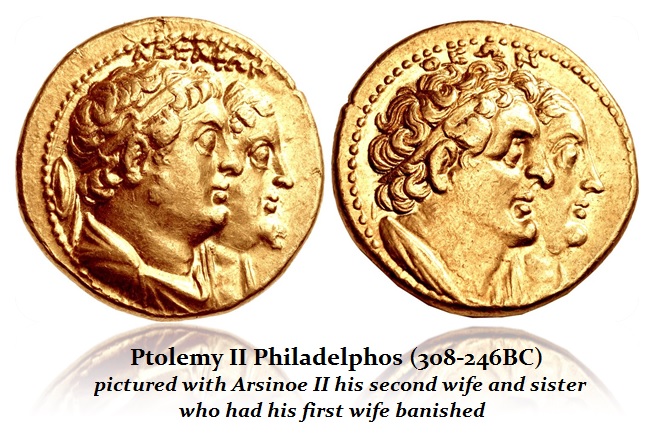
As time changes, so do attitudes. Rewriting history seems to be just wrong, particularly when we apply our understanding of what symbols mean today and compare them to the past. When they named the city of Philadelphia, they took the Greek meaning of “brotherly love” and saw that in the Christian context. In Greek, it meant that you married your sister — a different kind of brotherly love.
The Swastika symbol has a modern connection to Hitler and the Nazis. However, it has been a symbol found on ancient coins of Europe as well as coins of India. The symbol goes back to the Indus Saraswati Civilization as early as 1500 BC. Hindu tradition used the Swastika as a favorable symbol that was widely used in festivals, such as marriage rituals.
The Swastika symbolizes lightning bolts which represented the thunder god and the king of the gods in Vedic Hinduism, but to the Greeks, it represented Zeus in their religion. To the Romans, it represented Jupiter, and in Scandinavia/Germany it represented Thor. Here it is displayed over a bull on a coin of Macedonia (430-390 BC). It was discovered also in the excavation of Troy.
Here we find it in a mosaic that was excavated in a Byzantine church in Shavei Tzion (Israel), so we find it even in Christianity. This symbol has been around for thousands of years and it had nothing to do with racism or fascism.
The German archaeologist Heinrich Schliemann (1822-1890) discovered the Swastika at the site of ancient Troy during his excavation. Schliemann connected it with similar shapes found on pottery in Germany for it was also prevalent as a symbol of Thor. Schliemann speculated that it was a “significant religious symbol of our remote ancestors.” Hitler appears to have adopted it as a reference to the ancient German culture which became the Aryan culture he was promoting and the Nazis then adopted eugenics.
The Swastika is clearly a different symbol to different cultures but was generally religious. Because of Hitler, it tends to be banned in Western modern culture. So should statues like that of Teddy Roosevelt, which has nothing to do with slavery but the representative symbol of two continents, be destroyed? Are we embarking on book burning or blowing up monuments because today they are being reinterpreted as something different from their origin like Philadelphia? We do live in confusing times.
You mentioned in a recent blog post that the ECB, unlike the FED, can go bankrupt.
Can you explain further?
Not sure where you get the time, energy and resources to research and write all that you do buy it is truly amazing.
Regards,
M
ANSWER: The Federal Reserve does not need permission to create elastic money. It has the authority to expand or contract its balance sheet. However, it cannot simply print money out of thin air. The ECB is the only institution that can authorize the printing of euro banknotes. The Federal Reserve must back the banknotes by purchasing US government bonds. The Fed buys and sells US government bonds to influence the money supply whereas the ECB influences the supply of euros in the market by directly controlling the number of euros available to eligible member banks. This structure was created because of Germany’s obsession with its own hyperinflation of the 1920s.
Each member state retained its central bank and those central banks issue the banknotes — not the ECB. Therefore, the ECB works with the central banks in each EU state to formulate monetary policy to help maintain stable prices and strengthen the euro. The ECB was created by the national central banks of the EU member states transferring their monetary policy function to the ECB, which in effect operates on a supervisory role.
There are four decision-making bodies of the ECB that are mandated to undertake the objectives of the institution. These bodies include the Governing Council, Executive Board, the General Council, and the Supervisory Board.
The Governing Council comprises six members of the Executive Board and Governors of the national central banks of the euro area member states. The Council members meet twice a month at the institution’s offices in Germany. Its primary function is the formulation of monetary policy for the Eurozone area. That means it makes the decisions on monetary objectives, interest rates, and the supply of reserves in the Eurosystem.
The Executive Board comprises the President, Vice-President, and four other executive members appointed by the European Council. The executive members serve for an 8-year non-renewable term. The role of the Executive Board is to implement the monetary policy as defined by the Governing Council and manage the day-to-day operations of the ECB, alongside the Chief Services Officer. Also, the board prepares the Governing Council meetings and exercises power delegated to it by the Governing Council. It holds meetings every Tuesday.
The General Council is a transitional body that carries out responsibilities taken over from the European Monetary Institute (EMI). It comprises the President, Vice-President, and Governors of the national central banks of the EU member states. The body will continue to exist until all EU member states have adopted the euro. As of 2017, only 19 out of the 28 EU member states have taken up the euro as their single currency. This body is charged with fixing the exchange rates of currencies for countries preparing to join the Eurozone.
The Supervisory Board comprises the chair, vice-chair, four ECB representatives, and representatives of national supervisors. The board plans and executes the supervisory function of the ECB. It also proposes draft decisions for the Governing Council through the non-objection procedure.
The ECB was granted a monopoly status on the issuing of banknotes in the Eurozone area. The ECB makes weekly announcements on the amount of money it wishes to supply and the minimum acceptable interest rate. Eligible banks that have provided collateral then place their bids for the ECB funds through an auction mechanism. Once the banks have obtained funds, they use them to advance loans to individuals and businesses all in theory.
The European Central Bank is also responsible for banking supervision in all the EU member states. The ECB carries out this function through the Single Supervisory Mechanism (SSM) that comprises the ECB and competent national authorities in the member countries. Therefore, the ECB has the power to grant and withdraw banking licenses, conduct supervisory reviews, and set higher capital requirements to counter financial risks. The ECB directly supervises 124 significant banks that hold 82% of the banking assets in the Euro area.
The tensions within Europe have never abated between members. The first President of the Bank was Wim Duisenberg, who was the former president of the Dutch central bank. The French objected and demanded that the ECB should be headed by a Frenchman, Jean-Claude Trichet, because the ECB was to be located in Germany. A gentleman’s agreement was finally reached whereby Duisenberg would step down before the end of his mandate and Trichet would become the head of the ECB in November 2003. He was replaced by an Italian, Mario Draghi, who became the head of the ECB between 2011-2019. Now we have Christine Lagarde, who is French, taking over the ECB from Draghi.
AUTHORIZATION
The primary objective of the European Central Bank was laid out in Article 127(1) of the Treaty on the Functioning of the European Union. That stated its authority was to maintain price stability within the Eurozone which is rather vague. The Governing Council in October 1998 took it upon themselves to define “price stability” as meaning inflation of under 2% on “a year-on-year increase in the Harmonised Index of Consumer Prices (HICP) for the euro area of below 2%.” Therefore, the ECB was created differently from that of the Federal Reserve System which was intended to be simply an independent system where the banks were shareholders because that was a contribution to create the Fed outside of taxpayer money. Hence, the ECB has only one primary objective and it was envisioned as a division of the government. The “price stability” has never been defined in statutory law which leaves a very wide view of interpretation.
The Governing Council sought to confirm this definition of “price stability” in May 2003. They clarified that “in the pursuit of price stability, it aims to maintain inflation rates below, but close to, 2% over the medium term.” Hence, all such lending to credit institutions had to be collateralized as required by Article 18 of the Statute of the ESCB. This so-called “clarification” is by no means a defined law. Therefore, this vague directive of maintaining “price stability” is further complicated because, under the Treaty, it also directs that “the ESCB shall support the general economic policies in the Union with a view to contributing to the achievement of the objectives of the Union.” This leaves the door wide open for the ECB under Legarde to suddenly declare that climate change must be a policy of the ECB. This clearly makes the ECB an arm of the EU Commission and not independent as is the case with the Federal Reserve.
Since November 4, 2014, the ECB has been responsible for specific tasks concerning policies relating to the prudential supervision of credit institutions within the framework of the Single Supervisory Mechanism. As a banking supervisor, the ECB also has an advisory role in assessing the resolution plans of credit institutions.
European Parliament & ECB
The ECB President reports to the European Parliament on monetary issues in a quarterly Monetary Dialogue. The ECB also prepares an annual report on monetary policy which is presented before Parliament. Parliament adopts a resolution on this annual report. The new supervisory responsibilities of the ECB are matched with additional accountability requirements as laid down in the SSM Regulation. The practical modalities are governed by an Interinstitutional Agreement (IIA) between Parliament and the ECB. The accountability arrangements include the appearance of the Chair of the Supervisory Board before the competent committee; answering questions asked by Parliament, and confidential oral discussions with the Chair and Vice-Chair of the competent committee upon request. In addition, the ECB prepares an annual supervisory report, which is presented to Parliament by the Chair of the Supervisory Board.
The ECB is trapped. It cannot raise rates to raise money and it has destroyed its bond market. The only way out is to default on all debt and they will do that by declaring it to be now a perpetual debt that only pays interest like an annuity. This will allow them to escape the formal default which is inevitable.
U.S. Attorney General Bill Barr sat down for an important discussion with Texas Senator Ted Cruz for the Verdict podcast. AG Barr discusses the recent riots and the ongoing effort to prosecute those engaging in violence and destruction of property.
Additionally, AG Barr also discusses the Big Tech censorship issue in combination with ongoing anti-trust investigations that will reach his desk for decision this summer.
Another important note surrounds AG Barr putting the date for Peter Strzok’s notes as January 5, 2017, following FBI Director James Comey’s pull-aside meeting at the White House with President Obama, VP Biden, Susan Rice and Sally Yates.
The Supreme Court has ruled 7-2 (pdf here) that asylum seekers have no right to a hearing when their claim is denied; and their deportation is in accordance with the law. This is a major win for the Department of Homeland Security, immigration and border controls.
TRIBUNE – The Supreme Court ruled Thursday that asylum seekers who are turned down by immigration officials do not have a right to make their case to a judge, a win for the Trump administration and its desire to quickly deport people who enter the United States illegally.
The ruling was 7 to 2, although the usual undercurrents of an ideological divide on the court were present. Two of the court’s liberals dissented, and the other two agreed only with the outcome in the specific case.
Justice Samuel A. Alito Jr., writing for the majority, rejected a lower court’s ruling that the Constitution guarantees a “meaningful opportunity” for asylum seekers to make their case to a judge if they are turned down in an initial screening.
Alito said the system set up by Congress weeds out “patently meritless claims” and provides for quickly removing those making them. Most pass their initial screenings, he noted, but those who do not have no additional recourse. (read more)
Devin Nunes appears for a short interview with Martha MacCallum to discuss the latest information in/around the background investigation of the Michael Flynn case.
Fox Host Tucker Carlson broadcast a stunning example showing how average Americans are being terrorized by rampaging mobs as local and state officials do nothing.
In the example a woman driving with her daughter through Fredericksburg, Virginia, is attacked by a mob of Black Lives Matter thugs. Panicked the lady calls 911 for help, the response from the 911 operator is to chastise the woman and tell her to “call city hall” with her complaint. This is a prime example of what Marxist Democrats support. WATCH:
Earlier today President toured Fincantieri Marine shipyard and delivered remarks about the historic $5 billion dollar contract the Administration recently granted Fincantieri Marinette Marine. This is the first visit by a sitting President to the city of Marinette, Wisconsin.
Fincantieri Marinette Marine is a United States subsidiary of Italian enterprise Fincantieri, one of the world’s largest shipbuilders, the shipyard was established in 1942 to meet America’s growing demand for naval construction.
The Trump Administration’s contract to build up to ten new guided missile frigates worth nearly $5.5 billion, will secure the future of the shipyard. Fincantieri plans to invest $130 million in upgrades to the facility, add approximately 1,000 jobs and projects that the investment will create 15,000 additional jobs in the Wisconsin and Michigan supply chains.
[Transcript] – THE PRESIDENT: Thank you. Thank you. Yeah, it’s a good song, isn’t it though? Lee Greenwood.
And thank you very much. I’m thrilled to be here with you on this incredible summer day in Wisconsin on the edge of the beautiful Lake Michigan — that is beautiful too; I know it well — with the legendary workers of Marinette Marine. And you now have a lot of contracts because of the United States government. You’re going to — you’re going to be so busy. (Applause.) You’re going to be so busy. I know you went through a little bit of a hard time; not anymore. Not anymore. Got you covered for years.
For more than 75 years, the workers of this shipyard have built some 1,500 of the finest and most fearsome vessels ever to sail. You’ve kept our sailors safe and our Navy strong. Every single day you prove that American workers are the best in the world and now you’re going to do things like you’ve never done before.
Moments ago, I walked the length of the majestic freedom-class combat ship that many of you have been pouring your hearts and souls out for over a year. Soon, that ship will be commissioned into the most powerful fleet in human history. We’re building up the Navy. We’ll have 350 ships. It was actually down to a level which was — World War One — that’s a long time ago, isn’t it? World War One. We’re building it up very rapidly. It’s the United States Navy. It’ll be bigger and stronger than it ever was before. Everywhere it goes, our allies and enemies alike will know the strength and pride that symbolizes that name USS — and there it is — Marinette. Proud of it. It’s great. (Applause.)
I want to thank the leadership team of Fincantieri Marinette Marine for welcoming us to this incredible place. It’s truly an incredible place. And now the world is watching because you’re here, not because I’m here — because you’re here. But the world is watching you. Including, I want to thank Jan Allman, Dario Deste, and Admiral — Vice Admiral Rick Hunt. Thank you very much. Thank you very much. Great job. Thank you. (Applause.)
Thanks also to Lockheed Martin Executive Vice President Stephanie Hill. Thank you, Stephanie. Great job. (Applause.)
We’re pleased to be joined as well by Commerce Secretary Wilbur Ross, a legend on Wall Street. And he’s putting his magic to work. Our economy is coming back at a level that nobody ever imagined possible. We’re doing great. We’re doing great. (Applause.)
And remember, as I say all the time, because we want say this in front of the media — there they are. Look at all those people — the fake news. (Applause.)
We have the greatest — (applause) — we have the greatest testing program in the world. We’ve developed it over a period of time. And we’re up to almost 30 million tests. That means we’re going to have more cases. If we didn’t want to test, or if we didn’t test, we wouldn’t have cases. But we have cases because we test. Deaths are down. We have one of the lowest mortality rates.
We’ve done an incredible, historic job. And I want the people working on it — and not me — but I want all of those people in the task force that have done such a great job on the testing, on the ventilators — we’re now making thousands of ventilators a week. When we started, we weren’t making ventilators. We didn’t have them and other people didn’t have them. We had very few.
Now we’re helping other countries with the ventilator problem. A little bit like ships: They’re complicated to make, they’re big, they’re expensive. And we’re making now thousands a week and we’re helping many other countries. They call and they need help. Because this horrible virus has hit 188 countries, if you can believe it. It came from China and it hit 188 countries. Not good. Not good.
I want to thank Wisconsin State Representatives John Nygren and Mary Felzkowski. Mary, thank you very much. John, thank you very much. Thank you both. (Applause.) And Marinette Mayor Steve Genisot. Thank you, Steve, wherever you may be. Thank you very much. Thank you. (Applause.)
We’re here today to celebrate the resounding victory for all of you, for Wisconsin, for the United States military, and for our entire nation. Our nation is very proud of Wisconsin.
Not long ago, the future of this historic shipyard was looking — can I use the word “bleak”? Yes, I think we can. It was looking bleak. You were down to 44 people, and it was getting ready to close up. Then a lot of good things came along. Despite your extraordinary service to our country over the generations, this beloved facility — the mainstay of your community, by far — you were going to — to levels of poverty. They actually had levels of poverty that nobody would have believed, with all the talent, because I see that. I understand manufacturing. Remember? “Manufacturing was never going to come back.” Well, it did come back. And it came back big.
But I understand — (applause) — I have an aptitude for manufacturing, and I said it’s got to come back and it will come back. And we were doing great. And we’ll do now even better. We’re going to have a better year next year, I think, than almost any year in our history.
And we were going through the single-greatest year that we’ve ever had, from an employment standpoint, from a stock market standpoint. And your 401(k)s right now — people have 401(k)s; they’re very happy with President Trump right now because they’re almost at the level that they were when the virus came over.
But this is a mainstay of your community, and it was facing proposed and the prospect of a final layoff and a total downsized production. Downsized to almost nothing.
But this past April, Marinette’s fortunes turned around, and they turned around quickly. As part of my administration’s colossal rebuilding of the United States military — we’ve totally rebuilt the military — $2.5 trillion. And some people would say, “Well, that’s out of the budget.” I said, “Let me tell you something: There is no budget when it comes to our military because we don’t have to — we don’t want the wrong people running up the front lawn of the White House, right? (Applause.) If they were, I don’t want to say, “Well, maybe I did a lousy job with the military, but I did a great job on the budget.” No, thank you. No, thank you.
No, we have an incredible — and you know what’s the greatest part about it? The greatest missiles in the world. The greatest rockets. You saw, the other day, one of the rockets go off so successfully. The greatest ships. The greatest ships. These are the greatest of their kind anywhere in the world. The fastest, the most powerful. The greatest of everything. And, you know, the beautiful thing about it, it’s all made in the USA. It’s made by you and your counterparts. (Applause.) It’s made in the USA — the army tanks from Ohio.
As part of my administration’s rebuilding of the United States military, you were awarded a contract to build the next generation of guided missile frigates for the United States Navy. (Applause.) The FFG(X) — FX — is that good? FX. So you’ve got the FFG(X). Yeah, that’s right. That’s pretty good. What does that stand for, please? Would you please tell me? Does anybody know? F-F-G-X. I think nobody knows, but that’s okay. It sounds good to me.
But it’s going to be built right here in the American Heartland, and it’s going to be built by you. And it’s going to go on for a long time because it’s up to 20 ships, and it might be extended. And they’re working on an extension right now. And we’ll see. But just go. You’re going to be building your hearts away. So good luck on the — on the program.
The massive deal is worth up to $5.5 billion. It will put this shipyard to work constructing some of the fastest, most advanced, and most maneuverable combat ships anywhere on the ocean. I hear the maneuverability is one of the big factors that you were chosen for the contract. The other is your location in Wisconsin, if you want to know the truth.
This contract will support your 1,500 full-time employees, and it will also enable you to hire another 1,000 people all across the shipyards in Wisconsin. It’s one of the biggest contracts you’ve ever seen in the state.
An estimated 15,000 additional new jobs will be created through the Wisconsin supply chain. You notice that’s not a supply chain going through China and going through other countries. It’s called “The Wisconsin.” Isn’t that nice? (Applause.) The Wisconsin supply chain. (Applause.) That’s been bugging me for about 25 years. I think that’s why I became President, if you want to know the truth.
What we’ve done with your great deal, the USMCA — and Canada no longer takes advantage of us like they did. People don’t realize — “Oh, Canada,” beautiful national anthem, right? “Oh, Canada.” But they were brutal on trade. And now they have to treat us fairly. USMCA. We got rid of the worst trade deal ever made in the history of mankind. Humankind. You know, they’d like me to say nowadays, “Humankind,” right? Humankind. See the ladies? I think they like it the other way just as much. Humankind.
But I just want to say that we have an incredible deal and it’s going to lead to a lot of — a lot of very positive things.
But the Wis- — Wisconsin supply chain — 9,000 more jobs are going to be generated because of the chain itself. And it’s a truly phenomenal achievement. And I congratulate you all. It’s going to be an incredible thing. It’s all going to be made right here in Wisconsin.
Under this administration, you know that American workers like you are a national treasure. You are indeed victory at sea. You know, victory at sea. That’s what you lead us to.
Your patriotism cannot be outsourced. Your eight decades of industrial heritage cannot be replicated anywhere in the world. That’s why we’re protecting our defense and our defensive industrial base, which we’re building up stronger and stronger and stronger. And we have other places all over the country just like this. Well, let’s say this is better, okay? But that’s okay. Just don’t tell anybody I said it. (Laughter.)
But we have places — great places. Incredible people. Tremendously, tremendously successful people. People with tremendous talent. And we’re doing other things in other locations — like the missiles, like the rockets, like the tanks, like all of the things that we’re building. It’s incredible when you see it. It’s incredible.
People don’t realize the talent that we have. And we started getting away from it. We started not building in the Navy. We haven’t built enough ships. The ships that they were building, they looked terrible. I changed designs. I looked at it. I said, “That’s a terrible-looking ship. Let’s make it beautiful. It’ll cost you the same, and maybe less.” You know, sometimes, you can make it look great for less money. I said, “This is not a good-looking ship. Let’s change the design of it.” And I got people in, and we looked at different designs.
And as long as we’re going to do it — and look at what you’re doing, how beautiful it is. They gave me a beautiful model that’s absolutely — it’s like a yacht with missiles on it, okay? (Laughter.) It’s, like, beautiful.
But, you know, it’s true: You can build beautifully. and it costs you sometimes less money. Sometimes less money.
So that’s why we’re protecting our defensive industrial base and restoring this fundamental principle, and that’s: Economic security is national security. That’s what it is. Because you know what you were going through in this area of Wisconsin, just a short period of time ago. And it wasn’t right, and it wasn’t fair.
As long as I’m your President, America will never lose that shipbuilding talent or capability. It won’t lose that excellence or the expertise of the men and the women of Marinette Marine. We’ll never lose that. (Applause.) Never lose it.
And we’ll always live by two simple rules: Buy American and hire American. Buy American and hire American. (Applause.)
The first-in-class FFG(X) will not just be a win for Wisconsin workers; it will also be a major victory for our Navy. And our Navy is just incredible what we’re doing with our Navy.
The stunning ships will deliver the overwhelming force, lethality, and power we need to engage America’s enemies anywhere and at any time. And with that, we don’t want to engage. But you know how you don’t have to engage? When you build a product like you’re building right there. When you build product like that, you don’t have to. When you don’t build product like that and we go bare — you know, we rebuilt our military.
Our military was totally depleted. When I became your President, we had planes that were 50 years old. We had a military that was tired. It was very tired from years of fighting endless wars — wars that never stopped. And you see what’s happening on that front. We have the strongest military in the world, by far. And before, we had an old — we had a very tired military. What we had were great people in the military, but they weren’t given the right equipment, so now they are. Two and a half trillion dollars.
Each frigate will boast a 32-cell vertical missile launcher to take American justice to any foe, if necessary, on air, land or sea. You know about it very well. You live with it.
The ship will field the most advanced air research and air search radar capability in naval history. There has never been anything so advanced as what you’re building. (Applause.) Amazing.
The ship is 30 times more powerful than the previous generation. That was one that got me. Thirty times — think of that — thirty times more powerful than the previous generation. And it will carry an MH-60 Seahawk helicopter and an unmanned MQ-8C Fire Scout drone.
Through your sweat, skill, and devotion, the workers of this shipyard will forge the future of the United States Navy. You’re going to be a very big part of the United States Navy. And there are other things coming. As you get set up with this — this is a lot to handle, but as you get set up, they’re going to spending a lot of money on the renovation of the yard and the expansion of the yard. We have other things coming. And you’ll fashion the ultimate symbol of American power and American prestige.
Wherever the FFG(X) cuts across the horizon, it will go as a 7,500-ton message to the world that American might is second to none. (Applause.) That’s right.
I’d like to take a moment to recognize just a few of the hardworking patriots who are helping to bring these monumental ships to life. And that’s what they are.
Gary Idhe is the third generation of his family to serve at this shipyard. He has worked here for 17 years and is now a production manager. Gary, please come up and say a few words. Gary, thank you. (Applause.) Thank you, Gary.
MR. IDHE: Thank you, Mr. President. It is an honor to be here. My name is Gary Idhe. I’m a production manager here at Fincantieri Marinette Marine. I work in building 10, the one you just toured.
THE PRESIDENT: Right.
MR. IDHE: The erection facility. I have been fortunate enough to be employed here for over 17 years. I started in the trades, and through hard work and dedication, I transitioned into management.
These employees in front of you are here to build the best ships possible. The sense of pride felt when a ship gets launched or goes out in trials is like nothing else. These men and women breathe life into steel. Through hard work, long hours, and dedications, these individuals give the American warfighter the ship he or she needs and deserves. (Applause.)
Mr. President, Wisconsin thanks you, the city of Marinette thanks you, and Fincantieri Marinette Marine thanks you.
THE PRESIDENT: Thank you very much, Gary. (Applause.)
He looks like he’s 21 years old. He said — you’ve worked here a long time, Gary. Whatever you’re doing, it’s working. (Laughter.) You look good.
We’re also joined by Tyler Cahill. Tyler served for nine years in the U.S. Navy, then returned here, to his hometown, to become a quality technical coordinator. Tyler also helps recruit young talented people — usually, I guess, from Wisconsin, I think, probably. I don’t know if he accepts anybody from anywhere else. You’ll have to talk about that, I think.
But I want to just ask Tyler, please come up and say a few words. Thank you, Tyler. (Applause.)
MR. CAHILL: Thank you, Mr. President.
THE PRESIDENT: Thank you.
MR. CAHILL: Good afternoon, everyone. My name is Tyler Cahill. I’m a native to the Marinette area, a former second class petty officer in the United States Navy “Seabees,” an Afghanistan war vet, a hockey coach, and a quality coordinator here at Marinette Marine.
When I first moved back to Marinette and started here as a welder in 2012, I would’ve never imagined how far my career and community would grow. The shipyard is a lifeline to the community and a driving force behind its economic growth.
In major part due to the LCS program and the newly awarded frigate contract, I’ve seen young families move to the area, friends open new local businesses, and a beautiful new sports facility opened to be utilized by the local hockey kids that I get to coach.
None of this would have been possible without these contracts. So, once again, Mr. President, I would like to say thank you in allowing us to continue supporting our nation’s Navy.
Thank you.
THE PRESIDENT: Thank you, Tyler. Thank you very much. (Applause.) Thank you, Tyler.
Looks like a tough hockey player. I wouldn’t want to be checking him. Right, Tyler? He’s a pretty tough-looking guy.
The dedication of the men and women here today will also help our military accomplish one of my top national security priorities: rebuilding a 355-ship Navy. As I told you, it went way down. Very sad.
After years of painful budget cuts, we ended the last administration’s disastrous defense sequester. We ended the sequester. You know what that means, I think — most of you. Let’s put it that way or this way: It was a very good thing that we — that we did; otherwise, you wouldn’t be building these ships right now. We ended what was a true disaster.
We’ve invested the $2.5 trillion in all of the greatest equipment in the world, and it’s all made here, right in the USA. And a lot of it is going to be made in Wisconsin, outside of this facility also.
And I signed a new law creating, very importantly — this was something very important to me — the sixth branch of the U.S. military: the Space Force. That’s a big deal. (Applause.) That’s a big deal.
We’re revitalizing our partnerships around the world and insisting that other nations pay their fair share in NATO. They weren’t paying up, and now many of them are. Some of them still don’t pay like they should. They’re delinquent. You know that word? They’re delinquent. No other President pressed them to pay; I pressed them to pay. And the people at NATO are very happy with me, I will tell you. The Secretary General said, “There’s never been anything like it.”
We took in $140 billion more money from other people — not from us, from other people paying their bills, because for many years, they didn’t pay their bills. We were guarding nations, and they weren’t paying for it. And somehow I said, “That doesn’t work too well” — not for me, and not for you either because you’re smart.
This is great news for American workers and taxpayers. As part of Saudi Arabia’s effort to fulfill its own defense obligations, last year the Kingdom placed a $1.3 billion order for four new vessels made by your great company. So, you know the vessels, they’re getting built right now. And we felt very strongly that this is where it should be, and we gave them a strong recommendation, and they followed it. That’s very good.
Since 1942, when your company was founded to build five wooden barges for World War Two, this small town in Wisconsin has raised up one of the premier shipbuilding enterprises anywhere on Earth. And if you come back here in five years, you’ll see one of the top places anywhere in the world.
You should take immense pride in what you’ve done and those before you — in many cases, your fathers and your grandfathers. In many cases, your fathers are alive and very proud of the job you’re doing. I met three people whose fathers worked here. And it looked like it was ending, and now they work here. And they’re going to be here for a long time. And I said, “Get your son ready, or get your daughter ready.”
Your tradition of excellence has given America two classes of combat ships: the Coast Guard cutters that patrol our maritime borders; a state-of-the-art icebreaker, which is incredible, which we had not an easy time getting approved, I will tell you that. Democrats don’t like approving money for the military for whatever reason. Someday you’ll explain that to me. They don’t like spending money on our military. And several of the Staten Island ferries, and so much more. Doing a lot of work.
The workers of this shipyard and the people of this state have always prospered and persevered by holding fast to our shared American values.
In this country, we honor work. We celebrate great craftsmanship. I understand craftsmanship. I understand this world so well you wouldn’t believe it. You wouldn’t believe it how well I understand it and how well I appreciate it. I appreciate talent, and that’s real talent, craftsmanship.
And we salute the dignity and nobility of the American worker. We look out for one that you wouldn’t believe. We look out for everybody. We look out for one another. We’re loyal to one another, and we love our families. We want our families taken care of. We want our families to prosper. We want our community to prosper. This community was not prospering. With all that talent, they weren’t prospering. And now you’re all working and doing something that you love. You can’t wait — I know most of you, you can’t wait to get to work. That’s the way I feel. And your job is much more pleasant than mine — that, I can guarantee. That, I can guarantee. Oh, you don’t know what I have to go through with these people. (Applause.)
They said to me, “Sir…” — a friend of mine. Very smart. A very successful person. Used to call me “Donald” and now he calls me “sir.” He says, “Mr. President…” I said, “Call me ‘Donald.’” “Yes, but I can’t, Mr. President” — which is okay. He said, “So which is the toughest nation to deal with? Is it China? Is it possibly Russia? Or is it maybe North Korea?” I said, “No, the toughest nation to deal with are the Democrats in the USA.” (Applause.) True. True.
The Democrats in the USA are much tougher to deal with than any of these people that we deal with. They’re far more unreasonable. And actually, they’re a little crazy. (Laughter.)
We take care of our communities. And when the time comes, when history calls, when our flag is threatened, we defend our country like nobody else has ever defended our country or our flag. We defend our flag. (Applause.)
We stand tall, we stand strong, and we always stand proud of the United States of America. With the help of everyone here today, this shipyard will continue to prosper, this state will continue to thrive, and this nation that we love will climb to new heights of glory and to greatness. And that’s what’s happening right now.
We’re going to have a great third quarter, and we’re going to have a phenomenal next year. You’ll see. Next year will be one of the greatest years. You see it happening already. It’s happening, and it’s happening quickly.
So I want to thank everybody at this amazing yard. I want to thank the grandparents and the parents who put you here. They’re very proud of you. Some are looking down on you right now. They’re looking down from heaven, and they’re very proud of you. They’re very, very proud. And I’m also very proud of you.
So, congratulations to you all. God bless you, and God bless America. Thank you all. Thank you all very much. Thank you. Thank you. (Applause.)
Today, President Donald J. Trump and First Lady Melania Trump attended a Wreath Laying Ceremony at the Korean War Veterans Memorial in Washington, DC, to commemorate the 70th anniversary of the outbreak of the Korean War and remember the brave American soldiers who selflessly sacrificed their lives in the fight for peace.
Attending with the President and First Lady was Secretary David Bernhardt, Department of the Interior; Secretary Robert Wilkie, Department of Veteran Affairs; and Ambassador Lee Soo Hyuck, Ambassador of the Republic of Korea to the United States
.
Korean War Veteran Participants Included:
MG Omar Jones, Commanding General, Joint Force Headquarters-National Capital Region
Hwang Hye Kyung, Spouse of Ambassador Lee Soo Hyuck Gerald Merna, United States Marine Corps: 1st Marine Division – Chosin Reservoir, Army: 2nd Division, 38 Infantry Regiment
Joseph Ade, United States Marine Corps: 1st Marines, 1st Battalion Hill 812 Bravo Company
Arthur Cooke, United States Marine Corps: 1st Marine, 2nd Battalion – Chosin Reservoir
Thaddeus Gembczynski, United States Marine Corps: 1st Battalion, 5th Marines – Chosin Reservoir
William Tapley, United States Army: Counterintelligence, First Cavalry Division – Chosin Reservoir
George Patton, Jr., United States Army: 25th Infantry Division
John Coleman, United States Army: 25th Field ArtilleryBattalion, 40th Infantry Division
Carlyle Agrelius, United States Marine Corps: 1st Marines, 2nd Battalion – Chosin Reservoir Campaign
Huck Wiley, United States Marine Corps: 1st Marines, 2nd Battalion Weapons Company
Ronnie Fukuoka, United States Marine Corps: 1st Marines, Radioman
Ben Chism, United States Army: 92nd Field Artillery Division, 9th Army
Michael Flynn’s attorney Sidney Powell appears with Maria Bartiromo to provide insight into the DC Circuit Appellate court ordering the dismissal of the Flynn case. One of the key points Ms. Powell draws attention to is that her client was targeted. Within that targeting there’s a criminal conspiracy.
In hindsight it is very clear the White House, DOJ and FBI knew they were treading on thin ice. Susan Rice’s memo to file is clearly a CYA memo for the White House. James Comey’s memos are clearly a CYA effort for his participation. Bill Priestap kept his own notes reflecting his CYA; and Peter Strzok’s notes appear to have the same motivation.
Additionally, when the special counsel was put into place, Andrew McCabe’s memos to self are clearly written from a CYA perspective. They knew what they were doing was wrong.
Think about everyone in this picture above (left to right):
FBI Agent Peter Strzok kept CYA notes.
FBI Director James Comey kept CYA memos.
NSA Susan Rice wrote CYA memo on behalf of President Obama.
Depute Director Andrew McCabe wrote CYA memos.
FBI Counterintelligence Head Bill Priestap kept CYA notes.
Sidney Powell is correct, “there’s a criminal conspiracy in there.”
I have created this site to help people have fun in the kitchen. I write about enjoying life both in and out of my kitchen. Life is short! Make the most of it and enjoy!
This is a library of News Events not reported by the Main Stream Media documenting & connecting the dots on How the Obama Marxist Liberal agenda is destroying America