Posted originally on Aug 13, 2025 by Martin Armstrong |
The computer warned that we would experience a rise in civil unrest in 2025, with conditions only worsening in the years to come. Trump actively militarized the capital and has plans to dismantle ongoing civil unrest with a newly established Domestic Civil Disturbance Quick Reaction Force.
The Domestic Civil Disturbance Quick Reaction Force, as indicated by internal Pentagon documents, would be composed of hundreds of National Guard troops who would have the ability to respond to calls of civil unrest in under an hour. The 600-strong force will be split into two groups of 300, all of whom will be expected to be on standby at all hours in case the people of America begin to rebel. The first 100 troops would be deployed within an hour, the second and third waves would be sent within a two to 12-hour period, depending on the severity of the situation.
Arizona and Alabama will house the newly created force at pre-established military bases. In the event of civil unrest, armed troops will be transported via commercial airliners immediately. The Pentagon subtly announced the creation of this task force one day after the president deployed troops to Washington, D.C., but the documents bear time stamps from earlier in the month.
The Department of Defense will budget for the task force in fiscal year 2027—right on target ahead of 2028. The final cost has not been calculated, but the Pentagon believes it will span into the hundreds of millions.
One individual in the document cited cost concerns. “The support (hotels, meals, etc.) required will fall onto the general economy in large and thriving cities of the United States,” this official argued. Moreover, bypassing military aircraft would allow for deploying personnel to travel “in a more subdued status” that might avoid adding to tensions in their “destination city.” The concept of utilizing commercial airliners is to cut down costs.
Budgeting is never a true consideration of government; the genuine concern is public response. Reduced availability for other missions, training disruptions, strain on personnel, and equipment were also listed as areas of concern. Those protecting the establishment must maintain loyalty to the establishment, and it may be difficult to entice new recruits to join voluntarily.
The National Guard is always prepared to deploy in their independent states, yet this task force will operate at the federal level. Title 32 provides the legal framework for deploying the Army and Air National Guard, permitting state governors to issue commands. Title 10 provides the president with the power to direct active-duty orders for national missions. Guard members can be called to serve under the federal armed forces under Title 10 temporarily and is intended to federalize National Guard units, transferring control from the state to Washington.
Title 10 was used for this purpose during 9/11 and every American war since World War I. America is not currently at war, and there is no significant conflict occurring domestically, leading many to question why Washington is allotting hundreds of millions to a project to protect the government against the people.
The people have lost all confidence in government. The people no longer trust the government to handle the cost of living, nor do they trust the data issues on inflation, unemployment, or GDP growth. Americans see their tax dollars spent overseas on issues that do not benefit them in any way, their economic concerns have not been addressed, and they are unable to vote on how public funds are spent—let alone how the US responds to foreign conflicts.
Confidence will continue to erode into 2027, and by 2028, when this task force should be operational, the computer indicates that the US will see a major turning point, which also correlates with the next election. The situation is so dire that the United States may be unable to hold a true election in 2028, and public outrage is guaranteed.
Posted originally on Aug 12, 2025 by Martin Armstrong |
Donald Trump deployed hundreds of National Guard troops to Washington. D.C., as the homeless epidemic in the US worsens. The news comes a week after Trump ordered federal officers from the U.S. Park Police, the Federal Bureau of Investigation (FBI), the Drug Enforcement Administration (DEA), the Bureau of Alcohol, Tobacco, Firearms and Explosives (ATF), as well as divisions of the Immigration and Customs Enforcement (ICE) to patrol the capital to control crime.
“I’m going to make our Capital safer and more beautiful than it ever was before. The Homeless have to move out, IMMEDIATELY. We will give you places to stay, but FAR from the Capital. The Criminals, you don’t have to move out. We’re going to put you in jail where you belong. It’s all going to happen very fast, just like the Border. We went from millions pouring in, to ZERO in the last few months. This will be easier — Be prepared! There will be no ‘MR. NICE GUY.’ We want our Capital BACK. Thank you for your attention to this matter!” Trump declared on Truth Social before his media announcement.
Are the unhoused dangerous? Is Trump acting to protect national security or acting as a dictator? The most recent census states that 771,700 people experience homelessness on any given night across the nation. In fact, 23 out of every 10,000 Americans are unhoused, with figures rising substantially in the past three years.
Data indicates that 70% of homeless people in the US have a criminal history. Although data is quite challenging to gather, most estimates believe 65% of homeless individuals used illegal drugs at some point, while one-third admit to active drug addiction. Around half (48%) suffer from mental health issues. Veterans compose around 13% of America’s homeless population, although this figure has significantly declined in the past decade. Unfortunately, homeless individuals may not have the capacity to seek out help, whether it’s due to mental health or drug-related issues.
Acquiring a job without an address or paperwork is one thing, but obtaining a job–let alone a well-paying job–with a criminal record in America is complex. People will take what employment they can find, and those jobs do not pay enough for the essentials.
Many studies cite a lack of affordable housing as one of the main reasons for homelessness. The National Low Income Housing Coalition found that 74% of extremely low-income renters pay more than half their income in rent. Yet, this has become a growing trend in America. The 2023 census found that over a quarter (26.4%) of Americans paid over half their income on rent, while 49.7% pay over 30% of their income on rent, and costs have only risen since the last census.
Charles Schwab conducted a study on the share of Americans who reported lacking enough savings to cover unexpected expenses or the loss of income for at least one month. The study concluded that an astounding 59% of Americans are one missed paycheck away from homelessness. That is a broad statement as it assumes everyone in the study had no support system or ability to access resources. The point of the matter is that there is a rising trend of financial insecurity in America as the personal debt crisis deepens. Homeless rates of this nature are indicative of a failing system rather than mere personal failures.
Yes, resources are available. The Veterans Affairs office has specific services dedicated to homeless veterans and spends $3.2 billion annually on these programs. HUD homeless assistance provides state, local, and nonprofit funding for temporary shelter. There is also a tenant-based rental assistance program through HUD, as the agency spends about $4.7 billion per year on grants. FEMA offers social services and shelter through the McKinney-Vento Act. The Treasury funds the Emergency Rental Assistance Program (ERA), spending billions on temporary housing payments for those unhoused or at risk of eviction. HHS funds the Projects for Assistance in Transition from Homelessness (PATH) program for the same demographic. Churches and non-profits also offer services. Federal funding for homeless programs averages around $13 to $15 billion annually, and yet, the population continues to grow. The current options for support are insufficient, and a stagnant economy with rising rates of unemployment only amplifies the crisis.
Between 2020 and 2025, the population of the United States is expected to grow by 3.8%, rising from roughly 331 million in 2020 to an estimated 343 to 347 million in 2025. At the current rate, America’s homeless population is expected to grow to 349 million by 2030. State and federal governments continue to throw money at the crisis without results.
At the time of this writing, it remains unclear where the National Guard plans to relocate the homeless living in the nation’s capital, or what public resources will be used for these efforts. This is a very serious matter that has never been adequately addressed. Relocation efforts are merely a band-aid rather than a solution to this growing epidemic sweeping our nation’s cities.
Of course, this move is likely not about the homeless population at all. We are witnessing the militarization of D.C. Historically, governments surround themselves with troops when they no longer trust the people. It’s the same cycle we’ve seen in ancient Rome when the Praetorian Guard began to function less as protectors of the empire and more as political enforcers. The symbolism is critical–once you militarize your own capital, you are crossing the Rubicon toward authoritarianism.
Posted originally on Aug 11, 2025 by Martin Armstrong |
QUESTION: Your model has projected a recession into 2028. ZeroHedge publishes “If everything is going to be just fine, why are thousands of stores closing all over the country? So far this year, the total amount of retail space that has been permanently closed has surpassed 120 million square feet. We have never seen anything like this before. Store closings spiked during the early days of the pandemic, but in 2025, stores are being permanently shuttered at an even faster pace.”
Do you agree with this? You have also written that in part this is a paradigm shift like Schumpet’s waves of Creative Destruction. Could you address this paradox?
Ronnie
ANSWER: Zero Hedge’s statement is a little misleading, but certainly not intentional. Yes, we have a recessionary trend globally into 2028, which has also been set in motion within the EU by the pounding of war drums. The EU is more likely to experience a DEPRESSION, whereas the USA will have a recessionary atmosphere with STAGFLATION, more like the 1970s, with inflation outpacing GDP growth primarily due to rising costs and wars globally.
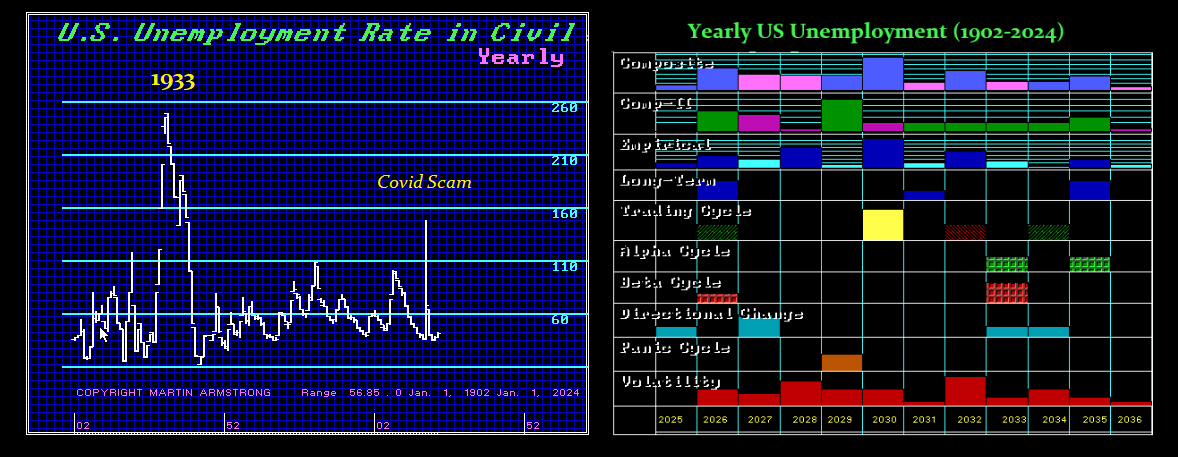
Our computer is demonstrating that volatility in Unemployment will rise from 2026, peaking first in 2028 with a Panic Cycle in 2029. This also confirms our War Cycles for 2026. What we MUST come to grips with is that there is far more to understanding the economy from a single statistic perspective. However, we are also undergoing two significant factors that the classic economic models fail to incorporate, aside from the fact that 99% of the rhetoric and the economic models overlook the leverage in the banking system that creates money outside of the Federal Reserve through lending:
TWO SIGNIFICANT FACTORS OMITTED IN CLASSIC ECONOMIC MODELS
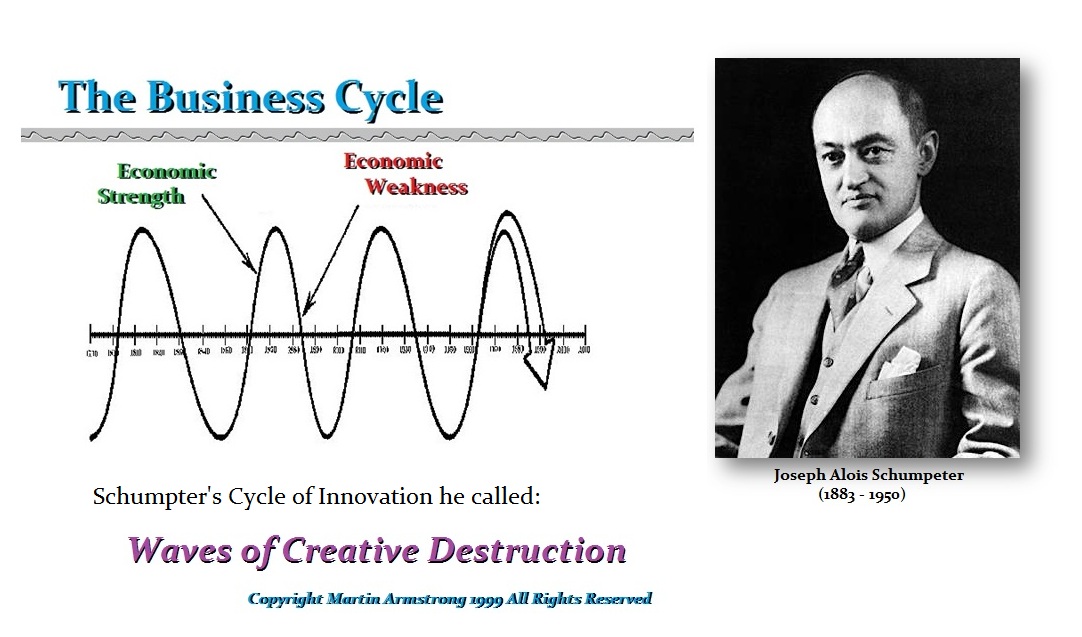
(1) a shift to independent contractors/freelancers thanks to COVID, and (2) a wave of Creative Destruction.
(1) INDEPENDENT CONTRACT:
I stumbled into this issue when the Florida Revenue Department wanted to audit our company. Florida has no income tax, so I was a bit befuddled. I discovered they were auditing to see if we had independent contractors or freelancers who would qualify as a full-time employee, and as such, we were not collecting unemployment taxes, etc. I have NEVER had such an audit – EVER!. So I began to investigate why I was being audited for such an issue. It turned out that the COVID-19 pandemic significantly contributed to the rise in independent contractors and freelancers.
1. Job Losses & Economic Uncertainty
Many traditional employees were laid off or furloughed during lockdowns, pushing them into gig work or freelancing to make ends meet. Companies downsized and relied more on contract workers to reduce long-term labor costs.
2. Remote Work & Digital Acceleration
The shift to remote work made location-independent freelance roles more viable. Platforms like Upwork, Fiverr, and TaskRabbit saw increased demand for freelance services (e.g., digital marketing, programming, consulting).
3. Business Adaptations
Small businesses and startups turned to freelancers for flexibility instead of hiring full-time staff. The “Great Resignation” led many workers to seek autonomy, choosing self-employment over traditional jobs.
4. Government & Policy Influences
Stimulus checks and unemployment benefits (e.g., PPP loans, CARES Act) provided temporary support, allowing some to transition into freelancing.
In some states, labor laws evolved to accommodate gig workers (e.g., California’s Prop 22 for ride-share drivers).
Upwork (2021) reported that 59% of freelancers started during or after COVID. MBO Partners (2021) found a 34% increase in independent contractors in the U.S. compared to pre-pandemic levels. OECD data showed a global rise in gig economy participation, especially in delivery (e.g., Uber Eats, DoorDash) and remote freelance roles.
Long-Term Impact:
While some workers returned to traditional jobs post-pandemic, many stayed independent due to flexibility, higher earnings potential, and hybrid work trends. The shift toward a more contract-based workforce is likely here to stay.
States with Higher Unemployment Than Pre-COVID (Feb 2020)
Nevada
Pre-COVID (Feb 2020): 3.7% Mid-2024: 5.2% (fluctuating due to slower tourism recovery) Reason: Heavy reliance on hospitality and leisure sectors.
California
Pre-COVID: 3.9% Mid-2024: 4.8% Reason: Tech layoffs, high cost of living, and slower rebound in entertainment/hospitality, illegal aliens, and the highest income tax in the nation.
California Income Tax – 13.3% (on income over $1,000,000)
New York
Pre-COVID: 3.7% Mid-2024: 4.5% Reason: Slow office sector recovery (NYC), reduced business travel, and Wall Street moving to Florida.
New York Income Tax – 10.9% (on income over $25,000,000)
Pre-COVID: 2.4% Mid-2024: 3.8% Reason: The economy is highly dependent on Tourism and high taxation
Hawaii Income Tax – 11.0% (on income over $200,000)
States with No Income Tax:
Alaska, Florida, Nevada, South Dakota, Tennessee (repealed investment income tax in 2021), Texas, Washington (but has a capital gains tax over $250,000), Wyoming
States That Have Recovered or Improved
Texas, Florida, Utah, Idaho, and South Carolina have unemployment rates at or below pre-pandemic levels due to strong job growth in tech, manufacturing, and migration trends.
Remote Work Trends: NYC and San Francisco, more than the Sun Belt states, have lost office work. This, in part, has also resulted in the commercial real estate crisis that was part of the objective of the COVID Scam to force people to work from home and stop commuting to save the planet.
Migration Shifts: States like Texas and Florida gained workers, while some Northeast/Midwest states lost population. This is the Great Migration from the BLUE to the RED states. I met people who moved to Florida because their children were becoming suicidal in the Blue States as they shut down sports, and many children thought their dreams in life were over.
Because of that strange audit that still costs you $25,000 in legal and accounting fees for something we did not owe, I began to dig. I found that the rise in independent contractors and freelancers was a side-effect of COVID, in addition to the Great Migration. States were looking for spare change. I would not have been surprised if they didn’t start searching cars for coins left in the ashtrays.
(2) Waves of Creative Destruction:
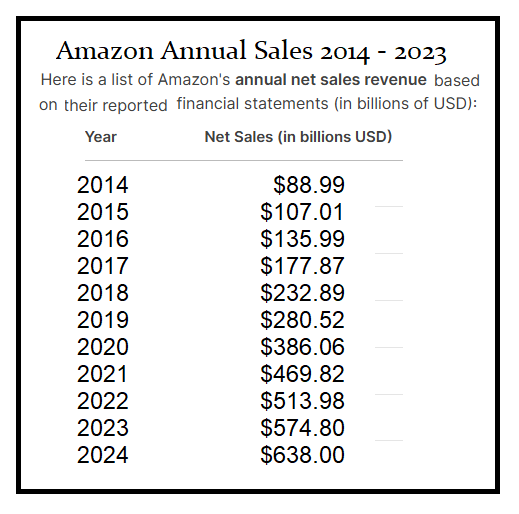
Simultaneously, the plot behind COVID was to create 15-minute cities and have people work from home, virtually ending commuting. What also took place was that people were locked down, and instead of shopping or even going out for dinner, they ordered from Amazon and took out from restaurants. COVID set in motion a new dynamic that the economic models are failing to comprehend. Unemployment can rise while commerce expands. Just look at the sale of Amazon. In the past 10 years, Amazon has expanded by 625%. I know a guy who had a camera shop. I closed after 30 years because he could no longer compete with online sales from Amazon. This is the story nationwide. But COVID was clever. The goal was to save the planet, and that has resulted in a cascade of small stores and even some chains closing stores. Now you have UBER.EATS, Door Dash, etc, to facilitate food being delivered to you within minutes. People closed offices and employees shifted to home, and commercial real estate is going into crisis liquidation. This is not all part of a normal recession – it is a Creative Destruction Wave where unemployment rises, but commerce can expand.
My firm became the highest-paid analyst ever, and we were an institutional advisor with some individuals who had a ton of money. Our reports used to go out by telex, and the cost could be up to $75 in telex fees per report, which would go out 3 times a day per currency. That was why I began opening offices around the world so we could reduce costs for clients by sending one set of reports to our London, Geneva, or Asian offices, and they would then redistribute it to the clients in that region. This would reduce costs from $200,000-$300,000 per client just in communication costs. We were Western Union’s biggest client.
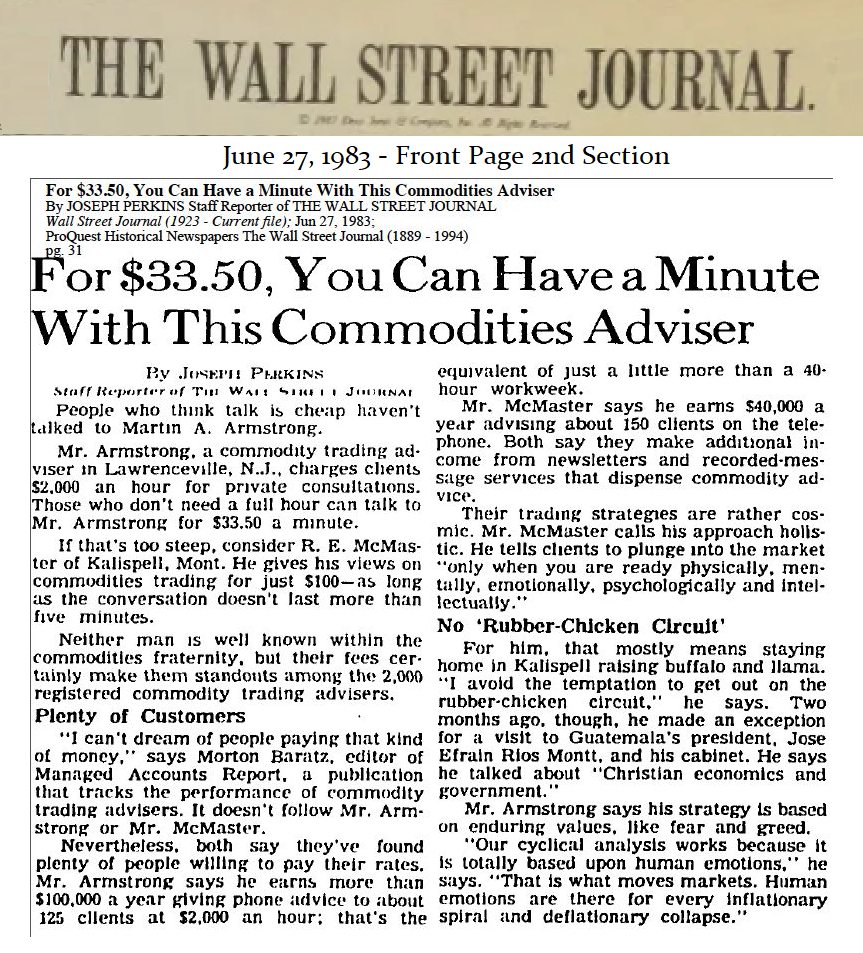
In 1983, the Wall Street Journal wrote a piece that I was charging $2,000 an hour for phone advice. The journalist, after talking to our clients who agreed to participate in their review, told him that if I charged $10,000 an hour, they would pay it. He called me back and was stunned. I was advising on a billion-dollar transaction in 1983. $2,000 or $20,000 did not make much difference.
By the mid-to-late 1980s, fax machines were a standard office appliance, peaking in the 1990s before email and digital scanning began replacing them. We started sending reports out by FAX, and that reduced the communication costs dramatically. So personally, I have lived through the technology cycle of Creative Destruction and saw the price of transmitting a report from $75 to email, which is now basically free. That took the business away from Western Union, and has been a wave as Schumpeter envisioned.
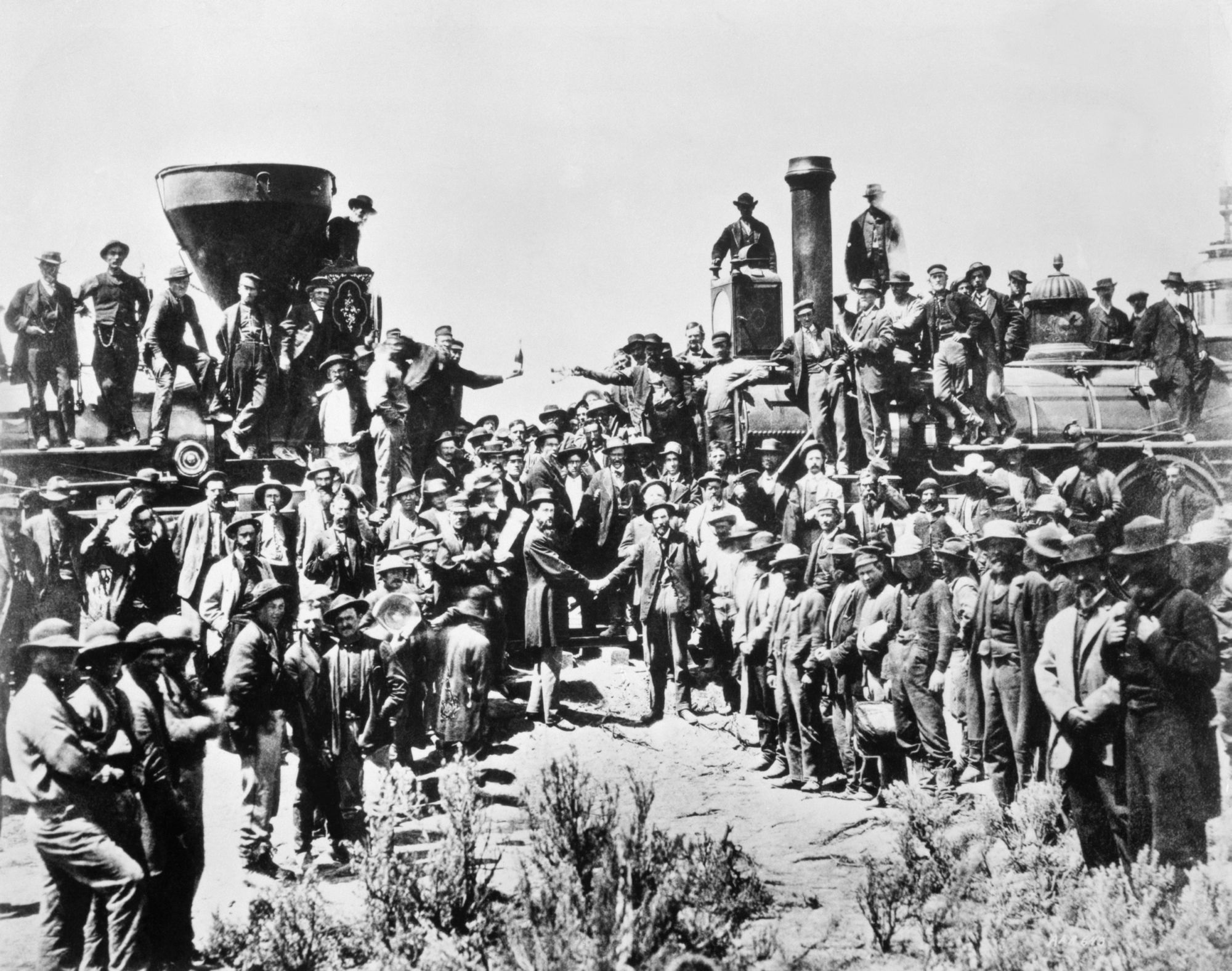
When the East and West Coasts were connected by train in 1869, the Railroad era put out of business the wagon train industry. The United States expanded, and as train tracts were laid around the country, it was first the Railroad Boom which really came to an end with the Panic of 1907.
The Industrial Revolution expanded, and the Industrialists, led by the auto stocks, drove the 1929 bull market. The invention of the combustion engine led to tractors for farmers, disproving the theories of Malthus that humanity would starve as population increased. He never understood the cycles of technology, yet he influenced Gates and the Rockefellers. As farmers had tractors, production increased while employment declined.
The horse & buggy was replaced with automobiles. As they expanded, so did the suburbs come alive. Suddenly, people could live in places without trains. The town I grew up in flourished because we had a train station, which enabled people to buy land and move out of the cities. The town I grew up in expanded further from the train station with the automobile.
The first commercial airline was the St. Petersburg–Tampa Airboat Line, which began operations on January 1st, 1914. They flew a Benoist XIV, a small flying boat (seaplane). The distance was only 23 miles (37KM). It reduced the travel time from 2+ hours by boat or car to just 23 minutes.
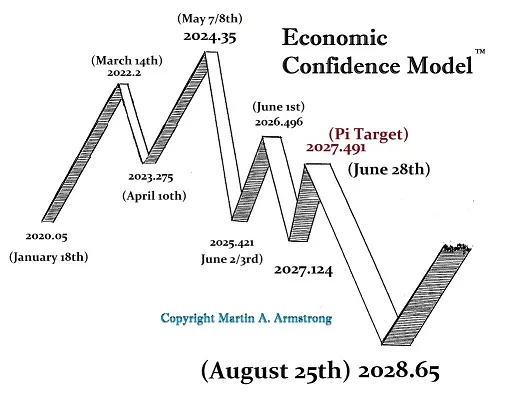
Therefore, while the ECM has turned down, such forecasts that focus on ONLY one aspect or statistic are always wrong and/or lead to misinterpretations and confusion. Economists omitted from their models not only the creation of money by the banking sector through lending money, thereby leveraging the money supply. Those who believe shutting down the Fed and handing money creation to the Treasury will cure inflation do not know their monetary history.
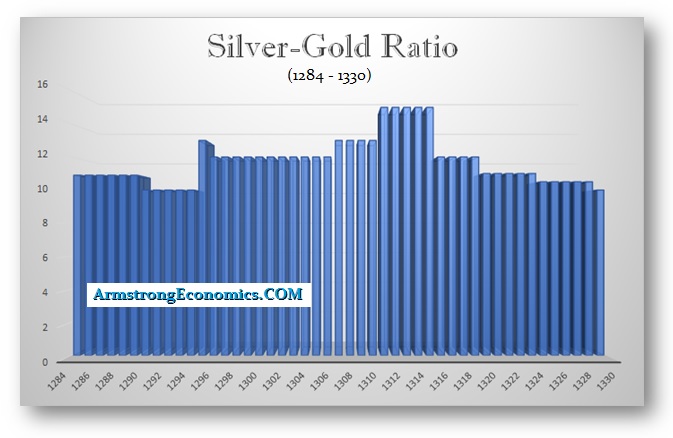
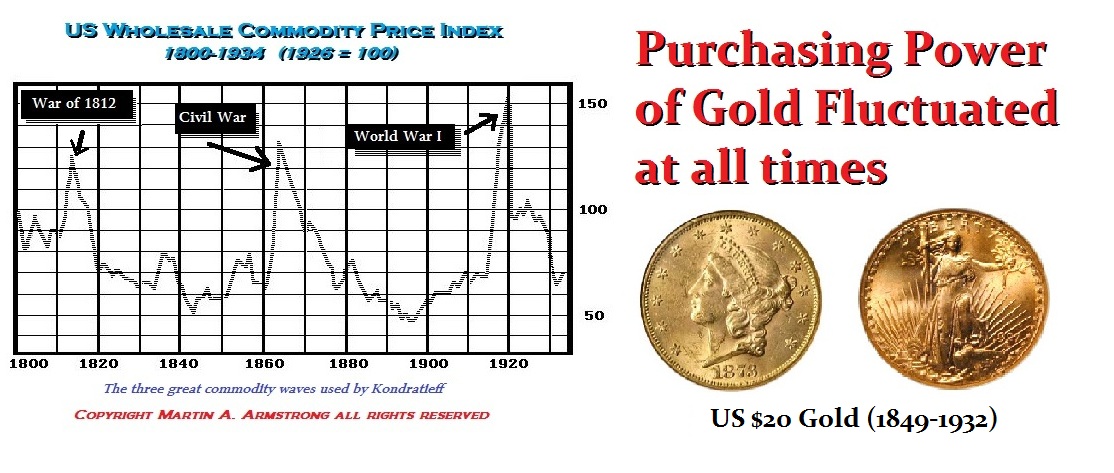
Even a gold standard did not prevent inflation. The discovery of gold in the New World flooded Europe and resulted in massive inflation. during the 15th-16th centuries. The gold-silver ratio has always fluctuated because the discovery of silver relative to gold has never been confined simultaneously.
The vast gold discoveries in California, Australia, and Alaska created waves of inflation, as did wars. Just because gold is money does NOT eliminate inflation. All the nonsense about paper currency is FIAT, and that is the problem, it is just stupid sophistry. It has NEVER mattered what the money is from gold, cowrie shells in China, to sheep skins, Bronze, or cattle.
Assets rise in value regardless of what the money might be, and the purchasing power of money declines even when it is gold. This is the business cycle that DID NOT simply appear when paper money started in the USA.
The economic models are DOMESTIC because economists want a job to advise governments that they are all-powerful if they listen to them. I am sorry. As a trader, you lose your shirt, pants, your house, and your family if you trade based on economic theories. They are entirely useless. They never consider external factors.
(1) All banks create money with loans (I deposit $100 and they lend you $100, and both our accounts reflect a money supply of $100) (2) They have never been able to account for sudden increases in the money supply that have been caused by: (a) new gold or silver discovery (b) A war in another region diverted capital seeking shelter as European money flowed to the US for WWI & WWII (c) Capital concentration where foreign capital sees a profit in another economy driven by currency values (d) Capital flight from your economy based upon a sudden collapse in confidence, be it mismanagement or war (3) Economic technological evolution (trains, cars, airplanes, internet, etc…)
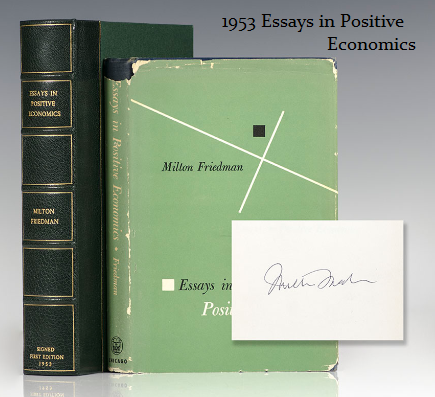
This is not even a complete list. I only met one academic who thought outside the box, and that was Milton Friedman. Milton came to listen to me at a trading convention in Chicago. I was explaining capital flows and currencies. When I was finished, Milton stepped forward to shake my hand and said I was doing what he had only dreamed about. We became friends, and then I understood what he was talking about. He had theories that a floating exchange rate system would impose checks and balances upon the fiscal policies of the government. He had written that theory down in 1953.
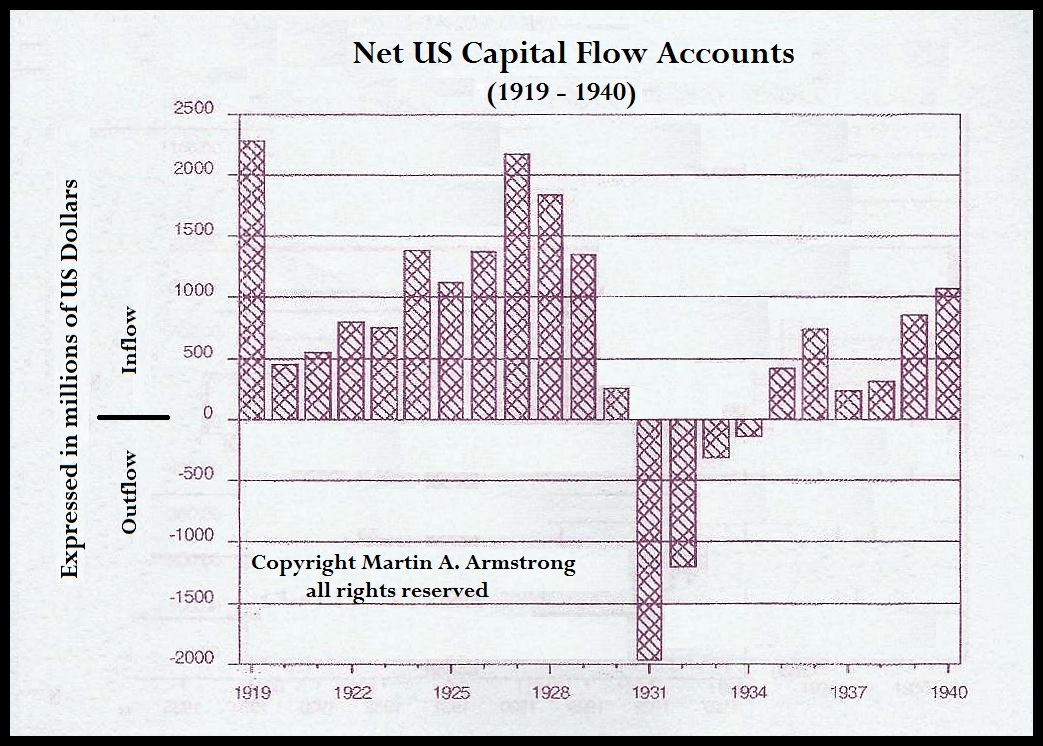
While I explained the Great Depression and the Sovereign Debt Defaults in 1931 in Europe, even Canada suspended debt payments, you can see the capital was taken back to its home countries, ending the Roaring ’20s. Everyone politically blamed Hoover and then tariffs, but nobody understood international capital flows.
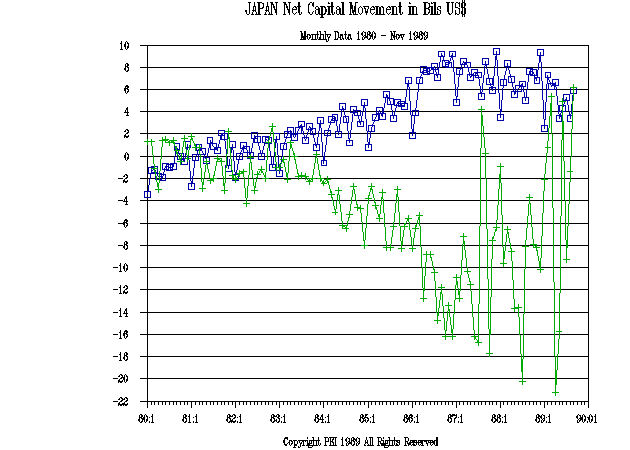
I explained HOW the G5 intentionally lowered the value of the dollar by 40% to reduce the trade deficit. As idiots, they never understood that doing that means you were devaluing everything held by a foreigner. Japan owned up to 30% of the US National Debt, and they dumped it as the capital flows revealed.
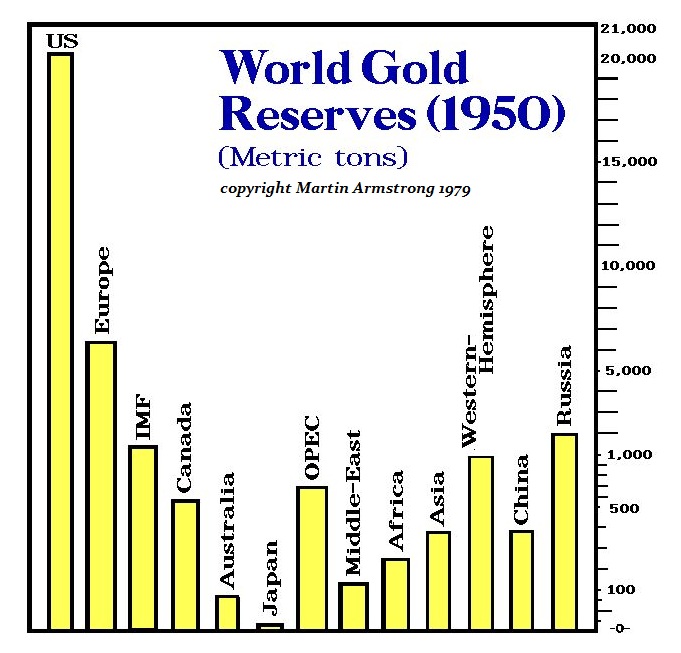
It was World War I and World War II that made the US the financial capital of the world because all the gold fled to the USA during the wars. There was ABSOLUTELY no political decision made by any domestic politician that stood up and proposed making the US become the new capital for finance, taking that title from Britain.
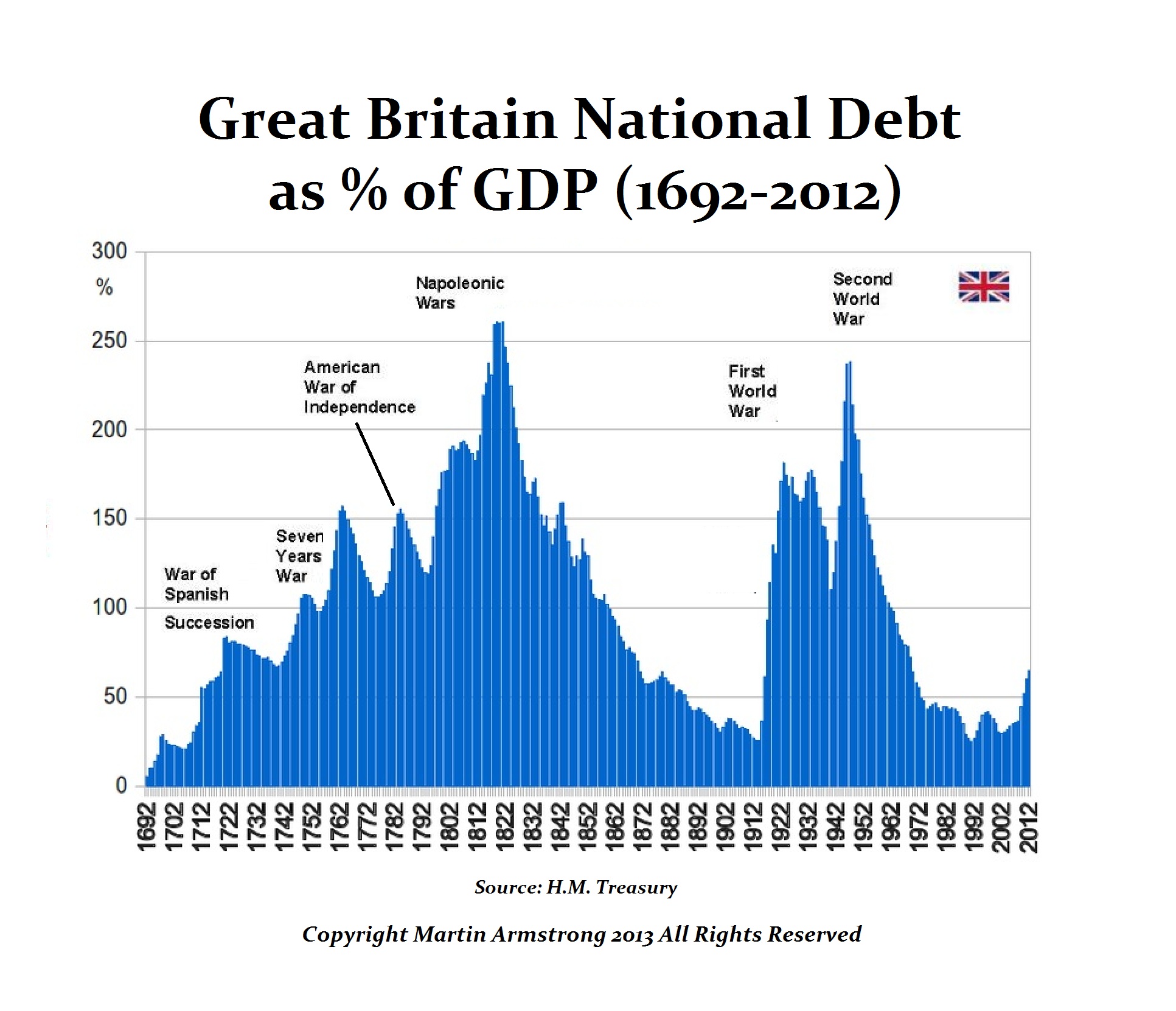
There is absolutely no historical evidence that repeated wars have ever benefited any country. Britain got into World War I when it was not threatened, all based on treaties, as NATO is doing right now. Those treaties shifted the financial capital from London to New York, and World War II led to Britain’s full displacement of the British pound with the dollar. Even Canada rejected the British monetary system and shifted to the Canadian dollar.
War destroys the economy, as evidenced by Lydia, which invented coinage and fought Persia. Athens became the financial capital of the world after the Battle of Marathon, and they were compelled to debase their coinage and lost in the Peloponnesian War to Sparta.
The favorite phase in economics is: “Assuming all things remain equal.” Of course, that never happens.
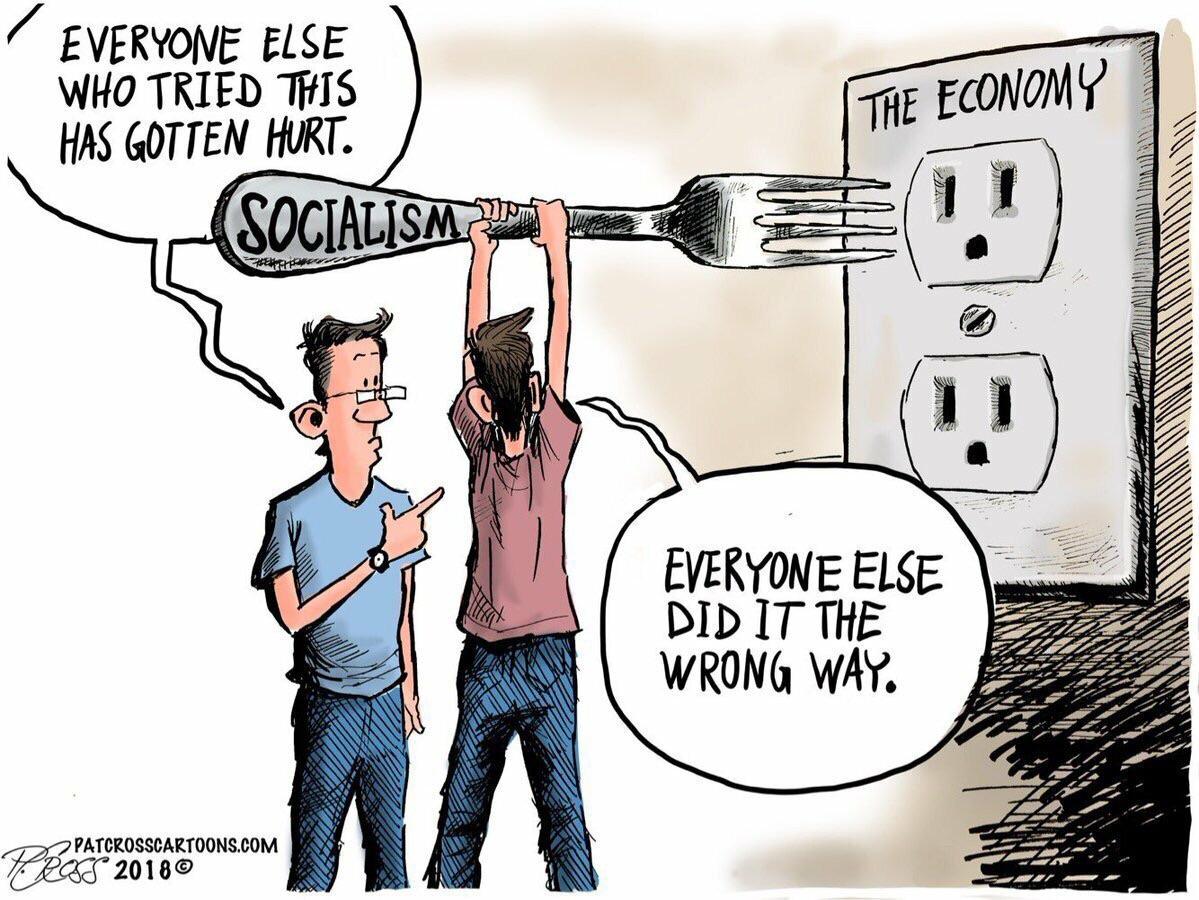
We have the socialists always claiming the problem is wealth disparity. They hate people who have more than they do – that’s all. Both China and Russia tried Marxism’s wealth disparity solution – confiscate all private wealth to create material equality. The people learned that you had no right to be individual. When everyone was equal, and they needed a floor swept, you were next in line – here is your broom.
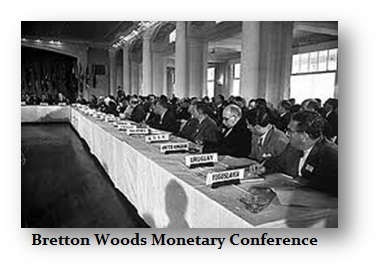
All things NEVER remain equal, and the wildcards always come from external sources. Just as no US politicians set out to make the dollar the reserve currency, that only took place at Bretton Woods after two World Wars.
My old PA used to have a man figure on her desk, which said – Shit Happens!
Larry Sanger, one of the founders of Wikipedia, states plainly that it is now all propaganda.
PS: That is why the government (Bankers & Neocons) work hard to try to keep people away from reading this site because they want to rule the world and expect to manipulate markets for their guaranteed trades and never want people to understand the truth. Just as they called the media and were directing them to cancel anyone who told the truth about COVID and were debanking people who told the truth, sold guns, or gold, the government has seized control of Wikipedia and ensured their fake news is always at the top of the list.
NEVER DONATE TO WIKIPEDIA – YOU ARE SUPPORTING THEIR PROJECTS TO UNDERMINE OUR FREEDOM
I have created this site to help people have fun in the kitchen. I write about enjoying life both in and out of my kitchen. Life is short! Make the most of it and enjoy!
This is a library of News Events not reported by the Main Stream Media documenting & connecting the dots on How the Obama Marxist Liberal agenda is destroying America















 Subscribe to alerts for each new postEmail *






 Centinel2012