JOHN SOLOMON: “The Engineer In Chief Is President Obama, He Can’t Run From The Evidence Anymore.”


Posted originally on Rumble By Bannon’s War Room on: July 24, 2025

Ret. Col. Harvey: There Are Still Classified Annexes Including Hillary’s Plan To Link Trump To Putin


Posted originally on Rumble By Bannon’s War Room on: July 24, 2025

“It’s A Forcing Function.” Steve Bannon Calls On Tulsi Gabbard To Join More WH Press Briefings


Posted originally on Rumble By Bannon’s War Room on: July 24, 2025

7.23.25: DEEP STATE caught, Spider Web, Critical understanding, Buckle UP! Pray!


Posted originally on Rumble By And We Know on: July 24, 2025

BRAT: “Long-Run Productivity Has Been Declining For 70 Years. Trump Reversed That.”


Posted originally on Rumble By Bannon’s War Room on: July 22, 2025

LAVORGNA: Biden Printed Money, Trump Fueled Real Growth With Pro-Business Policy


Posted originally on Rumble By Bannon’s War Room on: July 22, 2025

Cash Accepted Here – Payment Choice Act


Posted originally on Jul 23, 2025 by Martin Armstrong 

cashless society electronic money

Senators Kevin Cramer (R-ND) and John Fetterman (D-PA) have introduced bipartisan legislation, the Payment Choice Act, which would require businesses to accept cash payments. Money is merely the medium of exchange that someone is willing to accept for goods or services. Businesses across America have inadvertently contributed to the push toward a cashless society by refusing to accept cash as a form of payment.

“Any person engaged in the business of selling or offering goods or services at retail to the public who accepts in-person payments at a physical location … shall accept cash as a form of payment for sales made at such physical location in amounts up to and including $500 per transaction,” the measure stipulates, in part.

The war on cash is part of the broader agenda to eliminate all financial privacy and control every transaction. Refusing to accept cash is not merely a business decision but a step toward a totalitarian digital monetary system. Why bother with cash if you cannot use hard currency to pay for goods and/or services? Governments and central banks are pushing digital currencies to track, tax, and control every penny in circulation. If businesses start denying cash, they’re doing the state’s dirty work for them unintentionally.

Certain businesses prefer the convenience of credit cards and not all payment systems are equipped to accept cash. Yet, as Senator Cramer stated in his argument when proposing the bill, physical cash is legal tender, and businesses are limiting consumer choice by forcing the use of debit and credit cards for transactions. Then you have businesses that pass on the 3% transaction fee to consumers, adding to inflationary pressures. “Do you accept cash?” has become a common courtesy, as consumers are aware of the need to travel with a card to ensure purchases. Naturally, governments have cracked down on businesses that only accept cash, as they assume these businesses are attempting to avoid taxation. This is the first piece of legislation that actually supports the consumer over the government it is refreshing to see it gain bipartisan support.

The bill makes exceptions for businesses that have “a sale system failure” or those that do not have enough cash available to provide change. In fact, companies would not be required to accept $50 or $100 bills under this legislation to prevent the latter. It is quite disappointing to see the freedoms many are willing to relinquish in the name of convenience.

Once cash is gone, you’ll have no ability to opt out. So yes, we need to protect cash, and that may require legal guarantees that it remains a valid and accepted form of payment.

Steve Bannon: “The Federal Reserve Is Structurally Flawed But Institutionally It’s Out Of Control.”


Posted originally on Rumble By Bannon’s War Room on: July 21, 2025

Institutions Decreasing Real Estate Purchases


Posted originally on Jul 22, 2025 by Martin Armstrong 

Real Estate

Investors continue to snap up residential properties, as real estate has evolved into an investment class of its own. New reports show that between 2020 and 2023, investors were responsible for 18.5% of home purchases. In the first three months of 2025, investors composed 27% of all residential properties, marking the highest share in half a decade, according to BatchData.

High mortgage rates, coupled with high property values, have caused many would-be buyers to reconsider their purchases. Investors have fewer constraints, leading to the purchase of 265,000 residential properties during Q1, or a 1.2% YoY rise. However, we are seeing a decrease in institutional investments in real estate. The big money is not looking at real estate in this environment. Although investors accounted for 1.2 million homes in 2024, only 20% of the 86 million single-family homes in America are investor-owned.

Mom-and-pop investors who own between one and five homes purchased 85% of all investor-owned residential properties, with those owning between six and ten properties securing 5% of the market. Institutions owning 1,000 or more properties account for only 2.2% of investor-owned homes.

Purchasing real estate amid record-low rates was a no-brainer for investors, and institutions in particular, who had the liquidity to outbid competitors with cash offers. As interest rates rise, the cost of financing becomes prohibitive even for institutions. Institutions rely on leverage to enhance returns, and when borrowing costs rise, the math simply doesn’t work anymore. Real estate is an illiquid asset. In a world moving toward capital controls and rising geopolitical tensions, institutions are reallocating toward assets with more mobility. Capital is no longer looking at real estate as a long-term store of value. It’s moving into tangible assets that are more liquid—commodities, energy, gold, and equities.

The available real estate inventory is at its highest level since the pandemic, but the sector has become stagnant as homes sit on the market for far longer. So while institutions have the capital, interest rates aside, they are not looking at mere rental or flipping income. People investing in real estate in this environment are seeking a modest additional income.

Institutions are not interested in buying and holding tangible assets in a volatile environment where returns are not guaranteed. Look at New York City, for example—people are fleeing ahead of an incoming socialist local government that has promised to raise taxes on top earners. Real estate is no longer the safe bet it once was due to a lack of confidence in future regulation.


Taxpayers Lost $10B on Failed Green USPS Initiative


Posted originally on Jul 22, 2025 by Martin Armstrong  

USPS.EV_

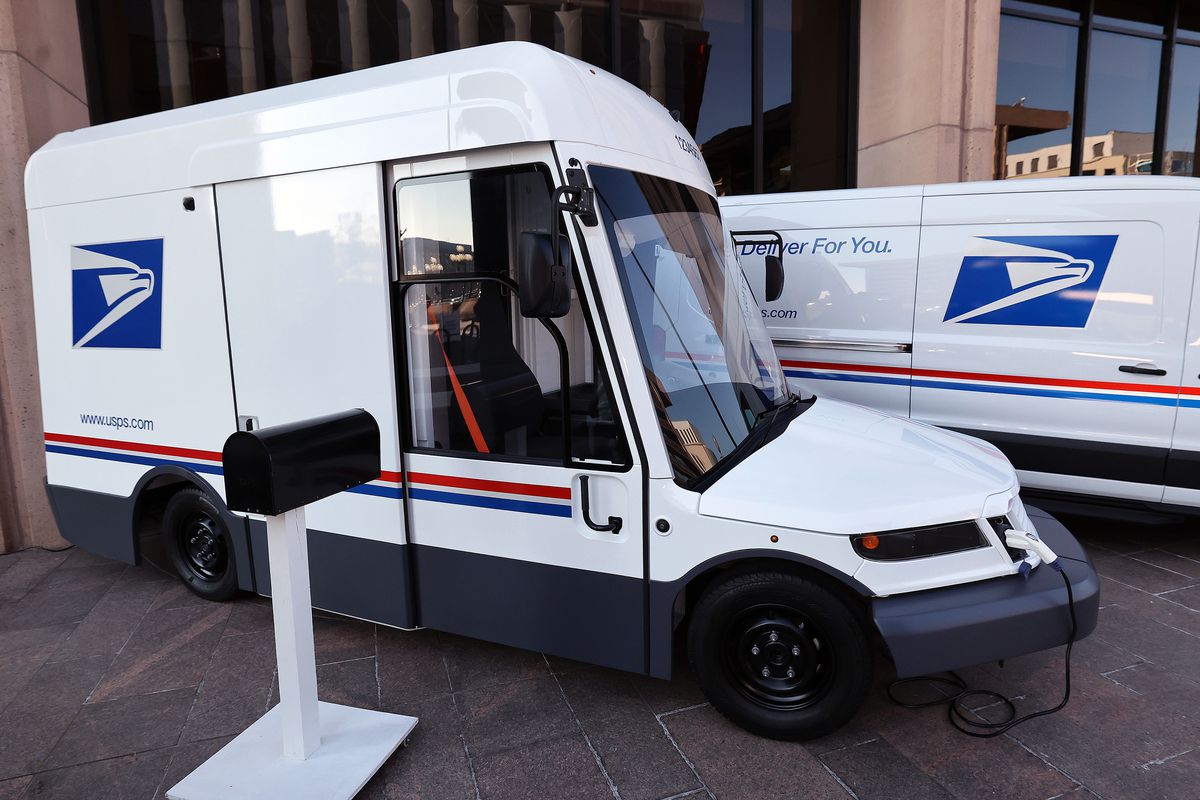
The US government wasted $10 billion in public funds attempting to transform the US Postal Service (USPS) into a battery-powered service. Out of the 60,000 purchased EV Next Generation Delivery Vehicles (NGDVs) only 250 have been created. House Republicans are now attempting to rescue any remaining funds from this failed green initiative.

The project was set for completion by September 2028. The funding for this failed conversion came from the largest spending package in American history—the Inflation Reduction Act—the trojan horse to usher in a wave of climate initiatives.  The American people never voted on the Inflation Reduction Act. The American people never voted to transform the USPS into a green-friendly operation. And yet, the American people are forced to pay the bill.

“Biden’s multi-billion-dollar EV fleet for the USPS is lost in the mail, and more than $1 billion is postmarked to order more,” Sen. Joni Ernst (R-Iowa) told The Post. “I am working to cancel the order and return the money to the sender, the American people. The rescissions package is a great start, but Congress must keep its foot on the pedal and make DOGE a lifestyle by stamping out waste like this on a regular basis.”

Defense contractor Oshkosh received $2.6 billion to create NGDVs. Oshkosh promised to provide 3,000 trucks by November 2024 but had only produced 93. Countless issues have been reported with these NGDVs, from leaks to airbags. Worse, Oshkosh was never equipped to handle the production of 3,000 vehicles, and has stated that they have only been able to produce ONE truck per day. They are now working to refine their manufacturing to create 80 trucks per day. Again, there were other avenues and established factories.

Each vehicle came with a price tag of $77,692. The Government Accountability Office warned in February 2025 that USPS has a “high risk” of financial viability as it could not “fully fund its current level of services and financial obligations.” USPS posted a loss of $9.5 billion in 2024, all of which must be supplied by the people. So, in addition to the regular losses, the former administration was doubling down on asinine climate initiatives and digging the agency into a deeper hole.

The Biden Administration spent BILLIONS on investing in EV infrastructure that never came to fruition. I spoke on how Biden approved of a $7.5 billion spending package to build EV charging stations throughout the nation, but only SEVEN were produced in over a two-year span. His most recent climate debacle that came to light rests on decarbonizing the Postal Service.

Yet another example of government spending gone awry. They always create these grandiose plans with no format for execution. The American people should not be responsible for any administration’s outrageous spending—no taxation without representation.