US v Europe Bank Analysis


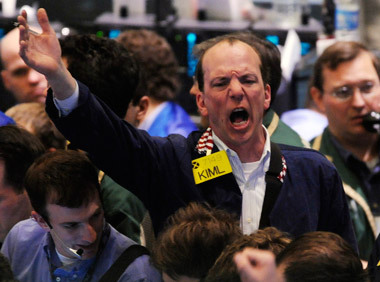
COMMENT: Mr. Armstrong; It is becoming obvious which banks are following your model and putting a spin on it fundamentally and they seem to be outside the USA. Swiss banks are calling for a rally and Goldman Sachs calls for a decline. This is very curious indeed given that your enemy has been Goldman Sachs.

JH

ANSWER: Obviously, I am not at liberty to discuss such matters. With MIFID II, it is more curious as to how American banks will be able to put out such forecasts contrary to MIFID. I cannot reveal the plot just yet going on in Washington to deal with MIFID. Trust me, there is a very sinister plot afoot and when I reveal the scope you will be very surprised how the Trump Administration is being manipulated as has every Administration since Clinton.

Flynn Legal Team No Longer Communicating With White House Legal Team…


The New York Times reporters are outlining another silly story to squeeze out the final drips of usefulness within the vast Russian conspiracy narrative.   Comey’s leak recipient Michael Schmidt, and the narrative engineer with a Phd in passive aggressive writing, Maggie Haberman, collaborate.

The outline is that lawyers for Michael Flynn are no longer sharing information with lawyers from the Trump team.  Obviously the intended premise of this engineering feat is infer that Flynn is cooperating with special counsel Robert Mueller to the detriment of President Trump.  Key word for narrative building here is: ‘infer’.  The years’-long media Russian conspiracy script relies heavily on ‘inference’.

WASHINGTON — Lawyers for Michael T. Flynn, President Trump’s former national security adviser, notified the president’s legal team in recent days that they could no longer discuss the special counsel’s investigation, according to four people involved in the case — an indication that Mr. Flynn is cooperating with prosecutors or negotiating a deal.

Mr. Flynn’s lawyers had been sharing information with Mr. Trump’s lawyers about the investigation by the special counsel, Robert S. Mueller III, who is examining whether anyone around Mr. Trump was involved in Russian efforts to undermine Hillary Clinton’s presidential campaign.

That agreement has been terminated, the four people said. Defense lawyers frequently share information during investigations, but they must stop when doing so would pose a conflict of interest. It is unethical for lawyers to work together when one client is cooperating with prosecutors and another is still under investigation.  (read more)

As with just about every well positioned clickbait story, the parseltongue narrative gives every audience something from the buffet.   Trump-haters get another infusion of giddy optimism toward the end goal of impeachment; Mueller conspiracy theorists get a dose of additional fuel for the usurping special prosecutor angle; and nervous sideline Trump supporters get anxiety….  It’s intended that way.

Meanwhile, it doesn’t come as a surprise that Flynn would be working a deal to remove himself from the tenuous position he put himself into with the entire Turkish Lobbying thing he forgot to register in DC.

Paul Manafort, Michael Flynn, the Podesta brothers, and a host of other DC characters who gain affluence from the lobbying of foreign influence, are all tenuously positioned like  cat burglars who jumped the wall without realizing the new owner has installed flood-lights and a hungry pride of unleashed lions.

:::POW:::

Midway to the villa, LIGHTS ON !

Unfortunately for Flynn this was his first time joining the operation.

Nothing more.

Carry on.

~ BACKSTORY ~

Intellectual Froglegs – Thanksgiving Edition….


Religious Persecutions have impacted Political-Economy


QUESTION: hi martin

question for you
if we fed the data and all the info you had on ISLAM – CHRISTIANITY – JUDAISM etc and all other religions into SOCRATES
and ask it …..what would its preferred choice be ……of RELIGION and what should the world follow…………what would SOCRATES say?
have you ever tried this thought experiment?
Regards
SS
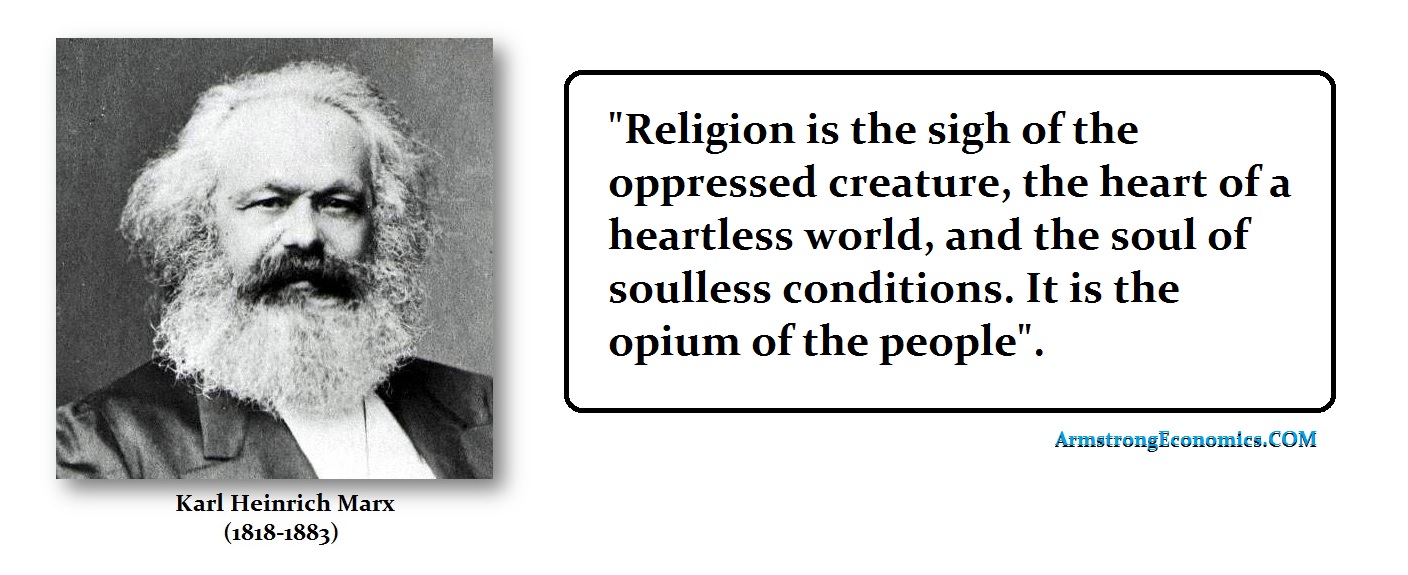
ANSWER: Interesting question. I do not believe it would pick one for that is a subjective decision. It would forecast trends, but not which religion is better. What it does do is it will forecast religious upheaval, which is tied to economics. Change the economy and you create change in religion. The introduction of Communism followed Marx in banning religion.
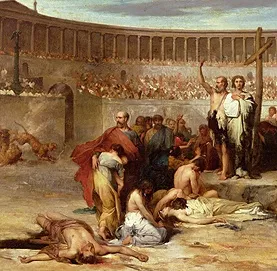
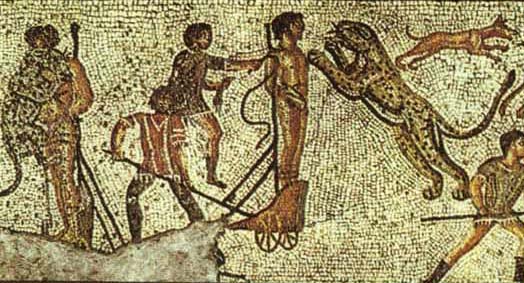
During the 3rd century, it was the collapse of the monetary system of Rome that sparked the biggest wave of Christian persecutions. Why? The Pagans believed the gods were angry because the Christians would not pray to them. So the evils befalling upon the empire was blamed on the Christians. In turn, the Christain said their gods were impotent and only the true God would save them. Eventually, many Pagans left and became Christians praying for help.
Then there was the Spanish Inquisition headed by Tomás de Torquemada (1420–1498). Even the Pope came out against it. Nonetheless, the Spanish Crown used religion as the pretense to confiscate property and attacked both the Jews and the Arabs. This caused the Jews to flee mostly to the Netherlands. This is where banking and insurance became major in Amsterdam.
So religious persecutions have been had a major impact upon economics and the rise and fall of empires, nations, and city-states.

Long Conversation – President Trump Talks To Russian President Putin…


Yesterday while exiting the White House, President Trump told reporters he had just finished a 90 minute phone call with Russian President Vladimir Putin:

“We had a great call with President Putin. We’re talking about peace in Syria — very important. We’re talking about North Korea. We had a call that lasted almost an hour and a half. We’ve just put out a release on the call. But we’re talking very strongly about bringing peace for Syria. We’re talking about very strongly about North Korea and Ukraine.” (transcript)

Important to note that conversation was longer than would have been possible at any of the Bilat’s (Bilateral Discussion) during the ASEAN Summit or APEC Meeting in Asia.  A further review of the White House readout:

President Donald J. Trump today spoke with President Vladimir V. Putin of Russia for more than one hour. The presidents affirmed their support for the Joint Statement of the United States and the Russian Federation, issued at the Asia-Pacific Economic Cooperation Summit on November 11.

Both presidents also stressed the importance of implementing U.N. Security Council Resolution 2254, and supporting the U.N.-led Geneva Process to peacefully resolve the Syrian civil war, end the humanitarian crisis, allow displaced Syrians to return home, and ensure the stability of a unified Syria free of malign intervention and terrorist safe havens.

The two presidents affirmed the importance of fighting terrorism together throughout the Middle East and Central Asia and agreed to explore ways to further cooperate in the fight against ISIS, al-Qaeda, the Taliban, and other terrorist organizations.

President Trump and President Putin also discussed how to implement a lasting peace in Ukraine, and the need to continue international pressure on North Korea to halt its nuclear weapon and missile programs. (link)

♦President Trump wants Putin to withdraw any strategic interference surrounding the North Korea denuclearize plan he has assembled with regional allies and China.  President Putin would prefer being able to retain a position of influence toward the DPRK.

♦Russian President Putin seems to want Trump to shift/modify his position on allowing Bashir Assad to remain in power in Syria.  President Trump and SoS Rex Tillerson have outlined a prior plan for a regional governorship and a unity government framework.

It would appear there’s some deal-making in the works.


Is DNC Chair Tom Perez Trying “Broken Arrow” 2018?…


Aside from the common vernacular of ‘broken arrow‘ referencing a loss of a nuclear weapon it also means:

“a code phrase that a ground unit is facing imminent destruction from enemy attack and all available air forces within range are to provide air support immediately.”

In essence, with enemy completely overwhelming a position – a military commander calls in direct fire upon themselves in a last-ditch effort to at least retain some of their own forces in the aftermath.

For the sake of this discussion do not consider the reference ‘federal politicians’ (ie. DC congress and Senate); but rather consider the term “broken arrow” a metaphor for the totality of the past eight years and the collapse of the Democrat political apparatus in state House seats and state Senate seats.

Currently:

  • State House Majority Control: 38 states Republican / 12 states Democrat
  • State Senate Majority Control: 37 states Republican / 17 states Democrat / 1 state tied.
  • State Governors: 34 Republican / 15 Democrat / 1 Independent

If you put a blue marble on a table for each of the Democrat politicians in state office and a red marble on the table for each of the Republican politicians in state office the table would be roughly 65% red marbles and 35% blue marbles.

If you are DNC Chairman Tom Perez the challenge is daunting.  However, one rather extreme strategy would be to call in a “broken arrow” sledgehammer on the entire table.  If your attack smashed a quarter of the total marbles, the majority of the marbles smashed would be red.  Yes you would lose some blue marbles that way but your losses would be less than your opponent simply because you have less marbles on the table.

Still with me?

OK.  Now, think of that sledgehammer as “Sexual Harassment Claims”.

See the strategy?

Your political enemy has twice the exposure to risk.  Hollywood starts the narrative, and the Media can be counted upon to assist the strategy by over emphasizing the scale of the enemy losses and downplaying the scale of the friendly losses.

If you started with a total of 1,000 marbles (650 red, 350 blue) and lost 25% in the strike, the end result would be 250 casualties (163 red, 87 blue).  You would have killed off twice as many state/national republicans as you would state/national democrats.

It’s an extreme strategy; it’s a desperate strategy; but it’s a strategy nonetheless.    This is DNC Chairman Tom Perez we are talking about.  Former head of the DOJ Civil Rights Division (CRS); before becoming Obama’s head of the Department of Labor.

Perez is a life-long fellow Alinsky traveler inside the cause; and was ‘installed’ as DNC Chair the same way Hillary Clinton was installed as candidate in 2016.

Democrats, the institutional system that is constructed of people, are pretty good political strategists but their modern Achilles heel is their lack of patience.  The system supporting the ideological hand of Perez is demanding immediacy – they’re desperate.

The 2010 (“shellacking” of Obama) through 2014 gains were all Tea Party.  The 2016 gains, including the presidency, was MAGA; the evolution of the exact same people.  The Trump MAGA Team in 2016/2017 was the Tea Party Team in 2009/2010.  The commonality was/is ‘cold anger‘.  Strategic. Purposeful. Resolute. Deliberate. Long-term and sequential.

Current 2017 Democrat anger is hot.  It’s reactionary; easily provoked to act to spite itself. That anger is fueling stupid…. It thrashes. Look around, it’s childish.

Play stupid games, win stupid prizes.

Try stupid strategy, win stupid consequences.

Roy Moore Campaign Officials Hold Press Conference (Video)…


Alabama campaign officials who support Roy Moore held a press conference yesterday to outline the reason for their continued support.  Additionally, several officials confronted and deconstructed the accusations.

The audio is a little sketchy in the beginning:

The Hidden Risk of Broker/Clearer


QUESTION: Dear Mr. Armstrong, Thank you for your work in “educating” us in your “University of the Conscious Investor”! My question relates to your “Trading a Vertical Market” report. I am slowly digesting this report which is truly fascinating and a must read for any rational minded investor. My experience tells me (and you have reaffirmed this within your report) that being able to trade correctly for the market is critical. In analyzing the correct actions we must take I have reached the conclusion that we must also investigate deeply the trading company we use and how any wild ride will impact their ability to actually fund the successful trades we have managed to get into and out of. I recently was issued new T&C’s for my accounts to accept and that makes for scary reading in the light of any major reset or mammoth gap or moves we anticipate. How would you recommend we evaluate the companies actually holding the bag to be able to pay up at the end of the day? This appears to me to be a most crucial question in the light of what Socrates is pointing out.

Be Well,

ANSWER: Yes, you are absolutely correct. Your broker/clearer is an additional risk.

 The kind of market conditions we are about to face will force questions beyond extreme volatility, no bids and the gapping of price and trade. What Traders must realize is that these extreme price actions themselves trigger increased margins, which again could trigger a liquidity crisis. Under such panic moves, prices can gap ‘without’ a trade and is worth remembering people sell what they can not what they should. This forces other markets to move just to raise cash. If market movements are violent everyone is pulled into the mix.

This is when you have to hope that every one of your fellow account owners (under the broker/clearer you are using) is liquid enough to honor margin requirements. This type of information is rarely going to be available to all and so makes many remain vulnerable.

Just to make you aware, it is possible that your money is vulnerable even if you do not have an open position and is just sitting with your clearer if they were to fail.

A lot of people lost money in the MF Global Scandal.


The Political Crisis in Germany Changes the Game


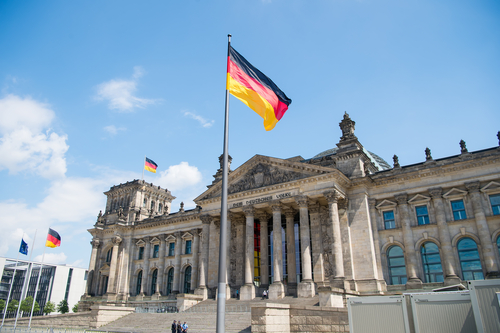
Merkel faces the worst crisis of her career and many behind the curtain are starting to wonder if she will even survive. The German Federal President Steinmeier could not actually order new elections immediately. The procedure in this regard is quite complicated in Germany. The earliest possible alternative would be to hold new elections come the spring of 2018. It is likely that the AFD is likely to gather even greater support from new elections. Nonetheless, the CDU will continue to support Merkel at least right now. However, the CDU has been severely weakened by the election and if we do not see new elections until the spring, there is a distinct possibility that Merkel’s support even within the CDU could collapse if they see the AfD will win even greater support.

The head of the Federation of German Industries (BDI), Dieter Kempf,  has chastised the political leaders calling on the SPD, FDP and Greens to form a coalition. The price that the SPD will demand is that Merkel leaves before they would consider any compromise. There is just bad blood now between the SPD and CDU. Of course, this makes it even more likely we see and even more difficult Brexit. The practical crisis is the fact that Merkel must attend to domestic issues and will not truly have the time or authority to assume a leadership role in Brussels.

This turmoil in German politics is actually shifting the stage to Macron. The uncertainty in Germany may be opening the door for Macron to reform the EU and the Eurozone pushing Germany to second place. The political fortunes for the EU may be far more uncertain than many suspects.

From a market perspective, political uncertainty in Europe still creates uncertainty in markets rather that confidence.

MAGA Brilliant – Multidimensional Economic Policy – Trade Shift to Durables…


Go through the archives and you’ll note a strategy unfolding that few, including us, could fully conceptualize when it first appeared.  Way back when candidate Trump first began to put his economic plans into platform outlines the subtle signature was there, but few were paying attention.

In order to reverse three decades of middle-class economic erosion, there were indicators that Trump’s strategy was a radical change in approach.  In essence the strategy was to split the economic policy into two areas and sequence the policy: highly-consumable goods (first) and durable goods (second).

Both product sectors have historically been viewed and approached by economic policy makers using a single financial strategy.  That singular approach gave rise to Wall Street benefiting and Main Street suffering.  Investment-class gained; middle-class suffered.

Trump outlined an approach –albeit vaguely– that was multidimensional.

His policy would first target multinational corporations, using the U.S. Treasury (Mnuchin) to weaken their grip and influence; simultaneously, he would use energy policy to drive down domestic prices in highly-consumable products (fuel, food, energy sector).  These sectors are not measured in fed inflation indexes; however, if lowered, these facets of consumer spending can also increase the amount of disposable income available for workers.

In essence, expand the economy by lowering the aggregate cost of living for the middle-class who live paycheck-to-paycheck.  Use fiscal policy (and trade policy), to entice domestic investment and create jobs; and ultimately put upward pressure on wages.

That’s where we are now.

The second aspect of Trump economic policy is geared toward ‘durable goods’.  That’s where the trade imbalance plays a larger role in the strategy.

As the economy expands, Americans can now afford rises in the prices of durable goods.  However, as with all manufacturing systems -geared toward retaining market share inside a consumer economy (ie. the U.S. market)- the foreign creators will first seek to retain competitive pricing structure by making efficiencies within their own business models.

When foreign manufacturers entering a phase of cost-cutting analysis (note Team Trump just left Asia) you immediately hit them with stronger forecasted trade rules on their products.  The manufacturers financial analysis then has to contain the possibility of new rules.  That’s where Commerce Secretary Wilbur Ross and U.S. Trade Representative Robert Lighthizer come in:

(Story Link)

On Oct. 5, the ITC [International Trade Commission] voted unanimously in favor of Whirlpool, which brought a complaint forward accusing Samsung and LG Electronics, its South Korean competitors, of flooding U.S. markets with cheap washing machines and pricing out domestic manufacturers. While the ITC didn’t say material harm was coming from South Korea in particular, Whirlpool alleged the country’s manufacturers shifted production into other countries (Thailand and Vietnam) in order to avoid U.S. anti-dumping tariffs imposed in previous years.

The ITC’s recommendations will be sent to President Donald Trump, who will have two months to make a final decision.

This second phase is where the two economic engines: Wall Street and Main Street; begin to come into parity again.   The FED does measure the cost of durable goods in their inflation index.  Rises in durable goods are recorded in inflation indexes and fiscal policy (interest rates) is influenced accordingly.

Trump’s phase-one befuddled the FED who have been perplexed over inflation being virtually non existent.  Most of the reason for this disconnect has been the downward price pressure on (non-measured) highly-consumable goods; and static prices on (measured) durable goods.  The FED can see the economy expanding, but they cannot, or at least couldn’t until now, reconcile the lack of inflation.

Wages are growing, albeit modestly at first – but now gaining speed, as a result of economic expansion and increased employment.  This wage growth, in combination with keeping downward pressure on high-consumable prices, allows Trump to begin a series of aggressive trade policies that will slowly raise durable good prices.

The trade policy, tightly executed by Trump, Mnuchin, Ross and Lighthizer, will put increased pressure on manufacturers to make products in the U.S.  In turn this puts further demand on U.S. workers; which, in turn drives up the wages to afford the prices of durable goods as they increase.

Simultaneously, it must be remembered that every dollar removed from imports actually increases the GDP.  The value of all imported goods is deducted from the combined value of all goods and services we produce.   If we drop $1 billion in imports on Washing Machines, and simultaneously manufacture $1 billion on Washing Machines in the U.S., the U.S. GDP gains $2 billion in value.  The U.S. economy actually expands by more than $2 billion because the attached manufacturing wages are also inside the U.S.

This multi-prong approach is one of the reasons why it just doesn’t seem to be part of the strategy to keep the U.S. inside NAFTA as it currently is constructed.  Perhaps, just perhaps, the NAFTA exercise is more optical than actual.  Perhaps, it’s more about the outside world seeing the U.S. trade position as executed, than actually negotiating….