The Coming New Monetary System


Posted originally on Mar 8, 2024 By Martin Armstrong 
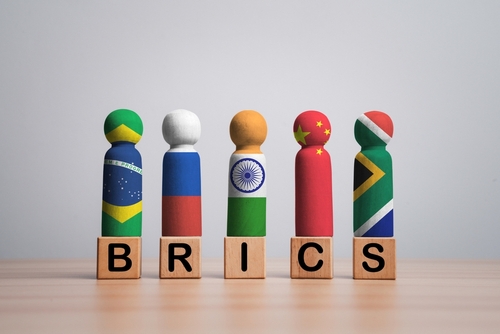
QUESTION: Hello Martin, been reading your passages for a few months now. I had a question for you.

What currency do you think BRICS will use to settle trades in the future and if that he bitcoin could be a viable option? Since you don’t see the USD being the world currency by 2035.

Thanks for the wisdom.

ANSWER: The only benefit of Bitcoin is that it is neutral. But it is insufficient for world commerce because it cannot be used for lending or credit, or you end up in the same situation where it is just leveraged – the very complaints about fractional banking. You deposit $100 in a bank, and they lend out $92, and then two accounts show the same cash. The money supply can be multiplied many times through credit. The nonsense that Bitcoin would replace the dollar as the reserve currency only shows that those people do not understand the world financial system. To accomplish that, you will destroy everything – mortgages can no longer be made, and the entire world is plunged into a truly monumental depression, sending us back to the Dark Ages.

The primary argument against the dollar is that the Neocons have turned it into a political weapon by sanctioning Russia and removing it from SWIFT. That woke up many countries, who then realized that the dollar had become a weapon and no longer an impartial currency in world commerce.

The de-dollarization is NOT economic-based but POLITICAL. Wake up! This is not the standard fiat money nonsense. This is about political power to force countries to do the bidding of American Neocons or else!
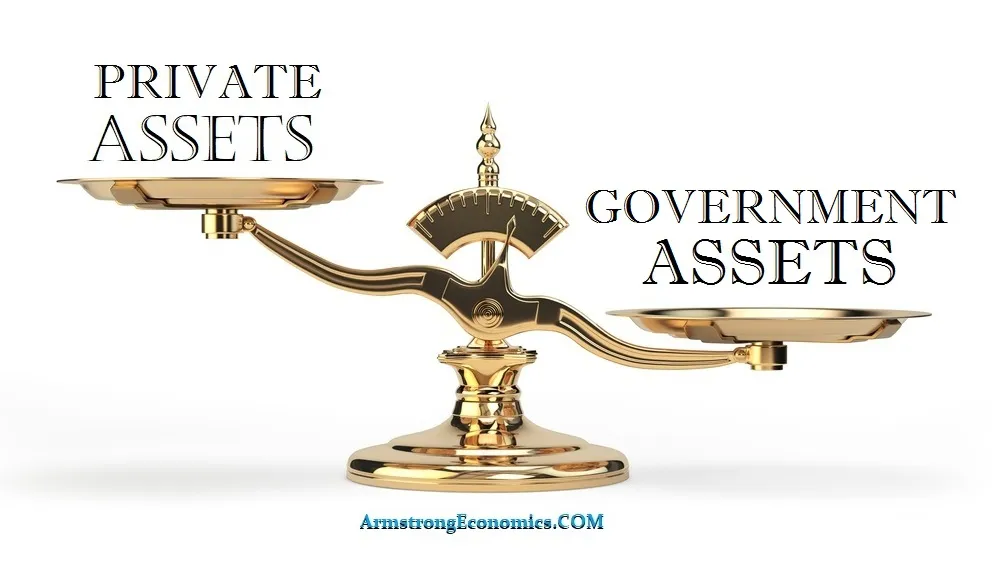
Private Assets Government Assets

The more practical neutral element would be gold. But there cannot be a “GOLD STANDARD” whereby you fix the price. With time, such a system will collapse, as did Bretton Woods. A monetary system MUST float, as does the economy and everything else. During a depression or recession, people sell assets and run to cash. In inflationary booms, you buy assets and get rid of the cash. LOOK – I am NOT an academic! I advise on trillions of dollars and have watched how capital responds for about 50 years. It is always self-interest – not theories of equality.
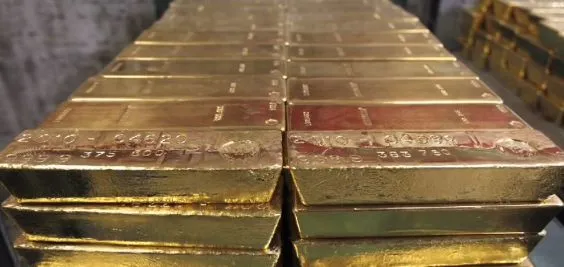
Gold 400 oz Bars

400 oz Central Bank Gold Reserves

I have been called in by central banks worldwide BECAUSE we have been the largest institutional adviser since we have focused on capital flows and currency markets. I can tell you that central banks are NOT buying gold because they think it will go up. That has absolutely NOTHING to do with such decisions. They are buying gold because it is NEUTRAL, and you can no longer trust the dollar, British pound, or the Euro, no less the Yen, etc. All Western currencies are now subject to political intervention as we enter the mere risk of war and Neocon intervention.
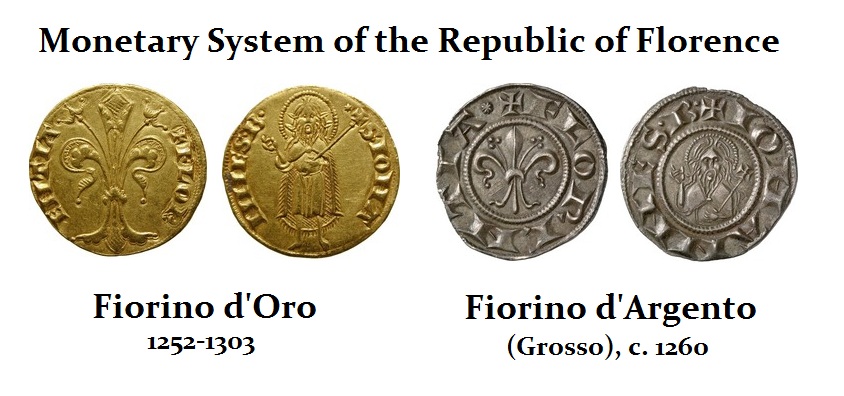
Florence

The only way to create a neutral, NON-POLITICAL world currency would be one where international transactions are carried out in gold – BUT on a FLOATING RATE – not fixed. During the 14th century, even Florence had a two-tier system where gold was used for international transactions and silver for domestic transactions. The more practical monetary system would be for each country to maintain its own currency for domestic use, and the international settlements would be in NON-POLITICAL gold.

This is the problem with the Euro. They eliminated the currencies to end the fluctuations between the member states. Still, the refusal to consolidate the debts meant that the volatility that once existed in the currencies was merely shifted to the bond market where each member’s debt trades according to their credit rating, as is the case among the 50 states in the USA.
US Provokes China – Russia’s Alliance with China Grow Stronger


Armstrong Economicsa Blog/War Re-Posted Oct 20, 2023 by Martin Armstrong

China has attempted to remain neutral but the Neocons won’t allow that to happen. China is enjoying its recent economic boom and building strategic partnerships through trade and international relations. China has grown to become a global power and will become the next financial capital of the world when all is said and done. Never in my wildest dreams did I ever expect personally that the West would be the aggressor. Now I can see Neocons, who I even personally have known, are really in control of the Biden Administration. The Pentagon released the video above, with CBS News claiming Chinese fighter jets were harassing US planes in international airspace.

Were the planes flying by the coast of California or Hawaii? No. US warplanes were flying near the Taiwan Strait once again. China has repeatedly warned America not to interfere in its One China policy with Taiwan. The media spins the situation as if the government actually cares about the people of Taiwan. The truth of the matter is that the Neocons want to play war games with our tax dollars and do not like China’s recent success or status as an economic powerhouse.

China will eventually be pushed to the brink and will have no alternative but to engage in war. The Pentagon said that US and Chinese fighter planes have come in close contact 180 times since 2021, surpassing the number of encounters of the past decade. China now has the ability to push back and knows the West’s resources are stretched thin.

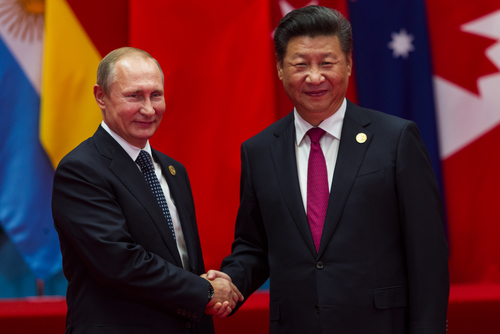
Putin visited Xi this week in Beijing where he was greeted as a guest of honor. Syria, Saudi Arabia, and Iran are heavily backed by Russia and China, among other Middle Eastern nations. The BRICS partnership has grown so strong that no one is dependent on Western energy, and eventually, no one will be dependent on Western trade or debt. They no longer need to use the currency of their adversary. China is attempting to remain neutral in both the Israel-Palestine and Russia-Ukraine wars, but Taiwan is where they draw the line.

As a Senator, Joe Biden scoffed at the idea of a China-Russia alliance in the event of NATO encroaching on Eastern Europe. Take a look at the video above from 1997 — yes, that was Joe Biden before his health declined to the point where he can hardly speak or step off a stage. Putin was Yeltsin’s deputy-in-chief at this time of this speech, and Bill Clinton was the president of the US. Baltic states were lining up to join NATO back then, which threatened Russia’s national security. Biden insisted that Russia would have no alternative but “to look West.” This was one of the original plans to infiltrate Russia and install a pro-Western leader.

“Yes, we see that some people consider it an attempt by the People’s Republic of China to put someone under its thumb, but we see otherwise. We just see a desire for cooperation,” Putin stated. Last year, China and Russia signed a “no limits” partnership in the wake of the war in Ukraine. They are teaming up against Western aggression, it is not the other way around. All of the players are aligning and preparing for the inevitable.

Sunday Talks, G20 Joint Agreement Doesn’t Condemn Russia, and Secretary Blinken Flinches: “Where lines are going to be drawn is going to be up to Ukrainians”…


Posted originally on the CTH on September 10, 2023 | Sundance 

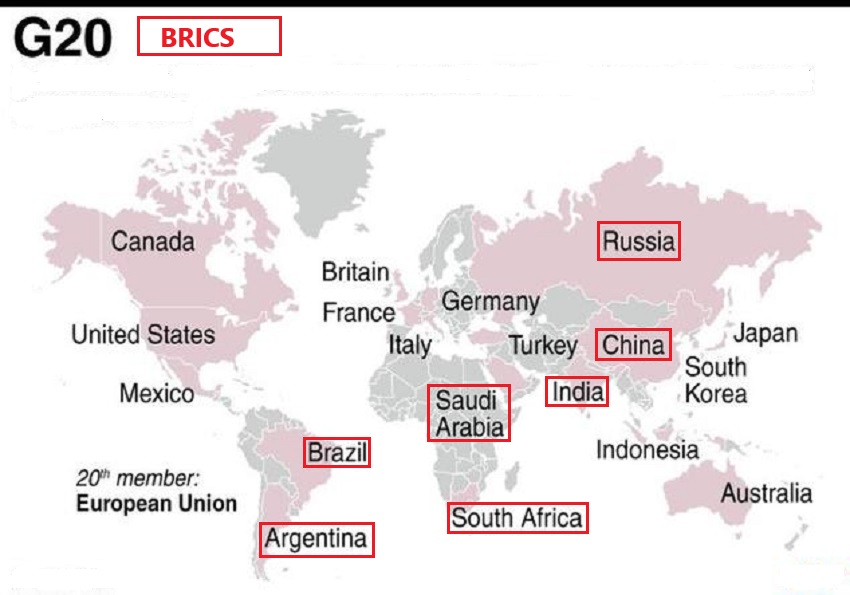
With the BRICS alliance expanding, seven members of the previously existing G20 trade group are now members of the BRICS group.  The influence of the G20 is diminishing and the BRICS group is gaining strength.  This is the context for the modern era geopolitical dynamic that is taking place.

The G20 is ideologically anchored by the U.S. and EU as part of the western alliance.  However, the BRICS group have started to cleave away from the “western worldview” specifically on the issue of energy development.  We have talked about this dynamic quite a bit.

As a result of the increased influence of the BRICS group, specifically as an outcome of the U.S, EU and Australian weakening as a result of fundamentally changing their energy use at the altar of climate change, the western alliance is losing economic strength, and the BRICS team are gaining strength.  The addition of Saudi Arabia to the BRICS team has boosted the BRICS control of traditional energy products.

The global shift in power is happening very fast as the climate change agenda is pushed by the U.S, EU and Canada.  Issues that impact the G20 are no longer unilaterally controlled by a singular worldview.  Now inside the G20 there are competing interests as a global realignment takes shape.

Within this dynamic, the attendees of the G20 summit were unable to construct a joint declaration that condemns Russia’s activity in Ukraine.  Instead, the group had to modify their language to get all of the G20 nations, including Russia, to agree to the statement.   China, India, Saudi Arabia, South Africa and Argentina are in alignment with the worldview of Russia.  Although the Russia allies dislike the hostilities, there is a general understanding that Russia was being threatened by the U.S. pushing NATO expansion.  Actions have consequences, and the leadership of the BRICS+ group align sympathetically with the justification that Russia presented.

Into this mix of disparate interests, the G20 summit in India was held, and for the first time the Western Alliance within the G20 seemed to recognize things had fundamentally changed.   This was the first time the G20 group was together since Russia, China, Saudi Arabia, South Africa and several other nations began talking to each other about a new economic landscape built on the global energy cleaving.

This also represented the first time Joe Biden and Secretary of State Anthony Blinken were able to gauge how much American influence has been changed.  The reality is starting to hit, and the reality is that America is losing power globally – yet retaining power amid a much smaller network of ideologically aligned western nations.

Using the Ukraine and Russia conflict as an example for what this new reality looks like, for the first time today US Secretary of State Anthony Blinken alluded in his remarks to ABC News that new borders were likely to be drawn in Ukraine, if/when discussions and negotiations begin between Vladimir Putin and Volodymyr Zelensky.

WATCH the moment at 3:36, …”where exactly this [conflict] settles, where lines are going to be drawn, that is going to be up to Ukrainians.”

THAT, is a major shift in the position of the Biden administration.

Neil Oliver Contemplates Western Leaders Squeezing Jello in a Closed Fist, While BRICS Leaders Smile


Posted originally on the CTH on August 26, 2023 | Sundance 

Comrade rebels, for his weekly monologue UK pundit Neil Oliver reviews the ever-controlling, increasingly totalitarian, western political landscape, and then gives his perspective on how the BRICS formation seems to be benefiting from it.  It is an interesting contrast worth review.  WATCH:

.

BRICS Economic Bloc Expands Adding Iran, Argentina, UAE, Saudi Arabia, Egypt and Ethiopia During Summit


Posted originally on the CTH on August 24, 2023 | Sundance 

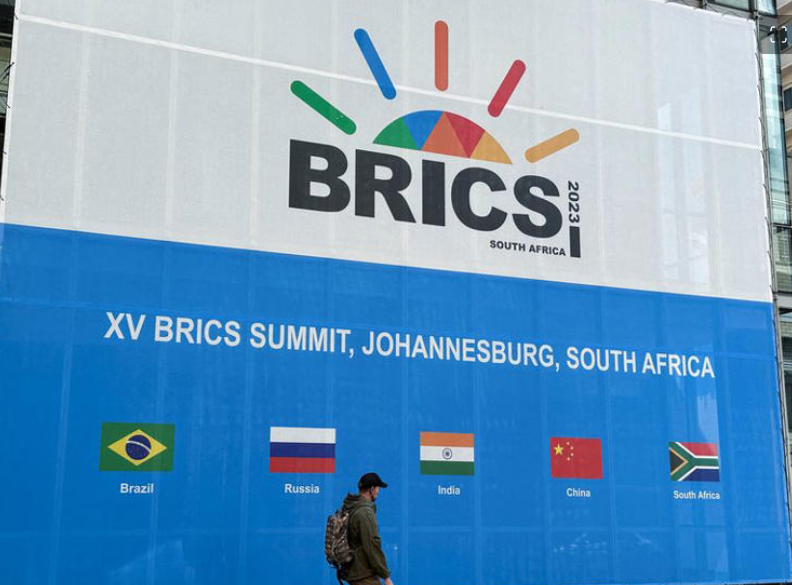
The original BRICS economic alliance between Brazil, Russia, India, China and South Africa has expanded today.  During the summit held in South Africa, the group which is home to about 40% of the world’s population and a quarter of global gross domestic product, voted to accept the applications of Iran, Argentina, Saudi Arabia, United Arab Emirates, Egypt and Ethiopia.

What we see forming now is further evidence of the great energy cleaving.  As most western nations chase the World Economic Forum’s priority around ‘climate change’, the BRICS alliance hedges for more traditional energy sources (oil, natural gas, coal).  China will benefit the most as the Western industrial economies will not be able to compete in a global market using windmills and solar panels.

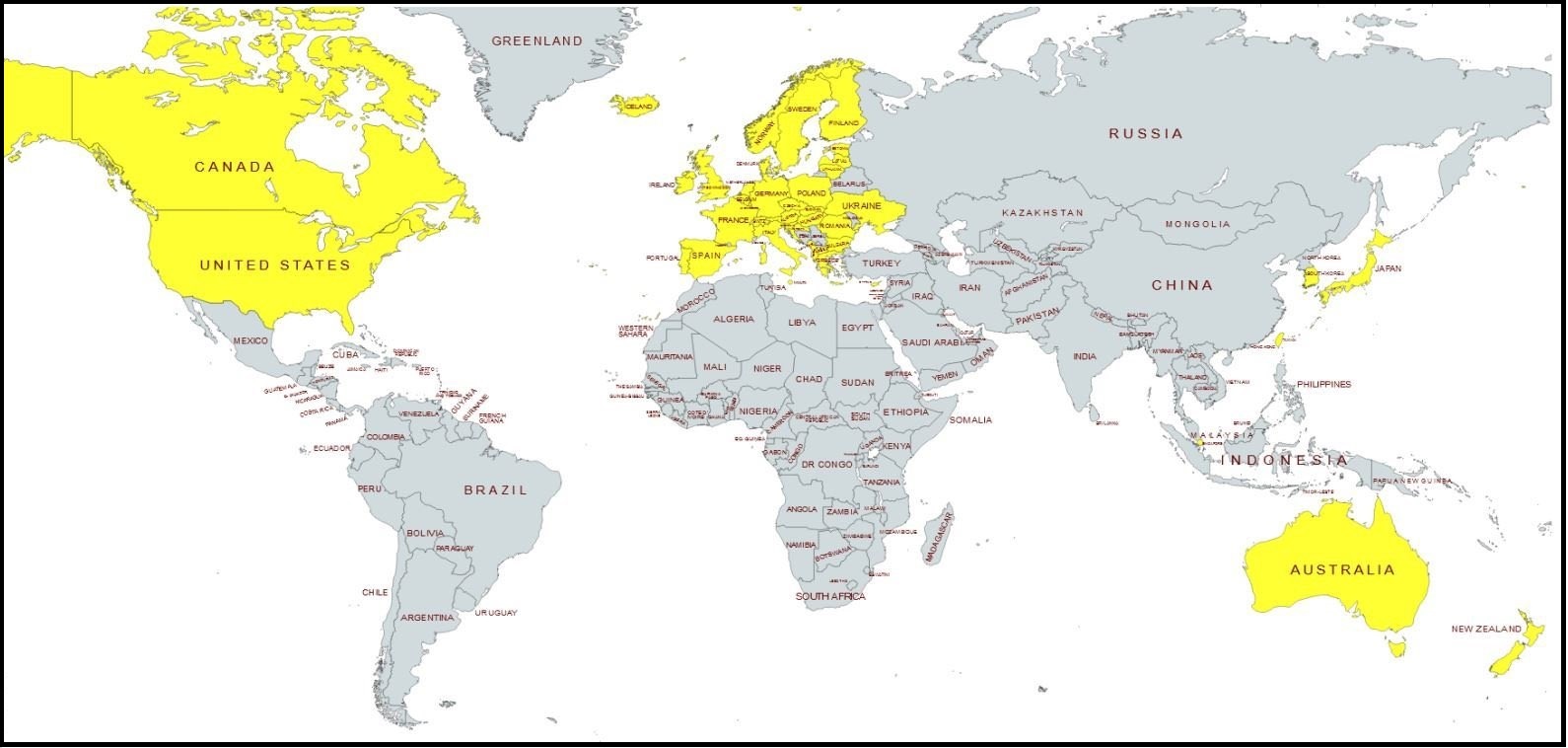
The western alliance (yellow) will be chasing climate change energy policy to power their economies.  The rest of the world (grey) will be using traditional and more efficient energy development.  The global cleaving around energy use would be complete.

This is not some grand conspiracy, ‘out there‘ deep geopolitical possibility, or foreboding likelihood as an outcome of short-sighted western emotion.  No, this is just a predictable outcome from western created events that pushed specific countries to a natural conclusion based on their best interests.

(New York Times) […] On Thursday, the bloc revealed its decision, adding six new countries, including the staunchly anti-Western Iran, in an apparent victory for Beijing.

The inclusion of Tehran tilts the bloc more in opposition to China’s chief rival, the United States, and signals that Chinese pressure largely outweighed the qualms of India and Brazil, which want to maintain friendly ties with the West.

“Iran, obviously, is a complicated choice,” said Cobus van Staden, a researcher with the China Global South Project. “I can imagine that some of the other members worry that it might increase geopolitical tensions with Western powers, which I think it kind of inevitably would.”

The addition of Argentina, Egypt, Ethiopia, the United Arab Emirates and Saudi Arabia gives the group more financial heft. It also bolsters Beijing’s bid to demonstrate to the world that it has growing support for its agenda despite having alienated many countries in the developed world over its ties to Russia.

“This membership expansion is historic,” China’s top leader, Xi Jinping, said on Thursday at the end of the meeting. “It shows the determination of BRICS countries for unity and cooperation for the broader developing world.”

China did not get everything it wanted, however. It had pushed for Indonesia to be invited to the group. The reason for Indonesia’s omission was not immediately clear.

Still, the appearance of a success for China may turn out to be the most significant takeaway from the summit, which failed to deliver on the long-stated goal of establishing a BRICS currency to rival the hegemony of the U.S. dollar. The group instead encouraged members to use local currencies in trade. (read more)

The currency issue is likely to be a more complex undertaking as it does not make sense to establish trade in an alternative currency until the arrival of the Central Bank Digital Currencies.   The most likely path for global energy trade will be in the form of a digital currency exchange amid the BRICS+ group.

More than 40 additional countries have expressed interest in joining BRICS, say South African officials, and 22 have formally asked to be admitted.

Everything inside this dynamic appears structurally centered on the full cleaving of the energy sector into two bipolar worlds. One economic system focused on green energy policy, the other economic system working via traditional energy development.

Western Sanctions Not Impacting Russian Economy as Much as Expected


Posted originally on the CTH on August 9, 2023 | Sundance 

I have been researching the MACRO economic dynamic in Russia quite deeply for the past six months.  Essentially looking to discover not only what impact the western imposed sanctions might be having, but more broadly looking to see what happens to self-sustainability when essentially locked out from the world of commercial imports.

The research is fascinating, not simply because it is a unique opportunity, but also because national economic issues play a big role in the overall social dynamic.  That said, I can say the social aspect is stunningly more interesting than the data driven outcomes.  When you really dig deep into actual life of the ordinary people in Russia, far away from the geopolitical contexts, you get an entirely different perspective.  My worldview of the average Russian person/family has completely changed.

There is a really good thread on how the western sanctions against Russia are having a much lesser impact than initially thought [SEE HERE].  On the economic side, one thing I would point to is how the economy is essentially an outcome of two facets: (1) the internal production strength, and (2) the service side of the ledger.

[READ HERE]

The author makes the accurate point that from a production side perspective, Russia actually has a larger economy now than Germany, the largest EU nation.  The cause for this is “autarchy” or self-sufficiency.  Indeed, as the timeline of the sanctions closes in on the second year completing, the Russian production economy is even stronger than when the sanctions began.  Quite simply, they are making even more of their own goods now.

The sanctions hit what would typically fall into the service side of the economy, as well as financial and economic roadblocks.  However, that aspect of the Russian economy was much smaller than most suspected and there were sanctions going back to 2014 which made the outcome of the 2022 western imposed restrictions less impactful.

I will be finishing my review of the economic data once Q3 is over, that will give me an entire year of data to share.  However, the social stuff is even more fascinating.

I have a new understanding of why former NSA contractor Edward Snowden was so comfortable using Russia as the place to hide after his release of classified intelligence showing how the U.S. government was spying on Americans via social media and metadata collection.

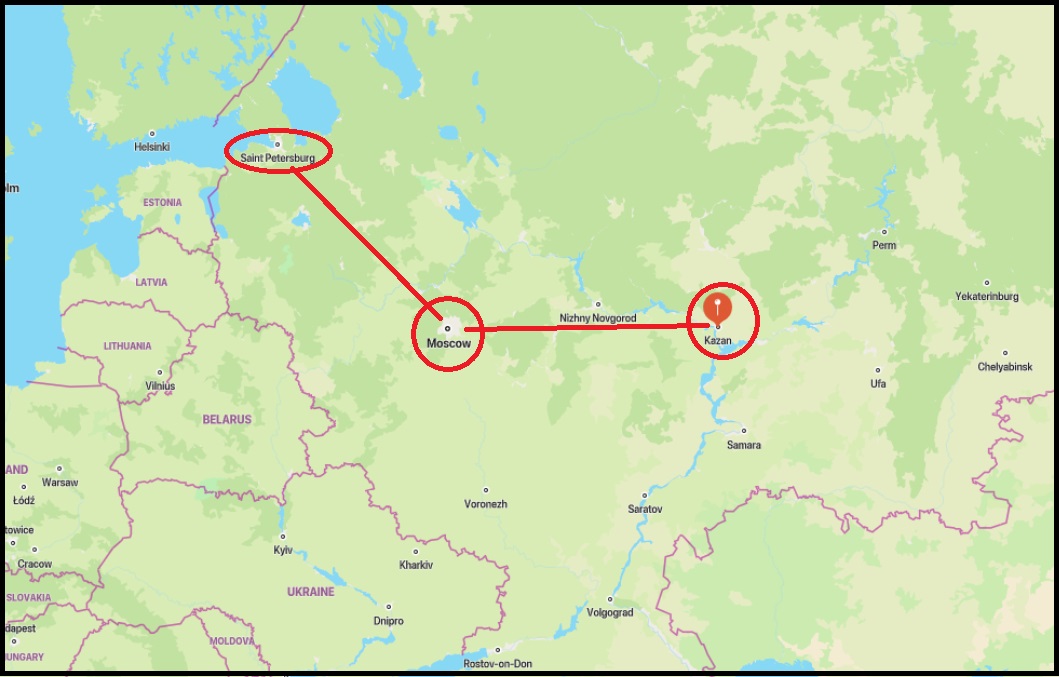
I have mostly been looking at three areas in Western Russia.  Kazan, Moscow and St Petersburg (formerly Leningrad).  Of the three generally large metropolitan areas, St Petersburg is by far the most interesting.  It’s beautiful there and the city is alive and vibrant.

In many ways you might compare Russia in 2023 to the USA in/around 1988.  Life is just not complicated and far more socially engaged.

I’ll have more on this later, but if you are ever bored check out the Russian YouTubers who livestream broadcast “a day-in-the-life” type of activity.  The infrastructure is in generally good repair, the people seem warm and friendly and there is a strong social value placed on family and kids.

There are certainly negatives and the cultural dynamic of the former USSR is still evident.  Technologically they are somewhat behind in some details, but the overall cohesion of their value system is something I did not fully appreciate until I started down this road of research.

I can see why the average Russian could be wide-eyed during a visit to the USA and fascinated with the overall quality of life that might be considered indulgent.  However, I can also see how reciprocally the average American could be wide-eyed and smiling at the overall sense of the Russian people.

Strip out the politics, and we are all much more similar than we are different.

The Russia-Africa Summit


Armstrong Economics Blog/World Trade Re-Posted Aug 2, 2023 by Martin Armstrong

Putin invited numerous African leaders to St. Petersburg, where they discussed strengthening their alliance. The Russia-Africa summit gave Moscow a platform to show that it has not been isolated by all its allies. The biggest bargaining chip on the table was reimplementing of the grain deal. The UN has all but promised food shortages and famine in Africa caused by the war. Putin has now promised to begin shipping 25,000 to 50,000 tons of grain, free of charge, over the next three or four months.

Only 17 of 54 African leaders attended the conference, compared to the 43 who attended in 2019. The West is touting this as a win, but Moscow said many are afraid to enter the conflict. African nations simply want their people to prosper. Despite having valuable national resources, the continent is deeply indebted to the world. Russia agreed to cancel $23 billion in debt to African nations and hinted that their allies (i.e., India and China) may also offer aid.

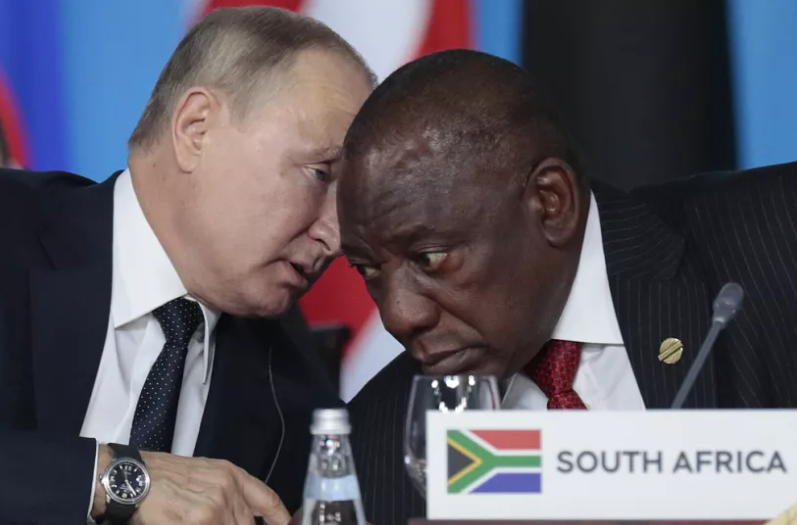
South African President Cyril Ramaphosa said, “We are not here to plead for donations for the African continent.” Instead, they are looking to become a respected trading partner. President of Chad Mahamat called out Russia for failing to improve trade. “Putin vowed to double Russia’s trade with the continent within five years. Instead, it has stalled at around $18 billion a year,” he stated. African nations want a seat at the table, shedding its colonist past that still indebts their people.

Putin has promised that the grain harvest will exceed expectations this year. African countries have a large bargaining chip here. The West provides Africa with more aid than Russia, but at what cost? Africa receives the vast majority of its grain directly from Russia and would certainly face food shortages without their help. Putin will need to offer African nations an opportunity to become a valued trading partner and get his other main global allies on board with the idea too.

BRICS & The Gold Backed Currency Idea


Armstrong Economics Blog/Gold Re-Posted Jul 12, 2023 by Martin Armstrong

QUESTION: Marty,

Will the Brics launching a gold backed currency be the catalist for bankrupting 3rd world economies? Or is it rising interest rates on their debt?

Tks for all the light u share in a confusing economic landscape.

Cbeers
.baldy

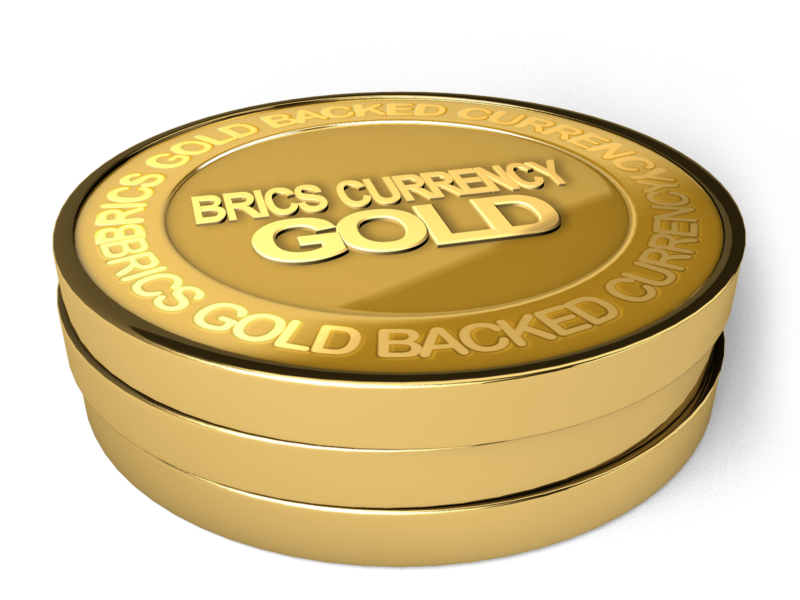
ANSWER: It is unlikely that we are looking at a BRICS single currency like the euro, for that would require a central monetary authority, surrender of sovereignty as in Brussels, end any possibility of QE, etc. We would need to completely collapse the idea of Keynesian Economics insofar as it has evolved, allowing deficit spending.

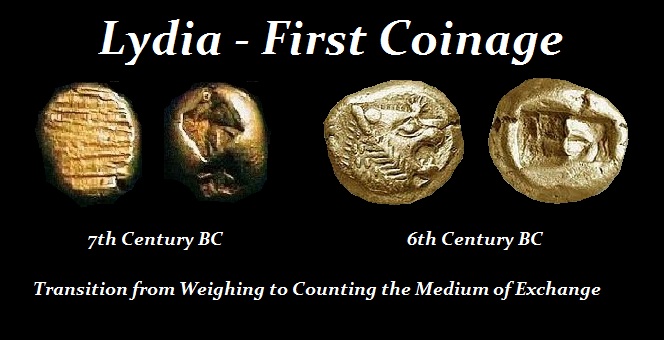
There is no special magic to gold. It was first restricted to only kings, for it was considered to be the tears from the sun god. As more gold was discovered, it began to be used for the jewelry of wealthy aristocrats. Then it became used as money in its natural form, known as electrum, a natural alloy of gold mixed with silver.

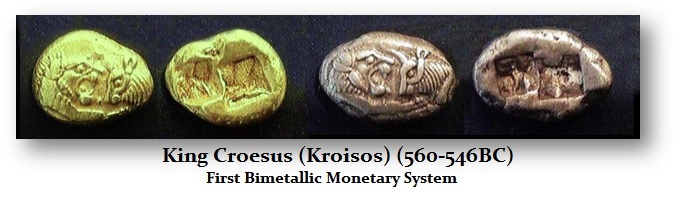
Then they refined the gold electrum and created the first bimetallic coinage around 560 BC. This required a sufficient supply of gold to create a money supply. As the quantity increased, the value of gold declined relative to both silver as well as commodities in general – inflation.

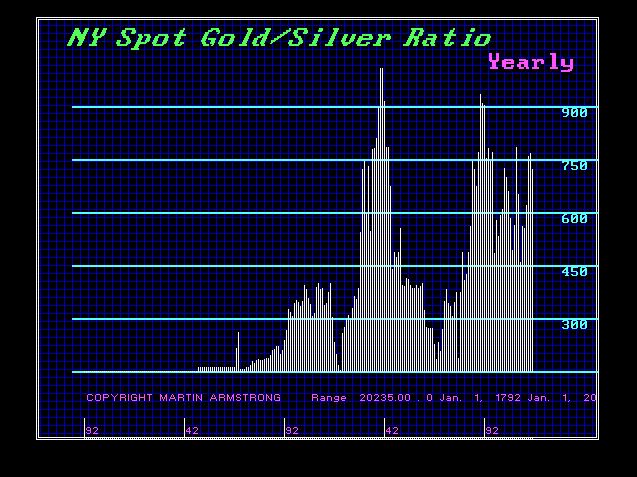
The real argument behind gold as a backing is that its quantity is limited. However, over the centuries, the silver/gold ratio has fluctuated anywhere from 8:1 to 120:1. From this perspective, the real objective here is to prevent the government from creating money at will. Thanks to Keynesian Economics, governments have the power to create money at will, allowing them to retain power and exert it in their endless wars thanks to the Neocons.

The real objective here with the issue of BRICS is that both Russian and China object to the dollar being the reserve currency in the middle of geopolitical tension. Yet the Biden Administration has undermined everything by removing Russia from SWIFT. That set in motion the collapse of globalization, and it has shown to the world that the US now controls the SWIFT system, which renders it no longer politically neutral.

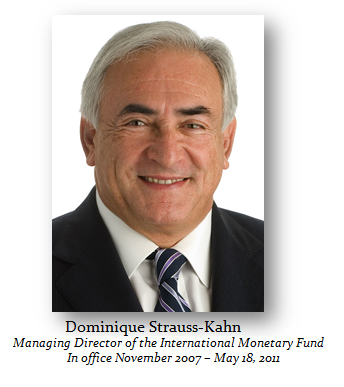
This is where the IMF is trying to desperately move in for the kill to replace the dollar with their electronic digital currency. This is really no better because the IMF will also play political games. Strauss-Kahn was appointed managing director of the IMF on September 28, 2007, with the backing of then–President of France Nicolas Sarkozy. He was set up, and in New York, they came up with a maid in a hotel who claimed he tried to rape her. They wanted to remove him became he was independent. He served in that capacity until he was forced to resign on May 18, 2011. All the charges were later dismissed for the lack of any credibility. Yet, his replacement was Obama’s friend Christine Legard, a board member of the economic terrorist organization, the World Economic Forum. She was installed in the IMF and immediately threatened all the tax havens to turn over all their secret accounts so they would be removed from SWIFT. She also threatened the Vatican.

We are clearly staring into the eyes of a major global sovereign debt default. This is also why they are pushing for war. They plan on holding another Bretton Woods II, and the IMF will make its pitch to rule the world. This is all part of the scheme for this one-world government.

The African Peace Plan is Doomed


Armstrong Economics Blog/War Re-Posted Jun 15, 2023 by Martin Armstrong

The neocons are the only ones thirsting for a world war. Putin has been pleading for peace or any form of conflict resolution. South Africa’s President Cyril Ramaphosa has been discussing a plan to broker peace between Russia and Ukraine and has called on China’s Xi Jinping for support. The details of the African Peace Plan have yet to be released, but it is backed by South Africa, Uganda, Egypt, Senegal, Zambia, and the Republic of Congo. South Africa is looking for China’s support before presenting the plan to Zelensky.

The war has only exacerbated the issues faced by African nations, as food and fuel prices have soared. “We have been talking about as African leaders because we concluded that that conflict in that part of the world, much as it does not affect Africa directly in the form of deaths and destruction to infrastructure, it does have an impact on the lives of many Africans with regard to food security, the prices of fertilizers have gone up, the prices of cereals have gone up and the prices of fuel,” Ramaphosa said.

South Africa is extremely concerned that the war will affect the BRICS alliance, as is China. No one outside of the neocons of the West wants to enter a global conflict. Other nations have been focusing on economic growth and repairing their economies from the disastrously orchestrated pandemic.

President Xi Jinping commended the initiative by the African continent and acknowledged the impact the conflict has had on human lives and on food security in Africa,” the presidency statement said. The stage has been set with the players on each team now aligning. The nations that do not align with the West are offering Ukraine a last chance to side with them and end this chaos once and for all. The problem is that Zelensky is a puppet of the neocons and has no intention of ending this war, which he is personally profiting on. Russia has also come too far to back down. Is Russia expected to retreat, abandon the territories they deem Russian, and pay billions in reparations to all of the nations who funneled money to Ukraine? It will never happen.

Iran and Saudi Arabia – Mutual Friends


Armstrong Economics Blog/World Trade Re-Posted Jun 7, 2023 by Martin Armstrong

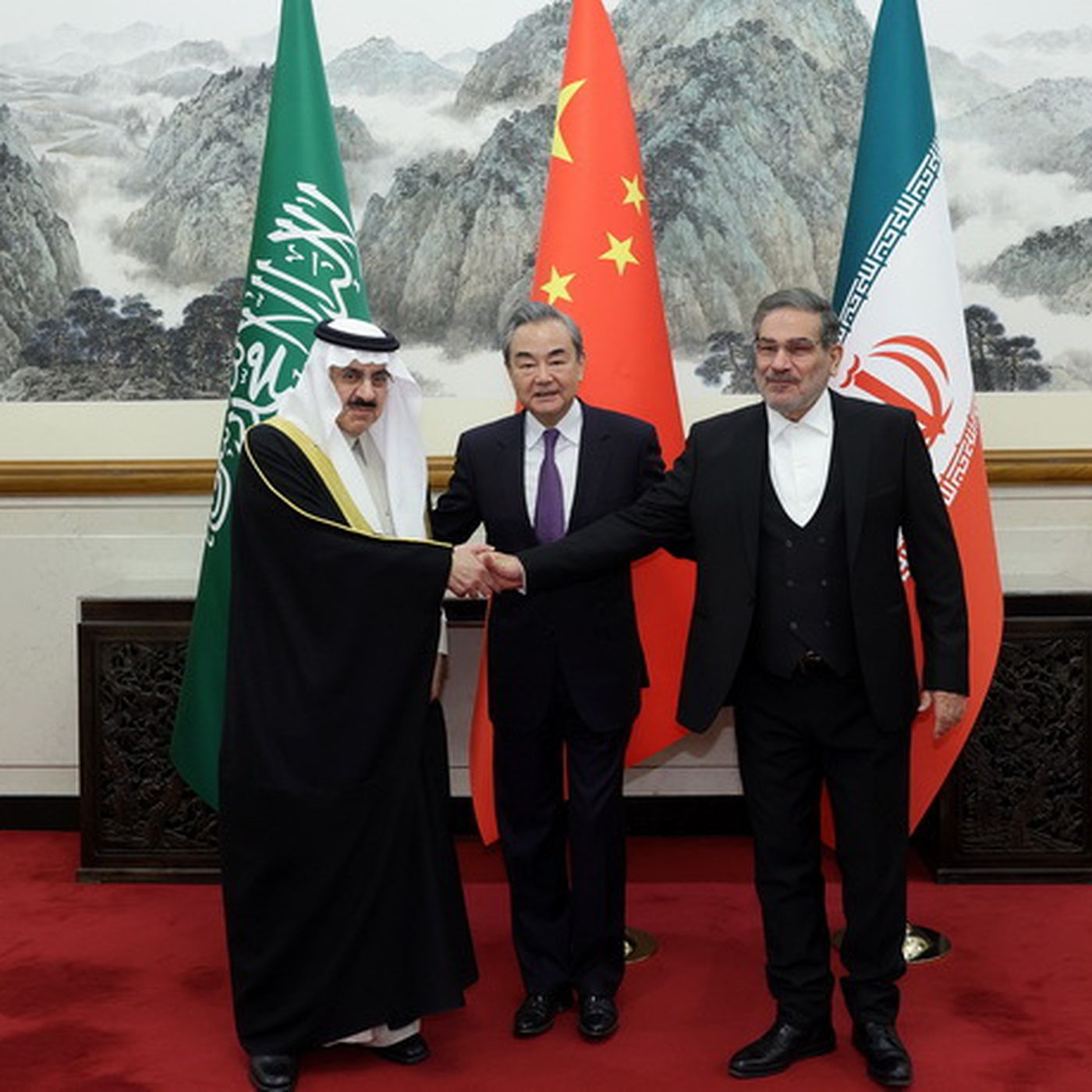
Iran and Saudi Arabia are now mutual friends through China. The two countries had been sworn enemies since the beginning of time, representing conflicting Shiite and Sunni Muslim groups that have been battling since their religion was founded. They were murdering one another through a proxy war in Yemen that has left over 150,000 dead. Then the unthinkable happened – the two nations came together at the request of China and made amends.

Chinese President Xi Jinping made them an offer they couldn’t refuse – the potential to form a strong alliance through trade without Western influence. Saudi Arabia issued a shocking press release in March, given the deep hatred it had for Iran. Saudi Arabia stated it was keen on “developing good neighborly relations…in light of their brotherly ties.”

Now, Iran announced it is reopening its embassy in Saudi Arabia as the two continue to put their differences aside for the prospect of economic prosperity. The embassy closed abruptly in 2016 after Saudi Arabia executed a Shiite cleric, leading to mass protests outside the embassy in Tehran. Riyadh and Tehran have not had diplomatic relations since.

Iran and Saudi Arabia would like to join the BRICS alliance between Brazil, Russia, India, China, and South Africa. If the two nations join, all major energy exporters will be within this alliance. BRICS currently contains 42% of the global population and over a quarter of the global economy. There would be absolutely no need for Western interference, and the threat of sanctions would hold little meaning. Saudi Arabia has already begun settling some oil transactions in the yuan instead of the dollar. Iran has been aggressively trading with the bloc; non-oil trade between BRICS and Iran reached $38.43 billion in the 2022-2023 fiscal year, marking a 14% year-on-year increase. China is Iran’s top trading partner in the BRICs alliance, with $30.32 billion of the aforementioned funds going directly to Beijing. An alliance could mean economic domination.

China seems to have done the unthinkable by brokering a peace treaty between the two nations. Opening an embassy signals that the countries are now ready to begin diplomatic relations once again. The BRICS alliance is growing stronger by the day, and there are rumors of the UAE, Egypt, Algeria, Bahrain, and even Turkey requesting to join. As our models have been warning, China is posturing itself to claim the throne of the financial capital of the world by 2032.