Posted originally on the conservative tree house on May 12, 2022 | Sundance
The entire premise of the J6 committee is a farce. The overwhelming majority of Americans fully understand it is a political exercise between Democrats in congress and their hired Lawfare allies. The goal is to label their political opposition as extremists, block and/or tarnish President Trump and manufacture a false premise to advance the Democrat 2022 election goals.
Despite this reality the effort continues in order to fuel their far-left base and media allies.
Today, the House committee triggered subpoenas against House republican members. The subpoenas were sent to House Minority Leader Kevin McCarthy (U-DC), Rep. Jim Jordan (R-Ohio), Rep. Scott Perry (R-Pa.), Rep Andy Biggs (R-Ariz.) and Mo Brooks (R-Ala.). All five of the house members had previously rejected investigators’ requests for voluntarily testimony.
The subpoena authority is likely, hopefully, to be challenged in court. The premise of a House committee issuing subpoena’s to the political opposition of the same House membership appears to violate the function of government on many levels.
WASHINGTON DC – […] The Republican leader indicated he might not comply with the subpoena.
“My view on the committee has not changed,” said McCarthy, who added he had not yet seen the subpoena. “They’re not conducting a legitimate investigation. It seems as though they just want to go after their political opponents.”
The select committee demanded testimony from the five lawmakers in the final week of May.
Members of the select panel have wrestled for months with the question of how to handle their GOP colleagues. The Capitol riot committee’s chair, Rep. Bennie Thompson (D-Miss.), had previously doubted the wisdom of that subpoenaing lawmakers, as that would likely trigger a lengthy court fight unlikely to be resolved before in the current Congress.
But the select panel’s thinking appears to have changed, as every avenue of the probe led investigators toward fellow House members.
Some of the subpoena targets — and several other GOP lawmakers — were regularly in contact with Trump and the White House in the weeks leading up to Jan. 6. They helped amplify false claims about the integrity of the 2020 election and were among the earliest to call on colleagues to challenge the results.
But members were mindful that demanding testimony from lawmakers would potentially set a precedent. While House and Senate ethics committees have subpoenaed members and staff before, there’s little precedent for an investigative committee — particularly one mainly guided by the majority party — turning its subpoena powers on fellow members of the House. (read more)
The committee is desperate to find something, anything, that can justify all of the time and expense they have been consuming in the effort. The clock is running out fast and the pressure is building internally. As a target of their investigation, and as a recipient of one of these subpoenas’, I can assure readers of the ridiculousness of the people conducting the investigation fishing expedition. It is nonsense. All of it.
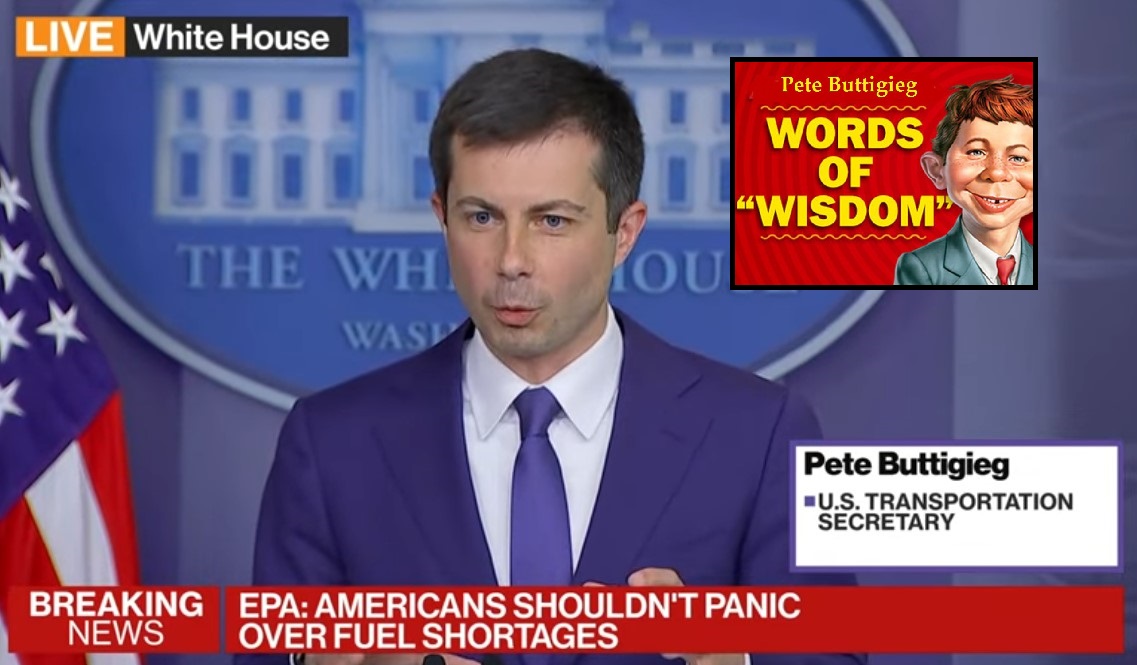
Take your pick of ultra-MAGA graphics, either one is appropriate…
Posted originally on the conservative house on May 12, 2022 | Sundance
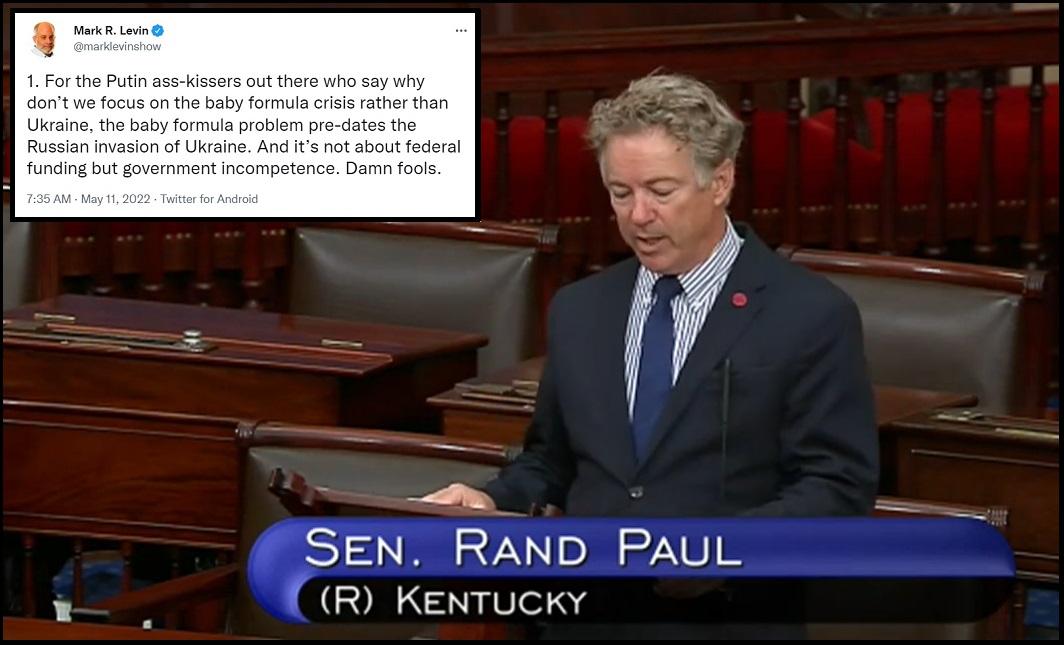
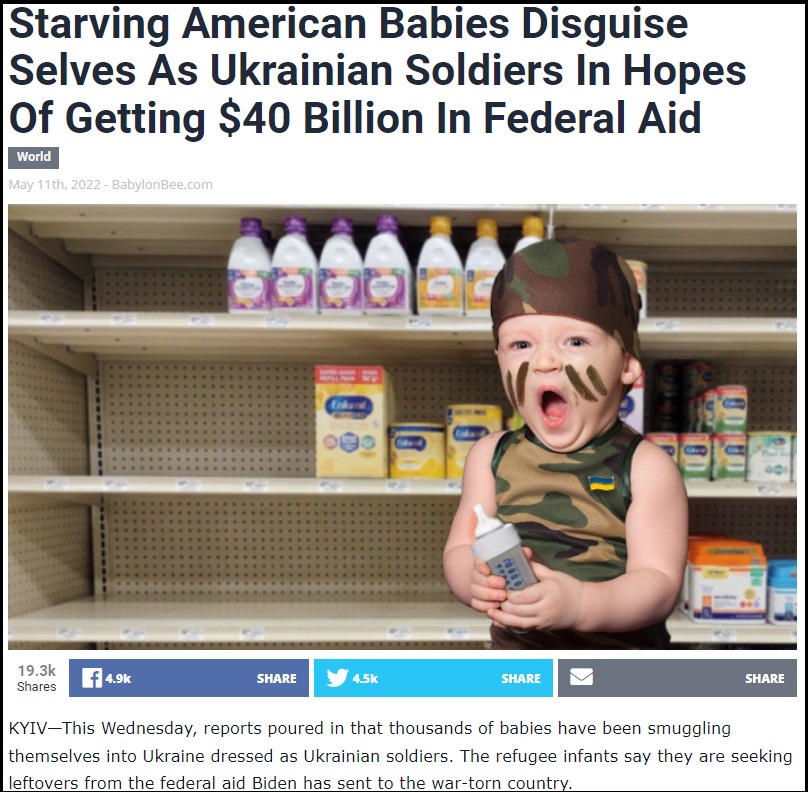
Senator Rand Paul has blocked a fast-track senate vote on the additional $40 billion funding package created by Joe Biden and House Democrats. Both Senate Majority Leader Chuck Schumer and Senate Minority Leader Mitch McConnell approved a fast-track vote; however, senator Rand Paul (KY) stood defiant against their effort.
Despite the high-profile pressure from the two Senate leaders, Rand Paul refused to move and that means the Senate will have to take procedural steps to overcome his objection, which could take several days. “My oath of office is the US constitution not to any foreign nation and no matter how sympathetic the cause, my oath of office is to the national security of the United States of America,” Paul said in his remarks before objecting to moving to swift passage of the bill. “We cannot save Ukraine by dooming the US economy.” WATCH:
The $40 billion supplemental spending bill for Ukraine is more than the total military budget of Russia. The combined Ukraine aid packages now exceed $60 billion, more than the entire budget for the U.S. Dept of Homeland Security including border protection.
Rand Paul is on the right side of history with his position, and the overwhelming majority of Americans agree with him. However, the opinion of the people is irrelevant to the Senate. Even democrat Senator Chuck Schumer seemed to admit this point when he said Rand Paul’s position “was not the opinion of the overwhelming majority here,” meaning in the senate. Schumer would have used other terms if he thought the American people agreed with him. They don’t, and he knows it.
Posted originally on the conservative tree house on May 12, 2022 | Sundance
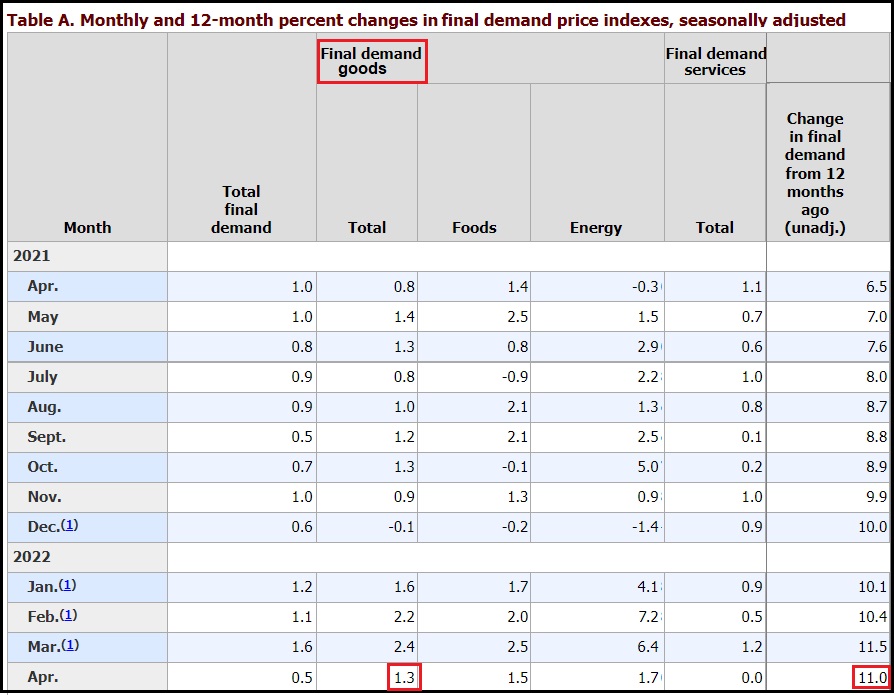
The “Producer Price Index” (PPI) is essentially the tracking of wholesale prices at three stages: Origination (commodity), Intermediate (processing), and then Final (to wholesale). Today, the Bureau of Labor and Statistics (BLS) released April price data [Available Here] showing another 11.0% increase year-over-year in Final Demand products at the wholesale level.
Last month when looking at internal economic activity that showed a contraction in consumer purchases of goods, we said pay attention to the service side of the ledger now. Knowing people have stopped buying ‘stuff’, if people are starting to run out of money, they will cut back in the service sector (dining out, etc).
While the PPI focuses on prices, the PPI data for April shows exactly that service side contraction now taking place. Wholesale inflation in goods is determined heavily by higher costs for raw materials and processing. However, the rate of inflation within the service sector is more connected to what consumers can afford. Modified Table-A, look at the April difference between goods (1.3%) and services (0.0%):
[Ex. The lawn company might pay 50% more for oil and gasoline (goods side), but they may not be able to increase the rate they charge you by 50% to mow the grass (service side).]
The major current production inflation in both goods and services is directly connected to the cost of energy. Energy prices are embedded in every sector of the economy. For “goods” higher electricity, heating/cooling and petroleum costs (packaging, materials, transportation, etc) are unavoidable and passed on to consumers. For “services,” individuals and companies raise their prices to compensate for increases in their own costs. It is a cumulative inflation snowball.
In April the Total PPI of 0.5% was influenced by downward price pressure from the service side. The price of final demand (wholesale) goods increased 1.3%. The price of final demand (wholesale) services was 0.0%. [Note: Wholesale trade services dropped by 0.5%]
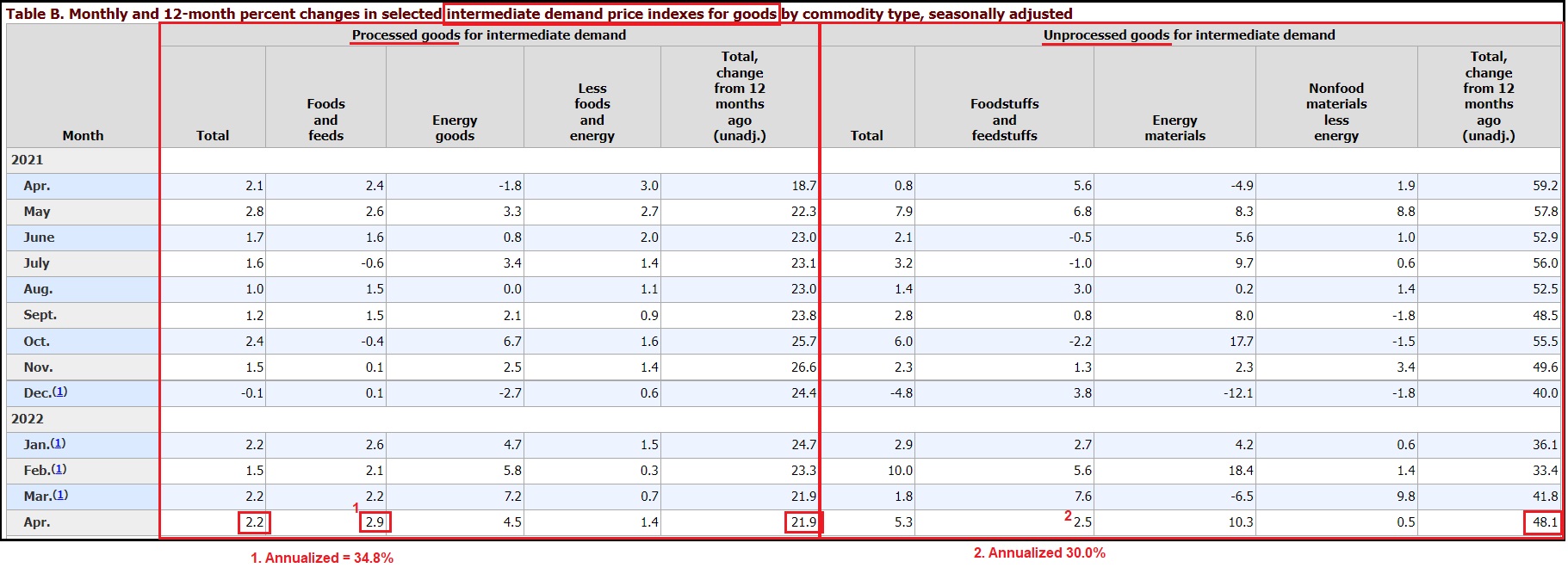
Normally I would clean up TABLE-A “intermediate demand goods both processed and unprocessed.” However, in this month the entire field of data tells a very compelling story.
Note that Intermediate Demand Processed foodstuff prices grew at 2.9% in April. Annualized that is a 34.8% increase in price. This is the scale of future price increases we are likely to see at the supermarket. That 35% rate of inflation for center store products is exactly what CTH predicted for the third wave of price increases.
The Intermediate Demand Unprocessed foodstuffs, increased in price by 2.5% in April, those foodstuffs are entering the wholesale market at a 30.0% annualized rate of inflation vs last year.
As an analogy, think of the difference between processed foodstuffs (center store and dairy) and unprocessed foodstuffs (fresh produce, meats) as you would normally think about them in the supermarket. As you can see the processed product rate of inflation (34.8%) is higher than the non-processed (30.0%). The difference is the additional costs associated with processing as a major result of energy prices.
What the producer price index at the wholesale level is telling us, is that inflation on consumable goods is still not yet at the apex. For durable goods the prices are less volatile, but price pressures are still in the upward direction. The price of gasoline and transportation overall will be a big factor in current prices of highly consumable goods. We cannot and will not start to climb out of the inflation spiral on goods until we see oil, gas and energy prices stabilize first.
On the service side, inflation is going to be determined by how long businesses and operators can continue operations without raising prices. How long can a restaurant pay 30-to-35% more for their supplies, before those price increases need to show up on the menu?
Joe Biden sucks.
(WASHINGTON) – […] The producer price data captures inflation at an earlier stage of production and can sometimes signal where consumer prices are headed. It also feeds into the Federal Reserve’s preferred measure of inflation, the personal consumption expenditures price index.
Thursday’s figures came just a day after the government released consumer price data for April, which showed that inflation leapt 8.3% last month from a year ago. That increase is down slightly from the four-decade high in March of 8.5%. On a monthly basis, inflation rose 0.3% in April from March, the smallest increase in eight months.
Still, there were plenty of signs in the consumer price report that inflation will remain stubbornly high, likely for the rest of this year and into 2023. Rents rose faster as many apartment buildings have lifted monthly payments for new tenants. Prices for airline tickets jumped by the most on records dating to 1963. And food prices continued to rise sharply.
The Federal Reserve has stepped up its fight against rampant price increases, lifting its benchmark short-term interest rate by a half-point last week to a range of 0.75% and 1%. That increase is double its usual quarter-point hike. (read more)
Posted originally on the conservative tree house on May 12, 2022 | Sundance
It has often been said that if you chase the global climate change ideology to its natural conclusion, we end up in communal groups sitting around a tepid campfire eating some form of sustainable algae cakes and picking parasites off each other… Prior to Joe Biden that prediction might have seemed like hyperbole. Now, not so much.
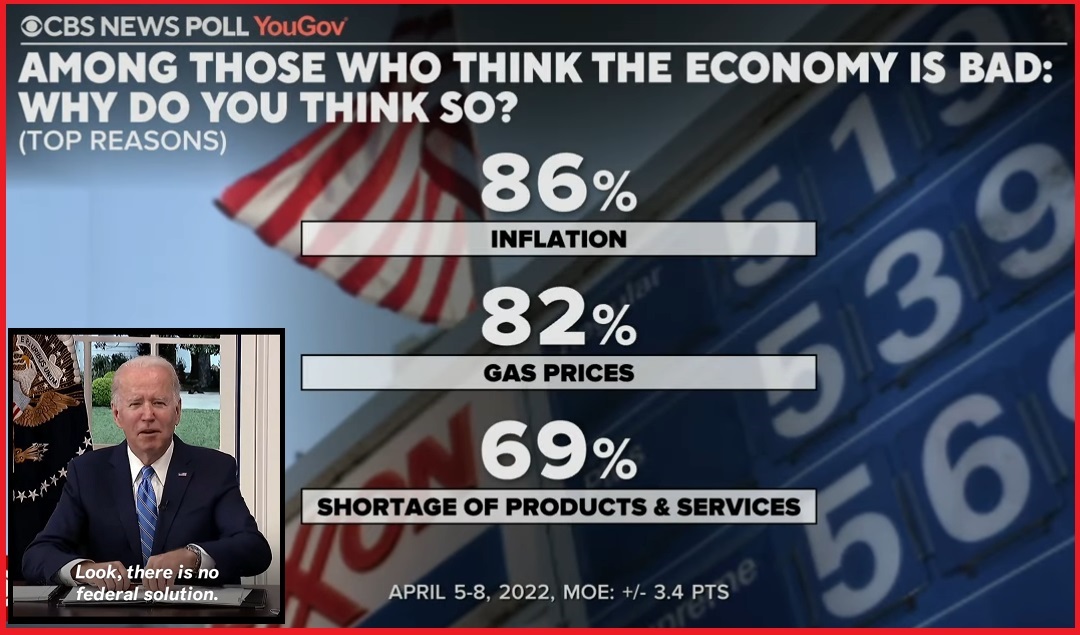
Indeed, the Green New Deal energy policy of Joe Biden creates massive downstream consequences. Unfortunately, the White House doesn’t seem to care. The high prices and scarcity of critical goods are a feature, not a flaw, as they chase their climate friendly Build Back Better agenda.
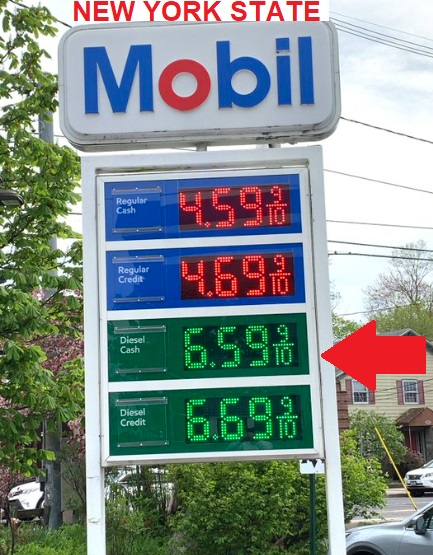
Following the continuum of intended consequence, now we have diesel fuel shortages beginning to hit the U.S. economy; and with scarcity comes higher prices of an almost astronomical scale. “The national average price of diesel is now $5.54 per gallon, which is an increase of 22 cents from last week, which was when the most recent record was set. Data shows there’s no state that’s currently seeing diesel prices below $5.12 per gallon.” (LINK)
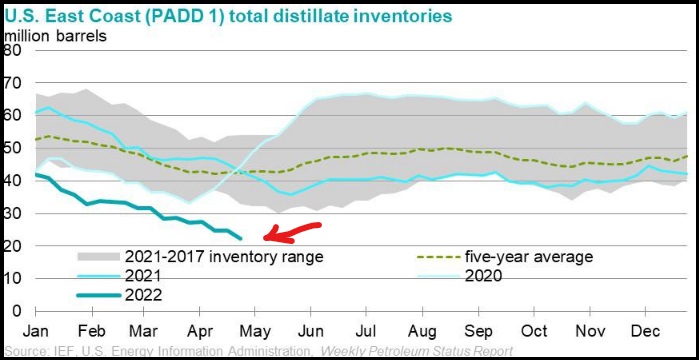
Making matters even worse is a drop in available inventory of diesel fuel which is about to become a crisis for the east coast of the U.S. Some Truck Stop operators like Love’s and Pilot are already warning their big rig customers they may not have fuel for truckers.
[…] “Love’s is monitoring the fluid situation on the East Coast, we have experienced minimal outages during low traffic hours,” Oklahoma-based Love’s Travel Stops said in an emailed statement. “The company has no plans to restrict purchases of diesel.”
[…] Earlier on Wednesday, the U.S. government’s Energy Information Administration said total inventories of distillates, which is mainly diesel fuel but also heating oil, fell last week to a 17-year low of 104 million barrels, which is 23% below normal.
On the East Coast, the situation is even worse. The EIA said distillate fuel oil inventories in the so-called PADD 1 district that covers the Northeastern states fell by 1.1 million barrels last week to just 21 million barrels, the lowest ever recorded in data going back to 1990.
Love’s truck stops, with some 550 locations across 41 states, also seemed to confirm reports on social media Wednesday that said Love’s and other truck stops such as Pilot were informing their fleet operators that shortages of diesel fuel on the East Coast may happen in the coming week at some stores. (read more)
Not only is the logistics of transportation contingent upon the use of diesel fuel for tractor trailer deliveries of essential goods, the other big users of diesel fuel are also farmers.
If it wasn’t challenging enough to triple the price farmers are paying for fertilizer this year, now the costs to operate the equipment they depend on has just doubled with the increases in diesel fuel.
“Some farmers are now even reporting farm diesel prices are higher than on-road diesel, which is typically not the case. … Certain areas of the country have seen shortages already and we expect that to continue. Supplies at New York Harbor–a hub for diesel distribution–are at a 30-year low,” says Meyer. “As such, the East Coast of the U.S. has been hit especially hard, resulting in diesel prices above $6.00 per gallon in that area. (more)
ENERGY POLICY:
♦ West Coast ports that cannot handle container off-loads due to emission regulations.
♦ Nationwide fertilizer shortages and high prices.
♦ Massive increases in gasoline and diesel fuel costs.
♦ Limited shoreline refinery capacity due to federal regulations.
♦ Stunning increases in food costs at the grocery store.
… And what does the administration do against this backdrop?
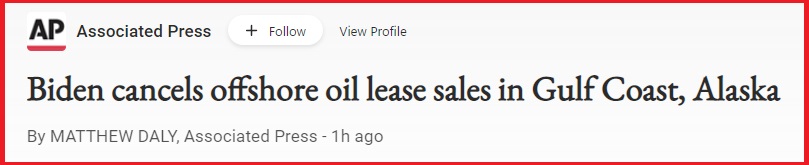
WASHINGTON (AP) — The Biden administration says it is canceling three oil and gas lease sales scheduled in the Gulf of Mexico and off the coast of Alaska, removing millions of acres from possible drilling as U.S. gas prices reach record highs.
The Interior Department announced the decision Wednesday night, citing a lack of industry interest in drilling off the Alaska coast and “conflicting court rulings” that have complicated drilling efforts in the Gulf of Mexico, where the bulk of U.S. offshore drilling takes place.
The decision likely means the Biden administration will not hold a lease sale for offshore drilling this year and comes as Interior appears set to let a mandatory five-year plan for offshore drilling expire next month.
[…] A federal appeals court in New Orleans, meanwhile, is considering a challenge to a moratorium on new federal leasing that Biden imposed soon after taking office in January 2021. Biden said the administration needed to consider the effect of new drilling on climate change and conduct proper environmental reviews.
Louisiana and 12 other states challenged Biden’s order, saying laws passed in response to the 1970s oil crisis require lease sales on federal lands and waters.
The Biden administration failed to “grapple with prior analyses” of the planned sales to give a valid reason for postponing or canceling them, Louisiana Deputy Solicitor General Joseph Scott St. John told a 5th U.S. Circuit Court of Appeals panel this week. The three-judge panel did not indicate when they will rule. (read more)
Airlines are playing Russian roulette with passengers’ lives after numerous pilots experienced heart attacks, which is believed to be a direct result of the vaccine mandate.
American Airlines Captain Robert Snow was flying an Airbus 231 carrying 200 passengers. An otherwise healthy Snow experienced a sudden heart attack six minutes after landing. Snow said he dreamed of teaching his daughter to fly one day but will likely never fly again.
TheUS Freedom Flyers are a group of volunteers within the transportation sector fighting to end vaccine mandates. They are warning the government that a tragedy could be on the horizon due to the FAA initially mandating vaccines under Biden’s guidance. The group would like all vaccinated pilots to receive medical clearance through EKGs and MRIs to rule out blood clotting issues. Once a pilot loses their FAA medical clearance, their career is over.
United Airlines even issued a“pilot incapacitation” manual and urged pilots and co-pilots to report incidents. As it stands, pilots are not permitted to fly for 48 hours after receiving the vaccine. However, the side effects could occur much later, and no one is seriously investigating why pilots are falling ill. “It’s as simple as standing up and saying NO! When we join together, we are an unstoppable force,” the US Freedom Flyers said.
TrialSite Staff by Staff at TrialSite | Quality Journalism May. 10, 2022, 9:00 a.m.
After 16 months of major COVID-19 immunization initiatives worldwide, government appetite for COVID-19 vaccine products appears to morph into a more focused, market-based, targeted booster series, a change that vaccine producers are now adjusting to accommodate. With a confluence of forces, from COVID-19 vaccine gluts to increasing numbers of producers to leeriness of waning effectiveness due to highly transmissible variants, the market drivers, heavily driven by government, give way to an unfolding new reality.
In the United States, like in many other nations, including those aligned with the World Health Organization (WHO), centered responses to COVID-19 emphasized production and distribution of a maximum number of vaccines with targets of achieving at least 70% vaccination. That effort, again coordinated to some degree by groups such as WHO, led to the inoculation of about 4.68 billion people (according to Our World in Data) worldwide, or neatly 60% of humanity, representing an unprecedented pandemic response.
Vaccine producers such as Pfizer, Moderna, Johnson and Johnson (Janssen), AstraZeneca, and others understand that unless there are continued government mandates effectively priming the pump of demand, those individuals with a preference for COVID-19 immunization have already gone ahead with the procedure.
What’s left is a market for boosters and what could become some sort of annual shot available for targeted populations. Of course, in some markets, young children are still a target for COVID-19 vaccines. Regardless, companies now operate in a quite different environment now, than they did in the period of late 2020 through 2021: a period driven by massive government spending, heavy industry influence on the regulatory process, risk-sharing, and the like to a more traditional competitive marketplace.
The Last Market: Young Children
While the children’s markets in places like America are still relevant, awaiting approval, what’s becoming apparent will be the emphasis on booster shots. In the world’s most lucrative drug market, America, Pfizer, and Moderna will more than likely persist as market leaders vying for the parental demands of children as public health agencies such as the CDC continue to emphasize that the risk-benefit analysis of the COVID-19 vaccine favor by a long-shot vaccination. The point of view is that there are no risk-free choices and that it’s better to be safe than sorry with the very youngest members of society.
To date, the CDC recommends the Pfizer vaccine for both the 5-11 age and 12 to 17 cohort while not recommending Moderna. Under 4 is the last market segment the vaccine makers vie for, and if the FDA authorizes, then Pfizer would own that market. A potential battle emerges over this cohort (aged 4-11) as a growing movement concerned for the safety associated with the vaccines, especially the mRNA-based products, gains momentum to question the mass vaccination on this young population. Critics argue that the original premise for mandates and the like was to control community transmission. Given substantial waning vaccine effectiveness combined with mutating variants, critics suggest the risks of serious infection and death are too low, and the safety issues are higher than the government is letting on.
Demand for Vaccines Wane
But demand for vaccines is flat in much of the world. In America, there is little uptick in vaccination as the “fully vaccinated” defined as receiving the two jabs of either Pfizer-BioNTech, Moderna or one jab from Janssen equals 66.8% of the population while about 30.7% of the population opted for a booster dose.
Meanwhile, TrialSite, on several occasions, has chronicled a global glut of COVID-19 vaccines and therapeutics, especially in places like India, the world’s second-highest populated country. In places like Australia, where the death rate associated with COVID-19 has absolutely skyrocketed despite high immunization rates, the public health agencies and politicians continue to promote booster doses as the answer. TrialSite reported recently that Australian politicians in an election season essentially pretend that times are back to normal despite record numbers of cases, near-record hospitalizations, and double the deaths in the first months of 2022 than all of 2020 and 2021 combined.
Some Possible Explanations
Reuters’ Michael Erman and Manas Mishra write that vaccine producers such as Novavax and CureVac, the German mRNA-vaccine maker in partnership with GlaxoSmithKline, seek to target this booster market. Novavax still awaits FDA authorization despite the fact that much of the developed world, from Europe to Canada and Japan to the WHO, have authorized the use of the Novavax vaccine.
Meanwhile, the outlook for Janssen and AstraZeneca (Oxford) is that bright, report the Reuters journalists. According to Hartaj Singh, an analyst from Oppenheimer & Co., “It becomes a very competitive game with companies battling it out with pricing and for market share, even for vaccines that are considered to be the best, like Pfizer and Moderna.”
Interestingly, Pfizer’s CEO Albert Bourla went on the record in an interview recently that those adults that have opted to receive a COVID-19 vaccine are not likely to start accepting shots now in a recognition that the mega push for vaccine administration has come and gone.
Moderna has pegged the unfolding market as the annual shot market, targeting the following:
Adults 50 and above
People with comorbidities or other risks
High-risk occupations (e.g., healthcare, etc.)
According to the estimates of Stephane Bancel, Moderna’s CEO, this emerging annual shot market totals 1.7 billion, representing 21% of the global population. The mRNA-based vaccines are more expensive and cumbersome to distribute and store, hence a sizeable chunk of that estimated target may opt for other vaccines such as the two recently touted by vaccine insiders at WHO including a plant-based vaccine from Canada and one from China.
More than likely Western Europe and America will represent central markets for sales for Pfizer and Moderna who will move toward more competitive, targeted responsive strategies as large government pre-purchases are probably going to be far less. Moreover, TrialSite suggests what were cozy relationships between industry and government agencies will become less so as the various governments’ responses to the pandemic will be a hot topic, especially in democracies in current election cycles.
Key Question: A flu shot model or something else?
The Reuters writers posed an important question in the recent piece: will the likes of Pfizer and Moderna starting this fall market a tailored, redesigned vaccine targeted relevant variants of concern (e.g., Omicron, BA.2, etc.)?
Both Moderna and Pfizer executives are on the record that they are developing Omicron-targeted vaccines.
This becomes an important topic as even the mainstream media starts to become slightly critical of the pandemic response, including mRNA-based vaccine makers that never modified the vaccine product once. The vaccine authorized and approved in the United States was developed based on the original Wuhan variant of SARS-CoV-2 which didn’t seem to make it in circulation to America nor most of the world.
Revenues Decline (but still unprecedented)
2023 sales numbers, while still staggering as compared to historical precedent in the pharmaceutical industry, are nonetheless, on the decline. Reuters reports $17 billion projected for Pfizer-BioNTech (down nearly half from $34 billion) and $10 billion for Moderna as compared to $23 billion in 2022. Sales will continue to drop because enormous fortunes were generated in the winner-take-all pandemic market.
TrialSite suggests the COVID-19 pandemic response must be seriously evaluated due to levels of bias, political interference, and potentially corruption at an unprecedented level. Should the political conditions change in the United States for example, leading to serious inquiries, the pandemic winners may incur unexpected costs.
After 16 months of major COVID-19 immunization initiatives worldwide, government appetite for COVID-19 vaccine products appears to morph into a more focused, market-based, targeted booster series, a change that vaccine producers are now adjusting to accommodate. With a confluence of forces, from COVID-19 vaccine gluts to increasing numbers of producers to leeriness of waning effectiveness due to highly transmissible variants, the market drivers, heavily driven by government, give way to an unfolding new reality.
In the United States, like in many other nations, including those aligned with the World Health Organization (WHO), centered responses to COVID-19 emphasized production and distribution of a maximum number of vaccines with targets of achieving at least 70% vaccination. That effort, again coordinated to some degree by groups such as WHO, led to the inoculation of about 4.68 billion people (according to Our World in Data) worldwide, or neatly 60% of humanity, representing an unprecedented pandemic response. TrialSite Staff by Staff at TrialSite | Quality Journalism
May. 10, 2022, 9:00 a.m.
After 16 months of major COVID-19 immunization initiatives worldwide, government appetite for COVID-19 vaccine products appears to morph into a more focused, market-based, targeted booster series, a change that vaccine producers are now adjusting to accommodate. With a confluence of forces, from COVID-19 vaccine gluts to increasing numbers of producers to leeriness of waning effectiveness due to highly transmissible variants, the market drivers, heavily driven by government, give way to an unfolding new reality.
In the United States, like in many other nations, including those aligned with the World Health Organization (WHO), centered responses to COVID-19 emphasized production and distribution of a maximum number of vaccines with targets of achieving at least 70% vaccination. That effort, again coordinated to some degree by groups such as WHO, led to the inoculation of about 4.68 billion people (according to Our World in Data) worldwide, or neatly 60% of humanity, representing an unprecedented pandemic response.
Vaccine producers such as Pfizer, Moderna, Johnson and Johnson (Janssen), AstraZeneca, and others understand that unless there are continued government mandates effectively priming the pump of demand, those individuals with a preference for COVID-19 immunization have already gone ahead with the procedure.
What’s left is a market for boosters and what could become some sort of annual shot available for targeted populations. Of course, in some markets, young children are still a target for COVID-19 vaccines. Regardless, companies now operate in a quite different environment now, than they did in the period of late 2020 through 2021: a period driven by massive government spending, heavy industry influence on the regulatory process, risk-sharing, and the like to a more traditional competitive marketplace.
The Last Market: Young Children
While the children’s markets in places like America are still relevant, awaiting approval, what’s becoming apparent will be the emphasis on booster shots. In the world’s most lucrative drug market, America, Pfizer, and Moderna will more than likely persist as market leaders vying for the parental demands of children as public health agencies such as the CDC continue to emphasize that the risk-benefit analysis of the COVID-19 vaccine favor by a long-shot vaccination. The point of view is that there are no risk-free choices and that it’s better to be safe than sorry with the very youngest members of society.
To date, the CDC recommends the Pfizer vaccine for both the 5-11 age and 12 to 17 cohort while not recommending Moderna. Under 4 is the last market segment the vaccine makers vie for, and if the FDA authorizes, then Pfizer would own that market. A potential battle emerges over this cohort (aged 4-11) as a growing movement concerned for the safety associated with the vaccines, especially the mRNA-based products, gains momentum to question the mass vaccination on this young population. Critics argue that the original premise for mandates and the like was to control community transmission. Given substantial waning vaccine effectiveness combined with mutating variants, critics suggest the risks of serious infection and death are too low, and the safety issues are higher than the government is letting on.
Demand for Vaccines Wane
But demand for vaccines is flat in much of the world. In America, there is little uptick in vaccination as the “fully vaccinated” defined as receiving the two jabs of either Pfizer-BioNTech, Moderna or one jab from Janssen equals 66.8% of the population while about 30.7% of the population opted for a booster dose.
Meanwhile, TrialSite, on several occasions, has chronicled a global glut of COVID-19 vaccines and therapeutics, especially in places like India, the world’s second-highest populated country. In places like Australia, where the death rate associated with COVID-19 has absolutely skyrocketed despite high immunization rates, the public health agencies and politicians continue to promote booster doses as the answer. TrialSite reported recently that Australian politicians in an election season essentially pretend that times are back to normal despite record numbers of cases, near-record hospitalizations, and double the deaths in the first months of 2022 than all of 2020 and 2021 combined.
Some Possible Explanations
Reuters’ Michael Erman and Manas Mishra write that vaccine producers such as Novavax and CureVac, the German mRNA-vaccine maker in partnership with GlaxoSmithKline, seek to target this booster market. Novavax still awaits FDA authorization despite the fact that much of the developed world, from Europe to Canada and Japan to the WHO, have authorized the use of the Novavax vaccine.
Meanwhile, the outlook for Janssen and AstraZeneca (Oxford) is that bright, report the Reuters journalists. According to Hartaj Singh, an analyst from Oppenheimer & Co., “It becomes a very competitive game with companies battling it out with pricing and for market share, even for vaccines that are considered to be the best, like Pfizer and Moderna.”
Interestingly, Pfizer’s CEO Albert Bourla went on the record in an interview recently that those adults that have opted to receive a COVID-19 vaccine are not likely to start accepting shots now in a recognition that the mega push for vaccine administration has come and gone.
Moderna has pegged the unfolding market as the annual shot market, targeting the following:
Adults 50 and above
People with comorbidities or other risks
High-risk occupations (e.g., healthcare, etc.)
According to the estimates of Stephane Bancel, Moderna’s CEO, this emerging annual shot market totals 1.7 billion, representing 21% of the global population. The mRNA-based vaccines are more expensive and cumbersome to distribute and store, hence a sizeable chunk of that estimated target may opt for other vaccines such as the two recently touted by vaccine insiders at WHO including a plant-based vaccine from Canada and one from China.
More than likely Western Europe and America will represent central markets for sales for Pfizer and Moderna who will move toward more competitive, targeted responsive strategies as large government pre-purchases are probably going to be far less. Moreover, TrialSite suggests what were cozy relationships between industry and government agencies will become less so as the various governments’ responses to the pandemic will be a hot topic, especially in democracies in current election cycles.
Key Question: A flu shot model or something else?
The Reuters writers posed an important question in the recent piece: will the likes of Pfizer and Moderna starting this fall market a tailored, redesigned vaccine targeted relevant variants of concern (e.g., Omicron, BA.2, etc.)?
Both Moderna and Pfizer executives are on the record that they are developing Omicron-targeted vaccines.
This becomes an important topic as even the mainstream media starts to become slightly critical of the pandemic response, including mRNA-based vaccine makers that never modified the vaccine product once. The vaccine authorized and approved in the United States was developed based on the original Wuhan variant of SARS-CoV-2 which didn’t seem to make it in circulation to America nor most of the world.
Revenues Decline (but still unprecedented)
2023 sales numbers, while still staggering as compared to historical precedent in the pharmaceutical industry, are nonetheless, on the decline. Reuters reports $17 billion projected for Pfizer-BioNTech (down nearly half from $34 billion) and $10 billion for Moderna as compared to $23 billion in 2022. Sales will continue to drop because enormous fortunes were generated in the winner-take-all pandemic market.
TrialSite suggests the COVID-19 pandemic response must be seriously evaluated due to levels of bias, political interference, and potentially corruption at an unprecedented level. Should the political conditions change in the United States for example, leading to serious inquiries, the pandemic winners may incur unexpected costs.
After 16 months of major COVID-19 immunization initiatives worldwide, government appetite for COVID-19 vaccine products appears to morph into a more focused, market-based, targeted booster series, a change that vaccine producers are now adjusting to accommodate. With a confluence of forces, from COVID-19 vaccine gluts to increasing numbers of producers to leeriness of waning effectiveness due to highly transmissible variants, the market drivers, heavily driven by government, give way to an unfolding new reality.
In the United States, like in many other nations, including those aligned with the World Health Organization (WHO), centered responses to COVID-19 emphasized production and distribution of a maximum number of vaccines with targets of achieving at least 70% vaccination. That effort, again coordinated to some degree by groups such as WHO, led to the inoculation of about 4.68 billion people (according to Our World in Data) worldwide, or neatly 60% of humanity, representing an unprecedented pandemic response.
The FDA has finally admitted what we knew all along – the vaccine is not safe. The FDA said it is limiting the availability of Johnson & Johnson’s COVID-19 vaccine as it does indeed cause blood clots. The agency also noted that the vaccine presents a risk of thrombosis with thrombocytopenia syndrome.
The health agencies are still pushing the vaccines from Moderna and Pfizer. How are they any different? The US government has a long history of punishing Johnson & Johnson for their illegal activities, from asbestos-laced baby powder to cancerogenic sunscreen. Yet, all pharmaceutical manufacturers are exempt from penalty for the COVID-19 vaccine, citing a national emergency.
FDA’s vaccine chief Dr. Peter Marks said that the risk of death is still better than not getting the jab and said Johnson & Johnson’s version may be used as a last resort. Johnson & Johnson was hoping to rake in $3.5 billion this year from the vaccine alone. All of this comes down to money and control. The government and businesses forced mandates with complete disregard for public health. The talking heads gaslit the world for years into believing anyone who questioned the vaccine was a conspiracy theory lunatic, unfit for society.
They have known the truth all along. The Johnson & Johnson vaccine came into question in April 2021. Here is Fauci maintaining that the Johnson & Johnson vaccine was “safe and effective” despite knowing it could be deadly:
Gavin Newsom’s goal to become the most woke governor in America has backfired as all words are now deemed offensive as well as hand gestures. The internet is ablaze with angry voters who want Gavin out of office for his transphobic comment. His crime? He stated that men cannot get pregnant. “If men could get pregnant, this wouldn’t even be a conversation,” the non-inclusive and intolerant governor stated in support of Roe v. Wade. Blaming cis-gendered males is OK and encouraged, but stating that they are unable to carry a child is not.
Newsom carelessly failed to mention the other 71 genders who can also give birth. Schools in the US will begin teaching children all 72 genders and will allow them to choose which ones they like the best. Biden has removed the word “mother” from all government documents in favor of “birthing person.” How will they explain to children that a uterus is necessary to produce life?
The Ministry of Truth will certainly clarify the situation for us. Gavin Newsom said abortion “will be the defining issue of the 2022 election,” which is exactly why the Supreme Court document was leaked. Newsom said he will fight to protect “women” – oh no, there he goes again. If his campaign is built on angering the left, he better tread lightly.
It is no secret that other nations see the president of the United States as a joke. In this video, Australian reporters are shocked that Biden openly laughed at a joke about record-high inflation. He is literally laughing AT you — the Great Unwashed. Sky News host Rita Panahi said The Ministry of Truth is “deeply sinister and Orwellian.” The corruption and tyranny have become so blatant that it is almost laughable — almost.
On April 25, 2022 – Twitter accepted Musk’s offer and two days later Biden took the same step as Hitler in establishing his ‘Disinformation Governance Board’ to fight ‘misinformation’ (a la George Orwell’s “Ministry of Truth”). Biden is clearly out to obstruct Musk and free speech.
I have created this site to help people have fun in the kitchen. I write about enjoying life both in and out of my kitchen. Life is short! Make the most of it and enjoy!
This is a library of News Events not reported by the Main Stream Media documenting & connecting the dots on How the Obama Marxist Liberal agenda is destroying America





 Centinel2012