Omar Fetah’s Opponent! | LAVERNE TURNER | EP #272 | Royce White


Posted originally on Rumble By Bannon’s War Room on: August 23, 2025

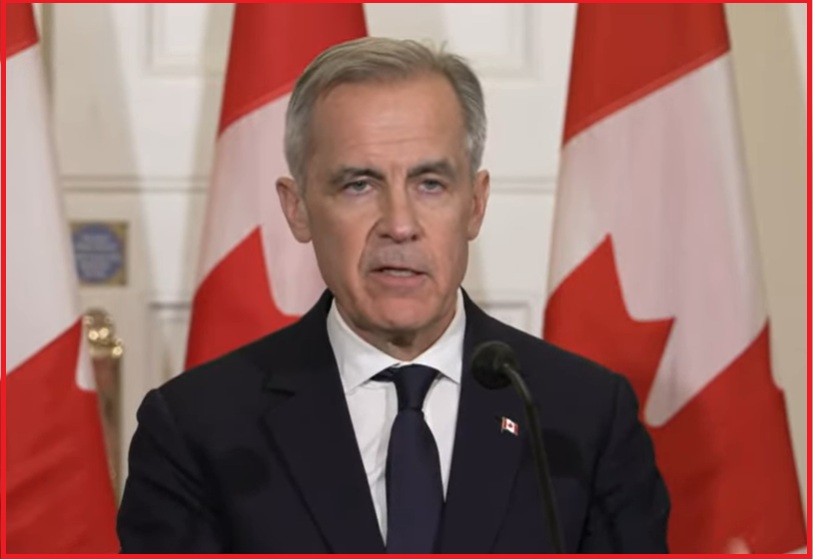
Canada Surrenders – PM Carney Announces End to All Retaliatory Tariffs – Trump Gives Nothing, U.S. Tariffs Remain


Posted originally on CTH on August 22, 2025 | Sundance

The Canadian govt led by Prime Minister Mark Carney has completely capitulated to the power and influence of President Trump.

While explaining how the United States has fundamentally changed the entire landscape of global trade, the leader of the Snow Mexicans announces he is dropping all countervailing and retaliatory tariffs against the USA and getting nothing in return.  Total and complete surrender by Canada; there is ZERO upside for Canada – NADA, Zippo, Zilch.

Prime Minister Mark Carney made the announcement, then faced the ire of the assembled media who were furious about the details within the statement.  The Canadian people had been promised an “elbows up” fight to the end. Instead, today they got down on their knees and begged Trump to retain the USMCA.

Complete and utter capitulation by Canada. No digital services taxes. No countervailing duty tariffs. No reciprocity tariffs on Steel and Aluminum. No retaliatory tariffs (reciprocal/baseline). Meanwhile, the USA keeps 50% tariffs on steel and aluminum against Canada, and Canada only gets 25% tariffs against U.S. steel/aluminum.

In addition, Canada has pledged to continue gaslighting their citizens, while wasting time, effort and resources on a hope to retain the USMCA, while refusing to admit to themselves that President Trump intends to dissolve it. WATCH:

.

If that recap sounds bad for Canada, trust me – it’s way worse.  Really bad, horrible – terrible even.  So far beyond bad, the light from where horrible starts could not reach the Canadian terrible place for a year.  Not good.  

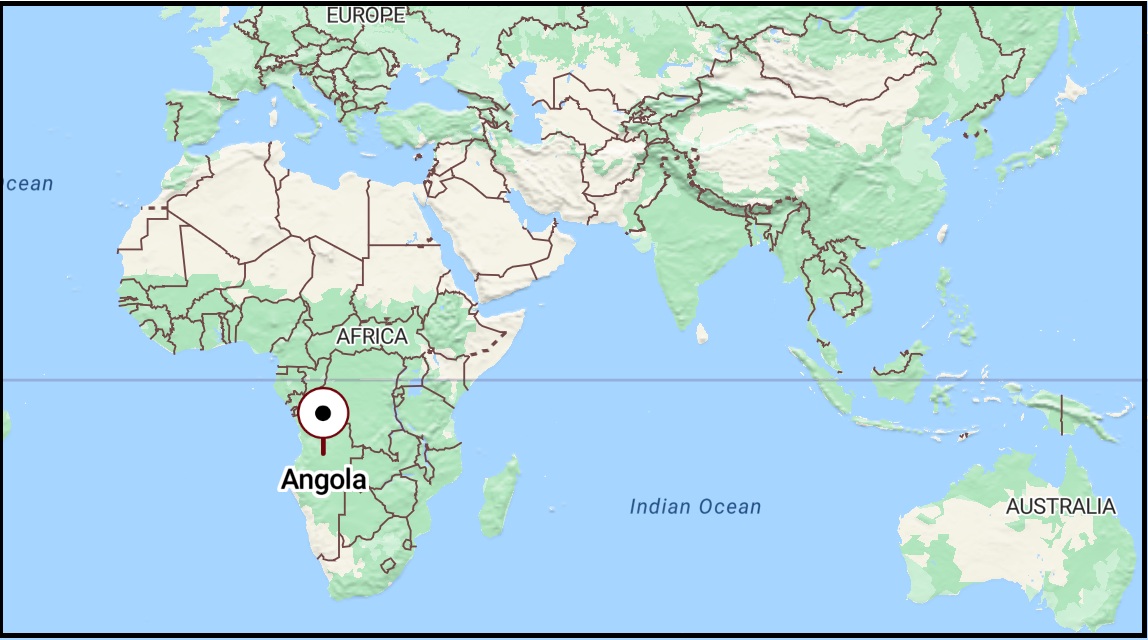
Big Problems Erupt in Angola – Chinese Citizens Flee as Anger Erupts Due to Belt and Road Consequences


Posted originally on CTH on August 20, 2025 | Sundance

HatTip to Ben for calling attention to this remarkable story.

Essentially China’s “Belt and Road” initiative is a system of China putting massive infrastructure investment funds into a targeted country in exchange for their ability to extract resources needed for Chinese expansion. However, several nations are now rising up against the Chinese influence as it surfaces in the lives of the citizens.

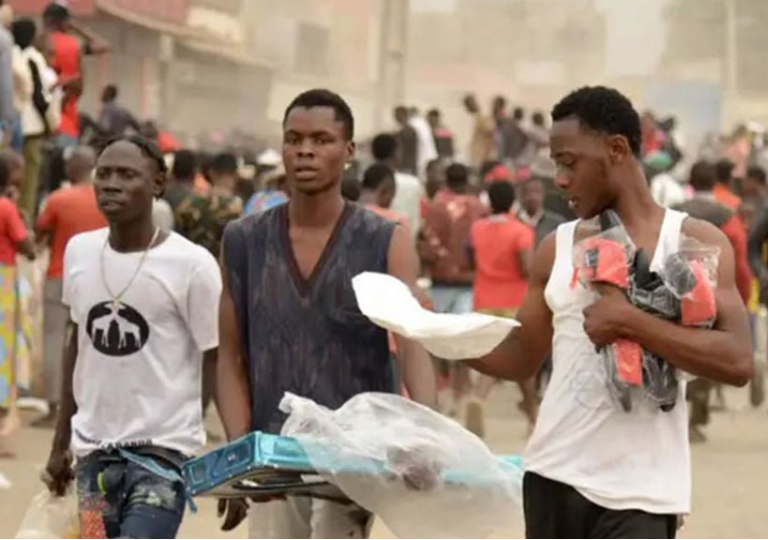
Angola is a case study in China investing billions and with the investment a large number of Chinese citizens arrive set up businesses there.  Over time resentment against the Chinese has been building.  Then a flashpoint with a massive jump in gas prices.  Suddenly, anarchy erupts, and all the Chinese businesses are looted, some even killed in the violence.

[READ STORY HERE]

China is now evacuating some of the 300,000+ Chinese citizens from the region, and the Chinese embassy is urgently warning people about the escalating crisis.

Remember when Tunis erupted at the origin of the “Arab Spring”?  That was a combined economic and cultural flashpoint. This escalating problem in Africa has a similar theme to it.

People often talk about the ‘strength’ of China’s economic model; and indeed within a specific part of their economy -manufacturing- they do have economic strength.  However, the underlying critical architecture of the Chinese economic model is structurally flawed and President Trump with his current economic team understand the weakness better than all international adversaries.

Lets take a stroll and lightly discuss.

China is a central planning economy.  Meaning it never was an outcropping of natural economic conditions.  China was/is controlled as a communist style central-planning government; As such, it is important to reference the basic structural reality that China’s economy was created from the top down.

This construct of government creation is a key big picture distinction that sets the backdrop to understand how weak the economy really is.

Any nations’ economic model is only as stable (or strong) as the underlying architecture or infrastructure of the actual country.

Think about economic strength and stability this way: If a nation was economically walled off from all other nations, can it survive?  …can it sustain itself?

In the big picture – economic strength is an outcome of the ability of a nation, any nation, to support itself first and foremost.   If a nations’ economy is dependent on other nations’ for it to inherently survive it is less strong than a nation whose economy is more independent.

You might not realize it, but China is an extremely dependent nation.

When the central planning for the 21st century Chinese Economy was constructed, there were several critical cultural flaws, dynamics exclusive to China, that needed to be overcome in order to build their economic model.  It took China several decades to map out a way to economic growth that could overcome the inherent critical flaws.

♦Because of the oppressive nature of the Chinese compliant culture, the citizens within China do not innovate or create.  The “Compliance Mindset” is part of the intellectual DNA strain of a Chinese citizen.

Broadly speaking, the modern era Chinese are not able to think outside the box per se’ because the reference of all civil activity has been a history of box control by government, and compliance to stay (think) only within the approved box.  The lack of intellectual thought mapping needed for innovation is why China relies on intellectual theft of innovation created by others.

American culture specifically is based around freedom of thought and severe disdain of government telling us what to do; THAT freedom is necessary for innovation.  That freedom actually creates innovation.

Again, broadly speaking Chinese are better students in American schools and universities because the Chinese are culturally compliant.  They work well with academics and established formulas, and within established systems, but they cannot create the formula or system themselves.

♦ The Chinese Planning Authority skipped the economic cornerstone.  When China planned out their economic entry, they did so from a top-down perspective.  They immediately wanted to be manufacturers of stuff.  They saw their worker population as a strategic advantage, but they never put the source origination infrastructure into place in order to supply their manufacturing needs.   China has no infrastructure for raw material extraction or exploitation.

China relies on:  importing raw material, applying their economic skillset (manufacturing), and then exporting finished goods.  This is the basic economic structure of the Chinese economy.

See the flaw?

Cut off the raw material, and the China economy slows, contracts, and if nations react severely enough with export material boycotts the entire Chinese economy implodes.

Again, we reference the earlier point: Economic strength is the ability of a nation to sustain itself.  [Think about an economy during conflict or war]  China cannot independently sustain itself, therefore China is necessarily vulnerable.

♦The 800lb Panda in the room is that China is arguably the least balanced economy in the modern world.  Hence, China has to take extraordinary measures to secure their supply chain.  This economic dependency is also why China has recently spent so much on military expansion etc., they must protect their vulnerable interests.

Everything important to the Chinese Economy surrounds their critical need to secure a strong global supply chain of raw material to import, and leveraged trade agreements for export.

China’s economy is deep (manufacturing), but China’s economy is also narrow.

China could have spent the time to create a broad-based economy, but the lack of early 1900’s foresight, in conjunction with their communist top-down totalitarian system and a massive population, led to central government decisions to subvert the bottom-up building-out and take short-cuts.  Their population controls only worsened their long term ability to ever broaden their economic model.

It takes a population of young avg-skilled workers to do the hard work of building a raw material infrastructure.  Mine workers, dredge builders, roads and railways, bridges and tunnels etc.  All of these require young strong bodies.   The Chinese cultural/population decisions amid the economic builders precluded this proactive outlook; now they have an aging population and are incapable of doing it.

This is why China has now positioned their economic system as dependent on them being an economic bully.  They must retain their supply chain: import raw materials – export finished goods, at all costs.

This inherent economic structure is a weakness China must continually address through policies toward other nations.  Hence, “One-Belt / One-Road” is essentially their ‘bully plan’ to ensure their supply chain and long-term economic viability.

This economic structure, and the reality of China as a dependent economic model, also puts China at risk from the effects of global economic contraction.


JACK POSOBIEC: Sadiq Khan Shows The Blueprint: Open Borders, Demographic Shift, Power Grab. London Fell This Way. NYC Is Next. It’s Not An Accident; It’s A Strategic Plan


Posted originally on Rumble By Bannon’s War Room on: August 19, 2025

China’s Industrial Robots are Changing Manufacturing


Posted originally on Aug 20, 2025 by Martin Armstrong |  

China is leading the world in industrial robots or programmable machines that are pioneering fast and cost-effective manufacturing. China currently holds over 50% of the world market share in industrial robots capable of assembly, production line handling, service tasks, machine feeding, palletizing, packaging, and more. Automation is fueling Chinese manufacturing in every sector from automotives to electronics. The advancement of AI will soon provide China with a cutting-edge ability to usher in a new era of humanoid robots that will become a portion of the future workforce.

China installed around 290,000 new industrial robots in 2024, nearly twice as many as the European Union, the United States, and Japan combined. Around 86,000 industrial robots went onto the market across the EU last year, while Japan implemented 43,000 and the US around 34,000. The market share of industrial robots was expected to surpass 2.1 million in 2024, valued at around $9.4 billion USD.

Chinese manufacturers are bypassing rising labor costs and an aging workforce through the use of robots. Factories are scaling their operations to turn China into the world’s manufacturing base. China has the ability to produce these robots at one-third the cost of other nations as it produces 90% of the components required for AI industrial robots. However, China is heavily reliant on exports for the remaining 10% of key components. Foreign robot makers like FANUC, ABB, and Yaskawa have major production facilities in China, facilitating knowledge transfer to Chinese firms.

Will robots and AI replace human workers? They’ve already begun to do so. Some estimates believe that automation has replaced 1.7 million workers in China over the past 25 years. Around 80% to 90% of low-skilled labor that only requires simple or repetitive tasks has been assigned to robots. In auto manufacturing, for example, robots have been trained to perform 70% of assembly from welding to painting. Estimates believe that around 35.8% of China’s entire workforce will be automated by 2049, replacing 278 million Chinese workers.

These robots are advancing rapidly. They’ve proven effective in manufacturing, but with machine learning and language models, they’re beginning to seep into virtually every sector, including health care and education. The Chinese government has stated it plans to become a world leader in humanoid robots by 2027, inserting $138 billion into a state venture investment fund and providing private sector incentives for any company wishing to invest in the technology.

New robots are equipped with real-time sensor data and the ability to make decisions, collaborate with human workers, and perform multi-step advanced tasks. To train the AI robots, China has developed major human-robot hybrid training warehouses.

Focusing solely on the basic industrial robots, China has pioneered modern manufacturing. Cheap labor was once China’s stronghold over manufacturing, but now, the nation is relying more on trained technology than a human workforce. Creative destruction is happening at a rapid pace where the future workforce will be indistinguishable from what we see today.

Statistics Canada for July


Posted originally on Aug 20, 2025 by Martin Armstrong |  

Inflation up

The headlines in Canada celebrate that inflation has fallen to 1.7% in July, but as in America, the people are not experiencing a notable downturn in prices. Politicians pat themselves on the back, claiming victory over inflation, yet the very reason CPI came down was because energy prices fell after the consumer carbon tax was suspended. This reflects a temporary change due to economic policy rather than a trend.

Take energy out of the mix and the real story becomes clear. Food prices continue to rise, up 2.8% from June, and that impacts every household. Every nation is experiencing a sharp uptick in food prices.

The real crisis, however, is in the labor market. Employment declined by 0.2% in July, meaning 41,000 Canadians lost their jobs. The official unemployment rate held steady at 6.9%, but the more telling figure is the employment rate, which fell to 60.7%. That reflects the true weakness beneath the surface.

Immigration policies have hurt Canadian youth. Unemployment among those aged 15 to 24 has surged to 14.6%, the highest level since September 2010. This is the lost generation Canada is creating with young people priced out of housing, burdened with debt, and now unable to secure employment. Historically, when youth unemployment spikes, we see social unrest and political upheaval follow. This is not simply an economic number but a warning sign of civil discontent that will only intensify.

Canada’s decline is systemic. The policies in Ottawa are driving investment out of the country. While they boast about “beating inflation,” the cost is economic stagnation and rising unemployment. We are watching the same cycle unfold in Canada that we’ve seen throughout Europe: governments destroying their own economies under the illusion that they can centrally plan prosperity.

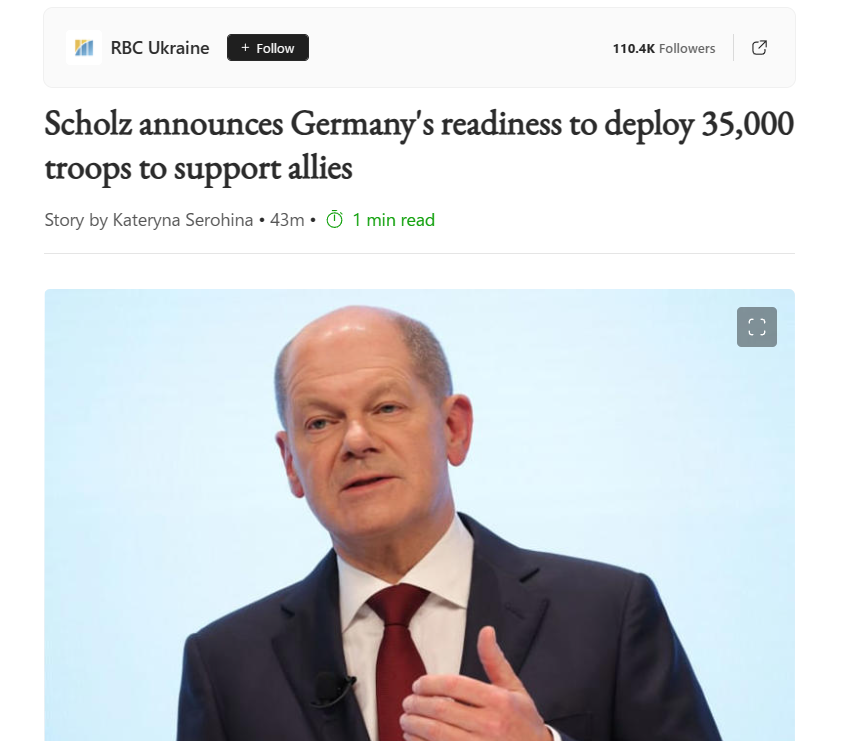
German Foreign Minister Believes Deploying Troops to Ukraine Would be “Too Much”


Posted  originally on Aug 19, 2025 by Martin Armstrong | 

5 6 24 Germany to_deploy_35_000_troops

German Foreign Minister Johann Wadephul has come under fire for stating that it would be unwise to send troops into Ukraine. “We are the only European troop contributor to station a combat-ready brigade in Lithuania. Doing that and also stationing troops in Ukraine would probably be too much for us,” Wadephul told the Table Today Podcast.

Sending troops to Ukraine is highly unpopular in Germany among the citizens, despite the government’s eagerness to support Ukraine with manpower. The foreign minister suggested that Germany could provide military and technical support without entering Ukraine. Critics claim he is simply attempting to appease the people and betraying Ukraine by not offering to send men into combat. He also voiced another unpopular opinion—working with the United States to potentially provide security guarantees.

“We are now hearing signals from Washington that they are prepared to do so [provide security guarantees], and this must then be worked out together with the Europeans, with Germany naturally having to play an important role,” Wadephul said in the interview, adding Berlin could provide military and technical help, among other things.

GermanyUkraineWarPropogandaRecruitment

The Bundeswehr deployed 4,800 troops to Lithuania, and again, critics believe it is ridiculous to say that the military is stretched too thinly to deploy others directly to Ukraine. It will cost Germany an estimated 800 million euros annually to maintain their current presence in Lithuania. No one thinks of the cost involved with sending troops into Ukraine, which is of little importance compared to the broader implications of sending troops and then actively forcing the entire nation and the European Union to fight on behalf of Ukraine.

The neocons are waiting for that “push comes to shove” moment. The people are extremely vocal about their point of view on the matter. Those looking at the numbers and logic alone are warning against deployment. Anyone who understands history is keenly aware that German is on the brink of completely entering a war against Russia that it is unprepared to fight. The entire EU will become involved in the war if Germany sets foot into Ukraine, as Germany is the economic powerhouse supporting the bloc, and France, the second most powerful in terms of finance, has similar wartime ambitions. It appears that push will come to shove by next year on 2026.45 when our computer indicates a central turning point between the EU and Russia.

Can Canada Just Nullify Your Property Ownership Under Its Woke Agenda?


Posted originally on Aug 17, 2025 by Martin Armstrong |  

Fanell: “We’ve Gotta Get Our Act Together On Dealing With The People’s Republic Of China”


Posted originally on Rumble By Bannon’s War Room on: August 16, 2025

Climate Lockdowns in Canada


Posted originally on Aug 15, 2025 by Martin Armstrong |  

Climate Change Hidden Agenda

Entering the forest has become illegal in three Canadian provinces—Newfoundland, Nova Scotia, and New Brunswick. Entering woodlands can result in massive fines or even jail time. Why? The Canadian government believes it must ban the public from accessing nature to prevent forest fires.

Air Force veteran Jeff Evely committed a crime by participating in an outlawed act of civil disobedience by walking into a woodland area in Nova Scotia. The veteran was issued a C$28,872.50 fine for simply entering public lands.

“This law views people as the problem – not dangerous activities. This law is anti-human, and should someone find themselves on the wrong end of a charge – a massive charge, $25,000 dollar fine, for going into the woods, you can expect a constitutional challenge and a judicial review of this order,” Constitutional lawyer Marty Moore of the Justice Centre for Constitutional Freedoms stated regarding the ban.

Humans are responsible for climate change, the climate zealots insist. The dry climate and natural cyclical pattern of fires is to be ignored. Former Prime Minister Justin Trudeau authorized the Canadian Armed Forces to respond to wildfires raging in Alberta earlier in the year, and sent troops to help assist during the wildfires that raged throughout California. Trudeau blamed climate change for the ongoing fires—and what luck as a carbon tax could assist in quelling climate change.

“The federal carbon tax will help deal with weather disasters such as fires in northern Alberta. Extreme weather events are extraordinarily expensive for Canadians, our communities and our economy. We need to be taking real action to prevent climate change. That’s why we’re moving forward on a price on pollution right across the country, despite the fact that Conservative politicians are trying to push back against that,” Trudeau commented.

The World Economic Forum published an article in 2018, detailing how its young leader, Trudeau, would implement a “carbon tax on those unwilling to tackle climate change.” The Greenhouse Gas Pollution Pricing Act (GHGPPA) carbon tax began at C$20 per tonne of CO2 in 2019 and increased by C$10 per year, reaching C$50 per tonne by 2022. The government then stated it needed to increase the tax by an additional C$15 per tonne per year beginning in 2023 until 2030 when the total cost will reach C$170 per tonne.

Canadian households have been burdened with the carbon tax as this is not merely for massive corporations or polluters. The people are always the target of climate laws as the entire premise of climate change regulation is control. The carbon tax for Canadian households started in 2019 at C$20 per tonne and increased steadily to C$80 per tonne by 2024. The Parliamentary Budget Officer (PBO) estimated that the carbon tax will cost the average Canadian household between C$377 and C$911 in the fiscal year 2024-25 after rebates. By 2030, Canadian families can expect the tax burden to soar to C$2,773 in certain provinces like Alberta.

Politicians are not to question the carbon tax or the climate change agenda. “His ideology is so strong, he would rather watch the country burn and Canadians suffer than continue to fight against climate change and put the Canada carbon rebate in their pockets,” Trudeau said of Poilievre, who opposed the carbon tax.

It began with lockdowns for COVID-19, and now the government has the power to lock down public lands to protect “national security.” Simply walking into the woods could cost someone tens of thousands of dollars if not jail time, and are people to accept this fate? Similar to how the carbon tax continues to increase, the authoritarian power granted to government under the premise of climate change will continue to build if left unchecked.