Car Repos Rise 23% YoY


Posted originally on Aug 2, 2024 By Martin Armstrong 

German Cars

The private debt crisis is becoming apparent in America after car repossessions jumped 23% during the first half of 2024. Data shows that 1.6 million Americans will have their car repossessed by the bank before the end of the year, a slight increase from the 1.5 million autos repossessed in 2023 and a drastic upturn from the 1.1 million in 2021.

Obviously, the cost of purchasing a car have drastically risen with inflation, interest hikes, and supply chain shortages. Americans simply cannot afford new autos and car dealerships can do nothing to entice purchases. New car inventory in the US rose 36% this year, close to February 2021 levels before the supply chain crisis put a dent in imports. Yet, the average list price of a new car is $49,096 and far more than the average American can afford. The average new vehicle will sit in a dealer’s lot for 65 days, a 41% annual increase.

Dealerships are hardly asking for a downpayment these days unless someone has horrid credit. Even putting a few grand down will only take off about $20 per monthly payment. The average new car costs about $735 monthly based on data from Experian, and $523 monthly on used models. The average American simply is not educated in finance. Autos are behind mortgages in the largest share of personal household debt and there is a portion of the population who do not understand what they can actually afford.

The average American now borrows around $40,634 for new vehicles and $26,073 for used vehicles. About 9.2% of all consumer debt is through autos alone.

There was that viral story from April of a woman purchasing a Chevy Tahoe for $80,000 – without factoring in the interest on all household vehicles. Her husband purchased 2020 GMC Sierra 1500 AT4 for $78,000 in August 2022 and she simply could not understand why the payments on the truck were more than on the Tahoe. Well, the husband’s 14% rate on the vehicle placed their monthly payment or the truck $1,600. I recalled reading comments suggesting the family simply let the bank repo one of the cars as if that could be a valid option for personal finance.

Cox Automotive believes the trend of repossessing cars will increase into 2025 when they anticipate. 1.7 million cars being repossessed. As of Q1 2024, US household debt stood at $1.77 trillion; $12.44 trillion held in mortgage debt, $1.62 trillion in autos, $1.12 trillion in credit card debt, and $543 billion in other forms. Bank of America, Citigroup, Goldman Sachs, and others recently reported a stunning $4,139,000,000 loss in unrecoverable debt.

The banks will come after their assets if a payment is missed, with some only waiting 30 days after a missed payment to seize property. They may then ask for full payment to return the car which is simply not happening in these situations. While there are some who cannot compute their monthly payment, others are now living paycheck-to-paycheck and are one large bill or missed paycheck away from losing their shirts. Then we have agencies telling the public across Build Back Better nations that they will soon need to purchase an EV to adhere to the climate emergency. Cheaper alternatives from China have been slapped with 100% tariffs, and there are no alternatives. Governments are do nothing to assist this growing problem as the ultimate goal is to eliminate private car ownership under the premise of the Great Reset.

Fed President Says Americans Would Prefer a Recession to Inflation


Posted originally on Jun 5, 2024 By Martin Armstrong 

Fed Ship in STorm

Federal Reserve Bank of Minneapolis President Neel Kashkari has advised against anticipating near-term rate cuts. While speaking to the Financial Times, the Fed president stated that people would simply prefer a recession to continued inflation.

“I have learned that the American people—and maybe people in Europe equally—really hate high inflation. I mean, really viscerally hate high inflation,” he told the Financial Times’ The Economics Show podcast. Kashkari is speaking as if we are not already in a recession. It is not difficult to understand the “visceral” hatred people around the world feel toward rising prices. The effects of inflation are felt with every purchase, causing the average person to adjust their entire lifestyle.

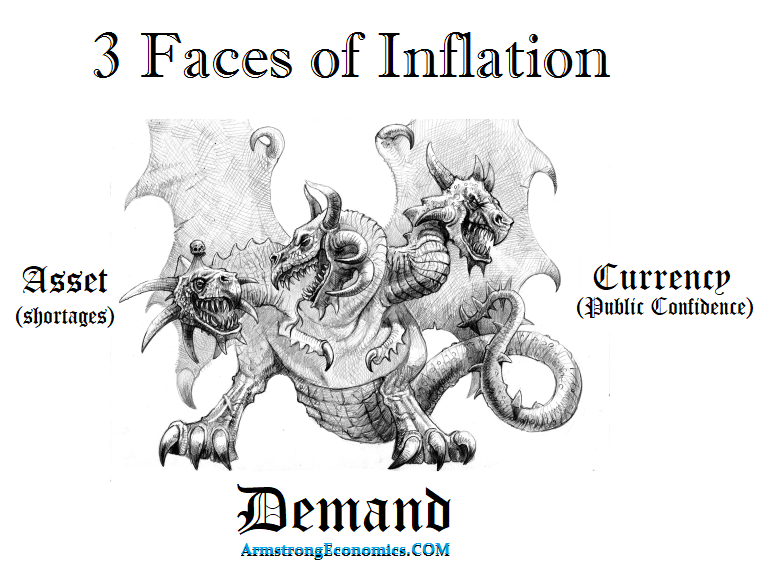
3 faces of Inflation Dragon

Vague issues such as rising unemployment or declining wages do not impact everyone. “I lose my job, I lean on my sister or my parents or my friends, and they help me through it. But high inflation affects everybody. There’s no one I can lean on for help because everyone in my network is experiencing the same thing I’m experiencing,” Kashkari explained. Mass layoffs, for example, would only impact a fragment of the overall population, and people would feel lucky simply to keep their jobs.

“In the US, GDP has been remarkably strong, very strong,” he noted. “The labor market has been resilient. Wage growth has been mostly resilient. And we’re seeing even the housing market has shown signs of resilience. So if I look at this resilience and economic activity, that does not look like an economy that is under pressure of very high, very tight monetary policy.” Yet, inflation is outpacing wage increases and people are watching their savings dwindle while spending less. The average person cares not of the health of the overall economy as they simply want to be able to continue maintaining or improving their standard of living. Most Americans, for example, do not invest and live paycheck to paycheck.

CPI Formula

Real prices have far surpassed anything they calculate in CPI. Everyone understands that prices have risen far more than the arbitrary number the Fed provides us. Taxes are continually increasing for everyone in every tax bracket. The government not only adds to inflationary issues with their spending but then expects their citizens to foot a portion of the bill with taxes, which will simply never be enough.

Then we have Washington telling the masses to blame corporations for price gouging while raising their taxes and making it increasingly difficult to conduct business and maintain a large workforce. It is not that the people would prefer to be in a recession, the real issue is that countless people are entering survival mode. People everywhere want to hold onto whatever they may have out of fear for the future, but they are unable even to hoard as real prices now demand they hand over whatever they have to maintain their lives.

Does an Increase in the Money Supply Lead to Inflation?


Posted originally on May 29, 2024 By Martin Armstrong 

Supply Demand

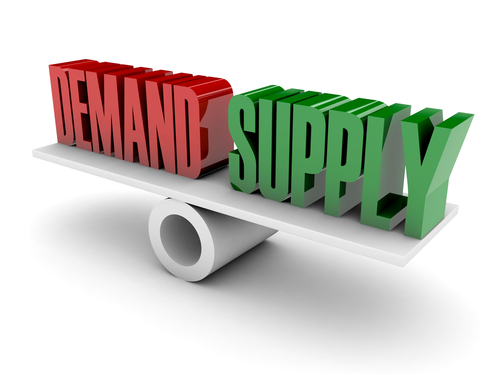
The old idea that inflation is created by an increase in money supply has distorted the minds of many people. Inflation is caused by numerous factors for it is not a one-dimensional aspect. For example, say a bird flu has rendered half of the egg production to be worthless, which would send egg prices soaring. This would have nothing to do with the quantity of money. So, obviously, a decline in the supply of some service or commodity can also lead to rising prices. Supply and demand.

Then there can be cost-push inflation as we saw during the 1970s due to OPEC. The first OPEC price shock was October 1973 from where we should see the next low in 2016 (43 years later). The sudden rise in oil sent a shockwave through the economy, driving up prices because the entire economy had to readjust to higher energy. This was not the result of an increase in demand nor an increase in the money supply.

When gold was used for money during the 19th century, it fell sharply in value with each new discovery from California, Australia, and Alaska. Inflation rose because of a dramatic increase in the money supply, which is exactly what took place in Europe when Spain brought back ship after ship of gold from the New World. The sudden dramatic rise in the supply of money unleashed inflation, and during both periods, money (gold) failed to provide a store of value.

Steady, slow growth in the supply of money does not lead to inflationary waves. We find that major waves of inflation are often tied to waves of speculation, which differ with each wave moving from real estate, commodities, stocks, or bonds, constantly rotating over decades within a domestic economy and then this movement of capital takes place internationally.

Inflation is not a single one-dimensional aspect. It moves up and down between the rise and fall in the demand for private assets vs. hoarding and uncertainty.

Cost Of Living Outpaces Wage Increases


Posted originally on Dec 7, 2023 By Martin Armstrong 

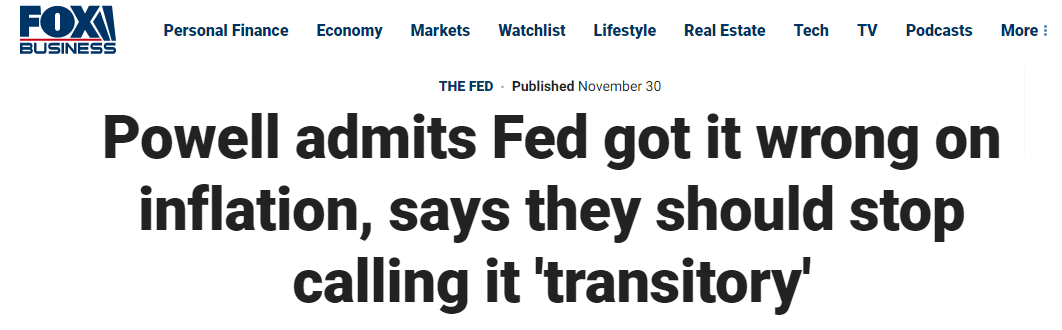
Powell Fed Got Inflation Wrong Nov 2021

A recent study by Achieve revealed that despite a 37% increase in income, many Americans are facing financial challenges due to rising costs and high interest rates, leading to a surge in personal debt. The average monthly participation in debt resolution programs increased by 119% in the first nine months of 2023 compared to 2020. Wages are rising but they simply cannot keep up with the growing cost of living.

The typical household income of individuals enrolled in debt resolution programs was $59,900 in 2023, a notable increase from $43,598 three years prior. The study’s findings reflect the impact of inflation, a challenging interest rate environment, and the winding down of government stimulus on consumer debt levels. The report underscores the need for measures to address the rising debt burden and its potential impact on income growth.

The study also found that people are facing financial hardship significantly earlier in life. The average age of someone facing debt resolution was 52 in 2020, but that age has since decreased to 44 in 2023. Nearly 40% of people entering debt resolution programs are Millennials, which is also the age demographic of those with the sharpest increase of credit card delinquencies. Nearly everyone is living on credit as balances rose $154 billion YoY, marking the most significant increase since 1999.

No one feels relieves when new inflation reports are released. Governments can release whatever data they like but the fact remains that the price of EVERYTHING has become too much to maintain. Inflation allegedly peaked in June 2022 at 9.1% but I cannot think of anything that has dramatically decreased in price since then.

State Wealth Migration Re-Posted Nov 15, 2023 By Martin Armstrong 


Migration to USA

In 2019, New York hosted 72 billionaires. That figure has declined to 62 in 2023, with smart money fleeing the state due to high taxes and crime. The state of New York depends on the top 1% of earners to pay 42% of its tax burden. New York is already operating in a deficit and has the added burden of hosting tens of thousands of migrants with tax funds.

The top 1% of Americans have an average net worth of $10,815,000. While billionaires earn on investments and not income, states like New York expect top earners to pay 14.8% in income tax. “If you had someone who was earning $100 million [a year] in New York suddenly move to Florida, that’s something like a $11 million-a-year hit per year recurring to the state,” said Ken Girardin, the research director for the Albany-based think tank, Empire Center for Public Policy. The 62 billionaires that remain in New York have a collective net worth of $562.3. Only the top 5% of Americans have a net worth of over a million dollars.

Inflation is hurting those at every class level and people do not want to downgrade their lifestyles. Policymakers want to scream “Eat the rich!” to appease voters who do not understand that the money held by those at the top is needed for a healthy economy. In 2020 alone, when the pandemic struck, New York lost $19.5 billion in taxes from people fleeing the state. California lost $17.8 in tax revenue that year and counting.

We are seeing a wealth migration in the US. This is why I say that markets like real estate cannot be looked at on the national level, as prices in red states continue to rise as blue states have become uninhabitable. This is only taking into consideration individuals as moneymakers are also taking their businesses to states where they do not need to support the welfare system. Around 160 firms have fled Wall Street since 2019, displacing $1 trillion.

Real Estate

Hence, people are saying Miami is the new Wall Street. Lawmakers do not comprehend the impact that this will have on state budgets.

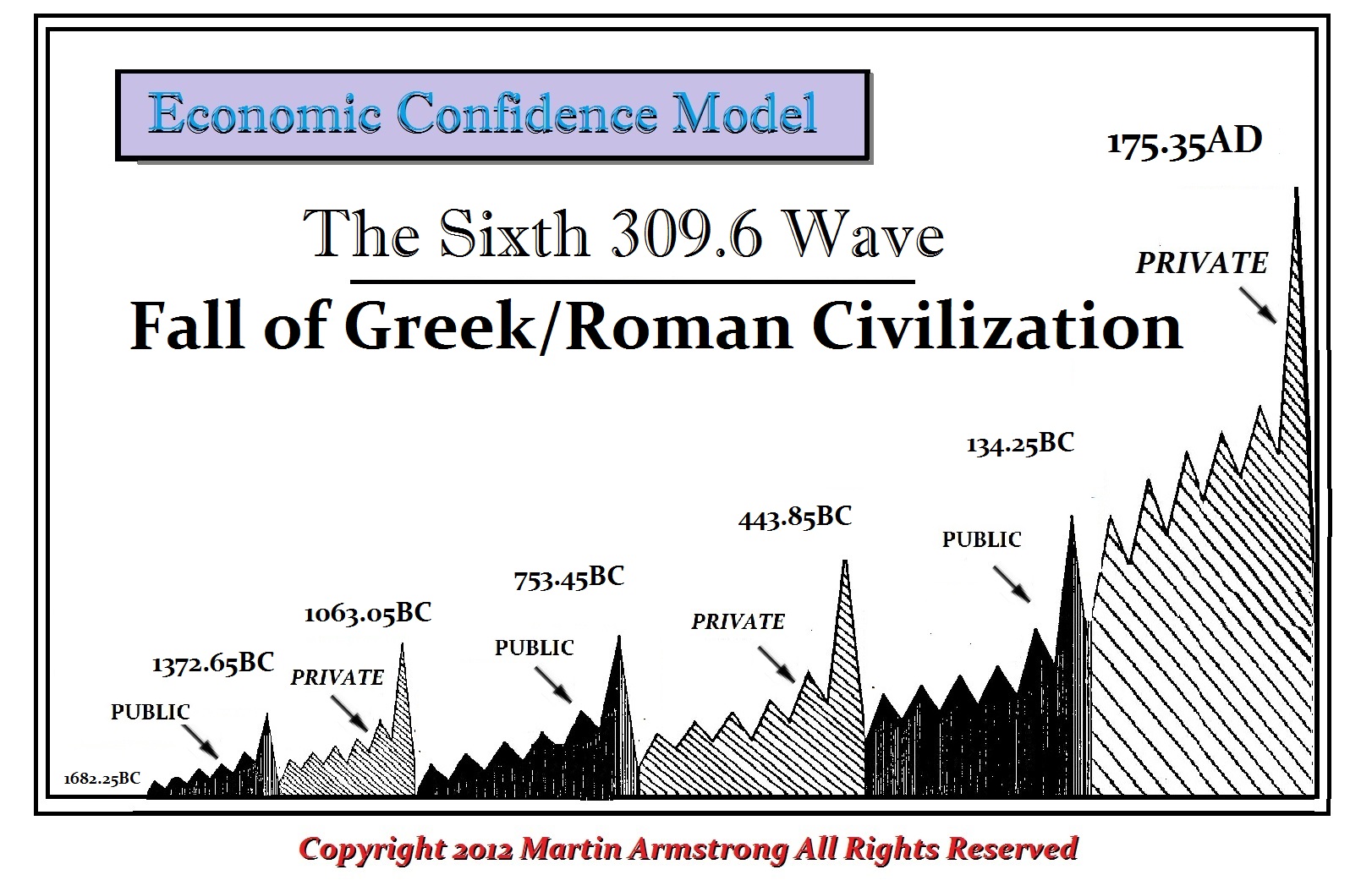
Sixth Wave ECM Greek Roman 309.6

This is precisely what happened prior to the collapse of the Roman Empire. The top 1% half 16% of the empire’s wealth. Wealthy Romans were the first to leave cities when public confidence collapsed. We can see the migration from archaeological finds that saw villas built far from city centers. And even in those days, people felt that the wealthy were selfish for acting in accordance to the invisible hand. As noted in “The Decline and Fall of the Roman Empire” by James William Ermatinger: “Their disinclination to leave may have been caused by forced exactions, confiscations, business concerns, tax pressured, or general economic fears, which made protecting one’s own interests seem more prudent than looking out for the interests of others.”

Rome’s Sovereign Debt Crisis is what ultimately led to its collapse. Yet one of the first signs of major trouble was the mass exodus of wealth from the cities.

Powell Understands the Inflation was Created by COVID


Armstrong Economics Blog/Inflation Re-Posted Jul 26, 2023 by Martin Armstrong

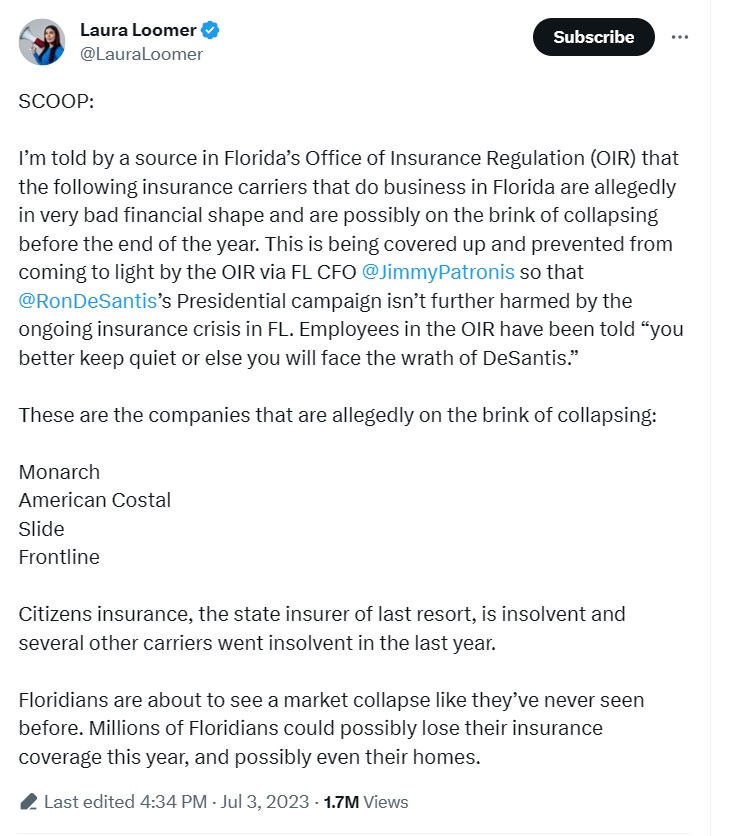
Reinsurance Rates for Catastrophic Coverage Jump as High as 50% to Insurance Companies Effective July 1st


Posted originally on the CTH on July 3, 2023 | Sundance 

As if carrying Homeowners insurance in California and Florida wasn’t already subject to ridiculous increases in premiums, things are about to get a lot worse.

Effective with the July 1st notification, Reinsurance rates, these are companies who insure the insurance companies, are telling their clients there will be up to a 50% increase in cost for underwriting catastrophic coverage.  Perhaps claims in the past few years have been higher; however, I suspect the issue amid the reinsurers is partly connected to the issue that surrounds banks and bond rates.

Back when interest rates were near zero, banks and reinsurers likely scooped up lots of Treasuries and bonds. As the Federal Reserve hikes rates those bonds have declined in value. When interest rates rise, newly issued bonds start paying higher returns to investors, which makes the older bonds with lower rates less attractive/valuable. The result is that most banks, and I suspect big reinsurance houses, have some amount of unrealized losses on their books.

Whatever the reason, the big reinsurance companies are now telling the insurance carriers their catastrophe rates are going up as high as 50%.  Those insurance companies will then pass those rate hikes to the individual policy holders for commercial buildings, residential homes, cars, RV’s etc.  Bottom line, homeowner insurance rates are about to go up again with policy renewals, especially in Florida and California.

LONDON, July 3 (Reuters) – U.S. property catastrophe reinsurance rates rose by as much as 50% at a key July 1 renewal date, broker Gallagher Re said in a report on Monday, with states such as California and Florida increasingly hit by wildfires and hurricanes.

Reinsurers insure insurance companies, and have been raising rates in recent years because of steepening losses, which industry players put down in part to the impact of climate change. Higher reinsurance rates can affect the premiums which insurers charge to their customers.

U.S. reinsurance rates for policies which previously faced claims for natural catastrophes rose 30-50%, Gallagher Re said.

Reinsurance rates for similar policies in Florida rose 30-40%, the broker added.

Some insurance firms have pulled out because of the risk of heavy losses. State Farm said in May it would stop selling new insurance policies to homeowners in California.

In Florida, “all the major carriers (insurers) left and so you ended up with this market which is populated by a large number of very small, very thinly capitalised insurers which is exactly what you don’t want,” James Vickers, chairman international, reinsurance, at Gallagher Re told Reuters. (keep reading)

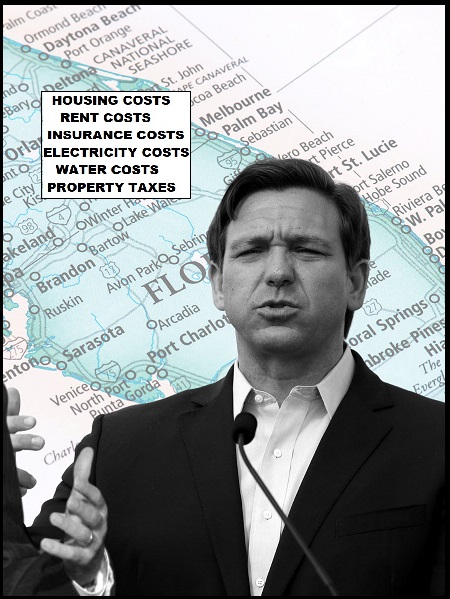
In Florida specifically, homeowners insurance costs have now generally risen higher than the mortgage payment for a middle-class family.  This is not sustainable.

Not Good !

Interview: The Real Rate of Inflation


Armstrong Economics Blog/Armstrong in the Media Re-Posted May 13, 2023 by Martin Armstrong

Supply Chain Crisis and Inflation


Armstrong Economics Blog/Inflation Re-Posted May 17, 2023 by Martin Armstrong

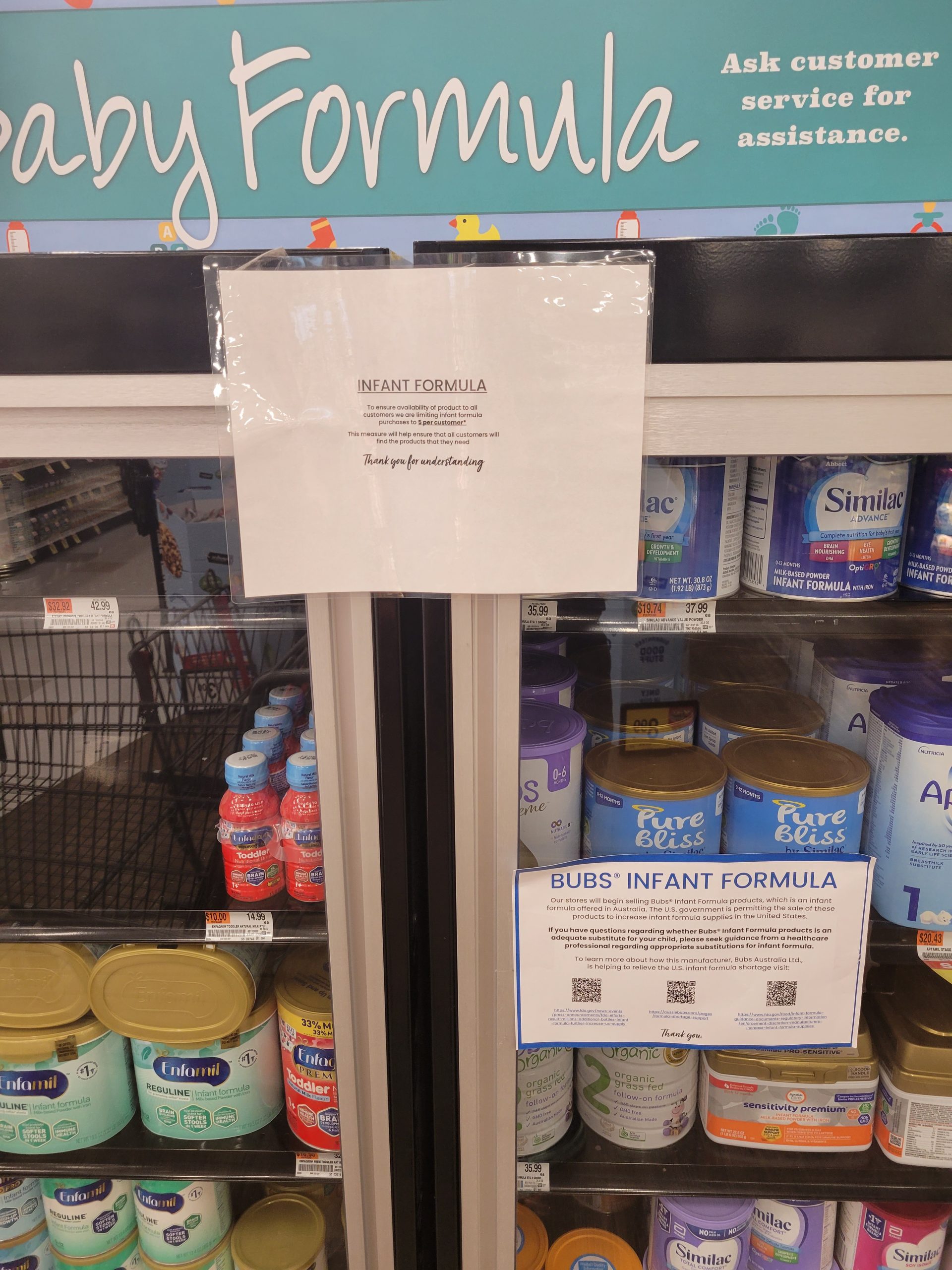
COMMENT: Hello Mr. Armstrong. Thank you for my daily dose of reality. Your blog is one of the last sources of untainted news. I would like to show these pictures my daughter sent me last week. We live in an affluent neighborhood in New Jersey where petty theft does not occur. The news outlets have not mentioned baby formula shortages. I do not believe they are locking up the baby formula to prevent crime. What is going on here?

Thanks — C.G.

REPLY: The supply chain issue has never been resolved. It improved from the days of bare shelves in the grocery stores, but many essentials are stuck in the pipeline. Products that expire will see additional shortages naturally. The supply shortage is fueling inflation and raising rates will not solve the problem.

The Fed thinks that raising rates will curb inflation by raising the cost of borrowing. That is not the problem here. Part of the inflationary crisis we are witnessing is due to demand outweighing available supply across industries. The Fed cannot control government spending nor the money supply. People are viewing the crisis today from the perspective of the ‘60s when it was NOT possible to borrow on T bills. After the collapse of Bretton Woods in ’71, you COULD trade off government debt and that eliminated the idea that it was less inflationary to borrow rather than spend. Artificially low rates that created a borrowing addiction among institutions who believed it was safe to do so.

Powell cannot come out and criticize Congress for their spending. These rate hikes are not good for the supply chain shortages. Inflation went up two years before the Fed even addressed rates due to the supply chain crisis. The central bank only began to hike rates after the war in Ukraine began. Notice how at the last meeting, the FOMC incorporated that they will monitor “international events.” WAR is the primary driver of inflation and there is nothing that the central bank can do to prevent the destruction caused by government and years of poor monetary policy.

Study Puts Data Together Showing Joe Biden Inflation Impact on Pet Food Products


Posted originally on the conservative tree house on May 16, 2023 | Sundance 

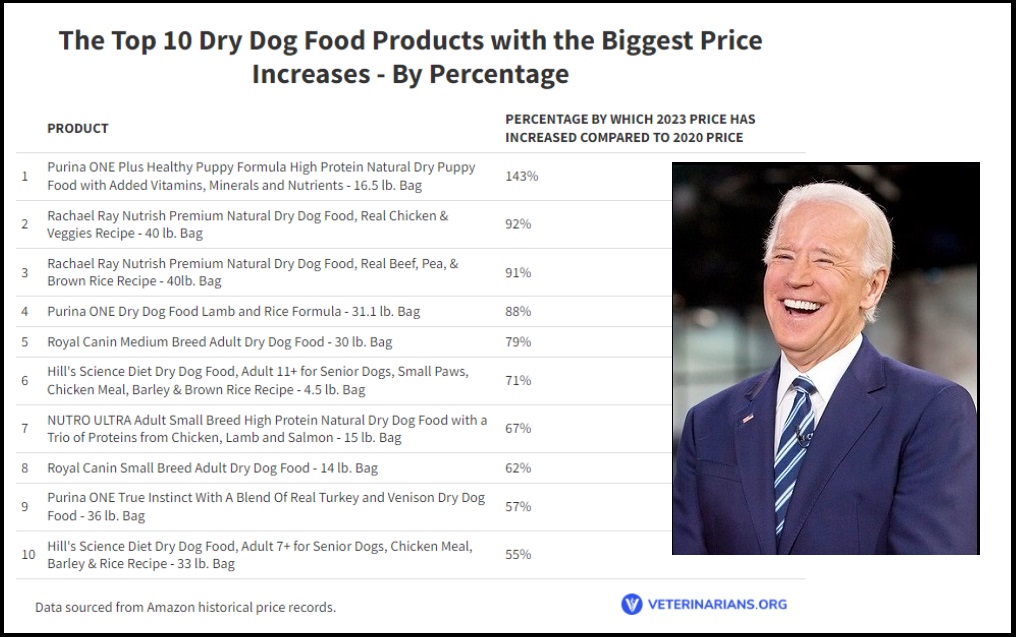
We have talked about the stunning price increases in pet foods during our discussions about food price overall.  However, a remarkable study by Veterinarians Org gives some context to just how much the Joe Biden inflation has driven up the cost of pet foods. [ARTICLE HERE]

Mostly driven by Biden’s created inflation hitting raw farm materials, energy prices, manufacturing and transportation costs, the prices for the most popular wet and dry dog foods have skyrocketed.

One in four pet owners have even contemplated giving their animal up for adoption because they can no longer afford them.   This is terribly sad.

(Veterinarian Org) – […] The largest percentage increase compared to 2020 prices is for a wet dog food product by PEDIGREE, which has increased by 207% compared to its 2020 price.

The largest dollar amount increase compared to 2020 prices is for a dry dog food product by Royal Canin, which is currently $43.99 more expensive per bag than it was in 2020.

In a recent Veterinarians.org survey of 1,000 U.S. pet owners, 50% of respondents indicated having to shop for cheaper alternatives to pet food as a result of rising costs. Pet owners also found themselves shopping for cheaper alternatives to pet treats (41%), pet toys (34%), and pet health supplements (28%).

55% of surveyed pet owners indicated having to cancel pet food subscriptions on Chewy.com, Amazon.com, or through a raw food/pre-cooked meal service as a result of rising costs.

22% of pet owners indicated having applied to special services in their state that help pet owners pay for pet-related costs, while 73% of pet owners felt a food pantry for pets would be helpful to them.

24% of pet owners indicated considering rehoming their pet or surrendering their pet to a shelter as a result of rising pet food/pet supply costs.

According to the American Pet Products Association, Americans spent $50 billion on pet food and snacks in 2021. (read more

[Source]