Canada Attempts to Loosens Reliance on US Trade


Posted originally on May 9, 2025 by Martin Armstrong 

canada_flag_perspective_800_clr_1522

Canadian exports to the United States are beginning to decrease in light of the trade war. Statistics Canada announced that exports to the United States, Canada’s largest trading partner, declined 6.6% during the first month of tariffs while imports from the United States fell 2.9%. March 2025 was the second-highest recorded monthly increase in non-US trade for Canada.

Exports to nations outside the US rose 24.8%. Overall exports in March 2025 reached $69.9 billion, a slight decrease from February’s $70.04 billion posting, yet volume rose by 1.8%. The United Kingdom has been purchasing unwrought (crude) gold exports from Canada this year, totaling C$2.01 billion in January, C$1.64 billion in February, and C$1.64 billon this March.

Canada’s crude oil sea exports doubled on an annual basis to 8 million barrels this month. The United Kingdom and the Netherlands imported 69% of all crude oil exports to Europe. Hong Kong also increased its crude imports from Canada in March.

Overall merchandise trade exports declined 0.2% for the month, with imports falling 1.5%. The trade deficit fell to C$506 million, notably less than the prior month’s C$1.4 billion deficit as Canada is seeking buyers.

Canada cannot fully rely on trade outside the US. March saw a 6.6% monthly decline in exports to the US, which is bad news for Canadian businesses. Trade with the US for March was still strong at US$140.5 billion, notably due to an increase in pharmaceuticals and medicines ahead of forthcoming industry-specific tariffs. Autos also saw an uptick ahead of industry-specific tariffs, posting a 7.7% export increase for the month. Iron and steel products, already subject to a 25% tariff, fell 9%, while aluminum alloys and unwrought aluminum rose 4.4%.

The S&P Global Manufacturing PMI for Canada reached 39.1 in April 2025. Canadian manufacturing has not seen such a contraction since early COVID months when the global economy came to a standstill. Imposed and proposed US tariffs are stifling demand as purchasers do not know what to expect.

Those adhering to US boycotts fail to realize that the Canadian economy is structurally tied to the US economy. Infrastructure was designed to support trade through railways, trucking routes, and pipelines. Europe and Asia cannot replace the accessibility or scale of the US market. Additionally, the economy is closely aligned with the USD, and a major pivot would expose Canada to currency volatility. Canada may strengthen ties with other nations to fill margins but it cannot write off its top trade partner.

C

India Attacks Pakistan – War is a Contagion


Posted originally on May 6, 2025 by Martin Armstrong 

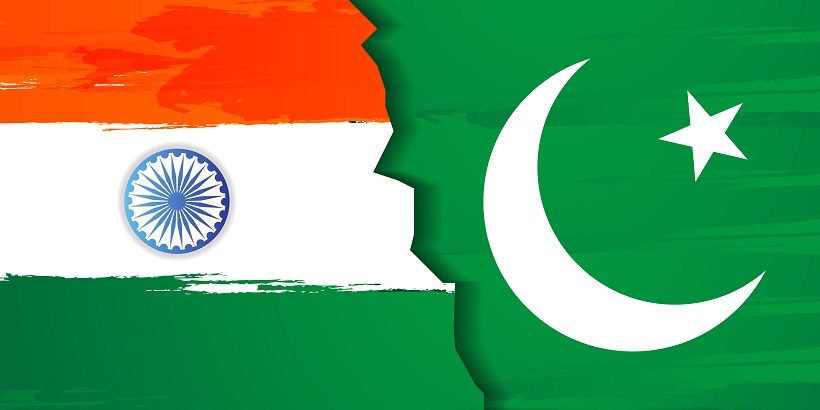
India v Pakistan

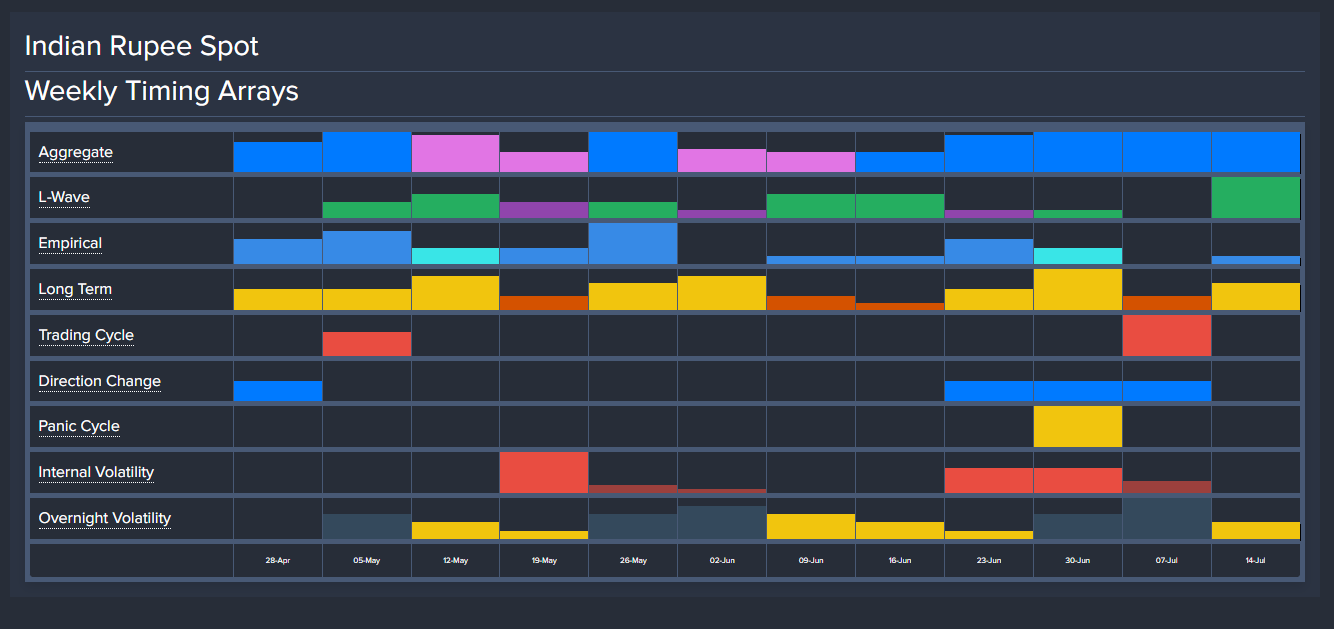
COMMENT: Mr. Armstrong, I fully appreciate that you have no interest in winning a Nobel Prize. However, the computer you have developed is far more accurate than anything regarding markets or geopolitics that has ever been created. This week was the turning point, as is May and then June, with a Panic Cycle. You forecast in 2019 that war would come to India and Pakistan in 2025. Nobody has ever been able to provide such accurate forecasts years in advance. I do not know what to say, but I believe everyone reading this should send a letter to the Nobel Commission to nominate you for this is more important than just you, this is about society making that one step forward for mankind, as Neil Armstrong said.

VS

Indian_Rupee W Array 5 6 25

REPLY: Thank you. Milton Friedman told me that what I was doing was important for society. He came to listen to me at a tech conference in Chicago. I am not sure if it was a Computrac or Market Technicians Conference. Nobody seems to have the records from then. If anyone were there and remembers, I would love to hear from you.

India said it conducted military strikes on nine sites in Pakistan in retaliation for a deadly militant attack on tourists in Kashmir, intensifying a confrontation between the nuclear-armed neighbors. India said its forces carried out strikes on camps that terrorists have used to stage attacks against India, according to a statement released on Wednesday. This was an expected response after it pledged retaliation for an attack last month in Kashmir that killed 26 people. India said it had NOT targeted any Pakistani military facilities. Reports confirm that India fired missiles at multiple targets that, according to Pakistani officials, killed a child and wounded two other people.

The ties between the two have rapidly deteriorated in the wake of the Kashmir attack. Indian Prime Minister Narendra Modi’s government has accused Pakistan of involvement and vowed to punish those responsible. Pakistan has denied any links to the attacks and warned of retaliation if India takes military action. This comes down to whether escalation will unfold from mid-May into June.

Pakistan has closed its airspace to Indian airlines, a move India matched. India has ordered Pakistani nationals in India to leave and reduced the number of staff allowed at Pakistan’s diplomatic mission. India’s military has been guarding the disputed border with China since 2020. China is a close ally of Pakistan and its top weapons provider. A war between India and Pakistan could easily see China on Pakistan’s side.

In a hypothetical scenario where India faces a conflict with Pakistan, with China backing Pakistan, India’s support would likely come from a combination of strategic partners, influenced by geopolitical interests and existing alliances:

  1. United States:
    • Strategic Partnership: The U.S. has deepened defense ties with India through agreements like LEMOA (Logistics Exchange Memorandum of Agreement) and sees India as a counterbalance to China in the Indo-Pacific. Diplomatic, intelligence, and logistical support (e.g., arms sales, satellite data) would be probable, though direct military intervention is less certain unless U.S. interests are directly threatened.
    • Quad Alliance: The U.S. might rally Quad partners (Japan, Australia) to exert diplomatic and economic pressure on China, though their military roles would depend on the conflict’s scope.
  2. France and Israel:
    • France: A major defense supplier (e.g., Rafale jets), France could provide advanced weapons and diplomatic backing, leveraging its UN Security Council position.
    • Israel: Likely to supply intelligence, precision-guided munitions, and cybersecurity support, given its robust defense ties with India.
  3. Regional Partners:
    • Japan and Australia: Diplomatic support and sanctions against China/Pakistan, with limited military involvement unless the conflict escalates regionally.
    • Gulf States (UAE, Saudi Arabia): Might offer economic support or mediation, balancing historical ties to Pakistan with growing Indian partnerships.
  4. Russia:
    • Balancing Act: Historically, a key arms supplier, Russia’s support would be constrained by its alignment with China post-Ukraine. It might remain neutral or broker negotiations to avoid alienating either side.
  5. Multilateral Organizations:
    • UN and EU: Likely to push for de-escalation, though Chinese veto power could block anti-Pakistan/China resolutions. The EU might impose sanctions if the conflict threatens global stability.
  6. Domestic and Nuclear Factors:
    • India’s extensive military and nuclear arsenal would act as a deterrent, reducing reliance on external intervention. However, atomic escalation risks would galvanize global pressure for a ceasefire.

This becomes very complicated. China’s Regional Influence is not to be ignored. The ASEAN nations (e.g., Vietnam, Philippines) might tacitly support India but avoid overt involvement to avoid antagonizing China. Then there is the issue of economic interdependence. For example, countries with significant trade ties to China (e.g., Germany, South Korea) would most likely limit support to India to avoid economic fallout.

India would likely receive diplomatic, economic, and limited military support from the U.S., France, Israel, and Quad partners, while Russia and multilateral bodies might prioritize mediation. Direct military intervention would hinge on the conflict’s scale and perceived threat to global stability. The overarching priority for most nations would be de-escalation to prevent a nuclear or regional crisis.

War is a Contagion

War is a contagion. It seems to unfold in one area and spread. It started with Ukraine, then Taiwan, and now India. Also, Carney in Canada has not waged military war against the United States, but he has engaged in diplomatic war because he is part of the WEF elite. He told Trump that Canada is not for sale, mainly because he has already sold it to merge with the EU. We are headed into a period of rising tensions globally, and as we will see, especially next year, all the old grudges will resurface around the globe.

India Lifted 171 Million From Extreme Poverty in the Past Decade


Posted originally on May 7, 2025 by Martin Armstrong 

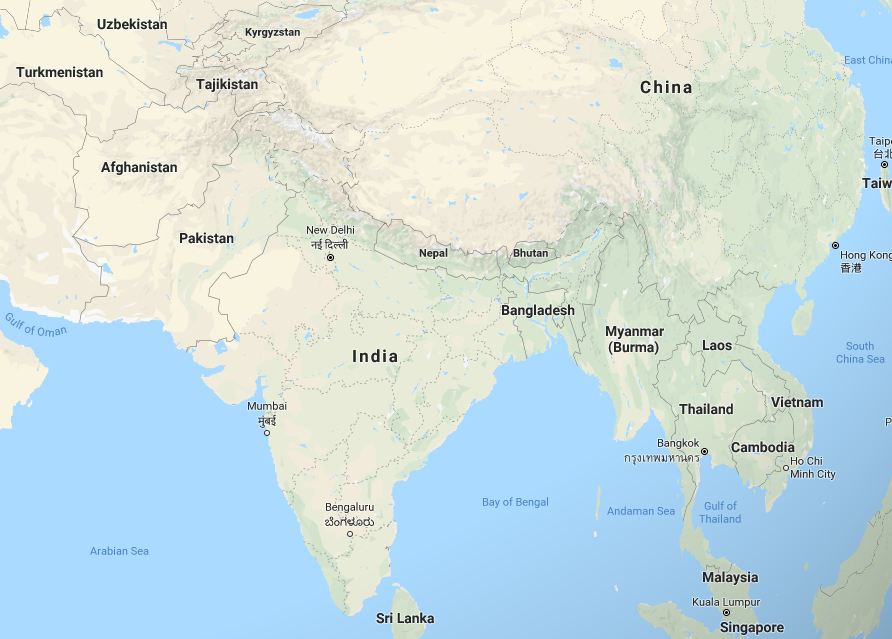
India Pakistan Bangladesh

Over 171 million Indians have escaped extreme poverty in the past decade, according to the World Bank’s Poverty & Equity Brief. While the West cannibalizes its future through debt and Marxist policies, India represents a rising pillar of economic power in the post-Western age. India has seen a real uptick in recent years under Modi’s government as he has profited from Western wars and geopolitical conflict. Additionally, the BRICS alliance has aided India in rising through the ranks to become an economic powerhouse.

Extreme poverty fell from 16.2% to 2.3% in the past decade. The standard for “extreme poverty” is living on less than $2.15 daily. Lower-middle-income poverty, those living on $3.65 daily, saw a notable decrease from 61.8% to 28.1%, aiding 378 people in escaping extreme poverty.

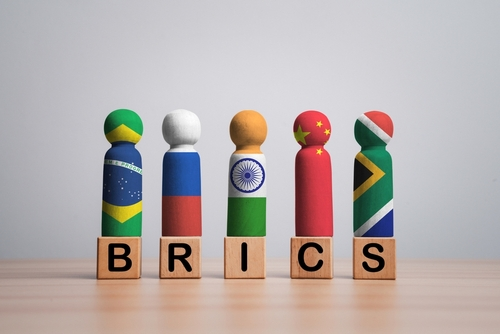
BRICS 2

Despite the elimination of the cast system in the 1950s, the nation was largely composed of the “haves” and “haves nots.” There is still a drastic difference in wealth across the nation, but conditions are improving overall. Poverty in rural areas fell from 18.4% to 2.8% in the past decade. Poverty in urban areas declined from 10.7% to 1.1%. The multidimensional poverty index (MPI) fell from 53.8% to 16.4% from 2005-06 to 2019-21. Uttar Pradesh, Maharashtra, Bihar, West Bengal, and Madhya Pradesh accounted for two-thirds of reduction in extreme poverty, and yet, these states still host half of those multidimensionally and extremely poor.

Similar to China, India has demographic strength and no issues with declining birth rates. Internal demand is also supporting economic growth. India has benefitted from increased job outsourcing rates. In the geopolitical playing field, India has taken much manufacturing from China and is benefiting from global capital reallocation.

Yet, no nation is immune to cyclical trends, and India will not escape the downturn on the horizon. India’s sovereign debt is expected to reach 80-83% of GDP by March 2026, or roughly $2.14 trillion. India is embarking on a war with Pakistan, which will bring its own troubles. As I have warned, 2026 will be a Panic Cycle year in the region. War will sweep the world as a contagion, and it is not likely to end before 2033.

Friedrich Merz become Chancellor of Germany in a Deeply Divided Nation


Posted originally on May 6, 2025 by Martin Armstrong 

Merz Friedrich

Friedrich Merz was elected as Germany’s chancellor in a second-round parliamentary vote on Tuesday after failing to secure the necessary support earlier in the day. Merz needed at least 316 of the 630 members of parliament to vote in his favor, but he received only 325 votes (51.5%). Like Mark Carney in Canada, Merz will be the final nail in Germany’s coffin. He is pro-World War III. Simply comparing the economic growth of Germany, Europe’s cornerstone of the EU economy, to that of the United States, illustrates that the greater the socialistic policies of controlling everything, even freedom of speech, produce far less economic growth. The German economy has shrunk by 3% or more thanks to COVID lockdowns, Climate Change, and Russian sanctions.

German GDP 1991 2024
US GDP Q 5 1 25

AfD Files Lawsuit Against “Extremist” Labeling


Posted originally on May 6, 2025 by Martin Armstrong 

Extremist

Political parties questioning the status quo are labeled as “far-right extremists.” And yet, these political parties represent the people far more than others in the Build Back Better category, who only have their bureaucratic interests in mind. We’ve seen it happen throughout the world, from the United States to Romania, and now in Germany with the rise of the Alternative für Germany (AfD) Party. Leaders of the AfD have filed a lawsuit after the Office for the Protection of the Constitution (BfV) labeled the group extremist domestic terrorists.

The AfD became the most popular political party in Germany this April. The party does not want to adhere to the EU’s open border policy, climate madness, or the Build Back Better agenda. In fact, they’ve openly questioned Germany’s position in the European Union. The EU would be completely lost without Germany’s backing,g and Brussels has been on high alert. AfD members have called for a “remigration” or mass deportation operation similar to what Trump is currently conducting in the US. The party has vowed to restore Germany for the people of Germany and implement mass deportation campaigns.

Their beliefs represent those of the German people. Yet, one would be hard-pressed to find a single article about AfD that does not include “extremist” in the description. German authorities have considered banning the party under Article 21 of the German constitution, which forbids political parties that “seek to undermine or abolish the free democratic basic order or to endanger the existence of the Federal Republic of Germany shall be unconstitutional.”

In no way is this party seeking to abolish democracy. Banishing a political party, however, does undermine democracy completely and silences the wishes of the people in favor of the bureaucrats. “Through our lawsuit, we aim to send a decisive message against the misuse of state authority to suppress and exclude opposition,” and that the move seeks to “distort democratic competition and undermine millions of votes,” the AfD stated.

US Secretary of State Marco Rubio voiced support for AfD over the weekend, stating that allowing German intelligence to label a political party an extremist group is “tyranny in disguise.” “What is truly extremist is not the popular AfD—which took second in the recent election—but rather the establishment’s deadly open border immigration policies that the AfD opposes,” Rubio wrote in a post on X.

“This is democracy. This decision is the result of a thorough & independent investigation to protect our Constitution & the rule of law,” the official X account for the German Foreign Office wrote in a reply to Rubio’s post. “It is independent courts that will have the final say. We have learnt from our history that rightwing extremism needs to be stopped.” Perhaps the foreign office has forgotten that a collapse in the German economy is what led to the rise of an actual extremist group.

The world has awoken, and all confidence in leftist regimes has vanished. The pendulum is swinging back toward conservatism due to the failed policies fueled by politicians who attempted to turn democratic democracies into socialist battlegrounds in the name of globalism. The people are rising not to embrace conservatism as a doctrine, but to reject the authoritarian overreach of governments that have lost all legitimacy.

Amish Win Battle Against Canadian Govt Over COVID Regulations


Posted originally on May 6, 2025 by Martin Armstrong 

Amish

The Amish had an extremely low rate of COVID infections, as well as for most diseases that infect modern societies. Regardless, the Canadian government is continuing to harass this community for failing to abide by COVID-era regulations. In particular, the Canadian government is demanding that the Amish community pay for non-compliance with the federal ArriveCAN app mandate.

The Amish do not have modern electricity, let alone cell phones. The government still insisted that the Amish download the ArriveCAN app during COVID, which was required to cross the border. Individual fines for non-compliance reached $20,000, with more than 30 Amish communities in Ontario racking up $300,000 in fines because their faith does not permit the use of electronic devices. They live in isolation from modern society and pose no risk, but the government was keen to attack anyone who avoided its authority. These regulations were never about the virus, but a power grab move for control. The Canadian government placed liens on Amish farmlands, destroyed their credit scores, and is threatening to destroy their livelihood because they did not download an app when the government told them to do so.

Leave it to top Canadian politicians to mount their soapboxes to speak of tolerance for other cultures, migrants, and religions. Now, Amish families are speaking out about how they cannot secure loans for farming equipment, removing their ability to sustain their communities all due to COVID mandates.

aMISH covid

Founded in 2021, the Democracy Fund (TDF) has been assisting members of the Amish community in their legal battle with the government. “The Democracy Fund is committed to defending the rights of the Amish community,” said Mark Joseph, TDF Litigation Director. “By helping lift these liens, we are ensuring that this vulnerable community can continue to thrive and sustain their traditional way of life.”

TDF recently won two major lawsuits on behalf of families. Joseph said the litigation “underscores the unique vulnerabilities of the Amish community to modern legal systems.” TDF went as far as offering free legal services to those impacted by Trudeau’s authoritarian COVID regulations. “TDF remains committed to their defence, exploring further reports of liens and fines affecting other Amish families across the province. As a religious minority with limited access to modern legal resources, the Amish face steep hurdles—such as restricted property transactions or farm succession—when liens are imposed.”  

Justin Trudeau called vaccine opponents “misogynistic and racist.” Yet, he went to extreme lengths to hurt marginalized communities who did not have enough of a voter base for exploitation. The public at large has erased the pain of COVID from its memory but countless people and communities are still facing the repercussions of COVID-era policies.

Portugal Snap Election – 18K Foreigners to be Deported


Posted originally on May 6, 2025 by Martin Armstrong 

Portugal

Portugal is yet another European Union nation facing extreme political instability. António Costa of the Socialist Party (PS) resigned in November of last year amid a public investigation of corruption. Luís Montenegro and his center-right Social Democratic Party (PSD) took on the role of prime minister in April 2024, but his government lost a confidence vote in March of this year, leading to the current interim caretaker government. The next snap election is slated for May 18, 202,5 where voters will select the next government.

Ahead of the snap election, Portugal is deporting 18,000 foreigners. Minister of the Presidency António Leitão Amaro said that foreigners will have 20 days to leave voluntarily. Portuguese authorities have been criticized for denying migrants due process, violating human rights, and dissenting from European Union law that aims to keep borders open. Not only can the Portuguese no longer support the cost of migrants, but the people would also like a fair election where only citizens are permitted to vote.

According to recent data, the center-right Democratic Alliance (AD) is ahead in the polls with about 32% to 34% of the vote, followed by the Socialist Party (PS) at 27% to 28%. The conservative Chega party is in third place with 16% to 18% favorability. No party is expected to gain the majority of seats at this time.

Nationalism

The Chega Party, another group described by the media as “far-right extremists,” have grown in popularity in recent years. The group, formed in 2019, has quadrupled its seat count over a five-year span. Chega is a nationalist party, a mentality feared by the unelected elite in Brussels. They believe in small government, reduced taxation, and less bureaucracy. The group favors border security, eliminating culture wars or “Marxist tendencies,” and has been critical of NATO. Similar to Germany’s AfD, the group opposes the European Union’s authoritarian control over its members and has questioned Portugal’s position in the alliance.

Portugal has surrendered national sovereignty to Brussels. The people are increasingly aware that their elected leaders are overpowered by the unelected elite who are steering the continent into ruin. It is trapped in the euro after abandoning the escudo. Portugal will continue to take on more debt at the wishes of the EU, who insist it continue funding the war in Ukraine and adhere to net zero and open border policies. Youth unemployment remains high,h and the next generation feels trapped. The trend of nationalism has become a contagion throughout Europe, but the EU will only become increasingly authoritarian to maintain power for as long as possible.

The Peasants are Revolting – Romanian Pro-EU Prime Minister Resigns


Posted originally on CTH on May 5, 2025 | Sundance 

The spotlight on Romania might just be too intense for the EU/NATO globalists to pull off another election outcome.

With the first-round of the Romanian re-do election now completed, the nationalists have shown their resilience and delivered a defeat to the globalists.

In response the pro-NATO/EU prime minister has announced his resignation.

BUCHAREST, Romania (AP) — Romanian Prime Minister Marcel Ciolacu announced his resignation on Monday, a day after the governing coalition’s joint candidate failed to advance to the runoff in the closely watched rerun of the presidential election.

The coalition’s candidate, Crin Antonescu, was third in Sunday’s first round, far behind top finisher hard-right nationalist George Simion and pro-Western reformist Bucharest Mayor Nicusor Dan.

“Rather than let the future president replace me, I decided to resign myself,” the prime minister told reporters after a meeting at the headquarters of his Social Democratic Party, or PSD.

Sunday’s rerun underscored strong anti-establishment sentiment among Romanians and signaled a power shift away from traditional mainstream parties. It also renewed the political turmoil that has gripped the European Union and NATO member country. (more)

Sovereigntists vs. Globalists


Posted originally on Rumble By Bannon’s War Room on: May 4, 2025, at 2:00 pm EST

Viktor on the Fate of the EU


Posted originally on May 5, 2025 by Martin Armstrong