Posted originally on the CTH on March 24, 2023 | Sundance
Joe Biden is in Canada visiting Justin Trudeau Friday and they held a joint press conference. WATCH:
[Transcript] – We’ll be taking two questions from the American delegation, two questions from the Canadian delegation. One question and one follow-up.
Mr. President, first question over to you.
PRESIDENT BIDEN: All right. I guess the first person I’m calling on is Josh. Josh Boak. Josh?
Q Thank you, Mr. President. Two questions, one for each of you.
Mr. President, you talked today about the security and economic partnership with Canada. President Xi just went to Russia and expanded China’s economic commitment with that country. Why do you think many leading countries are choosing to form competing partnerships? And what does that mean for the world?

PRESIDENT BIDEN: It —
Q Prime Minister Trudeau —
PRESIDENT BIDEN: Oh, sorry.
Q — Canada recently banned TikTok on government devices. Knowing what you know, are you comfortable with the idea of your children or family members using TikTok? Thank you.
PRESIDENT BIDEN: I respond to the question first here?
Well, first of all, look, in 10 years, Russia and — and China have had 40 meetings. Forty meetings.
And I disagree with the basic premise of your question. I have — we have, you know, significantly expanded our alliances. I haven’t seen that happen with China and/or Russia or anybody else in the world.
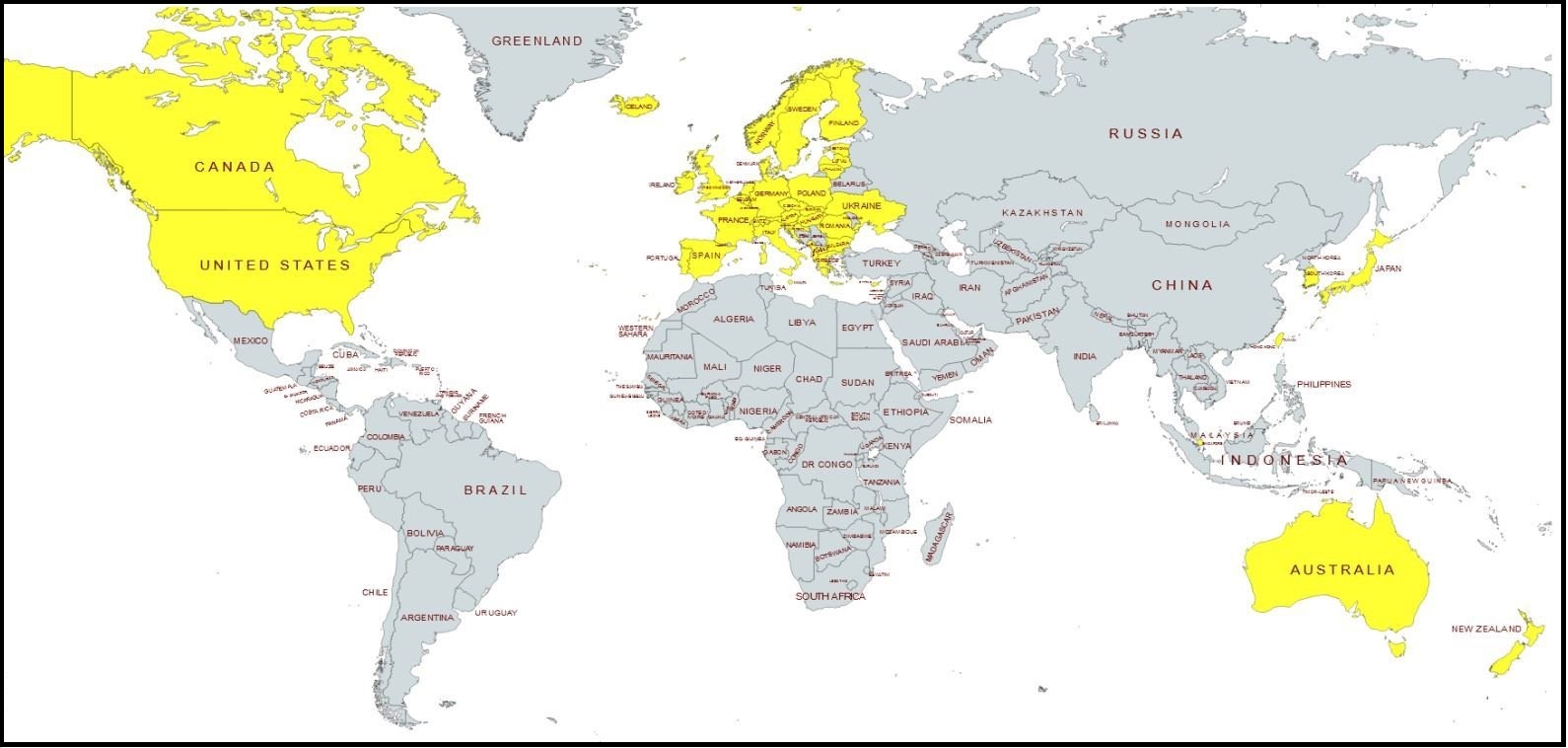
We’re in a situation in the United States where NATO is stronger, we’re all together — the G7, the Quad, the ASEAN, Japan and Korea.
I have — my staff pointed out to me: I have now met with 80 percent of the world leaders just since I’ve been President. We’re the ones expanding the alliances. The opposition is not.
Name for me where that’s going, and tell me what ha- — I don’t mean literally you, but rhetorically — tell me how, in fact, you see a circumstance where China has made some significant commitment to Russia. And what commitment can they make, economically? Economically.
Q Their trade has increased, sir.
PRESIDENT BIDEN: Pardon me?
Q Their trade has increased, sir.
PRESIDENT BIDEN: Yeah, their trade has increased compared to what?
Look — look, I don’t take China lightly. I don’t take Russia lightly. But I think we vastly exaggerate.
I would hear — I’ve been hearing now for the past three months about “China is going to provide significant weapons to Russia, and they’re going to…” — you all have been talking about that. They haven’t yet. Doesn’t mean they won’t, but they haven’t yet.
And if anything has happened, the West has coalesced significantly more.
How about the Quad? How about Japan and the United States and South Korea? How about what we’ve done in terms of AUKUS? How about what we —
I mean, so I just — I just want to put it in perspective. I don’t take it lightly what Japan — what China, excuse me, and — and Russia are doing. And it could get significantly worse.
But let’s put it in perspective: We are uniting coalitions. We. We, the United States and Canada.
PRIME MINISTER TRUDEAU: On TikTok, we made a similar decision to the American government and others when we said that we do not feel that the security profile is safe for government-issued phones. There are concerns around privacy and security, and that means — that is why we have banned TikTok from government-issued phones.
But your question, Josh, was about what I do as a parent of teenagers and my kids on social media. And on that, I —
PRESIDENT BIDEN: Pray.
PRIME MINISTER TRUDEAU: — (laughs) — on that, I am obviously concerned with their privacy and their security, which is why I’m glad that on their phones — that happen to be issued by the government — they no longer access TikTok. (Laughter.)
That was a big frustration for them. “Really? This applies to us too, Dad?” “Yes, I just did that.” (Laughter.)
But I think as parents, we are understanding, particularly of teenagers, just how much of our kids’ lives are lived online and how much they are impacted not just by — influenced the way their friends are and peer pressure that all of us went through as teenagers, but a degree of misinformation, disinformation, and malicious activity that is allowed for by incredible advances in technology that we are benefiting from in so many different ways.
As governments, we have to make sure we’re doing what we can to keep people safe in the public square, making sure we’re pushing back against hate speech and incitations to violence online. And we’re carefully calibrating legislation to do that.
As a parent, I spend a lot of time talking to my kids about what’s online and how they should try and, you know, go outside and play a little more sports and not get so wrapped up in their phones. And we’re going to continue to do that.
Our concerns around TikTok are around security and access to information that the Chinese government could have to government phones.
It’s just a personal side benefit that my kids can’t use TikTok anymore — that I recommend everyone to use my en- — my encouragement to try and do.
MODERATOR: (As interpreted.) We’ll now go to a Canadian question. Christian Noel.
Q (As interpreted.) Good afternoon, Mr. President. Good afternoon, Mr. Prime Minister. I’d like to ask a question about Roxham Road. The agreement has been ready for a year. Why did you wait so long?
And for the 15,000 migrants that Canada will welcome, why so few? What have we offered to the U.S. in exchange?
PRIME MINISTER TRUDEAU: (As interpreted.) Thank you, Christian. We’ve known for a long time theoretically what modernization needed to be made to the Roxham Road, to the agreement. We couldn’t simply shut down Roxham Road and hope that everything would resolve itself, because we would have had problems. The border is very long. People would have looked for other places to cross.
And so that’s why we chose to modernize the Safe Third Country Agreement so that someone who attempts to cross between official crossings will be subject to the principle — the same principle as someone who should seek asylum in the first safe country they arrive at.
Now, for people who are coming from the U.S., that is where they should be asylum seekers, using this means of uniformly applying the agreement, which we knew theoretically would be the solution, but it takes complex processes to manage the border. It took months before we could move forward with the announcement.
But by doing so, we protected the integrity of the system. And we’re also continuing to live up to our obligations with respect to asylum seekers.
At the same time, we continue to be open to regular migrants, and we will increase the number of asylum seekers who we accept from the hemisphere — the Western Hemisphere — in order to compensate for closing these irregular crossings.
Thank you.
Q Mr. President, this question is for you.
(As interpreted.) Please feel free, Mr. Trudeau, to answer as well.
Are you disappointed that Canada is not part or hasn’t taken a bigger role in the multilateral forces in Haiti? And what would you like Canada to do more, in addition to the $100 million announced today?
PRESIDENT BIDEN: Well, no, I’m not disappointed. Look, this is a very, very difficult circumstance, the idea of how do we deal with what’s going on in Haiti, where gangs have essentially taken the place of the government, in effect. They run — they rule the roost, as the saying goes.
And so I think that what the Prime Minister has spoken about makes a lot of sense. The biggest thing we could do, and it’s going to take time, is to increase the prospect of the police departments in Haiti having the capacity to deal with the problems that are faced. And that is going to take a little bit of time.
We also are looking at whether or not the international community, through the United Nations, could play a larger role in this event, in this — this circumstance. But there is no question that there is a real, genuine concern, because there are several million people in Haiti, and the diaspora could cause some real — how can I say it? — confusion in the Western Hemisphere.
And so — but I think that what the Prime Minister is suggesting, and we are as well going to be contributing, to see if we can both increase the efficiency and capacity of the training and the methods used by the police department, as well as seeing if we can engage other people in the hemisphere, which we’ve been talking to, and they’re prepared to do some. So it’s — it’s a work in progress.
PRIME MINISTER TRUDEAU: (As interpreted.) For 30 years, Western countries have been involved in Haiti to try to stabilize the country, to try to help the Pearl of the Antilles. And the situation is atrocious. It’s affecting the security of the people of Haiti. We must take action.
And we must keep the Haitian people in the approach that we build for security. And that’s why the approach that we are working on with the U.S. involves strengthening the capacity of the Haitian National Police, bringing more peace and security and stability. This won’t happen tomorrow. It will, of course, be a long process, but we will be there to support the capacity of the police in Haiti, the National Police.
At the same time, part of the insecurity and instability in Haiti is because of the Haitian elite, who have for too long benefited from the misery of the Haitian people. They work for their own political gain, their own personal gain. And this has prevented the country from recovering. And that’s why we’re proceeding with sanctions. We will continue to bring pressure to bear on the elite, the political class in Haiti, to hold them accountable for the distress facing the Haitian people, but to hold them accountable for ensuring their wellbeing.
We’re going to continue to work together. We fully understand how important this task is.
MODERATOR: Mr. President, over to you.
PRESIDENT BIDEN: Can I follow up with one point on Haiti? And that is that any decision about military force, which it’s often raised, we think would have to be done in consultation with the United Nations and with the Haitian government. And so that is not off the table, but that is not in play at the moment.
I’m sorry.
MODERATOR: Over to you for the question, Mr. President.
Jordan, you have a question?
Q Thank you, Mr. President. Some on Wall Street have expressed frustration that it’s unclear what more your administration is willing to do to resolve the banking crisis. The markets have remained in turmoil. So how confident are you that the problem is contained? And if it spreads, what measures, such as guaranteeing more deposits, are you willing or not willing to take?
PRESIDENT BIDEN: First of all, have you ever known Wall Street not in consternation? Number one.
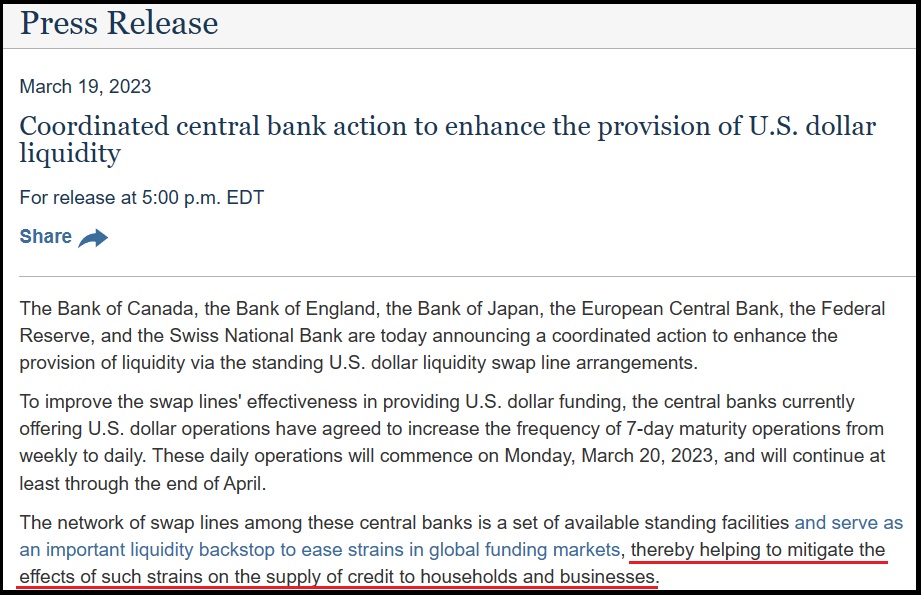
Look, I think we’ve done a pretty damn good job. People’s savings are secure, and even those beyond the $250,000 the FDIC is guaranteeing them. And the American taxpayer is not going to have to pay a penny. The banks are in pretty good shape. What’s going on in Europe isn’t a direct consequence of what’s happening in the United States.
And I — what we would do is if we find that there’s more instability than appears, we’d be in a position to have the FDIC use the power it has to guarantee those — those loans above 250, like they did already.
And so I think it’s going to take a little while for things to just calm down. But I don’t see anything that’s on the horizon that’s about to explode. But I do understand there’s an unease about this. And these mid-sized banks have to be able to survive, and I think they’ll be able to do that.
Q And, Mr. Prime Minister, the U.S. has included Canada in electric vehicle subsidies, as you’ve discussed, that were included in the Inflation Reduction Act. But the IRA also raises some competitiveness concerns and challenges for Canada. You know, President Biden supports “Buy American” provisions very strongly, and that has historically led to some trade tensions.
So are you planning to announce anything in your budget to keep up, so to speak? And are you asking the U.S. government for exceptions to the “Buy American” provisions in other areas?
PRIME MINISTER TRUDEAU: First of all, there’s nothing new about Canada having to make sure that we remain competitive with the United States as a place for investment. That’s something that we have long known as a friendly competition between us that has led to tremendous growth and benefits in both of our countries.
Right now, we’re in a time where — Joe talked about it as an inflection point; I think that’s exactly right. We can feel the global economy shifting — shifting in very real ways towards lower carbon emission technologies, cleaner tech, great jobs in the natural resource and manufacturing industries that are going to be increased on our continent after years of outsourcing and offshoring. There is a real opportunity for both of us.
And the IRA, which is bringing in massive investments and massive opportunities for American workers and companies, is also going to have strong impacts on supply chains and producers and employees in Canada.
Yes, we’re going to have to make sure we’re staying competitive and targeting the areas where we think we can best compete. And we’ll have more to say about that in our budget next week.
But let us take a moment to step back and see that North America — Canada and the United States in particular — are incredibly well positioned to be the purveyors of solutions and economic growth that the net-zero economy around the world will need over the coming decades. The innovation, the know-how, the ability of us to make big things together leave us, in a time of global uncertainty, extremely certain that we are well placed for the future.
Whether it’s investments that have seen Canada go from fifth or sixth in the world, in turn of — in terms of battery supply chains, to now second in the world in terms of battery supply chains.
Whether it’s continuing our leadership on the cleanest aluminum in the world, moving towards cleaner steel and zero emission steel.
Whether it’s moving forward on critical minerals that the world is understanding they can no longer rely on places like China or Russia for — that they can rely on Canada to be not just a purveyor of ores, but of finished materials that will be built in environmentally responsible, union or good middle-class jobs — wages, strong communities, and the kind of leadership that the world is increasingly looking for.
There’s long been a bit of a weakness, I think, to our argument that we’ve made over the past decades as Western democracies that says that our model is the best one, it leads to the most prosperity. But so much of our model — we sort of turned our back to the fact that it relied on cheap imports —
PRESIDENT BIDEN: Bingo.
PRIME MINISTER TRUDEAU: — of goods or resources from parts of the world that didn’t share our values and weren’t responsible on the environment or on human rights or on labor standards.
And what we are doing right now is showing that we can and will build resilient supply chains between us and with friends around the world that adhere every step of the way to the values that we live by, that make sure that there are good jobs for workers in communities, urban and rural, right across our continent; there are good careers for kids long into the future, not in spite of a changing world, but because of that changing world, and how well we are positioned to see the future and meet the future.
That’s why it’s so exciting to be able to work alongside Joe in these challenging times where we know we are better positioned than just about anyone else. And those friends of ours who share our values and our democracies around the world will benefit from the strength and the relations they have with us. And those who choose to continue to turn their backs on the environment, on human rights, on the values of freedom and dignity for all, will increasingly not be able to benefit from the growth that our societies, that our communities are creating every single day.
PRESIDENT BIDEN: And, by the way, we each have what the other needs. We each have what the other needs.
The idea that somehow Canada is somehow put at a disadvantage — because we’re going to probably be investing billions of dollars in their ability to package what is coming out of the semiconductor area — I don’t get it. How’s that in any way do anything other than hire and bring billions of dollars into Canada?
I also don’t understand how, when we talk about it, we — we greatly need Canada, in terms of the minerals that are needed.
Well, you guys — we don’t have the minerals to mine. You can mine them. You don’t want to produce — I mean, you know, turn them into product. We do.
I mean, it’s — I’m a little confused, at least thus far, on why this is a disadvantage for — for Canada and the United States. I think we each have what the other needs.
And let me conclude by saying: You know, when I started talking about we’re going to build our economies from the middle out and the bottom up, not the top down, I was being literal. Because what happened is, if you think about it — in Democrat and Republican administrations beginning over 30 years ago or more in the United States — corporate America decided that what they’re going to do is they’re going to export jobs and import product because it was cheaper labor.
Well, guess what? Now we are making sure they import jobs here — jobs here — and we export product. Canada is doing the same thing.
So this is a real — this is a real shift in the world economy, in terms of what we’re prepared to do. And I’ll be darned if I’m going to stick in a situation where, as long as I’m President, where we have to rely on a supply chain in the other end of the world that is affected by politics, pandemics, or anything else.
We’re not hurting — we’re not hurting anyone in terms of having access to the start of the supply chain. It’s available.
But again, I — I predict to you, you’re going to see, after we’re both out of office, both China — I mean, China out of the game, in terms of many of the — the product they’re — they’re producing, and the United States and Canada pretty solid economically situated for the future in terms of also bringing back manufacturing jobs.
MODERATOR: Merci.
PRESIDENT BIDEN: Sorry. And they’re telling me I’m talking too long because we got to go to dinner. (Laughter.)
MODERATOR: Thank you.
(In French.) (As interpreted.) We’ll take one last question.
Q My first question is for the Prime Minister. But, Mr. President, feel free to weigh in before my follow-up.
Prime Minister, we know you’ve — we know that you’ve appointed a special rapporteur, but with what we’ve learned about Han Dong’s communication with the Chinese Consular General, do you believe he advocated for the delayed release of the two Michaels?
PRIME MINISTER TRUDEAU: First of all, Han gave a strong speech in the House that I recommend people listen to, and we fully accept that he is stepping away from the Liberal caucus in order to vigorously contest these allegations.
But I do want to take a step back and point out that foreign interference, interference by authoritarian governments, like China, Russia, Iran, and others, is a very real challenge to our democracies and is absolutely unacceptable.
It’s why, over the past number of years, the President and I have had many conversations about this. And indeed, we’ll continue to work together with our democratic allies around the world to keep our institutions and our democracies safe from foreign interference.
In 2018, when Canada hosted the G7 in Charlevoix, we actually created the G7 Rapid Response Mechanism to protect our democracies in cases of interference. And we will continue to work together to make sure we’re doing everything necessary to protect our democracies, which, by definition, are more open and therefore more vulnerable to foreign actors trying to weigh in in our politics, in our business, in our research institutions, and particularly impact on citizens themselves — which is why, over the past years, Canada, like our allies around the world, has given itself new rigorous tools to counter foreign interference.
And with the work that our expert rapporteur will do, with the work that our National Security Committee of Parliamentarians will be doing, and other institutions, we will continue to do everything necessary to keep Canadians safe.
PRESIDENT BIDEN: I have nothing to add. (Laughter.)
Q Thank you. And, Mr. President, when you took office, you cancelled the Keystone XL pipeline. This week, your government delayed the environmental assessment to reroute Enbridge Line 5, and at the same time, you’re approving oil drilling in Alaska.
So what’s your response to people who say it’s hypocritical to stymie Canadian energy projects while allowing your own?
PRESIDENT BIDEN: First of all, I don’t think it is, but I’ll be very brief.
The difficult decision was on what we do with the Willow Project in Alaska, and my strong inclination was to disapprove of it across the board. But the advice I got from counsel was that if that were the case, we may very well lose in court — lose that case in court to the oil company — and then not be able to do what I really want to do beyond that, and that is conserve significant amounts of Alaskan sea and land forever.
I was able to see to it that we are literally able to conserve millions of acres, not a — not a few — millions of acres of sea and land forever so it cannot be used in the future.
I am banking on — we’ll find out — that the oil company is going to say not — that’s not going to be challenged, and they’re going to go with thr- — with three sites. And the energy that is going to be produced they’re estimating wou- — would account to 1 percent — 1 percent of the total production of oil in the world.
And so I thought it was a good — a — the better gamble and a hell of a tradeoff to have the Arctic Ocean and the Bering Sea and so many other places off limits forever now.
I think we put more land in conservation than any administration since Teddy Roosevelt. I’m not positive of that, but I think that’s true.
Q So why are you delaying efforts then?
MODERATOR: Thank you all. This is what concludes today’s press conference.
PRESIDENT BIDEN: Thank you.
Q Mr. President, Iran keeps targeting Americans. Does there need to be a higher cost, sir?
PRESIDENT BIDEN: We are not going to stop.