How Europe Will Kill Tourism – The Age of Big Brother is Upon Us


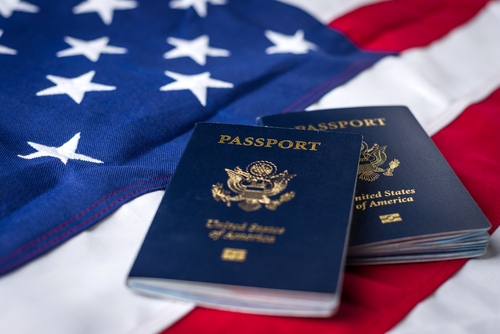
The world seems to be moving toward complete control over the freedom of movement. Most likely, we are approaching that critical point where governments are afraid of what is coming on the horizon. There are those in government who are well aware that socialism is collapsing and they indeed fear the rise of civil unrest. As a result, they are imposing restrictions on the freedom of movement. A passport is a travel document, usually issued by a country’s government, that certifies the identity and nationality of its holder primarily for the purpose of international travel.

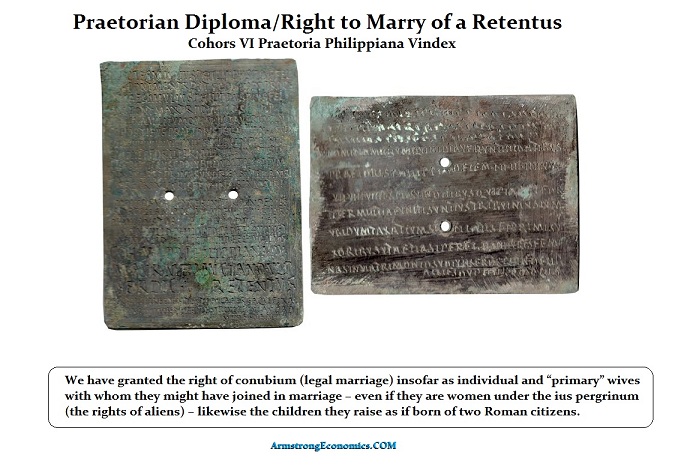
In ancient times, there still was a requirement to prove you were somehow legitimate. Here is a Praetorian document[1] granted by the emperor giving a soldier the right to marry an alien. She was to be treated as a citizen and any children would also be considered to be a Roman citizen. There was no formal need for a passport within the Roman Empire, however, you still needed to prove your legal status somehow. A messenger or individual traveling though territories would carry some form of the mark from his patron, whether it be a sealed letter or a piece of jewelry that confirmed who he was.

Today, we have class rings to prove you went to a particular school. Here is a Roman legionary ring to prove you were a soldier. You did need something to convey who you were to protect the traveler from harassment, for he was protected by a mark in a ring or document. That person was then under the protection of whoever’s seal or mark they bore. Roman society was built around the idea of a Client-Patron relationship. Therefore, this relationship conveyed that you were under some sort of protection and thus lacking that distinction that could otherwise allow you to be robbed or whatever.

You would place yourself under the protection of a certain individual or become indebted to one and then you would owe them some favors or errands later in life. This thus allowed for safe passage through the Empire. This same sort of system was in place internationally as well. If someone from the merchant class traveled abroad to trade, he would carry the mark of his patron with him. Likewise, a diplomat would carry a symbol of the emperor or a noble family to prove his status.

Indeed, perhaps one of the earliest known references to an international travel document/passport is found in the Hebrew Bible. Nehemiah 2:7–9, dated from approximately 450 BC. It there states that Nehemiah, an official serving King Artaxerxes I of Persia, asked permission to travel to Judea; the king granted leave and gave him a letter “to the governors beyond the river” requesting safe passage for him as he traveled through their lands.

The 1548 Imperial Diet of Augsburg required the public to hold imperial documents for travel at the risk of permanent exile. But this had adopted the policies that first emerged in England when King Henry V is credited with having invented the first modern passport, as a means of helping his subjects prove who they were in foreign lands. The earliest reference to these documents is found in a 1414 Act of Parliament.

In 1540, granting travel documents in England became standard and this became the job of the Privy Council. It was about this time that the term “passport” was used. You were considered the “subject”of your king and that really meant you were his “property.” If you left England to go to France where you committed some crime, the French king could not punish you and you had to be returned to your king (owner) with an account of what crime you committed, for only he could punish his property.

This tradition of being the property of a king led to the development of territorial jurisdiction with the American Revolution, for to deport someone to their king to be punished for a crime in America made no sense when they declared to be free of a monarchy. The American Revolution meant if you committed some crime in America, you were to be punished locally and not returned to a king they did not recognize.

In 1794, the British passports became the job of the Office of the Secretary of State as a result of the American Revolution and thus became a standard practice, whereas the Privy Council formally advised the sovereign on the exercise of the Royal Prerogative which would grant a document for travel at the prerogative of the king.
Some Europeans have taken offense to what I wrote that Americans will need a visa to visit Europe starting in 2021. They say this is not a visa, but just a “screening.” They fail to understand that this is not a visa in the sense of a stamp in your passport. Beginning in 2021, all foreign citizens will be required to undergo a pre-screening and registration process, which will be known as the European Travel Information and Authorization System (ETIAS) before entering European Schengen-zone[2]countries. Not all EU members are part of this Schengen agreement – notably Britain, Scotland, and Ireland.

Currently, if you want to travel to Rome for a vacation, you just hop on a plane and you do not need to apply for a visa in advance for up to 90 days. They grant you the visa there upon entry. That will all come to an end which is why we are holding what may be our LAST EUROPEAN WEC this year. Every American will require pre-screening, so in other words, you will need a quasi-visa to even get on the plane. There will be no more free travel.

The USA has the Electronic System for Travel Authorization (ESTA) which is also an automated system used to determine the eligibility of visitors to travel to the United States under the Visa Waiver Program (VWP) and whether such travel poses any law enforcement or security risk. This is not mandatory at this time and it does not eliminate a visa when that is required from certain countries.

This is what I call a quasi-visa, which is pre-screening. Europe will simply require all foreigners, including Americans and Canadians, to obtain a pre-screening to even board a plane in advance. The technical “visa” will still be stamped in your passport upon arrival.

So those trying to distinguish this from a visa are overlooking the fact you cannot get on a plane without the pre-screening approval, which means it is the same as if you had to apply for a visa to enter the country.

Each traveler will be required to apply for the right to visit Europe online. They will have to fill out forms with all personal biometric questions (name, date of birth, etc.), passport information, as well as questions about the applicant’s health, criminal record, and any previous European immigration history. They will be able to deny you access based upon health or even political philosophy or public statements in social media. Officially, here’s how the process works but they do not provide the hidden details.
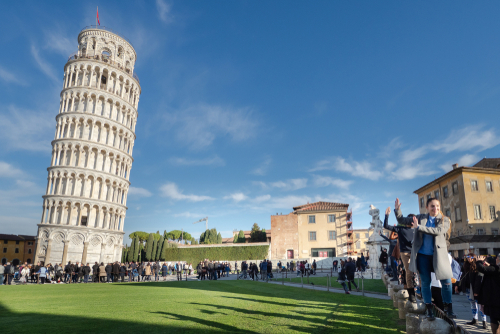
The application will be then checked across multiple databases right down to your credit history. If the application is not flagged to be looked over manually, they claim a decision will be reached by the system “within minutes,” the site says. If an application is denied, the applicant will receive a reason as to why but you can bet it will omit all political implications and focus on anything, such as arrest records, and will deny you a visa. The shocking number of Americans who are arrested is one-thirdof those BEFORE they reach the age of 25. That alone will eliminate one-third of Americans who will be denied a visa. Then they will move to your credit history, health, and so on. And people talk about Trump’s wall? They have no problem with refugees pouring into the country, but Americans looking to see the Leaning Tower of Pisa, sorry you have a bad credit history.

We are approaching the real Big Brother era. By 2020, China also plans to give all its 1.4 billion citizens a personal scorebased on how they behave. Some with low scores are already being punished if they want to travel. Nearly 11 million Chinese are not allowed to fly and 4 million are barred from trains. We are rapidly approaching the use of technology that will prevent you from traveling or doing anything if you are somehow not acceptable to governments.

Our children and grandchildren will NEVER know what freedom really was all about.

Welcome to the new age of technology. We will have to prove who we are to even move. In communism, you could not move to a different house without the permission of the government. If governments see their demise, they will do whatever it takes to retain power.


[1] EXTERIOR OF THE TABLET:

IMP(erator) CAES(ar) M(arcus) IVLIVS PHILIPPVS PIVS FEL(ix) / AVG(ustus) PONT(tifex) MAX(imus) TR(ibunicia) POT(estate) V CO(n)S(ul) III P(ater) P(atriae) PROC(onsul) / IMP(erator) CAES(ar) M(arcus) IVLIVS PHILIPPVS PIVS FEL(ix) / AVG(ustus) PONT(tifex) MAX(imus) TR(ibunicia) POT(estate) II CO(n)S(ul) II P(ater) P(atriae) / NOMINA MILITVM QVI MILITAVERVNT IN / COHORTIBVS PRAETORIS PHILIPPIAN(is) DECEM / I II III IIII V VI VII VIII VIIII X PIIS VINDICIBVS / QVI PII ET FORTITER MILITIA FVNCTI SVNT / IVS TRIBVIMVS CONVBII DVMTAXAT CVM / SINGVLIS ET PRIMIS VXORIBVS VT ETIAMSI PEREGRINI IVRIS FEMINAS IN MATRI / [blank line with pair of holes for sealing the document] / MONIO SVO IVNXER(int) / PROINDE LIBE / ROS TOLLANT AC SI EX DVOBVS CIVIBVS ROMANIS / NATOS A(nte) D(iem) VII IDVS IAN(uarias) / IMP(eratore) M(arco) IVL(io) PHILIPPO PIO FEL(ice) AVG(usto) III / IMP(eratore) M(arco) IVL(io) PHILIPPO PIO FEL(ice) AVG(usto) CO(n)S(ule) / COH(ors) V PR(aetoria) PHILIPPIAN(a) P(ia) V(index) / M(arco) AVRELIO M(arci) F(ilio) MVCIANO / VLP(ia) SERDIC(a) RETENTVS / DESCRIPT(um) ET RECOGNIT(um) EX TAB(ula) AEREA QV(a)E FIXA / EST ROM(ae) IM (sic) MVRO POS(t) / TEMPL(um) DIVI AVG(usti) AD / MINERVAM

TRANSLATION OF THE EXTERIOR OF THE TABLET:

Emperor Caesar Marcus Julius Philippus Pius Felix Augustus, Pontifex Maximus, holding tribunician power for the fifth time, consul for the third time, Pater Patriae, Proconsul, [and] Emperor Caesar Marcus Julius Philippus Pius Felix Augustus, Pontifex Maximus, holding tribunician power for the second time, consul for the second time. The names of the soldiers who served in the ten cohortes praetoriae Philippianae piae vindices – I II III IIII V VI VII VIII VIIII X – who loyally and bravely performed their military service. We have granted the right of conubium (legal marriage) insofar as individual and “primary” wives with whom they might have joined in marriage – even if they are women under the ius pergrinum (the rights of aliens) – likewise the children they raise as if born of two Roman citizens. (Dated) the seventh day before the Ides of January while the emperor Marcus Julius Philippus Pius Felix Augustus for the third time and Marcus Julius Philippus Pius Felix Augustus were consuls (7 January AD 248). Cohors V Praetoria Philippiana Vindex – For Marcus Aurelius Mucianus, son of Marcus – Ulpia Serdica – a retentus. A transcribed copy from the bronze tablet which has been affixed at Rome to the wall behind the Temple of Augustus by Minerva.

INTERIOR OF THE TABLET:

IMP(erator) CA(e)S(ar) M(arcus) IVLIVS PHILIPPVS PIVS FEL(ix) AVG(ustus) / PONT(tifex) MAX(imus) TRIB(ibunicia) POST(estate [sic) V CO(n)S(ul) III P(ater) P(atriae) PROC(onsul) / M(arcus) IVLIVS PHILIPPVS PIVS FEL(ix) AVG(ustus) CO(n)S(ul) II / NOMINA MILITVM QVI MILITAVERVNT IN / COH(or)TIBVS / [blank line with hole for sealing the document] / PRAETORIS PHILIPPIAN(is) DECEM I II III IIII V VI / VII · VIII · VIIII · X PIIS VINDICIBVS QVI PIAE ET FOR / TITER MILITIA FVNCTI SVNT IVS TRIBVIMVS CVM / VBI(i) DVMTAXAT CVM SI [hole for sealing the document] NGVLIS ET PRIMIS V / XORIBVS VT AETIA SI PEREGRINI IVRIS FEMI / NAS IN MATRI MONIO SVO IVNXERI(nt) / RCOINDE (sic) LIB(eros) / [TOLLANT] AC SI ES (sic) DVO(bus) CIVI(bus) ROMANIS

TRANSLATION OF THE INTERIOR OF THE TABLET:

Emperor Caesar Marcus Julius Philippus Pius Felix Augustus, Pontifex Maximus, holding tribunician power for the fifth time, consul for the third time, Pater Patriae, Proconsul, [and] Emperor Caesar Marcus Julius Philippus Pius Felix Augustus, Pontifex Maximus, holding tribunician power for the second time, consul for the second time. The names of the soldiers who served in the ten cohortes praetoriae Philippianae piae vindices – I II III IIII V VI VII VIII VIIII X – who loyally and bravely performed their military service. We have granted the right of conubium (legal marriage) insofar as individual and “primary” wives with whom they might have joined in marriage – even if they are women under the ius pergrinum (the rights of aliens) – likewise the children they raise as if born of two Roman citizens.. W. Eck and A. Pangerl, “Diplome für prätorianersoldaten aus der Herrschaftzeit der Philippi,” ZPE 176 (2011), §4. As made, green patina, lightly corroded upper left of exterior and corresponding area of reverse, one small chip in patina in center towards bottom, reverse thin olive brown patina, a few adjustment marks. A fine extant military diploma from the 3rd century, and especially rare, as it belongs to a praetorian soldier and notes his place of final deployment as a retentus (a soldier who continued to serve after his term of service was completed).


[2]You must apply to visit Schengen Area

Austria, Belgium, Czech Republic, Denmark, Estonia, Finland, France,  Germany, Greece, Hungary, Iceland, Italy, Latvia, Liechtenstein, Lithuania, Luxembourg, Malta, Netherlands, Norway, Poland,  Portugal, Slovakia, Slovenia, Spain, Sweden, Switzerland.

Sunday Talks: Andrew McCabe Shocked Over Manafort Prison Sentence…


The primary ‘spygate” architect appears on CBS with Margaret Brennan to share his reaction to the sentence of Paul Manafort for tax fraud. Andrew McCabe said he was ‘shocked’, ‘s.h.o.c.k.e.d‘, that Manafort was not given a life sentence.

.

[Transcript] MARGARET BRENNAN: We’re back with former acting FBI Director Andrew McCabe. He is the author of a new book, The Threat: How the FBI Protects America in the Age of Terror and Trump. Good to have you here.

ANDREW MCCABE (Former Acting FBI Director/The Threat): Thanks so much for having me.

MARGARET BRENNAN: I want to start you off on some of the news of the week.

ANDREW MCCABE: Okay.

MARGARET BRENNAN: Former Trump campaign chairman Paul Manafort was sentenced this week. He will also face sentencing in a DC court in the days to come. He was given forty-seven months, far less than what is the sentencing guideline of up to–

ANDREW MCCABE: That’s right.

MARGARET BRENNAN: –twenty-plus years? Is the length of time he will serve matching the crimes he’s being accused of?

ANDREW MCCABE: Well, I was really surprised by the sentence he was given. I think it’s an incredibly lenient sentence in light not just of the– of the offenses he was convicted for but the additional offenses that he has pled guilty to in DC and the offenses he’s acknowledged, essentially, in the sentencing process in Virginia, that he is res– responsible for. So like most people I was shocked by how lenient the sentence was.

MARGARET BRENNAN: So it sounds like you’re predicting that the DC court may add to those forty-seven months?

ANDREW MCCABE: Well, there’s no question he’s going to get additional time from DC. I don’t think it’s probably the– the job of the DC courts to rectify a mistake or– or something that was done in another jurisdiction. I’m sure that Judge Jackson will approach her sentence with just keeping our eye on the facts of that case but there’s no doubt he’ll get additional time from that process.

MARGARET BRENNAN: In your book The Threat you write about some of the President’s public comments about Paul Manafort in particular and you frame it in one passage as possible witness tampering. You say you fear a judge will be influenced by some of the po– the President’s comments. Did you have any sense that that’s what happened here with Judge Ellis?

ANDREW MCCABE: I don’t. I don’t. But the point that I try to make in the book is that it’s to try to highlight how incredibly irresponsible and, indeed, corrosive statements like that from the chief executive are on the process and on the public’s perception of the fairness and the effectiveness of the process. When the President engages in messaging like people can’t help but step back and ask themselves that question that you just asked, did that have an impact on the process or on the result in this case. We don’t know the answer to that but it introduces a level of doubt and insecurity into a system that we all need to depend on– depend upon to being fair and– and free.

MARGARET BRENNAN: The charges that Paul Manafort faced were in regard to financial crimes. Do you believe that he was a Russian asset?

ANDREW MCCABE: I don’t know the answer to that. I think that Mister Manafort’s extensive involvement with Ukrainian and Russian actors is highly suspicious. I think that that’s something that we’ll wait to see what the Mueller team opines on with their– with their final conclusion.

MARGARET BRENNAN: Because the President seized on a comment made by Judge Ellis who seemed to be just pointing out that the Russian potential links were not actually part of the trial–

ANDREW MCCABE: Right.

MARGARET BRENNAN: –that we have seen underway here. So you’re saying there the President’s comments were not actually accurate.

ANDREW MCCABE: Well, that– that shouldn’t be a surprise. I think that Judge Ellis was very careful to indicate that he was sentencing Mister Manafort for the conduct that was before him. And he– Mister Manafort was not charged in that case with being an agent for the government of Russia. So I think– I think Judge Ellis’s efforts to be careful and tailor his words are far from an exoneration of Mister Manafort on any other potential charges.

MARGARET BRENNAN: I want to ask you as well about Michael Cohen, the President’s longtime attorney and we played in the open some of the– the tapes showing the changing stories here in regard to–

ANDREW MCCABE: Right.

MARGARET BRENNAN: –whether there was discussion or not of a presidential pardon. Now it appears according to the President that it was discussed. As an investigator, what do you make of that?

ANDREW MCCABE: Very, very hard to sort through a basically he said– he said argument between two people who have very challenged credibility. At the end of the day, the strength of Michael Cohen’s testimony– potential testimony is derived not from what he’s telling us now but rather from whatever facts and corroborative evidence the prosecutors were able to glean from that treasure trove of documents and recordings and other things that we’ve heard so much about.

MARGARET BRENNAN: You’re saying, don’t take him at his word, take him by the evidence he presents.

ANDREW MCCABE: That’s right.

MARGARET BRENNAN: I– I want to ask you as well because, of course, the President constantly mentions the credibility that you have–

ANDREW MCCABE: Sure.

MARGARET BRENNAN: –and calls that into question, specifically, on the texts between Lisa Page and Peter Strzok, which is something the President often comments on. You were asked about this on CNN by Anderson Cooper and you said you had no recollection of the meeting that was referred to in one of the text exchange between those two individuals which mentioned an insurance policy in case Trump got elected. Do you know why you were personally mentioned in those texts?

ANDREW MCCABE: I don’t. Lisa Page, Pete Strzok, and I and many other members of that investigative team met in my office, in conference rooms around FBI headquarters all the time. Right? So it was a– it was a ve– intensive investigation that required a lot of attention and a lot of involvement. So I can’t sit here and tell you years later the circumstances of exactly that instance that they seem to be referring to in that text. I also wasn’t a participant in that text, so I can’t add too much more to your understanding of it. I know that Peter has described in his own congressional testimony what he was referring to and I take him at his word for that description.

MARGARET BRENNAN: Because the– the chairman of the Senate Judiciary Committee, Lindsey Graham, has been on this program, specifically, referred to those texts and said that it is proof that you along with Strzok and Page showed political bias and a political agenda. And that’s why he wants to call you before the committee to ask– to answer some questions. So one of the other texts there was a quote that said, “We need to open the case we’ve been waiting on now while Andy is acting.” You, while you were acting FBI director. Do you know what case this is? Why would it matter that you were in that acting role?

ANDREW MCCABE: Well, again, I– I can’t tell you what Lisa and Pete were referring to in their private texts. I think I’ve been very clear publicly about how the investigators felt about the work that we needed to do–

MARGARET BRENNAN: Mm-Hm.

ANDREW MCCABE: –in May of 2017. After Director Comey was fired, they made a recommendation to me that we open cases. I acted on that recommendation. I was feeling– I felt very strongly at that time that I needed to make those decisions quickly–

MARGARET BRENNAN: Mm-Hm.

ANDREW MCCABE: –because I anticipated I would not be in the acting role for very long and I didn’t know who would be coming in behind me or how they would handle the ongoing investigation that we thought was important to conclude.

MARGARET BRENNAN: Thank you very much–

ANDREW MCCABE: Sure.

MARGARET BRENNAN: –Mister McCabe.

We’ll be back in a moment for some Republican reaction.

[Transcript Link]

Andrew McCabe…


Senator John Kennedy (R-GOPe/Tom Donohue’s candidate) responds to Andrew McCabe and the politicization of the FBI under the tenure of James Comey and Deputy McCabe.

.

[Transcript] MARGARET BRENNAN: We go now to Louisiana Republican Senator John Kennedy who is in New Orleans this morning. Senator, I want to give you a chance to respond to Andy McCabe.

SENATOR JOHN KENNEDY (R-Louisiana/@SenJohnKennedy): Let me– let me say first, Margaret, I’m– I’m still in a bit of a stupor at Mayor Hickenlooper’s shame at having once been a capitalist. I can’t. I’ve seen it all now. But I’ll save that for another day. Mister McCabe. Mister McCabe is one of the people responsible for politicizing the premiere law enforcement agency in the history of– of– of the world, the FBI. He’s not the only one. But it’s clear that he and others in 2016, some were for Trump, some were for Clinton. But– but they acted on their political beliefs and they hurt the FBI badly for that. All of them.

MARGARET BRENNAN: We got to–

SENATOR JOHN KENNEDY: Not just Mister McCabe but all of them. We should hang their head in shame and hang their head– put their head in the bag.

MARGARET BRENNAN: Senator, this needs more conversation. We’re going to take a quick break. I want to talk to you more about this in just a moment.

(ANNOUNCEMENTS)

MARGARET BRENNAN: Welcome back to FACE THE NATION. We continue our conversation now with Louisiana Republican Senator John Kennedy.

Senator, before we took this break you were responding to Andrew McCabe, the former deputy FBI director who has described himself as a lifelong Republican, but laid out here–

SENATOR JOHN KENNEDY: Mm-Hm.

MARGARET BRENNAN: –his deep concern about the President and his actions.

SENATOR JOHN KENNEDY: Well, let me– let me say it again. There were and perhaps still are some people at the FBI, one of whom was Mister McCabe, who helped politicize the agency. When– when an FBI agent knocks at your door, you shouldn’t have to worry about whether you’re a Democrat or a Republican and whether that makes a difference. And– and Mister McCabe has helped politicize that agency and– and that’s wrong. He– he really– he should be ashamed and he should hide his head in– in a bag. And we– we have got to–

MARGARET BRENNAN: What do you mean politicize?

SENATOR JOHN KENNEDY: –clean house over there.

MARGARET BRENNAN: Clean house? What do you mean by that?

SENATOR JOHN KENNEDY: Well, he has– Mister Mc– Mister McCabe– well let me back up and say this, Margaret. I’m talking about people over there who were both for Trump and for Clinton. Now they are entitled to have a personal opinion but they’re not entitled to act on it or leave the– the impression that they acted on it. And– and I think McCabe did that. I think he’s part of a group over there that think they were– they– they think they’re smarter and more virtuous than the American people. And– and I think it hurt the FBI badly. Mister McCabe is also in– at the present time, playing the role of huckster. He’s trying to– to sell a book. And he was fired for lying to his– his fellow FBI agents.

MARGARET BRENNAN: Well that–

SENATOR JOHN KENNEDY: Now if you and I lied to the FBI we go to jail. If you– if an FBI agent–

MARGARET BRENNAN: I think– I think Mister McCabe was–

SENATOR JOHN KENNEDY: –like him lies to the FBI–

MARGARET BRENNAN: –dismissed–

SENATOR JOHN KENNEDY: –you get fired.

MARGARET BRENNAN: –just– just short of his ability to actually get his pension. Some would say it was a politically motivated firing of him.

SENATOR JOHN KENNEDY: He’s lucky– he’s lucky he wasn’t prosecuted, Margaret.

MARGARET BRENNAN: For what?

SENATOR JOHN KENNEDY: And I’m not saying this because McCabe–

MARGARET BRENNAN: For what?

SENATOR JOHN KENNEDY: –is, obviously, pro-Trump. I think there were–

MARGARET BRENNAN: What would he have been prosecuted for?

SENATOR JOHN KENNEDY: –people for pro-Clinton. For perjury. For lying to an FBI agent. He did it repeatedly. Now if you and I do that we go to jail.

MARGARET BRENNAN: Are you calling–

SENATOR JOHN KENNEDY: And he– he just got fired. He was lucky.

MARGARET BRENNAN: “And– and so I guess this is a preview of the questioning that we will hear of him before the Senate Judiciary Committee if he is called to testify,” Senator Graham has said. But I want to ask you about, since you sit on that committee–

SENATOR JOHN KENNEDY: Mm-Hm.

MARGARET BRENNAN: –as well. The sentencing we saw this week of a Trump campaign chairman– former Trump campaign chairman Paul Manafort. He was charged with an array of felonies, financial crimes. Federal sentencing guidelines would have had him serving upwards of twenty years. He got forty-seven months. Does the punishment fit the array of crimes?

SENATOR JOHN KENNEDY: All right. Before I answer your question, let me be clear about Mister McCabe. I don’t care whether you’re a Republican or a Democrat. If you’re at the FBI you’re not supposed to act on it. Mister McCabe did and I believe he’s one bent two by four. Now number two, Mister Manafort–

MARGARET BRENNAN: What. Sorry. Can I just–

SENATOR JOHN KENNEDY: Three points. Number one–

MARGARET BRENNAN: Can I just clarify there you in the past have said, I thought, that you supported the Mueller probe? McCabe had helped to set up some of the special counsel there, specifically, to look at the question of whether the President was–

SENATOR JOHN KENNEDY: I do– I do support–

MARGARET BRENNAN: –a Russian asset.

SENATOR JOHN KENNEDY: I do support the Mueller probe. I do support the Mueller probe but that doesn’t preclude Mister McCabe from being what he is, a bent two by four. And he hurt the FBI badly and all the people over there who tried to help Clinton or who tried to help Trump, every one of them should have his head in the bag. They hurt the premiere law enforcement agency in all of human history and we’re going to have to spend a lot of time rehabilitating it. The American people don’t trust it as much as I used to. And that’s wrong.

MARGARET BRENNAN: But you say you still support the Mueller probe–

SENATOR JOHN KENNEDY: And your politics shouldn’t matter–

MARGARET BRENNAN: –itself. Can you–

SENATOR JOHN KENNEDY: Yes, I do. Yes, I do.

MARGARET BRENNAN: –answer the question though on– on Paul Manafort–

SENATOR JOHN KENNEDY: Manafort? Three points.

MARGARET BRENNAN: –because he was charged with an array of felonies–

SENATOR JOHN KENNEDY: Manafort. Number–

MARGARET BRENNAN: –because of the Special Counsel’s case.

SENATOR JOHN KENNEDY: Number one– number one, I was surprised at his sentence, I thought it would be longer. Number two, as I said in the past, Mister Manafort is a grifter. He used to be a partner with– with Roger Stone. He’s– I’m sorry, Margaret. He’s just a sleazoid. I mean he’s always played at the margins. Number three, you know rather than just be opinionated I’d rather be informed. Judge– Judge Ellis has been on the bench thirty years. I haven’t read the sentencing memos.

MARGARET BRENNAN: Do you–

SENATOR JOHN KENNEDY: He, obviously, believed four years was enough. I might disagree with him but I’d have to read the sentencing memos first–

MARGARET BRENNAN: Does it trouble you–

SENATOR JOHN KENNEDY: –because there’s a lot of stuff in there that you and I don’t see.

MARGARET BRENNAN: Lastly, does it trouble you that the President admitted that he had discussed a presidential pardon with Michael Cohen? Should he have been discussing that in an investigation–

SENATOR JOHN KENNEDY: It–

MARGARET BRENNAN: –he’s involved in?

SENATOR JOHN KENNEDY: It– well, as I understand it, at least part of the story, Margaret, is that Cohen and/or his lawyers approached the President and asked for a pardon.

MARGARET BRENNAN: The President said it happened–

SENATOR JOHN KENNEDY: Now Mister Cohen–

MARGARET BRENNAN: –directly in a direct conversation. That’s what the President said.

SENATOR JOHN KENNEDY: Well, that– that– okay. That– Mister Cohen once again in front of Congress lied then. He said that never happened. And I think with Mister Cohen, given his checkered past, if he’s– if he’s breathing he’s lying. But, yeah, I mean I guess I don’t blame Cohen for asking. It was inappropriate but he shouldn’t have lied to Congress about it.

MARGARET BRENNAN: Senator, good to talk to you today.

[Transcript Link]

REMINDER IG report on McCabe

Tom Fitton Discusses Judicial Watch FOIA Discovery and Bruce Ohr Transcript…


On Thursday of last week Judicial Watch received a 300+ page release of Bruce and Nellie Ohr communication with government officials as the result of their 2017 FOIA submission. The following day, Friday, representative Doug Collins released the transcript of Bruce Ohr testifying about his activity and contacts with DOJ and FBI officials.

Judicial Watch President Tom Fitton appears with Maria Bartiromo to discuss the revelations within both the testimony and FOIA release, saying Bruce Ohr’s testimony confirms how closely the Department of Justice and FBI were working with Clinton operative, Christopher Steele.

Advertisements

Sunday Talks: Decepticon Barrasso Discusses National Emergency Border Declaration…


Beware of the Decepticons. Senator John Barrasso is one of Mitch McConnell’s key small council members, which includes: McConnell, Cornyn, Barrasso, Earnst, Young, Thune, Lee, Crapo and Gardner.  All the Decepticons make moves based on ulterior motives.  The Decepticons are the UniParty constants in an ever changing universe.

.

Where’s the USMCA vote Mitch?…

Sketchy Notation About Doug Collins Releasing Full Unredacted Bruce Ohr Transcript….


NBC News penned an article about the unorthodox release of DOJ official Bruce Ohr’s transcript.  Within the article NBC notes current DOJ officials responded to the congressional request for release by sending them an approved “redacted version”:

(NBC) […]  The transcripts of interviews with Ohr and other witnesses before the joint committee investigation were sent to the Justice Department last December to be vetted for public release at the request of the outgoing GOP chairmen, Bob Goodlatte from the Judiciary Committee and Trey Gowdy from the Oversight Committee.

The Justice Department returned the Ohr transcript to the committee this week with redactions. But Collins said he was releasing a copy without those edits because the changes sought by the department did not relate to classified information or sensitive personal data. By releasing the transcript on the House floor, Collins would be protected under what is known as the Speech and Debate Clause from any reprimand. (read more)

Having read the Ohr transcript (also provided below), there didn’t appear to be any national security interests, sources or methods, beyond investigative embarrassment for DOJ and FBI, simply because of the sham of it all.

What parts did the current DOJ redact, and what would have been their justification? What did the current DOJ attempt to hide? …Maybe Representative Doug Collins could provide the redacted version, so we can find out.  Curiouser, and curiouser…

https://www.scribd.com/embeds/401416842/content?start_page=1&view_mode=&access_key=key-AyCp2wgYEeayOna9Vixa

.


Embedded video

Rep. Doug Collins

@RepDougCollins

Jim Jordan Discusses Pelosi and Schiff’s Manipulation of Michael Cohen…


Two backstory aspects frame this discussion.

♦First, Nancy Pelosi specifically set up the House committee rules to: (1) drop any committee notification for the minority; (2) drop any need for committee participation by the minority.  What this first point highlights is the scale of pre-planning from 2018 (last year), for this impeachment scheme.

♦Second, the planning of Cohen as the first step in an impeachment process was entirely predictable. [SEE HERE]  On a positive note, Jim Jordan appears to know the scheme.

FOIA Discovery Reveals AG Jeff Sessions Initiation Letter To U.S. Attorney John Huber…


We discovered last year that Jeff Sessions had authorized U.S. Attorney John Huber to work with the Inspector General’s office, but we did not know exact dates and scope of the original Huber investigation.  Thanks to a FOIA request, some details now fill in.

A left-leaning watchdog group, American Oversight, filed a FOIA request in 2017 looking for any communication that might show former AG Jeff Sessions giving instructions to DOJ officials to target Hillary Clinton for investigations.

Ironically, and perhaps serendipitously, the American Oversight FOIA request was submitted on November 22nd, 2017, the exact date Sessions’ chief-of-staff Matt Whitaker was sending a letter to Utah U.S. Attorney John Huber.  Had they waited a day, what AO  were looking for would have surfaced. However, with the Sessions-Huber communication falling outside the FOIA request window, the DOJ response was delayed until yesterday.

The Sessions letter was an attachment to a email sent by Whitaker to Huber at 5:21pm on November 22nd, 2017.  The AG letter to Huber requests Huber to review issues raised by the House Judiciary Chairman Bob Goodlatte, and return with advice. Here’s the letter:

CONTEXT – in 2017 House Judiciary Chairman Bob Goodlatte was conducting oversight and receiving testimony from witnesses concerning a possibility the DOJ and FBI had intentionally manipulated their investigations to protect Hillary Clinton.  Goodlatte wrote to AG Sessions about his concerns.

At the request of AG Jeff Sessions, Asst. AG Stephen Boyd sent a responsive letter back to belay Goodlatte’s concerns explaining what ongoing review processes were in place:

The November 13th, 2017, response letter to Goodlatte was also copied to John Huber as an outline to specify the review parameters of what AG Jeff Sessions was requesting from Utah’s U.S. Attorney.

Within the November 22nd, 2017, letter to Huber, Attorney General Jeff Sessions requested: a review Chairman Goodlatte’s concerns; take note of the Boyd response letter; initiate the requested review; and recommend further appropriate action, if any, Huber might deem necessary.

Interestingly the letter states:

“Your review need not include matters that you determine are within the scope of the investigation being conducted by Special Counsel Robert Mueller.”

So we can reasonably infer that John Huber saw the unredacted Rosenstein ‘scope memo‘ defining the parameters of what Mueller was supposed to investigate.

In broad terms Jeff Sessions was asking John Huber if the U.S. Attorney saw any reason to initiate a new or deeper investigation, and/or if any “matters would merit the appointment of a Special Counsel.”

It has been sixteen months since that letter, so we can assume Huber did not identify a need for another ‘special counsel’; and/or it would have been just an absolute mess to have two special counsels investigating both ends of the same corrupt enterprise.

Four months after this November 2017 instruction to John Huber, in March 2018, Attorney General Jeff Sessions faced even stronger congressional demands from Senate Judiciary Chairman Chuck Grassley, House Oversight Chairman Trey Gowdy and again House Judiciary Chairman Bob Goodlatte.  Now people were getting frustrated.

By March 2018 most of the “spygate” corruption was visible; Lisa Page and Peter Strzok text messages were in the public domain; numerous Senior FBI and DOJ officials were fired, quit, demoted and outed within a bigger conspiracy afoot.  The existence of DOJ-IG Michael Horowitz’s internal investigations was now widely known; congress was demanding a special counsel, and the public was looking for answers from the Attorney General…. The basic theme: what the f**k are you doing?

On March 29th, 2018, Jeff Sessions wrote to Senator Grassley, Trey Gowdy and Bob Goodlatte telling them of the November 2017 review he initiated, and publicly informing them for the first time of U.S. Attorney John Huber working with IG Horowitz.

Within that letter from Sessions, a very defensive Attorney General notes the prior November 2017 response to congress and his request for Huber to review all issues. Read the full letter below.  (Note: this is the letter TTP is dependent upon):

https://www.scribd.com/embeds/375121590/content?start_page=1&view_mode=&access_key=key-GoAFKgH7XOxqLjkADswn

.

Summary: We know when John Huber was assigned to the corruption review (November 22, 2017); and we know the first scope of that review was Clinton issues (working with Horowitz); and we know the outcome the Horowitz/Huber review (on Clinton issues and FBI misconduct) resulted in a disappointing IG report, no criminal referrals [McCabe referral only related to media leaks and lying], and no special counsel.

We also know the IG/Huber review later expanded (March 2018) to cover FISA abuse.

However, we do not know what aspects of the FISA abuse the IG has investigated, if anything, or what accountability outcomes there may be, if any.

It still appears the Mueller probe is the impediment to the public releases of declassified documents and evidence; and we do not know what Huber and Horowitz have been doing for a year on the FISA abuse issues.

However, if Rod Rosenstein is actually leaving the DOJ in the middle of this month; and if he actually does leave; perhaps that indicates Mueller’s investigative roadblock is about to end… timed with the ides of March.

You decide.


Tripwire: Adam Schiff Staff Coached Michael Cohen Four Times, Over Ten Hours, Prior to Testimony….


As CTH has outlined since last year, the use of Michael Cohen as the cornerstone of  heavily scripted and pre-planned testimony -toward their organized impeachment efforts- is part of a staged and coordinated strategy.  Nothing is organic; everything is planned; this is simply what the Democrats do every single time.  They use the same playbook.

Adding further evidence toward this insufferable scheme, reports are now surfacing that HPSCI Chairman Adam Schiff dispatched his staff members to coach Michael Cohen on his testimony on four occasions (in New York), prior to his congressional appearance, totaling more than 10 hours.  Again, everything is rehearsed and scripted.

These latest developments explain why the Cohen testimony was delayed.  Political democrat operatives, working with Cohen’s handler Lanny Davis, worked through a training and coaching process for maximum effect.  This coordinated process is also why Cohen was given a deferment to the beginning of his prison sentence.  None of this should be a surprise to anyone who has followed the predictable ‘Tripwires‘ as outlined.

WASHINGTON DC – President Trump’s former personal attorney Michael Cohen told House investigators this week that staff for Intelligence Committee Chairman Adam Schiff, D-Calif., traveled to New York at least four times to meet with him for over 10 hours immediately before last month’s high-profile public testimony, according to two sources familiar with the matter — as Republicans question whether the meetings amounted to coaching a witness.

[…]  Republicans have raised concerns with the sessions, with Ohio Rep. Mike Turner sending a letter to Cohen’s team on Wednesday demanding answers.

Turner specifically asked for confirmation of Cohen’s contacts, if any, “with Democratic Members or Democratic staff of SSCI [Senate Select Committee on Intelligence], COR [House Committee on Oversight and Reform], or HPSCI [House Permanent Select Committee on Intelligence] prior to his appearances before House and Senate committees last week” — as well as the lengths of such contacts, their locations and who exactly was involved.

“These questions are important for the public to understand whether or not they were watching witness testimony, a public hearing, or well-rehearsed theater,” he wrote.

During last month’s seven-hour public hearing before the House Oversight Committee, Cohen hesitantly acknowledged, under questioning from Ohio GOP Rep. Jim Jordan, that he had spoken with Schiff “about topics that were going to be raised at the upcoming hearing.”  (read more)

.

All of this is carefully designed. None of this is organic. All of the participants have networked contacts, and media, acting as intermediaries (like Lawfare) to provide arms-length plausible deniability to the larger political scheme.

These plans and schemes are all professional Democrats spend time thinking and talking about. This is what they do. This is all they do. This is their purpose in life; nothing else matters.

The structural impeachment schedule will ultimately lead to House Judiciary Chairman Jerry Nadler.  Professional political Democrats would not be using “impeachment” in the constitutional sense of the process (high crimes and misdemeanors); but rather weaponizing the process –as a tool itself– to: •target the executive office; •diminish the presidency (“isolate”/”marginalize”, Alinsky rules); •and position themselves for 2020.

It is good to see Jim Jordan and Mike Turner beginning to put the sunlight on the corrupt Democrat operation.  This is how the Democrats can be nullified; expose the scheme.

The best defense is a good offense.

The republicans might be in the minority position but they have a distinct advantage.  We have the opposition’s playbook in front of us…. we know what they are going to do; we know what the sequence of plays is; and we know generally the timeline they will be using…

That’s valuable information.

Team MAGA can easily crush this.  Just use their same playbook against them:

Tripwire Reference Information:


Can Congress Block Trump from Getting Land for Border Wall?


Published on Mar 5, 2019

SUBSCRIBED 121K

A property law professor at the University of Texas notes that President Trump’s national emergency declaration may get him the money to build the wall, but only Congress can exercise the eminent domain power to get the land. Bill Whittle Now is a production of the Members at http://BillWhittle.com