Interview: Europe’s Economic Turmoil, Political Uprisings, & Global Tensions


Posted originally on Sep 21, 2025 by Martin Armstrong |  

Interview: Gold, Stocks, Geopolitical & Dollar Surge


Posted originally on Sep 20, 2025 by Martin Armstrong |  

Coffee Prices on the Rise


Posted originally on Sep 19, 2025 by Martin Armstrong |  

Coffee

Coffee prices are the latest grocery item troubling American consumers. The United States is the world’s largest importer of coffee, but produces less than 0.1% of all coffee for domestic consumption, importing over $8.2 billion (1.6 metric tons) of coffee last year alone. The average retail price of coffee spiked 21% in the past year, marking the sharpest rise since the late 1990s.

Tariffs are certainly part of the problem. Brazil produces around 37% of the world’s coffee, but now faces a 50% tariff on coffee beans. The average price of Brazilian coffee now sits around $6 per pound. Brazil also experienced a depleted harvest in 2024-25 due to drought and unfavorable weather conditions. The harvest was 9% beneath traditional levels. Global production rose by 4.3 million bags, but was offset by lower stocks, and prices remained high. The US spent $1.41 billion last year on Brazilian coffee alone, and a 50% tariff in addition to increased prices is causing grocers and retailers to raise prices.

Brazil and Colombia primarily focus on Arabica beans, with Colombia being America’s second-highest importer. In far contrast to Brazil, Colombia’s tariff sits at 10%. Still, the US purchased $1.4 billion in coffee beans from Colombia last year and any levy will be felt by consumers. Colombia’s 2024-25 coffee harvest was extremely robust at 13.2 million bags, a 23% increase from the previous year. Farmers believe production will fall by 5.3% in the coming harvest due to weakening La Nina conditions and heavy rain.

Vietnam supplies 17% of the world’s coffee, but the US mainly relies on South America for imports. Vietnam’s tariff sits at 20% and many roasters have complained that this is affecting their bottom line. Same with Indonesia, which has a 19-32% levy.

Brazilian coffee exports to the US have fallen by nearly 46% since tariffs were imposed. While the US consumed 15% of Brazilian coffee exports, Germany was close behind at 14% and has surpassed the US to become the top buyer. It is undeniable that tariffs on Brazil have caused a spike in US coffee prices, which has been exacerbated by a weak harvest.

Fed Cuts 25BPS


Posted originally on Sep 17, 2025 by Martin Armstrong |  

Federal Reserve Bank

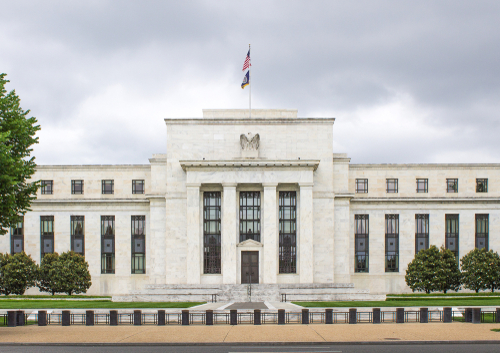
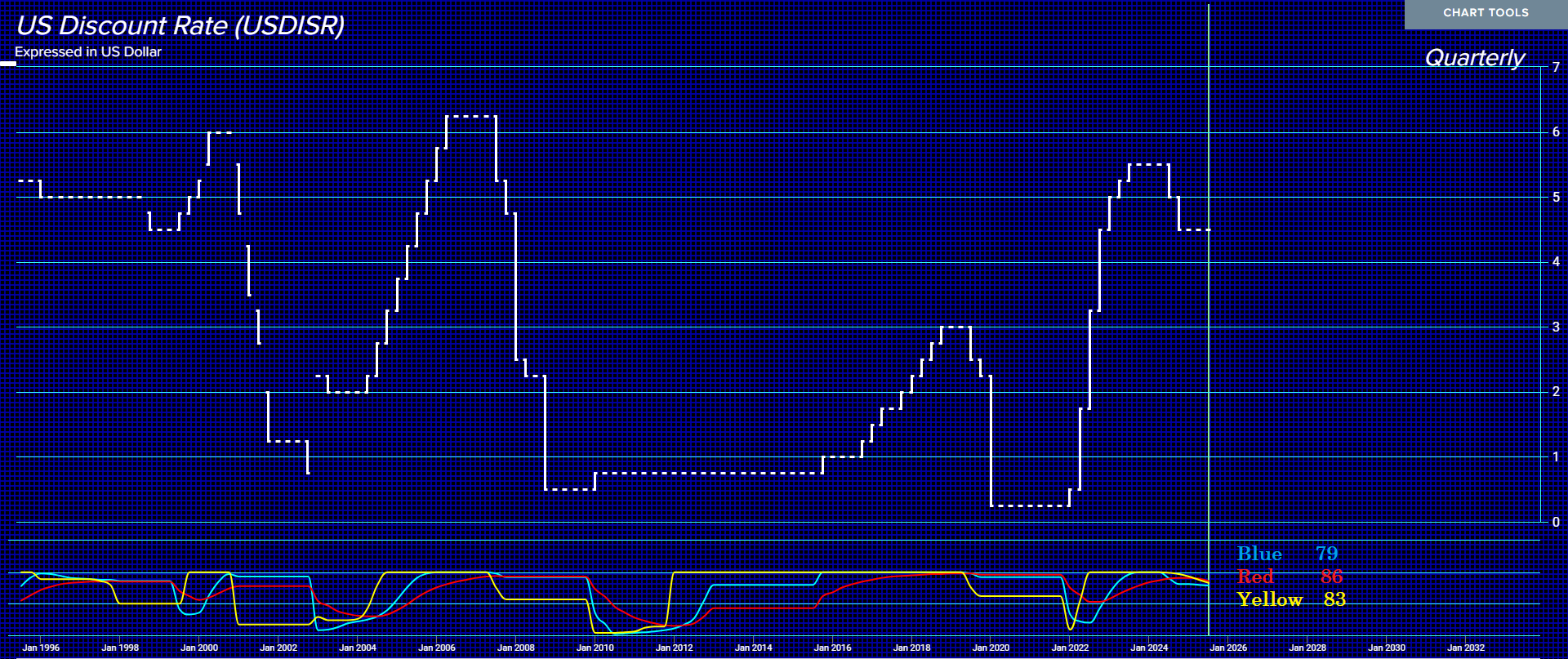
Members of the Federal Open Market Committee (FOMC) voted to reduce the benchmark federal funds rate by 25 basis points, setting the new target range at 4 percent to 4.25 percent. The Fed statement was clear, with one dissenter, Stephen Miran, who recently joined.

“Recent indicators suggest that the growth of economic activity moderated in the first half of the year. Job gains have slowed, and the unemployment rate has edged up but remains low. Inflation has moved up and remains somewhat elevated,” the FOMC said in a statement.

The market was widely expecting a 25 basis point cut in rates, as our computer has been forecasting for months that any cut would be in September, not before. However, there were the typical groups of questionable analysts touting that a 50 basis point cut could lead to a more significant market rally.

With the prospect of war on the horizon and a sovereign debt crisis brewing in the EU, there are realistic expectations for a continued decline. The risk is that Trump will interfere in the Fed, leading to a loss of confidence worldwide, which would result in unrealistic interest policy into early 2026. There remains the risk of another cut during the next quarter.

Fed Discoint CBDR Q 9 17 25

Quarterly vs Semi-Annual Earnings Reports


Posted originally on Sep 16, 2025 by Martin Armstrong |  

Balance Sheet

President Donald Trump believes that companies should cease reporting on a quarterly basis and switch to semiannual reports instead. Trump said that the concept is “subject to SEC approval” and would “save money, and allow managers to focus on properly running their companies.”

JPMorgan Chase CEO Jamie Dimon and Warren Buffett also once voiced support for semiannual reporting. “In our experience, quarterly earnings guidance often leads to an unhealthy focus on short-term profits at the expense of long-term strategy, growth and sustainability,” the pair wrote in an op-ed piece for the Wall Street Journal in 2018.

The SEC currently has a 3-1 Republican voting majority, but why does this seem to be a bipartisan issue? The issue is global, in fact, as Norway’s sovereign wealth fund recently proposed switching to semiannual reporting, and the UK and Europe do not currently require quarterly reports. Providing the consumer and investor with less, infrequent information alludes to bad news. Companies would willingly share praise of quarterly earnings with the public if they were bullish on their future, but in the current stagflationary trend, companies are cautious. Those at the top are losing confidence in their company’s ability to meet or exceed expectations.

Dimon and Buffett argued that the public’s attention should be on the long-term results. That aligns with Buffett’s buy and hold strategy but does not work for most portfolios that require investment strategy changes based on incoming data. In Trump’s personal predicament, the price adjustments due to tariffs are a reason to halt quarterly reporting.

Still, lowering transparency raises market risk, and the markets do not respond well to volatility. Columbia Law School published an article that looked at the 2017 regulatory adjustment on the Tel-Aviv Exchange (TASE) when small-cap firms switched from mandatory quarterly reports to semi-annual updates. “The  stocks of firms that chose that option dropped an average of 2 percent in price in a window of (-5,+5) days,” the analysis found. “Conversely, the stock of firms that chose to continue quarterly reporting rose an average of 2.5 percent over an immediate window of (-5,+5) days.”

The study also noted that while compliance costs dropped by 19.8% by eliminating two annual reports, the firms that chose to maintain four annual reports did not see a significant change in audit fees. There was a clear trade-off between cost reduction and maintaining investor confidence, the study noted.

The US markets cannot be compared to the TASE, and that 2% reduction in investment would likely rise for US firms, as consumer confidence is absolutely paramount. The proposition of semi-annual reports stems from the belief that companies will be unable to provide optimistic earnings reports. Reducing reporting fees is not the concern, and the repercussions are vast as massive portfolio shifts would ensue as investors and money managers need to reduce risks and would be less likely to take short-term risks if the data is unavailable to them. Reducing transparency would shake up confidence in the markets overall, and as mentioned, capital does not like volatility.


LIVE: Anti-Immigration Activist Tommy Robinson Leads Rally in London | ‘Unite The Kingdom’


Posted originally on Rumble on By Bannon’s War Room on: September, 13, 2025

Episode 4776: Fight In Indiana; Marching In The Streets Of London


Posted originally on Rumble on By Bannon’s War Room on: September, 13, 2025

ALEX JONES, THE FALLOUT FROM HERE ON


Posted originally on Rumble on By Bannon’s War Room on: September, 12, 2025

Posobiec: This Is A Mangione Copycat, This Is A Butler Copycat


Posted originally on Rumble on By Bannon’s War Room on: September, 111, 2025

Posobiec: People Are Looking Through Socialist Groups That Are Known To Operate In The Area


Posted originally on Rumble on By Bannon’s War Room on: September, 111, 2025