Watch Moldova


Posted originally on CTH on September 22, 2025 | Sundance

There is considerable anxiety afoot, as EU security elements begin bolstering the internal police force of Moldova. It appears their concern is widespread unrest could follow the election results. Why would the official government of Moldovan President Maia Sandu be concerned about post-election turmoil?

Well, consider that Maia Sandu’s election last year was not won by a vote of the majority of Moldovans who physically reside in Moldova, but by a reported half-million mail-in ballots that tipped the scales in her favor. Those same mail-in ballots also changed the results of the referendum that asked Moldovan citizens if they wanted to join the European Union.

The stakes are very high for the EU and NATO alignment. If the Moldova parliamentary election results in a more pro-Russian governing body, the best designed plans of the U.K/NATO/EU and global intelligence apparatus could be significantly damaged.

Maia Sandu’s Party of Action and Solidarity (PAS) is in a tenuous position. Sandu and PAS are globalists, influenced a great deal by European money and promises of affluence. Their collective opposition within Moldova is an assembly of nationalist voices represented by Patriotic Bloc, a new group of existing pro-Russian opposition parties.

Polls have indicated that Sandu’s PAS is likely to lose the parliamentary election, but the European Union cannot accept this outcome. Thus, the issue of these mysterious mail-in ballots surfaces again, and that explains why the Moldovan police and EU security forces are preparing for civil unrest.

In August, the leaders of France (Macron), Germany (Merz) and Poland (Tusk) visited the capital city of Chisinau to proclaim their support for President Maia Sandu and the pro-EU movement. The trio, also called the ‘coalition of the willing’, represent fierce opposition to Russia’s war in Ukraine.

On the economic front, Moldovan citizens have been coping with high inflation, energy shortages and have seen little progress in the Sandu pledge to clean up internal bribery and govt corruption. Meanwhile, Sandu has been traveling around Europe and Great Britain seeking financial support that can deflect some of the economic issues.

The election next weekend represents a critical inflection point for Europe. If the EU loses the support of the Moldovan parliament, it would be much harder to utilize the Romanian NATO military base for a European war against Russia, a war they have been trying to provoke with increased aggressiveness.

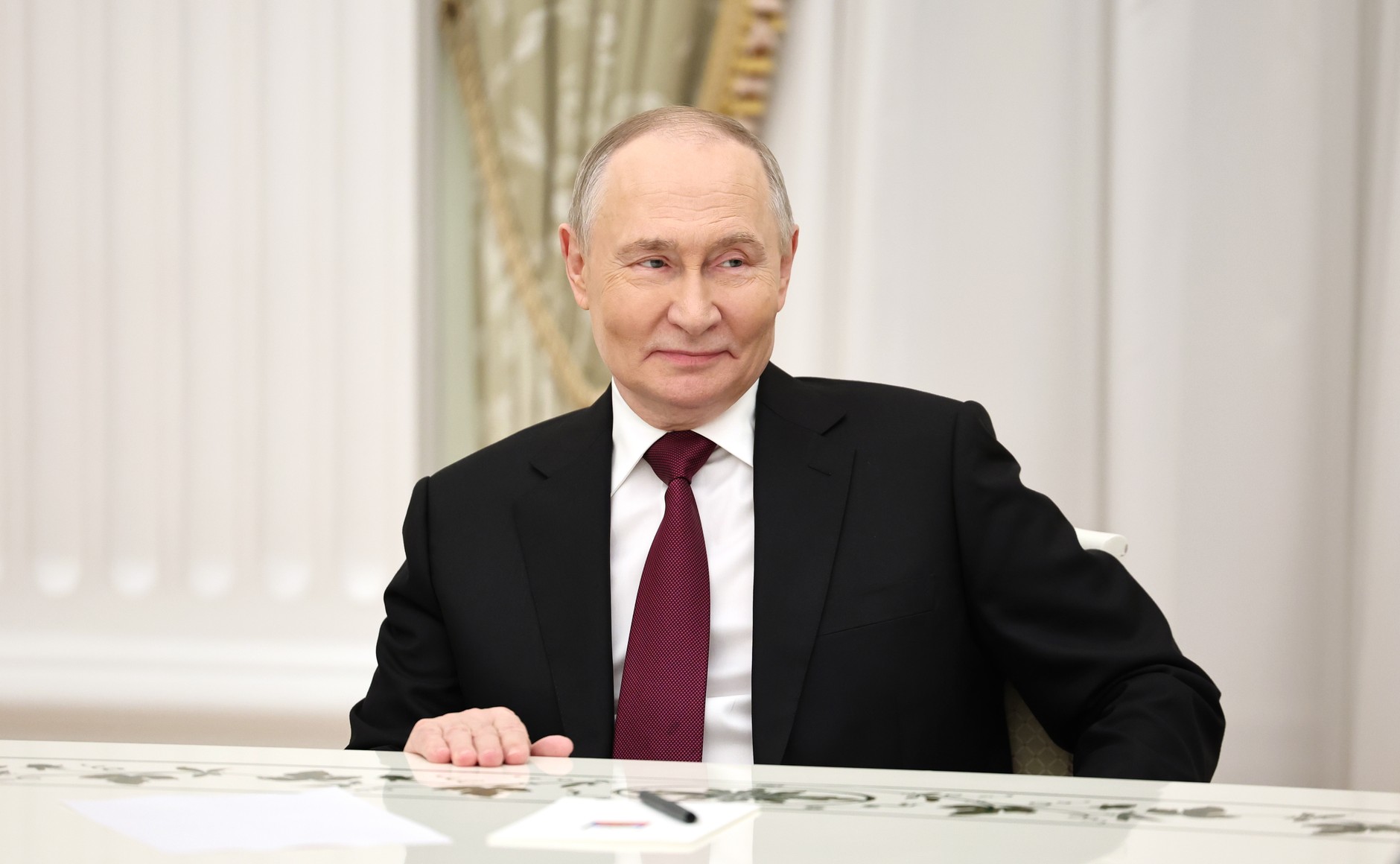
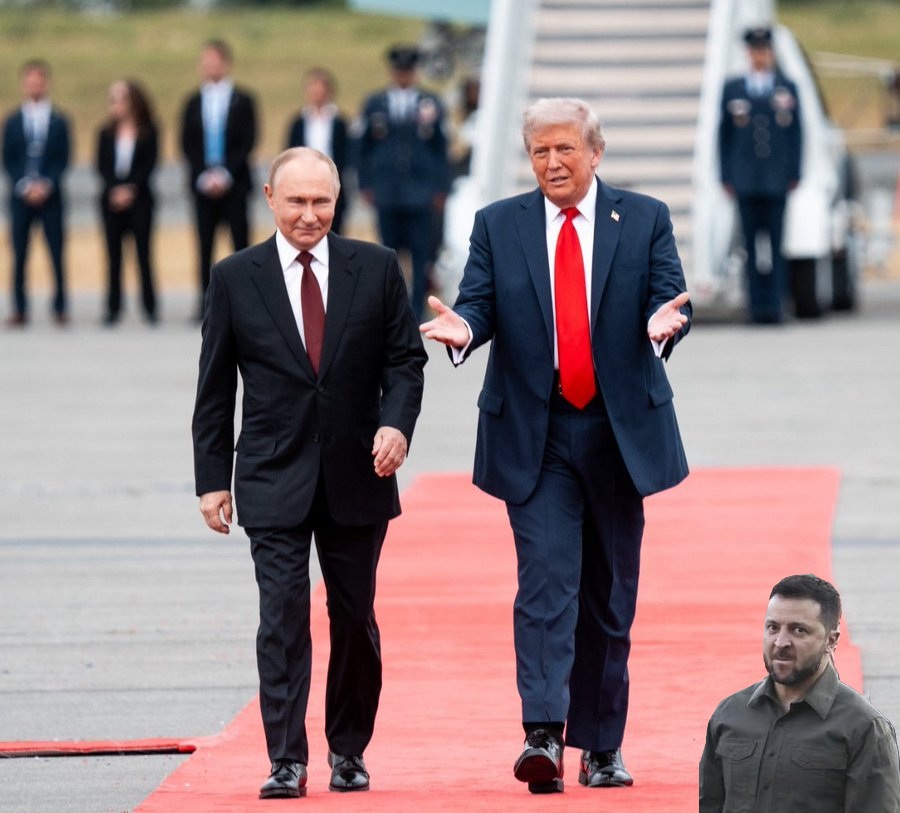
Shortly before King Charles orchestrated the second state visit by President Trump, the U.K monarch met with Sandu to express his strategic support against a common enemy, Vladimir Putin (pictured below).  However, it can be reasonably argued the majority of the people who live within Moldova do not hold the same opinion. They do not want war with Russia.

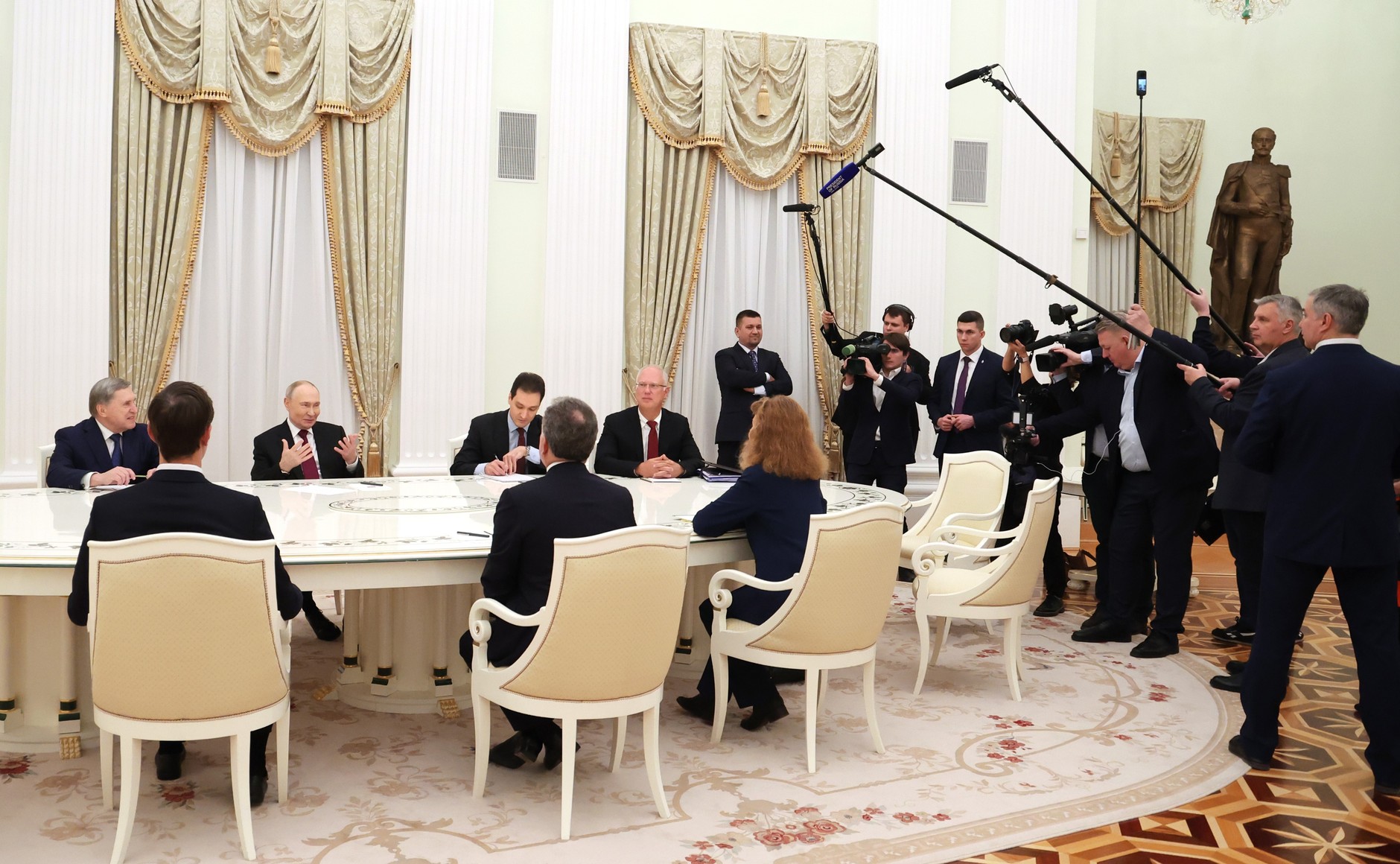
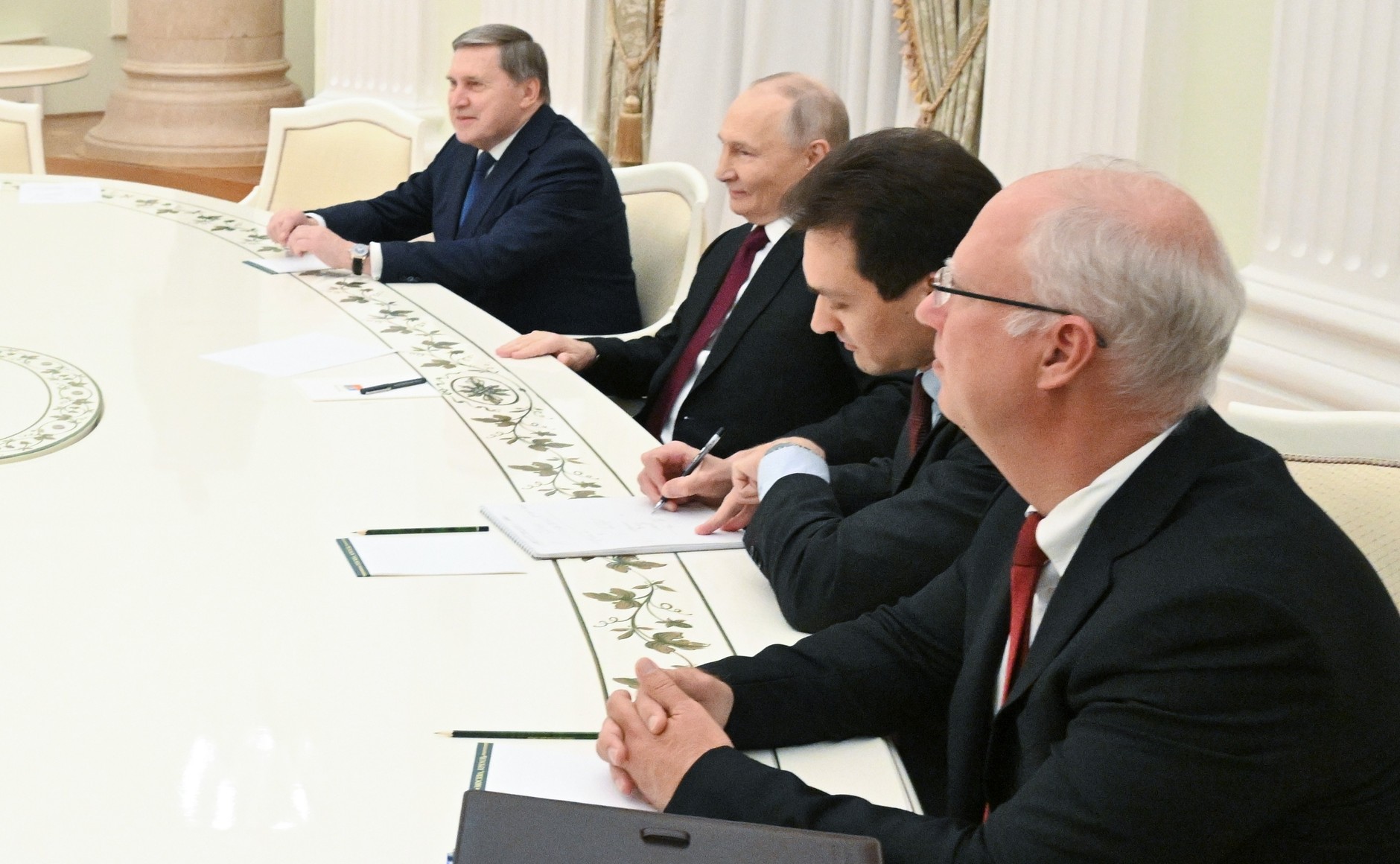
Russian President Vladimir Putin is watching this unfold, while hearing from the pro-Russian elements who live within the Moldavian region known as Transnistria. Indeed, much like the Donbas and eastern Ukraine region, where Western forces within Ukraine attacked the Russian enclaves, there are indications of the same dynamic within eastern Moldova.

If the EU security services think they will lose the election in Moldova, Sandu will cancel it.

Watch Moldova!

Mass Protests Against Austerity Measures in France


Posted originally on Sep 22, 2025 by Martin Armstrong |  

Over 100,000 people took to the streets of France to protest government mismanagement. The people are demanding that Prime Minister Sébastien Lecornu reverse former Prime Minister François Bayrou’s decision to cut €44 billion in services. The government cannot maintain steady confidence and therefore leadership; Lecornu is the fifth prime minister in two years under President Emmanuel Macron. The deeper-rooted issue of fiscal irresponsibility has been lost, as the people still believe government spending can be offset through taxation.

Thousands voiced support for the Zucman tax, named after economist Gabriel Zucman, who proposed a 2% rate on assets surpassing €100 million. The proposal was passed by the lower house of Parliament but later blocked by the Senate over the summer. The proposal was estimated to generate 20 billion euros annually and would have impacted 1,800 wealthy households. What if people flee for a nation with lower taxes? The European Union is actually considering a bloc-wide taxation on wealth to compensate for fleeing capital.

As for France, the national debt stands at €3.345 trillion, equivalent to approximately 113.9% of its GDP. France surpassed the 100% debt-to-GDP threshold in 2020 and has been rapidly spiraling further down the hole. Estimates state that debt levels will rise to 121% of GDP by 2027, and yet, the government continues to spend without regard for budgets. Government spending will reach a low estimate of 57.6% of GDP in 2025.

France spends 14% of its GDP on its failing pension system, and retirees now outearn working-aged adults. Social protections at large compose 40% of national spending. Macron raised the defense budget to 64 billion euros or 2.3% of GDP, with plans to increase spending to 3.5%-5% to meet NATO requirements.

Governments raise taxes, cut services, and claim they are “saving.” The people believe that everyone must pay their fair share into the system and are targeting the rich for paying less. The rich could give all their wealth to the French government and it would still remain beneath current spending and debt levels.

Austerity never works because it punishes the people for the errors of politicians. The bureaucrats waste money on ideological projects, endless regulation, and absurd pension promises, and when the bill comes due, they demand ordinary citizens tighten their belts to pay. This is why the French are famous for taking to the streets.

Sunday Talks – French President Emmanuel Macron Outlines Intention of Recognizing Palestinian State


Posted originally on CTH on September 21, 2025 | Sundance

Below is the full interview between CBS’s Margaret Brennan and French President Emmanuel Macron. A portion of this interview aired on “Face the Nation”, however this is the complete interview.

Earlier today the U.K, Canada and Australia, 3 of the Five-Eyes western intelligence networks, announced their recognition of a Palestinian state.  France will announce the same tomorrow.  Israel is now slightly more vulnerable and in a diminished position of support from the western allied nations.  Prime Minister Benjamin Netanyahu is more dependent on support from the U.S. than ever before.

President Macron is also facing significant domestic opposition, and his prior appointed Prime Ministers have failed and been removed. The French economy is struggling, and Macron has deflected attention to the Ukraine war in an effort to avoid domestic accountability.  With the Ukraine vs Russia conflict taking a lower profile, thanks in part to President Trump’s approach – demanding NATO/EU stop purchasing Russian energy products in order to gain U.S. support for increased sanctions, Macron now shifts attention to the Israel-Hamas war.  WATCH:

[Transcript] – MARGARET BRENNAN: Okay, Mr. President, if you’re ready, we’ll dive right in.

PRESIDENT EMMANUEL MACRON: Thank you.

MARGARET BRENNAN: Thank you for having us here. You know, most countries in the world recognize Palestinian statehood. It’s 147 of 193 countries at the UN, but France is going to be the first western UN Security Council member to do so. What conditions are there for this?

PRESIDENT MACRON: Look, thank you, and thank you for being here and offering me the opportunity to have such a discussion. I think it was a necessity first to decide this recognition, and I will announce it on the 22nd of September at the United Nations, precisely because we are at the very moment where if we want peace and security for all in the region, we have to preserve the condition of a political perspective for everybody. So we will announce the recognition, but which is the beginning of a political process and a peace and security plan for everybody. So right after this- this recognition, we have a first phase, which is, I would say, the emergency phase, ceasefire, release of all hostages..and third, restoring the humanitarian roads and the stabilization of Gaza. We have a second package, which is the day after we will revert on that how to organize Gaza in terms of governance, security and reconstruction. And third package, the perspective of the two states. But recognizing the Palestinian state today is the only way to provide a political solution to a situation which has to stop.

MARGARET BRENNAN: But you are not making the release of the hostages a condition before recognition–

PRESIDENT MACRON: So this is a clear condition before we will open an embassy. This is the first series of conditions and requirements we will push- we will put in the peace process. But we will announce the 22nd this recognition of Palestinian state.

MARGARET BRENNAN: So Secretary of State Marco Rubio said this is a ‘reckless decision.’ That’s the word he used. He said it gives Hamas little incentive to actually start diplomacy to release the hostages. Why do you disagree with that sequencing?

PRESIDENT MACRON: So my first point is to say, I don’t answer the Hamas with that. I don’t meet the expectations of Hamas. Hamas is just obsessed by destroying Israel, but I recognize the legitimacy of so many Palestinian people who want a state, who are a people. They want a nation, they want a state, and we should not push them towards Hamas. If we don’t offer them a political perspective and such a recognition, the unique answer will be security, and they will be completely trapped by Hamas as a unique option. My second point is, thanks to this recognition, and thanks to the diplomatic move we launched, we started to isolate Hamas because we- at the New York declaration, which was voted, as you know, by 142 countries. We gathered all the Arab League states, all the leaders of the regions, to work closely with us to precisely dismantle and disarm Hamas. Till now, they were not engaged in such a move. Now we gathered all these states, all these people to work closely with us in this move. So I think this is why we can create the condition of a concrete action, first, to give this right to the Palestinian people, second, to isolate Hamas from the rest of the Palestinians and the whole region, and precisely build security. But let me tell you something which is, for me, very important in this context, Israel had wonderful security results against Hezbollah Hamas top leaders, and managed to- to neutralize a lot of top decision makers of terrorist groups. They did it. This is their merit. But in terms of fighting against Hamas, this is a failure of today. They started–

MARGARET BRENNAN: What is a failure?

PRESIDENT MACRON: –Because they- they killed all the key leaders- this is a success. But at the beginning of this war, you had more or less 25,000 Hamas fighters. The Israeli army killed probably half of them, but Hamas managed to recruit the equivalent. You have as many fighters at the very beginning, which is the best evidence of the fact, if we want to dismantle Hamas, the total war is not the answer, because it’s just killing the credibility of Israel- and by the way, weakening and killing our own credibility if we don’t make a move as the one we are organizing.

MARGARET BRENNAN: But you just pointed to something that Israeli Prime Minister Netanyahu would say, well, this is why we need to continue until we get rid of every Hamas member. You’re saying you can’t kill that idea, you need to provide a different idea?

PRESIDENT MACRON: Exactly. But this is so- this is the whole perspective. And look at the situation, not just by the war in Gaza, but everywhere in the region. Hamas was clearly not backed by a lot of people before the seventh of October. If you took the polls in Gaza, but in all the countries of the region, they were very low in all the polls. Today, the level of support is much higher, because they are making the mistake, in fact, to reduce all the perspective of the Palestinians to the Hamas. What we have to say is we want the dismantling of Hamas. You had this success, there is no more top leaders. We want to isolate them. We want to bring everybody working with us to dismantle the Hamas. But recognizing this right to have a Palestinian state through a diplomatic channel, this just giving another channel and offering a political way and isolating Hamas. So, I think there is no future with the option, which would be just, let’s kill the maximum number of Hamas people, because they just recruit others and others. Because each time they launch this type of operation, they kill so many civilians that they are just destroying their own reputation and credibility, and they are creating an unsustainable framework of security in the whole region.

MARGARET BRENNAN: But, since October 7th, popular support in Israel for a Palestinian state has also declined. Prime Minister Netanyahu has been opposed for a very, very long time, and now he says that just look at those attacks that day. If you allow for any kind of Palestinian state, it will be a launch-pad for terrorism. I mean, that is his argument, that this shows you can’t allow for the safety and security of Israel if there are two states. Why is he wrong?

PRESIDENT MACRON: First, I want to- I want to say that the seventh of October was a total trauma for everybody in our country here, because we had so many French people being killed during the seventh of October terrorist attack launched by Hamas. And- and it was, for us, one of the biggest terrorist attack against our own fellow citizen. But we- we did share, and we do share, the pain and the suffer of Israeli people and so many families. And for me, the top priority remains the release of hostages. And I met very regularly families of hostages, and I have to say that what they live is unbearable. And I had the opportunity meet with (unintel) Guy’s mother and so many of them, and what they describe is absolutely unbearable. But, I consider that if we want precisely to build a sustainable peace for Israel itself and for Israeli people, a political process and the recognition of a Palestinian state, if the state recognizes the right of Israel to live and defend itself, is demilitarized, has security forces with the vetting process by Israel, with, obviously, a proper governance and reform governance and- and is precisely we have a series of reform which are part of the process.

MARGARET BRENNAN: But that’s it, right? You are talking about recognizing the Palestinian Authority, which has some governance over the West Bank, already was working with Israeli security forces. But Hamas came to power through the ballot box in the first place.

PRESIDENT MACRON: Look, it’s- if we are honest, it’s totally different. And this is why I think- let’s accept the fact that a lot of people worked very hard to kill the credibility of the Palestinian Authority in Gaza years ago, and Hamas appeared as precisely as sort of an alternative option. But, terrorist attacks were launched by Hamas, not by Palestinian Authority. And if we say all those living in Gaza, and all those backing the Palestinian state are de-facto the support of Hamas, there is no end to this war except the you kill everybody. And this is this is terrible. So we have to recognize that the Palestinian Authority has to be reformed. The governance is not satisfactory today. We need a new- you have a new- we need a new Palestinian Authority. But, let’s just remark, and, please notice with me, that thanks to the recognition process we launched, for the first time for many years, we got, the ninth of June, a series of clear commitments from the Palestinian Authority. They refused till now. The reform; a new vice president being elected, reform of the education program, a pay forcely, obviously, program as well, with the monitoring by a US audit structure. So we don’t just theories —

MARGARET BRENNAN: And they denounced October 7th–

PRESIDENT MACRON: — And for the very first time —

MARGARET BRENNAN: –20 months later.

PRESIDENT MACRON: This is true. But for what? Because we made this move. So the recognition is the way as well to re engage and bring them back in the table. And my point is to say, let’s isolate Hamas, and let’s focus on the dismantling of Hamas from a military and a political point of view. In order to do so, we have to re-engage with those who can be, I would say, a political achievement for Palestinian people. And this is why the recognition is so important. And if we revert to West Bank, one of the key elements which triggered my decision to announce in July, the perspective of the recognition for the 22nd of September is a vote of the Knesset. When the Knesset decided to start the settlements again in West Bank, it was the best evidence of the fact that they don’t want to fight against Hamas. There is no Hamas in West Bank. They just want to destroy the existing political bodies, and the possibility of the two states. And I really believe this is a terrible mistake for Israel itself, because in doing so, they just kill any other perspective that war.

MARGARET BRENNAN: But when you- I understand the argument you are making, but it has put you at direct odds with the Trump administration, who argue that your decision to make this recognition announcement, along with all these UN members, that it, in fact, kills the diplomacy they had underway. They said they were working to get, for example, the tax money from the Israelis to hand back over to the Palestinian Authority, that they were doing practical things on the ground to help Palestinians. Secretary Rubio said, that West Bank division you were talking about with the settlements, he drew a direct line to your recognition. Why do you think they’re blaming you for that?

PRESIDENT MACRON: Look, first, I think we all work very hard in order to improve the situation of- of people on the ground. And let me tell you that France, a lot of French people, French doctors, French citizen, French members of NGOs, are working very hard with our administration as well to help Palestinian people. And during the past years, we worked very (UNINTEL) and financed a lot of actions as well being led by UNRWA. Second, I think my- my objective is precisely to- to provide another perspective. We- we- we are closely coordinated with the U.S. administration when we speak about the ceasefire and the release of hostages. We were always in close coordination with Secretary of State, or- or key- key President Trump’s advisors, in order to work with Qatar, Egypt, and Israel on the release of hostages, of ceasefire. But your administration is focusing on the day after. And what we propose is a full-fledged plan, where we have first, the emergency package. So let’s deliver release of all hostages, ceasefire, and- and humanitarian access. The day we have that, we start the day after. And I think we are very convergent with the work which is being done by- by your administration. What we want is a de facto governance in Gaza, with clearly a sort of transitional- transitional administration, including the Palestinian Authority, excluding, clearly, Hamas. But with a vetting process of Israel and an association of all the neighbors, we have a security package in this- in this day after approach, which is, let’s scale up the training of the policemen and security forces of the Palestinians, and–

MARGARET BRENNAN: Who will do that?

PRESIDENT MACRON: We- we are already doing that, we’re doing so. Many countries of the regions. It does exist, but we need a scale up, and in parallel, we proposed, and we work very closely with the United Kingdom, and all the leaders of the region, precisely to offer a military- I would say, an international force to be deployed in Gaza, with a UN mandate. Which is a unique framework to be defended, and which could be legitimate, to assist and- and back, I would say, this policemen and security forces. And–

MARGARET BRENNAN: But you know, Israel does not trust the United Nations at all.

PRESIDENT MACRON: No- this is a UN framework, but this- first, they would have a vetting process of all the structure, and it would involve Jordan, Egypt, and some of- some others are ready as well to finance. But obviously it is to be made in close coordination with Israel. And in the security package, obviously, the core element is a dismantling of Hamas. There is no other option if you want to fix the situation, to disarm the Hamas, and precisely, to demobilize so many fighters, to organize what we call a DDR process, which is very familiar to all the experts in- in this type of situation. And this is in this day after for Gaza, in the security package, that we can organize such a DDR, vis a vis Hamas. And to be sure that Hamas will never be involved in the government, but that Hamas will be disarmed, dismantled, with some key people to leave Gaza and some other to be deradicalized, and the weapons to be taken. In order to do so, you need clear security forces here. You need these international forces to be here. And obviously we have the reconstruction. On that, I think there is a strong alignment with the United States. My point is, the recognition and the process we launched with that is the only way to bring with us, on this track, all the neighbors and key countries in order to deliver such a package. And- and look at the situation today, when Egypt, when so many leaders of the region, are not comfortable with what is being done. You need to re-engage them. And this is exactly what we are doing. But my point is to say, if we don’t have this full package, the day after is impossible, because today, de facto, you are accepting the displacement of population in Gaza City. How do you want the day after to be possible if you displace thousands of people?

MARGARET BRENNAN: Well, exactly on this point, when you say, day after, that means when the war ends and some kind of rebuilding happens. What you’re talking about with the Trump administration is this idea of having Palestinians leave Gaza, by choice, they say. But some would say that is a step towards ethnic cleansing. In fact, an independent commission set up by the UN concluded Israel has a, quote, “intent to destroy Palestinians in Gaza, as defined by the Genocide Convention.” Does France agree with that report?

PRESIDENT MACRON: No, we don’t qualify as a genocide what’s happening because it is not a political statement. This is the judges or the, and or the historians to qualify a genocide by a series of evidence and a clear jurisprudence and clear elements.

MARGARET BRENNAN: So you reject that report and that finding?

And this is where I try to convince your administration that if we agree on the day after and we want this de facto authority, the security package, the dismantling of Hamas and the reconstruction, let’s work on the current day.

MARGARET BRENNAN: Right.

PRESIDENT MACRON: If you accept de facto Israel to displace these people, you will never see a day after. And by the way, I look very carefully at all the plans being shared by your administration or shared by experts working for your administration. They always reiterate, let’s work and build Gaza for Gazans. It means that they are ready to preserve and protect Palestinian people because Gazans are those who are living in Gaza. But if the precondition of such a plan is to push them out, this is just a craziness. So we, we should not be—for the credibility of the United States, for the credibility of France–we cannot be implicitly or explicitly complacent with such a project. Because such a project, we know it. And by the way, all the security experts, even in Israel, are very clear on the fact it will be a humanitarian disaster. And this project will, will kill the possibility of a day after. So we have to be very explicit on the fact that attacking civilians just to get a few, a few terrorists and a few fighters is clearly not acceptable. But displacing people in order just to take a territory, which is not in the hands of Israel, in order to prepare the day after, is not just totally crazy, but unacceptable for all of us.

MARGARET BRENNAN : So France has one of the largest both Muslim and Jewish populations —

PRESIDENT MACRON: — This is true. —

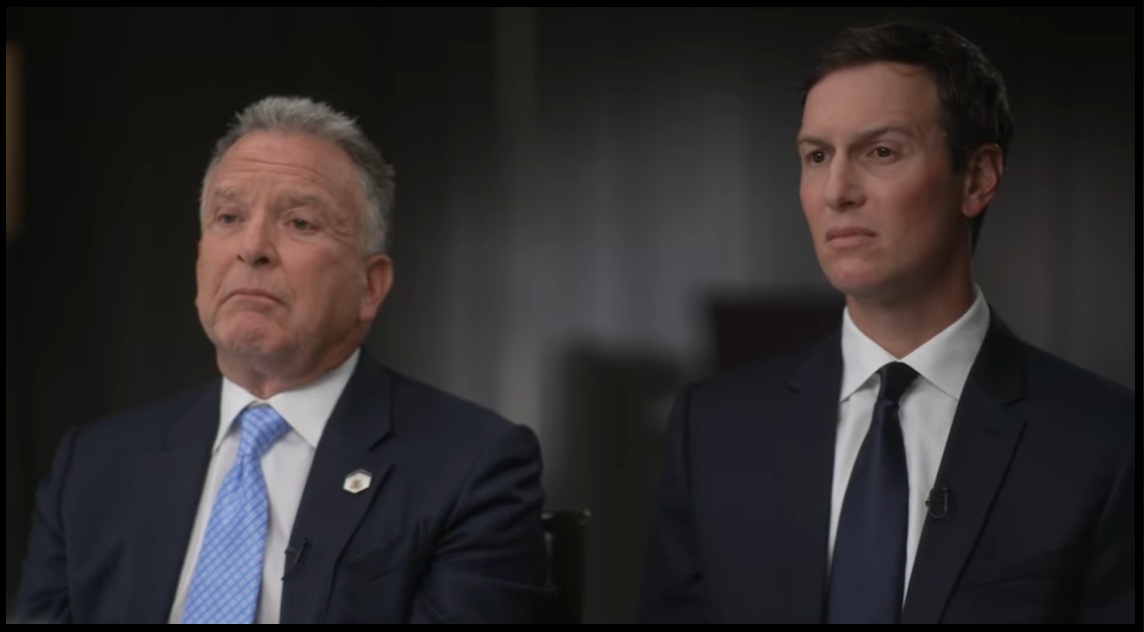
MARGARET BRENNAN: — in all of Europe. The U.S. Ambassador to France, Charles Kushner, the father of the son-in-law to the President of the United States, Jared’s father, he published an article, and I know you’ve you’ve read it, saying France is not dealing with antisemitism here in France. He said “not a day passes without Jews assaulted in the street, synagogues or schools defaced, or Jewish-owned businesses vandalized. Your own Interior Ministry has reported antisemitic incidents even at preschools.” Do you accept this criticism as genuine and valid?

PRESIDENT MACRON: Not at all. I think this is a mistake and an unacceptable statement for somebody who is supposed to be a diplomat.

MARGARET BRENNAN: Unacceptable statement.

PRESIDENT MACRON: Yes, never a French Ambassador will be allowed to do so. So either you are a person who wants to express freely. Fine. If you are a diplomat, you have to follow the rule of diplomacy. And I’m not the one, this is you to pay the Ambassador of the United States in France, but the taxpayer money is not properly used to finance this kind of statement. So this is not a speech, a letter or a word of an ambassador. This is unacceptable. Now, the matter is much more important. And the matter about antisemitism is, for me, one of my top priority. I was the first president in France to adopt the definition of antisemitism, making it the equivalent of anti-zionism. And I’ve always been very engaged, again, antisemitism. We’ve worked very hard during the past few years in order to precisely re-engage, have faster sanctions and I never neglected this topic.

MARGARET BRENNAN: You know in the U.S. sometimes people hear criticism of Israel as antisemitic. —

PRESIDENT MACRON: No. —

MARGARET BRENNAN: — But you’re saying it’s different. —

PRESIDENT MACRON: –No. My point is to say, you can, you cannot reject the existence of Israel. Ani, anti-Zionism is unacceptable and is antisemitism. But it doesn’t mean that you are not allowed to be in disagreement with the Government of Israel. Otherwise we will become crazy. I’m sorry, but I want to fight very hard against anti, antisemitism. I am very against any anti-Zionist speech, but I do endorse to be in disagreement with Prime Minister Netanyahu and some of his ministers on many topics. It doesn’t make me an antisemitic. Otherwise we are completely trapped in an impossible world. And this is precisely why the public debate makes this situation completely crazy. If we want peace and stability and unity, we have to be precise, sharp and respectful. So in this country, for many years, we had this problem with antisemitism like in a lot of other countries.

What I disagree with is the argument made by your ambassador and the Prime Minister of Israel, in another public letter, making a link between the recognition and antisemitism. You have, you have a surge of antisemitism in the U.S. and you don’t recognizeYou have a surge of antisemitism in Germany. Nothing to do with recognition. Everywhere we have such a surge of antisemitism. It started before the seventh of October. A lot of these guys expressed their antisemitism the seventh of October itself. How, as awful it could be, but they did and it increased after. We have to fight against this phenomenon. We have to read – first, we have to sanction. We just passed a law for our high schools and universities to improve the regulations and to be in a situation to sanction all the antisemitism being expressed there. So we are very hard. We work very hard with the Jewish community in, in our country. And, and Jewish people are part of the DNA of the French Republic. So no chance anybody here will abandon the situation.

MARGARET BRENNAN: Has this hurt your relationship with the U.S.?

PRESIDENT MACRON: No, I don’t think so.

MARGARET BRENNAN: Because you do have a few other points of friction right now, or different views than the Trump administration.

PRESIDENT MACRON: My objective on this- on this- on this issue, is- is very clearly to- to engage on the basis of the plan we will put on the table with, with the U.S. administration. And there is a work, an important work, which is made by Mr. Witkoff, Secretary Rubio, but as well Jared Kushner and Tony Blair. So we had many exchange with, with these people and and they work very hard on, on, on important ideas. So my objective is clearly to to engage with this administration, and to show that we can clearly articulate what they have in mind and a full-fledged peace and security plan for all.

MARGARET BRENNAN: I want to ask you about what’s happening here in Europe. In regard to Russia, NATO jets were scrambled twice within just the past few weeks because of these Russian drones that have been crossing into Poland and into Romania. It’s the first time in NATO’s history that they had to shoot down enemy crafts that had crossed in do you believe that these incursions could have been a mistake, as President Trump has suggested?

PRESIDENT MACRON: Very clearly, Russia is a destabilizing and aggressive power in Europe. They increased, during the past few weeks, the attacks against Kiev and killing a lot of civilians. They destroyed official buildings of the Ukrainian government, but as well premises of the UK Government, of the European Union. And at the same time, during the same weeks, they violated the Polish and the Romanian air. There is no mistake. There is just a project which is to destroy the maximum territories of Ukraine, to have a victory in Ukraine, and just to highlight what they want, the weakness of NATO.

MARGARET BRENNAN: NATO says they’re still investigating. They are not as certain as you seem to be–

PRESIDENT MACRON: –No. I’m not saying–

MARGARET BRENNAN: –that Russia did this intentionally.

PRESIDENT MACRON: I just say this is not totally i- This is not a specific point. If we had a situation where they were declining or decreasing the attacks against Kiev and and on the battlefield. I could accept this argument. My point is to say it’s largely beyond that. My point is to say, look at what they did during the past few weeks. So, I sincerely believe that your president was committed and is committed to to make peace in Ukraine, and he engaged, he took the risk to make a summit with President Putin in Anchorage and- and he asked for negotiations. And I think he’s right. But at the same time, I have to, just to recognize that there is no clear willingness of President Putin to be sincerely engaged in such a move, because as we were working on a diplomatic way, as we were trying to organize bilateral, trilateral, quadrilateral summit, the Russians were increasing the assaults in Donbas, but not just in Donbas, intensified provocations on one side and attacks on Kyiv on the other side. So I just look at the facts, and your president is as well looking at the facts. So now, what do we do? We have to increase sanctions against Russia, but we have to find the way to precisely put more pressure on Russia to bring them back at the table. In parallel, let me insist on one point. When we came to Washington D.C., a series of European leaders with President Zelenskyy, we took a commitment, we will work to provide to Ukraine security guarantees, and we delivered. A few days ago here in Paris, we gathered what we call the coalition of the willing. You have 30 countries working together in order to provide the day after peace security guarantees to Ukraine. So we have all these elements now with an historical commitment of the Europeans who provide the security guarantees to Ukraine. What we need now is Ukraine to be at the table with Russia and negotiating what the peace agreement could be, on territory, on security guarantee, on the escalation, on recovery etc.

MARGARET BRENNAN: And you don’t see any eviden- evidence of Russian interest. I mean it’s been more than–

PRESIDENT MACRON: –So now we have to step up, and we need political, military and economic surge in order to bring them back at the table and to negotiate.

MARGARET BRENNAN: So to that point, because it’s now more than a month since that Alaska Summit, that big risk you said President Trump took. When he’s been asked, so why not put sanctions or secondary tariffs on Russia, he points back here at Europe and the consumption of Russian oil and gas that still takes place. I know Hungary and Slovakia, for example, continue to use it.

PRESIDENT MACRON: This is true, and we are fixing it. And we had discussion with Ursula von der Leyen, and she made a great work with with her teams to fix that. But let’s be honest, this is very marginal. This is not a key driver today. We decreased by more than 80% the consumption of oil and gas. And I can tell you, because we were not the most impacted as a country, because we were less dependent on this oil- oil- oil and gas coming from Russia. But we have to finalize- to finish the job. This is true, but now it’s clearly much more that when we are to do- what we have to do. We- we have to step up our support to Ukraine, and we have to provide the way to better resist to the new attacks on Kiev and civilians.

MARGARET BRENNAN: What’s the delay on the sanctions or tariffs then?

PRESIDENT MACRON: As soon as possible. If it depends just on me, tomorrow. But it doesn’t just depend on me. So I hope, I think we have to react collectively if you want my- my strong view, I think it’s very important. I think we all agree we want peace. We all agree the problem is Russia because they don’t want peace. So now we have to increase the pressure to convince Russia to come back at the table.

MARGARET BRENNAN: As the Trump administration has pointed to the idea that there are billions of dollars sitting in European bank accounts that could be seized, for example. Or that, you know, here you could put more tariffs on China or sanctions on China. Are these valid arguments by the administration, or are these–

PRESIDENT MACRON: –Look, regarding the frozen assets we are all very much attached to- to be compliant with international rules. And you cannot seize these assets from the central bank even in such a situation. And I think it’s a matter of credibility, and it’s very important that our countries remain [inaudible] and do respect the international laws. Because this is our problem everywhere. If we speak about Middle East, if we speak about the situation in Ukraine, when some countries start to disrespect international laws and when we are not sufficiently strong, this is the beginning of a total chaos. So we will respect international law. We are predictable, and we will not do all impossible things with these frozen assets. We already took them as, not as a collateral, but we took this frozen asset, and all the proceeds coming from this frozen asset were used to finance our efforts, part of our effort to Ukraine. This is the first point. As for your second point, it was sorry–

MARGARET BRENNAN: –I asked about the China aspect. That the administration would like you to push back on China more.

PRESIDENT MACRON: Look, I think we will have our own diplomacy on China, and we are very much attached to our independence, which is normal. And we have a de-risking strategy, but we are not in a decoupling strategy.

MARGARET BRENNAN: So that’s a no on the pressure from the administration to do that?

PRESIDENT MACRON: My point is, let’s focus on some secondary sanctions, if they make sense. I think what we- what we have to do is to engage a serious dialogue in order to see where and in which capacity Russia is helped by third countries, and to increase the pressure. So I think this approach is a good one, but it should be targeted and directly related to Russia. And I think- what I don’t think what we- what we will do as Europeans with the US administration, it is working hard in all capacity by capacity, product by product, to see the key countries allowing Russia, sometimes to have a third way and to avoid sanctions or to benefit from the current situation. This is what we call the secondary sanction, because you don’t sanction directly Russia, but a third country which is helping them, and this job has to be made, has already started technically. I’m totally in favor of this job.

MARGARET BRENNAN: And just a final question here to ask you again about NATO. The US has not contributed fighter jets to that new effort that was just recently announced after the drone incursions. The Supreme Allied Commander is an American, but does that signal something to you? Does that concern you that the United States isn’t more muscular here?

PRESIDENT MACRON: No, I’m not concerned or worried about that. I want to say that the NATO Secretary General worked very hard, and we all gathered and exchanged information with the Polish Prime Minister and the Polish president in the hours right after this, what happened. And for instance, UK and France stepped up and we sent fighters. But it’s fine. We were in a situation to do so, and we are totally credible. But at the same time, look at what the US is doing in on the Eastern flank of NATO. You are a very strong contributor and reliable partner. So I don’t want to- to diminish this role and your commitment and- and I think your President was very clear about, as well, his commitment to NATO. But I- I’m totally in line with the fact that the Europeans have to step up. I’ve defended for years the fact that we need more independence, more strategic autonomy in- in Europe, and we need a stronger European pillar. This is why, by the way, right after my first election, I started to increase the budget of our army, and in 10 years, we will have doubled this budget. And- and I am already in favor of having all the Europeans increasing their budget, their defense expenditures, and as well building an actual industry research and development basis for defense and security, working together and building a strong, consistent European pillar in NATO. Because it’s fair that the US wants to focus much more on its own security, or wants to work much more on the Pacific side, and asks Europeans to be more engaged and committed for their own security. I share this perspective, and this is one of the priority of the Europeans.

MARGARET BRENNAN: Mr. President. Thank you for your time today.

PRESIDENT MACRON: Thank you very much for being here and offering me this opportunity to explain our views. Thank you.

MARGARET BRENNAN: Thank you.

[End Transcript]

French Pensioners Earn More than Working Adults


Posted originally on Sep 18, 2025 by Martin Armstrong |  

Pension Crisis

The average French pensioner receives a larger payout than working-aged adults. France has one of the highest replacement rate packages of any OECD nation at around 74% of average earnings. The French government spends an astounding 14% of GDP on the unsustainable pension system.

The average pension in France is around €1,626 gross per month, and pensioners earn around 2% more than the working adults propping up those pensions. The average American pensioner earns about a sixth less than working adults, UK retirees earn about a fifth less, while Australians earn around a third less than their working counterparts, according to Fortune. The amount demanded by retirees has increased proportionally over recent years, as have taxes on the working public, who now pay 8.55% of their income into the pension system.

Widespread pension reform protests took place in 2023 when we saw protesters attempt to burn down the BlackRock office in Paris after the retirement age was raised from 62 to 64. “The meaning of this action is quite simple. We went to the headquarters of BlackRock to tell them: the money of workers, for our pensions, they are taking it,” a protestor told a CNN affiliate. The protest was organized and the message was clear. The Parisians are not allowing government mismanagement to change their retirement plans. They have been promised an easy retirement and paid into the system. The government has been unable to fulfill its promises and the people perceive any reforms as an unfair betrayal.

The deficit for pensions is estimated to grow to €15 billion by 2035 and then to around €30 billion a couple of years later. The European Union requires member states to maintain a budget deficit below 3% but only 17 of the 27 members have met that target. French Economy Minister Eric Lombard is eager to lower the public deficit, aiming for 5.4% of GDP in 2025, followed by 3% in 2029.

France is facing a fiscal crisis of its own making. The government has consistently failed to address the core structural issues, instead relying on higher taxes and superficial spending cuts, which only serve to undermine economic growth. The public deficit, now surpassing 5.6% of GDP, is spiraling out of control, and the government’s projections to bring it under the EU’s arbitrary 3% threshold by 2029 are nothing more than wishful thinking. History has shown that governments never truly cut spending—they merely shift the burden through taxation, stifling private sector expansion.

Cover Pension Crisis

This is why politicians want war with Russia as a diversion. They desperately need an excuse in the face of a crumbling monetary system. No one is buying government debt. The solution is to rob the pension funds to eliminate the need to issue bonds to cover expenses. That move will only undermine confidence in the EU and result in further civil unrest. Negative interest rates have robbed savers of income since 2014, but the world refuses to move away from Keynesian economics.

France and the rest of the Western world have a growing aging population paired with a massive decline in birth rates. These nations attempted to open borders to compensate for the lack of workers, but instead, the public became saddled with more debt as they were forced to pay for the newcomers.

Nothing is more inflationary than war, and Macron is eager to send off French troops to Ukraine as he closely aligns with Brussels to spur on the next major war. Confidence will decline, capital will flee, and interest expenditures will continue to rise. France risks a debt crisis that will only accelerate the collapse of the EU’s financial system. As I’ve warned before, the trend is clear: governments refuse to reform until they are left with no choice. The question is not if, but when, France will face the reckoning of its fiscal mismanagement.

Thailand Thinking About Taxing Gold?


Posted originally on Sep 17, 2025 by Martin Armstrong |  

Thai_Baht M Tech 9 16 25

QUESTION: Marty, here in Thailand, aside from freezing 3 million people’s accounts and bending to the OECD to hunt taxes for the Europeans, now we have the central bank is talking about imposing a tax on trading gold because of the right in the baht. Is Thailand committing economic suicide?

FJ

Thailand Central Bank

ANSWER: It appears that the Baht will peak against the dollar, perhaps here in September. Arguing to tax gold because of the rise in the currency is on par with the markets. We still show a Panic Cycle in 2026 for Thailand. The combination of these decisions and the tensions with Cambodia does not project peace and harmony for Thailand into 2026.

Poland’s False Flag! What Comes if Russia Loses in Ukraine?


Posted originally on Sep 16, 2025 by Martin Armstrong |  

Kellogg Keith

Keith Kellogg’s stupid statement that Russia’s war in Ukraine would end very quickly if Beijing withdrew its support for Moscow. He made the comments at a security conference in Kiev. He called Russia the “junior partner” to China and said it is losing the war in Ukraine. Such a statement is just insane. Like Iraq, nobody ever asked, if Ukraine defeats Russia, what would happen in Russia? This would be like saying What if Mexico invaded the USA and won?

German 1918 Revolution

After Germany lost World War I, there was a revolution that overthrew the monarchy, and the Weimar Republic was born, which then ended in hyperinflation. Even the Russian Revolution of 1917 was enabled by Russia’s disastrous performance in WWI, including massive casualties and economic collapse, which sparked widespread strikes and mutinies. The Tsar abdicated in March 1917, ending 300 years of Romanov rule; the Bolsheviks then seized power in November, leading to civil war and the Soviet Union.

Austria collapsed in 1918 after losing World War I. The empire’s multi-ethnic collapse after defeat led to ethnic revolts and declarations of independence in Hungary, Czechoslovakia, and elsewhere. The monarchy ended in November 1918, fragmenting into nation-states amid famine and military desertions.

The collapse of the Ottoman Empire also took place after World War I. The Turkish War of Independence and the abolition of the sultanate (1919–1923) unfolded. Allied occupation post-armistice fueled nationalist resistance led by Mustafa Kemal Atatürk. The sultanate was abolished in 1922, and the caliphate in 1924, birthing the Republic of Turkey after revolutionary reforms.

Xinhai Revolution (1911) followed the defeat in the First Sino-Japanese War of 1895. Humiliating territorial losses to Japan exposed the dynasty’s weakness, sparking anti-Manchu sentiment and Sun Yat-sen’s republican movement. The last emperor abdicated in 1912, ending over 2,000 years of imperial rule and ushering in the Republic of China.

Franco-Prussian War of 1870 saw the Paris Commune and fall of the empire (1870–1871). Napoleon III’s defeat led to the Third Republic’s proclamation. Radical workers then revolted in the Paris Commune, which was brutally suppressed, but the monarchy was permanently ousted.

These modern historical events illustrate a pattern without having to catalogue all the countless such events throughout human history. Wars drain resources, erode legitimacy, and amplify grievances (e.g., food shortages, casualties), creating fertile ground for revolutionaries. Not all post-war unrest leads to full regime change—e.g., Bulgaria’s monarchy survived WWI initially, only falling later in 1944. Nonetheless, these are clear instances of direct causation between revolution and the loss of a previous war.

Medvedev Dmitry Anatolyevich

In a post on his Telegram channel, Medvedev made the realistic statement that granting NATO members permission to down Russian drones operating in Ukrainian airspace would mean “war between the Alliance and Russia.” His comments followed growing calls in Europe and NATO to intervene in the war, demanding stronger Western action against Russia for its drone incursions while supporting Ukraine to use Western long-range missiles to attack even Moscow. On Sept. 12, Bundestag Defense Committee Chair Thomas Röwekamp urged NATO to begin intercepting Russian drones over Ukraine.

Rally Around the Flag

I have repeatedly stated that the psychological war tactic is that you MUST claim that an adversary has attacked you to get people to sign up. The support hasn’t been this low since 2022. This is why false flags are so important. They are used to claim you have been attacked, and then the common people will sign up to die on the battlefield for a noble cause.

That works on all sides. A new poll made by the independent Russian institute Levada shows that the Russians are growing tired of the war in Ukraine. The poll showed that 66%, or roughly two out of three, of the participants want the Kremlin to engage in peace negotiations with Ukraine. That is the highest number since 2022, when the war began. If NATO attacks Russia using a false flag, this will support the Rally Around the Flag for Russia. Let’s face it. Russians are treated with disdain as were the Jews before World War II. That is not a scenario that implies world peace lies ahead.

Senior military leaders from NATO member states have publicly assessed that the alliance would prevail in a conventional war against Russia relatively quickly due to overwhelming advantages in personnel (over 3.4 million active troops vs. Russia’s 1.3 million), aircraft (22,000+ vs. 4,000), ships (1,100+ vs. 400), defense spending (3.5 times Russia’s), and GDP (20 times larger).

In a February 2024 speech, UK Chief of the Defence Staff Admiral Sir Tony Radakin stated that “NATO would defeat Russia quickly,” citing Russia’s struggles in Ukraine as evidence of its military weaknesses and NATO’s growing strength with the addition of Finland and Sweden. Similarly, analyses from outlets like Al Jazeera and The Week conclude that NATO’s integrated command, superior training, and equipment would lead to a “quick” conventional victory. However, they warn that this could escalate to nuclear risks if Russia faces total defeat. As I have said, if I have a gun and you break into my house and threaten to kill me, I think I may shoot back.

Sensational claims, such as NATO submarines “destroying Russia in 30 seconds,” appear in YouTube videos and informal discussions but stem from hyperbolic speculation about nuclear scenarios, not official statements. Recent X posts echo debates on NATO’s superiority but often tie it to broader geopolitical tensions without referencing its past defeats. Overall, while NATO officials project confidence in deterrence, they prioritize avoiding direct war over public victory projections.

This push for war with Russia leaves out TWO critical factors

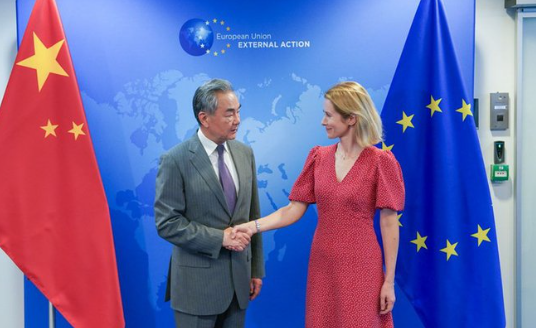
(1) China will support Russia because it knows it will be next, as they plainly told Kallas.

(2) This will turn nuclear, and Europe, with all its conventional power, can be turned to dust in minutes, not days.

Ursula New World Order

“Europe is ready to take a step forward. We are ready to take control of the changes that are inevitable. Because we can’t let history push us around. This means that it is necessary to act now. Acting on a large scale is an indispensable condition for speed, scale and strength by 2030 … By 2030 Europe should have a strong European defense structure,” Ursula said.

This drone shot down in Poland from EVERY source I have states that this is a FALSE FLAG and there is no evidence that this every invaded Polish airspace. They desperately need to create a False Flag, get gullible people to sign their own death wish, so these failed EU leaders can keep their pensions. Ursula told the EU Parliament with great theatrics:

“Battle lines for a new world order based on power are being drawn right now,” von der Leyen told the European Parliament in her annual State of the EU address.

So, yes, Europe must fight. For its place in a world in which many major powers are either ambivalent or openly hostile to Europe,” she said.

Uncertainty

Putin is the smartest and responsible world leader at the table today. Remove him, and we will get an emotional leader like Medvedev. Speculating on a post-Putin Russia is inherently uncertain, as the regime’s opacity and Putin’s tight control over security services make a smooth transition debatable. An overthrow—whether via coup, elite infighting, or sudden death—would likely trigger a power struggle among siloviki (security elites), oligarchs, and technocrats, potentially leading to instability or even fragmentation. I would emphasize that no apparent clear heir exists, and the outcome depends on the circumstances: a managed handover (unlikely in an overthrow) versus chaotic removal.

I would list the potential replacements, prioritize loyalty to the current system, hawkish stances on Ukraine/NATO, and control over key institutions like the FSB, military, or economy, which will all come into play. Dmitry Medvedev is indeed a contender due to his proximity to Putin, but he’s not the top pick—his role is often seen as that of a “bad cop” provocateur rather than a unifying leader. Perhaps, but we are looking at an outright statement from the EU that Russia must be defeated and obliterated. We are not talking about just pushing Russia out of Ukraine.

Kaja Kallas, a ruthless Neocon, openly calls for the total destruction and breakup of Russia. This is the total destruction of the country. That is not something that should be taken lightly. That is the justification for nuclear war. Kallas is a greater threat to the EU than Putin.

MY LIST OF CONTENDERS:

Mikhail Mishustin, Prime Minister
Nikolai Patrushev, Deputy Chair, Security Council (former FSB head)
Sergei Sobyanin, Moscow Mayor
Dmitry Medvedev, Deputy Chair, Security Council
Andrei Belousov, Defense Minister
Alexei Dyumin, Tula Governor (ex-bodyguard)
Sergei Kiriyenko, First Deputy Chief of Staff

Medvedev’s name surfaces due to his history (tandem with Putin in 2008-2012) and recent high-profile positioning him as a “nuclear-ready” hardliner who could rally nationalists. X discussions often call him the “natural successor” for stability. However, he’s rarely ranked #1 in expert assessments—his provocative style (e.g., 2025 threats sparking U.S. sub deployments) makes him a Kremlin mouthpiece, not a consolidator. Others see him as a fallback, not a frontrunner, due to reputational damage from past “liberal” image and scandals. In an overthrow, elites might prefer Mishustin or Patrushev for their institutional grip.

Keep in mind that Khruschev was overthrown in a coup, and he was usurped by Bresnev because of his reckless handling of the Cuban Missile Crisis.

Post-Stalin USSR saw infighting; a similar “vicious struggle” would be likely if Russia were defeated in Ukraine, with FSB vs. military clashes. No democratic shift should be expected. Any successor would most likely double down on authoritarianism and anti-West policies, and any hope of world peace will be completely obliterated.

Then, for a coup, any replacement inherits a quagmire; hardliners like Patrushev or Medvedev might escalate, while technocrats like Mishustin seek de-escalation for economic relief.

In summary, Mishustin or Patrushev edge out as most probable for their balance of competence and control, but Medvedev remains a wildcard—loyal enough for continuity, radical enough for drama. Russia after Putin looks more like Putinism 2.0 than reform. This is all upset if NATO pushes its agenda to destroy Russia and break it up, strip mining its assets. This goal, as articulated in part by Kallas, warrants a fight to the death with nukes, and in this case, I would put my money on Medvedev, who has the high-profile that would become more valuable when confronted with the destruction of Russia, not with just pushing it out of Ukraine.

Why the United States is Doomed


Posted originally on Sep 15, 2025 by Martin Armstrong 

Statue Liberty lamentings hiding its eyes

QUESTION: I believe you have said that the United States practices the law of tyrants, conspiracy, which only proves a thought crime, not that you committed a crime. Is this why you say we are doomed, because nobody will do real legal reform?

Wes

ANSWER: Our legal system adopted the tyranny of the king and replaced him with the Department of JUST US. Its combination of the Pinkerton rule, broad federal statutes like RICO, and the strategic, frequent use by prosecutors makes American conspiracy law one of the most potent and expansive in the world. The United States has the most anti-human rights legal system on the planet. For example, under Canon Law used in France, they cannot compel any family member to testify against you. In the United States, they can imprison your children until they testify against you. The only privilege is granted to a spouse or a priest. Then they will use a divorce to get around the spouse rule. Under the Canon law of the Catholic Church, the sanctity of the family unit comes first. Under English Common Law, precedent takes precedent. We had a revolution against the king’s tyranny, replacing him with local tyranny.

They love to call Russia and China authoritarian and communist. But look at the stats. You have a 340% greater chance of going to jail in the United States compared to China. The United States has the highest percentage of its population in prison of any country in the world, so much for liberty. Suppose you lie to a government official; that is perjury, punishable by up to 5 years. If a government official lies to you, that is legal.

Without the rule of law, civilization crumbles. Courts rule in favor of the government. Rarely will you find a judge who will truly defend the Constitution, and good luck in prosecuting a judge or a prosecutor.

Region/CountryIncarceration Rate (per 100,000 population)As a Percentage of the PopulationYear/Source
USA5310.531%2024
Canada1040.104%2023
Japan360.036%2021
Russia3000.300%2023
China1210.121%2018
Europe73 (Western Europe median)0.073%2024
South America3050.305%2024 (calculated from regional data)

Send in the Clowns. Don’t bother – they are here.


Posted originally on Sep 15, 2025 by Martin Armstrong |  

AE WAR W Array 9 15 25

QUESTION: Marty, you have said it. This is the worst crop of leaders in Europe in all history. Now they are pushing for WWIII ASAP. They are calling for a no-fly zone over Ukraine. They have been saying that since they can protect Israel and shoot down Iranian missiles and drones, the West should do the same in Ukraine. Given your last blog’s focus on the stock market, gold, and the dollar’s rise, it seems to be pointing to war. Do you see this coming to a head by November?

Rosco

ANSWER: This is not looking good at all. I cannot confirm rumors that they captured several Russian drones and sent them over Poland to justify a false flag. I would not put it past them. They need the false flag to get the people to sign up for war. People will not volunteer to invade Russia to save Ukraine. This is the typical “rally around the flag” strategy.

Minsk Agreement Head of State

They claim that the recent Russian drone attacks on Poland not only demonstrate that Vladimir Putin is trying to see how far he can push NATO. He already knows that NATO is clamoring to start WWIII. This can be easily stopped within 24 hours. Order Zelensky to honor the Minsk Agreement, which all of Europe signed, and this war will be over in 15 minutes. I am concerned that tensions are on track to escalate from September into November 2026.

I am pushing as hard as I can. President Trump has dismissed Zelensky’s latest appeals for advanced weaponry, including long-range missiles and air-defence systems, suggesting that Ukraine has been ill-advised. We have to keep the USA out of this European nightmare. They need war because the EU is crumbling. The choice is stark: either war as a diversionary tactic from the sovereign debt crisis, or the people will be storming their parliaments with pitchforks when they realize the Eurozone is collapsing economically.

I strongly disagree with Trump on sanctions and his latest theory, which is always a favorite among neocons. He said if all NATO countries refused to buy oil from Russia, the conflict could be put to a stop. He also suggested placing tariffs on China of 50% to 100% for its purchases of Russian petroleum. He suspects it “will break that grip” between the two countries, which have a strong alliance. Screwing with the economies of China and Russia rather than demanding the Minsk Agreement be honored will only PERMANENTLY create a hostile world. What planet he is on, I do not know.

There is absolutely no way that even China is prepared to see Russia lose in this conflict. You will have Russian Neocons seize power, and then you will have WWIII. Stop the bullshit and look long-term. We started this damn war – fess up to the facts and the timeline. You might as well make Victoria Nuland Secretary of State with supreme power to push the button.

I have heard the stupid argument that we were happy to shoot down Iranian drones and missiles aimed at civilian targets in Israel, but not in Ukraine. Iran was not capable of creating World War III. Russia and China are. I have never seen such stupidity on the geopolitical front in the 50 years I have been doing this. Thank God I am not 18. It’s hard enough dealing with this for just a few more years, let alone another 50.

This reminds me of Frank Sinatra’s Send in the Clowns. Don’t bother – they are here.

Albania Appoints AI Minister


Posted originally on Sep 15, 2025 by Martin Armstrong |  

Albania has adopted the world’s first AI “minister” in an attempt to combat corruption. Diella, the female-voiced AI entity, will be a “member of the Cabinet who is not present physically but has been created virtually,” Prime Minister Edi Rama stated, adding that the robot would ensure that “public tenders will be 100% free of corruption” since current government employees cannot be trusted.

Microsoft helped to assemble Dinella—red flag number one. The robot will receive access to 1 million digital documents, including sensitive government information. The advancements in AI are ingenious but not sentient. Dinella has been programmed and, therefore, is prone to biases.

The irony is that in turning to artificial intelligence, the people are acknowledging that human government has completely failed. I have said before that many have proposed replacing judges, regulators, and even politicians with AI, as if a machine will somehow be impartial. The problem, of course, is not the hardware but the software. Who writes the code? Who programs the “ethics”? If government controls the AI, then it is nothing more than an automated extension of the same corruption. AI becomes a weaponized bureaucracy, enforcing whatever the ruling elite rules.

Rama’s Socialist Party has its eyes set on European Union membership, believing it can rid its nation of corruption ahead of negotiations in 2027. It is unclear if lawmakers will have the ability to vote on Diella’s post as minister, or whether the public will have an opportunity to vote for AI-driven politicians.

Society has fallen to the point that robots are trusted more than human beings. Do people believe that a robot can properly represent them or lead? “[The] Prime Minister’s buffoonery cannot be turned into legal acts of the Albanian state,” said Gazmend Bardhi, parliamentary group leader of the Democrats.

AI is only as honest as its programmer, and if Microsoft is involved, I have little hope of Dinella’s moral coding. Appointing a robot as minister is an extremely desperate move by the Albanian government to restore public trust. This is not a technological milestone but a glaring warning of lost confidence in a failing political system.

Drugmaker Calls Britain “Uninvestable”


Posted originally on Sep 15, 2025 by Martin Armstrong |  

pills scaled

Business flees when it feels it is unwanted, and the Labour Party has created an environment that repels capital. A wave of pharmaceutical companies are pulling out of the United Kingdom due to a climate that has become “uninvestable.”

AstraZeneca has become one of the latest companies to pull back on investments due to excessive regulation and taxation. “We constantly reassess the investment needs of our company and can confirm our expansion in Cambridge is paused. We have no further comment to make,” a spokesperson said. The company decided to pause a 200 million pound ($271.26 million) investment in Cambridge that was slated to created 1,000 new jobs. The company first terminated a 450 million pound investment in northern England back in January, citing a lack of support from the UK government.

Merck Pharmaceuticals terminated a £1bn (US$1.35bn) research and development project in London and called the UK “uninvestable.” The drugmaker plans to abandon its London Bioscience Innovation Centre and the Francis Crick Institute by the end of the year due to the lack of investment in the life science industry and the overall undervaluation of innovative medicines and vaccines by successive UK governments.”

“Simply put, the UK is not internationally competitive,” a Merck spokesperson stated.

The NHS tightly regulates drug prices, yet spends only 9% of its budget on medicines compared to other OECD nations that spend between 14-20%. Only 37% of new drugs are fully reimbursed for their licensed use, whereas the figure is 90% in Germany and likely higher in the US. The government expects businesses to pay them a large portion of their revenue. Drugmakers face a 23.5% levy on new drugs as of 2025. Why would a pharmaceutical company research and develop new products in a nation that demands nearly a quarter of the profits?

Foreign investment in life sciences is down 58% since 2017 across the UK. Comparatively, investment in research and development (R&D) fell 1.9% on a global basis. Tight price controls, high government levies, and regulatory red tape have caused multi-billion-dollar investments to flee. Drugmakers are beginning to pour investments into the US instead, where they receive generous incentives and lower taxes.