This interview with FXStreet is from 2015. Some are surprised at the consecutive rate hikes, but our models have been indicating for a very long time that rates would rise rapidly. There would be no soft landing. Central banks maintained artificially low rates for far too long and were backed into a corner. They created a problem long ago, and it will cause pain for “some time,” as Powell usually states, for the situation to be under control.
People are simply not prepared for a sharp economic downturn. The Money and Pensions Serviceconducted a poll in the UK in which it found around 25% of adults have under £100 in savings. The 3,000-person survey found that 17% reported having absolutely nothing set aside. Around 5% reportedly had under £50, while 4% had between £50 and £100.
The drastically increased cost of living has many living paycheck to paycheck. The Building Societies Association (BSA), as reported by the BBC, conducted a separate survey that found that 35% of people in the UK simply stopped saving due to inflation. Around 36% said they are already dipping into their savings accounts to pay the bills.
The Bank of England is anticipating a long recession ahead. The central bank sees economic conditions contracting through the first half of 2024. The central bank’s prediction of five consecutive quarters of contraction would mark the longest recession in UK history. The people have not experienced the full effects of this recession, and most are simply not prepared for what lies ahead.
Posted originally on the conservative tree house on November 10, 2022 | Sundance
The Bureau of Labor and Statistics (BLS) provides the latest data on consumer prices (inflation) [DATA HERE]. We explained in 2021 how inflation would grow on a month-over-month and year-over-year basis until the calendar became more friendly and the government officials could claim “diminished inflation growth.” Well, we are now entering that phase of economic parseltongue.
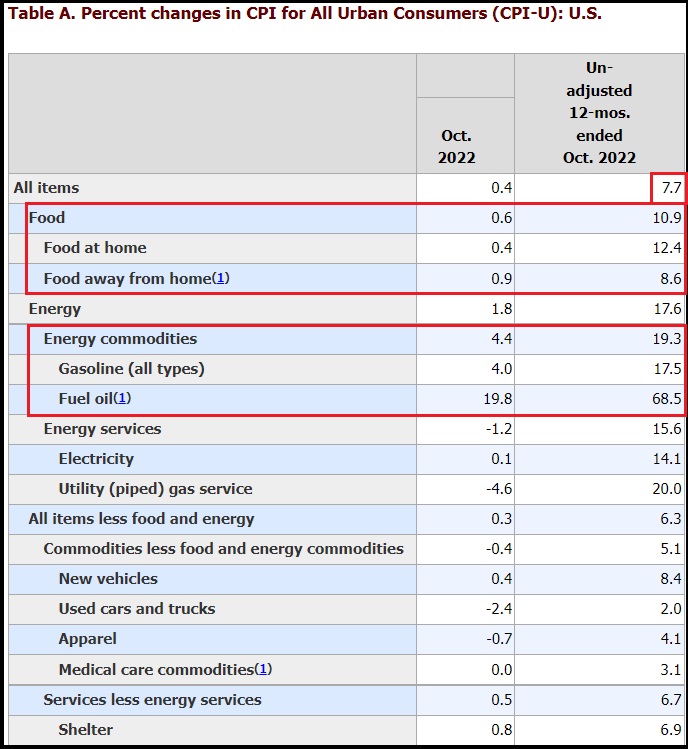
October consumer prices increased 0.4% over September. However, we are now comparing year-over-year (Y0Y) inflation to the period where last year’s prices had already skyrocketed, so YoY inflation seems to be moderating at 7.7%, it’s a false premise. {Go Deep}
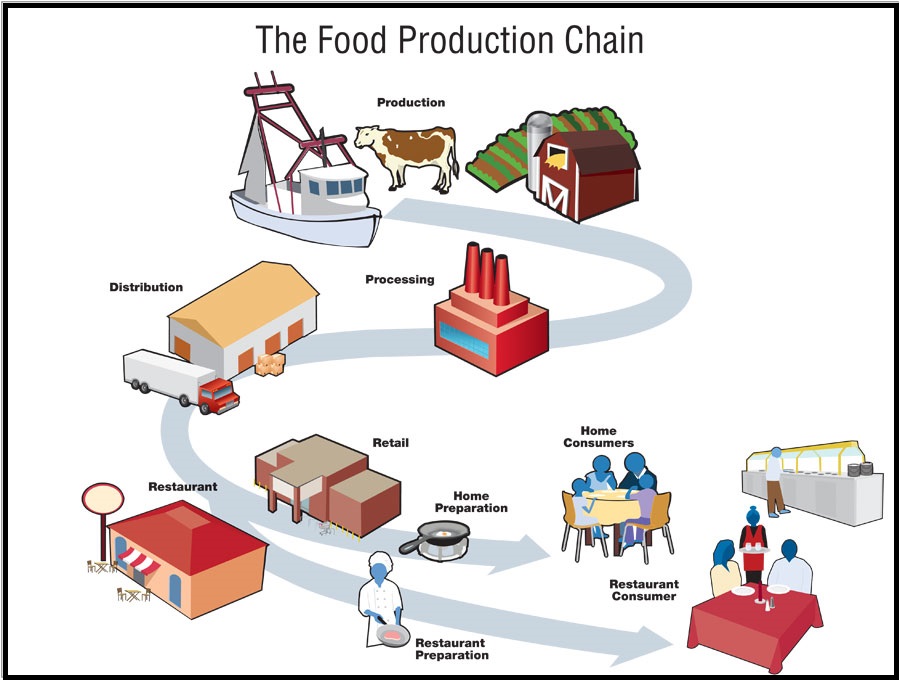
As expected, the energy-driven consumer inflation in the food sector has arrived. The proverbial field inflation is arriving at the fork, and the October CPI now shows the third wave of food price increases we had previously discussed.
Table 2 Details: Egg prices increased +10.1% last month and now 43% higher than last year. Butter +1.9% last month, 26.7% for year. Margarine +1.3% for month, 47.1% for year. Coffee +1.3% for the month, 15.6% for the year.
Heading into baking season we find flour +0.2% for the month, +24.6% for year. Essentially, as expected, all of the holiday foodstuffs are now rising in price as the increased field and commodity prices hit the store shelves.
Some row crops are starting to moderate in price growth, while dairy products continue rising throughout the fall season. It is going to be painful on the checkbook grocery shopping this holiday season.
On the energy front, home heating oil increased 19.8% in October and is now a whopping 68.5% higher than last October. Unleaded gasoline increased another 3.5% and now is now 20.9% higher than last year (Oct ’21), which was already 40% higher than January 2021.
Food, fuel, electricity, home heating and housing costs continue growing monthly, but give the illusion of moderating when compared to last year.
Food away from home (restaurants etc.) are starting to show the cumulative price impacts for restaurants, hotels and cafeterias. Additionally, as the kids returned to school the lunchroom prices have skyrocketed a jaw-dropping +3.8% for October and +95% compared to last year [Table 2]. Packing lunches for kids is going to become an even more important aspect for the family food budget.
The stock market is happy with the news because the lowered 7.7% (YoY) inflation number, a product of the calendar and nothing else, gives optimism the Fed may moderate the increased federal reserve rate hikes. However, don’t count on it because inflation is easily identified as embedded now. Lemons at the grocery store are now $0.99/each.
Think about that. $1 for a single lemon and roughly 50¢ per egg at the supermarket. A full shopping cart of groceries now easily exceeding $200. This is devastating for those on fixed incomes and blue-collar workers.
Wages are nowhere near keeping up with this level of price increase.
(CNBC) The consumer price index rose less than expected in October, an indication that while inflation is still a threat to the U.S. economy, pressures could be starting to cool.
The index, a broad-based measure of goods and services costs, increased 0.4% for the month and 7.7% from a year ago, according to a Bureau of Labor Statistics release Thursday. Respective estimates from Dow Jones were for rises of 0.6% and 7.9%.
Excluding volatile food and energy costs, so-called core CPI increased 0.3% for the month and 6.3% on an annual basis, compared with respective estimates of 0.5% and 6.5%.
A 2.4% decline in used vehicle prices helped bring down the inflation figures. Apparel prices fell 0.7% and medical care services were lower by 0.6%.
“The report overstates the case that inflation is coming in, but it makes a case inflation is coming in,” said Mark Zandi, chief economist at Moody’s Analytics. “It’s pretty clear that inflation has definitely peaked and is rolling over. All the trend lines suggest that it will continue to moderate going forward, assuming that nothing goes off the rails.” (read more)
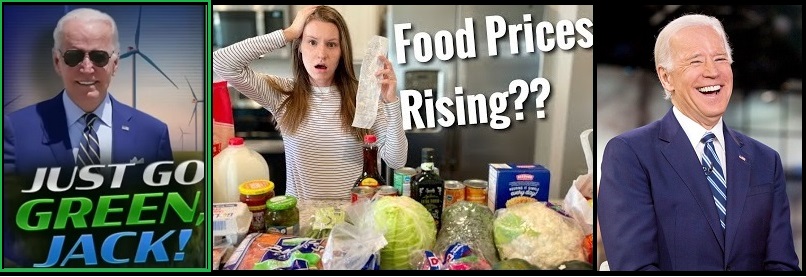
The Biden energy policy is the root of the consumer inflation. Nothing will happen to moderate overall consumer inflation on Main Street until energy policy changes.
Additionally, with the 2022 election in the rear-view mirror, we should start to see layoffs and unemployment increasing now. The bureaucrats will now let the recession become evident.
At the World Economic Conference in 2021, the Armstrong Socrates model predicted that 2022 was going to be volatile and chaotic featuring a strong US dollar, a huge move in interest rates, a major bond market decline, fertilizer and food shortages, as well as escalating geopolitical tensions in Ukraine.
What now? Socrates forecast that 2023 will be more volatile and chaotic, featuring violent moves across all markets as monetary and geopolitical tensions and debt problems intensify.
At this year’s World Economic Conference, November 11-13, Martin Armstrong will talk about what’s next for the US dollar and other currencies, the liquidity/credit crisis, as well as price targets for oil, gold, stocks, bonds/interest rates, and stocks.
Thank you to the reader who sent in this hilarious image. Despite all the incoming data and price instability, some expected the Fed to pivot on its stance. Even BlackRock reportedly told advisers to expect “pivot language” at the last Federal Open Market Committee meeting. They were hoping that the Fed would announce a looser stance for the December meeting despite conditions failing to improve.
The markets correctly anticipated a 75 bps hike for November. Jerome Powell said that incoming data from the last meeting has led the central bank to believe that rates will edge HIGHER than originally anticipated. PCE rose 6.2% over the past 12 months, with core PCE rising by 5.1%. Long ago after Powell changed his “transitory” stance, he reiterated that the Fed’s main goal is to bring levels back to the 2% target. Price stability is the top priority – period.
“As I’ve said in the last two press conferences, it will become appropriate to slow the pace of increases, as we approach the level of interest rates that will be sufficiently restrictive to bring inflation down to our two percent goal. There is significant uncertainty around that level of interest rates. Even so, we still have some ways to go, and incoming data since our last meeting suggest that the ultimate level of interest rates will be higher than previously expected,” the chairman reiterated.
The central bank realizes that the situation will only worsen. “Restoring price stability is essential to set the stage for achieving maximum employment and stable prices in the longer run. The historical record cautions strongly against prematurely loosening policy. We will stay the course, until the job is done,” Powell commented. His Q&A after the announcement only reiterated his extremely hawkish stance (see video above).
Powell said the Federal Reserve is honing in on three main factors: 1) how fast to tighten policy, 2) how high to raise rates, 3) how long to remain on the current course. Powell said they would move “expeditiously” to move rates, especially given the low starting point. He believes that incoming data justifies ongoing rate hikes, and his estimate is higher than what was announced in September. Finally, he said they might have a discussion on when to loosen policy, but there was an emphasis on the word discussion.
The National Retail Federation estimated that 172 million Americans spent $10.6 billion on Halloween this year, or $100 per person. Around $1.2 billion went into costumes for children, not to be outdone by adults spending $1.7 billion on their own costumes. Around $710 million was spent on pet costumes as well. Around 67% of consumers handed out candy, 51% decorated, 47% wore a costume, 44% carved pumpkins, and 26% participated in a Halloween party. Halloween spending is back to pre-pandemic levels, but inflation is to blame.
Food, candy, pumpkins, décor – all of these items cost significantly more in 2022, but Americans are still willing to spend. Candy alone is up 13.1% from last year, surpassing food inflation at 11.2%.
This is foreshadowing for the Christmas season, which historically is the most lucrative time for retailers and a big boost for overall GDP. Around 25% of all retail spending occurs in November and December each year, but many have already begun holiday shopping as stores are forced to offer more appealing sales. Retailers who fail to profit in the remaining months of 2022 will be forced to downgrade their forecasts and re-evaluate their businesses in the current economy. Layoffs and store closures are likely, and many retailers have already halted hiring. Americans do not have more disposable income to spend on the holidays, but those who can are willing to pay inflated prices to participate in age-old traditions.
Posted originally on the conservative tree house on October 26, 2022 | Sundance
A lot of people didn’t like Steven Mnuchin as Treasury Secretary, I did. Secretary Mnuchin was an inside player, a billionaire himself, who worked for the outside team. He already had a full bank account and carried ‘f**k-off’ money. That, combined with Wilbur Ross having the same ability, was exactly what we needed to execute the America-First MAGAnomic resurgence.
The U.S. middle-class saw and felt the benefits. Economic security is national security, at a nationwide and even individual level. Mnuchin, Ross and Lighthizer constructed that economic outcome guided by the larger strategy of President Donald J Trump.
RIYADH, Oct 26 (Reuters) – Former U.S. treasury secretary Steve Mnuchin said on Wednesday he believed the United States was in a recession and said this would continue.
Speaking at Riyadh’s flagship investment conference FII, he said: “I think we’ll probably see a peak of 4.5% 10-year rates.”
“I think you are going to see inflation in the U.S. begin to come under control, it will probably be a two-year period,” he added.
He said the U.S. and China must learn to co-exist. He added that the Middle East’s economic issues need to be dealt with regionally. (link)
Posted originally on the conservative tree house on October 14, 2022 | Sundance
Not that long ago, I would have said to allow the free market to decide if a merger or acquisition was valuable for the consumer. However, in the era where massive multinational corporations, investment groups and financial institutions have now used corporatism to merge their interests with government, the massive multinationals need scrutiny.
Two major food retailers, Kroger and Albertsons, have announced their intent to merge into one massive company in a deal valued at $24.6 billion. The majority stakeholders in Kroger are institutional investors Vanguard ($3.72 billion/11.29%) and Blackrock ($3.02 billion/ 9.17%). The majority stakeholder in Albertsons is institutional investment group Cerberus ($3.90 billion/28.54%).
In the past few years, food has surfaced as a growing national security issue. Foreign companies and large multinationals continue to expand their control over U.S. farm production and export U.S. farm products (Big Ag). A major retail level move like the merger of Kroger and Albertsons creates a weaker competitive environment and gives a larger potential footprint to price control.
CBS – […] Together, the companies will have more than 710,000 workers and operate nearly 5,000 stores, along with roughly 4,000 pharmacies. Kroger, based in Cincinnati, Ohio, operates 2,800 stores in 35 states, including brands like Ralphs, Smith’s and Harris Teeter. Alberstons, based in Boise, Idaho, operates 2,220 stores in 34 states, including brands like Safeway, Jewel Osco and Shaw’s.
“Albertsons Cos. brings a complementary footprint and operates in several parts of the country with very few or no Kroger stores,” Kroger CEO Rodney McMullen, who will lead the expanded company, said in a statement.
Kroger will pay $34.10 for each share of Albertsons stock, a 19% premium from the closing price on Thursday. As part of the purchase, Albertsons will issue a cash dividend of up to $4 billion to its shareholders, which the companies said is expected to be about $6.85 per share. (read more)
Sometimes bigger is just bigger and more controlling, not better.
That said, with economic volitivity continuing to increase, the food sector is a safe harbor for massive investment shifts.
Posted originally on the conservative tree house on October 14, 2022 | Sundance
You often hear me talk about how financial pundits and economic analysts are disconnected from Main Street. Today we get a prime example of that from the Wall Street Journal.
The topline of the WSJ article is essentially that people are not spending money on anything except essential goods (housing, energy, fuel, food, etc), which is somewhat of a ‘duh tell us something we don’t know‘ type article. However, the analytical part of the article is where you find the insufferable disconnect. Here’s one example:
[Data Point 1] “Gasoline prices dropped in September for the third month in a row, falling 4.9% from August.” [Data Point 2] Sales at gasoline stations, a proxy for spending by car owners, declined 1.4% last month.”
If gasoline dropped 4.9% in price, but sales only declined 1.4% that would indicate more physical gasoline was purchased at a lower price than the month before. It’s not a hard concept to understand.
This is a retail sales reality even identified in the article itself, “Unlike many government reports, retail sales aren’t adjusted for inflation, so some swings reflect price changes rather than shifts in the amounts purchased.”
However, now look at this: “Spending at restaurants and bars grew 0.5% in September from the prior month. But prices at restaurants grew 0.9% in the same month, according to a separate Labor Department report released Thursday, meaning that consumers are getting less for their spending.”
No, that’s not what this means.
If restaurant prices increase 0.9%, but restaurant sales only increase 0.5% it means you are selling/serving fewer customers. It doesn’t mean consumers getting less food, it means fewer consumers are eating at restaurants…. Which is caused by consumers having to prioritize their spending.
(WSJ) – […] Spending declined in categories linked to big purchases like cars, televisions, beds and golf clubs. Purchases at electronics and appliance stores declined 0.8% in September while spending at furniture stores fell 0.7%.
[…] Scott Brave, the head of economic analytics for Morning Consult, said consumers have started to pull back on optional purchases while still spending on the essentials. “They are having to make tough decisions,” he said. (more)
Posted originally on the conservative tree house on October 13, 2022 | Sundance
In this brief segment on fall harvest inflation, NBC notes consumer prices for food stuffs continue increasing regardless of the economic action by the Biden administration. The reason is very simple and is outlined within the segment by Jacob Goebbert, the Goebbert’s farm general manager. WATCH:
.
The current inflation is embedded in the cost of products, because it’s a supply side issue.
Financial “experts” can shout all day long about the fiscal policy (spending) being the origin of inflation (ie. demand side), they’re wrong. Our current inflation cycle, most notably evident within massive increases in food prices, is a supply side issue created by the increased energy costs. Full stop. It’s a Biden policy outcome.
I have created this site to help people have fun in the kitchen. I write about enjoying life both in and out of my kitchen. Life is short! Make the most of it and enjoy!
This is a library of News Events not reported by the Main Stream Media documenting & connecting the dots on How the Obama Marxist Liberal agenda is destroying America











 Centinel2012