Women are more Democratic than men, and younger voters are more Democratic than older ones. The former has been true for decades, and the latter is a trend that’s at least 10 or 15 years old. But a new Pew survey using a huge sample to allow for insight into demographic details shows that the intersection of these two trends is staggeringly large.
Among millennials, which Pew identifies as people born between 1981 and 1996, men lean toward Democrats by 8 percentage points — far and away a bigger tilt toward Democrats than older cohorts of men. But millennial women favor Democrats by a staggeringly large 70-23 margin.
That means that even as millennial men are the most Democratic-friendly cohort of men, the millennial gender gap is also by far the largest of any cohort. In the Silent Generation, women are 8 points more favorable to Democrats. Among boomers, it’s 10 points. Among Gen-Xers, it’s 11 points, and among millennials, it’s 21 points.
That’s driven by what seems to be an explosive change in millennial women’s political sentiments over just the past two or three years even while most other groups’ views have stayed relatively stable.
Young people are, of course, notoriously fickle midterm voters. So how much this shift in sentiment is translated into a shift in actual policy outcomes will hinge, critically, on whether this big bloc of younger women shows up in November. But it’s fair to say that while a certain amount of gender polarization is nothing new to the political system, the scale that we are now witnessing among younger people is unprecedented.
The National Security Council is a large intelligence bureaucracy, within the Washington DC intelligence apparatus, consisting of dozens of principles and hundreds of staff. Many of those staffers are career officials, holdovers from prior administrations.
According to Foreign Policy, incoming National Security Adviser to the President, John Bolton, is planning a significant ‘clean house’ removing a significant number of people within the system.
(Via FP) Incoming National Security Advisor John Bolton and people close to him are expected to launch a massive shake-up at the National Security Council, aiming to remove dozens of current White House officials, starting with holdovers from President Barack Obama’s administration, according to multiple sources.
Those targeted for removal include officials believed to have been disloyal to President Donald Trump, those who have leaked about the president to the media, his predecessor’s team, and those who came in under Obama.
“Bolton can and will clean house,” one former White House official said.
Another source said, “He is going to remove almost all the political [appointees] McMaster brought in.”
A second former White House official offered a blunt assessment of former Obama officials currently detailed or appointed to the NSC: “Everyone who was there during Obama years should start packing their shit.” (read more)
This should have happened earlier…. but at least it’s a good restart now.
“After we come back from Spring Break, they’re requiring us all to have clear backpacks… it’s unnecessary. It’s embarrassing for a lot of the students.”
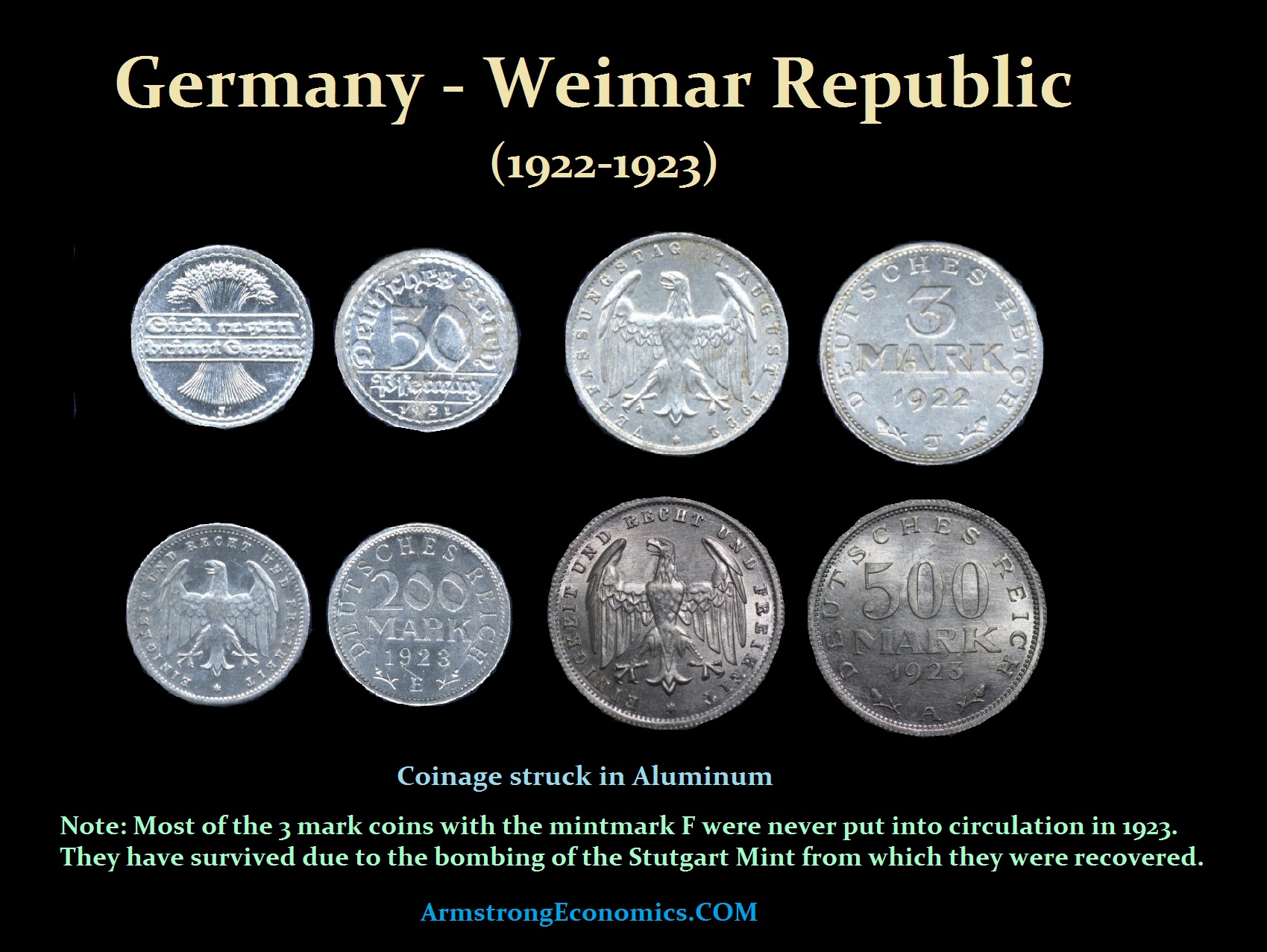
When the Weimar Republic first began following the 1918 Communist Revolution, they issued coins assuming they were now in control. The 50 pfennig coins were struck between 1919 and 1922. There were no precious metal or even bronze coins struck during the hyperinflation that began from August 1922 to November 1923. The coinage of the Weimar Republic between 1922 and 1923 were all struck in aluminum.
During a hyperinflation, the only real currency to hold on to some value is the coinage. The price of raw materials rises and as such, the coins become worth more as scrap metal than they so as coins from a legal tender perspective, but this is AFTER the hyperinflation – not during. The stories that people saved their copper coins and were able to spend them with a higher value than paper are really just stories. The coinage of the Weimar Republic was aluminum, not even copper.
I do know that AFTER the event when confidence returns to the economy, then the base metals will start to rise in value because the economy is expanding once again.
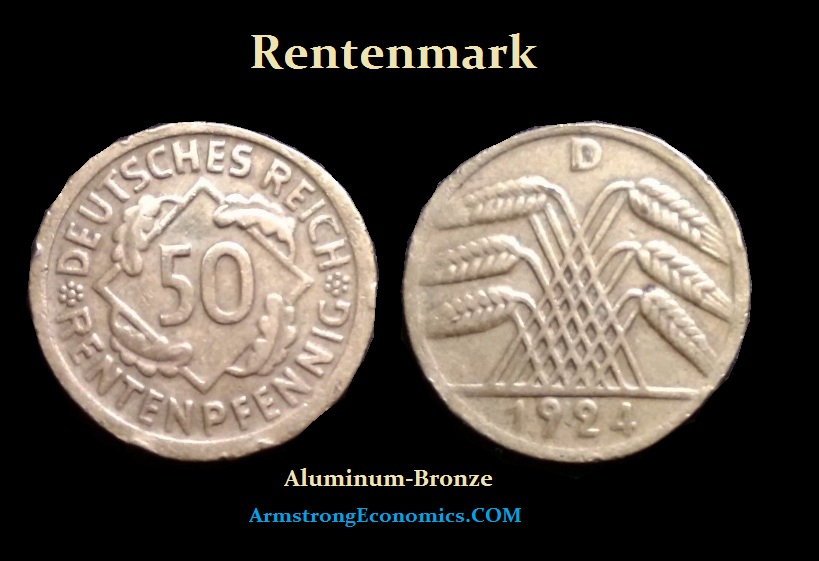
The Rentenmark was a currency issued on October 15th, 1923 to stop the hyperinflation of 1922 and 1923 in Weimar Germany. The largest denomination was just 50 pfennig. It was struck in Aluminum-Bronze.
Those who ask about coins surviving the hyperinflation, the answer is NO. You can save them from the pre-hyperinflation, but during such an event, not even the old coins will buy you a cup of coffee
Author of “The Coming Collapse of China”, Gordon Chang, discusses the effect of President Trump’s tariffs on China and the epic battle ahead. Last night China announced their feeble retaliatory actions – SEE HERE. A professionally nervous Maria Bartiromo, frames a series of questions from the perspective of Wall Street.
Fortunately Gordon Chang understands the Red Dragon, and more importantly understands Chinese Chairman Xi Jinping’s geopolitical goals through economic conquest. Mr. Chang is one of the few people who appear regularly in media and know the truth behind the Panda Mask.
.
People often talk about the ‘strength’ of China’s economic model; and indeed within a specific part of their economy -manufacturing- they do have economic strength.
However, the underlying critical architecture of the Chinese economic model is structurally flawed and President Trump with his current economic team understand the weakness better than all international adversaries.
China is a central planning economy. Meaning it never was an outcropping of natural economic conditions. China was/is controlled as a communist style central-planning government; As such, it is important to reference the basic structural reality that China’s economy was created from the top down.
This construct of government creation is a key big picture distinction that sets the backdrop to understand how weak the economy really is.
Any nations’ economic model is only as stable (or strong) as the underlying architecture or infrastructure of the actual country.
Think about economic strength and stability this way: If a nation was economically walled off from all other nations, can it survive? …can it sustain itself?
In the big picture – economic strength is an outcome of the ability of a nation, any nation, to support itself first and foremost. If a nations’ economy is dependent on other nations’ for it to inherently survive it is less strong than a nation whose economy is more independent.
You might not realize it, but China is an extremely dependent nation.
When the central planning for the 21st century Chinese Economy was constructed, there were several critical cultural flaws, dynamics exclusive to China, that needed to be overcome in order to build their economic model. It took China several decades to map out a way to economic growth that could overcome the inherent critical flaws.
Critical Flaws To Exploit:
♦Because of the oppressive nature of the Chinese compliant culture, the citizens within China do not innovate or create. The “Compliance Mindset” is part of the intellectual DNA strain of a Chinese citizen.
Broadly speaking, the modern era Chinese are not able to think outside the box per se’ because the reference of all civil activity has been a history of box control by government, and compliance to stay (think) only within the approved box. The lack of intellectual thought mapping needed for innovation is why China relies on intellectual theft of innovation created by others.
American culture specifically is based around freedom of thought and severe disdain of government telling us what to do; THAT freedom is necessary for innovation. That freedom actually creates innovation.
Again, broadly speaking Chinese are better students in American schools and universities because the Chinese are culturally compliant. They work well with academics and established formulas, and within established systems, but they cannot create the formula or system themselves.
♦ The Chinese Planning Authority skipped the economic cornerstone. When China planned out their economic entry, they did so from a top-down perspective. They immediately wanted to be manufacturers of stuff. They saw their worker population as a strategic advantage, but they never put the source origination infrastructure into place in order to supply their manufacturing needs. China has no infrastructure for raw material extraction or exploitation.
China relies on: importing raw material, applying their economic skillset (manufacturing), and then exporting finished goods. This is the basic economic structure of the Chinese economy.
See the flaw?
Cut off the raw material, and the China economy slows, contracts, and if nations react severely enough with export material boycotts the entire Chinese economy implodes.
Insert big flashy sign for: “One-Belt / One-Road”HERE
Again, we reference the earlier point: Economic strength is the ability of a nation to sustain itself. [Think about an economy during conflict or war] China cannot independently sustain itself, therefore China is necessarily vulnerable. China cannot even feed itself.
China is dependent on Imports (raw materials) AND Exports (finished goods).
♦The 800lb Panda in the room is that China is arguably the least balanced economy in the modern world. Hence, China has to take extraordinary measures to secure their supply chain. This economic dependency is also why China has recently spent so much on military expansion etc., they must protect their vulnerable interests.
Everything important to the Chinese Economy surrounds their critical need to secure a strong global supply chain of raw material to import, and leveraged trade agreements for export. China’s economy is deep (manufacturing), but China’s economy is also narrow.
China could have spent the time to create a broad-based economy, but the lack of early 1900’s foresight, in conjunction with their communist top-down totalitarian system and a massive population, led to central government decisions to subvert the bottom-up building-out and take short-cuts. Their population controls only worsened their long term ability to ever broaden their economic model.
It takes a population of young avg-skilled workers to do the hard work of building a raw material infrastructure. Mine workers, dredge builders, roads and railways, bridges and tunnels etc. All of these require young strong bodies. The Chinese cultural/population decisions amid the economic builders precluded this proactive outlook; now they have an aging population and are incapable of doing it.
This is why China is now dependent on their position as an economic trade bully. They must retain their supply chain: import raw materials – export finished goods, at all costs.
This inherent economic structure is a weakness China must continually address through policies toward other nations. Hence, “One-Belt / One-Road” is essentially a ‘bully plan’ to ensure their supply chain and long-term economic viability.
This economic structure, and the reality of China’s dependency, also puts China at risk from the effects of global economic contraction.
♦U.S. President Donald Trump and the U.S. economic team understand this dynamic and fully understand the inherent needs of China. When you are economically dependent, the ‘bully plan’ only works until you encounter a ‘stronger opponent’. A stronger opponent is an economic opponent with a more broad-based stable economy, that’s us.
President Trump, Commerce Secretary Ross, Treasury Secretary Mnuchin and U.S. Trade Representative Lighthizer, represent the first broad-based national team of economic negotiators who know how to leverage the inherent Chinese economic vulnerability.
National Trade Council Director Peter Navarro appears on Fox Business News to discuss the “reciprocity” proposals and the ongoing confrontation with China. Despite the honest examples provided, it is transparent from the delivery Navarro is attempting to calms the nerves of Wall Street. “EC” Economically Correct, presentation – Watch:
Without apology CTH continues to state all opposition to President Trump finds the epicenter of motive behind the economic policy. There are trillions at stake.
Yes, there are ideological differences, but do not doubt for a moment the existential threat is the core principle behind America-First economics.
Multinational corporations and global financial interests have more than a generation of effort invested within the modern trade and economic constructs that President Trump is challenging head-on.
Politicians do not construct legislation, K-Street lobbyists do. Hundreds of millions have been spent purchasing politicians as a sales force to protect those financial interests. Challenge their financial trade schemes and you are threatening the livelihood and financial systems that generate massive wealth for very powerful people. Additionally, the downstream effect threatens the affluence of the professional political class.
That said, there are American interests who will benefit, it’s just not popular within the cocktail party circuit to admit it:
(Bloomberg) China’s plan to counter U.S. import tariffs may throw global aluminum and steel traders into a tizzy, but the net result could be a boon for American primary-metal producers.
The retaliatory plan to slap tariffs on U.S. aluminum scrap and some steel products may boost American supplies, lowering raw-material prices, says Zaner Group LLC’s Peter Thomas. That could coax some metal producers to restart unused capacity in Rust Belt states if infrastructure spending picks up.
“In Indiana they’re going to be making a huge push to get things fired up,” Thomas, a Zaner senior vice president, said Friday by phone.
One aluminum scrap trader agrees with the premise, but he says the other side of the coin is that suppliers could be the biggest losers. Marvin Polikov, a vice president at aluminum scrap trader Metal Exchange in St. Louis, also says companies need a lot of time before they can, and probably would, restart unused refineries. (read more)
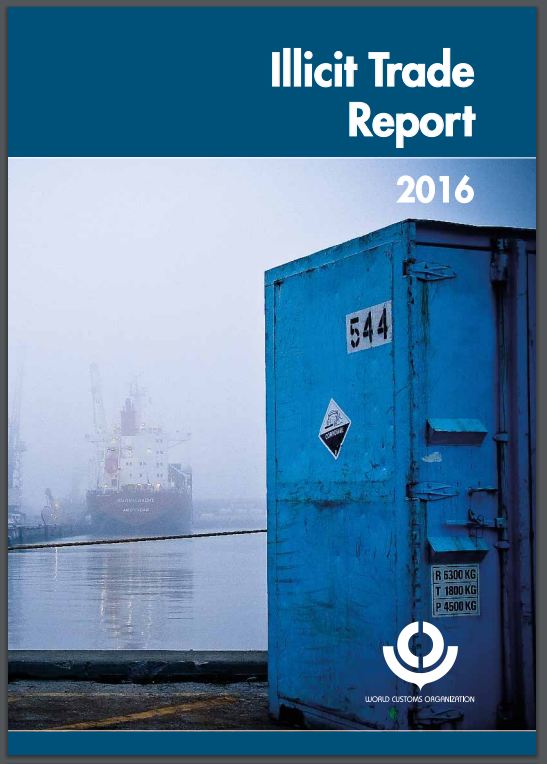
That has been the proposition that antiquities were being looted to fund terrorists. There really has been no direct evidence of any such terrorist market in antiquities. A long-awaited report by the World Customs Organisation (WCO) (WCO itr-2016-en) has finally emerged which focuses on the trafficking of cultural property for the first time. The claims have proven to be completely unsubstantiated that trafficking of cultural property comes third after trafficking of drugs and weapons raising big money and it is a source to fund terrorism.
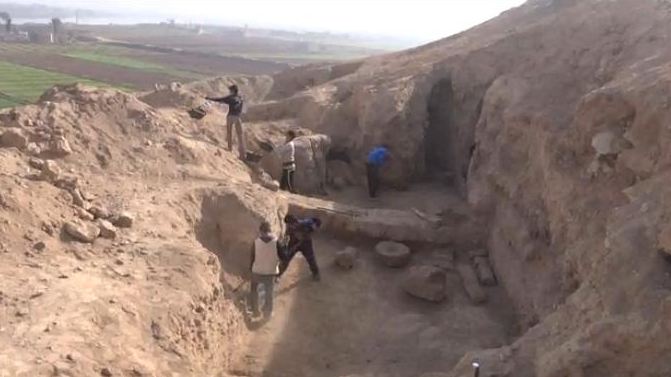
There have been videos circulating around claiming that ISIL has been engaged in archaeological digs that are carried out professionally. These reports circulated around back in 2015 and got everyone up in arms. There has been no evidence to surface that demonstrates the allegations have any validity. When these videos were even taken and exactly where has not been proven. The allegations assert they are on the border in Syria. They could be anywhere.
The WCO figures show the following quantities seized for each category in 2016 and the number of seizures:
Drugs: 1 million kilos of cannabis, 180,773 kilos of cocaine, 99,000 kilos of khat, approx. 200,000 kilos of opiates, psychotropic, and other substances. Total c.1.5 million kilos. A number of seizures: 45,000.
Weapons & Ammunition: number of pieces seized 2.5 million. Number of seizures: 4500.
Cultural property: 8343 objects seized, of which antiquities were 6,600 (about 70% coins) Number of seizures: 146 (of which antiquities – mostly coins, seals, and jewels – were only 70).
In other words, the number of seizures clear demonstrates that drugs accounted for 90.6% of seizures. Weapons and ammunition accounted for 9.1%, while the cultural property was only 0.3% (of which antiquities accounted for 0.14%).
As the WCO report also clearly illustrates that trafficking in cigarettes to avoid taxes was 4768 seizures with a value of 3.5 billion. Counterfeit goods accounted for 35,000 seizures with a value of $200 million, and exotic animals and plant parts came in at 2,225 seizures with 750,000 items. The entire theory that terrorists were funding their operations by looting antiquities has been proven to be non-existent.
I have created this site to help people have fun in the kitchen. I write about enjoying life both in and out of my kitchen. Life is short! Make the most of it and enjoy!
This is a library of News Events not reported by the Main Stream Media documenting & connecting the dots on How the Obama Marxist Liberal agenda is destroying America

/cdn.vox-cdn.com/uploads/chorus_image/image/59113819/908504512.jpg.0.jpg)
/cdn.vox-cdn.com/uploads/chorus_asset/file/10467957/gender_gap.png)




 Centinel2012