New York Prohibits Illegal Aliens from Voting


Armstrong Economics Blog/Politics Re-Posted Jul 1, 2022 by Martin Armstrong

In a groundbreaking moment of enlightenment, New York lawmakers decided that only US citizens should be able to vote. “There is no statutory ability for the City of New York to issue inconsistent laws permitting non-citizens to vote and exceed the authority granted to it by the New York State Constitution,” wrote Staten Island Supreme Court Justice Ralph Porzio.

The recent ruling has blocked over 800,000 non-citizens from voting, accounting for nearly one in nine of the city’s voting-aged 7 million residents. The vote was approved with a 33-14 majority. Imagine visiting another country, perhaps living there for a month, and having a say in who they elect in positions of power?

The only requirement for non-citizen voters of age under this failed proposal would be that they are authorized to work in the US and have spent a measly 30 days in the city. They were pushing for this bill to pass by 2023 to infiltrate the 2024 US Presidential Election, among others. Mayor Bill de Blasio questioned the proposal but said he would not use his veto powers if the measure passed. Republican minority leader of the City Council Joseph Borelli told the Associated Press that the bill “devalues citizenship” as “citizenship is the standard by which the state constitution issues or allows for suffrage in New York state elections at all levels.” Borelli accused certain lawmakers of using the bill to infiltrate the voting process.

Non-citizens do not need knowledge of the English language, and they do not need to have any real understanding of the US election process. This law violates the Constitution so blatantly that there was bipartisan skepticism. It seems only the “progressives” were firmly in support of this measure since everything is racist in their bloodshot eyes.

Atlanta Fed Revises Second Quarter GDP Estimate to Negative 1 Percent


Posted originally on the conservative tree house on June 30, 2022 | Sundance 

We can see no political scenario where the Bureau of Economic Analysis (BEA) will report a negative second quarter GDP number, despite the reality of a contracted economy.

A negative second quarter GDP would mean the Joe Biden economic policies have resulted in a recession.   Yes, the economy is contracting; and yes, the economy is in an actual recession.  However, it would be too politically damaging for the federal bureaucrats to quantify it accurately.

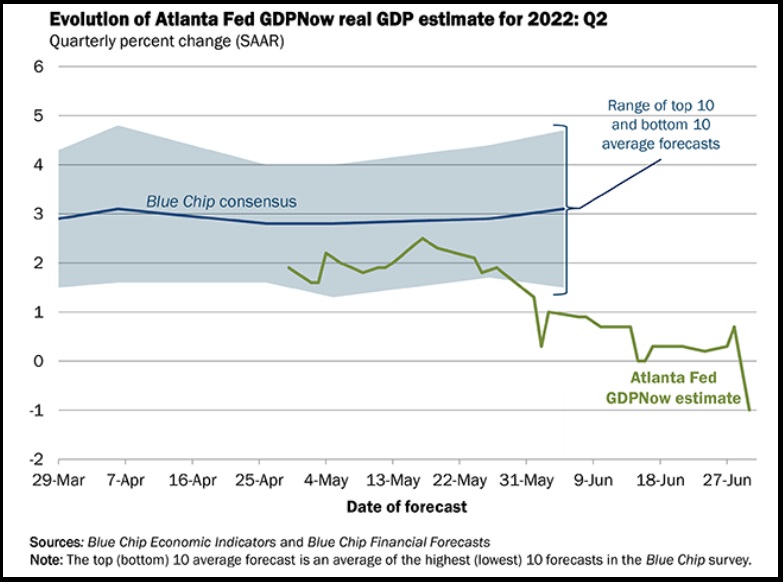
That being said, the Atlanta Fed is now calculating a negative 1% second quarter GDP result [DATA HERE]:

(Fed Reserve) – The GDPNow model estimate for real GDP growth (seasonally adjusted annual rate) in the second quarter of 2022 is -1.0 percent on June 30, down from 0.3 percent on June 27. After recent releases from the US Bureau of Economic Analysis and the US Census Bureau, the nowcasts of second-quarter real personal consumption expenditures growth and real gross private domestic investment growth decreased from 2.7 percent and -8.1 percent, respectively, to 1.7 percent and -13.2 percent, respectively. (link)

CTH predicts the BEA is likely to generate a statistical report somewhere in the +0.5% range. Just enough positive GDP to avoid the literal definition of a recession.  The BEA report will be issued at the end of July and if they follow recent patterns, they will likely underestimate the inflation rate as well as under-calculate the import data. 

Ahead of G7 Germany asks for Urgent Discussion on Inflation, Climate Policy and Worsening Energy Crisis


Posted originally on the conservative tree house on June 25, 2022 | sundance 

For those not paying close attention, the G7 is in serious trouble right now.  The G7 includes the United States, the United Kingdom, Canada, France, Italy, Japan and Germany.  The EU and Japan are on the verge of a central bank financial crisis.  Germany is the heart of the EU and their economy is FUBAR as a result of sanctions against Russia, their energy dependence and an internal inflation rate exceeding 30%.

The G7 spending response to the COVID pandemic, a collective decision outlined by the World Economic Forum and central bank organizers, has created a massive inflation crisis amid all attached economies.  Making matters worse the Build Back Better agenda promoting climate friendly energy policy over fossil fuels is pouring gasoline on the raging inferno of economic disruption.

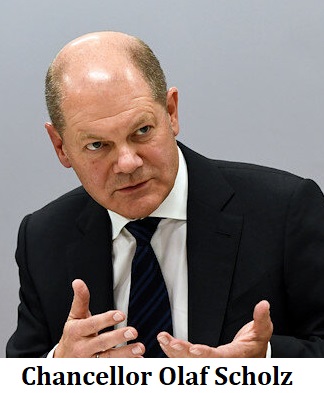
The EU and Japanese central banks are tenuous at best, and the U.S. has seemingly positioned Europe and Asia for even further economic pain as a result of sanctions against Russia (EU) and a contracting U.S. economy impacting Asia.  The intentional global cleaving is not working out too well as the G7 leaders assemble for their summit in the Bavarian Alps.   This is the backdrop for German Chancellor Olaf Scholz.  In essence, the G7 climate policy cannot be sustained simultaneously with the German economy surviving:

GERMANY –  German Chancellor Olaf Scholz has said he wants to put soaring inflation, the energy crisis and climate change at the center of the agenda when he meets fellow G7 leaders at Schloss Elmau in the Bavarian Alps.  

Germany, which holds this year’s G7 rotating presidency, is hosting the gathering of the heads of state and government of the world’s seven leading industrialized nations from Sunday through Tuesday.

“Russia’s brutal war against Ukraine is also having an impact here,” Scholz said in his video podcast on Saturday, pointing to steep rises in the prices of food and energy.

“Many things we buy are more expensive. Food, but especially the prices for energy. We notice that at the petrol station, we notice that when we have to pay the heating bill. Heating oil, gas — everything is much more expensive than a year ago,” he said, adding: “That’s why we have to prepare for it.”

The chancellor said the G7 leaders would discuss the current situation triggered by the war “and at the same time ensure that we stop man-made climate change.”

He stressed the need for a “climate club” to enable countries to work together to combat climate change as well as the current geopolitical and inflation crises. (read more)

For those unfamiliar with history, finance and global economics…  The current geopolitical scenario is coalescing toward one specific outcome, WAR With Russia.

The only way out of the economic crisis the western alliance has created, is to go to war.

These are very serious times.

Beware the needs of the banks, the drumbeats of war always originate against a backdrop of empty vaults.

Russian Oil Boycott Fails


Armstring Economics Blog/Energy Re-Posted Jun 15, 2022 by Martin Armstrong

The West thought they’d cripple Russia’s economy when they stopped buying Russian oil. Gas prices in the West are on the rise and at unsustainable levels. Meanwhile, Putin is having the last laugh as he is now selling more oil at a higher price point.

In April, Russian oil exports rose by 620,000 b/d to 8.1 million b/d. India (+730,000 b/d) and Turkey (+180,000 b/d) helped to offset the international embargo, while the EU remained the largest importer despite a sharp reduction in shipments. The IEA reported that Russian oil exports rose over 50% YoY during the first four months of the year.

Oil jumped in price last week from $92 per barrel to $122. Gas in the US was $2.10 under Trump. Biden took office and prices rose to $2.37 within the first two months due to a series of decisions that prevented America from remaining energy independent. Before Russia even invaded, gas reached $3.51 per gallon, and now the national average is surpassing $5.00. The boycott has completely backfired on the West and has helped strengthen the Russian economy.

May Inflation Higher Than all Expectations at 8.6 Percent, Energy, Gasoline, Food Prices Continue Climbing


Posted originally on the conservative tree house on June 10, 2022 | Sundance

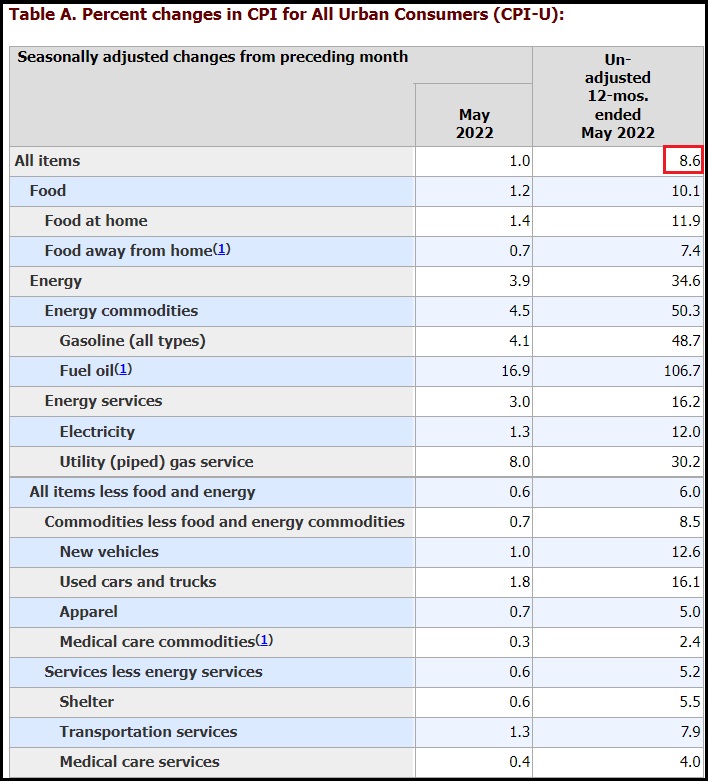
The Bureau of Labor and Statistics has released the May inflation report [DATA HERE] showing a 1.0% increase in the month of May, bringing the rate of inflation to 8.6 percent.  The highest rate of inflation in over 40 years.

This month of inflation data is particularly important because it cycles through the May 2021 calendar comparison from last year when the first wave of massive inflation first triggered.  The current year-over-year 8.6% rate of inflation now lands atop twelve months of massive increases in prices.

The data clearly shows how energy costs are the dominant factor hitting every aspect of consumer purchasing.  Gasoline increased 4.1% for the month, 48.7% year-over-year.  Fuel Oil increased 16.9% in May, 106.7% year over year.

The energy sector is crushing the ability of consumers to spend on anything else.   Real wages declined in May 0.6% as paychecks are being eaten up by massive inflation.  On an annual basis wages have declined by 4% year-over-year [BLS DATA].

Unfortunately, there is no forward optimism for any change in energy policy from the Joe Biden White House, that means energy costs will continue skyrocketing as the ideologues in control of the administration push their climate change Green New Deal policies.

Additionally, we still have the third wave of massive food price increases to look forward to later in the summer as the big increases in field costs start to reach the supermarket.  Those food store increases will average around 20 to 30% more than current.

Table-2 gives you a great breakdown of the price increases in specific sectors within each of the larger categories.  [SEE HERE] Eggs increased 5% in May, that’s a 60% annualized rate of inflation for eggs, which are already 32% more than last year.  Chicken is exceeding 30% inflation and growing.

A CNBC media report is below, as Wall Street laments the Fed response. However, the Fed cannot do anything to stop this inflation because what’s needed is a total reversal of U.S. energy policy.

[CNBC] – ““It’s hard to look at May’s inflation data and not be disappointed,” said Morning Consult’s chief economist, John Leer. “We’re just not yet seeing any signs that we’re in the clear.”

Some of the biggest increases came in airfares (up 12.6% on the month), used cars and trucks (1.8%), and dairy products (2.9%). The vehicle costs had been considered a bellwether of the inflation surge and had been falling for the past three months, so the increase is a potentially ominous sign, as used vehicle prices are now up 16.1% over the past year. New vehicle prices rose 1% in May.

Friday’s numbers dented hopes that inflation may have peaked and adds to fears that the U.S. economy is nearing a recession.

The inflation report comes with the Federal Reserve in the early stages of a rate-hiking campaign to slow growth and bring down prices. May’s report likely solidifies the likelihood of multiple 50 basis point interest rate increases ahead.

“Obviously, nothing is good in this report,” said Julian Brigden, president of MI2 Partners, a global macroeconomic research firm. “There is nothing in there that’s going to give the Fed any cheer. … I struggle to see how the Fed can back off.”

With 75 basis points of interest rate rises already under its belt, markets widely expect the Fed to continue tightening policy through the year and possibly into 2023. The central bank’s benchmark short-term borrowing rate is currently anchored around 0.75% -1% and is expected to rise to 2.75%-3% by the end of the year, according to CME Group estimates. (read more)

We are in an abusive relationship with government…

Interesting Video, A Walk Through a Russian Supermarket


Posted originally on the conservative tree house on June 7, 2022 | Sundance

I found this 8-minute video to be quite interesting.  As we consider the scale of food price increase in the United States, this video of a Russian supermarket yesterday is fascinating.

Considering the sanctions levied upon Russia by the western alliance, it would appear that they are coping quite nicely.  The guy who uploaded the video shares, “I took my camera with me on a quick Beer run to give you folks an idea of what a small local supermarket in a village South of Saint Petersburg, Russia looks like. How do the prices compare to where you live?”  WATCH:

.

This is the kind of real information the U.S. media would never mention.

Mark My Words…THIS is Coming in 2022 – It’s Time to Sound the Alarm, and Prepare


By Bright Insight  originally Published on May 27, 2022

The good news is you’re getting a heads-up, and have time to prepare. The bad news is that is actually happening…

If you like my content, please support me on Locals! https://brightinsight.locals.com/support

Interview: Food Shortages, Economic Collapse, the Failing Great Reset & How to Prepare


Armstrong Economics Blog/Armstrong in the Media Re-Posted May 28, 2022 by Martin Armstrong

Click here to listen to Maria Zeee’s insightful interview with Martin Armstrong: “Food Shortages, Economic Collapse, the Failing Great Reset & How to Prepare.”

There is also a wealth of information available for free at zeeemedia.com!

UDSA Raises Food Price Forecast to Highest Level in 42 Years, Third Wave of U.S. Food Inflation Will Dwarf Prior Price Increases


Posted originally on the conservative tree house on May 27, 2022 | Sundance 

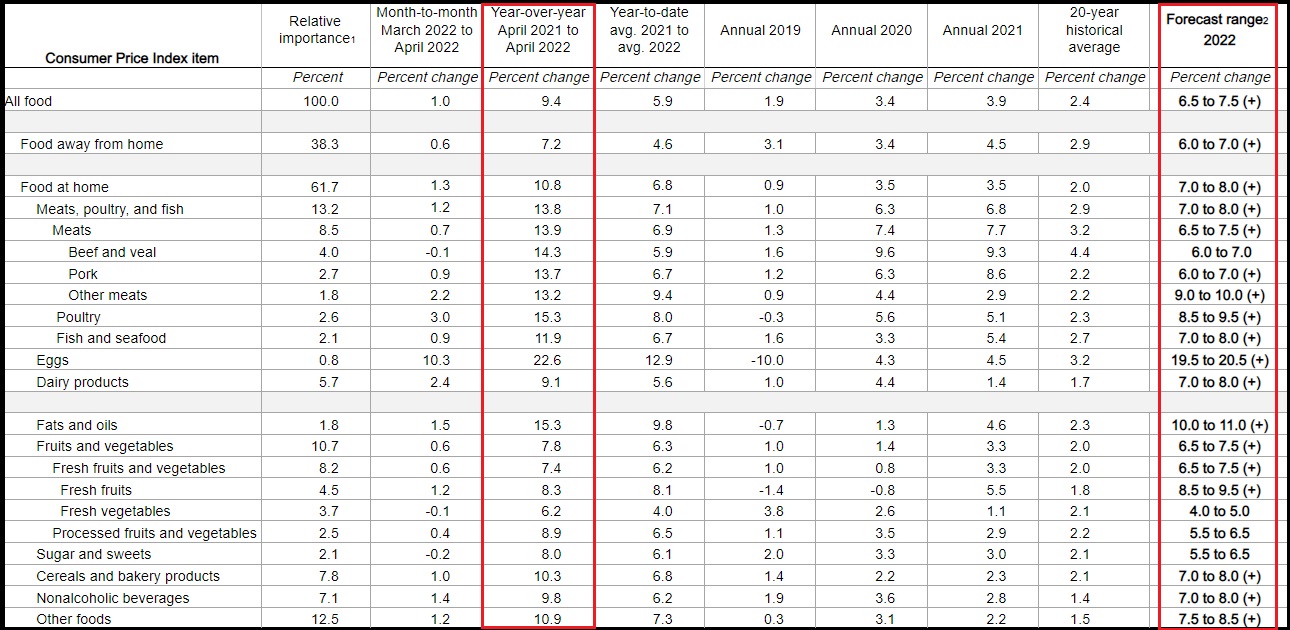
Have you ever seen egg prices at $1 per egg range, or $12/doz?  Hold on a few months and perhaps you will.  That is the context for the scale of food price increases the USDA is now starting to predict.  The highest predicted change in food costs in well over 40 years, that’s the USDA warning in their revised May “Food Price Outlook”. [DATA HERE]

This month the USDA just re-re-revised the forward price outlook, and things are grim.  It likely doesn’t come as a surprise to many CTH readers because we have been discussing the convergence of events since October of 2021, when we first were able to predict Wave-1 (Dec/Jan), and Wave-2 (March/Apr) inflation.  However, the underlying data for Wave-3 is double the prior two phases.

Keep in mind the data is national & skewed toward low estimations as represented by (+).

When the USDA predicts egg prices increasing by 19.5 to 20.5% (from where those prices are now), there will be regions with much higher retail increases than estimated.

Just two months ago, USDA had egg inflation at 2.5%-3.5% range, year over year.  Again, that’s the scale of change; from a 3.5% forward outlook to a 20.5% forward outlook effective right now.

Food at home (grocery store) prices: up 7% to 8% in this monthly review, versus the April outlook of a rise of 5% to 6%. That means the USDA is predicting the highest grocery store price rise since 1980 when prices rose 8.1% (prices rose 7.2% in 1981).  There is no reason to think the USDA forecast will not rise again in June.

[Click graphic to expand – Data Set Here]

If you have not taken food price stability seriously before now, please take proactive measures to secure your family.   We are talking about future retail food prices that were simply unfathomable last year.

You know how much prices at the supermarket have increased in the last six months.  Double that, and there’s your estimation for food prices later this fall.

Behind all the datasets, statistics, BEA, BLS, USDA and analysis of these things, there are real people living paycheck-to-paycheck that are likely to be in serious food insecurity position for the first time in their lives.

I’m not talking about poor people, I’m talking about solid upper middle-class working families with kids who are already being hit hard by gasoline, energy, housing and grocery store increases.  Another twenty percent increase in food costs can easily become a crisis.

The core issue is this snowball of production costs inside the field to fork supply chain.  Diesel prices, fertilizer prices, energy prices, seed and feed prices, all of it has doubled and tripled in less than a year.

Add in transportation and distribution costs that have doubled, and all of that cumulative impact is going to flow through the food supply chain from the field to the processor (wholesaler), and into the supermarket.   Fresh foods, especially in the produce section, will catch many people off guard.

Not all news associated with this is bad news.  As you read this you have information that allows you to take control and be proactive.  YOU will not be part of the national population that is stunned in September and October.  YOU know what is coming.  With that in mind, do what you can today, tomorrow, this week, to be proactive and offset the impact.  Taking action reduces stress.

Perhaps shop proactively for your holiday shelf stable food items now.  Look at the circulars and on-line for coupons, not for then – but for use now.  Perhaps learn to make some of the foods you would normally purchase already prepared.  Small proactive seeds, kept in mind while carrying on day-to-day life.

I know from reading comments that many of you have planted ‘victory gardens’ this year.  Those harvests are worth 50% more now they were three months ago.  That’s the way to look at it.  Every amount of saving matters…. and yes, grandma carefully washed the aluminum foil and reused it for a reason.


Biden Spreads Inflation Lies on Twitter. Jeff Bezos’ Response Is Priceless | DM CLIPS | Rubin Report


Posted originally on the The Rubin Report  on Rumble on May 23, 2022

Dave Rubin of “The Rubin Report” talks about Jeff Bezos calling out Joe Biden’s inflation lies. Jeff Bezos attacked Joe Biden’s statement which connected inflation with corporate tax rates. Even Democrats like Bezos are turning on Biden as the US economy continues to tank amid inflation, supply chain problems, and market crashes.