Whoops, Australian Broadcasters Caught on Hot Mic Disparaging Novak Djokovic


Posted originally on the conservative tree house on January 11, 2022 | sundance | 140 Comments

The Australian media are well known to be stenographers for the far left totalitarian mindset of the government officials.  If you have watched any of the COVID-19 press conferences with media, you will note they never challenge the state ministers or federal politicians.  As remarkable as it may seem, the Australian media are considerably more biased than U.S. corporate media.

Showcasing that point, two broadcasters, Rebecca Maddern & Mike Amor from Channel 7 in Australia, did not know their microphones were recording them as they discussed the headline story around Novak Djokovic, the world #1 tennis player who was detained by border officials despite being given a visa for entry to play in the Australian open.

The two pundits were recorded complaining about Novak Djokovic and calling him a “lying, sneaky asshole” for challenging, and winning, a court case against the Australian government.  The stenographers were upset about the world seeing first hand just how ridiculous the Australian COVID-19 dictates, rules and regulations are.   WATCH:

Apparently, there’s a rebel amid the production staff throwing sand into the machinery.  LOL.  Well done.

They Know What’s Coming, White House Prepares for Terrible December Inflation Data with Prepared Script


Posted originally on the conservative tree house on January 11, 2022 | sundance | 202 Comments

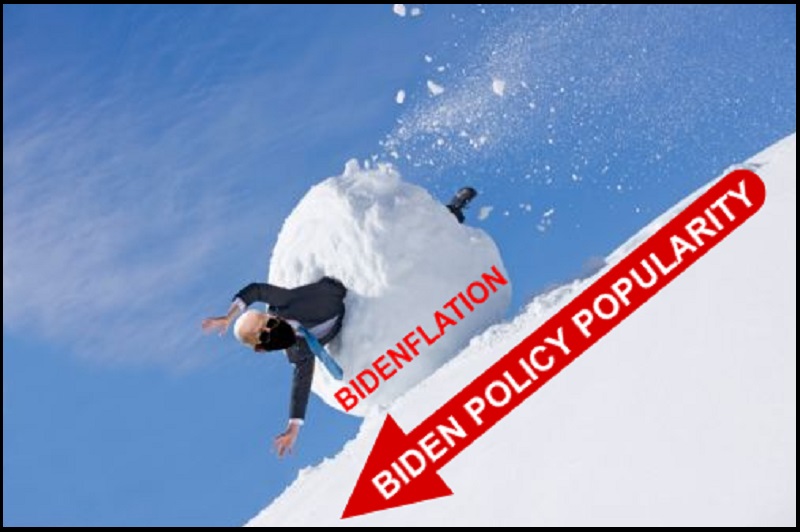
The snowball effect of cumulative inflation is going to be on display tomorrow when the BLS inflation data from December is released.  We have previously discussed the unavoidable price increases as noted within the November data Here, and within the producer price data Here.

While the data being released tomorrow is backward looking, we are in the eye of the inflation storm right now.  The consumer prices at end of January and through February are all reflecting new purchase order prices and contract prices to wholesalers, buyers and retailers.   As a result, the December reports will be the precursor to what will be much more damaging data in Feb and March.

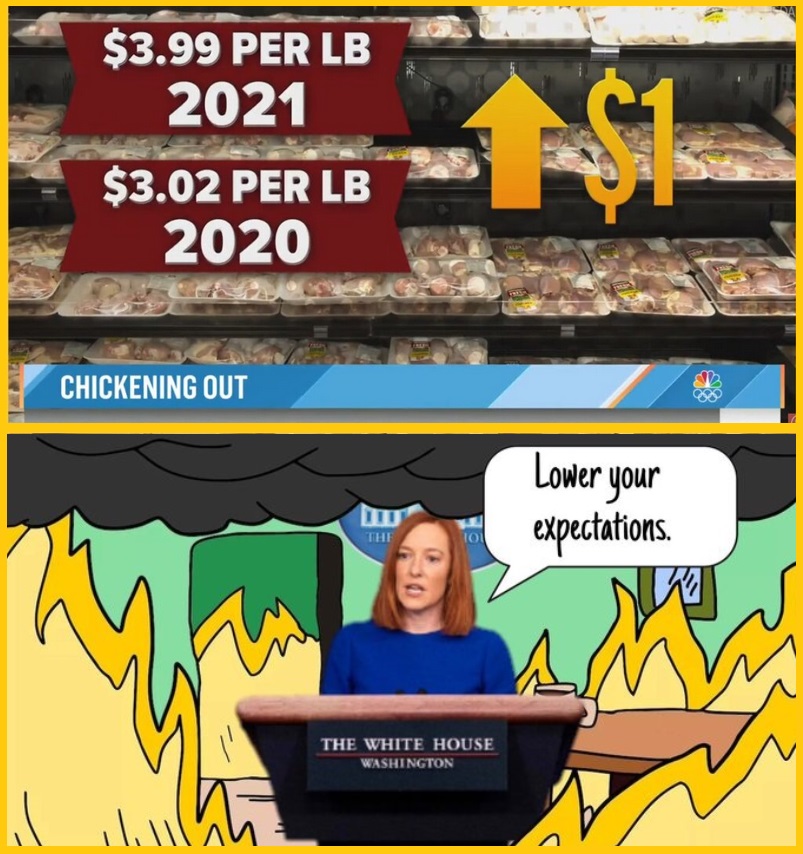
White House spokesperson Jen Psaki began trying to get ahead of the consumer price release with a short briefing to the traveling press pool earlier today.  A short audio-only soundbite reflects the political problem the White House knows they will soon be dealing with. LISTEN:

As the BLS accurately (albeit briefly) noted in their November release, the inflation data reflected the cumulative increases in costs of products and services at all stages in the supply chain.  Raw materials cost more (extraction, regulation impact), processing costs more (energy impact), transport costs more (fuel impact), final goods assembly costs more and handling costs more.  From field-to-fork or mining-to-showcase, the total cost to create stuff costs more. [AP Interactive Chart]

Yes, the inflation data is backward looking. Meaning, it is looking back toward the previous period to compare costs.  However, despite the White House protestations to the contrary, that’s not a good thing, because it is going to get worse.

The contracted price for goods delivered (depending on sector) are net terms in 30, 60 or 90 days.  Meaning, the purchase price on final goods wholesalers were receiving in November, 2021, were agreed upon months before.  Those terms for current arriving goods in Q4 are no longer valid.  The new Q1 2022 terms (purchase orders) carry higher costs, and as an outcome, higher prices to consumers are still coming.

The AP chart above shows the ascending spike in inflation overall.   Do you see that little plateau (mid spike)?  That’s June and July of 2021, when we noticed the economy overall appeared to have stalled out.  As we highlighted {Go Deep}, that brief plateau corresponded with a gear change internally in the macro economy as productivity dropped by 5% very quickly in the third quarter.

Immediately following that two-month plateau around 5%, the next few months of data showed that American consumers, writ large, were reacting to inflation by changing their spending habits.  That’s when future contracts for new housing starts stalled out.  Immediately thereafter, up to today, all the data indicated working class U.S. consumers are hunkering down with less disposable income and prioritizing spending on essentials: housing, rent, gasoline, food.  Everything else is of lesser importance.

In the service sector, specifically hospitality and venue employment, overall demand for services slowed, but the employment data (showing the contraction) remained hidden, because we were climbing out of the COVID lockdown hole.

It appeared the service sector was gaining back jobs; but the backward to last year comparison was clouding an actual slowdown in services, because the data was comparing itself to 2020 when services were shut down.  Demand for services was down, but we couldn’t really see it.

All of this inflation is being driven by policy.  •[1] Energy policy (oil, gas leases nullified & pipelines cancelled) in combination with regulations targeting environmental impacts (CA ports emissions rules) is driving up energy costs. CORE inflation results from this. •[2] Fiscal policy by White House and legislature has been spending like drunken sailors, and that adds to a storm of •[3] monetary policy, with the Fed buying back the debt created by spending, and as a consequence devaluing the dollar currency.

The cost of exporting products is less, because China and the Euro benefit from lower U.S. dollar values.  However, more export of raw materials means higher prices domestically in what little remains of the supply/demand influence.  The multinationals are making out like bandits, Wall Street is happy, and the middle class of America is once again a victim of economic policy.

First, the DC politicians delivered the “rust belt” to us as an outcome of their favoring Wall Street over Main Street, and now they are wiping out our checking accounts with massive inflation.  Remember the oft repeated -and infuriating- catch phrase, “The U.S. is a service driven economy?“, said by both wings of the UniParty?   Well, put another way… first they off-shored our jobs, now they off-shore our wealth.   This is not an accidental outcome of flawed policy, they are doing this intentionally.

We are being gutted from the inside.

You don’t accidentally stop pipelines, cancel oil leases, shut down refining capacity, change port regulations and then act surprised by saying: ‘whoopsie’ gasoline seems to be costing more?  Duh! It’s a feature not a flaw.   Many of the people behind Joe Biden are stupid, but they ain’t *THAT* stupid.  They know what they are doing, but they have to pretend not to know things in order to avoid the tar and feathers.

Table-1 gives us a good snapshot of how the sector specific prices were rising in November [data here]:

If you want to go even deeper into the categories, check out Table-2 HERE.

Again, this was backward looking data, and there’s nothing visible right now to give any optimism that prices will not continue rising yet again in the next few months.  Exactly the opposite is true.  As we noted at the time, there is clear evidence prices will go up again in December, January and February based on the current situation.  The evidence of future price increases was clear in the Producer Price Index.

The “Producer Price Index” is essentially the tracking of wholesale prices at three stages: Origination (commodity), Intermediate and Final.

The final product inflation rate in July (reported in August) was alarming at 7.8%. However, we warned it would get worse. The Bureau of Labor and Statistics (BLS) then released stunning price data for October [DATA Here], showing an even more dramatic 8.6% price increase in final demand. More intense warnings shared.

By the time we got to the November BLS Result [DATA Here], released in December 2021, unfortunately the results showed what was expected.

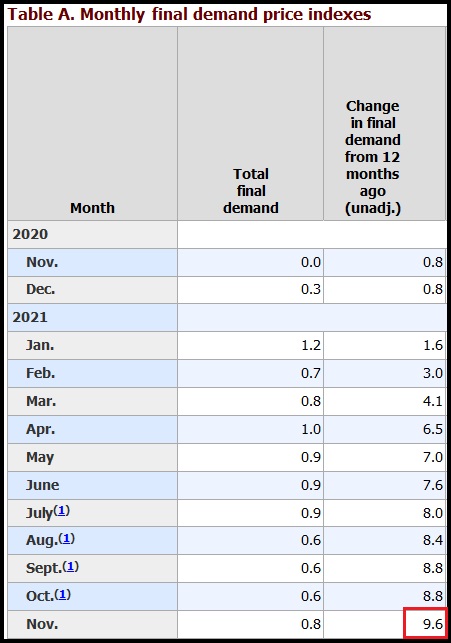
The cumulative costs of massive increases in energy prices are building into the supply at an astonishing rate.  The November data showed a rate of wholesale final goods inflation at 9.6%, the largest single month comparative rate increase in history.

The bureau even went back and revised/increased the August price index from 7.8 to 8.4 percent, and revised/increased the October figure from 8.6 to 8.8 percent.  The average monthly price increase is almost a full percent… every month.  It looks like the BLS backward revisions were an attempt to smooth down the rate of increase.

When you see the wholesale level of prices almost double the increase in consumer level inflation rate, you can predict that consumer prices will likely go even higher.

Future finished goods, at a retail level, will carry the current wholesale price increase.

Stuff costs a lot now… and because the inbound stuff to make the finished goods is still climbing in price…. stuff is about to cost even more.

You can see from Table A (above) that finished good prices are still climbing.  That’s the higher price inflation you are feeling when you buy a product.

What will change this scenario is an actual drop on the demand side, as U.S. consumers see their income values wiped out.   Unfortunately, that appears to be part of the policy agenda for the White House.

If they can reduce demand by making things unaffordable, they can claim victory over inflation (mid/late 2022) and proclaim their economic policies a success.  The prices will never drop, but the percent of change will stall out.

The downside of the White House achieving what they call “success” is unfortunately, by the time we reach that point we will have nothing left; we’re broke.  Prices will finally level off, but the savings of Americans will have been depleted and wage growth will then take years to catch up.

FUBAR.  All by design.

Heated Exchange Between Senator Rand Paul and Notorious Liar Dr. Anthony Fauci


Posted originally on the conservation tree house on January 11, 2022 | sundance | 395 Comments

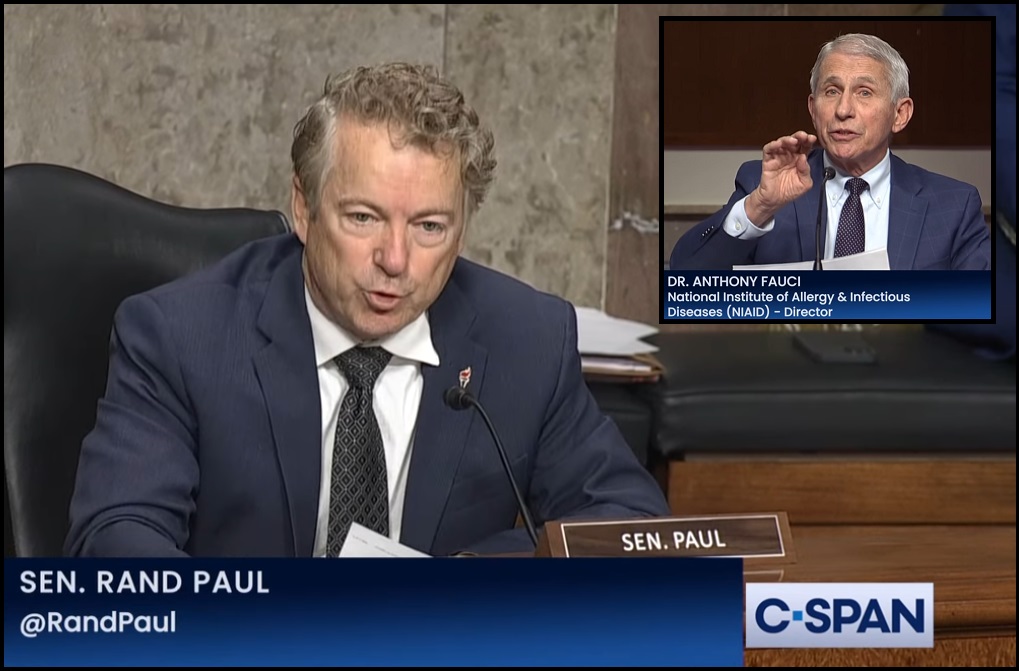
Senator Dr. Rand Paul confronted Dr. Anthony Fauci and they got into a heated exchange during a Senate committee hearing on COVID-19.

Senator Paul confronted Fauci about his efforts to manipulate science based on his political ideology.   Dr. Fauci pulled the first line of leftist retort, become a victim, and replied that Senator Paul was trying to get him killed.

Dr. Fauci’s extremely partisan political views form the basis of his ¹instability.  Suffering from extreme delusions of grandeur and enabled by a group of leftist sycophants in politics, media and Hollywood, Fauci has a severely inflated view of his importance, while simultaneously carrying a fear of being exposed as the fraud he is.  The defensive pearl-clutching is a big tell.  WATCH:

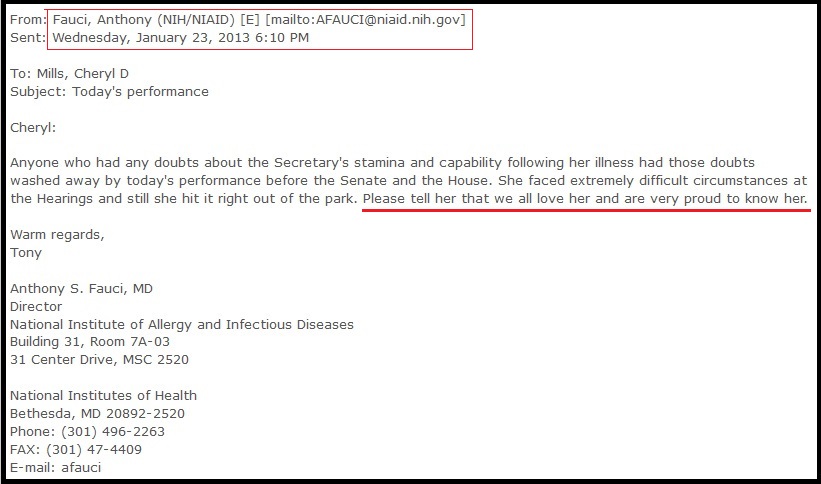
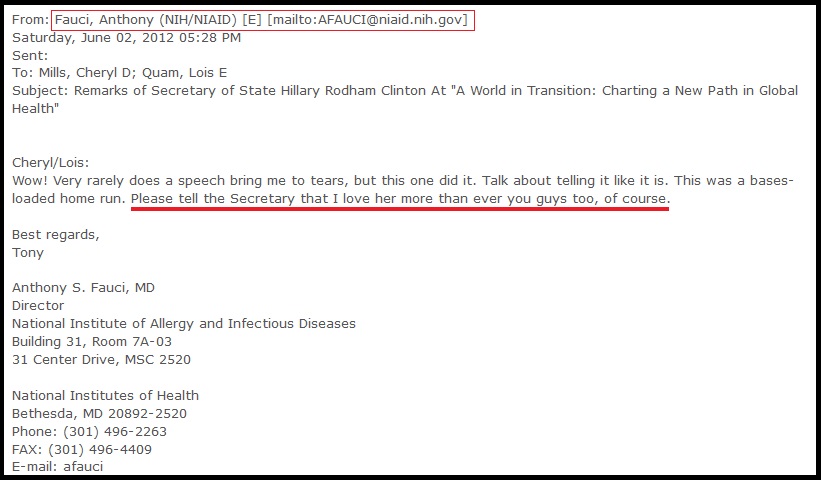
Everything you ever needed to know about the mindset of Dr. Fauci was revealed in these two emails to Hillary Clinton and her lawyers when she was Secretary of State.

Stable professional people DO NOT talk like this.  People of a stable mind do not email these sorts of message to people in their professional sphere.  The issue is not a matter of political affiliation of support; that’s not the problem.  The problem is a mindset of an individual who would be comfortable sitting down and writing this without even thinking what was written is inappropriate, weird and, well, creepy.

The SARS-CoV-2 outbreak put the person who carries this unstable mindset into a place of authority.  Everything that followed is a massive consequence of jaw-dropping proportions.

NY Reality


Armstrong Economics Blog/Humor Re-Posted Jan 11, 2022 by Martin Armstrong

CDC Director Walensky Struggles to Cover Sotomayor’s Lies


Armstrong Economics Blog/Disease Re-Posted Jan 11, 2022 by Martin Armstrong

Supreme Court Justice Sonia Sotomayor, a woman sitting at the top of America’s legal system, outright lied to the public by inflating COVID numbers. “We have hospitals that are almost at full capacity with people severely ill on ventilators,” she said. “We have over 100,000 children, which we’ve never had before, in serious condition, many on ventilators.”

Dr. Rochelle Walensky, director of the Centers for Disease Control and Prevention, could not lie to cover the comments made by Sotomayor. In the Fox News video above, Walensky admits that there are roughly 3,500 children in hospitals due to COVID, drastically lower than the 100K figure Sotomayor made up. When asked if Walensky, as the director of the CDC, had an ethical if not legal obligation to correct the inflated figure, she avoided the question.

Walensky nodded her head “yes” in agreement when the interviewer noted that deaths among young people are only 0.001% at best. When questioned whether this should be considered a pandemic among the unvaccinated, Walensky had to admit that those who are vaccinated are also spreading COVID. Currently, omicron is accounting for 95.4% of cases, while delta composes 4.6% of cases.

Fauci’s most vocal foe, Senator Rand Paul, tweeted an unfortunately rhetorical question, “Will YouTube censor her?” A Supreme Court Justice lying to promote the vaccine mandate seems like grounds for misinformation under YouTube guidelines. Instead, the CDC, Supreme Court, and governments throughout the world are blatantly lying to the public. I do not understand why anyone still trusts these clearly biased and unethical individuals and entities.

Pfizer CEO Now Admits Two Dose Vaccine Offers No Protection Against Infection or Severe Disease, Third Dose May Reduce Hospitalization


Posted originally on the conservative tree house on January 10, 2022 | Sundance | 207 Comments

In an ordinary time, this admission from the CEO of Pfizer would end all the COVID-19 rules, regulations and vaccination passport efforts.  Alas, we are not in ordinary times.

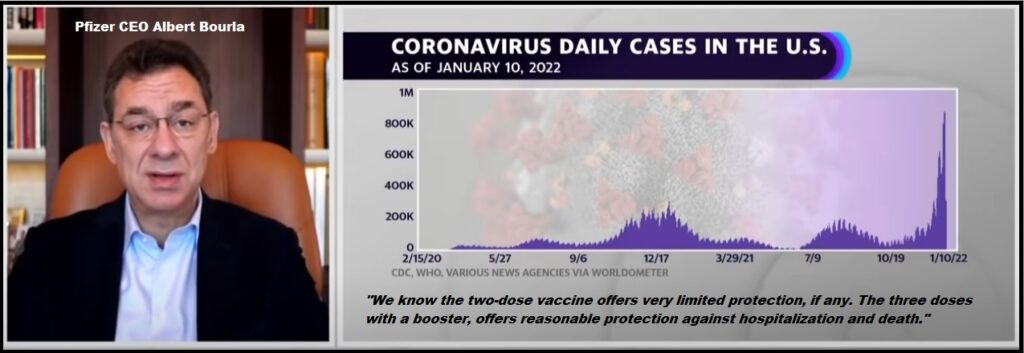
Admitting that none of the vaccines have any value in stopping people from contracting the infection, Pfizer CEO Albert Bourla stated the following earlier today.  WATCH:

[01:35] “We know the two-dose vaccine offers very limited protection, if any. The three doses with a booster, offers reasonable protection against hospitalization and death.”

CDC Finally Admits 75 Percent of COVID Deaths Happen in Patients “With at least Four or More Comorbidities”


Posted originally on the conservative tree house on January 10, 2022 | Sundance | 598 Comments

This issue has always been at the heart of the internal data that was never turned over for review.  For two years, people have wanted to know the distinction and general health position of the people who were categorized as dying from COVID.   What was their previous health status?

For reasons that can only be reconciled by admitting it was purposeful to their objectives, the CDC never released any information showing the background health status of those who were categorized as dying from COVID.  However, recently the CDC said they were going to assemble those various subsets of key data for the public.

On January 7th, only being discussed today, CDC Director Rochelle Walensky made the admission, on a CBS morning broadcast, that 75% of those who are classified as dying from COVID had at least four underlying pre-conditions: “Over 75 percent had at least four comorbidities, so really these are people who were unwell to begin with.”…  WATCH:

Meanwhile, this same institution is pushing another set of booster jabs upon healthy people with no preconditions.   Madness!

Obviously, all of these recent admissions are because the politics of COVID has become a liability to the same people who were exploiting it.  The reality of COVID is now harder to hide… the narrative must adapt accordingly.

Lowering Our Expectations Has Political Consequences – Economists Reviewing Public Polling Note Inflation and Economy Now the Number One Concern


Posted originally on the conservative tree house on January 10, 2022 | Sundance | 342 Comments

It is difficult to imagine how the Biden administration can possibly spin the economic reality of increasing, unavoidable inflation making the economy weaker over the next year.  However, somehow, they will try.

The AP is reporting that 68% of Americans now say the economy overall is their number one concern.  Meanwhile, the federal reserve of New York is reporting the inflation results from December are likely to be the same, if not higher, than the inflation results in November.

The Biden administration has continued to push additional federal spending under the auspices of Build Back Better as the bridge to offset the impact from their Green New Deal energy policies.  In fact, if you look at how the massive spending effort has been shaped, it becomes clear the overall goal is to push a new energy policy and then hide the impact by using COVID as the cover for the subsidies to try and offset the impacts.

It is a sneaky program when reviewed in totality.  Shut down oil and natural gas production, cancel leases, block pipelines and use the regulatory arm to shut down any additional growth in the oil and gas industry, including refinery capacity.  Then, try to hide the consequences by subsidizing the core constituencies who would normally be immediately impacted.

Unfortunately for the Biden architects, no amount of legislative spending is going to be able to offset the massive economic impact of implementing the Green New Deal by executive order, regulatory changes and administrative policy.  The American people are not blind to consequences, and when they start to look deeper into the causes of this inflation, what they discover is easy to see.

Gas prices jumped 50 to 60 percent and appear to be maintaining that level with no foreseeable change in the future.  The plastics, fabrics, containers and ancillary products all created from petroleum are also increasing at a rate similar to fuel.

The manufacturing system, processing, warehousing and distribution costs are also directly proportionate to the increases in energy costs.  Nothing in the supply chain or the consumer economy is unaffected; it is all connected and as a result unavoidable.

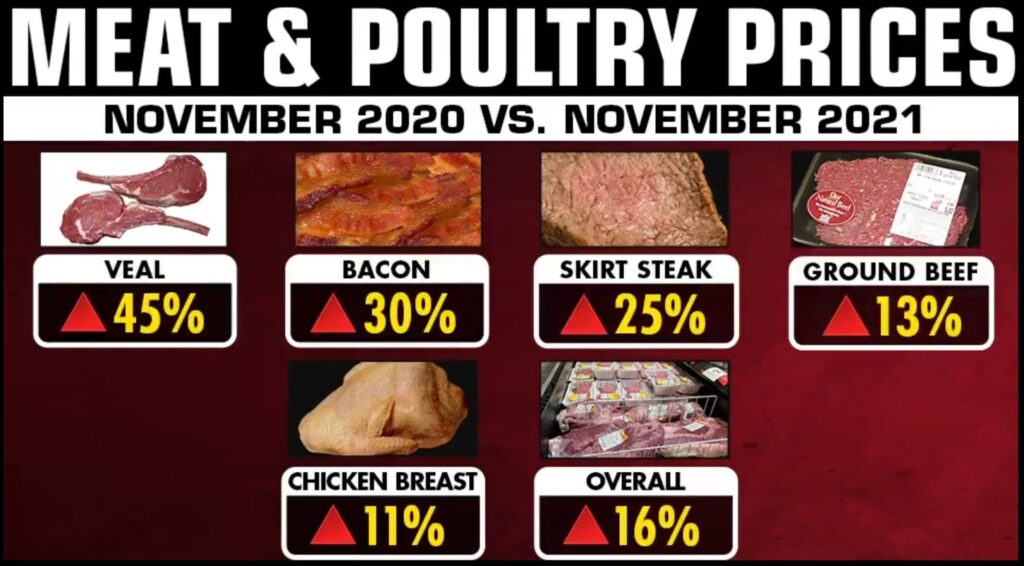
We will find out tomorrow how the inflation data from December compares to the reality of 10 to 50% increases at the store.  However, one thing is certain, the inflation is here to stay for the duration – or at least until the unsustainable price increases cause a contraction on the demand side for consumers.

WASHINGTON (AP) — Heading into a critical midterm election year, the top political concerns of Americans are shifting in ways that suggest Democrats face considerable challenges to maintaining their control of Congress.

A poll from The Associated Press-NORC Center for Public Affairs Research finds that management of the coronavirus pandemic, once an issue that strongly favored President Joe Biden and his fellow Democrats, is beginning to recede in the minds of Americans. COVID-19 is increasingly overshadowed by concerns about the economy and personal finances — particularly inflation — which are topics that could lift Republicans.

Just 37% of Americans name the virus as one of their top five priorities for the government to work on in 2022, compared with 53% who said it was a leading priority at the same time a year ago. The economy outpaced the pandemic in the open-ended question, with 68% of respondents mentioning it in some way as a top 2022 concern. A similar percentage said the same last year, but mentions of inflation are much higher now: 14% this year, compared with less than 1% last year. (read more)

The vaccine mandates are only exacerbating the issues, as worker pressures will only increase additional impacts to the supply chain.

We are facing the perfect storm for major problems.  Massive and persistent inflation, a critical shortage of products and a workforce that is forcibly removed from operating the machinery inside the economy.   All of this Biden administration damage cannot be attributed to bad policy, not at this scale.

This level of cumulative economic impact is being done intentionally, in order to put leftist ideology over the best interests of the American public. You know it, I know it and the broader American middle class are feeling and seeing it directly.

We prepare our affairs accordingly.

It Begins in Mexico


Armstrong Economics Blog/Vaccine Re-Posted Jan 9, 2022 by Martin Armstrong

COMMENT: Hello Mr. Armstrong.

Apparently here in Mexico, a few states have from this weekend started to employ the obligatory vaccination certificates to go to public places per Omicron.  I live in one of the affected states and my wife had to go back and get her vaccination certificate to get inside.  She told me it was surreal seeing the entire store empty of people on a weekend when the activity there is usually hustle and bustle.

The affected states since this weekend were Tlaxcala and Baja California.  Puebla is about to impose the mandates.

The central government is on record saying that such mandates are not constitutional and such an attempt by any state would be fought.

Things just got interesting here.  The only good thing I guess is that in Mexico they offer the Russian and Chinese vaccinations too.  I wouldn’t touch the mRNA jabs with a thirty and nine and a half foot pole.

BD

REPLY:  This is getting insane. In the Philippines, they are threatening to arrest unvaccinated if they leave their homes. Bob Saget died at 65 within days after he announced on Twitter he just got the Booster. Of course, nobody will ever point the finger at these vaccines. This is all about control and no longer about health.

Furthermore, a lot of people are getting very angry at Trump for turning a blind eye to vaccines. Meanwhile, the FDA has conspired with the Post Office and is seizing all shipments containing Ivermectin or Hydroxychloroquine. They are clearly being directed to prevent any treatment other than vaccines.

Temporary Empty Shelves Are Not a Supply Chain Crisis, It Is Important to Understand the Difference


Posted originally on the conservative tree house on January 9, 2022 | Sundance | 184 Comments

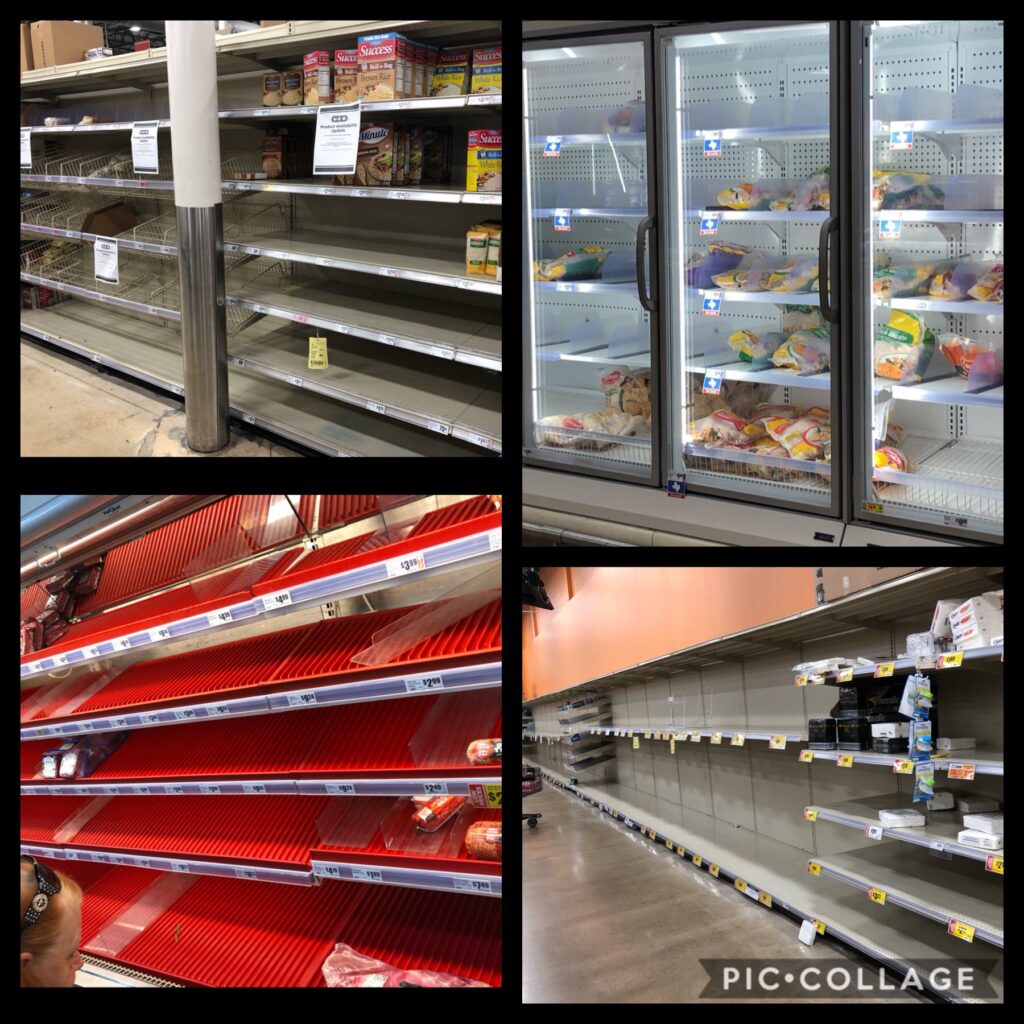
BUMPED by request. Unfortunately, there is a lot of wrong information being discussed and shared.  Even reputable regional media are giving inaccurate information, making wrong interpretations {LINK}, and generally getting the explanations wrong.  Additionally, there’s general misinterpretations of ordinary outages based on the day of the week (Sunday) and bad weather in the Northeast {ex Twitter Thread}.

All of these #BidensEmptyShelves assumptions, which are being heightened by increased attention and social media, are leading to confusion.

An empty retail shelf or case for a 24, 36 to 48-hour period is not, I repeat, NOT, part of a systemic supply chain disruption.  Those are mostly location and regional specific out of stock situations caused by localized events, weather and employee shortages.

What CTH has been describing for the past several months is NOT what is noted above.  What we have been describing is a long term supply chain crisis that will slowly unfold over a period of about a week or two, and then remain a problem over time, for a period of 6+ months. {GO DEEP}

The thirteen bullet points below are the issues we will first notice as the general food supply chain begins to show signs of that type of vulnerability.  This outline explains why it is happening and how long it can be expected.

In the previous October, November and December warnings, we emphasized preparation and counted down the 90-day window.  Now, as we enter the final two weeks before mid/late January, the date of our original prediction, it appears that some media are starting to catch up, and the larger public is starting to notice.

Feel free to note in the comments section what is happening in your area.  Hopefully, most of us are much better positioned than the average person who has not been following this as closely over the past several months.

Initial food instability signs in the supply chain.  Things to look for: 

(1) A shortage of processed potatoes (frozen specifically).

And/Or a shortage of the ancillary products that are derivates of, or normally include, potatoes.

(2) A larger than usual footprint of turkey in the supermarket (last line of protein).

(3) A noticeable increase in the price of citrus products.

(4) A sparse distribution of foodstuffs that rely on flavorings.

(5) The absence of non-seasonal products.

(6) Little to no price difference on the organic comparable (diff supply chain)

(7) Unusual country of origin for fresh product type.

(8) Absence of large container products

(9) Shortage of any ordinary but specific grain derivative item (ex. wheat crackers)

(10) Big brand shortage.

(11) Shortage of wet pet foods

(12) Shortage of complex blended products with multiple ingredients (soups etc)

(13) A consistent shortage of milk products and/or ancillaries.

These notes above are all precursors that show significant stress in the supply chain.  Once these issues are consistently visible, we are going to descend into food instability very quickly, sector by sector, category by category.

At first, each retail operation will show varying degrees of the supply chain stress according to their size, purchasing power, and/or private manufacturing, transportation and distribution capacity.

♦ BACKGROUND – Do you remember the dairy farmers in 2020 dumping their milk because the commercial side of milk demand (schools, restaurants, bag milk purchasers) was forcibly locked down?   Plastic jugs were in short supply, and the processing side of the equation has a limited amount of operational capacity.

To remind us of how the issues started in 2020, a dairy farmer helps to explain:

“Are we dumping milk because of greed or low demand, no. It’s the supply chain, there are only so many jug fillers, all were running 24/7 before this cluster you-know-what.

Now demand for jug milk has almost doubled.  However, restaurant demand is almost gone; NO ONE is eating out. 

Restaurant milk is distributed in 2.5 gal bags or pint chugs; further, almost 75 percent of milk is processed into hard products in this country, cheese and butter. Mozzarella is almost a third of total cheese production; how’s pizza sales going right now??

A bit of history – Years ago (40+) every town had a bottler, they ran one shift a day, could ramp up production easily.  Now with all the corporate takeovers (wall street over main street) we are left with regional “high efficiency” milk plants that ran jug lines 24/7 before this mess, no excess capacity.

Jug machines cost millions and are MADE IN CHINA. Only so many jugs can be blown at a jug plant.  We farmers don’t make the jugs, damn hard to ramp up production.

I’m a dairy farmer, believe me NO dairyman likes dumping milk; and so far there is NO guarantee they will get paid. Milk must be processed within 48 hours of production and 24 hours of receipt in the plant or it goes bad. Same with making it into cheese and butter, and neither stores well for long.

The same supply line problems exists where restaurants are supplied with bulk 1 pound blocks of butter or single serv packs or pats; and cheese is sold in 10 to 20 pound bags (think shredded Mozzarella for pizza).  Furthermore, it is not legal for this end of the supply chain to sell direct to consumers in most states.

Take cheddar cheese for instance; it goes from mild to sharp to crap in storage. Butter, frozen, only stores for so long and then must be slowly thawed and processed into other uses as it gets “strong”.  At Organic Valley we cook it down into butter oil or ghee for cooking.

We are headed for the same problem with canned veggies.  The vast majority of produce comes off and is processed in season; canned or frozen.  The supply is already in cans for the season; restaurants use gallon cans or bulk bags of frozen produce.

At some point we will run out of consumer sized cans in stock because home size sales are up (40%+) and restaurant sales are almost nonexistent.  Fresh produce out of U.S. season comes from Mexico (different climate).  I’m talking sweet corn, green beans, peas, tomatoes, all veggies are seasonal in the USA.  Fresh, out-of-season, row crops are  imported.  (There are exceptions, like hydroponic grown, but small amount of total).

Someone mentioned “time to raid all those bins of corn”.  Those bins on the farm contain yellow corn, cattle feed and totally unfit for human consumption, now or at harvest.

Eggs? Same problem.  Bakeries and restaurants of any size use Pullman egg cases, 30 dozen at a pop, 30 eggs to a flat, 12 flats to a case.  There are only so many 1 dozen egg cartons available and only so many packing machines.

Industrial bakeries and processors of packaged food buy bulk liquid eggs, no carton at all.  Also in many states it is illegal to sell this supply-chain directly to consumers. 

On your standard buffet of any size, do you really think they boil eggs and peel them? They come in a bag, boiled and diced; those nice uniform slices of boiled egg you see on your salad, a lot of them come in tubes boiled and extruded at the same time, just unwrap and slice. Your scrambled eggs come in a homogenized bag on most buffets.

Another example of Main Street being gutted and “improved by wall street” NO local egg processors available or many small egg producers either, all corporate and huge, contracted to sell to the corporate masters.

This is a warning the same problems exist in all supply chains.

The supply chain is farked.”

~ David Osterloh, Dairy Farmer 

Potato farmers and fresh food suppliers were also told to dump, blade or plough over their crops due to lack of commercial side demand.  These issues have longer term consequences than many would understand.  These are fresh crops, replenishment crops, which require time before harvest and production.

The retail consumer supply chain for manufactured and processed food products includes bulk storage to compensate for seasonality. As Agriculture Secretary Sonny Perdue noted in 2020, “There are over 800 commercial and public warehouses in the continental 48 states that store frozen products.”

Here is a snapshot of the food we had in storage at the end of February 2020: over 302 million pounds of frozen butter; 1.36 billion pounds of frozen cheese; 925 million pounds of frozen chicken; over 1 billion pounds of frozen fruit; nearly 2.04 billion pounds of frozen vegetables; 491 million pounds of frozen beef; and nearly 662 million pounds of frozen pork.

This bulk food storage is how the total U.S. consumer food supply ensures consistent availability even with weather impacts.  As a nation, we essentially stay one harvest ahead of demand by storing it and smoothing out any peak/valley shortfalls. There are a total of 175,642 commercial facilities involved in this supply chain across the country

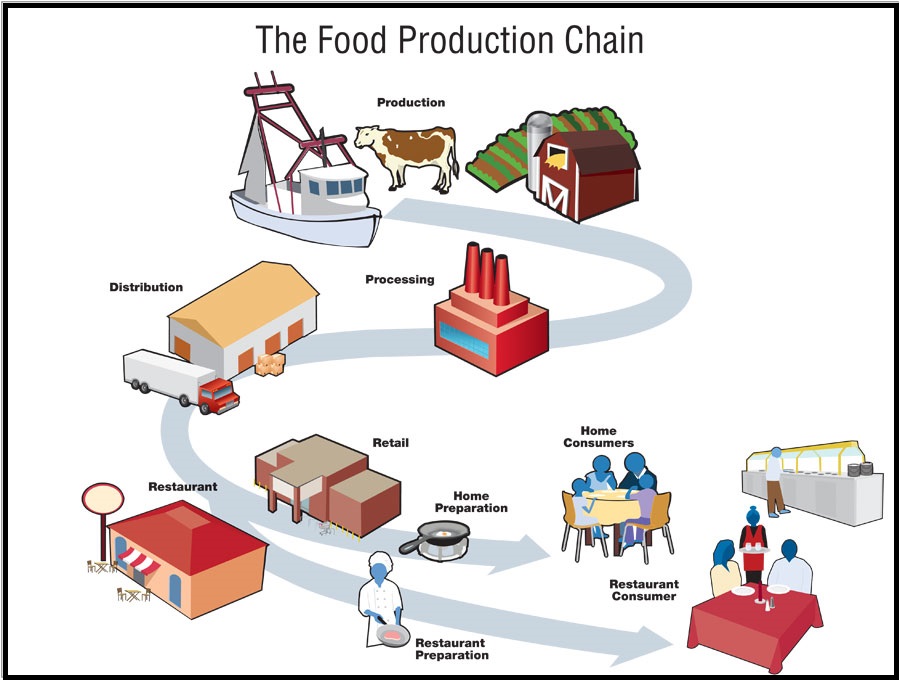
The stored food supply is the originating resource for food manufacturers who process the ingredients into a variety of branded food products and distribute to your local supermarket. That bulk stored food, and the subsequent supply chain, is entirely separate from the fresh food supply chain used by restaurants, hotels, cafeterias etc.

Look carefully at the graphic.  See the fork in the supply chain that separates “food at home (40%)” from “food away from home (60%)”?

Food ‘outside the home’ includes restaurants, fast food locales, schools, corporate cafeterias, university lunchrooms, manufacturing cafeterias, hotels, food trucks, park and amusement food sellers and many more. Many of those venues are not thought about when people evaluate the overall U.S. food delivery system; however, this network was approximately 60 percent of all food consumption on a daily basis.

The ‘food away from home‘ sector has its own supply chain. Very few restaurants and venues (cited above) purchase food products from retail grocery outlets. As a result of the coronavirus mitigation effort, the ‘food away from home’ sector was reduced by 75% of daily food delivery operations. However, people still needed to eat. That meant retail food outlets, grocers, saw sales increases of 25 to 50 percent, depending on the area.

Covid regulations destroyed this complex supply chain in 2020.  It takes time to recover, because the replenishment is based on harvest cycles.  This stuff must be grown.

When the food at home sector was forced to take on the majority of food delivery, they immediately hit processing constraints.  The processing side of the supply chain to funnel food into suppliers for the grocery store has “x” amount of capacity.  That system cannot (not feasible) and did not expand to meet the 20 to 50% increase in demand.

Think about potatoes.  A potato farmer sells into one of the two paths “food at home” (retail stores, or a processing supplier) or “food away from home” (commercial food or commercial food processors).   Other than bulk raw potatoes, the harvest goes into: (1) processing or (2) storage.

(1a) processing for retail sales (40%), ex. Ore Ida frozen potatoes, canning, or any of the other thousand retail products that use potatoes, whole or mashed.

(1b) processing for commercial sales (60%), ex. McDonalds french fries, or any of the thousand restaurant, lunchroom and cafeteria needs that use potatoes, whole or mashed.

♦ Processing – When 1b was shut down in 2020, 1a quickly reached maximum retail processing capacity.  Massive multi-million machines and food processing systems have a capacity. The supplies they use also have a capacity: plastic bags, cardboard, trays, bowls, etc.  The 1a processing system can only generate “X” amount of retail product at maximum capacity.

The remaining 1b commercial product was shut down.  A massive percentage of 1b (commercial) potatoes have nowhere to go, except waste.

♦ Storage – Each processor in 1a stores product (deep cold or frozen storage) for 365-day processing and distribution.   Those storage facilities have a limited amount of capacity.   The 1b customers need fresh product for the majority of their outlets. Ergo, storing for 1b customers who might eventually be allowed to open later only works for a short period of time.  The fresh potato sales missed by 1b outlets = the 1b discard by potato farmers.

When you restart 1b suddenly the 1b short term (fresh) storage product is quickly depleted.  Refilling that 2020 storage is dependent on a new 2021 harvest, which simultaneously has a greater immediate demand because the supply chain on the processing side was boxcar’d (over capacity) and then reset to a higher capacity playing catchup.

The amount missing from 2021 storage, because it was used instead of saved, is essentially equal to the amount that was wasted in 2020.

Now you end 2021 will less reserves because storage is depleted, because a greater percentage of the current harvest was immediately used.  You enter into the beginning of 2022 (winter) in a race to try and spread out the stored potatoes as you cross your fingers and race against the clock for the next harvest before running out.

You probably noticed – but attached to this issue is yet another motive to keep people (employees) away from large industrial cafeterias and even students from school lunchrooms.   The total food supply chain needs time, and harvests, to catch up.

In the example above you can replace *potato* with just about any row crop or retail/commercial food commodity like milk.

The reason I list the shortage of potatoes as the #1 precursor is because every food outlet sells a potato in some form.  Every supermarket and every single restaurant (fancy, sit down or fast food) sells some form of potato.   Potatoes are demanded by every single food outlet; therefore, a shortage of potatoes is the first noticeable issue.

The 2020 demand disruption problem now becomes a 2021/2022 supply chain problem on both the fresh and processing side (depleted inventories), with each vector now competing for the same raw material: wheat, soybeans, grains, beans and stored row crops.

Making matters worse, the protein suppliers also need grain as feed for cattle, pigs, cows, chickens, etc.

[Note: who gets the short straw? The pet food manufacturers]

That’s the nub of the background supply chain issue in the food sector.   Additionally, recovery is not a single-issue problem.

The recovery price and shortages relate to everything from current oil and gas prices to diesel engine oil prices, to fertilizer and weed killer costs, to plastic costs and petroleum packing shortages (Styrofoam especially), to cardboard and sustainable packaging costs, to energy costs and transportation/delivery costs.   All along this complex supply chain there’s also workers and higher payroll costs.

Thus, we get the double-edged sword of higher prices (inflation) and simultaneous shortages.

Here’s what you can do to offset grocery store shortages (while possible):

(1) Buy the generic or store brand equivalent (sub-set inside retail supply chain)

(2) Purchase the organic version (another sub-set inside retail supply chain)

(3) Purchase the powered/dehydrated version (potatoes, milk, etc) and experiment (jazz it up).

Each retail operation, or chain of stores, will show varying degrees of the supply chain stress according to their size, purchasing power, and/or private manufacturing, transportation and distribution capacity.

This is where field to fork supplier relationships can make a big difference.  However, every outlet regardless of their operational excellence, is going to have significant shortages in their inventory.   It’s an unavoidable outcome of the previous chaos.

On average, the retail shortages will last for about as long as one full harvest schedule (4 to 6 months) depending on the commodity.  By September of 2022, the various sector should be relatively recovered.

However, government intervention could make the issues worse, or the recovery time take longer, depending on how they respond when people get seriously stressed in a few weeks.  The densely populated urban areas are going to be making a lot of noise and demanding the government fix the crisis.

Final note on INFLATION – The short term prices will go up again.  Another 10, 20 up to 50% should be expected depending on the item.  Those prices will eventually level off, but it’s doubtful they will be able to come back down until supply and demand find some equilibrium again, if ever.  Right now, predicting future retail prices is too far off to even fathom.

I hope this outline provides you with information to help you make decisions for your family.