Posted originally on the conservative tree house on August 2, 2022
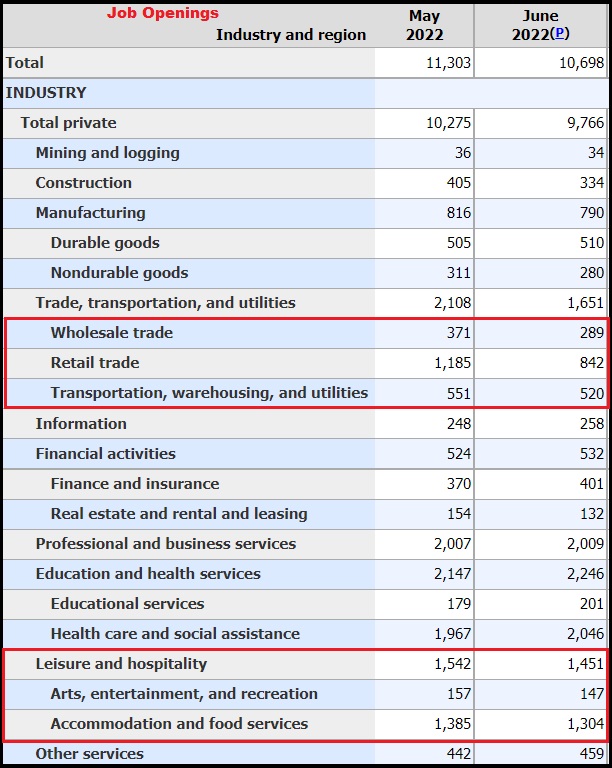
The Bureau of Labor Statistics (BLS) produces a monthly report of available job openings. The Job Openings and Labor Turnover Summary (JOLTS report) shows the number of available jobs at a captured moment in time. This JOLTS report [DATA HERE] is a summary of the last day in June.
As you can see within modified Table-1, the number of available jobs dropped by 605,000 in this report.
Hires and separations were little changed, so too was the number of people who quit their jobs. The big change in this JOLTS survey was the removal of available jobs. Employers cancelling job openings.
BLS – “On the last business day of June, the number and rate of job openings decreased to 10.7 million (-605,000) and 6.6 percent, respectively. The largest decreases in job openings were in retail trade (-343,000), wholesale trade (-82,000), and in state and local government education (-62,000).”
If we monitor the JOLTS report as an indicator of employment strength reflecting the general pattern of consumers, we can see a pullback in both the goods and service sector.
Retail job openings dropping 343,000 as consumer spending tightens even more due to inflation, and now we see the service side with leisure and hospitality dropping 91,000 openings.
Posted originally on the conservative tree house on August 1, 2022 | Sundance
In addition to the contraction in South Korean manufacturing announced last night, European manufacturing and factory activity is also contracting with less output, higher buildup of inventory and fewer orders for finished goods. The global recession is being measured fast and furious.
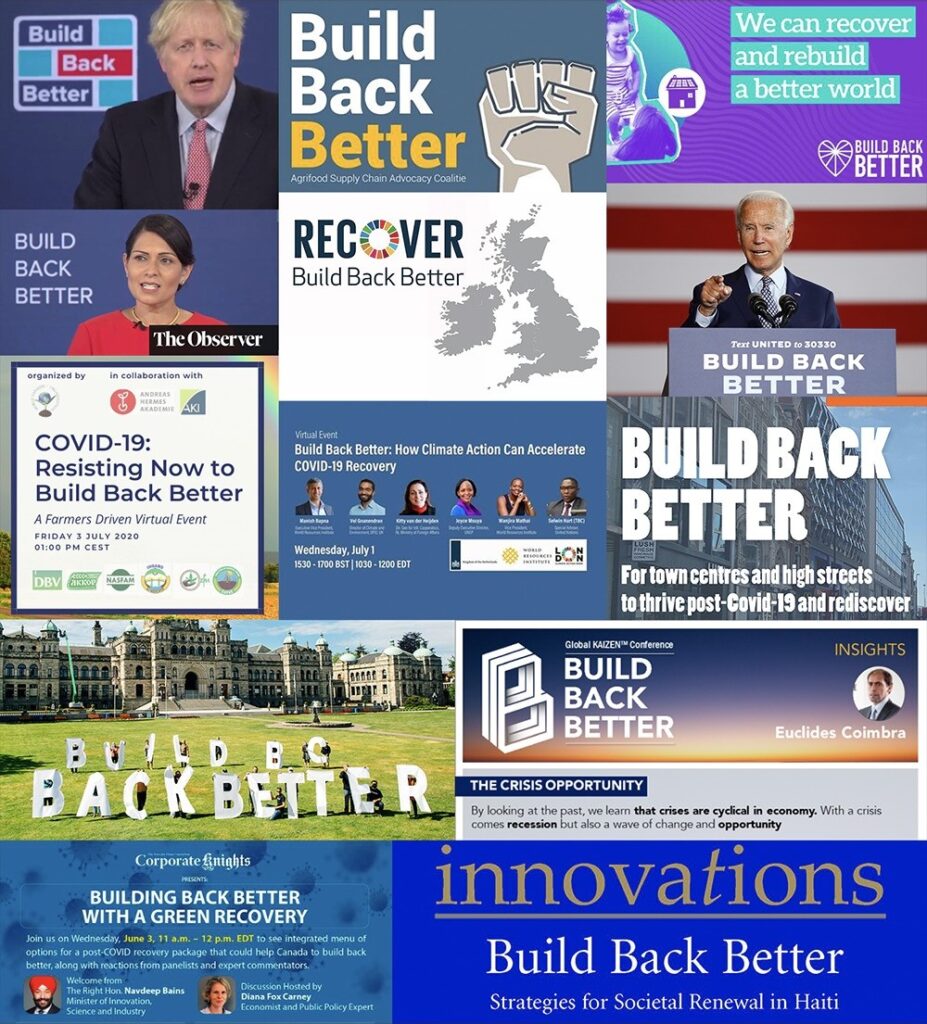
Every economic outcome is connected to a purposeful decision by the leaders of western industrialized nations to follow the Build Back Better climate change agenda. Higher energy costs, an outcome of the collective policy to stop new production of coal, oil and gas, which has transferred into higher food prices, farm prices, gasoline prices, heating and cooling prices as well as electricity rates, is forcing consumers to stop purchasing non-essential products.
The sale of durable goods collapsed in the first half of this year; however, no policymakers or bankers wanted to admit it and they kept saying there was an excess of demand. Now, with fewer customers for durable goods in the market, global manufacturing and factory outputs are dropping fast. Eventually the central planners are going to have to admit their pretended demand does not exist.
While there is a natural lag in the activity, the rate of factory contraction will be proportionate to rate of the drop in demand. Meaning we have only just begun to see the manufacturing decline that lags a few months behind consumer activity.
LONDON, Aug 1 (Reuters) – Manufacturing activity across the euro zone contracted last month with factories forced to stockpile unsold goods due to weak demand, a survey showed on Monday, adding to concerns the bloc could fall into a recession.
S&P Global’s final manufacturing Purchasing Managers’ Index (PMI) fell to 49.8 in July from June’s 52.1, just ahead of a preliminary reading of 49.6 but its first time below the 50 mark separating growth from contraction since June 2020.
An index measuring output, which feeds into a composite PMI due on Wednesday and seen as a good gauge of economic health, sank to a more than two-year low of 46.3. In June it was 49.3.
“Euro zone manufacturing is sinking into an increasingly steep downturn, adding to the region’s recession risks. New orders are already falling at a pace which, excluding pandemic lockdown months, is the sharpest since the debt crisis in 2012, with worse likely to come,” said Chris Williamson, chief business economist at S&P Global. (read more)
The WEF directed politicians are trying to bring energy demand down to match the energy shortage they have created. The various western government leaders, Biden included, want/need a recession to drop energy demand. The central banks and federal reserve are supporting the policymakers by driving up interest rates into the recession.
The combined effort leads to a shrinking of the global economy.
By lowering the economic activity and forcing their western nations into a joint collaborative and intentional recession, the central planners hope to offset the inflation they created by blocking coal, oil and gas production. By intentionally collapsing demand, the prices of excess non-essential goods will drop; however, there will be no one to purchase those goods at any price because global employment in a global recession is tenuous at best. This is the spiral they are trying to manage.
TOKYO (Reuters) – Japan’s manufacturing activity expanded at the weakest rate in 10 months in July, as pressure from rising prices and supply disruptions hurt output and new orders, suggesting a solid post-pandemic economic recovery is still some way off.
The final au Jibun Bank Japan Manufacturing Purchasing Managers’ Index (PMI) dipped to a seasonally adjusted 52.1 in July from the previous month’s 52.7 final.
That marked the slowest pace of growth since September last year, and was slightly lower than a 52.2 flash reading.
[…] Manufacturing activity suffered from contractions in output and overall new orders as well as a slower expansion in the backlog of work, the PMI survey showed.
[…] But a government official also warned downside risks for output remained as parts supply delays lingered. That is one of many reasons why the Bank of Japan remains resolutely committed to its ultra-low policies despite a global trend of rising interest rates to fight rampant inflation. (more)
It’s incredible how they various western leaders and bankers can still say there is too much demand, when every single economic indicator clearly shows that all consumer purchasing of non-essential goods and services has stopped.
We are seriously looking at a future employment scenario that might be as bad as it was during the economic lockdowns in the pandemic. This time all of the unemployment will have been created by intentional climate change policy.
These ideologues are seriously disconnected from the pain they are inflicting.
There are slips of the tongue, but President Biden cannot speak freely without a teleprompter. Every time he goes off script, he embarrasses his country. The president of the free world has no idea what is going on, and his mental health continues to decline publicly. The American Rescue Plan sent a trivial amount of money to Americans making under $75,000 annually at the expense of taxpayers. The government had no way to pay for this $1.9 trillion plan but implemented $1,400 checks on two separate occasions to pacify the people. Joe Biden thinks he provided Americans with $8,000.
Biden believes the public should ignore inflation and feel grateful for the imaginary money. “There’s reason to be down but I started thinking about it … the first year, we were able with the rescue plan, we were able to send them a check for eight grand,” the president said. “I mean a check. Beyond that by the way, there was more than that.” Biden then chimed in about his middle-class experience, which occurred decades ago when the US economy was unrecognizable compared to today. “That’s a lot of money, and so it helped save a lot of people in terms of getting thrown out of their home and rental housing and a whole range of things,” he said. He used the example of someone earning $120,000 receiving the imaginary $8,000 check, despite anyone in that income bracket being ineligible for a stimulus check.
The president cannot remember basic facts about his own policies. Biden belongs in a home for the elderly and senile, not the White House.
I was trying to wire money from my bank account in Italy to the one in the UK, just to realise that I can no longer transfer more than 6,000EUR per month.
The Soviet EUSSR is in full capital controls mode. I am missing the beauty of Italy every day, but I am so glad to live in Brexit UK. Good luck to the old continent.
SB
REPLY: I warned that all my sources were confirming, three very high up, that Europe would quietly impose capital controls on June 30, 2020. That has now taken shape. Europeans and not allowed to send more than 6,000 euros per month to another account outside the EU. Capital has been pouring out of Europe, and they beat not just the war drums but also the Green drums that forewarn of a severe economic decline for Europe.
Even in the United States, we have capital controls in place for a different reason — taxation. You will find it limited to try to wire more than $3,000 to an individual outside the United States. As I reported before, a friend in Singapore found me a service apartment and put down the first month’s rent for me. I sent him a wire, but when I got there, he said he never got it. I called my bank to put a trace on it, and HSBC returned it, saying they would not credit it to that account because they could not verify it was not secretly for me. I had to write him a check. You can wire to a business without a problem, but not to an individual. The hunt for taxes lives.
People have argued with me that I am wrong and it is capitalism that is collapsing. Sorry – socialism has brought us to the very sad end. Politicians can only run bribing voters, saying they will rob the rich to hand it to them. They can no longer borrow endlessly with no intention of paying anything back. That said, they know they will have to default. The question has been HOW?
This is what Schwab’s entire WEF is about. His Great Reset is because socialism is collapsing. I did our Solution Conference in 2015 because I knew what he was advising to world governments. The problem was that his way is that they become dictators, and he is even ending your right to vote. While they call Putin authoritarian, the head of the EU also does not stand for election. They are appointed by EU member politicians. This is what they want — ZERO right of the people to vote. They intend to control what we buy, where we live, and what we are allowed to say. So you can see, in my Solution, we retained democracy, so they were not handed ultimate power. Capital controls are part of this plot to end our freedom.
The primary race in Wyoming is August 16th, just about two weeks away. CNN traveled to Wyoming to review the possibility that Republican House Member might lose her primary race. All signs point to “yes”, she’s going to lose her seat. However, CNN was able to find two republicans who said they supported Cheney. WATCH:
Posted originally on the conservative tree house on July 31, 2022 | Sundance
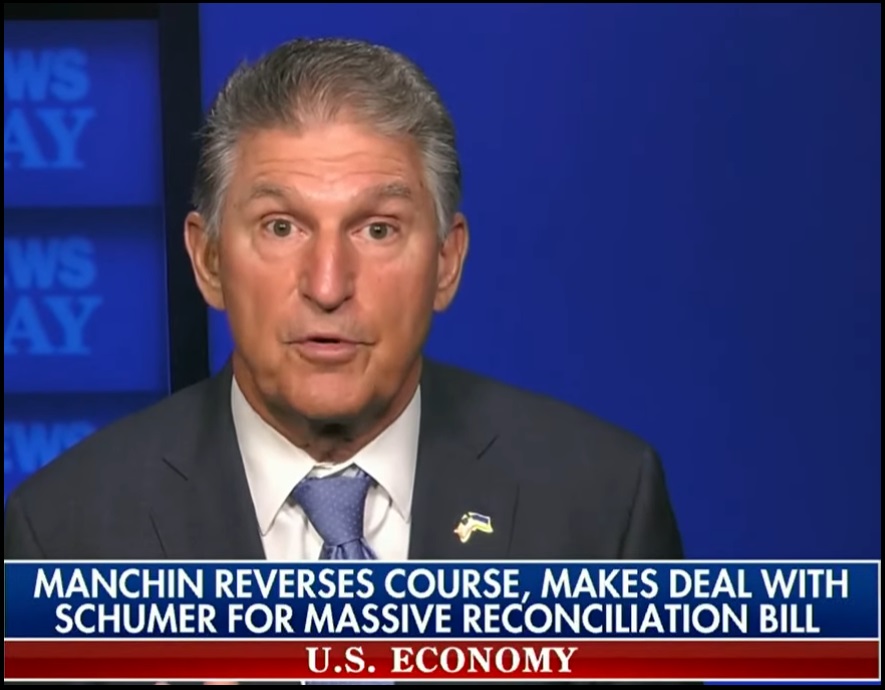
West Virginia Senator Joe Manchin was on every Sunday talk show today (CNN, NBC, ABC, CBS and Fox) responding to his reversal of position on the Build Back Better legislative package (Green New Deal spending) that is part of the senate budget reconciliation bill. There is something very interesting in his justification. [Do not skim read this, all citations included]
Fox News Brett Bair does the best job challenging Manchin on his prior statements saying there would be no spending deal without first seeing the August inflation data. [LINK]. Manchin never answered that hypocrisy directly but says there are two components of the deal, two parts of a new future legislative bill, that brought him to the agreement on the $370 billion current spend.
The current Senate bill is a reconciliation bill, meaning it involves taxes and spending – AND ONLY taxes and spending, because the bill originated in the House.
The constitutional framework for taxes & spending requires the House to originate all spending bills. If a desired additional measure does not involve taxes and spending (a budgetary impact) it cannot be added to a reconciliation bill. The senate must originate a new bill and then send it to the House.
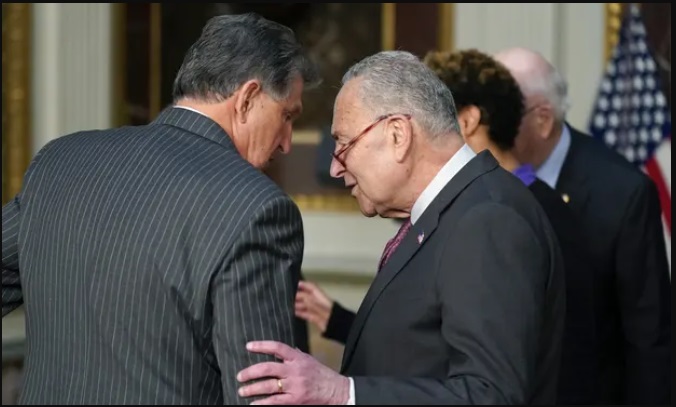
According to Manchin the deal between himself, Chuck Schumer, Nancy Pelosi and Joe Biden includes his support for the current green energy spending, in exchange for two new items in future legislation: 1) Streamlined energy permitting/regulation; and 2) Increased development of Oil, Coal, Gas. Both of these pieces of legislation have to be handled in a separate Senate bill.
According to Manchin, his agreement to the current spending bill was contingent upon a promise that: (A) Senate Majority Leader Chuck Schumer will generate a new bill for streamlined energy permitting and increased oil, gas and coal development; (B) House Speaker Nancy Pelosi will take up the Senate bill and whip enough of her House Democrat membership to join with Republicans in support of that Senate bill; and (C) Joe Biden will sign that increased energy production bill.
Here’s the important part. Senator Manchin claims he has leverage over Biden, Pelosi and Schumer to ensure a new bill with those priorities is created and advanced. Manchin further claims there are “consequences” for Biden, Pelosi and Schumer if they were to renege on the deal. He is quite emphatic about that point if you listen to the NBC interview.
Now ask yourself…. What leverage would Senator Manchin have over Biden, Schumer and Pelosi that would ensure they would not double-cross him?
There is only one Occam’s razor answer:
Joe Manchin threatened to switch political parties if any of them reneged on the deal.
The NBC interview with Chuck Todd questioning Joe Manchin is very interesting. It is actually the best interview of all five conducted, in part because it seems like Chuck Todd has full knowledge of the Manchin threat component.
Manchin was challenged in three of the five interviews about this promised future legislative component. In each of the interviews Manchin affirms and reaffirms there would be consequences if Schumer, Pelosi and Biden try to renege on the deal. However, it is the Meet the Press Chuck Todd interview that really gets in deeper and overlays some sunlight on this issue.
WATCH at 04:03 of the video below, Chuck Todd has knowledge of the “deal” in detail and pushes Manchin on his “consequences” statement. Then watch the very end of this interview (09:05) when Chuck Todd tries to pin Manchin down on the importance of Democrats holding the Senate. Chuck Todd knows the unspoken threat that Manchin outlines as consequences.
.
Chuck Todd knows the “consequences”. He tried to pin Manchin down. Manchin obfuscated.
You put it all together and it starts making sense.
Senator Joe Manchin cut a deal for removal of regulatory roadblocks to current energy programs and expanded energy development. Schumer has to generate the legislation permitting faster investment in current oil, gas, coal. Nancy Pelosi has to pass it in the House. Joe Biden has to sign it and change EPA/Interior Dept policy. In exchange for that, Joe Manchin has agreed to the $370 billion green new deal energy spending programs.
If Schumer, Pelosi or Biden renege, then Manchin switches parties and the Senate flips into Republican control immediately. That’s his leverage.
Someone needs to ask Manchin: (A) what is the timeframe for the new legislative package; and (B) is this an accurate assessment of the “consequences” he outlined.
Posted originally on the conservative house on August 1, 2022 | Sundance
We are seeing the cascading impacts of the energy-driven inflation starting to ripple throughout the globe, specifically worsening economies who are dependent on the export of non-essential durable goods. South Korea manufacturing is the latest example.
The first quarter of 2022 started with a drop in U.S. consumer spending on non-essential durable goods like electronics. The net result of contracted consumer spending was a 1.6% negative GDP.
Inventories of goods started to build and by April/May of 2022 the Consumer Price Index (CPI) showed negative inflation in those sectors as discounts to move inventory were offered.
In June major manufacturer Samsung, headquartered in South Korea, announced they had told suppliers to stop sending component manufacturing parts for finished goods. (link)
By the end of July, the second quarter GDP in the U.S. again showed a contraction of 0.9%. Energy inflation was now creating a consumer spending recession, demand for non-essential goods dropped fast over the first half of the year.
Today, South Korea announces July manufacturing output contracted for the first time in two years, matching the prior announcement by Samsung:
SEOUL, Aug 1 (Reuters) – South Korea’s factory activity shrank in July for the first time in nearly two years, as output and new orders weakened amid continued inflation and supply chain woes, a private-sector survey showed on Monday.
The S&P Global purchasing managers’ index (PMI) fell to a seasonally-adjusted 49.8 in July from 51.3 in June, falling below 50 for the first time since September 2020. The 50-mark separates expansion from contraction in factory activity from a previous month.
Output fell for a fourth straight month and by the sharpest rate since October 2021, as new orders decreased for the first time in 22 months and those from overseas for the fifth month in a row. (read more)
All economies that are dependent on the manufacturing and export of durable goods are likely now seeing reduced factory outputs as fewer customers exist to purchase the final product. This will lead to a predictable rise in unemployment amid those same nations.
This situation is the reason why the Bank of Japan did not raise their central bank interest rates. They are attempting to offset the drop in global economic activity by keeping their currency value low as compared to the rest of the western countries. This will help move their exported goods at a discount.
Inside countries with large imports, the definition of “non-essential” purchases within each household now starts to shift. Upgrading electronics, jewelry purchasing, and other non-essential goods become the first to feel the impact. That contraction is then followed by appliances, furniture, clothing and eventually vehicles and high-cost durable goods.
As less and less disposable income is available, consumer spending gets increasingly prioritized. The service sector is likely starting to feel the consumer belt tightening, particularly those consumer goods and services that are dependent on middle class families.
Inflation in general is a corrosive issue that eats away at the ability of consumers to purchase products and services. Energy inflation is particularly damaging as it hits every sector of the economy with higher supply-side costs. Food prices, fuel, transportation costs, electricity rates etc. take a larger portion of the paycheck, leaving less room (if any) for non-essential purchases.
A shrinking global economy is the outcome of an intentionally managed decline to support the Build Back Better, climate change, agenda.
Posted originally on the conservative tree house July 31, 2022 | Sundance
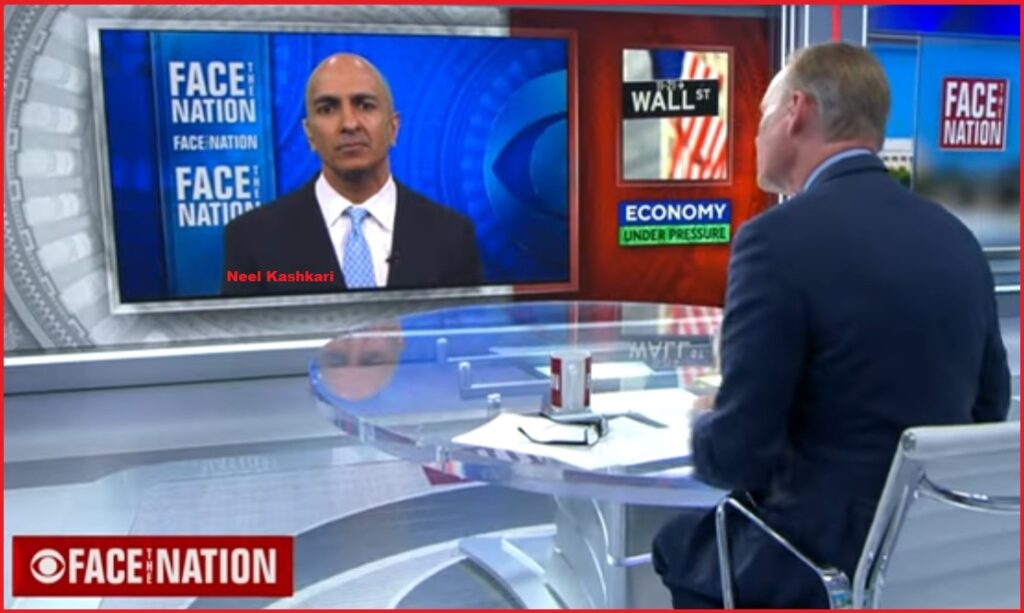
The pretending from the federal reserve chairs continues. In this interview, Neel Kashkari, the head of the Federal Reserve Bank of Minneapolis, says “we keep getting surprised” by data on inflation, which continues to be “higher than we expect, across the broad range of the economy.” Yet, notice that Kashkari refuses to outline the single cause of the broad inflation is the intentional lack of energy production. [Transcript]
Kashkari continues the selling point that demand side inflation is being targeted because demand still exceeds supply. That’s essentially true, however, it is the supply of energy that is fundamentally disrupted by Joe Biden energy policy. It is not consumer demand for goods and services, it is the structural need for consumers to have consistent, affordable energy resources.
The collapse of energy production from domestic coal, oil and gas development is the problem. Everything else is ancillary to the origination problem. However, in order to support the climate agenda, the Federal Reserve must pretend not to know this. WATCH:
Kashkari notes a serious problem can arise when wage inflation starts to catch up with inflation overall. THAT just happened last month. The combination of wage inflation to match the high consumer inflation then drives an even higher cost for goods and services. This is the inflation storm that leads to hyper-inflation, structurally high inflation that cannot be controlled by any monetary measure, and unfortunately, we just entered the first outer bands of this inflation hurricane last month.
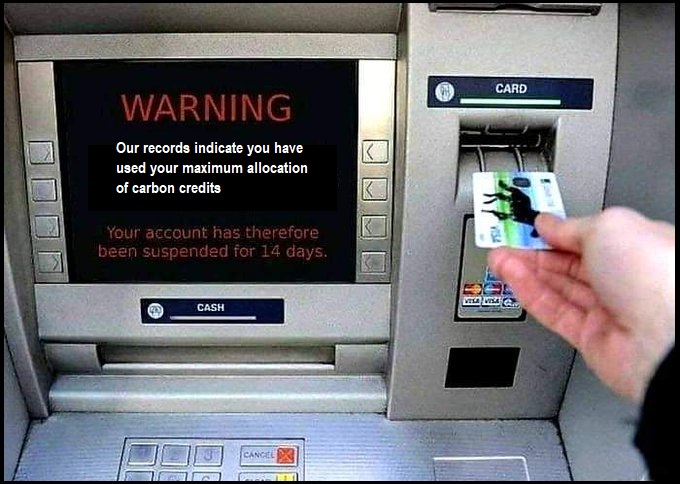
A personal sidenote: when we were going through the pandemic crisis and response in 2020/2021, CTH took heat for saying the real objective at the end of the pandemic path was the global climate change agenda. Well, here we are. At the end of this climate change path is full control over human activity using digital currency. Hunger games.
[Transcript] – JOHN DICKERSON: We turn now to the president of the Minneapolis Federal Reserve, Neel Kashkari. Good morning, Neel. Inflation–
PRESIDENT OF THE FEDERAL RESERVE BANK OF MINNEAPOLIS NEEL KASHKARI: –John, thanks for having me.
JOHN DICKERSON: Thank you for being here. Okay. Everybody wants to know inflation, still hot? What is it? What does it look like to you?
KASHKARI: It’s very concerning, you know, we keep getting inflation readings, new data that comes in, and as recently as this past week, and we keep getting surprised. It’s higher than we expect. And it’s not just a few categories. It’s spreading out more broadly, across the economy. And that’s why the Federal Reserve is acting with such urgency to get it under control and bring it back down.
JOHN DICKERSON: Wages within that, what does the wage picture look like in two different ways, we measure it, both just on its own, and then relative to inflation?
KASHKARI: For most Americans, their wages are going up, but they’re not going up as fast as inflation. So most Americans, real wages, real incomes are going down. That’s why families are finding it increasingly hard to make ends meet. When they go to the grocery store, when they buy necessities, they’re not able to buy as much because they’re getting a real wage cut, because inflation is growing so quickly. I mean, typically we think about wage driven inflation, where wages grow quickly. And then that leads to higher prices in a self fulfilling spiral. That is not yet happening. High prices and wages are now trying to catch up to those high prices. Those high prices are being driven by supply chains and the war in Ukraine, among other factors. And so we need to get the economy back into balance before this really does become a wage driven inflation story.
JOHN DICKERSON: Let me ask you about a figure that people may not know as much about, everybody knows about the consumer price index and inflation, the economic cost index came out this week. And some economists look at that as a signal for inflation. Tell me what you saw in the economic cost index this week.
KASHKARI: Well, we have a lot of different measures, for example of wages, of what’s happening to wages. And ECI, as I call it, is one measure that it’s a- it’s a robust measure of what’s happening to wages and what’s happening to benefits, and wages continue to climb. And on one level, that’s a good thing. We want Americans to be making more money. But if wages are climbing, such that the economy shows that it’s overheating, that tells me that the Federal Reserve has more work to do to bring inflation down to bring the economy into balance just at its basic level. Inflation is when demand is outstripping supply. We know supply is low because of supply chains, because of the war in Ukraine, because of COVID. We hoped that supply would come online more quickly, that hasn’t happened. So we have to get demand down into balance. Now, I hope we get some help on the supply side. But that doesn’t change the fact that the Federal Reserve has its job to do, and we are committed to doing it.
JOHN DICKERSON: We have 30 seconds left. Help on the supply side, what does that mean?
KASHKARI: Well, I talked to a lot of global businesses who are trying to get their supply chain sorted out so that they can meet their customers’ needs and make sure that there are products on the shelves. They’re making some progress. There’s some signs, it’s getting better, but it’s taking a lot longer than they thought and that I thought and so that means we cannot wait till supply fully heals. We have to do our part with monetary policy.
JOHN DICKERSON: We’re gonna take a commercial, we’ll be back to continue this conversation with Neel Kashkari. Stick with us.
JOHN DICKERSON: Welcome back to Face The Nation. We continue our conversation with Minneapolis Federal Reserve’s Neel Kashkari. Neel, let’s pick up where you left off on this question of supply. When I was talking with two senators earlier there was this debate about whether taxation on companies that don’t pay a minimum level of taxation will have their supply hurt. So in other words, you tax- tax them supply goes down, that hurts with inflation. What’s your assessment of that?
KASHKARI: You know, long over the long term, that’s probably true. On the margin, people say that about raising interest rates, why raise interest rates, that’s going to make it more expensive for firms to invest. And that’s going to not help with the supply side. That’s true over the long-term. But over the short-term, the demand side effects totally swamped the supply side effects. And so when I look at a bill that’s being considered that your two senators talked about, my guess is over the next couple of years, it’s not going to have much of an impact on inflation. It’s not going to affect how I analyze inflation. Over the next few years, I think long term, it may have some effect. But over the near term, we have an acute mismatch between demand and supply. And it’s really up to the Federal Reserve to be able to bring that demand down, and we’re committed to doing what we need to do.
JOHN DICKERSON: Neel, help me understand recessions. There is a debate in Washington that’s full of political gamesmanship. So take us inside why it matters if America is in a recession, and what the component parts are, that are a part of that and how that helps us understand the health of the economy.
KASHKARI: Well, it really matters when Americans feel it, when Americans are, especially in the job market. That’s the most important part of the economy, so to speak, for Americans is their job. Do they have a decent place to work and earning decent wages? And typically, recessions are, they demonstrate why job loss is high unemployment, those are terrible for American families. And we’re not seeing anything like that. The labor market so far, is very strong, we are seeing some sectors like the tech sector start to shed workers or start to cool down in hiring. But fundamentally, the labor market appears to be very strong. While GDP, that the amount the economy is producing, appears to be shrinking. So we’re getting mixed signals out of the economy. From my perspective, in terms of getting inflation in check, whether we are technically in a recession or not, doesn’t change my analysis. I’m focused on the inflation data. I’m focused on the wage data. And so far, inflation continues to surprise us to the upside, wages continue to grow. So far, the labor market is very, very strong. And that means whether we are technically in a recession or not, doesn’t change the fact that the Federal Reserve has its own work to do. And we are committed to doing it.
JOHN DICKERSON: Last 20 seconds, Neel, on GDP when it goes down, isn’t that kind of what the Feds trying to do? Slow down growth? So is that a good number?
KASHKARI: Well, we definitely want to see some slowing. We don’t want to see the economy overheating. We would love it if we can transition to a sustainable economy without tipping the economy into recession. There’s not a great record of doing that. Typically when the economy slows down, it slows down by quite a bit, especially if it’s the central bank that is inducing the slowdown. So we’re going to do everything we can to try to avoid a recession. But we are committed to bringing inflation down and we’re going to do what we need to do. And we’re a long way away from achieving an economy that is back at 2% inflation and that’s where we need to get to.
JOHN DICKERSON: All right, Neel Kashkari. Thanks so much for being with us. And we’ll be back in a moment. (read more)
Posted originally on the conservative tree house on July 31, 2022 | Sundance
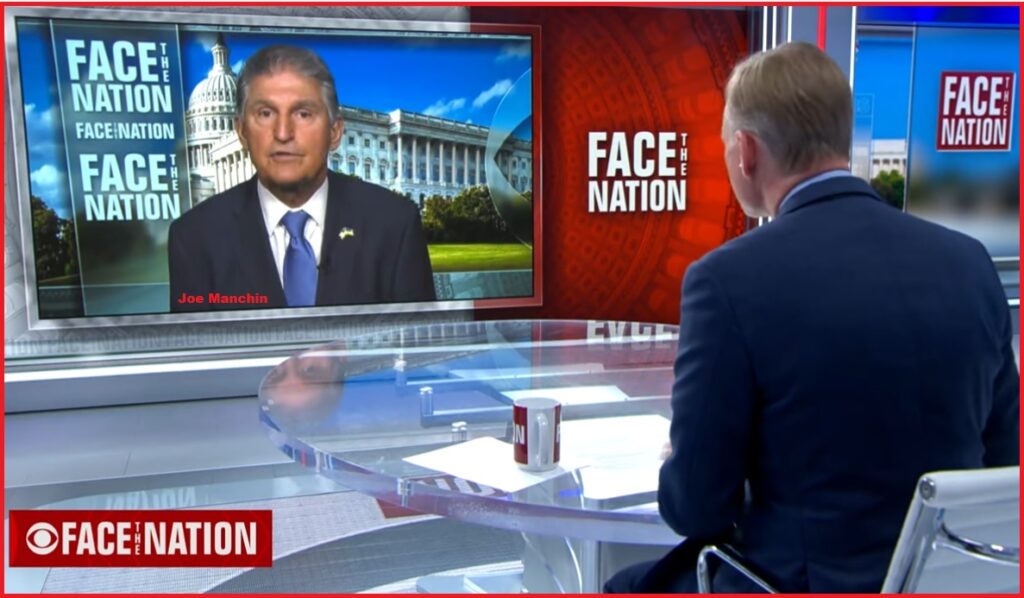
In a remarkable interview attempting to justify his agreement with the senate Build Back Better climate change bill (fraudulently labeled ‘inflation reduction act’), West Virginia Democrat Senator Joe Manchin says the massive energy spending and tax bill will bring green renewable energy much quicker. In essence, the windmills and solar panels for West Virginia will arrive faster now, and that will improve energy production. [Transcript Here]
When discussing the new energy origination provisions, Senator Manchin catches himself mid-sentence saying, “the battery better be made in America.” He quickly corrected himself knowing the claim was false and followed up with, “better be sourced in North America, it better be processed,” because he is well aware the largest employment and investment beneficiaries for his deal will be Mexico and Canada, not American workers. WATCH:
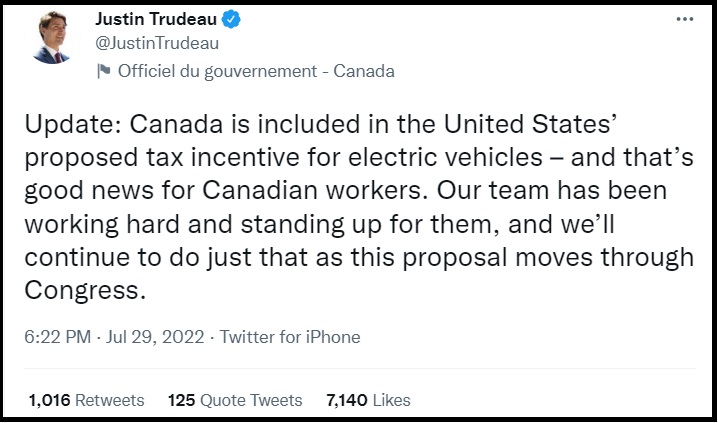
♦ BRASS TACKS – Canadian Prime Minister Justin Trudeau was gleeful last week promoting Manchin’s new green energy proposal because, with steel and aluminum tariffs removed, Canada will be one the biggest beneficiaries of $370 billion congressional spending package. Canada has no heavy industry left, they are the assembly economy for foreign manufacturing that uses loopholes, and the senate bill creates a USMCA loophole for this exact purpose.
The West Virginia windmills and solar panels will be shipped as raw materials from China and the EU into Canada. Canada will assemble the parts and ship the finished goods into the United States for placement by illegal alien workers employed by the contractors. The batteries to store the solar and windmill power will come from Mexico, after they receive the raw materials from Africa and Asia.
Canadian workers, Mexican workers, Chinese Workers, African workers and ASEAN workers will all benefit from the generous Joe Manchin spending package.
Unemployed West Virginia coal miners will watch Joe Manchin run for office in 2024 on Japanese televisions powered by China, while eating cheese puff flavored cricket snacks sourced from Canada. Brilliant plan, Joe.
[Transcript] – JOHN DICKERSON: We go now to West Virginia Democrat Joe Manchin. Senator, welcome. I hope you’re feeling better from the COVID. Let me start with a- with a–
SENATOR JOE MANCHIN: –John, thanks for having me. I appreciate it.
JOHN DICKERSON: Let me start with something you said back in 2010 in a debate when you were running for Senate, here’s what you said:
SEN. JOE MANCHIN SOT: “I don’t think during the time of recession, you mess with any of the taxes or increase any taxes.”
JOHN DICKERSON: So that’s become the- your Republican colleagues favorite quote to roll out now that you’ve made this agreement with Chuck Schumer that has a tax piece to it. Why did you change your mind?
SEN. JOE MANCHIN: John, I didn’t change my not- my mind, I’ve never changed at all this is fighting inflation. This is all about the- the absolute horrible position that people are in now because of the inflation costs, whether it be gasoline, whether it be food pricing, whether it be energy pricing, and it’s around energy, mostly that’s driving these high inflation. This is going to do- take care of that, because this is aggressively producing more energy to get more supply to get the prices down. That’s what we’re doing. But we didn’t raise taxes, John, the taxes were- the corporate tax in America in 2017, before the Republican tax cut was 35%. They cut it to 21% 14% reduction. All the people that I know are paying 21% or more. All the even larger corporations, but some of the largest corporations of a billion dollars of value or more don’t even want to pay the minimum of 15%.
JOHN DICKERSON: So, this is an issue of fairness?
SEN. JOE MANCHIN: It’s basically closing– this is a fairness in closing a loophole. So, I’m not raising any taxes. I never thought that people weren’t paying at least 21.
JOHN DICKERSON: Let me ask you about–
SEN. JOE MANCHIN: –And I don’t know why. I mean, we went- go ahead I’m sorry.
JOHN DICKERSON: On the raising- Okay, so I understand what you’re saying about closing loopholes. But the Republican criticism, which attaches to what you said in 2010, is, when you increase taxes, by closing loopholes, you hurt supply, and during inflation, you want a lot of supply. And so even though this might not be a tax increase relative to previous rates, the taxes for certain companies will go up, which will make them produce more so the theory goes, and that will hurt inflation.
SEN. JOE MANCHIN: Let me just say this, John, in the last two years, there have been massive record profits across the board by these largest corporations, massive record profits, and it’s been the lowest capital expenditure in the last few years, so that didn’t drive it. What they’ve all told me was we want security, we want to have some type of pathway forward in permitting and regulations. They’re strangling us. And this is what we’re doing. We’re streamlining the regulations that people have to live within. It- basically accelerating how we get things to market, how quick we can produce things, how quick we can basically produce more energy, and how we can develop more technology. And using that for our benefit. We’re talking about also batteries for electric cars. If you want to get a discount on an electric car by buying an EV, the battery better be made in America, better be sourced in North America, it better be processed.
JOHN DICKERSON: Your Republican colleagues think you and Chuck Schumer did something underhanded by essentially, it looked like there wasn’t going to be anything big passed and then set and then you changed course worked out something with Schumer. Senator Cornyn, the Republican from Texas, said that that unveiling this agreement between you and Senator Schumer was “a declaration of political warfare.”
SEN. JOE MANCHIN: It’s such a shame. John Cornyn is a good friend of mine. He’s such a good man. And for the politics to be so toxic right now. First of all, I never thought this would come to fruition. I never spoke with anybody about any of my colleagues, because they were frustrated that nothing happened for so long. On the other, I never could get the Build Back Better, which is a three and a half trillion-dollar spending bill. This is a $400 billion investment bill. And everything my Republicans talked about reducing the amount of debt that we have- we’re paying down $300 billion- first time in 25 years, they gotta like that. And next of all, they wanted more energy, I want more energy, we’re going to be producing more energy. There’s an agreement that we’re going to be drilling and doing more than we can to bring more energy to the market that reduces prices. They like that. I mean, it’s and there’s going to be a streamlining of permitting John, but they got to like that so well. I’m hoping they just- take cool off. Take a good look at the bill.
JOHN DICKERSON: Their argument is and this matters because you are working with Republicans on other pieces of legislation and Susan Collins, one of those Republicans you’re working with says that this, this break of trust, which is what they’re calling it, you made certain representations they would say to Republicans and broke your trust, she said Susan Collins said it’s a very unfortunate move that delay – that that destroys the many bipartisan efforts that are underway. In other words, whether it’s on election reform, or same sex marriage that that the well has been poisoned.
SEN. JOE MANCHIN: Well, here’s the thing, I think Susan Collins is, you know, my very dear friend, we work almost on everything together. But the thing of it, I never told anybody that I wasn’t going to do something. If I had a chance to fix the energy policy of the United States of America, and I didn’t do it, shame on me. If I had the chance to reduce the amount of inflation and people in West Virginia and across the country are enduring right now. Shame on me. And I never thought they would come to an agreement and use a dual path and basically recognizing within this administration, working with President Biden’s administration and working with Chuck Schumer, and all of them who basically were going a different direction, and were very upset with me for so long that they would ever sit down. But I guess, you know, this thing is bigger, become truly horrible for the families all across America. So now to have a piece of legislation, that we have energy, and we have investments for new energy, but basically, that’s a responsibility. You can walk and chew gum, you have a balanced approach. These are solutions Americans want. We were able to provide these solutions. Let’s not make them political, John.
JOHN DICKERSON: You and Senator Schumer have a deal. A lot of Democrats who used to be very angry at you are suddenly now saying nice things about you, Senator Kyrsten Sinema. Have you talked to Senator Sinema whose vote is still unknown on these bills? And where do you think she’ll go? Because if she doesn’t vote for it, it doesn’t happen.
SEN. JOE MANCHIN: Yeah, Senator Sinema is a dear friend of mine. And we’ve worked very close together on so many pieces of legislation. And she’s- she’s so involved in this legislation. When you think about it, she’s the one that really negotiated and worked very hard on getting Medicare allowing them to negotiate for lower drug prices saving $288 billion. That’s tremendous, which I support her completely on that she’s always been adamant about we’re not going to be raising taxes. And I agree with her wholeheartedly. I made very, very, very carefully evaluations that we wouldn’t raise any taxes. That was the last scrub that was done.
JOHN DICKERSON: Have you tried to lobby her?
SEN. JOE MANCHIN: No, I don’t. We don’t. I’ve never lobbied my- my colleagues on that. I just basically put the facts out try to answer questions. I’m always trying to negotiate with them if- if they want and I tried to and sometimes we don’t get there. They get frustrated. But we’re always looking at the next opportunity to improve the quality of life in America. And that’s what we’re doing.
JOHN DICKERSON: Finally, Senator, there was a vote on a bill this week that would provide health care to millions of veterans exposed to toxic fumes in burn pits during their deployments. Republicans who had previously voted for it, voted against it. Pat Toomey, Republican from Pennsylvania, who will be on who you’ve worked with extensively in your career is worried that it adds to the deficit. That’s something you care about. Does Pat Toomey have a point here?
SEN. JOE MANCHIN: Sure. Well, Pat Toomey is going to get a- he’s gonna get an amendment. He- he’ll have a vote on that. So Pat, come on, let’s go. Let’s put- put it out there, put the facts out there. Pat’s a good man and good friend of mine. I’m sorry, he’s not going to be running again. And he’s leaving the Senate because he’s been a quality valued member of the Senate. And he represented Pennsylvania extremely well. So he’s been a friend. We’re going to work through this. I haven’t seen the amendment. I’m – I’ll be briefed tomorrow morning on it and everything. But Pat is going to get his amendment and let’s see where it goes.
JOHN DICKERSON: Senator Joe Manchin, thanks for being with us. Face the Nation back in one minute. Stay with us. (link)
“There’s a lakeside retreat near Winnipeg with a 5-bedroom cabin he built just for you”…
I have created this site to help people have fun in the kitchen. I write about enjoying life both in and out of my kitchen. Life is short! Make the most of it and enjoy!
This is a library of News Events not reported by the Main Stream Media documenting & connecting the dots on How the Obama Marxist Liberal agenda is destroying America






 Centinel2012