Cycles, Einstein & Galileo – Geometry of Time


QUESTION: Mr. Armstrong; It has dawned on me studying Einstein’s General Relativity, that the two of you reached the same realization from different fields. Newton’s laws of gravity were turned upside down by Einstein who rejected Newton that there was a linear formation to space. Einstein came up with the fact that space was curved and that time and space were linked so that time was not the same throughout the universe. In reading the few chapters on the Geometry of Time you handed out at I think was the 2011 WEC, your entire process is also linking the curvature and time albeit from a different observation than Einstein.

Would you elaborate?

GDM

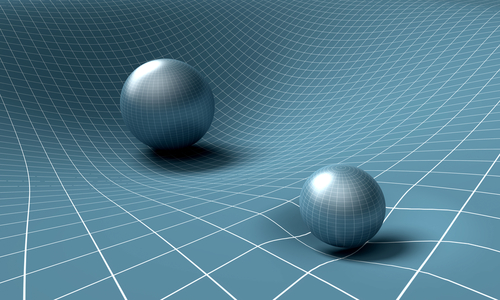
ANSWER: According to Einstein’s theory of general relativity, massive objects warp the spacetime around them, and the effect a warp has on objects is what we call gravity. So, locally, spacetime is curved around every object with mass. However, what led Einstein to his discovery was the question of free fall. Before I had ever ready Einstein, I was probably about 12 years old and I fell out of a tree and over a cliff falling probably a couple of hundred feet. I was lucky and it was Fall so at the base of the cliff was a mountain of leaves. The leaves broke my fall but my teeth nearly came through my bottom lip. The wind was knocked out of me and my nose was bleeding. I went to my friend’s house nearby and finally got my nose to stop bleeding. I kept tasting blood. I opened my mouth and saw the injury and only then did it start to hurt. It was a good 30 minutes. I went to the hospital and they stitched me up.

Two things dawned on me that day. First, I asked why did my mouth not hurt until I saw I was insured? Secondly, when I was falling, I did not feel like a dead weight, but I felt like I was flying – weightless.

Because of that incident, I came to realize that there was some truth to the saying what you do not know, can’t hurt you. But it also gave me insight into what Einstein was talking about. In the middle of a free fall, you feel weightless as if gravity has canceled itself out. Actually, Aristotle first tried to reason that a heavy object will fall faster than a light object in a free fall. He was incorrect. Galileo was the first to actually get it right. He realized that a falling body picked up speed at a constant rate.Galileo also made the observation that in a vacuum, all bodies fall with the same acceleration. That was a truly astonishing idea. That experiment was carried out on the moon with a hammer and a feather. They both fell to the ground at the same time.
Yes, these things influenced me in seeing what I called the Geometry of Time in how and why do trends unfold and what are their durations? Was there a constant force at work, or were there patterns of time within time? This is an extremely complex subject. Far too much for a blog post. I will publish that work in 2020.
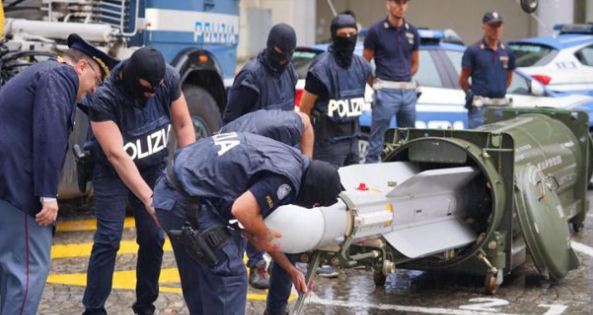
 

Italy Seizes Missile from Far Right Activists


The tensions in Europe continue to rise as the entire refugee issue has led to a major polarization within Europe. In Italy, the BBC reported that an anti-terrorism police unit in northern Italy seized an air-to-air missile and other sophisticated weapons during raids on far-right extremist groups who were combat ready. The missiles belong to Neo-Nazi propaganda groups and they originated from the Qatari armed forces. The civil unrest that our computer has been forecasting on a global scale is here to stay and is heating up as we head into 2024.

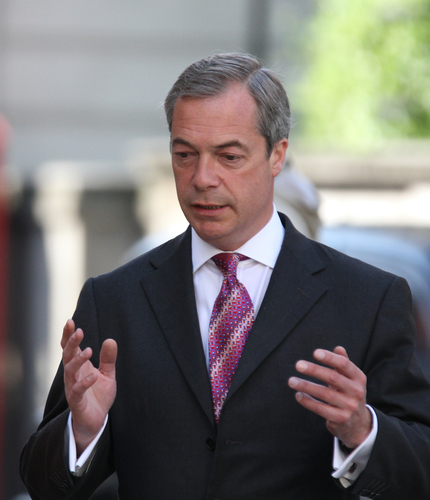
Nigel Farage’s BREXIT Party is Now #2


Nigel Farage’s new Brexit Party is now the second largest in Britain. The Conservatives still topped the YouGov poll with 24% of the vote, but they were boosted by the prospect of Boris Johnson, who is a Brexit believer, as the next Tory leader. The prospects for Europe remain up in the air as Brussels still refuses to reform and is looking to punish Switzerland as an example for Britain. But trying to exclude the London markets as a place Europeans can invest will cause a major economic decline for Europe rather than London.

Understanding the Energy Model


QUESTION: Hi Marty

I try not to bother you with questions, I know you’re plenty busy answering much more complex questions but I’m wondering if you could explain energy in the markets a bit?

I always watch for divergences in energy and price (both positive and negative), or fading energy during a rally, or a random jump in energy during a consolidation period but I can’t stop thinking about your last private blog where it can’t crash if the energy is negative… so only if it’s peaking? So should someone be cautious if the energy starts getting high? Does that also mean if it’s negative it has more potential to swing to the upside?

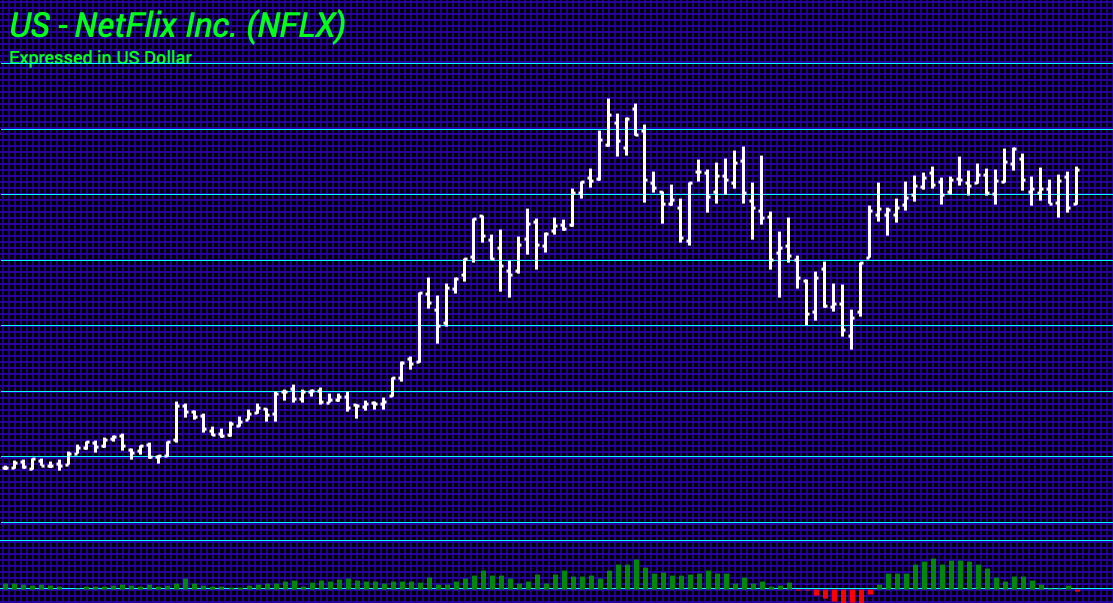
Here on bitcoin energy peaked after price peaked, which leaves me confused again, what does that mean? And both Bitcoin and Netflix and others I’ve found had a panic to the upside when the energy went negative, is this more of a rule, or are these exceptions?

And the million dollar question, are there other things I should be watching when it comes to energy? I’m sure there is still much I don’t know

Thank you,
NS

ANSWER:  The Energy Model is measuring the bulls against the bears. It is providing a different measurement of how much “energy” remains in the market from the long-side. Therefore, if people are recently long, i shows to what extent that represents the whole of the market position. A crash is possible when energy is at a high level and a rally is likely when energy is negative.

In the case of Bitcoin, the market failed to make a new high with the new high in energy. That was the divergence warning that this was a top. In Netflix, the market was bottoming and the energy turned negative. Again, because the energy was negative, that effectively means the liquidation is over. It is impossible to get a panic crash without energy still in the positive. The risk will be to the upside when the energy is negative.

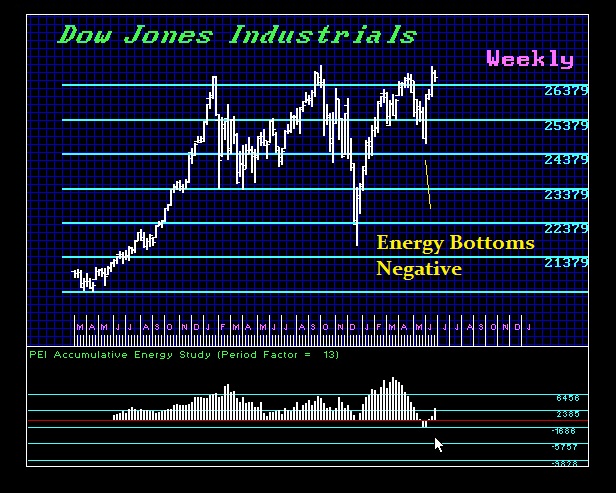
Now, let’s look at the Dow. You can see that energy bottomed negative three weeks from the breakout. This, again, warned there would be no crash as everyone was predicting. The Energy Indicator is an excellent tool in judging the risk in a market from a purely numerical perspective — not opinion.


EU Refuses to Negotiate Fairly with Britain – Demands of a Customs Union


QUESTION: Mr. Armstrong; could you explain this whole Customs Union issue in BREXIT? Some see it as a great idea, others say it is surrendering sovereignty to Brussels.

SN

ANSWER: A customs union, some claim, would help businesses that send goods back and forth to the European Union. So it would be of interest to Britain’s manufacturers, particularly the automobile industry. They also claim that it might ease complications of the much-hated Irish backstop plan, which is intended to eliminate the need for hard border checks between Northern Ireland and the south.

However, a customs union would allow goods to flow easier, in theory, but it would not allow for frictionless trade. It would keep the tariffs Britain pays on goods that cross the border equal to those that countries in the European Union pay currently but at a huge cost. The goods being traded will still need to meet the same product standards that apply throughout the EU. That is the key.

Turkey is a member of a customs union with the EU, but it is not a member of the EU bloc itself. Therefore, trucks are held up for hours as guards check for permits and make sure the products being transported are in compliance with regulations set in Brussels. They would do the same with a vengeance with Britain. A customs union would not cover trade in services, finance, trading, like legal counsel and information technology, which are by far the largest sector of the British economy – not trucks going back and forth.

The devil is in the detail of a customs union. The EU demands that to be in a customs union they must surrender their sovereignty to Brussels and will be prohibited from making their own trade deals. That means Britain could not enter trade deals with China or the United States simply because it does trade with the EU. This defeats the entire understanding of BREXIT.


France Refuses any Negotiation on BREXIT & Demands to Punish Britain


Paris is adamant that the EU should not renegotiate the Brexit deal. The French want to punish the British at all costs, and that means at the expense of their own employment and markets. Amélie de Montchalin, France’s minister for European affairs, said, “If the UK wants to leave the EU, and in an orderly way, the withdrawal agreement is the deal on the table, which has been negotiated for over two years. We’ve also said that the political declaration on the future relationship is open to discussion if the prime minister had a majority.”

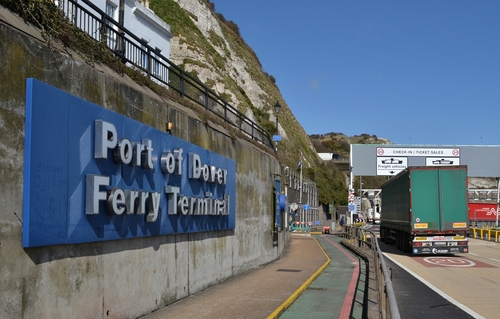
France’s position is to end trade by blocking trucks from Britain through the ports of Calais and Dover. They are more interested in punishing Britain than anything else. They refuse any negotiation whatsoever. British trucks will not be able to board ships in Dover in a no-deal BREXIT scenario if they do not have the correct customs paperwork, following a deal between the Port of Calais and Channel shipping lines. Any excuse will prevent trucks from delivering anything to Europe.

Australia Lowers Rate to Historic Low of 1%


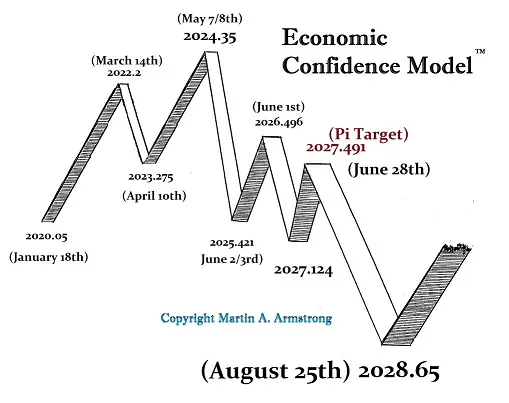
The Reserve Bank of Australia has cut the official cash rate for the second month in a row to 1%. As we head into the turning point of the Economic Confidence Model come January 2020, the unemployment rate increased to 5.2% in April. GDP growth remains very low at 0.4%, wage growth is sluggish, inflation is well below target, and retail sales are struggling. None of this will change until after the ECM turns as people begin to see that central banks are incapable of managing the economy.

The Forecast of 1997 Calling for the Inverse Relationship between Bonds & Shares Remains on Target


QUESTION: Mr. Armstrong; I attended your WEC in London back in 1997 when the Euro Commission took the entire back row. I remember your forecast that we would begin a period of a dramatic shift in the bond-equity correlation I believe you said would last for at least 23 years. That is nearly due. You were obviously correct and that did begin with the introduction of the euro in 1998. You were dead center between Barton Biggs and Steve Roach. Do you still see this inverse relationship flipping in 2021 as you forecast back then?

JK

PS I left the bank….. and am now retired.

ANSWER: A lot of people I knew in the various banks back in the 1990s have left before the cards start to fall. I remember well. They were at Morgan Stanley back then and the two were polar opposites on their forecasts if I remember correctly. Barton Biggs argued that the world would be flooded by a glut of cheap Asian labor and Steve Roach was pointing to the Philips Curve warning that public deficits in the west would lead to a massive inflationary bonfire.

The Stock-Bond Correlation was the real debate. Our model was warning that stocks and bonds would indeed behave very differently which has materialized. Since 1998, stock prices and bond prices have been negatively correlated. In other words, when stock prices go up, bond prices go down and vice versa. Overall, stocks and bonds are indeed currently acting in opposition to each other on the macro-trend level. There has been a negative correction which some call the “flight to quality” when confidence collapses in the private sector, capital fled to the public sector. The broader 250-year relationship would argue that this is highly unusual. It is true that stocks and bonds moved up and down together throughout the 250 years prior to the 21st century.

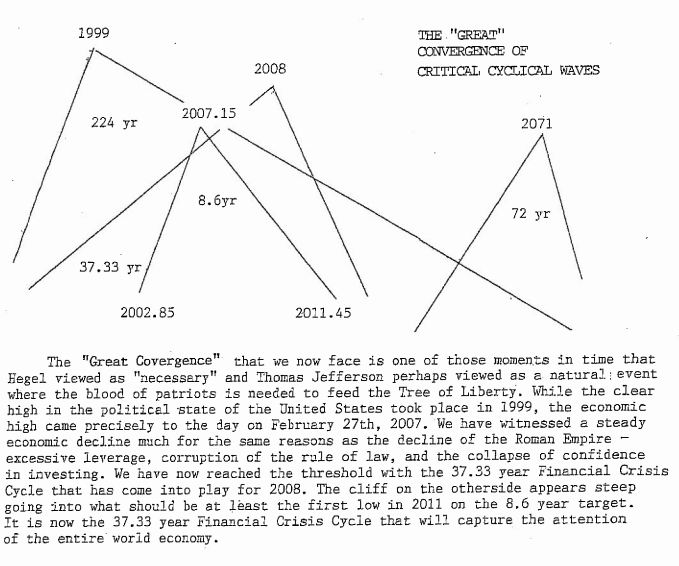
The reason I delivered that forecast back then was the realization that government debt had entered a perpetual borrowing cycle ever since World War II. Moreover, the 224-year cycle of political change was due in 1999. That meant the political peak in government would take place at that time. The economic peak would by 2007. Both of those forecasts have been absolutely correct. Politics has declined steadily and ever since the 2007-2009 crash, interest rates have dropped sharply and there has been a contraction in inflation with a decline in economic growth.

In Its Just Time, I wrote: “While the clear high in the political state of the United States took place in 1999, the economic high came precisely to the day on February 27th, 2007. “

The flip in this relationship is still on target. Nothing requires any change to that forecast I delivered back in 1997. This is all being driven by the Sovereign Debt Crisis.

The Next 8.6-Year Wave will be Inflationary


All the real science is warning that there is a reasonable chance that we are headed into a much colder period ahead. This will have an impact on food prices and out computer models have been warning that the next wave of the Economic Confidence Model should be an inflationary wave. Even a new study from  nature.com said: “The recent prolonged solar minimum and subsequent weak solar cycle 24 have led to suggestions that the grand solar maximum may be at an end.”

The next 8.6-year wave beginning in January should produce a collapse in confidence in governments which will result in a shift from Public to Private assets, but then on top of this, we see a shortage in agricultural markets adding to the inflationary wave coming. Then add the Monetary Crisis and Sovereign Debt Crisis cycles and we end up with some very interesting impacts during the next wave.

Socrates & Gold


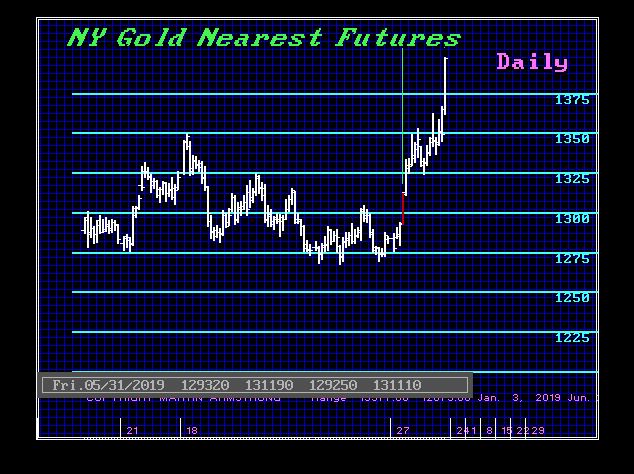
COMMENT: Mr. Armstrong; I want to salute you on creating Socrates. Its forecast on gold was remarkable. When gold was starting to breakout on May 31, Socrates wrote concerning your breakout points:

We did close below the previous session’s Intraday Projected Breakout Resistance indicator which was 129370 settling at 129240 gesturing that the market is not in a breakout mode at that precise moment. The current Projected Breakout Resistance for this session was 129740 which we have now closed above suggesting the market is starting to possibly breakout to the upside if it can be maintain in the next trading session. The Projected Breakout Resistance indicator for the next session will be 132023.

The next day closed at 1327 and off it ran. It is amazing how the computer explains these moves in advance.

See you in Orlando

HP

REPLY: This is my objective. To have a computer write the analysis and you know there is no human bias involved one way or another. Just call it by the numbers without all the nonsense. Socrates now covers more than 1,000 instruments around the world every day. There are not enough analysis in the world to write so many reports every day. This is the way to the future. Objective analysis without the human bias.