Posted originally on Aug 28, 2025 by Martin Armstrong
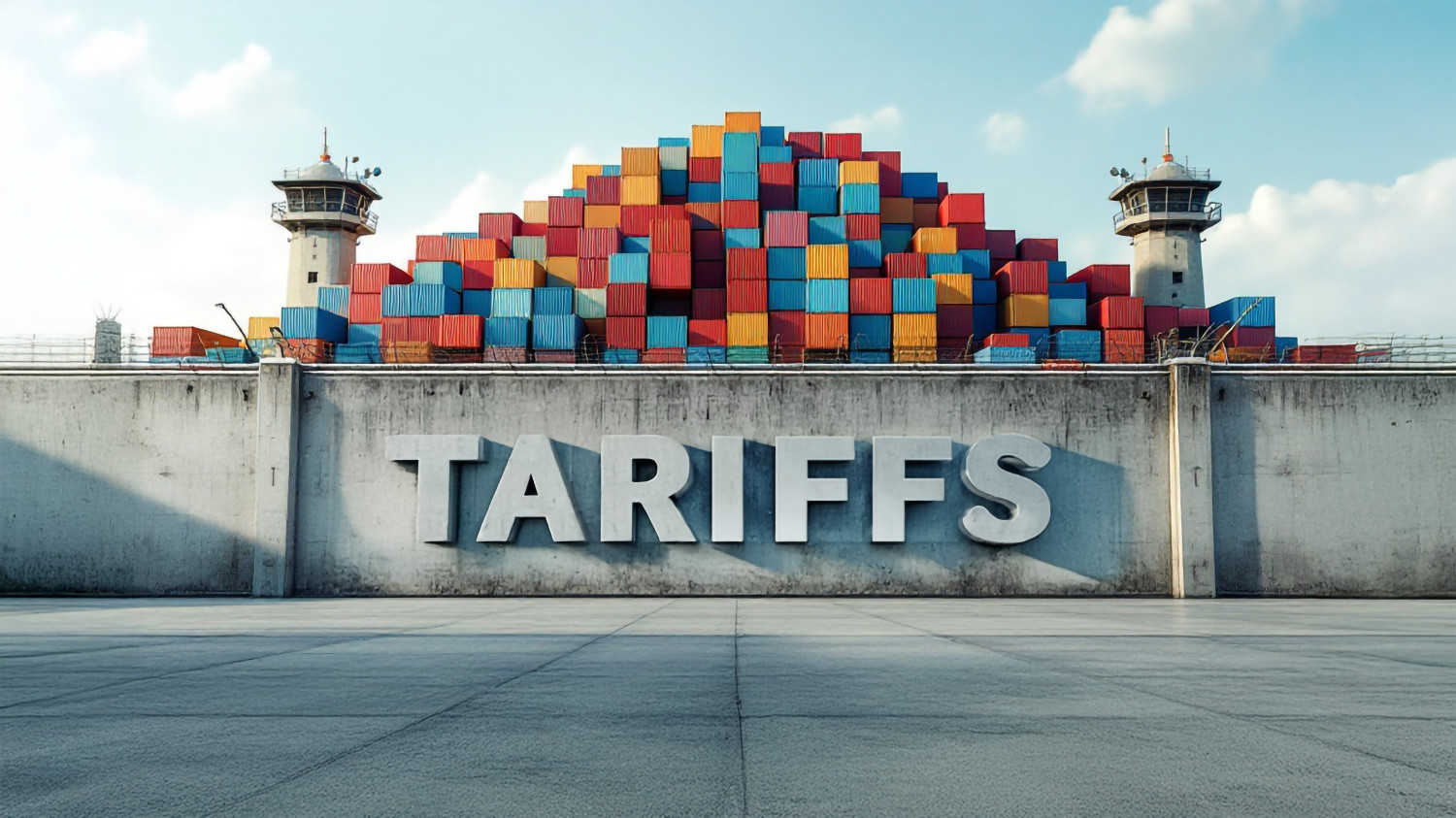
Twenty-five nations have declared a temporary suspension on all postal shipments to the United States amid tariff uncertainty. As of August 29, 2025, the United Stated will remove the de minimis exemption from law that allowed goods under $800 to enter tax-free. Tariffs range between 10% to 50% on the declared value, or $80 to $200 per parcel. Goods above $2,500 are subject to a Merchandise Processing Fee and additional formal customs checks. Processing delays and increased costs were incurred immediately, but now, a growing number of nations have decided to simply discontinue parcel service.
In Europe, the United Kingdom, France, Germany, Italy, Belgium, Austria, Switzerland, Denmark, Sweden, Norway, Finland, Czechia, the Netherlands, Spain, Poland, Portugal, and Ireland suspended services. In the Asia-Pacific, Australia, New Zealand, India, Japan, South Korea, Taiwan, Singapore, Thailand have halted services as well. Canada has also curbed its mail exports. All of this has been implemented at the federal level, whereas previously, individual postal carriers determined whether or not they would service the US.
“Despite discussions with U.S. customs services, no time was provided to postal operators to reorganize and assure the necessary computer updates to conform to the new rules,” France’s La Poste said in a statement. The Australia Post said the temporary partial suspension has been necessary to allow us to develop and implement a workable solution for our customers.” Italy’s Post Italiane noted that “the absence of different instructions from U.S. authorities,” forced the suspension of services. The United States did not consider the logistics of suddenly transforming import regulations.
American consumers are watching their orders decline in real-time. Items in transit are being returned of delayed, especially if they arrive after August 29. This is a fatal blow to small businesses that rely on international orders. American consumerism composes two-thirds of all GDP and other nations eagerly line up to sell their goods. Any downturn in trade is a negative for all parties involved.
The situation is still developing, but any suspension in parcel delivery will hurt the global economy. The United States did not give the world sufficient time to prepare for this new regulation. The EU, Japan, Canada, and others have the experience and infrastructure to integrate compliance changes and digital customs data, but other nations with less developed postal infrastructure are unlikely to quickly adapt their systems. These nations have been forced to halt services due to logistics rather than a punishment to the US as all parties involved will face consequences.
Posted originally on Aug 28, 2025 by Martin Armstrong |
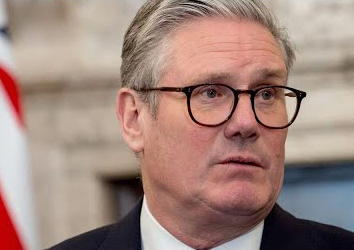
The United Kingdom’s Labour Party is experiencing the lowest approval rating since the last general election, with only 20% approving of Keir Starmer’s administration. What we are seeing in Britain is part of a broader global cycle of political discontent. Politicians are losing credibility because they are offering nothing but recycled policies that fail to address the economic storm at hand.
Starmer, like so many others in power today, has no real solutions. He inherited a fragile economy already crippled by decades of mismanagement, and instead of reversing course, he doubled down on the very same failed ideas. The endless promises of “green jobs” and “renewable energy revolutions” have failed. Energy costs remain high, industry continues to flee, and average households are struggling with the global cost of living crisis. The public feels betrayed because they were sold the illusion of prosperity under the Labour Party.
A Reform UK spokesperson accused Starmer of “cosying up to the EU and leaving [Britain] entangled in reams of retained EU law which Kemi Badenoch failed to scrap will not resuscitate Britain’s struggling economy.” Brexit may have occurred but the current administration has not broken ranks with Brussels. Starmer is forcibly pushing the UK into a war and compromising domestic policies for globalist ambitions.
If you come to the UK illegally, you will be detained and deported. End of story. pic.twitter.com/D7sgHcS4cG
The Reform UK Party is now leading the polls with 28% of the vote. Nigel Farage is offering the people a new opportunity under an administration that would prioritize domestic issues. Farage has called Starmer’s economic approach a “mad experiment” and has criticized government spending and excessive taxation. He has promised to save Britain’s energy sector and repeal all net-zero policies that cost over £40 billion annually. Farage published a piece on The Telegraph explaining the severity of the nation’s migrant crisis. He believes that the UK has spent £10 billion over five years on the migrant crisis and described the rise in crime and expenses as a “national emergency.” Farage has also expressed caution regarding sending UK troops to Ukraine.
The model suggests that as we approach the next critical political/economic wave, confidence in political leaders worldwide will erode. The people are turning to candidates whom the mainstream media paints as extreme because the world has awakened to the failed globalist policies that are destroying their nations. The people want national sovereignty that cannot be achieved through the establishment.
Posted originally on CTH on August 25, 2025 | Sundance
CTH noted several months ago, end the Marshall Plan for Europe and things will change quickly.
Germany is in a tight economic place as a result of: (1) former leftist Chancellor Olaf Scholz alignment with climate change policy, radically changing the German energy base and driving up costs; (2) the financial support for Ukraine; (3) the financial burden of mass African/ME migration, and (4) the new Trump-era EU tariffs that effectively end the Marshall Plan.
Put all four elements together and the German economic contraction is only forecast to worsen. This is the reality that current German Chanceller Fredrich Merz is facing. Thus, as a non-pretending former businessman, Merz recently told his party and the German electorate that current financial conditions no longer support the expansive entitlement state.
Pensions, benefits and even healthcare are potentially going to be impacted. Germans are not happy.
GERMANY – The German welfare state is no longer financially sustainable, Friedrich Merz said on Saturday. The chancellor argued for a fundamental reassessment of the benefits system as spending continues to soar past last year’s record of €47bn (£40bn).
In a state-level party conference meeting on Saturday, Mr Merz said: “The welfare state as we have it today can no longer be financed with what we can economically afford.”
Once the export champion of Europe, Germany’s economy has slowed dramatically since 2017, with GDP growing by only 1.6 per cent since then versus 9.5 per cent for the rest of the eurozone.
Germany’s economy shrank by 0.2 per cent last year following a 0.3 per cent dip in 2023 – the first time since the early 2000s the economy has retreated two years in a row.
Industrial production fell under the Left-leaning “traffic light” coalition of Olaf Scholz and continues to slide under the new government, with GDP declining by 0.3 per cent in the second quarter of 2025.
Meanwhile, spending on social welfare has exploded, and is set to increase further this year as Germany’s population ages and unemployment rises. Although the majority of benefit recipients are German, large numbers are non-German citizens.
[…] Germany has in place a so-called “debt brake”, which limits how much the government can borrow to fund its spending plans.
Mr Merz’s views on the welfare state are likely to provoke discontent among his Social Democratic Party (SDP) coalition partners, whom he relies on for a thin majority in the Bundestag.
[…] Lars Klingbeil, the SPD leader and vice-chancellor, hit back at Mr Merz’s announcement with calls for increased taxation on top earners. He called for a summit focused on helping industry leaders respond or adapt to US tariffs and said “no option is off the table” when it comes to plugging the 30-billion-euro gap in Germany’s budget. (more)
A note of caution. Historically speaking, when the German economy gets bad enough, Europe ends up in a war.
I have created this site to help people have fun in the kitchen. I write about enjoying life both in and out of my kitchen. Life is short! Make the most of it and enjoy!
This is a library of News Events not reported by the Main Stream Media documenting & connecting the dots on How the Obama Marxist Liberal agenda is destroying America








 Centinel2012