Posted originally on May 12, 2025 by Martin Armstrong
Starmer may be preparing his nation for battle, but he does not have the support of his nation. An Ipsos poll found that over half of Britons “would not fight for their country under any circumstances.”
The Victory in Europe Day celebrations coincided with the poll, causing no increase in patriotism. Only 35% of adults overall said that they would be willing to fight for their nation, with 17% undecided. Only 21% of women said they would take to battle, and 49% of men said they would like go to war.
Britan has already been invaded. The people did not fight when millions of foreigners invaded their country and permanently altered British society. England is no longer a Christian nation. They have abandoned their core traditions and beliefs for outsiders who vote for liberal policies. Taxes on citizens continue to rise as the government forces the people to pay for migrant social programs. Spending on the migrant crisis is expected to rise 30% in 2025 alone to an astounding £61 million.
Former Army officer Richard Gill, who served in Iraq and Afghanistan during a 15-year career, said, “The fact that so many would refuse to fight for Britain is a symptom of a deeper national malaise. We’ve stopped teaching pride in our country, its history, and its values… A nation unsure of itself cannot expect its people to defend it. That must change.”
Prime Minister Keir Starmer implemented the largest rise in defense spending since the Cold War, with government spending on defense to rise to 2.5% of GDP from April 2027. He would like to raise that amount to 3% in the next parliament, marking a £13.4 billion increase per year.
Britain voted to leave the European Union, and now its politicians are requesting the people to defend a nation that was never even permitted in the bloc due to corruption. Support for the war in Ukraine has significantly declined since 2022. A separate Ipsos poll found that only 53% of Brits supported the government sending weapons to Ukraine, which is a stark contrast to the 63% who were in favor when the war began. Two in five said they support sending peacekeeping troops to Ukraine, or 40%, and Russia has made it clear that any troops on the ground in Ukraine will be considered targets.
Starmer is no Churchill—the people will not blindly follow his regime into a senseless war.
Posted originally on May 10, 2025 by Martin Armstrong
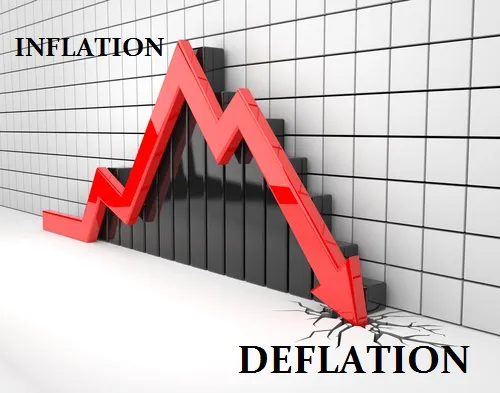
QUESTION: Mr. Armstrong, a friend of mine attends your conferences and said you’re the only person who understands the economy because you have international experience and have met with many central banks around the world. He said inflation is no longer the simplistic expansion of the money supply, and anyone who said that is still trapped by Keynesian economics. If inflation is not the quantity of money anymore, then can you explain what inflation is all about? Why have you not appeared on Tucker Carlson to explain your theory?
I appreciate your patience.
Rob
ANSWER: The people who put out this theory have ZERO international experience.
CURRENCY INFLATION:
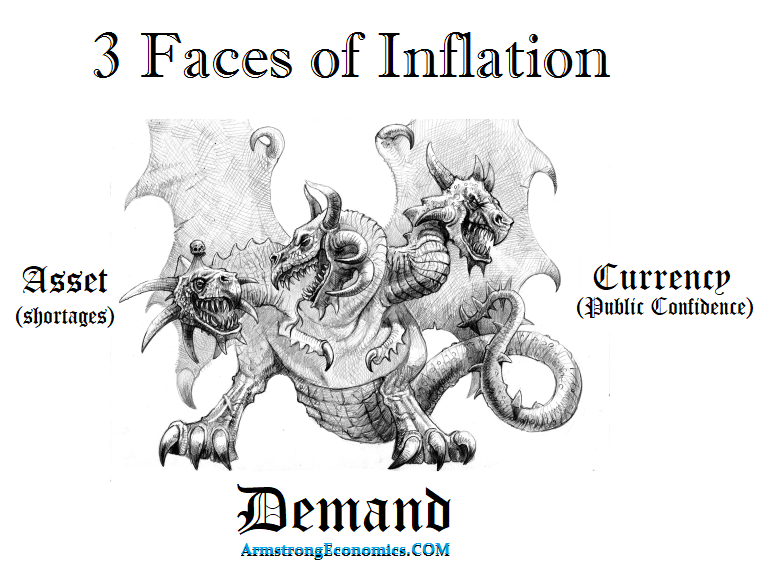
Currency inflation can take place in primarily two ways. First, the currency declines in value, and this attracts foreign capital to rush in for bargains. I did that myself when the British pound fell to $1.03 in 1985. It was like the country on sale at Harrods.
Secondly, let’s say you have a building in it, and I buy it for $10 million. The money supply is not altered. However, let’s say I’m British and I buy your building in the United States. I have to bring British pounds, convert them into dollars, and then pay you your $10 million. I have just increased the domestic money supply and assets, and the central bank had no impact.
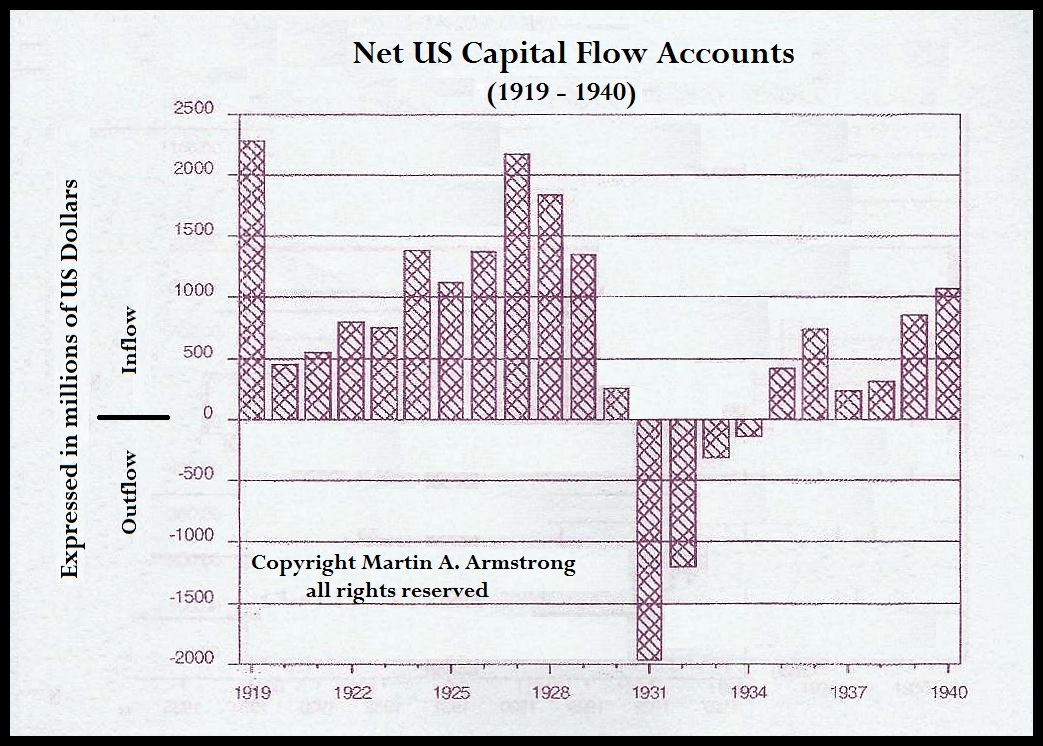
Here are the capital flows during the Great Depression. You see a massive exit of capital in 1931, which was caused by the Sovereign Debt Defaults of 1931, as all of Europe, including Britain and the British Commonwealth, such as Canada, suspended their debt payments. That is what took down 9,000 banks, not tariffs.
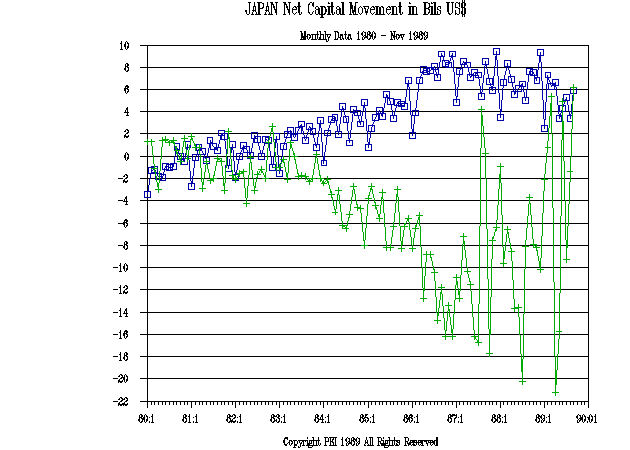
Here are the capital flows for the 1987 Crash, which was also caused by capital outflows. Even looking at the 1989 Japanese Bubble, what made it similar to the 1929 bubble in the USA? Capital inflows and concentration from around the world cause the assets to rise, and money pours into the economy. Currently, Canada has seen a 300% rise in real estate, largely due to foreign capital flowing into the country.
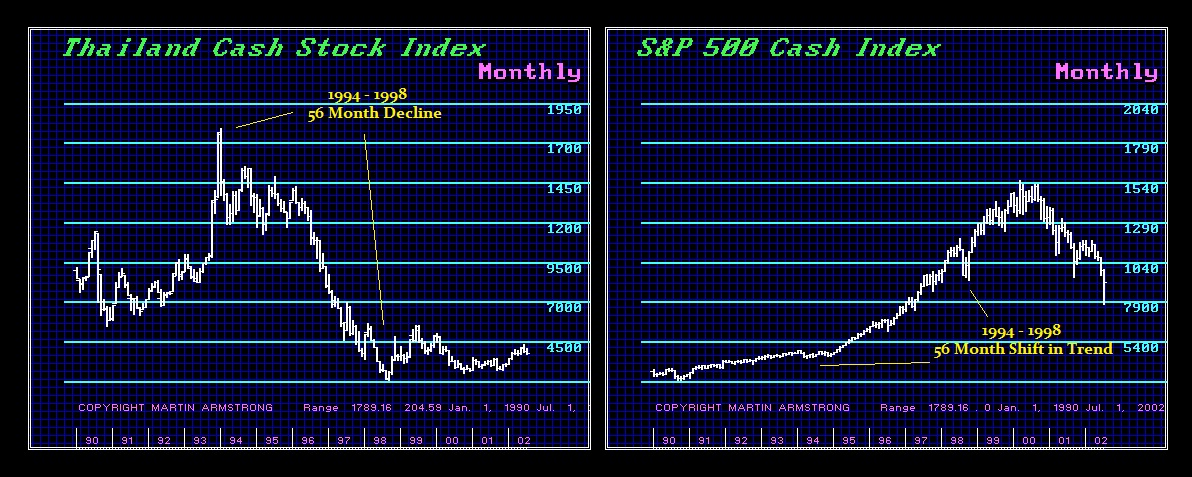
After the 1989 Bubble in Japan, capital then shifted to Southeast Asia. Thailand’s assets soared, both in real estate and stocks. Then it crashed in 1997, as capital was then expected to be the next hot market in 1999. Here you see Thailand’s peak and the US market rose into July 1998. Thailand then passed real estate legislation, which prohibited foreigners from owning land. Foreigners generally cannot own land outright in Thailand, even since the 1997 Asian Currency Crisis. However, exceptions exist for significant investments (e.g., a 2022 cabinet-approved proposal allowing land purchase with a 40 million baht investment in specified sectors, subject to parliamentary processes). This aims to stimulate the economy rather than restrict access.
Foreigners may own up to 49% of the total unit area in a condominium project, provided the funds are imported from abroad, which increases the money supply. Foreigners can lease property for up to 30 years in the classic British system, with potential renewals, although this does not confer ownership – only the right to use. While setting up a Thai company (majority Thai-owned) to hold land is a common workaround, authorities actively scrutinize such arrangements to prevent misuse.
Recent discussions (2022–2023) focused on easing restrictions for high-value investors rather than imposing bans. Thus, Thailand maintains its historical framework: it restricts land ownership but permits certain property investments under regulated conditions. Always consult legal experts for current, case-specific advice. All of this was a response to the 1997 Asian Crisis caused by capital concentration, and then it moved on to the next hot topic.
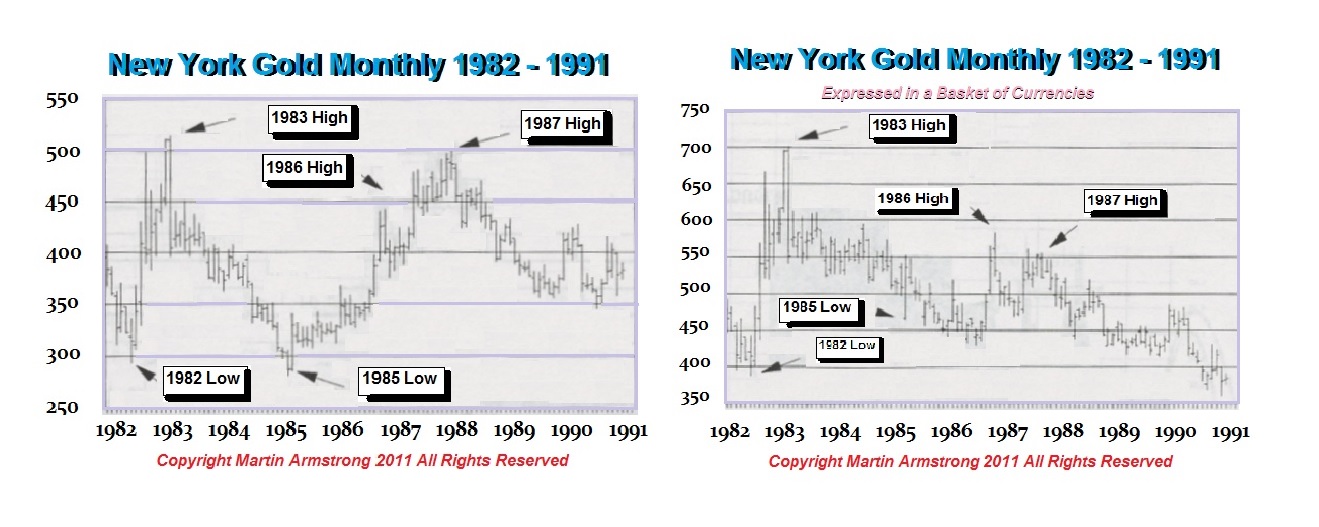
Here, you can see that the price of gold varies by currency, all based on its value. Are you genuinely looking at a chart of gold, or are you only looking at it in relation to the local currency?
DEMAND INFLATION:
This was Keynes’ misconception, who assumed the bull market up to 1929 was purely driven by domestic demand. He proposed raising interest rates to make borrowing more costly and lowering interest rates to encourage borrowing. The idea was seriously myopic. He did not understand capital flows, and that higher interest rates sometimes attract capital, as was the case when Volcker raised interest rates to insane levels in 1981, which sent the dollar soaring to a record high in 1985.
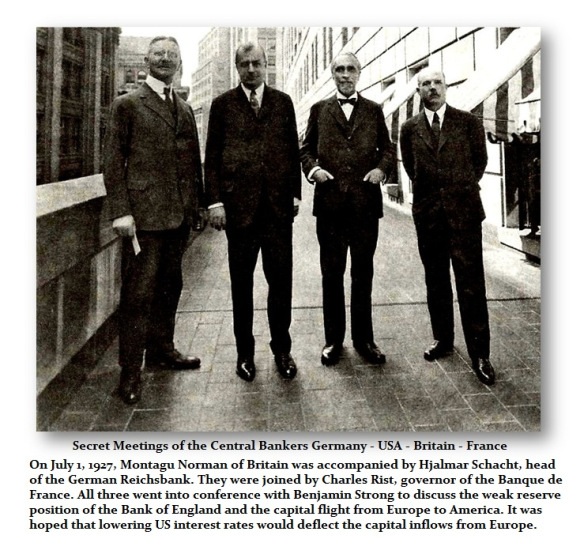
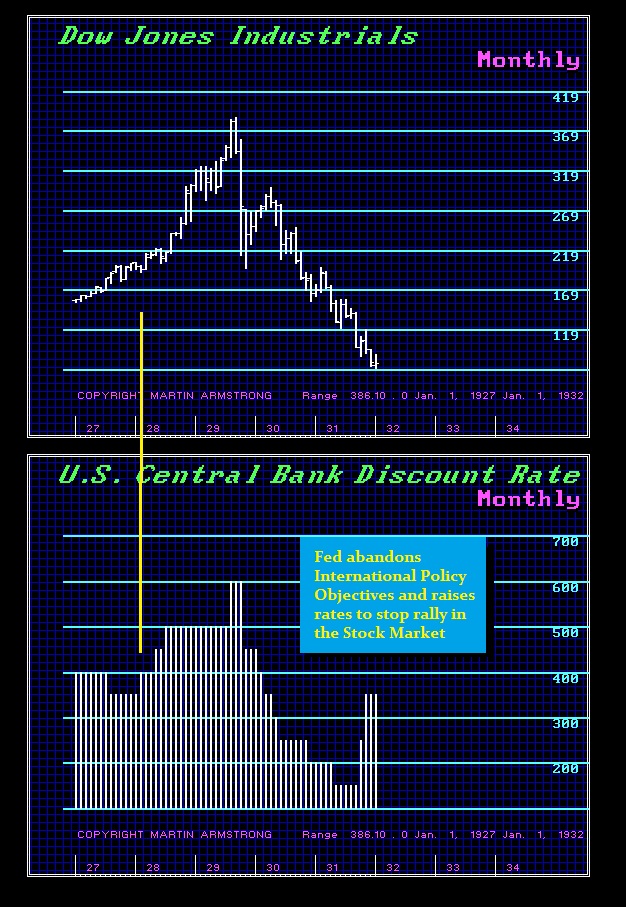
Lowering rates in 1927 to try to deflect the capital inflows back to Europe failed. The Fed raised rates from 3.5% to 6%, and it did not stop the rally in the share market. The Fed then lowered rates from 6% to 1,5% in 1931, and it had no impact on supporting the market. So, again, all we have are failed theories, yet people lacking international experience mouth the same old stuff over and over again because everyone else does.
ASSET INFLATION:
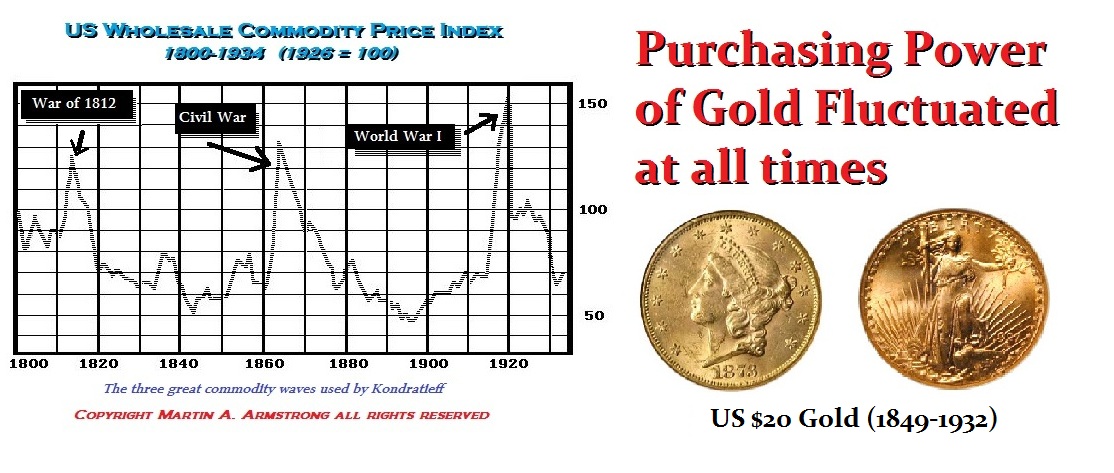
Then you have raw shortages or oversupply. The purchasing value of gold dropped significantly thanks to the 1849 California Gold Rush. During inflation, assets rise in value, and money declines. That took place during the 19th century when a gold coin was money. MONEY has NEVER been of a constant value – NEVER! These people yelling fiat simply do not comprehend that for thousands of years, there has always been a business cycle, and that means money rises and falls in purchasing power, REGARDLESS of whatever it has been. The fiscal irresponsibility of governments is well-documented throughout history, long before the introduction of paper money.
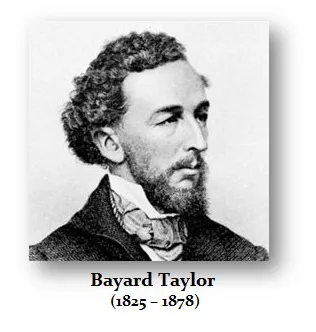
Even under a gold standard, there were periods of inflation and deflation. Read the history of the California Gold Rush. During the 1849 Gold Rush in California, the journalist for the New York Tribune, Bayard Taylor (1825-1878), arrived in San Francisco by ship during the summer of 1849. He was shocked at what he encountered and did not think that anyone would even believe what he was going to write. His dispatches about the gold rush economy in California stunned many and helped to create the 1849 Gold Rush.
The average wage for a laborer in New York was about one or two dollars a day. In California, individual hotel rooms were rented to professional gamblers for upwards of $10,000 a month, which is the equivalent of about $300,000 today. The degree of inflation in terms of gold was astounding and lacks comparison in modern times. There was so much gold that the value of goods rose even though they did not in New York. The inflation phenomenon was local – akin to the Tulip Bubble.
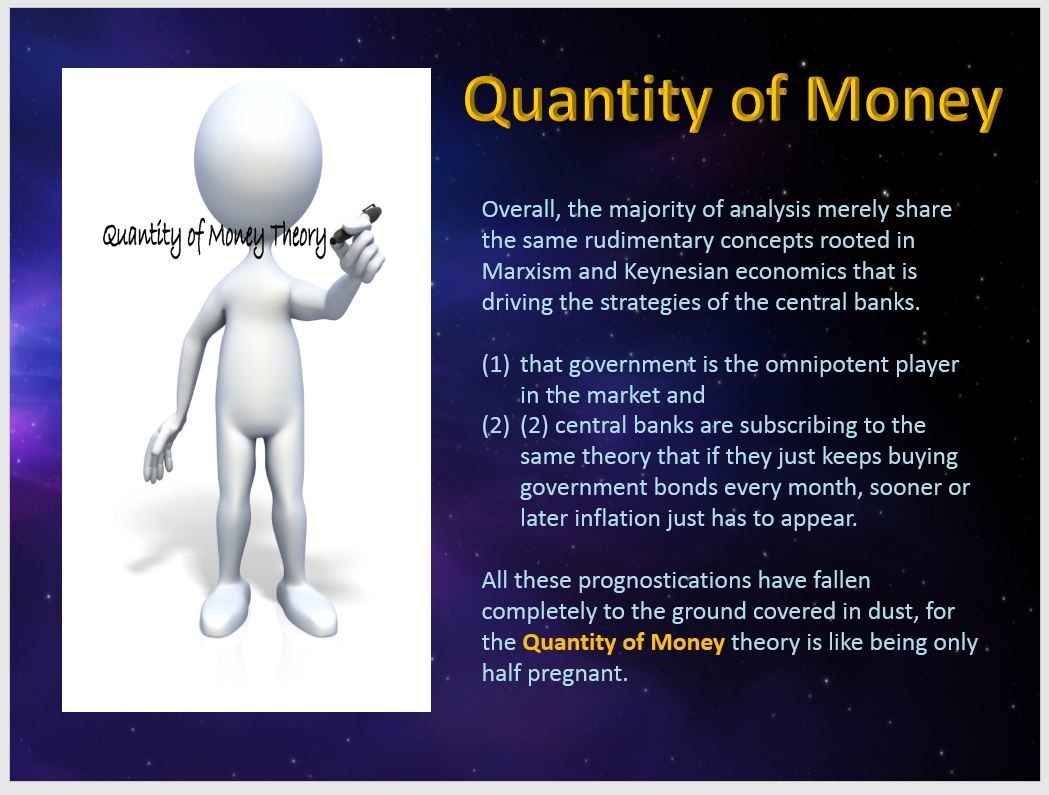
There is a lot more to this than simply the quantity of money. In case you haven’t noticed, some Marxist economists who propose MMT (Modern Monetary Theory) claim that since the U.S. borrows in its own currency, it can print dollars to cover its obligations and can’t go broke. The theory has won converts among freshman Democrats, like Alexandria Ocasio-Cortez, as a way to finance social policies like the Green New Deal and Medicare for All. They pointed to the vast Quantitative Easing (QE) in 2008-2009, and inflation was not created. The European Central Bank expanded the money supply and lowered interest rates to negative in 2014, despite no inflation.
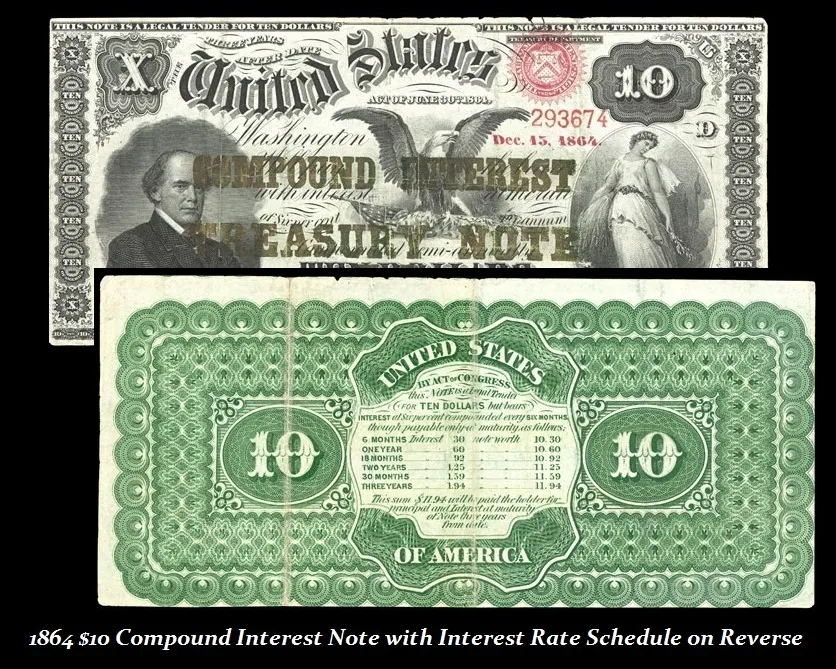
Quantitative Easing (QE) does not increase the Supply of Money—it is only a maturity swap. Today’s total money supply includes debt, unlike during the pre-19th century. This has erroneously given rise to Modern Monetary Theory, for they pointed to QE and said there was no inflation, so that we could print without repercussions. It was merely a swap of maturities when you finally realized that debt is now money that earns interest, as paper money was introduced during the Civil War.
When paper money stopped paying interest, the term “Greenback” emerged, meaning there was no interest payment schedule on the reverse, just green ink. Paper money began as essentially debt or bonds that circulated as a form of cash. Today, people blame the central bank, but remain clueless that the money created by the central bank is only a tiny fraction of the money supply. Because debt issued after 1971 is now legal to use as collateral, posting T-Bills to trade futures, the $34 trillion debt is part of the money supply that dwarfs the central bank. Shutting down the Federal Reserve will make things worse. The real source of inflation under this theory of the Quantity Theory of Inflation is the debt itself.
Moreover, we pay interest, and that no longer stimulates the economy because much of it is held offshore. China has 10% of the US debt, which accounts for 10% of the $1 trillion in interest payments that flow to China, not the domestic economy.
If your Definition of Money is Wrong, So is Everything Else that Follows
As far as Tucker is concerned, I haven’t been invited, and I’m not sure he would want someone who doesn’t agree with 99% of the analysts on this subject.
And by the way, this is not theory – it’s plain experience and observation.
Posted originally on May 9, 2025 by Martin Armstrong
Canadian exports to the United States are beginning to decrease in light of the trade war. Statistics Canada announced that exports to the United States, Canada’s largest trading partner, declined 6.6% during the first month of tariffs while imports from the United States fell 2.9%. March 2025 was the second-highest recorded monthly increase in non-US trade for Canada.
Exports to nations outside the US rose 24.8%. Overall exports in March 2025 reached $69.9 billion, a slight decrease from February’s $70.04 billion posting, yet volume rose by 1.8%. The United Kingdom has been purchasing unwrought (crude) gold exports from Canada this year, totaling C$2.01 billion in January, C$1.64 billion in February, and C$1.64 billon this March.
Canada’s crude oil sea exports doubled on an annual basis to 8 million barrels this month. The United Kingdom and the Netherlands imported 69% of all crude oil exports to Europe. Hong Kong also increased its crude imports from Canada in March.
Overall merchandise trade exports declined 0.2% for the month, with imports falling 1.5%. The trade deficit fell to C$506 million, notably less than the prior month’s C$1.4 billion deficit as Canada is seeking buyers.
Canada cannot fully rely on trade outside the US. March saw a 6.6% monthly decline in exports to the US, which is bad news for Canadian businesses. Trade with the US for March was still strong at US$140.5 billion, notably due to an increase in pharmaceuticals and medicines ahead of forthcoming industry-specific tariffs. Autos also saw an uptick ahead of industry-specific tariffs, posting a 7.7% export increase for the month. Iron and steel products, already subject to a 25% tariff, fell 9%, while aluminum alloys and unwrought aluminum rose 4.4%.
The S&P Global Manufacturing PMI for Canada reached 39.1 in April 2025. Canadian manufacturing has not seen such a contraction since early COVID months when the global economy came to a standstill. Imposed and proposed US tariffs are stifling demand as purchasers do not know what to expect.
Those adhering to US boycotts fail to realize that the Canadian economy is structurally tied to the US economy. Infrastructure was designed to support trade through railways, trucking routes, and pipelines. Europe and Asia cannot replace the accessibility or scale of the US market. Additionally, the economy is closely aligned with the USD, and a major pivot would expose Canada to currency volatility. Canada may strengthen ties with other nations to fill margins but it cannot write off its top trade partner.
Posted originally on May 6, 2025 by Martin Armstrong
Friedrich Merz was elected as Germany’s chancellor in a second-round parliamentary vote on Tuesday after failing to secure the necessary support earlier in the day. Merz needed at least 316 of the 630 members of parliament to vote in his favor, but he received only 325 votes (51.5%). Like Mark Carney in Canada, Merz will be the final nail in Germany’s coffin. He is pro-World War III. Simply comparing the economic growth of Germany, Europe’s cornerstone of the EU economy, to that of the United States, illustrates that the greater the socialistic policies of controlling everything, even freedom of speech, produce far less economic growth. The German economy has shrunk by 3% or more thanks to COVID lockdowns, Climate Change, and Russian sanctions.
Posted originally on May 6, 2025 by Martin Armstrong
Political parties questioning the status quo are labeled as “far-right extremists.” And yet, these political parties represent the people far more than others in the Build Back Better category, who only have their bureaucratic interests in mind. We’ve seen it happen throughout the world, from the United States to Romania, and now in Germany with the rise of the Alternative für Germany (AfD) Party. Leaders of the AfD have filed a lawsuit after the Office for the Protection of the Constitution (BfV) labeled the group extremist domestic terrorists.
The AfD became the most popular political party in Germany this April. The party does not want to adhere to the EU’s open border policy, climate madness, or the Build Back Better agenda. In fact, they’ve openly questioned Germany’s position in the European Union. The EU would be completely lost without Germany’s backing,g and Brussels has been on high alert. AfD members have called for a “remigration” or mass deportation operation similar to what Trump is currently conducting in the US. The party has vowed to restore Germany for the people of Germany and implement mass deportation campaigns.
Their beliefs represent those of the German people. Yet, one would be hard-pressed to find a single article about AfD that does not include “extremist” in the description. German authorities have considered banning the party under Article 21 of the German constitution, which forbids political parties that “seek to undermine or abolish the free democratic basic order or to endanger the existence of the Federal Republic of Germany shall be unconstitutional.”
In no way is this party seeking to abolish democracy. Banishing a political party, however, does undermine democracy completely and silences the wishes of the people in favor of the bureaucrats. “Through our lawsuit, we aim to send a decisive message against the misuse of state authority to suppress and exclude opposition,” and that the move seeks to “distort democratic competition and undermine millions of votes,” the AfD stated.
US Secretary of State Marco Rubio voiced support for AfD over the weekend, stating that allowing German intelligence to label a political party an extremist group is “tyranny in disguise.” “What is truly extremist is not the popular AfD—which took second in the recent election—but rather the establishment’s deadly open border immigration policies that the AfD opposes,” Rubio wrote in a post on X.
“This is democracy. This decision is the result of a thorough & independent investigation to protect our Constitution & the rule of law,” the official X account for the German Foreign Office wrote in a reply to Rubio’s post. “It is independent courts that will have the final say. We have learnt from our history that rightwing extremism needs to be stopped.” Perhaps the foreign office has forgotten that a collapse in the German economy is what led to the rise of an actual extremist group.
The world has awoken, and all confidence in leftist regimes has vanished. The pendulum is swinging back toward conservatism due to the failed policies fueled by politicians who attempted to turn democratic democracies into socialist battlegrounds in the name of globalism. The people are rising not to embrace conservatism as a doctrine, but to reject the authoritarian overreach of governments that have lost all legitimacy.
Posted originally on May 6, 2025 by Martin Armstrong
The Amish had an extremely low rate of COVID infections, as well as for most diseases that infect modern societies. Regardless, the Canadian government is continuing to harass this community for failing to abide by COVID-era regulations. In particular, the Canadian government is demanding that the Amish community pay for non-compliance with the federal ArriveCAN app mandate.
The Amish do not have modern electricity, let alone cell phones. The government still insisted that the Amish download the ArriveCAN app during COVID, which was required to cross the border. Individual fines for non-compliance reached $20,000, with more than 30 Amish communities in Ontario racking up $300,000 in fines because their faith does not permit the use of electronic devices. They live in isolation from modern society and pose no risk, but the government was keen to attack anyone who avoided its authority. These regulations were never about the virus, but a power grab move for control. The Canadian government placed liens on Amish farmlands, destroyed their credit scores, and is threatening to destroy their livelihood because they did not download an app when the government told them to do so.
Leave it to top Canadian politicians to mount their soapboxes to speak of tolerance for other cultures, migrants, and religions. Now, Amish families are speaking out about how they cannot secure loans for farming equipment, removing their ability to sustain their communities all due to COVID mandates.
Founded in 2021,the Democracy Fund (TDF) has been assisting members of the Amish community in their legal battle with the government. “The Democracy Fund is committed to defending the rights of the Amish community,” said Mark Joseph, TDF Litigation Director. “By helping lift these liens, we are ensuring that this vulnerable community can continue to thrive and sustain their traditional way of life.”
TDF recently won two major lawsuits on behalf of families. Joseph said the litigation “underscores the unique vulnerabilities of the Amish community to modern legal systems.” TDF went as far as offering free legal services to those impacted by Trudeau’s authoritarian COVID regulations. “TDF remains committed to their defence, exploring further reports of liens and fines affecting other Amish families across the province. As a religious minority with limited access to modern legal resources, the Amish face steep hurdles—such as restricted property transactions or farm succession—when liens are imposed.”
Justin Trudeau called vaccine opponents “misogynistic and racist.” Yet, he went to extreme lengths to hurt marginalized communities who did not have enough of a voter base for exploitation. The public at large has erased the pain of COVID from its memory but countless people and communities are still facing the repercussions of COVID-era policies.
Posted originally on May 6, 2025 by Martin Armstrong
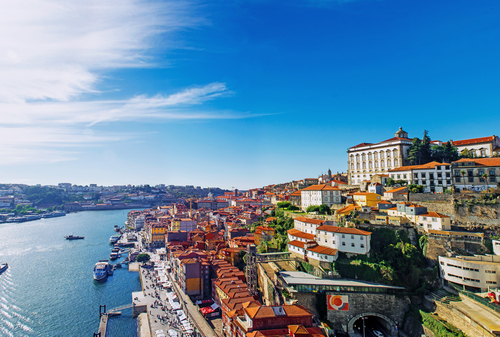
Portugal is yet another European Union nation facing extreme political instability. António Costa of the Socialist Party (PS) resigned in November of last year amid a public investigation of corruption. Luís Montenegro and his center-right Social Democratic Party (PSD) took on the role of prime minister in April 2024, but his government lost a confidence vote in March of this year, leading to the current interim caretaker government. The next snap election is slated for May 18, 202,5 where voters will select the next government.
Ahead of the snap election, Portugal is deporting 18,000 foreigners. Minister of the Presidency António Leitão Amaro said that foreigners will have 20 days to leave voluntarily. Portuguese authorities have been criticized for denying migrants due process, violating human rights, and dissenting from European Union law that aims to keep borders open. Not only can the Portuguese no longer support the cost of migrants, but the people would also like a fair election where only citizens are permitted to vote.
According to recent data, the center-right Democratic Alliance (AD) is ahead in the polls with about 32% to 34% of the vote, followed by the Socialist Party (PS) at 27% to 28%. The conservative Chega party is in third place with 16% to 18% favorability. No party is expected to gain the majority of seats at this time.
The Chega Party, another group described by the media as “far-right extremists,” have grown in popularity in recent years. The group, formed in 2019, has quadrupled its seat count over a five-year span. Chega is a nationalist party, a mentality feared by the unelected elite in Brussels. They believe in small government, reduced taxation, and less bureaucracy. The group favors border security, eliminating culture wars or “Marxist tendencies,” and has been critical of NATO. Similar to Germany’s AfD, the group opposes the European Union’s authoritarian control over its members and has questioned Portugal’s position in the alliance.
Portugal has surrendered national sovereignty to Brussels. The people are increasingly aware that their elected leaders are overpowered by the unelected elite who are steering the continent into ruin. It is trapped in the euro after abandoning the escudo. Portugal will continue to take on more debt at the wishes of the EU, who insist it continue funding the war in Ukraine and adhere to net zero and open border policies. Youth unemployment remains high,h and the next generation feels trapped. The trend of nationalism has become a contagion throughout Europe, but the EU will only become increasingly authoritarian to maintain power for as long as possible.
Posted originally on CTH on May 5, 2025 | Sundance
The spotlight on Romania might just be too intense for the EU/NATO globalists to pull off another election outcome.
With the first-round of the Romanian re-do election now completed, the nationalists have shown their resilience and delivered a defeat to the globalists.
In response the pro-NATO/EU prime minister has announced his resignation.
BUCHAREST, Romania (AP) — Romanian Prime Minister Marcel Ciolacu announced his resignation on Monday, a day after the governing coalition’s joint candidate failed to advance to the runoff in the closely watched rerun of the presidential election.
The coalition’s candidate, Crin Antonescu, was third in Sunday’s first round, far behind top finisher hard-right nationalist George Simion and pro-Western reformist Bucharest Mayor Nicusor Dan.
“Rather than let the future president replace me, I decided to resign myself,” the prime minister told reporters after a meeting at the headquarters of his Social Democratic Party, or PSD.
Sunday’s rerun underscored strong anti-establishment sentiment among Romanians and signaled a power shift away from traditional mainstream parties. It also renewed the political turmoil that has gripped the European Union and NATO member country. (more)
I have created this site to help people have fun in the kitchen. I write about enjoying life both in and out of my kitchen. Life is short! Make the most of it and enjoy!
This is a library of News Events not reported by the Main Stream Media documenting & connecting the dots on How the Obama Marxist Liberal agenda is destroying America












 Centinel2012