Sunday Talks – OMB Director Russ Vought Discusses the FED and Spending Cuts


Posted originally on CTH on July 27, 2025 | Sundance

Office of Management and Budgets (OMB) Director Russ Vought appears on CNN to discuss the problems noted with the Federal Reserve (FED) as the organization viewed their ‘independent’ status as meaning beyond accountability.  The FED has been operating without any oversight until President Trump and Russ Vought began a baseline review of how they spend taxpayer funds.

As noted by Director Vought, the FED can have independence and yet they must be held accountable to the American people. President Trump is that accountability piece and the FED were not familiar with scrutiny. They are now.

.

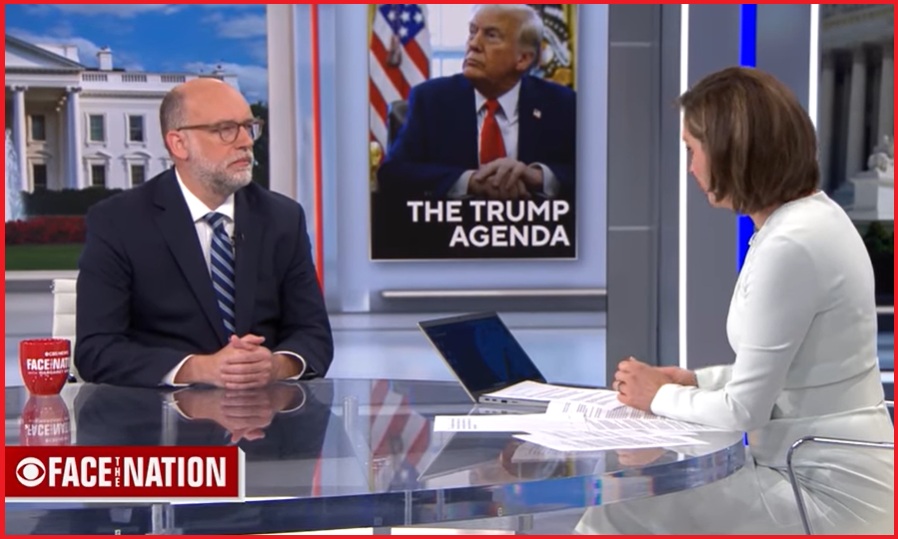
Russ Vought also appeared on Face the Nation to receive questions from the insufferable and ever-pontificating Margaret Brennan.  Video and Transcript Below:

[Transcript]  – MARGARET BRENNAN: We begin today with the director of the White House Office of Management and Budget, Russell Vought, welcome to ‘Face The Nation.’

DIRECTOR OF THE OFFICE OF MANAGEMENT AND BUDGET RUSSELL VOUGHT: Thanks for having me.

MARGARET BRENNAN: There’s so much to get to with you. Let’s start on what’s going on with the Federal Reserve. If you take the president at his word, he does not intend to fire the Federal Reserve Chair, Jerome Powell- though he’s still criticizing him. What is the President seeking in a successor when his term ends in May 2026?

VOUGHT: Well, I think he’s looking for a chairman that’s not continually too late to the developments in the economic marketplace. And I think what we’ve seen with Chairman Powell, he was very late in the Biden administration to raise rates, to articulate the concern with regard to the Biden administration’s spending. We all knew on the outside- even Larry Summers knew that we were going to have an issue with regard to inflation. And we saw, you know, recent, historical inflationary levels that we hadn’t seen before. And now he is too late to lower inflation rates and so that is the kind of thing that we want to see in the next chairman of the Federal Reserve. And one of the reasons why is–

MARGARET BRENNAN: –More of a focus on inflation?

VOUGHT: –want an ability to recognize the developments in the economic marketplace. In this case, we want to be able to see lower rates and to have an ability to get the economy going. And one of the things we saw with Powell is that one of the reasons he was so late was because he didn’t understand that inflation is largely a monetary phenomenon. He kept saying that inflation was transitory. He didn’t tackle the problem, and now he’s, again, too late, and you marry that with fiscal mismanagement at the Fed. It’s a huge problem that we’re trying to raise the country’s awareness level with.

MARGARET BRENNAN: But as you know, the Fed is structured in a way where he doesn’t have unilateral control. There’s a governing board. Others weigh in. You did work on Project 2025, and we went back and looked at what they said in there about the Fed. As people may know, that’s a Heritage Foundation product that got a lot of scrutiny during the campaign. the chapter on the Fed called for Congress to overhaul the Fed’s focus and powers. Is that what you’re looking to do in 2026?

VOUGHT: I don’t even know what that chapter says. All I know, in terms of the President, the President has run on an agenda. He’s been very clear about that. All that we’re doing is- in this administration is running on- is implementing his agenda.

MARGARET BRENNAN: You don’t want to overhaul the Fed?

VOUGHT: We want an economic system that works for the American people, that includes the Fed. And the President has been very clear that all he’s asking from the Fed is lower interest rates, because he thinks it’s important. When you look at across the across the globe, and you have countries lowering rates, and yet we don’t see that in this country, given all of the positive economic indicators that we’re seeing. And then we have fiscal mismanagement at the Fed with regard to this building renovation that I’m sure you will ask me about. Those are the kinds of things that we want to see from the Fed. This is not part of an existential issue with regard to the Federal Reserve.

MARGARET BRENNAN: Well, the Fed is indicating that they are trending towards a rate cut, though probably not as soon as this week. We mentioned those renovations at the top of the program, but I do want to ask about spending, or lack thereof, that the Trump administration is trying to direct. The White House said they will actually release the remaining $5 billion in education, funds that had been withheld from public schools until recently. There were 10 Republican senators very worried about this, and came out and said, your claim that the money goes to radical left wing programs was wrong. What changed your mind? What made you release this money?

VOUGHT: Well, we had been going through a programmatic review with these funds. These are programs that, as an administration, we don’t support. We’ve called for the elimination of them in the President’s budget for precisely the reasons of which they flow to often left wing organizations. Thankfully, the President came into office, put an executive order that said it can’t- these funds can’t go to these types of initiatives. I’ll just give you one example, English language acquisition was flowing to the New York school public education system to go into illegal immigration advocacy organizations. Preschool development grants doesn’t actually go to preschoolers. It goes to the curriculum for putting CRT into the school system for people as young- children as young as four years old.

MARGARET BRENNAN: Well, these senators said it goes to adult learners working to gain employment skills and after school programs.

VOUGHT: And what we–

MARGARET BRENNAN: So you deemed it is necessary?

VOUGHT: We believe that it’s important to get the money out right now, but we have taken an extended time frame to be able to make sure it doesn’t go to the types of things that we saw under the Biden administration.

MARGARET BRENNAN: Because, you know, Senator Lindsey Graham told the Washington Post, the administration is looking at considering clawbacks from the Department of Education. This, you know, rescissions process. Is that the plan? Are you seeking to claw back education funds in a rescissions package? And if so, when are you sending that up?

VOUGHT: We may be, we’re always looking at potential rescission options. This is an- this is a set of funding that we wanted to make sure it got out. We did our programmatic review. We wanted to make sure it got out before the school year, even though it’s multi-year funding. This is not funding that would expire at the end of this year. We are looking to do rescissions package. We’re always gauging the extent to which the Congress is willing to participate in that process, and we’re- be looking at a lot of different options along those lines, but certainly have nothing to announce here today. But we’re thrilled that we had the first rescissions package in decades, and we’ve got the process moving again.

MARGARET BRENNAN: So no rescissions package before September?

VOUGHT: Not here to say that. We’re looking at all of our options, we will look at it and assess where the Hill is, what are the particular funding opportunities that we have, but nothing that we’re going to announce today,

MARGARET BRENNAN: Because some of the funds that do expire in September have also been held up on the health front. Senator Katie Britt of Alabama, 13 other Republicans, came out with a letter saying that you’ve been slow in releasing funds for the National Institute of Health for research into cardiovascular disease, cancer. Are those funds going to be released?

VOUGHT: Again, we’re going through the same process with the NIH that we did with the education. I mean–

MARGARET BRENNAN: But there’s a time cost here.

VOUGHT: –$2 million for injecting dogs with cocaine that the NIH spent money on, $75,000 for Harvard to study blowing lizards off of trees with leaf blowers. That’s the kind of waste that we’ve seen at the NIH. And that’s not even getting to the extent to which the NIH was weaponized against the American people over the last several years, with regard to funding gain of function research that caused the pandemic. We have a- we have an agency that needs dramatic overhaul. Thankfully, we have a great new head of it, but we’re going to have to go line by line to make sure the NIH is funded properly.

MARGARET BRENNAN: Are you going to release the cancer funding research? And the cardiovascular disease research funding?

VOUGHT: We’re going to continue- we’re going to continue to go to the same process that we have gone through with regard to the Department of Education, that every one of these agencies–

MARGARET BRENNAN: Before September, that money will be released?

VOUGHT: –and we will release that funding when we are done with that review.

MARGARET BRENNAN: Because, as you know, there’s concern that you’re withholding the money, hoping it just won’t be spent. I mean, if you look at the White House budget, it does call for a 26% cut to HHS, $18 billion cut to NIH. Is this just a backdoor way to make those cuts happen?

VOUGHT: Well, I don’t want to speak to any specific program with regard to what we might do with regard to rescissions throughout the end of this fiscal year, but we certainly recognize that we have the ability and the executive tools to fund less than what Congress appropriated, and to use the tools that the Impoundment Control Act, a bill we’re not- a law that we’re not entirely thrilled with, gives us to- to send up rescissions towards the end of the fiscal year.

MARGARET BRENNAN: So just for our viewers, the Impoundment Control Act is the legal mechanism for the President to use to delay or avoid spending funds appropriated by Congress. You seem to want to have an argument, or Democrats think you want to have an argument, over the power of the purse and who holds it. Do you want that to go to the Supreme Court?

VOUGHT: Well, look, for 200 years, presidents have the ability to spend less than the congressional appropriations. No one would ever dispute, and our founders didn’t dispute that Congress has the ability to set the appropriation ceiling. But 200 years of presidents, up until the 1970s had the ability to spend less, if they could find efficiencies, or if they could find waste that an agency was doing.

MARGARET BRENNAN: — That sounds like a yes?–

VOUGHT:– We lost that ability in the 1970s. The president ran on restoring that funding authority to the presidency, and it’s vital. If you look at when we started to lose control fiscally, it was right around the time of the 1970s.

MARGARET BRENNAN: Well, many senators, Republican senators, are very uncomfortable with the tactics that you are using. Senator Murkowski, Senator Collins, that chair of the appropriations committee that is really running this- this funding process. And Senator Collins said you’re pushing the limits of what the executive can do without the consent of the- of the legislative branch. You need to work with her to get your budget through. And in fact, you need to also be able to get Democrats on board to get to that 60-vote threshold to pass any kind of government funding to avoid a government shutdown at the end of September.

VOUGHT: I have a great relationship with Senator Collins. I appreciate the work she does. She is the chairman of the Appropriations Committee, so obviously we’re going to have differences of opinion as to the extent to which these tools should be used. I mean, she had concerns with the rescissions package. The rescissions package was a vote that Congress had to make these cuts permanent–

MARGARET BRENNAN: — Under- on a party line vote, she says, you want to go do these clawbacks. You do it through regular order, and you can put- you can put rescissions into an appropriations bill–

VOUGHT: –But that was in fact, under regular order. That’s the challenge, is the appropriators want to use all the rescissions, they want to put them in their bills, and then they want to spend higher on other programs. We act- we’re $37 trillion in debt, Margaret. We actually need to reduce the deficit and have a dollar of cut go to $1 a deficit reduction. That’s not what the appropriators want, and it’s not news that the Trump administration is going to bring a paradigm shift to this town in terms of the business of spending.

MARGARET BRENNAN: You would acknowledge that you just added to the debt and to the deficit with this–

VOUGHT: — No, I would not acknowledge that. We reduced–

MARGARET BRENNAN: — The spending and tax bill that just passed?

VOUGHT: Correct.

MARGARET BRENNAN: Where you lifted the debt ceiling.

VOUGHT: The debt ceiling is an extension of the cap on what’s needed to pay your previous bills. In terms of the bill itself, it is $400 billion in deficit reduction, $1.5 trillion in mandatory savings reforms, the biggest we’ve seen in history.

MARGARET BRENNAN: Well, I want to make sure I get to the rest of this before I let you go here, because we’re running out of time. You said, a few weeks ago, that the appropriations process needs to be less bipartisan. You only have 53 Republicans. You do need Democrats to get on board, here. Is saying something like that intended to undermine negotiations? Do you actually want a government shutdown?

VOUGHT: No, of course not. We want to extend the funding at the end of this fiscal year. We understand, from a math perspective, we’re going to need Democrats to do that–

MARGARET BRENNAN: Well, what does less bipartisan mean?

VOUGHT: Well, Margaret, the whole week, the Democrats were making the argument that if you pass the rescission bill, that you were undermining the bipartisan appropriations process. So, if Brian Schatz and every other appropriator is making that argument for a week–

MARGARET BRENNAN: –The chair of the Senate Appropriations Committee is who said that–

VOUGHT: –you have to be able to respond and say, if you’re going to call a rescissions package that you told us during the month of January and February that we should use to do less spending, if you’re going to say that is undermining the bipartisan appropriations process, then maybe we should have a conversation about that. That is all it was meant to convey.

MARGARET BRENNAN: But, the alternative to this process is another continuing resolution, these stop-gap measures. Are you open to that, because that would lock in Biden-era funding? What is your alternative here? If you want a less bipartisan process, how do you solve for this? Because it sounds like you’re laying the predicate for a shutdown.

VOUGHT: We are not laying the predicate for a shutdown. We are laying the predicate for the fact that the only thing that has worked in this town- the bipartisan appropriations process is broken. It leads to omnibus bills. We want to prevent an omnibus bill, and all options are on the table to be able to do that.

MARGARET BRENNAN: All options are on the table?

VOUGHT: We need an appropriations process that functions. We’re going to go through the process. We’re going to work with them, and we’re going to do everything we possibly can to use that process to have cheaper results for the American taxpayer.

MARGARET BRENNAN: I’m told we’re out of time. Russell Vought, thank you for your time today.
[END TRANSCRIPT]

DAVID MALPASS: “To Finish The Job We Need A Total Fed Overhaul.”


Posted originally on Rumble By Bannon’s War Room on: July 25, 2025

Phillip Patrick: “There Is A Standoff Happening Between The Fed And The Administration.”


Posted originally on Rumble By Bannon’s War Room on: July 25, 2025

LAVORGNA: Biden Printed Money, Trump Fueled Real Growth With Pro-Business Policy


Posted originally on Rumble By Bannon’s War Room on: July 22, 2025

Cash Accepted Here – Payment Choice Act


Posted originally on Jul 23, 2025 by Martin Armstrong 

cashless society electronic money

Senators Kevin Cramer (R-ND) and John Fetterman (D-PA) have introduced bipartisan legislation, the Payment Choice Act, which would require businesses to accept cash payments. Money is merely the medium of exchange that someone is willing to accept for goods or services. Businesses across America have inadvertently contributed to the push toward a cashless society by refusing to accept cash as a form of payment.

“Any person engaged in the business of selling or offering goods or services at retail to the public who accepts in-person payments at a physical location … shall accept cash as a form of payment for sales made at such physical location in amounts up to and including $500 per transaction,” the measure stipulates, in part.

The war on cash is part of the broader agenda to eliminate all financial privacy and control every transaction. Refusing to accept cash is not merely a business decision but a step toward a totalitarian digital monetary system. Why bother with cash if you cannot use hard currency to pay for goods and/or services? Governments and central banks are pushing digital currencies to track, tax, and control every penny in circulation. If businesses start denying cash, they’re doing the state’s dirty work for them unintentionally.

Certain businesses prefer the convenience of credit cards and not all payment systems are equipped to accept cash. Yet, as Senator Cramer stated in his argument when proposing the bill, physical cash is legal tender, and businesses are limiting consumer choice by forcing the use of debit and credit cards for transactions. Then you have businesses that pass on the 3% transaction fee to consumers, adding to inflationary pressures. “Do you accept cash?” has become a common courtesy, as consumers are aware of the need to travel with a card to ensure purchases. Naturally, governments have cracked down on businesses that only accept cash, as they assume these businesses are attempting to avoid taxation. This is the first piece of legislation that actually supports the consumer over the government it is refreshing to see it gain bipartisan support.

The bill makes exceptions for businesses that have “a sale system failure” or those that do not have enough cash available to provide change. In fact, companies would not be required to accept $50 or $100 bills under this legislation to prevent the latter. It is quite disappointing to see the freedoms many are willing to relinquish in the name of convenience.

Once cash is gone, you’ll have no ability to opt out. So yes, we need to protect cash, and that may require legal guarantees that it remains a valid and accepted form of payment.

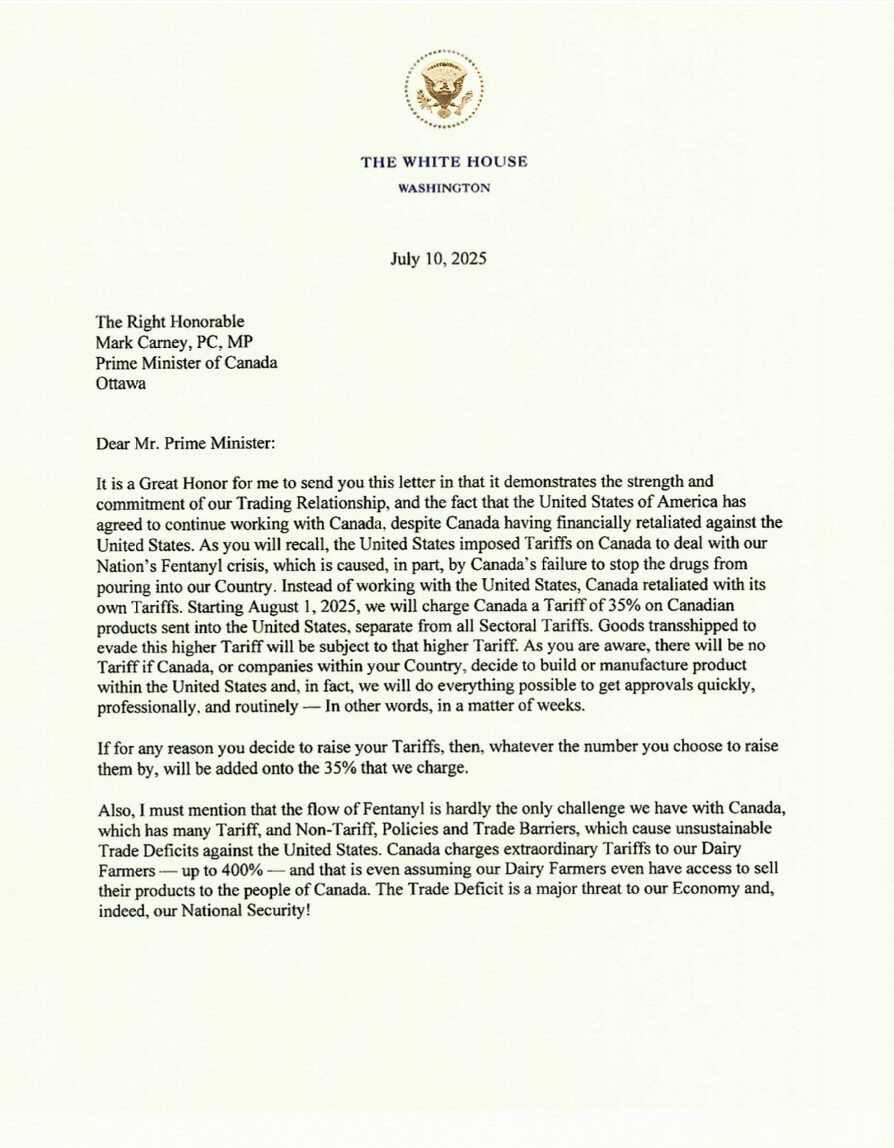
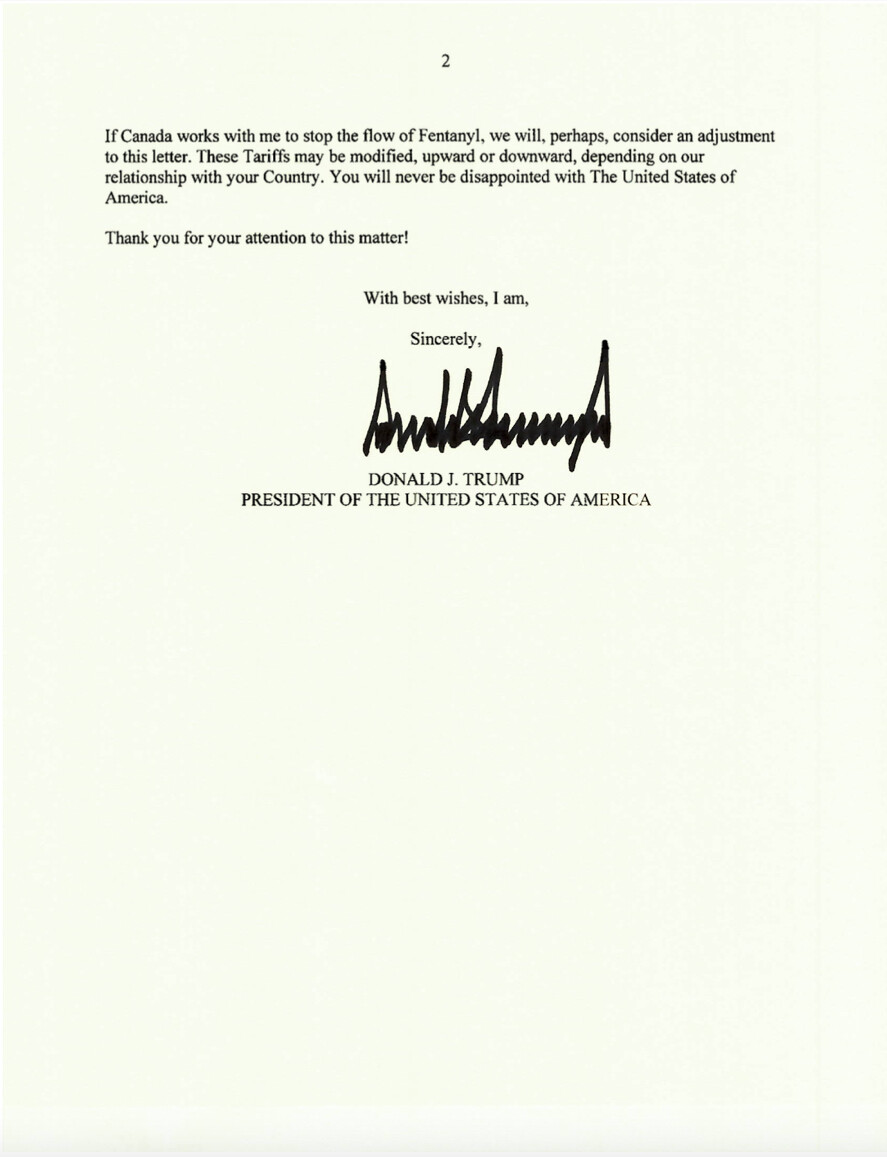
Canada Accepts They’re Not Going to Get a Trade Deal Before 35% Tariffs Kick In


Posted originally on CTH on July 22, 2025 | Sundance 

I’ll repeat it as much as needed, until it sinks in.

The U.S-Canada trade deal status is simply a no-brainer. President Trump will answer questions about Canada and tariffs, he’ll put people into seats to discuss trade with the Canadian delegation, and he’ll give every outward appearance of being favorable to Prime Minister Mark Carney…. BUT…

In the background, Trump is simply waiting for the USMCA timeline to trigger a renegotiation. President Donald Trump is ambivalent to the trade partnership with Canada. This moot-status reality is why there’s no substantive engagement.

‘No deal’ -until USMCA redo- is a win for President Trump.

For some bizarre reason that I simply cannot fathom, almost every Canadian politician seems entirely oblivious to this reality. Instead, Canadian Trade Minister Dominic LeBlanc and Mark Carney’s chief-of-staff, Marc-André Blanchard are once again coming to DC to ride their bicycles in slow circles at the bottom of the White House driveway while staring in the windows.

An article in Politico notes the Canadian premiers are now accepting the August 1st deadline will pass without any agreement, and the 35% reciprocal tariffs on non-USMCA products (meaning a lot of stuff) is going to trigger.

Literally, everything from Canada that has a non-USMCA component is going to be tariffed. Think about all the stuff from China, Asia (writ large) and Europe that Canada assembles for finished goods. All of that stuff will be subject to the tariffs.

That said, there’s good news coming from the recent meeting between Prime Minister Carney and the Premiers. Within their statement they use the term “developing large infrastructure projects.” That’s Canadian political codespeak for them realizing they are going to have to get back to regular energy development, raw material use/refinement and ACTUAL MANUFACTURING.

Canada is going to have to bring back their ‘dirty’ industrial jobs.

For our Treehouse friends in Canada, this is very good news. The Canadian assembly economic model has to change in order to get compliant with U.S. trade rules. THAT’S TRUMP’S ENTIRE POINT!

The environmentalists within Canada will not like this, but economically they will have no choice; it’s the only way to avoid a complete economic depression.

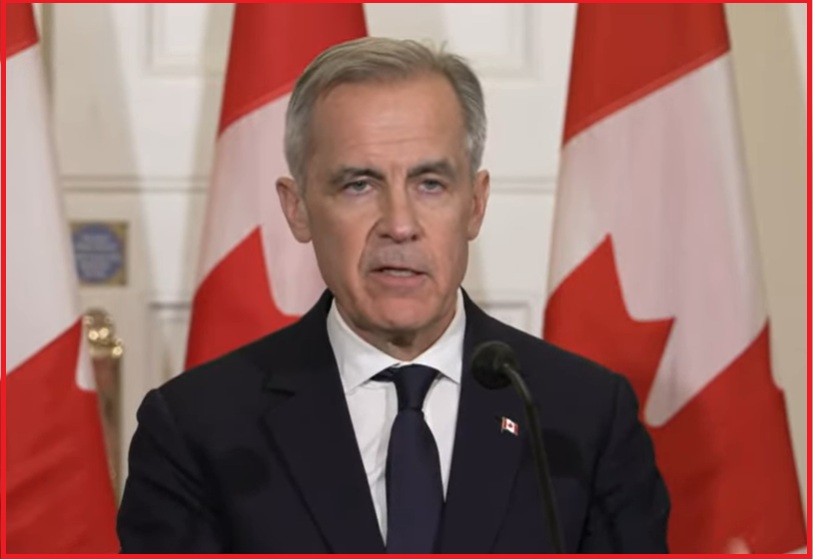
HUNTSVILLE, Ontario — Prime Minister Mark Carney and Canada’s premiers are tempering expectations that they’ll strike a new economic and security deal with Donald Trump by the end of the month.

“We would like to have the ideal deal, as fast as possible. But what can we get?” Quebec Premier François Legault said Tuesday. “You almost need to ask Donald Trump, and I’m not even sure he knows himself what he wants.”

It’s a shift in tone from the premiers and Carney, who ran for election on his economic record, arguing he’d be the best person to negotiate with the president. But Canada is finding it harder than it looks.

Carney met the premiers in Muskoka, cottage country north of Toronto, to update them on Canada-U.S. negotiations.

As the leaders emerged from a three-hour meeting, they downplayed hopes of an Aug. 1 deal, arguing that achieving a “good deal” is more important than hitting a deadline.

[…] As the negotiations continue, the premiers spent Tuesday carving out a strategy to offset the economic impact of Trump’s tariffs on the aluminum, steel, auto and lumber sector. They spoke about developing large infrastructure projects, breaking down trade barriers between provinces and encouraging a “buy Canadian” approach. (READ MORE)

Canada is going to go into a deep economic recession; there’s no way to avoid it.  However, if they restart their industrial base, drop the ridiculous ‘green’ energy stuff, start exploiting their own natural resources and train an apprentice generation -just like we are trying to do- then Canada can bounce back stronger than ever.

We know there are Canadian wolverines who understand this concept; we saw thousands of them in the Truckers’ vaccine strike.  Make Canada Great Again, by Making Dirty Jobs Great Again, eh?

Joe Allen On Geneva U.N. Conference: “None Of The Frontier Labs Were Represented”


Posted originally on Rumble By Bannon’s War Room on: July 21, 2025

Institutions Decreasing Real Estate Purchases


Posted originally on Jul 22, 2025 by Martin Armstrong 

Real Estate

Investors continue to snap up residential properties, as real estate has evolved into an investment class of its own. New reports show that between 2020 and 2023, investors were responsible for 18.5% of home purchases. In the first three months of 2025, investors composed 27% of all residential properties, marking the highest share in half a decade, according to BatchData.

High mortgage rates, coupled with high property values, have caused many would-be buyers to reconsider their purchases. Investors have fewer constraints, leading to the purchase of 265,000 residential properties during Q1, or a 1.2% YoY rise. However, we are seeing a decrease in institutional investments in real estate. The big money is not looking at real estate in this environment. Although investors accounted for 1.2 million homes in 2024, only 20% of the 86 million single-family homes in America are investor-owned.

Mom-and-pop investors who own between one and five homes purchased 85% of all investor-owned residential properties, with those owning between six and ten properties securing 5% of the market. Institutions owning 1,000 or more properties account for only 2.2% of investor-owned homes.

Purchasing real estate amid record-low rates was a no-brainer for investors, and institutions in particular, who had the liquidity to outbid competitors with cash offers. As interest rates rise, the cost of financing becomes prohibitive even for institutions. Institutions rely on leverage to enhance returns, and when borrowing costs rise, the math simply doesn’t work anymore. Real estate is an illiquid asset. In a world moving toward capital controls and rising geopolitical tensions, institutions are reallocating toward assets with more mobility. Capital is no longer looking at real estate as a long-term store of value. It’s moving into tangible assets that are more liquid—commodities, energy, gold, and equities.

The available real estate inventory is at its highest level since the pandemic, but the sector has become stagnant as homes sit on the market for far longer. So while institutions have the capital, interest rates aside, they are not looking at mere rental or flipping income. People investing in real estate in this environment are seeking a modest additional income.

Institutions are not interested in buying and holding tangible assets in a volatile environment where returns are not guaranteed. Look at New York City, for example—people are fleeing ahead of an incoming socialist local government that has promised to raise taxes on top earners. Real estate is no longer the safe bet it once was due to a lack of confidence in future regulation.

Trudeau Redux – Canadian Prime Minister Mark Carney Huddles with U.S. Senators


Posted originally on CTH on July 21, 2025 | Sundance 

In 2018, Canadian Prime Minister Justin Trudeau relied heavily on House Speaker Nancy Pelosi for assistance when the U.S. and Mexico constructed the majority of the USMCA trade pact.  Today, Canadian Prime Minister Mark Carney takes the same approach.

[SOURCE]

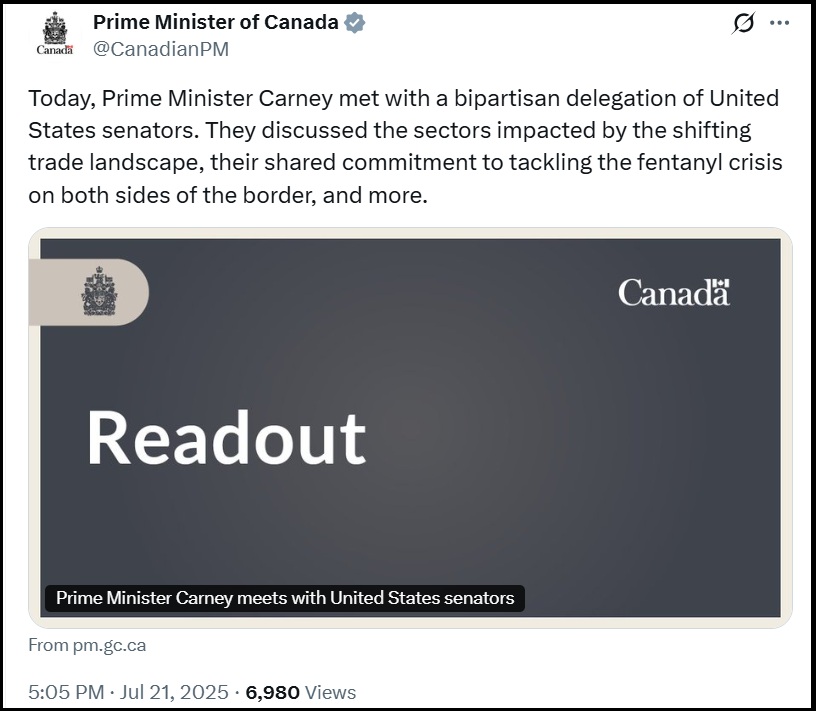
PRESS RELEASE – “Today, the Prime Minister, Mark Carney, met with a bipartisan delegation of United States senators in Ottawa. The Senator for Oregon, Ron Wyden, the Senator for Alaska, Lisa Murkowski, the Senator for New Hampshire, Maggie Hassan, and the Senator for Nevada, Catherine Cortez Masto, were present.” (more)

The 35% tariffs against Canada are scheduled to go into effect on August 1st.

As noted by President Trump in his remarks during Prime Minister Mark Carney’s visit to the White House, Trump plans to renegotiate the USMCA and end the trilateral agreement in favor of two bilateral trade deals.

During the Oval Office meeting President Trump said, “As you know [USMCA] terminates fairly shortly. It gets renegotiated fairly shortly.” Then the biggest statement, “This was a transitional deal, and we’ll see what happens, we’re going to start renegotiating that”… “I don’t know if it serves a purpose anymore.”  …. “And the biggest purpose it served was, we got rid of NAFTA.” 

President Trump is going to exit the trilateral USMCA in favor of two distinctly different bilateral trade agreements between the U.S and Mexico, and the U.S and Canada.  The only consideration now is the timing.  President Trump is 100% focused on the BIG ECONOMIC PICTURE; it’s not about the politics, it’s all about the economics.

The GENIUS Act & Stable Coins – A Repeat of 1863? Debt Crisis?


Posted originally on Jul 21, 2025 by Martin Armstrong 

Stablecoin
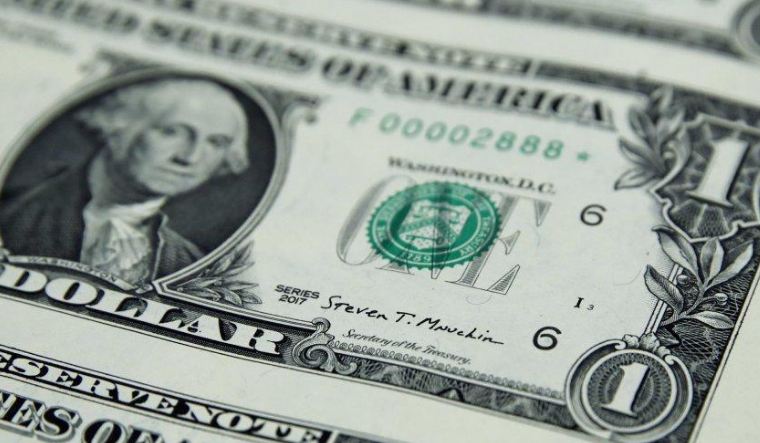
1 Steven Mnuchin signature

The era of stablecoin issuance in the United States and U.S. Senator Bill Hagerty’s GENIUS Act (Guiding and Establishing National Innovation for U.S. Stablecoins) may have the BITCOIN world cheering that this is somehow a validation of Cryptocurrency. The GENIUS Act has been passing with bipartisan support, and people should ask WHY? It is a serious, detailed, and targeted law that understands what stablecoins are and what they offer to the perpetual debt machine, enabling the debt to continue rolling forward in this modern debt-based economy. Many see this as a backdoor for the creation of central bank digital currency and the elimination of paper money, which will enable the government to surveil every transaction for the sake of taxation.\

At its very heart, the GENIUS Act establishes that only licensed and supervised entities can issue payment stablecoins in the United States. These are digital assets redeemable for U.S. dollars at par value, intended for payments and settlements. Therein lies the motive. Under this law, only three types of issuers are permitted:

  • (1) subsidiaries of insured banks and credit unions,
  • (2) specially chartered nonbank firms approved at the federal level, and
  • (3) entities regulated by states whose regimes are certified by the U.S. Treasury as substantially similar to federal standards.

On one level, this is the same scheme as COVID. The First Amendment prohibits the government from interfering in free speech – not YouTube, Facebook, or anyone else the government can call to tell them to restrict your speech. Here, the Fed is not issuing the stablecoins; instead, they are issued privately, but backed by US Treasury securities.

Merkel_Minsk_Buy_Time_to Prepare for wart

Thanks to the Biden Administration that the Neocons ran, they destroyed the world economy by imposing sanctions on Russia for defending Russians in the Donbas that were supposed to have a right to vote on separation under the Minish Agreement that former Chancellor Merkel of Germany later admitted they were buying time for Ukraine to build a NATO trained army to start World War III with Russia.

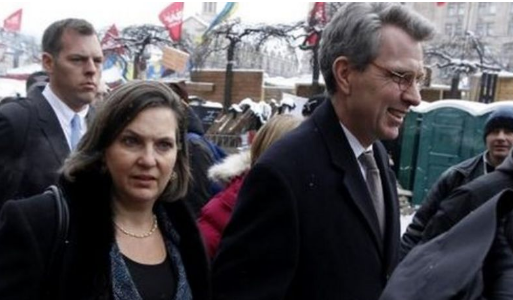
Victoria_Nuland_ Pyatt

The Neocons removed Russia from Swift, coming to the aid of the Donbas, after Victoria Nuland installed an unelected government in Ukraine and instructed them to start the civil war and kill all the Russians in the Donbas.

BRICS Currency

So what does this have to do with the GENIUS ACT? Imposing the sanction on Russia created BRICS, which then threatened to do the same to China if they helped defend Russia. More and more countries realized that they were being dictated to by the Neocons running the Biden Administration. China had held 10% of US debt and began dumping. They would have to be really stupid to hold any US debt when the Neocons only want war and do not consider what they are doing to the world economy.

The GENIUS ACT = Stablecoins and private organizations will issue them and must back them with US Treasuries, as the Neocons, in their quest for World War III, are destroying the global debt markets. The GENIUS ACT aims to replace China et al., who used to buy US debt, all because these Neocons want World War III.

Funny How History Repeats!

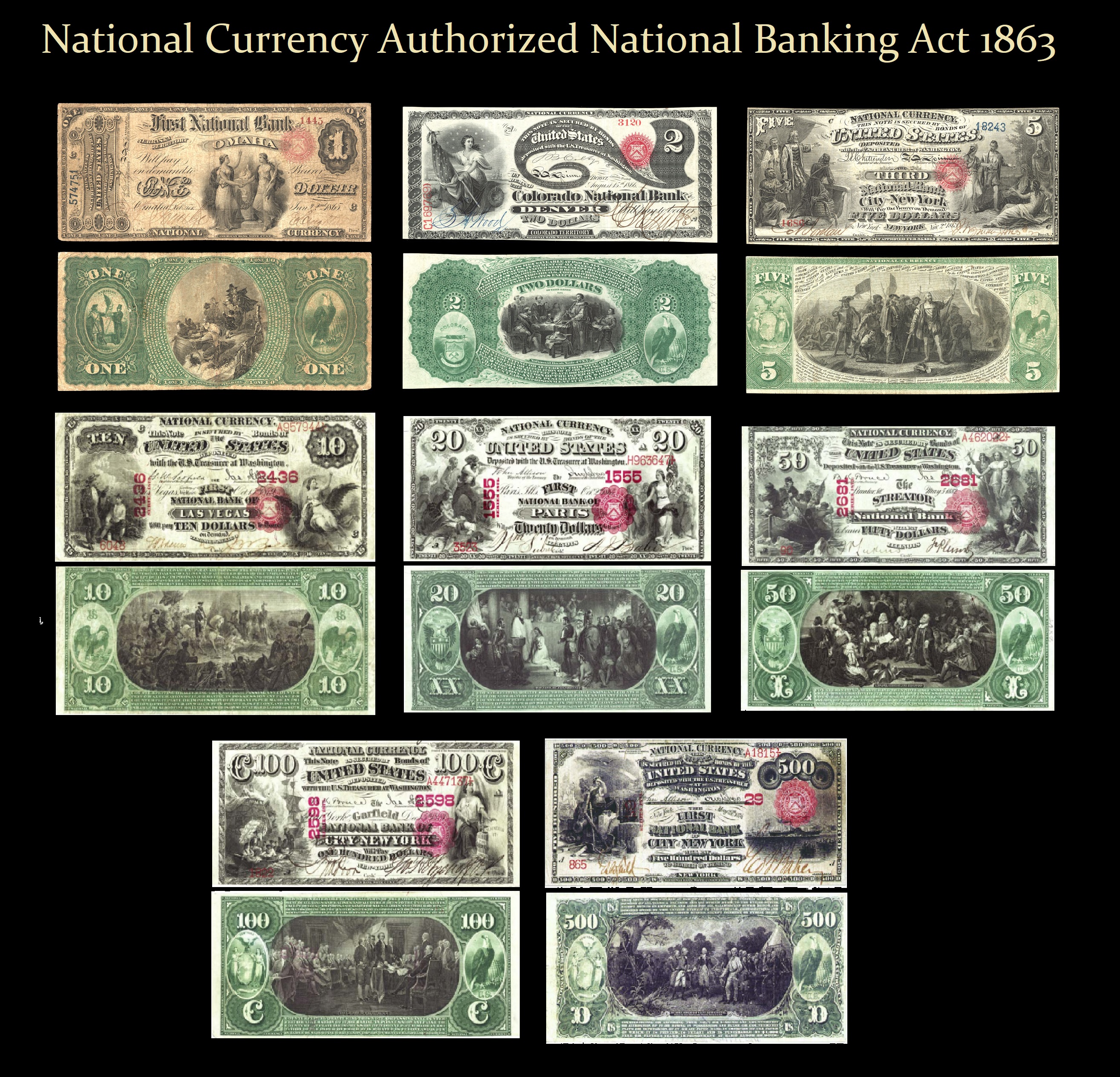
1863 National Currency

The very same concept of how to sell US debt was the solution in 1863. U.S.-issued National Bank Notes began issuing in 1863 as part of the National Banking Act. Banks could issue currency against their purchases of US debt to fund the Civil War. These National Bank Notes were backed by government bonds. Here’s why and how it worked:

  1. To Finance the Civil War
    • The U.S. government needed a stable way to fund the Union’s war efforts. By requiring banks to purchase government bonds to back their currency, the Treasury raised money for the war.
  2. To Create a Uniform National Currency
    • Before 1863, banks issued their own notes (state banknotes), leading to widespread counterfeiting and instability.
    • The National Banking Acts (1863 & 1864) aimed to replace these with standardized National Bank Notes issued by federally chartered banks.
  3. To Strengthen Government Credit
    • By tying banknote issuance to U.S. bonds, the government ensured demand for its debt, stabilizing its finances.
Stabel Coin Dollars

Rob Nelson, co-founder of the Bitcoin Policy Institute, argued that Bitcoin’s distinct position was as a valuable store and, increasingly, a functional currency for several countries. He raised a compelling argument that sucked in a lot of people:

“We have a true store of value and for many countries, it’s becoming a currency, a usable currency. We have something different, we have something special.”

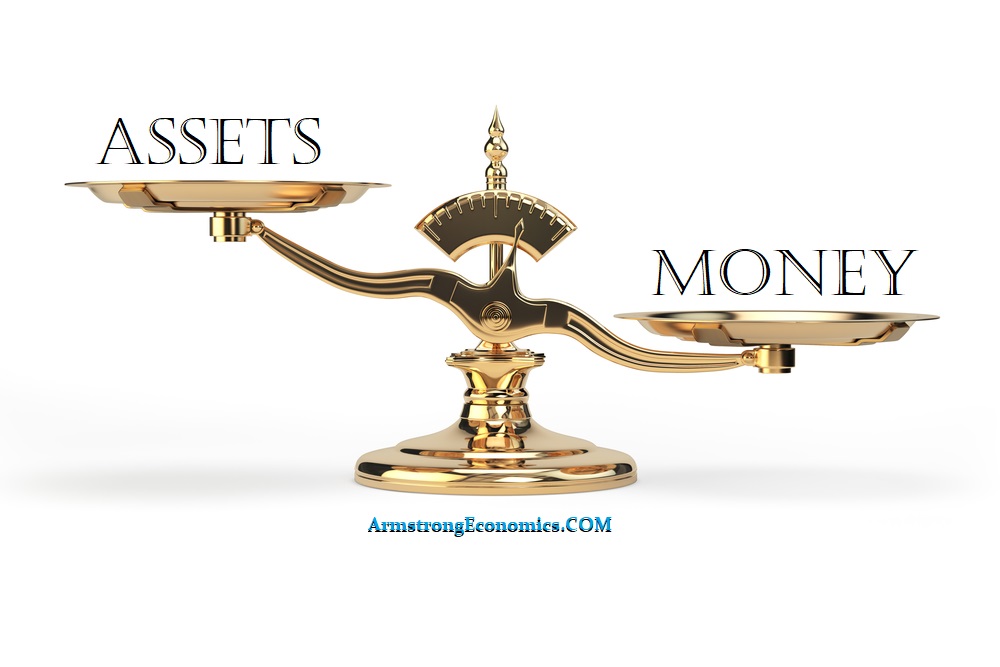
Assets v Money

As I have said, BITCOIN is no more a store of wealth than the dollar, euro, gold, or silver. Everything has a cycle, and everything rises in price and then falls. It does not matter what century we look at, if you do not understand that all tangible assets are on one side of the scale and whatever money is has always been on the opposite side.

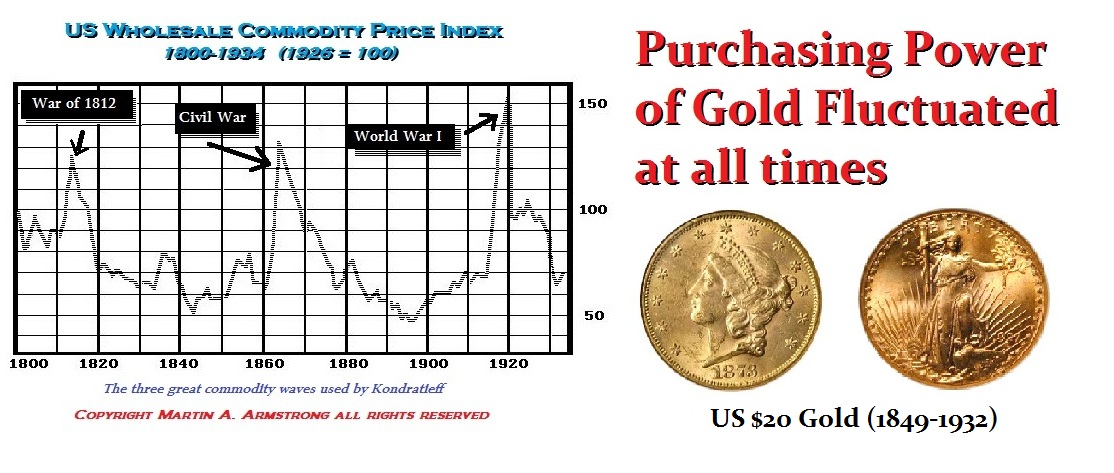
Gold Fluctuated
Taylor Bayard 1825 %E2%80%93 1878

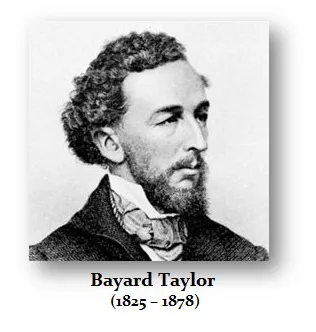
When gold is money, it falls in purchasing power just like paper dollars during waves of inflation. Even under a gold standard, there were periods of inflation and deflation. Read the history of the California Gold Rush. During the 1849 Gold Rush in California, the journalist for the New York Tribune, Bayard Taylor (1825-1878), arrived in San Francisco by ship during the summer of 1849. He was shocked at what he encountered and did not think that anyone would even believe what he was going to write. His dispatches about the gold rush economy in California stunned many and helped to create the 1849 Gold Rush.

The average wage for a laborer in New York was about one or two dollars a day. In California, individual hotel rooms were rented to professional gamblers for upwards of $10,000 a month, which is the equivalent of about $300,000 today. The degree of inflation in terms of gold was astounding and lacks comparison in modern times. There was so much gold that the value of goods rose even though they did not in New York. The inflation phenomenon was local – akin to the Tulip Bubble.

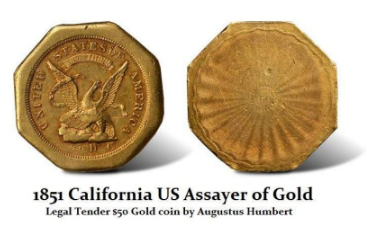
1851 50 Gold California

Gold became so common; they were even striking $50 gold coins in California when $20 was the highest denomination elsewhere and $1-dollar coins down to 25 cents all in gold. Eventually, there were $1 gold coins minted in the United States for general circulation throughout the USA. Indeed, Taylor wrote:

“[One] citizen of San Francisco died insolvent to the amount of forty-one thousand dollars the previous autumn. His administrators were delayed in settling his affairs and his real estate advanced so rapidly in value meantime that after his debts were paid, his heirs had a yearly income of $40,000 [$1.2 million today].

“These facts were indubitably attested; everyone believed them, yet hearing them talked of daily, as matters of course, one at first could not help feeling as if he had been eating ‘of the insane root.’”

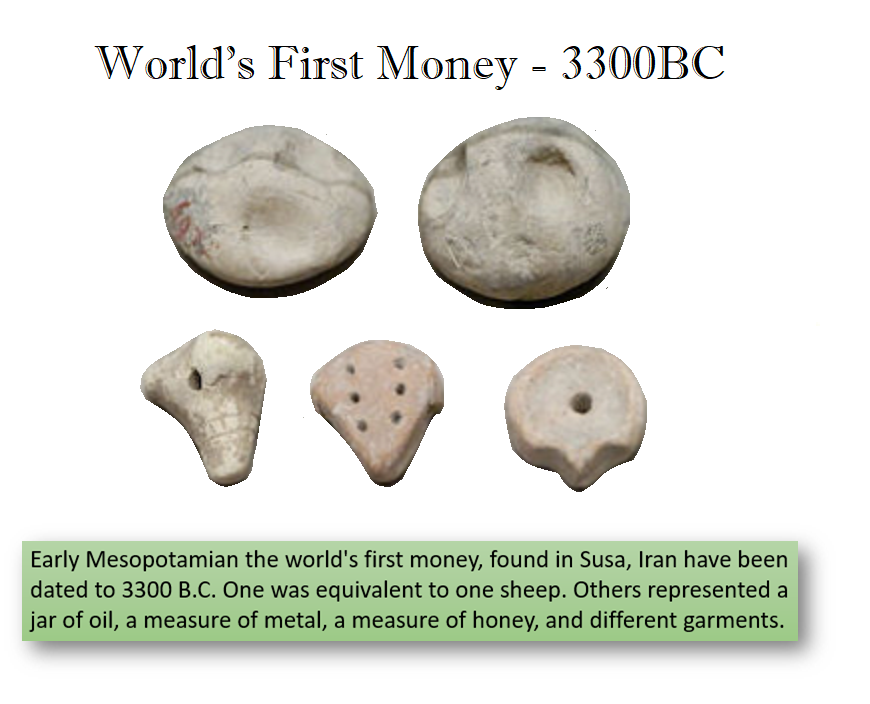
Mesopotamia 3300BC First Money

It does NOT matter what is money. It will always rise and fall as measured against tangible assets as it has done since Babylonian times. In fact, the very first attempt to control inflation, as the central banks are doing right now, was the wage and price controls put in place by the legal codes of the Assyrians and Babylonians. The first money was no different than paper dollars – it was representative.

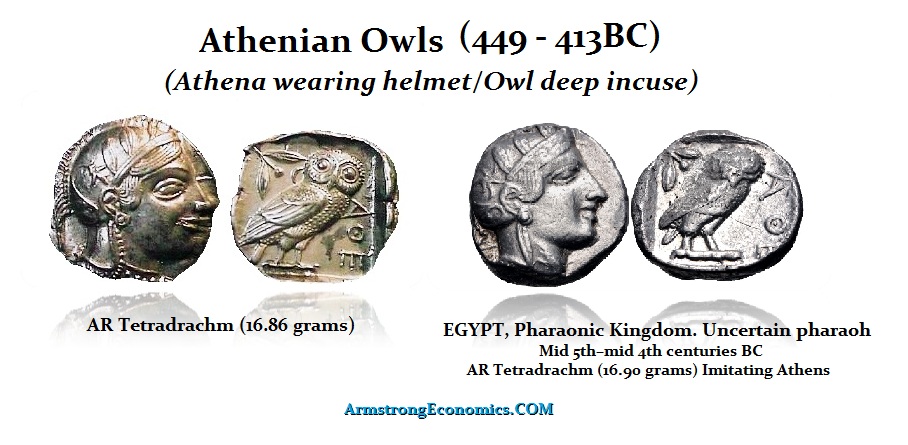
Athens Owl 449 413BC Egyptian Imitation

The coinage of the dominant economy was always the international medium of exchange. Ancient Egypt never issued coins. They imitated Athenian Owls in order to participate in international trade. The Athenian Owls were like the dollar today – the effective reserve currency.

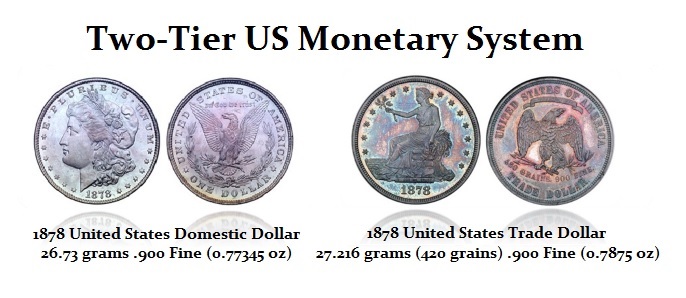
1878 US Two Tier Monetary System

The US had two silver dollars of different weights, which facilitated trade with China, as China had a different silver standard than the West.

SeptimusSeverus India Imitation gold aureus

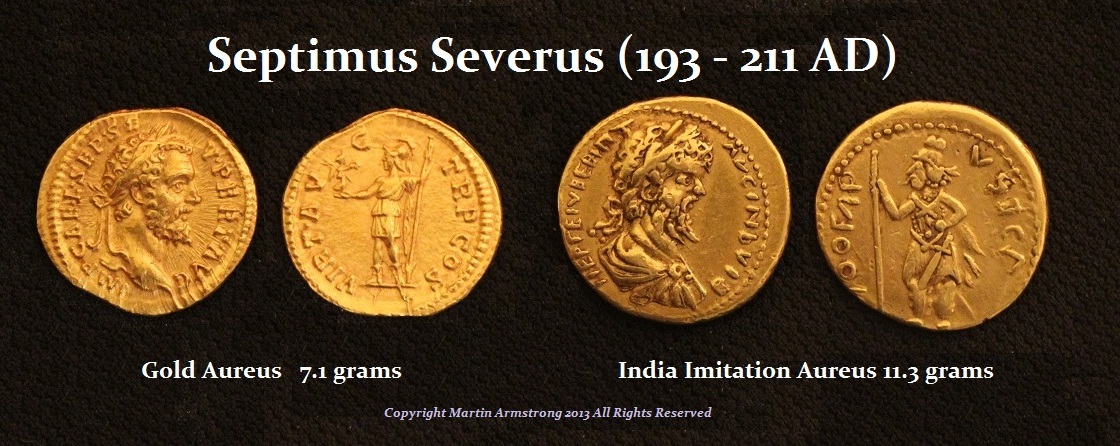
Roman coins have been discovered even in Japan. Trade with India for spices was extensive in the ancient world. Here is an imitation of a Roman gold aureus issued in India, and note that the weight was even heavier than the official Roman standard.

Minoan Ingot Sheep Skin

The notion that simply because coins were made of gold or silver meant they were a store of wealth is laughable when you understand monetary history. The Bronze Age was based on the intrinsic value of bronze for its utility value, where it could be fashioned into a sword or a plow. The first ingots of the Minoans were shaped as sheppskil, for they were relaying that they too were at first representative of the previous medium of exchange. When precious metal became a medium of exchange, silver was more valuable than gold (I will do a report on that).

Valerian I AU Double Aureus bino and aureus
Financial Panic of 260AD

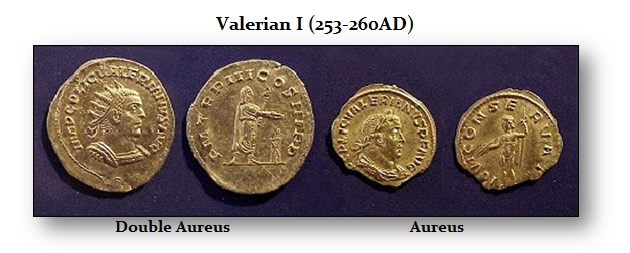
When the Persians captured Valerian I (253-260AD) and Rome could not rescue him, the confidence in the Empire began to collapse. Banks were even suddenly skeptical about accepting Roman coins. Would they still be worth anything, considering they were valued above their actual metal content?

A document from Egypt has survived illustrating the financial crisis that was unleashed. It is from Aurelius Ptolemaeus who is the strategus of the Oxyrhynchitenome. The public officials gathered and accused the bankers of closing their doors on account of their unwillingness to accept the divine coins of the Emperors. It became necessary that an order had to be issued to all the owners of the banks directing them to open and accept and exchange all coins except the absolutely spurious and counterfeit. It was also directed that all who engaged in business transactions who refused to comply would be penalized. (POxy 1411 260AD, cited by Burnett 1987: p104)

cowrie 4

In China, money was cowrie shells. In Africa, money was cattle, which was even the case at first in other parts of the West. The first emergence of silver was typically in the form of wire, and even the Bible discusses weighing silver to pay for a transaction.

MONEY Has always been Representative

It Has Never Been a Store of Wealth, for it has fluctuated

With the Business Cycle.

GENIUS Stablecoins will be representative of US Debt

A New Market thanks to the Neocons Destroying the Global Economy