Posted originally on the CTH on December 31, 2023 | Sundance
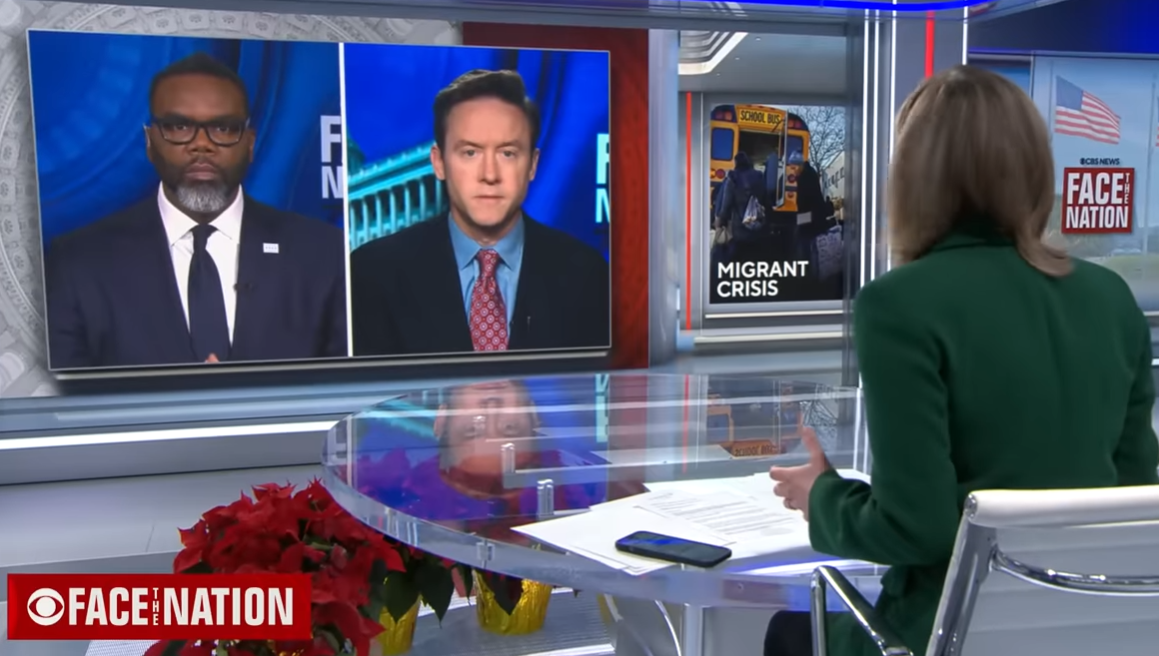
Appearing on Face the Nation, Democrat Mayor Brandon Johnson (Chicago, Illinois) and Democrat Mayor Mike Johnston (Denver, Colorado) discuss the ongoing challenges related to Texas Governor Greg Abbott not retaining all of the arriving illegal aliens in the state of Texas.
Johnson and Johnston both accuse Greg Abbott of sowing chaos in their city, as both mayors are forced to provide essential services and support to arriving illegal aliens in order to maintain the open border policies of the Biden administration. Video and Transcript Below:
It’s beyond progressively typical to see Brennan, Johnson and Johnston blame everyone except Joe Biden.
[Transcript] – MARGARET BRENNAN: For more on how immigration is affecting communities across the U.S., we turn now to two Democratic mayors, Chicago’s Brandon Johnson and Denver’s Mike Johnston.
Gentlemen, welcome to Face the Nation.
BRANDON JOHNSON (D-Mayor of Chicago, Illinois): Good morning.
MIKE JOHNSTON (D-Mayor of Denver, Colorado): Thank you for having us.
MARGARET BRENNAN: Thanks for joining us.
And, Mr. Mayor of Chicago, I want to put to you a question about what seems to have developed overnight. There are reports of a plane from Texas landing in Chicago carrying more migrants that arrived around 1:00 a.m. I’m wondering if Texas officials gave you any heads-up. Who’s on the plane? What happens next?
MAYOR BRANDON JOHNSON: Well, what we have is clearly, clearly an international and federal crisis that local governments are being asked to subsidize.
And this is unsustainable. None of our local economies are positioned to be able to carry on such a mission. And what we have attempted to do is to create structure and some coordination around this humanitarian crisis. And, unfortunately, the governor of Abbott – the governor of Texas, Governor Abbott, is determined to continue to sow seeds of chaos.
And last night and several nights before, a number of buses continue to arrive in the city of Chicago and throughout the country without any coordination. And now he’s taken on this very dangerous task of placing individuals on airplanes and flying them into our various cities. This is certainly a matter of – not just of our national security, but it’s the type of chaos that this governor is committed to administering.
MARGARET BRENNAN: Mr. Mayor, Mr. Mayor of Denver, to be clear here, I know that you have looked at New York and Chicago making decisions to restrict bus arrivals.
Are you trying to take measures in your city to restrict them from even arriving in the first place?
MAYOR MIKE JOHNSTON: No, all we want is a system that is – that is humanitarian for both the new folks that are arriving and for our cities and our city employees.
And so we understand there will be an inflow. We have already had 35,000 migrants arrive to Denver. We have successfully helped them integrate into the country here. What we don’t want is people arriving at 2:00 in the morning at a city and county building with women and children outside in 10-degree weather and no support.
And so we want buses here to do whatever the bus does, which is land at a bus station and a bus stop and hours when we can have staff there to receive them and to direct them toward services. And so we understand the flow is coming. We just want it to be coordinated, and in a humanitarian way, which we think makes it effective for the city and for those newcomers.
So that means things like arriving 8:00 to 5:00 Monday to Friday with notice.
MARGARET BRENNAN: Right.
And I understand that you haven’t been able to get the state of Texas to stop sending people. But when it comes to your party’s leadership, as Senator Graham said, you have asked the White House for more help. Did they respond to your public call?
MAYOR MIKE JOHNSTON: Yes, we’ve talked to the White House. We’ve talked to leadership there. we think they agree on the core needs that we see.
I mean, we think this is a solvable problem. There are key priorities we need. We need federal dollars to help support our work here in the cities. We also need federal dollars for more support at the border, the ability to adjudicate asylum claims more quickly, so they can be done in 90 days, and not in four to six years.
That makes a massive difference. If we have the resources for cities to support us, if we have – when people arrive, we actually have work authorization when they get to a place like Denver, so we can put them to work, which is what they want, and we have a coordinated entry plan, where it’s not just the governor of Texas deciding what cities to send people to, but it’s actually the way we’ve welcomed asylees in this country for years.
MARGARET BRENNAN: Mm-hmm.
MAYOR MIKE JOHNSTON: When we had asylees from Afghanistan or Ukraine, we had federal support, we had coordinated entry, we had work authorization.
MARGARET BRENNAN: Yes.
MAYOR MIKE JOHNSTON: And those efforts worked quite smoothly. America knows how to do this. We think we can do it here.
MARGARET BRENNAN: Right. Those are different programs for those refugees. But I hear your point on the work authorization.
Mayor Johnson of Chicago, did the White House give you what you need in your public call this week?
MAYOR BRANDON JOHNSON: Well, look, I think there’s no secret here that we need comprehensive – comprehensive immigration – immigration reform.
This comprehensive immigration reform would certainly transform this situation. In fact, it solves this – this crisis. What we have said repeatedly is that we need Congress to act to provide the resources that are needed in order to – to carry out this mission.
But what we can’t have is a governor in the state of Texas acting the way he is acting. And, quite frankly, the rogue buses that are being dropped off across this country in the middle of the night, leaving people with – with no real support at all, no coordination with the local municipalities, that type of chaos is – it’s certainly dividing our country.
And we need better coordination between all levels of government to be able to respond to this mission.
MARGARET BRENNAN: When you reach out to the governor – I’m – I’m assuming you have – do you get any response?
MAYOR BRANDON JOHNSON: Well, we sent an entire delegation to the border to see firsthand what’s happening at the border. I have actually spoken with leaders of the Mexican government.
They’re having the same challenges that we’re having here in America. And so there has to be a real coordinated effort to be able to respond to this crisis. Again, putting people on airplanes, and dropping them off in the city of Chicago and Denver, New York, without any coordination, without a manifest, I don’t know how many federal laws or aviation laws he can be violating.
But this type of chaos is not what’s needed in this moment. We need a coordinated effort between all levels of government to ensure that this humanitarian mission that’s an international crisis is met with the type of civility and sanctity that’s required.
MARGARET BRENNAN: Understood.
I mean, I checked the weather and both of your cities. It’s 32 degrees in Chicago. It’s 25 degrees in Denver. I’m guessing someone walking across from Mexico isn’t outfitted for that kind of frigid arrival.
MAYOR BRANDON JOHNSON: Yes. That’s absolutely right.
(CROSSTALK)
MAYOR MIKE JOHNSTON: We say that every day. We have folks arrive in T- shirts and sandals.
MARGARET BRENNAN: Yes.
It’s – I want to talk about this more, but I have to take a commercial break. So, if you would both stay with us. As we do that, I will be right back with you and be back with you all in a moment.
So, stay with us.
MARGARET BRENNAN: Welcome back to FACE THE NATION.
We pick up where we left off with Denver Mayor Mike Johnston and Chicago Mayor Brandon Johnson.
Gentlemen, I do want to pick back up on one of the points you raised.
Mr. Johnston of Denver, the White House says it takes 30 days to process work permits and temporary protected status for – for some of these migrants. You’re saying you need people to arrive ready to work. What happens in that 30-day period? Why is that not fast enough?
MIKE JOHNSTON (Mayor of Denver): Yes, we were grateful for the government’s action, including the secretary’s action, to provide temporary protective status for Venezuelans who arrived before July 31st. We advocated for that. They made that change. That was a huge help.
The challenge now is Venezuelans who have arrived in the last several months are not eligible for that temporary protective status. They often don’t have a path to work authorization and they may have an asylum claim that is three or four or five years in the waiting until the claim is heard. And so the challenge on our city streets, we have folks that are here who whenever I talk to migrants, I was with them yesterday, they’ll just say, I only want one thing, which is the ability to work. And we have employers calling me every day saying, hey, mayor, I have open jobs, can I please hire these folks. But we have folks that right now are currently without a path to work authorization. We’d love to see that path to work authorization expand for more recent arrivals the same way the secretary of health did be possible for those who arrived before July 31st.
MARGARET BRENNAN: And that was done through – through federal authority through the administration. But changing the law would require Congress to – to alter some of these programs. I thought it was interesting, Mayor Johnson of Chicago, you also made the point that when it came to Afghanistan and Ukrainians, they arrived without a problem in your city and that you would like to replicate that program for everyone.
BRANDON JOHNSON (Mayor of Chicago): That’s exactly right. There are 30,000 Ukrainian refugees that are in the city of Chicago right now. The difference is, of course they were fully supported by the federal government and they were able to acclimate themselves and integrate into our economy. We have a number of asylum seekers from Central and South America and the continent of Africa, and the question is, why are we not providing that same support and treatment here?
Look, the bottom line is this, we need Congress to act. And we need them to do it expeditiously. But we cannot have the type of chaos that continues to come from the state of Texas. And, clearly, the governor of Texas, Governor Abbott, is certainly afraid and mad, but he can’t cut his own nose off, right? And so what we’re simply saying, and what I’ve done over a month ago, we provided an ordinance that would ultimately provide some structure and some coordination around when busses should arrive. Should not be dropping people off in the middle of the night in the middle of nowhere without the type of support that’s needed.
MARGARET BRENNAN: Yes.
Very quickly, before I let you go, I read, Mayor Johnson of Chicago, less than two weeks ago a five-year-old boy died after falling ill at a migrant shelter in your city. What state are people showing up in, and what is the health risk here, if any?
BRANDON JOHNSON: Well, our condolences are still with the family, and we continue to pray for the – the – the family who lost their – their child. I’m a father of three. This is just an unimaginable pain.
But what is very clear is that not only are we providing mental health related services, as well as vaccinations and health screenings, and providing medical health care for these families when they arrive the moment, they get off those busses, we’re not seeing that same treatment at the border. In other words, there’s no health screenings, no vaccinations. That process at the border is absolutely raggedy and reckless, but we cannot have a governor who decides that he’s going to cling to the vestiges of Jefferson Davis when we should be pulling to the hopes and aspirations that were left by Frederick Douglas. We have to have a coordinated response to this humanitarian crisis. We cannot allow chaos to dictate and to divide this country.
MARGARET BRENNAN: Well, we will wait to hear from Governor Abbott’s office in response to that.
Have you ever boiled milk? It happens slowly at first, then suddenly all at once…. Slowly AT First (SAF)!
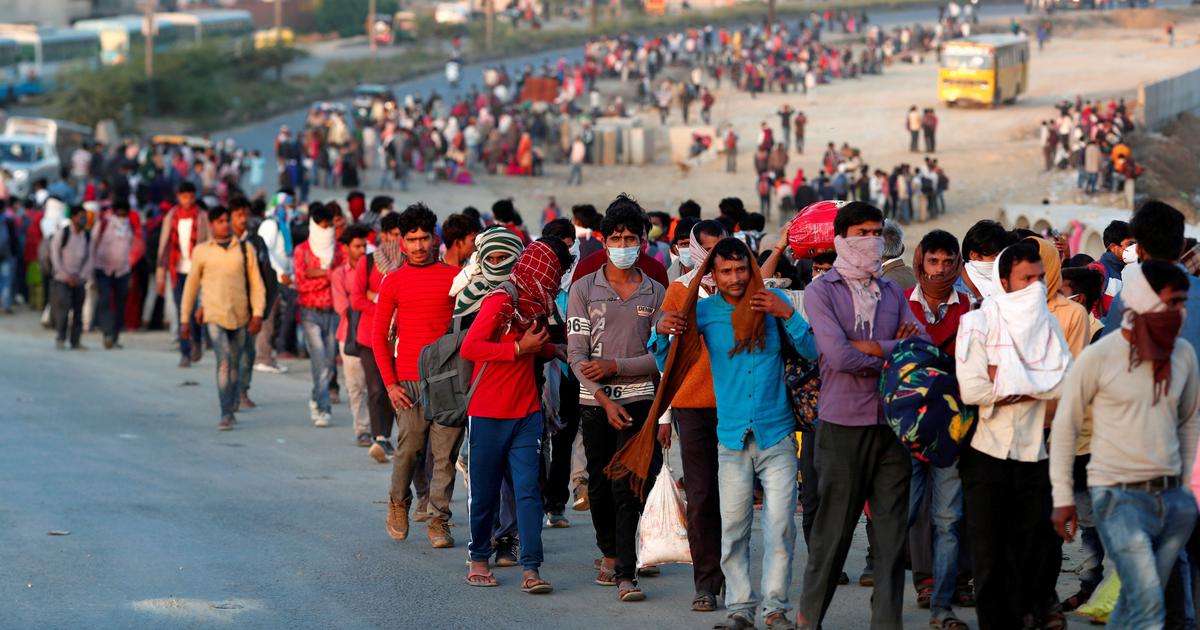
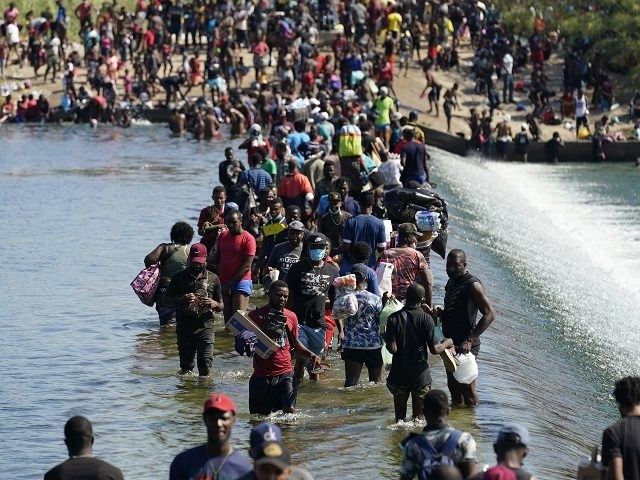
Currently the influx of illegal, unvetted, unchecked and undocumented migrant arrivals into our country is happening at the rate of more than 200,000 every month. That’s three college football stadiums of unknown characters arriving and disbursing each month. These statistics are just the recorded intercepts and releases, this statistic does not include those who found a way through without presentation at the border.
This scale of influx has been happening for almost three years now.
We are beyond the point then the unsecured border is the issue…. With tens-of-millions of unknown migrants seeded throughout the nation, we are now in the consequence phase. We are now in the consequence phase. Repeated, intentionally because so many people just don’t understand what those consequences will mean.
The “fundamental transformation” is proceeding without any impediment. However, now we see various voices in the uniparty politic starting to position themselves, their statements, their expressions, in such a manner as to avoid blame for a situation that is about to explode.
Posted originally on Dec 19, 2023 By Martin Armstrong
European nations were once Christian nations before the demonization of Christianity and traditional values among Anglo-Saxons. The migrant crisis has permanently changed the religious landscape of Europe. In the United Kingdom, for example, Islam is the second-largest religion. In fact, Muhammad was the most popular name for baby boys born in the UK in 2023.
The 2021 England and Wales Census marked the first time that less than half of the population (46.2%; 27.5 million people) identified as Christian. Christianity has fallen by 13.1% since the last census in 2011. The number of people abandoning religion entirely has continued to rise as well, with 37.2% (22.2 million people) declaring they do not believe in a God in 2021 compared to 25.2% (14.1 million people) ten years prior.
Those identifying as Muslim rose significantly from 4.9% (2.7 million people) in 2011 to 6.5% (3.9 million) in 2021. Conservative estimates believe close to 18% of England will identify as Muslim by 2050. However, they are likely not factoring in the current decline of Christianity among England’s youth. The majority of Muslim migrants in the UK (895,137 people) are under 16. Around 414,245 of migrants identifying as Muslim are between 16 to 24, and another 770,949 are between 25 and 39.
Muhammad becoming the most popular baby name of 2023 shows the religious shift in the UK. Religious families have more children than non-religious families, and Muslims tend to have more children than Christians. This trend is not limited to England or Wales. In fact, Pew Research Center believes that Muslim women will have more children than Christian women by 2035, and Islam could become the most followed religion in the world.
Posted originally on Dec 10, 2023 By Martin Armstrong
Wow! 10 minutes after Democrat Governor Katie Hobbs left the closed Lukeville, Arizona port of entry after her tour, hundreds of illegal aliens were escorted into the port! Can’t make this up! I’m here live. pic.twitter.com/el1OWq1b2o
Posted originally on the CTH on December 2, 2023 | Sundance
It is slightly unfair to say this is a Biden issue, because the minefield of verifying employment eligibility has been a weaponized DOJ process since Eric Holder entered the picture as Attorney General. Both wings of the UniParty support the intentional conflict in employment law. The civil rights division of the DOJ now uses a Lawfare concept called “disparate impact” to target any employer who would require employment eligibility verification as a contingency for a job.
Essentially, if you have a work eligibility screening process that disproportionally hits any protected category of person (ie. race, color, national origin, etc.), then the practice creates a “disparate impact” and is therefore unlawful. Example: 100 people apply for a job; 50 of them are Latino. All of the applicants must provide work eligibility documents to process their I-9 form. If more than half the denied applicants are Latino, the demand for the documents creates a disparate impact and is therefore illegal.
Covenant Logistics and Transport Management Services LLC, “routinely discriminated against non-U.S. citizens by requiring lawful permanent residents to show their Permanent Resident Cards (known as green cards) and by requiring other non-U.S. citizens to show documents related to their immigration status,” according to the DOJ filing.
(via AP) – […] That violates a provision of the Immigration and Nationality Act (INA) which says employers must allow workers to present whatever acceptable documentation the workers choose and cannot reject valid documentation that reasonably appears to be genuine and to related to the worker. (read more)
Not a lot of people understand the issue of “disparate impact” and the exact reason why the DOJ and Dept of Labor created the novel legal theory. The DC system, Republicans and Democrats, support illegal aliens holding jobs in the USA – Democrats for ideological reasons, Republicans for their corporate owners.
This issue has existed for 15 years and is the primary reason why illegal aliens find it so easy to work in the USA. Essentially, employers are in a no-win situation. If you hire illegal aliens, you are breaking the law. However, if you disqualify applicants based on their employment eligibility status -and a disparate impact issue exists- then, you are also breaking the law.
(AP) – Chattanooga-based Covenant Transport and an affiliate will pay the U.S. government $700,000 after investigators found the companies violated an anti-discrimination provision against workers who are not U.S. citizens.
The U.S. Department of Justice said in a release Monday that Covenant and its affiliate Transport Management Services LLC routinely discriminated against non-U.S. citizen workers when checking their permission to work in the United States.
That violates a provision of the Immigration and Nationality Act (INA) which says employers must allow workers to present whatever acceptable documentation the workers choose and cannot reject valid documentation that reasonably appears to be genuine and to relate to the worker.
Instead, federal investigators found that between January 2020 and at least August 2022 Covenant and Transport
..routinely discriminated against non-U.S. citizens by requiring lawful permanent residents to show their Permanent Resident Cards (known as green cards) and by requiring other non-U.S. citizens to show documents related to their immigration status.
Employers are required to let workers present whatever acceptable documentation the workers choose and cannot reject valid documentation that reasonably appears to be genuine and to relate to the worker.
Under the terms of the agreement, Covenant and Transport will pay $700,000 in civil penalties to the United States, train their employees on the INA’s anti-discrimination requirements, revise their employment policies and be subject to monitoring by the department.
Employers cannot discriminate against non-U.S. citizens by demanding specific or unnecessary documents from them to prove their permission to work,” said Assistant Attorney General Kristen Clarke of the Justice Department’s Civil Rights Division. “The Justice Department is committed to ensuring compliance with our federal civil rights laws so that non-U.S. citizens with permission to work can contribute their talents to our workforce. (read more)
There are approximately 50 million illegal aliens working inside the USA.
Confronting this issue in the 2024 election will bring out all the aligned enemies, so it’s best for Trump to avoid it.
…”Some 900 asylum seekers from nations including Kenya, Morocco, Pakistan, Somalia, Syria and Yemen have entered Finland from Russia in November, an increase from less than one per day previously, according to the Finnish Border Guard.”…
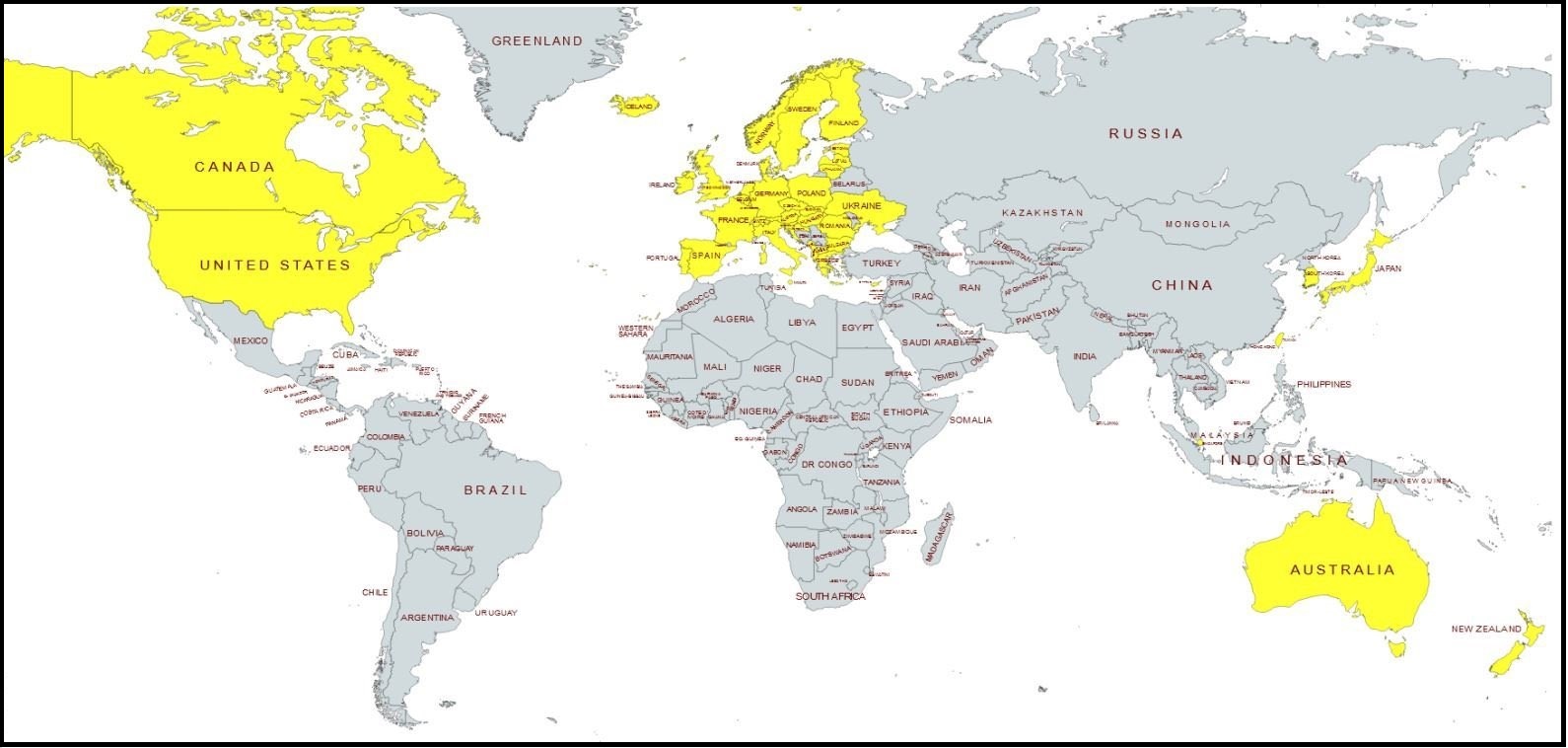
Finland joined NATO and suddenly Finland doesn’t want brown people. Apparently, diversity is no longer a strength.
HELSINKI, Nov 28 (Reuters) – Finland will close its entire border with Russia to travellers for the next two weeks in a bid to halt the unusually large flow of asylum seekers to the Nordic nation, which the government and its allies say is an orchestrated move by Moscow.
Finland last week shut all but one of its border posts to travellers from Russia, keeping open only the northernmost crossing located in the Arctic. But this too would now close, the government said on Tuesday.
Some 900 asylum seekers from nations including Kenya, Morocco, Pakistan, Somalia, Syria and Yemen have entered Finland from Russia in November, an increase from less than one per day previously, according to the Finnish Border Guard.
The decision to shut all eight border crossings means only cargo trains can pass between the two countries, Finland’s Border Guard said.
Helsinki says Moscow is funnelling people to the border in retaliation for its decision to increase defence cooperation with the United States, a charge the Kremlin denies. Finland infuriated Russia earlier this year when it joined NATO, ending decades of military non-alignment, due to the war in Ukraine. (read more)
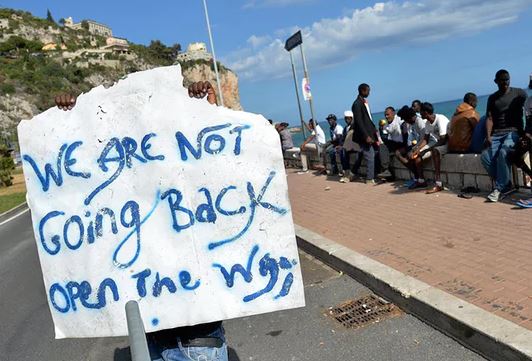
In semi related news #1…. Another 1,000 illegal Muslim immigrants have just invaded Lampedusa [Italy] aboard two huge boats. This follows thousands of earlier arrivals that have created a significant problem.
…. So where do you think President of the Italian Republic Giorgia Meloni is?
Today, the President of the United States, Joseph R. Biden, and the President of the Council of Ministers of the Italian Republic, Giorgia Meloni, met at the White House. They reaffirmed the unshakable alliance, strategic partnership, and deep friendship between the United States and Italy. The ties between Italy and the United States are rooted in history, cultural affinity, and economic cooperation. They are founded on our shared values and principles – democracy, freedom, respect for human rights – reinforced by the shared objective to promote peace and security, enhance prosperity, and advance sustainability all around the globe.
[…] The leaders also discussed ways to explore mobilizing more headroom and concessional finance to boost the World Bank’s capacity to support countries addressing global challenges and provide strong support for the poorest countries. (read more)
If you get beyond the ridiculous leftist language, likely borne from an intern of Samantha Power, you realize President Meloni is desperate for something, anything, that will keep the African migrants from arriving en masse. However, as a weak-minded right-winger, she has been brought to heel and is now culturally aligned with the progressives in Davos.
I ask again, what do you think Russia (and China) are doing in Africa?
Vladimir Putin and Chairman Xi know exactly how to play the long game with the west.
[Fox News] – […] China imports cheap oil from countries facing U.S. sanctions, like Russia and Iran. Imports from Russia increased by nearly 23% in the first half of 2023 to more than 2 million barrels per day. China is Iran’s top customer, buying an estimated 1 million barrels per day in 2023. (read more)
Over 900 thousand migrants have crossed the border legally over the last year and over 600 thousand have crossed illegally. It is estimated at about 105 million migrants to have crossed over the border in just a year according to a Biden- appointed secretary. It has been an ongoing issue of seeking shelter across the U.S while also trying to seek medical attention. According to an article in AP News, there is no system in place to keep record of migrants who seek medical attention. They rely on volunteer doctors to see them. When you have a bunch of people in these shelters, some sick and others not- it is easy to have illnesses spread, and they will spread fast. A rough estimate from Cook County of how many migrants have been treated is around 14 thousand. This is costing the clinic about $2.2 million a month. Said best by Garcia, whom works for the Migrants Clinitians Network, “You have what were essentially healthy people put in really remarkable circumstances, where they are not able to survive thoroughly and then they come across (the border) in a really compromised state.”
The way that we should be looking at this is- why open borders and not have specific plans and guidelines set in place for these migrants? I just do not understand how 1.5 million people, both legal and illegal, can come into the U.S when we can’t even get my employees in the country from Europe. Cities like Chicago are dealing with a huge surge of migrants, most of which are sleeping in tents on the streets. Mayor Brandon Johnson has said that he will be flying out to Washington to speak with the Biden Administration, seeking for them to help out more during this crisis. It is a bit crazy to realize that the Biden Administration were the ones to open up these borders yet have not administered much help for the after effects. Our government does a really good job at sticking their noses in other countries before even helping out our own country.
Posted originally on the CTH on November 5, 2023 | Sundance
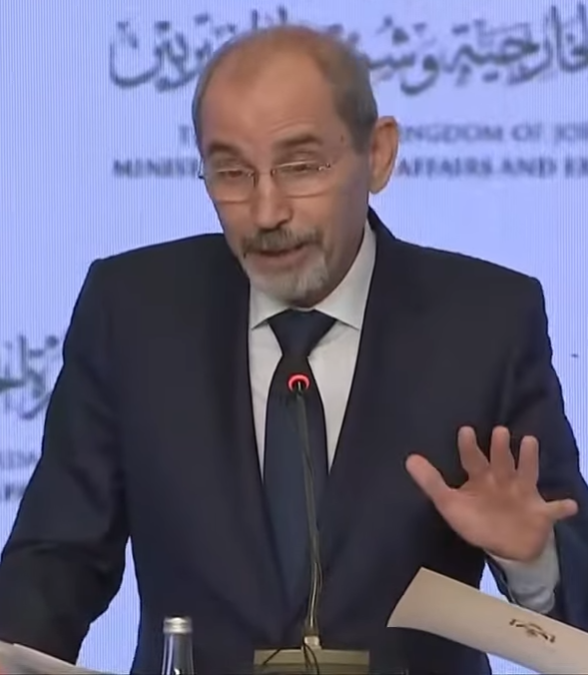
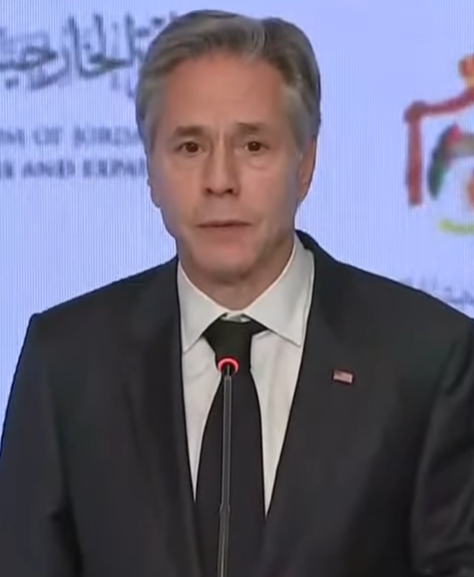
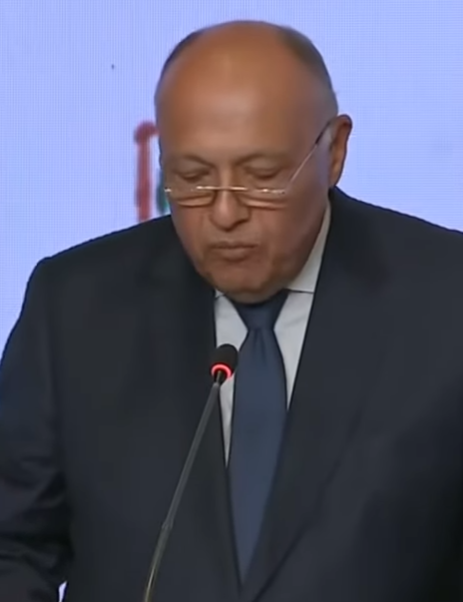
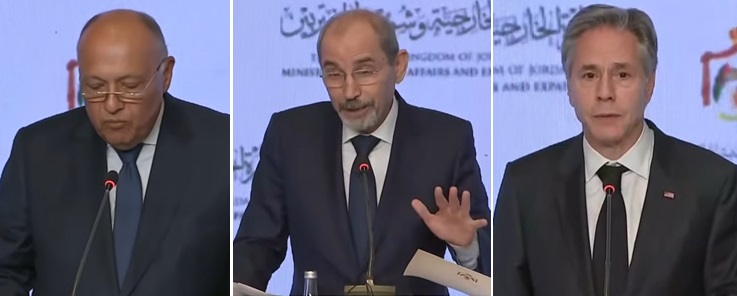
U.S. Secretary of State Antony Blinken, Egyptian Foreign Minister Sameh Shoukry, and Jordanian Deputy Prime Minister/Foreign Minister Ayman Safadi hold a joint press conference at the conclusion of their discussions. The video and transcript are below.
Overall, the Egyptians and Jordanians want a cessation of hostilities, an end to the bombing and Israeli war response against Hamas. In part they appear motivated by concerns of regional instability; in part they seem driven toward resolution because they do not want life-long radical Palestinian jihadists crossing into Egypt and Jordan; and in part it’s because their country was not attacked.
I find it interesting that none of the remarks in the group mention the influence of Iran at all. The U.S. and Israel talk about the influence of Iran when speaking individually and together; but add an Arab country into the discussion and Iran is never brought up.
JORDAN – DEPUTY PRIME MINISTER SAFADI: Good evening to you all. I’ll start in Arabic and then I’ll switch to English if you don’t mind. So —
(Via interpreter) In the name of Allah, Most Merciful, Most Gracious, I welcome Their Excellencies Sameh, Tony and the other colleagues, the foreign ministers of United Arab Emirates and Qatar and Saudi Arabia, and the secretary general of the Palestinian Liberation Organization, at this hardship – at this extremely difficult time, a time that reflects that – reflect our interest to protect our peoples from the destruction of war and to work together continuously to stop this disaster that erupted on the 7th of October and actually evolved into the war that Israel is waging against Gaza.
And our speech today was honest, was direct, was comprehensive and in-depth, and with all transparency. It has reflected the Arab and the U.S. stances in what is – should be done immediately to end this catastrophe. But it ascertained also the mutual keenness to our involvement actually to stop what we can describe as a catastrophe that will haunt the region for generations. And we all want just and comprehensive peace on the basis of the two-state solution as a path for ensuring the security of the region, of the Palestinians, of the Israelis, and the peoples of the region.
And also, there were points of meeting and these points of agreement between the U.S. and the stances that the Arab foreign ministers have actually expressed, and these points included the necessity to – the importance of delivering humanitarian assistance, enough humanitarian assistance, to Gaza, and protecting civilians; the importance of abidance to the – our international humanitarian law and the international law, and the rejection of the displacement of Palestinians, of their land.
And as we said before at the Arab League – and we in Jordan and all the Arab countries – we consider that this is a war crime that we will stop with all our strengths. The Arab countries, the Arab world demand an immediate ceasefire that will end this war and end the killing of the innocent and the destruction it is causing. And we don’t accept that it is a self-defense; it is a ranging war that is killing civilians, destroying their homes, their hospitals, their schools, their mosques, and their churches. It cannot be justified under any pretext, and it will not bring Israel security; it will not bring the region peace.
The killing must stop, and also Israel immune from committing war crimes must stop. And please allow me now to switch to English and speak.
(In English) We cannot allow this war to undermine all that has been done to bring about just peace to the region. With every missile unleashed on Gaza, with every killing of a Palestinian child – and Israel has killed in this war more children than all global conflicts did since 2019 – the whole region is sinking in a sea of hatred that will define generations to come. That is already starting to manifest itself in expressions and acts of hatred in the region and, to be honest, in the deplorable acts and expressions of Islamophobia and Anti-Semitism. And that’s something that we all stand against unequivocally on principle and in accordance with our human values.
This is not a religious war. It’s not a war between Muslims and Jews. This is defined in its context and all our values – Muslim, Christian, Jewish, all other human values dictate that we work for peace and we stop this madness and we do not allow for the very dangerous dehumanization that we see.
Rage cannot and should not be allowed to destroy the lives of millions of people. We understand that there is pain. Nobody in their right mind will belittle the pain that was felt by Israelis on October 7th and that’s being felt by Palestinians – all of us – it doesn’t matter who we are – Arab, Muslims, Christian, Jews, human beings – and that pain cannot be belittled. But again, we cannot allow rage to determine where we go forward. We condemn the killing of all civilians. We condemn the killing of Palestinian civilians, we condemn the killing of Israeli civilians – on October 7th and before and after regardless of nationality, as I said.
We are extremely worried on this – our situation in – on the West Bank – again, killing and violation of international law cannot continue there. Settlers should not be allowed to rampage Palestinian communities and kill innocents in the West Bank. Israeli soldiers who brought despicable humiliation to Palestinians after illegally detaining them should be held accountable.
Palestinians and Israelis deserve to live in peace with dignity, with security and freedom from occupation and freedom from fear. Only a just and lasting peace that fulfills the right of the Palestinian people to freedom, their sovereign state with East Jerusalem as their capital and (inaudible) 1967 lines, living side by side. A secure Israel will bring security to all.
The priority now is to ending this war, to saving innocent lives, to preventing further destruction, restoring hope, and to stopping the very dangerous dehumanization. All lives matter to all of us.
And Mr. Secretary, dear Tony, the U.S. has a leading role to play in these efforts. And on it and on all of us fall the very heavy responsibility of ending this catastrophe, achieving the just peace that is the right of every Palestinian, every Israeli – mother, child, father – and that will ensure that none of them or any other in the region will ever have to live the horrors that this vicious cycle of violence and war is bringing.
We will continue to work with you and with all of our partners to fulfill this responsibility to make sure that our common human values prevail, international law prevails, and peace for all prevails. Thank you so much. If I now may give to floor to you, Tony?
USA – SECRETARY BLINKEN: Thank you. Good afternoon, everyone, and let me first say that I’m grateful to His Majesty King Abdullah, to Foreign Minister Safadi, Ayman, and his entire team for their hospitality, and for the opportunity to be with Foreign Minister Shoukry and also with Foreign Minister Faisal bin Farhan, Prime Minister Al Thani, Foreign Minister Abdullah bin Zayed, and Secretary General Hussein Al-Sheikh.
We appreciate the engagement of every country, and we’re particularly grateful to Jordan and to Egypt, two partners who have long worked to advance a two-state solution, for their dedication to a more stable and to a more peaceful Middle East.
We’ve come together here today sharing the same fundamental interest and objective: to end this conflict in a way that ensures lasting peace and security in the region. We may have different views and positions on certain necessary steps to achieve that objective, but today we reaffirmed our individual commitments to continuing to work toward that end, an end that we share.
Throughout this conflict, countries across the Middle East – and beyond – have played an essential role in preventing its spread. Today, we all agreed on the importance of using our respective influence and capabilities to deter any state or non-state actor from opening another front in this conflict or taking other destabilizing actions. All of us have a direct interest in this.
Our joint efforts have also been critical in increasing the flow of humanitarian assistance to Gaza. I am particularly grateful to Egypt for its significant efforts to facilitate a mechanism with Israel and with the United Nations to do just that. Each day, more than a hundred trucks are moving to Rafah, up from zero just a little over a week ago. But that is not nearly enough.
Today, we spoke about ways to accelerate and expand the sustained delivery of aid. This morning, I had an opportunity to meet with Commissioner General Lazzarini of UNRWA and I spoke with UNRWA staff that is located in Gaza. I heard firsthand about the extraordinary lifesaving work that they are doing in Gaza in the face of extremely difficult conditions, and how we can expedite efforts to get assistance to them so that they can get it to the Palestinian people.
We’re also working to continue the progress we’ve made in getting our citizens, other foreign nationals, critically wounded people out of Gaza. But even as we welcome their safe exit, we remain resolutely committed and focused on securing the release of hostages held by Hamas. I had the opportunity to discuss this, the status of our ongoing efforts, with Prime Minister Al Thani this morning.
We all spoke today about the clear need to protect Palestinian civilians. The United States supports Israel’s right to defense against Hamas, a terrorist organization that attacked it brutally and that cares not a whit about the Palestinian people or their futures. This is the same right that each of our countries has. But as Israel conducts its campaign, how it does it matters.
Israel must take every possible measure to prevent civilian casualties. In my meetings with Israeli officials yesterday, I conveyed additional steps that they can and should take to do just that. Protecting civilians will help prevent Hamas from further exploiting the situation. But most important, it’s simply the right and moral thing to do. When I see a Palestinian boy or girl pulled from the wreckage of a building, it hits me in the gut just as it hits everyone’s gut, and I see my own children in their faces. And as human beings, how can any of us not feel the same way?
This morning, I heard from the UNRWA staff in Gaza, many of whom are displaced themselves, about the immense human toll this conflict has taken – for UNRWA itself, they’ve lost 77 of their colleagues who were there simply trying to provide people with their basic needs – the trauma of being under constant bombardment and in constant danger, the inability to assure their own children that nothing will happen to them.
What we have to do more than anything else – all of us, everyone concerned – is to prevent the dehumanization of each other. If we don’t do that, then we do exactly Hamas’s work for it. So we have to look out for each other. We have to look out for every innocent life.
Now, the United States believes that all of these efforts would be facilitated by humanitarian pauses. We believe pauses can be a critical mechanism for protecting civilians, for getting aid in, for getting foreign nationals out, while still enabling Israel to achieve its objective: defeat Hamas. Yesterday, I spoke in depth with Israeli leaders about how, when, and where such arrangements could be implemented, and what needs to be done to make them possible. Today, regional partners discussed many of these same questions.
We’re all deeply concerned about escalating extremist violence against Palestinian civilians in the West Bank. This has been a serious problem that’s only worsened since the conflict. I updated ministers today on my discussions with- throughout the Israeli Government yesterday, where I underscored that incitement and extremist violence must be stopped – and perpetrators must be held accountable.
As we work together to address each of these immediate challenges, we also have to concurrently work to build a secure and lasting peace. And for that to happen, we have to create the conditions to ensure that we do not find ourselves in the same place just weeks or months from now.
We had substantial discussions today about our shared interest in creating the foundation for durable security and for enduring peace. The United States continues to believe that the sole viable path is a two-state solution, with Israelis and Palestinians each exercising their legitimate right to live in a state of their own, with equal measures of security, freedom, of opportunity and dignity. And we discussed some of the meaningful and practical steps we might take to help advance that proposition to get us there.
The United States and our partners will have different views on how best to advance or achieve these steps, but we all recognize that we cannot go back to the status quo. And we all understand that we not only have an interest, but a responsibility, to do everything we can to chart a better path forward together.
Now, none of us are under the illusion that this will be easy, particularly our partners from Egypt and Jordan, who have for decades worked to facilitate a real peace. But it’s precisely now – when the stakes are highest, and even when the outlook seems darkest – that we have to intensify our work to meet this moment.
EGYPT – FOREIGN MINISTER SHOUKRY: Thank you so much. (Inaudible)
(Via interpreter) My brother Ayman, my friend Tony, ladies and gentlemen, I would like to thank His Excellency Mr. Ayman Safadi, the Minister of Foreign Affairs and Expatriate Affairs.
Ladies and gentlemen, our meeting you is to discuss the developments of the crisis in Gaza and give room for the Arab countries involved to express their positions toward this crisis. I was keen through this meeting to explain the vision or the position of Egypt that is consistent with our Arab brothers, and I stressed that we need to take time into consideration and look at the development.
The unfortunate killing events in Gaza cannot be justified. We would not accept to go into an argument or accept the justification of these practices as considered against the – our right to self-defense. The collective punishment – Israel targeting innocent civilians and facilities, medical facilities, paramedics, in addition to trying to force migration for Palestinians to leave their lands – this cannot be a legitimate self-defense at all.
Egypt is exerting it all efforts to guarantee that delivering aid to the Gaza Strip and help treating the civilians wounded, and we will continue our efforts in spite of all the obstacles we are facing.
In this regard, I would like to ask for an immediate and intensive ceasefire in Gaza without any condition, and that Israel would stop what its – its violations of the international law and the laws of war. And we need to double our work to deliver humanitarian aid as soon as possible with quantities that would meet the needs of the Palestinians, and with open space to talk later on how to come out of this crisis before it gets broader and the conflict would inflict all the peoples of the region and go through a dark tunnel.
I also reiterated that we should not deal with this crisis of international peace and security in a double standard where, while some are condemning targeting civilians and describing this as a gross violations of humanitarian law and to adhere to the demands of a ceasefire, while we find that they are opposed the same principles for the same people when things are related to the Palestinian cause, as if the Arab blood is lesser than the bloods of other people, although that the numbers of people who were killed from civilians in Gaza over the last few weeks, including working in relief and journalists, cannot be justified any way.
And in this regard we are still asking for an immediate ceasefire and that Israel would stop hindering the delivery of humanitarian aid. And we also all demand an international investigation for these violations of the international law in this war.
And finally, what we are witnessing of an escalation and the human tragedy and suffering of civilians as a result of not addressing the deep root of the problem and to address the rights, of the Palestinian rights. I reject any attempts to (inaudible) the Palestinian cause, and I ask that we need to work as soon as possible to revive the peace process based on the two-state solution and end the Israeli occupation and establish a Palestinian state based on the lines of the fall of July 19 – and its capital East Jerusalem.
JORDAN – DEPUTY PRIME MINISTER SAFADI: Thank you, Tony. Thank you, Sameh. I’m sure the three of us would love to stay and answer all your questions, but we really have a very, very tight schedule still ahead of us, so we’ll take just a very, very limited number of questions, and I’d appreciate it if all our colleagues could just limit their intervention to one question and one question only.
(Inaudible), can you please —
MODERATOR: “Shukran”, (inaudible). (Inaudible) Khaled Issawi of AlSharq AlAwsat.
QUESTION: (Via interpreter) My question to Mr. Sameh Shoukry: Perhaps today’s meeting was at a very important time and attended by the ministries of foreign affairs of important countries that are very influencing the Palestinian cause. Do you feel that American – the American administration is able to stop the aggressions against civilians in the Gaza Strip, or did the American side during this meeting has offered any roadmap or any map to resume the peace process or to – or end the current crisis? Thank you.
EGYPT – FOREIGN MINISTER SHOUKRY: (Via interpreter) Thank you very much. I think it’s inappropriate for me to talk about the U.S. position in the presence of the U.S. Secretary of State. I believe we had a very comprehensive and transparent conversation and with countries that share the desire to work effectively to contain this crisis and to put down the foundations and solutions that would spare the region from these conflicts that allows us also to talk about and deal with all issues using the same measures, and to protect civilians and to ensure the flow of humanitarian assistance, and also to deal with the root causes of the crisis, which is the failure to implement decades later the agreement to establish a two-state solution given that this would put an end to the conflict and end the enmity between the two parties and would mitigate all the threats related to that.
We always look forward to work closely with the U.S. We have a strategic relationship with the U.S. and we appreciate the capabilities available to the U.S. There was interest and very clear interest that we reached, and we will work in the future to translate these ideas and visions into a reality on the ground to contain this severe crisis and humanitarian crisis. All efforts should be – should come together and to work positively and end this conflict, not just even end this crisis but also the root causes of the conflict.
MODERATOR: (Inaudible.) Simon Lewis of Reuters.
QUESTION: Hi, thank you. One question, but I’d appreciate an answer from all of you, if possible.
To the Egyptian and Jordanian ministers specifically: Are you engaging in talks about the future of Gaza, a future of Gaza without Hamas, and what role you can play in that future?
And to Secretary Blinken: How do you respond to the calls from your allies here for a ceasefire, and are you hearing – are you finding receptive ears for your calls to talk about Gaza after Hamas?
USA – SECRETARY BLINKEN: Simon, thanks very much for the question. It’s our view that a ceasefire now would simply leave Hamas in place, able to regroup and repeat what it did on October 7th. And you don’t have to take my word for it – just a few days ago, a senior Hamas official said that it was their intent to do October 7th again and again and again. No nation – none of us – can accept that. No one would find that palatable.
And so it is important to reaffirm Israel’s right to defend itself, indeed its obligation to do so, and to take necessary steps so that October 7th can never happen again. But it’s also very important the way Israel does that – and that’s what we’ve talked to the Israeli Government about – with taking every possible measure to protect human life, to prevent civilian casualty, as well as to ensure that those who are in need have the assistance that they need.
To that end, I think we all share deep concern about the plight of civilians in Gaza – men, women, and children who need the most essential things to get by. We’ve worked very hard to make sure that that assistance can flow to them. But it’s also one of the reasons why a humanitarian pause would be so important to make sure that we can maximize the assistance getting to the Palestinians, that we can make sure that people can move about safely, that they can get to places where they’re safe, and that, again, we can make sure that not only is aid flowing in but those who are responsible for distributing it get in, the right structures can be built to make sure that people can benefit from it.
So we’re focused on this and we’ll continue the work that we’re doing together with our partners to make sure that that assistance can get there.
JORDAN – DEPUTY PRIME MINISTER SAFADI: Thank you, Tony. Sameh?
EGYPT – FOREIGN MINISTER SHOUKRY: As related to the issue of a ceasefire, it is our position that the ceasefire is imperative to deal with the consequences, the humanitarian consequences of this conflict. And we believe that dealing with the various components of this crisis should be dealt with as well in an appropriate manner.
It is the international community’s responsibility always to seek the cessation of hostilities, not to promote the continuance of violence, military activity that has a very dire impact on the well-being of the civilian population in a very restricted area and which has specific and special characteristics like Gaza.
As for the issue of the future of Gaza, we believe this is premature at this time. We have to concentrate on the subject at hand, whether it be the cessation of hostilities, addressing the humanitarian needs of the people of Gaza, addressing the issues of displacement and the provision of safety for the civilians, and addressing the overall context of the conflict. We believe that at this stage, those are the issues that we need to concentrate on. Thank you.
JORDAN – DEPUTY PRIME MINISTER SAFADI: Thank you, sir. We are focused right now on stopping this war, stopping the destruction it’s causing, stopping the killing that it’s caused.
What happens next? How can we even entertain what will happen in Gaza when we do not know what kind of Gaza will be left after this war is done? Are we going to be talking about a wasteland? Are we going to be talking about a whole population reduced to refugees? Simply we do not know – we do not have all the variables to even start thinking about that.
I think we need to focus now on stopping this war so at least we have a – we start even to begin to imagine the kind of miserable reality that will exist there. And after that, let me just be very, very clear: Gaza alone would just not cut it. We’ve been through security treatment of the conflict before. Where did it lead us? The only way going forward to achieve what we all want, which is a just and lasting peace that protect the rights of all, is to look at the comprehensive conflict, look about bringing the two-state solution back and realize it as soon as possible, convincing the Palestinians that they have a future, and – and again, creating conditions different from the miserable conditions of despair and anger and hatred and occupation in which the – this just – a cycle of violence erupted.
So I think we need to get our priorities straight. Right now we have to make sure the war stops. Right now, we have to make sure that we bring in sufficient – enough food and water and medicine and fuel to Gazans, because with every minute of delay, a child or a woman or (inaudible) is dying because they don’t have access to these basic services. So after that, again, we have to look at the comprehensive picture. We have to make sure that we do not contribute to creating the same conditions that – in which this violence erupted, and I think we are all committed to working together on that. As we always say, the United States has a leading role. We need that role. The rest of us will have to do our part as well. Everybody will have to do their part, again, to make sure that we bring security and peace to the Palestinians and to the Israelis.
(Inaudible.)
MODERATOR: “Shukran. “Iyad AlFodouli, Al Mamlaka.
QUESTION: (Via interpreter) Your Excellency, Mr. Blinken, why don’t – doesn’t Washington exert pressure on Tel Aviv to cease the war and stop it and allow for – and allow for delivery of humanitarian aid after all what happened?
USA – SECRETARY BLINKEN: Thank you. We are intensely focused on the delivery of humanitarian assistance. On my last trip to the region, I spent considerable time with the Israeli Government and then in consultation with the Egyptian Government, the United Nations on establishing a channel to make sure that we could get assistance into people who needed it in Gaza. And as I mentioned a short while ago, whereas just a little over a week ago nothing was getting in, we had zero trucks moving in, today I think we had 105 trucks move into Gaza with essential needs for people.
But as I also say, and as we all agree, that is not nearly enough. So what we’re working on now is expanding that access, making sure that more is getting to people who need it, and that we have the structure in place to be able to absorb it, to use it, to distribute it effectively. This is exactly what we’re doing. When I was in Israel yesterday, this was a big focus of my conversations with the Israeli Government. And it’s also, as I mentioned, one of the reasons why we think it would be important to have humanitarian pauses. That would further facilitate the ability to deliver aid, and not only to deliver aid – again, to expand the aid that we’re delivering.
So we’re looking to that. We agreed with the Government of Israel yesterday to look at how that might happen. There are a lot of questions that have to be answered about how to make that work, so we’re focused on doing that. But again, we have been intensely focused on getting humanitarian assistance to people who need it in Gaza.
JORDAN – DEPUTY PRIME MINISTER SAFADI: Last question.
MODERATOR: (Via interpreter) Tamer Smadi from Al Jazeera channel.
[NOTE: Al Jazeera = Muslim Brotherhood]
QUESTION: (Via interpreter) Tamer Smadi, Al Jazeera. My question to Mr. Blinken: After around one month of the Israeli war on Gaza, what are the results that Israel has achieved except killing around 10,000 civilians, most of them children and women? What are the results that Israel has achieved, and what is the number of victims exactly, of civilians, that would make the United State to stop and think and look at this most open massacre and to ask Israel decisively to stop this bloodshed in the Gaza Strip?
USA – SECRETARY BLINKEN: What took place on October 7th defies almost the human ability to digest or describe. And I think for many that day has receded in their minds and in their consciousness, but I can say this and I’ll say it again: Not a single one of the countries represented here or that met together today, or for that matter pretty much any country in the world, would simply accept the slaughter of its citizens and do nothing about it.
So we maintain again that Israel has a right and indeed an obligation to defend itself and to try to take the steps necessary to ensure that what happened on October 7th never happens again. But equally, it is very important how Israel does it, and in particular it’s important to take every possible measure to protect civilians and prevent harm to them, as well as to ensure that those who need assistance get it. And in our conversations with the Israeli Government, including just yesterday, we have pointed to steps that they could and should take to minimize harm to civilians, to prevent civilian casualties.
Now, this is also an extraordinary challenge. Hamas cynically, monstrously embeds itself in the midst of civilians; puts its fighters, its commanders, its weapons, its ammunition, command and control in residential buildings, under schools and in schools, under hospitals and in hospitals, under mosques and in mosques – monstrous.
But nonetheless, Israel has an obligation to abide by the laws of war, humanitarian law, and to do everything possible to prevent civilian casualties. And this is very much part of what we’re saying to the Israeli Government and what I said again yesterday.
At the same time, providing humanitarian assistance to those in need, making sure that men, women, and children in Gaza are cared for – this is also an intense focus of our actions, including with the Israeli Government.
JORDAN – DEPUTY PRIME MINISTER SAFADI: Thank you, and before I close I just want to reaffirm once again that we are going to continue to work together, bridge whatever gaps we have in our position, because ultimately we want the same thing.
But again, I just want to say one thing: Imagine you are a Palestinian father, mother. You have to leave your home and your already miserable existence of a refugee camp in Gaza. You take your kids to the south. You take shelter in a hospital, and you’re looking at your eye – at the eyes of your children, and you know you cannot protect them. You know that you cannot find a place where they can escape the bombing. How do you explain to these that this is (inaudible)? How do you explain to a father whom we saw (inaudible) yesterday in the rubble looking for four children of his that are still buried in the rubble and he cannot – he cannot find them?
I think we need to remind each other of our humanity, and I think we need to accept that killing more people will not bring those who are lost on both sides, as tragic as the loss is. I think we need to all emphasize that everything we can do to save one more life is imperative upon all of us.
I don’t want to go into characterization of what the international law so says about that or what the international law says about this, but I would say what we all, as human beings – as you said, that Sameh said – as we all say: As human beings, we just cannot accept to see all that killing unfolding, to see all that reduction of life to a complete loss. How is – how can we justify to anybody that killing 9,000 people, killing 3,700 children, destroying 150,000 house, killing – destroying hospitals – how can we justify that this is self-defense?
I think let’s get back to the basic. Let’s step back and take a pause. And again, we all understand the pain, but we are – this war is just going to produce more pain for Palestinians, for Israelis, and this is going to push us all, again, into the abyss of hatred and dehumanization that will make killing even more acceptable.
So that needs to stop. That’s our priority. It has to stop now; it has to end. And we should all work for a future when a Palestinian child sees an Israeli child, they see in each other a potential friend, not a future enemy. I think that’s what we need to do, and I look forward to working with all of our colleagues and here to create that reality, and just once and for all end the need for war and the need for violence and end conditions in which only misery and an environment that enables the kind of extremism that produces (inaudible) also on the side of Israel, that would also end.
Posted originally on the CTH on November 2, 2023 | Sundance
The hubris here is actually quite stunning. A group of Mayors from sanctuary cities are requesting that all taxpayers in the USA support them as they try to cope with the impact of mass illegal alien arrivals. They created themselves as “sanctuary cities” for illegals, now they want everyone to pay for it.
WASHINGTON (AP) — The mayors of Chicago, Denver, Houston, Los Angeles and New York are pressing to meet with President Joe Biden about getting federal help in managing the surge of migrants they say are arriving in their cities with little to no coordination, support or resources from his administration.
Migrants are sleeping in police station foyers in Chicago. In New York, a cruise ship terminal was turned into a shelter. In Denver, the number of migrants arriving has increased tenfold and available space to shelter them has withered. With fewer available work authorizations, these migrants cannot find work that would allow them to get into proper housing. (read more)
Religious zealots have come out in full force in recent weeks. European nations are now realizing that they made a grave mistake by opening their doors to countless migrants who do not share the same culture or values. Reuters reported that Nordic governments are now planning to deport immigrants who have not established legal residence.
Denmark has only allowed enough refugees into their borders to meet the United Nations quota and has received harsh criticism for not leaving its borders open. “The Swedish government is truly looking at how the Danish government has worked with both fighting organised crime but also on migration issues,” Sweden’s Minister of Migration, Maria Malmer Stenergard said. Finland, Iceland, and Norway have also agreed to collaborate with their Nordic neighbors to purge invaders from their lands.
This is another issue with the concept of the European Union. Brussels decided that these nations were obligated to allow foreigners into their borders. Nations like Poland and Hungary have been condemned for their “far-right” policies by preventing a mass influx of migrants. Poland’s MP Dominik Tarczynski has been extremely outspoken about forbidding Muslims, in particular, from entering his nation.
Poland has one of the lowest levels of unemployment in the Eurozone, and permitting in immigrants under the guise of “skilled workers” is unnecessary. The European Union is run by the globalist elites who are pushing for open borders. Yet another reason why individual European nations are questioning their position within the union as Brussels is pressuring all nations to adopt their ideologies.
I mentioned in another article that nearly 70% of violent crime in France is committed by migrants. There are extreme risks involved when mixing cultures that do not align. Henry Kissinger recently came out and said the EU made a “grave mistake” with their open immigration policies. “It was a grave mistake to let in so many people of totally different culture and religion and concepts, because it creates a pressure group inside each country that does that,” Kissinger stated. This comes on the heels of pro-Hamas, not pro-Palestine, protests emerging across Germany. In fact, violent protests are emerging across all of Europe. “The Middle East conflict has the danger of escalating and bringing in other Arab countries under the pressure of their public opinion,” Kissinger noted.
We will see more mass deportations as civil unrest grows and countries become serious about securing their borders amid a rise in crime and violent protests. No one is willing to accept the people of Palestine after what happened after Syria. There may need to be negotiations or repercussions for origin countries that refuse to accept their own people back. This will become an extremely hot topic as countries begin to select who can stay and who must leave.
I have created this site to help people have fun in the kitchen. I write about enjoying life both in and out of my kitchen. Life is short! Make the most of it and enjoy!
This is a library of News Events not reported by the Main Stream Media documenting & connecting the dots on How the Obama Marxist Liberal agenda is destroying America










 Centinel2012