Posted originally on Dec 29, 2023 By Martin Armstrong |
Several US states are considering legislation to reclassify gold and silver as money rather than commodities. Bills filed in Oklahoma and Missouri aim to eliminate state capital gains taxes on the sale of gold and silver, and to treat these metals as currency. Other states like Arkansas and Utah are also considering introducing similar legislation. The proposed laws also include provisions to authorize the state to invest in gold or silver and to prevent state entities from seizing gold or silver bullion.
These measures are seen as steps toward reducing barriers to using gold and silver as money and lowering the investment cost of precious metals. On the plus, gold and silver may be used in transactions without an additional fee. If I purchase something for $100, I am not charged an additional fee for using USD – but let’s not give the government any ideas. Proponents of the bill say the Federal Reserve has a monopoly on our banking system, and deeming precious metals legal tender would prevent the central bank from having total control over fiat currency.
Not so fast – the government will not relinquish their control over the monetary system. They have told us their plan for digital currencies and deeming gold and silver currency will only make it easier for the government to confiscate. The entire problem that people do not grasp with regard to any return to a gold standard is that if the money supply is FIXED in any way, that necessitates the collapse of SOCIALISM. The two are directly linked. Politicians only know how to run with deficits. “Vote for me and I will give you everything!”
The Bretton Woods gold standard collapsed because they FIXED the price of gold at $35, but they continued to print money far beyond the supply of gold at that fixed price. Then there is the largely ignored business cycle. No matter what the money might be, there will be boom times when the value of money declines and the asset values rise. There is a natural course of a business cycle to the economy you cannot flatline or eliminate no matter how many schemes you invent from central banks, Keynesianism, Monetarism, Socialism, or Communism. It just cannot be accomplished.
The problem is not the physical money we use. The problem is that governments continually abuse their power and recklessly dive deeper into debt with each new spending package. Bretton Woods collapsed, as did every attempt to create any monetary system of some fixed value. Yes, they are not considering a gold-backed system here, but deeming gold and silver legal tender misses the mark. Gold and silver were hedges AGAINST government. The people have been able to use commodities to trade amongst themselves since the dawn of civilization. This legislation permits the government to intervene and naturally impose regulations.
The year 2025 will bring a turning point in Marxism as we reach the midpoint of the 224-year cycle (1913-2025).
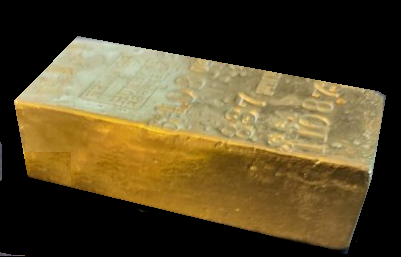
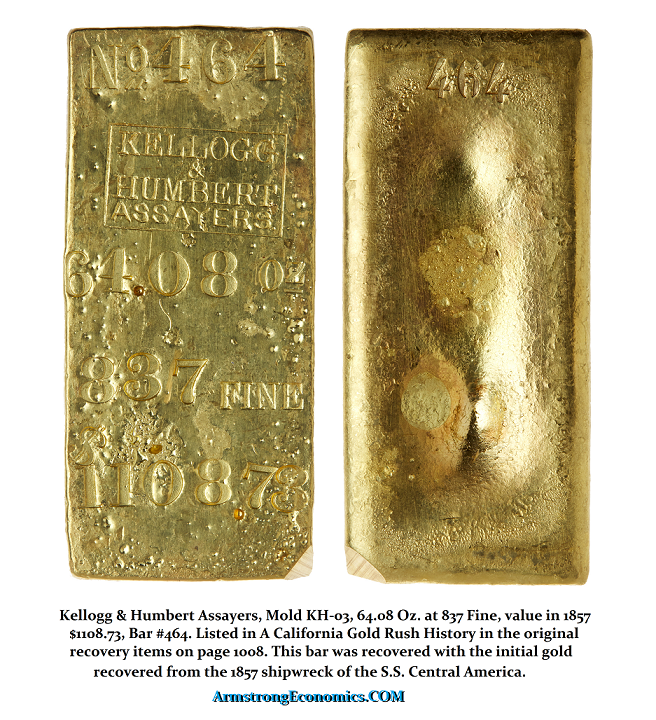
QUESTION: Didn’t you also buy gold bars from the SS Central America ship that was discovered? The gold bugs hate you and say you are bearish gold but you buy a lot of it.
All the best
JE
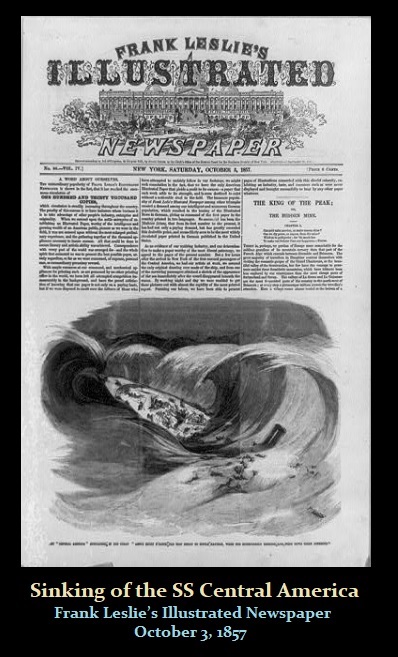
ANSWER: Oh yes. I tend to collect important relics from major economic events. The sinking of that ship set off a financial panic in NYC because the banks were counting on that gold shipment. I did buy bars. There were some 30,000 pounds (13,600 kg) of gold and about 15 tons were recovered.
They are a piece of history. I would not melt them down.
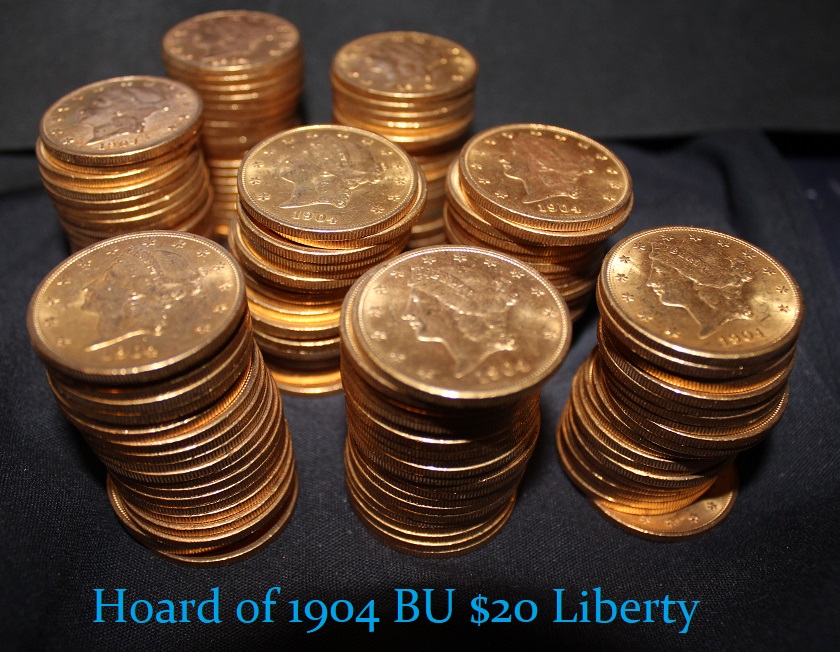
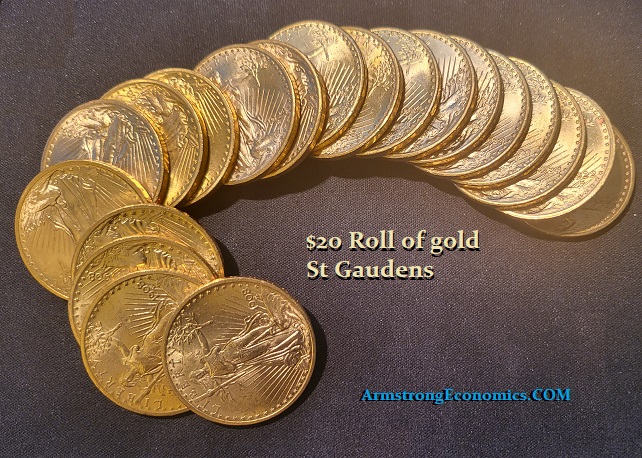
It is very interesting that I just purchased a hoard of $20 liberties, all uncirculated like the day they came from the mint and all dated 1904. The source was a foreign central bank. They were going through their reserves and came across this exciting hoard. It just goes to show that sometimes being disorganized results in new discoveries and excitement all the time. This batch was 500. The fact that every coin has the same date demonstrates that it was indeed a reserve asset directly from the Philadelphia Mint.
COMMENT: Well, the goldbugs are wrong again. This claim that the stock market must crash and only gold will rise is as you say sophistry. It looks like gold and the Dow are rallying together. I can see how they are just promoting a cult-like agenda.
Thanks for being objective
MH
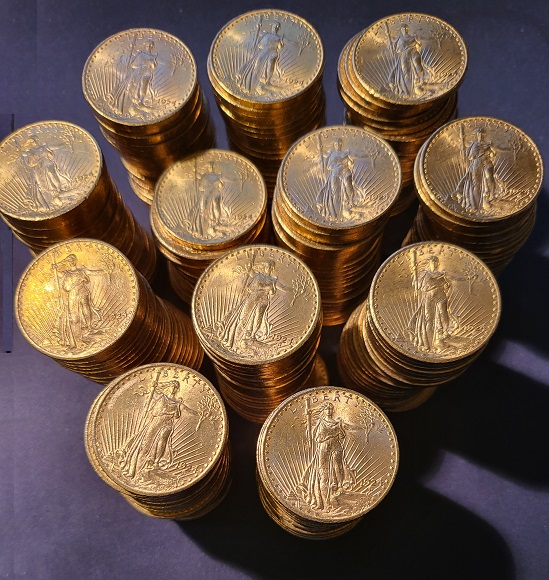
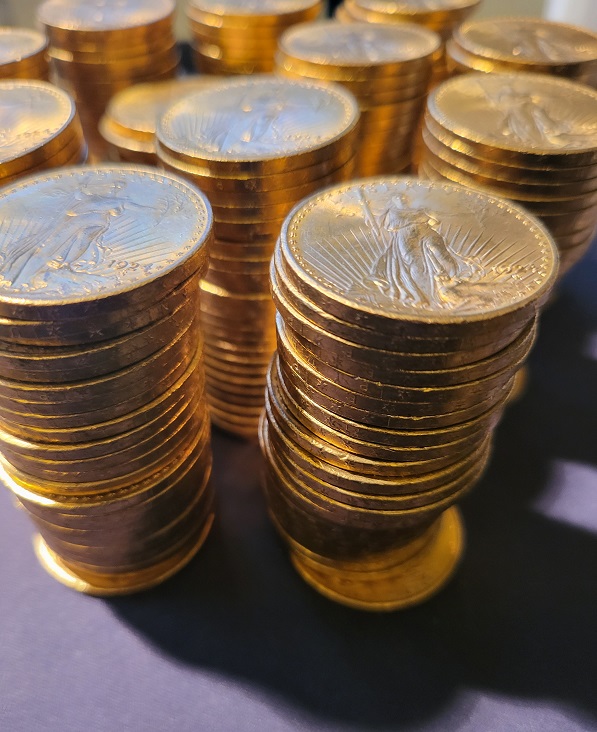
REPLY: We became the biggest institutional adviser because there was never an agenda. Everything goes up, and everything comes down. There is an old saying among actual traders – NEVER marry the trade. I buy gold personally. I just bought a hoard of $20 gold pieces all uncirculated and all dated 1924. I do not regard it as a trade, just a stash for the long-term. It will go up and go down. Do not pretend that something only goes in one direction.
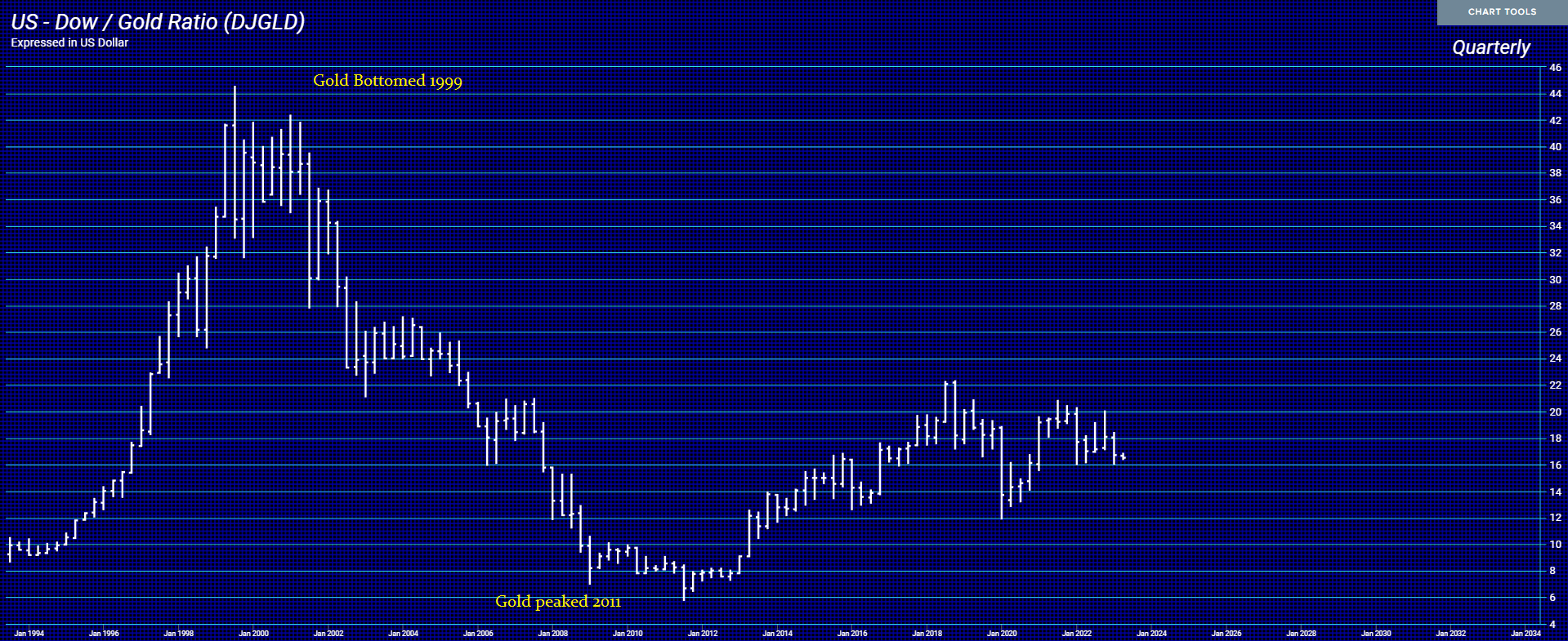
Here is a chart from Socrates on the Quarterly Level of the Dow/Gold Ratio. Anyone who only forecasts a single direction is NOT an analyst – they are a promoter like a used car salesman. No matter what we look at, there is a time to buy and a time to sell. EVERY market functions that was.
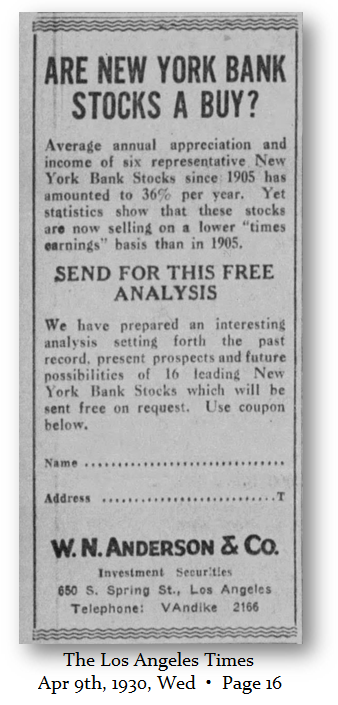
Here is an advertisement from April 9th, 1930 pitching Bank Stocks. Brokers were telling people to buy all the way down, average in, but it took 26 years for the Dow to reach the 1929 high again. Anyone selling any product will ALWAYS tell you to BUY. That is their business. It is up to you to come to terms with how ALL markets really move. Hence, there is always a TIME TO BUY just as there is a TIME TO SELL.
Posted originally on the CTH on April 5, 2023 Sundance
For his opening monologue and first interview tonight, Fox News host Tucker Carlson outlined the ramification of non-western nations now trading in alternative currencies to the U.S. dollar. {Direct Rumble Link Here] As the dollar diminishes in value, and as an outcome of Biden using U.S. treasury bonds as part of the sanction regime against Russia, various non-western nations now perceive holding dollars as exposing themselves to risk.
Carlson is joined by Luke Gromen who accurately notes the dollar as a global trade currency may continue, but foreign nations holding U.S. treasury bonds as an asset will likely start contracting. The result of U.S. treasury bonds returning after maturity with no repurchase, would be an inability of the U.S. to borrow against their sale. This could, perhaps likely will, severely diminish the amount of money the U.S. congress can spend. WATCH:
None of this should come as a surprise to those who have paid attention. Factually, in March of last year, one month after the Russian sanctions were announced, the International Monetary Fund’s (IMF) Deputy Managing Director said the sanctions against Russia are likely to undermine the US dollar’s global dominance as a trade currency. Everyone could see this coming.
(Inside Paper) – March 2022 – […] “The dollar would remain the major global currency even in that landscape, but fragmentation at a smaller level is certainly quite possible,” Gopinath said in an interview with the Financial Times. She went on to say that some countries have already begun to renegotiate the currency in which they are paid for trade.
According to Gopinath, the drastic restrictions imposed by Western countries in response to Russia’s military operation in Ukraine may result in the formation of small currency blocs based on trade between individual groups of countries. Furthermore, the use of currencies other than the dollar or the euro in global trade would result in a further diversification of central banks’ reserve assets. (read more)
The efforts of NATO and the western alliance to crush the Russian currency have failed. The Russian ruble currency has jumped back from the sanctions and is now even stronger than before the sanctions were put into place.
With China and India supporting ongoing trade with Russia, and with Saudi Arabia responding coldly to the U.S. working on a deal with Iran for nuclear weapons, the geopolitical strategy of NATO, G7 and the proverbial western alliance increasingly looks like it will backfire.
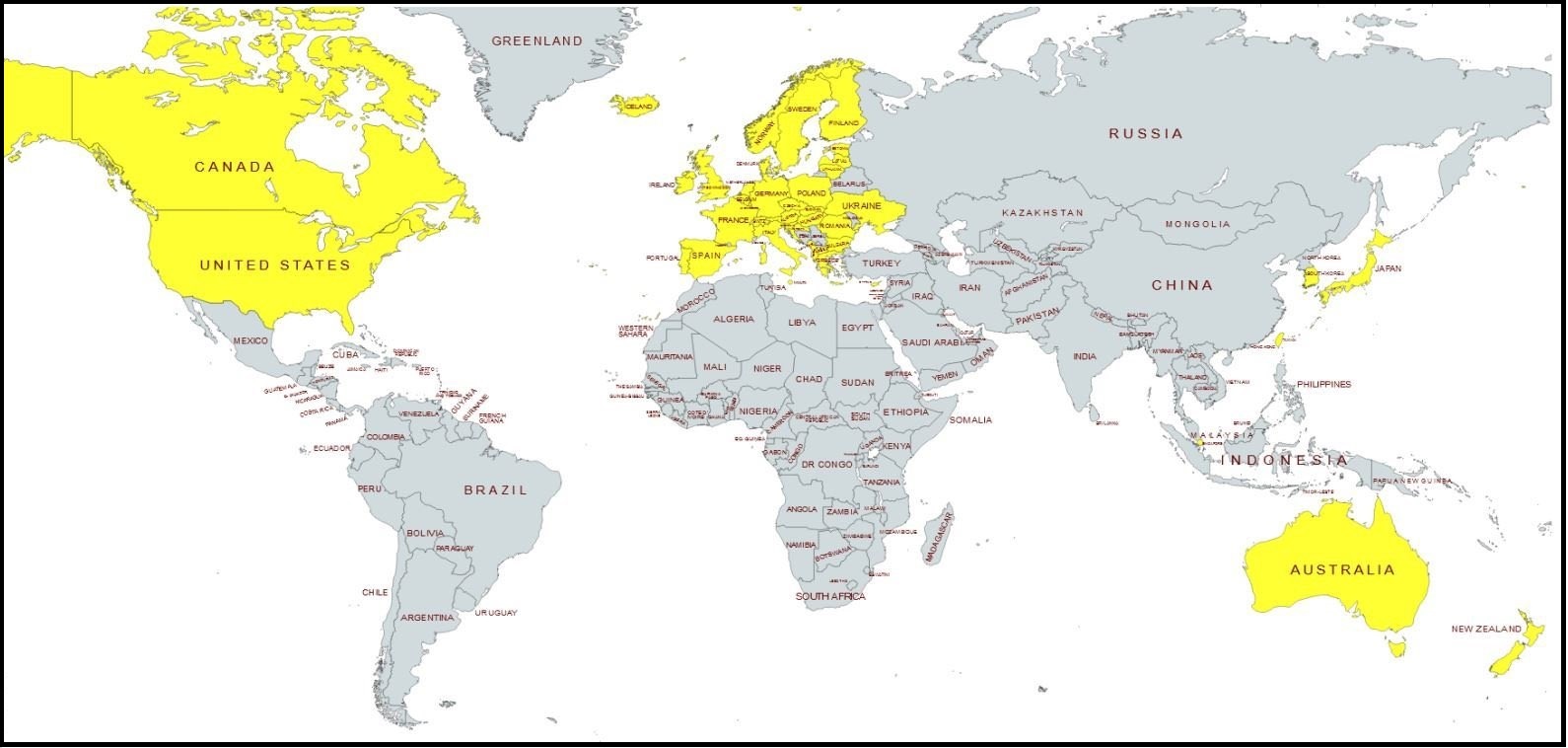
Yellow Team -vs- Gray Team: Remember, China just brokered a deal to lessen hostilities between Iran and Saudi Arabia. The fulcrum of that agreement was economics.
Meanwhile in North America, Mexican President Andres Manuel Lopez-Obrador has said he was not willing to join the energy suicide pact pushed by Joe Biden and Justin Trudeau…. A policy break in the trilateral relationship which suddenly, and not coincidentally, aligns with the timing to make Mexico a pariah to the U.S. vis-a-vis a renewed media push on the drug cartel narrative.
BIG PICTURE NOT BEING DISCUSSED – The western politicians followed the climate change instructions of the WEF multinational corporations and banks (Build Back Better) and post-pandemic immediately started reducing energy development. The central bankers then began raising interest rates to shrink the economies of the same western nations to the scale of the now diminished energy production.
The raising of interest rates is now hitting the national and multinational banks impacted by government policy that was following WEF orders. Now the western politicians are stepping in with the government controlled central banks to backstop the national banks and multinationals. Can you see the dynamic?
Team yellow is suffering the consequences of their own ideological policy as enacted. Team grey is not going to help team yellow get out of a crisis team yellow created, which was intended to hurt team grey.
QUESTION: Hello Martin, Been reading your writings with keen interest for over 15 years now since while you were incarcerated. My question is: The way you paint a picture of the past economies going back hundreds and thousands of years through the discovery of coinage hoards is brilliant. How will a future “Martin Armstrong” from say 500 to 1,000 years from now be able to utilize that methodology of discovering the history of this era when we’re largely a computer digital transaction society? (Especially if government-planned digital currency takes over?) Thanks. Jerry S.
ANSWER: I know the crypto-people do not like my view that digital currency is entirely dependent upon the power grid and once money is in any official exchange, it will be subject to government regulation. Just look at Tik Tok. The government wants to ban it because they CANNOT get into the data and who is saying what. It has nothing to do with China. They are not interested if you paid the babysitter next door, but Congress is. They have backdoors into everything – not Tik Tok. That has become the hub for many threats to their form of society called the dreaded CONSERVATIVES.
Reading historical accounts of things would never provide the real picture. The coinage has been the breadcrumbs that lead to the truth. I can see the real level of debasement, and when put together with historical accounts, we can get a real picture of history. We must also respect that some periods are black holes and the coinage is what turns on the light.
For example, it is the coinage that enables us to confirm much of history and I believe we will see the future follow the past. The wife of Augustus, Livia, the first empress of Rome, was a very powerful woman. The real power behind the thrown. I suggest watching the series – Domina. It is far better than any fictional story. It was his mother, Livia, who pushed him to be Emperor.
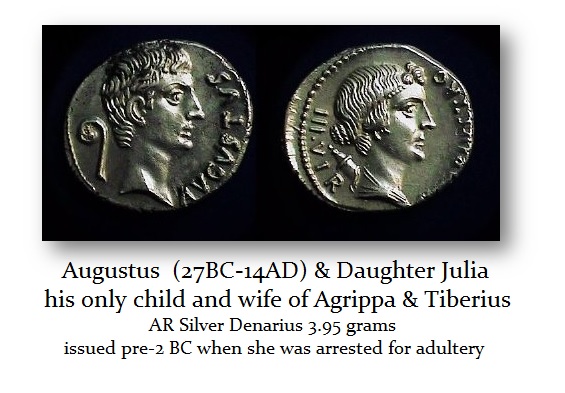
Livia was renowned for her intelligence but was also one of the most beautiful women in Rome. Tiberius was not her favorite – that was his brother Drusus. Tiberius had a son with his first wife Vipsania who was born in 14BC. Livia compelled Tiberius to marry Augustus’ daughter Julia as a way to the throne. Augustus was not fond of Tiberius for he was simply unsocial. His marriage to Julia was like a mixture of oil and water. She sought sexual parties and ignored Tiberius and was finally exiled by her father.
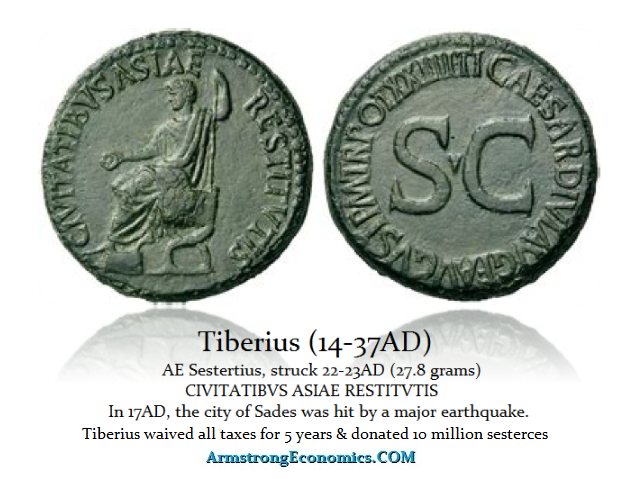
Frome the coinage, we can confirm that Tiberius responded to a major earthquake that destroyed much of Asia, modern-day Turkey. Tiberius issued coins for the aid of Asia. We also know that he waived all taxes for 5 years and donated 10 million sesterces for relief. What politicians would ever system taxes as a tool of relief today?
Augustus’ heir was to be Germanicus (15BC-19AD) who was the son of Nero Claudius Drusus, the younger brother of Tiberius, and Antonia, who was the daughter of Mark Antony and Augustus’ sister Octavia. He was married to Agrippina, Sr, who was the daughter of Agrippa and Augustus’ daughter Julia. Agrippina seems to have been the independent-minded woman who blamed Livia for the death of her husband.
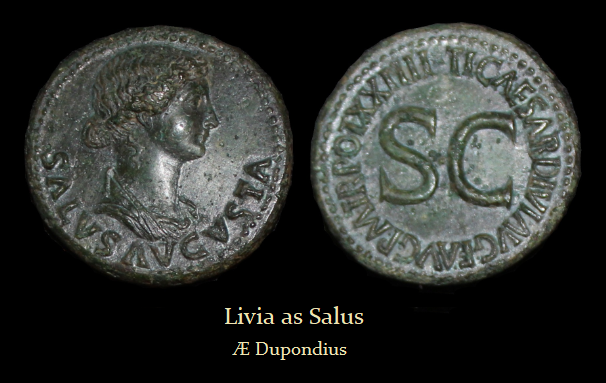
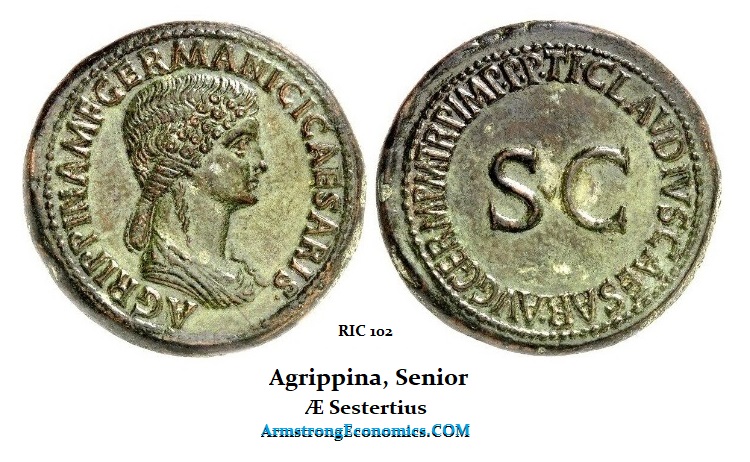
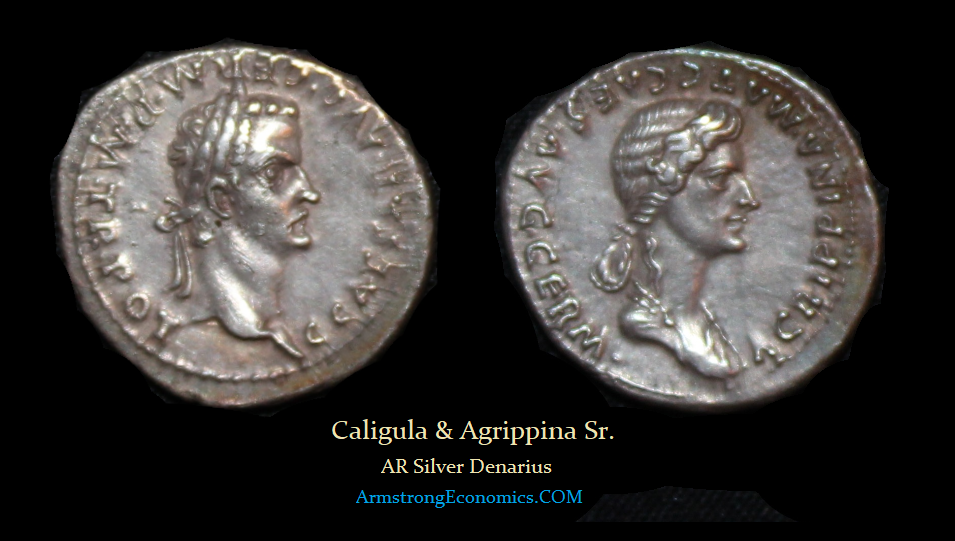
Agrippina, Sr. was such a disruption politically that Tiberius was compelled to banish her like her mother in 29AD where she eventually died of starvation in 33AD. Her son, Caligula, seems to have inherited her insanity, and her daughter Agrippina, Jr, as well. She is actually the first woman on Roman coinage displaying her name. Livia’s portrait would be used but always styled as some goddess.
Of course, her son Caligula has warranted films exclusively devoted to his. He is famous for insulting the Senators by making his horse a senator. Caligula was born in 12 AD. He was named as Tiberius’ heir in 37AD and it has been long suspected that Caligula smothered Tiberius to death to take the throne. He was notorious for his depravity and cruelty. He was assassinated by the Praetorian Guard on January 24th, 41AD.
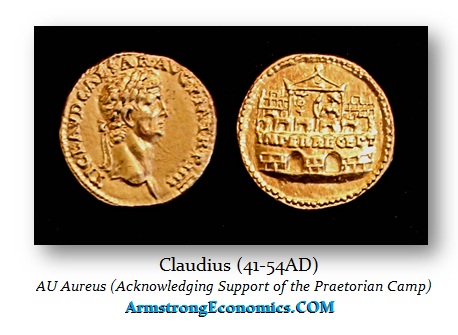
The Praetorian Guard needed an emperor or there was no point in them being the Praetorian Guard. They turned to Claudius and made him emperor. You can see from his coinage the image of the Praetorian Guard camp on the reverse announcing that he was made emperor by the Praetorians.
There is a great series of these events done years ago by the BBC. It was based on the book I Claudius and the series bares the same name – I. Cludius. That too is a worthwhile series that was produced decades ago.
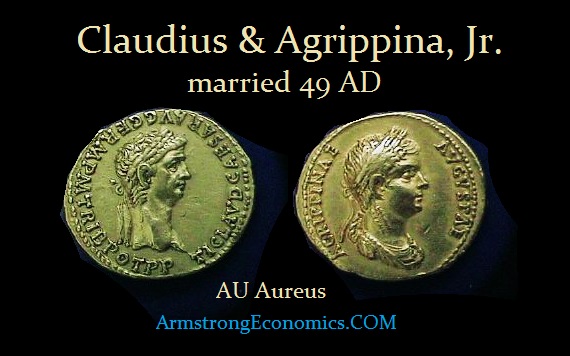
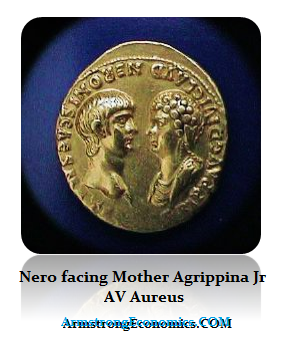
In fact, Agrippina Jr, sister of Caligula, was not only the mother of Nero who ordered her killed for her dominance, but she married he uncle Claudius to secure the throne for Nero. Once again, we find her portrait on coins alongside her son, Nero, which also reflected her dominance and effective rule of the empire. Some have likened her to Hillary Clinton for her cunning and effective rule behind the curtain.
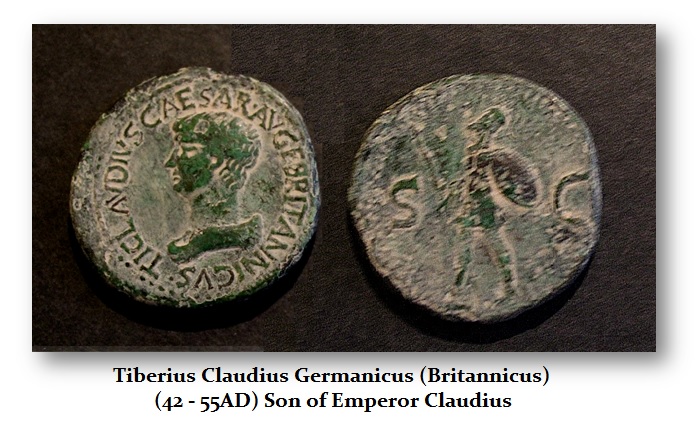
To ensure Nero would become Claudius’ heir, she poisoned Claudius’ son – Britanicus. It shows what a bad apple can do to the whole lot. Many have pointed to the fact that it was the dominance and cunning of the women that brought down the Julio-Claudian Dynasty.
Nevertheless, the coinage not merely confirms history, but also provides a window through time for us to see how human nature never changes, and as such, the future becomes merely a repetition of human contrivances.
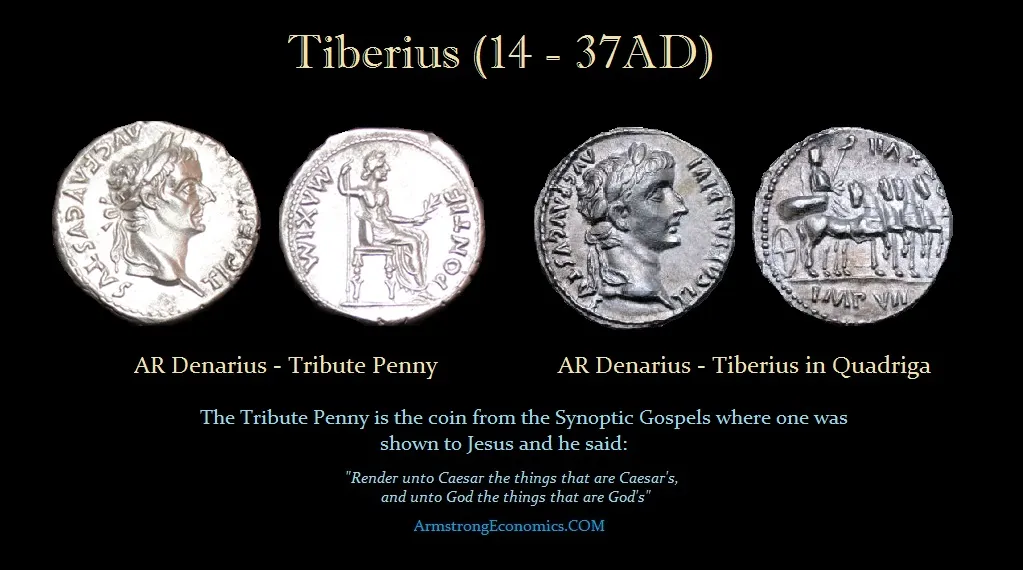
To answer the question if future historians will be able to do what I have done if the currency is eliminated and we have just electronic digital currency, I believe the answer lies in the past. We can see something rather astonishing right here during the reign of Tiberius (14-37AD).
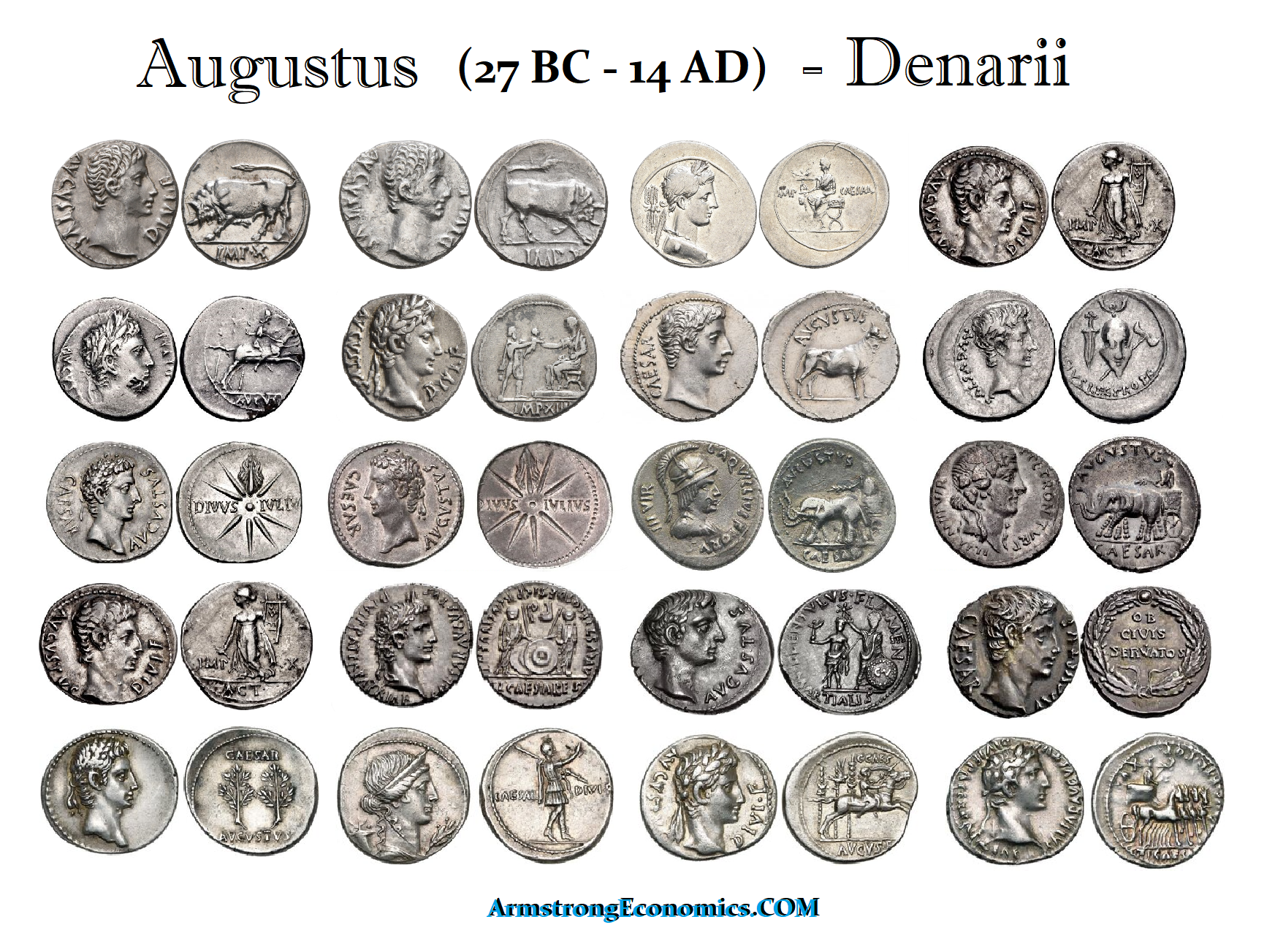
Augustus/Octavian (heir to Julius Caesar) became the first emperor of Rome following the defeat of Cleopatra and Mark Antony in 30 BC. He was granted the title Augustus in 27BC by the Senate for saving Rome from the proxy war of Cleopatra who used Mark Antony to try to conquer Rome. However, because he was the first emperor, it appears that he blanked the empire with coinage to justify his position as emperor, not king, which was really the same thing. There are over 500 different silver denarii types. I have never even heard of a collector assembling each type.
Against that backdrop, being indeed a reluctant emperor and forced into an unhappy marriage, it is understandable that being an unsocial workaholic, the circumstances most likely drove Tiberius deeper into seclusion. He rarely left Rome. In fact, he would not even attend the gladiator games. This is the extent of his coinage – two types. That’s it! Instead of the proliferation of coinage under Augustus, spending was curtailed and we can determine that from the coinage, not contemporary accounts. This led to a SHORTAGE of money, and in such a recession. That became the Financial Panic in 33AD.
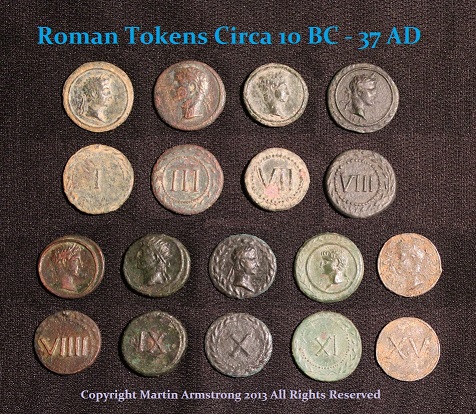
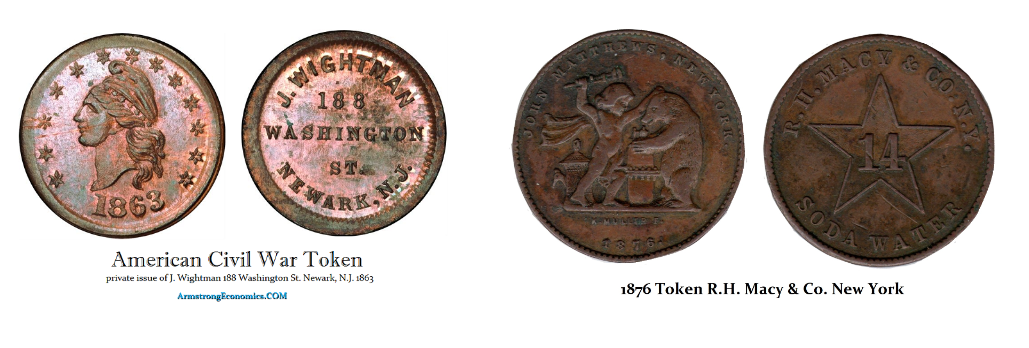
Because of the shortage of money, this is where we find the first time that the private sector began to issue its own coinage. Some have claimed they were some sort of token. But they are confined to this period of Tiberius where there was a Financial Panic and a shortage of coinage compared to the reign of Augustus.
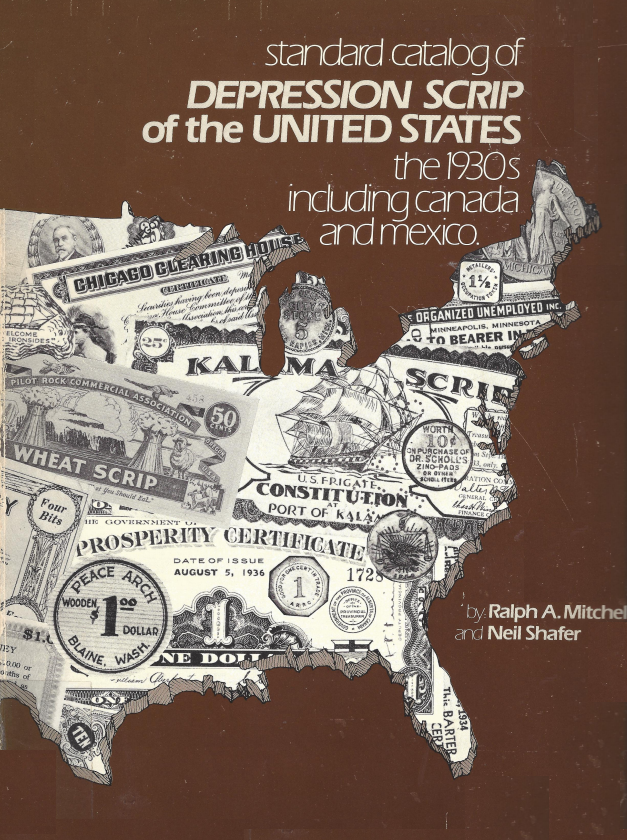
During the Great Depression, because there too the austerity measures of the government created a shortage of currency. Thus, over 200 cities in the United States began to issue their own currency for local use.
Likewise, during the Civil War, there was also a shortage of money There is a whole array of private coinage during that event. Then there was the hard time that followed the Panic of 1837, Again we have private coinage surfacing. The same again took place with the Panic of 1873.
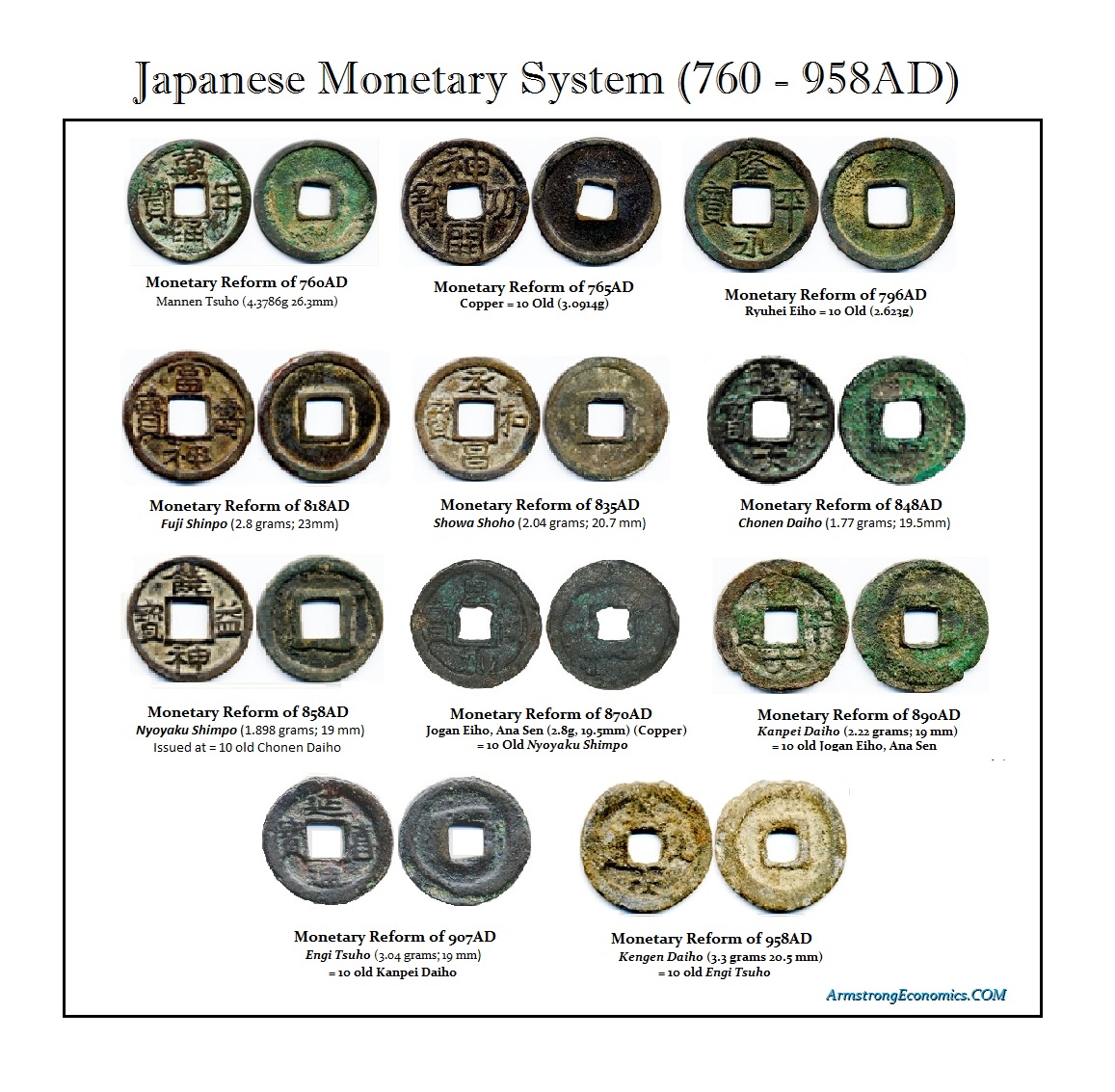
In Japan, because of the corruption of the government always devaluing the currency of the previous emperor, the Japanese finally just stopped accepting the coinage of their own government. The economy reverted to one of barter and they used the coinage of China. Japan lost the authority to even issue coinage for 600 years until the Meiji Era.
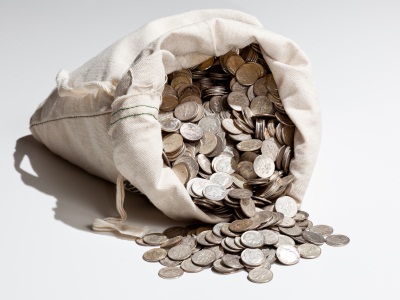
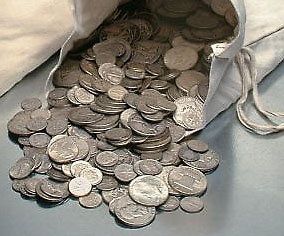
Cryptocurrency will fade with the collapse of governments. It will be too dependent on a unified power grid. If history is any guide, we will return to a barter system combined with perhaps old identifiable coinage that the average person will recognize. That is one reason why I do not recommend bars of silver or gold, but the old coinage. Bags of pre-1965 silver coins in the US or similar in Europe and Canada where the average person can look at a date and accept it whereas they cannot tell the difference between a var of silver or nickel.
Do not make the mistake of judging others by yourself. You may know was a bar of silver is, but that will not help you if the other person does not. There are videos on YouTube where people are offered a silver bar or a chocolate bar and they take the chocolate. Not everyone knows what you may know. Keep that in mind.
So at the end of the day, we will have to rebuild society from the ground up post-2032. A currency need not be backed by anything. Its value is ALWAYS based upon a belief system. The same is true with gold and silver. They had no utility value, only as jewelry from the outset. They were valued because at first, the kings reserved gold only for their adornment.
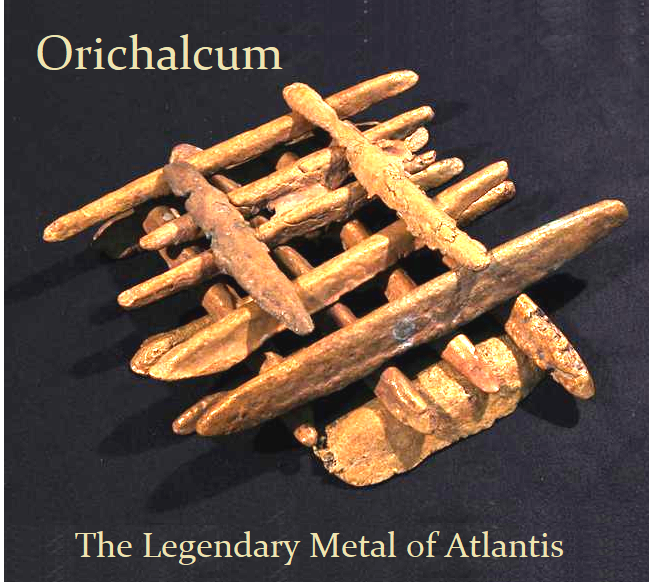
Orichalcum, brass, is the legendary metal mentioned in the story of Atlantis in the Critias of Plato. In fact, orichalcum was considered second only to gold in value and it held a greater value than even silver. It was said to have been mined in many parts of Atlantis in ancient times. These ingots of orichalcum were discovered in a shipwreck that had sunk 2,600 years ago, off the coast of Gela in southern Sicily. The ingots are an alloy consisting of 75–80% copper, 15–20% zinc, and smaller percentages of nickel, lead, and iron. In other words, they are brass. Because the color is closer to gold, this was highly prized.
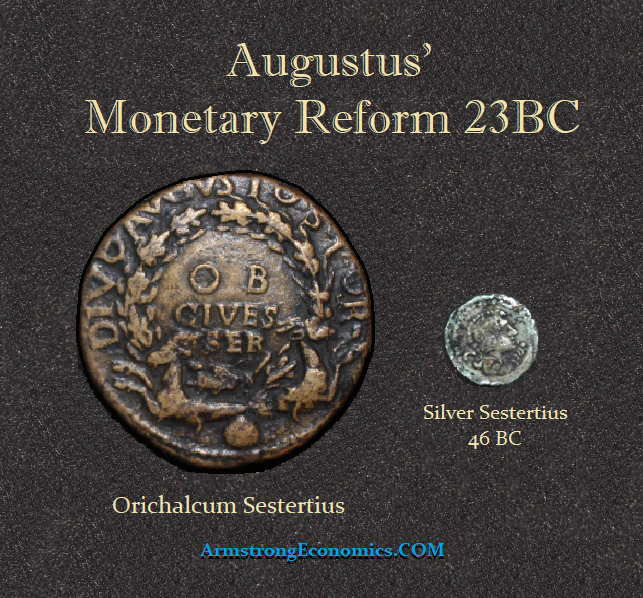
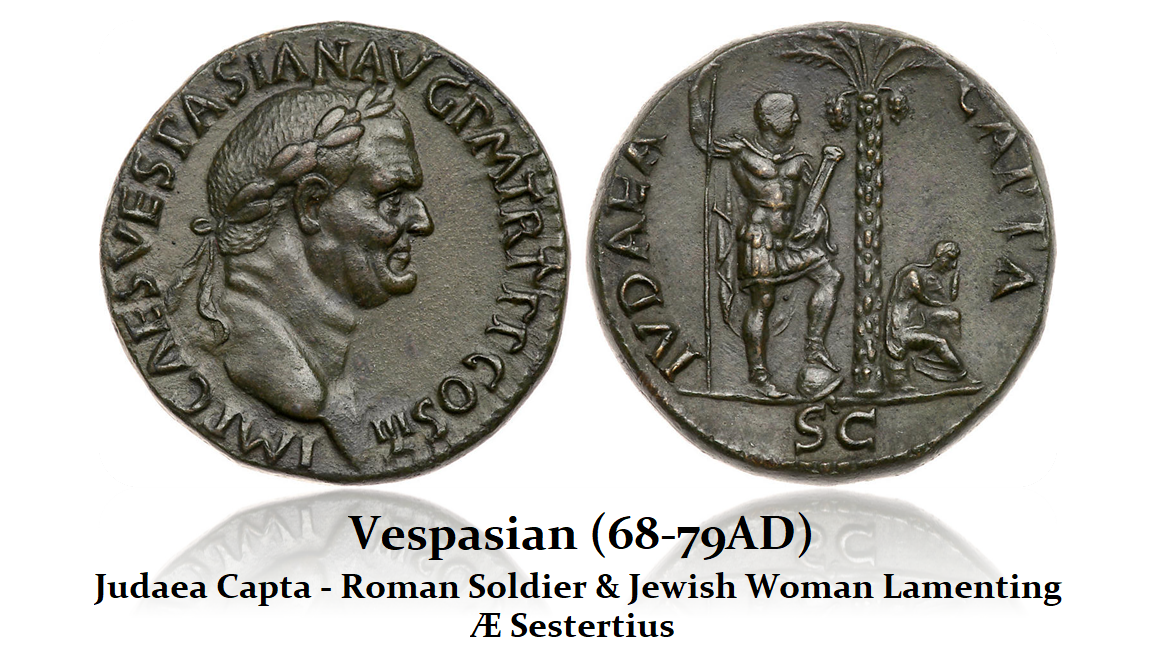
The Greeks rarely used orichalcum for coinage in the Hellenistic world. It was used experimentally by Romans under the reigns of Octavian and Mark Antony. Where we begin to see orichalcum used in the coinage consistently is dated to the monetary reform of Augustus (23 BC). It was then that he introduced sestertii and dupondii were struck in orichalcum (Cu-Zn alloy) rather than silver and bronze. The sestertius of the Republican era was a tiny silver coin of about 0.7 grams. Later, the monetary reform Nero made during 63–64 AD, introduced the use of orichalcum to the denomination of the as, semis, and quadrantes.
Following the Civil War with the death of Nero, orichalcum was replaced in the coinage with bronze. It is highly likely that someone figured out how to make orichalcum and its premium just collapsed. Counterfeiters had long figured out how to mix wrap a coin in silver and strike it to make it appear it was silver, but also to use chemicals to cause the silver to appear on the surface. We cannot rule out that someone had figured out how to make brass and thus it lost its premium.
The value of any currency is entirely based on belief. Once the ancients figured out that orichalcum was just an alloy and could be made, then it no longer seems as more valuable than silver. Even cryptocurrency is worthless. Its entire valuation is simply based that others believe it has some value. Money at its most basic core during a financial crisis is predicated upon its utility value. Hence, in Japan, bags of rice became money. It is unlikely that even cryptocurrency will survive the transition post-2032. Precious metals ONLY in the form of some recognizable coin will be accepted like the Japanese accepted Chinese coins. Barter will return as it always has. That will most likely be in the form of food.
QUESTION: Mr. Armstrong; Who is being irrational? The markets or the analysts?
KE
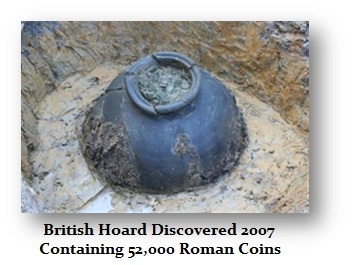
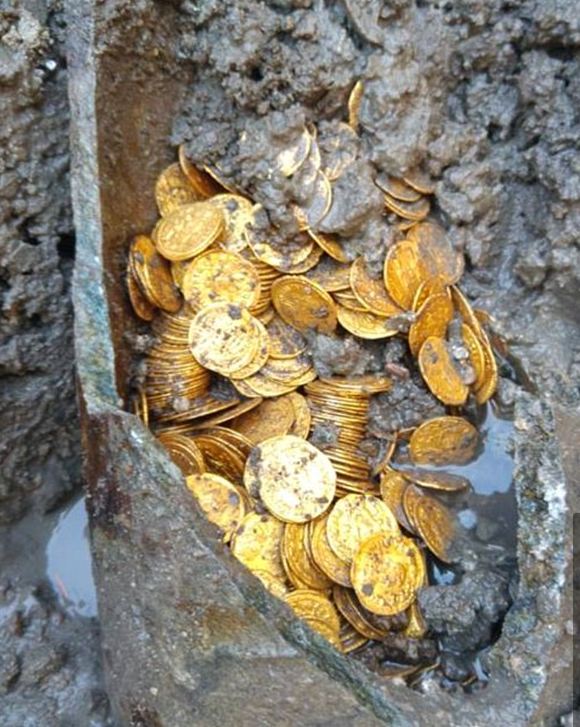
ANSWER: That’s simple. It is the analysts. The markets are ALWAYS correct. When you have bank failures unfolding, people will withdraw money out of caution. It is the very same reason there are ancient hoards of coins. You find coins in times of economic stress and uncertainty. This is a purely RATIONAL human response to uncertainty. It consistent for thousands of years. For any analyst to claim the markets are acting “irrationally” only proves they should look for another profession.
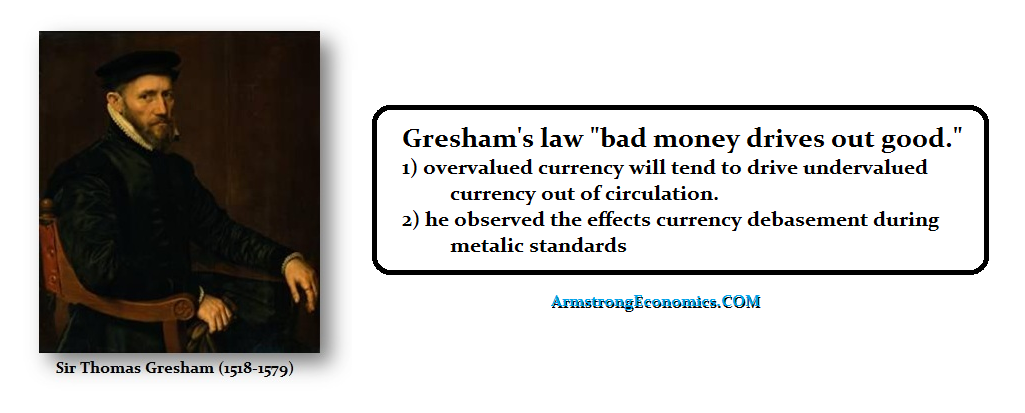
Sir Thomas Gresham began his career in 1543 working at Mercers’ Company at the age of 24 years old. He left England for Antwerp/Amsterdam which was the financial center of the day much like Wall Street. That was where he became a merchant businessman which was where banking existed in those days. He became an agent for King Henry VIII in the Antwerp/Amsterdam market. He became a trader and in so doing, he began to observe how capital moved.
The interesting aspect was that he was called in as a sort of crisis manager as I have been during financial upheavals. In 1551, Sir William Dansell, who was King’s Merchant there in the markets, ended up putting the English Government into a financial crisis thanks to his mismanagement. The English turned to Gresham for advice since he became quite astute at trading. They adopted his proposals. It was then that Gresham proposed a very ingenious tact. He advocated a FOREX intervention to push the pound higher on the Antwerp change. His intervention proved so successful that in just a few years King Edward VI had discharged almost all of his debts. By pushing the pound higher, he was able to repay the previous debts by devaluing them.
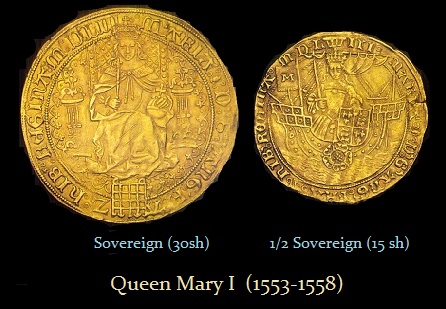
Therefore, the English Crown sought Gresham’s advice in all their finances until Mary came to the throne in 1553. Gresham was instantly pushed aside for Alderman William Dauntsey, who lacked trading experience and quickly sent the Crown into financial stress. Gresham was called back to deal with the mess once again.
Under Queen Elizabeth’s reign (1558–1603), he continued as a financial agent of the Crown and also became the Ambassador Plenipotentiary to the Governor of the Netherlands. This was the period of civil unrest in Antwerp which compelled him to return to England in 1567. This is also when the English had the founding of the Royal Exchange to compete with the Netherlands. It was Gresham who made the proposal to build, at his own expense, a bourse or exchange. This demonstrated that Gresham was a trader and understood how capital flowed. Apart from some small sums to various charities, Gresham bequeathed the bulk of his property (consisting of estates in London and around England giving an income of more than 2,300 pounds a year) to his widow and her heirs, with the stipulation that after her death his own house in Bishopsgate Street and the rents from the Royal Exchange should be vested in the Corporation of London and the Mercers Company, for the purpose of instituting a college in which seven professors should read lectures, one each day of the week, in astronomy, geometry, physic, law, divinity, rhetoric and music.[1] Thus, Gresham College, the first institution of higher learning in London, came to be established in 1597.
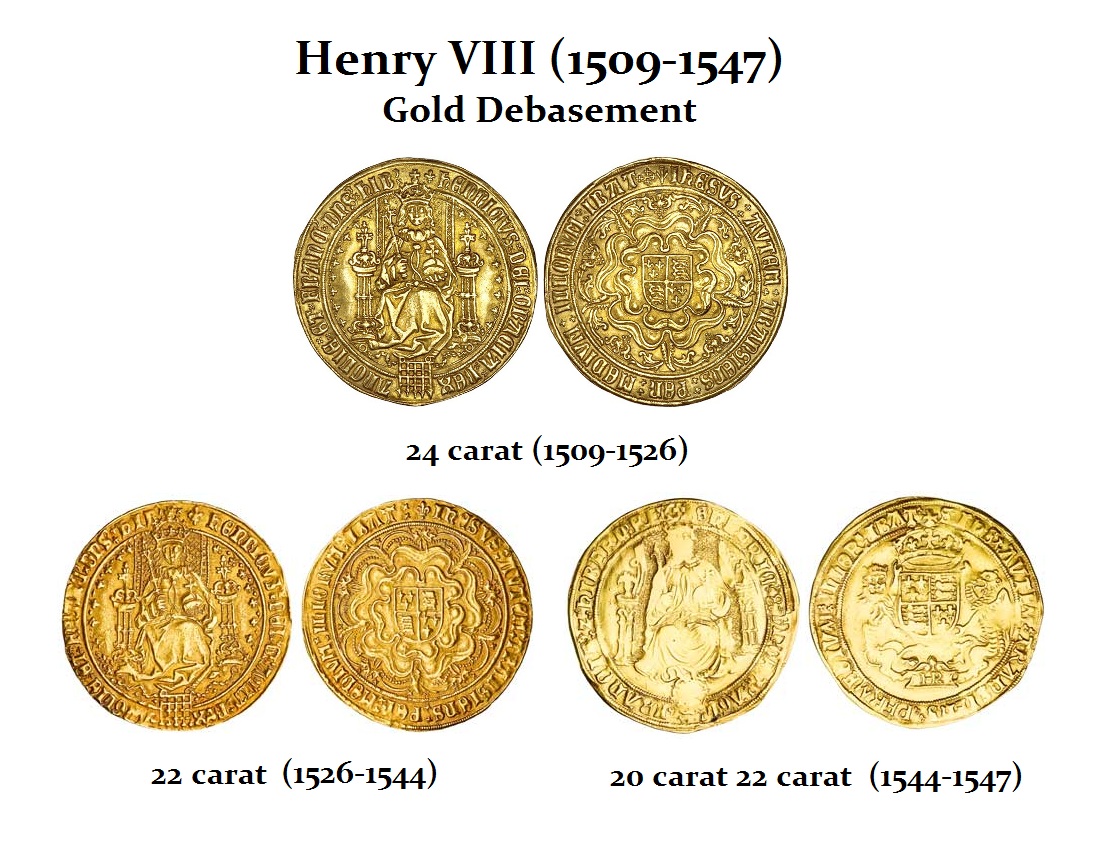
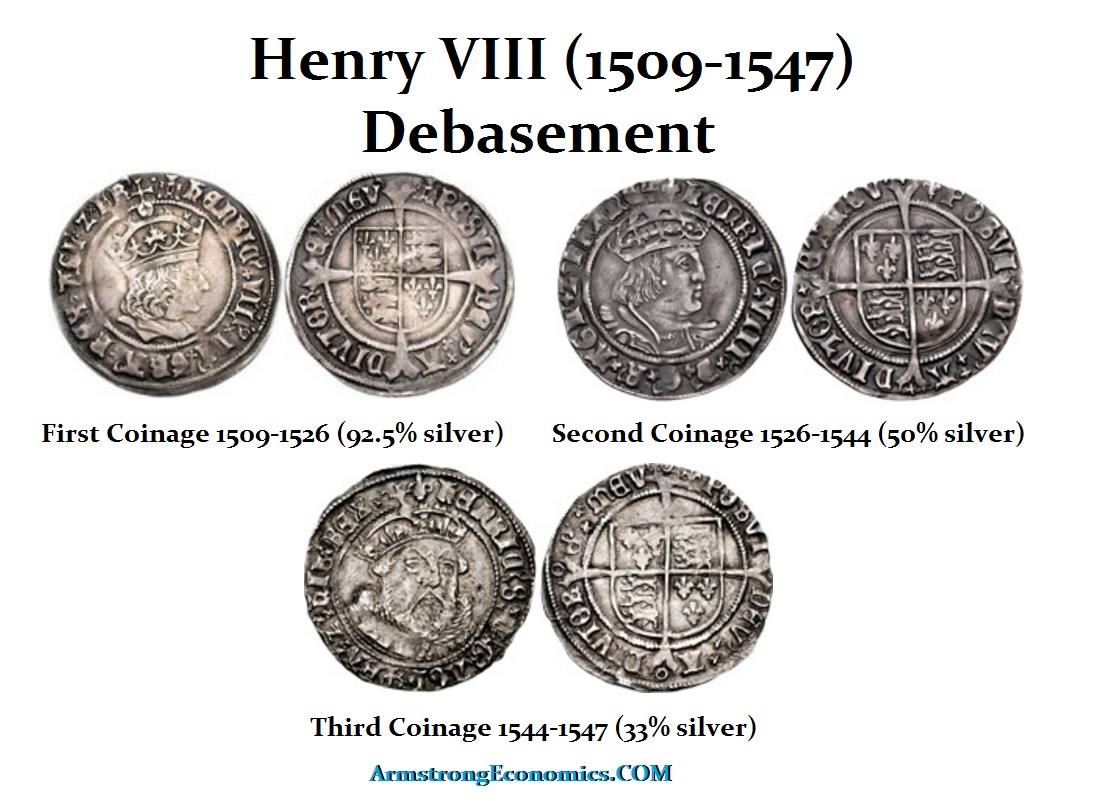
Gresham’s Law (stated simply as: “Bad money drives out good“). He concluded this from his observations that foreign exchange back then was based on the metal content and weight of the coinage. Therefore, as debasement took place, people would hoard the old coinage of higher quality and spend the debased. Thus, the bad money drove out the good and actually shrunk the money supply in circulation.
He urged Queen Elizabeth to restore the debased currency of England. In so doing, you got to repay old debts with debased currency. Governments to this day practice that same trick. Repaying a 30-year bond today the bondholder cannot buy what the money was once worth 30 years ago. The interest does not really compensate for the loss of purchasing power over long periods of time.
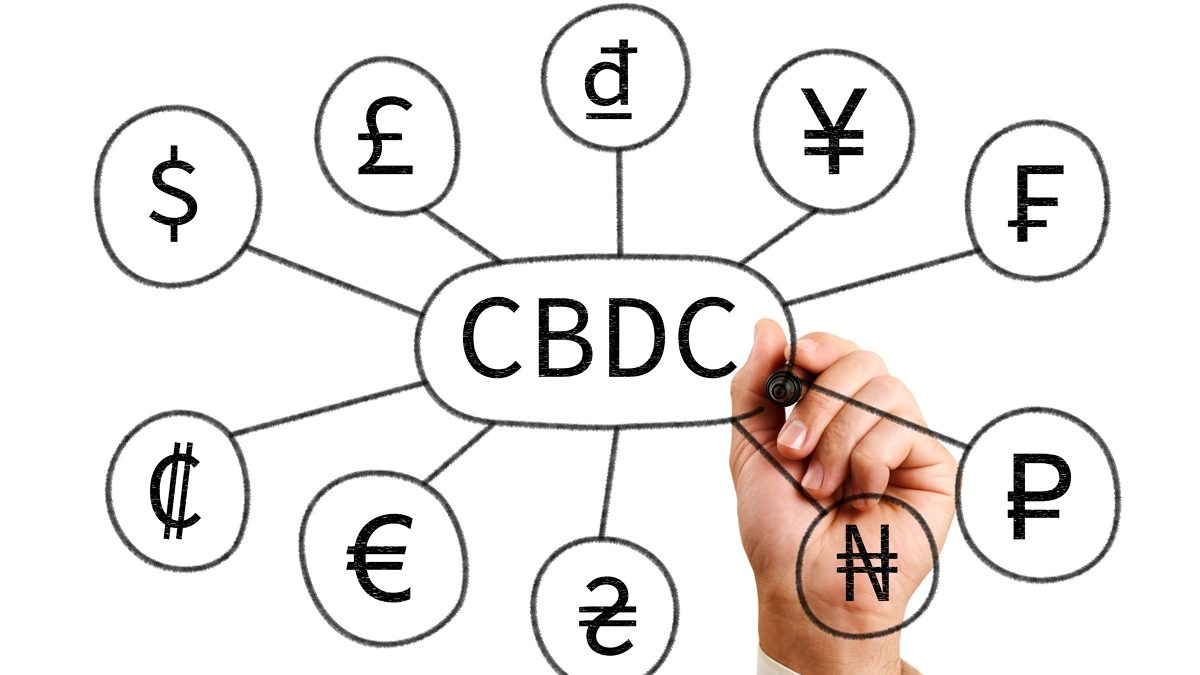
The Federal Reserve is highly considering this option, and Powell has mentioned it numerous times in his speeches. This is part of the move toward a cashless society as the government continually hunts down its citizens for taxes. The Founding Fathers fought to prevent direct taxation. Yet, the failing current government is drowning in debt, so they are after every possible penny they can find. A CBDC would effectively provide the government with a glimpse of all your purchases. They could easily de-bank an individual or institution without a middleman or prevent someone from making specific purchases.
Ron DeSantis (R-FL) also put forward legislation to prevent Floridians from a CBDC. The governor accused the Biden Administration of trying to inject “woke ideology into the financial sector” and said that the current administration is promoting “a central control state.” “Our money says In God We Trust. The central bank digital currency changes that to In Government We Trust. That’s wrong and I am grateful for the Governor’s continued pushback of an out-of-control DC bureaucracy,” said Foundation for Government Accountability CEO Tarren Bragdon.
Governments across the globe are searching for the Philosopher’s Stone. By changing the banking system to instantaneous transfer, they can eliminate physical money and track everything we do in real-time. They want us to surrender all liberty and terminate our civil liberties. This is precisely how empires collapse.
Honest journalism has become a crime. I have appeared numerous times on Maria Zaric’s program, Zeee Media. Maria is a professional journalist who asks thought-provoking questions to the experts that appear on her show. Her content goes against the grain and traditional narrative. The Australian-based journalist has been questioning COVID, the Great Reset, governments, globalists, the war in Ukraine, and many other topics that are completely taboo in the mainstream media. They attempted to shut down her channel in the past. Now, she has been de-banked with no explanation.
“Do you shut down peoples accounts due to their political views by any chance?” Maria asked the bank representative, only to be met with silence. Maria had been banking with ING Bank for numerous years without issues. Her account was suddenly shut down shortly after releasing a story on domestic terrorism in Australia. ING Bank has been unable to explain why her account was canceled.
Interestingly, ING is a partner of the World Economic Forum. Maria has extensively covered the WEF’s agenda to “enslave humanity.” Is Australia secretly keeping track of journalists’ “social credit scores” to silence skepticism?
The idea of eliminating someone’s ability to bank is essentially eliminating them from society. We saw Canadado the same thing to those protesting the Trucker Convoy. Trudeau took things a step further by also de-banking people who simply donated to the cause. The Canadian government used the premise of money laundering as a way to coerce the banks into reporting any activity that could have been intended to help the protestors. I know of numerous people who were frantically attempting to remove their funds from the bank during this time.
As if the public needed more reasons to lose trust in the banking system. This is not limited to one bank or country. I discussed how banks have the ability to “cancel” someone after JPMorgan Chase de-banked the rapper Kanye West for antisemitic remarks. The bank acts as the jury and judge. Epstein was permitted to hold funds at JPMorgan Chase despite an ongoing pedophile ring trial. Bernie Madoff banked with JPMorgan Chase. The bank has secret ties to the Third Reich and helped the group funnel money through South America during World War II. Again, the bank acts as the jury and judge; anyone can be de-banked anytime for any reason.
Most countries may not openly have social credit scores, but they’re keeping tabs on us. They are keenly aware that resistance to this New World Order is building. So they are now using professional journalists as examples hoping that people will stop asking questions to learn the truth. That is one of the reasons why this blog is free of charge – you deserve to know the truth.
QUESTION: Marty there are a lot of people who seem to be trying to create a panic. Some are claiming the stock market will plunge by 50%. Others are saying nothing will survive other than gold. It seems like none of these people have any sense of what is really unfolding. They were saying the same thing for different reasons before the banking crisis. Can you offer any historical perspective?
Thank you. You seem to be the only real source these days.
Pete
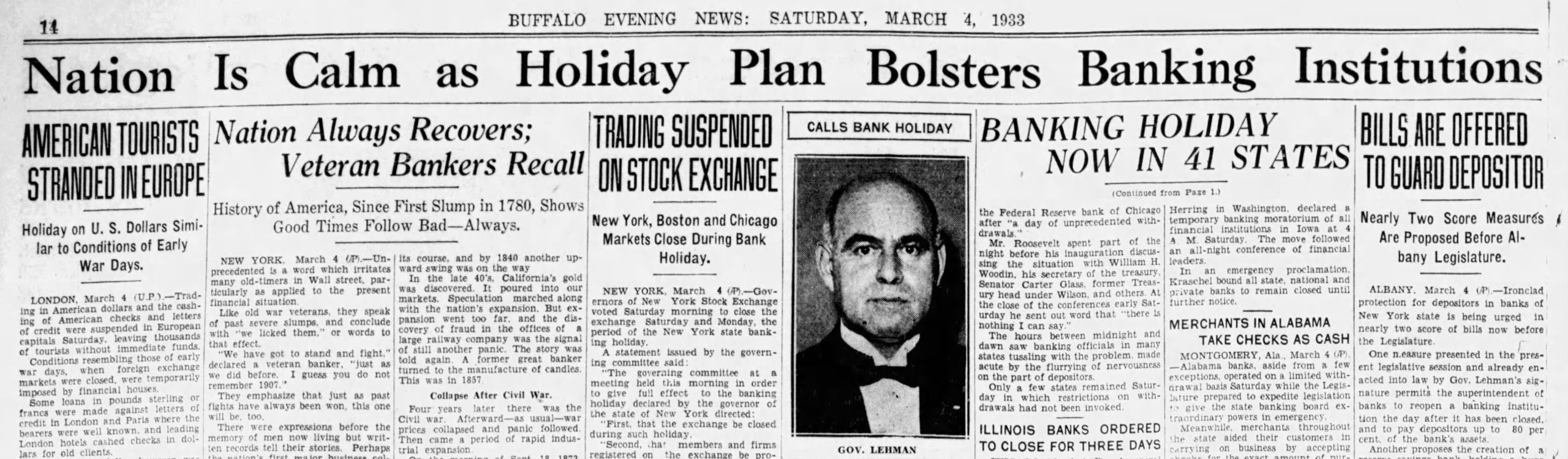
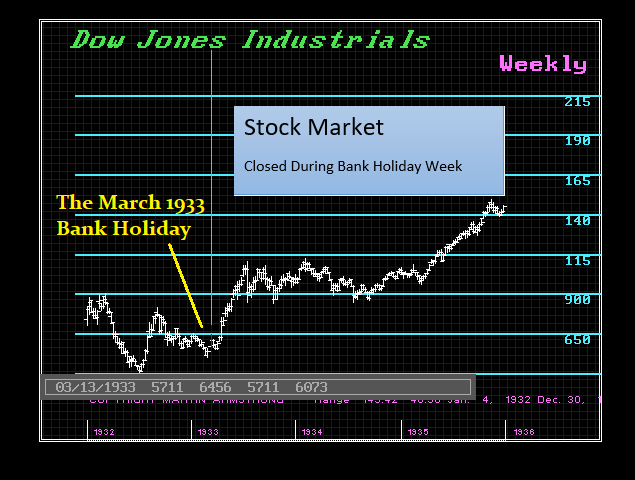
ANSWER: The Bank Holiday took place the first week of March 1933. It began with governors closing down the banks in their states. Once one began, like COVID rules, they quickly jumped on the bandwagon. As reported by March 4th, 1933, some 41 states had already declared a banking holiday. Back then, the president took office in March – not January. Thus, Roosevelt was sworn in on March 4th, 1933. As the new president, FDR delivered what is arguably his best-known speech.
“So, first of all, let me assert my firm belief that the only thing we have to fear is…fear itself — nameless, unreasoning, unjustified terror which paralyzes needed efforts to convert retreat into advance. In every dark hour of our national life a leadership of frankness and of vigor has met with that understanding and support of the people themselves which is essential to victory. And I am convinced that you will again give that support to leadership in these critical days.”
The following day, Roosevelt declared a national banking holiday on March 5th, 1933. Then Congress responded by passing the Emergency Banking Actof 1933 on March 9th, 1933. This action was combined with the Federal Reserve’s commitment to supply unlimited amounts of currency to reopened banks. Back then, they effectively created a de facto 100% deposit insurance and this was before the FDIC was created.
However, what the history books have omitted because it revealed the real reason for the major banking crisis, was the confiscation of gold precisely as Germany did in December 1922 seizing 10% of all assets which unleashed hyperinflation in 1923.
In Herbert Hoover’s memoirs (1951), he documents the fact that Franklin D. Roosevelt (FDR) played a very dirty game of politics. There were rumors that FDR would confiscate gold in 1932 BEFORE the election. These rumors spread and people ran to banks to withdraw their funds. The night before the election in 1932, FDR denied that he would do such a thing. After FDR won the election, the real bank panic began. FDR would not take office until March 1933.
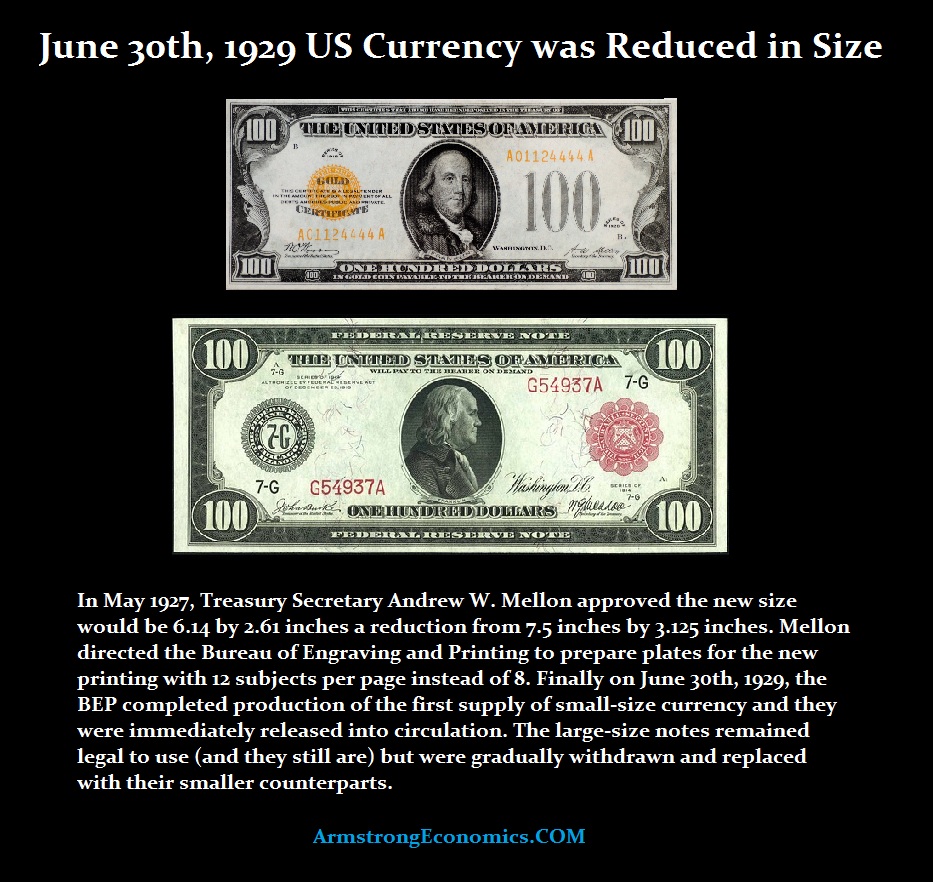
The run on banks began as the Great Depression started. In 1929 alone, 659 banks closed their doors due to mismanagement and speculation. Ironically, to save money on paper, it was also in 1929 when the currency was reduced in size to save money. This time, they want to move to digital and save 100% on printing money. Here in 2023, the failures are due to the WOKE agenda which has deprived the banks of risk management rather than speculation.
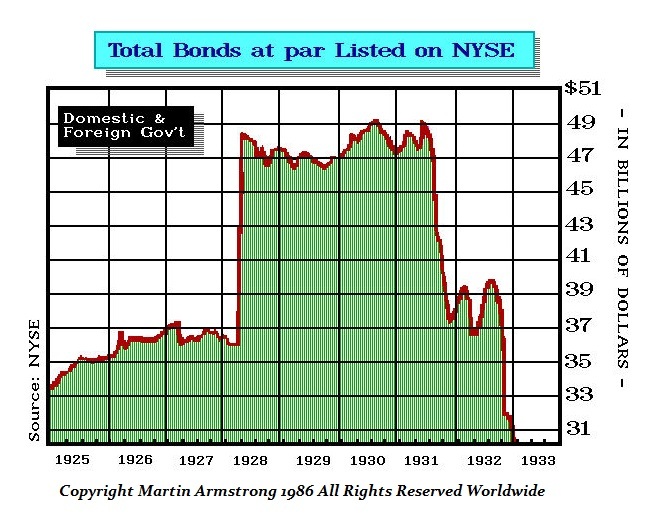
However, as the 1931 Sovereign Debt Crisis hit, the number of bank failures skyrocketed. Goldman Sacks and others were selling foreign bonds to Americans in small denominations., As Europe began to default, US banks holding foreign debt and individuals in need of cash led to a banking panic for external reasons. Here is a chart showing the listing of bonds on the NYSE. We can easily see the collapse in the bond market thanks to the 1931 Sovereign Debt Crisis.
By 1932, an additional 5,102 banks went out of business. Families lost their life savings overnight. Thirty-eight states had adopted restrictions on withdrawals in an effort to forestall the panic. By March 4th, 41 states had declared a bank holiday shutting down banks. Bank failures increased in 1933, and Franklin Roosevelt deemed remedying these failing financial institutions his first priority after being inaugurated.
However, it was actually the election of FDR that started the banking crisis post-1931. Hoover pleaded with FDR to please come out and address the gold confiscation rumors. People had been hoarding their gold coins fearing the rumored confiscation. Despite Hoover’s plea for FDR to come out and deny the rumors after the election, he remained silent. Given FDR’s manipulation of Japan and the attack on Pearl Harbor which he appeared to instigate with sanctions confiscating Japanese assets in the USA, denying the sale of any energy to Japan, and then threatening to use the fleet to block them from buying fuel from anywhere else, They Japanese attacked Pearl Harbor. There were Senate investigations afterward about FDR’s role because the US had already broken the Japanese code and knew in advance about the attack on Pearl Harbor. He did that to force the US into World War II.
It was in his character to remain silent and create the worst banking crisis in history before he was sworn in as president. FDR was a radical socialist and many viewed that he admired Lenin. If it were not for Mr. Jones exposing the truth behind Stalin, even the corrupt New York Times journalist promoting Stalinism was meeting with FDR. The run on the banks became massive when FDR won the election on November 8th, 1932. FDR allowed the banking system to implode with people rushing to withdraw the money in gold coins.
At 1:00 a.m. on Monday, March 6th, 1933, President Roosevelt issued Proclamation 2039 ordering the suspension of all banking transactions, effective immediately. Roosevelt had taken the oath of office only thirty-six hours earlier.
The terms of the presidential proclamation specified:
[N]o such banking institution or branch shall pay out, export, earmark, or permit the withdrawal or transfer in any manner or by any device whatsoever, of any gold or silver coin or bullion or currency or take any other action which might facilitate the hoarding thereof; nor shall any such banking institution or branch pay out deposits, make loans or discounts, deal in foreign exchange, transfer credits from the United States to any place abroad, or transact any other banking business whatsoever.
For an entire week, Americans would not have access to banks or banking services. They could not withdraw or transfer their money, nor could they make deposits. The entire economy ran simply on cash in your pocket.
While the first phase of the banking crisis unfolded after 1929 due to speculation losses (hence Glass–Steagall Act), then the second phase was the 1931 Sovereign Debt Crisis, it was the third phase with the election of FDR that led to thousands of banks failing as there was a mad rush to withdraw your gold coin. But a new round of problems that began in early 1933 placed a severe strain on New York banks, many of which held balances for banks in other parts of the country. About 4,000 banks failed during this period alone bringing the total to over 9,000.
Much to everyone’s relief, when the institutions that could reopen for business on March 13th, 1933 saw depositors standing in line to return their stashed cash to neighborhood banks. Within two weeks, Americans had redeposited more than half of the currency that they had withdrawn post-FDR’s election on November 8th, 1932. This would prove to be a sneaky trick of FDR to get people to redeposit all the gold coins they had withdrawn – as we are about to explore.
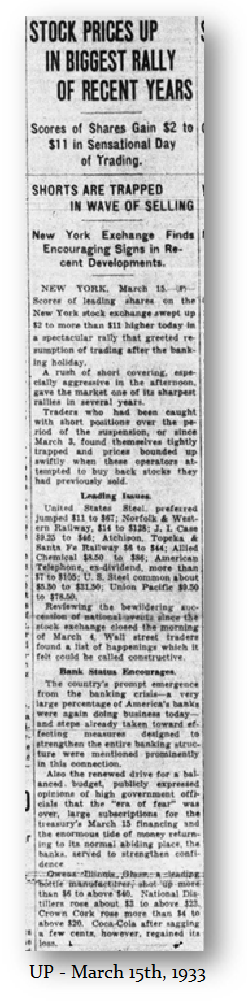
The stock market was also ordered closed when FDR came to power. With the cleverness of a real con artist operating a Ponzi Scheme to gain the confidence of the people, FDR needed the gold coin to be deposited for Phase 4 of the banking crisis. On March 15th, 1933, (The Ides of March), the stock market was allowed to reopen. On the first day of trading, the New York Stock Exchange recorded the largest one-day percentage price increase ever.
The week before the closure, the Dow Jones Industrials fell to 49.68. The week following the closure, the Dow rallied to 64.56 – a percentage gain of virtually 30% over the banking holiday. The shorts who were better on the collapse of the market once it reopened were devastated. It was a major short-covering rally.
With the benefit of hindsight, the nationwide Bank Holiday and the Emergency Banking Act of March 1933, ended the bank runs that had plagued the Great Depression, but it also set the stage for the confiscation of gold. What you have to understand is that Franklin Delano Roosevelt’s (FDR) actions in 1933 were not directed simply at gold. He was embarking on what he called the New Deal, which was a Marxist Agenda that was very popular at the time. His New Deal would end austerity, whereby they were maintaining a balanced budget in the belief that they needed to inspire confidence in the currency.
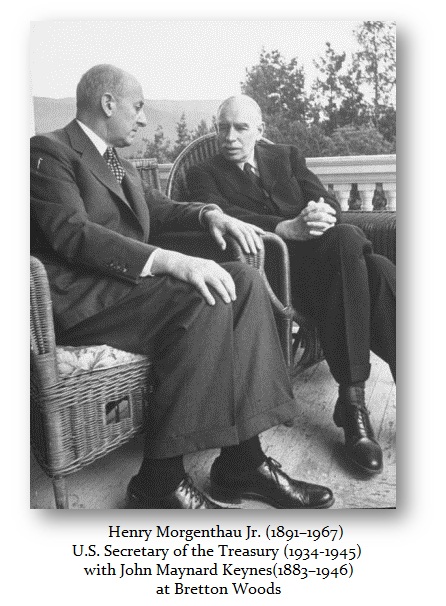
It was this balanced budget philosophy that also inspired John Maynard Keynes who argued that in times of economic distress when the demand has collapsed, that is when the state needs to run a deficit and increase the money supply. There was a simultaneous international flight of capital from Europe to the United States in the face of European sovereign debt defaults. That capital flight lasted for nearly two years until FDR won the election in 1932. There was much concern that Roosevelt would do what Germany did in 1922 in confiscating assets. That was the rumor about the possible confiscation of gold.
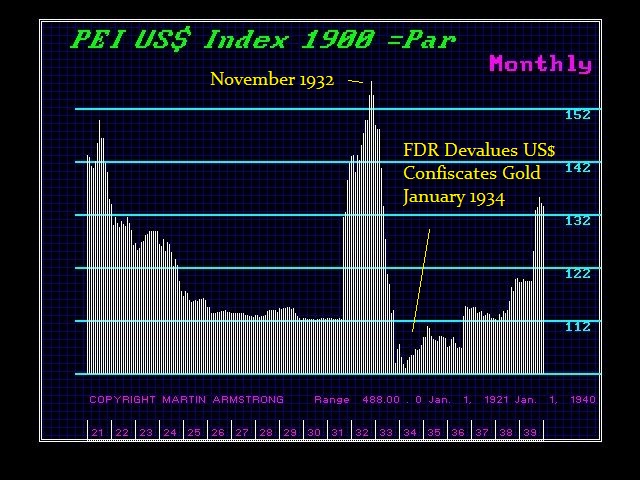
Milton Friedman criticized the Fed because the capital flows poured into the US but they refused to monetize it. We can see that as Europe defaulted on its debts in 1931, the capital rushed head-first into the dollar. Then we see that the dollar peaked in November 1932 with the election of FDR fearing that would weaken the dollar and exploit the economy. All this gold came to the USA pushing the dollar higher, but the Fed refused to monetize it, was Milton’s criticism. The backing of gold behind the dollar doubled in supply between 1929 and 1931.
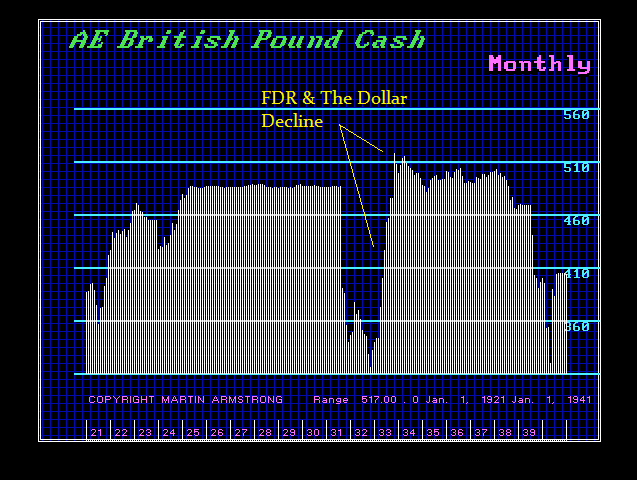
So, you must separate gold and the devaluation of the dollar to comprehend what the issue was all about. FDR could have simply abandoned the gold standard, as did Britain, and not confiscated gold. However, that would have also been sufficient to end austerity. But the bankers would have profited and sold the gold overseas at higher prices. Roosevelt in his confiscation of gold was intended to deprive the private sector of profiting from his devaluation of the dollar which was rising the price of gold from $20 to $35. You must keep in mind that he even degraded Pierre du Pont (1870-1954) and called him the “Merchant of Death” because he produced arms for World War I and made a profit off of that war demand. Many saw Roosevelt as a traitor to his own class.
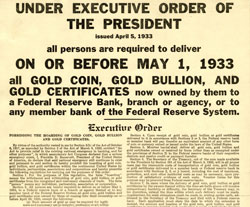
The confiscation of the gold was for two reasons. First, FDR was changing the monetary system from one where there was no distinction domestically from internationally to a two-tier system. Gold would freely circulate without restriction only internationally. Therefore, the confiscation of gold was altering the monetary system moving to a two-tier monetary system with gold only used in international transactions.
Consequently, FDR confiscated gold to move to a two-tier system and to deprive Americans of any profit from his devaluation. What FDR then did was confiscate gold from all institutions ordering them to turn over whatever they had. Ironically, this move was intended to target bankers rather than the public. FDR did not have people knocking on every door demanding all their gold. That is why there are plenty of US gold coins that have survived. If individuals possessed them rather than an institution, then they kept what they owned
Therefore, Roosevelt was able to seize whatever gold existed in banks. He declared all contracts void that had gold provisions for payment. It was in Perry v. United States – 294 U.S. 330 (1935) that the US Supreme Court ruled that Congress, by virtue of its power to deal with gold coin as a medium of exchange, was authorized to prohibit its export and limit its use in foreign exchange. Hence, the restraint thus imposed upon holders of gold coins was incidental to their ownership of it, and gave them no cause of action. id/P. 294 U. S. 356.
The Supreme Court held that it could not say that the exercise of this power by Congress was arbitrary or capricious. id/P. 294 U. S. 356. They held that even if the Government’s repudiation of the gold clause in the government bonds was unconstitutional, it did not entitle the plaintiff to recover more than the loss he has actually suffered, and of which he may rightfully complain. id/P. 294 U. S. 354. Therefore, the Joint Resolution of June 5, 1933, held:
“insofar as it undertakes to nullify such gold clauses in obligations of the United States and provides that such obligations shall be discharged by payment, dollar for dollar, in any coin or currency which at the time of payment is legal tender for public and private debts, is unconstitutional.” id/P. 294 U. S. 349.
Yet, swapping gold for dollars created no loss that was cognizable even though the taking of gold was unconstitutional. Clearly, the Supreme Court did not consider the loss in terms of foreign exchange. The Court reasoned:
“Plaintiff has not attempted to show that, in relation to buying power, he has sustained any loss; on the contrary, in view of the adjustment of the internal economy to the single measure of value as established by the legislation of the Congress, and the universal availability and use throughout the country of the legal tender currency in meeting all engagements, the payment to the plaintiff of the amount which he demands would appear to constitute not a recoupment of loss in any proper sense, but an unjustified enrichment.”
In my understanding of the law, those who argued before the Court made purely a domestic argument. A dollar was still a dollar in domestic terms so there was no cognizable loss and the Court did not reach the constitutional question. Had they argued that their loss was with respect to some debt owed in British pounds, they there was a loss. Purely domestically, the only loss would have been to inflation and the Court would never rule against the government on such an issue.
All of that said, there does not appear to be any historical precedent for the stock market to collapse by 50%, all tangible assets to turn to dust, and only gold will survive given a banking crisis where Biden and Yellen sit on each other’s hands and do nothing. Trust me. Every major Democratic donor will be screaming. And as for those claiming the Fed will reverse its position, say inflation is suddenly no longer a problem, and monetize everything in sight, this is even too big for the Fed. have to create QE and absorb all the debt, there to things have changed. If the Fed does that, it will also lose all credibility. It squarely understands that inflation comes from handing Ukraine a black check to the most corrupt government in the world. The Fed raised rates yesterday for it cannot back down. It is choreographing the best it can but the bankers do not listen.
If they simply stand behind all the deposits, then there will be no panic. That is what they did in 1933 and the market rallied in confidence thereafter.
I have created this site to help people have fun in the kitchen. I write about enjoying life both in and out of my kitchen. Life is short! Make the most of it and enjoy!
This is a library of News Events not reported by the Main Stream Media documenting & connecting the dots on How the Obama Marxist Liberal agenda is destroying America








 Centinel2012