The First Soveregn Default of the United States on the Military


Posted originally on Aug 29, 2024 By Martin Armstrong 
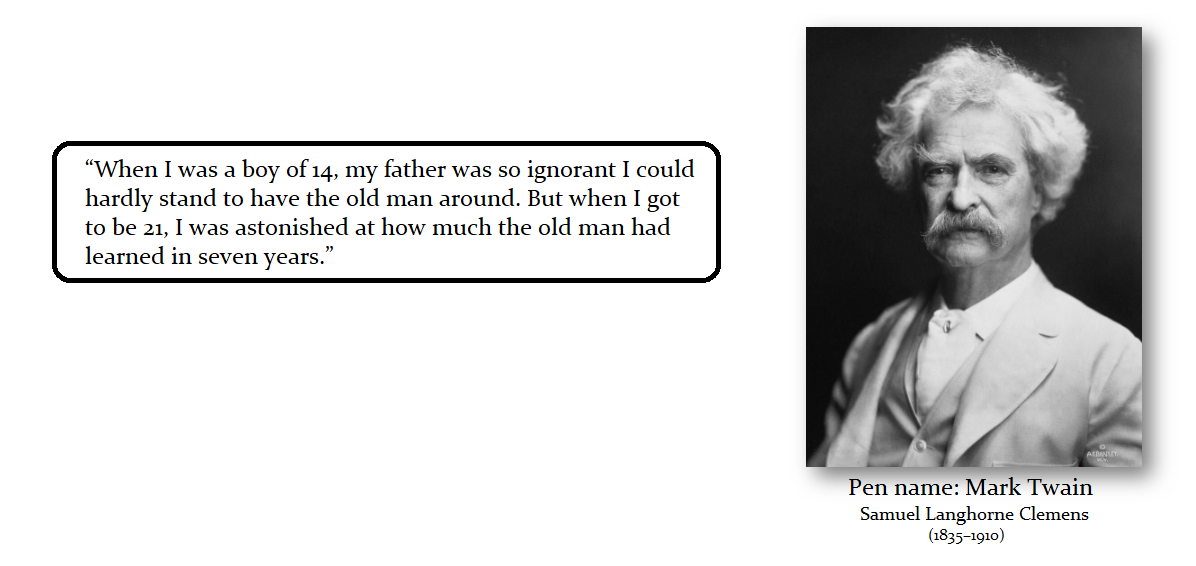
Twain Father

QUESTION: I had an argument with my son that what they teach in school is never the truth, not even about history. I was trying to find that writing you did years ago that the GI Bill was enacted only because they defaulted on the soldiers twice before. If I remember correctly, I think you said Congress fled Philadelphia because of a riot by the soldiers from the Revolution that they also defaulted on as they did with the debts from the Continental Congress. My son said he never heard such a story and called it a conspiracy theory. We seem to be drifting further apart. We cannot agree on much of anything these days.

I guess Mark Twain’s comment about his father is still valid. It reminds me of that song in The Living Years. Perhaps we are in this endless generational war. Is this part of 2032?

Paul

ANSWER: Yes, Paul. It seems that these times are even dividing families. From the emails I get, I see that this is not unique. It appears to have begun with COVID. I had dinner with a friend who said his sister is in California and they have not spoken in years. My old partner Jack King, out of the blue, turned to me and said if he died, make sure his children got nothing and protect his second wife. Another two friends also no longer talk to their kids. Perhaps this is just part of the cycle going into 2032. We are witnessing that publicly with RFK as well.

My father wanted me to be a lawyer, but I did not want to follow that path. But when he was on his deathbed, we settled our differences with respect, and I am thankful for that. He was proud of me but would say that only to friends. Likewise, I always respected my father and what he taught me. I guess I had not told him how much I was also proud of him. At least we came to that understanding before he died. I guess those days of pride and respect are old-fashioned ideas in these days of chaos and uncertainty.

Perhaps your son respects you but cannot get the guts to tell you. Hopefully, he will come to see that what they teach in school is never the full story. There are no courses that connect all the dots. The only thing I regret is that the family name will die with me, although I am Martin VII. I have no heir to carry the name, so I guess that also dies in 2032. A neighbor is in his early 70s. He married someone in their 30s, and they are a great match. His wife is having twins. I am very happy for him since he is estranged from his prior children.
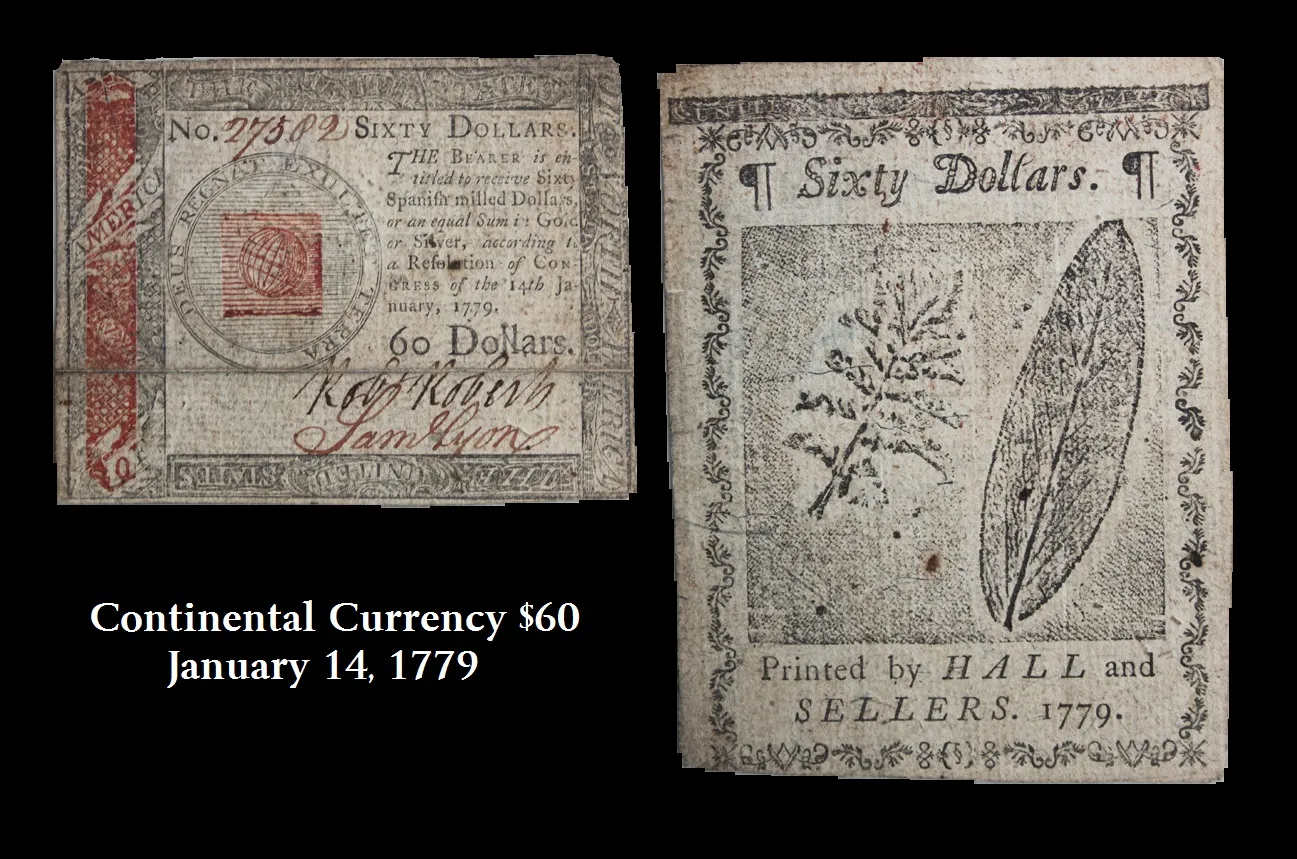
Continental60 1779
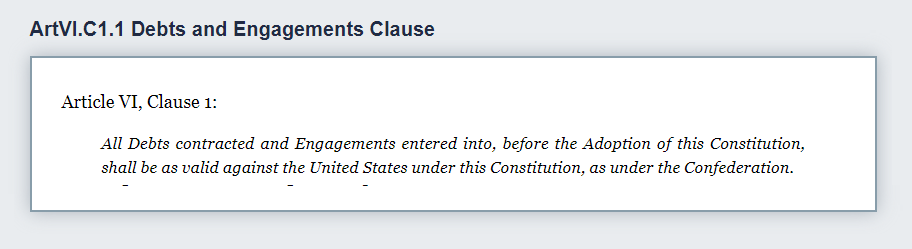
Debts_and_Engagements_Clause

Turning to your question about defaulting on the military, you remembered correctly. As I pointed out, the new United States defaulted on ALL debts of the previous Continental Congress despite Article VI expressly stating in the Constitution that they would honor those debts. When George Washington became the first US president in 1789, the capital city of the United States was New York. Then, in 1792, he was re-elected for his second term. However, the capital district had moved to Philadelphia. They may teach that Philadelphia was the capital for ten years. Yet, before becoming the capital, Philadelphia had been the home to Congress. That is where even the Declaration of Independence was signed. But there is a lot more to it than just that.
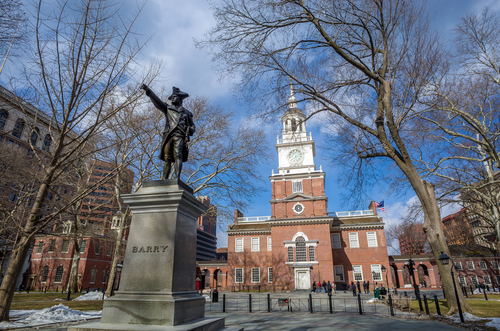
Philadelphia Independence Hall

What they do NOT teach in school because it would taint the image of the government. Congress fled Philadelphia much like the Senate of Rome fled when Julius Caesar crossed the Rubicon, and the people did not support the Senate but cheered Caesar. The unspoken history is that in 1783, there was an uprising of the military against Congress, who refused to pay what they owed them. They called it the Pennsylvania Mutiny that chased Congress out of Philadelphia.
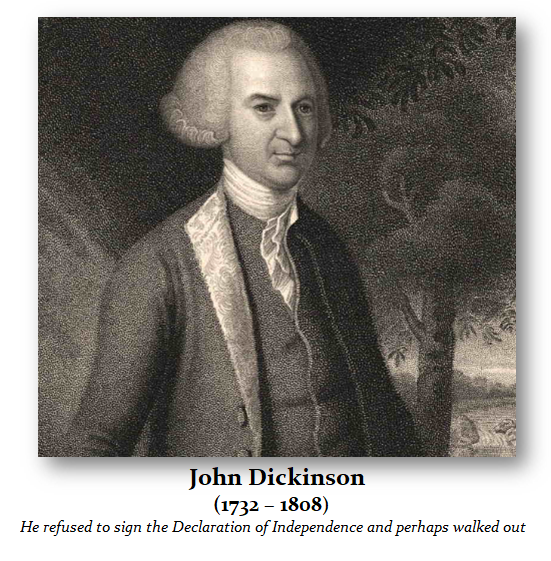
Dickinson John 1776

The Pennsylvania Mutiny of 1783 was an anti-government uprising over a sovereign default/debt crisis, not unlike Caesar crossing the Rubicon—nearly 400 soldiers of the Continental Army stormed Congress on June 17th, 1783. The mutiny and the refusal of the Executive Council of Pennsylvania to stop it was very significant. If you watched that series, I recommended the Sons of Liberty. The one man who walked out and refused to sign the Declaration of Independence was John Dickinson, who just so happened to be the President of the Executive Council of Pennsylvania and refused to act. I believe he was against the entire Revolution and supported the King. When Congress refused to honor the debts owed to the soldiers, curiously, Dickinson sought revenge and stood down, allowing the troops to go after Congress.
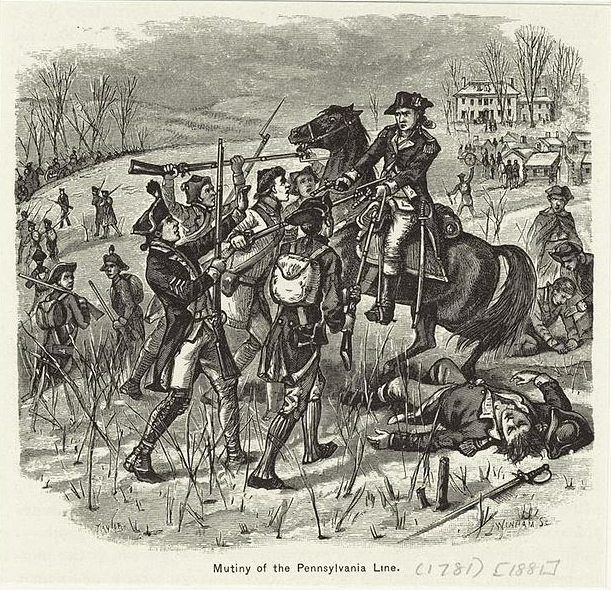
1781 Mutiny_of_the_Pennsylvania_Line

From March 1781, Congress shared the Pennsylvania State House (now known as Independence Hall) with the Supreme Executive Council of the Commonwealth of Pennsylvania. Under the authority of the Articles of Confederation, Congress did not have direct control over the military, except in times of war, and was largely reliant on state militias to enforce laws and keep order. There had been a previous uprising called the Mutiny of the Pennsylvania Line that occurred in January 1781. The soldiers had legitimate grievances since they were not paid in almost a year.
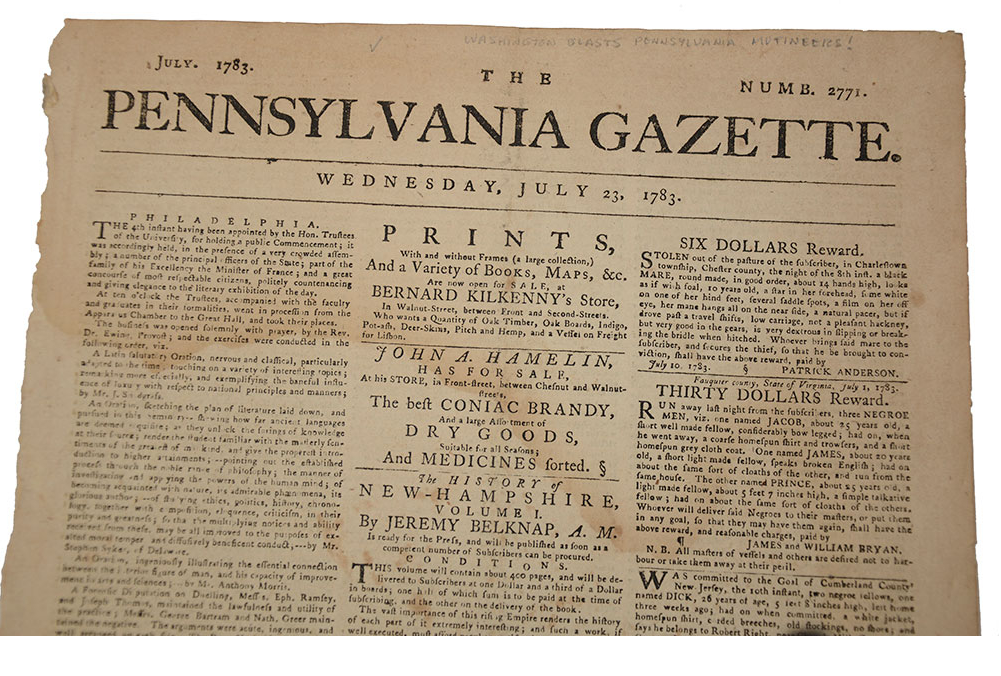
1783 Mutiny Phil Gazet

The Continental Army soldiers stationed in Philadelphia sent a message on June 17th, 1783, demanding payment as contractually required for their service during the American Revolutionary War. Congress had refused to pay the army. The soldiers, in response, threatened to take action that day if their complaints were not addressed. Congress just ignored them, calling their bluff. The soldiers did not act on their threat. However, two days later, Congress received word that about 80 soldiers had left their post at Lancaster, Pennsylvania, about 60 miles outside of Philadelphia. They joined the soldiers stationed in Philadelphia. Now, the group was nearly 500 men. They seized control of all weapons and stores and munition depot.
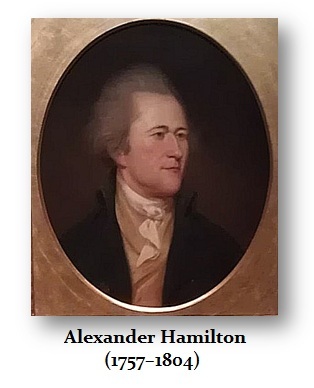
Hamilton 2

Now, three days after their initial demand on the morning of June 20th, the State House was mobbed by a huge number of soldiers demanding payment. The soldiers blocked the door and initially refused to allow the delegates to leave. Alexander Hamilton (1757-1804), who at the time was a delegate from New York, stepped forward to persuade the soldiers to allow Congress to meet later to address their concerns. The soldiers yielded, allowing the members of Congress to adjourn that afternoon peacefully. However, Hamilton then called a small Congressional committee that night in secret to draft a message to John Dickinson, the President of the Executive Council of Pennsylvania. They asked him to protect Congress from the mutineers since they had no military. Hamilton had no intention of paying them. The letter threatened Dickinson that Congress would be forced to move elsewhere if Dickinson did not act.
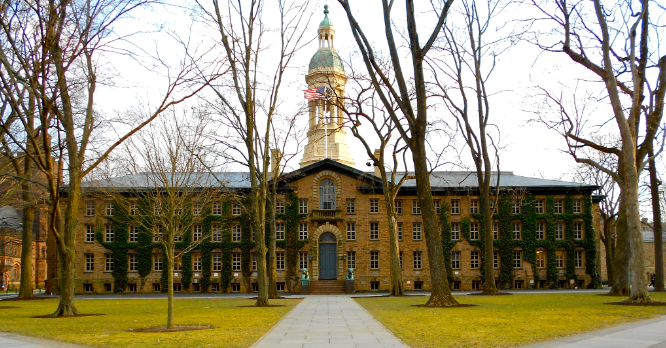
Nassau_hall_Princeton NJ

The next day, June 21st, 1783, the Congress met again at the State House with members of the Pennsylvania Executive Council, including John Dickinson. The members of Congress petitioned Dickinson to protect the federal government. Dickinson said he would talk with the militia commanders and reply to Congress the next day. Dickinson, who walked out of the convention and refused to sign the Declaration of Independence, refused Congress’s request to protect them. The members of Congress then realized that perhaps Dickinson wanted the Congress to be wiped out. Congress fled Philadelphia and moved north to Nassau Hall in Princeton, New Jersey, which became the next capital of the United States.
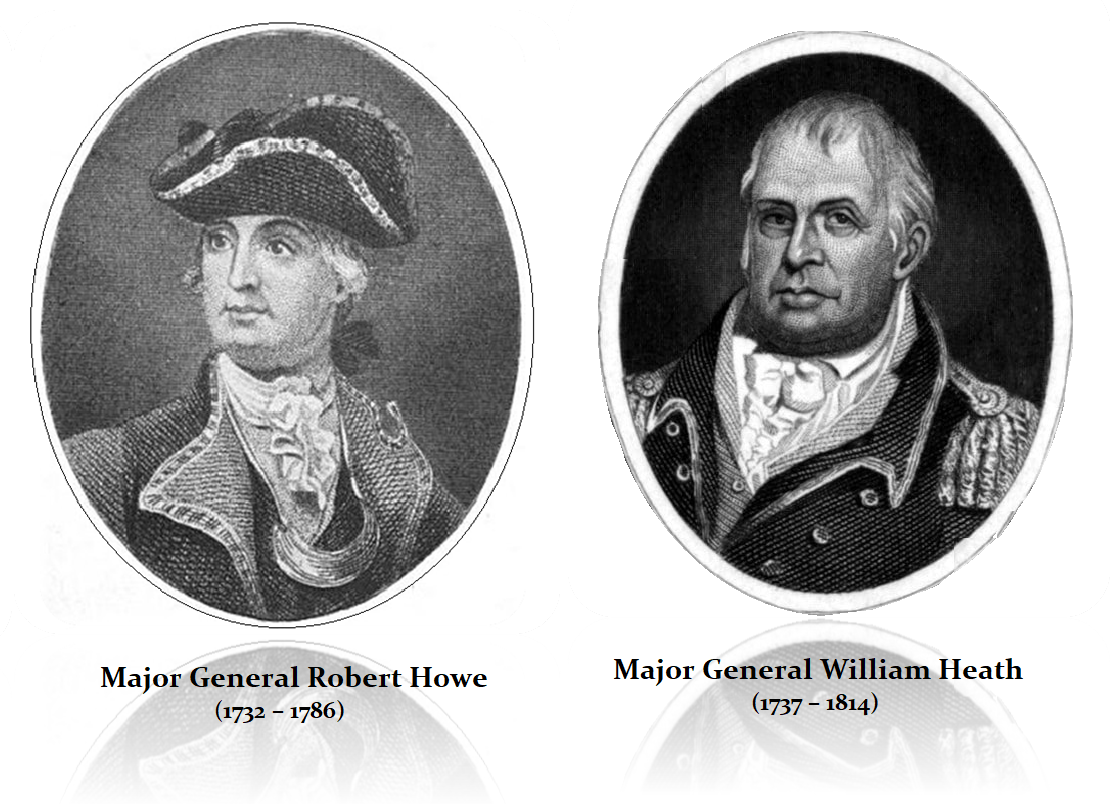
Howe Heath

George Washington, learning about the mutiny in Philadelphia on June 24th, ordered 1,500 troops under the joint command of Major General Robert Howe and Major General William Heath to suppress the mutiny. Some of the mutineers were finally arrested. Congress then called an investigation into the event from a position of safety in Princeton, New Jersey.

Some have argued that John Dickinson did not act because he was uncertain that the local militiamen would comply and protect Congress from their fellow soldiers. Yet, many suspected Dickinson’s loyalties since he had been an officer in the militia and supported the soldiers’ actions. Some also believed that since Dickinson refused to sign the Declaration of Independence, he was anti-federalist and against the entire Revolution. Dickinson’s refusal to comply with Congress’s request to bring full military action against the soldiers caused some hesitancy regarding Dickinson.

Congress then moved from Princeton, New Jersey, in early November 1783, transferred to the next capital, Annapolis, Maryland, and then back to Trenton, New Jersey, in November 1784. Finally, Congress then moved again to New York City in January 1785. It was not until the Constitutional Convention in 1787 that the delegates decided to meet again in Philadelphia. Many assumed that Pennsylvania failed to protect Congress in 1783 due to Dickinson. This incident led many to insist that the federal government should have a separate location for its own security. Washington, DC, was a compromise between the North and the South. Jefferson agreed to support Hamilton’s idea of a national debt if the capital was to be removed to the middle of the colonies with land donated by Maryland and Virginia.

At the Constitutional Convention, the delegates agreed on Article I, Section 8, giving Congress the power “to exercise exclusive legislation in all cases whatsoever, over such District (not exceeding ten miles square) as may, by cession of particular states, and the acceptance of Congress, become the seat of the government of the United States.”
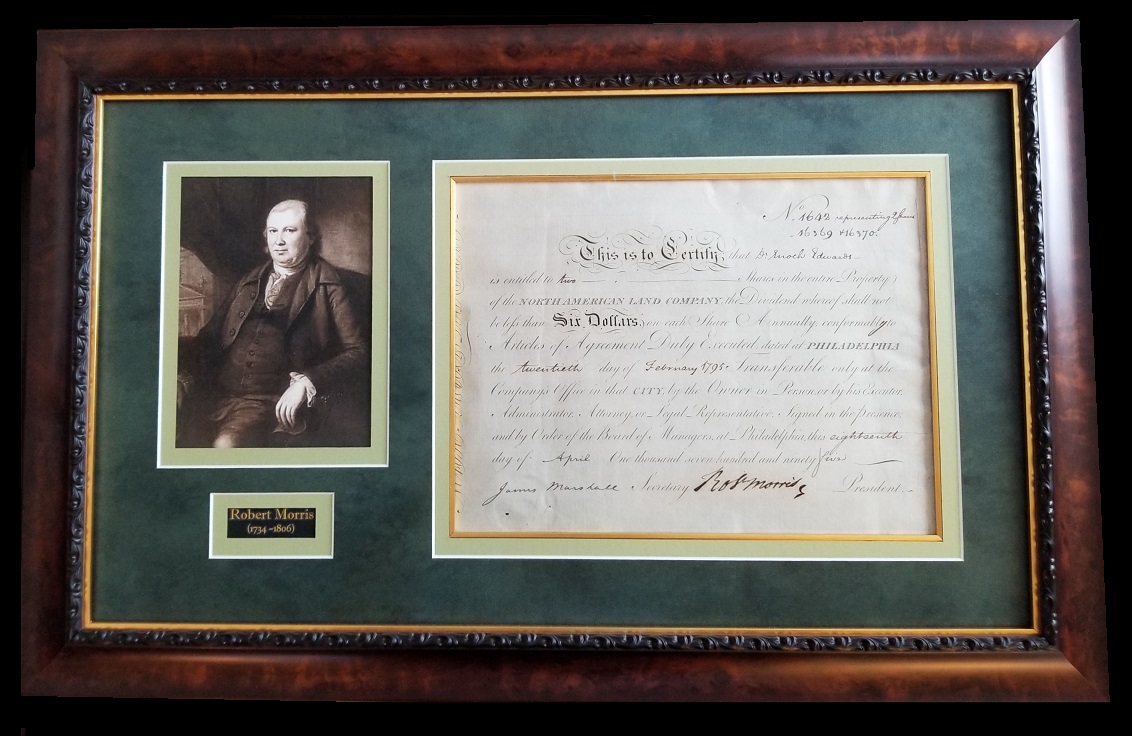
Robert Morris North American Land Company

After the Constitution was ratified by the colonies/states in 1788, the delegates agreed to keep New York City as the temporary federal capital. 1790, Congress passed the Residence Act, which created the District of Columbia. Robert Morris (1734–1806), a major funder of the Revolution, convinced Congress to return to Philadelphia while Washington, DC, was being built. As a result, the Residence Act declared Philadelphia to be the temporary capital for 10 years. In a final attempt to convince Congress to keep the capital in Philadelphia, the city began constructing a new presidential palace and expanding to Congress Hall. Those efforts failed, no doubt influenced by the failure of Dickinson in 1783. Congress met in Philadelphia for the last time on May 14th, 1800.
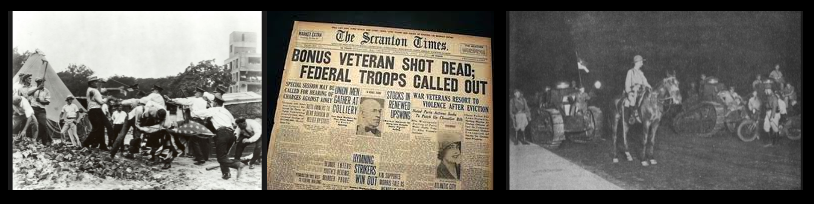
Bonus Army of 1932

Herbert Hoover lost the 1932 election largely because he called out the army against the protests of the World War I veterans, the Bonus Army, who were protesting simply to be paid what they had been promised. Just as the 1783 Mutiny over the refusal to honor the promises to veterans, they pulled the same stunt on the World War I veterans. When World War II came, Congress passed the GI Act and this time honored their promises for if they did not, the Neocons could not expand around the world following Korea.


The Freeman’s Journal or The North-American Intelligencer
Philadelphia, Pennsylvania · Wednesday, July 02, 1783

Page 2
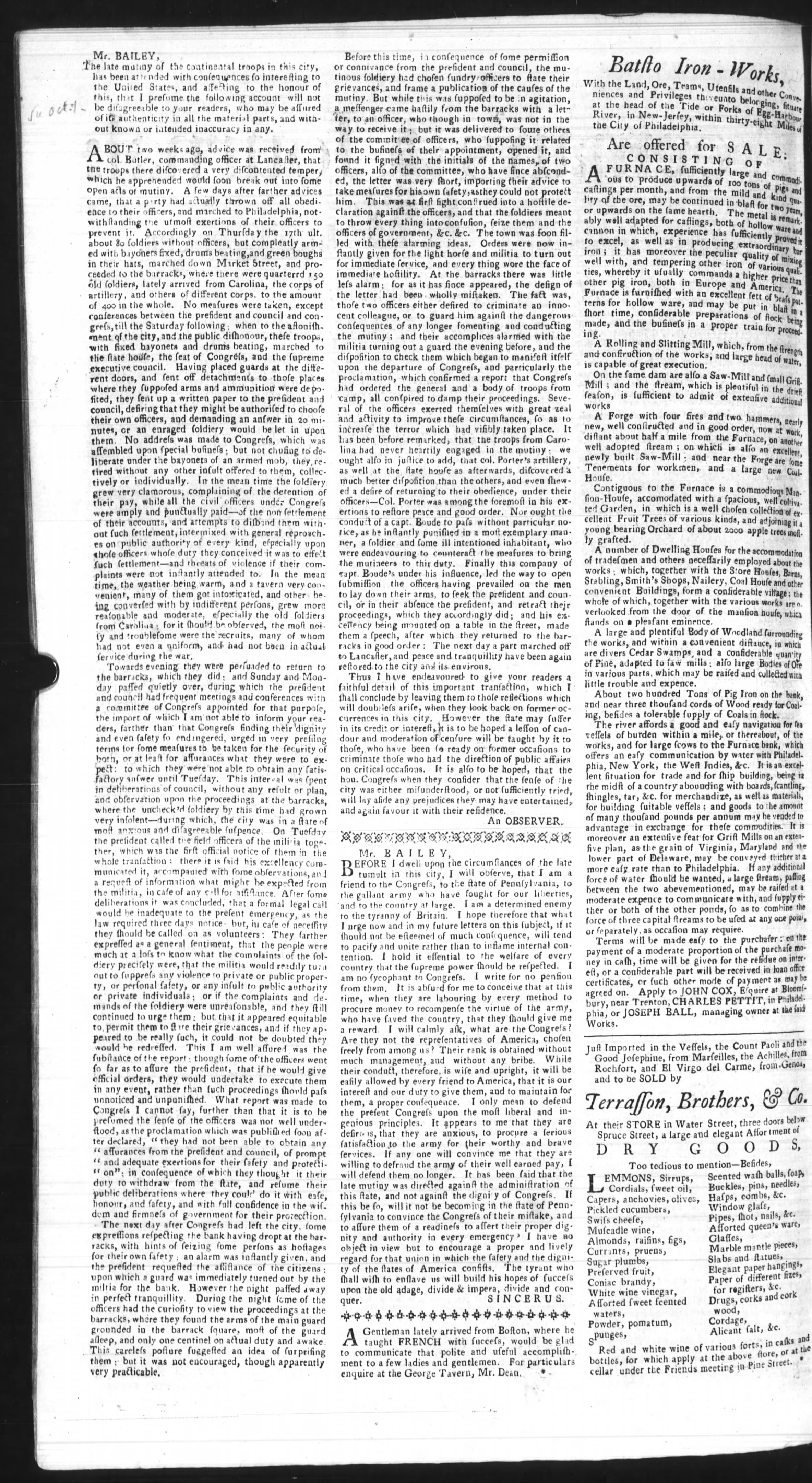
The_Freeman_s_Journal_or_The_North_American_Intelligencer_1783_07_02_Page_2

Biden Proposes Largest Spending Package and American Taxpayer Burden in US History


Posted originally on Mar 13, 2024 By Martin Armstrong 

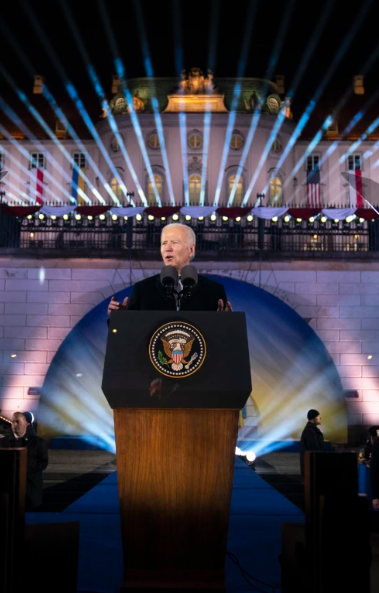
2023_02_21_Biden Poland Speech

The Biden Administration is outright destroying America through reckless spending. The Federal Reserve has warned that Biden’s current spending habits are robbing future generations of Americans. They cannot stablizie prices or make a dent in inflation due to the rising national debt. After his State of the Union address, Joe Biden unveiled his next spending package that could cost Americans $7.3 TRILLION.

Americans are expected to pay $5.5 trillion in tax hikes to fund this bill, which will offer nothing to the everyday American. The Committee for a Responsible Federal Budget (CRFB) told the Office of Management and Budget (OMB) that this plan will raise the national debt by $45.1 trillion or 105.6% of GDP by 2034. The national debt already reached 97% of GDP in 2022. This makes the Inflation Reduction Act look like pocket change, as the US has never experienced such a large tax burden.

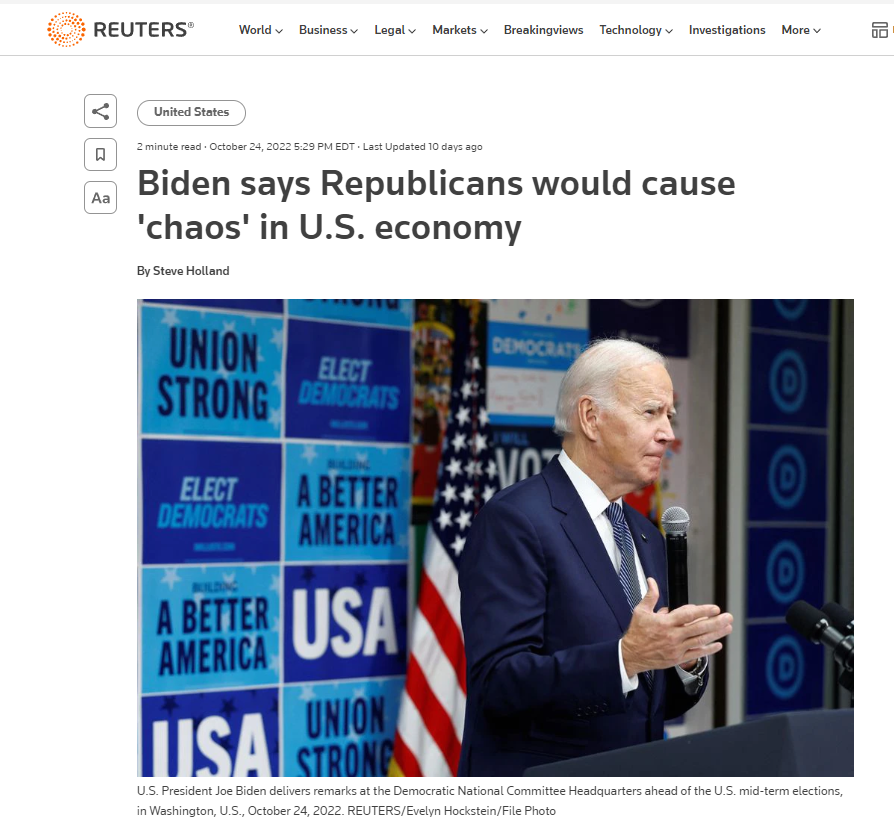
Biden Republican will bring chaos2022_11_03_20_32_25_Biden_says_Republicans_would_cause_chaos_in_U.S._economy_Reuters

US Credit Rating & the Sovereign Debt Crisis


Armstrong Economics Blog/Politics Re-Posted Aug 3, 2023 by Martin Armstrong

QUESTION: What do you make of the US debt downgrade? Do you think this has anything to do with indicting Trump in three courts? I know many people decided to donate to Trump today, even for the first time, as a sign of disapproval of the Biden Administration and the RINOs.

HJ

ANSWER:

It is time for the Credit Rating Agencies to knock off the BS. Yes, Fitch Ratings downgraded US long-term debt late on Tuesday from AAA to AA+, citing this spring’s debt ceiling standoff as a significant reason. That is nonsense. NO government ever intends to pay off its debts. Historically they ALWAYS default. The global financial system has relied on the promise that the US government will always repay its debts. Some wrongly believe that this is what makes the US dollar the most widely held currency worldwide. The backing behind the dollar is twofold.

  1. Largest Consumer-based economy in the world that everyone needs to sell into
  2. The deepest financial market in the world to park money as well as finance projects and float stocks

This is why the US markets barely reacted to the news in after-hours trading on Tuesday, and US Treasuries were holding steady. Of course, you have the traditional bearish prognosticators who claim the last time there was a downgrade, and the market crashed by 6.5%. The real question is – sell stocks, and the traditional flight to quality is you buy bonds – which were just downgraded. Hm? Many are starting to wake up that the only safe place for wealth will be in tangible assets, for this Biden Administration is completely desperate and out of control. You cannot threaten China and Russia with war and then ask them to buy your debt. China is disinvesting in US government debt ASAP. That is also the reason for the downgrade.

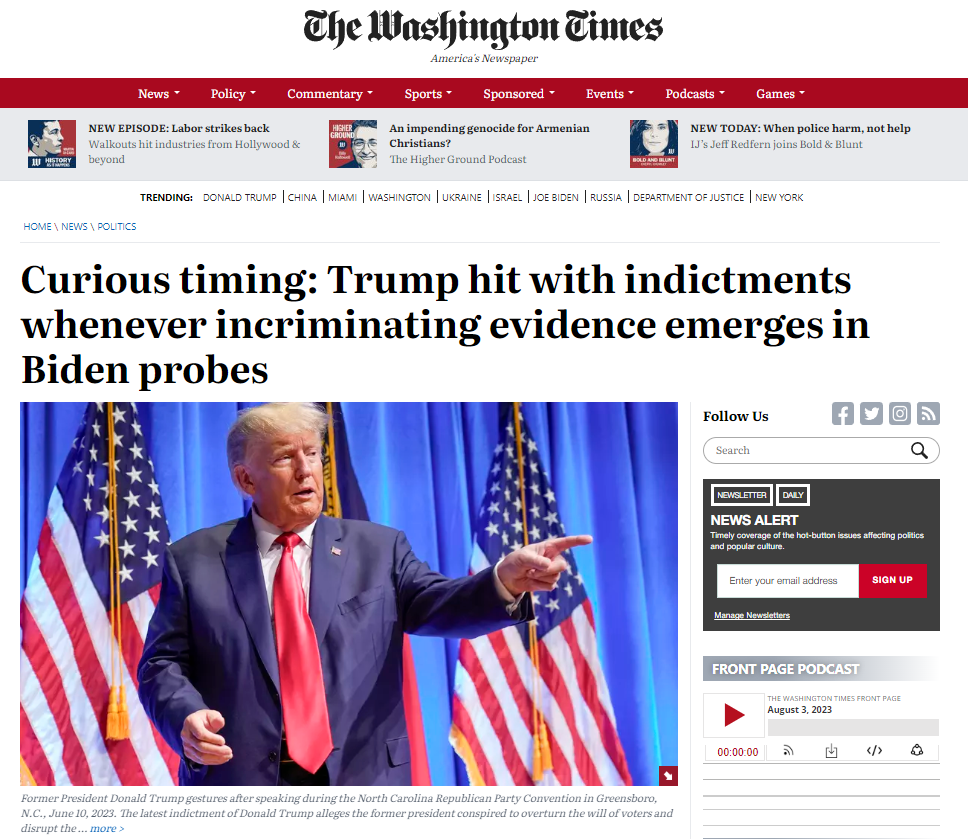
These indictments against Trump, while Biden and Hunter actually could be charged with Treason, have undermined the confidence in the United States government internationally more than anything. They are trying to prevent Trump from running in 2024, for the Neocons know they would be fired if not put on trial for treason themselves. Trump vowed to run for office from prison. RFK should join as the VP and abandon the Democrats, for they will NEVER allow him to gain a toe in their Washington club.

Yes, I have gotten many emails saying people are donating to Trump’s 2024 campaign as a matter of protest against this Biden Administration. All I can hope is that even Democrats wake up before it is too late and stop this hate-Trump nonsense, for what lurks in Washington is so much worse. This judge in Washington will put Trump in prison in the blink of an eye. This judge has been handing out time in excess of the prosecutor’s recommendations. That is unheard of.  You are about to witness the complete collapse of the Rule of Law in the United States, and once that goes – it is time to turn out the lights.

The US will eventually descend into civil war at worst, just as China and Russia did when faced with the rise of the LEFT. Some states will separate from this absolutely corrupt government. We cannot rule out the Biden Administration canceling the dollar before the 2024 election, for the Neocons do not care about the economy – only their geopolitical goals. With the Neocons in such a desperate position, they may not wait for the election and connect a dollar cancelation to some geopolitical event. The EU would most likely do the same on a coordinated basis, and both Canada and the UK will follow suit with Japan, Australia, and South Korea.

If the Neocons manufacture a geopolitical conflict before the election, beware of the 2nd quarter next year. That does NOT mean we should lose all hope. You cannot create a new system without purging the old one. Keep your fingers crossed for post-2032, and we get to start anew just as the Founding Fathers overthrew the monarchy and created a new political system.

C

Panic of 1857 & Gold


Armstrong Economics Blog/Gold Re-Posted Apr 23, 2023 by Martin Armstrong

QUESTION: Didn’t you also buy gold bars from the SS Central America ship that was discovered? The gold bugs hate you and say you are bearish gold but you buy a lot of it.

All the best

JE

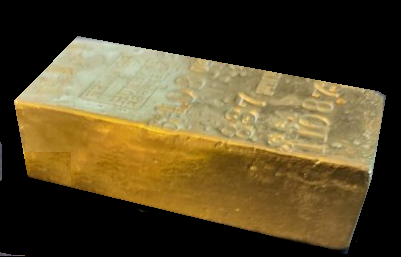
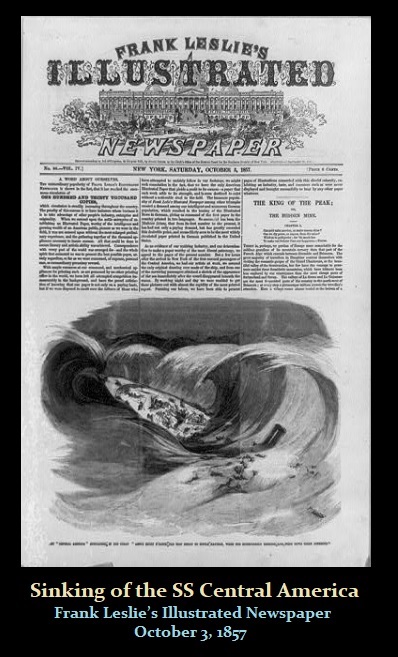
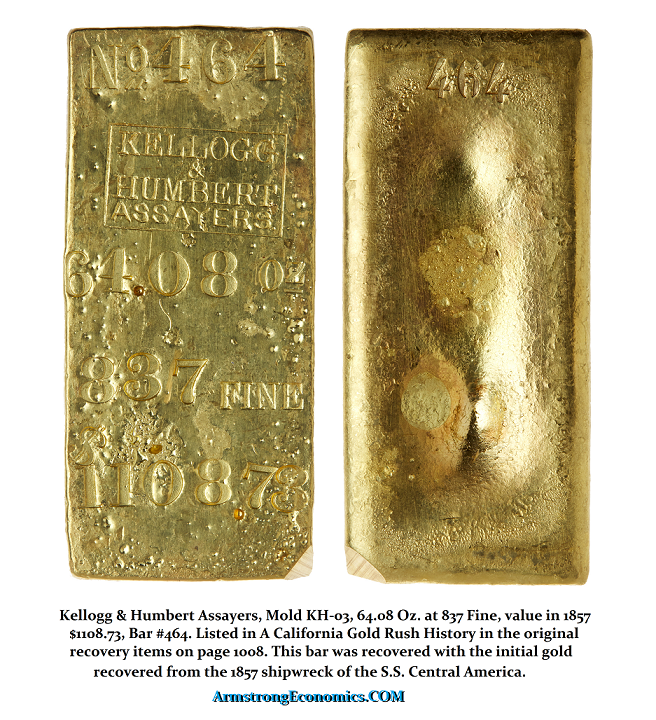
ANSWER: Oh yes. I tend to collect important relics from major economic events.  The sinking of that ship set off a financial panic in NYC because the banks were counting on that gold shipment. I did buy bars. There were some 30,000 pounds (13,600 kg) of gold and about 15 tons were recovered.

They are a piece of history. I would not melt them down.

Welcome to the New Totalitarian One World Government


Armstrong Economics Blog/Regulation Re- Posted Apr 18, 2023 by Martin Armstrong

QUESTION: Marty, You are the only worthwhile analyst. You were alerting us a year ago that the IMF was creating its own digital currency. We have all these people claiming this will kill the dollar just as they proclaimed the euro when that was created. It is also well known that you were called in about revising the world monetary system numerous times. I heard that you were called in on this one and refused to assist them. You warned back in May of 2021 that the IMF was creating a new reserve digital currency.

Is this all part of the rise of the United Nations, World Bank, and IMF all becoming this one world government? I that why you declined to get involved?

LW

ANSWER: I am not at liberty to speak to issues where I am solicited. Suffice it to say, I took no part in creating this currency. This is part of what I have been warning about digital currency. They can restrict its use and anyone who thinks that somehow Bitcoin will be some independent white knight rushing in to save the day, they have drank too much of the cool aid.

Look, try depositing $10,000 in cash. Watch what happens. I have a friend who owns a bar in a college town. He takes in a lot of cash because the customers often do not have credit cards. Some banks did not even want to accept an account from him. Others required inspection and monitoring because cash CAN BE a way to launder money. Europe has been restricting cash to transactions capped at €1,000.

There is serious talk of restricting purchases for cash or CRYPTOCURRENCY and the way they enforce it is precisely restrictions on businesses and noncompliance means you are out of business when no bank will accept your account. That eliminates business in credit cards as well. This is why I say, they will create a black market through their sheer authoritarianism. Human rights will no longer be respected. This is point 8 of Schwab’s Agenda.

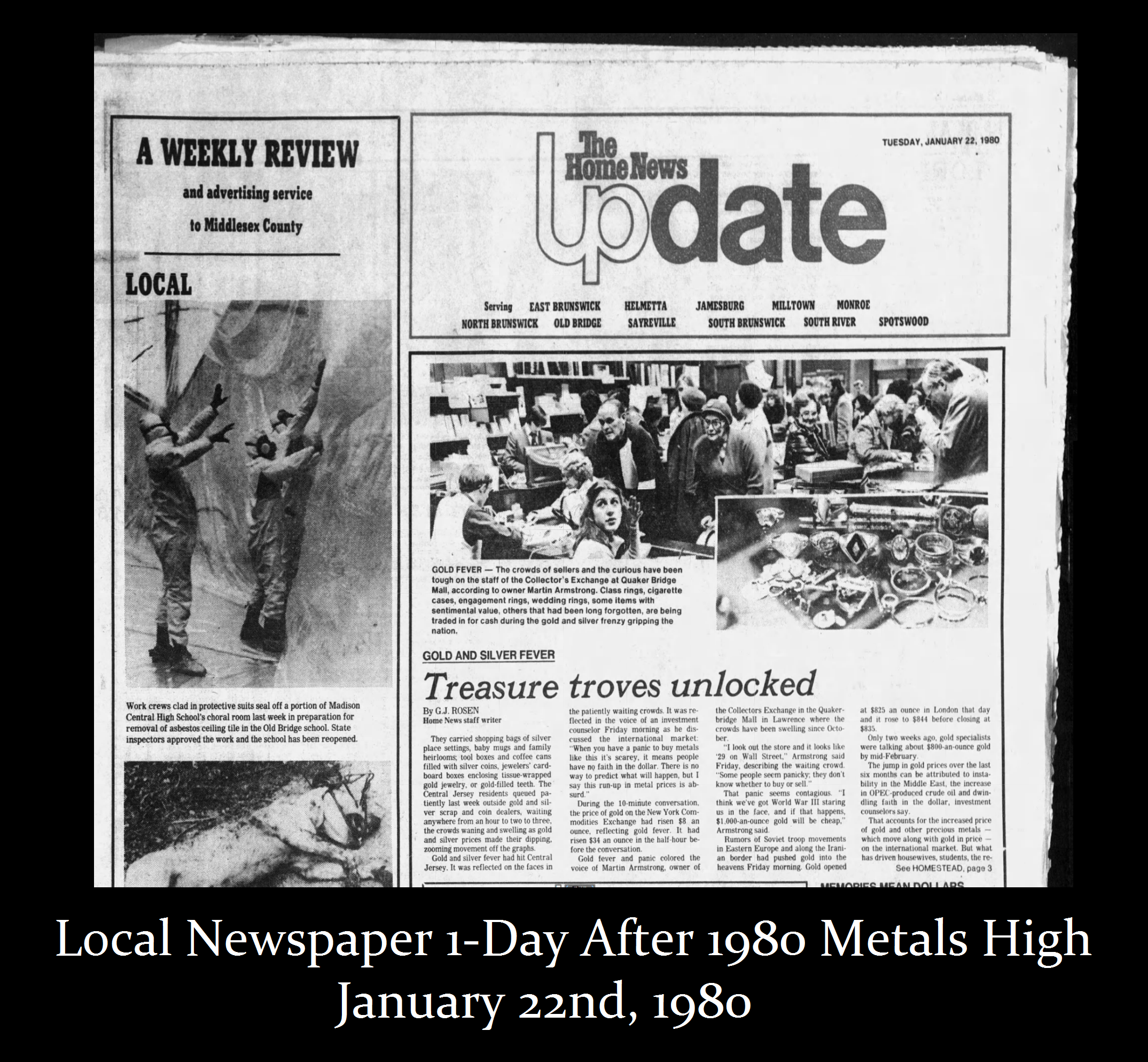
Back in 1980, the press was all over my firm. NPR came in with cameras rolling and could not believe we had just paid a woman $6,000 for a heavy silver serving plate. We had lines all day long at all my locations in addition to the fact I was making markets for all the stores nationwide. Whatever they bought that day they sold immediately;y to us and shipments were coming in from everywhere. I had a team just handling that and we would bundle it all up and send it out in Armored trucks to be refined at Engelhard which was 30 minutes away.

Because of all the publicity, the IRS came in and declared me to be a bank under the theory that Nixon only closed the gold window and gold was never demonetized. Sure, it was a novel theory that just because I was one of the 3 largest gold dealers in the country, that made me a bank without applying for a banking license. They claimed I had to report every transaction of $10,000 or more buying for selling. They sent in their stormtroopers and began going through every transaction. They then went out and audited over 3,000 clients. I decided to retire. That was it. I was not about to become a rat on everyone that walked in the door.

The point is this. They can declare everyone mining cryptocurrency to be a bank. Already, the Infrastructure Investment and Jobs Act of 2021 (IIJA) requires any transaction of $10,000 or more to be independently reported to the IRS. The government can declare you to be anything. You can fight them in court and you will lose and it will take years. In the meantime, you will have to comply. They can do ANYTHING they want. It is then your burden to argue that what they are doing is illegal. Good luck. We are no more living in a free country than Russia or China. The government can do anything it desires. It will always be your burden to say they are acting unconstitutionally.

You will NOT be able to travel internationally with even gold coins. You may not even be able to hop on a plane domestically with gold or cash. Over the past several years, a common question for U.S. taxpayers across the globe is whether or not a foreign-based virtual currency such as Bitcoin that is held overseas is reportable for FBAR (Foreign Bank and Financial Account Reporting) or FATCA (Foreign Account Tax Compliance Act) purposes. The Treasury was already pushing since 2021 for any transaction of $10,000 or more in cryptocurrency must be reported to the IRS.

Whether you are a visitor to the United States or a U.S. citizen arriving in the United States, you must complete one or more entry forms.

At the end of the day, they want their pound of flesh and they want absolutely everything to be restricted and monitored. Welcome to the new law of totalitarianism.

Categories: Regulation

Tucker Carlson Outlines the Ramification of Trillions in U.S. Treasury Bonds No Longer Needed as Global Securities


Posted originally on the CTH on April 5, 2023 Sundance

For his opening monologue and first interview tonight, Fox News host Tucker Carlson outlined the ramification of non-western nations now trading in alternative currencies to the U.S. dollar.   {Direct Rumble Link Here]  As the dollar diminishes in value, and as an outcome of Biden using U.S. treasury bonds as part of the sanction regime against Russia, various non-western nations now perceive holding dollars as exposing themselves to risk.

Carlson is joined by Luke Gromen who accurately notes the dollar as a global trade currency may continue, but foreign nations holding U.S. treasury bonds as an asset will likely start contracting.  The result of U.S. treasury bonds returning after maturity with no repurchase, would be an inability of the U.S. to borrow against their sale. This could, perhaps likely will, severely diminish the amount of money the U.S. congress can spend.  WATCH:

None of this should come as a surprise to those who have paid attention. Factually, in March of last year, one month after the Russian sanctions were announced, the International Monetary Fund’s (IMF) Deputy Managing Director said the sanctions against Russia are likely to undermine the US dollar’s global dominance as a trade currency.  Everyone could see this coming.

(Inside Paper) – March 2022 – […] “The dollar would remain the major global currency even in that landscape, but fragmentation at a smaller level is certainly quite possible,” Gopinath said in an interview with the Financial Times.  She went on to say that some countries have already begun to renegotiate the currency in which they are paid for trade.

According to Gopinath, the drastic restrictions imposed by Western countries in response to Russia’s military operation in Ukraine may result in the formation of small currency blocs based on trade between individual groups of countries.  Furthermore, the use of currencies other than the dollar or the euro in global trade would result in a further diversification of central banks’ reserve assets. (read more)

The efforts of NATO and the western alliance to crush the Russian currency have failed.  The Russian ruble currency has jumped back from the sanctions and is now even stronger than before the sanctions were put into place.

With China and India supporting ongoing trade with Russia, and with Saudi Arabia responding coldly to the U.S. working on a deal with Iran for nuclear weapons, the geopolitical strategy of NATO, G7 and the proverbial western alliance increasingly looks like it will backfire.

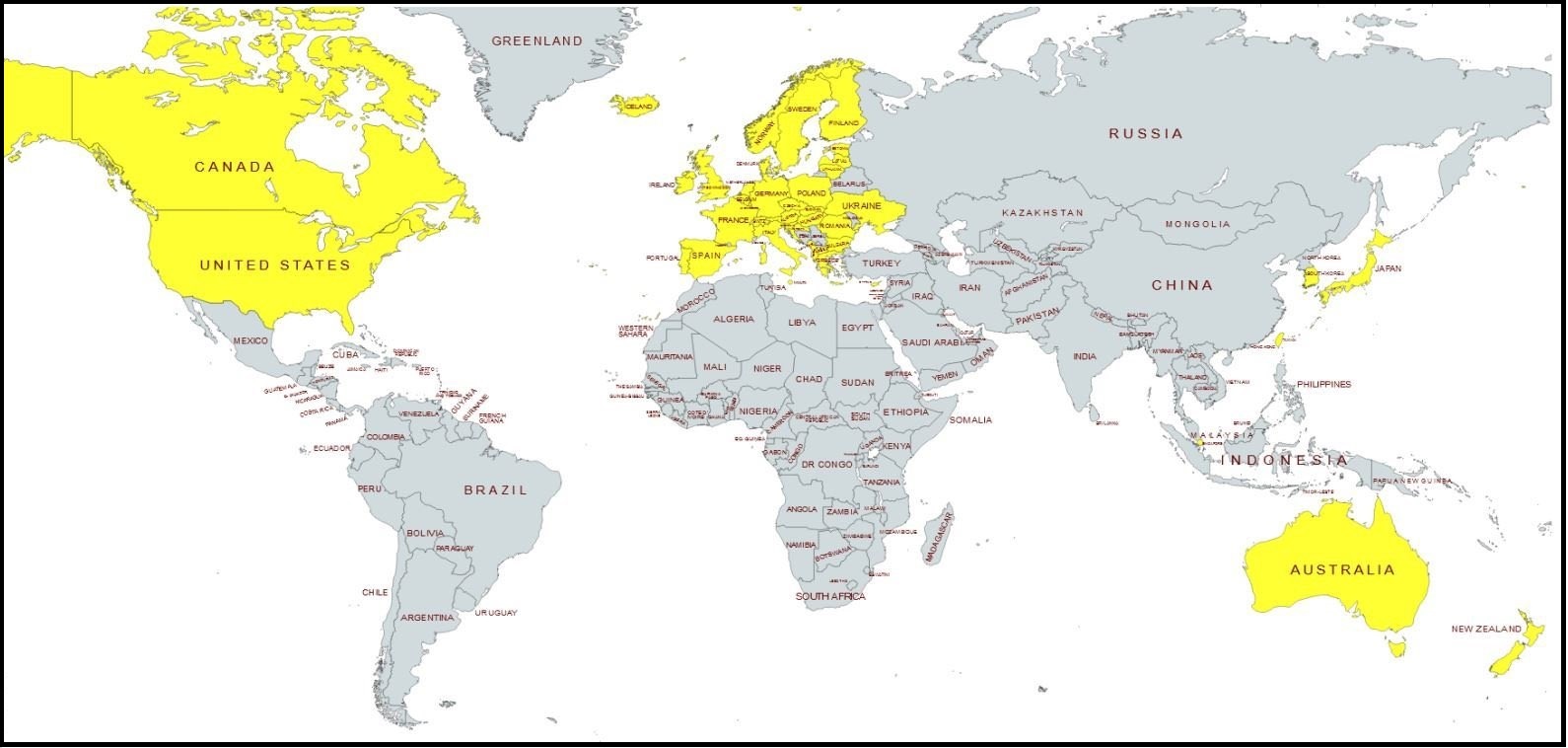
Yellow Team -vs- Gray Team: Remember, China just brokered a deal to lessen hostilities between Iran and Saudi Arabia. The fulcrum of that agreement was economics.

Meanwhile in North America, Mexican President Andres Manuel Lopez-Obrador has said he was not willing to join the energy suicide pact pushed by Joe Biden and Justin Trudeau…. A policy break in the trilateral relationship which suddenly, and not coincidentally, aligns with the timing to make Mexico a pariah to the U.S. vis-a-vis a renewed media push on the drug cartel narrative.

BIG PICTURE NOT BEING DISCUSSED – The western politicians followed the climate change instructions of the WEF multinational corporations and banks (Build Back Better) and post-pandemic immediately started reducing energy development. The central bankers then began raising interest rates to shrink the economies of the same western nations to the scale of the now diminished energy production.

The raising of interest rates is now hitting the national and multinational banks impacted by government policy that was following WEF orders. Now the western politicians are stepping in with the government controlled central banks to backstop the national banks and multinationals. Can you see the dynamic?

Team yellow is suffering the consequences of their own ideological policy as enacted. Team grey is not going to help team yellow get out of a crisis team yellow created, which was intended to hurt team grey.

…. And we continue watching.

The 6th Wave – Do We Ever Learn?


Armstrong Economics Blog/ECM Re-Posted Apr 4, 2023 by Martin Armstrong

QUESTION:
Hi,

Have you come across a period in history that at the end of the sixth wave, after the political system dies, during the next six waves, human mankind learned from its past errors and corrected it?

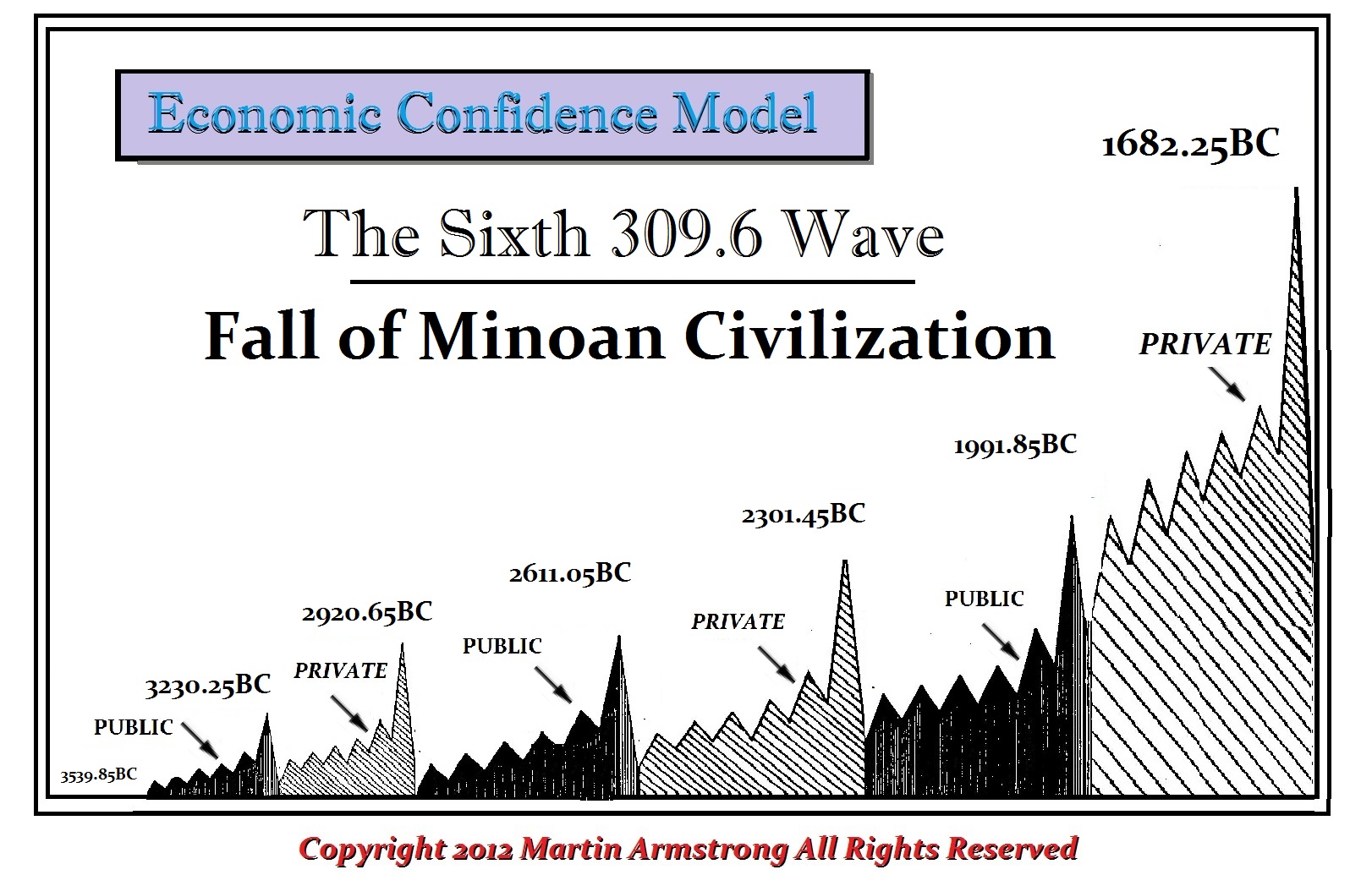
ANSWER: Actually, the answer is NO. The fall of the Minoan Civilization brought in a dark age with the invasion of the Sea Peoples from the North who were driven south by climate and conquered all the civilizations during the Bronze Age except for Egypt. Reliefs show the Egyptians in heated battles against the Sea Peoples.

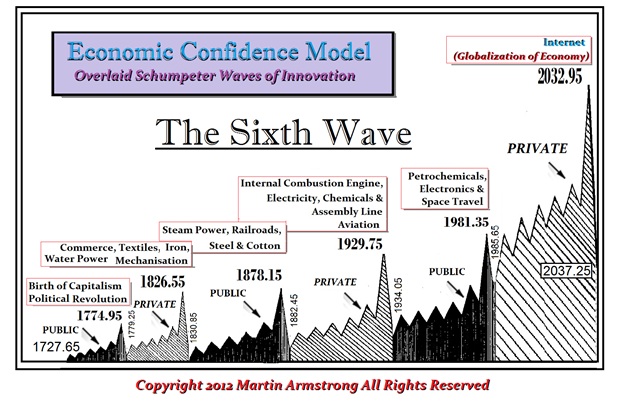
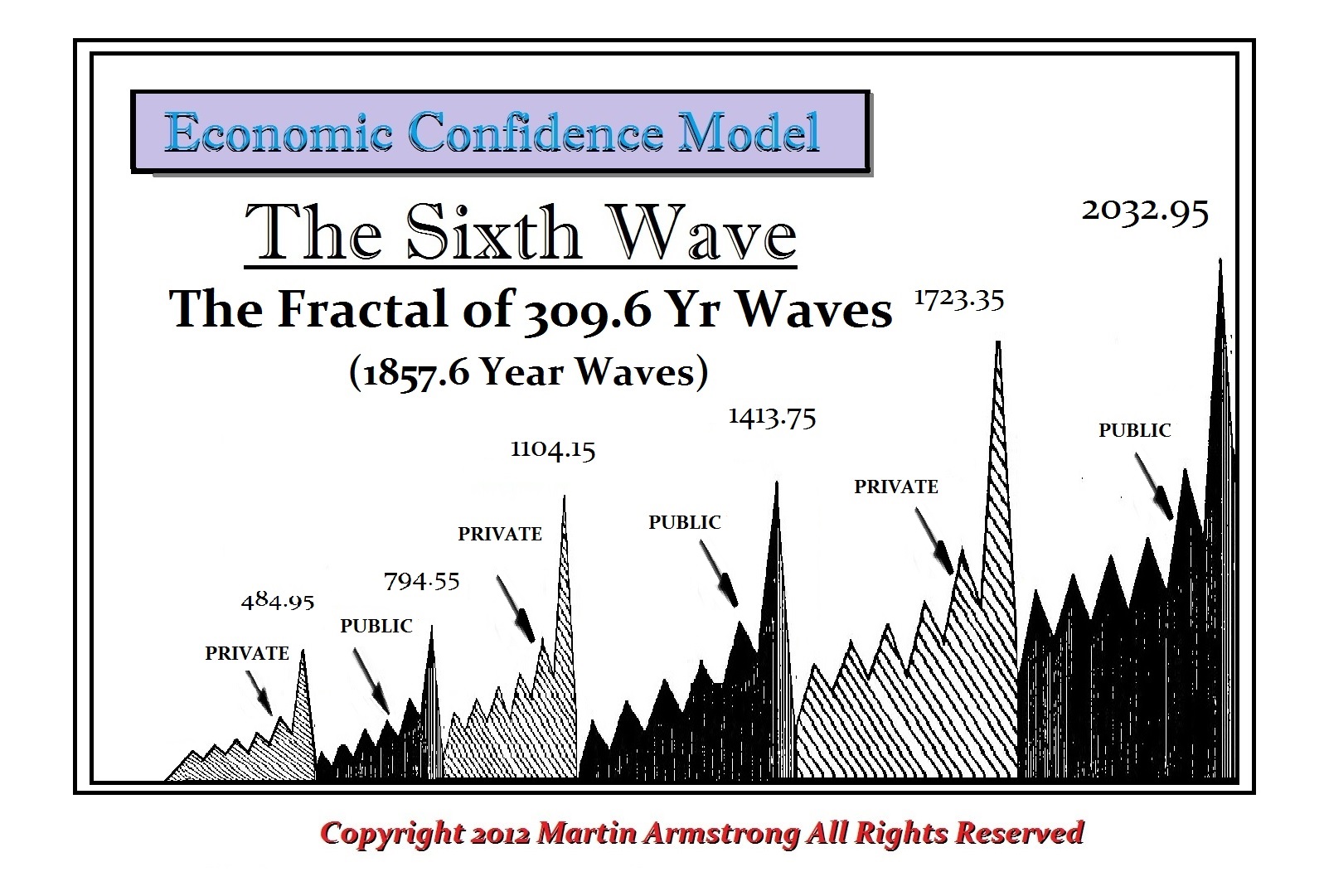
Everything in this universe is fractal. It is a repetitive pattern of self-referral. You have children and they are a blend of both parents’ DNA – self-referral. Thus, what makes 2032 extremely important, is that it is the Sixth Wave since the last upheaval of the overthrow of the Monarchy.

The Roman Empire peaked with the reign of Marcus Aurelius (161-180AD). We know from Chinese documents that he had even sent an ambassador to China which was the first contact.

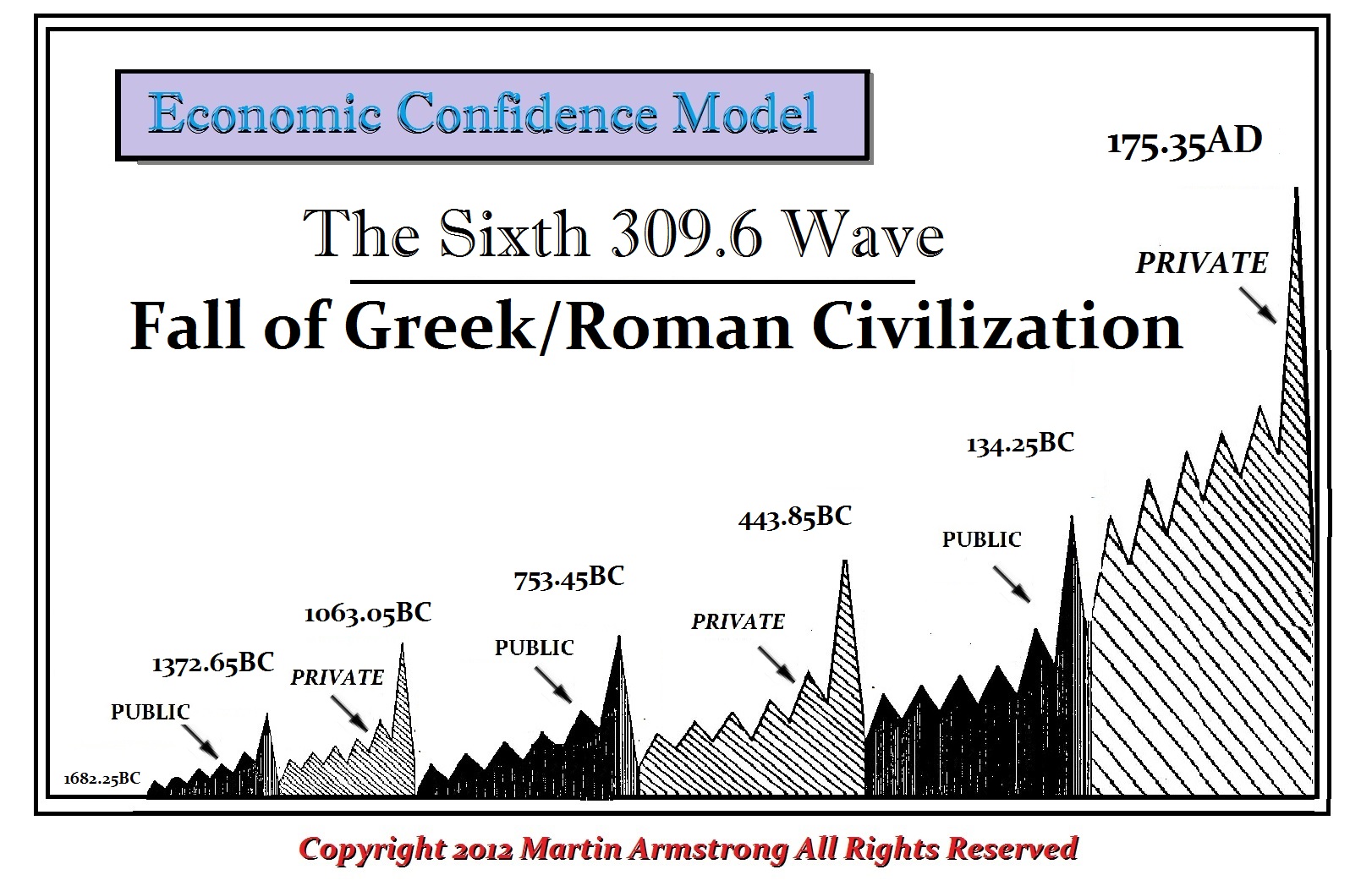
However, 6 of the 51.6 waves (which are 6 of the 8.6-year) in turn build in a fractal manner into a 309.6-year wave and then we have 6 waves of that which form 1857.6.  There are then 6 waves of that building into 11,145.6-year waves. About 11,600 years ago (9,600 BC)  was an abrupt period of global warming which accelerated the glacial retreat that was the beginning of the Holocene geological epoch. That is when we begin to find the domestication of sheep and evidence of settlements such as Jericho dating back to 9,600 BC.  That wave was the Mesolithic era which refers to the final period of hunter-gatherer cultures in Europe and Western Asia. This was between the end of the Last Glacial Maximum and the Neolithic Revolution. This is also why in back-testing the ECM, it became very clear that it incorporates nature and the swings back and forth on climate change.

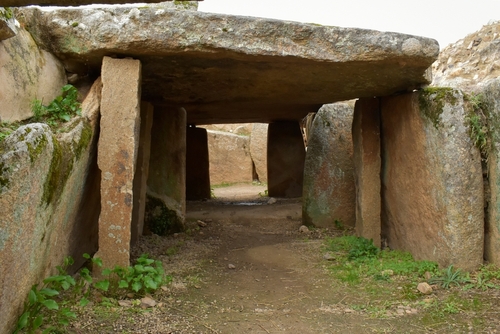
There is the period of the Megalithic Monuments in Europe. We do not know why these Neolithic and Copper Age creators were motivated to expend such energy in their creation. Some of these structures appear to have been graves. The sheer weight of the stones shows a very determined culture whose motives are lost to the haze of the period we refer to as prehistory.

Recent studies have implied that these megalithic monuments across Europe originated in northwest France, and the practice of building them spread along the continent’s coastlines in several migratory waves. They first appeared during the second half of the fifth millennium BC. That was about 4300 years before the invention of coinage.

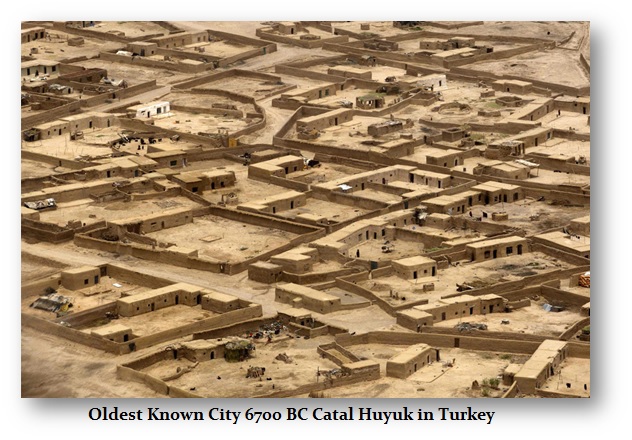
The oldest known city dates back to 6700BC, Catal Huyuk, located in modern Turkey. I have studied the economy of this period. It has all the trappings of modern-day civilization. There are houses with murals on the walls. This confirmed that there was an artist trade. There were a lot of female deities found so there was some artistic trade that carved these out of marble as well as clay. There was no indication of money being used so it was most likely a barter-based society with some people making tools and others growing crops.

Food was money in the shape of olives, dates, seeds, or animals and we also know that financing, lending for interest, dates back to c. 5000 BC, if not even earlier. The fall of Rome prompted the return of the Sin of Usury – denial of interest. Much of the blame for the fall of Rome was attributed to corruption of that sort. Capitalism is born with the Protestant Reformation which allowed Christians to earn money from interest. Martin Luther was funded by Christians who wanted to get into the banking field which had been restricted to the Jews.

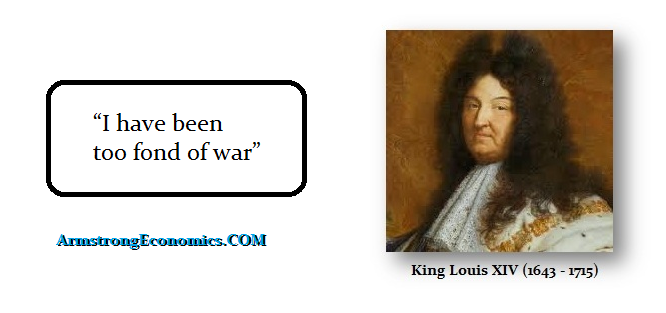
What we do see at these events is typically it is a knee-jerk reaction to whatever was in place, the reaction is in the opposite direction. We have gone through a revolution against Monarchy. That led to Republicanism. This time perhaps we move toward Democracy. We should have the right to vote  – do we go to war – Yes or No! Some Neocons should not make that decision and then we are imprisoned and called a traitor if you do not die on some battlefield that they decide should take place. This is not any different than Monarchy where King Louis XIV (1643-1715) lamented on his deathbed – “I have been too fond of war.” These people play a sport with the common people as the pawns on the chessboard.

Interview: The Financial Collapse is GUARANTEED – What Now?


Armstrong Economics Blog/Armstrong in the Media Re-Posted Mar 25, 2023 by Martin Armstrong

Watch the video above or click here to watch my latest interview with Maria Zeee: “The Financial Collapse is GUARANTEED – What Now?”

Credit Suisse Banking Crisis


Armstrong Economics Blog/Banking Crisis Re-Posted Mar 24, 2023 by Martin Armstrong

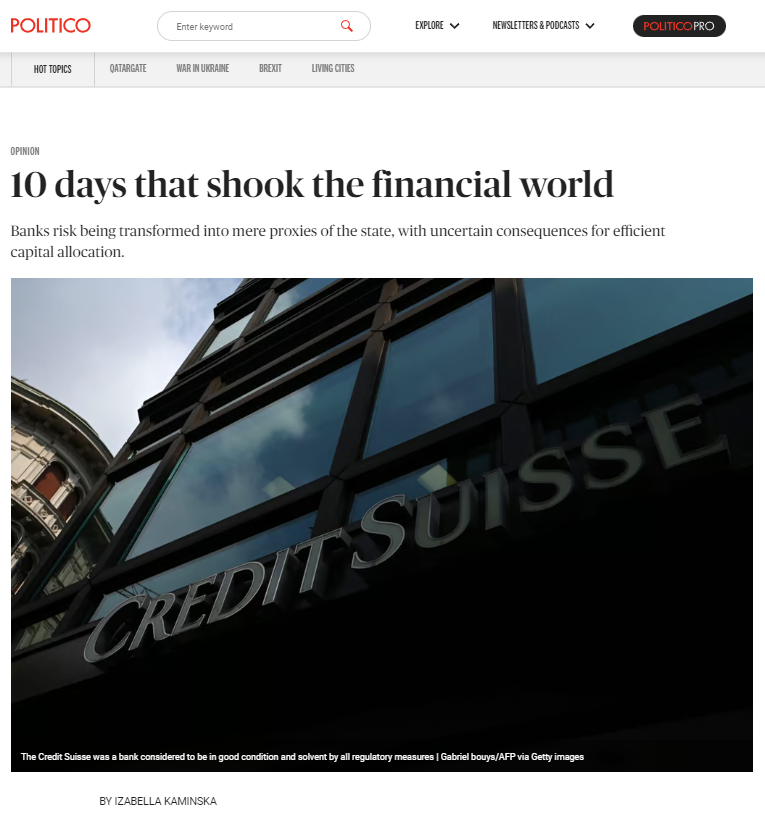
It is refreshing when you actually find a journalist who is honest and is not being included by the Neocons to put out their propaganda. Her review of Credit Suisse is a worthwhile read. Especially when this is not over yet and the winds of finance are now turning toward questioning Deutsche Bank.

Izabella Kaminska is senior finance editor at POLITICO Europe.

Over the span of 10 days, the global financial system was once again shaken.

The time frame between the collapse of Californian lender Silicon Valley Bank, America’s 16th largest bank, and that of the 167-year-old lender Credit Suisse was approximately just that — 10 days.

And as we witness the fallout, so far it appears contained. Stock markets are up, bank stocks seem stabilized and government bonds are in high demand. Officials reassure ad nauseam that the financial system remains strong and stable.

But the truth is, even if so, what happened in this period of time has changed the financial system forever — and worryingly, most people haven’t even noticed.

Governments and central banks would have you believe that in both cases, private sector solutions were found to resolve the failures. No taxpayer funds were used.

But that is likely not true.

In the United States, growing calls from the country’s top billionaires and hedge fund bosses to guarantee the full extent of customer deposits would, if acted on, deliver a backstop that must be underwritten by public funds. That’s the case even if costs are distributed among whatever healthy banks remain later. The sums involved are eye-watering — by some measures up to $17 trillion of unfunded liabilities.

If the rule is passed — and all indications are that it will be — this would finally make the implicit explicit: that the financial system was never really rescued following the 2008 financial crisis but merely put on life-support. And that has now failed, which means socialization of the losses beckons.

Over in Europe, things are potentially worse. This time, it wasn’t the storming of the Winter Palace Hotel in Gstadt that seized the means of financing but something far more mundane: an untidy bank resolution for Credit Suisse, which relies far too heavily for comfort on Swiss National Bank (SNB) guarantees.

As one former top British central banker told POLITICO, “They could have used bail-in; it would have worked; and banking would become part of a capitalist market economy” — a reference to the loss-absorbing processes regulators came up with after 2008 to ensure bank failures didn’t have to draw on public resources ever again. “The only stable equilibrium is one where bank resolution works, or socialism,” he added.

But the resolution didn’t work. And investors are belatedly realizing this.

Key to this reality is that Credit Suisse was a bank considered to be in good condition and solvent by all regulatory measures. As one bank analyst told POLITICO, going by the assets, you would never have seen the problem coming. Even the SNB and financial markets regulator FINMA said so as recently as last week.

The SVB Private logo is displayed on an ATM outside of a Silicon Valley Bank branch in Santa Monica, California | Patrick Fallon/AFP via Getty images

So were the regulators lying? Or is the accounting somehow fundamentally broken?

What we know for sure is that markets questioned the numbers, and this was evidenced by a run on the bank’s deposits, equity and bonds. And the discrepancy poses a big problem going forward, as it knocks trust in the accounting of all similarly assessed banks, which, thanks to international accounting standards, means pretty much all of them.

Credit Suisse’s sale to domestic rival UBS at cents on the dollar of what regulators claim the underlying assets are worth presents another problem too. If similar assets are lurking in UBS’ own balance sheet — and chances are that is the case, as the assets in question are probably government bonds — they might have to be written down to a similar degree. This is probably why UBS needed the guarantee from the SNB to be doubled to 100 billion Swiss francs to do the deal.

In light of this, Switzerland now faces an even larger issue: If UBS were to become stressed — and it very well could due to this discrepancy — there’s no private sector pathway for resolution left. The country now only has one major bank and, thus, only two possible pathways to deal with a failure — nationalization or acquisition by a foreign buyer with enough cash to keep the valuation of all the consolidated assets at a price that brings everything back to par. And there are few of those in the Western hemisphere.

With a full foreign acquisition off the table due to global discord, this leaves only an unthinkable solution for the home of Swiss private banking — the dawn of a type of finance more commonly seen in communist countries, where banks are directed by the state to allocate funds to activities they prioritize. Combined with a central bank digital currency, this would reduce banks to mere proxies of the state, with uncertain consequences for efficient capital allocation and inflation.

How things would unfold from then on is unclear. The only thing we can be sure of is that nothing in banking, or capitalism, may ever be the same again.